
Andy MacPhail On The 25-Year Anniversary Of The Twins’ 1991 World Series Championship
The Minnesota Twins surprised the baseball world in 1987 when they finished first in the American League West with an 85-77 record – just one season after going 71-91. But they didn’t stop there; the Twins stunned Detroit (98-64 in the regular season) to win the A.L. Championship Series, then shocked St. Louis (95-67) to bring home a World Series title.
Just four years later, after a complete retooling of the pitching staff, the 1991 Twins rebounded from a last-place finish the year before to win the A.L. West. After dropping nine of their first 11 games, they started putting things together – and eventually went on a 24-3 tear from May 28-June 25 (including a 15-game winning streak). By the time that stretch ended, they found themselves atop the divisional standings – and never entered a day’s action the rest of the season looking up at anyone. After defeating Toronto in the ALCS, they outlasted Atlanta in the worst-to-first World Series to bring home another trophy.

The architect of both championship clubs was Andy MacPhail, who was just 32 years old when he took over as Minnesota’s General Manager in August 1985. Now the President of the Philadelphia Phillies, MacPhail took some time to speak to MLB Trade Rumors about the 1991 Twins in this – the 25th anniversary of their last World Championship.
The pitching staff was completely overhauled between 1987 and 1991. The front three in 1987 were Frank Viola, Bert Blyleven and Les Straker; by 1991, Jack Morris, Scott Erickson and Kevin Tapani sat atop the rotation. Jeff Reardon was the closer in 1987; Rick Aguilera was in that role in 1991.
“We had to turn the entire pitching staff over in a four-year period, which was no easy feat,” MacPhail said. “As I recall, it was a little bit of everything – trades, free agent acquisitions, minor league free agents, major league free agents … Some came from the system, like Scott Erickson. Some were more high-profile free agents, like Jack Morris. But one of the most critical signings was a minor league free agent named Carl Willis – who ended up pitching the 8th inning and doing an extraordinary job for us. With Willis in the 8th and Aguilera in the 9th, we locked down the last two innings. It just goes to remind you that you have to get contributions from every potential artery you can to improve your club – not just rely on one aspect alone. Tapani and Aguilera were trades. Morris – major league free agent. Mark Guthrie – minor league free agent. They all combined in one year to help us completely turn over the pitching staff.”
The best pitcher on the 1987 team – and the most recognizable – was Frank Viola, who earned World Series MVP honors that season and went on to win the A.L. Cy Young Award in 1988. The trade of Viola at the July 1989 deadline turned out to be a big reason why the Twins won the 1991 World Series, as three pitchers acquired for him – Tapani, Aguilera and David West – became key members of the Minnesota staff.
“At the time we moved him, we were in last place, and it felt like we needed some volume as opposed to one great starter,” MacPhail said. “We had a difficult negotiation after the ’88 season. He ended up signing a three-year agreement, but we were probably going to have another negotiation that would not be easy. We just felt it was time to make a move. When he went over to the Mets, he won 20 games and pitched well there. Given our circumstances, we were looking for volume. We got Kevin Tapani – who did a tremendous job for us and was an integral piece of the ’91 puzzle. And we were able to add David West, who ended up starting and relieving for us over the course of ’91. And then another critical piece was Rick Aguilera, who was our closer and filled an important void for us.”
From a fan standpoint, moving such a popular player and person as Viola had to be tough. MacPhail was asked if it was harder to remove him from the team because Minnesota was a small market club.
“That was a harder one to do. We ended up doing it right at the deadline on July 31st,” MacPhail said. “Back then, it was a midnight deadline. We did it with minutes to spare. It was not an easy decision by any stretch. I remember just wanting to have to sit down for a moment and sort of collect myself. Independent of the market size, it clearly was not an easy decision. It was not going to be popular, because you are trading a known for multiple unknowns to some degree. While I felt conviction that it was the right thing for us to make the trade … I wouldn’t say I was conflicted, but I recognized back then that of all the trades I had made in my career, this one was going to have the most riding on it. If it was not successful, it was going to come back and bite you personally – probably in a big way. You trade a potential 20-game winner to a New York club, you better be getting something back.”
A year and a half later, the Twins were playing in the 1991 World Series. Vindication, or still a tad conflicted?
“No, the end game object is to be the last club standing. We were able to accomplish that. The pitchers we acquired in that deal were big parts of it. So I felt the actions of the organization were justified,” he said.
Chone Figgins Retires
Chone Figgins has officially announced his retirement, as per an Angels press release. He will sign a ceremonial one-day contract with the Halos tomorrow in order to leave baseball in the same uniform in which he spent eight of his 12 MLB seasons.
Figgins was originally drafted by the Rockies in the fourth round of the 1997 draft, and wasn’t a particularly heralded prospect. Faint praise became a positive for Figgins, as he related in his retirement statement:
“There was a quote written about me during my second year in the minors that I’ll never forget. It was a story about all minor leaguers and how scouts projected the progress of their careers. Mine said at best I would be a fringe big leaguer, if I ever made it. To me, that was the greatest quote I ever read about myself. Fringe is usually not a compliment in pro ball, but in my eyes, it meant I could be in the big leagues one day.”
A trade to the Angels in July 2001 led to a big league debut in late 2002 at the high point in Anaheim baseball history. Figgins went from a late season callup to earning a World Series ring, appearing in six postseason games as a pinch-runner during the Angels’ run to their only championship.
After that auspicious debut, Figgins became a key part of the Angels’ lineup over the next seven seasons with a game built around versatility, speed, and high average and on-base skills. Figgins spent most of his time as a third baseman but also saw significant action in center field as well as right, left, short and second. He hit .291/.363/.388 over 4075 PA as an Angel, and is the team’s all-time leader in stolen bases (280) and second on its all-time triples list (53).
Figgins’ all-around value peaked with a 7.7 rWAR/6.5 fWAR season in 2009, which was good timing as he headed into free agency that winter and resulted in a four-year, $36MM contract with the Mariners. Unfortunately for both Figgins and the club, 2009 was his last productive season. Figgins badly struggled in Seattle and was released prior to his final year of that deal.
He briefly signed a minor league deal with the Marlins after that release but was cut in Spring Training and sat out the 2013 season before catching on with the 2014 Dodgers for what ended up being his final 38 games in the Show.
All told, Figgins ended his career with a .276/.349/.363 slash line over 5360 PA, 1298 hits, 341 stolen bases and just under $52MM in career earnings. We at MLBTR congratulate Figgins on a fine career and wish him the best in his post-playing days.
Rafael Soriano Retires
TODAY: Soriano made his retirement official in a statement from the Blue Jays media department today, as the reliever thanked fans, teammates, and personnel from his former clubs for their support over the course of his career.
THURSDAY: Right-hander Rafael Soriano is set to retire, according to James Wagner of the Washington Post (via Twitter). The 36-year-old was set to join the Blue Jays on a minor league deal but had yet to report due to apparent visa issues.
Soriano had a short stint last year with the Cubs after waiting until mid-season to sign. He was limited due to a shoulder injury and ultimately made only six appearances with Chicago before he was released.
Before that, of course, Soriano enjoyed a lengthy run as a prominent late-inning reliever. All told, he’s racked up 636 1/3 innings of 2.89 ERA pitching with 9.1 K/9 against 2.8 BB/9 over 14 MLB campaigns.
That neat summation of his career probably doesn’t do justice to the volume of interesting transactional news that Soriano provided to MLBTR readers over the years. In many ways, his career functions as a crash course in recent hot stove developments.
Soriano had uneven results in his first several seasons, but established himself as a quality pen presence with the Mariners in 2006. He was dealt to the Braves after that season and enjoyed a solid three-year run. Atlanta offered him arbitration when he hit the open market after 2009, with intentions of recouping draft compensation under the old Type A/B system, but was surprised when he decided to accept. Thus began a dizzying series of trade rumors, with Soriano ultimately heading to the Rays in exchange for Jesse Chavez.
In his lone season in Tampa Bay, Soriano turned into a dominant closer, leading the league with 45 saves and posting a 1.73 ERA in his 62 1/3 frames. Entering the open market (again, as a Type A free agent), he landed with the Yankees as Mariano Rivera‘s set-up man. The deal promised the then-Scott Boras client $35MM over three years, and included two consecutive opt-outs.
Soriano’s first year in New York didn’t go as hoped, and he passed on his first opt-out opportunity. But he excelled in 2012, taking over as closer for an injured Rivera, and elected to head back to free agency. Of course, intervening rule changes had since swapped in the qualifying offer system, so this time Soriano declined a $13.3MM qualifying offer and again came with draft compensation attached to his name.
The Nationals added Soriano for two years and $28MM (with half of it deferred) on a contract that included a vesting clause. The veteran displaced an incumbent closer, Drew Storen, and ultimately gave the Nats 128 2/3 innings of 3.15 ERA pitching over a somewhat uneven tenure. (Storen ultimately re-took his closing duties, but the stage had been set for last year’s controversy and his eventual departure from D.C.)
In the aggregate, Soriano topped 200 career saves and was a net positive for the vast majority of his career. While it appears he won’t be taking a shot at a comeback, despite reportedly showing well in the Dominican winter league, Soriano has already completed a ten-year run as one of the game’s most productive overall relievers. MLBTR wishes him the best of luck in his future pursuits.
Latest On Bronson Arroyo
SATURDAY 10:55am: GM Mike Rizzo says Arroyo has partial tears in his rotator cuff tendon and there is inflammation in the area, MASN’s Dan Kolko reports (all Twitter links). Arroyo will be shut down for ten days to two weeks, at which point he’ll begin a program to strengthen his shoulder. The rehab process could take four to six weeks.
FRIDAY 8:33pm: The Nationals have told reporters, including MASNsports.com’s Mark Zuckerman (Twitter link), that tonight’s reports regarding Arroyo are “not consistent” with their findings. Nats brass, Arroyo and the club’s medical staff will have a meeting tomorrow.
7:17pm: The initial results of an MRI on Bronson Arroyo‘s shoulder were, somewhat incredibly, misread by the doctor that evaluated him, reports Ken Rosenthal of FOX Sports (on Twitter). Arroyo does not have a tear of the rotator cuff in right shoulder, as he was initially told, but rather is suffering from bursa sac inflammation. Arroyo will be shut down for seven to 10 days, but he does not have the career-threatening injury he believed himself to be facing just yesterday. Notably, James Wagner of the Washington Post tweets that the first diagnosis came from a non-baseball doctor, so it was not the Nationals’ medical staff that provided the faulty results.
Earlier this week, MLB Network’s Peter Gammons reported that Arroyo had a tear in his labrum, and Arroyo himself spoke to reporters the following day to reveal that he’d been told the tear was actually in his rotator cuff. The veteran right-hander was said to be weighing whether to undergo surgery and rehab for another comeback attempt or call it a career.
The injury still seems to hinder Arroyo’s chances of making the Nationals’ Opening Day rotation, as another seven to 10 days without throwing would mean he can return to throwing with another seven to 10 days of Spring Training to get back up to speed. However, the very fact that Arroyo is not facing a devastating injury is a breath of fresh air. The well-liked and well-respected Arroyo has been hoping to break camp with the Nats and return to a Major League mound for the first time since the summer of 2014, when he tore the ulnar collateral ligament in his right elbow and required Tommy John surgery.
Prior to that injury, Arroyo was baseball’s most durable starter. From 2005-13, Arroyo pitched in 300 games and averaged 211 innings per season, falling shy of the 200-inning milestone just one time, when he tossed 199 innings in 2011. Arroyo was not only durable, but effective, as he worked to a 4.10 ERA in that span despite pitching at the hitter friendly Great American Ball Park and despite the fact that many of those frames came during a much higher-scoring time period.
Cardinals Sign Ruben Tejada
The Cardinals have announced that they’ve signed shortstop Ruben Tejada to a one-year, big-league contract. Tejada will receive $1.5MM, Jon Heyman tweets. MLB.com’s Jenifer Langosch was first to report that a deal was imminent (Twitter links). Tejada is a client of the Legacy Agency.
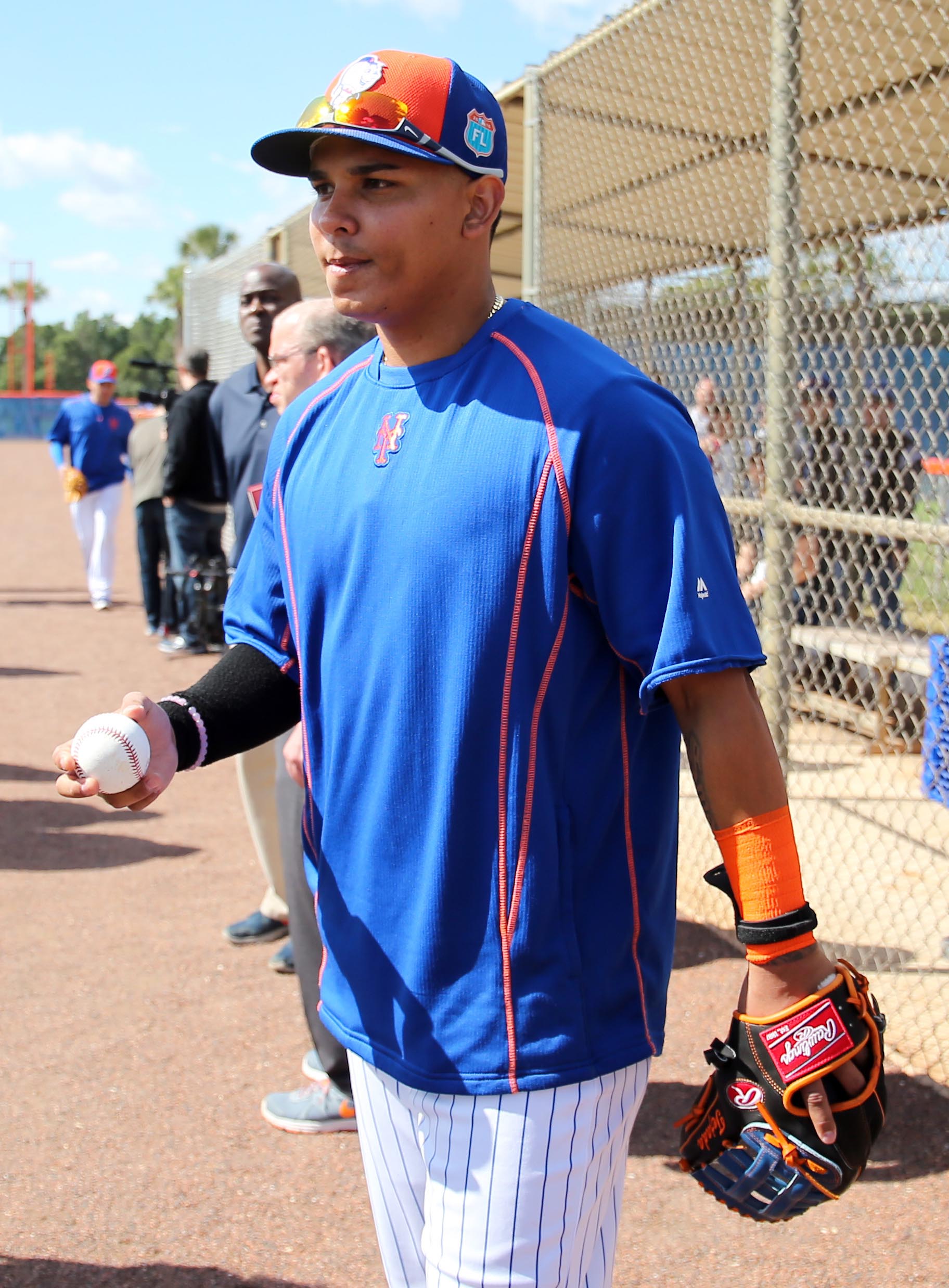
The Mets released Tejada earlier this week. He reportedly rejected a minor-league deal with the Yankees in hopes of finding a big-league deal with another team, and it appears he’s found one. Jhonny Peralta is out ten to 12 weeks after having thumb surgery, which had left the Cardinals without a legitimate starting shortstop — Jedd Gyorko, Greg Garcia and Aledmys Diaz topped the team’s list of internal options.
Tejada now looks like the Cardinals’ presumptive starter at the position until Peralta returns. Tejada’s sudden appearance on the free agent market at this late date provided the Cardinals with the opportunity to acquire something resembling a proven shortstop, albeit one with some drawbacks. The 26-year-old batted a reasonable .261/.338/.350 with New York last season and generally does a good job reaching base, thanks to a good batting eye. He has little power, however and has yet to have a truly strong offensive season, with a .696 OPS as a 21-year-old rating as his finest season at the plate. Metrics rate his defense as about average over the course of his career, though both DRS and UZR were down on his work in 2015. He also irked the Mets at times with his lack of physical conditioning.
Nonetheless, given Tejada’s experience and his ability to keep his head above water as a big-league shortstop, it’s not surprising that the Cardinals pursued him. He can become a free agent after the season due to a clause in his arbitration agreement with the Mets that awarded him an extra day of service time. (I previously wrote, incorrectly, that there was a possibility the Cardinals could take him through arbitration next winter.)
Tejada and the Mets avoided arbitration by agreeing to a $3MM deal last offseason, although the Mets’ plans changed when they acquired middle infielders Neil Walker and Asdrubal Cabrera, and they ultimately owed Tejada only $491K of that $3MM contract after they decided to release him. The Mets’ $3MM deal will therefore have no particular impact on his deal with the Cardinals.
Photo courtesy of USA Today Sports Images.
LaRoche Issues Statement On White Sox Departure, Reportedly Files Retirement Papers
5:25pm: LaRoche has officially filed his retirement papers with Major League Baseball and the Players Union, reports Bruce Levine of CBS Chicago (on Twitter).
2:33pm: Veteran White Sox slugger Adam LaRoche has issued a statement regarding his decision to leave the team, via TwitLonger. Notably, he does not state definitely that he has retired, calling it instead a “decision to walk away” from the White Sox.
That being said, LaRoche does seem to suggest that his playing career is over in discussing his “wonderful journey” and memories in the game. He also states that 2016 was “likely to be the last year of my career” even before the present circumstances arose.
Controversy has enveloped the club after LaRoche left camp days ago, with several players expressing serious concern and commentary coming in from all around the game. We rounded up all the latest earlier this morning, and owner Jerry Reinsdorf has since said that he will address the matter further only after meeting with players and club officials.
In addition to explaining his decision more generally, LaRoche makes several key points about the dispute with the club that led directly to his departure. First, he emphasized that bringing his son into the clubhouse was a critical topic of conversation that led to his free agent deal with Chicago:
“Prior to signing with the White Sox, my first question to the club concerned my son’s ability to be a part of the team. After some due diligence on the club’s part, we reached an agreement. The 2015 season presented no problems as far as Drake was concerned. (My bat and our record are another story!)”
LaRoche went on to explain that his decision came about as “the result of a fundamental disagreement between myself and [club executive VP] Ken Williams.” He explained that Williams “recently advised me to significantly scale back the time that my son spent in the clubhouse.” Thereafter, says LaRoche, he “was told not to bring [his son] to the ballpark at all.”
The 36-year-old first baseman/DH further discussed his viewpoint on his agreement with the organization and his ultimate departure, saying:
“Obviously, I expressed my displeasure toward this decision to alter the agreement we had reached before I signed with the White Sox. Upon doing so, I had to make a decision. Do I choose my teammates and my career? Or do I choose my family? The decision was easy, but in no way was it a reflection of how I feel about my teammates, manager, general manager or the club’s owner Jerry Reinsdorf.”
Williams has expressed a somewhat different version of events — you can read more here and here. The club certainly seems likely to have a differing view, also, as to whether any pre-signing discussion of family clubhouse access is a part of the bargained-for contract between the sides.
Notably, LaRoche’s statement does not provide any indication as to whether or when he’ll formally retire. And it doesn’t suggest whether or not he will pursue any kind of settlement or grievance action against the club. He entered the year with a $13MM guaranteed salary for the coming season, the second of two campaigns covered by his free agent deal.
This matter has also generated interest from other angles, of course, and those who are interested in learning more about LaRoche’s perspective should certainly give his statement a full read (along with all of the above-cited sources). Among other things, LaRoche expressed gratitude to the Nationals and White Sox for the “privilege” of having his son on hand at the ballpark. He also emphasized that he never had a situation arise where he was told that a “teammate, coach or manager was made to feel uncomfortable” by the presence of his son.
Brad Boxberger Out 8 Weeks After Core Muscle Surgery
Rays closer Brad Boxberger will be out of action for eight weeks after undergoing core muscle surgery, per manager Kevin Cash (via Marc Topkin of the Tampa Bay Times, Twitter links). Tampa Bay doesn’t expect to look for an outside addition, preferring instead to utilize internal options without naming a single 9th-inning man while Boxberger is out.
The Rays thinned out their pitching depth somewhat over the winter, bringing in options in the field in trades that cost the club arms such as Jake McGee and Nate Karns. McGee, certainly, would have been the obvious choice to fill in for Boxberger were he still with the club.
As things stand, Alex Colome looks like a good bet to receive the lion’s share of the save opportunities that arise — even if he’s not anointed as the closer. After all, the live-armed righty was reportedly set to receive frequent eighth-inning assignments in a setup role. Other possibilities include right-handers Danny Farquhar and Steve Geltz and southpaw Xavier Cedeno.
Of course, unlike the cross-state Marlins’ season-long loss of Carter Capps, this injury promises only to be a temporary setback. Any significant injury is cause for concern with a pitcher — the lingering effects and cascading impact on a delivery can be a subtle threat — and it isn’t clear whether the eight-week estimated timetable is for Boxberger’s return to baseball activities or to a major league mound. But it seems there’s at least hope that he’ll be able to make it back before May is out.
Indians Sign Marlon Byrd To Minor League Deal
7:45pm: Byrd has passed his physical, Paul Hoynes of the Plain Dealer tweets. He’ll earn $1MM if he cracks the major league roster. The contract also includes some incentives, Jordan Bastian of MLB.com adds on Twitter.
11:04am: The Indians and outfielder Marlon Byrd have agreed to a minor league contract, reports Ken Rosenthal of FOX Sports (on Twitter). The 38-year-old Byrd, who split last season between the Reds and Giants, is represented by ACES.
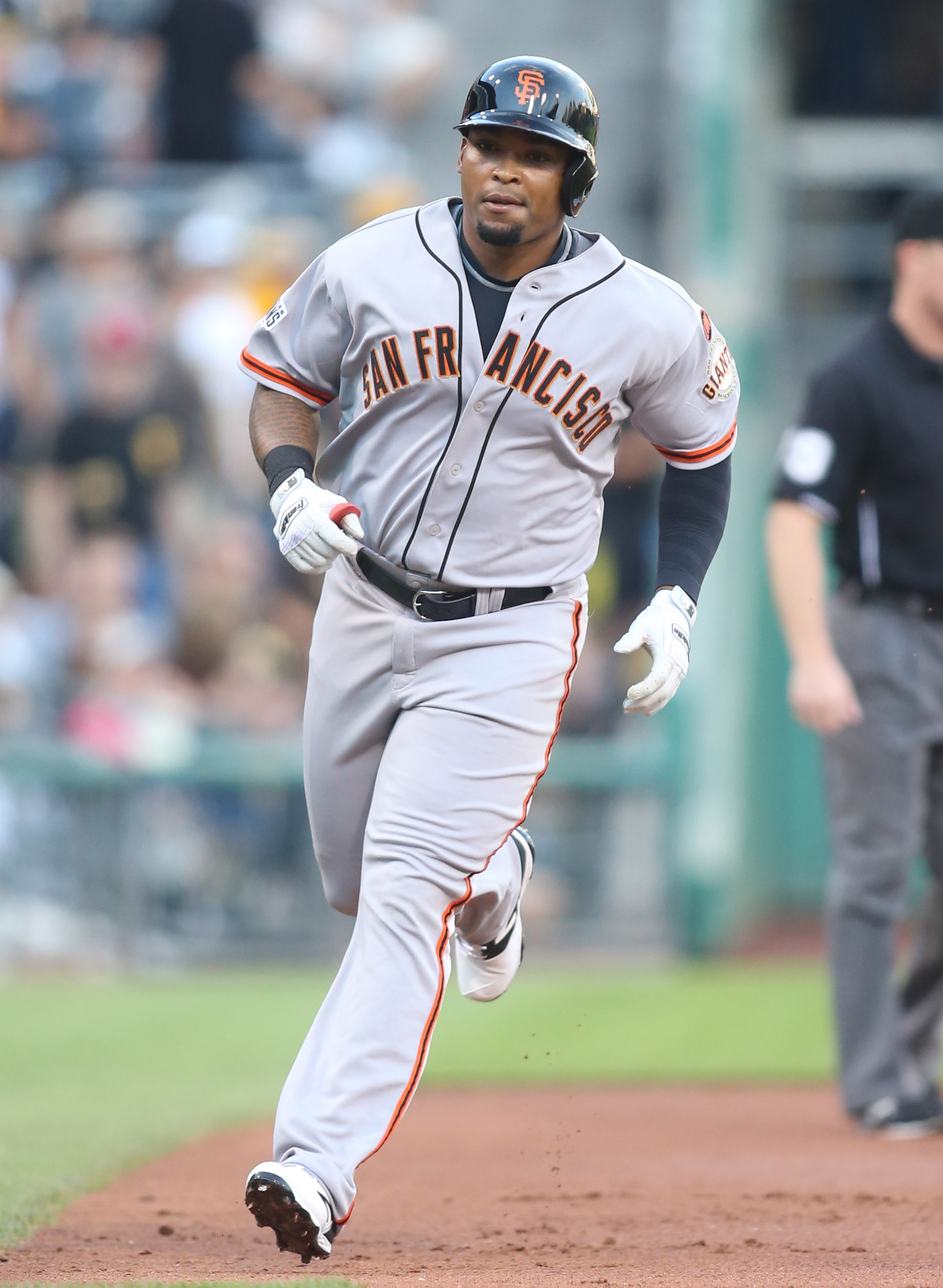
Byrd will add to a growing mix of outfield options for the Indians, who figure to open the season without Michael Brantley (at least for a couple of weeks) and are otherwise relying on a mix of Tyler Naquin, Rajai Davis, Lonnie Chisenhall and Collin Cowgill in addition to fellow non-roster invitees Will Venable, Robbie Grossman and Shane Robinson. On paper, Byrd would bring the most offensive upside of the bunch to serve as a platoon partner for the left-handed-hitting Chisenhall, who thrived in the outfield last year but has longstanding difficulty against left-handed pitching at the plate. Byrd has long been a thorn in the side of southpaw pitchers, and he continued that trend in 2015, hitting .271/.324/.496 against lefties.
Though Byrd was quite productive following an August trade to the Giants, his tenure in San Francisco ended with some degree of controversy. Playing in the final season of a two-year, $16MM contract last in 2015, Byrd needed to reach a total 550 plate appearances for an $8MM vesting option to trigger. Over the final few games of the season, the Giants relegated Byrd to the bench in favor of young outfielders Jarrett Parker and Mac Williamson. As GM Bobby Evans explained at the time, the club planned to play Byrd on an everyday basis up until the club was mathematically eliminated from the postseason. If and when that occurred, the team would shift focus and use the remainder of the year to evaluate future options such as Parker and Williamson. Unfortunately, due to the length of time for which the Giants staved off elimination, that meant that Byrd ultimately fell just six plate appearances shy of having his option vest.
Now with the Indians, Byrd will hope to make the club and approximate the solid overall production he’s posted since a career renaissance with the Mets and Pirates in 2013. Since that rebound campaign, Byrd has batted a collective .268/.313/.469. Over the life of a 14-season career in the Majors, his cumulative batting line sits at .275/.329/.430 in nearly 6,000 plate appearances.
Photo courtesy of USA Today Sports Images.
Justin Morneau Out Til Mid-Season After Offseason Elbow Surgery
Free agent first baseman Justin Morneau will not be ready to resume swinging a bat until June after undergoing offseason elbow surgery, he tells LaVelle E. Neal III of the Minneapolis Star-Tribune. While the veteran says he isn’t yet writing off a return as soon as the coming season, he obviously won’t be available in the near-term for teams interested in adding a bat.
Morneau entered the open market after the Rockies turned down their end of a mutual option. He made it back to Colorado late last season after dealing with head and neck issues, but it’s another injury altogether that will prevent him from joining a team this spring.
The 34-year-old said he expected that trouble with a tendon in his left elbow would be cured by rest, but toward the end of 2015 was not experiencing progress. The issue first arose last spring, but obviously did not prevent him from returning down the stretch in 2015.
“Unfortunately, once teams starting calling in the offseason and things were moving along I didn’t feel confident that I was getting better,” he said, “so I decided to go get it checked out again on my own. After a new MRI, surgery was recommended and that was the path we chose to take.”
Morneau further explained that no teams were interested in signing him during the rehab process, meaning he’ll go it alone and see how things progress. “As of now I will do the rehab on my own and see how I feel going through that process and will make a decision on my future at a later date,” Morneau told Neal. “I have not ruled out returning to play this year at some point.”
The long-time Twins star has certainly shown he can still be productive at the plate, when healthy. He put up a strong 2014 season in Colorado, leading the league in batting average. And he managed a .310/.363/.458 slash line (good for a 109 OPS+) last year, though he was only available for 182 plate appearances — with those coming before and after a lengthy mid-year DL stint for concussion-like symptoms. It’s worth noting, too, that Morneau still rates as an average or better fielder at first.
Despite the health questions, Morneau took a spot at the back end of MLBTR’s top fifty free agent list. That he remains the only unsigned player from that list is now explained by today’s report.
Reds To Sign Alfredo Simon To Major League Deal
1:15pm: MLB.com’s Mark Sheldon reports that Simon receives a $2MM base salary on the deal and can take home another $1.5MM worth of incentives (Twitter link).
11:01am: The Reds and right-hander Alfredo Simon are in agreement on a Major League contract, reports Ken Rosenthal of FOX Sports (via Twitter). The MVP Sports client will return to the Reds, where he pitched from 2012-14 before being traded to the Tigers in exchange for Eugenio Suarez and minor league righty Jonathon Crawford.
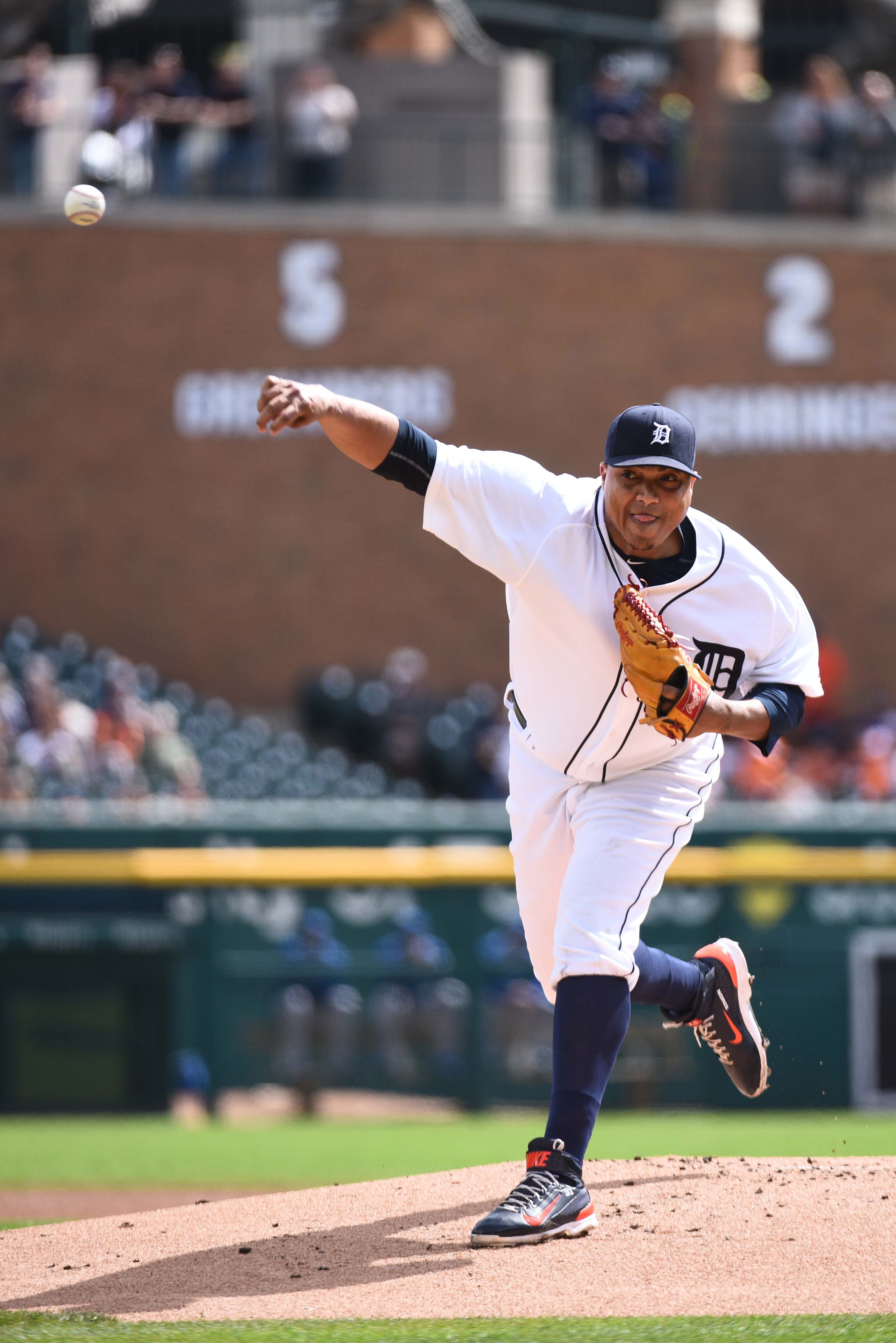
Simon, 35 in May, tallied 345 innings and a 3.16 ERA in his three years with the Reds, averaging 6.3 strikeouts and 2.7 walks per nine innings pitched to go along with a 48.5 percent ground-ball rate. Simon spent the first two years of his Reds tenure in the bullpen, but he made the jump to the rotation in 2014 and yielded better results than perhaps even the most optimistic expectations could’ve predicted. Simon made the first All-Star team of his career at the age of 33 that season, pitching to a 3.44 ERA in 196 2/3 innings. The outstanding work was enough to pique the Tigers’ trade interest and convince Detroit to cede a pair of intriguing young players for the final year of Simon’s club control.
Simon’s excellent season in ’14, though, looked to be largely smoke and mirrors, even at the time. The veteran benefited greatly from a minuscule .232 BABIP and 85 percent strand rate in the first half — neither of which appeared to make his 2.70 first-half ERA sustainable. That production did indeed prove too much to maintain, as Simon’s BABIP regressed to .309 in the second half, and his ERA after the break was a more pedestrian 4.52.
None of that, however, is to say that Simon can’t provide on-field value to the Reds’ pitching staff in 2016. (His off-field history, on the other hand, is a separate and lengthy issue.) The right-hander struggled to a 5.05 ERA with the Tigers last season, but that was partly due to a dip in strikeout rate and an increased walk rate. A move back to the NL could aid both of those factors, and despite the lackluster ERA, it has to be noted that Simon still racked up 187 innings in the Detroit rotation in what was another healthy year in the rotation. Making roughly 30 starts and delivering an ERA in the low- to mid-4.00 range would still be a boost to an uncertain Reds staff.
Indeed, Cincinnati has upside but also plenty of question marks beyond right-handers Anthony DeSclafani and Raisel Iglesias, so there’s certainly cause to add some depth in the form of Simon. While the club has a number of interesting young arms — Robert Stephenson, Brandon Finnegan, John Lamb, Michael Lorenzen and Cody Reed, to name a few — it’s difficult to rely on such an unproven mix to round out the rotation. That’s especially true in light of a UCL sprain for Lorenzen and a delayed start to the year for Lamb, who is recovering from offseason back surgery. The Reds, of course, also have veteran Homer Bailey on the mend from Tommy John surgery, but he figures to miss at least a couple of months this season as he works his way back, so there’s no telling exactly how many innings the club can receive from him.
Simon’s late start might mean that he won’t quite be ready to step into the Opening Day rotation, but even if that’s the case, it’s easy enough to see him jumping into the starting mix by the middle of next month and providing a stabilizing presence to an otherwise youthful staff. The Reds needn’t make a 40-man roster move to accommodate the addition of Simon, as that roster will stand at just 39 players, even after Simon’s return is finalized.
Photo courtesy of USA Today Sports Images.