
Offseason Outlook: Oakland Athletics
After an ugly 2015 season, the Athletics have plenty of flexibility, but also face plenty of uncertainty.
Guaranteed Contracts
- Billy Butler, DH: $20MM through 2017
- Coco Crisp, OF: $11.75MM through 2016 (plus 2017 club/vesting option)
- Sean Doolittle, P: $9MM through 2018 (plus 2019 and 2020 club options)
Arbitration Eligible Players (service time in parentheses; projections by MLB Trade Rumors)
- Ike Davis (5.155) – $3.8MM
- Sam Fuld (5.140) – $2.0MM
- Jesse Chavez (5.108) – $4.7MM
- Josh Reddick (5.050) – $7.0MM
- Craig Gentry (4.125) – $1.6MM
- Danny Valencia (4.118) – $3.4MM
- Fernando Abad (4.073) – $1.5MM
- Eric Sogard (4.064) – $1.7MM
- Brett Lawrie (4.055) – $3.9MM
- Felix Doubront (4.041) – $2.5MM
- Fernando Rodriguez (4.032) – $1.3MM
- Jarrod Parker (4.000) – $850K
- Drew Pomeranz (3.013) – $1.3MM
- A.J. Griffin (3.000) – $508K
- Evan Scribner (2.142) – $700K
- Non-tender candidates: Davis, Fuld, Gentry, Abad, Sogard, Doubront
Free Agents
After a season in which almost nothing went right, the Athletics will attempt to get back on track in 2016. How their ever-creative front office will accomplish that, though, is anyone’s guess. Now that they’ve lost a number of high-profile players (Josh Donaldson, Jon Lester, Jeff Samardzija, Scott Kazmir, Brandon Moss, Derek Norris, Jed Lowrie, Jason Hammel, Luke Gregerson) from their 2014 playoff run and still others (Ben Zobrist, Tyler Clippard) once their 2015 season fell apart, it seems wise to begin with an assessment of what, exactly, they still have.
Ace Sonny Gray still has a year remaining before he’s eligible for arbitration, and he looks like one of the game’s most potent young starters after a terrific 2015. The team also has several other starting pitchers (Jesse Chavez, Jesse Hahn, Chris Bassitt) who helped to one degree or another. Offensively, the A’s have a few young veterans who had decent seasons (like Josh Reddick, Stephen Vogt and Danny Valencia, with Billy Beane’s August claim of Valencia looking like a big win so far), and the team was also able to find playing time last year for a number of relative youngsters (Billy Burns, Marcus Semien, Josh Phegley, Mark Canha) who held their own and look like cheap future role players. The A’s lost 94 games last season, so it’s no surprise that they don’t exactly appear to be loaded with talent.
Of course, Donaldson, for example, once looked like little more than a cheap future role player too, and plenty of analysts have underestimated Oakland rosters barely flashier than the one the A’s have now. The 2015 A’s were also the victims of poor luck — they weren’t a good team, but they scored only 35 fewer runs than they allowed and might well have ended up with far more than 68 wins.
Still, this offseason is going to be a tough one for Beane and new GM David Forst. A series of questionable trades have left the Athletics with a limited talent base. In particular, their decision to deal Donaldson to the Blue Jays makes even less sense now than it did when it was consummated — the Athletics traded an MVP-type player with four years of control remaining and received only one good prospect (Franklin Barreto) plus a disappointing infielder (Brett Lawrie) and a couple low-wattage arms.
That the trade was a disaster for the Athletics is well known at this point, but I mention it here because it’s part of a pattern. Small-payroll teams need inexpensive stars like Donaldson. Other than Gray, the Athletics really don’t have any, and they don’t appear to have many players who have that potential, either. When they traded for Samardzija, they gave up Addison Russell, who already seems to be blossoming in Chicago. Then, when they dealt Samardzija themselves, they got Bassitt, Semien and Phegley, who look like good, helpful players, but not future stars. Their trade of Samardzija was, in isolation, a decent one, and it looks better after Samardzija had a subpar season in 2015, but the net result of the two deals is that it appears the A’s gave up an impact talent and didn’t receive one in return.
So now that potentially game-changing players like Donaldson and Russell are gone, how do the A’s build something new in their absence? For a 68-win team, the Athletics certainly have their fair share of decent players, and it’s easy to see any one of at least a dozen of them becoming useful contributors on a top-quality team. What they don’t seem to have is enough elite players to rally around, and it’s not clear where they’ll get them.
Many 68-win teams can upgrade simply by identifying positions where they have massive deficiencies and addressing those, but the A’s actually have fewer gaping holes than most. One priority, though, could be adding another corner outfielder or first baseman. Canha profiles decently as a semi-regular either in left field or at first base, and Vogt figures to pick up at bats at first base when he’s not catching, but the Athletics can use a bit of help. They’re unlikely to be top players for free agents, but they could find a lefty outfielder to upgrade on Sam Fuld — someone like Gerardo Parra or David Murphy might make sense, particularly with Jake Smolinski available to bat against lefties. Coco Crisp, a switch-hitter who’s under contract for next season, might be able to help in that regard, although he’ll play next season at age 36 and suffered through a miserable 2015 due to a lingering neck injury.
Beyond first base, the Athletics appear fairly set in the infield. With Lawrie and Valencia in the fold, the A’s can give Semien another shot at shortstop, although Beane seems open to using him at other positions at some point in the future. The A’s could add an infield backup via free agency, though, particularly if they decide to non-tender Eric Sogard.
The Athletics could also use an upgrade at DH; the three-year deal to which they signed Billy Butler was perplexing at the time, and it doesn’t make any more sense now. It seems more likely, though, that they’ll hope Butler improves in 2016, since he’ll still be just 30, and they owe him an additional $20MM. A trade involving another bad contract also might be a possibility.
Then there’s the rotation. Gray ought to be back, along with Chavez, Bassitt and Hahn, health permitting. Jarrod Parker, who hasn’t thrown a pitch in the big leagues since 2013, was back to throwing at the end of the season after spending most of it recovering from an elbow fracture. The 26-year-old Parker got off to a great start to his big-league career in 2012 and 2013, but there’s no telling what the Athletics can expect from him, if anything, after multiple arm injuries and two full years on the shelf. Another talented young starter, A.J. Griffin, is in a similar boat — he was making his way back from Tommy John surgery last June when he got shut down again, this time with a shoulder problem. Now he hasn’t appeared in the big leagues in two full years, either.
Beyond that, the Athletics’ best options right now are back-of-the-rotation types like Kendall Graveman, Aaron Brooks and Sean Nolin, plus Drew Pomeranz, who could conceivably move to starting full-time. (Sean Manaea, who they acquired in the Zobrist trade, could be in the rotation picture by midseason.) It’s safe to say, then, that they could add another starter this offseason without causing a logjam.
Given the Athletics’ extremely limited future commitments, they could easily sign a free agent starter, although it’s doubtful they would want to be on the hook for a contract that would still be on the books, say, three years from now. A creative short-term addition like Doug Fister, Mat Latos, Rich Hill, or old friends Trevor Cahill or Bartolo Colon might make sense.
Then again, all this speculation assumes the A’s will look to stay competitive next year without sacrificing their ability to compete in the future, but Beane often forgoes the obvious path. One off-the-grid possibility might be spending heavily on righty relievers in an attempt to improve by building a good bullpen around Sean Doolittle, Fernando Rodriguez and Pomeranz. Relievers would require shorter-term commitments than starters or position players, allowing the A’s to spend a bit while still keeping their payroll relatively clear in 2018 or 2019, when they might have a better core than they do now.
Beane has also alluded to the possibility that the team could extend Reddick, who is eligible for free agency following the 2016 season. Reddick was already a very good all-around player before cutting his strikeout rate in half over the past three seasons. The change came at the expense of some of his home-run power, but his newfound strike-zone judgment increases the possibility that he’ll continue to be productive in the near future, particularly since he’s still just 28.
Other than that, who knows? The only constant with the Athletics is change. Would it really be a shock if, after previously emerging as the high bidder for top international talents like Yoenis Cespedes and Michael Ynoa, the Athletics suddenly entered the bidding for Korean first baseman Byung-Ho Park? Would it be impossible for Beane to sense an inefficiency in the market and pounce on, say, a three-year deal for a bigger-name player at an unexpected position, given that most of the team’s current options are passable but unspectacular? Would it be a surprise if, after previously trading their top prospect (Daniel Robertson) for Ben Zobrist in an offseason in which they looked to be re-tooling, they dealt someone like Barreto for a big win-now upgrade? After emphatically denying he would trade Gray, would it be out of the question for Beane to deal him anyway, a year after an anonymous A’s official emphatically denied that the team would trade Donaldson? Could the A’s trade Vogt, say, or Chavez, or even Reddick? With Beane and Forst, there’s no telling.
Torii Hunter To Retire
Twins outfielder Torii Hunter has decided to retire, he tells LaVelle E. Neal III of the Star-Tribune. The 40-year-old played in parts of 19 years with three organizations.
“I’m sad because it’s all I’ve known for half of my life,” Hunter said. “This great game of baseball has done so much for me. I have learned a lot of lessons. … I still love the game, but time has taken a toll on me mentally and physically.”
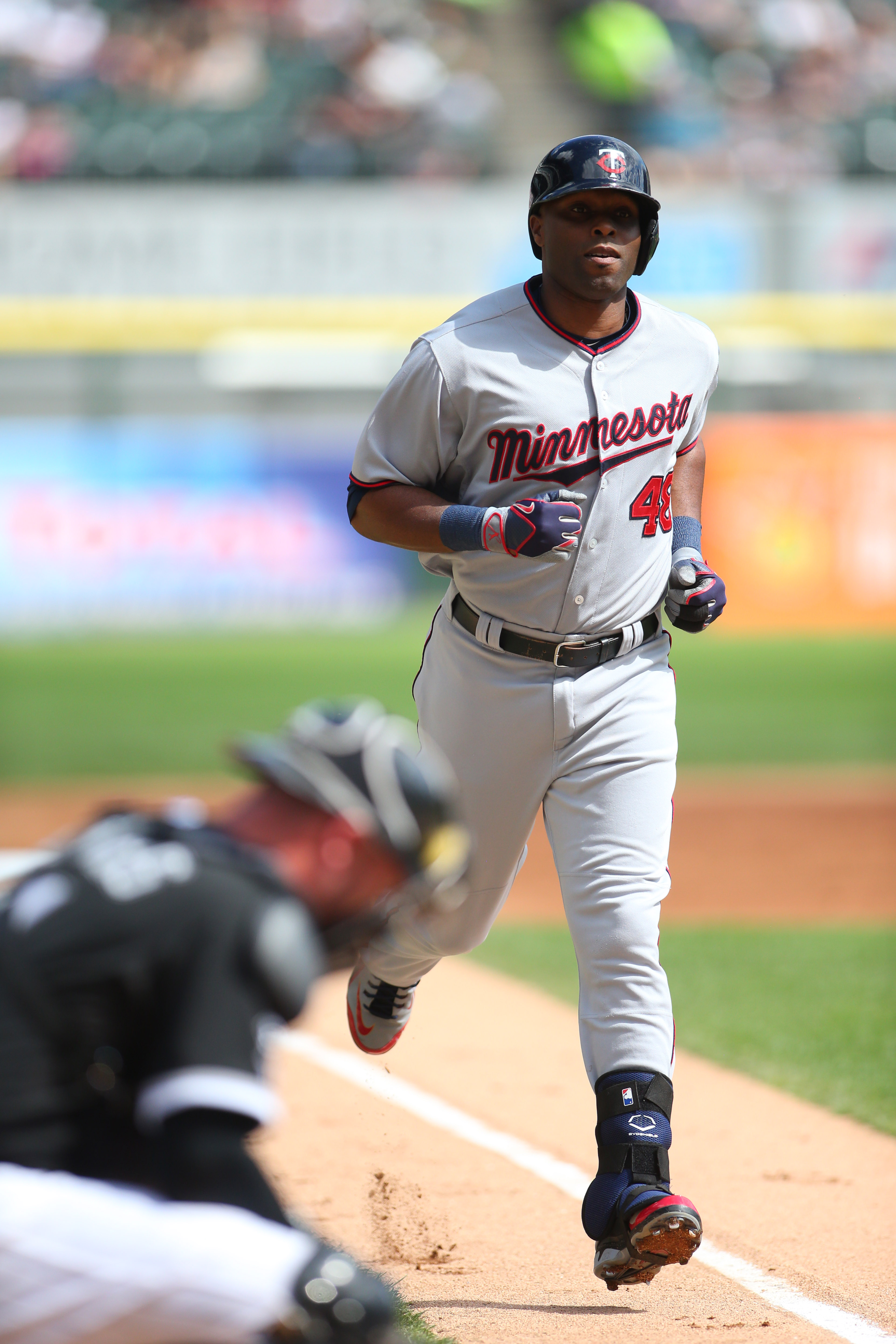
Hunter ended things where he began by returning to Minnesota for the 2015 season. He broke in with the Twins back in 1997, earned regular playing time as a reserve in 1999, and locked down an everyday job with the club in 2001.
From that 2001 season through the end of 2007, Hunter put up over 4,000 plate appearances of .272/.326/.484 hitting with 178 home runs. Then serving as a center fielder, he received the Gold Glove award in every single one (and for two more years thereafter).
The winter of 2007 seemed to spell the end of Hunter’s tenure in Minnesota. He departed via free agency to join the Angels, who promised him $90MM over five years. Hunter continued to thrive, posting a .286/.352/.462 cumulative batting line in nearly 3,000 trips to the plate over the life of that contract.
Having transitioned to right field in the back half of his tenure with the Halos, Hunter caught on to take over there for the Tigers. He was a strong contributor to two good teams in his two years in Detroit.
While other organizations came calling before 2015, Hunter decided on a return to a Twins club that wasn’t expected to do much. But it proved more than a farewell tour, as the club surpassed expectations (and underlying performance barometers) with an 83-79 record.
Believers in the power of clubhouse chemistry would surely attribute some of the Twins’ success last year to the presence of the fiery Hunter, who is respected highly in that regard. He didn’t have a great season — to the contrary, he played at or below replacement level — but was still expected to be courted for a return, albeit in a reduced role.
Minnesota has plenty of options to proceed without the veteran, whose departure could open the way for some of the organization’s young talent. As MLBTR’s Steve Adams explained in his offseason outlook for the team, there are some options on hand that figure to step in.
As a forty-to-fifty win player who was more consistently excellent than great, Hunter seems unlikely to land in the Hall of Fame, though he surely deserves a spot in the proverbial “hall of very good.” He has come under fire for homophobic comments made in recent years, an area that tarnished his reputation to many, though Hunter is widely lauded as one of the game’s good guys. All told, Hunter enjoyed a memorable career as one of the better players of his generation.
Photo courtesy of USA Today Sports Images.
Alex Anthopoulos On Blue Jays’ Offseason
Blue Jays GM Alex Anthopoulos took a look ahead at the coming winter after his club was bounced from the ALCS, and Ben Nicholson-Smith of Sportsnet.ca breaks down the most interesting information to come out of the GM’s comments. Of course, Toronto still needs to act to get Anthopoulos under contract, an under-the-radar issue that will soon move to the front burner.
Among the key notes:
- Anthopoulos doesn’t have any major changes in mind for the front office group working beneath him (assuming he reaches a new deal). Likewise, manager John Gibbons appears to be all but certain to return.
- Could the Jays make a serious effort to re-sign David Price? “I know he’s very open to being back here,” said Anthopoulos. “We’ll certainly be in the game.”
- The club could consider shifting young righties Aaron Sanchez and Roberto Osuna to the rotation, added Anthopoulos, as the club bids to fill out its staff. But he seemed to suggest that a return to starting might wait given the team’s expectations of contention next year.
- The club has some depth in the corner outfield/first base/DH slots, Anthopoulos noted. As Nicholson-Smith explains, Chris Colabello and Justin Smoak could end up being discussed in trades, and first base could be an area that the team could add a left-handed bat. Anthopoulos did add that “a little more balance” in the lineup would be preferable.
- The club will likely allow Ryan Goins and Devon Travis to compete for the starting second base job this spring.
- There’s also some depth in the outfield, where Kevin Pillar put up a nice year in center and Jose Bautista remains entrenched in right. That leaves a bit of a logjam among Ben Revere, Michael Saunders, and Dalton Pompey which could (at least in theory) be resolved via trade. Anthopoulos said that the depth is important to cover for injuries but also “gives [the team] some options.” He also added that Toronto still believes in Saunders, explaining that “his upside is huge.”
AL West Notes: Mariners Coaches, Ibanez, Angels, Astros
The Mariners announced today that Angels special assistant Tim Bogar has been hired as the bench coach to serve under newly minted manager Scott Servais (as Mike DiGiovanna of the L.A. Times reported would happen last week). Seattle also announced that Mel Stottlemyre Jr. has been named the club’s new pitching coach. Edgar Martinez will return as the team’s hitting coach, and Chris Woodward will once again handle first base coach duties in Seattle. That leaves openings at third base coach and bullpen coach, and Bob Dutton of the Tacoma News Tribune tweets that two names under consideration are Padres bench coach Dave Roberts and former big league catcher Dan Wilson, who has been Seattle’s minor league catching coordinator for the past three seasons.
A bit more from the AL West…
- Dutton also tweets that the Mariners have spoken to Raul Ibanez about either a front office role or a position on the coaching staff. Ibanez, of course, played for the Mariners from 1996-2000 and then again from 2004-08 before returning for one final stint in 2013. He’s also familiar with GM Jerry Dipoto, though, as Dipoto signed Ibanez to a low-risk one-year deal for the 2014 season. That move didn’t work out, however, as Ibanez was unable to recreate the production he showed in his final season with the Mariners when he blasted 29 homers as a 41-year-old.
- Angels GM Billy Eppler acknowledged that the hires of Servais, Bogar and Matt Klentak, who was announced as the new Phillies GM this morning, has taken a toll on the front office, writes MLB.com’s Alden Gonzalez. “That’s no doubt going to be felt throughout a number of departments,” said Eppler. Per Gonzalez, Eppler is keeping an open mind and talking to a wide variety of candidates for the club’s coaching staff and front office. Among those who are possibilities to fill the role of assistant GM to Eppler are Hal Morris and Kevin Reese. Morris is presently the Angels’ director of pro scouting, while Reese holds that same title with Eppler’s former organization, the Yankees.
- Within his column, Gonzalez notes that Rangers pitching coach is soliciting offers from other clubs and could be a candidate to fill the Angels’ vacancy at that post. As was reported recently, Maddux’s contract expires at the end of this month. He’s been invited back by Texas but appears to be testing the waters to see what sort of interest other clubs may have.
- The Astros‘ payroll will likely increase in 2016, writes MLB.com’s Brian McTaggart, though that will be in large part due to arbitration raises for Dallas Keuchel, Jason Castro, Evan Gattis and Chris Carter. The Astros will try to add another starting pitcher to what was a top-heavy rotation in 2015, he adds. McTaggart also notes that Carter’s tremendous late-season surge complicates the team’s decision on whether not he should be tendered a contract, though it may also have helped to create a trade market for Carter’s services.
Seeking Android App Testers
MLBTR is seeking people to test out our Android app, Trade Rumors. This free app has been available in the Play Store for a year now, but our upcoming release adds the ability to read and leave comments on the posts. We’re looking for people specifically to test the commenting feature. Also, it might be best if you’ve already been using the app for a while.
If you’d like to help out and test the new commenting feature within the app, please email us at mlbtrandroid@gmail.com.
Free Agent Profile: Justin Upton
Justin Upton, baseball’s first overall draft pick a decade ago, reaches free agency at age 28 with a solid track record of hitting for power.
Strengths/Pros
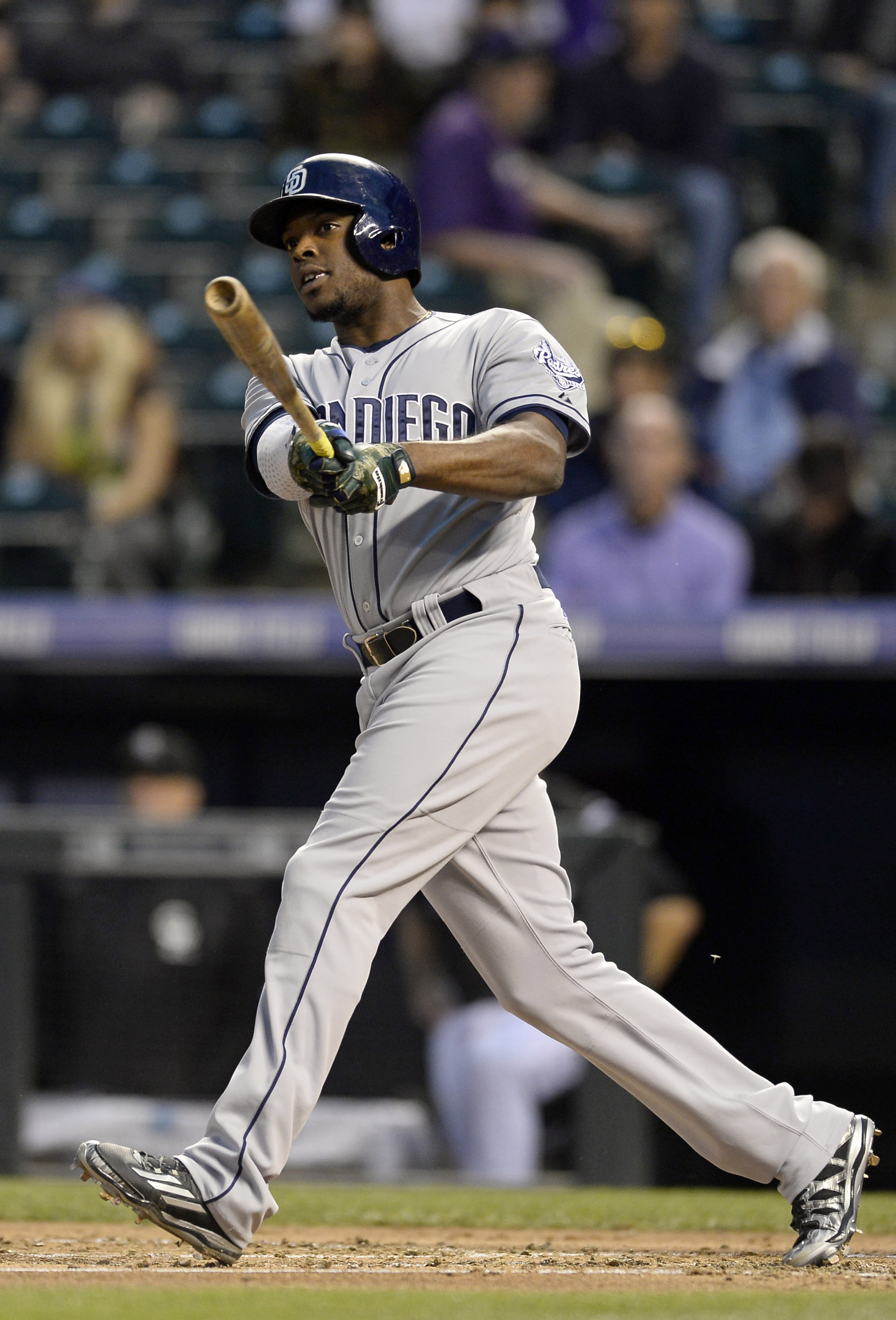 Upton’s pedigree is still an important selling point, because it implies he’s yet to reach his ceiling. According to Baseball America, Upton was on scouts’ radars when he was 14 years old. After he was drafted out of high school by the Diamondbacks in ’05, BA wrote that he had “unbelievable tools” and felt that the term “five-tool prospect” sold him short. Upton was the consensus pick for first overall, after older brother B.J. (now known as Melvin) went second overall to the Rays in 2002. Justin was seen as a patient, powerful hitter, with great bat speed, plus power potential, big-time speed, and a cannon for an arm.
Ten years later, Upton has 190 home runs under his belt through age 27. Of the 30 non-active players who accomplished that feat, 17 are in the Hall of Fame. Upton has 82 home runs over the last three seasons, 17th in baseball. Among those with 1500 plate appearances in that time, Upton ranks 22nd in slugging and 18th in ISO. Power is Upton’s main calling card, and at age 28, there may be more to come. Upton is also an asset on the basepaths, as his baserunning runs above average marks can attest.
I wouldn’t call Upton one of the best players in baseball, but he is one of the game’s better outfielders. Over the last three years, his 10.6 wins above replacement ranks 18th among outfielders. He was an All-Star in 2009, ’11, and ’15, finishing fourth in the MVP voting in ’11. Upton has been durable, averaging 152 games played over the last five seasons.
As we’ve mentioned, Upton will play most of next season at age 28. The only other top 30 free agent position players who will play next year in their 20s are Jason Heyward and Colby Rasmus. Upton’s age leaves room for upside and should result in his team getting more prime years.
Weaknesses/Cons
Let’s be honest: Upton hasn’t lived up to the mammoth expectations placed on him. He only reached 30 home runs once in his eight seasons, and that was four years ago. Power may be Upton’s strength, but fellow free agent Chris Davis has shown much more. Upton’s ability to get on base is nothing special, and one can name at least 20 hitters who have been better overall over the last three years. You can find at least 40 hitters who were better this year. Upside is nice, but if this is all Upton is, he’s a good player and not a great one.
Strikeouts are part of Upton’s game. He has whiffed in 25.8% of his plate appearances since 2013; only seven qualified hitters struck out more often. Oddly enough, all of them are either free agents or non-tender candidates.
Upton’s left field defense grades out as roughly average. Advanced metrics show he was a touch above average this year, and a touch below last year. I don’t consider it a strength or a weakness, but I felt his defense warranted mention.
Upton is expected to receive and turn down a qualifying offer from the Padres, so signing him will require draft pick forfeiture. This is not the case for one of his main market competitors, Yoenis Cespedes.
Personal
Upton was born in Norfolk, Virginia and resides in Scottsdale, Arizona with his wife. Justin grew up in a baseball family. His father Manny scouted for the Royals and White Sox, and older brother Melvin was drafted second overall in ’02. Justin battled an immaturity label early in his career, as outlined in this 2012 ESPN article by Robert Sanchez. It should be noted that he made his MLB debut at age 19. Upton signed a six-year, $51.25MM extension with the Diamondbacks in March 2010, but was traded to the Braves in January 2013. He spent 2013 and ’14 roaming the outfield alongside his brother Melvin, who had signed with Atlanta a few months prior. Then Justin was traded to the Padres in December 2014, and Melvin rejoined him after a separate deal in April.
Market
Upton should have plenty of suitors this winter, though he does not seem likely to re-sign with the Padres. The Orioles don’t have much at the outfield corners, and could have money to spend if they lose Chris Davis. The Yankees could be a suitor if they trade Brett Gardner. The Rangers could be a potential match if they have an appetite for another large contract. The White Sox have a need in the outfield, but have never spent even $70MM on a player. The Mariners could have a spot for Upton, but he rejected a trade to Seattle in 2013. I wouldn’t rule them out, however, in the case Upton has decided the Mariners are closer to contention now than they were two years ago. I’ve heard plenty of speculation that the Giants make a good fit for Upton, though it’s possible they’ll put their resources toward pitching.
Nationals GM Mike Rizzo was the scouting director when the Diamondbacks drafted Upton first overall, but a reunion would require moving Jayson Werth to right field and Bryce Harper to center. It’s unclear whether they’d be interested in doing so. The Dodgers have almost $40MM tied up in Carl Crawford and Andre Ethier next year. Trading one of them and signing Upton (not necessarily in that order) is plausible.
The Tigers could have a spot for Upton, but they seem likely to focus on starting pitching. Same goes for the Red Sox, who would also have to move an outfielder like Jackie Bradley to make room. The Angels, Astros, and Blue Jays could seek a left field upgrade this winter, but may prefer a left-handed hitter. The Jays, as well as the Indians, were on Upton’s four-team no-trade list last winter. The Indians would likely face budget restraints with Upton, and may not want to bring him on as a right fielder anyway.
The Royals could have an opening in left field if Alex Gordon departs, but they’ve never committed more than $55MM to a player. The Cardinals have plenty of in-house replacements if Jason Heyward departs. The Mets are a tough match even if Cespedes leaves, with Curtis Granderson and Michael Conforto at the corners. The Cubs also have more of a need at center field. The Phillies have little in place at the outfield corners and could afford Upton, but it would be odd for a rebuilding club and a tough sell for the player.
Expected Contract
Given his age, an opt-out clause should be a consideration for Upton. Agent Larry Reynolds would do well to get his client another crack at free agency at age 30 or 31, as no one would be surprised if Upton takes his game to another level and hits 40 home runs at some point. If an opt-out clause is obtained by Reynolds, I’d expect the total dollars to be reduced as a concession.
Coming off an inferior season to Chris Davis and Yoenis Cespedes, I’d expect Upton to receive a slightly lower average annual value. Plus, Upton’s age gives him a chance at a seventh year, which may also bring down the AAV. Something in the $20-22MM range could work. The end result might put all three players at a similar grand total. I’m putting Upton down for a seven-year, $147MM contract.
Photo courtesy of USA Today Sports Images.
KBO’s Lotte Giants To Post Outfielder Ah-Seop Son
The Lotte Giants of the Korea Baseball Organization will post right fielder Ah-seop Son for MLB teams to bid upon this offseason, according to the Yonhap News Agency (hat tip: Dan Kurtz of MyKBO.net). Lotte had reportedly been mulling over the difficult decision of whether to post Son or third baseman Jae-gyun Hwang, both of whom had asked the club to post them. However, KBO’s league rules state that a team can accept only one bid on a posted player per offseason, and a league ruling was made that Lotte could not simply post them simultaneously and then select the top bid.
Per Yonhap, if the Giants don’t receive a bid that is to their liking on Son, or they accept a bid but Son and the winning team cannot come to a deal on a Major League contract, the club will then immediately make Hwang available via the posting system. If a bid for Son is accepted and he does indeed sign with a big league club, then Lotte almost certainly will lose Hwang for nothing next offseason, as he’s set to become a true free agent next winter and could negotiate with MLB clubs without the restrictions of the posting system.
Because of that, it’s at least a mild surprise to see Son posted first, as he’d have been eligible to be posted next winter as well. However, the Yonhap report indicates that the Giants elected to post Son first due to a superior track record over the past five seasons. While Hwang set multiple career-highs in 2015, most notably in home runs (by a wide margin), Son’s been the steadier hitter over the past half-decade.
Dating back to 2011, Son has batted .333/.409/.476 as opposed to Hwang’s .289/.357/.438. Son has averaged 12 homers and 16 steals per year in that time, while Hwang has averaged respective totals of 12 and 17. (Hwang’s 26 homers in 2015 skew those averages somewhat, though so, too, do Son’s 36 steals in 2013.) The duo’s 2015 production — .317/.406/.472 for Son and .290/.350/.521 for Hwang — made the decision difficult for Lotte.
Son, who is represented by agent Rick Thurman of the Beverly Hills Sports Council, will turn 28 during Spring Training next season. He will be posted under the old, blind-bid posting system that still applies to KBO. As a reminder, that means all 30 clubs will have the opportunity to submit a bid of any amount to secure negotiating rights for Son’s services. If Son’s team accepts the bid — and the Giants could neglect to do so if they don’t think it to be a high enough price for one of their top players — that team would then have 30 days to negotiate a big league contract with Son and Thurman. If a deal can’t be reached, Son would return to Lotte for the 2016 season, and the MLB club that won the bidding would receive its money back. As noted above, should that scenario play out, the process would start over with Hwang, with all 30 teams being eligible to place a bid.
Son will become eligible to be posted starting on Nov. 1, and due to the possibility that Lotte could have to go through the month-long bidding process twice this winter, it’d make sense for the club to post him as early in the offseason as possible. Teams will be burning through their budgets over the course of the winter, and waiting until later in the offseason raises the possibility of a team feeling its spent all it can on free agency or of acquiring an alternative to either player either via free agency or trade.
For the time being, Son will join a crowded free agent market for corner outfielders that is headlined by Jason Heyward, Justin Upton and Yoenis Cespedes but also features Colby Rasmus, Alex Rios, Steve Pearce and Rajai Davis, among others.
Red Sox Hire Ruben Amaro Jr. As First Base Coach
The Red Sox announced today what the Boston Globe’s Nick Cafardo first reported over the weekend: former Phillies general manager Ruben Amaro Jr. has been hired as the club’s new first base coach. He’ll also serve as Boston’s outfield instructor and assist in coaching the club on baserunning. Per the release announcing the move, Amaro signed a two-year contract.
“I was honored that Dave [Dombrowski] and John [Farrell] would consider me for this opportunity and add me to this dynamic coaching staff,” said Amaro in a press release announcing the unusual hire. “I am poised, focused, and ready to bring anything I can in terms of experience and knowledge to this position, and I look forward to being a part of the Boston Red Sox.”
Amaro’s transition from the top of a baseball operations hierarchy to a coaching staff is relatively unprecedented. Earlier this year, Marlins GM Dan Jennings moved from the front office to the dugout, although that was within his own organization after the club had fired skipper Mike Redmond. Amaro, on the other hand, leaves the only organization with which he’s ever been involved in the front office to join the coaching staff of an organization with which he’s never been affiliated. Amaro was a teammate of Farrell with the Indians in 1994, so the two men do have a preexisting connection.
Though Amaro doesn’t have prior coaching experience, he did spend parts of eight seasons in the Major Leagues as an outfielder. In 1051 plate appearances, Amaro batted .235/.310/.353 with the Angels, Phillies and Indians. He joined the Phillies’ front office the same year that he retired as a player, in 1998.
One would think that Amaro could have found a spot within a different front office as a special assistant or senior adviser to a different GM, as many previously fired GMs have done. For example, former Cubs GM Jim Hendry is currently in the Yankees’ front office, former D-Backs/Padres GM Kevin Towers is with the Reds, former Blue Jays GM J.P. Ricciardi is with the Mets and former Mets GM Omar Minaya spent several seasons as an assistant/adviser in the Padres’ front office before joining the MLBPA. (Those, of course, are just a few recent examples.) Amaro, though, clearly wants to go down a different path than peers who have found themselves in similar situations, and kudos to him for doing so even though it will likely open him up to come criticism.
The 50-year-old Amaro’s tenure as Phillies GM was littered with missteps that led to a widely expected dismissal in September, but his successor, former Angels’ GM Matt Klentak, thanked Amaro at today’s introductory press conference for the work he did in rebuilding the club’s farm system over the past year-plus. Amaro acquired prospects Jorge Alfaro, Jake Thompson, Nick Williams, Jerad Eickhoff, Alec Asher, Ben Lively, Tom Windle, Zach Eflin, Nick Pivetta, Darnell Sweeney, John Richy and Joely Rodriguez in trades that sent Antonio Bastardo, Jimmy Rollins, Marlon Byrd, Cole Hamels, Jonathan Papelbon and Chase Utley to new teams over the final year of his tenure.
Submit Your Questions For Today’s MLBTR Mailbag
Last week’s edition of the MLBTR Mailbag included questions on Yoenis Cespedes and the Cardinals, Joaquin Benoit‘s club option, Dalton Pompey‘s trade candidacy, the possibility of an Andre Ethier trade and the long-term outlook at third base for both the White Sox and Brewers.
We’ll run through another group of questions later today in this week’s mailbag, so if you have question you’ve been mulling over and would like MLBTR’s take, let us know: mlbtrmailbag@gmail.com. Sheer volume will prevent us from getting to every question, of course, though readers can also send questions our way on Tuesday and Thursday afternoons in the weekly live chats hosted by myself and Jeff Todd, respectively.
Phillies Name Matt Klentak GM
OCT. 26: The Phillies have announced the hiring of Klentak as vice president and general manager, adding that, at 35 years of age, Klentak is the youngest GM in the club’s history.
“In Matt we found an executive with the keen ability to understand cutting-edge baseball analytics, coupled with superior scouting, player development and leadership skills,” said president Andy MacPhail in the press release that announced the move. “Additionally, his commitment and resolve to build the foundation for a championship-caliber team was evident every step of the way through the process. I trust Matt to lead the Phillies as we all rededicate ourselves to return championship baseball to Philadelphia.”
OCT. 24: The Phillies will name Angels assistant Matt Klentak as their next GM, Nick Cafardo of the Boston Globe tweets. Yesterday, it emerged that Klentak was a finalist for the job, along with Chaim Bloom of the Rays and Dan Kantrovitz of the Athletics. As MLB.com’s Todd Zolecki noted (via Twitter), all three candidates were in their 30s and had Ivy League and analytics backgrounds.
Klentak began working in the Rockies baseball operations department soon after graduating from Dartmouth with an economics degree. He then worked in labor relations for MLB for several seasons and helped shape the 2006 Collective Bargaining Agreement. He departed to become director of baseball operations for the Orioles, where he worked under current Phillies president of baseball operations Andy MacPhail. Following the 2011 season, he headed to the Angels, where he specialized in working with contracts, arbitration and roster issues. He was recently a candidate for the Angels GM position that went to Billy Eppler. (While with the Angels, Klentak was also one of the first-ever guests on the MLBTR Podcast, appearing one year ago today.)
“Matt brings so much to the table,” said then-Angels GM Jerry Dipoto. “Matt understands the inner workings of baseball from the field to the finance. He understands baseball from the staff in the clubhouse to the players on the field to how to communicate back and forth with a finance department and ownership.”
MLB.com’s Alden Gonzalez writes (Twitter links) that Klentak did much of the Angels’ GM work once Dipoto resigned (even though Bill Stoneman was officially the Angels’ interim GM). Klentak is analytically oriented, but is regarded as a good communicator.
The Phillies’ 2015 season was, of course, a miserable one, but the situation Klentak is entering is in many ways rather favorable. Thanks to what appears to be a solid series of recent top draft picks and the strong trade of Cole Hamels to the Rangers, the Phillies have a very good collection of young talent headed by J.P. Crawford, Maikel Franco, Aaron Nola, Jake Thompson, Nick Williams, Jorge Alfaro and Cornelius Randolph. The Phillies have also historically had relatively large payrolls, which could give Klentak the ability to add to that core once it matures.
Besides Klentak, Bloom and Kantrovitz, other interviewees for the Phillies’ position included former Marlins executive Larry Beinfest, MLB vice president of baseball operations Kim Ng, Indians vice president of player personnel Ross Atkins, Cardinals director of player personnel Matt Slater, Royals assistant GM J.J. Picollo and former Cubs GM Jim Hendry. Klentak’s departure is the second significant one for Eppler and the Angels’ front office this week — the Mariners just hired Klentak’s fellow Angels assistant Scott Servais to be their manager.