
Twins Acquire Brayan Medina To Complete Taylor Rogers Trade
The Twins have acquired right-handed pitching prospect Brayan Medina from the Padres, per Minnesota’s director of communications and player relations Dustin Morse. Earlier this month, the Twins traded Taylor Rogers and Brent Rooker to the Padres for Chris Paddack, Emilio Pagan and a player to be named later, which has now been revealed as Medina.
Born in Venezuela, Medina is just 19 years old. He made 12 starts and 2 relief appearances last year between the Arizona Complex League and the Dominican Summer League. In 33 2/3 innings pitched, he had a 5.88 ERA, 30.4% strikeout rate and 14.9% walk rate. Last year, Baseball America ranked him the #26 prospect in the Padres’ system.
After going over the first luxury tax line last year, the Padres have seemed reluctant to do so again this year, as paying the tax in consecutive years comes with escalating penalties. Their current CBT number is just under $229MM, in the estimation of Jason Martinez of Roster Resource. That gives them only about $1MM of wiggle room before they are over the first CBT line, which is $230MM under the new CBA. As part of the trade with Minnesota, the Twins agreed to pay almost all of Rogers’ salary, helping the Padres limbo under that line. Medina seems to be their reward for doing so, adding an intriguing young arm to their system.
Twins Acquire Chris Paddack, Emilio Pagan From Padres For Taylor Rogers, Brent Rooker
10:33am: The Padres are receiving $6.6MM from the Twins, tweets Ken Rosenthal of The Athletic. That effectively reduces Rogers’ $7.3MM salary to the new $700K league minimum.
10:00am: The Twins saved one more move in their whirlwind offseason for what was scheduled to be Opening Day (before said opener was pushed back to Friday due to weather). Minnesota announced Thursday the acquisition of right-handed starter Chris Paddack and righty reliever Emilio Pagan in exchange for closer Taylor Rogers and first baseman/outfielder Brent Rooker. The Twins will also receive a player to be named later and will send cash to San Diego in the deal. The Padres have also announced the trade.
Minnesota is acquiring a pair of arms under club control for multiple seasons, as Paddack, who is earning $2.25MM in 2021 is only in his first season of arbitration eligibility. He’s controlled through the 2024 campaign. Pagan, meanwhile, is earning $2.3MM this season and is controlled through 2023 via arbitration. Rogers, 31, is set to earn $7.3MM this season in his final year of club control before reaching free agency. Rooker, 27, doesn’t yet have a full year of Major League service and is controllable through the 2027 season.
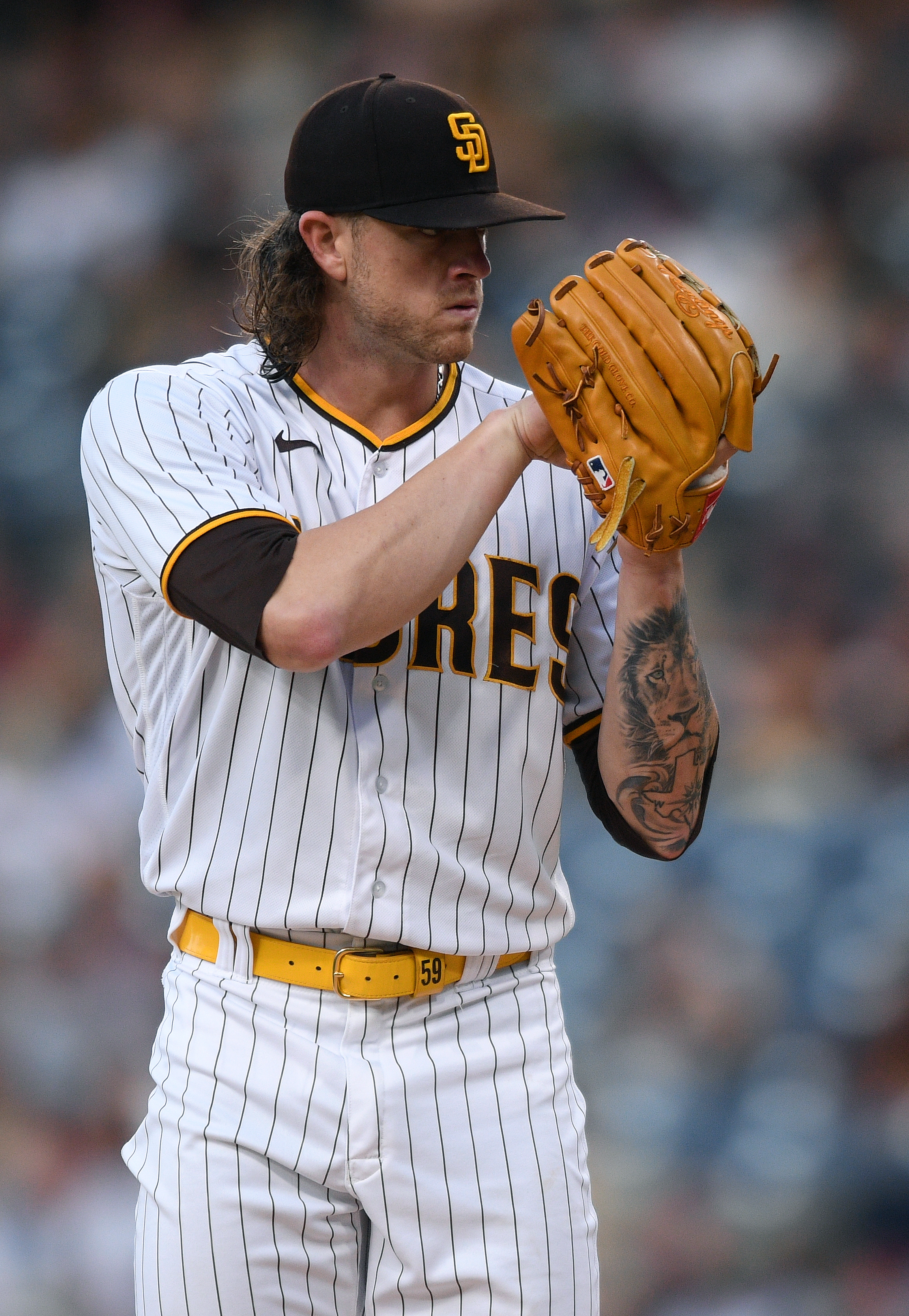
The 26-year-old Paddack and his three remaining seasons of club control headline the trade for Minnesota. The 2015 eight-rounder broke out as one of the sport’s top 100 prospects heading into the 2019 season and delivered on that hype when he posted a 3.33 ERA with a 26.9% strikeout rate and just a 5.5% walk rate through 140 2/3 innings as a rookie. At that point, Paddack looked like a cornerstone piece for the Friars, and any near-term trade involving him would’ve seemed nearly impossible to fathom.
Paddack, however, has been unable to repeat that brilliant rookie performance. His 2020 campaign resulted in a 4.73 ERA in with a diminished 23.7% strikeout rate. He still worked a “full” slate of 12 starts and 59 innings during the shortened 2020 season, but the results and the underlying metrics weren’t nearly as strong as his 2019 debut. Paddack’s 2021 season represented an even further step back; in 108 1/3 innings, he pitched to a 5.07 ERA with a career-low 21.6% strikeout rate. More concerning, though, was the fact that he ended the season with a low-grade tear of the ulnar collateral ligament in his pitching elbow.
The Twins are likely convinced that Paddack’s elbow is healthy enough to rely on him as a rotation piece not only in 2022 but for the next several seasons. If that’s the case, they’ll focus their work with Paddack on further developing a third pitch to help him recapture his 2019 form. Paddack averaged 94.9 mph on his fastball last season and has been lauded for his plus changeup since his prospect days, but his curveball has been a below-average pitch for him at the big league level. If the Twins are able to help Paddack establish that third pitch, it stands to reason that his heater and changeup can trend closer to their 2019 effectiveness. There’s potential for a (second) breakout with Paddack, particularly given that his command has remained elite even through his 2020-21 struggles. The extent to which Minnesota can refine that third pitch (or develop an entirely new one) will be telling.
Minnesota is also picking up two years of control over the 30-year-old Pagan — another 2019 standout (with the Rays) who has had harder luck in San Diego. Acquired by the Padres on the heels of a 2.31 ERA with a dominant 36% strikeout rate and 4.9% walk rate in 2019, Pagan hasn’t been nearly as effective since being shipped to southern California. In 85 1/3 innings with the Friars, he posted a 4.75 ERA with a 26.3% strikeout rate and 7.7% walk rate. Pagan has always been homer-prone, but that flaw ratcheted up to new levels in 2021 when he yielded an average of 2.27 long balls per nine frames.
Despite his recent struggles, however, Pagan has above-average strikeout rates and velocity. And, like Paddack, his command has been nothing short of outstanding (with the exception of the shortened 2020 season). He’s walked just 6.2% of his opponents at the big league level and has yielded only a .210 batting average and .264 on-base percentage in his career. A penchant for serving up home runs has been Pagan’s only real blemish, but if the Twins can clean up that issue — as the Rays did in 2019 and the Mariners did in 2017 — they’ll have a closing-caliber reliever on their hands for the next two seasons.
Coaxing a high-level performance out of Pagan will be all the more crucial for the Twins, as this morning’s trade sends their closer and one of the best left-handed relievers in all of baseball to San Diego. The 31-year-old Rogers has been a triumph in terms of player development for Minnesota, blossoming from a fairly nondescript back-of-the-rotation prospect to a late-inning buzzsaw who has overpowered opponents dating back to the 2018 season.
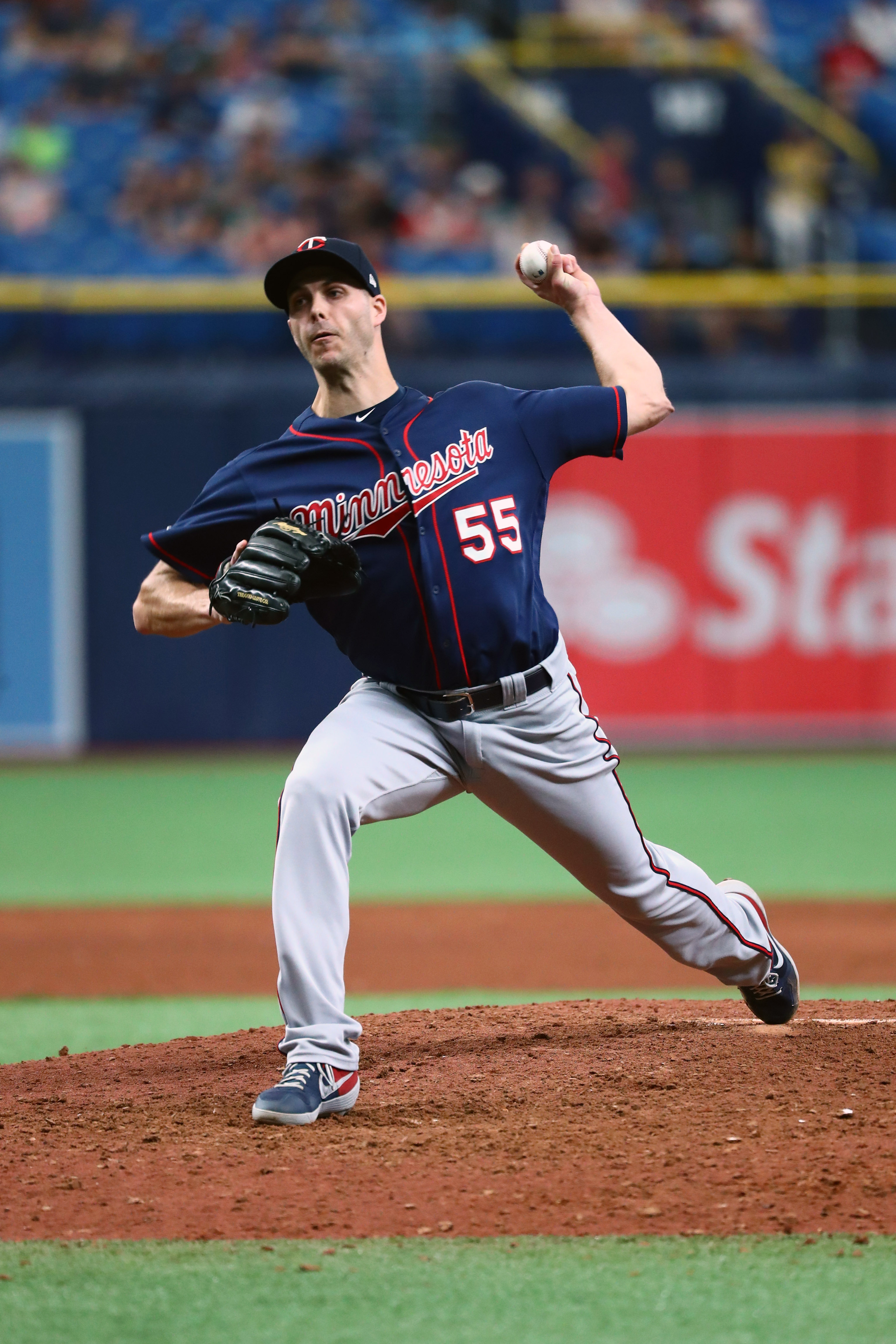
Rogers, whose twin brother Tyler pitches for his new division rival in San Francisco, added a slider to his repertoire back in 2018 — first debuting the pitch on Memorial Day weekend that year. The change in his results was stunning. Carrying a 5.48 ERA at the time, Rogers pitched to a 1.34 ERA for the remainder of the season and whiffed 57 hitters in 47 innings. There’s been no looking back for him, either. Since debuting that devastating breaking ball on May 31, 2018, Rogers has posted a 2.58 ERA (2.54 SIERA) with a massive 32.5% strikeout rate, a tiny 4.6% walk rate and a hearty 48% grounder rate. He’s been one of the absolute best relievers in MLB during that span, racking up 50 saves and, in 2021, making his first All-Star team.
Dominant as Rogers has been, however, he isn’t without his own medical concerns. The lefty’s 2021 drew to an abrupt close when he exited his appearance on July 26 with discomfort in his left middle finger. It was eventually determined that Rogers had a damaged ligament in his pitching hand. As the Twins are with Paddack, San Diego is clearly banking on the belief that Rogers is healthy and able to bounce back to his typical form. If that’s indeed the case, they’ll be able to turn leads over to one of the game’s more effective relievers for the 2022 season before Rogers reaches free agency in the offseason.
Rooker is the fourth known piece of the deal at this time and gives the Padres a power-hitting corner outfield option who has yet to piece things together at the MLB level. Selected with the No. 35 overall pick back in 2017, the former Mississippi State star breezed through the minor leagues, hitting .263/.359/.516 while showing off his plus raw power. Rooker’s bat will need to carry him at the MLB level, however, as he’s a college first baseman who the Twins tried rather unsuccessfully as a left fielder (-6 Defensive Runs Saved, -4 Outs Above Average, -9.7 UZR/150 in 268 career innings).
Rooker has a pair of minor league options remaining and isn’t necessarily an immediate fix to the Padres’ corner outfield woes. He’ll give them an option there, at first base and at designated hitter — one who has light-tower power but also one who has punched out in 32.1% of his 234 big league plate appearances (against just a 6.4% walk rate). The 6’3″, 225-pound Rooker gives San Diego an intriguing power bat but also something of a project, as he’s already 27 years of age and hasn’t yet proven that he can handle big league pitching. Given his lack of defensive value, it’s paramount for the Padres that they put the finishing touches on the development of Rooker’s bat.
The Twins have been on the hunt for starting pitching all winter, and while they didn’t add the marquee name many fans hoped, they’ve now acquired both Paddack and Sonny Gray while also signing Chris Archer and Dylan Bundy. That quartet will join rookie Opening Day starter Joe Ryan and under-the-radar sophomore Bailey Ober in comprising Minnesota’s main group of starters, but the Twins also have plenty of well-regarded prospects on the horizon. Jordan Balazovic, Josh Winder, Simeon Woods Richardson, Matt Canterino and Cole Sands are all getting close to the big leagues and could debut at some point in 2022.
As for the Padres, they’ll deal from a position of depth in order to strengthen the back end of their bullpen. Paddack has been a regular in the San Diego rotation for the past three seasons but was largely nudged out of the frame by a series of high-profile trade acquisitions. The Friars have added Yu Darvish, Joe Musgrove, Mike Clevinger and, most recently, Sean Manaea over the past year-plus, and they also signed righty Nick Martinez to a four-year deal this winter. Add in young arms like MacKenzie Gore, Ryan Weathers and Adrian Morejon (who’ll return from Tommy John surgery later this season), and it’s easy to see why they felt comfortable moving Paddack. It’s certainly a risk to sell low on a starter with his upside, but the Friars are adding one of the game’s more successful relievers and clearly have sufficient rotation depth to make a move of this nature.
Ken Rosenthal of The Athletic and Kevin Acee and Jeff Sanders of the San Diego Union-Tribune reported last night that the two teams were discussing trade scenarios involving Paddack and Rogers. ESPN’s Jeff Passan first reported this morning that a Paddack/Rogers trade was happening. Rosenthal reported that Pagan was in the deal, and The Athletic’s Dennis Lin first reported Rooker’s inclusion. La Velle E. Neal III of the Minneapolis Star-Tribune added that the Twins will receive a PTBNL, and Dan Hayes of The Athletic tweeted that Minnesota was including some cash in the swap.
Photos courtesy of USA Today Sports Images.
Twins Announce Series Of Roster Moves
The Twins announced a series of roster moves Friday, most notably reinstating outfielders Max Kepler and Kyle Garlick from the Covid-19 list. To make room on the active roster, outfielder/first baseman Brent Rooker and catcher Ryan Jeffers were optioned to Triple-A St. Paul. Meanwhile, infielders JT Riddle and Tzu-Wei Lin have been designated for assignment, while catching prospect Ben Rortvedt has been recalled from Triple-A for his big league debut.
Kepler, 28, hasn’t played in a game since April 16 but will now return to his role as Minnesota’s everyday right fielder. He’s not out to a great start, slashing .234/.315/.362 through his first couple weeks of play, but that’s a sample of just 54 plate appearances. From 2019-20, he turned in a much stronger .246/.332/.499 batting line and clouted 45 homers in 792 plate appearances while playing strong defense in right field.
Garlick, meanwhile, was out to a solid .280/.321/.400 start through 28 trips to the plate and was getting some run as a right-handed bat against lefties. He’ll continue on in that role, giving the Twins a right-handed bat to take some reps in left field. That spot has been occupied by top prospect Alex Kirilloff as of late, but Kirilloff can also play some first base in the absence of Miguel Sano. Luis Arraez could get some time in left field as well, now that the Twins’ middle infield is back to full strength.
Optioning Jeffers began to look increasingly necessary given the 23-year-old’s early struggles. The 2018 second-rounder has emerged as one of the game’s top catching prospects in recent seasons, ranking as a consensus top 100 talent heading into the 2021 season. Jeffers’ big debut effort last year helped to fuel that ranking, as he stepped up for a then-injured Mitch Garver and gave the Twins 64 plate appearances with a hearty .273/.355/.436 batting line and three home runs.
The 2021 season has been a disaster for the promising young backstop, however, as he’s mustered only a .147/.216/.176 slash through 37 plate appearances. Jeffers is still surely viewed as a key part of the organization’s future, but with the minor league season now slated to begin next week, sending Jeffers down for some regular at-bats — as opposed to splitting time with Garver — makes sense to get him on track. It’s also worth noting that he’s only played 24 games of Double-A ball and has never taken a single plate appearance in Triple-A, so he could simply need some more time to polish off his development.
With Jeffers going down, the Twins will now lean on the versatile Willians Astudillo and the young Rortvedt as backup options to Garver. The 23-year-old Rortvedt was Minnesota’s second-round pick back in 2016 and is a career .240/.315/.347 hitter in the minors who is regarded as a strong defensive backstop. He ranks 24th among Minnesota farmhands, per FanGraphs, and 26th on Baseball America’s rankings. BA calls him an “excellent receiver and blocker” with “standout defensive skills” but a limited offensive ceiling.
Turning to the pair of DFAs, neither comes as much of a surprise. Riddle was only selected to the big league roster when Andrelton Simmons initially tested positive for Covid-19, and he wound up being placed on the Covid list himself not long after. Once Riddle hit the Covid list, the Twins turned to Lin and brought him to the MLB roster. With Simmons now back in the fold alongside Jorge Polanco and utility man Luis Arraez, there’s little room for either Lin or Riddle.
Riddle went 2-for-6 with a run scored in four games with the Twins and is a career .223/.261/.355 hitter in 793 MLB plate appearances. Lin appeared in just one game and didn’t take a plate appearance. He was a .223/.298/.316 hitter in parts of four seasons with the Red Sox from 2017-20.
Twins Select Brandon Waddell, Place Brent Rooker On Injured List
The Twins will place outfielder/first baseman Brent Rooker on the 10-day injured list with a cervical strain in his neck and select the contract of left-hander Brandon Waddell from their alternate training site today, the club announced. Hard-throwing young righty Edwar Colina was transferred from the 10-day IL to the 60-day IL to open a spot on the 40-man roster for Waddell. Colina is dealing with inflammation in his right elbow.
Rooker, 26, was the No. 35 overall pick back in the 2017 draft and has had some rough luck early in his big league career. He burst onto the scene with a .316/.381/.579 slash through seven games last summer before sustaining a fractured forearm when he was hit by a pitch. That injury ended his season, and Rooker will now head back to the injured list after just appearing in just three games in 2021.
Rooker is a bat-first prospect who isn’t likely viewed as the team’s long-term answer in left field, but his power bat is still expected to get a legitimate audition when he’s healthy. He can shift between first, left field and DH, and given that his most recent minor league work in 2019 produced a .282/.399/.530 batting line in 67 games between Double-A and Triple-A, it’s not hard to see why the organization is bullish on him. The Twins did not give an immediate indication as to how long the new injury is expected to sideline Rooker.
As for the 26-year-old Waddell, an eventual big league audition with the Twins appeared likely after the former Pirates farmhand turned heads in Spring Training. Waddell yielded five runs in 9 1/3 innings, but he also struck out 15 of the 36 hitters he faced (41.7 percent) and showed what the Twins felt was a demonstrably improved arsenal. Minnesota claimed him off waivers from Pittsburgh at the end of the 2020 season and managed to sneak Waddell through waivers in late February, but his absence from the 40-man roster proved brief.
Waddell has a pair of minor league options remaining, so the Twins will be able to send him down to their alternate site in St. Paul without exposing him to waivers for a second time. For now, he’ll join Taylor Rogers and Caleb Thielbar as a third lefty in manager Rocco Baldelli’s bullpen.
Twins Place Josh Donaldson On 10-Day Injured List, Recall Brent Rooker
The Twins have placed Josh Donaldson on the 10-day injured list because of a mild right hamstring strain, per the team. The move is retroactive to April 2nd. Outfielder Brent Rooker has been recalled to take his roster spot.
Donaldson left the Twins’ opener after doubling in his first at-bat of the year. Donaldson has, of course, dealt with myriad injuries since his heyday in Toronto. This looks to be another of the ticky-tack variety. That’s not to diminish the difficulty of dealing with this sort of injury, as hamstring injuries are notoriously fickle. Still, the assumption right now would be that Donaldson shouldn’t miss too much time. Luis Arraez is slated to play third base today, and he could be a frequent replacement while Donaldson is out.
Rooker debuted last season with 21 plate appearances. He notched seven hits, including two doubles and a homer. A first round pick by the Twins in 2017, Rooker is a power bat who could be especially helpful as a pinch-hitter for the rest of the current series while they don’t have a designated hitter at their disposal. The Twins return to American League rules on Monday when they face the Tigers in Detroit.
Twins Activate Max Kepler From Injured List
The Twins announced they have activated outfielder Max Kepler from the 10-day injured list. As expected, the right fielder returns after the minimum time off due to a left adductor strain.
Kepler has taken a bit of a step back from his breakout 2019 effort. After hitting .252/.336/.519 (121 wRC+) with 36 home runs last year, he’s down to .220/.322/.431 over his first 143 plate appearances this season. That’s still productive, though, and Kepler’s .222 batting average on balls in play hints at a bit of forthcoming positive regression. Even if he settles in as more of an above-average regular than a true star, Kepler’s a plenty valuable piece of the Twins’ lethal lineup. At 29-18, Minnesota’s a lock for the postseason, but they’re jockeying with the White Sox and Indians in a three-way battle for the AL Central. Chicago currently leads Minnesota by one game.
Unsurprisingly, fellow outfielder Brent Rooker is hitting the injured list in a corresponding move. The former supplemental first-rounder was lost for the season yesterday after fracturing his forearm on a hit-by-pitch.
Twins’ Brent Rooker Suffers Fractured Forearm
Twins outfielder Brent Rooker suffered a fractured right forearm during tonight’s game, manager Rocco Baldelli told reporters. Rooker suffered the injury after being hit by a pitch from Cleveland’s Zach Plesac during the fourth inning of Minnesota’s 8-4 victory over the Indians.
The forearm injury brings a painful end to Rooker’s first MLB season, but the 25-year-old at least made an impressive accounting of himself. Rooker hit .316/.381/.579 over 21 plate appearances since being called up to the big leagues on September 4. Rooker was promoted since Max Kepler went to the injured list with an adductor strain, and in an ironic twist, Kepler is expected back soon and could potentially be the one who replaces Rooker on the active roster.
The 35th overall pick of the 2017 draft, Rooker ranked 98th on Baseball America’s top-100 prospects list prior to the 2018 season, though evaluators in general have considered him to be a step below an elite level prospect due to questions about his defense and the amount of swing-and-miss in his approach at the plate. Rooker is a bit of a “three true outcomes” type, as his strikeouts come with a fair amount of walks and some plus power. Rooker hit .267/.357/.505 with 54 home runs over 1110 PA in Minnesota’s farm system.
Depending on how Rooker’s glovework develops, he could be the heir apparent to Eddie Rosario in the Twins’ corner outfield, or maybe a DH if time ever catches up to Nelson Cruz. With blue chip outfield prospects like Alex Kirilloff and Trevor Larnach ahead of him on the minor league prospect rankings, it remains to be seen where Rooker fits into the Twins’ future, though the small sample size of his 2020 debut provided some indication he can handle big league pitching.
Twins Place Max Kepler On Injured List, Promote Brent Rooker
11:32am: Twins skipper Rocco Baldelli tells reporters that Kepler is only expected to be sidelined for the minimum 10 days (Twitter link via MLB.com’s Do-Hyoung Park). Kepler might’ve avoided an IL stint entirely had the team been at full strength, but with several players also banged up, they needed to get a fresh body onto the roster.
11:15am: The Twins have placed right fielder Max Kepler on the 10-day injured list due to a left adductor strain and selected the contract of outfielder Brent Rooker from their alternate training site in St. Paul, per a team announcement. The club also added Willians Astudillo as the 29th man for today’s doubleheader and announced that righty Juan Minaya cleared waivers and has been outrighted back to St. Paul.
Minnesota only just got Josh Donaldson and Byron Buxton back from the injured list, but they’ll now see a third key piece of their lineup sidelined for the foreseeable future. An expected timeline for Kepler’s return has not been provided.
Kepler, 27, has slashed .220/.322/.431 with seven homers, five doubles and three steals through 143 plate appearances to begin the 2020 season. He’s played strong defense along the way, checking with a +2.5 Ultimate Zone Rating and +1 Defensive Runs Saved in 259 innings in right. It’s a notable loss for the Twins, as Kepler is batting .246/.333/.502 dating back to Opening Day 2019 and is tied for fifth among all MLB right fielders with 15 Defensive Runs Saved over the past three seasons.
Rooker, 25, will get his first call to the Major League level. The No. 35 overall pick in the 2017 draft has been a steady source of power in the minors, slashing a combined .267/.357/.505 in 1110 professional plate appearances, including a .281/.398/.535 line in 274 Triple-A plate appearances a year ago.
There are questions about Rooker’s defense, as some feel he’s best suited in a first base/designated hitter role. The Twins, though, have played him in left field for much of his minor league career and seemingly hope that he can at least play passable defense there at the game’s top level. Defensive concerns notwithstanding, Rooker is considered one of the Twins’ better prospects, ranking 12th at MLB.com, 14th at Baseball America and 17th at FanGraphs due to his largely to his plus raw power and his consistently strong performances at each minor league stop.
With Kepler sidelined, the Twins can rotate Rooker, Eddie Rosario and Jake Cave through the corners. On the surface, adding Rooker’s right-handed bat would seemingly be a plus for a Twins club that has unexpectedly floundered against left-handed pitching in 2020, but Rooker has actually handled righties better than lefties over the past couple of minor league seasons.
Turning to Minaya, he had his contract selected last week but didn’t make it into a game before being designated for assignment. The 29-year-old has spent the past four seasons with the division-rival White Sox, where he’s pitched to a combined 3.93 ERA with 10.0 K/9, 4.6 BB/9, 0.98 HR/9 and a 36.8 percent grounder rate in 128 1/3 frames.
Quick Hits: Schedule, Twins, A’s, Minor League Pay
The Nationals and Yankees are tentatively scheduled to play on July 23, according to Joel Sherman and Andrew Marchand of the New York Post, which would make for a big Max Scherzer vs. Gerrit Cole pitching matchup to highlight Opening Day. It might still be at least a week or two before the 2020 schedule is officially finalized, however, as the league is still considering a number of factors, chief among them coronavirus outbreaks around the United States. “Better, the league believes, to take its time, see how the [COVID-19] testing of personnel goes this week and the preferences expressed in feedback from clubs,” Sherman and Marchand write. “So the current schedule can change drastically and, if it does, the union will have to provide its blessing again.”
More from around baseball…
- Tomorrow is the deadline for teams to submit their initial 60-man player pool, and details are already beginning to emerge about which players may or may not be included. The Twins‘ taxi squad will include top prospects Royce Lewis, Alex Kirilloff, and Brent Rooker, SKOR North’s Darren Wolfson tweets. Caleb Thielbar, who rejoined Minnesota on a minors contract last winter, is also expected to be on taxi squad duty.
- The Athletics will initially split their player pool into two groups, Susan Slusser of the San Francisco Chronicle reports, with much of the big league roster training in Oakland and the taxi squad potentially training in nearby Stockton — the home of the Athletics’ Class-A affiliate — if a deal can be finalized with Stockton city officials. Offseason minor league signings Ryan Goins, Carlos Perez, Jordan Weems, and Lucas Luetge will all be in Oakland, while taxi squad players include such notable prospects as Tyler Soderstrom, Daulton Jefferies, Nick Allen, Dustin Fowler and (as per MLB.com’s Jesse Sanchez) Robert Puason.
- Slusser also provides updates on some Athletics players who were battling injuries during the spring but are now on track to be ready for Opening Day. A.J. Puk “has been throwing bullpen sessions for months” following a shoulder strain in the spring, and looks to be ready to begin the season in Oakland’s rotation. Right-hander Daniel Mengden is also ready to be part of the pitching mix after recovering from arthroscopic elbow surgery in February. After being sidelined with an intercostal strain during Spring Training, Stephen Piscotty said he is now “100 percent with no limitations.”
- The Rays and Rangers are the latest teams to commit to paying their minor leaguers through the end of July, as respectively reported by Marc Topkin of the Tampa Bay Times and Jeff Wilson of the Fort Worth Star-Telegram. Minor leaguers in each organization will continue to receive their $400 weekly stipends for at least another month.
Why The Twins Could Trade A Slugger This Winter
While some clubs have struggled to find continuity in their outfield — the Cardinals, Padres and Blue Jays come to mind — the Twins have enjoyed a rather reliable trio in recent years. True, injuries to Byron Buxton have frequently held him out of the lineup, but the general expectation over the past three to four seasons has been that Buxton would be flanked by left fielder Eddie Rosario and right fielder Max Kepler. Since 2016, Rosario ranks fourth among MLB left fielders in innings. Kepler ranks seventh in right-field innings. Both would likely rank higher on those leaderboards were it not for occasional stints manning center field while Buxton mended from injuries.
And yet, as much of the team’s young core has been locked up on long-term deals — Kepler, Jorge Polanco and Miguel Sano are now all signed through at least 2023 — Rosario finds himself nearing free agency. The 27-year-old slugger agreed to a $7.75MM salary this winter and is controlled through 2021. There have reportedly been some talks between the two sides in recent years, but nothing has come together. Other key members of the Twins core remain unsigned (e.g. Buxton, Jose Berrios, Taylor Rogers) but are controlled an additional year beyond Rosario.
Moreover, the Twins now find themselves with a pair of corner prospects pushing for a spot in the big leagues sooner than later. Former first-round picks Alex Kirilloff (2016) and Trevor Larnach (2018) both rank comfortably among the game’s best overall prospects and both found success in Double-A in 2019. The former returned from a wrist injury to hit .283/.343/.413 (121 wRC+) through 411 plate appearances, while the latter hit .295/.387/.455 in 181 PAs — good for a 148 wRC+ that was an exact match for his mark through 361 PAs in Class-A Advanced.
Both Kirilloff (No. 9 overall on Keith Law’s prospect rankings at The Athletic) and Larnach (No. 45 at Baseball America) are 22-year-old corner outfielders with bats that have been deemed close to MLB-ready. Both would’ve likely advanced to Triple-A in 2020 had the season begun under normal circumstances, and it’d be reasonable to think that either could’ve made his MLB debut this year. Each notched an OPS north of 1.100 during brief Spring Training showings (30 PAs for Larnach, 22 for Kirilloff). Beyond that pairing, Brent Rooker posted a 139 wRC+ in Triple-A last year. He’s not as highly regarded and may be more of a first base or DH type in the long run, but Rooker’s been playing left field regularly since being drafted 35th overall in 2017.
It’s unlikely that any of those prospects would’ve been plugged directly into the Major League lineup to begin the season under any circumstance, but it’s nevertheless notable that Rosario’s name crept up in trade rumblings this winter. Had a deal come together, the Twins could’ve added a one-year stopgap, turned to Marwin Gonzalez as a primary outfielder and/or given Jake Cave an opportunity to establish himself. As it turned out, retaining Rosario only left the club with enhanced depth.
At some point in the near future, the Twins will have to ask whether they’re better off paying Rosario another raise in arbitration — though it remains to be seen how much of an increase he’ll get over his current salary next time — or whether some combination of Kirilloff, Larnach, Cave and Rooker can provide similar or greater value at a fraction of the price. Minnesota only has $55.5MM on the 2021 books as of this writing, so it’s not as if payroll is an immediate issue, but Rosario’s game isn’t without its flaws, either.
A former high-end prospect himself, Rosario has never demonstrated much plate discipline, but his swing-happy tendencies revved up to new levels last year. Jeff McNeil was the only qualified hitter in the Majors last year who swung at a higher percentage of pitches than Rosario’s 59.1 (although he didn’t chase out of the zone nearly as much as Rosario and had a markedly better contact rate on pitches in the zone). On top of that, only three qualified hitters chased balls out of the zone more than Rosario.
To his credit, Rosario has greatly improved his bat-to-ball skills, cutting his strikeout rate from 25.7 percent in 2016 to 14.6 percent in 2019. But Rosario’s penchant for swinging at pitches out of the zone leads to far more weak contact than one would expect from a player who hit 32 home runs in 2019. His 89.1 mph average exit velocity ranked 123rd of 250 qualified hitters, per Statcast, and his 36 percent hard-hit rate ranked 166th in that same grouping. Despite his clear power, Rosario hasn’t ranked higher than the 34th percentile of big league hitters in terms of hard-hit rate in any of the past four seasons. His expected weighted on-base average (xwOBA) has hovered around league average or a bit below.
This isn’t intended as a piece meant to disparage Rosario, who has proven himself to be a useful corner outfielder. He’s averaged 27.6 homers over the past three seasons, ranks seventh in the Majors in outfield assists in that time and, with the exception of a 2019 season during which he played through a notable ankle injury, he’s graded out as a reliable and at times well-above-average defender.
A rangy left fielder with a strong arm, consistently solid batting averages and 25- to 30-homer pop is a fine player — even if he comes with some on-base deficiencies. But when corner outfield options are typically plentiful in free agency and there are a pair of top-tier prospects looming in the upper minors, it’s easy to see the front office debating Rosario’s future. Rosario isn’t going to fetch a top-of-the-rotation arm in a trade given his rising price, questionable OBP and waning club control, but the Twins will still surely ponder whether their resources can be better allotted elsewhere soon — if they haven’t already.
Some may argue that Buxton or even Kepler are the better pieces for the Twins to consider moving from the current outfield group. But Buxton’s 80-grade glove and speed are harder to replace, and he’s controlled an additional year while currently earning less than half of Rosario’s salary. In terms of ceiling, he’s the highest of the bunch even in spite of his frequent injuries. Kepler’s extension, meanwhile, allows the Twins to control him for another five years and $38MM — the final season of which is a $10MM club option.
The alternative, of course, is to eventually look to package some of the aforementioned young talent to address other areas of need — likely high-end rotation help. The Twins’ offseason quest to bolster the starting staff ended up with more quantity-over-quality outcome than many expected, as the club missed on its top targets and instead pivoted to a surprising four-year deal with Josh Donaldson. Part of the reason they weren’t able to add an impact starter was the simple fact that virtually none were available in trade, but that could change down the road.
With three former top 40 picks thriving in the upper minors, two of them top 100 picks, and a long-entrenched mix of quality regulars at the MLB level, it seems inevitable that Minnesota’s outfield depth will undergo some form of reshaping in the near future. (None of this even mentions 2017 No. 1 overall pick Royce Lewis — a shortstop who some feel is destined to end up in center field instead.) Of course, this is the type of logjam that rebuilding clubs look forward to eventually trying to manage, and it serves as a reminder that despite their current lack of prototypical “ace,” the Twins are well-positioned for another run of competitive years in the American League Central.