
Angels Sign Shaun Anderson To Minor League Deal
The Angels have signed right-hander Shaun Anderson to a minor league deal, according to his MLB.com transactions tracker. The Wasserman client has been assigned to Triple-A Salt Lake but will presumably be in big league camp as a non-roster invitee.
Anderson, 30, is a swingman who made six big league appearances last year between the Rangers and Marlins. He allowed 15 earned runs in 16 1/3 innings, leading to an unsightly 8.27 earned run average. That’s a tiny sample and seems to have been thrown out of shape by a .443 batting average on balls in play and 53.5% strand rate, which were both on the unlucky side. His 4.70 FIP and 4.59 SIERA were far more normal.
His work in Triple-A last year was greater in terms of quality and quantity. He tossed 63 innings over 19 appearances, including nine starts, with an even ERA of 3.00. His 23.4% strikeout rate and 5.9% walk rate were both strong numbers.
That’s been a pattern for Anderson for a while, as he has generally posted some intriguing numbers on the farm that haven’t translated to the big leagues. Including last year’s small sample of work, he has now thrown 152 big league innings for a 6.10 ERA, with a 16.5% strikeout rate and 8.9% walk rate. But over the past four years, he has logged 226 1/3 minor league innings with a 3.62 ERA, 20.9% strikeout rate and 7.6% walk rate.
The Angels have a lot of rotation options but not a lot of certainty. Yusei Kikuchi will be locked into one spot. Kyle Hendricks and Tyler Anderson seem likely to serve as veteran innings eaters. José Soriano had a good year in 2024 but has a long track record of injuries. Reid Detmers has shown flashes of potential but is coming off a rough year. Guys like Caden Dana, Sam Aldegheri, Chase Silseth and Jack Kochanowicz have some intrigue but limited experience.
The Halos signed Dakota Hudson earlier this offseason for some veteran non-roster depth and now Anderson joins him in that department. Given that Anderson has long relief experience as well, that’s another possible path for him. If he gets up to the big leagues at any point, he’ll face a challenge in hanging onto it since he is out of options.
Daz Cameron Accepts Outright Assignment With Orioles
The Orioles announced that outfielder Daz Cameron, whom they designated for assignment last week, has passed through outright waivers unclaimed. He had the right to elect free agency but has accepted the outright assignment and will be in camp as a non-roster invitee.
Cameron, 28, has never played in a game for the Orioles. He was with the Athletics in 2024 but was flipped to Baltimore for cash considerations at the end of October. For a while, Cameron projected as a bench outfielder but the O’s bolstered the group this offseason by signing Tyler O’Neill, Ramón Laureano and Dylan Carlson. Those moves nudged Cameron off the roster and onto the waiver wire.
Players have the right to reject an outright assignment and head to free agency if they have a previous career outright or three years of service time. Cameron was outrighted by the Orioles in the 2022-23 offseason after Baltimore claimed him off waivers from the Tigers. He went on to spend the 2023 season in the minors with the Orioles, becoming a free agent afterwards and signing a minor league deal with the A’s. That gave him the right to elect free agency with this outright but it seems he’ll stick with the O’s and try to earn his way back onto the roster.
Between the Tigers and A’s, Cameron has taken 430 trips to the plate at the major league level with a tepid .201/.263/.330 line. However, he has strong sprint speed and has stolen 14 bases without being caught. Over the past four years, he has hit .265/.347/.449 for a 105 wRC+ in 1,236 minor league plate appearances, so he’s perhaps capable of more than he has shown in his big league career so far.
The Orioles project to have an outfield alignment of Cedric Mullins, Colton Cowser and O’Neill most of the time, with Heston Kjerstad, Ryan O’Hearn and Laureano also in the mix. Jorge Mateo will also factor in eventually though he seems likely to start the season on the injured list. Cameron will join players like Nick Gordon and Franklin Barreto in the non-roster depth group. If he gets back to the big leagues at any point, he is out of options but has less than two years of service time.
Phillies, Christian Arroyo Agree To Minor League Deal
The Phillies have signed infielder Christian Arroyo to a minor league deal, reports MLBTR’s Tim Dierkes. The O’Connell Sports Management client will head to major league camp as a non-roster invitee.
Arroyo, 29, once ranked among the game’s top-100 prospects but never found his footing as a regular with the Giants, Rays or Red Sox. He’s a career .252/.299/.394 hitter in 992 plate appearances in the big leagues. Those numbers generally mirror the former first-round pick’s results in parts of seven seasons in Triple-A, where he carries a .255/.319/.403 line in 661 turns at the plate. The right-handed-hitting Arroyo has even platoon splits throughout his career.
Defensively, Arroyo has spent the bulk of his time in the majors at second base, but has has experience at all four infield spots and in right field. Defensive Runs Saves pegs him as a strong defender at second base, while Statcast has him around average. In the minors, Arroyo has played more shortstop than second base and also has nearly 1500 innings at third base.
Arroyo played in the majors in each season from 2017-23 but didn’t reach the big leagues in 2024. He spent last season with the Brewers’ Triple-A club, hitting .237/.305/.360 in a disappointing year at the plate. With the Phillies, he’ll compete for a bench spot and likely head to Triple-A Lehigh Valley if he doesn’t win a job. Backup catcher Garrett Stubbs, out-of-options infielder Edmundo Sosa and standout defensive outfielder Johan Rojas seem like they’ll occupy three of the four spots. Weston Wilson, Buddy Kennedy (also out of options) and Kody Clemens are all on the 40-man roster and in the running for the final spot.
Dodgers Re-Sign Clayton Kershaw
Feb. 13: The Dodgers made it official today, announcing that they have signed Kershaw. Right-hander River Ryan, who is recovering from Tommy John surgery, was transferred to the 60-day IL in a corresponding move.
Kershaw is guaranteed $7.5MM on a one-year deal, reports Robert Murray of FanSided. He’ll unlock a $1MM bonus for making his 13th, 14th, 15th and 16th starts of the season. The deal also contains active roster bonuses; he’ll add an additional $2.5MM for 30 days on the active roster, $1MM for 60 days and $1MM for 90 days.
In all, that $7.5MM base can more than double to $16MM so long as Kershaw starts at least 16 games and stays healthy for about half the season.
Feb. 11: The Dodgers and left-hander Clayton Kershaw have agreed to terms on a new deal, reports Alden González of ESPN. It was previously relayed by Dylan Hernández of the Los Angeles Times that the lefty is in camp with the club. The deal isn’t official yet because the Excel Sports Management client still has to undergo a physical. The details of the new agreement aren’t yet publicly known. The Dodgers will need to open a 40-man spot but have several candidates to be moved to the 60-day injured list.
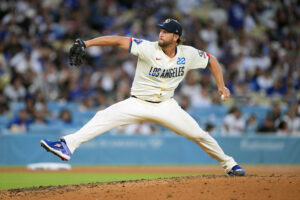
The move doesn’t come as a surprise at all. The future Hall-of-Famer has spent his entire career with the Dodgers to this point. He has gone into free agency multiple times and always re-signed. There has occasionally been some thought that he would like to join the Rangers, since he’s from the Dallas area, but that’s never come to fruition. On the heels of the Dodgers winning the most recent World Series, he declared himself a “Dodger for life.”
Kershaw, 37 in March, did turn down a $10MM player option for the 2025 season. Still, that seemed to be more of a formality, based on the strong relationship between him and the franchise. Even though he walked away from that money, the industry expectation has been that the two sides would reunite on some kind of new deal. As recently has a few weeks ago, it was reported that the two sides were interested in a reunion.
His current health situation is unknown. In early November, when he made the “Dodger for life” comment, Kershaw also relayed some details of upcoming surgeries. He told reporters at that time that he was to have work done on both his left toe and his left knee. He had dealt with bone spurs in his big toe during the season and also revealed after the campaign that he had a torn meniscus and a ruptured plantar plate that needed to be addressed.
It’s possible that his new deal will come with various incentives based on his output, as was the case the last time he re-signed with the Dodgers. He had surgery going into last winter and wasn’t expected to come back until midway through the 2024 schedule. He signed a deal with a modest $10MM guarantee over 2024 and 2025, with the latter year being a player option. Based on his 2024 appearances, he could earn an extra $7.5MM in 2024, as well as potentially bumping the $5MM option as high as $20MM. There were also incentives based on his 2025 appearances that could have allowed him to earn as much as $25MM on the year.
Kershaw only ended up throwing 30 innings over seven starts last year, allowing 4.50 earned runs per nine. He started the season on the IL while still recovering from that shoulder surgery, getting reinstated in late July. But he was back on the IL by the end of August due to his toe issues and finished the season there. That wasn’t a huge showing but it was enough to get the base of his player option up to $10MM. Though he went back under the knife for his lower body injuries, he still felt comfortable enough turning that down, though he and the club will surely figure out some new arrangement that works for both.
Though it’s not a surprise to see Kershaw back with the club, there’s still some mystery about what’s next. As mentioned, it’s unclear if he’s fully healthy now or if he’s still working his way back from his most recent procedure.
On paper, the Dodgers have a robust collection of rotation options. They currently have Blake Snell, Yoshinobu Yamamoto, Roki Sasaki and Tyler Glasnow taking up four spots. Tony Gonsolin and Dustin May should be in the mix as well. Shohei Ohtani isn’t expected to be ready by Opening Day but could be back on the hill in May.
The club seems likely to run a six-man rotation. That’s partially due to Sasaki making the move from Japan, where starting pitchers only throw once a week. On top of that, basically everyone else in their pile of starters has workload concerns. Snell only got to 104 innings last year and has only twice gone beyond 130. Yamamoto spent a decent chunk of 2024 on the IL and only got to 90 frames. Glasnow got to 134, which was a career high for him. May, Gonsolin and Ohtani were recovering from respective surgeries, with no one of that trio pitching last year.
Throw Kershaw into the mix and its eight starters for six spots, before even mentioning pitchers like Bobby Miller, Landon Knack, Nick Frasso, Justin Wrobleski and Ben Casparius, who all have options and are likely to be in the minors as depth.
Given all the health question marks throughout the group, it’s unlikely to expect everyone to be healthy for the entire season, but there may be times where players get squeezed. Moving to the bullpen isn’t easy either, as the club is a bit squeezed there as well. With a six-man rotation, the club can only have seven relievers, given the 13-pitcher roster limit. Ohtani counts as a two-way player and will eventually allow them to have 14 pitchers, but he won’t be pitching to start the year.
The bullpen chart currently includes Tanner Scott, Kirby Yates, Evan Phillips, Blake Treinen, Michael Kopech, Anthony Banda and Alex Vesia. No one in that group can be optioned except for Vesia, who had a 1.76 ERA last year. The bullpen is tight enough that Ryan Brasier recently got designated for assignment and flipped to the Cubs.
Time will tell how the Dodgers balance the juggling act, though the pressure on the 40-man roster is about to ease. Now that they have opened camp, they are allowed to transfer players to the 60-day injured list. Each of Emmet Sheehan, Brusdar Graterol, Kyle Hurt and River Ryan are likely bound for the IL soon, with each recovering from a significant surgery. The Dodgers will need a roster spot for Kershaw once this becomes official, but that will still leave them with three roster spots to play with.
Financially, RosterResource has the Dodgers at a $383MM payroll and $386MM competitive balance tax figure. Those are both franchise records and tops in the league by wide margins, but the club seems to have few limits right now. They have international star power from Ohtani and various other players on the roster, with a decade-plus run of postseason appearances, in addition to being reigning world champions. The cash flow situation seems to be incredibly healthy, with the ownership group willing to pump a lot of that money back into the roster.
Reds Sign Scott Barlow
February 13: The Reds officially announced Barlow’s deal today. Right-hander Julian Aguiar was transferred to the 60-day IL in a corresponding move. Aguiar had Tommy John surgery in October and will likely miss the entire 2025 season. Per Mark Sheldon of MLB.com, Barlow’s deal breaks down as a $1.5MM salary and $1MM buyout on a $6.5MM club option for 2026.
February 11: The Reds and free agent reliever Scott Barlow are in agreement on a one-year, $2.5MM contract, reports Jesse Rogers of ESPN. The Warner Sports client’s agreement is still pending the completion of a physical.
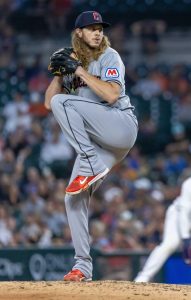
Barlow, 32, was brilliant for the Royals from 2021-22, pitching to a combined 2.30 earned run average with a 28.2% strikeout rate against an 8.4% walk rate en route to tallying 40 saves and 20 holds. He’s taken a couple steps back in the two seasons since, providing a still-serviceable 4.32 ERA but diminished velocity and strikeout/walk rates that have trended in the wrong direction.
The Guardians, who had MLB’s best bullpen in 2024, wound up designating Barlow for assignment and releasing him in mid-September. He’d have been postseason-ineligible with a new club at that point and was ticketed to go back into free agency following the season, so he didn’t end up signing with a new club.
Last year’s 91.4 mph average four-seamer with the Guardians was a career-low for Barlow, sitting nearly four miles per hour shy of his average 95.3 mph from 2021. Since Opening Day 2023, he’s fanned 27% of his opponents against a 12% walk rate while suiting up for Kansas City, San Diego and Cleveland.
Even with the reduced velocity and worsening command, there are still positives to take away from Barlow’s 2024 season. His 13.5% swinging-strike rate remained comfortably north of the 11.5% league average. He doesn’t induce chases off the plate as much as he did at his peak. His opponents’ contact rate when they do chase is south of 41%, placing him in the top-10 of all 169 qualified big league relievers in that department. His opponents’ 83.9% contact rate on pitches in the strike zone is also a couple percentage points shy of average. Barlow’s four-seamer and sinker don’t have the life they used to, but his slider and curveball both miss bats at super premium rates and induce weak contact when opponents do put bat to ball.
Beyond those sharp breaking pitches and their ability to miss bats, Barlow offers a simpler benefit to manager Terry Francona: durability. The right-hander made his big league debut late in 2018 and has never been on the major league injured list. He’s made at least 61 appearances in each of the past five 162-game seasons and pitched in more than half the Royals’ 60 games (32) during the shortened 2020 campaign. Perhaps that heavy workload has contributed to his declining velocity, but Barlow is as durable as it gets for a reliever these days. Since 2019, only Hector Neris has appeared in more games than Barlow’s 359, and no reliever has more innings than Barlow’s 372.
Barlow will slot into a setup role in a reshaped Cincinnati bullpen. Alexis Diaz will reprise his role as closer, but setup man Fernando Cruz was sent to the Yankees in exchange for catcher Jose Trevino. The Reds picked up Taylor Rogers in a late trade with the Giants, too. Newcomers Rogers and Barlow will join holdovers Diaz, Emilio Pagan, Sam Moll, Tony Santillan and Brent Suter. The final couple spots in the ‘pen will likely be determined in spring training. Former starters Graham Ashcraft and Carson Spiers are among the favorites — Spiers likely in swingman role — but the Reds have Yosver Zulueta and Lyon Richardson on the 40-man roster vying for spots as well (if Richardson isn’t in the Triple-A rotation). Non-roster options in camp include Alex Young, Ian Gibaut, Albert Abreu, Joe La Sorsa and Francona favorite (from their days in Cleveland) Bryan Shaw.
Braves Sign Jake Marisnick To Minor League Deal
Outfielder Jake Marisnick is in camp with the Braves as a non-roster invitee, reports Justin Toscano of the Atlanta Journal-Constitution. That indicates the Equity Baseball client signed a minor league deal with the club.
Marisnick, 34 in March, signed a minor league deal with the Angels last winter. He spent the year playing in Triple-A for that club, getting into just 54 games around a few stints on the injured list. He performed well, hitting .283/.368/.551, but didn’t get called to the majors.
The veteran has an established track record at this point as a glove-first outfielder. From his 2013 debut to the present, he has logged 5,357 innings on the grass with 80 Defensive Runs Saved and 52 Outs Above Average. The latter method didn’t come into existence until 2016, so the sample size is a bit smaller. Only nine outfielders have a higher DRS tally during Marisnick’s career and all but one of them spent more time out there than him. He’s also 11th on the OAA board, again trailing only one player with a smaller sample of innings played.
However, his offensive contributions have been less consistent. He’s had a few good showings with the bat but has hit .228/.281/.385 in his career overall. That production translates to a wRC+ of 81, meaning he’s been 19% below average on the whole.
Atlanta has some question marks in its outfield. Ronald Acuña Jr. is still recovering from tearing his ACL last year and could miss about a month of the season. Until he’s back, the projected outfield consists of Michael Harris II and Jurickson Profar in two spots. A third spot could perhaps be a platoon between Jarred Kelenic and Bryan De La Cruz.
Profar is coming off a monster season at the plate but has been wildly inconsistent and isn’t a great fielder. Kelenic’s production has been up-and-down, both offensively and defensively. De La Cruz is a poor defender and is coming off the worst offensive showing of his career thus far.
The club has Carlos Rodriguez and Eli White on the roster, but White is out of options and might get squeezed. Rodriguez hasn’t yet made his major league debut and has just 31 games of Triple-A experience. The club previously brought in Conner Capel for some non-roster depth and now Marisnick gives them a bit more. If a path opens up to some playing time, he’ll give Atlanta a glove-first outfield option off the bench.
Padres Sign Kyle Hart
The Padres announced Thursday that they’ve signed lefty Kyle Hart to a one-year deal with a club option for the 2026 season. He’ll be guaranteed $1.5MM, per FanSided’s Robert Murray, coming in the form of a $1MM salary and a $500K buyout on a $5MM club option for the 2026 season. He can boost the value of that option to $7.5MM based on escalators tied to games started. According to The Associated Press, the option price would climb by $250K if Hart reaches 18 starts this year, $500K at 22 starts, $750K at 26 starts, and $1MM if he starts 30 games. There’s also a $250K assignment bonus in the event that he’s traded, MLBTR has learned.
Hart, a client of NPG Sports, enjoyed a breakout showing in the Korea Baseball Organization in 2024 and has drawn big league interest throughout the winter. He’s the second starter the Friars have added in as many days, as San Diego also came to terms on a four-year, $55MM deal with Nick Pivetta last night.
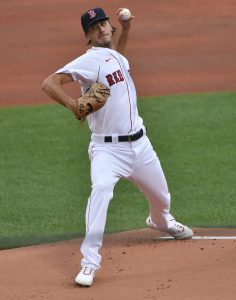
Hart, who turned 32 in November, was torched for 19 runs in 11 innings with the 2020 Red Sox, his lone MLB experience to date. He has a fairly nondescript 4.36 ERA in 334 2/3 Triple-A frames as well, but a move overseas and some changes to his pitch repertoire unlocked new reason for optimism.
Brandishing a new sweeper, a heavier reliance on his changeup and using his four-seamer more at the top of the zone in South Korea, Hart broke out with a 2.69 earned run average over 26 starts for the KBO’s NC Dinos. He racked up 157 innings, fanned 28.8% of his opponents and issued walks at a 6% clip. That performance earned him the Choi Dong-won Award — the KBO equivalent of MLB’s Cy Young Award.
Hart now joins fellow newcomer Pivetta and holdovers Dylan Cease, Michael King and Yu Darvish in San Diego’s rotation mix. He could have to compete with Matt Waldron, Jhony Brito and Randy Vasquez for that fifth spot behind the four established veterans, but Hart at the very least seems like the front-runner to land that job.
It’s always possible that a trade changes the calculus, but the minimal 2025 commitments to Hart ($1.5MM), Pivetta ($4MM), Jason Heyward ($1MM) and Connor Joe ($1MM) over the past week have addressed several needs at bargain prices — at least for this year. (Pivetta will earn $19MM in 2026, $14MM in 2027 and $18MM in 2028.) Both Cease and King have popped up on the rumor mill this winter — Cease in particular — but as of this morning the Padres are reportedly planning to hold onto both. That can be revisited at the deadline if the season doesn’t play out as hoped. For the time being, the recent slate of cost-effective pickups seems to have filled various needs within the (very) tight confines of the payroll limitations president of baseball operations A.J. Preller has been navigating throughout the winter.
The additions of Hart, Pivetta, Heyward and Joe over the past week have pushed San Diego’s payroll to a projected $207MM, per RosterResource. That’s an increase of nearly $40MM over last season’s end-of-year mark. The Friars have a projected $259MM worth of CBT obligations as well, placing them a hefty $18MM over the $241MM luxury threshold. However, since they reset their penalty level when they ducked under the tax line in 2024, they’ll be faced with only the minimum penalty: a 20% tax on their current overages. That’s about $3.6MM in penalties right now, and it’s possible trades of players other than Cease/King could yet reduce the bill. The Padres have been open to offers on reliever Robert Suarez, and they’d surely be open to offers on left-hander Wandy Peralta or infielder Jake Cronenworth, too, if it meant shedding a notable chunk of either player’s contract.
Mets Re-Sign Drew Smith
February 13: The Smith signing is official, per Joe DeMayo of SNY. Righty Christian Scott, who is also recovering from Tommy John surgery, was transferred to the 60-day IL in a corresponding move. Smith was himself then transferred to the 60-day IL as the corresponding move when the Pete Alonso signing became official.
February 12: The Mets will extend their relationship with their longest-tenured pitcher, as they’ve reportedly agreed to a one-year deal with right-hander Drew Smith, which contains a club option for the 2026 season. Smith, who’s rehabbing from Tommy John/internal brace surgery performed last July, will be paid $1MM in 2025. His club option is valued at $2MM. The MVP Sports client can boost those totals by way of some yet-unclear incentives.
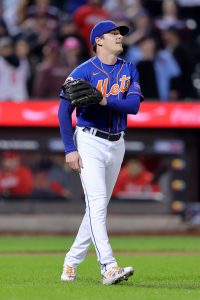
Smith, 31, has pitched parts of six big league seasons with the Mets. He’s been a fixture in their late-inning mix over the past four years, logging a combined 3.35 ERA, 26.2% strikeout rate and 10.2% walk rate in that time. Smith has worked plenty of high-leverage spots, recording 33 holds and five saves in 156 appearances while being credited with only four blown saves during that time.
The surgery for Smith was deflating in multiple aspects. It not only knocked him out of the team’s Grimace- and OMG-fueled postseason run, it also coincided with the run-up to his first trip into free agency. A healthy Smith would’ve been an easy candidate for a guaranteed multi-year deal at a decent annual rate. On top of that, it’s the second Tommy John procedure of his career. After a solid big league debut in 2018, he missed the 2019 campaign due to the same procedure.
Depending how long the rehab process takes this time around, Smith could at least potentially be a late-season and/or October option for the Mets. Should he make it back, he’d join a relief corps also featuring Edwin Diaz, A.J. Minter, Ryne Stanek, Reed Garrett and Jose Butto.
For now, once the deal is finalized, Smith will quickly be placed on the 60-day injured list. The Mets will technically need to open a spot for Smith before they can move him to the 60-day IL, but that can be accomplished by placing Christian Scott (also recovering from Tommy John surgery) on the 60-day IL. Smith could move to the 60-day himself once an additional spot is needed for another free agent signing, waiver claim, or the selection of a non-roster invitee to the 40-man roster later in camp.
With the Mets in the top tier of luxury penalization, the Smith reunion will actually cost them about $2.1MM overall (the $1MM salary plus a 110% tax). Those same taxes will apply to whatever incentives he unlocks this year (and next year, if the Mets are again in the top penalty tier in 2026). That’s a drop in the bucket for a club running a cash payroll north of $330MM and looking at roughly $110MM worth of taxes on top of that sum.
Mark Feinsand of MLB.com first reported the agreement and structure. Jon Heyman of the New York Post added details on the guaranteed money and option value.
Tigers Sign John Brebbia
The Tigers announced the signing of free agent reliever John Brebbia to a one-year deal with a $2.75MM guarantee. The Icon Sports Management client receives a $2.25MM base salary for the upcoming season and is guaranteed a $500K buyout on a $4MM club option for 2026. Detroit placed Alex Lange on the 60-day injured list to create a 40-man roster spot.
Brebbia’s deal includes $2MM in performance bonuses in both seasons — $250K each for 50, 55, 60 and 65 appearances and $250K apiece at 40, 45, 50, and 55 games finished. The ’26 option price can escalate based on his numbers this year. It’d climb by $500K at 65 appearances, $1MM apiece at 45 and 50 games finished, and by $2MM for 55 games finished. The maximum escalator value is capped at $4MM, so the appearance threshold would essentially be nullified if Brebbia finishes 55 games and pushes the option value to $8MM based on that criteria alone.
It’s a late addition to A.J. Hinch’s middle relief group. Brebbia split the 2024 campaign between the White Sox and Braves. He spent the bulk of the season in Chicago, where he initially looked to be a potential trade chip. He carried a strong 30% strikeout rate and a tidy 5.6% walk percentage over 38 innings into the All-Star Break. A low left-on-base rate contributed to a middling 4.50 earned run average, but he’d held opposing hitters to a .235/.288/.389 showing across 160 plate appearances.
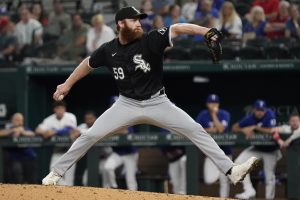
Brebbia had a few ill-timed blowups in the weeks between the All-Star Break and the trade deadline. That tanked Chicago’s chances of dealing him. He continued to struggle into August. The Sox released him towards the end of that month. There was minimal value for them in carrying an impending free agent middle reliever for the final few weeks of the season. Brebbia caught on with Atlanta and tossed 6 2/3 frames of two-run ball over five appearances to finish the year.
The 34-year-old finished the season with an unsightly 5.86 ERA across 55 1/3 innings. His more interesting strikeout and walk numbers led Detroit to give him an Opening Day bullpen job. Brebbia had allowed fewer than four earned runs per nine innings in 2022 and ’23 as a member of the Giants. He fanned 29.2% of batters faced two seasons ago and has a quality 25.9% strikeout rate over his seven-year MLB career.
Brebbia and Tommy Kahnle are new additions to a Detroit bullpen that’ll be anchored by holdovers Jason Foley, Beau Brieske, Tyler Holton and Will Vest. They’re likely to have Kenta Maeda in a long relief role even with Alex Cobb set to open the season on the injured list.
Lange was Detroit’s season-opening closer in 2024. He had a tough time finding the strike zone and was optioned to Triple-A in the middle of May. Lange suffered a lat tear while pitching in the minors and required season-ending surgery in June. Detroit evidently didn’t feel he’d be ready within the first couple months of this season. The IL placement shelves him until late May at the earliest.
Image courtesy of USA Today Sports.
Brewers Sign Tyler Alexander
The Brewers announced Wednesday that they’ve signed left-hander Tyler Alexander to a one-year, major league contract. He’s a client of SSG Baseball. Fellow southpaw Robert Gasser, who’s recovering from Tommy John surgery, has been placed on the 60-day injured list to clear space on the 40-man roster.
Alexander will earn a guaranteed $1MM on the contract, MLBTR has learned. He can earn an additional $1MM worth of incentives based on innings pitched. That breakdown is as follows: $50K for 40 innings, $100K for 60 innings, $125K for 80 innings, $150K for 90 innings, $175K for 100 innings, and $200K for both 110 and 120 innings.
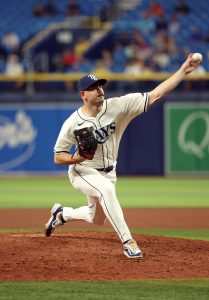
Alexander, 30, has pitched in parts of six big league seasons between the Tigers and Rays. He owns a career 4.55 ERA over the life of 449 frames. That includes a 5.10 mark in a career-high 107 2/3 innings with Tampa Bay last year. The Rays non-tendered him back in November rather than pay a projected $2.8MM salary in his final season of club control (hat tip to MLBTR contributor Matt Swartz).
A second-round pick by the Tigers out of TCU back in 2015, Alexander has spent the bulk of his career in a swingman role, oscillating between long relief, occasional spot starts and some bulk work behind openers. He doesn’t throw hard, averaging just 89.6 mph on his four-seamer and 89.7 mph on his sinker in 2024, but he has excellent command and typically manages at least a passable strikeout rate.
Alexander has only walked 5.2% of the 1900 batters he’s faced in the majors. His 19.1% strikeout rate is about three percentage points shy of league-average, but that’s skewed a bit by a career-low 14.3% mark in 2022. He punched out 20% of his batters faced prior to that season and has fanned 21.1% of his opponents since that time. Back in 2020, Alexander made headlines and history by punching out nine consecutive batters against the Reds.
The veteran Alexander gives the Brewers some much needed depth in the rotation and a potential long man in the bullpen. That need was already clear even before today’s revelation that fellow lefty DL Hall will be shut down for several weeks due to a lat strain. Between that and the possibility that Brandon Woodruff, still building back up after major shoulder surgery in October 2023, may not be ready for Opening Day, the Brewers only had four clear-cut members of the rotation: Freddy Peralta, Aaron Civale, Nestor Cortes and Tobias Myers.
Alexander likely joins southpaw Aaron Ashby and inexperienced righties Elvin Rodriguez, Carlos Rodriguez, Logan Henderson and Chad Patrick as competitors for that final rotation spot. It’s always possible that the Brewers could add another more established arm to solidify the group, but Alexander is the first fully guaranteed free agent signing of the winter for GM Matt Arnold & Co. They’ve been up against an extreme payroll crunch and haven’t been able to spend anything to this point. That casts some doubt on the front office’s ability to further augment the group — at least via free agency. The trade market could open other avenues, either in the form of an inexpensive (likely pre-arbitration) starter or perhaps by shedding a contract from the current roster that’d free up some money for a different veteran pursuit.