
Baseball’s Hardest-To-Obtain Commodity
When Major League executives discuss what they’re looking for in the amateur draft, they use phrases like “middle-of-the-order bat,” “five-tool athlete” and “top-of-the-rotation stuff.” They’re focused on premier talent, not replaceable role players, and the jargon they use reveals their intentions. Not coincidentally, starting pitchers and up-the-middle players like catchers, shortstops and center fielders dominate the early rounds of the draft.
Free agency isn't so different. It pays to be an elite starting pitcher, a shutdown closer, a legitimate power threat or a serviceable hitter at a defense-first position. But if you’re a left-handed specialist out of the bullpen, a pinch hitter or a utility player, your chances of obtaining a substantial payday are substantially diminished.
Baseball’s general managers are always on the lookout for their team’s next impact player, so they know which players tend to be easy to acquire and which ones are elusive. So what’s the hardest commodity to obtain: an all-around catcher, an elite shortstop, an ace starter, a power bat or something else entirely?
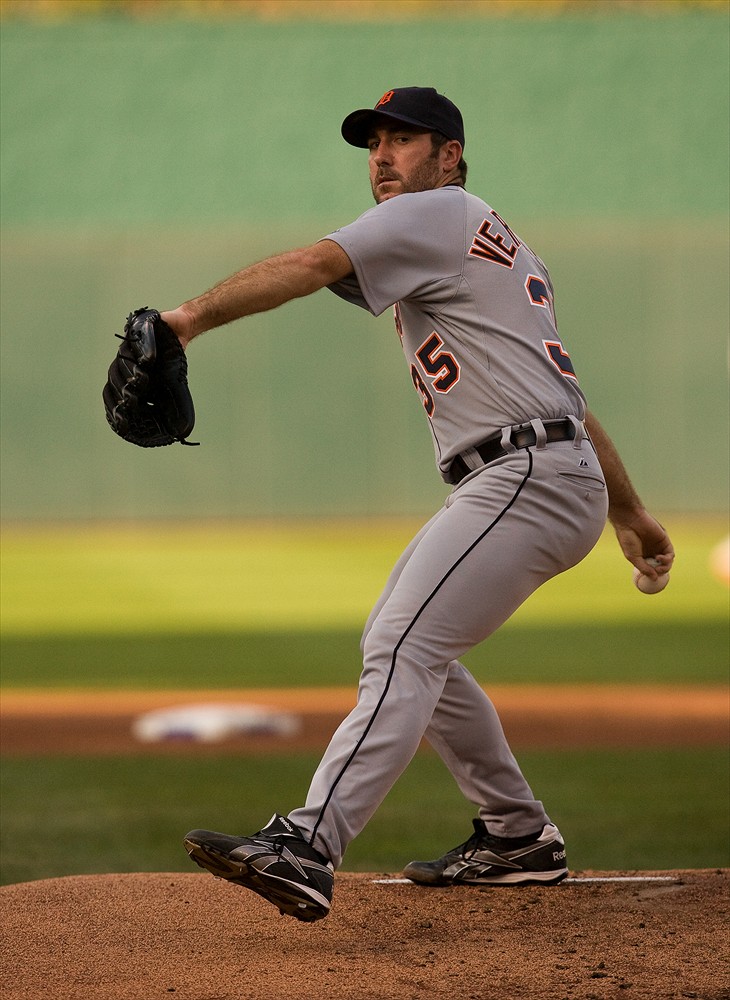
“It’s a great question,” Pirates GM Neal Huntington says. “I don’t know that you can really put one over the other. To find that all-around shortstop, to find that all-around catcher, to find that true top-of-the-rotation starter, those are probably the three most challenging. There just aren’t a lot of them, whether they come out of high school or come out of college, via trade or via the draft it’s a scarcity,”
The Mets employ Sandy Alderson, baseball’s longest-tenured GM. Even though he’s been running MLB teams since the year Jose Reyes was born, Alderson doesn’t have a definite answer, either.
“Well if you’re talking about a five-tool catcher, you’re talking about a very rare commodity,” he said in Milwaukee at baseball’s GM Meetings. “On the other hand to find a Justin Verlander-type number one starter — that’s extremely difficult to find. If you were starting a franchise, which would you prefer to have? You might say a position player over a pitcher, but then look at what happened to Buster Posey, so injuries can occur to catchers just as they can occur to pitchers.”
Like Alderson, Orioles GM Dan Duquette has experience running large and small-market MLB teams. He echoed his counterpart when describing baseball’s toughest-to-obtain commodity.
“A switch-hitting catcher with power from both sides of the plate, who’s a good field general,” he said, seemingly referring to Matt Wieters, the Baltimore backstop who hit 22 home runs and won his first Gold Glove in 2011.
Four-time Gold Glove winner Yadier Molina joined Albert Pujols and Chris Carpenter on the 2011 World Series Champions. The Cardinals obtained excellent production behind the plate, in the middle of the order and atop their rotation, but one type of player continues to elude Mozeliak.
“For us it seems to be that dominant shortstop,” he said. “I think having just a stable young star that becomes the face of your club — it’s everybody’s goal to try to get that, whether that’s a starting pitcher, first baseman, shortstop, catcher and so for us shortstop is a hard position to find.”
25 years ago, when Hall of Famer Ozzie Smith was in his prime, then-Cardinals GM Dal Maxvill probably would have answered the question differently. There are few absolutes when it comes to roster construction, but every team — even the defending World Champions — wants something.
Photo courtesy Icon SMI.
37 Free Agents Offered Arbitration
Teams offered 37 free agents arbitration this year, compared to 35 last year and 23 the year before that. If you're not sure what offering arbitration means, click here to read our free agent arbitration primer.
The following players were offered arbitration this week, and now have until December 7th to accept or decline the offers. The breakdown is more complicated than usual this offseason, as MLB transitions from one CBA to another. Here are the details on which players obtained offers:
Type A Free Agents (7 players)
- Prince Fielder
- David Ortiz
- Jonathan Papelbon
- Albert Pujols
- Jose Reyes
- Jimmy Rollins
- C.J. Wilson
It will cost draft picks to sign the free agents above, and their teams did have to offer them arbitration to be eligible for compensation picks.
Modified Type A Free Agents (6 players)
- Heath Bell
- Michael Cuddyer
- Kelly Johnson
- Ryan Madson
- Francisco Rodriguez
- Josh Willingham
It won’t cost draft picks to sign the six players above, but their teams did have to offer them arbitration to be eligible for compensation picks.
Type B Free Agents (24 players)
- Rod Barajas
- Clint Barmes
- Mark Buehrle
- Matt Capps
- Bruce Chen
- Francisco Cordero
- David DeJesus
- Octavio Dotel
- Ryan Doumit
- Mark Ellis
- Frank Francisco
- Freddy Garcia
- Aaron Harang
- Ramon Hernandez
- Raul Ibanez
- Edwin Jackson
- Jason Kubel
- Derrek Lee
- Jose Molina
- Darren Oliver
- Carlos Pena
- Aramis Ramirez
- Jon Rauch
- Dan Wheeler
It won’t cost draft picks to sign the 24 players above, but their teams did have to offer them arbitration to be eligible for compensation picks.
Also note that the following five Type A players will be treated as Type B free agents: Matt Capps, Francisco Cordero, Octavio Dotel, Ramon Hernandez and Darren Oliver. They didn't require arbitration offers for their teams to receive supplemental draft picks as compensation and teams won't have to surrender picks to sign them.
Our Free Agent Arbitration Offer Tracker has all of the arbitration decisions and will also show who accepts two weeks from now. We also note the decisions in our constantly-updated 2012 free agent list.
What We Learned: This Week’s Arbitration Offers
More than half of ranked free agents received offers of arbitration from their teams earlier in the week. Clubs offered 37 ranked free agents arbitration (up from 35 last year and 23 the year before) and that total may increase when the Tigers announce their decisions on Wilson Betemit and Magglio Ordonez. Here's what we learned from the flurry of arbitration offers:
The Facts
- 37 of 55 ranked free agents (67%) obtained offers of arbitration so far. Keep in mind that the total doesn't include the two Tigers, but does include players who signed before the deadline and the six modified Type A free agents.
- By way of comparison, teams offered 35 of 65 total ranked free agents arbitration (54%) a year ago.
- This year teams offered 13 of 16 Type A free agents arbitration (81%). 24 of 39 Type B free agents (62%) obtained arbitration offers so far.
- If you haven't done so already, click here for an explanation of how free agent compensation works and click here for our arbitration offer tracker.
General Observations About The Decisions
- Teams continue to value draft picks highly, despite the news that they’ll face spending limits in upcoming drafts.
- The former teams of the six Type A free agents who will no longer cost draft picks to sign all offered the players arbitration. Would Heath Bell, Michael Cuddyer, Kelly Johnson, Ryan Madson, Josh Willingham and Francisco Rodriguez all have obtained offers were it not for the rule change? Maybe, but their status change sure didn’t hurt.
- Every Type A free agent obtained an offer except Roy Oswalt and two players whose teams were contractually prohibited from offering arbitration (Carlos Beltran and Takashi Saito).
- Here's a more detailed look at what the decisions mean for a handful of free agents.
What To Expect In 2012
- Next year’s process will be all about the game’s top free agents and it will occur earlier in the offseason. Fewer free agents figure to obtain offers from their teams, which will hesitate to offer deals to non-elite players.
- After a five day quiet period following the World Series, teams must offer free agents substantial contracts to be eligible for compensation picks (to be precise, the guaranteed one-year contract offers must match the average salary of the 125 highest-paid players from the prior season).
- For what will may be the last time, the supplementary first round will again be extremely long in 2012.
Revisiting The MLBTR Writing Staff’s Preseason Picks
This Thanksgiving, it's time to eat some humble pie. Last March, nine members of the MLB Trade Rumors writing staff unveiled our predictions for the 2011 season. Now that the playoffs are over and the postseason hardware has been awarded, let's see how these picks look eight months later.
The results prove two things. First, no matter how much you follow or know about baseball, it's easy to be wrong when dealing with the most unpredictable and surprising of sports. Second, if you ever need some numbers for a lottery ticket, don't consult an MLBTR writer.
- AL East: Only Zach Links had the Yankees winning the division title, as the rest of us bought into the preseason Red Sox hype.
- AL Central: Another color of Sox let us down in the Central, as seven writers picked Chicago to win the division. The exceptions were Mike Axisa and Steve Adams, who shrewdly knew the White Sox were in for a rough season and instead picked….the Twins. Oops. Hard to believe none of us thought the Tigers would break through.
- AL West: Things went a bit better out west as Zach, Tim Dierkes, Ben Nicholson-Smith and Howard Megdal all correctly had the Rangers repeating as division champs. The other five of us apparently thought this would be the year of Moneyball karma and picked the A's for first place.
- AL Wild Card: Kudos to Howard for being the only one to think the Rays would rebound from their free agent losses last winter and return to the postseason as the AL Wild Card. The Yankees got five picks as the Wild Card, and the Rangers got two more, so at least those of us who missed on these two as division winners got a makeup slot.
- NL East: The Phillies' dream pitching staff was enough to convince six of us to pick them as division champs, and the decision paid off. Tim, Ben and Howard had the Braves winning the East.
- NL Central: Another overall successful set of picks in the Central, with six writers correctly predicting the Brewers' rise. Ben, Mike and myself all missed out and picked the Reds.
- NL West: Unsurprisingly, nobody saw the Diamondbacks pulling off the worst-to-first feat. This was the only division with three different teams predicted as winners — five votes for the Rockies, three for the Giants and one for the Dodgers.
- NL Wild Card: Tim, Howard and Ben didn't have the Phillies winning the East but they did have them winning the Wild Card. The Braves (4) and Giants (2) got the remaining Wild Card picks.
- NL MVP: Somewhat surprisingly, Ryan Braun didn't pick up any MVP love from the MLBTR staff. Five of us played it safe with Albert Pujols, Troy Tulowitzki got two selections, and Howard and Steve came closest by picking Braun's teammate Prince Fielder.
- AL MVP: No Justin Verlander votes could be found in this all-AL East array of picks. Adrian Gonzalez received four votes and Evan Longoria received two, so six of us were at least on the right track. As for Dan, Steve and I, we all picked Carl Crawford, who didn't appear on a single MVP ballot after a rough debut in Boston.
- NL Cy Young: Clayton Kershaw was the choice for Zach and Howard, as the rest of us predicted another Cy for either Roy Halladay (six votes) or Tim Lincecum (one vote).
- AL Cy Young: Verlander's victory was correctly predicted by Luke, Dan and Ben, but he still wasn't the top choice of the MLBTR team. Jon Lester received four picks as the AL Cy Young winner, while David Price also scored two picks.
- NL Rookie Of The Year: Five different rookies were picked amongst our nine writers, but none of them were Craig Kimbrel. Brandon Belt and Freddie Freeman each received three picks. This catgory is also home to perhaps the single most off-base pick of the whole set, as Howard had Brad Emaus as the NL's Rookie of the Year.
- AL Rookie Of The Year: Then again, I picked Kyle Drabek as the AL's ROY, so what do I know? This was an overall strong category with five correct predictions for Jeremy Hellickson. Mike Moustakas, Michael Pineda, Chris Sale and (sigh) Drabek all received single votes.
Given that our picks were made just over a month after Adam Wainwright's Tommy John surgery, it's probably no surprise that none of us picked the Cardinals to even make the playoffs, let alone go all the way to their 11th World Series championship. None of us had any luck with World Series picks, as each writer picked at least one pennant winner (or, in some cases, a Series winner) who missed the postseason entirely. The Red Sox were the biggest culprits in this department, given that six of us had Boston winning the American League and four of us had the Sox winning it all.
Amusing mistakes from the World Series section: Dan had the White Sox as world champions, I had the A's taking the AL pennant and both Ben and Luke had the "all-collapse" World Series tandem of the Braves against the Red Sox.
Zach, Tim and Howard each correctly picked four of the eight playoff teams, and Zach, Ben and Luke each had two correct award winners. This means the overall staff winner is Zach Links, with six of a possible 17 overall categories. The lowest score of the bunch (with two out of 17) belonged to…..me. So, not only did I make bad decisions with my preseason picks, I also made the bad decision to publicly shame myself by writing this post. My only consolation is that I was 100% accurate with all my predictions when the MLBTR staff made our preseason picks for the 2011 Nippon Professional Baseball season. Go Fukuoka SoftBank Hawks!
Examining Teams’ Arbitration Decisions
Teams had until last night to offer arbitration to ranked free agents. Now that decisions from the National and American Leagues are in, here’s an explanation of what certain offers may mean, starting with players who obtained offers:
- David Ortiz (A) – The slugging DH has a strong case for a multiyear deal, but which team will offer him one? If there’s no multiyear offer on the table by December 7, Ortiz may consider accepting Boston’s offer. It would likely mean a raise from the $12.5MM salary he earned in 2011.
- Raul Ibanez (B) – It seems that the Phillies have a handshake agreement with the 39-year-old and that he'll decline the team's offer. With all due respect to Ibanez, it wouldn't make sense for the Phillies to commit an eight-figure salary to a defensive liability who posted a .707 OPS in 2011.
- Edwin Jackson (B) – The Cardinals’ projected 2012 rotation is currently full, so their decision to offer Jackson arbitration suggests they believe he’d have positive trade value on a one-year deal.
- Heath Bell (A) – It seems as though Bell’s future in San Diego has been uncertain for years. He now has two weeks to decide whether to accept the Padres’ offer or decline and hit the market in search of a multiyear deal.
- Francisco Rodriguez (A) – The Brewers already have a closer in John Axford, but they seem to be gambling that Rodriguez will turn their offer down in search of a closing job elsewhere. It’s worth noting that he complained about his role late in the season and that Rodriguez won’t cost a draft pick under the new CBA. It’s hard to imagine him accepting the Brewers’ offer.
- Blue Jays – Toronto extended four arbitration offers — more than any other team. Their interest in accumulating draft picks persists, despite spending limitations in upcoming drafts. The Phillies, Cardinals, Red Sox and Twins each offered three free agents arbitration.
Here's a look at one player who didn’t obtain an offer of arbitration:
- Roy Oswalt (A) – The Phillies could have obtained draft picks for Oswalt if they were convinced that he wasn’t going to accept arbitration. Instead, they withheld an offer, making Oswalt the lone Type A free agent not to obtain one (not counting players who had clauses in their contracts ruling out the possibility of an offer). This suggests the Phillies aren’t completely convinced Oswalt would turn arbitration down, despite a strong early market for his services. After earning $16MM in 2011, Oswalt wouldn’t necessarily have positive trade value on a one-year deal.
It’s worth noting that players can re-sign with teams after declining their offers of arbitration. Similarly, teams can re-sign players to whom they did not extend offers of arbitration.
Free Agent Arbitration Offer Tracker
Today's free agent arbitration offer decisions encompass 20 teams and 57 players. To help you monitor who's received an arbitration offer and who hasn't, check out our free agent arbitration offer tracker throughout the day. You can filter by team, free agent type, and whether the player was offered. The deadline is 11pm central time.
Please note that in the tracker I have marked Matt Capps, Francisco Cordero, Octavio Dotel, Ramon Hernandez, and Darren Oliver as having received arbitration offers even though they technically will not. As part of the new CBA, MLB and the players association agreed that these five players will change from Type A to B and the clubs will not have to offer arbitration to receive compensation. For the purposes of the tracker, I consider that an automatic arbitration offer, since compensation will still happen.
Which Free Agents Will Be Offered Arbitration?
As the clock ticks down toward tonight's free agent arbitration offer deadline at 11pm central time, we at MLBTR reminisce about all the good times we had deciphering the Elias ranking system.
Things will be simpler in 2012, as traded players won't be eligible for draft pick compensation, arbitration offers will come much earlier, and there will be only one group of free agents subject to compensation. Instead of players being designated as Type A based on lame statistics chosen by MLB and the players union decades ago, it'll just be a question of whether the former team offers a guaranteed one-year contract with a salary equal to the average salary of the 125-highest paid players from the prior season. That seems to equal $12.4MM at present, but it'll surely rise each year. The bottom line: a team has to be willing to risk a sizeable one-year commitment to have a shot at draft pick compensation. Gone are the days of Scott Downs and Grant Balfour costing or providing a team draft picks. Perhaps more significantly, there's no Type B equivalent. In 2011 alone the Padres, Rays, and Blue Jays gained 10 picks between the first and second rounds as a result of losing middling free agents like Yorvit Torrealba, Brad Hawpe, and Kevin Gregg.
We still have Elias rankings to consider for this offseason, however. We have a good idea of what will happen with the 20 current Type A free agents. Matt Capps, Francisco Cordero, Octavio Dotel, Ramon Hernandez, and Darren Oliver will be treated as Type B players, and don't require arbitration offers for their teams to receive a supplemental draft pick as compensation. This modification is a win for the Twins and Reds, who probably weren't going to offer arbitration to Capps and Cordero. It's also, of course, a win for these players, who don't come with the draft pick cost attached.
Another change helps Type As Heath Bell, Michael Cuddyer, Kelly Johnson, Ryan Madson, Francisco Rodriguez, Josh Willingham, and their teams: these six players will not cost a draft pick for their new teams if they turn down arbitration offers, yet the former teams still receive two picks. All these players are seeking multiyear deals, so all figure to receive and turn down arbitration offers, except for perhaps Rodriguez. I have a feeling Scott Boras clients are a bit less open to handshake agreements to turn down arbitration, as the Rays couldn't pull that off with Carlos Pena last year. With K-Rod earning $11.5MM in 2011, the Brewers still risk him accepting and taking a one-year deal for 2012 at a higher salary if they offer arbitration. Still, if Boras feels there's three years, $30MM, and a closing job out there for Rodriguez, I imagine he'll still advise his client to turn down an arbitration offer.
As MLBTR's Ben Nicholson-Smith noted yesterday, remaining Type A free agents Albert Pujols, Prince Fielder, C.J. Wilson, David Ortiz, Roy Oswalt, Jose Reyes, and Jimmy Rollins are still under the old rules, while Takashi Saito and Carlos Beltran contractually cannot be offered arbitration. Of the first seven, the Phillies may choose not to offer arbitration to Oswalt given his salary. I think an arbitration offer for Ortiz from the Red Sox is likely, but less certain than the others.
We also have 32 Type B free agents for whom decisions are due tonight. Those with a good chance of receiving an arbitration offer, in my opinion: Aramis Ramirez, Alex Gonzalez, Mark Buehrle, Jason Kubel, Frank Francisco, Bruce Chen, Edwin Jackson, Kerry Wood, Freddy Garcia, Jose Molina, and Shawn Camp. There will probably be others, with the unpredictable element of players privately agreeing to decline, as we saw with Hawpe, Trevor Hoffman, and Javier Vazquez last year.
How The Top NL MVP Finishers Were Acquired
Just one of the top ten finishers in this year’s NL MVP balloting joined his team via the free agent market. Eight were drafted by their 2011 teams and one was acquired in a blockbuster trade. Here's a look at how teams around the National League originally acquired the top ten finishers in the 2011 NL MVP voting (some have since signed extensions):
- Ryan Braun – Draft – The Brewers selected Braun fifth overall in the 2005 draft and extended him on a five-year, $105MM deal this year.
- Matt Kemp – Draft- Dodgers scouting director Logan White selected Kemp in the sixth round of the 2003 draft. The Dodgers recently locked him up to an eight-year, $160MM extension.
- Prince Fielder – Draft – Fielder is a Jack Zduriencik selection, like Braun. The seventh overall selection (2002) already has three top-five finishes in the MVP voting.
- Justin Upton – Draft – Upton, the first overall selection in 2005, reached the Major Leagues as a teenager and put together his best season yet in 2011.
- Albert Pujols – Draft – The Cardinals selected Pujols, a three-time MVP, in the 13th round of the 1999 draft. He has ten top-ten finishes in MVP balloting after 11 MLB seasons. Pujols and Fielder are the only two current free agents on this list.
- Joey Votto – Draft – The Reds selected last year's MVP in the second round of the 2002 draft.
- Lance Berkman – Free Agency – Berkman, the lone player on this list to join his current team via free agency, signed a one-year, $8MM deal with the Cardinals before the season and has since signed an extension that will keep him in St. Louis through 2012.
- Troy Tulowitzki – Draft – The Rockies selected Tulowitzki with the seventh overall selection in 2005 and he has blossomed into one of baseball's top shortstops.
- Roy Halladay – Trade - The Phillies obtained Halladay for Travis d'Arnaud, Kyle Drabek and Michael Taylor in December, 2009 before signing him to an extension.
- Ryan Howard – Draft – Howard, a fifth round selection in 2001, won the NL MVP in 2006 and has finished in the top ten for the award in every season since.
- Here's a look at how American League teams acquired this year's top vote getters.
Team Facebook/Twitter/RSS
If you prefer your MLBTR fix limited to only your favorite team, we've got you covered. Below are links to our team Facebook, Twitter, and RSS pages and feeds.
AL East
- Orioles: Facebook / Twitter / RSS
- Red Sox: Facebook / Twitter / RSS
- Yankees: Facebook / Twitter / RSS
- Rays: Facebook / Twitter / RSS
- Blue Jays: Facebook / Twitter / RSS
AL Central
- White Sox: Facebook / Twitter / RSS
- Indians: Facebook / Twitter / RSS
- Tigers: Facebook / Twitter / RSS
- Royals: Facebook / Twitter / RSS
- Twins: Facebook / Twitter / RSS
AL West
- Angels: Facebook / Twitter / RSS
- Athletics: Facebook / Twitter / RSS
- Mariners: Facebook / Twitter / RSS
- Rangers: Facebook / Twitter / RSS
NL East
- Braves: Facebook / Twitter / RSS
- Marlins: Facebook / Twitter / RSS
- Mets: Facebook / Twitter / RSS
- Phillies: Facebook / Twitter / RSS
- Nationals: Facebook / Twitter / RSS
NL Central
- Cubs: Facebook / Twitter / RSS
- Reds: Facebook / Twitter / RSS
- Astros: Facebook / Twitter / RSS
- Brewers: Facebook / Twitter / RSS
- Pirates: Facebook / Twitter / RSS
- Cardinals: Facebook / Twitter / RSS
NL West
How The Top AL MVP Finishers Were Acquired
None of the top ten finishers in this year’s AL MVP balloting joined their teams via the free agent market. Five were obtained in trades, four others were drafted and one was signed as an international free agent. Here's a look at how teams around the American League originally acquired the top ten finishers in the 2011 AL MVP voting (some have since signed extensions):
- Justin Verlander – Draft – The Tigers selected Verlander with the second overall pick in 2004 and signed him to a five-year extension before the 2010 season.
- Jacoby Ellsbury – Draft – The Red Sox selected Ellsbury with the 23rd overall pick in the 2005 draft and held onto him after a lost 2010 season despite trade interest from other clubs.
- Jose Bautista – Trade -The Blue Jays acquired Bautista from the Pirates for Robinzon Diaz in 2008. Before the Blue Jays acquired him, Bautista suited up for the Pirates, Royals, Devil Rays and Orioles.
- Curtis Granderson – Trade – The Yankees acquired Granderson from the Tigers in the three-team trade that sent Ian Kennedy to Arizona and Austin Jackson and Max Scherzer to Detroit. The Tigers originally selected Granderson in the third round of the 2002 draft.
- Miguel Cabrera – Trade - The Tigers acquired Cabrera and Dontrelle Willis from the Marlins for a group of players led by Andrew Miller and Cameron Maybin.
- Robinson Cano – International Signing - The Yankees signed Cano out of the Dominican Republic as an amateur free agent in 2001.
- Adrian Gonzalez – Trade – The Red Sox surrendered a trio of top prospects to obtain Gonzalez from the Padres a year ago.
- Michael Young – Trade – The Rangers, then under GM Doug Melvin, acquired Young from the Blue Jays for Esteban Loaiza in the summer of 2000.
- Dustin Pedroia – Draft – The Red Sox selected Pedroia, the 2008 MVP, in the second round of the 2004 draft.
- Evan Longoria – Draft - Tampa Bay selected Longoria with the third overall pick of the 2006 draft and he's been playing at an elite level since his 2008 rookie season.