
We’re firing up another new series here at MLBTR in which we’ll take one oft-discussed topic each week and present the high-level cases both for and against the move in question. Following that, we’ll present a roundtable of opinions from the MLBTR staff in a separate post and ask our reader base to weigh in on the matter with a poll.
With the Braves in full rebuild mode and their stated willingness to listen to offers for anyone not named Freddie Freeman, it’s only natural that Julio Teheran‘s name has come up frequently early in the summer. Last week, MLBTR’s Connor Byrne examined the difficulties in identifying a trade partner that had both the need to add Teheran and the ability to part with the MLB-ready types of young talent which Atlanta is said to covet in a theoretical deal.
Teheran is off to an incredible start to his 2016 season, having pitched to a 2.85 ERA with 8.5 K/9, 2.5 BB/9 and a 42.5 percent ground-ball rate in 82 innings out of the Atlanta rotation. He also looks to be well on his way to a third straight season of 200+ innings in just his age-25 season. He’s benefited from some good fortune in terms of BABIP (.228) and strand rate (83 percent), but Teheran has posted a BABIP lower than the league average throughout his career and also posted strand rates that are above the league norm, so while some regression can be expected, it probably shouldn’t be assumed that those numbers will trend all the way back to the league averages.
We’re a good seven and a half weeks away from this year’s non-waiver trade deadline, and Teheran is pitching brilliantly for a last-place club in the midst of a rebuild, expect to hear his name floated with some degree of regularity between now and Aug. 1. However, does the very fact that he’s an appealing asset on a rebuilding club mean that Teheran should be traded? Let’s look at both sides of the coin.
The case for trading Julio Teheran
The case for the Braves to trade any player on their big league roster always starts at the same place: they’re a team that wasn’t good in 2015 and has been significantly worse in 2016. Atlanta is currently on a course for the No. 1 overall pick in the 2017 draft, and they’ll be among the few teams that are definitive sellers leading up to the Aug. 1 non-waiver trading deadline. The Braves will probably field calls on any and all pieces that could help a contending club, and Teheran, as noted above, more than fits that bill.
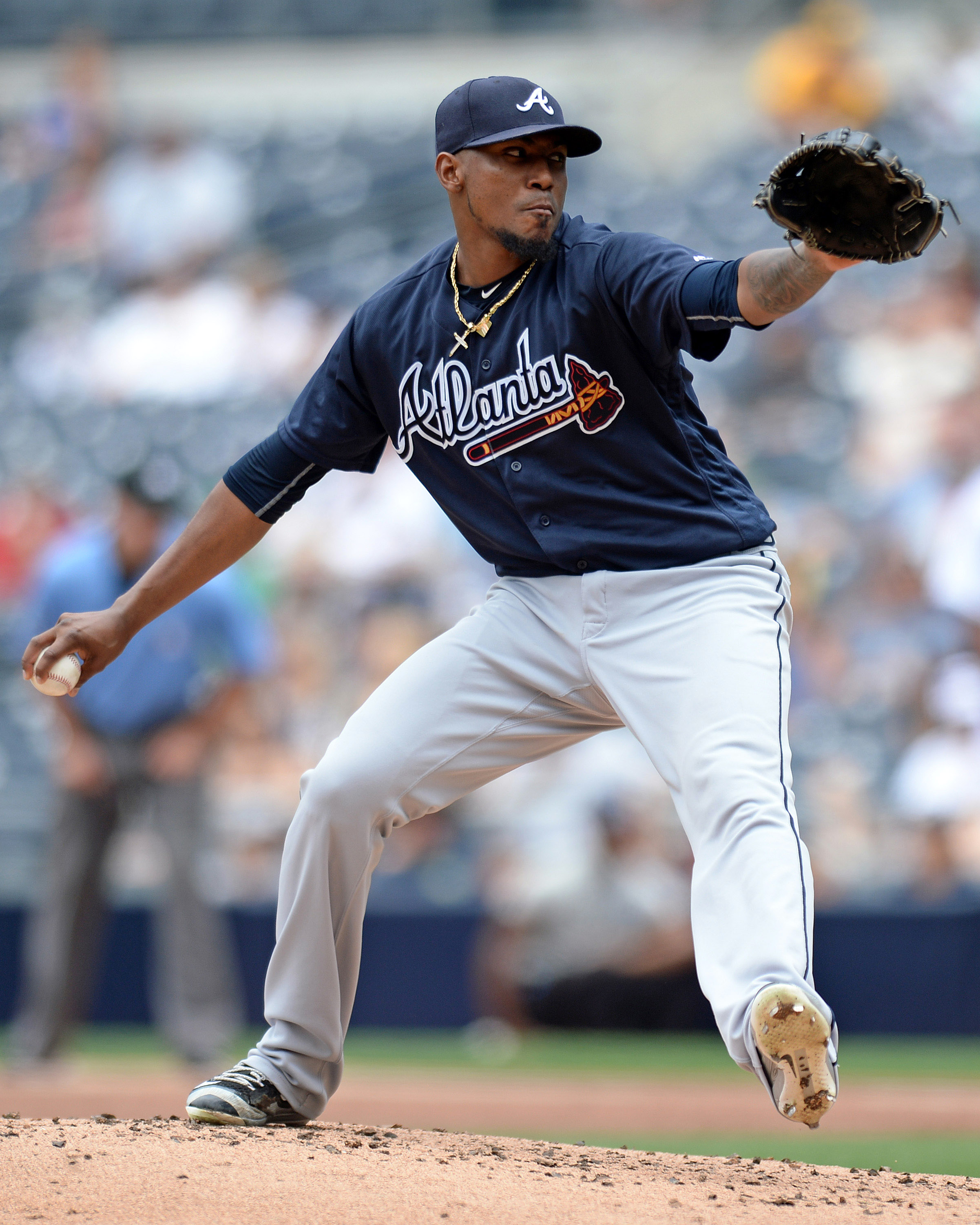
Given his strong start to the season, his highly affordable contract and the utter dearth of impact arms not only on the summer trade market but also on the upcoming free-agent market, there’s a chance that the Braves could coerce a team into parting with a potentially exorbitant package of young talent to pry Teheran from their hands. Atlanta reached that nexus of frenzied demand and willingness to surrender elite talent in the offseason’s Shelby Miller blockbuster, and there’s a case to be made that Teheran could, or at least should, be worth more. The D-backs, after all, were acquiring three years of Miller at arbitration prices, whereas a team dealing for Teheran would be taking on the remainder of this season’s salary ($2.06MM as of this writing) and three more years at $26.3MM. That’s three and a half years of Teheran for roughly $28.14MM plus a club option for $12MM in 2020 — his age-29 season. Last summer, the Rangers surrendered a package of Jerad Eickhoff, Jake Thompson, Jorge Alfaro, Nick Williams and Alec Asher in the Cole Hamels/Jake Diekman trade. Teheran’s entire contract is worth barely more than a season of Hamels, financially speaking.
Moving Teheran this summer could net the Braves an MLB-ready asset (as Eickhoff gave the Phillies or as Ender Inciarte and Aaron Blair gave the Braves in the Miller deal) as well as multiple high-ceiling, top 100 range prospects. The 2016 product is bad, and moving Teheran right now could net them two or more pieces that would help in 2017, when more of their vaunted farm system is at the Major League level.
The case against trading Julio Teheran
On the flip side, the Braves are aiming to contend in 2017, and Teheran helps them tremendously in that vein. Matt Wisler‘s solid start to the season aside, Teheran is the Braves’ best pitcher. He misses more bats, generates more grounders and has displayed better control over the course of his career than Wisler has in his. Trading Teheran almost certainly makes the Braves a worse team in 2016, and there’s a very real chance that doing so would make them worse in 2017 as well. Acquiring MLB-ready assets is always a plus, but prospects aren’t guaranteed, no matter how highly regarded they may be. Teheran is performing well in the Majors right now and has done so since 2013, posting a cumulative 3.30 ERA in 689 1/3 innings.
The contract, as mentioned above, gives the Braves the best years of a pitcher that may not be a definitive ace but can clearly pitch near the top of a Major League rotation at an exceptionally affordable rate. Teheran is in his fourth season of big league service and would’ve been arbitration-eligible for the second time this coming winter. He’s earning salaries of $3.3MM, $6.3MM and $8MM for his arbitration seasons and can be controlled for just $23MM total for his first two would-be free-agent seasons. His arb years are cheaper than the likes of Wade Miley and Lance Lynn, and Teheran’s free-agent seasons are priced somewhere in the range of 50 to 75 percent of what they’d command on the open market (as is the case with most pre-arbitration extensions). There’s an enormous amount of value to the Braves themselves in that deal.
Beyond the on-field and financial reasons for keeping Teheran, the Braves have been aggressively working to fight the notion that they’re “tanking” in order to continue to build up the farm through the draft. General manager John Coppolella has repeatedly stressed that his hope for the 2016 season was an improvement over 2015’s record and strides toward a competitive product in 2017 — the opening season of the Braves’ new stadium, Sun Trust Park. Trading away their best pitcher for even more young, controllable pieces would only further fuel the tanking narrative, even if the return brought the potential for multiple contributors to the 2016-17 roster. The Braves would also face continued backlash from a fanbase that has been particularly vocal about its thoughts on the current rebuild, and while fan reaction shouldn’t be the deciding factor in a move, it’s certainly something of which the Braves’ brass must be mindful as it approaches the Aug. 1 non-waiver trade deadline.
Photo courtesy of USA Today Sports Images.
It would take a Miller or Hamels-esque package for Braves fans to not get angry. Not sure who wants to give that up. The Dodgers or Red Sox seem like good fits but the Braves are gonna demand unreasonable prospects from them.
You’re right the Braves will ask for a ridiculous haul for Teheran. They will likely get it also. As you mentioned the Red Sox and Dodgers do look like great matches for the Braves and Teheran. They both have top tier minor league talent and are in win NOW mode. Both need to sure up holes in the rotation. Both could benefit from a player like Teheran and with the limited amount of pitching options available Teheran looks like the best option, controllable, young, and very cheap. Remember JA Happ just got something like 3 years $36 mil.
I don’t know that the dodgers are in “win now” mode – they seem more like they are in “try not to fall apart” mode. It’s not like they made any big moves this or last year, seem more like they are trying to field a servicable team while cutting bad decision dead weight of the last few years
I think the rangers match up really well with the braves. Terehan and Vizcaino for Profar and Brinson. Rangers upgrade both their rotation and bullpen and the braves get 2 position players.
I like Profar and Brinson a lot but I don’t think Braves would ask for either it would probably be Gallo which the Rangers most likely decline.
Would rather have Brinson and doubt the Braves ask for Gallo. I think it takes more than Profar and Brinson maybe like Luis Ortiz as well.
Not enough throw in chi chi too
The braves would not do that ever.
Just because the dbacks were stupid enough to give a haul doesn’t mean that every other team is
The Braves are going to ask for Gallo or Brinson for just Teheran. If The Rangers want both Teheran and Viz it will take a package that is one of those 2 plus Tate and another piece. Profar and Brinson will not be close enough to get both Teheran and Viz.
As a Braves fan I am not saying they are worth it, but I really think they would get a package starting with Gallo and another player for just Teheran
Only braves fans think that is a realistic return. Every fan base over rates it’s own players, but when pretty much everyone else in the world says that’s not gonna happen, it’s probably not gonna happen (unless dave stewart takes over the rangers)
I didn’t say he was worth it. I realize it is a ridiculous asking price. I just really feel they will get a team to give them a package similar to that. There are too many teams that need solid to good pitching and willing to pay it. As I have said before, remember JA Happ got 3 years $36 mil. Teheran is a lot better then that plus you get him for 4 and 1/2 years at a younger age and better pitcher. Yes you will be giving up a lot in prospects, but it sures up your rotation for 4+ seasons. JA Happ is a 4 or 5 stater. Teheran is more like a solid 2 starter, but could slide in as the Rangers #3 behind Hamels and Darvish and be the best #3 in baseball.
Asking for Gallo is not as crazy as you think, and like I said the Rangers will decline most likely any way, It would be very similar to the Bedard for Jones deal. Bedard who was older brought Jones highly touted prospect +prospects one which turned out to be Tillman, Jones actually had somewhat MLB success under his belt all though not polished was further along than Gallo is now.
The problem is, the Rangers have a need for Gallo. He is their future at either 1b or 3b. Profar is expendable and Brinson could be blocked if the rangers resign Desmond.
The Braves do not need Profar. They are stacked up the middle with Swanson and Albies. They need power hitters. That is why they will ask for Gallo. I agree Gallo is the Rangers future at 1st or 3rd. However Teheran could be the best #3 in baseball behind Darvish and Hamels…just a thought. That could be the 3 man rotation that brings the WS to Texas.
I see a possible Brinson and Tate trade for Teheran or Gallo and another prospect for Teheran before Profar and Tate for both Teheran and Viz.
They could slot Profar in at 3b or shift him to the outfield .
Lol stacked up the middle, the cubs acquired Russell after castro was already a 3 time all star and with baez knocking on the door to the bigs. You can never have enough guys up the middle. The reason it wouldn’t make sense is because profar only has 3 years of control after this and the braves will most likely only be competitive 1 of those years. They should target players with at least 5 or 6 yrs of control, preferably someone who hasn’t had their clock started.
Happ has been pretty much equal to Teheran this year. Teheran is not a solid #2 starter on any good team. And he absolutely would not be the best #3 in baseball.
Mets – Degrom
Cubs – Lackey
Giants – Shark
Nats – Gio/Roark
Phillies – Eickoff/VV
Blue Jays – Estrada
There are a ton of teams with better #3s.
Braves fans are ridiculous.
Beddard was a 5 win pitcher before he got traded and that was seen as a terrible trade. And it occurred before the changes to drafting. Please stop with your nonsense.
Why are you using just WAR to judge pitchers are you trolling? That was also before pitchers were being thrown 200 million dollar contracts in free agency.
AJ Happ has not be “pretty much equal” to Teheran this year. Teheran’s WAR is depressed because of his HR/9. But he has been a lot better than Happ overall.
Teheran is a solid #2. Cmon, just shut up with underrating pitchers already…
Defiancy his war isn’t being depressed by his homer rate, which is basically the same as last year. His unsustainable babip and strand rate is what makes his fip high. The babip is 50 points below his career average and he is stranding the most in his career. When those even out you will get something closer to his career numbers. Little above average starter that’s been pretty durable.
you know what is ridiculous?
You act all smart but when Braves fans actually have solid evidence and prove you wrong, you don’t admit anything and just keep on saying the same thing over and over.. it’s getting stupid now. Get some facts to back your claims dude.
Ok Mr president, if DeGrom is the Mets #2 who is their #1? Cause it sure isn’t Harvey this year.
Otherwise Julio is more accomplished, consistent, and younger than everyone on that list. The only argument I could see being made is Lackey but he’s not comparable at all seeing as he is 38 years old and signed for 4 less years. If you wanna take Estrada or Gio over Teheran lets be in a fantasy league together.
Also he would be the #1 starter on the diamondbacks, royals, or tigers this year who are conveniently left out though in competition.
Yeah, got to agree with Chester. Teheran is a guy having a great start to the season and his iron might not be hotter. I just see a team getting ripped just like the DBacks did if they give up a ton for him. The guy is a 3-5 starter. If he reverts to last year’s form he is overpaid. I wouldn’t want to give up top prospects for him. You’re better off throwing the kitchen sink at a sonny gray or Jose Fernandez (if those teams would sell) those are the TOR guys they’re affordable and will help win. Teheran is a guy who could maybe start a playoff game, but not one you would feel comfortably about.
The Rangers might as well go and get Fernandez instead of Teheran then
Who is the mets #1? Syndergaard?
DeGrom and Lackey are better #3’s and Lackey not always. I would not consider any of those others better than Teheran.
Blue jays and nationals are a for sure as well. Happ is the blue jays 4, it goes stroman, estrada, sanchez atm.
How in the world do you stat geeks have the time to look at all these nonsense stats. If you are not a Braves fan and watch Teheran than how can somebody truly value your opinion.
I watch every game I can and yes if Teheran were traded to a contender he could be a solid number 2. In no stretch do I believe he is an ace but certain teams would hold his value higher.
A team like the Yankees or Orioles that play in band box stadiums would not hold a high value to Teheran because of being a flyball pitcher where a team like the Giants or Dodgers or even the Mariners would be real strong fits because of the ballparks and the defenses that would play behind him.
Teheran has been very impressive this year and I can judge that by watching him. He may give up some hits but a lot of times those are hits that better defenders would make plays on. When he buckles down and gets himself out of situations on his own is what is impressive and what it is that makes him a number 2-3 instead of a number 1 is the simple fact he gets lazy and leaves the ball up in the zone and it gets crushed.
If you wanna tell me a stat that matters tell me the amount of HR he gave up that were solo shots as opposed to ones with men on base.
His focus is not there every pitch that is what separates him and if you watched baseball instead of numbers you would know this.
Come on look at the guys that are playing behind him and tell me his numbers wouldn’t be better with guys playing behind him that had better range. Castro, Aybar, Markakis, Stubbs, Beckham, Garcia, Frenchy, Johnson, AJ, etc. who are you writing home about in range factor ? The only above average defender on the whole team is Inciarte and how many games has he missed. Stat geeks need to watch the games and appreciate a guy instead of studying numbers to knock him down.
And as a Brave fan the Rangers would never do Gallo and we are not gonna want Profar. I could see a Brinson coming back as part of a package but not one involving Profar or Gallo.
IDIOT!! Julio Teheran would be a 1 or 2 on a lot of Teams in the MLB. He has a 2.53 era in his last 21 starts. In 16 of those 21 he gave up 2 ER or less. In 11 of those he gave up 1 ER or less. And he has done so with very little run support. He ranks in the top 5 in least amount of run support per 9. And it is easier to pitch with a lead or when you don’t think you have to be perfect to win. And yesterday deGrom got beat 6-0 by Julio Teheran and the braves!! Julio Teheran allowed 1 hit in 9 innings. So you spoke too soon idiot.
As a Rangers fan I can say from experience that we love to make the the splashy trade at the deadline when we’re in contention but if anyone thinks that we’re going to trade three of our top 8 prospects for Teheran and Vizcaino, there pretty Stupid!!! I’m not saying that I wouldn’t be interested in Teheran and Viz but at the price being thrown about, it’s a little moronic. Last year the Rangers, made a big trade for Cole Hamels and Jake Diekman but make No mistake, Teheran is no Hamels and John Daniels is No Dave Stewart!!!
Profar isn’t a prospect.
You are right Teheran doesn’t make nearly as much as Hamels and isn’t 32
I’d also say Daniels has some real head scratchers on his resume too Kinsler for Fielder being one.
Teheran is also not nearly as good or offer the same upside.
That is up for debate, doesn’t matter Teheran makes what hes worth Hamels has not been a 20+ million dollar pitcher for a couple years now. If Hamels was on Teheran’s contract youd have a solid argument though. I’d say even though FIP has never favored Teheran, Hamels having close to a 5 is something to be alarmed about since that is abnormal for him and might be saying hes been quite lucky this year.
Only person debating that is a braves fan.
Cole Hamels – value by fwar
2013 – $33.4m
2014 – $32.2m
2015 – $33.4m
Best part of this: “…there pretty Stupid!!!” Way to emphasize stupid while making that statement.
Julio making $20 million less than Hamels now with identical stats would be pretty stupid to take on.
That isn’t how the market works hence Kershaw is the only one making 30 million dollars, it is about half the fwar value, Hamels is basically a 15-16 million dollar pitcher which is why everyone was shocked the Phillies ate nothing and got a major haul.
Excuse me the Phillies did take on a contract and put in 9 million.
And yes I blanked on Scherzer, Greinke, Price now in the club.
No, it’s not. Becuase teams figure in back end years of decline and bank on front years of surplus value.
Niekro that is exactly how the contracts are evaluated. You don’t cut it in half… The players signing long term deals would get more on short term deals but take below market value those years to have their decline years garunteed.
Also isn’t as good and has a shady track record…your point is?
The Rangers don’t need rotation help and their bullpen has been strong of late plus they get Kela back around the all star break. Highly doubt they would do this because Desmond is most likely gone after this season and Profar could be an option in the outfield.
Here we go again.
With Williams Perez’s shoulder injury and Simms and Newcomb not exactly ready I don’t see this trade happening until the offseason at the earliest. Even then I think the Braves demands will be so high that it would take another GM channeling Dave Stewart to pull it off.
Oh it is gonna be a good day, thank you Steve Adams for fueling what will be a great back and forth as every Julio Teheran piece does.
Let the games begin.
I love Julio, yes I am a Braves fan and think he is a great piece. Do I think he is an ace? On our team yes, 26 other teams, no. But I think most teams making a push, outside of maybe the Cubs whose rotation is running on all cylinders, could use Julio in the 3, 4, or 5 spot. How strongly the acquiring team wants him to make a strong playoff (run) rotation is key. I think the only true downside of a trade falls on Atlanta, he will only get better in my opinion.
Hahahahaha
You have made this proposal several times but it is not realistic. First off, this is not fantasy baseball, this is real baseball. Trades involving this may players just don’t happen on a regular basis. Secondly, the Indians don’t need pitching, they need out field help. Markakis isn’t really the answer. Also, both teams could get more by trading these players individually instead of all lumped together.
The braves should trade him if they get a reasonable offer because they are bad and will be for multiple years.
There is very little reason to keep him on a team that is gonna be awful for the next 3ish years unless they are getting really terrible packages for him.
Not multiple years… They won’t legit compete for WC till 19/20 but they will be good again in 2017/18.
They certainly won’t be good next year… Noe should they want to be. They have a couple guys bear ready in albies, and Swanson. Everything else near big league ready is fringy at best.
Maybe you should head on over to the braves mlb page. And find one of the comments where us actual fans talk and discuss our team and maybe you would realize that the braves will be better next season, probably a .500 club, and hence be in a WC race.
Honestly people like you shouldn’t even comment because you have no clue what you are talking about. You read too much into this season. And also too much into the start of this season. With Snitker as manager the braves are 14-18! and just swept the Mets, and have now won 5 straight. And next year we get a real manager, and Snitker knows he won’t be the manager next season. Most of the Vets will be gone, Aybar, Norris, Markakis, AJ. And the young guys will be here. Swanson and Albies will have their ups and downs, but they will have the end of this season and spring training to get acclimated to the big leagues.
Mallex Smith (CF)
Ender Inciarte (RF)
Freedie Freeman (1B)
Ian Desmond (LF/3B)- sign him as a FA
Tyler Flowers/Catcher- sign Wilson Ramos or trade prospects for a Catcher
Dansby Swanson (SS)
Ozzie Albies (2B)
Adonis Garcia/Chase D’Arnoud (3B/LF)
Pitcher
Rotation: Julio Teheran, Folty, Matt Wisler, John Gant/Aaron Blair, Jenkins/Kelly/Ellis
Freeman: .270/.280 or better hitter/ mid .300 OBP, with 20+ HR’s
Ian Desmond: .270/.280 or better hitter/ mid .300 OBP with 20+ HR’s
Tyler Flowers: .250 or better hitter/ low-mid .300 OBP with 10+ HR’s (if starting catcher)
Wilson Ramos: .260/.270 or better hitter/ low-mid .300 OBP with 15+ HR’s (if starting catcher)
Mallex Smith/Ender Inciarte/Dansby Swanson/Ozzie Albies: .270/.280 or better/ .340+ OBP, Speed, and probably combined 15+HR’s.
Next season is not decided especially with the young talent that is waiting to come up in Swanson and Albies. Plenty of speed. They can steal bases. Put pressure on the opposing defenses. While being pretty good defenders themselves. It will take some time for them to get adjusted to the big leagues. But once they do expect them to be able to put up solid averages and high on base percentages right along with Mallex and Inciarte.
How are they going to be good in 2017? They’re embarrassing and really don’t have a ton of difference making talent ready to add next year. Albies and Swanson don’t make this team a .500 team.
I think the word “compete” needs to be replaced with “watchable” and the word “good” should be replaced with “better”. That should be Braves fans expectations for next year. If they’re as bad next year as they are this year then the FO will have failed miserably and I think the loss of revenue from season ticket sales in a new stadium might prompt a firing or two.
I wouldn’t trade Teheran. It’s time to speed up the process or Braves will have to wait till 2020 to be good.
If the plan really is to win in 2017, then they need a power right handed bat. A guy I like is Will Myers. He is young and under team control until 2019. Padres will ask for a lot I have no doubt, after all they did give up Trey Turner to get him, maybe Folty + 2 prospects gets them interested.
I would play Will Myers in LF, Mallex Smith in CF and Ender Inciarte in RF. Trade Nick Markakis for a reliever and eat the contract. Also in the offseason it’s time to spend some money in the big club, they need a 3B and a Catcher. I like Martin Prado and Matt Wieters as the 2 best options.
Now the lineup could compete:
CF Mallex Smith
3B Martin Prado
1B Freddy Freeman
LF Will Myers
C Matt Wieters
SS Dansby Swanson
RF Ender Inciarte
2B Ozzie Albies
Pitcher
And I’ll take my chances with the army of pitchers they have in the minors. At the very least I think it’s safe to say they will have gradual improvements each year maybe even 80 wins in 2017 and 90 in 2018
I like the idea of signing Wieters, but I am not sold on giving that much up for Wil Myers. Not yet anyway. I like what I have started to see from Folty and he could be great starter after all. I thought Folty would be a dominate closer, but he has really shown promise in the rotation this season.
I don’t like the idea of signing Wieters. Yea he can hit but that’s not what the braves need the need a defensive catcher who is a very good receiver to help the young pitching staff. Also going by the way the braves have been playing they will have the first pick in the draft which will most likely net them JJ Schwartz who is the extremely good offensive and fairly solid defensive catcher
Like the idea of bringing Prado back. Prado/Uggla timeframe was the biggest blunder in Braves recent history in my opinion. I think the Swanson/Miller trade was Atlanta’s payback for the Prado trade.
But not sure I want to pay Wieters the money he wants. I am hopeful Flowers can handle behind the dish 80% of the time for 1/5 the pay of Wieters. Prado at 3B and this money at Gio if he does become available. Could also see Cards wanting to shed money and not picking up Garcia’s option, instead giving his spot to Reyes and hoping Lynn is fully recovered.
Gio
Julio
Jaime
Wisler
Newcomb
With the above lineup you suggested minus Wieters.
There is no chance Garcia and gio don’t have their options picked up. You pick up the options just to trade them if you don’t want them in the rotation. They are below market value options.
It wasn’t that big of a blunder. The Braves traded Infante for Uggla not Prado. Prado was part of the Justin Upton trade. Upton was a good player for the 2 years he was with the Braves.
No, I know he was not part of that deal. Just saying that time frame of the FO did terrible, bringing in Uggla when Infante was a good fielder and great BA hitter. Then trying for more pop in Upton, who was good when with Atlanta and giving the package they did for him. That 2-3 year transaction window was rough for the franchise.
Padres want a better pitcher than folty for myers. If the braves manage to sign joey wentz i think thats the starting player.
Something like wentz, soroka, davidson and camargo for myers, jose torress, and norris. They give up guys blocked for 3 years of myers and 2 of norris. Padres get 2 nice pitchers in wentz and soroka plus a ss in camargo and of in davidson.
No….too much and just want Myers. I’d be willing to give up Folty an mlb ready starter with a good arm + 2 prospects (Max Fried and Ronald Acuna maybe)
The Braves are on pace for 47 wins this year, projected for 58. You can’t really just look at one year to the next and expect the exact same sequencing and what not, but you think it’s safe to say they’re going to improve and be 22-33 wins better next year?
This is not a team that is going to turn it around quickly.
The argument makes sense in theory but remember player improvements aren’t linear. Recent example of this are the Cubs and Astros.
In 2014 Cubs won 73 games, in 2015 they won 97 a 24 win improvement. How did that happen? They signed Lester, called up Bryant and signed Joe Maddon. Players progressed, Arrieta became a star pitcher and the rest is history.
In 2014 Astros won 70 games, in 2015 they won 86 a 16 win improvement. They traded for Gattis, signed a few quality relievers and signed AJ Hinch.
Braves will sign a manager in 2016, if they improve the weak spots of the team they could become the next Astros or Cubs. That’s the plan, they’ll call up Albies and Swanson once they’re ready, that will help them improve.
Lol… The cubs also traded for montero, called up Schwarber and russell, signed hammel, had a full year of hendricks, traded for fowler, and had coghlan play over his head. It’s not a comp to the braves. The players on the ml roster that progressed was rondon… And coghlan.
The problem with those two comps (Astros and Cubs) is they both already had much better core players than the Braves currently have and it would take alot more than signing one or two players and annew manager to get them there.
Arrieta and Rizzo also improved a lot. I’m not expecting 97 wins, I just said, if they trade for Will Myers, sign Wieters and Prado, sign a good manager and call up Swanson and Albies for a full year along with players in mlb roster improving (Smith, Wisler, etc) then they could win 80 games.
If that happens then they could potentially win 90 in 2018.
Let the trade talks begin… again…
I don’t think he will get traded simply because of what the Braves will ask for in return and what teams will actually be willing to give up. The Braves expect teams to beat the package given for Shelby Miller, but that has almost unanimously been thought of as a huge overpay by the Dbacks, and no team will come close to that for someone that is more of a #3 on most contenders.
If a package like that is offered again, I think you’re going to see if offered (with the addition of a couple of others likely) for some of the top arms, such as Fernandez and Gray. If Miller had performed really well to start the year and the DBacks were on top of the NL West, things might be different. But so far, that trade is looking really bad. No team is going to match that.
Well seeing as the Braves refuse to draft position players, and we rarely see prospects for prospects trades, what other options do they have to get young impact bats?
You hit the nail on the head guy. If they want to compete they gotta deal for some bat prospects on the same timeline as the pitchers. Talk to houston, see if you can get daz cameron, Kyle Tucker, Tony Kemp and some Dominican league arm that hits high 90’s .
Doesn’t hurt for the Braves to listen to offers… Since there is no pressure to trade him they are in the drivers seat.
It is a sellers market for pitching.
I would offer Boston Teheran Blair and Jace Peterson for Holt Mochada and Swihart
And they would laugh at you and hang up.
Lolz
The Cole Hamels comp is pretty strange. I guess I understand its use in that the author is trying to show that a team will pay a LOT for a SP, but… that was Cole Hamels. PLUS Diekman… and the author doesn’t mention the off-loading of the Matt Harrison contract (I’m sure insurance covers a large portion of that, but it’s still there and it’s no small amount.
Teheran is no slouch, but he’s not Cole Hamels. Big trade package? Sure, but nothing compared to what Texas gave for Hamels, Diekman and the off-load of Harrison’s contract.
Braves should hold out for the best ‘overpay’ they can get. I don’t know the depth of pitching in their farm system, but with the starting pitching market so dearth of talent and next years free agent market having little/nothing, the braves will get 2-3 teams over bidding (Red Sox, Pirates, Yankees … (I hope the Cubs do not chase))
Good for Atlanta.. Their turnaround will go faster than the Cubs…
He would be the 6th best starter on the cubs.
Probably the 4th best. He is equal or better than Kendricks and Hammel.
Except, he’s not.
6th or 5th is probably right (hard to believe Hendricks’ peripherals, but they are what they are)…
While it does pain me a little, I agree with you Chester. The way the Cubs rotation is going this year, he is the 6th. My only argument would be future outlook. Lackey and Hammel are only under contract for one more season and Arrieta could be gone after next year as well. Hammel or Lackey could be flipped if Julio continues his pace. Lester, Hendricks, and Julio is still a formidable 1, 2, 3 going forward from 2018.
Jose Fernandez and Matt Harvey are free agents after 2018. Gleyber torres will be a top 10 prospect next year should they need pitching, that’s assuming Underwood, stinnet and Johnson bust in the rotation. The idea they need pitching is kind of overblown.
Man you guys are ridiculous. At no point did I say the Cubs “need pitching” just put out there an option, while even agreeing with your buddy Chester.
Now way the cubs give harvey or fernandez the kind of money theyd command. Youre talking 170+ for harvey and 200+ for fernandez. And you act like theyd win out over the yankees angels red sox dodgers. They wouldnt in a bidding war. Esp since lester heyward are still owed a lot by 2018 and rizzo bryant heyward russel baez are up in 2022 and giving harvey or fernandez the money they want over 6-7 years means other guys they should lock up wont be. Fernandez for 7 years 210 mill in 2018 puts him at year 5 in 2022. Doubt youre paying fernandez 30, bryant 25+, russel 20+, and rizzo 20+ on top of filling other holes that arise. Thats 95 mill for 4 guys. Rosters 25.
Lackey hammel arrieta are up in 2018. Buying 1 of harvey or fernandez at the price of outbidding others wont replace that production and considering this is the best window they have itd be bad go go into harvery hernandez.
Theo took over in after the 2011 season, they were bad 2012, 2013 and 2014. The braves rebuild offically started last year. They would have to be a playoff team in 2018 to tie the cubs pace, and have to be the best team in baseball in 2019. No one has matched or likely will match the cubs turnaround, the worst trade the cubs made was for ian Stewart(they have up lemehieu) good luck matching that.
The cubs rebuild started before Theo. They finished 75-87 in 2010. I would say that is when the rebuild started. While Theo undeniably turned it around, he wasn’t the one who started it.
He was though. The only veterans traded that year was ted Lilly and Derrick Lee in an August deal. I guess the braves rebuild started in 2014 then because they were under .500. So my original timeframe would still stand.
Why do you always compare them to the Cubs? The last time the Cubs won the world series the Titanic was still afloat lol. They will have the best record in baseball and bounced from the playoffs in the first round. Until they win something stop using the cubs as the right model.
The original poster did…
I never meant to imply that ‘turnaround’ equals ‘world series’… Meant to use the term ‘turnaround’ t mean (generically) ‘bottom quartile’ to ‘top quartile’… And ‘faster than’ the Cubs as being < 4 years (to top quartile … Not necessarily 'best in the league')
I haven't counted any chickens for the Cubs this year other than 'playoff probable'. Until we win something, we are just 'pretty good right now'
Can we all just stop citing the Miller trade? The Braves found the sucker at the table, and they fleeced him. Good for them, but the awfulness of that deal isn’t 20/20 hindsight. Everyone knew the DBacks gave up entirely too much for a young pitcher who – while certainly better than he’s pitched this year – projected as a 3-starter on a championship-caliber club. There might be two GMs in baseball who would trade a similar package for a similar return – one of them, Dave Stewart, no longer has those assets. And the other, Kenny Williams, doesn’t have them either.
I agree completely, Small point – Kenny Williams isn’t the white sox gm anymore.
I’m not sure of trade values or what specifically the Braves are looking for but… If i where the Pirates this is about what i would shoot for.. but the Braves are probably looking for more especially considering that both are controllable and reasonably cheap
Julio Teheran, Arodys Vizcaíno, a throw in depth relief arm + small amount of cash for some double bubble.
for
Josh Bell, Austin Meadows, Allen Hanson, their Pick of Jeff Locke or Juan Nicasio and their pick of Scahill, Lobstein or Schugel
reasons for the Pirates are clear.. need reliable starters and bullpen help. some cash to offset the increased payroll in coming seasons (though the price is extremely team friendly for Teheran)
With Jaso doing well, Bell wont’ get much if any time at first this year and probably next. and OF where he is better suited is also blocked for him and Freese can start at 1st there if Jaso gets injured.
Meadows is blocked and wont’ get time until Cutch leaves (assuming he does) and there is plenty of OF depth should the injury bug hit.
Hanson is semi-blocked with Mercer and Harrison
And Locke/Nicasio going back to help off set some cost and make sure prospects are not blocked next season.
For the Braves they get three top 10 prospects at their positions who should all be ready and in the MLB by next season.. A back end starter arm with reasonable cost that has a bit of potential to be a mid rotation or decent pen arm (locke/nicasio) and another relief arm. both pitcher would serve to give the Braves prospects a bit more time to prepare
What might be fairly unique is that all players in this probably doomed proposal are controllable through the 2017 season or longer (Nicasio becoming a free agent in 2018)
As a Pirates fan, Ill pass on that. I have no problem with the Pirates moving Bell, Hanson, McGuire in any deals but id hate to see them deal Meadows for someone like Teheran. Cutch will be gone. Its not a matter of if, but when. Plus im not sold on Julio. I get that Franky/Locke/Nicasio are causes of concern, but id much rather roll the dice with Taillon/Kuhl/Glasnow and moving Nicasio to the pen
McGuire almost needs to be kept in case Diaz doesn’t return to form after injury. McGuire coming on full time back up .. uh.. if that makes sense… replacing Stewart in ’18 and the eventually Cervelli (hopefully) and.. after the injured Diaz and McGuire the pirates don’t have much else.
Cutch is probably here until ’19 maybe even ’20 if the QO system is still in place… unless this recent drought is his career ending. Meadows is close to ready. Moving someone like meadows to a non-division rival is okay by me… unless they found a trade partner for Cutch but there would be a lot more upset people then 😉
quality pitching is harder to find than quality out field… I would push Garcia and Rameriz before Meadows but would definitely consider Meadows before McGuire.
i don’t know how you couldn’t’ think Julio isn’t 3 or higher guy on most teams. He had one down season on one of the worst teams.
I want to win long term, out of the available pitchers on the market. Teheran and Viz are probably the best you can get in a single package considering their cost and years of control.
Honestly, I dont know what to think about “Mini-Mac”. His plus plus defense is definitely nice, I just dont know if the bat will ever really come around. I know catchers take longer to develop, but still i just dont know
Cutch is gone either way after the 2018 season, the option year. I dont think the Pirates will pay the money to extend him, and I dont see him taking another team friendly deal to stay. Honestly, I wouldnt be surprised if they traded Cutch, especially if Meadows keeps producing and shows hes ready. Personally, Id have Meadows as “more untouchable” than McGuire.
I do think Teheran is around a 2.5/3 on most teams, excluded the obvious “stud”staffs. But idk if i feel good about trading Meadows for a 3. But I guess thats why im not a GM, I couldnt make these decisions 🙂
The only reason i would keep Meadows is if you think you are going to trade Cutch this season or in the coming off season. I don’t like the idea.. i think he is great for the team and city but if the return is good enough…. If the team is planning on keeping him through 2018 and he performs well enough to get a quality offer, i have a feeling Cutch will take the QO unless he wins the MVP again.
EDIT: Clarification… I want to keep Meadows in general.. but i don’t want to see him stuck in prospect land because he is blocked at the MLB level. especially if we can get players to help the team for him.
IMO we see Julio as a 3 because of the team he is on.
There is no chance he accepts a q.o. he can get the deal cespedes got this winter no problem. Regardless that’s 2 yrs out. But yeah trading meadows doesn’t make sense although marte would be fine in center.
the QO depends on how he is doing the season leading up to it. If he is only doing a bit better than league average I would think he would take it if offered if nothing else to try to rebuild his value a bit more.
If he has another MVP type season.. well yeah probably not take it,
If the pirates didn’t have any other reasonable OF options coming up Meadows would probably be untouchable as well but they do have a couple options.
I like the trade, but agree on the Batman, even as a Braves fan, Meadows should be out. Pirates just locked up Cervelli, McGuire should be moved before Meadows. Plus C of the future is probably of more need to ATL now.
You are probably right McGuire is more valuable to Atlanta, but also to Pittsburgh.
again, like with pitcher.. quality catching is harder to find than quality OF.
IMO if they would want Reese then ATL would have to cough up much more as he should be almost ‘untouchable’
Good call Jon, but doesn’t locking up Cervelli block Reese for what 4 years? If he wasn’t locked up I could see Braves needing to cough up a higher trade chip. I guess either way they have to pay, otherwise Pitt could get more elsewhere for Reese.
Mcguire is only 21 and should spend all of next year at AAA anyway, so basically when cervelli is 32 and you want to start scaling back his starts mcguire will be ready. You can get him 50-60 starts behind the plate just by having cervelli play first occasionally. He is only signed thru 2019 so 3 yrs after this year.
not really, Chris Stewart is signed through 2017 Plus an option year. in ’17 Reese should get some playing time at the MLB level If he looks good then Stewart will probably be bought out or traded giving Reese the back up role in ’18 Cervelli is signed through ’19. If Reese is doing well Cervelli could be traded as a rental, or play another position if his bat is still in play.
The Braves may want to be competitive in 2017, but their actions do not scream of plans to contend!
I think they do. The draft class so far shows that will likely deal some guys in the minors for quality young position players/prospects.
It doesn’t affect our minor league system because we just snagged 3 first round pitching talents, including probably 2 top 10 guys.
Wentz and Anderson gives us the option to trade some of the older guys in the farm, and still have upside to possibly bring up in 2018 or 2019 to finish up the rotation.
Not really up to date with ATL stuff but what about the Astros? They need pitching and definitely have the prospects to do it.
Stop with the BS that the Braves are looking to contend in 2017.
Looking at this logically, the braves won’t compete until 2019 as thing stands. Now assuming they don’t trade anyone, that would mean 40 mil of the payroll that year will be tied up to freeman, teheran, and vizcaino. Now the braves highest payroll has been 114 mil. Let’s assume that with the new stadium they can move up in to the 130 mil range. That means just over 30% of the payroll will be tied up to those 3. Now for people clamoring for free agents I don’t which ones you are going to get that won’t put you over 130 mil factoring in arbitration.
Who says Liberty still owns Braves at that point and what payroll will be. I understand your point, but anyone else speculates any point and you and Chester bat it all down.
See the only speculation was the payroll and that wasn’t the main point, it was that freeman, teheran, and vizcaino are a substantial financial commitment and they are complimentary players and not stars.
I’m sorry that being realistic about the braves future is batting down your crazy speculations. Perhaps if more braves fans on this site were realistic, there wouldn’t need to be as much batting.
Teherans has a FIP and XFIP over 4 after a season in which he posted ERA and FIP over 4. He isn’t a top of rotation arm. He is #3 pitcher. Doesn’t miss a ton of bats nor gets a ton of grounders
Teheran is fly ball pitcher and very prone to home runs. The redsox passed on James Shields for that very season twice (in free agency and via trades) because they didn’t think he’d be a fit. I highly doubt they would trade a Benintendi or a Moncada.
Teheran to Red Sox for Blake Swihart, Henry Owens and Noe Ramirez
Bout right. 3rd piece would be a little better than noe most likely though. Mauricio dubon as a third piece. Swihart, dubon and Nick longhi for Teheran. I’m not sure the sox are sold in him at Fenway though.
How much talk is too much?! Is this MLBTeheranrumors.com?
No seriously…it’s getting out of hand, mlbtr. None of the people in here, fake negotiating, will ever be gm’s…must be a slow news day.
You are not required to be on here. December to March and May to July tend to be lighter transaction therefore “rumor” months.
Braves need to release Aybar so he can return to the West Coast and sign with a team and turn his season around….
If he could turn his season around, I am sure they would put him on the first flight out that way.
1) The last group of fans to saying that Braves are bad and all are the Cubs- legit, one year of winnings made you guys so annoying- pls.
2) Just do Teheran and a lower pitching prospect for Meadows and McGuire
I already made the deal with a couple of Pirates fans and they all agreed with me- so Cubs fans better not say that it’s not fair.
3) or Teheran and Vizcaino to the Rangers for Brinson, Beras, and Jurado
and I got this deal done with a couple of Rangers fans too..
Get one done Coppy.
Don’t worry, your opinion will still be wrong. Give it a minute.
I’m glad fans of those teams signed off. You know dbacks fans defended the Miller trade as well? To your first point the cubs fans should be talking after going thru a successful rebuild already while the braves are in the midst of one. Fans that shouldn’t be talking would be ones who haven’t already been through a rebuild. Last question is how can you give meadows and mcguire less value than the Texas package… Obviously Texas would snap do that despite not really needing bullpen help. The pirates would definitely not do that deal on the other hand.
I dont need Cub fans opinions on trades.. they think that Teheran will be traded for a fringe top 150 prospect…
What is with your obsession about trading Teheran?
The Braves need to just trade Teheran, Freeman and Vizciano. They are just wasting their talents with the Braves. The Braves may be better next year but they will still be a sub-.500 club (most likely by a long shot). Freeman is the only power bat the brave’s currently have and will have without free agency. The Braves don’t have any consistent top of the rotation arms anywhere in the organization and none will be available via free agency and trading to acquire one will cost a ton this off-season as a result. Stick a fork in them till at least 2019. They may take some baby steps forward but they don’t have the internal means to be anything more than a pathetic version of the Royals at this point.
I agree with this.
4 prospex!
If you get a really good offer this year that includes some POSITION players, I’d take it. If not then try again this offseason when there’s so little available in FA. I don’t think the team will be competitive until the last year plus option year of Teheran’s contract so it just makes sense to try to flip him for other players that will hopefully be around for the next contender in ATL (or Cobb county I guess).
Did anyone else skip the article and scroll straight to the comments to read absurd trade proposals from Braves fans?
There was an article?
I actually skip the articles just to right to reading the GMs’ comments in here.
And where is Steelerbrave today?
I was working. Here now and I have been thru a rebuild Theo they were called the late 80’s to 91. A more successful rebuild than what the Cubs have done so far. Worst to first with a loss in game 7 in the greatest game of the greatest World Series ever played.
The 2 stat geek geniuses that study numbers instead of actually watching games are always poppin off bout Julo but yet praise Arrieta who was a bum for years til he turned it around. But yet In there eyes Julio will never be able to get better and improve. Just a couple years ago Julio was being pegged as a baby Pedro and since has had exactly 1 bad year.
Now do I think he is an ace no I don’t but he is not nearly as bad as what you 2 fake gm’s make him out to be.
I said this 7 months ago: Atl will lose 98 games in 2016, 97 in 2017. I HAVE to believe that the FO believes this as well, despite the posturing they must do to not drive away potential ticket buyers for the new park. They will be .500 in 2018, and contend in 2019, hoping the NL East doesn’t become what the Central has been. Asking for major league talent that’s ready before 2018 is a waste of money and assets. Being a Braves fan, I hope for their sakes, Freeman and Teheran get moved before too much longer. Freeman could then relax and return to his normal hitting talent, and Teheran can settle in as a solid #3. In return, Braves should look to acquire talent set to contribute by’18 or ’19. We are in rebuild mode. These are the days to suck it up and bite the bullet
Perfect post. 2018 should start seeing the fruits of the labor, actually competing 2019. That should be the goal. That still takes stuff going right but you were on the money my man.
The club just needs to keep their head when fans realize the best AAA talent in the organization is winning games…..albeit on the other side of I285 in gwinnett :D. In the meantime, the new ballpark will be sweet, there should be no lines at the men’s room or concession stand, and one can buy a ticket outside the stadium for 5 bucks and sit just about wherever he/she pleases. Kinda like 1990. Those were the days….
Good call man, I think Freeman could be used to a team with a less than efficient 1B, there are about 4-6 of them and with true protection, he might return to what brought him the contract. Plus freeing up from his contract would open up dollars in 2018-19. Have thought for months they should trade him, hoping he and Markakis get back to hitting .280 .
I hope for Nick’s sake, he finds a good home for a contender at the deadline…He’s a valuable asset to a team needing a professional bat from the left side, and solid in the field. Braves may have to eat a little contract, but not much. Piersynski as well. I have to believe there’s a contender that would value a left handed bat with pop who could spell the catcher down the stretch. These guys are professionals, good ones, and could do more for the Braves long term by bringing back talent set to be ready by 2019. Wringing our hands about return before then is pointless.