
9 AL Central Hitters Looking For Bounce-Back Years
We’ve already looked at potential bounce-back candidates from the American League West and the AL East. Let’s now move to the AL Central and begin with established hitters who may be able to rebound in 2020.
Eddie Rosario, OF, Twins:
The free-swinging Rosario was a 32-home run hitter last season, but despite that, his fWAR plummeted from 3.5 in 2018 to 1.2. His overall line in 590 plate appearances (.276/.300/.500 – good for a 103 wRC+) was close to average, owing in part to the sport’s fifth-lowest walk rate (3.7 percent). And whereas Rosario received positive marks as a fielder in 2018, he notched minus-8 Defensive Runs Saved, a minus-5.6 Ultimate Zone Rating and the game’s worst Outs Above Average mark (minus-17) a year ago.
Jose Ramirez, 3B, Indians:
Ramirez was one of the most valuable players in baseball from 2017-18, though a slow start and a 5 percent-plus drop in walk rate last year doomed the switch hitter to a mediocre .255/.327/.479 line in 542 plate appearances. That said, Ramirez still finished with 23 homers, 24 steals and 3.3 fWAR, so he wasn’t exactly a drain on Cleveland’s lineup. And Ramirez was infinitely better after the All-Star break (176 wRC+ in the second half, 68 in the first), giving the Indians hope he’ll be at his best from the get-go this year.
Franmil Reyes, DH/OF, Indians:
While Ramirez came alive in the second half of the season, Reyes was somewhat disappointing after the Indians acquired him from the Padres in July. The 24-year-old still concluded with 37 HRs, but he saw his wRC+ (109) drop by 20 points from the prior season and his on-base percentage go down by 30 points. In all, he was a .249/.310/.512 hitter. Nevertheless, the powerful 24-year-old did rank in baseball’s 98th percentile in hard-hit rate and its 99th percentile in average exit velocity.
Miguel Cabrera, 1B/DH, Tigers:
Cabrera is undoubtedly one of the greatest hitters of all-time, but it’s fair to say he’s nowhere near the offensive force he was during his halcyon days. Thanks in part to knee problems, the 36-year-old was pedestrian at the plate in 2019, when he batted .282/.346/.398 with 12 home runs and a career-low ISO (.116) across 549 appearances. Cabrera also posted one of the lowest walk percentages of his career (8.7) and, according to Statcast, saw his average exit velocity fall by 4 mph and his hard-hit rate drop by 10 percent compared to the numbers he logged during an injury-shortened 2018. Regardless of whether Cabrera rebounds, the Tigers aren’t going to contend in 2020. However, it would be reassuring for the team to see a glimpse of vintage Cabrera, who’s still owed $132MM through 2023.
C.J. Cron, 1B, Tigers:
One of Cabrera’s newest teammates in Detroit, Cron’s coming off a so-so season with the division-rival Twins. Although Cron did hit 25 home runs, the type of production he recorded as a Ray the previous season wasn’t really there. He wound up with a .253/.311/.469 line (101 wRC+, down from 123 in 2018) over 499 trips to the plate. There were some positive signs, though: Cron’s strikeout rate went down by 4.5 percent, his swinging-strike percentage declined by roughly 2 percent and he was a Statcast darling, ranking near the top of the league in several categories – including hard-hit percentage (82nd percentile), average exit velocity (84th) and expected weighted on-base average (86th).
Jeimer Candelario, 3B, Tigers:
Candelario was a 2.5-fWAR player in 2018, his first full season in the majors, but devolved into a replacement-level performer last season. The switch-hitting 26-year-old batted a weak .203/.306/.337 with eight homers in 386 PA, and the Tigers banished him to the minors for a good portion of the season because of his uninspiring output at the sport’s highest level. Statcast didn’t offer any reasons for hope, either, ranking Candelario in the game’s 17th percentile in xwOBA, its 24th percentile in hard-hit rate and its 31st percentile in average exit velocity.
Salvador Perez, C, Royals:
The typically durable Perez, 29, didn’t play at all last season after undergoing Tommy John surgery, though it seems he’s coming along well in his recovery. Assuming he does stay on track, the Royals will have to hope for better numbers than what the highly respected six-time All-Star offered when he last took the field in 2018. Back then, Perez registered an unspectacular .235/.274/.439 line in 544 PA and earned bottom-of-the-barrel grades as a pitch framer; however, he did throw out an incredible 48 percent of would-be base stealers.
Maikel Franco, 3B, Royals:
Once a quality prospect, Franco seldom lived up to the hype in Philadelphia from 2014-19. Last season was especially rough for Franco, who hit a disastrous .234/.297/.409 in 428 attempts en route to minus-0.5 fWAR. The rebuilding Royals then bought low on Franco in free agency, signing him for a $2.95MM guarantee. Franco’s still just 27, and he’ll be eligible for arbitration in 2021, so he’s worth a shot for Kansas City.
Ryan O’Hearn, 1B, Royals:
O’Hearn was fantastic during his 170-PA major league debut in 2018, but things fell apart over a much larger sample size last season. The 26-year-old amassed 370 PA and stumbled to a .195/.281/.369 showing. A 63-point drop in batting average on balls in play (.230) didn’t help, though, and O’Hearn did put up above-average exit velocity and hard-hit marks. However, he only ranked in the league’s 24th percentile in xwOBA (.308, compared to a .279 real wOBA).
MLBPA Has Expanded Grievance Against Marlins, Rays
It was reported yesterday that the Major League Baseball Players Association has expanded its grievance proceeding against the Pirates. The MLBPA has also done so with respect to the Marlins and Rays, per Barry Jackson of the Miami Herald (via Twitter).
Originally, the union attacked those three teams as well as the Athletics for their allocation of revenue-sharing funds during the 2017-18 transactional period. The new claims presumably level similar charges with respect to the 2018-19 offseason. It is not specifically known whether the Oakland organization stands accused of further misdeeds.
Revenue sharing provisions are collectively bargained, with recipient teams required to account for their investments. The union’s precise charges and precise requests for relief are not fully known. In essence, it’s not hard to grasp: the MLBPA feels these teams aren’t spending enough on MLB player salaries.
The Marlins significantly drew down their Opening Day payroll level in each of the past two seasons. They peaked at $115MM and change in 2017, then dropped to under $100MM and then to about $72MM in the 2019 campaign. The Miami organization spent just $4.5MM on free agents last winter while shedding some larger salaries via trade.
Of course, it was widely anticipated that the Marlins were heading for another rough season. Since the sale of the organization, it has been fully enmeshed in a rebuilding effort. The club did boost its spending in the just-completed offseason, not that doing so speaks to its actions in prior winters.
The situation is a bit different for the Rays, who’ve compiled consecutive 90-game winning rosters. They’ve done so with minimal Opening Day payroll commitments — just $76MM in 2018 and $60MM in 2019 — though they added salary throughout both seasons. While their year-over-year payroll dropped, the Rays also did add one big contract last winter when they struck a two-year, $30MM deal with Charlie Morton.
Griffin Canning To Receive “Biological Injections”
Angels righty Griffin Canning will receive “biological injections” to treat his ailing elbow, the team announced and MLB.com’s Rhett Bollinger was among those to cover on Twitter. The team says he’ll be “reassessed in three to four weeks.”
This news still leaves some mystery as to the underlying condition and to Canning’s outlook. But it confirms that he’ll be sidelined for a lengthy stretch, as had already become clear of late.
Clearly there’s still hope of avoiding an invasive procedure. But the Halos will assuredly need to bring Canning along cautiously even if these injections prove effective. It’ll be hard for the team to presume much of anything about his availability in 2020.
Canning had a strong debut showing in 2019 but ended the season earlier with elbow woes. Unfortunately, they followed him into camp.
While the Halos did add two notable arms to their rotation, trading for Dylan Bundy and signing Julio Teheran, the rotation remains an area of weakness on paper. The Angels do have some options on hand, but they’ll need a few hurlers to establish or reestablish themselves as quality big league starters. For what it’s worth, they’ve shown well collectively to this point in camp, as Jeff Fletcher of the Orange County Register notes on Twitter.
Aaron Judge Diagnosed With Stress Fracture In Rib
Yankees outfielder Aaron Judge has finally received a diagnosis after being slowed early in camp. He’s dealing with a stress fracture in his first right rib, skipper Aaron Boone tells reporters including James Wagner of the New York Times (via Twitter) and Rustin Dodd of The Athletic (Twitter link).
It’s certainly good that the organization has finally isolated the evasive problem. But that doesn’t mean it’s necessarily the best possible result. Clearly, there’s no chance now that Judge will be ready for Opening Day.
For the time being, the plan is to allow Judge an additional two weeks of rest before reassessing. Where things go from there remains to be seen.
Reading between the lines, it seems hope remains that Judge will be able to rehab and work back to full speed once he has fully rested. But Boone made clear that there are surgical possibilities that will be considered if necessary once the two-week waiting period is up.
Domingo Leyba Suspended 80 Games After Positive PED Test
Diamondbacks infielder Domingo Leyba has been suspended for eighty games, per a league announcement. He tested positive for boldenone, a banned performance-enhancing drug.
Leyba, a 24-year-old switch-hitter, made his MLB debut last year. He spent most of the year at Triple-A, where he turned in a strong .300/.351/.519 batting line with 19 home runs. In the highly charged PCL offensive environment, that output was good for a 107 wRC+.
The Snakes had already closed off Leyba’s most direct route to playing time when they added Starling Marte, thus pushing Ketel Marte back to second base. Leyba still factored into the mix as a potential utility infielder, where he faced competition from players such as Ildemaro Vargas, Josh Rojas, Andy Young, and non-roster invitee Gavin Cecchini.
Orioles Return Rule 5 Picks Brandon Bailey, Michael Rucker
3:01pm: The O’s announced that both players have cleared waivers and been returned to their prior teams.
1:37pm: The Orioles have decided against carrying both of their Rule 5 selections from the December draft, GM Mike Elias told media members including Jon Meoli of the Baltimore Sun (via Twitter). The departures of righties Brandon Bailey and Michael Rucker will open two 40-man roster spots.
It isn’t yet entirely clear whether these two hurlers have cleared waivers. Every other team in baseball will have (or has had) a chance to step into the O’s Rule 5 rights. If nobody places a claim, then they’ll be offered back to their prior teams — where they will not lock up a big-league roster spot unless and until they’re added.
The 25-year-old Bailey came over from the Astros organization after a strong 2019 season in which he pitched to a 3.30 ERA over 92 2/3 innings at the Double-A level with 10.0 K/9 and 4.0 BB/9. He had been selected with the second overall pick in the Rule 5 draft. The Orioles could’ve utilized him as a swingman in the majors this year but evidently didn’t see enough upside to merit the effort.
As for Rucker, who’s also 25, he’d be heading back to the Cubs. Last year, he transitioned into a full-time reliever, throwing 79 2/3 upper-minors innings over 36 appearances. Rucker carried a 4.18 ERA with a healthy combination of 10.5 K/9 and 2.8 BB/9 on the season. He also threw five scoreless innings over three appearances in camp, with three strikeouts and a pair of free passes.
White Sox Extend Yoan Moncada
Yoan Moncada was viewed as a potential building block from the moment the White Sox acquired him, and he’s officially been elevated to that status. The White Sox on Friday announced that they’ve signed Moncada to a five-year, $70MM extension that runs through the 2024 season and includes a club option for the 2025 season.
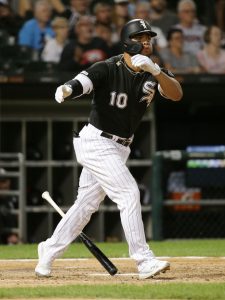
The White Sox, one of the only teams in baseball that discloses financial terms, announced the breakdown of the contract: a $4MM signing bonus, $1MM in 2020, $6MM in 2021, $13MM in 2022, $17MM in 2023 and $24MM in 2024. The $25MM option for 2025 comes with a $5MM buyout. Moncada is represented by the Movement Management Group.
Of players who signed extensions when they had between two and three years of Major League service time, only Mike Trout, Alex Bregman, and Buster Posey received a higher annual average value than the $14MM Moncada will earn over the next five seasons. In a recent look at what a possible Moncada extension could cost, MLBTR’s Jeff Todd set Bregman’s deal (a five-year, $100MM extension from last spring) as a possible comp, and Moncada will fall short of that dollar figure even if his 2025 option is exercised. That said, Bregman was also more established at the big league level and his deal didn’t cover his remaining pre-arbitration season.
Reports surfaced last week about negotiations between the two sides, and the agreement makes Moncada the latest member of Chicago’s young core to ink a long-term deal. The White Sox have signed Eloy Jimenez, Luis Robert, Aaron Bummer to extensions within the last year, and also extended veteran leader Jose Abreu through the 2022 season after Abreu initially accepted the team’s qualifying offer last fall. Between these extensions and the offseason acquisitions of Yasmani Grandal, Edwin Encarnacion, Dallas Keuchel, Gio Gonzalez, and Nomar Mazara, the Sox are clearly ready to put their rebuild behind them as they pursue (at the very least) their first winning season since 2012.
Moncada became one of the cornerstones of that rebuild process when he was acquired as part of the four-prospect package the White Sox received from the Red Sox for Chris Sale in December 2016. At the time of the deal, many considered Moncada to be arguably baseball’s top prospect, and he showed glimpses of that potential during two decent but inconsistent seasons with the White Sox in 2017-18. Last year, however, Moncada broke out to hit .,315/.367/.548 with 25 homers over 559 plate appearance, while also displaying some solid third base defense in the opinion of the Statcast (+5 infield outs above average) and UZR/150 (+4.9) metrics.
It wasn’t all good news for Moncada in 2019, as he posted the lowest walk rate (7.2%) of his three seasons in Chicago and also benefited from a .406 BABIP. While Moncada’s strong baserunning will tend to give him a higher BABIP than most players, a .406 mark (over 100 points above average) indicates some level of good fortune. Still, there’s an awful lot to like from Moncada’s performance, especially for a player who doesn’t turn 25 until May.
2020 was Moncada’s final pre-arbitration season, so his extension will cover that pre-arb year, his three arbitration seasons, and at least his first free agent season. If the White Sox exercise the 2025 option, Moncada will be eligible for free agency as he enters his age-31 season, so there’s still an opportunity at another big payday beyond this contract. It should be noted that Moncada already gained financial security before appearing even in the minor leagues, as he received a $31.5MM bonus upon signing with the Red Sox as an international free agent in February 2015.
The Athletic’s Ken Rosenthal first reported the agreement (Twitter link). USA Today’s Bob Nightengale reported the financial terms. Rosenthal, ESPN’s Jeff Passan and ESPN’s Kiley McDaniel each tweeted additional financial details.
Photo courtesy of USA Today Sports Images
Brewers Extend Christian Yelich
The Brewers have locked up the face of their franchise for the better part of the decade, announcing a nine-year contract with outfielder and 2018 NL MVP Christian Yelich that runs through the 2028 season and includes a mutual option for the 2029 season. Yelich, a client of Paragon Sports International’s Joe Longo, will reportedly be promised seven years and $188.5MM on top of what he was already owed through the 2021 season.
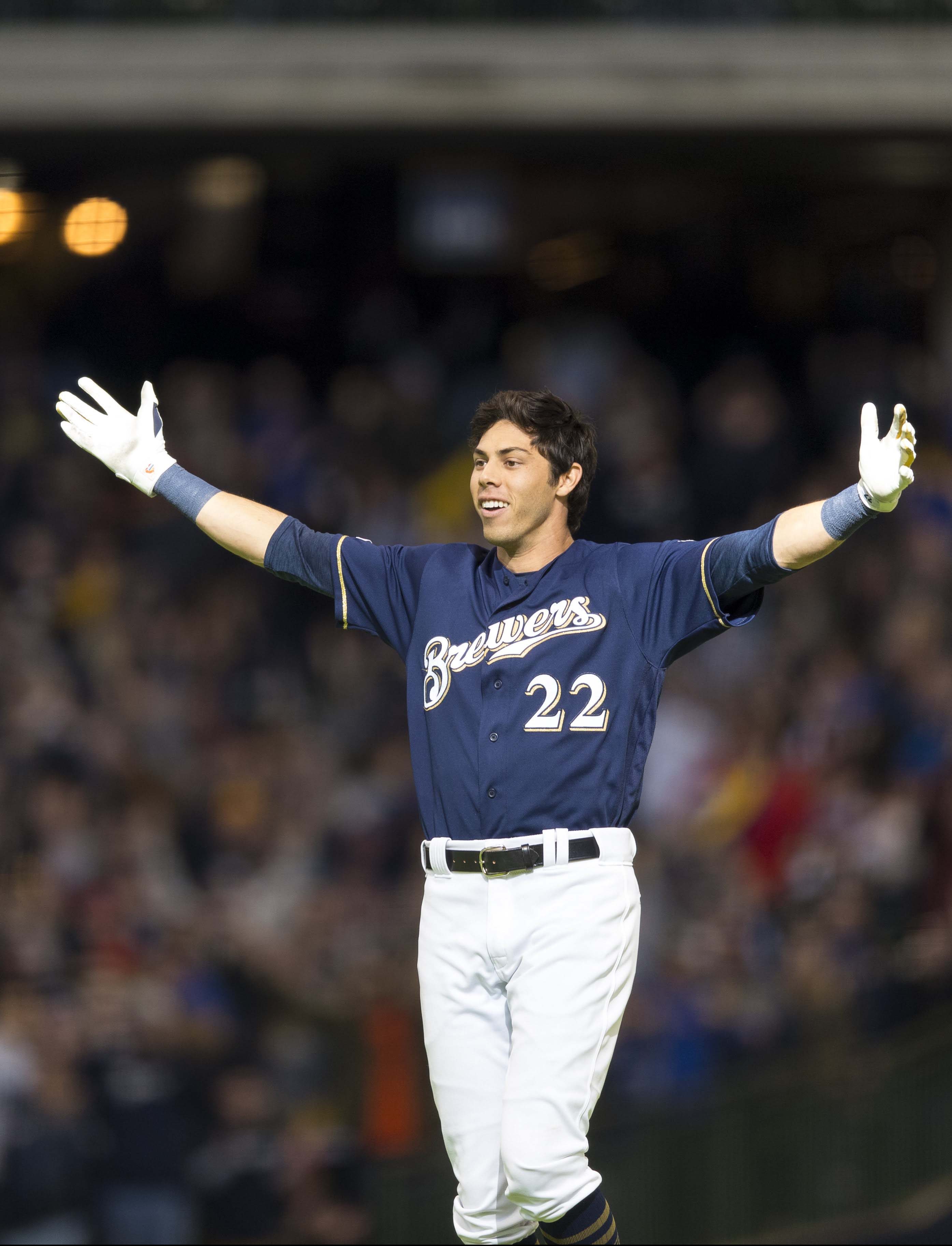
The 28-year-old Yelich was already under club control for $12.5MM in 2020 and $14MM in 2021 — plus a $15MM club option ($1.25MM buyout) for the 2022 season. Those salaries came under the terms of Yelich’s previous seven-year, $49.57MM deal, though; the newly proposed arrangement would obviously catapult him into the game’s elite in terms of annual rate of compensation.
Under the terms of the new contract, those 2020-21 salaries will remain in place, while Yelich will reportedly be guaranteed $26MM annually (with $4MM in deferrals) from 2022-28. The option is said to be valued at $20MM with a $6.5MM buyout. He also receives a full no-trade clause. The contract doesn’t have any opt-outs. In all, he’ll be paid a hefty $215MM over the next nine seasons thanks to today’s extension.
Of course, Yelich has more than proven worthy of that level of investment since being traded over from Miami in a lopsided deal that sent Lewis Brinson, Isan Diaz, Jordan Yamamoto and Monte Harrison to the Marlins. Yelich had cemented himself as a well above-average player in Miami, but the former No. 23 overall pick and top prospect erupted with an MVP season in 2018 and an MVP runner-up in 2019. In two years with the Brewers, Yelich has won a pair of batting titles, posting a combined .327/.415/.631 slash with 80 home runs, 63 doubles, 10 triples and 52 steals (in 58 tries). The 2019 season saw Yelich lead the league not only in batting average but also in on-base percentage and slugging percentage.
That outstanding 2019 campaign ended with an injury — specifically a fractured kneecap suffered when Yelich fouled a pitch into his shin. That might’ve cost him a second consecutive MVP Award — he and eventual winner Cody Bellinger were neck-and-neck at the time of the fracture — but the Brewers clearly don’t have much in the way of concern on potential lingering complications.
In looking for recent comparables, there are some definite parallels with Mike Trout, who also signed what amounts to a career-spanning contract when he was already signed for another two seasons. Yelich’s deal falls well shy of the 10 years and $360MM in new money secured by Trout a year ago, although that’s not really a surprise. Great as Yelich has become, Trout had a superior track record (as he does to everyone else in the game). He was also entering his age-27 season when he put pen to paper, and he didn’t have an option on the contract that his new arrangement was overwriting. Had Yelich played out the remainder of his deal, he’d have needed to wait three years to reach market in advance of his age-31 campaign.
Nolan Arenado, too, bears a quick mention. Like Yelich, he’s an elite talent who inked a mammoth extension in advance of his age-28 campaign, tacking seven years and $234MM onto his previous one-year, $26MM deal. Arenado, however, was only a season away from reaching the open market, so it’s not surprising that his annual value handily tops that of Yelich.
From the Brewers’ vantage point, the Yelich extension should buy some good will with a fan base that grew frustrated by the departures of Yasmani Grandal and Mike Moustakas. Milwaukee spent at a generally conservative rate this winter, eschewing lengthy free-agent deals and high annual salaries alike; the Brewers didn’t give out a free-agent deal longer than Josh Lindblom‘s three-year pact and didn’t promise a larger annual salary than the $10MM rate on Avisail Garcia‘s two-year, $20MM deal.
That aversion to long-term spending surely helped to pave the way for the impending Yelich mega-deal. It’s probably not a coincidence that the Brewers are making a commitment of this magnitude right as the previous franchise-record contract — Ryan Braun‘s $105MM extension — comes off the books. In fact, prior to the Yelich news, the Brewers only had $26.8MM in guarantees on the books in 2022, which will be the first newly guaranteed season on Yelich’s contact. Milwaukee didn’t have a single guaranteed salary on the books for the 2023 season prior to this deal, either. The contract should be manageable in terms of their long-term budget outlook, even if it’s a level of spending which we’ve never seen the Brewers commit to in the past. In that regard, though, it’s clear that the organization views him as a special commodity:
“Christian is everything you could want as the face of a franchise – from his incredible performance on the field, to his leadership as a teammate, to his dedication to the community,” owner Mark Attanasio said in a press release announcing the extension. “This is an exciting day for everyone connected to the organization as we continue our commitment to be a highly competitive franchise and a place that players want to call home.”
The Athletic’s Ken Rosenthal broke the news that the two sides were closing in on a franchise-record deal. ESPN’s Jeff Passan and the New York Post’s Joel Sherman tweeted various aspects of the contract’s structure. MLB Network’s Jon Heyman reported the yearly breakdown. USA Today’s Bob Nightengale reported the no-trade clause and lack of opt-outs. MLB.com’s Adam McCalvy reported on the deferrals in the pact.
Extension Notes: Baez, Minor, Realmuto
Reports back in November indicated that the Cubs had initiated extension talks with star shortstop Javier Baez, but Baez himself said as recently as mid-February that talks on that front have been “up and down.” Asked about the potential of signing a long-term deal in the wake of this week’s seven-year extension for division rival Christian Yelich, Baez told Gordon Wittenmyer of the Chicago Sun-Times that Yelich’s seven-year, $188.5MM extension “doesn’t have anything to do with mine.” Baez acknowledged that he and the Cubs are still “working on” a long-term deal, though there’s no indication that talks have gained significant momentum.
Cubs president of baseball ops Theo Epstein declined to discuss talks with Baez or any other player in detail, merely indicating that the Cubs have tried to sign several players long term. “It’s not worth talking about,” Epstein said of his team’s extension efforts. “If we can get it done, we will. If we can’t, then we’ll move forward. But players don’t have an obligation to sign.” Baez is earning $10MM in 2020 and will be arbitration-eligible one last time next winter before reaching free agency in the 2021-22 offseason.
Some more notes on potential extensions for high-end players…
- Mike Minor has previously made his desire to sign an extension with the Rangers known, but the left-hander told Sam Blum of the Dallas Morning News that “nothing’s happened.” The 32-year-old said he’s not the type to “put a hard deadline kind of thing” on talks before immediately contradicting that statement (to an extent) by adding that he doesn’t want to discuss a new contract during the season. Getting a new deal done before Opening Day would be a “best case” scenario, per Minor, who pitched to a 3.59 ERA with 8.6 K/9, 2.9 BB/9, 1.30 HR/9 and a 40 percent ground-ball rate in a career-high 208 1/3 innings with Texas in 2019. Minor is owed a $9.83MM salary in 2020 — the final season of a three-year, $28MM deal signed with Texas prior to the 2018 campaign. Minor figures to be one of the better arms available on next year’s market and was an honorable mention on the first edition of MLBTR’s 2020-21 Free Agent Power Rankings.
- The Phillies continue to discuss an extension with free-agent-to-be J.T. Realmuto, writes Todd Zolecki of MLB.com. The desire to get a long-term deal worked out isn’t exactly a well-kept secret, as both sides have made their desire to continue the relationship beyond 2020 known. Zolecki reports that talks between the two sides are moving slowly at this point, however. Realmuto for the first time this spring publicly acknowledged that the two sides are indeed talking but wouldn’t specify beyond that, simply stating that there’s “no update” at this time. Realmuto landed second on the first edition of MLBTR’s Free Agent Power Rankings, wherein Tim Dierkes observed that the 29-year-old is one more strong season away from being the first free-agent catcher to ever sign a deal worth more than $100MM.
Murphy, Nola To Split Time Evenly At Catcher For Mariners
While most clubs deploy a clear starter and backup with regard to their catching tandem, the Mariners will have a much more balanced workload behind the plate in 2020, manager Scott Servais told reporters this week (link via Greg Johns of MLB.com). Tom Murphy and Austin Nola will split time in a roughly “55-45” timeshare, per Servais, who acknowledged that Murphy will likely get the nod on Opening Day (and, presumably, receive the slightly larger workload at catcher).
Both Murphy, 28, and Nola, 30, were plucked from relative obscurity by Seattle — the former in a minor trade and the latter on a minor league deal. Both turned in productive efforts in limited time in 2019, as well. Murphy was a clear backup to Omar Narvaez (traded to Milwaukee this winter), catching 67 games while hitting .273/.324/.535 with 18 home runs in 281 plate appearances.
Statcast graded Murphy’s framing efforts nicely behind the plate, and in spite of below-average pop time, Murphy was able to nab 39 percent of the runners who attempted to steal against him. The former top prospect was cut loose by the Rockies organization without ever being afforded an extended look in the Majors, landing with the division-rival Giants on a waiver claim. Four days later, the Giants traded him to Seattle for minor league righty Jesus Ozoria.
As for Nola, the older brother of Phillies righty Aaron Nola, he was simply cut loose by the Marlins organization after making the transition from infielder to catcher while in Triple-A. He functioned more as an infielder with the Mariners in 2019, catching only seven games but appearing in 59 games at first base and another 15 at second base.
However, Nola is focused “strictly” on catching in 2020, per Johns, which is surely due in no small part to the expected emergence of prospect Evan White as the Mariners’ Opening Day first baseman. White signed a six-year contract with three club options before ever appearing in a big league game and is poised to break camp with the club. But even with first base now spoken for, it seems Nola’s strong showing in 2019 will earn him an extended audition elsewhere. Nola ripped through the Pacific Coast League with a .327/.415/.520 slash (134 wRC+) in 55 games last year before being called to the Majors — a promotion to which he responded with a .269/.342/.454 slash (267 plate appearances, 114 wRC+).
Given Nola’s versatility, it’s still possible he’ll see time at other positions, but with Narvaez out of the picture, he’ll have his first extended run as a catcher at the MLB level. Eventually, top catching prospect Cal Raleigh could push his way onto the MLB scene, although at that point, one can imagine Nola as an ideal candidate for the newly created 26th roster spot, given his experience at catcher, first base, second base and third base (as well as a couple of corner-outfield cameos). The 23-year-old Raleigh was Seattle’s third-round pick in 2018 and batted a combined .251/.323/.497 between Class-A Advanced and Double-A last year.