
Nationals Sign Trevor Williams To Two-Year Deal
TODAY: The Nationals officially announced Williams’ deal.
DECEMBER 9, 9:22am: Williams will be guaranteed a total of $13MM, Stephen J. Nesbitt of The Athletic reports (via Twitter).
8:54am: The Nationals are in agreement on a two-year contract with free-agent righty Trevor Williams, reports Mark Zuckerman of MASNsports.com (via Twitter). Williams is represented by John Boggs & Associates.
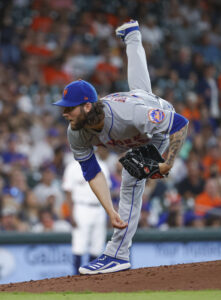
Williams, 31 in April, has spent the past season and a half with the Mets, pitching to a 3.17 ERA in 122 innings while splitting his time between the rotation (12 starts) and bullpen (28 appearances). He’d previously spent the bulk of his career as a starting pitcher, highlighted by a 31-start, 170 2/3-inning season of 3.11 ERA ball with the Pirates back in 2018. However, Williams has yet to consistently sustain that level of success over the course of multiple seasons.
For instance, Williams followed up that strong 2018 season with a 5.38 ERA in 26 starts in 2019, and he endured similar woes in the shortened 2020 season (6.18 ERA, 55 1/3 innings). That said, Williams has been a source of average or better innings in the other four full seasons of his career, dating back to 2017. In all, he owns a career 4.27 ERA and 4.40 FIP in a span of 715 1/3 Major League innings. He’s also coming off a career-high 22.6% strikeout rate and career-low 6.2% walk rate with the Mets in 2022.
Williams works with a traditional starter’s repertoire, leaning primarily on a four-seam fastball and complementing that with a sinker, slider and changeup that were all used at roughly equal levels in 2022 (plus a much more seldom-used curveball). None of those pitches generate huge spin, and none but the slider come with standout whiff rates. Still, Williams regularly excels at limiting hard contact, with above-average marks in exit velocity and hard-hit rate throughout the majority of his career to this point.
Zuckerman suggests that Williams could well end up in the Nationals’ rotation, but that’s not yet set in stone, and a return to the swingman role in which he’s thrived with the division-rival Mets is possible. At present, the Nats have a pair of albatross contracts atop the rotation in Stephen Strasburg and Patrick Corbin, and that pair will be followed by some combination of Josiah Gray, MacKenzie Gore, Cade Cavalli and perhaps Williams. Given Strasburg’s avalanche of recent injury troubles, plus the uncertainty surrounding inexperienced arms like Gore and Cavalli, there ought to be ample rotation innings available even if Williams initially begins the season in the bullpen.
Williams is the second free-agent addition of the winter for the Nats, who also inked corner infielder Jeimer Candelario to a one-year, $5MM contract last month. Washington has a projected payroll of about $106MM next season, though the bulk of that is tied up in their onerous commitments to Strasburg and Corbin. Strasburg is still signed through the 2026 season, while Corbin is signed through 2024.
Braves, Swanson Have Reportedly Had Minimal Negotiations This Offseason
Carlos Correa and Dansby Swanson are the last of this offseason’s “big four” shortstops standing, and while many Braves fans may be holding out hope for a reunion with Swanson, Mark Bowman of MLB.com reports that Swanson and the Braves “haven’t had any legit negotiations since the offseason began.” Atlanta’s most recent offer to Swanson was a six-year deal in the $16-17MM range annually, per Bowman, which aligns with last month’s reports that the Braves had offered Swanson a deal in the vicinity of $100MM.
An offer in that range always felt light, even before the recent explosion of megadeals at the top end of the free-agent market. Trevor Story and Javier Baez both landed six-year, $140MM deals last winter, and MLBTR predicted a $154MM guarantee for Swanson back on our Top 50 free agent rankings. With Trea Turner landing $300MM, Xander Bogaerts getting $280MM and most of the top free agents landing larger-than-expected guarantees this winter, Swanson could well outpace that number, too. Certainly, the reported $96-102MM range in which the Braves last sat now feels even less plausible than it did a month ago.
While it’s apparent that the 11-year lengths of both the Turner and Bogaerts deals were rooted in a desire for the Phillies and Padres to mitigate some luxury-tax concerns, there’s also little denying that the overall guarantee of each contract exceeded most expectations. Turner was at least thought to have a chance at $300MM, but Bogaerts utterly shattered even the most bullish predictions by pulling in that $280MM sum. Moreover, because Bogaerts landed with a team that wasn’t even thought to be involved in the shortstop market, he lowered the supply of available shortstops without necessarily suppressing the demand (at least not in the same manner as he would have by signing with the Giants, Twins or another club active in this market).
As such, Swanson is now one of two remaining high-end shortstops in a market that has at least three teams — not including the incumbent Braves — aggressively looking to add a shortstop. Each of the Giants, Twins and Cubs are known to be active in the shortstop market, and it stands to reason that others could be on the periphery.
For example, the Red Sox, having just been spurned by Bogaerts, may not want to pay Correa’s price but could view Swanson as someone they could lure for a contract closer to what they reportedly offered Bogaerts (six years, $162MM). The Orioles, meanwhile, have at least gauged the asking price on the available shortstops, though it’d still register as a shock to see Baltimore earnestly jump into the Swanson bidding. The Cardinals had interest in Swanson but are likely out after instead making their free-agent splash at the catcher position, signing Willson Contreras to a five-year deal.
Perhaps as notable as the lack of offseason communications is Bowman’s further reporting that Swanson has been “bothered by the absence of communication” and recently reached out directly to Braves president of baseball operations Alex Anthopoulos. It’s hard to hear that and not think back to the free agency of Freddie Freeman last offseason, which obviously culminated in Freeman’s somewhat stunning departure from Atlanta and a six-year deal with the Dodgers.
To this point, there’s no indication that the Braves’ standing offer is their best and final offer. It’s possible that if Swanson comes to the Braves with serious offers from other suitors, Atlanta will commensurately up its offer to Swanson and his agents at Excel Sports Management (the same agency that represented Freeman).
That said, there have been hints since before the offseason even began that retaining Swanson is hardly a foregone conclusion. I broke down the Braves’ payroll and their proximity to the luxury tax months ago, and while both Braves CEO Terry McGuirk and Liberty Media CEO Greg Maffei have offered optimistic comments about being willing to field a top-five payroll, neither pointed out the fact that the Braves are already fairly close to that level — particularly with regard to their ongoing luxury-tax ledger, which is currently the fifth-largest in baseball. Indications since have been that the Braves won’t pursue the non-Swanson shortstops and that they may not have much of an appetite for committing any salary that “takes up too high a percentage of their payroll” (as reported by The Athletic’s Ken Rosenthal in November).
As things stand, the Braves are just over $3MM shy of the $233MM luxury threshold, as projected by Roster Resource. Signing Swanson would likely take them in the range of $20MM over the tax, and any additional acquisitions (or a potential Max Fried extension) could push them well into the second tier and possibly to the precipice of the third tier. Crossing into that third tier would drop their pick in next year’s draft by 10 places. Braves brass has voiced a willingness to cross at least into that first luxury tier, but the fact that Atlanta acquired cash to help cover Joe Jimenez‘s salary in their recent trade with the Tigers doesn’t necessarily portray a team that will cross that threshold with little concern.
Until he signs elsewhere, Swanson still has a chance to remain with his hometown Braves. However, a months-long lack of negotiations, a standing offer that’s likely well shy of his eventual price tag, and a market of at least two other motivated suitors casts plenty of doubt on whether Atlanta is the likeliest landing place for Swanson.
Diamondbacks Have Shown Interest In Evan Longoria, Justin Turner
Diamondbacks general manager Mike Hazen listed adding some right-handed help to his lineup as an area of focus back in early October, and much of the team’s pursuits to this point in the offseason have reflected that desire to balance out a heavily left-handed lineup. Arizona has already bought low on 2020 AL Rookie of the Year Kyle Lewis, and Jon Heyman of the New York Post reports that they’ve spoken to veteran corner infielders Evan Longoria and Justin Turner as well (Twitter links).
Arizona currently has left-handed bats as its primary options across the outfield (Jake McCarthy, Corbin Carroll, Daulton Varsho, Alek Thomas), at third base (Josh Rojas) and likely at designated hitter (Pavin Smith, Seth Beer). The Snakes aren’t devoid of righty-swinging options, as switch-hitting Ketel Marte provides a strong right-handed presence, as does first baseman Christian Walker. Catcher Carson Kelly and shortstop Nick Ahmed are both generally light-hitting options, but both righties at least have above-average career marks against left-handed pitching.
That contingent of righties wasn’t enough to make the 2022 D-backs anywhere close to passable against left-handed pitching, however. As a team, the Diamondbacks batted .227/.292/.363 against left-handed pitching in 2022, and the resulting 83 wRC+ ranked 28th in baseball, leading only the Pirates (81) and Marlins (71). The aforementioned Lewis might be a slight upgrade over some in-house options, if healthy, but that’s a substantial “if” — and he’s had reverse platoon splits to this point in his career anyhow.
Both Longoria and Turner, however, would represent marked upgrades to that glaring team deficiency against lefties. Longoria, 37, hit .282/.333/.479 against southpaws in 2022 and has tormented left-handed pitchers with a .281/.359/.509 slash throughout his 15 Major League seasons. The 38-year-old Turner, meanwhile, posted a .275/.349/.389 slash against left-handers in 2022 and has a .276/.358/.460 output against them throughout the duration of his own 14-year career in the Majors.
At this point in their careers, neither Longoria nor Turner is likely viewed as an everyday option at third base. Both played fewer than 600 innings at the position in 2022, although injuries to each played a role in that limited defensive work. Still, Turner spent half of his 128 games at designated hitter, while Longoria spent about 20% of his time serving as a DH with the Giants last year. Both players once drew strong defensive marks at the hot corner but have seen them dwindle in recent seasons. Turner drew slightly negative marks in each of Defensive Runs Saved (-1), Ultimate Zone Rating (-2.1) and Outs Above Average (-2), while Longoria was dinged by DRS (-4) but credited as a scratch defender in the eyes of both UZR and OAA. Even if neither is viewed as a full-time option at third, either Longoria or Turner could split time with Rojas while also logging regular work as the D-backs’ designated hitter.
Beyond their inquiries into veteran corner infielders, the D-backs have been on the hunt for catching help throughout the winter. Perhaps unsurprisingly, the names to which they’ve been primarily connected — A’s catcher Sean Murphy and free agent Christian Vazquez — both hit from the right side of the dish.
Latest On Sean Murphy
Athletics catcher Sean Murphy is among the most popular players on the trade market, due both to his general excellence as a well-rounded catcher and to the dearth of high-end catching talent in a market where several teams are looking for upgrades at the position. To this point, he’s been linked to the D-backs, Astros, Cubs, Guardians, Twins, Braves, Rays and Red Sox in the past three to four weeks. Susan Slusser of the San Francisco Chronicle adds the Giants to list of teams that have called Oakland regarding Murphy, though an upgrade at catcher isn’t currently atop San Francisco’s priority list as they still hope to reel in a top-of-the-market free agent such as Carlos Correa.
The Cardinals were considered one of Murphy’s most prominent suitors before yesterday’s five-year agreement with Willson Contreras, and it seems that Oakland’s sky-high asking price on Murphy prompted St. Louis to instead pivot to the free-agent market. Ken Rosenthal of The Athletic reported earlier in the week that the A’s were seeking controllable, MLB-ready players in return for Murphy, and Derrick Goold of the St. Louis Post-Dispatch shines some further light on the type of return Oakland is seeking. Per Goold, the Athletics’ ask in talks with the Cardinals included outfielder Lars Nootbaar, third-place Rookie of the Year finisher Brendan Donovan, and a near-MLB pitching prospect such as Gordon Graceffo.
It’s a hefty asking price, to be sure, as both Nootbaar and Donovan burst onto the scene in 2022 and staked a claim to regular roles with the Cardinals. Nootbaar finished out the season with a .228/.340/.448 batting line (125 wRC+), and he was particularly effective in the season’s final two months, once he was finally able to settle into an everyday role (as MLBTR’s Anthony Franco explored in September). Nootbaar made the most of his opportunity as the primary right fielder in St. Louis, slashing .246/.371/.492 with 10 homers, 12 doubles and three triples in his final 240 plate appearances. He’s controllable through 2027.
Donovan is similarly interesting, even though the manner in which he delivers value is completely different. Also 25, Donovan played all four infield positions and both outfield corners this season, generally delivering quality defense at each spot — hence this year’s Gold Glove Award. He batted .281/.394/.379, showing minimal power but also a keen feel for the strike zone, evidenced by a 12.8% walk rate and an excellent 15% strikeout rate. He’s controlled a year longer than Nootbaar, all the way through the 2028 season. As for Graceffo, he’s currently ranked as baseball’s No. 66 prospect at Baseball America, No. 78 at FanGraphs and No. 79 at MLB.com.
Suffice it to say, it’s a massive haul for the A’s to seek and a justifiable one for the Cardinals to walk away from, no matter how excellent Murphy is. Focusing in on the Cardinals aspect is generally a moot point now, though. With Contreras signing on through the 2027 season, St. Louis is no longer in the running.
Still, the asking price from one prominent suitor is instructive when trying to plot out what the A’s could seek from other clubs. Every valuation is different, of course, but teams looking into Murphy could very well need to part with multiple MLB-ready talents who have longer-reaching club control than the remaining three years the A’s hold over Murphy. General manager David Forst said this week that the A’s aren’t necessarily closed off to receiving lower-level players but stressed that adding players who have reached or could reach the Majors in 2023 — whether in a Murphy trade or other transactions — is at the “top of our to-do list” (link via Melissa Lockard of The Athletic).
Marlins, Austin Allen Agree To Minor League Deal
The Marlins have agreed to a minor league contract with catcher Austin Allen, as first indicated on the team’s transactions log at MLB.com. The former Padres and Athletics backstop will presumably vie for a roster spot in Spring Training with the Fish.
Allen, 29 next month, was a fourth-round pick of the Padres in 2015 who went from San Diego to Oakland as part of 2019’s Jurickson Profar trade. Baseball America ranked him 16th among San Diego farmhands at the time of the swap and 11th among A’s prospects a year later, but despite consistently impressing in Triple-A (.314/.365/.583 in 820 plate appearances), Allen has never gotten much of a look in the big leagues. Suspect glovework appears to be the primary reason, as he’s long been touted as a bat-first player with plenty of concerns regarding his ability to stay behind the plate. Allen has spent increased time at first base and designated hitter in recent seasons but remained productive in the upper minors.
Chances at the MLB level were sparse for Allen, particularly in Oakland, where standout Sean Murphy understandably logged the lion’s share of playing time and more defensive-minded players have typically served as his backup. Allen never received more than 35 plate appearances in a season with Oakland and saw only a career-high 71 during his debut campaign with San Diego. In 127 MLB plate appearances, he’s a .195/.252/.288 hitter.
There’s little doubting Allen’s power, however. He’s had four seasons in the minors with between 20 and 22 home runs, despite never topping 121 games played in any of those years. And, while he’s fanned at a troubling 37% clip in his small sample of MLB action, his 20.4% mark in a larger sample of Triple-A plate appearances is less concerning.
Allen is out of minor league options, so if he makes the Marlins’ roster at any point, he won’t be able to be sent back to Triple-A without first clearing waivers. He’s likely a depth signing behind Jacob Stallings and Nick Fortes, but Miami is fairly thin at catcher in the upper minors, so Allen could be the top option in the event of an injury. Of course, subsequent offseason additions, be they Major League acquisitions or further non-roster pickups, could see Allen pushed down the depth chart a bit.
Dodgers Sign Jason Heyward To Minor League Deal
The Dodgers announced Thursday that they’ve signed free-agent outfielder Jason Heyward to a minor league contract and invited him to Major League Spring Training.
The Cubs released Heyward earlier this offseason. He’d been slated to head into the 2023 campaign in the final season of his eight-year, $184MM deal signed prior to the 2016 campaign. Chicago remains on the hook for the bulk of Heyward’s $22MM salary in 2023, and the Dodgers will only owe him the prorated league minimum for any time spent on their Major League roster or injured list. That sum would be subtracted from the $22MM owed by the Cubs.
Heyward, still just 33, spent seven seasons with the Cubs but struggled to live up to the expectations of that contract. After hitting .293/.359/.439 with all-world defense in his lone season as a Cardinal prior to reaching the open market, Heyward hit just .230/.306/.325 in the first season of his eight-year deal. The Cubs won the World Series that year, with the final victory famously preceded by a spirited clubhouse speech from Heyward during a rain delay. That makes for a good anecdote but ultimately does little to overshadow a generally underwhelming tenure with the Cubs.
Heyward posted above-average offensive numbers with the Cubs only in the 2019 season and in the shortened 2020 campaign, when he combined for a .255/.355/.435 output in 770 plate appearances. That solid run was bookended by a total of five sub-par seasons at the plate, though, and Heyward’s final batting line as a member of the Cubs clocked in at just .245/.323/.377. He provided plus defense, value on the bases and was clearly an important figure in the clubhouse, but there’s no getting around the fact that the contract didn’t pan out anywhere close to how either party hoped. By measure of wins above replacement, Heyward gave the Cardinals nearly as much value in 2015 (5.6 fWAR, 6.8 bWAR) as he gave the Cubs over a seven-year period from 2016-22 (8.2 fWAR, 8.9 bWAR).
The Dodgers will hope that a change of scenery, some different coaching and some input from a different data/analytics team might be able to help Heyward tap into some semblance of his old self. Righting this ship will be a tall order, as Heyward’s once-elite defensive grades have dwindled down to nearly average. Heyward still possesses a strong arm, but he was never a burner in the first place and Statcast ranked his 2022 sprint speed in the 44th percentile of big leaguers.
Heyward won’t be guaranteed anything more than an opportunity with the Dodgers, who’ll be able to cut him loose at any point in camp if they wish to allocate his Cactus League at-bats to younger options. That said, there’s at least some degree of an opportunity for him, at least as things currently stand with the L.A. roster. Having non-tendered Cody Bellinger and lost Trea Turner to the Phillies via free agency, the Dodgers currently have some unsettled spots in the lineup. For now, Chris Taylor seems likely to move from left field to second base, with Gavin Lux sliding to shortstop. That creates some more fluidity in an outfield mix that right now might contain both Trayce Thompson and 25-year-old rookie James Outman.
There will certainly be more moves on the horizon for the Dodgers, whether they pivot and make a play for Dansby Swanson at shortstop — they’re reportedly not pursuing Carlos Correa — or whether they bring in some new talent to deepen the outfield mix. Any subsequent additions could serve to further limit Heyward’s chances, but there’s little harm in bringing him to camp this spring and seeing if they can conjure up yet another successful reclamation project.
Young: Rangers Still Exploring Rotation, Left Field Markets
Since the 2022 season drew to a close, the Rangers have acquired or re-signed four starting pitchers, beginning with Martin Perez‘s acceptance of a $19.65MM qualifying offer and following with a trade for Jake Odorizzi (and $10MM to help cover the bulk of his $12.5MM salary). Subsequent signings of two-time Cy Young winner Jacob deGrom (five years, $185MM) and left-hander Andrew Heaney (two years, $25MM with an opt-out and a heavy slate of incentives) followed over the past week. That quartet can now join last winter’s top rotation signee, Jon Gray, in rounding out the rotation.
Or so it would seem. Rangers general manager Chris Young told reporters that even after that frenzied slate of additions, he’s still on the lookout for more starting pitching talent (link via MLB.com’s Kennedi Landry). Young stopped short of declaring that he intends to continue playing at the top of the rotation market but referenced the timeless adage of never having “too much” pitching in vowing to continue his efforts to improve the club.
Texas is hardly without any depth beyond that top five. Right-hander Dane Dunning, in fact, could potentially be squeezed out of the starting mix despite giving the Rangers 271 quite serviceable innings over the past two seasons: 4.48 ERA, 4.23 FIP, 21.2% strikeout rate, 8.9% walk rate, 53.6% ground-ball rate, 1.10 HR/9. Dunning has a pair of minor league option years remaining.
Picking up some additional depth, even if it’s on minor league deals, would better position the Rangers to get through a 162-game marathon. And, as they’ve shown repeatedly in the past two offseasons, they probably shouldn’t be ruled out on a more impactful splash. To that end, it’s worth reminding that the Rangersreportedly met with Carlos Rodon even after signing deGrom — although that meeting came before signing Heaney.
More directly, Young plainly stated a desire to explore the market for left fielders. He also expressed confidence in both his catching corps and infield mix. The Rangers will look to Mitch Garver, Jonah Heim and Sam Huff as options behind the dish in 2023, while the infield features Nathaniel Lowe at first base, Marcus Semien at second and Corey Seager at shortstop. Top prospect Josh Jung is the heir-apparent at third base, but the Rangers have fellow prospects Ezequiel Duran and Josh Smith, plus utilitymen Brad Miller and Mark Mathias as depth options.
In left field, things are far less certain. Adolis Garcia is the clear everyday option in right, and Leody Taveras at least provides a glove-first option in center. Left is more problematic, with options including the aforementioned Smith, Bubba Thompson and Eli White.
Smith has spent more time on the infield in his minor league career but was a prospect of note and had a big season in the upper minors before struggling in his MLB debut. Thompson has 80-grade speed but needed a .389 BABIP just to get to a .265/.302/.312 batting line (77 wRC+) in 181 plate appearances in his own debut this season. With a 30.9% strikeout rate and that excessively good fortune on balls in play, his bat is likely to regress from an already troubling starting point. White’s glove gives him a chance at being a solid fourth outfielder, but he’s a career .185/.260/.296 hitter in 389 MLB plate appearances.
It’s not a great market for corner outfielders in free agency, as the bulk of the available names are either coming off injury-shortened seasons (Michael Conforto, Michael Brantley, Andrew Benintendi) or are simply in search of a rebound after a disappointing performance (AJ Pollock, Tommy Pham, David Peralta, Stephen Piscotty, old friend Joey Gallo). The trade market could offer a broad range of alternatives. The D-backs have been listening to offers on several outfielders (e.g. Jake McCarthy, Alek Thomas), while the Twins (Max Kepler), Orioles (Anthony Santander) and Pirates (Bryan Reynolds) all have potential trade candidates of varying quality in the outfield.
Even after the Rangers’ spending spree over the past two offseasons, they’re still a projected $29MM from the luxury-tax threshold. Their projected $181MM Opening Day payroll would be a franchise-record mark, but “only” by a margin of about $15MM. The extent to which ownership will continue to green-light payroll increases can’t be known, but the Rangers are committed to spending their way back into contention in the AL West, so there’s little point in taking their foot off the gas now.
Twins Have Made Offer To Christian Vazquez
The Twins have made a formal offer to free-agent catcher Christian Vazquez, reports Darren Wolfson of SKOR North Radio and 5 Eyewitness News (Twitter link).
Twins president of baseball operations Derek Falvey said early in the offseason that his club hoped to bring in a catcher to split time with 25-year-old Ryan Jeffers — ideally one who can provide some offense against right-handed pitching, given the righty-swinging Jeffers’ stout .263/.344/.450 career batting line against lefties (which includes a .306/.377/.532 slash in 2022). The market is quite thin on lefty-hitting catchers, however, and the Twins aren’t necessarily interested in a strict platoon anyhow. Both Falvey and GM Thad Levine have spoken of a more even distribution of playing time between their two primary catchers next season, whoever the new addition might be.
Vazquez, 32, would give the Twins a strong defensive option who’s elevated his offensive profile in recent seasons as well. The longtime Red Sox backstop won a World Series ring following a summer trade to the Astros this season and hits free agency having batted .271/.318/.416 over the past four seasons combined. He’s thwarted 34% of stolen-base attempts against him in his career to date, been credited with a hefty 51 Defensive Runs Saved in parts of eight MLB seasons, and has drawn plus framing marks from publicly available metrics via Statcast, FanGraphs and Baseball Prospectus.
Now that Willson Contreras is off the board on a five-year deal with the Cardinals, Vazquez stands out as the top catcher on the free-agent market. (The Twins, for what it’s worth, did not pursue Contreras, according to Wolfson.) The trade market offers a handful of viable alternatives, headlined by Oakland’s Sean Murphy and Toronto’s Danny Jansen, though there’s been at least some mention of the Braves giving consideration to trading from their own stockpile of catching talent. (In that scenario, backup Manny Pina would be the likeliest to go.)
While Contreras removed the top name from the free-agent market for catchers, he also removed a viable landing spot for Vazquez, who’d been linked to the Cardinals in recent rumors. The Twins will still have competition, as Vazquez is said to be of interest to the Diamondbacks, Guardians, Padres and Giants — and other clubs are surely in play. Both Peter Abraham of the Boston Globe and Ken Rosenthal of The Athletic have previously suggested that Vazquez could command at least a three-year contract in free agency. The Twins have a projected payroll around $98MM, which sits well shy of last year’s Opening Day mark of $135MM.
The Mets, Brandon Nimmo, And The Luxury Tax
The Mets have remained in contact with agent Scott Boras regarding center fielder Brandon Nimmo throughout his free agency, but MLB.com’s Anthony DiComo reports that there’s a “general pessimism” among many in the organization about the team’s chances of re-signing him. As DiComo points out, manager Buck Showalter was effectively referring to Nimmo in the past-tense last night. Joel Sherman of the New York Post wrote last night that GM Billy Eppler was using terms like “get creative” and “opportunistic” earlier in the week when discussing further transactions.
Of course, since that time, the Mets agreed to a two-year, $26MM deal with Jose Quintana and acquired lefty reliever Brooks Raley from the Rays, both of which represented rather straightforward augmentation of the team’s pitching staff. And even amid reports of pessimism and a shift toward more measured spending, SNY’s Andy Martino tweets that the Mets are at least remaining open-minded about the possibility of an all-in push for both Nimmo and righty Kodai Senga.
The Mets found themselves with a substantial array of needs to address heading into the offseason, with Nimmo, Jacob deGrom, Edwin Diaz, Chris Bassitt, Taijuan Walker, Seth Lugo and Adam Ottavino all reaching the open market. They’ve patched up the rotation by adding Justin Verlander and Jose Quintana to join Max Scherzer and Carlos Carrasco, and the Mets’ first strike was to bring Diaz back on a record-setting five-year, $102MM contract. The recent acquisition of Raley added some needed support in the bullpen.
Those moves, however, have left the Mets with a projected $306MM in terms of luxury-tax obligations. As a second-time offender, they’ll pay a 90% tax on on any expenditures north of $293MM. In other words, one or both of Nimmo and Senga would cost the Mets nearly double whatever annual salary is applied to their contracts — at least this season.
The Mets can certainly explore avenues to lower their luxury number, perhaps shopping for a taker on the remainder of James McCann‘s contract or (less problematically) by gauging interest in veterans like Mark Canha or Eduardo Escobar, each of whom represents a relatively significant luxury expenditure ($13.25MM for Canha; $10MM for Escobar). To that end, Mike Puma of the New York Post suggests the Mets are shopping Darin Ruf in hopes of getting a team to absorb some or all of his $3.25MM he’s still owed, though that would amount to little more than a drop in the bucket for their enormous luxury obligations.
Nimmo is widely expected to command a nine-figure deal of at least five, if not six years in length. Senga’s price tag is a bit tougher to gauge, as while agent Joel Wolfe revealed this week that he’s received offers of five and six years in length for his client, the annual value being discussed on such deals is not publicly known. Speculatively speaking, it’s not all that difficult to imagine the pair combining for something in the $40MM range, AAV-wise, which would mean at least an additional $36MM in taxes on top of their actual contracts. At present, the Mets are tentatively looking at roughly $41MM in luxury penalties, and by being more than $40MM over the luxury line, they’re also slated to have their top pick dropped by 10 places in next year’s draft order.
Further complicating matters is that the Mets are already projected for approximately $201MM of luxury obligations as far out as the 2024 season. Scherzer has an opt-out in his contract that could greatly reduce that number, but that’s hardly a guarantee to be exercised at this time. That $201MM figure also doesn’t include arbitration raises for Pete Alonso (projected by MLBTR contributor Matt Swartz to earn $15.9MM in 2023) or Jeff McNeil (projected for $6.2MM); that pair could combine for more than $30MM in 2024. Again using that speculative $40MM combination of AAVs for Nimmo and Senga, the Mets would be barreling toward the fourth tier of luxury penalization again in ’24, which would then come with a mammoth 110% tax rate in their third consecutive year of exceeding the tax threshold.
The ultimate decision rests in the hands of owner Steve Cohen. It bears mentioning that this type of lavish payroll bonanza is among the reasons that the league’s other owners sought to implement a fourth tier of luxury penalization — colloquially dubbed the “Cohen Tax” — in its recent wave of collective bargaining with the MLB Players Association. It doesn’t appear to be stopping the Mets from taking on upwards of $40MM in luxury penalties, but adding Nimmo and/or Senga to that pile would teeter on unprecedented with regard to the scope of the luxury penalties incurred.
Athletics To Sign Aledmys Diaz
12:49pm: Diaz’s exact guarantee if $14.5MM, Sherman tweets.
11:50am: The A’s and veteran infielder Aledmys Diaz are in agreement on a two-year deal in the $14MM range, tweets Joel Sherman of the New York Post. The deal is pending a physical.
Diaz, 32, has spent the past four seasons in a utility role with the division-rival Astros, serving as a nice bat against left-handed pitching and playing all over the diamond. He’s coming off a .243/.287/.403 season that represents a slight downturn from what he’s done in four years with Houston on the whole: .255/.313/.424.
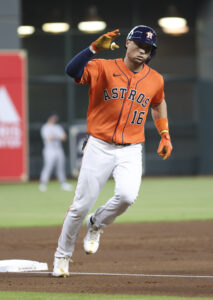
A dismal postseason showing wasn’t the lasting image for which Diaz hoped as he headed into free agency, but that’s the scenario with which he was faced after going just 1-for-22 with a double and six strikeouts. Even with that ugly closing note, however, Diaz’s broader track record as a slightly above-average hitter with some defensive versatility was enough to land him a multi-year deal that’ll run through his age-33 season.
Diaz spent time at all four infield spots in 2022, plus a brief look in left field, so he’ll give the A’s a versatile option — much like the recently signed Jace Peterson — after they entered the offseason with little in the way of infield stability. Peterson (third base), Tony Kemp (second base) and Seth Brown (first base) all hit left-handed, so Diaz can serve as a right-handed complement to any of the bunch. That said, Diaz is a career .275/.322/.457 hitter against righties, so he has enough bat to be in the lineup as more than just a platoon option for manager Mark Kotsay.
While Diaz was a primarily a shortstop early in his career with the Cardinals and still has more innings at that position than any other spot on the diamond, he’s continually drawn poor defensive grades there from metrics like Defensive Runs Saved (-23 in 2524 innings), Ultimate Zone Rating (-14) and Outs Above Average (-17). That said, Diaz is a decent enough emergency option at the position, should a need arise, and he’s drawn positive marks from those same metrics at each of the other three infield slots.
The A’s entered the 2022-23 offseason without a single guaranteed contract on the books for the upcoming season, but they’ve now inked a pair of versatile infielders to two-year contracts, at least affording them some semblance of reliability in the lineup. That said, they’re also fielding trade offers for standout catcher Sean Murphy, who seems likely to be traded, and by midseason they could very well be fielding interest in Diaz and/or Peterson as they continue to stockpile young players in their latest rebuilding effort.
Oakland is still under $50MM in payroll for the 2023 season — assuming neither the Diaz nor Peterson deal is heavily front-loaded — so there’s room for the team to make some additional signings in this tier of the market. Given the lack of experience on the roster and the defensive fluidity many of the current starters bring to the table, the A’s could still make a play for a free agent at just about any position. There’s also clear room for multiple veteran arms, be they starters or relievers, so it shouldn’t come as a surprise to see a handful of comparably modest signings in the weeks and months ahead.