
Did The Marlins Gift The Indians A Setup Man?
Like any club, the Indians have had their share of notable players slip through their fingers, though the losses of Kirby Yates and Gio Urshela can likely be forgiven when looking at the low costs of acquisition for the likes of Corey Kluber and Mike Clevinger. Cleveland’s Feb. 4, 2019 acquisition of righty Nick Wittgren from the Marlins isn’t going to have that type of long-term impact on the franchise, but it nevertheless appears to be another high-quality, low-cost pickup for a team that has had its share of success in that regard in recent years.
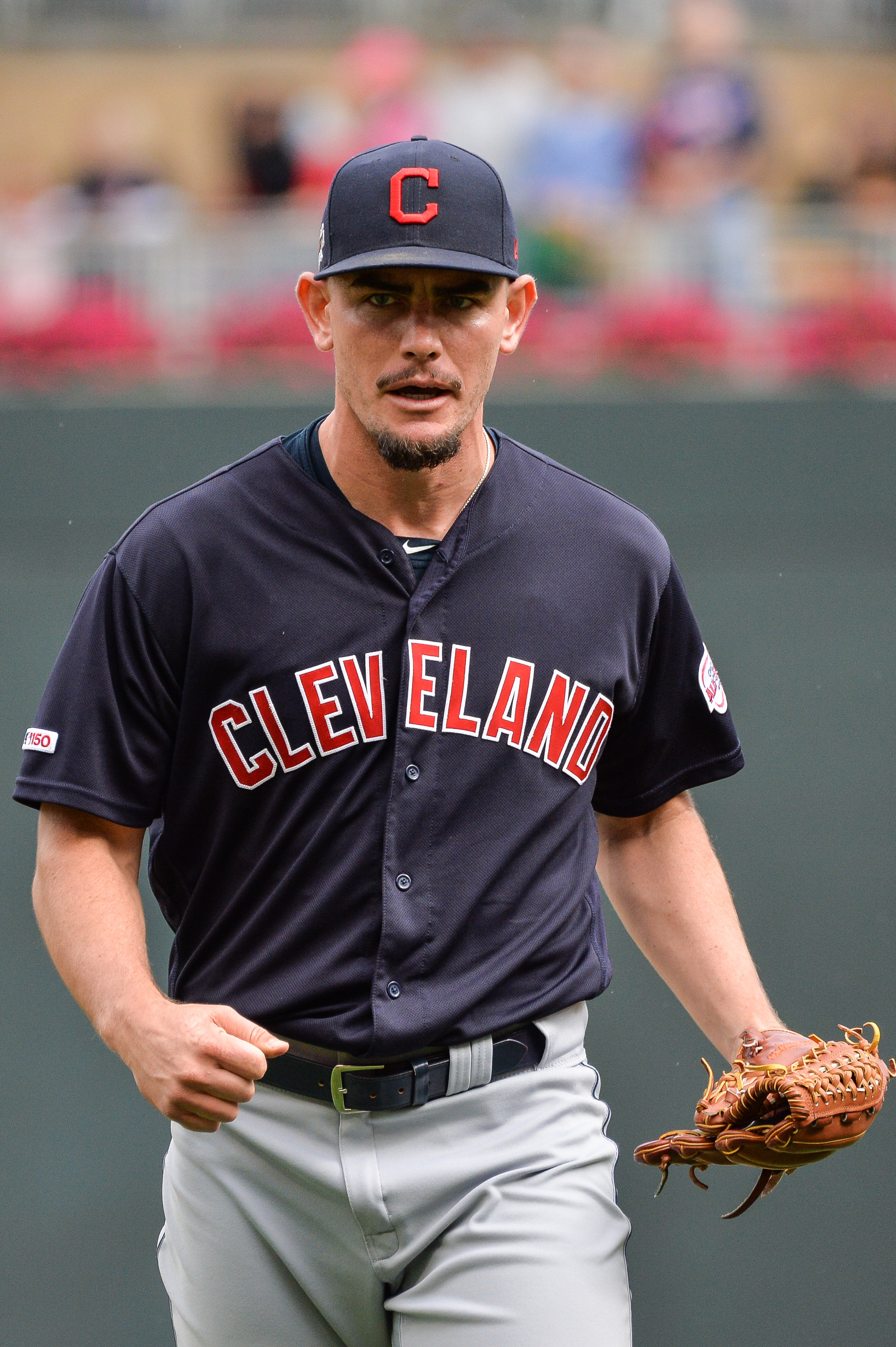
When the Marlins designated Wittgren for assignment in Jan. 2019, it registered as something of a surprise, as noted here at the time. He’d had an up-and-down year in 2018 but finished out the season with a 2.94 ERA, 8.3 K/9, 4.0 BB/9, 0.27 HR/9 and a career-best 46 percent ground-ball rate in 33 2/3 innings with Miami. Wittgren was a 27-year-old with a minor league option remaining, a 3.60 ERA (3.50 FIP) and a 116-to-38 K/BB ratio in 127 2/3 innings of relief for the Marlins. He wasn’t expensive — still pre-arbitration at the time — and could’ve been controlled through 2022.
Whatever the reasons, the Marlins felt Wittgren was the most expendable piece on the 40-man roster when they signed Neil Walker. Five days after being designated for assignment, he was traded to Cleveland in exchange for Jordan Milbrath — a minor league righty who is only about two months younger than Wittgren and, at the time, had only briefly reached Triple-A.
For an Indians club that had moved on from the long-solid trio of Cody Allen, Zach McAllister and Dan Otero and, a year prior, had lost iron man Bryan Shaw in free agency, Wittgren proved to be a godsend. While he didn’t break camp with the team, Wittgren was summoned in early April and made his Cleveland debut by pitching 1 1/3 innings with four strikeouts. At no point in 2019 did the righty carry an ERA higher than 3.34, and by the time the season had drawn to a close, Wittgren was regularly pitching in the eighth inning as one of Brad Hand‘s primary setup men. His 12 holds ranked third on the club behind Oliver Perez and Adam Cimber.
Wittgren doesn’t have the flashy Statcast numbers that some other relievers we’ve profiled recently do. He’s not a hard-thrower (92.3 mph average fastball), and he ranks below average in terms of spin rates and hard-hit rates. His home-run rate looked ripe for regression in 2018 and did indeed spike in 2019 — although the extent of that spike was surely impacted by the juiced ball (as was the case for virtually every pitcher in the league).
But Wittgren has demonstrated above-average control throughout his career and generally been effective against both righties and lefties (last year’s more pronounced platoon splits notwithstanding). Fielding-independent metrics suggest that the sub-3.00 ERA he’s managed over the past two seasons isn’t likely to hold up, but Wittgren has a career 3.71 FIP in 185 1/3 big league innings at this point.
In some ways, Wittgren mirrors the previously mentioned Shaw, who was a similarly unheralded pickup but emerged as a rock-solid late-inning stabilizer in Cleveland for a half decade. He’s not an overpowering righty but generally has solid control and has, to this point in his career, managed to maintain an ERA south of his FIP and (particularly) his xFIP thanks to home run suppression skills. He has a ways to go in terms of matching Shaw’s uncanny durability, but Wittgren still seems like a solid piece in the ‘pen — even if his ERA trends a bit closer to his FIP marks.
As a 28-year-old middle reliever/setup man without huge strikeout totals, we probably won’t see Wittgren named to any All-Star teams in the near future. He’s the type of reliever who even in maintaining success will also maintain relative anonymity. Most seventh- and eighth-inning relievers on smaller market clubs aren’t exactly household names. But considering the cost of acquisition — Milbrath is already out of the Marlins organization after posting a 4.50 ERA an 5.49 FIP in 52 Triple-A frames last year — and the fact that Wittgren can be cheaply controlled through 2022, the trade looks like a nice under-the-radar move that can help Cleveland for the foreseeable future.
Latest On Plan For Potential Resumption Of Play
As Major League Baseball readies a proposal for the Players Association regarding the resumption of play, ESPN’s Jeff Passan highlights some of the additional hurdles to clear. Notably, Passan indicates that some players have inquired with the union about what would happen if they opted not to play in 2020 due to fear regarding their own health or their desire to remain with family amid a global health crisis.
Both are understandable concerns; there are, after all, numerous players in Major League Baseball with underlying medical conditions that make them higher-risk cases. Players with diabetes or asthma and those who’ve overcome battles with cancer, for instance, could have reservations about returning to play — just as players who have higher-risk family members will also have increased trepidation. Nationals lefty Sean Doolittle spoke with The Athletic’s Jayson Stark this week about his wife’s acute asthma, which has in the past “flared up and manifested as pneumonia,” resulting in hospitalization. (To be clear, there’s no indication that Doolittle has inquired about opting not to play in 2020, but his case nonetheless stands out as a salient example of concerns that numerous players throughout the league surely harbor.)
There’s also, of course, the matter of economics. It’s been well documented at this point that the league’s owners will push for further reduction in player salary now that it’s clear fans won’t be in attendance for at least the early portion of the season (quite likely longer than that). Negotiations on that front had not formally begun as of yesterday, Newsday’s David Lennon reports. Presumably, the league’s plan with regard to player salary will be included in whatever proposal is produced, but as Joel Sherman of the New York Post wrote last night, it’s unlikely that the MLBPA will simply agree to whatever scale is initially suggested.
As for what the game itself could look like, Passan writes that some executives believe active rosters could carry as many as 30 players, while teams will more broadly have a pool of about 50 players apiece available to them. The specifics of such an arrangement would need to be ironed out. Still, some type of unique setup figures to be a necessity, given the unlikelihood of a standard minor league structure being in place for the 2020 season.
The looming question of how to proceed if a player or players test positive remains an unaddressed elephant in the room. Doolittle touched on the topic in his interview with Stark, noting the rapid manner in which any disease typically spreads through a big league clubhouse. “…[W]e’re in such close proximity, it’s impossible to enforce social distancing measures in a clubhouse when you’re trying to play a Major League Baseball season and prepare for games,” the veteran lefty said. Expanded active rosters would only further crowd things beyond the norm.
Obstacles notwithstanding, Doolittle and seemingly everyone else in the game is hopeful of reaching some type of agreement. Teams have indeed “encouraged” players to prep for a June training camp of sorts, Passan writes, though no specific dates are in place. And via Lennon, Yankees president Randy Levine said in a radio appearance on 1010 WINS that he believes the league is “moving closer to finalizing a plan” in spite of the murky economic picture:
The economics are really important, but we have to deal with the reality of the economics. Obviously, television isn’t the whole ballgame as far as the financial economics of the game. Sometimes you’ve got to play the games, play ball, and there are more important things than economics.
Whatever arrangement is proposed or agreed upon, it’s crucial to remember that it’ll be largely tentative in nature. The public health landscape is rapidly changing, and little can be set in stone so far in advance. Many fans have grown weary of conditional updates and the lack of a clear plan to proceed, but any decisions made will continue to be subject to abrupt change. That sentiment is surely at the root of the league’s recent pushback against the June 10 Spring Training and July 1 opener dates that Trevor Plouffe relayed on Twitter after hearing from friends on active rosters. As the league plans for a best-case scenario, it’s also keenly aware that the actuality could (or more likely will) look different from its optimistic outline.
Hoffman’s Last Stand
When the Rockies acquired Jeff Hoffman from the Blue Jays in the 2015 Jose Reyes/Troy Tulowitzki blockbuster, the hope was that Hoffman would burgeon into a high-profile starter to pair with fellow prospect Jon Gray atop the rotation. Hoffman, after all, was the No. 9 pick in the 2014 draft and was in the mix for the top overall selection as a junior at East Carolina University until he tore his UCL and required Tommy John surgery. He was a volatile pick for the Jays, but the industry believed in him; he landed on the top 100 prospects of Baseball America, MLB.com, Baseball Prospectus, FanGraphs and ESPN between 2015-17.
Hoffman ripped through Class-A Advanced and Double-A in his first full pro season — the same season that saw him shipped from the Jays to the Rox. While the 4.02 ERA he logged in Triple-A in 2016 wasn’t eye-catching, posting that number in the Pacific Coast League while managing better than a strikeout per inning was encouraging. Hoffman looked plenty promising, even if his 2016 MLB debut resulted in a pedestrian 4.88 ERA with a 22-to-17 K/BB ratio in 31 1/3 frames.
Since that time, though, he’s seen his velocity drop and his results take a nosedive. Hoffman has compiled 178 innings in the Majors over the past three seasons, but he’s been shelled for a 6.32 ERA with 7.8 K/9, 4.1 BB/9, 1.82 HR/9 and a 39.4 percent ground-ball rate that’s a far cry from the 50 percent mark he displayed as a rookie. He dealt with a brief shoulder issue in 2018 but has otherwise been mostly healthy — but he still logged just 8 2/3 frames in the Majors that year while scuffling in Triple-A. Hoffman worked with Driveline Baseball in the 2018-19 offseason in hopes of regaining his velocity and improving his mechanics. Hoffman did average 93.7 mph on his four-seamer in 2019 — up from 92.8 mph in a tiny 2018 sample — but it wasn’t the 99 mph he was pumping in offseason sessions at Driveline, either.
Hoffman made some other changes as well, completely scrapping his slider in favor of more curveballs — a pitch that was regarded as his best offering during his prospect days. He’s tinkered with his release points on all of his pitches over the course of his career and made a particularly notable adjustment to the release point on his heater in 2019. Manager Bud Black discussed that change with Patrick Saunders of the Denver Post earlier this spring, noting that the goal was to shorten Hoffman’s delivery in hopes of more consistency. The change was apparent early in the year, but whether by design or otherwise, Hoffman’s vertical release point in September looked much closer to his release point from 2016-18.
Now out of minor league options, Hoffman is in a precarious position. He’s fortunate that the Rockies’ rotation is wide open behind the aforementioned Gray, German Marquez and rebound candidate Kyle Freeland. But this will be his last chance to either establish himself as a contributor with the Rockies or be placed on waivers and see his fate left up to the DFA gods. Then again, perhaps a change of scenery would ultimately be best for Hoffman.
Like many pitchers before him, Hoffman has been hammered at Coors Field, where his career 7.03 ERA is more than two runs higher than his 4.88 away mark. That road ERA is hardly an encouraging number — particularly with FIP, xFIP and SIERA marks north of 5.00 — but it does illustrate that his home surroundings haven’t done him any favors.
Beyond those rudimentary home/road splits, another club might try a different approach with Hoffman. As is the case with Carson Fulmer, who finds himself in a similar position, Hoffman has a high-spin four-seamer (88th percentile) — but he works primarily at the bottom of the zone with the pitch year after year (2016, 2017, 2019). The resulting 7.2 percent swinging-strike rate isn’t much to look at, nor is the .323/.428/.741 slash opponents posted against the pitch. The pitiful .151/.204/.267 line opponents posted against his hook, which also has above-average spin, is much more appealing though.
Even without the upper-90s heat he’s had at times in the past, Hoffman would likely miss more bats working near the top end of the zone. It’s not a novel concept — pitchers throughout the league have increasingly gravitated toward that approach — but 18 of the 21 homers Hoffman surrendered in 2019 came on that four-seamer. Clearly, pitching down in the zone isn’t getting the job done, so a change of approach can’t hurt at this point. And if the Rockies haven’t pushed him toward that approach, perhaps another club would be willing to do so.
At this point, Hoffman enters a make-or-break year where he’ll have to either lock down a spot on the pitching staff or likely be made available to other clubs. Expanded rosters may lengthen the leash that he’s given, but Hoffman is surely on thin ice at this point. If he fades from the picture, the Rockies will have just one player left — right-hander Jesus Tinoco — remaining from the trade of one of the franchise’s most iconic players.
Griffin Canning Resumes Bullpen Sessions
Angels righty Griffin Canning has taken another step forward in his recovery from this spring’s right elbow troubles. He posted video of himself pitching off a bullpen mound at Angel Stadium on Instagram earlier today (hat tip: Fabian Ardaya of The Athletic, on Twitter).
The 23-year-old Canning underwent an MRI early in Spring Training after experiencing discomfort and was diagnosed with “chronic changes” to the ulnar collateral ligament in his elbow and “acute irritation” in the joint. Ominous as the “UCL” portion of that diagnosis was, further testing revealed that there was no tear. He received a platelet-rich plasma injection, went through a period of rest and was cleared to begin throwing early last month.
A return to mound work not only shows that Canning is still setback-free but also lends increased optimism that he can be ready for game action when or shortly after the league resumes play. There are no set dates for a resumption of play just yet, but the league is reported to be prepping a proposal for the Players Association and expects to present that plan in the next few days.
Canning made his big league debut in 2019, tossing 90 1/3 innings over 18 appearances (17 starts) while compiling a 4.58 ERA with averages of 9.6 K/9, 3.0 BB/9 and 1.4 HR/9. A second-round pick in 2017 and top 100 prospect heading into the 2019 season, he’s viewed as a critical piece of the team’s rotation moving forward. He’s controlled all the way through the 2025 season, joining Shohei Ohtani as a potential building block in a rotation that is otherwise comprised of hurlers who are set to reach free agency this coming winter (Julio Teheran) or after 2021 (Andrew Heaney, Dylan Bundy).
Eric Lauer Hires CAA Sports
Brewers lefty Eric Lauer has hired CAA Sports to represent him moving forward, per MLB Network’s Jon Heyman (Twitter link). He’d previously been with Meister Sports Management (Lauer’s initial agency, Pro Star Management, merged with Meister Sports back in November).
Lauer, 25 next month, was acquired by the Brewers alongside shortstop/second baseman Luis Urias in the November trade that sent outfielder Trent Grisham and right-hander Zach Davies to the Padres. He’d been competing with Freddy Peralta and Corbin Burnes for the final spot in the Milwaukee rotation during Spring Training. Brandon Woodruff, Adrian Houser, Josh Lindblom and Brett Anderson were slated to occupy the first four spots of a starting staff that is light on proven names but has its share of upside.
A first-round pick of the Padres back in 2016 (No. 25 overall), Lauer made his MLB debut as a 22-year-old in 2018 and has since racked up 261 2/3 innings at the big league level. In all, he’s pitched to a 4.40 ERA with 8.2 K/9, 3.3 BB/9, 1.20 HR/9 and a 38.9 percent ground-ball rate with the Friars. He’s just 12 days shy of two years of Major League service time, which proved the difference between him being controlled through the 2023 season (had he accrued those 12 days) and the 2024 season (as he is now). He’s on track for arbitration eligibility as a Super Two player next winter.
Lauer’s change in representation has been updated in MLBTR’s Agency Database, which contains representation info on a few thousand players. If you see any omissions or players in need of an update, please let us know via email: mlbtrdatabase@gmail.com.
Baez On Extension Talks With Cubs
Cubs star Javier Baez hasn’t been shy about publicly discussing his contract talks with the Cubs, and that trend continued this week as the two-time All-Star told ESPN’s Marly Rivera that extension talks with the team have been on hold since the league shut down in mid-March. Both sides decided to “leave it there,” with the 2020 season on indefinite hold, although the 27-year-old made clear that he still hopes to reach an agreement at some point.
Transactions have halted and rosters frozen during the hiatus, and extension talks were reportedly placed on hold as well. Of course, that’s a tough policy to enforce and one that could conceivably be circumvented so long as a new deal wasn’t announced or reported until the limitations were lifted. It seems that has not been the case, despite Baez’s emphasis on what a “blessing” it’d be to spend his whole career with one team and the fact that neither party feels the need to put a deadline on talks. On the other hand, Baez is keenly aware of the business side of the game and did discuss the possibility of playing with multiple teams in his chat with Rivera. The two also discussed his charitable works in Puerto Rico during the shutdown and Baez’s workouts with his brother-in-law: Twins righty Jose Berrios. Cubs fans will want to take a full look for the full breadth of his comments.
The Cubs currently control Baez through the 2021 season, after which he’ll join a historically strong class of free-agent shortstops. He and the Cubs agreed to a $10MM salary for the 2020 season over the winter, although the best-case scenario for him is now that he’d receive a prorated portion of that sum (dependent on how many games are able to be played in a shortened season). He’ll have one more trip through arbitration on the horizon, barring an agreement on a new deal.
A Baez extension would require a change of trajectory for a Cubs organization that has become increasingly averse to spending over the past two seasons. It’s easy to envision Baez, a potential face of the franchise for the better part of the next decade, as an exception to that philosophy, but it’s hard not to notice the team’s decrease in spending. Craig Kimbrel was signed last summer, but only after a prolonged stretch on the restricted list for Ben Zobrist unexpectedly opened up some funds. Chicago also brokered extensions for Kyle Hendricks (four years, $55.5MM) and David Bote (five years, $15MM) in Spring Training 2019, but a Baez deal wouldn’t be in the same stratosphere as those two deals. Outside of those deals, the Cubs have spent just over $14MM in free agency dating back to October 2018.
That said, the Cubs will also have Jon Lester, Tyler Chatwood, Jose Quintana, Daniel Descalso, Steven Souza Jr. and Jeremy Jeffress come off the books this coming winter. They had been slated to enter the season with about $214MM worth of luxury-tax commitments on the books, but that number will crater to $93MM next year (not including sizable arbitration raises for Baez, Kris Bryant, Kyle Schwarber and Willson Contreras). It’s also perhaps telling while each of Bryant, Schwarber and Contreras saw his name kicked about the rumor circuit this past offseason — Bryant in particular — there were little to no such rumblings regarding Baez.
Whenever talks are able to resume, they’ll take place against the backdrop of sizable revenue losses for teams throughout the league — a reality that could make it more difficult for the two parties (or any two parties) to agree on a potential price point. That cuts both ways, as while the Cubs may not want to pay as much as they would have with an uninterrupted revenue stream, Baez (and other players set to hit free agency in the next couple of years) could be wary about going out into the open market at a time when owners are looking to recoup their losses. The expiration of the current collective bargaining agreement in December 2021 only further muddies the water, making it nearly impossible to predict just how contract negotiations of any type will play out in the foreseeable future.
Latest On Aaron Judge, Other Injured Yankees
May 6: In light of Boone’s comments yesterday, the New York Post’s Dan Martin reports that the club has privately been expecting a June or July recovery date for Judge. The slugger hasn’t experienced any setbacks along the way, per Martin, but it seems the organization has simply anticipated that his recovery process will be a fairly lengthy one.
May 5: Yankees skipper Aaron Boone provided updates on several injured Yankees in an appearance on MLB Network Radio on SiriusXM earlier this morning (Twitter link, with audio).
Center fielder Aaron Hicks, on the mend from 2019 Tommy John surgery, is throwing from 90-plus feet and is taking soft toss from both sides of the plate as he continues his rehab. Hicks went under the knife about six and a half months ago and was initially slated for a timeline of eight to ten months. He’s “trending in a really good direction,” per Boone.
The outlook appears even brighter for lefty James Paxton and slugger Giancarlo Stanton. The former is now three months (to the day) removed from back surgery and is expected to be recovered by “mid-May,” per Boone. Paxton has tossed five bullpen sessions already and pitched a simulated game just yesterday. Stanton, meanwhile, is “doing really well and should be good to go whenever we get ready to go back.”
On Aaron Judge, the projection is a bit murkier. He’s slated to undergo another CT scan in “a couple more weeks,” which suggests that the right fielder’s fractured rib has not yet fully healed. Judge’s entire injury scenario has been shrouded in varying degrees of uncertainty. It took the club several weeks early in camp to diagnose the stress fracture in his rib, and only two weeks later did the team reveal that Judge was also found to have a collapsed lung. Near the end of March, Boone revealed that Judge’s injuries may have dated all the way back to last September. It’s been a frustrating saga for Yankees fans, and it seems there’s still no definitive timetable in place for the 28-year-old’s recovery — or at least not one they’re comfortable sharing publicly just yet.
A Nice Bargain Pickup In Pittsburgh
The past two trips through free agency haven’t exactly been all that kind to Jarrod Dyson. The 35-year-old speedster waited until mid-February to find a one-year, $2MM deal with the Pirates this winter. That contract was penned two years (nearly to the date) after he signed a two-year, $7.5MM deal with the D-backs. Dyson has been able to find big league deals, but the lengthy waits and relatively small guarantees make clear that he’s not a highly in-demand player. I’m not here to say that Dyson should’ve been commanding lucrative three- and four-year offers in either of those instances, but his deal with the Bucs could still pan out as a nice bargain.
Dyson would be miscast as an everyday player — he’s a career .247/.319/.388 hitter — but he’s a legitimately elite defender and baserunner who is at least a passable option against right-handed pitching (.250/.320/.351). The lack of power is glaring, of course, but Dyson’s batting average and on-base percentage against righties are right in line with the league averages for the decade he’s been in the Majors.
Beyond his shortcomings at the plate, though, Dyson is excellent. Since 2012, his first full season in the Majors, Dyson ranks sixth among all big league outfielders in both Defensive Runs Saved (81) and Ultimate Zone Rating (55.6). Those rankings come in spite of the fact that everyone ahead of him (with the exception of Kevin Kiermaier) has logged 1200 or more innings than his 5543 innings. Jason Heyward and Alex Gordon are both over 9000 innings of defense in that time. On a per-game stat like UZR/150, Dyson ranks slightly ahead of both those two. Among outfielders with at least 1000 innings dating back to 2012, only Kiermaier, Mookie Betts, Harrison Bader and (perhaps surprisingly) Aaron Judge have posted marks higher than Dyson’s 12.6 UZR/150. Giving Dyson more reps in the field obviously means living with his sub-par offense on a more regular basis, but he’s one of the best defensive outfielders of the past decade.
It’s a similar tale on the basepaths. Dyson ranks third among the 3140 players who’ve had a big league at-bat since 2012 in terms of FanGraphs’ composite baserunning value (BsR). The only two players ahead of him are Billy Hamilton and Mike Trout — and Trout has had more than twice as many plate appearances. Dyson is sixth overall in stolen bases in that same group, and he has vastly fewer games played and plate appearances than the five ahead of him (Dee Gordon, Hamilton, Jose Altuve, Starling Marte, Rajai Davis). He’s been successful in an outstanding 85 percent of his career stolen base attempts.
The Pirates signed the right-handed-hitting Guillermo Heredia to team with Dyson in center field, Beyond that pairing there’s no immediate threat to step into the spot. Jason Martin, acquired in the trade that sent Gerrit Cole to Houston, had a big half-season in Double-A in 2018 but has hit just .242/.297/.383 in 640 plate appearances in Triple-A. JT Riddle was signed to fill a utility role but has only logged 235 innings in center and figures to fill more of a bench role.
Dyson isn’t going to provide much with the bat, barring a huge BABIP spike, but there’s also a bit of room for him to rebound a bit from a rough two years in Arizona, where he hit just .216/.302/.299. The Pirates may want to try batting Dyson lower in the order than the D-backs did in 2019, when he hit leadoff for 376 of his career-high 452 plate appearances; Dyson, for comparison, walked 18 times in 101 plate appearances hitting eighth in front of the pitcher over the past two seasons in Arizona. Any extra bases on balls are a welcome addition for a player with his wheels.
Beyond that, Dyson began hitting the ball in the air considerably more once he left the Royals in 2016. Perhaps it’s simply attributable to the increasing focus on launching the ball, but the drop from a 57.7 percent grounder rate to a 47.7 percent mark doesn’t seem ideal for Dyson’s skill set. His fly-ball rate, conversely, rose from 23.7 percent to 32.6 percent.
Even if Dyson keeps hitting the ball in the air more than he did in his Royals days, his glove and baserunning will prove plenty valuable. But from 2013-16, Dyson was worth an average of 2.5 bWAR per season and never saw a single season south of 2.1 — despite only playing on a part-time basis. His lone replacement-level season in his career came in 2018, when he was plagued by a .216 average on balls in play. A move down the order and/or a change in his approach at the plate could make Dyson a pretty tidy bargain.
A Quietly Built, Quietly Strong Bullpen
The 2019 Twins captured the baseball world’s attention with their historic home run output, and most of the other talk surrounding the team focused on questions within the rotation. The Twins won the AL Central with ease but were yet again bounced by the Yankees in a familiarly lopsided series. Entering the offseason on a low note and with four starting pitchers reaching free agency, the focus was again on the rotation. Yet somewhere along the way, the Twins quietly put together one of the most formidable collections of relievers in the game.
Following last year’s All-Star break, Twins relievers ranked ninth in the Majors in ERA (4.03) but led MLB in FIP (3.56), xFIP (3.87), SIERA (3.53) K-BB% (20.7%) and walk rate (5.9%). The Twins, long known for their reliance on soft-tossing, “pitch to contact” arms, saw their bullpen post the fifth-best overall strikeout percentage (26.6%). They tied for fourth in swinging-strike percentage (13.1%) and ranked fifth in opponents’ chase rate on pitches outside the strike zone (33.9%).
A half season’s worth of bullpen data is obviously not a definitive declaration of their status as elite, but the post-All-Star-break qualifier is of some note with regard to the Twins in particular. Minnesota opened the season with a host of reclamation projects and cast-offs in the relief corps. From Opening Day through the Midsummer Classic, the Twins saw Mike Morin, Blake Parker, Matt Magill, Ryne Harper, Adalberto Mejia and Trevor Hildenberger all make at least 13 appearances and total 14 or more innings. Harper, to his credit, was a legitimate contributor — although fielding-independent metrics forecast some regression, and his production faded in the second half.
The rest of that largely nondescript group was more or less out of the picture in the second half. Mejia, Morin, Magill and Parker were designated for assignment in a span of two weeks in mid-July. Mejia was claimed by the Angels, Morin was traded to the Phillies for cash, Parker also signed in Philadelphia after electing free agency, and Magill was traded to Seattle for cash. Harper’s role was reduced as his results regressed, and Hildenberger only tossed 2 1/3 innings as September call-up before being non-tendered in the winter. (Harper was designated for assignment and traded to the Nats in February.)
What was left of the Twins’ bullpen proved to be a remarkably effective unit.
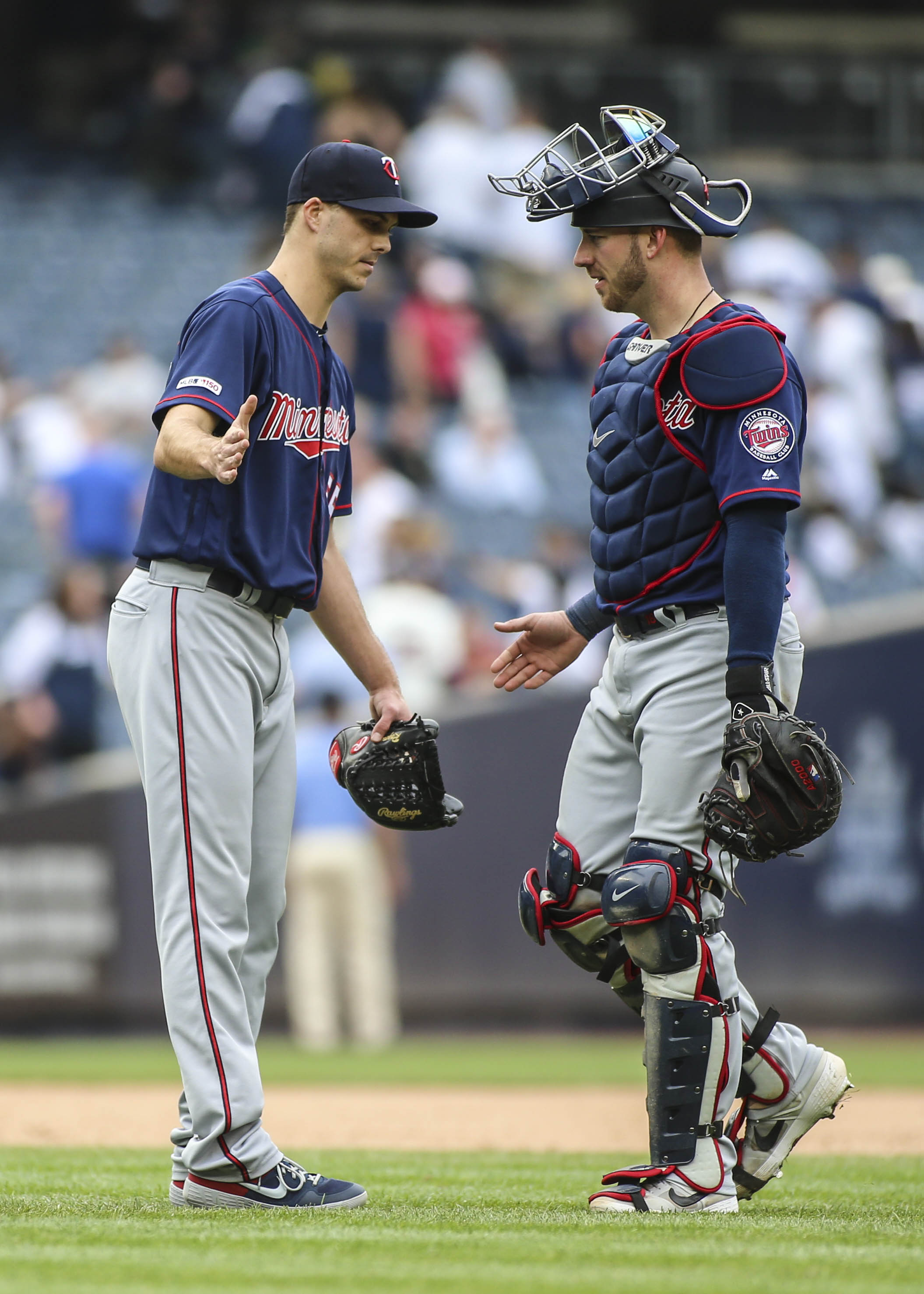
Taylor Rogers cemented himself as the club’s closer after the addition of a new slider spurred a 2018 breakout. He threw his first slider in 2018 on Memorial Day, and dating back to that game, Rogers owns a 2.07 ERA (2.52 FIP, 2.77 xFIP) with 11.4 K/9, 1.6 BB/9, 0.77 HR/9 and a 48.7 percent ground-ball rate in 117 1/3 innings.
Tyler Duffey showed promise as a starter in his debut season with Minnesota but had bounced between the Majors and minors since. Duffey has acknowledged that at first, he wasn’t fully comfortable or familiar with much of the new data that was presented to him by the Twins’ analytics department, but he fully bought in this year and ditched his two-seamer and changeup to go with a four-seam and curveball-heavy arsenal. The result? A 2.50 ERA (3.06 FIP, 2.94 xFIP) with a career-high 12.8 K/9 and a whopping 15.3 percent swinging strike rate. In the second half of the season, Duffey posted a 1.53 ERA with a 47-to-8 K/BB ratio.
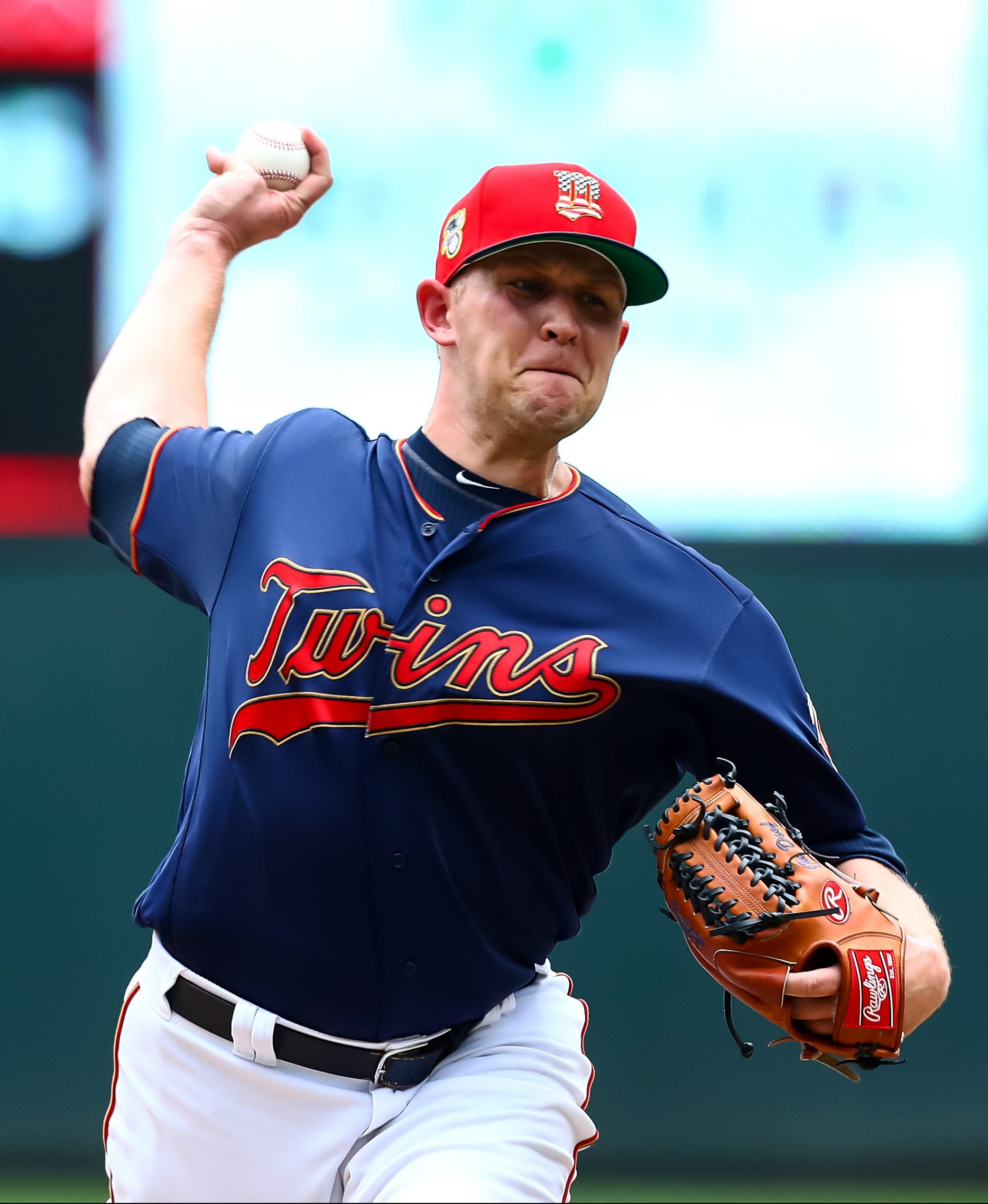
Another former starter, Trevor May, has steadily improved his relief work since returning from Tommy John surgery in 2018. The 30-year-old free-agent-to-be rattled off 64 1/3 innings of 2.94 ERA ball in 2019, including a 2.81 ERA (3.81 FIP, 3.67 xFIP) in 32 second-half innings. May saw his strikeout percentage spike from 25.5% in the first half to a hefty 35% in the second half, and his walk rate made similarly positive gains (11.9% in the first half; 7.3% in the second).
The Twins’ late-July acquisition of veteran Sergio Romo wasn’t the biggest headline grabber of deadline season, but the three-time World Series champ pitched 22 2/3 innings of 3.18 ERA ball (3.35 FIP, 3.91 xFIP) with a pristine 27-to-4 K/BB ratio. The two-plus months Romo spent in the organization clearly made a favorable impression, as he returned on a one-year, $5MM deal with a club option for the 2021 season.
But the most anonymous parts of the bullpen’s success were rookie right-handers Zack Littell and Cody Stashak.
Littell, a 24-year-old rookie, was summoned for depth in mid-May and took a long-relief beating during a blowout in order to save the ‘pen (eight runs in four innings). Optioned to Triple-A the next day, Littell returned about a month later and proceeded to reel off 30 2/3 innings of 0.88 ERA ball with a 27-to-8 K/BB ratio. The only runs scored against him came on a trio of solo homers. Obviously, Littell isn’t going to make it through a season with a 100% strand rate, but that dominant finish to the year likely cemented his spot in the ‘pen.
As for Stashak, he was never regarded as a prospect of particular note even within the Twins’ system, but he logged a 3.13 ERA with a 23-to-1 K/BB ratio in 23 innings in his MLB debut. Stashak is an extreme fly-ball pitcher who doesn’t throw especially hard or generate great spin on his heater or four-seamer … yet he posted an eye-popping 28.7% swinging-strike rate on his slider last year. There’s likely some regression coming for both Littell and Stashak, but both positioned themselves as near-term pieces even if they do take a step back.
At this point, outside of Rogers, the closer, it’s perhaps become apparent that this is a group of all right-handers. As such, targeting lefty relievers seemed like a logical course of action this winter. And the Twins did indeed go out and get the reliever who was the second-toughest pitcher on lefties in all of baseball last year (min. 30 innings): Tyler Clippard — another righty.
Clippard joined the Twins on a modest $2.75MM guarantee for the 2020 season, and while he doesn’t throw with his left hand (obviously), his dominant changeup makes him an excellent weapon against southpaw swingers all the same. Lefties posted a laughable .123/.210/.255 batting line against Clippard in 2019. That translated to a .207 wOBA, tying Roberto Osuna and trailing only Oliver Drake (another former Twin — oops) for best in the big leagues. That wasn’t necessarily a one-year aberration, either, as Clippard has better career numbers against lefties (.187/.266/.322) than righties (.207/.295/.387).
If the Twins want to add a true lefty to the mix, they can always move Devin Smeltzer and/or hard-throwing Lewis Thorpe into that role, although the plan for them appeared to be to continue working as starters early this spring. Perhaps expanded rosters will bring that pair and others into play; righties Randy Dobnak, Jorge Alcala and Sean Poppen all made their big league debuts last year, with Dobnak in particular impressing as a starter. Waiver claim Matt Wisler is another depth option with an intriguing Statcast profile. Among non-roster players, southpaw Danny Coulombe punched out 61 hitters in 36 1/3 Triple-A frames last year and had looked impressive with the Twins this spring. Jhoulys Chacin could give some long relief innings and provide rotation depth.
The Twins’ bullpen may be lacking a bit in name value, but among the 366 pitchers who faced at least 200 hitters last year, the Twins placed five in the top 70 in terms of xwOBA: Rogers (20), Duffey (22), Clippard (31), Romo (43) and May (tied for 70th). And none of their second half success was attributable to their biggest deadline pickup — righty Sam Dyson, who now famously kept a shoulder injury to himself prior to being traded and required surgery after just 11 1/3 ugly innings.
When a team jettisons about half its bullpen in a two-week span in July and sees its primary deadline acquisition bust, most would expect rough waters ahead. Instead, the Twins quietly enjoyed some of the best relief work of any club in last year’s second half and look well positioned for the future. Both May and Clippard will be free agents this coming winter, but there’s plenty of room to re-sign either and several depth in-house depth options to step up into those spots should they land elsewhere.
Odd Man Out In Cincinnati?
From 2016-18, Scott Schebler ranked third among Reds outfielders in games played and total innings. Acquired alongside Jose Peraza and Brandon Dixon in the three-team deal that sent Todd Frazier to the White Sox, Schebler struggled in his first taste of action with the Reds early in ’16 but finished quite well upon returning from Triple-A for the final two months. In his final 213 plate appearances that year, Schebler slashed .290/.357/.461 and set himself up to serve as Cincinnati’s primary right fielder in 2017.
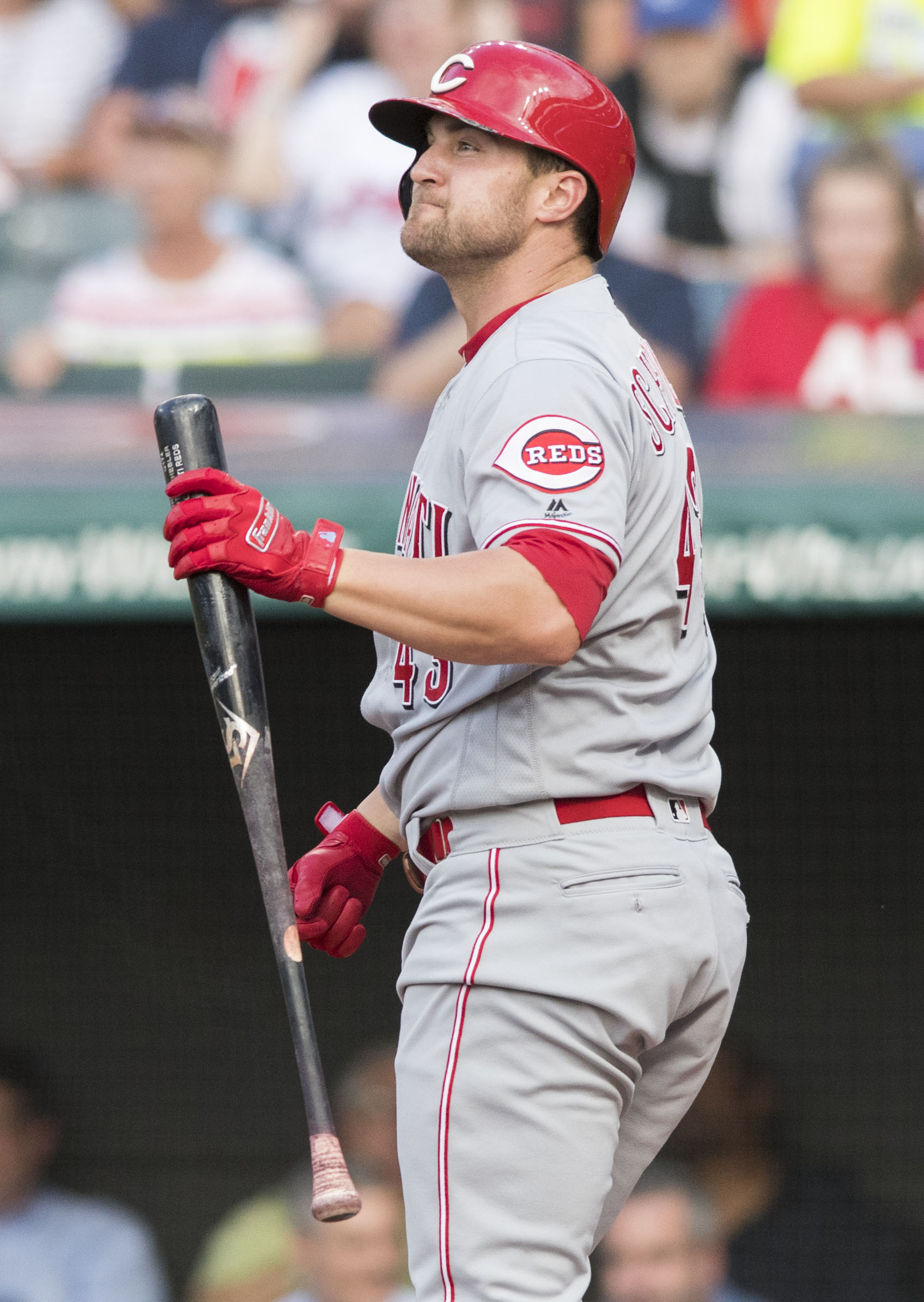
Schebler, who turned 26 shortly after that strong ’15 finish, indeed logged the lion’s share of innings in right field the following season. His overall .233/.307/.484 batting line was about league-average, per park- and league-adjusted metrics like OPS+ (102) and wRC+ (98), but Schebler clubbed 30 homers and played solid defense in the outfield (+2 DRS, -1.2 UZR, +3 OAA). A year later, his .255/.337/.439 slash again checked in above average (107 OPS+, 108 wRC+).
In 2019, however, the Reds were clearly motivated to emerge from a longstanding rebuild (of which Schebler himself was a product). Cincinnati acquired Yasiel Puig, Matt Kemp, Alex Wood, Sonny Gray and Tanner Roark over the winter, clearly seeking to fortify a roster that lost 95 games in 2018. Jesse Winker had mostly solidified left field, and top prospect Nick Senzel was knocking on the door to the Majors in center. A spring injury to Senzel led the Reds to open the year with Schebler in center field, and in 95 plate appearances, his bat cratered: .123/.253/.223. There was some poor luck on balls in play (.154), but Schebler also saw his strikeout rate climb as his hard-hit rate and average exit velocity plummeted. He was optioned to Triple-A in early May.
Schebler went down with an oblique injury not long after being sent down and missed more than a month of action. He was placed back on the minor league injured list less than three weeks later and due to a shoulder injury that ultimately required surgery. In 212 Triple-A plate appearances, he slashed just .216/.274/.325.
And while Schebler mended on the IL in August, Aristides Aquino was called to the Majors and posted a ridiculous .320/.391/.767 slash in his first month of action. His bat flopped in September (.196/.236/.382), but Aquino firmly put himself on the map as an option in future seasons. Over the winter, the Reds signed Japanese star Shogo Akiyama and slugger Nick Castellanos. They also acquired Travis Jankowski from the Padres.
Things appear rather bleak for Schebler in Cincinnati at this point. He’s out of minor league options and sits behind Winker, Senzel, Akiyama and Castellanos on the depth chart — perhaps Aquino, too. Phil Ervin is a younger, better defender who hit .271/.331/.466 in 260 plate appearances last season. Both he and Jankowski, whose best asset is his glove, are more logical reserve outfielders. It’s also worth remembering that setup man Michael Lorenzen is a two-way player who logged 89 innings in the outfield last year.
Perhaps expanded rosters will make it possible for the Reds to carry Schebler. The Reds would probably like to see how he looks with a healthier shoulder. However, even if his roster spot is salvaged, at-bats would figure to be hard to come by with such a glut of outfield candidates. And as the only one of the bunch who is out of minor league options, Schebler seems to be on the shakiest ground at the moment.
We of course don’t know when play will resume and when the transaction freeze will be lifted, but whenever it does, it wouldn’t be much of a surprise if Schebler eventually lands elsewhere. Last year’s rough showing notwithstanding, he’s controllable through 2023 and was a slightly above-average hitter with passable defense in parts of four seasons from 2015-18. He ranked well above average in terms of hard-hit rate, exit velocity and barrel rate in 2017-18.
Schebler may not be a star, but there’s still a potentially useful player in there. A rebuilding club — e.g. Tigers, Orioles, Pirates — could hope that with a change of scenery, Schebler could again be a reasonably productive player. It’s just hard to imagine that happening with such a stacked outfield mix in Cincinnati.