
ESPN Agrees To KBO Broadcast Deal
10:05am: ESPN has formally announced the deal. They’ll broadcast six KBO games per week — one game every Tuesday through Sunday — in addition to covering the KBO postseason. Broadcast details of the postseason remain to be determined. Game selections will be made on a week-to-week basis and feature English commentary from remote ESPN broadcasters, with tonight’s game being called by Karl Ravech and Eduardo Perez and aired on ESPN 2. ESPN is also acquiring highlights rights throughout the league, and their press release notes that the telecast schedule is “subject to change pending future live event considerations.”
9:30am: After several weeks of negotiation, ESPN has reached an agreement with Korean media counterpart Eclat Media Group to broadcast Korea Baseball Organization games. The KBO announced that ESPN will be airing one game per day, beginning with tomorrow’s Opening Day contest between the Samsung Lions and the NC Dinos (Twitter link via Jee-ho Yoo of South Korea’s Yonhap News Agency). The games will be broadcast live, per the Wall Street Journal’s Jared Diamond, which isn’t ideal for U.S. fans given the time difference between the two countries, but access to any live baseball will obviously a welcome addition to many sports fans. The Lions/Dinos will air tonight at 1am EST. Here’s the remaining schedule:
- Wed. May 6: Doosan Bears vs. LG Twins (5:30am EST)
- Thurs. May 7: NC Dinos vs. Samsung Lions (5:30am EST)
- Fri. May 8: KIA Tigers vs. Samsung Lions (5:30am EST)
- Sat. May 9: LG Twins vs. NC Dinos (4am EST)
- Sun. May 10: LG Twins vs. NC Dinos (1am EST)
[Related: Former MLB Players in the KBO]
Games in the KBO are beginning without fans in attendance and with ample health regulations in place. Players will be tested prior to every game and (along with team personnel) will wear masks throughout the arena outside of the field and the dugout. High fives and spitting have been banned. Any player who shows coronavirus symptoms will be quarantined immediately, while a positive test will result in a shutdown of that player’s stadium for a 48-hour cleaning process. A positive test won’t necessarily lead to a leaguewide shutdown, although the league will meet with health experts and government officials to discuss next steps following a positive test.
MLB fans tuning in may recognize some familiar faces; as we covered here two weeks back, there are more than 30 former big league players slated to play in the KBO this season. The Dinos (Aaron Altherr, Mike Wright, Drew Rucinski) and Lions (Seunghwan Oh, Tyler Saladino, Ben Lively, David Buchanan) have seven such players. There are some well-known names in the coaching ranks, too — Matt Williams will manage the KIA Tigers this year, and Julio Franco is the hitting coach for the Lotte Giants. More than 83 percent of the 11,000 respondents in our poll last week said they’d watch some KBO coverage should ESPN (or another media outlet) acquire broadcast rights.
MLB, Umpires Reach Agreement On Pay Structure For Shortened Season
Major League Baseball and the Major League Umpires Association have reached an agreement on umpire salaries for the 2020 season, ESPN’s Jesse Rogers reports (via Twitter). The league had reportedly been seeking a pay cut for umpires and was pushing for an agreement to be in place this weekend. Absent an agreement, the umpires would not have been paid until play resumed.
USA Today’s Bob Nightengale tweets that the umpires will see their pay reduced by “about” 30 percent. The umpires union had made an initial offer of a 20 percent reduction, per Ken Rosenthal of The Athletic. Rosenthal reported yesterday that the league’s proposal to the umpires included a 35 percent pay reduction (including retroactive prorating of salary that was already paid out prior to the Covid-19 pandemic shutdown) as well as reduced per diems and postseason bonuses. That arrangement didn’t sit well with the umpires union.
Negotiations with the umpires were just one of the countless issues that need to be sorted as the owners, commissioner Rob Manfred and the players association work toward staging a truncated 2020 season that is unlike any we’ve seen in the past (or will see again). Decision-makers are still discussing several scenarios for a return to play and a second training camp. Among the many potential ideas being kicked around are a radical realignment scheme, intrasquad training games at each team’s home park and a potential three-state training setup between Arizona, Texas and Florida. Nothing has been agreed upon or set in place yet, but optimism that a 2020 season will be able to take place has been mounting over the past couple of weeks.
No Contract Talks Between Nationals, Dave Martinez
Nats skipper Dave Martinez spoke with reporters on a conference call this morning and, when asked whether there have been any talks regarding his contract status, replied with a simple, “Nothing” (Twitter link via Todd Dybas of NBC Sports Washington). The 2020 season is the final guaranteed year on Martinez’s contract, although the Nats do hold a club option on the 2021 season.
It’s not surprising to hear that there have been no talks during the pandemic shutdown, but it’s a bit curious that the two sides hadn’t spoken about a new deal earlier in the spring. The 55-year-old Martinez, after all, was at the helm for one of the most remarkable turnarounds any team has made in recent memory. In the absence of an extension, the Nats could’ve perhaps picked up Martinez’s 2021 option in advance; such measures are fairly common throughout the league (particularly for winning managers) in order to spare managers the dreaded “lame duck” status and the frequent questions and speculation that accompany such contractual uncertainty.
Then again, the Nationals aren’t anything close to a typical organization with regard to how they handle their managers. Martinez, for instance, became the sixth man to manage a Nationals game in an eight-year span (2011-18) when he was hired and took the field for the first time. No Nationals manager has ever lasted more than three seasons on the job, and in addition to generally having a short leash with managers, the Nats have a reputation for not compensating their skippers as well as other clubs throughout the league. (Recall that the team wanted to hire Bud Black to manage in the 2015-16 offseason but made him only a one-year, $1.6MM offer despite a nine-year run as a well-regarded manager in San Diego.)
If anyone were to buck those trends, it’s easy to imagine Martinez being the man to do so. His Nats famously surged back from a 19-31 start to the 2019 season to capture the franchise’s first World Series win and finished above .500 the season prior as well. Logically speaking, one would expect Martinez to stick around for at least the 2021 season, but the Nats’ track record in this arena illustrates that they’re difficult to predict. As the Washington Post’s Barry Svrluga highlighted in early March, general manager Mike Rizzo is in a similar spot (minus the club option), but ownership has seemingly yet to make any sort of final decision on its organization’s leaders.
When A Can’t-Miss Prospect Misses
This isn’t how Carson Fulmer‘s career was supposed to go. The former Vanderbilt ace was one of the top-ranked prospects in his draft class back in 2015, and virtually no mock drafts compiled by Baseball America, FanGraphs, MLB.com, etc. that spring had him dropping out of the top 10. At one point, Baseball America projected Fulmer to go to the D-backs with the No. 1 overall pick. “Fulmer is the surest big leaguer on the board, with a floor of elite closer,” BA wrote of Fulmer at the time — a pretty resounding endorsement considering that three of the players eventually selected ahead of him were Dansby Swanson, Alex Bregman and Andrew Benintendi.
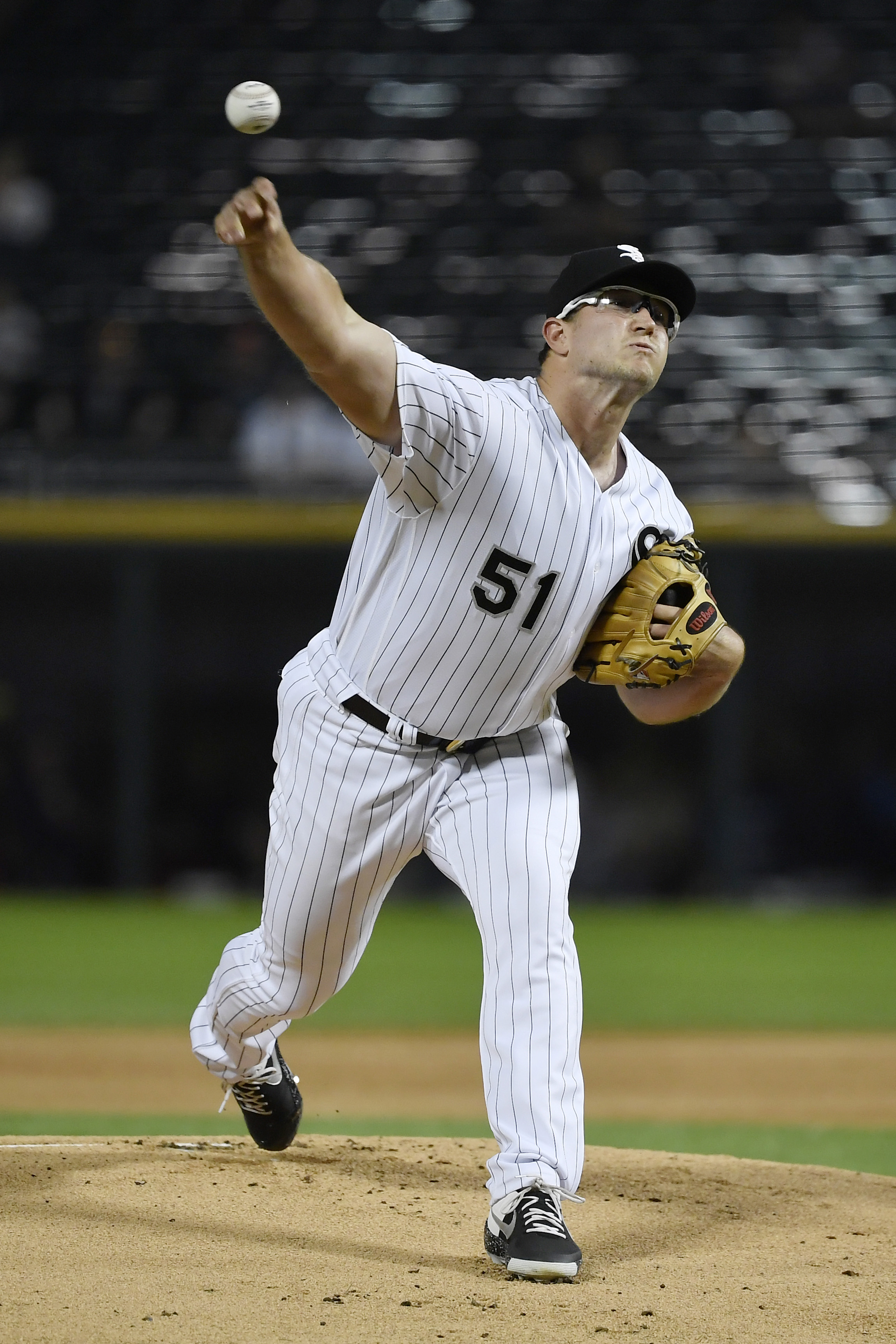
Obviously, things haven’t played out for the now 26-year-old Fulmer as hoped. Everything went according to plan following that ’15 draft. Fulmer pitched a scoreless frame in the Rookie-level Arizona League before being jumping up to the ChiSox’ Class-A Advanced affiliate. Despite being about two years younger than the average competition in that league, Fulmer allowed just five runs on 16 hits and nine walks with 25 strikeouts in 22 innings (2.05 ERA). That strong debut landed him on the top 100 lists at Baseball America (70) and MLB.com (38).
Fulmer’s numbers a year later weren’t as stout. He averaged better than a strikeout per inning but also more than five walks per nine frames while working to a 4.76 ERA out of the Double-A rotation. The Sox called him up to the big leagues that July despite the shaky numbers — just 13 months after he was drafted. Some will suggest that the organization rushed him to the Majors, but Fulmer was viewed as a potential quick mover from the time he was selected. He closed out the game in his big league debut, firing two shutout innings of relief in a loss to the Angels. The righty struggled in a handful of subsequent appearances and went back to Triple-A to finish out the season.
Since that time, Fulmer has been optioned back to the minors eight different times. He’s generally remained healthy but hasn’t succeeded either in Triple-A (5.39 ERA in 243 2/3 innings) or in the Majors (6.56 ERA in 94 2/3 innings). Now, Fulmer is out of minor league options, so the White Sox will have to carry him on the Major League roster or expose him to waivers whenever play resumes. In that regard, the likely expansion of rosters for at least part of the 2020 season will work nicely in Fulmer’s favor.
Fulmer’s velocity isn’t as high as it once was. A heater that reached 97mph “often” in college, per Baseball America, has averaged 93.2 mph in the Majors (93.7 mph in 2019). His command issues have been exploited by more advanced hitters, and his walk rate and frequency of wild pitches have spiked since reaching Triple-A.
Despite the lack of success at the game’s top levels, Fulmer isn’t without positive indicators. The spin rate on his four-seamer and curveball were both elite in 2019, ranking in the 91st percentile and 87th percentile among big league hurlers, respectively, per Statcast. He recorded healthy swinging-strike rates on his curve, cutter and changeup. In Triple-A, he racked up 51 strikeouts in just 34 innings — a 13.5 K/9 and 33.6 percent overall strikeout percentage that were both easily career-bests at any level.
Might a change in approach benefit him? A look at his career fastball usage at Brooks Baseball shows that he’s long worked down in the zone with the pitch and did so almost exclusively in 2019 — even at a time when much of the league is favoring four-seamers at the top of and above the strike zone. His avoidance of elevated fastballs would help to explain the paltry 4.2 percent swinging-strike rate on his four-seamer in 2019.
At this point, Fulmer has been leapfrogged by a host of new young arms in the Sox’ system — Lucas Giolito, Dylan Cease, Michael Kopech and Reynaldo Lopez among them. The White Sox’ initial hopes of Fulmer quickly ascending to the Majors to anchor a rotation alongside Chris Sale and Carlos Rodon have long since been dashed. There’s still room for him to carve out a long-term place in the team’s bullpen if he can piece it all together once games resume, but it’s far from certain that he’ll ever right the ship with the Sox. Chicago’s clear switch to a win-now mode should shorten whatever leash he’s been given in recent years. A change of scenery and a new outlook/approach could perhaps be best for Fulmer, but he’ll likely get one final shot to make things work with the South Siders.
MLB Seeking Pay Reduction For Umpires
In addition to seeking pro-rated salaries for players — and larger reductions if/when games are played without fans in attendance — the league is asking umpires to take a reduction in pay as well, USA Today’s Bob Nightengale reports. Nightengale indicates that the league is seeking a roughly 35 percent reduction in pay and has informed the umpires that if no agreement can be reached between the two sides, they will not be paid until play resumes. The Athletic’s Ken Rosenthal reports that the umpires’ offer included a 20 percent reduction in pay (subscription link). The league is seeking an agreement as soon as this weekend, though that may not be likely.
Per Rosenthal, the umpires union is torn on whether to accept the league’s proposal and has responded with a “hold letter” that would keep negotiations going while the umpires agree not to file a grievance as their May pay is withheld. His piece is rife with specifics on the league’s proposal, although at its base, the league is asking that umpires’ entire salaries be prorated despite the fact that umpires are paid over a 12-month term (unlike players, who are paid only in-season). In essence, the league is seeking to retroactively prorate salary that was paid out to umpires prior to the COVID-19 pandemic by more heavily reducing pay in the remaining months of the year. Umpire per diems and postseason bonuses would be reduced as well. The league would compensate umpires for working a second Spring Training.
Nightengale notes that salaries range from $110K for rookie umpires to $432,800 for the most seasoned of the 76-person group. Postseason bonuses, per diems, an annual $12,000 licensing payment (which has already been paid out), health and retirement benefits further boost earnings. That said, umpires themselves face a lengthy grind to the big leagues while calling games in the minors and (per Rosenthal) top out at earning a $20K salary per year in Triple-A.
The potential unrest between the league and its umpires only serves as the latest reminder that the amount of intricacies that need to be accounted for in a shortened season teeters on innumerable. As with the players, there will be logistical challenges for umpiring crews once this dispute is settled, but the immediate focus is agreeing on finances and the extent of concessions both sides will make.
Ryan Zimmerman On Playing Beyond 2020
After capturing a World Series title at age 35, in the same season his six-year, $100MM contract came to a close, Ryan Zimmerman could’ve opted to hang up his cleats in storybook fashion had he so wished. But the two-time All-Star clearly felt he had more left to experience in the game and ultimately took a sizable pay cut to return to the Nationals on a one-year, $2MM deal this winter. With the season on hold indefinitely, Zimmerman acknowledges within a self-penned guest piece for the Associated Press that it’s been hard not to think about life after baseball, but he indicated that as things stand, he hopes to continue playing not only in 2020 but perhaps beyond.
“If it turns out there isn’t a 2020 season, and I had to decide right now about 2021, I would say: Yes, I definitely would plan on playing next year,” Zimmerman writes. The 15-year Nationals veteran adds that he had no interest in signing anywhere but back with the Nationals this winter and only plans to sign one-year deals from this point forth, so as to assess how his body holds up on a year-to-year basis. Of course, based on his age and level of play in 2019, that was all that was reasonable to expect anyhow.
Zimmerman spent much of this past season on the injured list due to plantar fasciitis, and when he was healthy enough to take the field, he wasn’t particularly productive. The 2019 season marked just the second time in his excellent career that he rated below league average at the plate, by measure of wRC+ (89) and OPS+ (86). Through 190 plate appearances, Zimmerman slashed a .257/.321/.415 with six long balls and nine doubles.
Zimmerman’s balky foot quite likely impacted his performance in virtually all aspects of the game, and it should be pointed out that from 2017-18, he turned in a quite-productive .289/.350/.542 batting line. However, staying on the field has also become increasingly difficult for Zimmerman as he’s played into his mid-30s. Dating back to the 2014 campaign, he’s averaged just 92 games and 364 plate appearances per year while missing time due to to oblique, wrist, hamstring and rib cage issues in addition to three separate IL stints for plantar fasciitis.
Presently, it appears the downtime has done Zimmerman some good. He writes that he feels “unbelievable” having been able to work out without grinding through the rigors of a 162-game schedule, although he makes clear that he’s eager to return to the field and experience the feeling of defending a World Series title for the first time. It seems nearly impossible to envision Zimmerman playing anywhere else, and given that the team values him beyond his on-field contributions, it’s not tough to see him suiting up for a few more years if he feels up to the challenge.
Justin Verlander Provides Rehab Update
Reigning AL Cy Young winner Justin Verlander was hampered by a pair of spring health troubles — a lat strain and a groin injury that required surgery — but the Houston ace told reporters Thursday that he’s progressed to playing long toss (Twitter links via Brian McTaggart of MLB.com). The lat strain, per Verlander, is mostly healed up, and he’s made “a big stride” in his rehab from the groin surgery as well.
Both updates are encouraging for the Astros, although there’s still no formal word from the team on a timetable for the right-hander’s return to the mound. At the time of Verlander’s surgery in mid-March, Astros general manager James Click put a rough six-week timetable on his rehab process. We’re a couple days past that point now, although with the 2020 season in limbo, it’s only sensible to be a bit cautious in the rehab process.
Verlander added that the surgery is “already showing some benefit in my mechanics” as he works to make his delivery as efficient as possible (link via the Houston Chronicle’s Chandler Rome). Notably, Verlander revealed that the surgery stemmed from an MRI that revealed his adductor muscle had nearly torn off the bone completely.
Verlander, 37, is signed through the 2021 season at $33MM per year under the terms of the extension he signed with Houston late in Spring Training last year. He responded to that contract with arguably the best season of his Hall of Fame career. Verlander led the league with 223 innings and pitched to a 2.58 ERA with a masterful 300-to-42 K/BB ratio (12.1 K/9, 1.7 BB/9) and narrowly edged now-former teammate Gerrit Cole for Cy Young honors in the AL. He made at least 30 starts for the 13th time in 14 years, and his 179 ERA+ represented a career best.
Nearly Half The Astros’ Starting Lineup Is Up For Free Agency This Winter
The Astros’ run atop the AL West has been buoyed by the presence of one of MLB’s most prolific sluggers, George Springer, and a revolving door of steady veterans in the corners. (Yes, you may insert your jokes here about what else has propelled their run of winning seasons, but the aim here is to take an actual look at the looming roster conundrums they’ll face.) Michael Brantley and Josh Reddick flanked Springer in 2019, while other iterations of the club have included Nori Aoki and Marwin Gonzalez in left field. Over the past few years, the since-traded Jake Marisnick has been a glove-first reserve option to help stabilize the mix.
Now, the Astros stand to not only lose Springer to free agency this coming winter, but also both Brantley and Reddick. Springer will hit the open market for the first time after reaching six years of MLB service, while Brantley’s two-year, $32MM deal and Reddick’s four-year, $52MM pact are both set to expire. Things get even murkier for the Astros with the impending departure of Yuli Gurriel, whose initial five-year deal with the team comes to a close with the 2020 season. Gurriel agreed to a new one-year deal overwriting the final season of that previous pact last offseason, and he’s set to join Springer, Brantley and Reddick this coming winter.
It’s rare that any team, let alone a perennial World Series contender, enters an offseason with the potential of turning over 44 percent of its starting lineup, but that’s the precise situation in which newly hired GM James Click will find himself before year’s end.
On the plus side, the ‘Stros have some likely replacements in house already. Kyle Tucker, 23, has been regularly ranked among the game’s elite prospects since being selected just three picks after Houston took Alex Bregman in the 2015 draft. (Bregman, of course, was a college player while Tucker was coming out of high school, hence the discrepancy in their timeline to the big leagues.)
A 2018 cup of coffee for Tucker didn’t produce much in the way of results (.141/.236/.203, 72 plate appearances), but he had a big Triple-A season in 2019 and hit .269/.319/.537 in an identical sample of plate appearances. In 998 PAs at the Triple-A level, Tucker has a .297/.375/.571 slash with 58 homers and 50 steals (in 59 tries). Tucker has All-Star potential that he hasn’t yet had a regular chance to show off due to the team’s largely set outfield mix. At the same time, the Astros have steadfastly refused to consider making him available in trades. He should get his opportunity in 2021 at the latest, and his ability to play all three outfield spots (even if he fits best in a corner long term) give the Astros some flexibility in pursuing other options. The club doesn’t have many pure outfield options right now, having traded the likes of J.D. Davis, Ramon Laureano, Derek Fisher and Teoscar Hernandez away in recent years.
At first base, the club could turn things over to Abraham Toro, who hit .306/.393/.513 in the pitcher-friendly Double-A Texas League before clubbing Pacific Coast League opposition at a .424/.506/.606 clip in 79 PAs. Toro didn’t do much in limited MLB time at the plate, but his bat appears mostly MLB-ready. He’s a third base prospect with questions about his glovework there, and some scouting reports (including those at FanGraphs, MLB.com and Baseball America) suggest that he could fit better at first base or (in FanGraphs’ case) left field. Yordan Alvarez is technically an option in left field or at first base, but the Astros feel better about him as a regular designated hitter and may not be keen on deploying his glove on an everyday basis.
Assuming Tucker and Toro are entrusted with two spots in the lineup, the Astros will still need to bring in at least two everyday players via trade or free agency, and they’ll need to do so with some semblance of cost efficiency. Houston already has nearly $117MM on the books in 2021 and more than $134MM worth of luxury tax obligations. That’s before factoring in arbitration raises on the 2020 salaries of Roberto Osuna ($10MM), Carlos Correa ($8MM), Lance McCullers Jr. ($4.1MM), Chris Devenski ($2MM), Aledmys Diaz ($2.6MM), Joe Biagini ($1MM) and Dustin Garneau ($650K).
Re-signing any of Gurriel, Brantley or Reddick would fill one spot without requiring a particularly long-term commitment, although Reddick’s bat has waned in recent seasons. C.J. Cron and Jake Lamb will both be options at first base, while Nick Markakis, Kevin Pillar and old friends Marwin Gonzalez and Hunter Pence represent short-term outfield possibilities. Springer and Mookie Betts are the top options on the outfield market, but signing either would likely bring the ‘Stros within striking distance of a second straight season of luxury penalization. More affordable names include Marcell Ozuna, Joc Pederson and Jackie Bradley Jr.
Trade candidates are a bit more difficult to suss out this far in advance, although it wouldn’t be a surprise if Corey Dickerson (Marlins), Ender Inciarte (Braves), Gregory Polanco (Pirates), Brian Goodwin (Angels), Eddie Rosario (Twins) or Kyle Schwarber (Cubs) were to appear on the rumor circuit this summer.
Regardless of how Click and his staff choose to proceed, the Astros seem likely to be in the hunt for multiple regulars this winter, and their notable arbitration class and crop of high-priced 2021 salaries will necessitate a creative and/or low-cost addition or two.
Stephen Vogt Discusses Future Managerial Aspirations
Two-time All-Star Stephen Vogt signed a one-year deal with a 2021 club/vesting option with the Diamondbacks this winter, so he’s clearly not thinking about retiring in the near future. However, the 35-year-old has given some thought to his next steps when he eventually does walk away from the game. In an interview Brodie Brazil of NBC Sports California, Vogt stated that he has “always wanted to manage,” citing the positive influence of skippers Bob Melvin, Bruce Bochy, Joe Maddon and Craig Counsell as a driving factor in that desire. Vogt believes that the peaks and valleys of his own playing career would allow him to relate to virtually any player he encounters within a dugout.
It was less than two years ago that Vogt found his career in jeopardy following a shoulder injury that required surgical repair. Then with the Brewers, Vogt sustained damage to the rotator cuff, labrum and anterior capsule in the same right shoulder on which he’d already had one major surgery performed. “The biggest emotion is sadness,” Vogt told reporters at the time. “…Obviously, there are big implications here with a second shoulder injury like this that I don’t like to think about but I am thinking about. I felt everything go wrong that could go wrong with a shoulder.”
Thankfully for Vogt, he was able to make a full recovery and return to the Majors a bit less than a year later with the Giants. And not only did Vogt parlay his minor league deal with San Francisco into a big league return — he enjoyed a rather productive year with the rebuilding Giants. In 280 plate appearances over the life of 99 games, Vogt hit .263/.314/.490 with 10 home runs, 24 doubles and a pair of triples while avoiding the injured list. That solid season lends some additional optimism about Vogt’s ability to play a few more years.
Whenever he does retire as a player, Vogt would join a long line of former catchers seeking a managerial career. The list of backstops-turned-managers is too long to run through in its entirety, though some recent examples include Melvin, Maddon, Bochy, Joe Girardi, Mike Matheny, Brad Ausmus, Mike Scioscia, David Ross and Ned Yost.
Hall Of Fame Induction Ceremony Postponed Until 2021
April 29: The National Baseball Hall of Fame confirmed today that it has postponed this year’s induction ceremony until next year. Jeter, Walker, Simmons and Miller will be inducted along with any 2020-21 inductees on July 25, 2021. Said Hall of Fame chair Jane Forbes Clark:
Induction Weekend is a celebration of our National Pastime and its greatest legends, and while we are disappointed to cancel this incredibly special event, the Board of Directors’ overriding concern is the health and well-being of our new inductees, our Hall of Fame members, our wonderful fans and the hundreds of staff it takes to present the weekend’s events in all of its many facets. We care deeply about every single person who visits Cooperstown. In heeding the advice of government officials as well as federal, state and local medical and scientific experts, we chose to act with extraordinary caution in making this decision.
You can view the full announcement at the Hall of Fame’s web site.
April 28: The National Baseball Hall of Fame is likely to announce this week that its annual induction ceremony and all of the surrounding festivities will be postponed and combined with the 2021 ceremony, USA Today’s Bob Nightengale reports. The Hall’s board of directors is meeting this week to make a final determination. The possibility of a virtual ceremony wasn’t seriously considered, per the report. Induction weekend had been slated to take place on July 24-26.
Earlier this year, the Baseball Writers Association of America voted to induct Derek Jeter and Larry Walker into the Hall of Fame, while the Modern Baseball Committee added eight-time All-Star catcher Ted Simmons and the late Marvin Miller to the class as well.
Last year’s induction ceremony drew an estimated 55,000 attendees to a city of just 1756 residents, and Nightengale notes that the enshrinement of Jeter and Walker led to some attendance projections that approached 100,000. An event of that size at a time when the COVID-19 pandemic has led to government regulations on public gatherings has long seemed implausible. Beyond the sheer size of the crowd the event would draw, thousands of attendees would’ve been flying into New York City, the current U.S. epicenter of the coronavirus, under normal circumstances. And, as Nightengale observes, many attendees would be higher-risk due to their age, including a significant number of the game’s legends; there are 38 Hall of Famers who are 70 years of age or older — including 19 Hall of Famers who are at least 80.