
The Latest Example Of Why An Arenado Trade Won’t Be Easy To Execute
Uncertainty surrounding Nolan Arenado‘s future with the Rockies has become one of the prevailing storylines of the offseason, given the perennial MVP candidate’s recent expression of discontent with the organization — general manager Jeff Bridich in particular. Recent drama notwithstanding, however, Patrick Saunders of the Denver Post writes in his latest mailbag that a trade prior to spring training is “highly unlikely,” citing multiple sources.
Saunders notes (as others have suggested) that a summer trade of Arenado will become quite a bit more plausible if the Rockies don’t play well in the first half. Any trade involving Arenado, he adds, would need to center around an established Major Leaguer coming back to the Rockies in addition to multiple high-end prospects; owner Dick Monfort is not interested in simply clearing salary.
That line of thinking clashes with an afternoon report from ESPN Chicago’s Jesse Rogers, who during a radio appearance on ESPN 1000 indicated that the Rockies and Cubs have at some point “discussed a one-for-one deal, Kris Bryant for Nolan Arenado,” with the Rockies absorbing substantial salary. Perhaps that’s a scenario to which the Cubs are amenable, but Rogers himself even made a point to later indicate he doesn’t expect a deal to come together and to stress (on Twitter) the distinction between something that’s “been discussed” and active trade talks.
Cubs fans have obviously taken a particular interest in that rumored exchange, but taking a step back and looking at the whole picture, it’s hard to imagine how such a deal would appeal to the Rockies or fit within the budgetary constraints under which both teams have been operating — let alone both. Even if the Rockies were to absorb the $7-8MM annually that Rogers suggests, the Cubs would still be adding $8-9MM to their luxury tax commitment.
Chicago already projects to be about $6.5MM north of the $208MM luxury barrier (per Roster Resource), so taking on that portion of that Arenado deal would push their luxury line into the $223MM range. That’s within striking distance of the $228MM point at which the second tier of penalization begins, which would leave the Cubs with minimal room for in-season additions. That could also become problematic if some of the non-roster players in camp earn spots on the MLB roster and start locking in the salaries on those deals. Players like Brandon Morrow ($1.25MM) and Hernan Perez ($1MM) will push that number north if they break camp with the team. And, of course, other players on the team have incentives in their contracts that can further elevate the number.
None of that sounds like much for the Cubs of years past, but they’ve been a much different team in the 2018-19 and 2019-20 offseasons. The Athletic’s Sahadev Sharma even reported back in December that the Cubs had interest in lefty reliever Alex Claudio but would’ve needed to clear some money to sign him, so he instead went to the Brewers on a one-year, $1.75MM deal. In total, the Cubs have signed off on $1.85MM in guaranteed salary to free agents this winter. Suddenly taking on Arenado and his nearly $34MM annual salary — even with the Rockies including cash — would be a radical about-face.
To this point, we’ve only looked at things from the Chicago organization’s point of view — but the Rockies obviously need to be considered as well. From their vantage point, the primary function of the rumored Bryant/Arenado swap would be salary relief — the very type of deal to which Monfort is opposed, per Saunders. Even if they sought to immediately reinvest some of those savings, the free-agent market has been mostly picked over. And looking purely at the optics, how should the Rockies plan to sell to their fan base that they’re paying Arenado $8MM annually to play elsewhere, with the return being a very good but lesser replacement at the hot corner?
The timing of Arenado’s comments and Bryant’s service-time resolution will surely link the two for the remainder of the offseason or until a transaction involving one of the two (likelier Bryant) takes place. A team interested in adding a potent bat to the lineup and/or improving at third base will explore trade scenarios involving both players, and it’s certainly possible that even the Cubs and Rockies themselves could explore a more layered swap involving multiple pieces. But the Rockies began the offseason by declaring a lack of payroll flexibility, and similar sentiments from the Cubs have been readily apparent since the onset of free agency. Drawing up a scenario that works financially for both parties without significantly worsening either roster is extremely difficult, and even that would assume that the Rockies are motivated to move Arenado — which Saunders stresses not to be the case.
Suffice it to say: there are innumerable intricacies involved when trying to draw up realistic trade scenarios involving players of this stature and this level of compensation. Both are likely to continue to circulate the rumor mill, but it’s immensely difficult to envision both changing hands in the same transaction.
Pirates, Robbie Erlin Agree To Minor League Deal
The Pirates have agreed to a minor league contract with left-hander Robbie Erlin, tweets Bob Nightengale of USA Today Sports. The Apex Baseball client will be in Major League camp this spring and would lock in a $1.5MM salary if he makes the club. The deal also contains an extra $100K worth of incentives.
Erlin, 29, has 313 innings of big league experience, all coming with the Padres from 2013-19. He’s worked both out of the rotation (38 career starts) and the bullpen (68 relief outings) and compiled a career 4.57 ERA with 7.2 K/9, 1.8 BB/9, 0.98 HR/9 and a 43.4 percent ground-ball rate. Notably, his career ERA as a reliever (3.86) is more than a run better than his earned run average out of the rotation (4.98).
This past season, Erlin showed above-average spin on his fastball and curve, and it’s also worth pointing out that his career FIP (3.59) is nearly a full run lower than his ERA. Erlin has routinely been plagued by a below-average strand rate, and last year’s ugly 5.37 earned run average was in part impacted by a sky-high .373 average on balls in play.
The Pirates don’t have an established lefty in their bullpen at the moment, so Erlin will give the club some spring competition for Sam Howard and fellow non-roster southpaws Nik Turley and Brandon Waddell.
Giants To Re-Sign Pablo Sandoval
The Giants have reached a deal to bring third baseman Pablo Sandoval back to the organization, tweets MLB Network’s Jon Heyman. It’ll be a minor league arrangement with a $2MM base salary in the event that Sandoval makes the club. Sandoval, a Beverly Hills Sports Council client, can also earn an additional $750K via incentive pay.
Sandoval, 33, has spent the past two and a half seasons back with the Giants after being cut loose by the Red Sox at the halfway point of an ill-fated $95MM contract. While he hasn’t been the hitter he was at his peak during the Giants’ even-year dynasty, he turned in a quality .268/.313/.507 slash with 14 long balls in a part-time role in 2019. His season, however, came to an early end at the beginning of September with the revelation that he required Tommy John surgery. Alex Pavlovic of NBC Sports Bay Area tweets that Sandoval is ahead of schedule in his rehab from that procedure.
With Evan Longoria still locked in as the everyday third baseman in San Francisco, another backup role seems likely for Sandoval. He’s surely amenable to whatever role will keep him in the Bay Area, though, as the beloved Giants fan favorite recently voiced his desire to retire as a Giant. He’d presumably step into a larger role in the event of a Longoria injury and will otherwise see occasional time at first base and perhaps even at second base in emergency situation after logging seven innings there in 2019.
Scott Kazmir Launches Comeback Attempt
Three full seasons have elapsed since Scott Kazmir pitched in a Major League game, but the veteran left-hander is set to launch another comeback attempt at 36 years of age. Kazmir recently tweeted a video of himself throwing in a bullpen session, and the former Rays, Indians, Angels, A’s and Dodgers southpaw confirmed to Marc Topkin of the Tampa Bay Times that he hopes to return to the big leagues in 2020.
Kazmir, who’s open to a minor league contract and a chance to prove himself in Spring Training (as he’d need to be after such a lengthy absence), tells Topkin he’s still in the process of rebuilding his arm strength and fastball velocity. He’s worked out with Driveline this winter and recently topped out at 90.9 mph in a bullpen session. That’s already a far sight higher than the 86 mph at which his heater sat when he first began throwing with an eye toward a big league return. Kazmir’s fastball sat at 91.4 mph in his final season with the Dodgers in 2016, so he’s not quite yet even topping out at his previous fastball average. However, he also has nearly two months before the season would begin.
This, of course, wouldn’t be the first comeback attempt for Kazmir. The former Rays ace saw a sharp decline in 2009-10, pitched just 1 2/3 innings in 2011 and was out of affiliated baseball entirely in 2012 before embarking on a similar journey. That career renaissance proved quite fruitful, as Kazmir parlayed a minor league deal with the Indians into a quality 2013 campaign in which he tossed 158 innings of 4.04 ERA ball with better than a strikeout per inning.
That showing landed him a two-year, $22MM deal with the A’s the following winter, and Kazmir made good on that deal as well, throwing a combined 373 1/3 frames of 3.33 ERA ball with the Athletics and (following a 2015 trade) the Astros. He headed into the 2015-16 offseason as a highly sought-after commodity and landed a three-year, $48MM pact with the Dodgers that proved regrettable for the club when neck and hip injuries wiped out years two and three of that pact.
It’s been a long time since Kazmir was at the top of his game, but he’s nevertheless a three-time All-Star with six career seasons featuring a sub-4.00 ERA and at least 140 innings of work. In total, Kazmir has a 4.01 ERA with 8.6 K/9, 3.6 BB/9, 1.01 HR/9 and a 40.2 percent ground-ball rate in 1689 2/3 innings at the MLB level. Given that the free-agent class has been largely picked over at this point in the winter, a returning Kazmir adds a source of genuine intrigue to the dwindling remnants of this year’s class of open-market starters.
Royals, Greg Holland Agree To Minor League Deal
8:24pm: Holland can earn $1.25MM upon making the Royals’ roster with another $1.125MM available via incentive pay, tweets Jeffrey Flanagan of MLB.com.
7:53pm: The Royals have agreed to a minor league contract with right-hander Greg Holland, tweets Mark Feinsand of MLB.com. He’ll be in Major League camp this spring and look to secure a spot in the team’s bullpen. The agreement marks a reunion between the two sides, as Holland was a 2007 draftee of the Royals and starred in their bullpen from 2011-15 before undergoing Tommy John surgery.
Holland’s return from Tommy John surgery in 2017 proved to be a success, as he anchored the bullpen for a Rockies club that secured an NL Wild Card playoff berth and paced the senior circuit in both games finished (58) and saves (41). Holland logged a 3.61 ERA and averaged 11 punchouts per nine innings that year, but he showed some worrying red flags late in the summer and struggled to find the type of lucrative deal he’d hoped in free agency.
The right-hander eventually signed an Opening Day deal with the Cardinals (where current Royals skipper Mike Matheny was managing at the time), locking in a $14MM salary for the 2018 campaign. Holland sprinted through a minor league tuneup and was in the big leagues just nine days after signing, and the veteran closer never seemed to find his footing. He posted a disastrous 7.92 ERA in 25 innings as a Cardinal before being released in a summer bullpen shakeup … only to latch on with the Nationals and rattle off 21 1/3 innings of 0.82 ERA ball. A once-again resurgent Holland landed a one-year deal with the Diamondbacks last winter and posted a 4.54 ERA with 10.3 K/9 against an unpalatable 6.1 BB/9 before being released in August.
Kansas City is clearly hoping that the reunion will yield dividends, although five full seasons have elapsed since the now-34-year-old Holland turned in a full, dominant season of relief work. That said, the Royals’ bullpen is hardly a collection of juggernaut relievers, either. Starter-turned-closer Ian Kennedy is again in line for ninth-inning duties, but the entire setup is unproven. Hard-throwing Scott Barlow showed flashes of brilliance in 2019 but lacked consistency. Right-hander Kevin McCarthy was a durable middle man but struggled to miss bats. Southpaw Tim Hill has had mixed results in his two big league seasons but is coming off a quality ’19 campaign.
Other options in the K.C. ‘pen include injury reclamation Jesse Hahn, waiver claim Randy Rosario, injury-prone former first rounder Kyle Zimmer and Rule 5 pick Stephen Woods. Suffice it to say, there’s plenty of room for Holland (and others) to force his way into the mix if he can impress Royals decision-makers this spring. It’s quite arguable, in fact, that the Royals should’ve done more to address such an uncertain unit this winter, although much of the relief market has already been picked clean.
Orioles To Sign Wade LeBlanc
The Orioles have agreed to a minor league contract with veteran left-hander Wade LeBlanc, tweets ESPN’s Jeff Passan. He’ll be in Major League camp during Spring Training and would stand to earn an $800K base salary upon cracking the MLB roster.
Baltimore represents a prime location for a 35-year-old veteran on this type of contract to make a legitimate bid for a roster spot. The Orioles have already traded away Dylan Bundy this winter, leaving their rotation with a composition of John Means, Alex Cobb (health permitting) and journeyman Asher Wojciechowski. The Orioles’ only other rotation moves this winter have been to sign former Twins prospect Kohl Stewart to a big league deal and to select righty Brandon Bailey from GM Mike Elias’ former Astros organization in the Rule 5 Draft. Other internal candidates for starting gigs include right-hander David Hess, who struggled substantially in 2019, and left-hander Keegan Akin, who has yet to make his MLB debut.
It’s the sort of woeful rotation mix one would expect from an organization that is more intent on securing the first overall pick in the 2021 draft than on winning games in the upcoming season. And while that may not be good news for O’s fans, it does provide an avenue for a veteran like LeBlanc to seek out a bounceback opportunity.
LeBlanc was harmed as much as any starter in the game with last year’s juiced ball, as he yielded a staggering 2.1 homers per nine innings pitched and saw his ERA balloon by nearly two full runs over its 2018 levels (5.71 in ’19 versus 3.72 in ’18). In spite of the poor bottom-line run prevention (or lack thereof), the veteran southpaw still maintained similar K/BB tendencies to the ones he showed in a solid three-year stretch that preceded the 2019 season.
From 2016-18, LeBlanc tossed 292 innings (35 starts, 66 relief appearances) and pitched to a 3.91 ERA with 7.2 K/9, 2.1 BB/9 and 1.4 HR/9 between the Mariners and the Pirates. His soft-tossing arsenal will face a tough task in the American League East if he does land on the big league roster, as he’ll be moving from the spacious T-Mobile Park and a division that generally skews a bit more toward the pitcher-friendly side of things to the cozier Camden Yards and hitter-friendly AL East. The lack of competition for a starting spot in Baltimore, though, should give LeBlanc a legitimate chance to land a roster spot this spring.
Twins Announce Several Minor League Signings
The Twins organization has agreed to seven more minor league deals with free agents, Triple-A Rochester director of communications Nate Rowan announced Tuesday. Right-handers Juan Minaya, Austin D. Adams, Casey Lawrence, Parker Bridwell, Alec Asher and Joey Krehbiel all agreed to deals with the Twins, as did infielder Calten Daal.
Minaya, 29, spent the past four seasons with the division-rival White Sox and logged significant innings in each of the past three. From 2017-19, Minaya pitched to a 3.89 ERA (4.19 FIP) with 10.4 K/9, 4.7 BB/9 and 1.1 HR/9 in 118 innings of relief for the South Siders. His average heater was down about a mile per hour in 2019, sitting at 93.4 mph, but Minaya has a steady track record of missing bats while displaying sub-par control.
Adams, 33, made a pair of appearances with the Twins and tallied 14 frames with the Tigers but allowed 13 runs in 16 2/3 frames overall. He struggled in Triple-A as well, but this will be his third stint in the Twins organization, so the club’s decision-makers clearly see something they feel they can work with even if his recent results have been poor.
Bridwell, 28, pitched 121 innings of 3.64 ERA ball with the 2017 Angels, although his secondary numbers never really supported that mark. The righty averaged just 5.4 K/9 against 2.2 BB/9 with an elevated 1.41 HR/9 rate and 38.1 percent ground-ball rate in ’17, causing FIP (4.84), xFIP (5.07) and SIERA (5.06) to view him in a less favorable light. Bridwell has an ERA north of 8.00 in a pair of injury-shortened Triple-A seasons since that time.
The 32-year-old Lawrence had a rough season in Japan in 2019 and returns to affiliated ball after just one year overseas. He spent 2017-18 in Seattle, where he soaked up 78 2/3 innings in a long relief/spot-starting role but limped to a 6.64 ERA along the way. Lawrence does have a respectable 3.73 ERA with 7.0 K/9 against 1.7 BB/9 in 262 2/3 Triple-A innings in his career.
Asher has just three MLB innings since 2017 and, in total, has a 5.42 ERA in 119 2/3 innings between the Phillies, Orioles and Brewers. The former Rangers prospect went to the Phils as part of the Cole Hamels deal several years ago, but he’s yet to find success in the bigs while serving mostly as a fifth starter/long reliever. The 28-year-old spent most of 2019 with the Atlantic League’s Long Island Ducks, working to a 3.12 ERA in 37 1/3 frames.
Krehbiel, meanwhile, has just three big league innings to his name but has averaged just under 11 strikeouts per nine innings in his minor league career. Daal, 26, is a middle infielder who never cracked the Majors after seven seasons in the Reds organization. He’s consistently posted solid batting averages but limited on-base percentages and well below-average power numbers.
Cubs Sign Steven Souza Jr.
6:04pm: The Cubs have formally announced the signing.
Gordon Wittenmyer of the Chicago Sun-Times tweets that he can earn the following incentives: $50K for reaching 200 plate appearances, $75K at 250 PAs, $125K at 300 PAs, $150K at 350 PAs and $200K for reaching each of 400, 450 and 500 PAs. Souza will also earn $200K for every 30th day on the active 26-man roster — up through 150 days.
3:50pm: The Cubs have finalized their one-year, Major League contract with free agent outfielder Steven Souza Jr., per MLB.com’s Mark Feinsand (Twitter link). The two sides were first reported to be nearing an agreement on Friday. Souza, who is represented by ACES, will receive a $1MM base salary and can earn another $2MM via incentives, Jordan Bastian of MLB.com tweets. The team has yet to formally announce the signing.
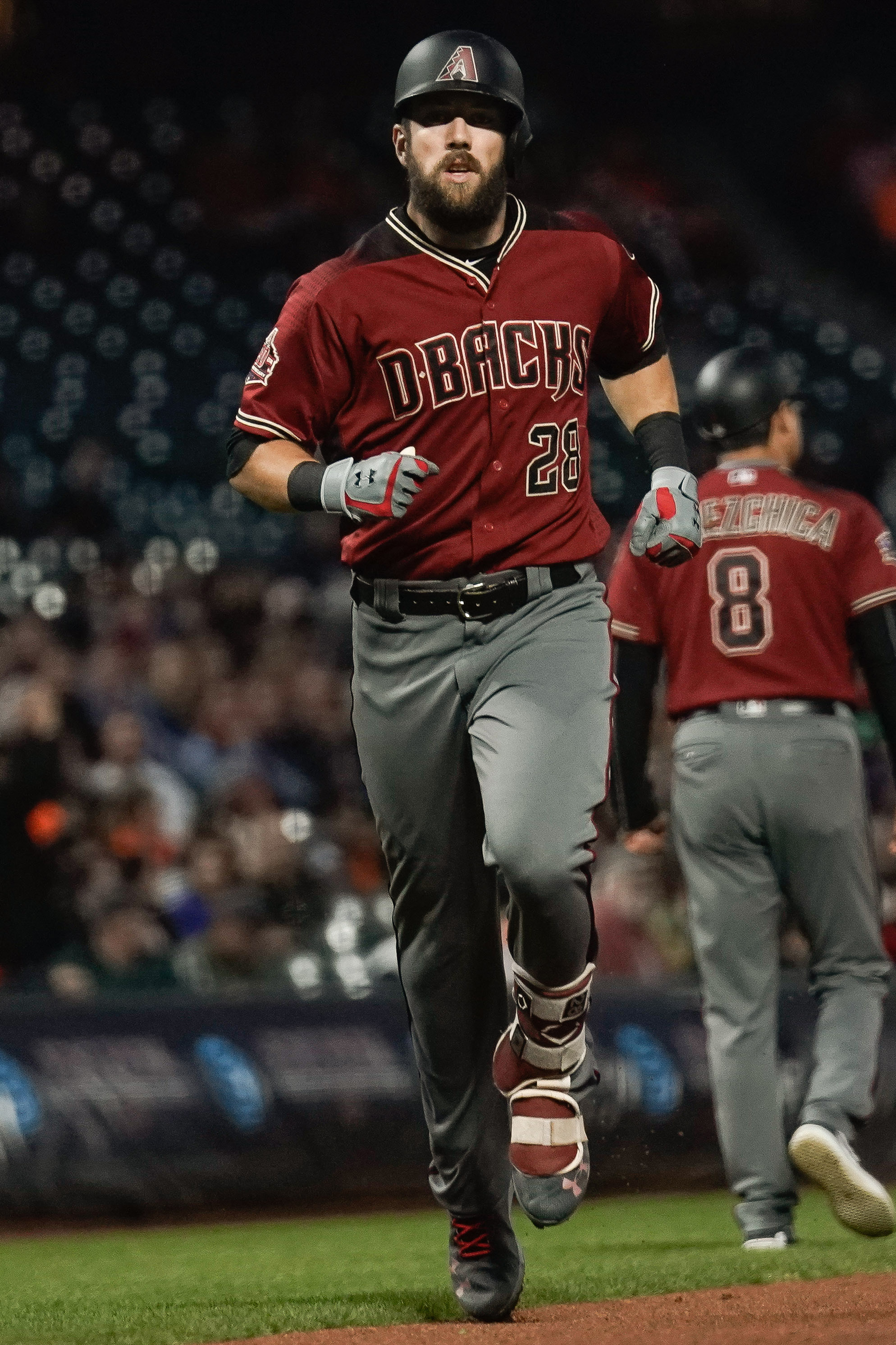
It’s sure to be a low-cost deal for the Cubs, as Souza missed the entire 2019 season due to a devastating knee injury and hasn’t enjoyed a full, healthy year since a terrific 2017 campaign with the Rays. That year saw Souza turn in a .239/.351/.459 slash with career-highs in home runs (30), doubles (21), stolen bases (16) and plate appearances (617). Souza was traded to the Diamondbacks that offseason and immediately hit by injuries — namely a pectoral tear that wiped out more than half of his season and limited him to a .220/.309/.369 slash when on the field.
Bringing Souza into the fray gives the Cubs another option in what already looked like a somewhat crowded outfield mix. Kyle Schwarber, Albert Almora Jr., Jason Heyward and Ian Happ are already lined up to share playing time as is. Third baseman Kris Bryant, too, has seen work in the outfield corners in each of the past five seasons. There are already plenty of question marks surrounding a potential trade involving Bryant — first and foremost centering around an ongoing service time grievance — and bringing another corner outfielder onto the roster will only spark some further speculation about other dealings.
The Souza pickup is the latest in a string of budget-friendly acquisitions from a Cubs front office that has been handcuffed both by the uncertainty surrounding Bryant’s status and by payroll constraints set forth by the Ricketts family ownership group. Chicago reportedly agreed to a tiny $850K deal with reliever Jeremy Jeffress earlier today and has otherwise made a string of minor league signings or non-guaranteed MLB deals (Dan Winkler, Ryan Tepera).
Red Sox Re-Sign Mitch Moreland
Mitch Moreland will be back for at least a fourth season in Boston, as the Red Sox announced Tuesday that he’s been re-signed to a one-year deal with a club option for the 2021 season. The BASH Baseball client will reportedly be guaranteed $3MM in the form of a $2.5MM salary in 2020 and a $500K buyout on a $3MM option for the 2021 season. Right-hander Denyi Reyes has been designated for assignment to open a spot on the 40-man roster, per the Red Sox.
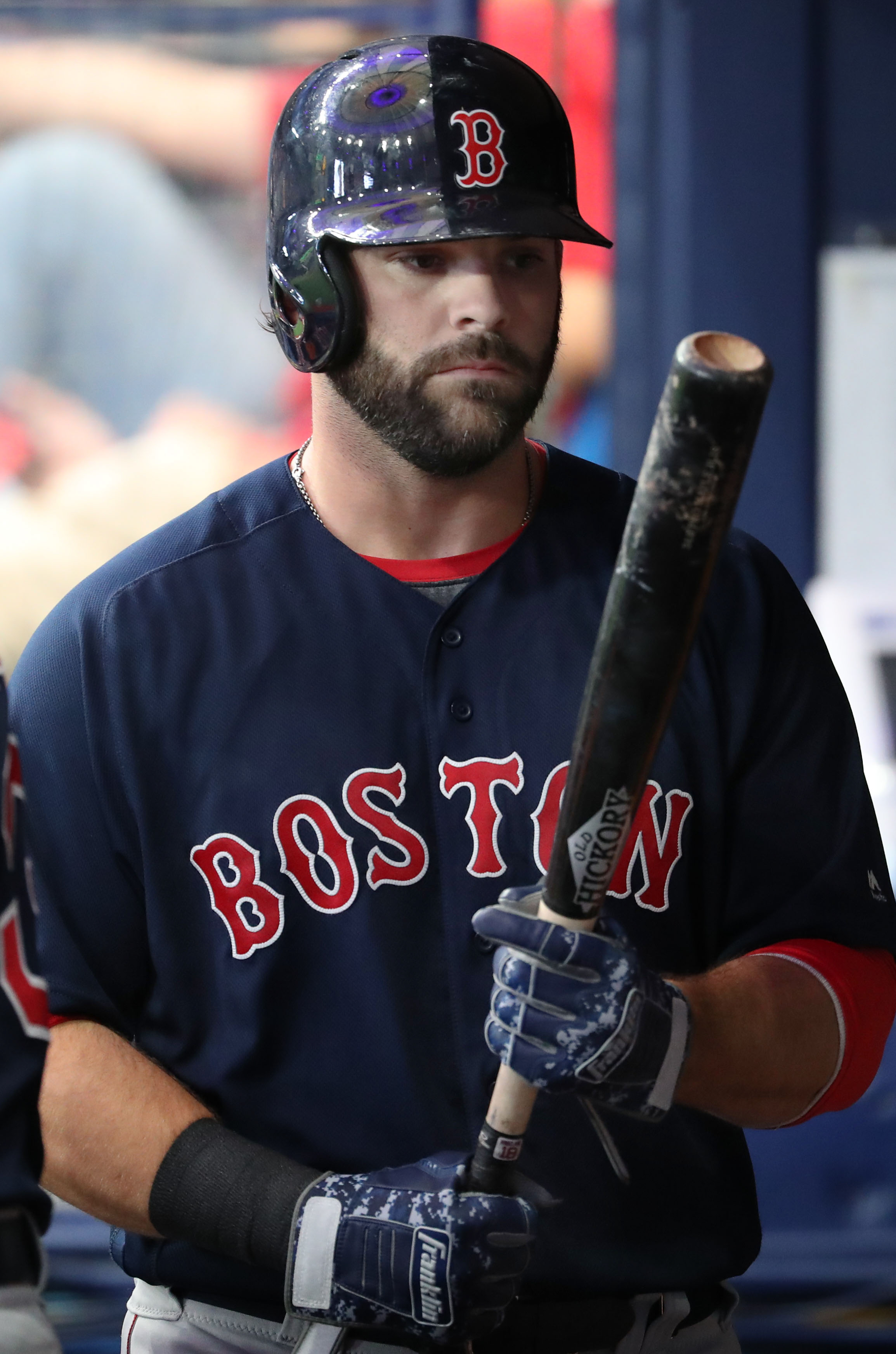
This marks the third time that Moreland, 34, has signed a free-agent deal with the Red Sox. Since signing in Boston prior to the 2017 season, he’s delivered a .247/.326/.455 slash with 56 home runs, 74 doubles and five triples. Most of that damage from the left-handed-hitting Moreland has come against right-handed pitching, so it wouldn’t be a surprise to see right-handed-hitting Michael Chavis pair with him at the position.
Beyond his respectable contributions at the plate, Moreland is renowned for his defensive prowess at first base. Defensive metrics suggested that Moreland took a step back in his age-33 season, though most measures of his glovework still pegged him as a roughly average defender at the position, and his track record is quite strong overall. Given that he’ll come at such an affordable rate not only in 2020 but potentially in 2021, Moreland is a sensible re-signing even at a time when the Red Sox are striving to lower their luxury tax commitments.
Like fellow offseason pickup Jose Peraza, Moreland will count $3MM against the Red Sox’ luxury ledger in 2020. With Moreland back in the fold, Boston’s bottom-line payroll checks in at roughly $236MM, per Jason Martinez of Roster Resource. Their luxury tax commitments, meanwhile, exceed the $208MM threshold by more than $31MM now that Moreland is set to return.
As for the 23-year-old Reyes, he was added to the 40-man roster last winter as the Red Sox sought to protect themselves against losing him in the 2018 Rule 5 Draft. At that time, Reyes had wrapped up a standout season that saw him post a combined 1.97 ERA with a superlative 145-to-19 K/BB ratio in 155 1/3 innings as a 21-year-old between Class-A and Class-A Advanced.
Reyes turned in a 4.16 ERA (3.69 FIP) against older competition in a pitcher-friendly Double-A setting this past season, albeit with a diminished 6.9 K/9, 2.2 BB/9 and 32.1 percent grounder rate. New chief baseball officer Chaim Bloom apparently wasn’t as bullish on the right-hander as the prior regime, and the Sox will have a week to either trade Reyes, place him on outright waivers or release him.
Ken Rosenthal of The Athletic first reported the signing.
Eugenio Suarez Will Be Limited In Spring Training Following Shoulder Surgery
The Reds announced that third baseman Eugenio Suarez underwent surgery to remove loose cartilage from his right shoulder earlier today. The injury came about recently when Suarez was swimming, per the announcement. The team expects the 28-year-old Suarez to be ready to play in games “near the beginning of the regular season” but acknowledged that he’ll be “limited” early in Spring Training.
It’s an unwelcome development for the Reds, but the team has ample depth to withstand an absence from the slugging Suarez should he require some time on the injured list early in the year. Offseason signee Mike Moustakas, of course, has spent the majority of his career manning the hot corner, and highly touted youngster Nick Senzel has played third base more than any other position since being selected with the No. 2 overall pick in the 2016 draft.
Then again, Reds general manager Nick Krall tells reporters (Twitter link via The Athletic’s C. Trent Rosecrans) that Senzel isn’t likely to slot in at third base if Suarez isn’t ready to go come Opening Day. That still leaves open the possibility of utilizing Moustakas at third base and Senzel at second base, although Senzel is working back from his own shoulder surgery. If he’s not ready to go or the team prefers an alternative alignment, Josh VanMeter could also get a look at second base with Moustakas at third.
Depth aside, the loss of Suarez for even a brief period of time would be a notable blow to the Reds, who are clearly intent on returning to the postseason after an aggressive offseason of additions. Suarez’s power numbers have exploded over the past two seasons, including a 2019 effort in which he improbably flirted with the elusive 50-homer threshold. Dating back to 2018, Suarez has raked at a .277/.362/.550 clip (135 OPS+), hitting 83 homers, 44 doubles and four triples along the way. Even with Moustakas, Nick Castellanos and Shogo Akiyama joining the party in Cincinnati, Suarez was sure to be relied on as a vital middle-of-the-order threat.
Prior to that breakout, Suarez had already established himself as a quality option at the hot corner and at the plate, but the Reds have to be thrilled with the decision to negotiate a long-term extension just prior to Opening Day 2018 as opposed to the following offseason, as his price would have escalated considerably. As it is, the seven-year, $66MM deal to which Suarez agreed on March 16, 2018, looks like a coup for the Reds’ front office — even if it was one that carried some risk at the time of the signing. Suarez is set to earn $9.25MM in 2020 under the terms of that deal and will earn subsequent salaries of $10.5MM (2021) and $11MM (2022-24). The deal also contains a $15MM team option for the 2025 season, which comes with a $2MM buyout.