
Offseason In Review: Milwaukee Brewers
The Brewers are hoping that a pair of late free agent signings and the return of two key bats will help them improve upon their fourth-place finish in a stacked NL Central division.
Major League Signings
- Matt Garza, RHP: Four years, $50MM. Club/vesting option for 2018.
- Francisco Rodriguez, RHP: One year, $3.25MM.
- Total Spend: $53.25MM
Notable Minor League Signings
- Mark Reynolds ($2MM base if he makes team), Lyle Overbay ($1.5MM base if he makes team), Zach Duke, Pete Orr, Matt Pagnozzi, Irving Falu
Trades and Claims
- Acquired LHP Will Smith from the Royals in exchange for OF Norichika Aoki.
- Acquired LHP Luis Ortega from the Red Sox in exchange for RHP Burke Badenhop.
- Claimed IF Elian Herrera off waivers from the Dodgers.
- Claimed LHP Wei-Chung Wang from the Pirates in the Rule 5 Draft.
Extensions
- None
Notable Losses
Needs Addressed
Though Milwaukee’s starters finished the season well, the team’s first-half struggles were pronounced. Even after the addition of Kyle Lohse — who pitched well in his debut season with the team — the Brewers’ rotation combined for a 4.86 ERA prior to the All-Star break (third-worst in all of baseball). That mark dropped to a stellar 3.36 in the second half thanks to turnarounds from Yovani Gallardo, Wily Peralta and Marco Estrada.
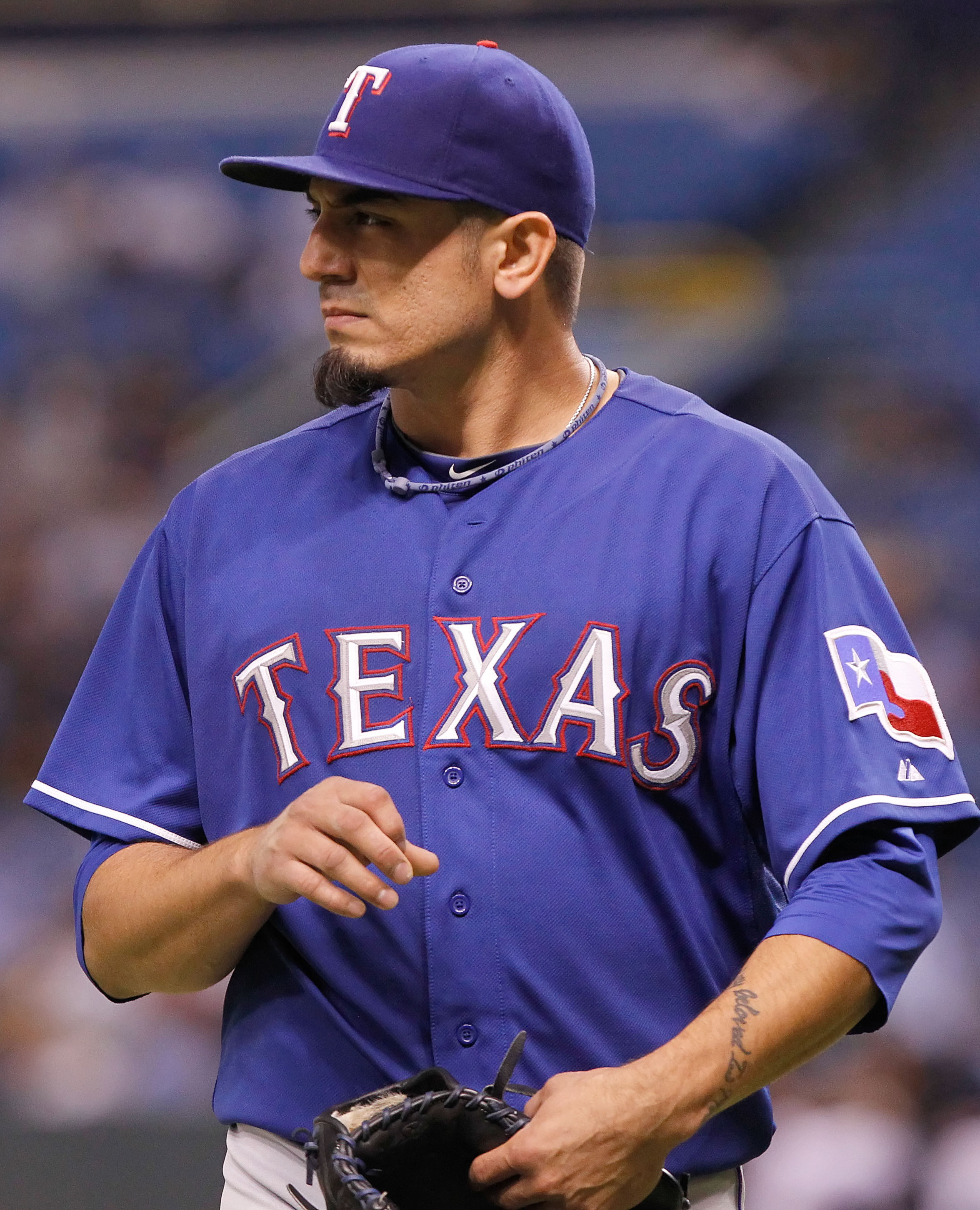
However, Milwaukee lacked a clear fifth starter, as 12 different pitchers started games for the team in 2013. That’s no longer an issue, as the addition of Garza not only improves the team’s chances of sustaining its second-half surge, it gives manager Ron Roenicke no questions about which five pitchers will be taking the hill on a regular basis. Garza, Lohse, Gallardo, Estrada and Peralta form a solid quintet that could be one of the better rotations in the National League.
The Brewers also entered the offseason with a good deal of uncertainty in the bullpen, which made the decision to trade Badenhop for a low-level minor league arm a bit puzzling. Nonetheless, the additions of Smith and Rodriguez give Roenicke two arms to bolster his relief corps. Smith broke out in Kansas City last season, posting a strong 3.24 ERA with 11.6 K/9 and 1.9 BB/9 in 33 2/3 innings (he was even better as a reliever, as he yielded four runs in four innings in his lone start of 2013). Smith held opposing lefties to a .557 OPS, and even righties managed just a .684 OPS against him. He could also be deployed as a starting pitcher should the club see some injuries in the rotation. Or, the club could prefer to Smith him in his best role to date and turn to Tyler Thornburg or Mike Fiers should a starter go down.
Rodriguez, the club’s only other Major League signing besides Garza, signed his third separate one-year deal with the Brewers this offseason and provides a nice fallback option should Jim Henderson falter as the club’s closer. K-Rod was outstanding for the Brewers in 24 2/3 innings before being traded to Baltimore for Nick Delmonico last year. Milwaukee now gets to keep Delmonico and deploy Rodriguez from its bullpen once again.
Questions Remaining
The biggest need for Milwaukee may simply have been to make sure the starters are able to take the field. Aramis Ramirez missed much of 2013 with injury, Ryan Braun was suspended for the season’s second half and Corey Hart never played a game at first base after undergoing a pair of knee surgeries.
The club now is faced with questions surrounding those players. Will Ramirez, who turns 36 in June, be able to stay healthy? How will Braun respond to the media attention that he will undoubtedly receive all season and the negative reactions in visiting parks (and potentially his own home park as well)?
Perhaps the biggest question facing Milwaukee, though, is its first base situation. The Brewers were very interested in a reunion with Hart, but they neglected to match Seattle’s price. The Mariners guaranteed Hart $6MM with the chance to earn up to $13MM total after incentives. Milwaukee’s best offer to Hart, reportedly, allowed him to max out at $8MM. The Brewers were also connected to James Loney, though they balked at his asking price as well, and Loney returned to the Rays on a three-year, $21MM deal. Another possibility would have been Ike Davis, but GM Doug Melvin was unwilling to part with right-hander Tyler Thornburg to make a trade happen.
In the end, Reynolds was signed with the promise that he was a virtual lock to make the club out of Spring Training. The 30-year-old possesses light-tower power but also strikes out at a prolific rate and found himself released by the Indians last year. Reynolds got off to one of the hottest starts in recent memory but fell into what could be the worst slump of his career prior to being let go. He could platoon with Overbay or Juan Francisco, but each member of that trio comes with more red flags and question marks than guarantees.
The Brewers will soon learn if Khris Davis can be their everyday left fielder, or if that will be something they need to address in future offseasons. Davis posted a whopping .279/.353/.596 batting line with 11 homers in just 153 plate appearances last season, indicating that he has the potential to hit 25 or maybe even 30-plus homers in the Major Leagues. However, he’s also never been too highly regarded as a prospect and comes with some defensive limitations. Already 26 years old, this will be somewhat of a make-or-break year for Davis.
Lastly, Jean Segura is penciled in as the everyday shortstop, but he will need to prove that he’s capable of producing over a full season. The one-time Rookie of the Year candidate finished with strong overall numbers but batted a mere .241/.268/.315 in the season’s second half.
Deal Of Note
Brewers GM Doug Melvin had drawn plenty of ire from fans and media alike for his lack of activity on the free agent market prior to signing Garza in late January. Milwaukee was the only club not to have signed a Major League free agent at that point, but Melvin’s patience paid off, as he was able to get Garza for roughly the same price that netted the Twins Ricky Nolasco more than two months earlier.
There was some uncertainty regarding Garza’s status, as after initial reports that the agreement was reached, pending a physical, the Brewers issued a statement to say that no deal was in place. While teams often refuse to comment on signings that are reported prior to completion of the physical, it’s highly uncommon for a club to actually deny the deal and say the two sides are still in discussion.
Eventually, the deal was announced with a unique and complex fifth-year option that 1) was likely the cause for the delay and 2) demonstrates just how wary teams were of Garza’s health issues. The Brewers have a very cheap $5MM option on Garza for the 2018 season that drops to just $1MM if he is on the DL for 130 days during any of the previous four seasons. However, it can vest at $13MM if he pitches 110 games over the first four years of the deal, is not on the disabled list at the end of the 2017 season and throws at least 115 innings in 2017. With $1MM available in incentives each season, Garza can earn up to $67MM over five years. His $50MM guarantee marks the largest free-agent expenditure in team history.
Overview
Melvin continued a trend we’ve seen from his team in recent years by waiting out the market in order to secure a couple of solid values on late-signing free agents. Milwaukee’s rotation should be improved and will be a strength for this team. Full seasons of Ramirez and Braun will go a long way toward improving the offense, but the production of Davis and Segura loom as uncertainties. If even one of those two performs at a high level, it may be enough to overshadow what seems likely to be a first-base deficiency. Milwaukee plays in an exceptionally difficult division, with three teams coming off a season of 90 or more wins. Despite that, there’s enough talent on the team to contend for a Wild Card spot if everything breaks their way.
Photo courtesy of USA Today Sports Images.
Cafardo On Lester, Carp, Orioles, Santana
The Brewers and Pirates have scouts watching the Red Sox, with a specific focus on Mike Carp, Nick Cafardo of the Boston Globe writes in his weekly Sunday column. While it's still unknown whether Carp can handle an everyday job, he wouldn't have to fill that role in Pittsburgh, as the Bucs have been looking for a left-handed hitting platoon partner for first baseman Gaby Sanchez. Carp has received a lot of trade buzz this offseason though Boston was known to be asking for a lot in return.
Here's some more from Cafardo's latest piece…
- Sam and Seth Levinson of the ACES agency "are gaining the reputation of persuading clients to take under-market-value contracts if they’re happy where they are," which is why there is a feeling amongst general managers that Jon Lester, an ACES client, will sign an extension with the Red Sox. “If you’re a team with a big-ticket guy out there, they are the agents you want to be dealing with right now,” said one National League GM. “The teams love it. You can get something done with them." This past summer, ACES client Dustin Pedroia signed an eight-year, $110MM extension with the Red Sox that was perceived as a team-friendly deal (especially given what Robinson Cano was able to find on the open market this offseason), though it's worth noting that the Levinsons kept Pedroia fully informed of his market value and the second baseman just really wanted to stay in Boston. Lester, for his part, has also said he'd be willing to take a discount to remain with the Sox.
- Cafardo speaks to Orioles manager Buck Showalter about the team's recent signings of Nelson Cruz and Ubaldo Jimenez and how the club weighed the value of the draft picks they'd have to surrender to sign the qualifying offer-rejecting free agents. Also, Showalter doesn't think money will be an obstacle in retaining key players over the long term. “I feel confident with Peter [Angelos] that when we come to him and say this is someone we want to hold on to, he’s going to find a way to do it,” said Showalter. “I don’t think our guys want to go anywhere."
- Baltimore's hiring of Dave Wallace as pitching coach "may be the best acquisition we’ve made this offseason," Showalter said. “He’s really simplified things for us. Sometimes we’re so mechanics-driven in this business.”
- "Don't believe" the Blue Jays when they say they aren't interested in Ervin Santana, Cafardo writes. He also thinks the Orioles could still have an eye on Santana even after the Jimenez signing.
- Oliver Perez seemed to be close to a new contract two weeks ago when he was weighing offers from four teams, but "nothing has transpired" since then, Cafardo writes. He opines that the Nationals and Yankees are teams who could use Perez's lefty presence in their bullpens.
How Clubs Determine Pre-Arbitration Salaries
Earlier this month, MLBTR's Tim Dierkes learned that the Rockies have employed an unusual pre-arbitration pay scale. As you might expect, agents are less than thrilled with the system in which Colorado pays a league-minimum $500K for players with between zero and one year of service, then bumps that up by just $1K for each additional service year before arbitration. The pay scale is unique in that it offers only a minute bump over the minimum and doesn't factor in performance. However, after speaking with a number of agents and baseball officials around the league, it's clear that the Rockies are far from alone when it comes to having a rigid pay scale for players with three or less years of experience, even if theirs is less generous than others.
"I'd say about two-thirds of baseball is using some kind of formula for that," one experienced agent told MLBTR. "Every system is different. The Indians, for example, take a very sabermetric approach to it to be a little more scientific. Others will be more about service time. On one hand, those systems allow you to say to your client, 'This is why arbitration is so valuable, because you can let a third party sort it out objectively.' Of course, you can't really compare an average player with a couple years of experience to a guy with less that made the All-Star team, so I have mixed feelings about it."
Many agents mentioned the Rays as a club with a similar "sabermetric" approach to calculating pre-arbitration salaries and it's believed both teams have been using that formula for several years now. The Brewers use something similar to Tampa Bay and Cleveland, a "dumbed down" version of the sabermetric formula, as one agent put it. Other teams, like the aforementioned Rockies, have a simpler method. MLBTR's own Steve Adams learned that as recently as 2013, the Astros used the same basic formula as Colorado – players with 0-1 years experience would get the minimum salary ($490K at the time) with a $1K bump for each year. Players could earn more by making the All-Star team (+$5K), being named organizational player/pitcher of the year (+$1K), and playing time in the previous year, calculated with the following formula:
Position Players: (PA/650)*$10K
Pitchers: The greater of: 1. (GS/33)*$10K 2. (G/75)*$10K 3. (IP/200)*$10,000
Houston's system came with two interesting wrinkles. Agents were told that no player will be offered a pay cut from the salary they earned on a major league deal signed with the Astros in the previous year, an obvious plus for players and agents. On the flipside, any player who would reject the offer and opt instead for renewal would get $5K less than the calculated scale amount (or the minimum, if the $5K penalty dipped below that point). One player, Justin Maxwell, wound up getting his contract renewed by Houston at $492,500, just above the major league minimum of $490K. The Astros, citing club policy, declined to comment on their pay scale.
One baseball source told MLBTR that even though the Rockies' pay scale has gotten a great deal of attention this offseason, they've been using it for the last three winters. Even prior to that, they were using a system that was rather similar and also based on service time. Any extra money given beyond the minimum was dictated by the raise in the league minimum from the previous year. In the case of this offsesaon, the $1K increase reflected the healthy $10K boost in the minimum.
While agents may not be doing cartwheels over a $1K raise from year to year, there are instances in which nearly all of a club's pre-arb players will earn the league minimum, as was the case with the Marlins in 2012. That year year saw a drastic spike in the league minimum salary from $414K to $480K, however, so the players received a notable bump nonetheless (and in some cases more, as evidenced by Chris Coghlan's $500K salary). An executive with one club who uses a modest pay scale told MLBTR that their reasoning is rather simple.
"The thought process from our perspective always been to try and be consistent as possible," the exec said. "The [Collective Bargaining Agreement] dictates a minimum, now $500K, for these guys. The philosophical question is, what benefit do you get from paying them significantly above that, or even a dollar above that?
"It's the one time in the process that the club has the edge, if you will. We always tried to be consistent and objective and we don't want to have to try and figure out which player is more valuable than another or whether a first baseman is worth more than a relief pitcher…arbitration is all about comps, free agency is just market value, if we didn't have a pay scale, we'd effectively be choosing one of our players over another and we don't want to do that."
The exec went on to say that virtually every agent has complained about his club's pay scale and he understands their frustrations since it's the one time in the process they don't get to negotiate their client's salary. However, even though agents don't like the system, he says there have yet to be any negative consequences for it. He believes that it's partially because the scale promotes consistency. One American League executive whose club uses an "objective and subjective" method for coming up with salaries and is "in the middle of the pack" in terms of pre-arb player compensation supported that notion, saying that agents will typically protest more over how their client is paid compared to his teammates rather than the actual dollar amount.
The other reason that the official from the modest pay scale doesn't fear any sort of retribution is because agents will approach arbitration and free agency the same way regardless of how their client is paid within the first three years. The official used an example that came up numerous times in conversations with other executives and agents – Ryan Howard's $900K deal with the Phillies in his final year before arbitration. The Phillies gave their star slugger more than double their obligation, but it obviously didn't buy them a loyalty discount through the arbitration process. General Manager Pat Gillick & Co. offered $7MM, Howard's camp countered at $10MM, and the first baseman walked away with the the largest first-time arbitration salary ever. That could be of some comfort to the Angels, who took a good deal of heat from fans and the agent for Mike Trout after they opted to pay their star outfielder just $20K over minimum last year. In short, you'd be hard-pressed to find someone in baseball to bet on Craig Landis taking it easy on the Halos in their current contract talks if his client had received another $50-$100K a year ago.
It's worth noting there is at least one documented instance of a player taking his hard feelings into the arbitration process. Outfielder Cody Ross told Ken Rosenthal and Jon Paul Morosi of FOX Sports in 2012 that his previous low pay was "one of the main reasons" why he went to a hearing with the Fish in 2010. Ross won his case, coming home with $4.45MM instead of the $4.2MM he was offered. However, that doesn't appear to be the norm. In conversations with MLBTR, agents admitted that even in instances where they feel their client is underpaid in the pre-arb years, it doesn't affect how they approach arbitration or free agency since they're always pushing for top dollar no matter what. Baseball people also say that while they have seen pre-arb pay come up in hearings, there is no evidence that it factors into the arbitrator's decision.
That could help explain why most clubs have opted to use rigid formulas rather than dole out significantly more money than required. One high-ranking executive with a club that negotiates pre-arb pay with agents acknowledges that players won't take it easy on teams in arb hearings over the extra money, but he believes that it makes for a stronger relationship with the players.
"Players will pass judgment on how a club treats them relative to anything and everything," said the National League executive. "They'll think about how a club treats them when it comes to their family, travel, their contract, tickets…clubs are constantly being evaluated by players, justifiably, and every club can choose where they want to be evaluated well and where they're prepared to take a hit."
While that exec didn't like the notion of clubs giving their pre-arb players a near-minimum salary, he admitted that he understood the allure. The up-front savings, even if they're not significant, are a nice perk. On top of that, it's also less time-consuming to send an agent a dollar figure and say, "take it or leave it." "I couldn't imagine how much longer it would all take if we were negotiating with every player," said one executive with a pay scale club.
The player-friendly notion of negotiating appears to be going out of style throughout baseball. "Most clubs, if they don't have a strict formula where you input the service time and certain numbers based on performance, they at last have some basic parameters in place versus 'Hey, this is what we feel like paying you,'" one exec said. While negotiating pre-arb pay might make a player happier in the short-term, it seems that many clubs would rather expedite the process, and perhaps save a few dollars, with a pay scale.
This article was originally published on February 26th.
Yankees Monitoring Market For Infielders
The Yankees have questionable infield depth at best, with Kelly Johnson, Brian Roberts and Eduardo Nunez all figuring to see significant playing time in 2014. As such, the team's scouts are placing a heavy emphasis on watching infielders when looking at other clubs in Spring Training, according to George A. King III of the New York Post. King writes that the Yankees could use their surplus of catching options to bolster the infield.
In addition to Brian McCann, who signed a five-year, $85MM contract with the Bombers this offseason, the Yankees have Francisco Cervelli (who is out of options), J.R. Murphy, Austin Romine and Gary Sanchez on their 40-man roster. With the exception of Sanchez, each could be considered Major League ready. Cervelli, of course, has racked up 623 plate appearances with the Yanks over the past several seasons, while Romine had 168 big league PAs in 2013, and Murphy made his Major League debut as well.
It's natural to speculate on the possibility simply adding Stephen Drew, but as Newsday's David Lennon tweeted earlier today, the Yankees will only add to their infield if the addition doesn't come with significant financial impact. GM Brian Cashman told Lennon: "If we need to do improvements, it’s got to be cheap. We’ve spent our money."
Likewise, it's easy to speculate that the reportedly available Nick Franklin would fit with the Yankees, but Seattle likely feels they have their catcher of the future in 2012 No. 3 overall draft selection Mike Zunino. They're said to be interested in acquiring pitching in exchange for Franklin, should they end up dealing him.
King writes that the White Sox, Giants, Tigers, Astros and Twins all had scouts in attendance to watch Cervelli, Murphy and Sanchez in yesterday's exhibition game against Florida State. While that could just be routine and doesn't necessarily carry much weight, King does add that an industry source indicated that the White Sox are seeking catching upgrades. He also adds that the Yankees will monitor Rickie Weeks during Spring Training, who figures to be plenty available due to his $11MM salary and $11.5MM vesting option. It stands to reason that Milwaukee would need to eat a significant amount of salary in any deal to move Weeks, who batted just .209/.306/.357 last season.
Poll: Four-Year, $50MM Starting Pitcher Investments
It is not often that things line up quite so cleanly as this, but after a roller-coaster offseason, three of the market's top starters all landed quite similar overall guarantees. It would be too much, perhaps, to argue that the market valued them identically; after all, each signed at different points in an always-changing market, agreed to various terms that impact the overall value of their contracts, and had differing situations with regard to qualifying offers. Nevertheless, it seems fair to suggest that Ricky Nolasco, Matt Garza, and Ubaldo Jimenez were each valued in rough proportion to one another.
Yet each pitcher brings a very different set of risks and benefits to their new deals. (Player name links are to MLBTR's Free Agent profile series; deal links are to reported signing, which includes contract details.)
Ricky Nolasco (age 31; received four years, $49MM from Twins) — Nolasco is durable and solid, having made at least 31 starts in each of the last three regular seasons while consistently maintaining a walk rate hovering just above 2.0 BB/9. While his overall results have been less than stellar, Nolasco has tended to post much better ratings by advanced metrics than ERA, and finally saw the results to match last year. Has he been unlucky, or does he just give up a lot of solid contact? Either way, Minnesota has put its money into a pitcher who has about as good a record of durability as could be hoped.
RISK: disconnect between advanced metrics and results
BENEFIT: durability
Matt Garza (age 30; received four years, $50MM from Brewers) — Garza has been consistently above-average … when healthy. Striking out batters consistenly in the range of about eight per nine, and holding down walks to less than three per nine since maturing as a pitcher, Garza's results are hard to argue with. (He has not ended a season with an ERA above 4.00 since his rookie year.) But a string of injuries held him to 103 2/3 innings in 2012 and 155 1/3 in 2012. If healthy, there is every reason to believe that Garza will continue to be an excellent (albeit not dominant) starter, but therein lies the rub.
RISK: health
BENEFIT: reliably above-average performance
Ubaldo Jimenez (age 30; received four years, $50MM from Orioles) — Unlike either of the previous two hurlers, Jimenez has at times been amongst the most dominant starters in the game. He has been an unquestioned ace over complete seasons (earlier in his career, with Colorado) and parts of seasons (the second half of last year, with Cleveland). In between, however, Jimenez has posted some genuinely unsightly stat lines. While his 2011 campaign may have taken a downturn due to some bad luck, he was terrible in most respects over the entirety of 2012, as he lost both his control and his ability to register strikeouts. Like Nolasco, Jimenez has been supremely durable. But if his new club can count on at least 180 innings, of what quality will they be? Jimenez showed flashes of both good and bad last year, and it remains to be seen which side defines his tenure in Baltimore. [Note: Orioles also gave up a first-round draft choice to sign Jimenez.]
RISK: inconsistency
BENEFIT: durability, upside
—
So, MLBTR readers: putting aside the particulars of their new teams' situations, which of these three similarly-priced investments do you think was money best spent?
Which Four-Year, $50MM Starting Pitcher Investment Was Wisest?
-
Matt Garza 50% (12,597)
-
Ubaldo Jimenez 32% (8,112)
-
Ricky Nolasco 17% (4,384)
Total votes: 25,093
Quick Hits: Blazek, Axford, Olt, Frasor, Santana, Rays
The Brewers shipped out reliever John Axford to the Cardinals at last year's trade deadline, bringing back young righty Michael Blazek. Milwaukee has been impressed with the 25-year-old, with manager Ron Roenicke saying he profiles as a late-inning arm, reports Tom Haudricourt of the Milwaukee Journal Sentine. Meanwhile, after being non-tendered by the Cards and signed by the Indians, Axford hopes to continue learning from his brief stint in St. Louis. As MLB.com's Jordan Bastian reports, his former club informed him that he'd been tipping pitches, and Axford hopes that correction — along with regained velocity — will allow him to return to his peak form.
Here are more stray notes from around the game …
- Another trade deadline mover, Mike Olt of the Cubs, has shown substantial improvement in the eyesight issues that plagued him last year with the Rangers, reports Gordon Wittenmyer of the Chicago Sun Times. Though his prospect stock has fallen in the meantime, all that matters to Olt is maintaining his health. "As long as I'm healthy," he said, "I know that I can do what I was capable of."
- Reliever Jason Frasor explained that he elected to re-sign with the Rangers for the simple reason that he likes playing for the club, reports Richard Durrett of ESPNDallas.com. "Free agency isn't that great for middle relievers," he said. "I never wanted to be the kind of guy that bounced around from team to team as middle relievers often do with one-year deals. I found a place I really, really liked. … I think I was the first [free agent] to sign [this offseason]. I just didn't feel it was worth it to try to scrape out maybe a little better contract … ."
- One free agent who faces a much more open-ended market is former ace Johan Santana. As Jon Heyman of CBSSports.com reports, Santana has fielded interest from at least three American League clubs. The 34-year-old is hoping to be ready to take the mound in a big league game in June.
- The Rays' roster battle features several situations where options will play a role, reports Bill Chastain of MLB.com. Among the players who must make the active roster or face a DFA are Chris Archer, Josh Lueke, Jake McGee, Cesar Ramos, Brandon Guyer, and Matt Joyce.
Quick Hits: Bonds, Kipnis, Brewers, Zimmermann
Barry Bonds will work with the Giants as a special instructor in spring training next month, Alex Pavlovic of the San Jose Mercury News reports. Bonds has not had an official relationship with the Giants since 2007, his last season in the big leagues, so his presence could make quite an impression in Giants camp. Here are more notes from around the big leagues.
- The Indians will "soon make a serious push" to extend second baseman Jason Kipnis, Terry Pluto of the Plain Dealer writes. Kipnis is eligible for free agency following the 2017 season, and Pluto notes the Indians would likely try to sign Kipnis to at least a five-year deal, picking up at least one free-agent season. MLBTR recently suggested Kipnis could make $30MM-$35MM over the course of a five-year deal.
- The Brewers will likely have a team-record payroll, and owner Mark Attanasio expects to win this season, Tom Haudricourt of the Journal Sentinel reports. "We’re at the point now where we’re well into the top half of payrolls in the major leagues. We have more pitching depth than we’ve had, really, in 10 years. As I’ve explained to everybody, as investors you wouldn’t make that decision to lose," Attanasio says. "The ownership group felt like this was the year to invest (more) in the team. I think we’re going to surprise people this year." After an offseason that featured the high-profile addition of Matt Garza, the Brewers have $86MM committed to 12 players, which could give them a higher payroll than they had in 2012, when their opening-day figure was $101.2MM.
- The signing of Ubaldo Jimenez has had a dramatic impact on Orioles fans, MASNsports.com's Steve Melewski writes. The Orioles' offseason had been very quiet, but suddenly they've landed Jimenez and now have Nelson Cruz as well.
- Nationals pitcher Jordan Zimmermann is happy with his two-year, $24MM contract, and isn't concerned about the recent Homer Bailey extension, reports MLB.com's Bill Ladson. Zimmermann and the Nationals tried to negotiate a long-term deal, but ultimately couldn't find enough common ground. "They came to us with a two-year deal. Let's get this out of the way, so we don't have to worry about arbitration for the next two years," Zimmermann says. "We felt it was right, and I think it was fair for both sides, and we got the deal done."
- Arbitration-eligible players received an average raise of 117 percent this offseason, with their average salaries rising from $1.78MM to $3.86MM, the Associated Press reports. The heftiest raise went to Freddie Freeman of the Braves, who went from $560K in 2013 to a multiyear deal with an average salary of $16.875MM.
Extension Notes: Bailey, Masterson, Samardzija, Segura, Simmons, Sandoval, Belt
Homer Bailey and the Reds were said earlier today to be close to a new deal, but nothing had materialized as of this evening. In the latest update, MLB.com's Mark Sheldon reports that details are still being worked out. GM Walt Jocketty echoed his star hurler's comments, saying that progress had been made. "There are still some outstanding issues," said Jocketty. "Hopefully they get resolved in the next 24 hours or else people are going to have to suit it up and go east." Jocketty was referring, of course, to donning not baseball uniforms but rather the business attire necessary for an arbitration hearing. "It's a lot of little things," Jocketty continued. "The structure of the contract, how it's paid and things like that."
Here's a look at some other potential extension situations shaping up around baseball …
- Though the threat of an arbitration hearing has been avoided between Justin Masterson and the Indians, those parties could be operating on something of a deadline of their own. Masterson, a comparable pitcher to Bailey in many ways, is also entering his final season of arb-eligibility before hitting the open market. Though Masterson has said he'd be willing to continue discussions into the season, club GM Chris Antonetti says that he would rather keep talks to the spring, tweets MLB.com's Jordan Bastian.
- Another power pitcher, Jeff Samardzija of the Cubs, currently stands to qualify for free agency after 2015. As ESPNChicago.com's Jesse Rogers reported today, team president Theo Epstein still hopes a deal can be worked out. On the other hand, his comments echoed some of the sentiment recently expressed by Samardzija, who indicated that the sides had reached something of a stalemate in negotiations. "Sometimes there is going to be a natural gap where a player values himself for what he can do and the team has to factor in a little bit more what he has done," Epstein explained. "It doesn't mean we're tremendously far apart, but if you are apart you kind of table it for another day and we'll see what happens."
- The Brewers previously explored extension talks with young shortstop Jean Segura, but those discussions did not lead anywhere. The club remains interested, but as MLB.com's Adam McCalvy reports, nothing has occurred in the interim. "We're always open to [extension talks]," said GM Doug Melvin. "We've locked up some, some we didn't. We didn't get Prince [Fielder]. We offered him a deal earlier on to buy into free agency, but it just depends what players want. Not a lot of them want long-term deals that will take away free agency, and we like to get deals that have at least a year of free agency if we can."
- Another promising young shortstop, the Braves' Andrelton Simmons, has watched as three youthful teammates inked long-term deals in recent deays. As David O'Brien of the Atlanta Journal-Constitution writes (link behind paywall), Simmons is keeping his eye on the field but would be interested in a new contract. "I'm just focused on playing," said Simmons. "If it happens, great. I love Atlanta. So hopefully something gets done. But you never know." As O'Brien points out, uncertainty remains in Simmons' arbitration value. Not only does it remain unclear whether he will qualify as a Super Two (he has 1.125 years of service time), but his immense defensive value may not translate into commensurate arbitration earnings. Of course, another defense-first shortstop — Elvis Andrus of the Rangers — was able to ink a shorter-term, early-career deal (at three years of service) and then land another, much greater extension just a year later.
- The Giants have at least two worthy extension candidates. The first and more pressing, third baseman Pablo Sandoval, is entering his final season before hitting the open market at age 28. But the sides are currently not engaged in talks, tweets Chris Cotillo of MLBDailyDish.com. Cotillo notes that today's physical could have a bearing on how things play out. Sandoval, who at times has seen his conditioning questioned, has made some waves by slimming down entering camp this year.
- A different sort of urgency is shaping up with regard to Giants first baseman Brandon Belt, who is scheduled for an arbitration hearing bright and early tomorrow. As Henry Schulman of the San Francisco Chronicle reports, though discussions are presently focused on Belt's 2014 salary (the sides stand far apart at $3.6MM and $2.05MM), GM Brian Sabean says he remains interested in exploring a longer-term deal. "We like the player," said Sabean. "We think he's one of the up-and-coming players in the National League and we want to hold onto him. But first things first." What Sabean seems to mean is that Belt's future earning capacity through arbitration is very much tied to the divergent filing figures submitted by each side.
- Indeed, Belt would stand at the same starting point as fellow Super Two first baseman Eric Hosmer (who agreed to a $3.6MM price with the Royals) if he wins his hearing. That would set both players on a potentially higher arbitration trajectory than that of another young first bagger, Atlanta's Freddie Freeman, who just inked a monster extension to avoid arbitration in his first of just three seasons of eligibility. Freeman had filed at $5.75MM, with the Braves countering at $4.5MM; both Belt and Hosmer could easily land in that realm with another big year. As I recently explained in discussing the impact of the Freeman deal, Belt and Hosmer could potentially look to Freeman's eight-year, $135MM contract as a target — though it remains to be seen, of course, whether their employers would go to that level.
AL West Notes: Garza, Morales, Cruz, Lewis, Milone
In the wake of reports that the Angels made a four-year, $52MM offer to Matt Garza in December and pulled it before he could respond, Garza himself confirmed to MLB.com's Adam McCalvy that the Halos did make (and quickly pull) an offer. Garza says that he was on vacation with his wife, celebrating their anniversary: "I was on vacation with my wife and I didn’t want to be disturbed, and it was like, ‘Here it is, we’ll pull it in a certain amount of hours.’ I didn’t have a chance to respond, so I just said, ‘Whatever. It is what it is.'" Garza wound up receiving a slightly smaller guarantee from the Brewers ($50MM), though his deal could be worth as much as $67MM if his fifth-year option triggers and he maxes out his contract's incentives. Garza told McCalvy that upon meeting Brewers owner Mark Attanasio, he felt the club genuinely wanted to sign him, and that was a big factor in his decision.
Here's more from the AL West…
- Don't rule out a return to the Mariners for Kendrys Morales, tweets Nick Cafardo of the Boston Globe. Cafardo hears that the Pirates aren't willing to forfeit the draft pick they would need to sign Morales. He also hears that Orioles executive vice president Dan Duquette can't get the financial go-ahead from owner Peter Angelos to meet Morales' asking price.
- Evan Grant of the Dallas Morning News wonders if it would be the best fit for all parties if Nelson Cruz returned to the Rangers on a one-year deal. Grant speculates on some contract specifics that could allow Cruz to earn more than the $14.1MM qualifying offer he rejected, and wonders it the two sides could agree in advance not to go the qualifying offer route next offseason.
- Rangers right-hander Colby Lewis knows the timing of the flexor tendon injury that has shelved him for the last season-and-a-half was horrible (he was three months from free agency), but the 35-year-old is keeping his head up, writes ESPNDallas.com's Richard Durrett. Rather than lament his misfortune, Lewis instead said that he prefers to count his blessings: "Baseball has given me the opportunity to play and make good money and do it as long as I have."
- Athletics lefty Tommy Milone might appear to be behind Scott Kazmir, Jarrod Parker, Sonny Gray, Dan Straily and A.J. Griffin on the depth chart, but he's been assured by manager Bob Melvin that he's in the running for a rotation spot, tweets John Hickey of the Bay Area News Group. The A's currently have six starters for five rotation spots, but there's been little talk of them trading an arm.
Extension Notes: Segura, Bailey, Quintana, Parker
Shortstop Jean Segura and the Brewers figure to discuss a contract extension this spring, MLB Daily Dish's Chris Cotillo reports. This isn't the first time the Brewers have discussed an extension with Segura, but Cotillo says that two parties haven't talked much since last fall. In September, MLBTR suggested that Segura might receive about five years and $20-23MM guaranteed in an extension, although that number might need to be upward somewhat given extensions that have been reached since then. He's set to become arbitration-eligible after the 2015 season, and free agency-eligible after 2018. Here are more notes on extensions.
- Reds GM Walt Jocketty still has hope that his team can sign Homer Bailey long-term and believes he has made progress toward that goal, ESPN's Jim Bowden tweets. Recent reports have indicated that Bailey and the Reds aren't close on an extension, which makes sense, given Bailey's situation — he's eligible for free agency after the season and should be in line for a hefty new contract.
- The White Sox and pitcher Jose Quintana do not plan to discuss an extension during spring training, Cotillo tweets. Quintana, 25, posted a 3.51 ERA with 7.4 K/9 and 2.5 BB/9 in 200 innings in 2013. He will likely be eligible for arbitration next offseason as a Super Two player.
- Pitcher Jarrod Parker and the Athletics have not talked about an extension this offseason, but they could do so this spring, Cotillo tweets. The righty threw 197 innings in 2013, posting a 3.97 ERA with 6.1 K/9 and 2.9 BB/9. He's arbitration-eligible after the 2014 season.