
Mets, Cespedes Discussing Three-Year Deal With Opt-Out Clause
While the Nationals are said to have made a five-year contract offer to Yoenis Cespedes, ESPN’s Buster Olney reports that the Mets are now discussing a three-year contract which would include an opt-out provision after the first year of the deal (Twitter link). Olney also tweets that the expectation among some involved in the discussions is that Cespedes will make a decision within 24 to 48 hours.
A three-year deal with an opt-out next winter would represent somewhat of a compromise between the two sides, as the Mets have long been said to have interest in Cespedes, but only on a short-term deal. FOX’s Ken Rosenthal wrote last night that Cespedes prefers to return to New York, although the team’s previously reported maximum contract length of three years was well shy of the division-rival Nationals’ reported five-year pact. Adding an opt-out provision to the three-year scenario for the Mets, however, would allow Cespedes the opportunity to test the open market again next winter while giving him some financial security should things head south in 2016 (either due to injury or poor performance). A three-year deal with an opt-out after 2016 would, in some ways, be a modernized form of the traditional one-year “pillow contract” — a concept I explored two weeks ago in the MLBTR Newsletter and discussed at length on last week’s MLBTR Podcast with Jeff Todd.
Specific parameters on the three-year/opt-out scenario being discussed have yet to be reported (perhaps because they’re not yet set in stone), but rejecting a five-year offer worth around $100MM (and possibly a bit more) would certainly be a risky play for Cespedes, who is already coming off a career year in which he batted .291/.328/.542 with 35 home runs. Next winter, he’d be entering his age-31 season, which could potentially limit a team’s willingness to commit to him on a long-term deal, as they’d be receiving less of his prime than they would by signing him this offseason. Cespedes and his representatives have to assume that he would be subject to a qualifying offer next offseason as well — another potentially detrimental component with which he did not have to contend this offseason. Then again, next winter’s free-agent class is considerably worse than the crop of free agents we saw in 2015-16, and if Cespedes approaches his 2015 numbers, he’d be one of the top two or three free agents available.
Suffice it to say, Cespedes and his agents have a number of factors to consider when determining which scenario is in his best interest. It also remains possible, albeit perhaps unlikely, that a dark-horse team will emerge and give Cespedes a stronger offer than the one he’s currently received from the Nationals. The Orioles were previously said to have interest in Cespedes on a five-year deal, although that was prior to the team’s signing of Chris Davis. The White Sox and Braves have both been connected to Cespedes as well, albeit on shorter-term deals (which, presumably, did not include opt-out clauses such as the one the Mets are now said to be considering).
Nationals Make Five-Year Offer To Yoenis Cespedes; Mets Won’t Go Beyond Three
10:23pm: Rosenthal says that Cespedes prefers to stay with the Mets, who are scheduled to speak with his representatives tomorrow, but is wrestling with the fact that the team is refusing even to begin negotiating dollars until Cespedes agrees to their three-year concept. It’s also still possible that other teams are participating in talks on Cespedes, says Rosenthal, though certainly all the recent public reporting has painted the picture of a two-horse race.
Given that New York is set to meet again with Cespedes’s agents, it certainly seems that the organization still has a chance to bring back their three-month star.
4:08pm: The Nationals are indeed offering five years, Ken Rosenthal of FOX Sports notes (Twitter links). Meanwhile, the Mets are standing at three years. It remains unclear to what extent any other clubs are still involved in the bidding, Rosenthal adds.
The Mets have no interest in moving past three years, say Newsday’s Marc Carig and David Lennon, and the team has not actually even reached the point of making a formal offer.
1:25pm: The Nationals are “pressing” to complete a deal with outfielder Yoenis Cespedes, reports Jon Heyman (links to Twitter). The Nats are believed to be willing to offer about $100MM over a five-year term (“maybe a bit more,” Heyman adds) with some deferrals — a tactic they used in structuring Max Scherzer‘s seven-year deal last winter. Heyman characterizes the talks between the two sides as serious.
Cespedes is an imperfect fit for the Nationals, who already have a crowded outfield scene (as Jeff Todd and I discussed at greater length on today’s MLBTR Podcast). Washington currently has Jayson Werth in left field, NL MVP Bryce Harper in right field and Ben Revere and Michael A. Taylor as options in center field. However, the Nationals have shown in the past that they’re willing to add talent even without a clear fit, as was evidenced by last year’s signing of Scherzer despite an already excellent rotation. Even this offseason, the Nats have pursued Jason Heyward and Justin Upton, and they signed both Daniel Murphy and Stephen Drew even though one could argue that the team already had sufficient middle infield depth.
Ultimately, Cespedes is the type of player that would serve as an upgrade to any roster in the Majors, and Washington may feel that his current market is at a point where they can’t pass on adding a player of this caliber to its roster. Ken Rosenthal of FOX Sports first reported that the Nats had made an offer to Cespedes last night, though he noted at the time that the offer was short of the contract that Upton landed with the Tigers.
Latest On Antonio Bastardo
The market for left-hander Antonio Bastardo — arguably the top remaining free agent reliever on the market — has begun to pick up this week, per Baseball Essential’s Robert Murray. The Dodgers, Orioles, Mets and Blue Jays are all interested in Bastardo’s services, according to the report, which also notes that the Cubs met with Bastardo’s reps from the Legacy Agency at last month’s Winter Meetings.
Bastardo has reportedly been seeking a contract similar to the one secured by fellow free-agent lefty Tony Sipp this offseason. The 32-year-old Sipp landed a three-year, $18MM contract to return to Houston back in December, but the market for Bastardo’s services hasn’t been as aggressive despite the fact that he’s two years younger. While Murray notes that the intensifying market could potentially lead to a three-year pact, it’s difficult to see either the Mets or Blue Jays doling out that type of contract. The Mets are reportedly only interested in one-year deals with the remaining free agent relievers on the market, and the Blue Jays are said to be working with budgetary restrictions as their payroll is set to exceed last year’s mark as it is. The Orioles have been aggressive of late, but the $161MM they recently spent on Chris Davis (plus the $31MM given to Darren O’Day, the $7MM allotted to Korean outfielder Hyun Soo Kim and the $16.1MM going to Matt Wieters via the qualifying offer) calls into question how much more they’ll spend. (It’s also worth noting that with Brian Matusz, T.J. McFarland and closer Zach Britton, the team already has three lefties in the ‘pen.)
The Dodgers, to be sure, have virtually unlimited spending capacity, but they’ve taken a surprisingly measured approach to their bullpen shopping this winter. The Cubs, theoretically, could issue that kind of deal, though Murray notes that it’s not clear when the last contact between the two sides even was, and they, too, have three lefties in the ‘pen (Travis Wood, Clayton Richard, Rex Brothers).
Bastardo, 30, has been a somewhat quietly excellent performer across the past three seasons with the Phillies and Pirates. In that time, Bastardo has logged a 3.18 ERA with 10.5 K/9, 4.4 BB/9 and a 30.8 percent ground-ball rate. He’s also been effective against both left- and right-handed batters, holding same-handed opponents to a .167/.273/.295 batting line while surrendering just a .204/.310/.314 batting line even when his opponents hold the platoon advantage. Of course, control has been a persistent problem for Bastardo, too, as he’s only averaged less than four walks per nine innings in one season of his career — his debut campaign in 2009, when he tossed just 23 2/3 innings.
Latest On Yoenis Cespedes
The departure of Justin Upton from the free agent market leaves the spotlight squarely on fellow star outfielder Yoenis Cespedes. We recently heard of interest from as many as ten teams and the possibility of a fairly short signing timeline. And there’s been some chatter today as his market begins to take greater form.
Here’s the latest:
- Marlins president David Samson tells reporters, including Bob Nightengale of USA Today, that his team has no interest in signing Cespedes (Twitter link). Samson cited the team’s already crowded outfield picture as a reason for not pursuing the slugger.
Earlier Updates
- The Marlins “have discussed pursuing” the star Cuban on some kind of “short-term deal,” Ken Rosenthal of FOX Sports reports on Twitter. But he says that it’s hard to see the club being in the lead for his services, and it’s also hard to disagree with that assessment. For such a move to come together, Rosenthal suggests, Miami would likely need to line up a deal involving center fielder Marcell Ozuna. (Presumably, Christian Yelich would slide to center.)
- Rosenthal also tweets that the Nationals are indeed interested in Cespedes, too — but only if his asking price comes down. We heard mention earlier today (via BobNightengale of USA Today, on Twitter) that both the Nats and the Astros had some discussions on Upton and might also be involved on Cespedes. It’s a bit of a stretch to imagine the Nats adding Cespedes, at least without making another move, though Washington is perhaps better able to take on his salary obligations than are other organizations with rumored interest. From a roster perspective, the team could in theory demote or trade Michael Taylor, put Ben Revere in a timeshare with Jayson Werth, and utilize Bryce Harper and/or Cespedes in center when Revere isn’t in the lineup.
- The Braves are yet another N.L. East club with continued amenability to a short-term pact with the star outfielder, David O’Brien of the Atlanta Journal-Constitution tweets. As with the other teams, a trade — probably involving Nick Markakis or Ender Inciarte — could conceivably go along with a signing scenario. But O’Brien’s cautionary words seem worth heeding: “Don’t hold your breath.”
- We touched upon where things stand with the incumbent Mets this morning, though we haven’t heard of any recent movement on the team’s stance. (No word from the Phillies, alas.) Of course, it’s certainly plausible to imagine teams from other divisions remaining involved or joining the hunt.
Free Agent Notes: Cespedes, Mets, Davis, Nathan
ESPN’s Buster Olney opines that the Mets should not commit to Yoenis Cespedes, as they’d be better served holding onto the remaining resources they have in order to see what needs might arise during the season (ESPN Insider subscription required). Barring a sudden increase in payroll from ownership, he says, rashly pursuing Cespedes could prevent the team from addressing a more significant area this coming summer. But public pressure is growing for New York to make a play for the team’s 2015 trade-deadline star, he notes.
More on the market …
- John Harper of the New York Daily News feels that the Justin Upton signing further adds to the pressure on the Mets, though he also adds that the $132.75MM guarantee probably indicates that Upton had significant interest from multiple teams. If that’s the case, some of those clubs could very well turn their attention to Cespedes. If Cespedes lands a comparable or greater deal, Harper points out, it will explain why the Mets failed to bring him back into the fold. However, if he signs for three or four years elsewhere, Harper believes it’ll be hard for the Mets to justify their lack of spending. As we’ve discussed often here at MLBTR, though, short-term or even mid-range scenarios such as Harper describes continue to appear unlikely for Cespedes, who — like Upton — still figures to find a large and lengthy guarantee despite his extended wait on the market.
- When evaluating baseball contracts, the concept of deferred money is both rightly referenced and often misunderstood. Dave Cameron of Fangraphs provides good perspective on the recent Chris Davis deal, explaining that the total value of his contract can’t just be discounted all the way to one, lump-sum present value — at least, that is, unless we treat every other contract the same way. (Point being: we typically add up future payouts in multi-year deals without discounting their value, even though the same rationale applies to all money owed in the future, whether or not “deferred.”) Cameron attempts to put the Davis deal on roughly the same footing as a more typically structured deal that pays out annual salaries in the year they are earned, concluding that the $161MM guarantee is probably best thought of as a $148MM pact.
- Veteran reliever Joe Nathan is getting bites from around ten teams, SB Nation’s Chris Cotillo tweets. Nathan is looking to come back from Tommy John surgery at 41 years of age. While he’s not likely to be signed with any grand expectations, and struggled in his most recent run with the Tigers, it’s easy to see why teams would be willing to give him a shot given that he remained productive well in his late thirties.
- Free agency is typically the most straightforward way to address a need, and Anthony Castrovince of Sports on Earth looks at what teams have done to address the biggest problem areas around the league from the 2015 season.
Players Avoiding Arbitration: Friday
The deadline for teams to exchange arbitration figures with eligible players is 1pm ET today. Dozens of arb agreements figure to flow in over the next few hours, and we’ll keep track of the smaller arb agreements in this post. All projections referenced are courtesy of MLBTR contributor Matt Swartz and can be viewed on the full list of 156 players that filed for arbitration this year. Remember also that you can keep track of everyone that has avoided arbitration by checking out MLBTR’s Arbitration Tracker.
Onto the agreements…
- Shortstop Zack Cozart is in agreement with the Reds for an undisclosed sum, per a team announcement. He projected at $2.9MM in his second year of eligibility after a promising start to the 2015 season was cut short by a serious knee injury.
- The Diamondbacks announced that they have avoided arbitration with righty Rubby De La Rosa for an undisclosed sum. He was projected at $3.2MM but, per Jack Magruder of Fanragsports.com (on Twitter), will earn only $2.35MM.
- Reliever Fernando Rodriguez settled with the Athletics for $1.05MM — beneath his projected $1.3MM — per the Associated Press.
- Dodgers infielder Justin Turner will earn $5.1MM next season, Jon Heyman reports on Twitter. That’s just a shade under his $5.3MM projection.
- The Braves settled with reliever Arodys Vizcaino for $897,500, MLB.com’s Mark Bowman tweets. He had a $1.1MM projection entering the fall.
- Both Zach Putnam will earn a $975K salary next year after agreeing with the White Sox, per a club announcement. That’s $175K over the projected arb value of the Super Two.
- The Cardinals settled with first baseman Matt Adams for $1.65MM, Heyman tweets. That’s a small bump over his $1.5MM projections. The team is also in agreement with right-hander Seth Maness, per Derrick Goold of the St. Louis Post-Dispatch. The Super Two reliever projected at $1.2MM but will receive $1.4MM, per MLB.com’s Jenifer Langosch (via Twitter).
- Righty Tom Koehler receives a $3.5MM payday from the Marlins, per Jon Heyman (via Twitter). The team gets a break on the $3.9MM that had been projected. The team also has an agreement with righties David Phelps and Carter Capps, MLB.com’s Joe Frisaro tweets. Heyman adds (via Twitter) that Phelps will earn exactly his projected amount of $2.5MM. Capps was predicted to earn $800K, but his salary is yet to be reported.
- The Diamondbacks agreed to a $4.35MM rate with first-year-eligible starter Shelby Miller, Jeff Passan of Yahoo Sports reports on Twitter. He had projected at $4.9MM. Notably, Miller comes in just ahead of fellow 3+ service-class pitcher Harvey (who is covered below). Fellow Arizona hurler Patrick Corbin will earn $2.525MM next year, Passan also tweets.
- The Nationals have agreed with infielder Danny Espinosa for $2.875MM, Jon Heyman tweets. He gets a slight bump over his $2.7MM projection in his second season of arb eligibility.
- Nolan Arenado will receive a $5MM salary from the Rockies in his first season of eligibility, Jeff Passan of Yahoo Sports tweets. That’s exactly what fellow star young third baseman Manny Machado settled for as well, though Arenado was a Super Two. As Swartz explained recently, those two players’ cases may well have been tied together despite some important distinctions. He also explained why Arenado might not reach his sky-high $6.6MM projection in actuality.
- The Orioles have agreed with starter Miguel Gonzalez for $5.1MM, Eduardo Rodriguez of the Baltimore Sun reports on Twitter. Gonzalez projected for $4.9MM.
- Outfielder Chris Coghlan agreed at $4.8MM with the Cubs, MLB.com’s Carrie Muskat tweets. That’s quite a nice increase over his projected $3.9MM. Also agreeing with Chicago was reliever Pedro Strop, who gets $4.4MM, per Gordon Wittenmyer of the Chicago Sun-Times (via Twitter). He had been projected at $4.7MM.
- Both righty Michael Pineda (for $4.3MM) and infielder/outfielder Dustin Ackley ($3.2MM), according to Passan (via Twitter) and Jon Heyman (Twitter link). Those numbers largely track the projected amounts of $4.6MM and $3.1MM, respectively.
- Danny Duffy will play at $4.225MM next year after reaching terms with the Royals, Jeffrey Flanagan of MLB.com reports (Twitter links). Catcher Drew Butera, meanwhile, will get $1,162,500 from Kansas City. Both represented small bumps over their projected values of $4MM and $1.1MM.
- Marlins closer A.J. Ramos will get $3.4MM in 2016, Heyman reports (Twitter links). Teammate Adeiny Hechavarria, meanwhile, will take down $2.625MM. Both first-year-eligible players went over their projections ($2.8MM and $2.3MM, respectively).
- The Mets will pay $4.325MM to Matt Harvey and $3MM to shortstop Ruben Tejada for 2016, ESPNNewYork.com’s Adam Rubin reports (Twitter links). Harvey approaches, but doesn’t quite reach, his $4.7MM projection. Though he’s still recovering from an unfortunate leg injury suffered during the post-season, Tejada will take home a cool half-million more than had been projected.
- Righty Joe Kelly has agreed with the Red Sox at $2.6MM, Rob Bradford of WEEI.com reports. He falls a fair sight shy of the $3.2MM that MLBTR projected. Though he reached ten wins on the year, Kelly scuffled to a 4.82 ERA over his 134 1/3 innings.
- Righty Drew Hutchison agreed with the Blue Jays for $2.2MM, Ben Nicholson-Smith of Sportsnet.ca reports on Twitter. He falls short of a $2.6MM projection after a tough 2015 campaign.
- The Tigers have reached terms with shortstop Jose Iglesias for $2.1MM, per another Heyman tweet. The deal also includes some incentives, per the report. That’s a healthy jump up over the $1.5MM projection for the slick-fielding infielder, who did have a strong 2015 season.
- The Mariners announced that they reached agreement with lefty Charlie Furbush and righty Evan Scribner. Furbush will receive $1.7MM, while Scribner will get $807.5K, Bob Dutton of the Tacoma News Tribune reports.
- Both shortstop Jean Segura and righty Wily Peralta are under contract with the Brewers, per a team announcement. Segura gets $2.6MM after being projected at $3.2MM, per Heyman (Twitter link). Matt Swartz’s system pegged Peralta at $2.8MM, and that’s exactly what he’ll earn, according to Tom Haudricourt of the Milwaukee Journal-Sentinel (via Twitter).
There are plenty more after the jump:
2016 Arbitration Filing Numbers
MLBTR’s Arbitration Tracker is the place to go to see the arbitration contracts agreed upon thus far, as well as the figures exchanged between teams and players that were not able to reach agreement before today’s noon deadline to swap salary positions. Matt Swartz’s arbitration projections are available here.
As MLBTR has previously explained, 156 players officially filed for arbitration (after some eligible and tendered players had already reached agreement). Of those, 34 players have yet to reach reported agreements with their clubs. Of course, those players can still reach agreements before their hearings (which will take place between February 1st and 21st). If the case goes to a hearing, the arbitrator must choose one side’s figures, rather than settling on a midpoint.
We’ve gathered the highest-stakes arbitration situations remaining — those where the player files for at least $4.5MM — in this post, but you can find them all in the tracker (with two as-yet-unreported exceptions).
- Jake Arrieta, Cubs: $13MM versus $7.5MM (Jeff Passan of Yahoo Sports, via Twitter)
- Aroldis Chapman, Yankees: $13.1MM versus $9MM (Jon Heyman, via Twitter)
- Josh Donaldson, Blue Jays: $11.8MM versus $11.35MM (Jon Heyman, via Twitter)
- Neil Walker, Mets: $11.8MM versus $9.4MM (Jeff Passan of Yahoo Sports, via Twitter)
- J.D. Martinez, Tigers: $8MM versus $6MM (Jon Heyman, via Twitter)
- Trevor Plouffe, Twins: $7.95MM versus $7MM (Mike Berardino of the St. Paul Pioneer Press, via Twitter)
- Zach Britton, Orioles: $7.9MM versus $5.6MM (Jeff Passan of Yahoo Sports, via Twitter)
- Brandon Belt, Giants: $7.5MM versus $5.3MM (Jon Heyman, via Twitter)
- Lucas Duda, Mets: $7.4MM versus $5.9MM (Jon Heyman, via Twitter)
- Garrett Richards, Angels: $7.1MM versus $5.3MM (Jon Heyman, via Twitter)
- Mike Moustakas, Royals: $7MM versus $4.2MM (Jeff Passan of Yahoo Sports, via Twitter)
- Nate Eovaldi, Yankees: $6.3MM versus $4.9MM (Jon Heyman, via Twitter)
- Mitch Moreland, Rangers: $6MM versus $4.675MM (Jeff Wilson of the Fort Worth Star-Telegram, via Twitter)
- Kevin Jepsen, Twins: $5.4MM versus $5.05MM (Jon Heyman, via Twitter)
- Jason Castro, Astros: $5.25MM versus $5MM (Jon Heyman, via Twitter)
- Jeurys Familia, Mets: $4.8MM versus $3.3MM (Jeff Passan of Yahoo Sports, via Twitter)
- Ivan Nova, Yankees: $4.6MM versus $3.8MM (Jeff Passan of Yahoo Sports, via Twitter)
Orioles Have Made Offer To Cespedes; Mets Still Interested In Short-Term Deal
12:47pm: The Mets have not extended a formal offer to Cespedes, tweets Heyman, but do remain interested in pacts of one to three years if he comes off his demands for a longer-term deal.
12:30pm: MLB.com’s Jesse Sanchez tweets that Cespedes is believed to be considering both a five-year, $90MM offer (plus a possible option) with the Orioles against a one-year deal with the Mets which would allow him to hit free agency again next winter.
JAN. 15, 11:40am: Jon Heyman tweets that the offer is believed to be for about $90MM over five years and may contain an option for a sixth season. Ghiroli also hears (Twitter link) that there’s a possible option attached to the deal, adding that Camden Yards is appealing to Cespedes. Kubatko adds (Twitter link) that there won’t be an opt-out clause from the Orioles.
JAN. 14, 9:36pm: Eduardo A. Encina of the Baltimore Sun reports that the Orioles have increased their interest in Cespedes and are considering an offer worth around $18MM per year. That would seem to indicate that the Orioles are on the higher end of the range previously listed by Crasnick, although from my vantage point that still seems to be too light to land a player of Cespedes’ caliber. Whether that’s a launching point into deeper negotiations or an offer near the top of Baltimore’s comfort zone remains to be seen, but the team does not appear, at this time, to simply be willing to reallocate the ~$150MM offered to Davis to a pursuit of Cespedes.
6:16pm: ESPN’s Jerry Crasnick tweets that “it’s believed” that the Orioles are willing to go in the range of five years and $75-90MM for Cespedes at this time. While that’s a sizable sum, it’s also considerably south of the general expectations most had for Cespedes entering the season. Crasnick also tweets that the Orioles are becoming increasingly frustrated with Davis and might even be on the brink of walking away from negotiations entirely.
4:57pm: The Orioles have made an offer to outfielder Yoenis Cespedes, an industry source tells MASNsports.com’s Roch Kubatko (Twitter link), who adds that Baltimore prefers Cespedes to Justin Upton at this time. Per Kubatko, there are no new developments in the seemingly stagnant talks between the Orioles and Chris Davis. MLB.com’s Britt Ghiroli tweets that Baltimore’s interest in Cespedes “is high.”
The nature of the offer remains a mystery at this juncture, although given Baltimore’s reported seven-year, $150-154MM offer to Davis, the team clearly has some money to spend this offseason. While many have speculated that Cespedes could eventually change course and seek a short-term deal, that speculation seems largely unfounded; reports yesterday indicated that Cespedes’ camp has no interest in seeking a short-term deal, and as Jeff Todd and I broke down on today’s podcast, players on the level of Cespedes, Upton and Davis typically end up getting paid, even if they linger on the market into late January. For instance, one year ago today, a common narrative was that Max Scherzer didn’t have a market and wouldn’t be able to secure the mammoth contract he sought; on Jan. 22, he signed a $210MM contract with the Nationals. While the outfield market has been slow to develop, the Orioles could potentially be one of the keys to expediting the signing process for the remaining top bats. Representatives of each of the top remaining bats know that Baltimore has money to spend and a need for offense, with at least one corner-outfield hole to fill.
As the two top corner outfield bats remaining on the market, Cespedes and Upton figure to remain linked until one of the duo signs. The pair offers relatively similar skill-sets, though Cespedes offers considerably more defensive upside whereas Upton’s keener eye at the plate leads to an edge in on-base percentage for him. Additionally, Upton is two years younger, but he also comes with draft-pick compensation attached to his name after rejecting a qualifying offer. The same cannot be said for Cespedes, who was of course ineligible to receive a QO after being traded from the Tigers to the Mets this past season.
Arbitration Breakdown: Dallas Keuchel, Shelby Miller, Matt Harvey
Over the next few days, I will be discussing some of the higher profile upcoming arbitration cases. I will rely partly on my arbitration model developed exclusively for MLB Trade Rumors, but will also break out some interesting comparables and determine where the model might be wrong.
Just like last year, our arbitration model expects three pitchers to break the decade-old record for starting pitchers reaching their first-year of eligibility for arbitration. As is generally the case, these pitchers are excellent extension candidates, and extensions are a big part of the reason why Dontrelle Willis’ $4.35MM arbitration salary from 2006 has stood this long as the record.
In reality, the record really should have been broken several times already. Most notably, Tim Lincecum was offered $8MM in 2010 when he requested $13MM upon exchanging figures with the Giants. He ultimately earned $9MM as part of a multi-year deal, but Willis’ record technically still stood, because Lincecum had not signed a one-year deal. Clayton Kershaw in 2012 was offered $6.5MM when requesting $10MM and ultimately signed a multi-year deal, giving him $7.75MM his first year. Just last year, one of the three pitchers projected to break Willis’ record, Lance Lynn, made $7MM as part of a multi-year deal, although it is less clear he would have earned that much had he not signed his three-year deal.
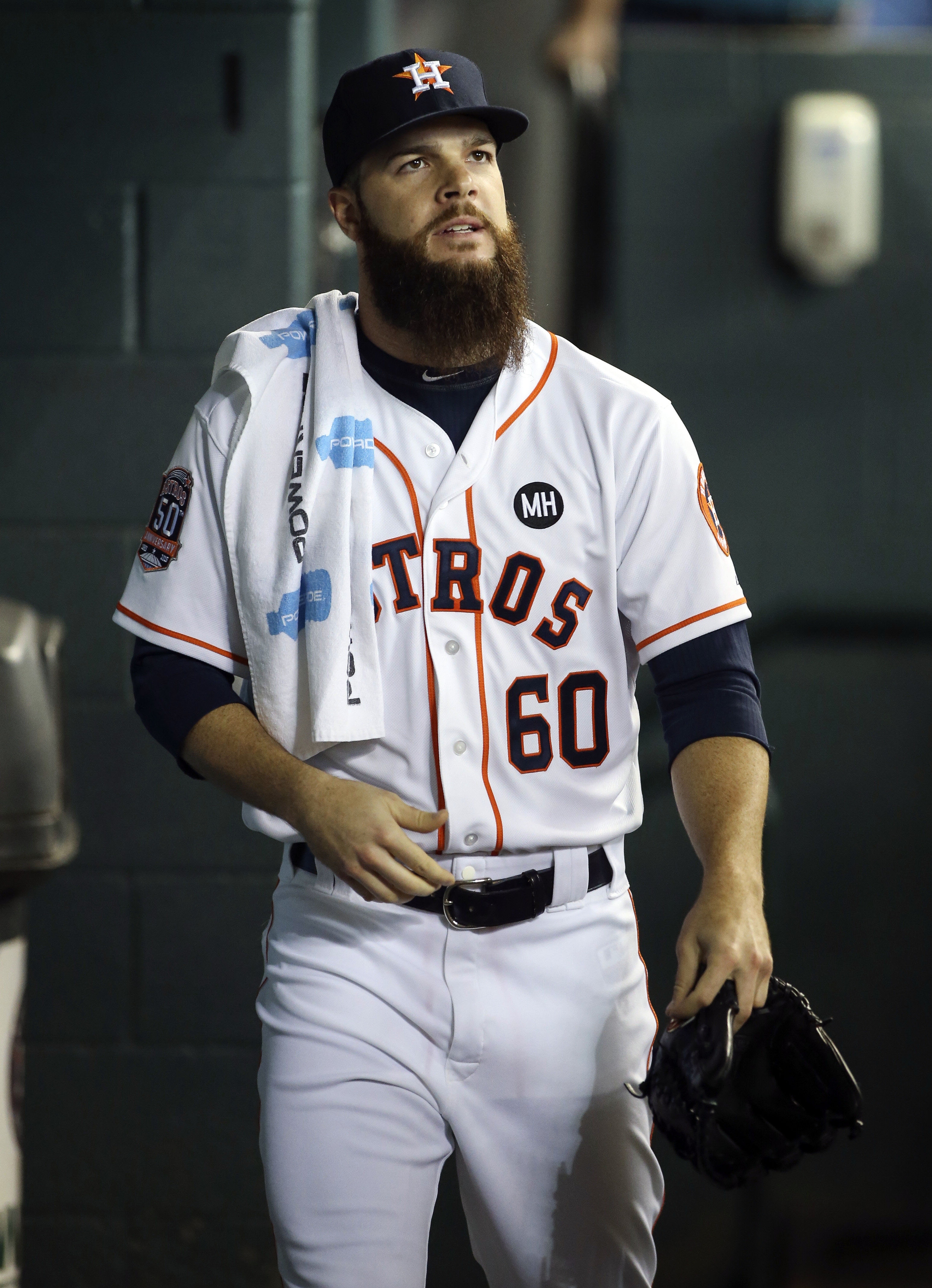
The strongest of the three cases this year is that of the reigning American League Cy Young Award winner, Dallas Keuchel. He went 20-8 in 2015 with a 2.48 in 232 innings. The only other two platform-year Cy Young winners in recent history have been Lincecum and Kershaw, but both of them clearly had stronger careers than Keuchel before winning their Cy Young Awards. Lincecum had a 2.90 career ERA and Kershaw’s career ERA was 2.88, while Keuchel only has a 3.58 career ERA and was at 4.16 before his Cy Young season. Similarly, Lincecum was 40-17 career at the time, and Kershaw was 42-28, while Keuchel is only 41-35.
In addition to Keuchel, two other pitchers are projected to top the $4.35MM record for first-time eligible starting pitchers. Shelby Miller only went 6-17 in 2015, but his 3.02 ERA in 205 1/3 innings in his All-Star platform year, along with his 3.22 career ERA in 575 1/3 innings give him a strong projection anyway. Matt Harvey went 13-8 with a 2.71 ERA in 189 1/3 innings in his platform year, and he has a 25-18 career record with a 2.53 career ERA in 427 innings. While Keuchel is projected to earn $6.4MM, Miller is projected to earn $4.9MM, and Harvey is projected to earn $4.7MM .
Despite no hurler topping Willis’ $4.35MM record, a number of pitchers have gotten very close in recent years. Five players in the last six years have landed between $4MM and $4.35MM on one-year deals, and many more have received multi-year deals. Comparing Keuchel, Miller, and Harvey with these five hurlers, along with a few other players who fell just short of $4MM will help figure out whether our projection for these pitchers is appropriate.
Keuchel seems like a safe bet to break the $4.35MM record if he does have a one-year award or goes to a hearing. David Price, who tied Willis’ $4.35MM record, was 14-10 with a 3.09 ERA in 224 1/3 innings in his platform year, which Keuchel bested in each category. Keuchel also has the same number of wins as Price did for his career at the time (41) and a similar ERA (3.38 for Price, 3.58 for Keuchel). Strengthening Keuchel’s argument is the fact that Price had nearly 100 fewer career innings when he tied Willis’ record.
Chris Tillman, who earned $4.32MM last year, did so after a 13-6 record with 3.34 ERA in his platform year and only a 4.00 career ERA with 45 career wins. Keuchel clearly should out-earn Tillman, Price and Willis handily, although he is likely to fall short of the respective $8MM and $6.5MM figures that were offered to Kershaw and Lincecum prior to their multi-year deals. I suspect Keuchel will miss the $6.4MM projection, but could easily get close to $6MM — comfortably establishing a new record.
Shelby Miller may have a harder time hitting his projection. I suspect that the model is struggling to find pitchers with an ERA as good and with as many innings who did not have many wins. A couple of recent comparables emerge, both of which had single-digit wins in their platform year with low ERAs. Stephen Strasburg in 2014 earned $3.97MM a couple years ago after going 8-9 with a 3.00 ERA in his platform year, but his 183 innings that year are short of Miller’s 205, and Miller’s 575 career innings handily top Strasburg’s 434.
Travis Wood earned $3.9MM two years ago with a 9-12 platform year record, 200 platform year innings and 564 career innings, although his career ERA was 3.83. Miller easily bests that mark with 3.22. Their platform year ERAs were similar, however, with Wood at 3.11 and Miller at 3.02. Miller also struck out a few more hitters than Wood had. Overall, both Strasburg and Wood getting just shy of $4MM two years ago with worse pre-platform performances suggests that Miller should get over $4MM, even if his $4.9MM projection will be harder to land. Most likely, he will end up between $4MM and the $4.35MM record, unless Keuchel or Harvey re-sets the market and pushes his number upward.
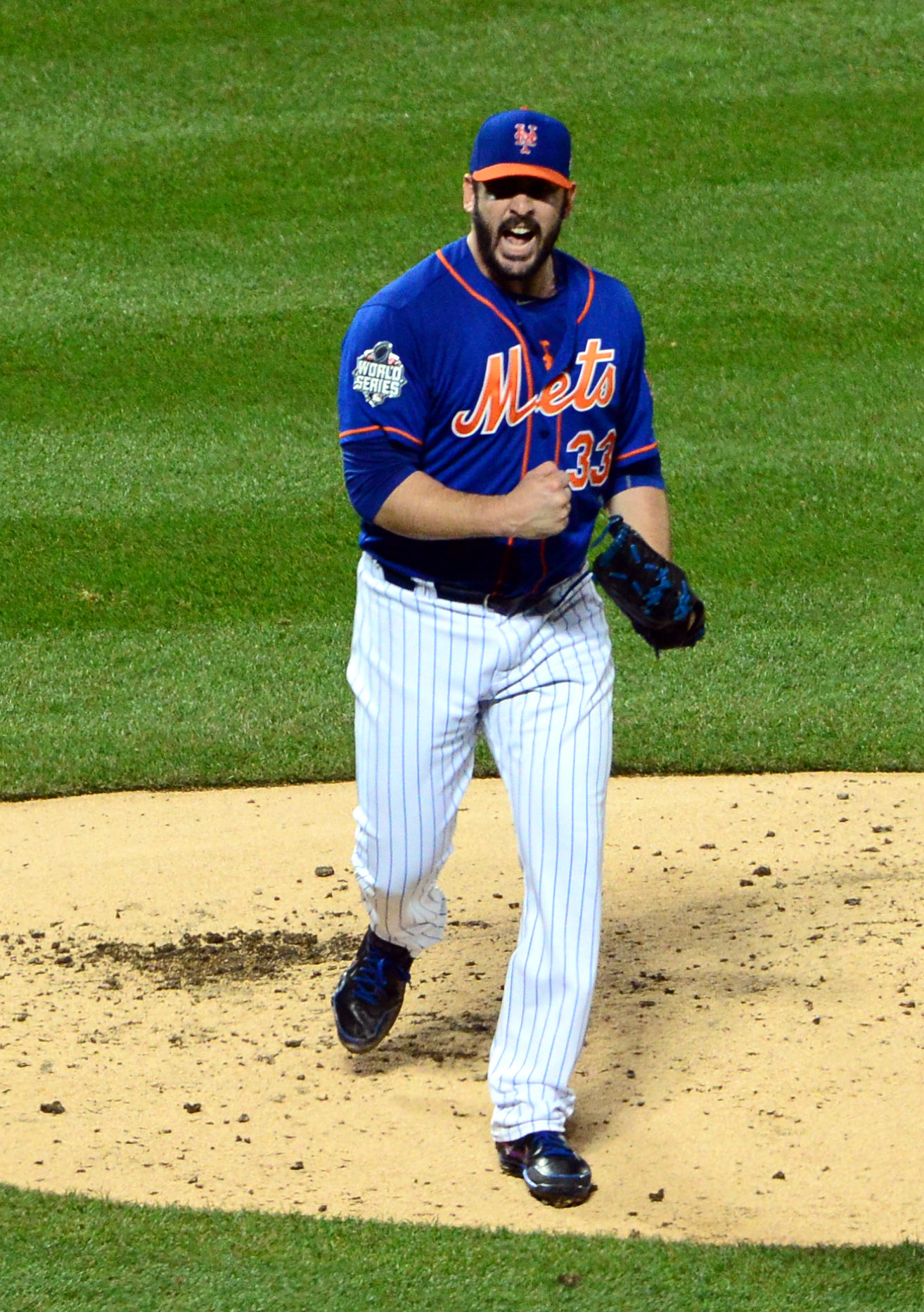
It’s difficult to find comparables for Harvey, partly because of his injuries and partly because his playoff performance in 2015 could help his case. Cole Hamels’ case after his 2008 playoff success (although he was the World Series MVP) would have been a good match, even though it is stale, but he signed a multi-year deal instead. He did earn $4.35MM in a multi-year deal that could be a useful comparison. Hamels similarly did not have many platform year wins despite a strong ERA — he went 14-10 with a 3.09 ERA, which compares somewhat favorably to Harvey’s 13-8 with 2.71. Hamels did have 227 innings though, compared with Harvey’s 189. On the other hand, Harvey’s 2.53 career ERA clearly outdoes the 3.43 ERA held by Hamels at the time.
Mike Minor got a one-year deal for $3.85MM a couple years ago after going 13-9 with a 3.21 ERA in 204 2/3 innings, although his 3.90 career ERA is clearly worse than Harvey’s. However, his 507 1/3 career innings at the time exceed Harvey’s 427.
It is not too challenging to make a case that David Price’s numbers when he got $4.35MM are similar to Miller and Harvey. Both Miller and Harvey possess superior ERA marks, although they each also had fewer innings. Harvey’s record was better (13-8 versus 12-13) but Miller’s was worse (6-17). Price’s 3.38 career ERA was similar to Miller’s 3.22, but Harvey’s 2.53 is better. On the other hand, Price and Miller had matching innings totals, while Harvey was about 150 innings short.
It does not seem obvious that Harvey or Miller can top the Price/Willis record, so I suspect both of them will end up in the $4MM to $4.35MM range. Obviously, if Keuchel shatters Price’s record in advance, Harvey or Miller could have a better opportunity to top that figure themselves, but I would bet the model’s projections for this pair ultimately proves to be too high.
Photos courtesy of USA Today Sports Images.
NL East Notes: Fernandez, Yelich, Vizcaino, DePodesta
With Dee Gordon now extended through the 2020 season (and possibly 2021 by way of vesting option), MLB.com’s Joe Frisaro gets the sense that the Marlins hope to hammer out a long-term deal for Jose Fernandez, possibly in advance of tomorrow’s exchange of arbitration figures (Twitter link). That’s an ambitious goal for a number of reasons — lack of time, Fernandez’s stock being low after an injury-shortened season, Scott Boras’ aversion to long-term deals, etc. — and Frisaro himself notes that he hasn’t confirmed long-term contract talks are taking place. Jon Heyman, meanwhile, tweets that there’s “no word” that the Marlins are hopeful of coming to terms on an extension with their young ace. With Fernandez already eligible for arbitration, the urgency to sign a deal isn’t as pressing, as he’ll begin earning notable salaries as soon as 2016, when MLBTR has him projected at $2.2MM. Given his excellence when healthy, that number should rise rapidly, as he’ll be arb-eligible three more times before qualifying for free agency.
Here’s more on the Marlins and the NL East…
- Miami’s agreement with left-hander Wei-Yin Chen should put to rest the trade rumors swirling around Fernandez and Marcell Ozuna, writes Frisaro in a full column. By adding Chen (and extending Gordon), the Marlins sent the message that their goal is to contend in 2016. Adding Chen lessens the temptation to add a young arm by trading Ozuna, which would’ve simply created another hole in the outfield anyhow, Frisaro notes.
- Within that piece, Frisaro reports that the Nationals made a run at Christian Yelich this offseason, floating a concept involving left-hander Gio Gonzalez going to the Marlins. He’s the second reporter to say as much, as Jon Heyman first mentioned the scenario about a month ago While I’d imagine that other pieces were involved in the Washington’s scenario, Frisaro hears that the inquiry “didn’t go anywhere,” which isn’t necessarily a surprise. The Marlins took Yelich 23rd overall back in 2010 and rewarded him with a hefty $49.75MM contract extension with a little more than one year of service time under his belt last offseason; the team is quite high on Yelich’s potential.
- The Braves could end up going to an arbitration hearing with right-hander Arodys Vizcaino tomorrow, writes MLB.com’s Mark Bowman. Atlanta cemented itself as a “file-and-trial” team (one that does not negotiate one-year salaries after arbitration figures are exchanged) last season when it went to a hearing with left-hander Mike Minor. With figures set to be exchanged tomorrow at 1pm ET, there’s little time for the two sides to work out a deal, although GM John Coppolella voiced a desire to work something out. “Our hope is always to settle before numbers are filed, but we showed last year that we have no problem going to a hearing if we are unable to reach a number that works for our club,” Coppolella explained. Vizcaino is projected by MLBTR to make $1.1MM next season, although as a Super Two player, establishing a more significant base in his first trip through the process would make the right-hander exponentially more costly in his next three arbitration-eligible offseasons.
- In a piece for Vice Sports, Mike Vorkunov spoke to former Mets vice president of player development/amateur scouting about his decision to jump ship to the NFL’s Cleveland Browns and the journey that brought him to baseball in the first place. DePodesta recalls some influential lessons he learned while interning for George H.W. Bush’s deputy assistant, Jim Pinkerton — an experience that changed the way he approached his understanding not only of baseball but life in general. Vorkunov spoke to DePodesta’s former colleague, Josh Byrnes (now a senior VP working under Andrew Friedman in L.A.) as well as former Harvard football teammates/coaches and current/former Browns employees. DePodesta explained to Vorkunov that he’s tried to learn about as many other industries as possible (healthcare, finance, etc.). “I’ll say this: the last 20 years in baseball, much what I’ve done is try to learn as much as I can about other industries, especially ones that I thought shared common characteristics to what we were doing in baseball,” said DePodesta. “Because I was always trying to learn how they dealt with similar interests to what we had.” Vorkunov’s lengthy piece gives an excellent look into DePodesta and what he and his unique background will bring to the NFL. To read more about DePodesta’s career change from a football perspective, check out MLBTR’s sister site, Pro Football Rumors.