
Jacob deGrom, Taijuan Walker Opt Out Of Mets Contracts
Jacob deGrom and Taijuan Walker are both headed to the free agent market, according to a media release from the MLB Players Association (via Twitter). As expected, deGrom opted out of the final guaranteed year of his contract, while Walker took a $3MM buyout rather than exercise a $7.5MM player option for the 2023 season.
deGrom was owed $30.5MM in 2023, and the Mets held a $32.5MM club option on the former two-time Cy Young Award winner for 2024. There is no doubt deGrom will find more than $30.5MM on the open market, as his skill level still supersedes some obvious questions about his health and long-term durability. Multiple injuries kept deGrom on the shelf for over an entire year, as he didn’t make a single MLB appearance between July 7, 2021 and August 2, 2022. Upon returning this season, deGrom still looked tremendous, posting a 3.08 ERA and a host of elite Statcast numbers.
Throughout his injury hiatus, deGrom consistently maintained that he still planned to opt out of his contract, and his strong performance over his 64 1/3 innings should quell doubts in the minds of some suitors. Of course, deGrom also turns 35 in June 2023, so there has been speculation that teams might prefer to offer him deals with a high average annual value rather than a lengthy term. Reports have also suggested that geography is a factor for deGrom, as his preference would be to play for a team closer to his home in Florida.
During the 2020-21 offseason, Walker joined the Mets on a two-year deal worth $20MM in guaranteed salary. Given the high price of his buyout, Walker’s $4.5MM decision wasn’t a hard one to make, as the right-hander will look to capitalize on what has now been three consecutive seasons of solid work. The 30-year-old isn’t a big strikeout pitcher and he allows a lot of hard contact, though he’ll get plenty of attention as a solid arm for the middle-to-back of many rotations.
Walker missed almost all of the 2018 and 2019 seasons due to Tommy John surgery and a shoulder injury, before rebounding with a 2.70 ERA over 53 1/3 innings with the Mariners and Blue Jays during the shortened 2020 season. That performance led to Walker’s contract with New York, and he has stayed mostly healthy (averaging 158 IP) over his two seasons with the Mets while posting a 3.98 ERA. 2022 was the better of Walker’s two seasons, as he had a 3.49 ERA and an above-average 6.9% walk rate.
Between deGrom, Walker, Chris Bassitt expected to decline his end of a mutual option, and the Mets holding a $14MM club option on Carlos Carrasco for 2023, New York’s rotation could look quite different by Opening Day. Even with the Mets’ willingness to spend big, retaining all of these starters might even be beyond ownership’s comfort zone, especially with other free agent questions left to be answered. The Mets already made one big strike to re-sign an in-house free agent, agreeing to a five-year, $102MM deal with closer Edwin Diaz yesterday.
Twins To Pick Up Sonny Gray’s Team Option
The Twins plan to pick up starter Sonny Gray‘s $12.7MM team option for the 2023 season, per Jon Heyman of the NY Post.
Acquired at the start of the 2022 season from the Reds, Gray has been a solid presence in the Twins’ rotation. Across 24 starts (119 2/3 innings) the veteran right-hander pitched to a 3.08 ERA with a 24% strikeout rate, 7.4% walk rate, and 44.1% groundball rate.
However, Gray has been burdened by injuries in recent years, pitching over 140 innings in only two of his last six seasons, excluding the shortened 2022 season. In 2022, the righty spent time on the 10-day and 15-day IL with a right hamstring strain and a right pectoral strain, respectively. Additionally, Gray averaged just under five innings per start in 2022.
Nevertheless, when healthy, Gray has been a strong presence in the Twins’ rotation. In the second half of the season, the veteran pitched to an impressive 2.38 ERA in 56 2/3 innings. During this time, opposing batters hit a meager .212/.286/.335 against him.
As noted in MLBTR’s Offseason Outlook, Twins starters ranked 20th in the Majors with a 4.11 ERA and 27th with 782 2/3 innings in 2022. With Joe Ryan and Tyler Mahle returning, along with Kenta Maeda who spent the 2022 season recovering from Tommy John surgery, the Twins have a formidable quartet of quality starters as they look to return to the top of the AL Central.
The 2022-23 Offseason Begins
The Astros are World Series champions, officially bringing the 2022 baseball season to a close. As the party continues in Houston, the rest of the baseball world has already gotten started on winter business, as (knock on wood) the league prepares for its first “regular” offseason in three years. The 2019-20 offseason was interrupted by the pandemic, with that uncertainty continuing to cloud MLB’s preparations heading into 2021. Last winter, the offseason was shut down by a 99-day lockout, until the league and the players’ union finally agreed on a new collective bargaining agreement.
Fortunately, it looks like we might be in store for nothing but hot stove talk during this offseason, in a welcome return to normalcy. We at MLB Trade Rumors are already in the swing of things, with Matt Swartz’s annual arbitration projections posted and our annual Offseason Outlook series well underway. In addition, the annual Top 50 Free Agents list and Free Agent Prediction contest are both coming soon, so stay tuned.
Here is the rundown of the offseason’s key dates on the baseball calendar…
NOVEMBER 6: All eligible players can officially file for free agency, though even though this technically marks the start of free agency, players still aren’t allowed to negotiate with anyone but their current team. During the five days until the full opening of the free agent market, teams and players must make their contractual decisions about any club options, player options, opt-outs, and mutual options. The trade market also fully re-opens today, and it is rare but not totally uncommon to see a prominent swap take place as soon as the market opens.
NOVEMBER 7-10: The annual GM meetings, this year taking place in Las Vegas.
NOVEMBER 10: The free agent market officially opens, and free agents are now free to negotiate and sign with other teams. This is also the deadline for option decisions, as well as the deadline for teams to issue qualifying offers to eligible free agents. MLBTR’s Anthony Franco recently examined which players are most likely to receive the one-year, $19.65MM offers from their current teams, and which players represent trickier decisions for the clubs.
NOVEMBER 14-17: Awards week begins, as the league announces the results of one major award on each of these four days. The Rookie Of The Year winners are revealed on the 14th, the Manager Of The Year winners on the 15th, the Cy Young Award winners on the 16th, and finally the league MVPs on the 17th. Many players can earn extra contract bonus money based on high finishes in these awards races, but there is an extra hot-stove element this year. Due to the Prospect Promotion Incentive plan included in the new Collective Bargaining Agreement, the top two finishers in AL and NL ROY voting will receive a full year of Major League service time, regardless of how much time they actually spent on their clubs’ active rosters.
NOVEMBER 15: The deadline for teams to set their 40-man rosters in advance of the Rule 5 draft. This usually involves adding some prominent minor leaguers onto the 40-man to prevent their selection in the R5, and several clubs might be looking to swing trades to free up 40-man space and ease any possible roster crunch.
NOVEMBER 15: The deadline for the free agents issued qualifying offers to decide whether or not to accept the QO.
NOVEMBER 18: The non-tender deadline, as teams must decide by this date whether or not to tender contracts to arbitration-eligible players. This date represents a notable difference to the regular offseason calendar, as the non-tender deadline is usually in late November or early December. Given the closer proximity to the 40-man roster decision date, it seems quite possible we could see some earlier non-tender decisions than usual, so teams can free up more roster spots.
DECEMBER 4-7: The annual Winter Meetings, this year taking place in San Diego.
DECEMBER 7: The Rule 5 Draft, returning to its usual date on the final day of the Winter Meetings. Last year’s Rule 5 Draft was canceled due to the lockout, marking the first time since 1891 that some form of the R5 didn’t take place.
JANUARY 13: The filing deadline for teams and arbitration-eligible players to submit 2023 salary numbers. Arbitration hearings will begin to take place in March, though teams and players can agree to a salary at any point (even minutes before) a hearing takes place. However, many teams adopt the “file and trial” tactic, meaning that they’ll automatically opt to go to a hearing with any player who doesn’t agree to a salary by January 13, with no further discussion about an arbitration-avoiding deal.
JANUARY 15: The international signing window officially opens, and closes 11 months later on December 15, 2023. Many of the top names of the 2023 int’l class will sign on the first day the market opens, as several of these prospects have already agreed to unofficial deals with teams years in advance. Because Major League Baseball and the MLBPA didn’t reach an agreement on the league’s desire to implement a draft for international prospects, the current int’l signing system and the qualifying-offer system will both remain in place for the length of the CBA (though the 2026 season).
FEBRUARY 24: Spring Training games officially begin.
MARCH 8: The World Baseball Classic begins, with games played in Taichung, Tokyo, Phoenix and Miami over the course of the 14-day, 20-team event. The WBC returns for the first time since 2017, as the 2021 tournament was canceled due to the pandemic.
MARCH 30: Opening Day
The Astros Win The World Series
For the second time in franchise history, the Houston Astros have won the World Series. Houston clinched the championship with a 4-1 victory over the Phillies tonight in Game 6, fueled by a massive home run from Yordan Alvarez in the sixth inning. With the Phillies leading 1-0 after the top of the sixth, starter Zack Wheeler (who had been cruising in the game) was pulled after allowing two baserunners, a decision that will lead to decades of second-guessing in Philadelphia. Reliever Jose Alvarado promptly allowed a 450-foot home run to Alvarez that put the Astros ahead for good.
The Astros won 106 games during the regular season, and had a perfect 7-0 record throughout the American League playoffs to capture the pennant. However, the Phillies took a 2-1 lead through the first three games of World Series, leading to speculation that Philadelphia’s power bats had the edge over Houston’s vaunted pitching staff. That speculation was quieted in a big way when the Phillies scored only three total runs over the remaining three games of the Series, starting when four Astros pitchers (led by Cristian Javier‘s six innings) combined for a no-hitter in Game 4.
That historic win restored the sense of invincibility that followed Houston for much of the season, as the team showed few weaknesses while fielding an excellent lineup, rotation, and bullpen. The franchise’s extensive rebuild period under former GM Jeff Luhnow built a farm system and player development pipeline that continues to excel, given how the bulk of the World Series roster was comprised of homegrown players. This included Javier, Framber Valdez, Jose Urquidy, and Luis Garcia — four lightly-regarded international prospects who joined future Hall-of-Famer Justin Verlander and (former first round pick) Lance McCullers Jr. to create an outstanding pitching staff.
The Astros have won two championships and made two other World Series appearances (in 2019 and 2021) over the last six seasons, an extended run of dominance over the big leagues. Of course, no discussion is complete without mention of the sign-stealing scandal that tainted the memory of the 2017 championship, and resulted in the firings of both Luhnow and former manager A.J. Hinch following the 2019 season. For many fans, no amount of time will soften the hard feelings directed towards the organization, though only five players — Verlander, McCullers, Jose Altuve, Alex Bregman, and Yuli Gurriel — remain from the 2017 roster.
Houston’s ability to reload and restock its roster has been impressive, as the team has brought some new talent into the organization and also continued to rely on its farm system. For instance, after Carlos Correa left in free agency last winter, the Astros had confidence that top prospect Jeremy Pena would be able to step into Correa’s big shoes. Fast forward to November, and Pena has followed up an impressive rookie season with World Series MVP honors — only the third rookie to ever capture the award.
After winning a World Series as a player with the Dodgers in 1981, Dusty Baker had to wait 41 more years and through 25 seasons as a manager before capturing his second ring. Baker’s excellent track record (2093 regular season wins) already made a Cooperstown induction a likelihood, but after years of close calls and disappointments in the postseason, Baker finally captured his first title as a manager at age 73. Baker was only signed through the 2022 season, yet the Astros are expected to offer him a new deal, and Baker himself told David Ortiz in an interview that “I said if I win one, I want to win two.”
Verlander is expected to opt out of his contract to re-enter the free agent market, but the bulk of the Astros’ core will be under contract and control for 2023, making Houston an early favorite to repeat. Perhaps the biggest question is in the front office, as there has been quite a bit of speculation that GM James Click (whose contract is also now up) won’t be invited back for next season, due to some clashes with owner Jim Crane. Click’s fate will be a major talking point in the days now following the World Series, and given the talent already on hand in the organization, the Astros’ GM job might be the most coveted in all of baseball.
Previewing Upcoming Qualifying Offer Decisions
The World Series concludes this weekend, and the offseason gets underway almost immediately thereafter. Teams and players have to decide whether to exercise contractual options within five days of the Series ending, while clubs also must determine whether to issue their impending free agents a qualifying offer before free agency officially opens. MLBTR’s Mark Polishuk took a preliminary look at the qualifying offer class in August (position players/pitchers).
With another few months of play in the books, we’ll take a final run at previewing the class. As a refresher, the qualifying offer is a one-year offer that’s calculated by averaging the salaries of the 125 highest-paid players in the majors in a given season. That value has been set at $19.65MM for this offseason. If a player rejects the offer, he sets out into free agency. The player’s previous team would receive draft pick compensation if he signs elsewhere, while a team that signs another club’s qualified free agent would forfeit a draft choice (or choices) and possibly international signing bonus space.
Draft pick compensation and forfeiture differs depending on a team’s revenue sharing status and whether they exceeded the luxury tax threshold this year. MLBTR’s Tim Dierkes looked yesterday at what picks each team would lose were they to sign a qualified free agent; conversely, Mark Polishuk covered the draft pick compensation clubs would land if one of their qualified free agents departed.
Locks
- Chris Bassitt (Mets)
- Xander Bogaerts (Red Sox)
- Willson Contreras (Cubs)
- Jacob deGrom (Mets)
- Edwin Díaz (Mets)
- Aaron Judge (Yankees)
- Brandon Nimmo (Mets)
- Carlos Rodón (Giants)
- Dansby Swanson (Braves)
- Trea Turner (Dodgers)
There’s not a whole lot to say about this group. These are 10 of the best impending free agents. Bogaerts, deGrom, Judge, Rodón, Swanson and Turner are all going to top nine figures. Díaz, Nimmo and maybe Contreras could get to $100MM. Bassitt doesn’t have quite that earning power, since he’ll turn 34 in February. That caps the length of the contract he can expect, but the veteran righty is arguably the fourth-best starting pitcher on the market. He’s likely to land an annual salary similar to the value of the QO over a multi-year term.
Possible Candidates
- Tyler Anderson (Dodgers)
A stable back-of-the-rotation strike-thrower, Anderson inked an $8MM guarantee with the Dodgers last year. The veteran southpaw responded with a career season, posting a sparkling 2.57 ERA across 178 2/3 innings. He walked fewer than 5% of opposing hitters and averaged almost six innings per appearance, an incredible source of stability in a rotation that dealt with a fair share of injuries.
Headed into his age-33 season, Anderson is now in position for easily the best payday of his career. The question is whether that might come in the form of the QO. The Dodgers certainly have the budget for an investment of that size, and they’re never shy about stockpiling pitching depth. Yet it’s fair to wonder whether Anderson projects markedly differently than he did last winter when he was coming off a combined 4.49 ERA from 2020-21. He benefited from a career-low .256 batting average on balls in play this year, and his 19.5% strikeout rate is a near-match for his 2021 mark. His fastball still averages under 91 MPH, and while he turned to his changeup more often this past season than he has previously, he didn’t dramatically overhaul his repertoire. Anderson’s a solid pitcher with a knack for getting opponents to chase and make weak contact, but he doesn’t brandish the kind of power arsenal that’d immediately endear him to teams.
- Nathan Eovaldi (Red Sox)
Eovaldi is wrapping up a four-year deal he signed with the Red Sox on the heels of his incredible 2018 postseason. The right-hander had a tough 2019 season but has followed up with three generally solid years since then. Eovaldi has posted an ERA between 3.72 and 3.87 since 2020, consistent mid-rotation production. That’s in line with what he’s done for much of his career.
Despite possessing big velocity, Eovaldi’s more of a control artist than a bat-missing weapon at the top of the starting staff. He’s incredibly walked less than 5% of opposing hitters in each of the last three years, with a cumulative 4.4% mark that’s the second-lowest among 94 pitchers with 250+ innings over that stretch. He posts above-average swinging strike rates but not elite numbers in that regard, and he tends to give up a fair number of home runs.
One can argue Eovaldi’s the fourth or fifth-best free agent starter available, although he spent time on the injured list this year with separate back and shoulder concerns en route to just 109 1/3 innings. His typical 97+ MPH heater sat at a slightly diminished (but still strong) 95.7 MPH this year. Eovaldi has two Tommy John surgeries on his ledger and has some durability question marks, but a strong one-year risk could be palatable for a big-spending team that has virtually no certainty in the rotation. At the same time, the Sox would receive only a compensatory pick after the fourth round if he rejects a QO and departs, thanks to their paying the luxury tax in 2022. That’s of marginal value, so Boston’s only really incentivized to make a QO if they hope he accepts.
- Mitch Haniger (Mariners)
Despite playing his home games in one of the league’s more pitcher-friendly environments, Haniger popped 39 home runs in 2021. That was a career-best power spike, but it demonstrated the kind of offensive potential he has when healthy. The right-handed slugger posted well above-average hitting marks in 2017-18 before an average ’19 campaign and a 2020 season wiped out by injury. His 2022 showing was more in the latter bucket, as he lost a chunk of the summer to a high ankle sprain and posted a .246/.308/.429 line in 247 trips to the plate.
Haniger’s a middle-of-the-order caliber bat who plays an adequate corner outfield, and he should find a multi-year deal going into his age-32 campaign if the Mariners don’t make him a QO. On the heels of this platform season, he’d have to seriously consider accepting the QO if offered. Seattle has a fair bit of near-term financial flexibility to make that bet, but they also have a number of in-house outfielders who can step in more affordably if Haniger walks.
- Andrew Heaney (Dodgers)
The Dodgers rolled the dice on Heaney after a home run-filled 2021 season, signing him for $8.5MM. The southpaw didn’t provide much volume, missing extended stretches of the year fighting shoulder discomfort. When he was healthy enough to take the mound, the 31-year-old was brilliant. Heaney posted a 3.10 ERA and struck out an incredible 35.5% of opposing hitters through 72 2/3 innings. He got a swinging strike on a whopping 16.8% of his offerings, the highest rate of any pitcher with 70+ innings pitched. Heaney put up ace-caliber numbers when he took the hill, but he pitched less than half the season and is only a year removed from a 5.83 ERA over 30 outings with the Angels and Yankees.
Unlike a few other pitchers on this list, one can easily point to a huge change with Heaney that could’ve spurred his breakout. He started throwing a slider for the first time since 2017, turning to it as his go-to secondary offering while ditching his curveball and scaling way back on his changeup usage. The new breaking ball was fantastic, holding opponents to a .170 batting average with one of the highest whiff rates in the league.
That leads to a tough decision for L.A. The Dodgers have shown as much willingness as any team to take short-term risks on high-upside players, including Heaney himself last winter. There’s a difference between an $8.5MM gamble and one pushing $20MM, but he could be next in the line of Kevin Gausman and Carlos Rodón breakout types if he can stay healthy.
- Martín Pérez (Rangers)
A former top prospect, Pérez has bounced around the league but consistently put up below-average results after some early-career success. He returned to his original organization last offseason, inking a $4MM deal with the Rangers after a pair of rough seasons in Boston. That proved to be one of the better buy-low moves of the winter, as Pérez made 32 starts and soaked up 196 1/3 innings. He posted a 2.89 ERA, a top 25 mark among hurlers with 100+ innings. Despite pitching in the majors for over a decade, he’s only entering his age-32 season.
If the Rangers are confident Pérez can come close to replicating his 2022 production, then a QO would be an easy call. Yet it’s fair to wonder how sustainable the southpaw’s success is. He posted an ERA north of 4.00 every year between 2014-21. He didn’t experience any kind of velocity bump, nor did his strikeout and walk profile change. Pérez only punched out 20.6% of opponents on a meager 8.4% swinging strike rate. He did induce ground-balls at a quality 51.4% clip, but he’s previously posted strong grounder rates without finding much success keeping runs off the board. Pérez made some small tweaks to his repertoire, using his sinker more against right-handed batters while leaning a bit more heavily on his cutter against lefties. Without a massive overhaul or velocity spike, though, it’s hard to know how much of his improved results truly represent a step forward.
- Anthony Rizzo (Yankees)
Rizzo inked a two-year, $32MM guarantee to return to the Yankees in Spring Training. The deal allowed him to opt out of the final $16MM after this season, and the first baseman now looks as if he’ll do so. After a couple fine but unspectacular years, Rizzo bounced back with a 32-homer showing for the first time since 2017. He only hit .224, but that’s largely due to a career-worst .216 batting average on balls in play. Few hitters in baseball were shifted against more often, and the upcoming limitations on shifting should help him find a few more base knocks. Even if the shift ban doesn’t lead to a jump in performance, his .224/.338/.480 mark through 548 plate appearances checked in 32 points above the league average by measure of wRC+.
Heading into his age-33 campaign, Rizzo’s likely limited to two or maybe three-year offers. Those should be at annual rates at least approaching the value of the qualifying offer. It seems unlikely Rizzo would accept a QO. After all, in order to be eligible for the qualifying offer, he’d first have to decline a $16MM salary for next year. Perhaps he’d be content to take the accompanying $3.65MM pay bump before re-testing free agency after 2023, but he’d presumably prefer a new multi-year arrangement. Even if he does accept the QO, the Yankees could find that a reasonable investment, as Rizzo’s high-contact lefty bat plays well in their ballpark and in a lineup that otherwise skews toward the right side.
- Jameson Taillon (Yankees)
Taillon has spent the past two years in the Bronx after coming over from the Pirates via trade. New York rolled the dice at the time, surrendering a few solid prospects for a pitcher who’d missed the 2020 season after undergoing the second Tommy John surgery of his career. Taillon rewarded their faith, posting the #3/4 starter-type numbers he had throughout his time in Pittsburgh. Over the past two years, the right-hander owns a 4.08 ERA through 61 starts in a hitter-friendly environment. He’s punched out a slightly below-average 21.9% of opponents but only walked 5.7% of batters faced, holding the opposition to a .242/.290/.426 line.
Heading into his age-31 season, Taillon is one of the better options in a class full of mid-rotation starters. He averages around 94 MPH with his fastball, throws plenty of strikes and has flashed the ability to both miss bats and keep the ball on the ground at times in his career. Taillon never became the ace some may have expected when he was drafted second overall back in 2010, but he’s a rock-solid league average starter. Clubs may have some trepidation long-term about the two Tommy John procedures in his past, but the only injured list stint he’s required in the last two years was a two-week absence in September 2021 for an ankle issue. The Yankees do have a number of rotation options, but there’s enough uncertainty with players like Luis Severino, Domingo Germán and Clarke Schmidt they’d seem content to welcome Taillon back if he accepts the QO.
- Taijuan Walker (Mets)
Walker’s going to decline a $6MM player option in favor of a $3MM buyout, leaving the Mets to decide whether to follow up with a QO. Signed over the 2020-21 offseason, the right-hander had a somewhat disappointing first season in Queens, posting a 4.47 ERA. He rebounded with a strong 3.49 mark in 157 1/3 innings this past season, taking the ball 29 times despite a minor early-season IL stint due to shoulder bursitis. He didn’t overpower opponents, striking out a slightly below-average 20.3% of batters faced, but he consistently threw strikes and got ground-balls at an above-average 46.2% clip.
Heading into his age-30 season, Walker looks the part of a useful mid-rotation starter. He battled some injury issues early in his career but has mostly been healthy the last two years. He averages a bit under 94 MPH on his fastball, is effective against hitters from both sides of the plate and is coming off arguably the best season of his career. Walker gives up a decent amount of hard contact, but that’s perhaps not as concerning for a Mets team that plays its home games in a pitcher-friendly ballpark as it would be to some other clubs. The Mets have a number of impending free agents in the rotation and as high a spending ceiling as any team in the game, so they could be content to absorb a heavy one-year salary for Walker.
Longshots
- Mike Clevinger (Padres)
Entering the season, Clevinger looked like one of the higher-upside options in the class. He was coming off a 2021 campaign lost to Tommy John surgery, but he’d been excellent for the Indians and Padres from 2017-20. This year didn’t go well, though. Clevinger’s stuff was notably down from his pre-surgery form, and his results were below-average across the board. He finished the season with two abysmal playoff starts, and the Padres are probably content to let him sign elsewhere.
- Zach Eflin (Phillies)
Eflin had a solid case for a three-year deal midway through the first half. The typically effective right-hander then lost two months with a right knee injury, an unfortunate continuation of knee troubles that have plagued him since before he began his career. Eflin has undergone multiple knee surgeries in the past, and while he didn’t need to go under the knife this year, the absence kept him to working in shorter stints out of the bullpen for the stretch run and the playoffs. Coming off that platform season, it’s hard to see the Phillies offering a salary approaching $20MM.
- Clayton Kershaw (Dodgers)
Kershaw’s an easy QO candidate in a vacuum. He’s still one of the game’s best pitchers on a rate basis, and a $19.65MM salary is a bargain for even the 126 1/3 innings of 2.28 ERA ball he gave the Dodgers this past season. Yet that was also true last winter, when the future Hall of Famer was coming off a 3.55 mark across 121 2/3 frames. The Dodgers opted against a QO — not because they were against guaranteeing him a lofty one-year salary, but because they wanted to give Kershaw more than the 10 days allotted to QO recipients to determine his next steps, as president of baseball operations Andrew Friedman later explained. Friedman has already implied they’ll do the same this winter.
- Sean Manaea (Padres)
San Diego acquired Manaea from the A’s in Spring Training, hoping to solidify an already strong rotation with a durable source of mid-rotation innings. The southpaw mostly delivered on that for the first half, posting a 4.11 ERA through the All-Star Break. His final couple months were a disaster, though. Manaea was barraged for a 6.44 ERA in the second half, coughing up 15 homers along the way. The Friars gave him just one postseason start, and he failed to make it out of the second inning while giving up five runs in a loss to the Phillies. Before these past few months, Manaea had a consistently solid track record, and his 2022 strikeout and walk rates are in line with his career marks. He should be a popular bounceback candidate in free agency, but as with Clevinger, it feels like the Padres are set to move on.
- Jurickson Profar (Padres)
Profar can opt out of the final year and $7.5MM on his deal with San Diego. He’ll do so and beat that modest figure on the heels of a useful .243/.331/.391 showing over 658 plate appearances. Profar has put up slightly above-average offensive numbers in two of the past three seasons, but he’s now limited to left field after throwing issues pushed him off second base. Without much defensive value or a carrying tool at the plate, he’s not going to command a salary approaching the value of the QO in free agency.
- Ross Stripling (Blue Jays)
Stripling had a strong 2022 season as a swing option for the Blue Jays. He started 24 of 32 appearances, tallying 134 1/3 innings of 3.01 ERA ball. The veteran righty doesn’t throw particularly hard, but he missed bats on a decent 11% of his offerings and only walked 3.7% of opponents. Stripling proved a surprisingly key piece of the Jays starting staff, but he’s headed into his age-33 season and had a ghastly 5.14 ERA from 2020-21. Toronto could well look to bring him back, but his career track record doesn’t support a salary in the QO range.
- Michael Wacha (Red Sox)
Wacha put up a 3.32 ERA across 127 1/3 innings for the Red Sox this year, making good after inking a $7MM free agent guarantee. The righty didn’t dramatically overhaul his approach, though, posting lower strikeout and swinging strike numbers than he did during 2020-21 campaigns in which he combined for a 5.39 ERA over 37 outings. Wacha’s a solid strike-thrower and has given himself a shot at a multi-year deal, but it wasn’t the kind of resounding breakout that should position him for a salary pushing $20MM. Even for a Red Sox team that needs to overhaul its rotation, that’d be an eyebrow-raising investment, and it’s hard to imagine Wacha turning the QO down if offered.
Ineligible
- José Abreu (White Sox)
- Josh Bell (Padres)
- Andrew Benintendi (Yankees)
- Carlos Correa (Twins)
- Noah Syndergaard (Phillies)
- Justin Verlander (Astros)
All six of these players would’ve been at least plausible qualifying offer candidates, but they’re ineligible to receive one under the terms of the collective bargaining agreement. Teams can’t qualify any player who has previously received a QO in his career, nor are they allowed to tag a player they acquired midseason. The ‘previous QO provision’ rules out Abreu, Correa and Verlander; Bell and Benintendi were traded midseason. Syndergaard is ineligible on both accounts.
Which Draft Picks Each Team Would Forfeit By Signing A Qualified Free Agent
As part of the new collective bargaining agreement, MLB and the MLBPA allowed for the creation of an international amateur draft. As this was something MLB was pushing for, the proposed tradeoff was the elimination of free agent compensation. The two sides reached their overall CBA in March, but included a July 25th deadline for the possible international draft/free agent compensation trade. The two sides failed to reach an agreement by that July deadline, so the qualifying offer system for free agent compensation that was agreed to 11 years ago remains in place.
The qualifying offer is set at $19.65MM this offseason, and by mid-November we’ll know which players received and turned down a QO. Certain star free agents, including Aaron Judge and Trea Turner, are locks to receive and turn down a qualifying offer. A dozen others could easily join them.
If those players sign with new teams, here’s a look at the draft picks each signing club would lose.
Competitive Balance Tax Payors: Red Sox, Dodgers, Mets, Yankees, Phillies, Padres
If any of these six teams signs a qualified free agent from another team, it must forfeit its second-highest and fifth-highest pick in the 2023 draft. The team will also have its international signing bonus pool reduced by $1MM.
Revenue Sharing Recipients: Diamondbacks, Orioles, Reds, Guardians, Rockies, Tigers, Royals, Marlins, Brewers, Twins, Athletics, Pirates, Mariners, Rays
These 14 teams received revenue sharing and did not exceed the competitive balance tax. If one of these teams signs a qualified free agent, it forfeits its third-highest pick. These teams face the smallest draft pick penalty. The Twins and Mariners are realistic possibilities to sign a qualified free agent, while the Orioles and a few other revenue sharing recipients may lurk as dark horses.
All Other Teams: Braves, Cubs, White Sox, Astros, Angels, Giants, Cardinals, Rangers, Blue Jays, Nationals
These 10 remaining teams would forfeit their second-highest pick and and have their international signing bonus pool reduced by $500K. The penalty is something of a middle ground.
What happens if a team signs two qualified free agents? The CBA calls for forfeiture of the next highest available draft pick. For example, if a team has already lost its second and fifth-highest picks and it signs a second qualified free agent, it would lose its third and sixth-highest picks. So as in the past, if you’ve already signed one qualified free agent, the draft pick cost to sign another is reduced.
White Sox Name Pedro Grifol Manager
TODAY: The White Sox have officially announced Grifol’s hiring.
NOVEMBER 1: The White Sox’ managerial search has reportedly drawn its conclusion, as they’re set to hire a longtime division foe: Royals bench coach Pedro Grifol. A formal announcement is expected later this week. Changes to the coaching staff are also expected on the heels of a disappointing season, though pitching coach Ethan Katz will reportedly remain in his current role.
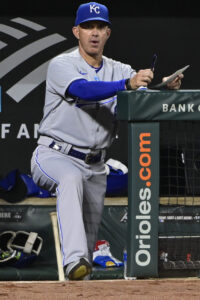
Grifol, 53 later this month, has been with the Royals organization since 2013 and has served as a quality control coach, catching coach and bench coach along the way. He’s also spent extensive time in the Mariners organization, where he spent three seasons as a minor league manager before being named the club’s coordinator of minor league instructor and, eventually, director of minor league operations.
Prior to his work with the Mariners and Royals organizations, Grifol had a nine-year playing career. Selected by the Twins out of Florida State University in the sixth round of the 1991 draft, Grifol spent five seasons as a catcher in the Twins’ system and another four in the Mets’ system. He reached Triple-A with both clubs but never cracked the Majors before ending his playing career following the 1999 season.
While this will be Grifol’s first managerial gig in the Majors, he’s long been seen as a future manager. He also interviewed with the Marlins this offseason and has previously interviewed with the Tigers in 2020, the Giants in 2019 and the Orioles in 2018. Grifol landed a pair of interviews with San Francisco during that offseason’s search and was reportedly among the finalists before the team ultimately chose Gabe Kapler. Grifol was on the Royals’ coaching staff for the organization’s consecutive World Series appearances in 2014-15 — with the latter season, of course, culminating in a World Series victory.
The Grifol hiring comes on the heels of a two-year stint that saw the White Sox bring Hall of Fame skipper Tony La Russa out of retirement to manager the club. That decision was widely believed to have been made directly by owner Jerry Reinsdorf going over the head of his front office, but the hiring of Grifol this time around likely came more directly from the front office. USA Today’s Bob Nightengale tweets that Grifol impressed all parties with the ChiSox and was viewed by Reinsdorf, executive vice president Kenny Williams and general manager Rick Hahn as the best candidate.
Skeptics of the hiring can perhaps point to the fact that Grifol was twice passed over as a managerial candidate by the Royals themselves, though the first time around it appeared as though Mike Matheny was always the clear heir-apparent to Ned Yost upon the latter’s retirement. This offseason, the Royals perhaps simply wanted a fresh voice from outside the organization after an ownership change in 2019, the dismissal of longtime president of baseball operations Dayton Moore and the aforementioned ousting of Matheny. The two clubs are also simply at different points in their competitive cycles and may thusly prefer different traits from their newly minted skippers.
While the Sox also interviewed Yankees bench coach Carlos Mendoza and Astros bench coach Joe Espada and even sat down with Ozzie Guillen about a second managerial stint on the South Side, Grifol will instead get his long-awaited first opportunity. He’ll step right into a win-now club and, given the inflated stated of the ChiSox’ payroll, likely be tasked with overseeing a similar group and coaxing better results than the team mustered in 2022. That’s not to say there won’t be any changes — longtime first baseman Jose Abreu is likely to sign elsewhere, and the Sox have potential needs at second base and in the outfield — but unlike many new skippers who step onto rebuilding clubs, Grifol should be dealt a better hand in terms of the roster he’ll inherit.
ESPN’s Buster Olney and Marly Rivera first reported that Grifol had been chosen as the White Sox’ new manager (Twitter links). Ken Rosenthal of The Athletic first reported that the Sox are expected to retain Katz but make broader-reaching coaching changes.
Super Two Status Set At 2.128 Years Of Service
This year’s Super Two cutoff has been placed at two years and 128 days (2.128) of MLB service time, according to Ronald Blum of the Associated Press. That is a slight increase over last year, which landed at 2.116.
During last winter’s lockout and subsequent collective bargaining negotiations, the MLBPA proposed changes to the Super Two system but eventually dropped those by the time the final agreement was reached. That means the Super Two system is the same as it has been in previous seasons.
As a refresher, each player gets one day of service time for each day of the season spent on the active roster or injured list. 172 days counts as a “year,” even though a normal MLB season is 187 days long. That means a player can spend a small amount of time in the minors and still earn a full year of service time.
Each player with between three and six years of MLB service time is eligible for the arbitration process, should he and his team fail to reach an agreement on a salary. Additionally, 22% of the players with between two and three years of MLB service also qualify, with such players being labeled as “Super Two” players. Any player in that window who also spent at least 86 days of the preceding season on the active roster or injured list will be eligible for four passes through the arbitration system instead of the usual three.
Until players reach free agency upon reaching six years of MLB service time, the arbitration system is the primary method of raising their respective salaries. Prior to that, teams can keep salaries at the league minimum, meaning that qualifying for arbitration early is a significant boost for a player’s earning potential. As noted in Blum’s report, the group of those now considered Super Two players includes Daulton Varsho, Randy Arozarena, Tony Gonsolin, and many more.
Here are the Super Two cutoffs of the last decade-plus:
- 2021: 2.116
- 2020: 2.125
- 2019: 2.115
- 2018: 2.134
- 2017: 2.123
- 2016: 2.131
- 2015: 2.130
- 2014: 2.133
- 2013: 2.122
- 2012: 2.140
- 2011: 2.146
- 2010: 2.122
- 2009: 2.139
For all players eligible for arbitration, if they don’t agree with their respective clubs on a salary by January 13, both parties will exchange proposed salary figures with hearings then taking place between January 30 and February 17. Both sides present their cases to an arbiter, who has to choose one figure or the other, as opposed to deciding on some kind of middle point.
Royals Hire Matt Quatraro As Manager
The Royals have settled on their next skipper, announcing Sunday night they’ve tabbed Rays bench coach Matt Quatraro as manager. It’s reportedly a three-year contract that also contains a club option for the 2026 season. This is the first Major League managerial job for Quatraro, who turns 49 years old in November.
A popular managerial candidate in recent years, Quatraro has received interviews with at least six other teams (the Marlins, Mets, A’s, Pirates, Tigers, and Giants) looking for new skippers, and he was reportedly a finalist for at least three of those positions. Quatraro made it to the final stages of the hiring process with the Pirates, Mets, and most recently the Marlins before those teams went in other directions. However, Quatraro will now finally get a chance to run a big league dugout, taking over a Royals team looking to turn the corner after a rebuild.
Kansas City has gone through six straight losing seasons, the last two coming after the front office made some notable (by the Royals’ standards) free agent investments meant to help the club back into contention. After that effort didn’t pan out, longtime president of baseball operations Dayton Moore and manager Mike Matheny were both fired, marking a new era in Royals history. Since new GM J.J. Picollo is also a longtime member of the front office, the Royals aren’t turning the page entirely on their recent history, yet Quatraro brings a new voice to the proceedings.
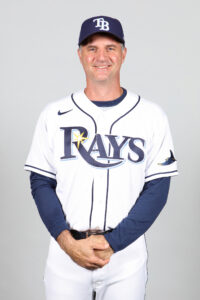
Quatraro does have a past link to Royals owner John Sherman, who become a minority owner in Cleveland during Quatraro’s four-season tenure (2014-17) as the Indians’ assistant hitting coach. That stint in Cleveland was Quatraro’s only professional experience outside of the Rays organization, beginning when he was an eighth-round pick for Tampa Bay in the 1996 draft. After seven years as a player, Quatraro then moved into the coaching ranks, working throughout the Rays’ farm system as a coach, hitting coordinator, catching instructor, and manager. He has spent the last five seasons on Tampa’s MLB coaching staff, first working as a third base coach before moving into the bench coach role prior to the 2019 season.
The Rays will now need a replacement as Kevin Cash’s top lieutenant, though coaching searches have become a pretty common offseason occurrence in Tampa. Beyond just the normal turnover that often comes to coaching staffs on an annual basis, the Rays frequently lose personnel (whether in the coaching or front office ranks) to other teams looking to replicate Tampa Bay’s formula for winning on a low budget. It remains to be seen whether Quatraro can bring some so-called “Rays magic” to Kansas City, though of course, the Royals have the 2015 World Series title as evidence the organization knows a few things about smaller-market success.
According to several reports, Quatraro was one of seven known candidates involved in the Royals’ search. The club considered three internal candidates (bench coach Pedro Grifol, third base coach Vance Wilson, Triple-A manager Scott Thorman) and four candidates from outside the organization — Quatraro, Dodgers first base coach Clayton McCullough, Red Sox bench coach Will Venable, and Phillies third base coach Dusty Wathan.
With the Royals’ opening now filled, it could increase the chances of Grifol heading elsewhere (perhaps even to his own managerial post since he interviewed with the White Sox). It would stand to reason that Quatraro might want to make some of his own picks for his new coaching staff, and the Royals already have a vacancy at pitching coach after announcing that Cal Eldred wouldn’t be returning in 2023.
Jeff Passan of ESPN first reported the Royals were hiring Quatraro as manager. Anne Rogers of MLB.com was first to report he signed a three-year deal with an additional option season.
Image courtesy of USA Today Sports.
Nolan Arenado Won’t Opt Out Of Cardinals Contract
Nolan Arenado faced another opt-out decision this offseason, but just like last year, the star third baseman has decided to remain in St. Louis. Katie Woo of The Athletic reports that Arenado has informed the Cardinals he won’t exercise the opt-out clause in his contract, and he’ll now remain with the Cards and earn $144MM over the final five years of the deal.
Since Arenado’s 2021 numbers were a bit below his usual standard (.255/.312/.494 in 653 PA), passing on the opt-out last year wasn’t too shocking, yet there was some expectation that Arenado might be tempted to test the market coming off a better platform year. The third baseman put himself into the MVP conversation in 2022 by hitting .293/.358/.533 with 30 home runs in 620 plate appearances, and he is again a Gold Glove finalist as he looks to win his 10th consecutive award.
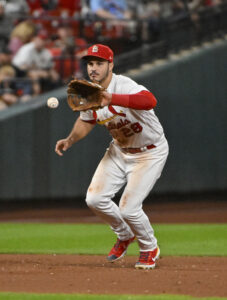 Arenado turns 32 in April, potentially limiting his odds of adding much in the way of years to his current pact. However, it’s easy to see how he could have surpassed his current $28.8MM average annual value. Notably, fellow third baseman Anthony Rendon managed to secure an AAV of $35MM in his seven year/$245MM contract he signed with the Angels prior to the 2020 season, while Freddie Freeman‘s six year, $162MM pact with the Dodgers last winter exceeds Arenado’s current deal in terms of both years and total value.
That said, Arenado’s $144MM is hardly a minor sum, and he has often spoke about his comfort level in St. Louis and his desire to remain a long-term piece of the Cardinals’ future. With this stability already in place, Arenado chose to pass on free agency, and he can now focus entirely on 2023 without the extra drama and uncertainty that follows even the names on the open market.
With Arenado’s decision now made, the Cards have checked another major task off their offseason to-do list, a few days after re-signing Adam Wainwright for the 2023 season. The Cardinals are expected to have significant room to make additions to their payroll this season, and not having to allocate additional resources to retaining Arenado should allow St. Louis to do more to address other areas of the roster. The starting rotation and outfield are possible target areas, as well as the obvious step of finding a catcher to replace retiring franchise stalwart Yadier Molina.
As The Athletic’s Nick Groke mentions, Arenado’s decision also keeps the Rockies committed to a significant financial obligation. As per the terms of the trade that sent Arenado from Colorado to St. Louis prior to the 2021 season, the Rockies owe the Cardinals $31.5MM to cover a portion of the third baseman’s salary — $16MM next season, and then $5MM each year from 2024 to 2026. The $16MM slated for Arenado is more than the Rockies are paying any player on their 2023 payroll, except for Kris Bryant.
Photo courtesy of USA Today Sports Images