
Rays Promote Erik Neander To President Of Baseball Operations, Sign Him To Multi-Year Extension
The Rays announced the signing of Erik Neander to a multi-year contract extension. Formerly the team’s senior vice president of baseball operations and general manager, Neander has been promoted to president of baseball operations. At the press conference announcing the news, Neander told reporters the club is not planning to make any additional major changes to the baseball operations structure in the wake of his promotion.

Neander, 38, has been in the Tampa Bay organization since 2007, when he came on as an intern. He worked his way to baseball operations VP in October 2014 when former GM Andrew Friedman departed to take over the Dodgers’ front office. He picked up the GM title and responsibilities two years thereafter. Both of those promotions came in junction with boosts for Chaim Bloom, with whom Neander shared high billing atop baseball ops. However, Bloom departed in October 2019 to become chief baseball officer of the Red Sox, leaving no question that Neander was the front office head in Tampa Bay over the past two seasons.
The Rays have generally been successful over the past decade-plus despite regularly featuring one of the league’s lowest player payrolls. The front office’s ability to consistently outperform expectations despite strict budgets has made Rays’ executives highly appealing to other ownership groups around the league. In addition to Friedman and Bloom, former Tampa Bay vice president James Click was hired to lead the Astros in February 2020.
Neander himself was reportedly of interest in the Angels’ GM search last offseason, but Tampa Bay ownership refused to make him available for discussions. That was ultimately a moot point, as reports at the time indicated that Neander had no interest in leaving Tampa. Today’s extension reaffirms that and will take his name off the list for potential suitors looking for a new baseball operations head this offseason.
Given Neander’s track record, it seems likely bigger-market clubs would’ve continued to gauge his availability had the Rays not inked him to a long-term deal. The Rays have posted four consecutive winning seasons, reaching the playoffs in 2019-20. They’re a near lock to win the AL East again this season, and only the Dodgers have a better record than Tampa Bay’s 128-71 mark (64.3% winning percentage) going back to the start of 2020.
The Rays’ ever-low payroll has often been a source of frustration for fans, with the Tampa Bay front office as aggressive as any around the league in trading away recognizable players to constantly replenish young talent. Neander has had an active role in deals sending notable players like Evan Longoria, Chris Archer, Blake Snell and Willy Adames elsewhere over the past few seasons.
That constant roster churn can make it difficult for the fanbase to connect to franchise players, but there’s little arguing with the front office’s ability to consistently put together a strong roster in the long run. The Archer trade — which netted the Rays Austin Meadows, Tyler Glasnow and Shane Baz — turned out to be one of the more lopsided deals in recent memory. Tampa Bay acquired Mike Zunino from the Mariners for a package centering on Mallex Smith and boldly struck to acquire Randy Arozarena from the Cardinals. That deal cost them top pitching prospect Matthew Liberatore, but Arozarena has excellent in Tampa Bay and was the biggest driver of their run to an AL pennant last year.
The Rays have also been adept at acquiring and developing prospects. Wander Franco is one of the most talented young players in the game, and the Rays have a few more top prospects (Vidal Bruján, Josh Lowe and Taylor Walls among them) at or near the big league level. And while the team hasn’t generally been active in free agency, Neander’s group struck gold on their signing of Charlie Morton to a two-year, $30MM guarantee over the 2018-19 offseason.
Like any executive, Neander has a few misses on his record as well. Adames has taken his game to another level since being moved to Milwaukee in May. The December 2019 trade that sent Tommy Pham and Jake Cronenworth to San Diego for Hunter Renfroe and Xavier Edwards looks regrettable (although Edwards is still a well-regarded prospect). But the Rays’ front office has a very impressive body of work overall, one that has attracted the attention of plenty rivals around the league. While the Rays have lost a few key executives in recent years, they’ll keep Neander atop baseball operations for the foreseeable future.
Marc Topkin of the Tampa Bay Times first reported that Neander had agreed to a multi-year extension. Rays’ pregame and postgame host Neil Solondz reported Neander was being promoted to president of baseball operations. Image credit: USA Today Sports.
Zach Eflin To Undergo Knee Surgery
Phillies starter Zach Eflin will require surgery to repair the patellar tendon in his right knee, the team announced this afternoon. The procedure is expected to keep Eflin out of game action for six-to-eight months, manager Joe Girardi told reporters (including Todd Zolecki of MLB.com). That leaves open the possibility he could be ready for Opening Day in 2022, but it’s far from certain that’ll be the case.
Eflin has been plagued by knee issues for a large chunk of his career. Late in 2016, the right-hander underwent surgery to repair the patellar tendons in both knees. Afterwards, Eflin told Zolecki the procedures corrected chronic issues that had plagued him for more than a decade. He avoided knee troubles for the next few years, but issues with the joint cropped back up this summer.
The Phils placed Eflin on the injured list on July 20 because of patellar tendinitis. He was activated from the IL five weeks later but was scratched from what would have been his first start because of continued discomfort, followed shortly thereafter by a positive COVID-19 test. While Eflin recovered from the virus rather quickly, his rehab was delayed by continued knee pain that’ll apparently require another surgery to correct.
Losing Eflin for the rest of the season (and potentially a portion of next year) is a substantial blow for a Phillies’ team that has struggled to find reliable back-of-the-rotation innings in recent years. Zack Wheeler and Aaron Nola make for a fearsome top two, and Philadelphia picked up Kyle Gibson at the trade deadline to bolster the middle of the rotation. But Vince Velasquez has been up-and-down for essentially his entire career, and offseason pickups Matt Moore and Chase Anderson haven’t panned out. (Anderson has already been released).
Those depth issues have forced the Phillies to bump Ranger Suárez into a starting role. Suárez had a fantastic season working in relief and has fared well so far in his attempt to carry that success over to the rotation. Through seven starts, the left-hander has a 1.71 ERA despite some struggles with walks, thanks largely to an elite 63.1% ground-ball rate. Suárez figures to continue getting turns for the remainder of the year, but Philadelphia will have to patch things together on the mound when they need a fifth starter.
Eflin, unlike many of the Phillies’ other starters, has been a measure of consistency in recent years. Excepting a spike in last year’s shortened campaign, the 27-year-old has generally posted league average strikeout numbers. But he’s one of the game’s best at limiting walks and he keeps the ball on the ground, allowing him to be reliably effective in spite of his hitter-friendly home ballpark. Eflin has posted an ERA between 3.97 and 4.36 in each of the past four seasons, including a 4.17 mark over 105 2/3 innings this year.
Last offseason, Eflin and the Phillies agreed on a $4.45MM salary for 2021 to avoid arbitration. He’ll likely be in line for a moderate raise on that figure this winter, as he enters his third and final year of arbitration eligibility. Assuming his recovery proceeds as anticipated, Eflin’s projected salary would still seem reasonable for his typically solid production. But he could be a non-tender candidate if he’s not progressing on schedule come November, as he’d reach free agency after next season anyhow.
Solidifying the back of the rotation was likely to be an offseason priority for the Phillies even before news of Eflin’s surgery. That’ll be all the more true now, although there’s little recourse but to rely on the internal options for the remainder of this season as they hope to mount a playoff push. The Phillies enter play tonight two and a half games back of the Braves in the NL East and two games behind the Reds and Padres for the National League’s final Wild Card spot.
Mariners Shut Down Kyle Lewis For Rest Of Season
The Mariners are shutting down center fielder Kyle Lewis for the remainder of the season, the club informed reporters (including Ryan Divish of the Seattle Times). Lewis recently suffered a bone bruise in his injured right knee.
It’s not a particularly surprising development, as the team revealed last week that his rehab had been halted because of soreness in his knee. Still, it’s surely a disappointing outcome for player and team alike. Lewis had been hoping to embark on a minor league rehab assignment and make it back this year. And with Seattle three games back of the Red Sox in the race for the American League’s final Wild Card spot, they could’ve used a late-season jolt from the reigning AL Rookie of the Year.
Given Lewis’ long history of trouble with the joint, the club’s caution is understandable though. The young outfielder tore his ACL not long after being drafted in 2016 and continued to be bothered by intermittent knee issues over the next couple seasons. He finally seemed to put them behind him by 2019, when he stayed healthy over a full season at Triple-A and earned his first big league promotion that September. He built off the promise he showed that year during the shortened 2020 campaign, when he hit .262/.364/.437 en route to the aforementioned Rookie of the Year selection.
Lewis’ knee troubles unfortunately cropped up again this year. He missed the first few weeks of the season with a bone bruise in the area. After returning to log a little more than a month’s worth of action, he suffered a meniscus tear in early June. Coupled with his recent setback, those injuries conspired to end his season after just 147 plate appearances.
Center field has been a problem area for the M’s since they lost Lewis. Top prospect Jarred Kelenic has gotten a lot of run there lately, but he’s struggled in his first taste of the majors. The 22-year-old is hitting just .158/.238/.281 over his first 281 MLB plate appearances. Even if Lewis had made it back, Seattle could’ve also bumped Kelenic to left field and displaced the struggling Jake Bauers/Dylan Moore pairing. Instead, they’re left to rely on those underperforming options as they hope to track down Boston or the Yankees over the season’s final four weeks.
Lewis will turn his attention to next Spring Training. The 26-year-old figures to again assume his role as the Mariners’ regular center fielder if healthy. Seattle still controls Lewis for four more seasons; he’ll be eligible for arbitration for the first time during the 2022-23 offseason.
Braves Extend Charlie Morton
The Braves announced Monday that they’ve signed right-hander Charlie Morton to a one-year contract worth $20MM. (The Braves are one of the few teams who formally disclose the terms of their player contracts themselves.) The Jet Sports client also has a $20MM club option for the 2023 season that does not have a buyout.
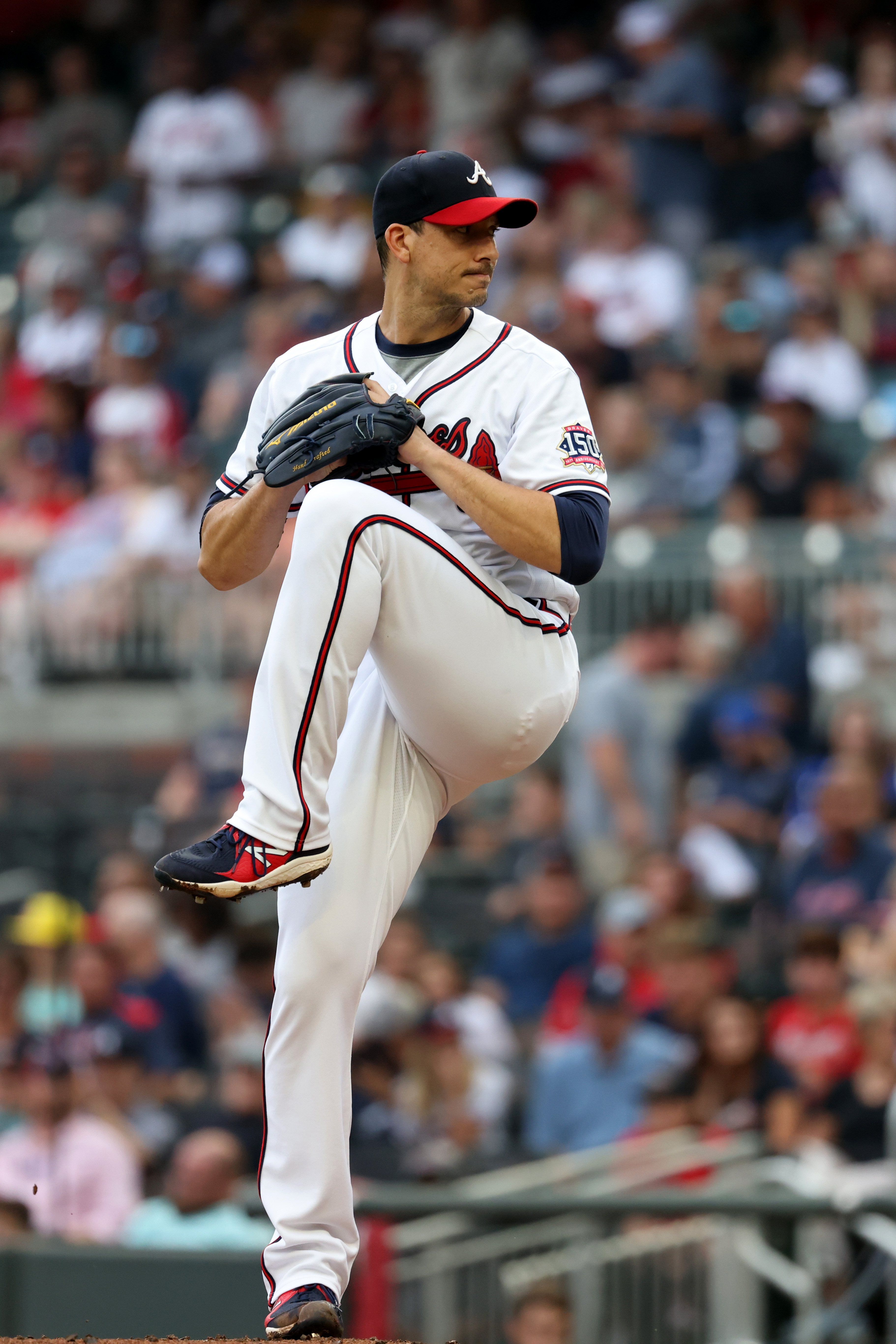
Morton had somewhat of a slow start in his return to the Braves organization, pitching to a 5.08 ERA through his first eight starts of the season. He’s been lights-out ever since, however, working to a combined 2.95 ERA with a terrific 29.9 percent strikeout rate and a strong 7.4 percent walk rate over his past 20 starts — a total of 119 innings pitched. Overall, Morton has a 3.47 ERA in 158 frames with the Braves thus far in 2021.
This is the second go-around in Atlanta for Morton, whom the Braves selected with their third-round pick nearly two decades ago in 2002. He made his big league debut as a Brave in 2008 but was traded to the Pirates in the June 2009 swap that brought outfielder Nate McLouth to Atlanta. Morton would settle in as a mid-rotation starter in Pittsburgh, but a velocity spike in a very brief four-game stint with the Phillies — he missed the rest of the year with a torn hamstring — set the stage for him to land in Houston. With the Astros, Morton maintained that velocity bump and leaned more heavily into his four-seamer and curveball, at the expense of his sinker.
Morton broke out as one of the game’s best starters with the Astros, parlaying a brilliant two-year stint there into a two-year, $30MM contract with the Rays. He’d finish third in American League Cy Young voting and play a major role in the Rays’ postseason bid that year before some arm trouble brought about a slow start in 2020. Morton righted the ship in the season’s final couple weeks, however, and looked to be back to his dominant ways for much of the Rays’ 2020 run to the World Series.
Morton was a coveted free agent this offseason but had a small selection of teams he was willing to consider. Playing with the Rays afforded him the opportunity to live in his Bradenton, Fla. home, and Morton was reportedly very intent on remaining in the southeast to be near his family. His one-year deal with the Braves underscored that preference, as does today’s decision to forgo the open market entirely in favor of another one-year pact in a setting where he’s obviously quite comfortable.
With this deal in place, the Braves have now extended a pair of veterans in advance of free agency. Catcher Travis d’Arnaud inked a two-year, $16MM contract a couple weeks back, giving the club some stability behind the dish (as well as a potential bridge to William Contreras and/or Shea Langeliers).
Having Morton and d’Arnaud locked up for 2022 gives the Braves a total of $77MM committed to six players next season, although the status of Marcell Ozuna and his $16MM salary remain to be determined. The Braves also have option buyouts to pay to Joc Pederson, Adam Duvall, Josh Tomlin and the already-released Ender Inciarte.
The Braves opened the 2021 season with a payroll of $131MM, so there’s plenty of room for them to further add to that $77MM in guarantees this coming winter. Presumably, some of those funds are earmarked for what the team and its fanbase hope will be a long-term extension for franchise cornerstone Freddie Freeman. That they’ve been able to secure new deals with d’Arnaud and Morton shows the Braves are more than comfortable having these discussions not only in-season but in the midst of a playoff race, so perhaps they’ll yet aim to strike up a new deal with Freeman before he ever formally reaches the market.
For now, the certainty with Morton means they’ll be able to count on the return of a veteran who has blossomed into one of the game’s most steadily productive arms late in his career. Morton can be penciled into the 2022 rotation alongside lefty Max Fried, right-hander Ian Anderson and, hopefully, oft-injured righty Mike Soroka. Still just 24 years old, Soroka broke out as one of the game’s most talented young starters in 2019 but has only pitched 13 2/3 innings since that time after tearing his Achilles tendon on two occasions. Soroka isn’t expected to be ready for the beginning of the 2022 campaign, however, so it stands to reason that the Braves could look for some additional rotation help this winter even with Morton now locked into a return.
Red Sox Sign Jose Iglesias
11:46am: The Red Sox have announced the signing of Iglesias to a Major League deal and added him to the active roster. Additionally, Boston has reinstated reliever Josh Taylor from the Covid-19 list, selected the contract of right-hander Michael Feliz and returned Covid replacement players Kutter Crawford, Jack Lopez and John Schreiber to Triple-A Worcester. None of the three had to be passed through waivers to be sent down and removed from the 40-man roster because they were specifically appointed as Covid-19 replacements.
11:30am: Shortstop Jose Iglesias, who was released by the Angels over the weekend, is at Fenway Park today, per the Boston Globe’s Peter Abraham (Twitter link). The Globe’s Alex Speier tweets that the Red Sox are expected to announce the signing of Iglesias shortly. He’s represented by the MVP Sports Group.
The Red Sox, in the midst of a Covid-19 outbreak in their clubhouse, have a whopping 11 players in Covid protocol at the moment. That group includes infielders Xander Bogaerts, Christian Arroyo, Enrique Hernandez and Yairo Munoz, leaving the Sox in dire need of some infield help. Jonathan Arauz and Jack Lopez have been lining up in the middle infield in recent days, but Iglesias figures to step into that mix and begin logging some regular reps while the team awaits the return of Bogaerts and others.
It was a rough season for Iglesias in Anaheim — his lone year with the Angels. The 31-year-old wasn’t able to replicate last year’s enormous production at the plate — or even to come particularly close. It was just 150 plate appearances, but Iglesias posted a career-best .373/.400/.556 batting line with the Orioles in 2021 before slipping back to a .259/.295/.375 slash that falls more in line with his overall career numbers.
More troubling than a return to the norm at the dish, however, has been the decline in Iglesias’ glovework. He’s made 16 errors in 961 innings this year after making just 18 errors in 2393 innings from 2018-20 combined. Iglesias had never made more than 11 errors in a season but already has 10 throwing errors alone, in addition to six fielding errors. Defensive Runs Saved pegs Iglesias at a stunning minus-21 this season, while his Ultimate Zone Rating is a career-low minus-4.9.
Defensive struggles notwithstanding, Iglesias now returns to his original organization as a veteran reinforcement at a critical juncture. The Sox are quite unlikely to run down the Rays, who lead them by eight games in the standings, but are hoping to maintain a three-game lead over the upstart Mariners for the second AL Wild Card spot. They’re also just a half-game behind the Yankees for the top AL Wild Card spot and would surely like to eek ahead of their archrivals in order to seize home-field advantage in a theoretical Wild Card showdown.
The Red Sox originally signed Iglesias back in Sept. 2009 after he left his native Cuba. He spent the next several seasons rising through their minor league ranks and making a handful of big league appearances before settling in as their shortstop in 2013. Boston, however, sent him to the Tigers that summer in a three-team trade that sent Jake Peavy from the White Sox to the Red Sox and Avisail Garcia from Detroit to Chicago. (The White Sox picked up both Frankie Montas and J.B. Wendelken from the Red Sox in the trade as well.)
It’s something of a full-circle moment for Iglesias, who won’t be eligible for the postseason roster due to the fact that he’s joining the organization after Aug. 31. He’ll still have the opportunity to help his original club reach the postseason again, though, and this late change of scenery can also provide him an offseason for the league’s other teams as he preps to head back to free agency this winter.
Dodgers Place AJ Pollock On 10-Day Injured List
4:06PM: The Dodgers officially placed Pollock on the 10-day injured list. Right-hander Mitch White was called up from Triple-A in the corresponding move.
TODAY, 1:15AM: Pollock has a Grade 2 strain, and will miss “two, three weeks at a bare minimum,” Dodgers manager Dave Roberts told The Orange County Register’s Bill Plunkett and other reporters.
SEPTEMBER 4: Dodgers outfielder AJ Pollock left tonight’s game with what the team described as a right hamstring strain. Pollock hurt himself while trying to steal third base in the top of the first inning, as he was limping off the field following the play.
The fact that Pollock’s injury has already been diagnosed as a strain would seem to imply that he’ll require a trip to the injured list. The next step will be learning the severity, as anything more than a minor strain could potentially cause Pollock to miss most or even all of the Dodgers’ remaining regular-season games (and into the postseason). Pollock missed just shy of three weeks with a strain to his left hamstring earlier in the season.
Perhaps a little overshadowed by the many big names on the Dodgers’ roster, Pollock has rather quietly been a key cog in the L.A. lineup. He entered tonight’s game hitting .295/.351/.504 with 16 homers over 385 plate appearances, with plenty of hard contact backing up his 131 OPS+/wRC+. Playing mostly left field, Pollock has also been a solid defensive force, with +3 Defensive Runs Saved and +1 Outs Above Average (though the UZR/150 metric has a -2.0 score on his glovework).
Should Pollock indeed be heading back to the IL, Los Angeles can turn to a combination of Zach McKinstry, Billy McKinney, or (down at Triple-A) Matt Beaty to handle left field duty, or utilityman Chris Taylor could simply assume the everyday role. Taylor has already been seeing more regular work in center field, however, as the struggling Cody Bellinger hasn’t been playing against left-handed pitching. In short, the Dodgers’ depth will be tested yet again, which isn’t optimal for a team fighting hard with the Giants for first place in the NL West.
Mets Place Brandon Nimmo On 10-Day Injured List
8:34PM: “In my heart of hearts, I really do think I’m going to be back this season,” Nimmo told MLB.com’s Anthony DiComo and other reporters. Nimmo also noted that his hamstring injury impacted his muscle, rather than a tendon.
5:28PM: Prior to the second game of their doubleheader with the Nationals, the Mets have placed outfielder Brandon Nimmo on the 10-day injured list due to a right hamstring strain. Travis Blankenhorn has been called up to take Nimmo’s roster spot. Nimmo made an early exit from the first game, leaving in the second inning after going 2-for-2 with a stolen base during his brief time on the field.
Nimmo is now hitting .302/.420/.415 with five home runs over 320 plate appearances this season, continuing his outstanding work out of the leadoff spot in New York’s lineup. Nimmo has basically done nothing but hit over his six MLB seasons, though staying healthy has been a consistent problem. This season alone, Nimmo missed close to two months due to a finger ligament issue.
Kevin Pillar and Albert Almora figure to get most of the center field duty while Nimmo is out. Michael Conforto is the everyday right fielder and Dominic Smith and Jeff McNeil have been increasingly platooning in left field (Smith is currently on the bereavement list). While the Mets do have personnel in place to weather Nimmo’s absence, losing one of their best hitters for even the minimum 10 days is obviously a major blow for an offensively-challenged team in the thick of a pennant race. The severity of the strain isn’t yet known, so it is possible that Nimmo’s 2021 campaign could be in jeopardy with only a month remaining of regular-season action.
Angels Release Jose Iglesias
The Angels announced they’ve released shortstop José Iglesias. The move clears active and 40-man roster space for right-hander Janson Junk, whose previously-reported promotion to the majors has now been made official.
It’s a somewhat surprising move, as Iglesias has served as Los Angeles’ regular shortstop for the majority of the season. Acquired from the Orioles over the winter, the 31-year-old has started 111 of the Angels 134 games to this point. But he’s proven unable to sustain last year’s small sample offensive output, as Iglesias is hitting .259/.295/.375 with eight home runs across 447 plate appearances (85 wRC+). That’s a bit below his career .276/.316/.380 mark and well off last year’s .373/.400/.556 pace.
As evidenced by his career production, Iglesias has never been a particularly fearsome hitter. He’s instead long been regarded as one of the game’s top defensive infielders, which has led to regular opportunities as an everyday shortstop with the Tigers, Reds, Orioles and Angels in recent seasons. As MLBTR’s Mark Polishuk recently examined, though, Iglesias’ defensive metrics have tumbled this season — a problem that has plagued much of the club.
Defensive Runs Saved has pegged Iglesias as 21 runs below average at shortstop this season, the league’s worst mark for a player at any position. Ultimate Zone Rating and Statcast’s Outs Above Average aren’t quite so bearish, but both systems also peg Iglesias as below average with the glove. Single-season defensive metrics can be variable, and Iglesias is being compared to his peers at shortstop — who tend to be among the game’s best overall infielders. So there remains some hope of him turning things around somewhat, but his unanimously poor ratings this year also likely suggest that his days as one of the sport’s most valuable defenders could be behind him.
Whether Iglesias can right the ship defensively will be determined elsewhere, as he’s apparently not in the future plans for the Angels. At 66-68, Los Angeles is almost certainly going to miss the playoffs this season. Iglesias was due to reach free agency this winter, and the Angels were evidently prepared to move on and look for other options at the position.
For the season’s final few weeks, it seems they’ll give a look to utilityman Jack Mayfield, who has flashed some power potential in recent weeks and has ample long-term team control. Mayfield is hitting just .216 with a .262 on-base percentage overall and is soon to turn 31 years old, though, so it’d be a surprise if Los Angeles is content to roll into 2022 with him pencilled in as the regular shortstop. More likely, they’ll turn to free agency or trade this winter with Mayfield reassuming a depth role moving forward.
Iglesias is playing out this season on a $3.5MM contract. Around $600K of that salary is still owed through the end of the year. Unless another club claims Iglesias off release waivers, the Angels will remain on the hook for the rest of that sum. If he passes through waivers unclaimed, Iglesias would be free to sign with any team for the prorated portion of the league minimum, which would be subtracted from the Angels’ tab. Because he is being cut loose after September 1, Iglesias wouldn’t be eligible for a new team’s postseason roster if he were to latch on somewhere for the stretch run.
Mets Place Zack Scott On Administrative Leave; Sandy Alderson To Assume GM Duties
The Mets announced Thursday that they’ve placed acting general manager Zack Scott on administrative leave “until further notice.” Team president Sandy Alderson is assuming Scott’s responsibilities indefinitely. Scott was arrested earlier this week on a DWI charge in White Plains, N.Y. He pleaded not guilty at an arraignment earlier this morning.
It’s been a tumultuous year for the Mets’ front office, to say the least. Alderson, the team’s former general manager who stepped away years ago in the wake of a cancer diagnosis, was brought back to the organization by new owner Steve Cohen and expected to serve a broader role as team president. Cohen parted ways with GM Brodie Van Wagenen, a former agent who’d been hired by the prior Wilpon family ownership group as Alderson’s successor.
Alderson and Cohen at one point were said to be looking to hire both a president of baseball operations and a general manager but were unable to secure interviews with some top targets and had their interest rebuffed by others. Reported names under consideration at the time included Indians GM Mike Chernoff, Athletics GM David Forst and Twins GM Thad Levine, among others. The Mets eventually settled on a trio of assistant general managers a finalists in their search, selecting D-backs AGM Jared Porter as their new general manager and hiring Scott, then an AGM in Boston, as an assistant GM as well.
Porter, however, was fired just weeks after being hired once it came to light that he’d repeatedly sent unsolicited, and at times graphic and sexually explicit text messages to a reporter in 2016. Allegations against former manager Mickey Callaway, who’d since been hired as the Angels’ pitching coach, soon followed. Callaway was with another club by that point, but much of the purported behavior took place during his tenure with the Mets. Both Porter and Callaway have been placed on Major League Baseball’s ineligible list through the 2022 season.
With Porter quickly ousted, Scott was elevated to the status of acting general manager. There’d been some thought that he could be in line for a permanent appointment to that post — perhaps still with a president of baseball operations being hired to oversee things — but the recent arrest and today’s announcement have now brought his future with the organization into question.
Following the revelations regarding Callaway and Porter, Alderson spoke of improving the Mets’ vetting and background checks during future hiring processes. With another key member of their leadership team now facing a legal issue, an even brighter spotlight will be focused on who the Mets hire this coming winter. It’s possible that Scott is retained in some capacity — notably, Cohen fired Porter the day after word of his purported transgressions broke — but it seems at the very least that there will be some changes to the team’s front office looming this winter.
MLB Proposal To Players Association Included Changes To Service Time Structure
SEPTEMBER 2: Jon Heyman of the MLB Network reports that the MLBPA “responded very negatively” to the league’s initial proposal. As mentioned, the full terms of the offer aren’t yet known.
SEPTEMBER 1: Major League Baseball proposed a radical altering of the league’s service time structure in collective bargaining discussions with the MLB Players Association last month, reports Joel Sherman of the New York Post. The league’s proposal included an offer to make players eligible for free agency at 29.5 years of age. It also involved a $1 billion pool (which would be tied to revenues in future seasons) that would be dispersed in an unspecified manner to replace the current arbitration system.
Both features were part of a broader package proposal the league made to the MLBPA in mid-August, which Evan Drellich and Ken Rosenthal of the Athletic reported also included the lowering of the first luxury tax threshold to $180MM and the institution of a $100MM salary floor. Much about that proposal still remains unclear, although the lowered tax thresholds alone seem likely to make it a non-starter for the Players Association, which is widely expected to push for higher tax thresholds in the upcoming CBA.
The current CBA is set to expire on December 1, leaving three months for the parties to continue to negotiate before the current deal lapses. (It’s not entirely clear what kind of impact such a scenario would have on the offseason were it to come to fruition, as teams were still permitted to make transactions the last time the CBA expired without a new agreement). It seems likely those talks will pick up in earnest the closer we move to the winter, but intervening reports offer a glimpse of how those more serious negotiations might take shape.
MLB’s offer to base free agency qualification on age is in response to players’ concerns about service time manipulation. Under the current system, players first qualify for free agency at the end of the season in which they accrue six full years of MLB service time. A full year of service is calculated as 172 days, meaning players first promoted to the big leagues in late April of their rookie seasons fall just short of that benchmark. Not coincidentally, various top prospects have been held in the minors until just after that cutoff point in recent seasons — ensuring their teams essentially gain a seventh year of control over the player.
Under an age-based system, there’d be no incentive for teams to keep prospects down past the time they’re deemed ready to play at the major league level. It’d also be a boon to late-blooming players, many of whom have to wait until they’re into their 30’s — and potentially past their physical peaks — to market their services around the league. Sherman cites Yankees star Aaron Judge — whose free agency timeline would’ve accelerated from next offseason to this winter if eligibility were set at 29.5 years — as an example of a player who would stand to benefit from such a change.
That said, setting the free agency qualifying age at 29.5 would have an adverse effect on many of the game’s top stars. It’s not uncommon for the sport’s brightest young talents to reach the big leagues in their early-20’s in spite of the existing service time structure. Those players will often reach free agency before turning 29, setting them up well to land lengthy mega-deals. For reference, three of the top four players on MLBTR’s most recent Free Agent Power Rankings — Carlos Correa, Corey Seager and Trevor Story — wouldn’t be eligible for free agency this offseason if it were only granted for players 29.5 and older.
So while an age-based system would benefit some players, it would likely depress the earning potential for some of the game’s top free agents — many of whom land market-resetting deals precisely because they’re young enough to shop around multiple seasons of prime-age performance. Young, extremely talented players who are most likely to land top-of-the-market contracts are also the ones most likely to be impacted by service time manipulation in the first place.
That makes it all the more challenging to find an age the league would find agreeable that meaningfully changes those players’ free agency outlooks. For instance, Kris Bryant — whose delayed 2015 promotion pushed back his free agency until this winter and led the MLBPA to file a highly-publicized service time grievance on his behalf — wouldn’t have reached free agency until this offseason regardless if the qualification age were set at 29.5 years. That’s not to say MLB’s proposed age threshold couldn’t be modified in future negotiations, but it also demonstrates that basing free agency eligibility on age isn’t inherently a universal benefit to players.
As with free agency, arbitration eligibility is presently determined by service time. Under the current system, players qualify for arbitration upon reaching three years of MLB service. Players in the top 22% of service among those with between two and three years will also reach arbitration as Super Two qualifiers. If the team and player can’t agree on a salary, it is decided by a panel of arbitrators, who use comparable player salaries often based upon traditional statistics.
That can lead to a bit of a disconnect between arbitration values and teams’ valuations of players, which are often based on more advanced analytical data. Arbitrators’ heavy reliance on traditional metrics can fuel non-tenders for players whose box score statistics (e.g. home runs, RBI, pitcher wins) are more impressive than a team’s ‘wins above replacement’ type of formula or Statcast data.
On the surface, it does seem revamping or replacing arbitration could be a positive endeavor for players. Sherman estimates that arbitration-eligible players made approximately $650MM this past offseason, so the $1 billion pool would be a rather significant increase. But Sherman also notes that a revenue-based pool system might be viewed by the MLBPA as too closely resembling a salary cap — which the union has always rejected. It’s also not clear how that money would be distributed or how arbitration eligibility would be determined if the sides were to abandon service time considerations.
Sherman also offers one additional piece of information on the league’s proposal. While MLB’s offer included a lower first luxury tax threshold, the league was willing to remove escalating penalties for repeat tax payors. The current CBA requires teams to pay a 20% tax on the first twenty million dollars above the lowest luxury threshold. That tax increases to 30% for teams that exceed the threshold in two consecutive years and escalates to 50% for teams exceeding the threshold in three or more years straight.
The escalating penalties have led some high-spending teams to pull off a tax reset. A team that exceeds the threshold in Year One has extra incentive to dip below for a year and reset their penalty bracket before going back above the mark the following season. That seemed to be of particular import this season for the Yankees and Astros, both of whom exceeded the threshold in 2020 but appear to have narrowly dipped below the mark this season.
It bears repeating that MLB and the MLBPA remain in the very early stages of bargaining. Drellich and Rosenthal previously reported that the MLBPA made its first offer in May, and last month’s proposal was the league’s first. The full terms of both sides’ initial offers remain unclear. There should be plenty more about the sides’ back-and-forth that emerges over the coming weeks and months.