
Luke Voit To Start Season On Injured List; Yankees Select Jay Bruce
11:53 am: The Yankees have officially selected Bruce to the 40-man roster. Right-hander Clarke Schmidt was placed on the 60-day injured list (elbow) in a corresponding move. Additionally, non-roster invitees Robinson Chirinos and Derek Dietrich have been released from their minor-league contracts. Both are now free agents.
11:14 am: The Yankees are planning on selecting the contract of outfielder/first baseman Jay Bruce, Jack Curry of the YES Network reports (Twitter link). The veteran slugger had been in camp as a non-roster invitee. New York is also expected to hold onto Mike Tauchman, per Jon Heyman of MLB Network (via Twitter). At the very least, the Yankees don’t plan on exposing the out-of-options Tauchman to waivers, says Andy Martino of SNY (Twitter link), although a trade could still be a possibility.
Expected starting first baseman Luke Voit will begin the year on the injured list, Marly Rivera of ESPN was first to report. Yankees manager Aaron Boone confirmed Voit has suffered a meniscus tear in his knee and will undergo surgery. He’ll be shut down from baseball activities for the next three weeks (via Erik Boland of Newsday). New York expects Voit back “considerably sooner than” June, Boone said (via Bryan Hoch of MLB.com), but it seems possible the reigning home run champ could be out of action into May. In the interim, Bruce will be New York’s primary first baseman, relays Hoch.
The Yankees will have to officially add Bruce to the 40-man roster before Opening Day. The 33-year-old has hit for plenty of power but struggled to reach base in recent years, combining for a .212/.259/.510 line with 32 home runs across 436 plate appearances since the start of 2019. That kind of production would be a steep drop-off from Voit, who raked at a .277/.338/.610 clip last year.
Bruce will at least offer a left-handed bat to help balance a righty-heavy lineup. Tauchman also offers a lefty bat off the bench, and he’s capable of playing anywhere in the outfield. He’ll be limited to reserve duty behind Aaron Judge, Aaron Hicks, Clint Frazier and Brett Gardner, assuming he isn’t traded. The 30-year-old has drawn rather strong interest around the league.
Scott Oberg Undergoes Surgery To Remove Blood Clots; Career In Jeopardy
Rockies right-handed reliever Scott Oberg underwent surgery Thursday to treat blood clots in his pitching elbow, Thomas Harding of MLB.com reports. The procedure could end Oberg’s career, according to Harding.
This is now the third surgery Oberg has undergone in an effort to cure this problem. The troubles began in 2018, and they led to a premature ending to his season in 2019. Oberg then missed the entire 2020 campaign and had thoracic outlet syndrome surgery, though there had been optimism that he would return this year before suffering another setback.
A 15th-round pick of the Rockies in 2012, Oberg made his debut with the Rox in 2015 and went on to appear with the club in five straight seasons. Despite the injuries, Oberg put together an excellent stretch from 2018-19, in which he totaled 114 2/3 innings of 2.35 ERA ball. The Rockies signed Oberg to a three-year, $13.5MM extension after 2019, but it obviously hasn’t worked out as hoped.
Astros Sign Lance McCullers Jr. To Five-Year Extension
MARCH 26: The extension is official, the Astros announced.
MARCH 24: Lance McCullers Jr. won’t be heading to free agency next winter after all. One month after making clear he hoped to forgo the open market and stick with the Astros, the right-hander has reportedly agreed to a five-year contract extension that will begin in 2022 and run through the 2026 season. McCullers, a client of the Boras Corporation, will reportedly be guaranteed $85MM and receive a limited no-trade clause.
Because the deal doesn’t kick in until the 2022 campaign, it does not impact the Astros’ luxury tax ledger for the current season. That’s a critical point for the ‘Stros, who have worked diligently to remain south of the $210MM threshold. The contract reportedly comes with a $3.5MM signing bonus, salaries of $15.25MM in 2022-23 and a $17MM annual salary from 2024-26.
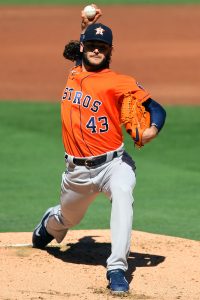
McCullers, who’s about to embark on his age-27 campaign, has been a career-long Astro to this point. The team used the 41st overall pick on him in 2012, and he has since produced quality results in the majors. Dating back to his big league debut in 2015, McCullers has pitched to a 3.70 ERA/3.61 SIERA with an above-average strikeout rate (26.4) and a tremendous 55.2 percent groundball rate across 508 2/3 innings. With the exception of 2016, when his walk rate spiked to 12.8 percent, he’s generally kept that mark better than the league average as well.
Durability has been a problem for McCullers, though, as he has never even reached the 130-inning mark in a season. He topped out at 128 1/3 frames in 2018, the year after he helped pitch the Astros to a World Series championship, before undergoing Tommy John surgery.
McCullers missed all of 2019 as a result of the procedure, but he did make a strong return last year with 11 starts and 55 innings of 3.93 ERA/3.95 SIERA pitching, solid strikeout and walk percentages (24.7 and 8.8, respectively) and a 59.7 percent grounder rate. Still, this is an unprecedented guarantee for a starting pitcher who’s never made more than 22 starts in a big league season.
While it’s risky for the Astros to make this type of commitment to a hurler who has had trouble staying healthy, they know McCullers is at least a mid-rotation-caliber starter when he does take the mound. And this move will lead to less uncertainty in Houston’s starting staff a year from now, as veterans Zack Greinke and Justin Verlander could depart in free agency next offseason. Even if those two exit, the Astros figure to return McCullers, Jake Odorizzi, Framber Valdez, Cristian Javier and Jose Urquidy in 2022.
Of course, next winter’s free-agent class looks a bit less interesting with McCullers off the market. But Greinke, Verlander, Trevor Bauer (if he opts out of his Dodgers deal), Max Scherzer, Clayton Kershaw, Noah Syndergaard, Marcus Stroman and Kevin Gausman are among many established starters who could be searching for new deals then.
It’s an obviously strong class, and the Astros can afford to be major players in the market if they choose, given that even after this new McCullers deal they’re at $91.7MM in guaranteed money on the books. For a club that’s topped $160MM in payroll in each of the past four seasons now (prior to prorating in 2020), there will be ample room to spend on the open market.
Mark Berman of FOX 26 first reported that an agreement was in place. ESPN’s Jeff Passan reported the terms, while MLB Network’s Jon Heyman and USA Today’s Bob Nightengale added contractual details (Twitter links).
Photo courtesy of USA Today Sports Images.
Twins Bench Coach Mike Bell Passes Away
In shocking and sad news, the Twins announced that bench coach Mike Bell has passed away at the age of 46. He had been suffering from kidney cancer.
Bell was one of many members in his family who enjoyed a long career in baseball. The grandson of former major league outfielder Gus Bell, the son of ex-third baseman and manager Buddy Bell, and the brother of former infielder and current Reds skipper David Bell, Mike Bell was the 30th overall pick of the Rangers in 1993. The ex-third baseman appeared in the majors in one season – 2000 – as a member of the Reds, his hometown team and one near and dear to his family’s heart.
After wrapping up his run as a professional player in 2005, Bell moved on to the minor and major league coaching ranks in 2007. He was also the director of player development with the Diamondbacks before becoming a prominent part of Twins manager Rocco Baldelli’s staff prior to last season. He garnered interest as a managerial candidate from the likes of the Mets, Orioles, Red Sox and Pirates over the past couple offseasons.
MLBTR sends our condolences to Bell’s family, the Twins organization and everyone affected by this tragic and sudden loss.
Nick Anderson Suffers Partial Tear Of Elbow Ligament
MARCH 26: The Rays have placed Anderson on the 60-day injured list and added righty Andrew Kittredge to their 40-man roster, per a team announcement. Kittredge had an opt-out for the end of camp in the minor league deal he signed with the Rays, but he’ll stay put. He contributed 111 1/3 innings of 4.93 ERA/3.90 SIERA pitching with the Rays from 2017-20.
MARCH 25: The Rays’ bullpen received terrible news Thursday: Right-hander Nick Anderson suffered a partial tear of his elbow ligament and will likely be out until past the All-Star break, Marc Topkin of the Tampa Bay Times reports. Surgery has not been recommended at this point.
Considering how much the reigning American League champion Rays lean on their bullpen, the loss of Anderson for at least a few months is an especially troubling development. Anderson has been absolutely lights-out dating back to his 2019 debut with Miami, which traded him to Tampa Bay before that season’s deadline.
Now 30 years old, the hard-throwing Anderson was a 32nd-round pick of the Brewers in 2012 who spent time in independent ball before he broke out in the bigs. Anderson owns a stellar 2.77 ERA/2.14 SIERA with a 42.2 percent strikeout rate and a 6.5 percent walk rate across 81 1/3 innings. While Anderson did miss time last year with forearm issues, he dominated over 16 1/3 frames with a measly 0.55 ERA and similarly jaw-dropping strikeout and walk percentages of 44.8 and 5.2, respectively. He wasn’t nearly as successful in the playoffs, in which he surrendered nine earned runs on 16 hits and totaled nine strikeouts against four walks in 14 2/3 innings.
Anderson led the Rays with six saves during the regular season in 2020, but they’ll have to lean on other end-of-game options until at least sometime in the summer. Diego Castillo, Pete Fairbanks, Chaz Roe and Ryan Thompson are among possible solutions for the Rays, whose bullpen – thanks in no small part to Anderson – ranked third in the majors in ERA a year ago.
Kirby Yates Undergoes Tommy John Surgery
MARCH 25: Yates underwent successful Tommy John surgery, Kaitlyn McGrath of The Athletic tweets. He’ll miss the entire season.
MARCH 23, 10:15pm: Yates’ elbow was also an issue during the offseason, as the Braves backed out of a one-year, $9MM guarantee, Ken Rosenthal of The Athletic reports. The Blue Jays also reduced his $8.5MM deal, per Rosenthal. Toronto knew at the time that Atlanta pulled its offer off the table.
3:38pm: The Blue Jays received some unwelcome injury news Tuesday, Kaitlyn McGrath of The Athletic was among those to report. Right-handed reliever Kirby Yates will likely undergo Tommy John surgery and miss the entire season, outfielder George Springer has a Grade 2 oblique strain, and lefty Robbie Ray suffered a bruised elbow.
An elite end-of-game option with the Padres from 2018-19, Yates threw 4 1/3 innings last season as he dealt with elbow issues. That didn’t stop the Blue Jays from taking a one-year, $5.5MM chance on him in free agency this past offseason, but the would-be closer was diagnosed with a flexor strain Monday. It now looks as if Yates may never pitch for the club, which could lean on the likes of Jordan Romano, David Phelps, Rafael Dolis and Tyler Chatwood for saves in his absence.
The news on Springer and Ray also comes off as alarming, though neither injury appears especially serious. Toronto is hopeful that Springer, a former Astros standout who signed a whopping six-year, $150MM guarantee in the offseason, will be ready for Opening Day. Likewise, the Jays could have Ray ready for the start of the season. The team re-signed him to a one-year, $8MM pact in free agency.
Gio Gonzalez Announces Retirement
Veteran left-hander Gio Gonzalez took to Instagram this afternoon to announce his retirement from baseball after a 13-year Major League career. The 35-year-old Hialeah, Fla. native was in camp with the Marlins on a minor league deal and called simply donning the jersey of his hometown club one of his “biggest dreams.” However, Gonzalez also added that his “body wasn’t keeping up with [his] mind.” The lefty offered a heartfelt thanks to the Athletics, Nationals, Brewers, White Sox, Yankees and Marlins organizations.
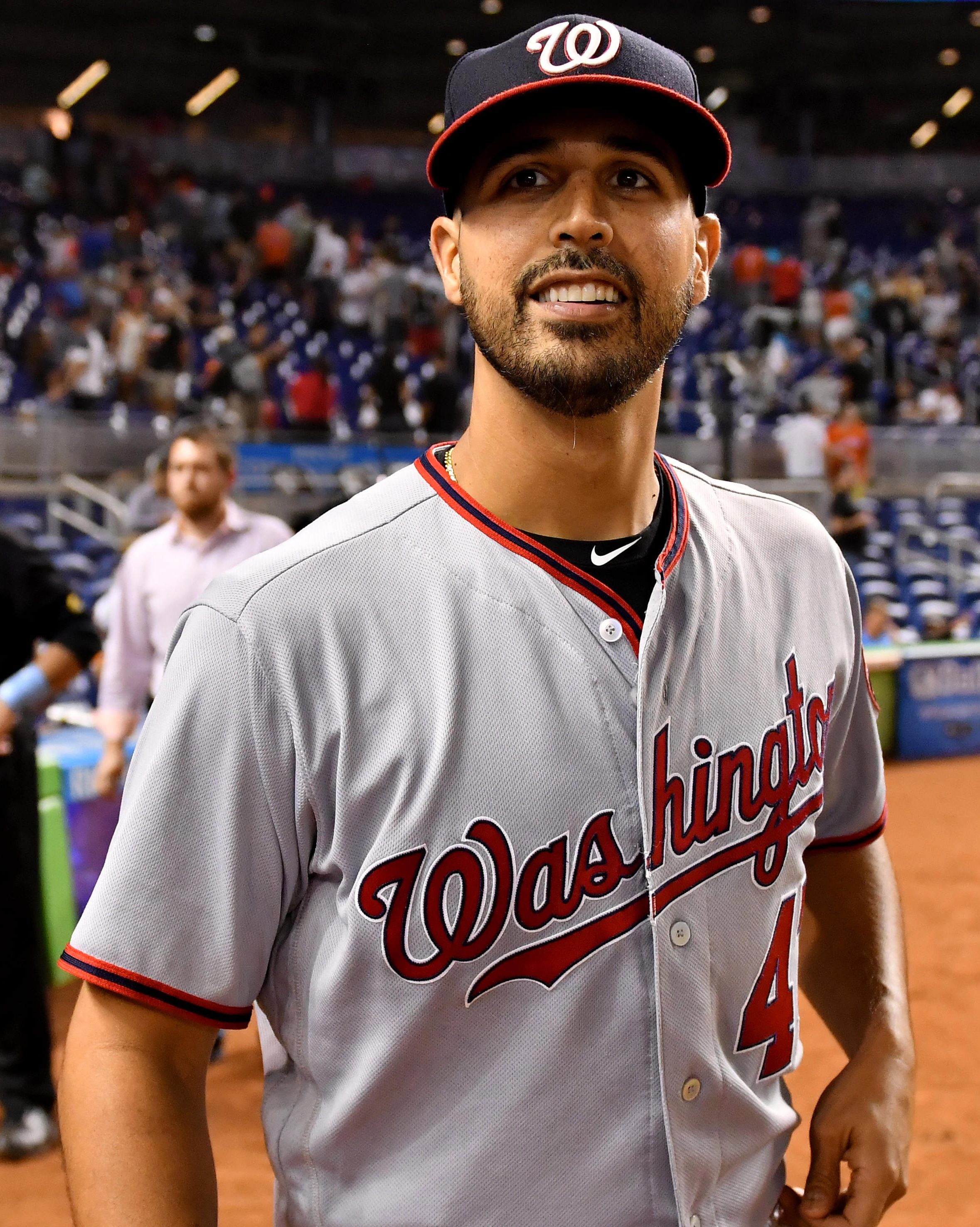
“My heart and mind are finally at peace with my decision,” Gonzalez wrote at the conclusion of his post. “Here’s one last tip of the cap! I’m coming home to my wonderful family. I love u!”
Gonzalez was the No. 38 overall draft pick by the White Sox back in 2004 and had, to say the least, an unconventional career arc with the team. Chicago traded him to the Phillies in Dec. 2005 as part of the Jim Thome blockbuster, only to reacquire him a year later alongside Gavin Floyd in the trade that sent Freddy Garcia to Philadelphia. Gonzalez was close to big league ready at that point and looked as though he could make his debut with the team that originally drafted him … until the White Sox again traded him away — this time to the Athletics as part of the return for Nick Swisher.
Between his draft status, his inclusion in trades for three high-profile big leaguers and his annual placement on Baseball America’s Top 100 prospect list from 2006-09, it was clear that Gonzalez was highly regarded within the industry. It took him a bit to deliver on that talent, but he did so in a big way with a breakout showing in 2010, when he tossed 200 2/3 innings of 3.23 ERA ball and solidified himself as part of the Athletics’ rotation.
That marked the first of six consecutive seasons in which the durable Gonzalez would make at least 27 starts and pitch to a sub-4.00 ERA. Oakland, as is often the case, traded him when he was on the cusp of arbitration eligibility, shipping him to the Nationals in return for a prospect package of four future big leaguers: A.J. Cole, Tommy Milone, Derek Norris and Brad Peacock.
Gonzalez was nothing short of excellent in Washington, finishing third in National League Cy Young voting in his first season as a Nat. He inked a five-year, $42MM contract extension with the Nats in Jan. 2012 and would go on to spend the next seven seasons in D.C. under the terms of that deal (which contained a pair of club options). Gonzalez’s first season with the Nationals was his best, but he finished sixth in NL Cy Young voting in 2017 — his final full year with the club. In parts of seven years there overall, Gonzalez racked up 1263 1/3 innings of 3.62 ERA ball and helped the Nats to four postseason berths.
With the Nats out of playoff contention in 2018, they traded Gonzalez to the Brewers for a pair of prospects. Gonzalez was brilliant in five starts down the stretch with Milwaukee, helping pitch the Brewers into the postseason. He re-signed with the Brewers in April 2019 after being granted his release from a minor league deal with the Yankees organization and again pitched quite well, tossing 87 1/3 frames of 3.50 ERA ball.
In the 2019-20 offseason, Gonzalez had a full-circle moment when he signed a one-year contract to return to the White Sox. He finally took the mound with his original organization on July 26 last summer. Gonzalez was tagged for six runs in his first appearance, but he bounced back with 28 innings of 3.54 ERA ball for the South Siders the rest of the way.
Gonzalez will walk away from baseball as a two-time All-Star who twice finished sixth or better in his league’s Cy Young voting. Long one of the game’s more underrated starters, his career body of work stands as a testament to his consistency: in 1933 innings, Gonzalez went 131-101 a 3.70 ERA and 1860 strikeouts. He earned more than $73MM in a career valued by Baseball-Reference at 30.1 wins above replacement and valued by FanGraphs at 32.1 WAR. Gonzalez never won a ring but appeared in the postseason five different times, made a pair of All-Star Games and was always good for an entertaining interview. It was a strong career by any measure, and Gonzalez will head into retirement having left his mark on several fanbases and countless teammates and coaches around the sport.
Orioles Select Matt Harvey
The Orioles have selected the contract of veteran right-hander Matt Harvey, per a club announcement. The move fills Baltimore’s 40-man roster and assures Harvey of a spot on the Opening Day club. Harvey had an opt-out clause in his contract yesterday, which gave the O’s 48 hours to add him to the roster or cut him loose, Dan Connolly of The Athletic tweets.
Harvey inked a minor league deal with the O’s back in mid-February and reported to camp as non-roster invitee this spring. He’s started three Grapefruit League contests, during which he’s yielded six runs on 10 hits and a walk with six punchouts through 10 innings of work. He and fellow veterans Felix Hernandez and Wade LeBlanc have been vying for spots on an extremely inexperienced pitching staff. Lefty John Means is the only other true lock for the rotation, though young righty Dean Kremer and southpaw Keegan Akin both seem likely to leave Spring Training with starting jobs.
Harvey, 32 this weekend, is years removed from his status as one of the game’s most promising young aces and from the “Dark Knight” moniker that took baseball by storm. The No. 7 overall pick in the 2010 draft, Harvey was in the big leagues by 2012 and flat-out dominated opposing hitters early in his career. Through his first 427 big league frames, the righty notched an outstanding 2.53 ERA while striking out 26.6 percent of the batters he faced against an excellent 5.6 percent walk rate.
Injuries, however, have wreaked havoc on what looked to be a brilliant career in the making. Harvey missed the 2014 season due to Tommy John surgery, and while he was terrific during his 2015 return, he dealt with shoulder discomfort in 2016 before ultimately undergoing the much more ominous thoracic outlet surgery. The general track record of pitchers coming back from a thoracic outlet procedure isn’t great in the first place, and Harvey is one of few pitchers who underwent both Tommy John surgery and thoracic outlet surgery in a span of under three years.
Unsurprisingly, Harvey simply hasn’t been the same since. He regained some velocity following a trade to the Reds in 2018 and parlayed a decent showing with Cincinnati into a one-year, $11MM free-agent deal with the Angels. However, that contract proved regrettable for the Angels, who released Harvey that July. A 2020 comeback attempt with the Royals was similarly unproductive.
Overall, since returning from throacic outlet surgery, Harvey has tallied 319 innings in the Majors and limped to a 6.09 earned run average. He’s yielded 365 hits, including 67 home runs, in those 319 frames while watching both his strikeout and walk rates trend in the wrong direction. His fastball, which averaged 95.9 mph at his peak, sat at 93.2 mph with the Angels in 2019 and 94.1 mph with Kansas City last year (when he was working in shorter stints).
The Orioles will hope to catch lightning in a bottle and see Harvey bounce back to an extent, although at this point the expectations for a rebound should be rather low. Harvey’s deal guarantees him just a $1MM base salary, so it’s a low-cost roll of the dice for a tanking Orioles club.
MLB Cracking Down On Pitchers’ Use Of Foreign Substances On Baseballs
Major League Baseball has issued a memo informing all 30 clubs that it will seek to crack down on pitchers doctoring the baseball through the use of foreign substances, as first reported by Joel Sherman of the New York Post. One of the league’s tactics, per Sherman, will be to use Statcast data to gauge spin-rate increases for pitchers suspected of doctoring the ball.
ESPN’s Jeff Passan (Twitter thread) and ESPN’s Jesse Rogers provide further detail, reporting that the league will have compliance officers monitor dugouts, clubhouses, tunnels, bullpens and batting cages in an effort to reduce the use of foreign substances. Those officers will also pull random samples of baseballs to be analyzed in a third-party lab. Balls suspected of being doctored by a pitcher will be tested against that pitcher’s spin-rate data from Statcast.
MLB’s memo indicates that pitchers are subject to discipline from the Commissioner’s Office whether evidence is discovered during the course of a game or after the completion of a game. It’s unclear at this time just what type of penalties will be levied against pitchers who are found to be utilizing foreign substances. It’s also not clear if there will be any warnings issued or if the league will jump straight into discipline for first-time offenders. The league’s memo also indicates that team personnel can be the subject of discipline if they are determined to be helping pitchers doctor the ball.
Rampant use of foreign substances, be it pine tar or otherwise, isn’t exactly a well-kept secret throughout the league. There are rare occasions of managers calling out an opposing pitcher when the presence of a substance is particularly egregious, but as Sherman notes, many are reluctant to do so, knowing the accusation could quickly be turned back on one of their own pitchers.
The league’s attempt to crack down on the use of foreign substances aligns with other efforts to increase the amount of action in the game and move away from an increasingly three-true-outcome-oriented (i.e. home runs, walks, strikeouts) style of play. Reducing the use of foreign substances could cut back on strikeouts and perhaps on walks — at least in theory.
At the same time, it’s not at all clear how the league plans to differentiate 2021 spin-rate data from “normal” spin-rate data. The very presence of these new policies indicates that the league considers use of foreign substance to be a widespread problem, after all.
However, the widespread nature of the issue likely also means that prior offenders are already benefiting from inflated spin rates on their pitches. If a pitcher who used pine tar, sunscreen or any other number of substances continues to do so in 2021, a notable change in his spin rate would be unlikely. That could still result in discipline if a ball taken out of play after being thrown by a pitcher is found to have significant traces of a foreign substance, but the spin-rate analysis may not be as telling as MLB hopes. At the very least, that practice could prevent new pitchers from adopting the use of foreign substances, but depending on how prevalent one believes the issue to be, that could represent a rather small number of players.
Depending on the extent and frequency of disciplinary measures enacted by MLB, it’d be a surprise if we didn’t see some appeals from pitchers around the league. It’ll surely be a talking point in the final week of Spring Training and early in the season, but only time will tell whether the new measures have any actual efficacy.
Royals Sign Salvador Perez To Four-Year Extension
The Royals announced a contract extension with longtime catcher Salvador Pérez that could keep the backstop in Kansas City through the 2026 season. The contract’s four guaranteed years will pay Pérez $18MM in 2022, $20MM apiece in 2023 and 2024, and $22MM in 2025. There is also a club option for the 2026 season that is valued at $13.5MM with a $2MM buyout. In total, the deal guarantees Pérez at least $82MM with the potential to max out at $93.5MM over five years if the option is exercised. Pérez is a client of Beverly Hills Sports Council.
The 30-year-old (31 in May) is a face of the franchise, having spent his entire professional career in the Royals’ organization. A workhorse behind the plate and an instrumental piece of Kansas City’s back-to-back pennant winners and 2015 World Series team, Pérez was set for free agency after the season, but now looks to have a shot at spending his entire career in Royals blue. He is also set to surpass ten years of service this season, locking in full no-trade protection as a player with ten years in MLB and the last five with one team (not that a trade ever looked likely).
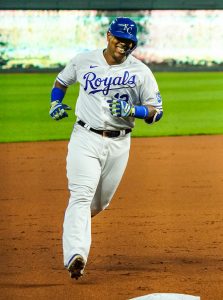
Were he to play his entire career in Kansas City, Pérez would follow Alex Gordon as career-long Royals. Gordon’s four-year, $72MM deal from January 2016 previously stood as the largest investment in franchise history, Pérez’s extension now takes the title.
The backstop’s standing with the organization no doubt played a role in this extension, but Pérez isn’t being paid off mere nostalgia. He’s coming off the best offensive season of his career on a rate basis, having slashed .333/.353/.633 with eleven home runs over 156 plate appearances last year. Pérez won’t sustain a .345 batting average on balls in play or a .300 isolated power (slugging minus batting average), but he needn’t hit at that level to remain productive. Despite taking on a heavy workload behind the plate, Pérez hit .251/.285/.466 between 2017-18. He has some rather notable on-base deficiencies as a result of minuscule walk rates, but Pérez offers plenty of pop and has outhit most at the position.
Tommy John surgery sidelined Pérez for the entire 2019 season, but he didn’t show any ill effects last year. An eye condition led to a three-week IL stint but was never expected to be a long-term concern. Indeed, Pérez’s quality production at the plate offers reason for Royals’ brass to believe he has put those issues behind him.
Defensively, Pérez has long rated as a below-average pitch framer (although he was around average in last year’s small sample). He has helped offset some of his receiving issues with a plus arm, though, and the Kansas City brass obviously believes strongly in his leadership and softer skills behind the plate, having now reached agreements on three separate extensions with the backstop over the course of his career.
With this deal set to begin in 2022, the Royals’ payroll outlook for this season is unchanged. Pérez will make $14.2MM in 2021 under the terms of his previous extension. Kansas City’s long-term books are fairly clear. Before the Pérez extension, the Royals had just $29.75MM in guaranteed commitments next season (including buyouts of 2023 options). Two years from now, only the recently-extended Hunter Dozier joins him on the books.
Pérez had been the top catcher option scheduled to hit free agency next winter. Excluding players with club options that seem likely to be exercised, Travis d’Arnuad and Yadier Molina are now set to headline the class behind the dish.
Lynn Worthy of the Kansas City Star was first to report the $20.5MM average annual value (Twitter link). Alec Lewis of the Athletic first reported the existence of the club option and the deal’s specific terms (via Twitter).
Photo courtesy of USA Today Sports Images