
Athletics Non-Tender Mike Fiers, Kendall Graveman, Cory Gearrin
The Athletics have non-tendered a trio of right-handed pitchers, as MLB.com’s Jane Lee tweets. Starters Mike Fiers and Kendall Graveman will be sent to free agency along with reliever Cory Gearrin.
It had been widely expected that Fiers would return to Oakland. After all, the A’s certainly need arms and he was quite successful in 2018 on both sides of the trade that sent him out west from the Tigers. He ended the season with a 3.56 ERA in 172 innings.
Still, Fiers projected to earn a hefty $9.7MM salary. And the results came in spite of some rough underlying stats. Fiers checked in with 7.3 K/9 and 1.9 BB/9, but coughed up 32 home runs — the same tally he allowed in the prior campaign. All of the major ERA estimators value him as a 4+ performer over each of the past four campaigns.
Graveman, meanwhile, is still recovering from Tommy John surgery and will likely miss most or all of the 2019 campaign. But he’s an interesting pitcher who should draw plenty of looks on the market. Gearrin, too, seems like a prime target as a steady veteran reliever. The A’s simply preferred not to pay their salaries, which were projected at $2.5MM and $2.4MM, respectively.
D-Backs Non-Tender Boxberger, Miller, Owings
The Diamondbacks have non-tendered a trio of notable players, per a club announcement. Reliever Brad Boxberger, starter Shelby Miller, and infielder/outfielder Chris Owings will all be sent onto the open market.
This slate of departures will save some significant cash for an Arizona club that is in a bit of a transition. Boxberger and Miller each projected to earn a hefty $4.9MM, while Owings would have been due something in the vicinity of $3.6MM.
All three are among the most interesting players set loose tonight. The 30-year-old Boxberger has late-inning experience and has little trouble racking up strikeouts, though he also struggled with walks and dingers in 2018. Miller’s highs and lows are well-documented, but he’s still just 28 years of age. As for Owings, the 27-year-old has not quite fulfilled his initial promise but has mostly been a usefully versatile player. Unfortunately, his bat fell off a cliff last year, so he’ll be looking for a chance at redemption.
Brewers Non-Tender Jonathan Schoop, Xavier Cedeno, Dan Jennings
The Brewers announced this evening that they have non-tendered three players. Infielder Jonathan Schoop is the most notable name who’ll be sent onto the open market; he’ll be joined by veteran lefties Xavier Cedeno and Dan Jennings.
[RELATED: Projecting Payrolls: Milwaukee Brewers]
Schoop was picked up last summer with intentions of installing him as a key figure in the infield for the 2019 season as well. As GM David Stearns acknowledged today, though, that deal simply did not work out.
Ultimately, the Brewers felt they could put the projected $10.1MM Schoop would have earned through arbitration to better use through other investments. There are indeed loads of possibilities on the second base market. Schoop, meanwhile, will join a crowded group — but will stand out from may owing to his power ceiling and young age.
Otherwise, Stearns and co. were obviously uninterested in continuing to commit roster space to a pair of lefty specialists who did not project for much of a payroll hit ($1.6MM for Jennings; $1.5MM for Cedeno). It seems likely the Brewers will end up looking at other southpaws on the market this winter, as ace reliever Josh Hader is the lone lefty remaining in the pen.
Indians Discussing New Contract With Carlos Carrasco
As rumors fly regarding the possibility of the Indians dealing one of their outstanding starting pitchers, there’s an interesting new wrinkle. The club is discussing a new contract with Carlos Carrasco, per Ken Rosenthal of The Athletic (Twitter links).
Details aren’t known, but the Indians obviously see an opportunity to achieve yet more value with Carrasco, a player who has contributed plenty to the organization over the years. He previously inked a four-year, $22MM pact that included two options and has worked out quite favorably for the club. Carrasco has turned in 722 innings of 3.40 ERA ball since putting pen to paper, with advanced metrics suggesting he has been even better than the results alone would indicate.
That contract still has two years left to go; he’ll earn just $9.75MM in 2019, while the club also possesses a 2020 option priced at $9.5MM (with the potential to rise by up to $4MM based upon Cy Young Award-driven escalators). Given that Carrasco is already 31 years of age, he obviously is not working from the strongest position of leverage in talks. Given that he’s discussing another long-term deal with the club, though, it also seems fair to presume that he truly wishes to remain with the only organization he has pitched for at the MLB level.
As this news confirms, but was already evident, the Indians aren’t in a full-blown selling stance. The club still profiles as a massive favorite in the American League Central and is no doubt hard at work thinking of ways to challenge the other top dogs in the AL. Rather, the Indians are trying to pull off a series of moves that will not only leave them in excellent shape for 2019, but will enhance their long-term sustainability.
If a new deal comes together, Carrasco would obviously not be marketed this winter. That’d leave Corey Kluber and Trevor Bauer as potentially massive trade chips for the Indians to cash in for younger, controllable position players at an area of need. It’s not hard to see the appeal behind that concept, particularly given the still-impressive pitching depth in the organization. But doubling down on the existing investment in Carrasco is another intriguing avenue for achieving long-term value.
White Sox Non-Tender Avisail Garcia
The White Sox have decided not to tender a contract to outfielder Avisail Garcia, GM Rick Hahn told reporters including MLB.com’s Scott Merkin (via Twitter). He was projected by MLBTR & Matt Swartz to earn $8.0MM in arbitration.
Meanwhile, the Chicago club has reached agreement to avoid arbitration with Leury Garcia, Hahn added. He’ll earn $1.55MM, per Mark Gonzales of the Chicago Tribune (via Twitter), which lands well shy of the $1.9MM that was projected.
More to come …
Reds To Non-Tender Billy Hamilton
The Reds are planning to non-tender center fielder Billy Hamilton, reports C. Trent Rosecrans of The Athletic (via Twitter). He’ll become a free agent and will be eligible to sign with any team once the move is official.
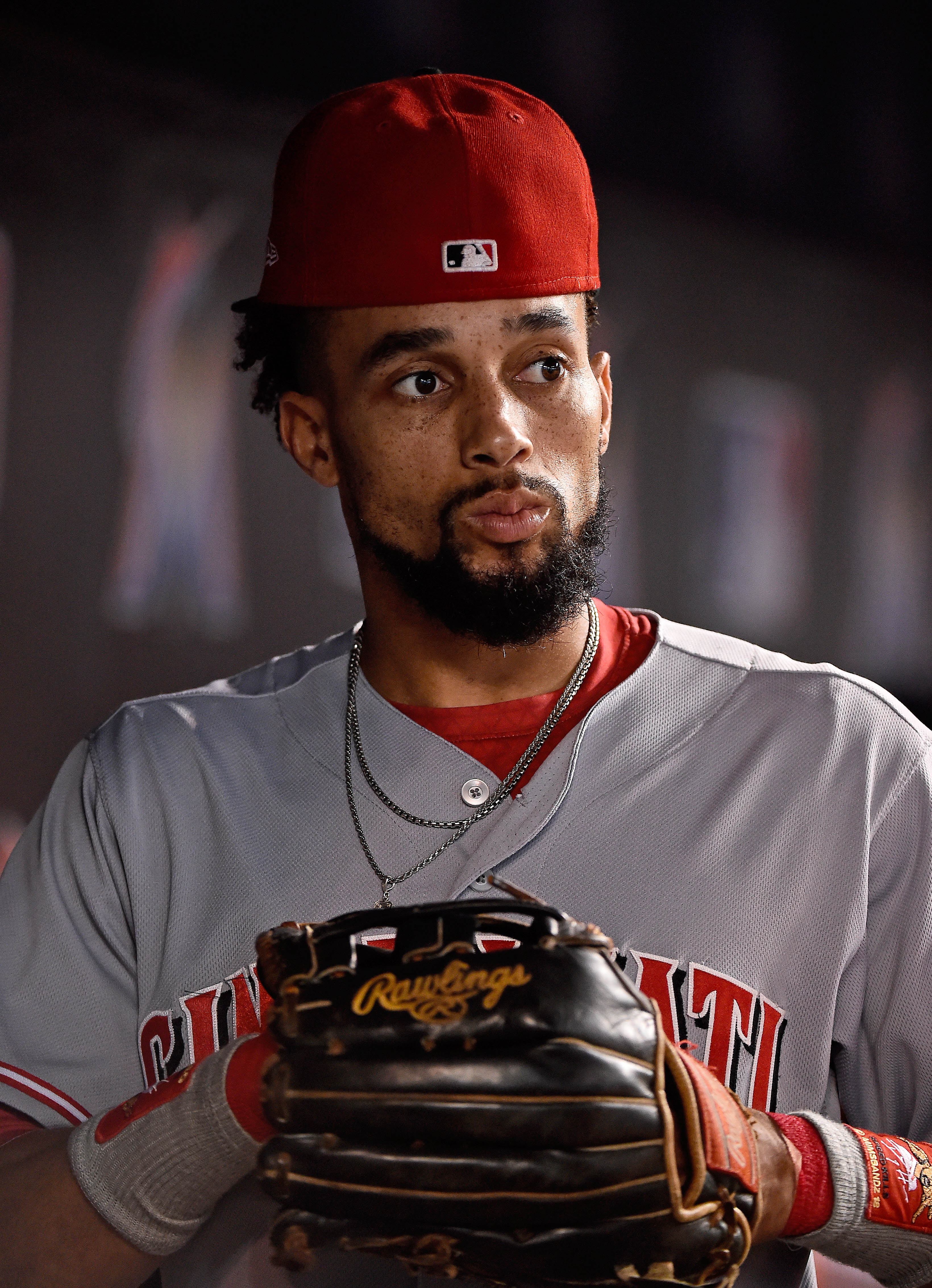
Hamilton, who turned 28 in September, was arbitration-eligible for the final time this winter and had been projected by MLBTR contributor Matt Swartz to earn $5.9MM in 2019. Instead, he’ll hit the open market in search of a new organization after spending the first 10 seasons of his professional career in the Cincinnati organization.
It’s a surprising bit of news for Hamilton even in spite of the defensive standout’s ongoing struggles at the plate. Reds owner Bob Castellini has previously gone on record to state that he hoped Hamilton would be a Red “forever” (Twitter link via Jerry Crasnick), and the organization has rebuffed trade interest in the speedster in each of the past two offseasons.
It seems, however, that the organization simply no longer feels that the benefit of Hamilton’s glove and premium baserunning skills are worth the lack of offense that has become synonymous with Hamilton’s name. Though he was long touted as one of the game’s premier prospects due to his 80-grade speed, Hamilton has mustered just a .244/.297/.332 batting line in five seasons since becoming a regular with Cincinnati back in 2014. That production is even more questionable when considering the fact that Hamilton plays his home games in Cincinnati’s Great American Ball Park, which is one of baseball’s most hitter-friendly settings; both OPS+ and wRC+ indicate that when adjusting for that hitter-friendly home park, Hamilton’s offense has been a full 30 percent worse than that of a league-average hitter.
To his credit, Hamilton has stolen more than 50 bases on four different occasions and, even in a “down” year in that regard, swiped 34 bags last season. He’s also delivered a whopping 51 Defensive Runs Saved in Center Field, which is largely backed up by a +45.5 Ultimate Zone Rating in his big league career. Statcast’s newest outfield defensive metric, Outs Above Average, only goes back three seasons but still feels that Hamilton has recorded a staggering 52 outs more than a league-average center fielder would generate, based on catch probability data.
At 28 years of age, it seems unlikely that Hamilton will ever develop into a bona fide offensive threat, though it’s certainly not out of the question that a change of scenery could bring about some improvement at the plate. He’ll likely have no shortage of interested teams inquire with his representatives at Wasserman, and the sheer extent of his baserunning and defensive value makes him a likely candidate to land a big league deal elsewhere.
For the Reds, the move opens up roughly $6MM of payroll next season — a relatively small but not insignificant sum as the organization aggressively pursues rotation upgrades. Cincinnati is reportedly even intrigued by top-of-the-market options, most recently being tied to Dallas Keuchel, though it remains to be seen if they can convince a top-tier name to sign on to pitch at Great American Ball Park for a club that hasn’t had a winning season since 2013. Certainly, the added payroll space can’t hurt.
Of course, the Reds now also have a need in center field that may need to go outside the organization to fill. There’s been talk of moving top prospect Nick Senzel to the outfield, though injuries limited the former No. 2 overall pick to 44 games in 2018 and his pro experience has come exclusively in the infield. Scott Schebler has a bit of experience in center field but has traditionally been more of a corner option, while Jesse Winker has been regarded primarily as a left fielder himself. Phil Ervin and Jose Siri represent other options, but given that the Reds hope to take a step toward being more competitive in 2019, it seems likely that they’ll pursue a more established option.
Rangers Sign Jesse Chavez
Nov. 30: The Rangers have formally announced their two-year deal with Chavez.
Nov. 27: The Rangers are and right-hander Jesse Chavez are in agreement on a two-year contract worth a total of roughly $8MM, according to Jeff Passan of Yahoo Sports (Twitter link). Mark Feinsand of MLB.com had previously tweeted that the two sides were close to a deal. It’s the second straight offseason that the Sosnick, Cobbe & Karon client landed with the Rangers, as Chavez signed in Texas last offseason before being flipped to the Cubs in a midseason swap.

Chavez, 35, enjoyed the finest season of his career in 2018 after joining the Rangers as an unheralded, $1MM signing late in Spring Training. The journeyman righty posted a 3.51 ERA in 56 1/3 innings with Texas before joining the Cubs and turning into an absolute bullpen juggernaut. In 39 innings, Chavez allowed just five runs on 26 hits and five walks with 42 strikeouts out of Joe Maddon’s bullpen. He also chipped in a scoreless inning in the NL Wild Card Game against the Rockies.
Chavez’s unforeseeable ascension from mop-up man to a high-leverage hammer for Maddon was tied, in part, to a significant uptick in the usage of a cutter. With the Cubs, Chavez relied almost entirely on cutters and sinkers — largely abandoning his changeup, slider and curveball. The results speak for themselves and helped push a player who a year ago struggled to find a 40-man roster spot into a multi-year free-agent agreement (albeit at a relatively modest rate).
Many Cubs fans, of course, will remember Chavez’s proclamation that he’d retire if he didn’t return to the Cubs in 2019. That comment came in the emotional fallout of Chicago’s loss in the aforementioned Wild Card Game, though, and it’s also not clear how far the Cubs were willing to go in order to retain the righty. The Cubs, to the surprise of many, are reported to have substantial payroll concerns this winter — so much so that they felt it necessary to trade Drew Smyly before exercising Cole Hamels’ 2019 option. If funds are indeed as tight as it seems in Wrigleyville, then perhaps president of baseball operations Theo Epstein and GM Jed Hoyer simply balked at the notion of a multi-year deal for the 35-year-old journeyman on the heels of a career year.
For a Rangers pitching staff that was in shambles for much of the 2018 season, Chavez will bring some versatility to the table. He can certainly start for Texas, should rookie manager Chris Woodward desire, but Chavez can also be deployed in a more nontraditional setting. He’s already familiar with multi-inning relief stints, and for a Rangers club that seems likely to utilize the “opener” strategy in 2019 and beyond, there’d be some appeal in using Chavez as the “primary pitcher” to piggyback on an opener’s short stint. Alternatively, if the Rangers are able to amass enough depth elsewhere on the staff, Chavez could simply be used in a high-leverage capacity late in the game, helping to bridge the gap between the starters and burgeoning bullpen star Jose Leclerc.
Of course, if Chavez can replicate the success he experienced in 2018 (or at least approach those levels), he’ll quite likely find himself on the trade block once again this summer. The Rangers aren’t likely to find themselves even on the fringes of the playoff picture in 2019, given the team’s general dearth of pitching depth, which would make Chavez and any other short-term veteran assets fairly obvious trade candidates come June and July of next season.
Chavez ranked 44th on MLBTR’s list of the Top 50 free agents of the offseason and was projected to sign a two-year, $10MM contract. His comments prompted a whopping 39.6 percent of participants to pick Chavez to return to the Cubs in MLBTR’s Free Agent Prediction contest; only two percent of respondents correctly forecast his Rangers reunion.
Mariners Trade Alex Colome To White Sox For Omar Narvaez
The Mariners announced Friday that they’ve traded reliever Alex Colome to the White Sox in exchange for catcher Omar Narvaez.
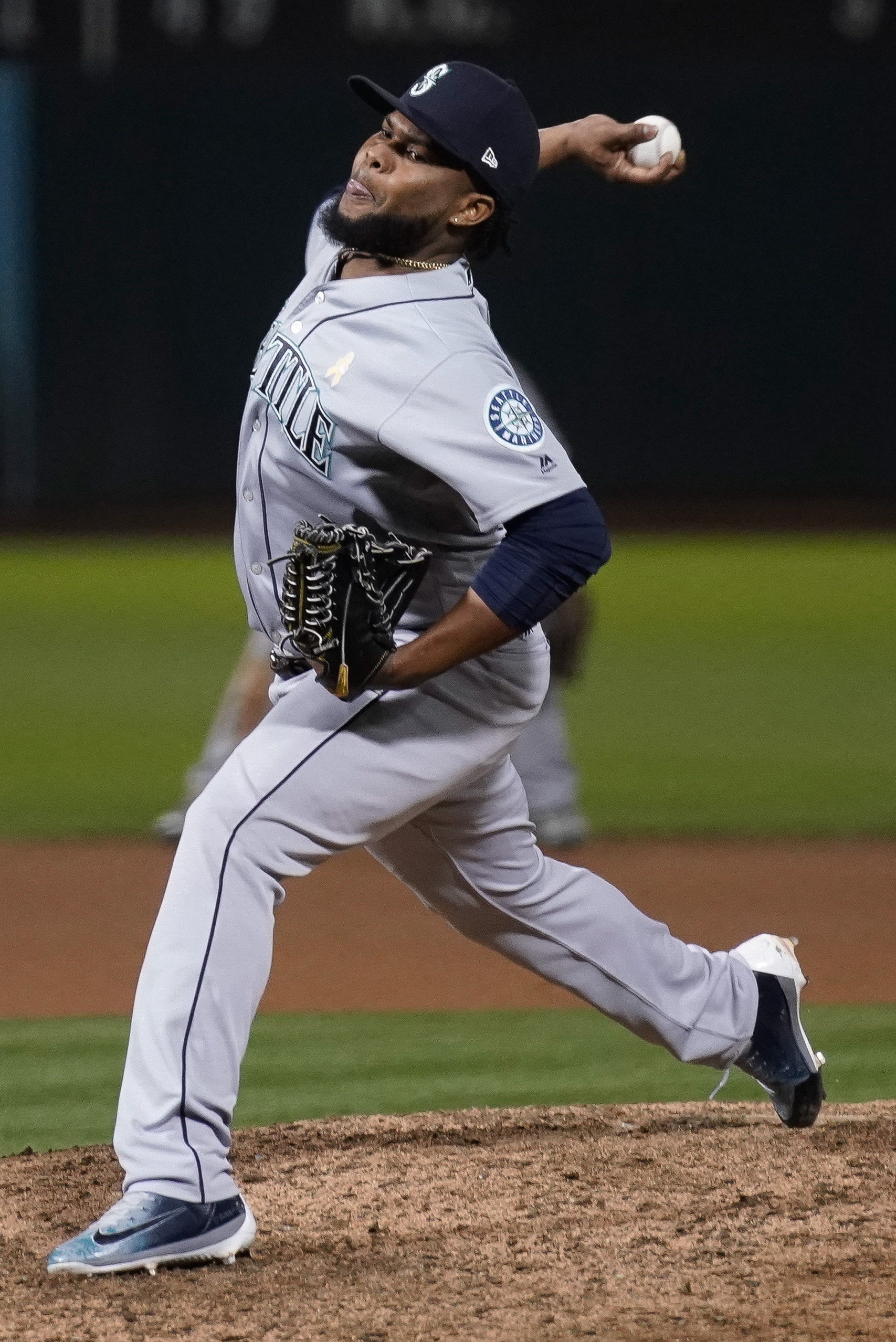
Colome, 29, is arbitration-eligible and projected by MLBTR contributor Matt Swartz to earn $7.3MM in his second trip through the process. He’s controlled through the 2020 season and will give the ChiSox a high-caliber option at the back of the bullpen. The right-hander spent two and a half seasons as the Rays’ primary closer before being flipped to Seattle alongside Denard Span this past summer in a trade for minor leaguers Andrew Moore and Tommy Romero.
Rising through the minor leagues as a starter, Colome was considered one of the Rays’ top pitching prospect. However, he quickly found his footing as a reliever in the Majors, and the organization never really looked back. From 2016-18, Colome has pitched to a pristine 2.78 ERA with with 9.5 K/9, 2.8 BB/9, 0.8 HR/9 and a 47 percent ground-ball rate. Along the way, he’s racked up 96 saves and been named to the American League All-Star team on one occasion. He can either close games or function as a high-end setup man for the Sox for the next two seasons.
While there’s been plenty of talk about a shift in direction for the White Sox, the acquisition of Colome is perhaps the first earnest win-now move that has come as the Chicago rebuild reportedly begins to wind down. The Sox did add veteran catcher Welington Castillo on a two-year contract last offseason, another move that could be viewed through a win-now lens, but they only invested money ($15.5MM) to bring Castillo to Chicago’s South Side. By trading Narvaez, the Sox are flipping another four years of control in exchange for two seasons of control of Colome. It stands to reason that other moves that place an emphasis on winning in 2019 and 2020 will follow as the winter progresses.
Narvaez, 27 in February, enjoyed a breakout season at the plate in 2018 and will give Seattle a cost-effective replacement for Mike Zunino, who was traded to the Rays earlier this month as part of what has become an aggressive restructuring of the Mariners’ roster.
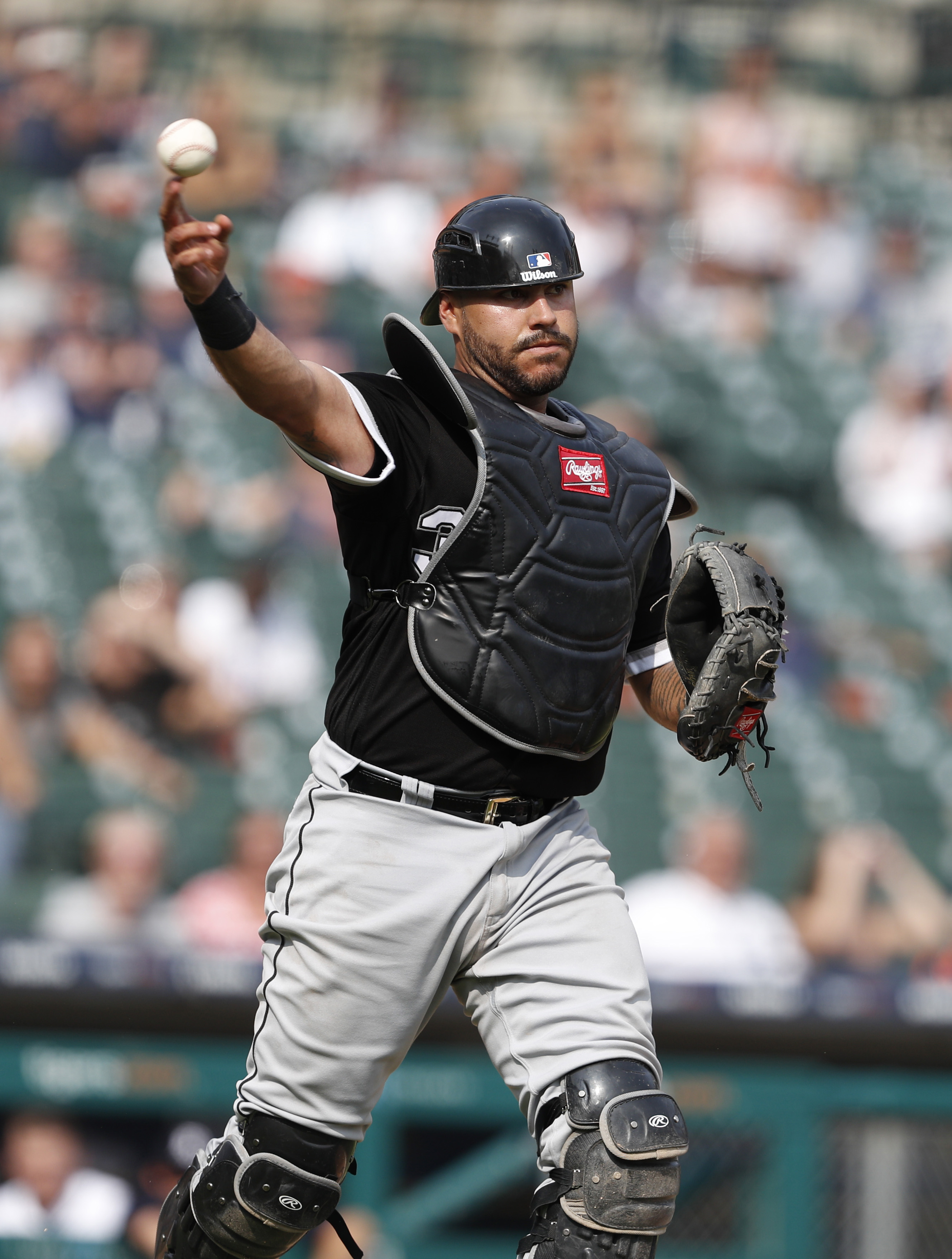
In many ways, Narvaez is the polar inverse of Zunino. While the latter is known an exceptionally powerful backstop with noted OBP deficiencies but strong defensive skills, the former is an on-base machine with limited power and more questionable defensive abilities. A career .274/.366/.379 hitter, Narvaez smacked a career-high nine homers in 2018 and posted an overall line of .275/.366/.429 in 322 plate appearances. It’s not clear if he can sustain that power output, especially moving from Guaranteed Rate Field to the more spacious Safeco Field, but Narvaez has long displayed a keen eye at the dish (career 12.3 percent walk rate) and ridden that skill to strong on-base marks. He’s also struck out at just a 16.9 percent rate in his career — another notable difference from his Seattle predecessor.
Defensively, Narvaez is, at best, a work in progress. He caught 24 percent of would-be base thieves in both 2017 and 2018 but has rated terribly in Baseball Prospectus’ pitch-framing and pitch-blocking metrics. Chicago general manager Rick Hahn recently voiced confidence to The Athletic’s James Fegan that the organization could improve Narvaez’s defense, though that responsibility will now fall on the Mariners.
Narvaez will immediately become the top catching option in Seattle, with David Freitas currently standing out as the lone backup option. The move likely lessens the White Sox’ urgency to add bullpen pieces to an extent, though Hahn & Co. still figure to be involved in that market as it develops. It’ll also be interesting to see whether the Sox make a splash at catcher, where Yasmani Grandal and Wilson Ramos are the top free-agent options, though perhaps the safer bet is that they’ll merely look to add a veteran backup type to pair with Castillo now that Narvaez is no longer in the fold.
This marks the third significant trade of the offseason for Seattle GM Jerry Dipoto, who has moved Zunino to the Rays and James Paxton to the Yankees. Both of those swaps, like today’s Colome deal, have seen Seattle deal players who came with just two remaining seasons of control and a fairly sizable arbitration projection in exchange for MLB-ready help with multiple years of control. Mallex Smith was the key piece in the Zunino trade, while the Paxton swap netted the Mariners top pitching prospect Justus Sheffield.
Of course, the bigger question with Seattle is whether (or when) the Mariners will formally complete the widely reported blockbuster that’d send Robinson Cano and closer Edwin Diaz to the Mets. Unlike the Mariners’ other deals, that franchise-altering trade would be centered more around adding a pair of high-end prospects and shedding a significant portion of Cano’s remaining $120MM — at the expense of one of the game’s best young relievers.
Padres To Sign Garrett Richards
DECEMBER 7: The signing is now official. Richards will earn $7MM in the first year of the deal and $8.5MM in the second, Jon Heyman of Fancred tweets. The contract includes $250K bonuses for every start he makes from his 21st through his 30th.
NOVEMBER 29, 7:14pm: Heyman tweets that Richards will be guaranteed $15.5MM and can earn another $2.5MM worth of incentives on the deal.
3:59pm: It’s a straight two-year deal for Richards, Passan further tweets. With incentives, the contract can max out at a total of $18MM.
3:49pm: Richards’ two-year agreement comes with a hefty guarantee of roughly $15MM, per Jeff Passan of Yahoo Sports (Twitter link). That’s a new precedent for a player coming off Tommy John surgery, though the timing of Richards’ surgery also makes it at least plausible that he could return to the mound before the end of the 2019 season.
3:45pm: The Padres have reached an agreement with free-agent right-hander Garrett Richards, tweets Fancred’s Jon Heyman. The ISE Baseball client was reported earlier today to be a target of both the Padres and the division-rival Dodgers.
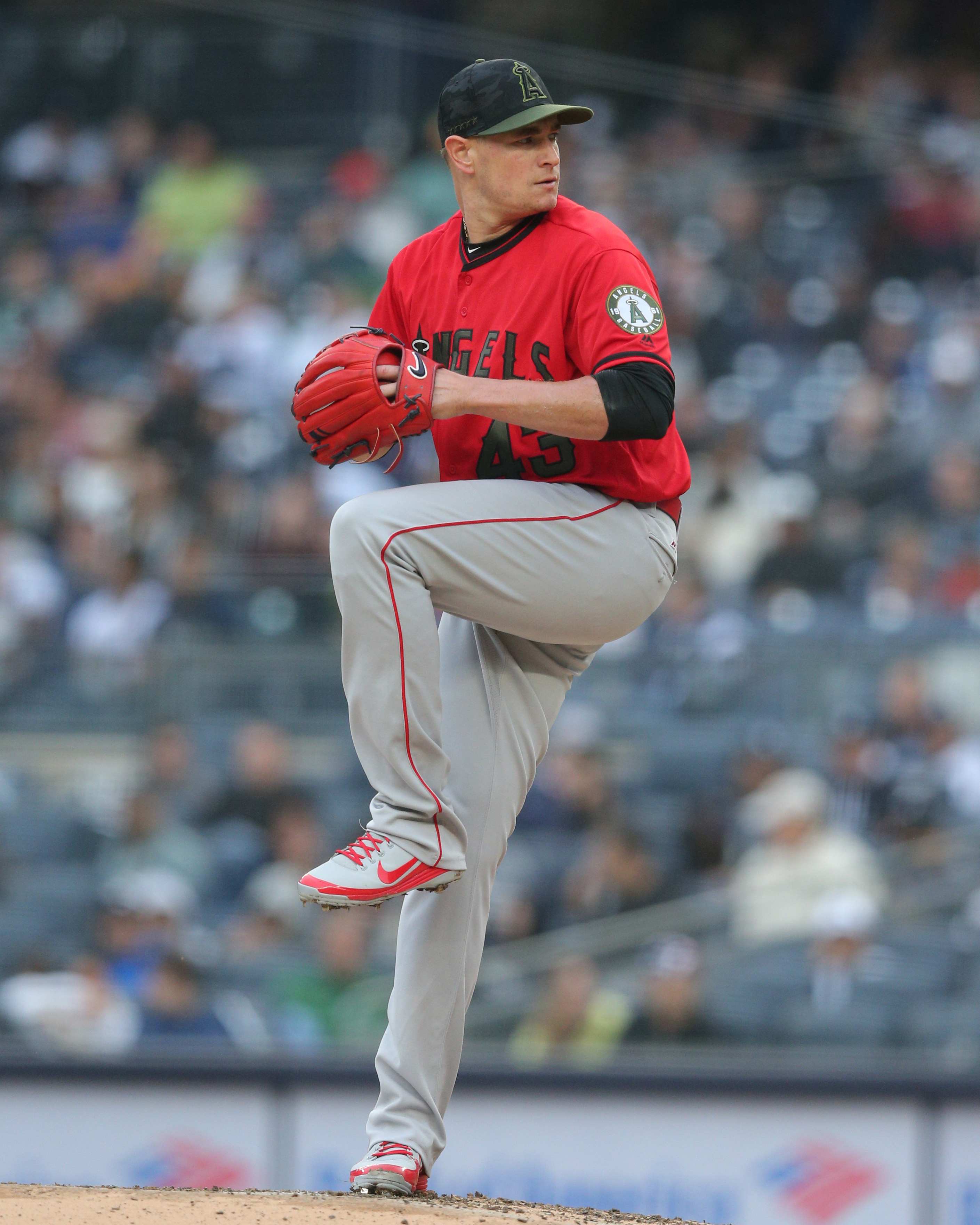
Richards may not pitch in 2019 after undergoing Tommy John surgery in mid July, but other free-agent starters in his situation have recently landed two-year guaranteed deals with an eye toward contributing in the second season of that pact. Namely, both Michael Pineda and Drew Smyly signed two-year, $10MM contracts last winter (with the Twins and Cubs, respectively), while Nathan Eovaldi inked a two-year, $4MM pact with the Rays an offseason prior. All three of those hurlers had undergone Tommy John surgery and were known to be out for the vast majority of the first season of those two-year deals.
A former top 50 overall draft pick (No. 42 in 2009), Richards established himself on the Angels’ pitching staff in 2013 and looked to be one of the more promising young arms in the American League by the end of the 2015 campaign. In 2014-15, the righty pitched to a combined 3.18 ERA through 376 innings (58 starts) and averaged 8.1 K/9 against 3.0 BB/9 along the way.
Injuries, however, have limited the now-30-year-old Richards to just 138 2/3 innings in the three seasons since that time. He’s been quite good when healthy enough to take the mound — 3.05 ERA, 9.6 K/9, 3.6 BB/9, 3.59 FIP — but by the lengthy slate of arm injuries that has slowed his career now make him an upside play in free agency rather than the potential frontline starter many expected he’d become after that strong 2013-15 showing.
The most recent ulnar collateral ligament injury for Richards was actually the second of his career; he also suffered a UCL tear back in 2016 but opted to undergo stem cell treatment to avoid surgery. While that did stave off Tommy John surgery for awhile, Richards was ultimately forced to undergo the procedure this past summer when he was diagnosed with another tear.
For the Padres, the addition of Richards dovetails nicely with the organization’s projected timeline to contend. The Friars have begun to mix in some win-now moves with their longstanding efforts to rebuild the organization and were said this offseason to be eyeing pitchers who can help them contend in 2020, when much of the upcoming wave of young talent has surfaced at the MLB level. The Friars have little in the way of rotation certainty at the moment, so it’s still possible that they could add another arm on a multi-year deal — likely one who’d still be in his prime into 2020 and beyond. They’ve been tied to younger free-agent starters like Nathan Eovaldi and Yusei Kikuchi this offseason, and they’ve also been rumored to have interest in Mets righty Noah Syndergaard.
Reds Agree To Three-Year Deal With Raisel Iglesias
NOVEMBER 27: Iglesias will receive a $6MM salary in 2019, followed by $9MM and $9.125MM paydays, per Jon Heyman of Fancred (via Twitter).
NOVEMBER 21: The Reds announced today that they have agreed to a three-year deal with closer Raisel Iglesias. It will promise him $24.125MM, per MLB.com’s Mark Feinsand (via Twitter), but won’t expand the team’s control rights.
This is a fairly unusual contract agreement; though we have seen an increasing number of multi-year, arbitration-only deals, they are typically of shorter duration and in some cases give the team additional option years. In this case, though, Iglesias was playing under an unusual contract in the first place, having signed a deal that would no longer be permitted under MLB’s international rules.
Under his original contract, Iglesias had the right to exit the guaranteed portion of the deal and enter arbitration. He elected not to do so last year, but still had the right to turn down the $5MM payday he already had in hand for 2019.* Whether or not he’d have done so is not clear, but perhaps he’d have rolled the dice on boosting his salary both now and in the future. Certainly, barring a disastrous intervening campaign, it was highly likely he’d have elected to test the arb process in 2020.
Where things get confusing with this deal is the 2021 campaign, the final year covered. Under his original contract, which runs only through 2020, he did not obtain the right to elect free agency early. Accordingly, he’d already have been controlled through 2021 regardless of today’s extension. That distinguishes it in a critical way from, say, the recent extensions secured by Brad Hand (link) and Felipe Vazquez (link).
In other words, this deal is all about resolving the salary uncertainty and fixing a price tag for Iglesias. The Reds will lock into a new payday to shave off some of the earning upside for Iglesias. Instead of the $10MM total he was promised over the 2019 and 2020 seasons, with the upside to earn more in those years and in particular in 2021, Iglesias will now secure an additional $14.125MM in guaranteed money. It’s certainly possible he could have earned more than that through arbitration, with good health and continued saves tallies, particularly if he had opted into arbitration this season and secured a big new starting point.
As part and parcel of the financial maneuvering, this move represents an indication that the Reds expect Iglesias not only to remain a productive reliever, but also to hold down the closer’s role. Saves, after all, are a key driver of reliever earnings in arbitration. Of course, it’s also still possible he’ll be shipped out to another organization, but this contract may also be intended in part as a commitment to a core player.
Iglesias, who’ll turn 29 before the start of the 2019 campaign, showed quite a bit of promise as a starter in his debut season of 2015. For reasons that remain somewhat unclear, he was bumped into the bullpen in the ensuing season and ultimately slid into the ninth inning. Iglesias has since mostly functioned as a traditional closer, with occasional multi-inning appearances but not enough to stand out.
Though it’s tantalizing to think of what might have been, Iglesias has thrived as a reliever. In 163 total appearances from the pen, he has compiled 201 innings of 2.42 ERA ball with 10.2 K/9 and 3.2 BB/9, picking up 64 saves along the way. He sits in the 96 mph range with his average fastball and still leans on both a change and curve. Iglesias has been utterly dominant against righties and solid-enough against left-handed hitters; in the aggregate he’s among the game’s more effective relievers.
*The original version of this post mistakenly stated that Iglesias had decided not to opt out of his 2019 guaranteed salary. In fact, he had only previously decided against doing so in 2018.