
Inside The Draft Room: The 2005 Red Sox
Put on a scouting director hat and ask yourself this question: Do you want your team to do poorly so you can have the maximum number of opportunities to select a premium draft pick, or do you want your team to win – knowing all the supposed “top of the line” talent will already have been taken?
The question is purely rhetorical. For the person directing the draft and all the scouts out scouring for talent in the smallest of towns, the ring is the thing.
But that doesn’t mean you can’t win and have fun on the scouting side, too.
In 2004, the Boston Red Sox – down 3 games to 0 in the American League Championship Series against the New York Yankees – rallied to win their final eight postseason games in eliminating the Yankees and sweeping the St. Louis Cardinals. In the process, they won their first World Series since 1918.
On paper, if no free agents switched clubs, the Red Sox would have picked 28th overall in the ensuing 2005 amateur draft – with a second pick coming in at No. 58. But baseball isn’t played on paper. After the annual free agent signing frenzy, the world champs lost Orlando Cabrera, Derek Lowe and Pedro Martinez, and now – thanks to compensation selections and supplemental picks – found themselves with six draft choices from No. 23 to No. 57.
So … to the victors did go the spoils.
Oh, there’s just one thing. They were about to restock with a first-time scouting director.
– – –
In November 2002, Theo Epstein – just 28 years of age at the time – was named general manager of the Red Sox. Earlier that year, he had joined the organization as the assistant GM after coming over from the San Diego Padres.
During his time in San Diego, Epstein struck up a friendship with Jason McLeod, a former minor league pitcher who began his Padres career as a Community Relations intern in 1994 – before moving over to Stadium Operations that winter and to the Baseball Operations Department in the fall of 1995 (Epstein had joined the team earlier that year). McLeod’s time with the Padres later included three years as a minor league coach, a return to the front office as the assistant director of scouting and player development, and two years as an area scout in Southern California.
Epstein brought McLeod to Boston as an associate scouting director in the fall of 2003, assisting David Chadd. After the Red Sox won the 2004 Fall Classic, Chadd moved on to Detroit to become the Tigers’ vice president of amateur scouting – and McLeod was promoted into the scouting leadership position. Epstein wasn’t concerned about inserting his former Padres cohort into that role despite McLeod’s relative lack of experience in the draft room.
“Jason and I grew up together in the Padres organization,” Epstein said in an email, “so I knew he could really evaluate and was a great leader.
“It was a seamless transition because Jason had worked with us in 2004. The entire organization was focused on the draft with all the picks we had, and Jason did a great job as always leading the department. We had a lot of fun all scouting season and in the draft meetings.”
McLeod acknowledges that he didn’t have a boatload of experience from a draft-day perspective when he took over.
“In ’04, I was instilling and re-doing the processes of it,” McLeod says. “David was absolutely the scouting director; he was pounding it out on the road. But from the front office side of things, we were kind of co-directing that department that year.
“During my time in San Diego, I had sat in on many draft meetings, but I hadn’t been in the director’s seat or calling the shots or instituting processes or things like that until I got to Boston.”
The Red Sox had broken the curse. Now, just a few months later at their January scouting meetings, McLeod was presiding over the group and putting a game plan into place.
“There was a lot of excitement, obviously, coming off the World Series year,” he says. “For those of us in amateur scouting, we were just as excited knowing that we had two first-round picks and three sandwich picks. We felt that we were going to get a couple impact players with the volume of picks that we had. And coming out of the prior summer – after scouting the Cape, scouting the Team USA juniors – we knew that it was going to be a really good draft.
“We told our guys, ‘Let’s get after it and go crush it and find as much impact and upside as we can.’”
– – –
The top tier of the 2005 draft was considered to be very deep, and the results continue to speak for themselves.
Eight of the first 12 selections have appeared in the All-Star Game. Five of the first seven – Justin Upton, Alex Gordon, Ryan Zimmerman, Ryan Braun and Troy Tulowitzki – have career WAR above 25.0.
The Red Sox knew they had no chance of landing any of those five – or high school outfielders/future all-stars Andrew McCutchen and Jay Bruce, who went 11-12. But there was still a lot of talent out there to be had. Boston had the No. 23 and No. 26 selections in the first round – along with the Nos. 42, 45 and 47 slots in the supplemental round. The team’s second-round pick was No. 57 overall.
The key was to be prepared for anything and everything. Back in 2005, the draft was conducted via a conference call – and there was very little time between picks.
“At that time, we did a lot of mock drafts,” explains McLeod, who is now the Cubs’ senior vice president of scouting/player development. “We would run a mock draft where different scenarios were happening. I think at that time we maybe had 30 seconds before the next pick. So we ran a lot of simulations in the room. Theo liked to try to set up scenarios where … there were 12 of us in the room, and he’d set up scenarios and go worst case. I’m sitting there watching the board, and he’d set it up and say, ‘Now this guy and that guy are gone. Where are you going here?’ And he put you on a timeclock. We probably did that about five or six different times where we ran those simulations.
“We felt good about the information that we had. We felt good about the performance metrics we were looking at, and about how we had the board stacked. So at that point, let’s run the simulations. ‘Now, he’s gone. Now these two guys are gone.’ We also ran some where we knew there would be no way the board would fall that way, but if it all blew up, ‘Now where are you going? Why are you doing that?’ So you do those things prior to draft day. You trust the process and you trust the preparation.
“At the same time, just like every draft year … as the pick is getting close, there is some anxiety and anticipation that you feel. But again, you just trust your process. You do all the work to be prepared for every situation.”
– – –
By draft day, the Red Sox had narrowed their focus to three collegians for the No. 23 selection – Oregon State outfielder Jacoby Ellsbury, Arizona outfielder Trevor Crowe and Texas A&M shortstop Cliff Pennington.
“We spent so much time talking about those three players in particular, because we were really hopeful that one of them got to us,” McLeod said. “We spent an inordinate amount of time in the weeks leading up to the draft meetings on them. We kept stacking them and stacking them and talking about their strengths and weaknesses.
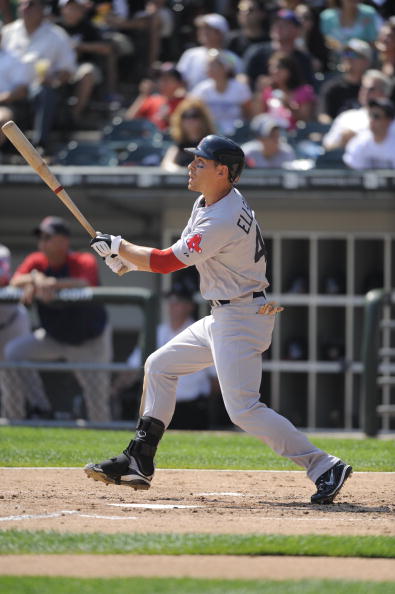
“The funny thing about Jacoby … that year, he had such a great year, and I saw four or five of his games – and he probably had his worst games when I was there. I actually took Theo to a game at the University of Washington when the Red Sox were in Seattle. Of course, Jacoby’s first two at-bats, he was 0-for-2 – and Theo was like, ‘Jason, you’re not allowed to watch his next at-bat. You’re bad luck. Please, turn around or something.’ So I literally turned around and heard the crack of the bat; I turned back and the ball was in the gap. Theo and I are standing down the third-base line, and I remember watching this kid round second turning on the afterburners as he’s coming into third. It was just something. You watch a lot of games and see a lot of fast guys, but then you see stuff that makes you say ‘Wow.’ That was one of those moments, just watching this guy fly around the bases. So I knew I wasn’t totally bad luck. I was in the ballpark. I didn’t see the contact, but at least I heard it.
“I literally saw him go 2-for-15 in a year that he hit over .400 and had an on-base of almost .500. But our scouts were so convicted on him – from the area guy (John Booher) to the regional guy (West Coast cross-checker Fred Peterson) to our national cross-checker (Dave Finley). They were all like, ‘This is our guy. This is it.’
“He was already doing the things that we were looking for … the ability to get on base … the fact that he was an outstanding athlete who was going to play in center field … he had a low K (strikeout) rate. My question was just going to be the strength. I remember seeing him in the Cape, and I was worried a little bit about how the ball was going to come off the bat.
“But there’s a really good story from that year. Oregon State was down at the University of San Diego, and it was one of the only days in the history of the University of San Diego that they actually had a rainout. San Diego’s coach, Rich Hill – who we had a really good relationship with – was gracious enough to let us work out Jacoby. So a couple of our scouts got to see him hit in the cage. Then they took him up to the Jenny Craig Pavilion, and there’s Jacoby Ellsbury throwing down gorilla dunks for our scouts – showing them his explosiveness and his athleticism. I wasn’t at that workout, but our cross-checker just called me and was blown away with the explosiveness in Jacoby’s body. He was like, ‘You will not believe what Jacoby just did.’
“If you looked at his performance, all the makeup we got on him, the fact that we felt that he was going to be ultra-disruptive on the bases … we thought he was going to be a shutdown center fielder. All of that aligned with someone that we absolutely wanted to bring into the organization. That’s why we liked Pennington. That’s why we liked Crowe. They were all these dynamic athletes that played in the middle of the field.”
Crowe went No. 14 to Cleveland. Pennington was chosen at No. 21 by Oakland. The Marlins, drafting after the Athletics and before the Red Sox, selected high school second baseman Aaron Thompson – and Ellsbury was Boston-bound.
McLeod literally had about 30 seconds to breathe. Houston was on the clock (selecting Brian Bogusevic), then came Minnesota (Matt Garza). It was now time to make another decision.
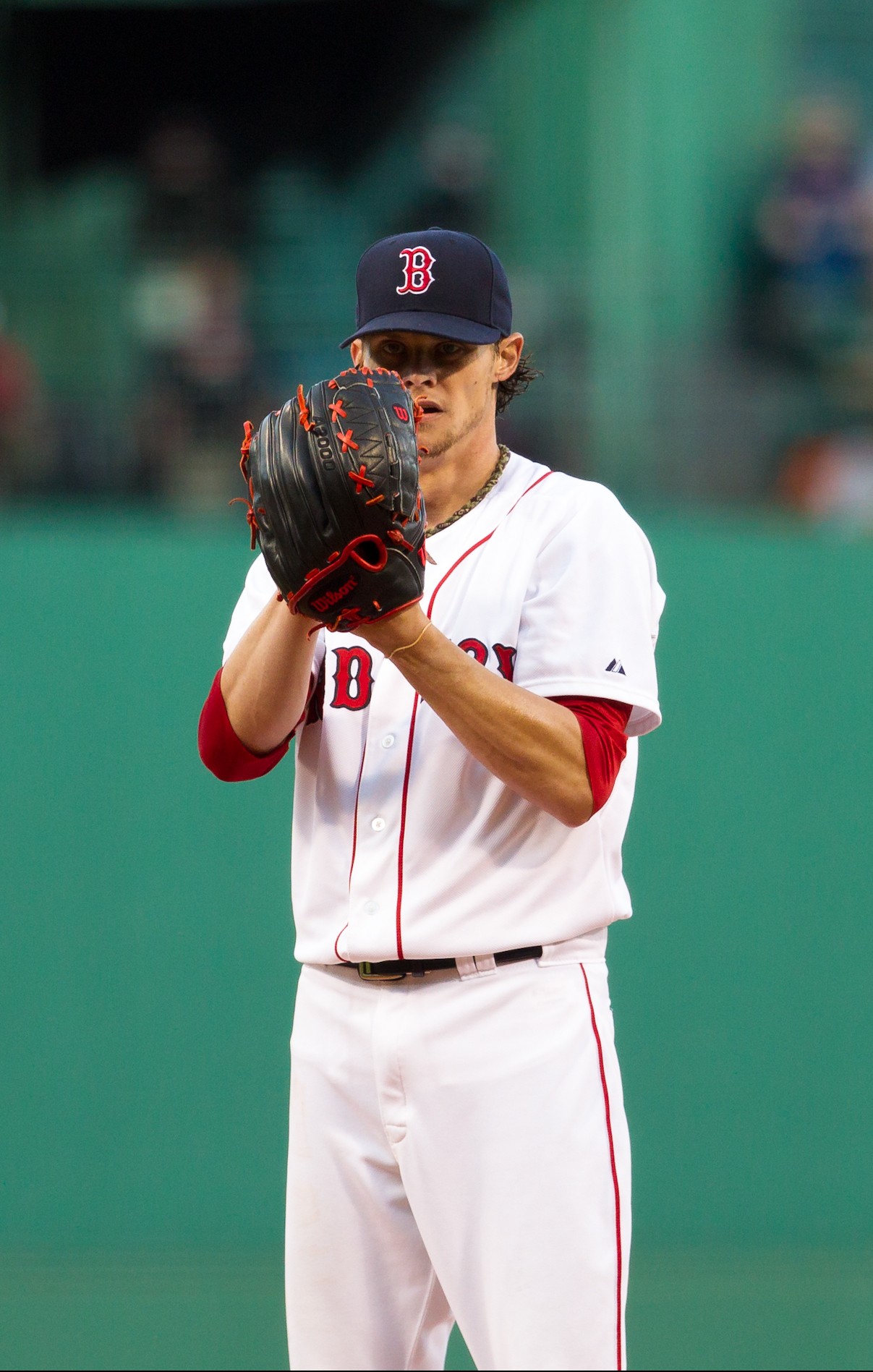
Tigers Option Bruce Rondon, Select Contract Of Joe Jimenez
The Tigers have optioned right-hander Bruce Rondon to Triple-A Toledo and selected the contract of highly touted relief prospect Joe Jimenez, the team announced Monday morning. The Tigers have three open spots on the 40-man roster, there’s no corresponding move necessary to bring Jimenez to the Majors.
It’s been a brutal start to the season for the 26-year-old Rondon, who has made three appearances but recorded just four outs. Rondon has been roughed up for six runs on four hits and three walks with just one strikeout in this season’s brief sample. With Rondon in Toledo to get back on track, left-hander Justin Wilson will become the team’s primary setup option to closer Francisco Rodriguez, manager Brad Ausmus tells reporters (Twitter link via MLB.com’s Jason Beck).
Rondon has been heralded as a potential closer in Detroit, and the fanfare he’s received is understandable. Though he’s never put everything together in the Majors, the right-hander has averaged 98 mph on his fastball and punched out 10.4 hitters per nine innings pitched in his Major League career (97 1/3 innings). That said, Rondon’s brief career has been marred by inconsistency as well as a 2015 incident in which the Tigers sent him home early for the year due to his “effort level.” Last season looked to be a turning point for Rondon, as he logged a 1.80 ERA with a 33-to-9 K/BB ratio across his final 25 innings, but he’ll now again look to rediscover his top form in the minors.
As for Jimenez, the 22-year-old will head to the Majors and make his MLB debut the first time that Ausmus calls him into a game. There’s no doubt that the Puerto Rican righty earned his promotion; in 53 2/3 innings across Class-A Advanced, Double-A and Triple-A last season, Jimenez logged a ridiculous 1.51 ERA with 13.1 K/9, 2.9 BB/9 and a 34.3 percent ground-ball rate. He rated between fourth and sixth among Tigers farmhands according to Baseball Prospectus (subscription required), MLB.com, ESPN’s Keith Law (subscription required) and Fangraphs’ Eric Longenhagen.
Jimenez is touted as a potential closer and a definite candidate for a high-leverage relief role, thanks to a 70-grade fastball and an impressive slider. Law notes that both his command and slider took steps forward in 2016, which bodes well for his long-term outlook.
Quick Hits: Cubs, Arrieta, Heyward, Draft, Yankees, Phillies
Cubs right-hander Jake Arrieta handled the Brewers on Sunday in a seven-inning, 10-strikeout showing, after which he downplayed concerns about his diminished velocity. “Where I’m at now in my career, I don’t worry about it, because I know that I’m smart enough to work around that,” Arrieta told reporters, including Patrick Mooney of CSN Chicago. “The velocity’s still good enough to get it by guys and to do certain things in certain situations with it.” The 31-year-old is clearly confident in his current stuff, but he does expect to regain his lost velocity. “When the 95-to-97 comes back, it’s going to be tough for teams. And it still is,” declared Arrieta, who has posted sterling numbers through two starts this year as he continues to make his case for a massive contract. Arrieta stands as arguably the majors’ top soon-to-be free agent.
More from around the sport:
- Although there has been skepticism toward Cubs outfielder Jason Heyward‘s remade swing, the early returns on his offseason work have been promising, writes Jesse Rogers of ESPN.com. Heyward picked up a pair of hits, including a triple, in five at-bats Sunday, and he managed to put the ball in play with 95 mph-plus exit velocities in each trip to the plate. “I like his hands,” observed manager Joe Maddon. “I like his hands more involved right now. He’s getting started sooner, staying through the ball longer.” Heyward’s previous swing yielded a highly disappointing .230/.306/.325 line in 592 PAs last season, which came as a shock after the normally solid hitter inked an eight-year, $184MM contract in free agency.
- California-based high schooler Hunter Greene is the premier prospect in this year’s draft class based on his ability as a pitcher, but he’s also a top-10 talent as a shortstop, according to Keith Law of ESPN.com (subscription required/recommended). Law scouted Greene’s start Friday and noted that the right-hander’s fastball didn’t fall below 94 mph in any of his seven innings. The 17-year-old has No. 1 starter upside, opines Law, who believes Greene could even play some short and work as a part-time hitter in the majors. Louisville’s Brendan McKay, whom Law regards as the second-best player in this year’s class, is also a two-way talent. McKay is both a left-handed pitcher and a first baseman, and Law expects him to settle in as a hurler – one who could serve as a No. 3 type for the long haul. McKay has less upside than Greene, but the 21-year-old would be the safer pick, suggests Law. Check out the full piece for more details on both players.
- The Yankees remain unsure sure how much time cornerstone catcher Gary Sanchez will miss on account of his right biceps strain, writes George A. King III of the New York Post. While the Sanchez-less Yanks could continue with Austin Romine and Kyle Higashioka behind the plate in lieu of exploring outside options, King lists several potential targets if the club does look elsewhere for help. Hector Sanchez (Padres), Jesus Sucre (Rays), Tuffy Gosewisch (Mariners), former Yankee John Ryan Murphy (Twins), Ryan Hanigan (Rockies), Bobby Wilson (Dodgers) and Manny Pina (Brewers) are names to watch, relays King.
- In the wake of Jeanmar Gomez‘s meltdown against the Nationals on Sunday, Phillies manager Pete Mackanin revealed that he’s “considering” changing closers (via Todd Zolecki of MLB.com). “I’m going to have a talk with him tomorrow,” said Mackanin, whose Phillies escaped with a 4-3 win after Gomez blew a save. “I’ll have something for you tomorrow. I need to talk with him.” Gomez has allowed multiple runs in two of three appearances this year, and he has been especially prone to poor outings since the second half of last season. Gomez did log 37 saves in 2016, but he accomplished that in spite of a 4.85 ERA and a subpar K/9 (6.16). Now, if the Phillies turn to someone else as their closer, it’ll likely be Joaquin Benoit, Hector Neris or Edubray Ramos, notes Zolecki. Keeping Neris and Ramos in setup roles would tamp down their future arbitration earnings, though it’s unclear if that will factor into the Phillies’ decision.
Braves Sign Jason Motte To Minor League Deal
The Braves have signed reliever Jason Motte to a minor league contract, tweets David O’Brien of the Atlanta Journal-Constitution. Motte is likely to report to Triple-A Gwinnett on Monday.
The 34-year-old Motte came available when the Rockies released him Wednesday, which was not the outcome they had envisioned when signing him to a two-year, $10MM contract in December 2015. Motte battled a rotator cuff injury and a dip in velocity in in his lone season in Colorado. Thanks in part to those issues, Motte posted a 4.94 ERA and a 20.7 percent home run-to-fly ball ratio across 23 2/3 innings. However, he did log solid strikeout and walk rates per nine (9.13 and 3.04, respectively). The right-hander was at his best with the Cardinals from 2010-12, when he pitched to a 2.43 ERA with 9.5 K/9 and 2.39 BB/9 across 192 1/3 frames, but he hasn’t approached those numbers since.
The Braves’ bullpen entered Sunday with a 4.86 ERA and a 5.02 FIP in 16 2/3 innings, and relievers Arodys Vizcaino, Jim Johnson and Jose Ramirez then combined to allow four late-game runs in a 6-5 loss to the Pirates. Barring a turnaround from the unit, Motte could conceivably get back to the majors with Atlanta this year, though the organization does have another well-known option in Triple-A in fellow minor league signing David Hernandez.
Latest On Shohei Otani
SUNDAY: On whether he’ll immigrate to the majors in the offseason, Otani told 60 Minutes that “nothing is for certain,” but it doesn’t seem as if the international spending limits in the CBA will deter him. “Personally, I don’t care how much I get paid or how much less I get paid because of this,” Otani stated in regards to the changes in the system. The Fighters, meanwhile, do plan to post Otani, and their manager, Hideki Kuriyama, is fine with that. “For our team, we’re all for him going to the States,” said Kuriyama. “Yeah, as a manager, it’s going to hurt. It’s tough that way. But more than that, I want him to succeed.”
FRIDAY: Japanese superstar Shohei Otani is already familiar to readers of MLBTR; he is generally regarded as the best pitcher in the world who isn’t working in the majors. He’s also a highly productive slugger in Japan’s Nippon Professional Baseball league. And he’s just 22 years old. (For comparison’s sake, both Yu Darvish and Masahiro Tanaka came to the majors in advance of their age-25 seasons.)
It has long been wondered just when he’ll make it over to the majors, but rule changes have conspired to gum up that possible transition. First came the application of a $20MM cap on posting fees, which reduces the incentive for NPB clubs to make players available before their control rights are set to expire. Then, the latest iteration of the CBA put hard caps on teams’ capacity to spend on international players who are under 25 years of age, thus precluding the possibility of Otani commanding a bonus befitting his ability until the 2019 season.
Despite those barriers, there are indications now that Otani could nevertheless attempt a move to the majors as soon as next season. As Jon Wertheim of Sports Illustrated writes, executives with Otani’s current team, the Nippon Ham Fighters, are preparing to lose their all-everything performer after this season. Importantly, per the report, Otani also intends to request potential MLB suitors commit to allowing him both to pitch and to hit.
Notably, also, “multiple sources” suggest to Wertheim that Otani’s still-undetermined representatives may be able to find ways to sweeten any arrangement. Though he’d nominally be forced to slog through MLB’s typical control process, perhaps he would be able to negotiate some sort of provision that enables him to reach the open market before he reaches six years of service. Other international players have been able to negotiate such provisions; Nori Aoki and Yoenis Cespedes come to mind as examples, though neither of those players was subject to the same rules regime as Otani will be.
While the up-front guarantee would be a pittance of what he’d earn on the open market, or even as a typical posted player, that may not prove as much of a barrier as had been thought. In an interview with 60 Minutes that is set to air on Sunday, Otani reputedly states that he hopes to move to the big leagues after the current season, as Bob Nightengale of USA Today tweets.
Wertheim’s piece, which is well worth a full read, details Otani’s background. As he notes, the phenom considered bypassing the NPB altogether to join a big league team. The Fighters landed him, in part, by promising to make him a two-way player. Part of that bargain, the piece suggests, was that the club would not protest when Otani decided it was time to cross the Pacific.
To say the deal worked well for Otani’s current team would be an understatement. Last year, he slashed a ridiculous .322/.416/.588 and swatted 22 home runs in 382 plate appearances while also posting a 1.86 ERA with 11.2 K/9 and 2.9 BB/9 over 140 frames. And by the picture painted by Wertheim, Otani is a model teammate with a modest personality and full dedication to his craft(s).
Just how Otani’s otherworldly Japanese statistics will translate to the majors is open to some debate. He would surely be viewed as a notable potential big leaguer for his bat, but is most prized for his arm. As Wertheim notes, an American League organization would seem to offer the most ready route to fulfilling Otani’s intentions, since he could stride to the plate without being forced to play the field on days he’s not pitching. Whether he’s intent on spending time in the outfield, too, isn’t clear.
Plenty of time will pass before anything is formalized, and much could change in the meantime. Should Otani become available, however, it would likely make for an unprecedented effort by major league organizations to woo him. That’s due not only to his unusual dual capabilities (and wishes), but also his young age and the unique circumstances of the rules limiting what he can be paid. Literally every team in the game would have cause to pursue him vigorously, particularly if the financial commitment is as meager as it seemingly must be.
AL Central Notes: Tigers, Indians, Twins
A quick look around the American League Central…
- Tigers manager Brad Ausmus is concerned about the early season performance of reliever Bruce Rondon, who got the loss against Boston on Sunday after allowing three earned runs on two walks and a hit. Rondon failed to record an out in the eighth inning, when he entered with a one-run lead, and has allowed a combined six earned runs in his past two appearances. “His velocity has been down, and his location has not been good,” Ausmus told Jason Beck of MLB.com. Ausmus isn’t ruling out using Rondon in lower-leverage situations until he rights the ship, but the club hasn’t discussed demoting him to Triple-A. The 26-year-old was outstanding for the Tigers across 36 1/3 frames last season, evidenced by a 2.97 ERA, 11.15 K/9 and 2.97 BB/9. His velocity has indeed dipped a bit since then, as Ausmus mentioned.
- It appears the Indians will activate right fielder Lonnie Chisenhall before their home opener Tuesday, per Jordan Bastian of MLB.com. Chisenhall, who’s working back from a right shoulder injury, picked up four hits in a Triple-A game Saturday, prompting Indians manager Terry Francona to say, “When a guy gets four hits, it’s probably a pretty good indication that he’s feeling OK.” Activating Chisenhall could lead to a minor league demotion for fill-in Abraham Almonte, who has posted an unusual .250/.500/.250 batting line in 12 plate appearances this season.
- Twins chief baseball officer Derek Falvey will have heavy involvement in the amateur draft process, writes Rhett Bollinger of MLB.com. Falvey, whose organization holds the top pick in this year’s draft, will go on the road to help scout prospects in person. He ventured to Southern California on Friday to watch high school right-hander and potential No. 1 pick Hunter Greene. “I love seeing amateur players,” said Falvey, who was formerly in Cleveland’s front office. “It’s hard not to love that part of it. It’s how I got my start in baseball and it’s what I still love to do. I’ve seen a lot of video of some guys and so being able to see them in person is good.”
Injury Notes: Mets, Jays, Red Sox, Nats, Padres
Mets left-hander Steven Matz announced Monday that he has a flexor strain, but members of the organization are skeptical of the diagnosis, reports Bob Klapisch of NorthJersey.com. The Mets’ two orthopedists “found nothing wrong” with Matz, a source told Klapisch, who writes that the team doesn’t believe the 25-year-old is faking the injury. They are under the impression, though, that Matz received another opinion from outside the organization – which he’s allowed to do – thus leading to the flexor strain diagnosis. Regardless, New York’s hope is that Matz will be healthy enough to make his season debut in May.
More injury updates:
- The right calf tightness that forced Blue Jays third baseman Josh Donaldson to exit Sunday’s loss to the Rays early doesn’t appear to be a serious issue. After the game, Donaldson told reporters, including Shi Davidi of Sportsnet, that it’s “realistic” to think he’ll play in the Jays’ home opener Tuesday (Twitter link). That’s certainly a relief for Toronto, which went without Donaldson because of a calf strain for most of spring training and has started the regular season 1-5.
- An MRI on Red Sox center fielder Jackie Bradley Jr. revealed a sprained right knee, according to manager John Farrell (Twitter link via Brian MacPherson of the Providence Journal). The team will send Bradley back to Boston for further evaluation, meaning he’ll sit out Monday’s game in Detroit after missing Sunday’s contest. Bradley noted, however, that he’s able to move his knee without experiencing any pain, tweets Peter Abraham of the Boston Globe.
- Nationals shortstop Trea Turner left Saturday’s loss to the Phillies with hamstring trouble, but manager Dusty Baker indicated afterward that the speedster wouldn’t miss much time. Baker wasn’t as confident when discussing Turner’s status Sunday, describing his hamstring as “so-so,” per Mark Zuckerman of MASNsports.com (Twitter link). The Nats will reevaluate Turner on Monday.
- The Padres have placed right-hander Trevor Cahill on the disabled list, retroactive to April 6, with a lower back strain and recalled Zach Lee from Triple-A El Paso. Either Lee or Jarred Cosart could start in place of Cahill against the Rockies on Monday, as Jason Martinez of MLBTR and Roster Resource points out (Twitter link). In his first start of the year, a 3-1 loss to the Dodgers on Wednesday, Cahill allowed two earned runs on five hits and three walks in 5 2/3 innings, also notching seven strikeouts.
Nationals To Re-Sign Joe Nathan To Minors Deal
The Nationals are re-signing reliever Joe Nathan to a minor league deal, reports FanRag’s Jon Heyman (Twitter link). Nathan opted out of his previous minors contract with the Nationals on March 27, but he was then unable to land a major league pact elsewhere.
The 42-year-old Nathan threw just 6 2/3 big league innings over the previous two seasons, largely because he underwent his second Tommy John procedure while with the Tigers in April 2015. He returned to the majors with the Cubs and Giants last season and fired 6 1/3 scoreless innings with nine strikeouts, though he did walk four. In 923 1/3 career frames, Nathan has posted a 2.87 ERA, 9.51 K/9 and 3.35 B/9. The longtime closer has also amassed 377 saves, good for eighth on the all-time list.
Now, Nathan will look to make it back to the majors with the Nationals, whose bullpen entered Sunday with a 7.71 ERA over its first 18 1/3 innings of the season. The club’s top late-game options are closer Blake Treinen and setup men Koda Glover, Joe Blanton and Shawn Kelley, another two-time Tommy John recipient. Glover took the loss against the Phillies on Sunday, when he entered a 3-3 game in the bottom of the ninth and allowed the winning run on two singles and a walk.
Minor MLB Transactions: 4/9/17
Sunday’s minor moves…
- The Mariners have released outfielder James Ramsey, whom they acquired in a trade with the Dodgers last summer. Ramsey didn’t see any major league action with the Mariners, instead picking up 110 plate appearances with Triple-A Tacoma, and still hasn’t cracked the bigs since the Cardinals selected him in the first round of the 2012 draft. The 27-year-old Ramsey, who has also been in the Indians organization, owns a .256/.337/.404 batting line in 1,027 Triple-A plate appearances.
AL Notes: Donaldson, Y. Ventura, Royals, Tigers, Athletics
Third baseman Josh Donaldson left the Blue Jays’ game against the Rays on Sunday with right calf tightness, per an announcement from Toronto. Donaldson previously sat out most of spring training with a calf strain, so it’s possible this ailment will force him to the disabled list. The 2015 AL MVP and three-time All-Star has been eminently durable since his first full season, 2013, having played at least 155 games in each of the past four years. Donaldson’s once again performing at an elite level early this year (.348/.444/.652 in 27 plate appearances), but the 1-4 Jays have scuffled in spite of that.
Here’s more from the AL…
- Yordano Ventura‘s life and untimely death will always be on the minds of his teammates, and the Royals’ mourning process has, in a way, begun anew as the team starts the season without Ventura around every day, Rustin Dodd of the Kansas City Star writes. Infielder Cheslor Cuthbert had made a routine of goofing around with Ventura during rides on the team plane, though when the Royals flew out of Spring Training last week, “when I looked, I didn’t see him,” Cuthbert said. “That’s when I realized: ‘He’s not here anymore. It’s hard to accept that.’ ” Dodd’s piece contains many memories and stories about Ventura from his many friends on the team and is well worth a full read.
- The Tigers put a big focus on pitching in the 2013 amateur draft, taking college pitchers with their first seven picks and selecting arms with 27 of 41 overall picks. Almost four years later, however, MLive.com’s Evan Woodbery notes that Detroit has gotten little return from the hurlers in that draft class. Of those initial seven pitchers, only Buck Farmer and righty Jeff Thompson are still in the organization, as the other five have been traded, released, or have retired (second-rounder Kevin Ziomek). Farmer, Brewers reliever Corey Knebel, and current Yankees Joe Mantiply and Chad Green are the only Tigers picks from that entire 41-person class who have seen any big league playing time.
- One week into the season, the Athletics have already made a change in their rotation. Right-hander Jesse Hahn will replace righty Raul Alcantara, who will head to the bullpen, reports Joe Stiglich of CSN Bay Area (video link). Alcantara started for the A’s on Friday and, in two innings, allowed eight earned runs on four hits and two walks in a loss to the Rangers. Hahn relieved Alcantara in that game and fired six innings of seven-hit, two-run ball. His placement in the rotation might not last long, with Sonny Gray potentially in line to return from from a lat strain by the end of the month.