
11 MLB Top Prospects Who Conquered Service Time
Is there ever a good reason for a team to put their MLB-ready top prospect on the Opening Day roster, as the Diamondbacks recently did with Archie Bradley? As we’ve seen with the Cubs and Kris Bryant, waiting at least 12 days into the season ensures the team will control the player for a seventh season. Forward-looking teams that are willing to wait before calling up their phenom can delay his free agency by a year, and that extra year of control is generally more valuable than having the player for the first two weeks of April. However, we found 11 examples in the last decade of top MLB prospects who did make the Opening Day roster. You might say these players conquered the service time issue, or at least were lucky enough to have GMs who disregarded it.
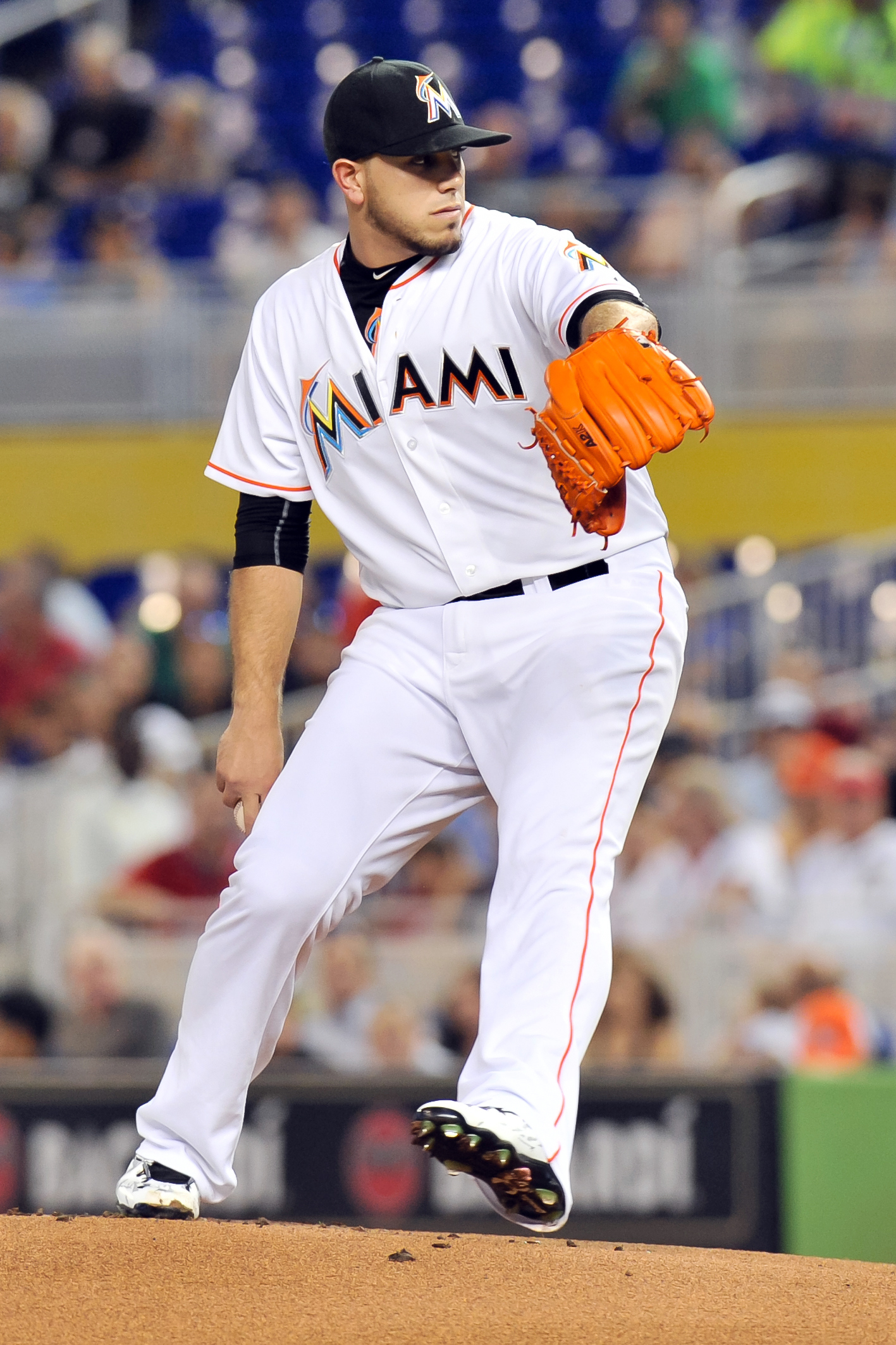
1. Jose Fernandez, Marlins SP. Marlins President of Baseball Operations Larry Beinfest certainly would have been justified giving Fernandez a little more minor league seasoning in 2013. The game’s #5 overall prospect according to Baseball America, Fernandez was just 20 years old and had never pitched above A ball. But when Marlins starters Nathan Eovaldi and Henderson Alvarez got hurt, Fernandez surprisingly made the team.
Was it worth it? Fernandez didn’t make his Marlins debut until April 7th, 2013, so they ultimately traded his five-inning debut for control of his age-26 season, which will happen in 2019. He was clearly ready to make the jump, as Fernandez won the National League Rookie of the Year award. However, over a year of the Marlins’ control of their young ace was lost when he went under the knife for Tommy John surgery the following season. The team put him on the 2013 Opening Day roster even with the knowledge that he was represented by notorious agent Scott Boras, who generally encourages players to avoid extensions that delay free agency. In December, the Marlins reportedly made a six-year offer (with two club options) worth close to $40MM, but no deal was reached. Even if they do reach some kind of precedent-shattering deal, five extra innings from Fernandez as part of a 100-loss season was not worth it for the Marlins.
2. Jedd Gyorko, Padres 2B. Gyorko came into 2013 as BA’s #71-ranked prospect, and he spent Spring Training working on the transition from third to second base. Injuries to Chase Headley and Logan Forsythe helped open the door for GM Josh Byrnes to put Gyorko on the Opening Day roster.
Was it worth it? It’s possible that the goodwill from Byrnes’ lack of regard for service time helped encourage Gyorko to sign a six-year, $35.5MM extension with a club option with the Padres a year later. In that contract the Padres paid a free agent price for the 2019 season ($13MM), which potentially could have been cheaper had that represented his fourth year of arbitration. Or, an extra year of control might have convinced Byrnes to wait another season before proposing an extension. Gyorko struggled mightily with injuries and performance as a sophomore in 2014, and the extension might end up being regrettable.
3. Mike Leake, Reds SP. The Reds drafted Leake eighth overall in 2009 out of Arizona State, and with nothing more than an Arizona Fall League stint under his belt as a pro, he beat Travis Wood for the fifth starter job to begin the 2010 season. He pitched well enough as a rookie, but was moved to the bullpen in August and his season ended on the 24th of that month.
Was it worth it? The Reds won the division by five games in 2010, and Leake was a part of that. Leake was wild on his April 11th debut, but still beat the Cubs. Since GM Walt Jocketty could have easily let him make his debut a few days later, it was not worth it. Controlling Leake for 2016, his age 28 season, would have been valuable, even if he would have cost $14MM through arbitration.
4. Austin Jackson, Tigers CF. Tigers GM Dave Dombrowski acquired Jackson in the epic three-team December 2009 trade that also included Max Scherzer, Curtis Granderson, Ian Kennedy, Edwin Jackson, Phil Coke, and Daniel Schlereth. Jackson was regarded as the #76 prospect in baseball, and he became the Tigers’ Opening Day center fielder.
Was it worth it? Jackson hit quite well in his first dozen games or so, and his performance easily could have led to an additional win or two. It wasn’t worth it in that the Tigers finished at .500, but at the time Dombrowski’s decision was defensible. Jackson was again part of a big three-team deal at the 2014 trade deadline. He would have carried more trade value with 2016 control, though teams will be down on him for next year if his current struggles persist.
5. Jason Heyward, Braves RF. In a situation analogous to Bryant, the Braves had the game’s best prospect prior to the 2010 season in Heyward. Heyward had just three games of Triple-A experience, but GM Frank Wren couldn’t resist putting the 20-year-old on the Opening Day roster after a legendary Spring Training.
Was it worth it? The Braves won the Wild Card by one game and Heyward had a very strong start, so this is a rare case where it was worth it. The Braves traded Heyward to the Cardinals last November with Jordan Walden for Shelby Miller and Tyrell Jenkins. That was a solid return, but of course the Braves would have done better if they controlled Heyward for ’16 as well.
6. Colby Rasmus, Cardinals CF. Rasmus was Baseball America’s #3 prospect prior to the 2009 season. He made GM John Mozeliak’s Opening Day roster, but wasn’t in the outfield when the Cards battled Pittsburgh on April 5th.
Was it worth it? The Cardinals won the Central Division handily in ’09, but since Rasmus didn’t start every game those first few weeks, it probably wasn’t worth putting him on the Opening Day roster. When Mozeliak traded Rasmus to the Blue Jays in an eight-player deal in July 2011, the outfielder had three-plus seasons of control remaining. It was well-known by that point that Rasmus had worn out his welcome in St. Louis, so while the additional year of control always increases a player’s trade value, it might not have made a huge difference here.
7. Elvis Andrus, Rangers SS. In December 2008, Rangers GM Jon Daniels and manager Ron Washington told face of the franchise Michael Young he’d be shifting from shortstop to third base in 2009, paving the way for one of the game’s top 40 prospects in Andrus.
Was it worth it? Andrus hit quite well in those first few weeks, and surely made some plays at shortstop Young would not have. The Rangers won 87 games and fell short of the Wild Card, but at the time the decision was made, it was defensible. Three years later Andrus signed a deal buying out only his arbitration years, and then a year after that Andrus asked agent Scott Boras to get him a long-term extension, even though it meant missing the chance at being the rare 26-year-old free agent. Boras got Andrus a huge deal with a pair of opt-outs. If in spring 2013 the Rangers already controlled Andrus through 2015, they would have at least approached those extension talks differently.
8. Brett Anderson, Athletics SP. Savvy GMs had no problem putting top prospects on Opening Day rosters back in 2009. Even Billy Beane did it with Anderson, the game’s #7 prospect heading into that season, even though the lefty had made only six starts above A ball. Anderson was the team’s fourth starter out of the gate, losing his first couple of starts.
Was it worth it? With a starting pitcher it’s almost never “worth it,” since the extra MLB time amounts to one or two starts. Anderson had a solid rookie year for the A’s, and maybe Beane’s gesture of putting him on the Opening Day roster was a factor in him signing a four-year, $12.5MM deal with two club options a year later. The contract bought back the potential year of control the A’s lost (2015), and that $12MM club option probably still had a bit of value to the Rockies when they acquired Anderson in December 2013. They ultimately chose a $1.5MM buyout instead, as Anderson’s injury woes continued in Colorado.
9. Johnny Cueto, Reds SP. Cueto was BA’s #34 prospect prior to the 2008 season, and he broke camp as part of the Reds’ rotation. Cueto dazzled in his first couple of the starts, and the Reds won his debut by one run.
Was it worth it? That extra Cueto-related win didn’t matter much for the Reds, who finished in fifth place in ’08. It’s possible that some goodwill from GM Wayne Krivsky’s decision came into play in January 2011, when new GM Walt Jocketty signed Cueto to a four-year deal with a club option for ’15 (an easy choice to exercise last fall). If Cueto was held in Triple-A for a few weeks to begin ’08, would he have chosen not to sign an extension later? In that scenario, he would have reached free agency after 2014. It’s also possible that a few weeks as a rookie wouldn’t have mattered to him, and controlling him through ’14 could have meant signing him to an extension running through ’16.
10. John Danks, White Sox SP. White Sox GM Kenny Williams acquired Danks from the Rangers in December 2006, sending Brandon McCarthy to Texas. Like Dave Dombrowski with Austin Jackson, Williams couldn’t wait to get his new acquisition on the big league club. It’s kind of like a kid getting a new toy and opening the box on the ride home.
Was it worth it? Danks would have benefited from additional Triple-A seasoning, as he posted a 5.50 ERA as a rookie. He was decent in his first couple of starts, though the White Sox lost both games en route to a fourth place finish. Williams’ decision set Danks up for free agency after 2012, but he signed a five-year, $65MM extension prior to his walk year. Danks wound up needing shoulder surgery in 2012. An extra year of control might have prevented the White Sox from extending Danks in general, in which case they wouldn’t have him on the books currently.
11. Nick Markakis, Orioles RF/LF. Top Orioles exec Mike Flanagan put Markakis on the team’s Opening Day roster back in 2006. The 22-year-old had played just 33 games above A ball.
Was it worth it? Markakis didn’t play every day in the season’s first few weeks and the Orioles finished in fourth place. Flanagan’s roster decision had Markakis on track for free agency after 2011, but in January 2009 Andy MacPhail signed him to a six-year, $66.1MM extension with a club option for 2015. I don’t think much would have changed with the contract had Flanagan waited a few weeks in ’06 to call Markakis up.
What have we learned? Two weeks of a rookie in April is rarely directly worth trading for a seventh year of control, but the tradeoff can be defensible for certain teams and players. Also, the extra year of control could impact extensions in multiple ways. On one hand, it’s possible some players signed extensions partially because of the goodwill from being placed on the Opening Day roster. On the other hand, an additional year of control might have bought GMs more time to gather data on whether certain extensions were worth pursuing in the first place.
Please note that we looked for examples within the last ten seasons, omitting players like Joe Mauer, and we also left out relievers such as Joel Zumaya and Huston Street.
AL East Notes: Pillar, Orioles, Garcia, Greene
Kevin Pillar was expected to be the Blue Jays‘ fourth outfielder this season and, until Michael Saunders returned from the DL, only a short-term replacement in left field. After a hot start both offensively and defensively (including an incredible homer-robbing catch last night), however, Sportsnet.ca’s Ben Nicholson-Smith notes that Pillar is making a strong bid for regular playing time even after Saunders is back. Given Saunders’ knee injury and recent hamstring issue, I’d guess that he could see some DH time to keep him fresh, opening the door for Pillar to continue playing in left. Switch-hitting center fielder Dalton Pompey has badly struggled against left-handed pitching in his brief career, so Pillar (a right-handed hitter) could also be used in a semi-platoon situation.
Here’s some news from around the AL East…
- The Orioles are dealing with several roster questions, and MASNsports.com’s Roch Kubatko notes that the club’s decisions involve both making the team better in 2015 and also looking ahead to who might fill some holes on the 2016 roster. Baltimore has 10 players scheduled for free agency this winter, leaving plenty of room to evaluate players for bigger roles, like T.J. McFarland or Mike Wright for a possible rotation spot next year.
- Also from Kubatko’s piece, the Orioles want to keep Rule 5 Draft pick Jason Garcia as a piece for 2016 and beyond, though keeping him on the roster for all of this season could be tricky. Garcia also has some interest from other teams, as “at least one member of the organization is convinced that the Rays would claim” the young righty if he was put on waivers.
- Grantland’s Jonah Keri explores why the Orioles are keeping Kevin Gausman in the bullpen when the promising youngster and former fourth overall pick could be more valuable in the rotation. One theory Keri has heard is that the O’s are giving their five veterans an opportunity to start in order to showcase them for possible trades, which would then open a space for Gausman. Wei-Yin Chen and Bud Norris are both free agents after the season and the O’s would likely love to rid themselves of Ubaldo Jimenez‘s contract, though it’s worth noting that Gausman has thus far struggled (8.31 ERA and a 1:1 strikeout to walk ratio over four innings) in a relief role.
- The early returns on the Yankees‘ offseason three-team trade with the Diamondbacks and Tigers aren’t promising for the Bronx Bombers, Joel Sherman of the New York Post writes. Shane Greene, who went to Detroit from New York, has yet to allow a run in 16 innings for the Tigers, while Didi Gregorius has had an all-around rough start to his Yankees career. While it’s still early, one scout tells Sherman that Greene made some strong adjustments and “was the best pitcher he had seen in March.” Sherman also notes that the Yankees haven’t historically had much success in trades with Tigers GM Dave Dombrowski.
Angels Select Adam Wilk’s Contract
Here are the latest minor transactions from around baseball, with the newest moves at the top of the post…
- Prior to Wednesday’s game, the Angels announced that they selected the contract of left-hander Adam Wilk from Triple-A. In corresponding moves, Los Angeles sent righty Drew Rucinski to Triple-A to create a 25-man roster spot and moved lefty Tyler Skaggs to the 60-man DL to create a 40-man roster spot. Wilk pitched two innings for the Halos last night, his first taste of MLB action since 2012 when he was a member of the Tigers. Wilk pitched in the Korean Baseball Organization in 2013 and for the Pirates’ Triple-A affiliate in 2014.
Offseason In Review: Atlanta Braves
Newly installed president of baseball operations John Hart wasted little time in aggressively turning over a roster that disappointed last year, adding loads of young pitching and reshaping the team’s offensive profile.
Major League Signings
- OF Nick Markakis: four years, $44MM
- RP Jason Grilli: two years, $8MM
- OF Dian Toscano: four years, $7.5MM
- OF Jonny Gomes: one year, $4MM
- IF Alberto Callaspo: one year, $3MM
- C A.J. Pierzynski: one year, $2MM
- RP Jim Johnson: one year, $1.6MM
- RP Josh Outman: one year, $925K
- OF Zoilo Almonte: one year, unknown (presumably, the league minimum)
- Total spend: ~$71.5MM
Notable Minor League Signings
- John Buck (since retired), Matt Capps, David Carpenter, Pedro Ciriaco, Todd Coffey (since released), Kelly Johnson, Michael Kohn, Peter Moylan, Wandy Rodriguez (since released), Gus Schlosser, Eric Stults, Donnie Veal, Jose Veras (since released), Chien-Ming Wang, Eric Young
Trades And Claims
- Acquired SP Shelby Miller, SP Tyrell Jenkins from Cardinals in exchange for OF Jason Heyward, RP Jordan Walden
- Acquired SP Max Fried, IF Jace Peterson, 3B Dustin Peterson, OF Mallex Smith, international bonus pool money from Padres in exchange for OF Justin Upton, SP Aaron Northcraft
- Acquired SP Michael Foltynewicz, SP/RP Andrew Thurman, 3B Rio Ruiz from Astros in exchange for C/OF Evan Gattis, RP James Hoyt
- Acquired OF Cameron Maybin, OF Carlos Quentin, SP Matt Wisler, OF Jordan Paroubeck, competitive balance round A pick (41st overall) from Padres in exchange for RP Craig Kimbrel, OF Melvin Upton Jr.
- Acquired SP Trevor Cahill, competitive balance round B pick (75th overall), $6.5MM from Diamondbacks in exchange for OF Josh Elander and OF Victor Reyes
- Acquired SP Ricardo Sanchez from Angels in exchange for 3B Kyle Kubitza, RP Nate Hyatt
- Acquired C Jose Briceno, C Chris O’Dowd from Rockies in exchange for SP David Hale, RP Gus Schlosser
- Acquired SP Manny Banuelos from Yankees in exchange for RP David Carpenter, RP Chasen Shreve
- Acquired RP Arodys Vizcaino, international bonus pool money from Cubs in exchange for IF Tommy La Stella
- Acquired RP Aaron Kurcz, cash from Red Sox in exchange for RP Anthony Varvaro
- Acquired SP/RP Zach Quintana from Brewers in exchange for OF Kyle Wren
- Acquired RP Bryton Trepagnier from Pirates in exchange for IF Edward Salcedo
- Claimed OF Eury Perez from Yankees
- Claimed SP Daniel Winkler from Rockies in Rule 5 draft
Extensions
- None
Notable Losses
- Brandon Beachy, Emilio Bonifacio, Jose Constanza, Ryan Doumit, Gavin Floyd, Cory Gearrin, J.R. Graham (Rule 5), Gerald Laird, Kris Medlen, Tyler Pastornicky, Ramiro Pena, James Russell, Ervin Santana, Jonny Venters
Needs Addressed
The Braves spent last winter locking up young talent for the long run, but changed course swiftly after the club’s first losing campaign since 2008. Moving into the driver’s seat was former Indians/Rangers GM John Hart, who will be accompanied by well-regarded young executive John Coppolella. With the former taking on the title of president of baseball operations and the latter remaining the assistant GM, the club technically has no general manager. Expectations are that Coppolella will eventually ascend to that position, but for now at least he’ll work under Hart.
Club president John Schuerholz has explained that Wren’s sacking was motivated not by the club’s failure to contend in 2014, but rather by the overall lack of organizational strength that he perceived. The new leadership promptly set out to trade in many of its best big league pieces for young talent, transforming a lagging farm into a system that many now rank in the top ten league-wide.
It all started with the departures of Heyward and Upton, a pair of corner outfielders who will hit the open market after the season — arguably as the best two available free agents. The cumulative return was highlighted by Shelby Miller, who once looked to be the future staff ace of the Cardinals but will seek to get back on track after a relatively disappointing 2014. Tyrell Jenkins and Max Fried represent some younger, high-upside arms, while Jace Peterson surprised this spring and has opened the year in Atlanta’s everyday lineup. As always, evaluating the quality of a prospect haul requires time, but there is an argument to be made that Atlanta could have squeezed more value had it waited for the trade deadline.
At the time, it was not out of the question that the club would stop there in terms of major moves. That proved not to be the case. The Braves proceeded to deal two key players who carried plenty of team control in Evan Gattis and, most controversially — among the fanbase, at least — star closer Craig Kimbrel.
Gattis always made more sense in the American League, particularly for a club that has a young catcher (Christian Bethancourt) who it expects to provide a level of defense that Gattis cannot. But he was affordable and useful, so it took an impressive haul for the Astros to pry him away. Atlanta netted two highly-regarded prospects in righty Michael Foltynewicz and third baseman Rio Ruiz.
As if that were not enough, the Braves and Padres stunned the baseball world once again on the eve of Opening Day. Kimbrel, one of the team’s longest-tenured and most marketable players, was traded to San Diego along with Melvin Upton Jr. and his ball-and-chain of a contract. Atlanta took back some salary commitments by adding Cameron Maybin and Carlos Quentin (since released), but Maybin still has some value and fills an immediate need in center. In addition to financial relief, of course, the Braves picked up another top-100 pitching prospect in Matt Wisler along with the 41st pick in this year’s draft.
A series of smaller deals brought back other young arms, including former top prospects Manny Banuelos and Arodys Vizcaino. Cuban outfielder Dian Toscano was added on a lower-profile, but still fairly significant, international deal. And more young talent will be coming: in addition to adding a sandwich pick in the Kimbrel deal, Atlanta picked up some international pool money and the 75th overall pick through other trades.
That last draft choice came as part of the deal that brought starter Trevor Cahill to Atlanta. Still just 27, Cahill will fill some frames in the near term but also comes with upside. He managed a 3.89 FIP in spite of awful results last year, and comes with a history of throwing a high number of solid innings. While it would take quite a turnaround for his two options ($13MM, $13.5MM) to become attractive, Cahill could theoretically become a summer trade chip. Alternatively, the Braves could simply hold onto him in the event of a rebound, content to have a solid contributor at a reasonable price. Given the relatively meager cost to acquire him (in terms of cash and prospects) and the fact that Atlanta also ultimately added extra bonus pool flexibility with the draft pick, it looks like a solid gamble, even if a resurgence seems unlikely.
All of those moves filled long-term needs, but obviously also functioned to open up holes in the current big league roster. The club opted to fill them with veteran free agents who figure to hold down the fort as the team transitions. While some teams have foregone such spending in rebuilding years, relying more heavily on organizational depth and minor league free agents, the Braves have made clear that they intend to field a competitive team and quickly ramp up with a new park set to open in 2017.
Jason Grilli and Jim Johnson head to the back of the bullpen, Jonny Gomes to the corner outfield, Alberto Callaspo to a utility infield role, and A.J. Pierzynski to the backup catcher slot, all for a total commitment of just over $18MM. Of course, the Braves did make one much more significant outlay: outfielder Nick Markakis, whose signing we’ll look at more closely below.
Questions Remaining
The re-made staff, fronted by Julio Teheran and Alex Wood, is cheaper, younger, and perhaps more talented than last year’s unit (which went without the since-departed Kris Medlen and Brandon Beachy), but it remains to be seen if it will be more productive. Miller and Cahill have plenty of upside, but each needs to re-establish himself in his new environs. Behind them, Eric Stults (and, perhaps, Chien Ming-Wang) will eat innings and try to hold off Foltynewicz, Wisler, and Banuelos. Atlanta will presumably hope that at least two-thirds of the young trio can force the issue and head into 2016 prepared to take over full-time jobs.
The biggest rotation question of all, however, is 27-year-old lefty Mike Minor, who has struggled with health and consistency. He is owed $5.6MM in his second year of arbitration eligibility (as a Super Two player) and will once again start the year on the DL with shoulder problems. Minor struggled last year after an outstanding 2013, and if his shoulder problems are severe enough, he could conceivably become a non-tender candidate given his growing cost. That, of course, is somewhat of a worst-case scenario, though.
Suddenly lacking not only Kimbrel but also top setup man Jordan Walden and middle relievers David Carpenter and Anthony Varvaro, among others, the Braves’ bullpen is a new-look affair. Indeed, Atlanta’s pen will feature just one player — southpaw Luis Avilan — who made more than twenty appearances for the team last year. Grilli will need to show that his improved second half of 2014 is sustainable at an advanced age, Johnson will look to re-establish himself, and newcomers like Cody Martin and Brandon Cunniff will try to take advantage of an opportunity. (Promising righty Shae Simmons is a notable absentee after undergoing Tommy John surgery prior to the season.)
As for the lineup, the Braves made clear that they wanted to move away from an all-or-nothing, high-strikeout approach, and certainly have angled to do so. But it remains to be seen what kind of offensive output the new group will provide. Beyond the excellent bat of first baseman Freddie Freeman and the solid production of Nick Markakis, the lineup is full of questions at the plate.
Behind the plate, Bethancourt looks to be a reliable defender but has much to prove offensively after a .248/.274/.274 line in 117 plate appearances last year. The veteran Pierzynski was not much better last year, though he has long provided a serviceable bat behind the dish.
In the middle infield, Andrelton Simmons is a generational glove man but has seen his productivity on the other side of the ball decline steadily over the last three years. Second base is wide open: Peterson has the first crack at the job, while Kelly Johnson joins Callaspo as established options who have been slightly below average at the plate and in the field over recent seasons. Likewise, third base could be manned at times by either of those veterans or Chris Johnson, who failed to live up to his extension in his second season in Atlanta.
And that, finally, brings us to Markakis.
Deal Of Note
A four-year, $44MM free agent deal for a franchise right fielder? That’s a bargain. The question, of course, is whether Markakis really fits that mold. He gets on base, is said to be an excellent clubhouse presence, and has a sterling defensive reputation. But he has meager power for his position, is only a slightly above-average overall offensive player, and does not score particularly well in terms of defensive metrics, despite the facts that plenty of scouts seem to vouch for his glove. And then there’s the fact that Markakis is already 31 and just underwent neck surgery.
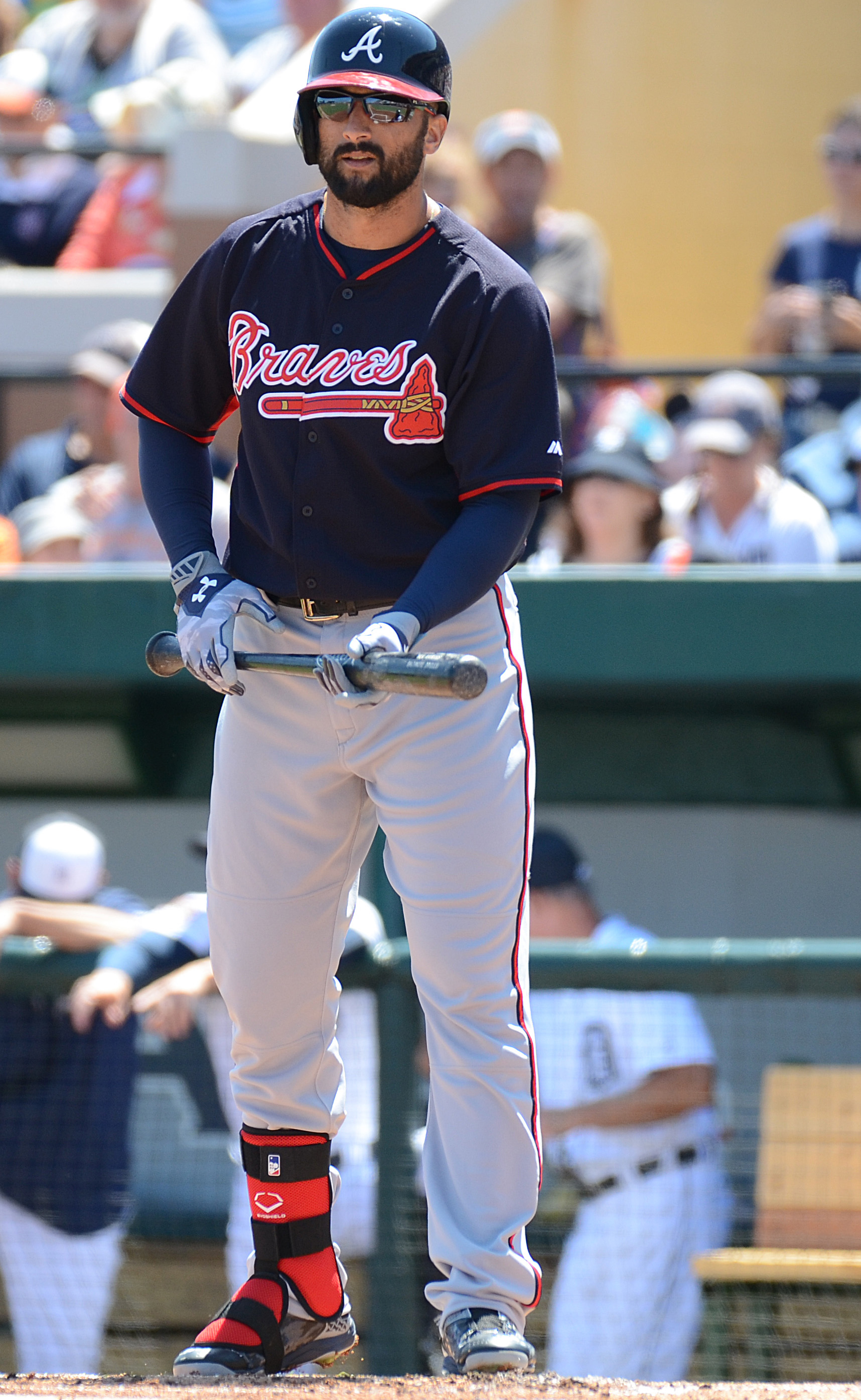
By wins above replacement, Markakis has generally been worth about two or two-and-a-half wins per season over the last several campaigns (excepting a rough 2013). If you accept that he is a significantly better outfielder than the metrics suggest, and buy into the idea that he’ll age well, then you can see some merit in a contract that pays him more or less what the Indians gave Michael Bourn, who was probably a 3 to 4 win player, depending upon which formula you prefer.
But there is risk here, and not a lot of upside. And there is a rather significant loss of flexibility for an Atlanta club that has fairly limited payroll (at least until it sees how revenues look upon the new park opening) and many needs. Notably, the Braves took on about the same overall commitment as they shed when they eventually traded away Melvin Upton Jr.
As always, it remains to be seen. Markakis could be a steady presence that helps make a bridge to the future and supports a pennant-winning club in the not-too-distant future. Or, he could be an expensive (albeit probably not crippling) mistake.
Overview
In the aggregate, the Braves managed to reduce their future (2016 and beyond) payroll commitments by just $7.55MM over the offseason. And that includes the savings achieved by moving Kimbrel himself, not just the Upton side of the deal. This is why the Markakis signing drew some quizzical reactions: as much turnover as Atlanta achieved, it did not substantially reduce its long-term cash on the books.
Of course, that is but one element of what the front office set out to do. By cashing in on expiring assets while they could, rather than extending players at all costs or trying to win one more time with the old core intact, Atlanta sought to cut off the downside scenario bypassed a potentially painful rebuilding process. Most of that future cash is owed to Freeman and Simmons, which is hardly a bad thing; each is still approaching his prime. And, the Braves will be free of Dan Uggla‘s salary after the year.
Whether or not one agrees with the Markakis move, he seems likely to be a useful player over the life of his deal. And the overall health of the franchise seems to have ticked upward after an immensely active winter.
Photo courtesy of USA Today Sports Images.
NL West Notes: Tomas, O’Brien, Kennedy, Ottavino
Despite the high-profile signing of Yasmany Tomas this winter, the D-Backs will use him primarily off the bench in his first taste of Major League action, GM Dave Stewart told reporters, including Nick Piecoro of the Arizona Republic. Tomas was promoted today, due in part to a lack of other options on the 40-man roster, Piecoro writes. Arizona had few other position players both healthy and on the 40-man, but despite that fact, Stewart said he didn’t consider transferring injured pitchers Matt Stites or Patrick Corbin to the 60-day disabled list. Stewart feels that each is close enough to being healthy that he didn’t want to risk a move to the 60-day DL. The GM also noted that he has not considered making a trade to alleviate some of his logjam of outfielders.
More on the D-Backs and their division…
- D-Backs prospect Peter O’Brien will go about a month without playing behind the plate, manager Chip Hale tells MLB.com’s Steve Gilbert. O’Brien will see some time in left field and at first base but is apparently receiving a mental break from catching after developing an issue throwing the ball back to the pitcher late in Spring Training. Clearly, that’s not the type of issue that any team wants to see from a player it has dubbed the “catcher of the future.” Common consensus among scouts and other organizations has been that O’Brien isn’t a good enough defender behind the plate to remain at the position, though he’s certainly hitting well enough to garner some attention early in the year. Through a small sample of 28 plate appearances, O’Brien’s batting .333/.357/.519 with a homer and two doubles. Many felt Arizona should have traded for catching help this offseason, but Stewart stated on multiple occasions that such a move was not the plan, partly because the club believed O’Brien could handle the position eventually.
- Padres right-hander Ian Kennedy is nearing a rehab assignment, reports MLB.com’s Corey Brock. Kennedy is slated to throw a bullpen session on Friday, and if all goes well, he’ll join a Minor League affiliate and look to throw 75 to 90 pitches in a rehab start. It’s possible that Kennedy will need a couple of rehab outings, though he’d probably prefer to return to the field sooner rather than later. As a pending free agent, Kennedy has quite a bit riding on his 2015 performance.
- Adam Ottavino has been named the new closer for the Rockies, writes Patrick Saunders of the Denver Post. Manager Walt Weiss wasted little time this season in swapping the hard-throwing 29-year-old and former closer LaTroy Hawkins, who will now pitch in a setup or middle relief role. An effective season as a closer would do wonders for Ottavino in arbitration next offseason, as he’d stand to see a sizable raise from this year’s $1.3MM salary if he can accumulate a year’s worth of saves. Ottavino’s numbers over the past two seasons indicate that he can indeed thrive in the role, as he’s pitched to a 2.97 ERA with 158 strikeouts against 48 walks in 148 2/3 innings dating back to 2013. Of course, as a closer, he’ll be more exposed to lefties, who have given him trouble in the past, but Ottavino tells Saunders that he feels more comfortable against opposite-handed batters after making some adjustments and keeping them in check during Spring Training. Fantasy players, remember that you can keep up with all closer trends and performances by following @closernews on Twitter.
AL Central Notes: Gose, Marcum, Santana, Rodon
While the season is still very young, the changes to Anthony Gose‘s swing are showing up in his results at the plate, and Jeff Sullivan of Fangraphs wonders if his revamped mechanics will lead to a surprising offensive season from the 24-year-old speedster. Upon being traded to the Tigers, Gose and Detroit hitting coach Wally Joyner worked to lower the positioning of his hands prior to the swing, and Gose is also swinging with more of an upward plane. Sullivan also points out that Gose is doing a better job of keeping his weight back, and he provides GIF breakdowns of Gose’s former swing versus his new cut. It had become clear that the old version of Gose wasn’t ever going to hit much, Sullivan writes, and while the reworked swing may be little more than “a new way to fail,” he writes that Gose’s upside with the new mechanics is greater, and the team’s recent success with reclamation project J.D. Martinez lends further reason for optimism.
A few more notes from the AL Central…
- Shaun Marcum accepted his outright assignment to the Indians‘ Triple-A affiliate earlier today, writes MLB.com’s Jordan Bastian, and the veteran knew at the time of the call-up that he’d likely only be on the roster for one day. “He knew coming in that it was going to be one [game],” manager Terry Francona told Bastian. “After he pitched so well, we were trying to figure out maybe a way to get around [designating him]. I think after talking through it, it’s not a fun thing to do, but I think it’s probably the right thing to do.” Marcum fired five innings of one-run ball Sunday for Cleveland, striking out four hitters against three walks (although two of the free passes were intentional). Those five frames marked his first big league work since 2013, and by accepting an outright to Columbus, Marcum will be able to serve as depth for the Indians again in the future should a need arise.
- Twins GM Terry Ryan again expressed disappointment when asked by Mike Berardino of the St. Paul Pioneer Press about Ervin Santana‘s suspension. “People are going to test positive because kids are kids and men are men,” said Ryan. “…You shouldn’t make that mistake. … If they take something, they ought to know what it is. That’s all, regardless of where you bought it or if it came from a reputable drug store or nutrition store or wherever. They’ve been educated pretty well about this program, and they know they’re going to get tested. They ought to know what’s going in (their bodies).”
- The White Sox haven’t announced a starting pitcher for Sunday’s contest yet, but before South Side fans get excited, Dan Hayes of CSN Chicago reports that the nod will not be going to top prospect Carlos Rodon. Manager Robin Ventura has said someone on the active roster will make the start. While Hector Noesi has made just one outing, off-days have allowed the Sox the opportunity to skip him in the rotation, with Jose Quintana taking his spot. Of course, the fact that Noesi struggled badly in his lone start — six walks and four hits in 4 2/3 innings against the Twins — and may be skipped in the rotation suggests that his grasp on a rotation spot isn’t necessarily all that firm. For what it’s worth, Rodon whiffed nine hitters against two walks in five innings of two-run ball in his Triple-A debut this season.
Diamondbacks Promote Yasmany Tomas
The Diamondbacks have called up recent Cuban signee Yasmany Tomas from Triple-A, the club announced. Tomas had opened the season in the upper minors despite inking a six-year, $68.5MM contract to join Arizona over the offseason.
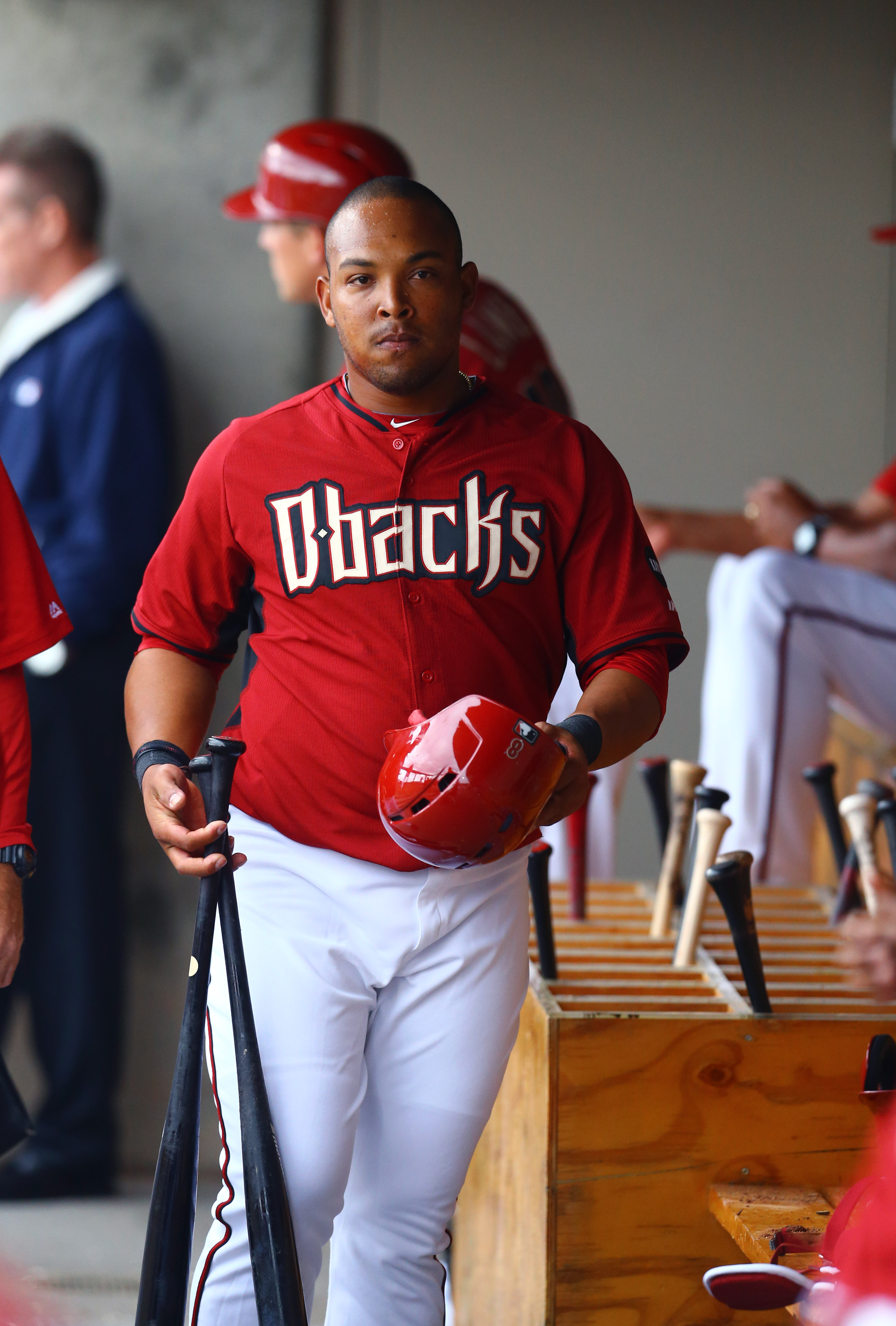
Of course, Tomas is just 24 years of age and never really settled on a defensive position over the spring, making his early-season demotion more than understandable. While he did not do much with the 23 plate appearances he saw at the Triple-A level, Tomas also got over 70 plate appearances in the spring to prepare him for the season.
Tomas has shown largely the skillset that was expected: he has immense power, but may not reach base at a productive clip. He seems to be capable of hitting big league pitching, though precisely how well remains to be seen. Baseball America listed him as the game’s 57th overall prospect based largely on his bat, noting the possibility that he’ll strike out a lot, though BA is also fairly bullish on his ability to be an average player in other respects.
The real question, it would seem, is defense. An experimental effort to play him at third did not look very promising over the spring, and fellow youngster Jake Lamb has hit his way into playing time there. First base is a non-starter with Paul Goldschmidt installed. The likeliest scenario, then, is that Tomas will play in the corner outfield, though it remains to be seen how much time he’ll get there with Mark Trumbo, David Peralta, and Ender Inciarte all in the mix.
With the move, Tomas’s service clock will start in time for him to compile a full year of MLB service in 2015. Of course, that likely will not mean much to him. Tomas is under contract through at least 2018 and possibly through 2020, as his contract contains an opt-out clause after four seasons. It’s theoretically possible, then, that Tomas could end up in an arbitration scenario, though it does seem rather unlikely.
Regardless, the timing of the move seems odd, as the D-Backs have said that they would prefer Tomas see regular playing time in the upper minors before ascending. Though it is possible that he will see consistent action in the big leagues, that will send someone else to the bench — presumably Peralta or Inciarte.
For the Diamondbacks, the allure of a lineup including the right-handed power of Tomas, Trumbo and Goldschmidt is easy to understand, but that lineup would likely lead to a defensive alignment featuring Trumbo and Tomas manning the outfield corners. A.J. Pollock‘s defensive wizardry in center field notwithstanding, that outfield defense would likely serve as a significant hindrance to an already questionable pitching staff.
Photo courtesy of USA Today Sports Images.
Dodgers Claim Ryan Dennick, Designate David Huff
The Dodgers have claimed lefty Ryan Dennick off waivers from the Reds, Ken Gurnick of MLB.com tweets. Los Angeles has designated David Huff to clear roster space for the move.
Dennick, 28, has only minimal experience at the big league level. He struggled through the 4 2/3 innings he saw last season, allowing six earned runs, including two long balls, and walking four batters while only retiring three by way of strikeout. But Dennick was solid last year at Triple-A. Over 50 frames, he put up a 2.34 ERA while striking out 7.2 and walking 3.2 batters per nine.
Huff, meanwhile, is a 30-year-old southpaw who received a spot start for Los Angeles last night. He lasted four innings, allowing four earned on seven hits and a walk while striking out a pair of Mariners hitters. Huff was actually quite effective last year after signing with the Yankees in the middle of the season, tossing 39 innings of 1.85 ERA ball for New York out of the pen.
Minor Moves: Rodriguez, Marcum, Davies, Freeman
Here are the day’s minor moves:
- Yankees farmhand Wilking Rodriguez, a right-handed pitcher, has been suspended for eighty games after testing positive for a PED (Furosemide). Rodriguez made two appearances last year for the Royals in the only major league action in his career. The 25-year-old has not yet appeared for the club’s Triple-A affiliate, though he did get a few frames in big league camp this spring.
- The Indians outrighted Shaun Marcum to Triple-A, the club announced. Marcum, a veteran righty, had one outing with Cleveland before losing his roster spot. He had a nice run of success in the bigs a few years back, but has dealt with injuries in recent seasons.
- Righty Kyle Davies has been outrighted by the Yankees, the club announced. The veteran returned to the big leagues after a long absence recently, but New York dropped him from the roster after just one outing.
- The Rangers have outrighted lefty Sam Freeman, as Stefan Stevenson of the Fort Worth Star-Tribune tweets. Freeman was designated by Texas not long after he was acquired from the Cardinals. It could be that the Rangers had this scenario in mind all along, as Freeman will now be on stand by to provide cheap and accessible depth if and when the need arises.
International Notes: Alvarez, Fox, July 2
Kiley McDaniel of Fangraphs has an extensive update on the upcoming amateur international market, including some familiar and some new names. Be sure to give the piece a full read for details, but we’ll run through some of the key notes here:
- Word is that young Cuban righty Yadier Alvarez will wait until after July 2 to sign, even if he gets a waiver to do so sooner, in large part because of chatter suggesting that the Dodgers will be major players in the market at that time. Los Angeles is widely tabbed as the likeliest team to land Alvarez, with some believing that a $16MM deal is already in place.
- One interesting name to watch is shortstop Lucius Fox, who was born in the Bahamas, played high school ball in the states, and then moved back to his home country while asking MLB to declare him an international free agent. He would likely land over a million dollars and wait til July 2 to sign if, as expected, MLB grants his request. If not, McDaniel says Fox could be a top-50 selection in the draft.
- McDaniel also breaks down the latest on this year’s crop of more traditional July 2 prospects. Among those expected to crack the $4MM bonus barrier include Vladimir Guerrero Jr. (expected to sign with the Blue Jays), Jhailyn Ortiz (Phillies), and Wander Javier (Twins).
- There are a whole host of July 2 players discussed beyond that group, most all of whom are documented by video.