
Cubs To Promote Kris Bryant
The Cubs will promote top prospect Kris Bryant to the Major Leagues for tomorrow’s game against the Padres, reports Jesse Rogers of ESPN Chicago (on Twitter).
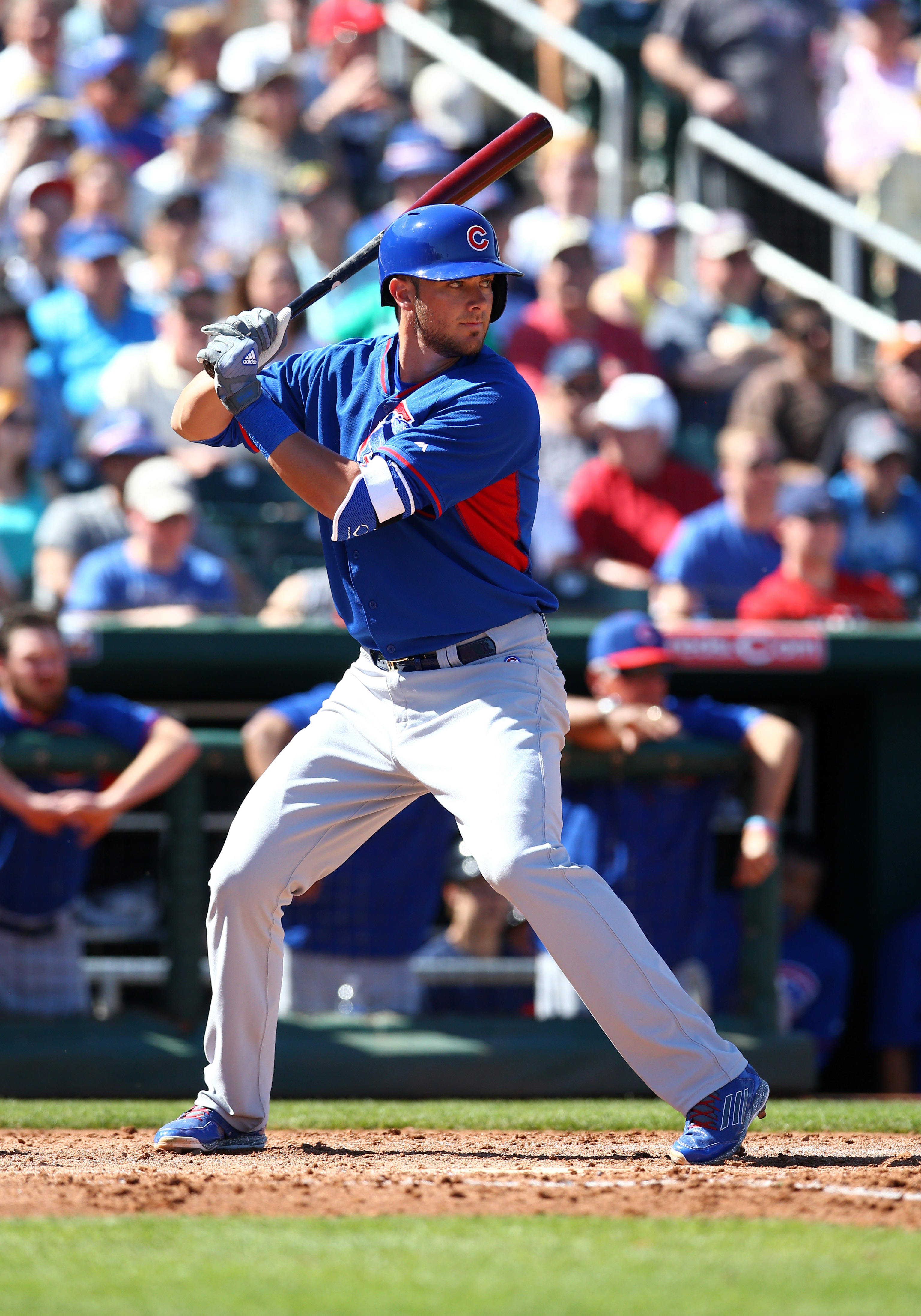
The 23-year-old Bryant was the No. 2 pick in the 2013 draft out of the University of San Diego and entered the season ranked as MLB’s No. 1 prospect according to both Baseball America and ESPN’s Keith Law. MLB.com and Baseball Prospectus ranked the third baseman second and fifth overall, respectively.
The timing of Bryant’s promotion isn’t exactly a surprise. Chicago generated some controversy by beginning Bryant in the Minor Leagues this season, but the move made sense for the team in the long term. By keeping Bryant in the Minors for the season’s first 12 days, he’ll fall one day shy of accumulating a full year of Major League service this season. While that means he will assuredly qualify as a Super Two player and be eligible for arbitration four times instead of the standard three, it also buys the team an additional year of club control. At the end of the 2020 season, Bryant will have five years, 171 days of Major League service time — assuming he is not optioned back to Triple-A at any point — leaving him a day shy of being eligible for free agency. In simpler terms, the Cubs opted to delay Bryant’s promotion by 12 days in order to extend their control over the phenom for an additional season.
Of course, the Cubs won’t acknowledge that as the reason for Bryant opening the year in Triple-A, nor should they. While the motives behind the decision are widely known, coming out and saying it would provide concrete fuel for a grievance from Bryant and agent Scott Boras. As MLBR’s Tim Dierkes noted earlier today, some teams have taken the plunge and allowed top prospects to break camp with the club, but it’s rarely, if ever, worth it for the team from a baseball standpoint. And there are plenty of other prospects who not-so-curiously open the year in Triple-A only to be promoted once enough time has passed to extend the team’s control by a year or to potentially prevent a player from reaching Super Two designation and entering arbitration an extra time.
While in some cases, the whole situation is mitigated by agreeing to a long-term contract that extends into a player’s free agent seasons, that was a highly unlikely outcome with the Boras-represented Bryant. Boras typically encourages his players to go year-to-year through the arbitration process and test free agency as early as possible. While there are a few notable exceptions, including Jered Weaver, Carlos Gonzalez and Carlos Gomez, the Cubs likely knew that their odds of controlling Bryant beyond the 2020 season without ponying up on a sizable free agent contract were slim. Boras outspokenly challenged the Cubs on their spring decision with Bryant, noting that it makes little sense for the team to claim it is trying to win while leaving a young player who could very well be one of the best on the team. In fact, in Boras’ mind, the question was not one of why Bryant may have to begin the season in the Minor Leagues, but rather one of why Bryant wasn’t promoted last September when rosters expanded.
From a statistical standpoint, it’s hard to say that Boras doesn’t have a case. Bryant annihilated Minor League pitching in 2014, hitting a ridiculous .325/.438/.661 with 43 home runs in 138 games between Double-A and Triple-A. This spring, he batted .425/.477/1.175 with nine home runs in 40 at-bats. And to begin the year in Triple-A, Bryant hit .333/.379/.625 with a pair of homers in 29 plate appearances — and that was before going deep with a three-run homer tonight. The Cubs cited a need to work on his defense, and president of baseball operations Theo Epstein accurately noted that he’s never had a prospect break camp out of Spring Training if it meant making his Major League debut on Opening Day. That reasoning appeared questionable at the time and looks transparent when juxtaposed with the convenient timing of his promotion, though the Cubs can point to the fact that both Mike Olt and Tommy La Stella are on the disabled list, creating a need at third base.
Bryant figures to step into an everyday role at third base or, potentially, in a corner outfield spot with the Cubs, hitting in the heart of their order. Few doubt that he’s ready to hit Major League pitching right now, and he adds to the Cubs’ growing young core. The Cubs are hoping that Bryant, along with the likes of Jorge Soler, Anthony Rizzo, Starlin Castro and Addison Russell, among others, will lead the team back to prominence and break a World Series Championship drought — the Billy Goat curse — that spans more than 100 years. The team spent aggressively this offseason to add Jon Lester to the top of a rapidly improving rotation that also features breakout star Jake Arrieta, and expectations are high already in 2015. Many are expecting the Cubs to make the playoffs this season, and Bryant would be a vital component of a playoff berth. In the unlikely event that the Cubs miss the playoffs by a single game, there will unquestionably be some second-guessing about the decision to hold Bryant in Triple-A to begin the year.
Whether or not one agrees with the Cubs’ tactics, they are not the first, nor will they be the last team to employ this method with a highly regarded prospect. There are clear long-term benefits from a baseball operations standpoint, and it’d be hard to justify having brought Bryant north with the team, in retrospect, at the end of the 2020 season if he were eligible for free agency entering his age-29 campaign.
Photo courtesy of USA Today Sports Images.
Quick Hits: Payrolls, DH, Suspensions, Trade Candidates
ESPN’s Jayson Stark examines the rising payrolls around the game, noting that even 10 years ago, just three teams has payrolls topping $100MM. This year, Stark points out, 22 clubs have $100MM+ payrolls. Stark spoke with Tigers GM Dave Dombrowski, Giants CEO Larry Baer and sports economics expert Andy Zimbalist about the change and its impact around the league. Dombrowski notes that the extra Wild Card added to each league has made teams more willing to spend, because more teams believe they can win, and he also discussed the impact of increased payrolls on roster construction around the league. Baer commented that the additional sources of revenue — namely, TV deals, I would presume — have made it easier for teams to sign players to long-term deals, because revenue is easier to project. Not that long ago, Baer notes, revenue was tied much more heavily to ticket sales, and signing a young player to an extension was riskier, because teams could only project revenue a few years out at a time.
A few more miscellaneous notes from around the league…
- Baseball America’s Matt Eddy provides a thorough, comprehensive explanation of his belief that it’s time for the National League to adopt the DH rule. Eddy notes that pitcher productivity is at an all-time low, relative to the production of non-pitchers — even as the production of non-pitchers declines in its own right. One NL assistant GM spoke to Eddy about the advantage that AL teams have not only in interleague games in AL stadiums, but in the ability to rest their best players while still giving them four at-bats. Eddy also argues that because improving their offensive prowess doesn’t accelerate their timeline to the Majors — no pitcher will be promoted because he’s a good hitter or withheld from the Majors to work on his swing — there is neither means nor incentive to improve their hitting skills. Eddy views the DH and the pitcher as “two sides of the same, hyper-specialized coin,” noting that a DH contributes solely to the offensive element of a game, whereas a pitcher functions as the key constituent of the defense. Interestingly, a 2013 poll of 18 MLB managers revealed that 12 of those managers were in favor of adding the DH to the NL, Eddy adds.
- Adam Kilgore of the Washington Post looks at the recent suspensions of Mariners lefty David Rollins, Twins right-hander Ervin Santana, Mets closer Jenrry Mejia and Braves prospect Arodys Vizcaino for Stanozolol and investigates a possible connection. Commissioner Rob Manfred said earlier this week that the league conducts an investigation anytime that there are multiple suspensions for the same banned substance, though he has no reason to assume a connection at this point. Kilgore spoke with subject matter expert Dr. Charles Yesalis about the tests and was told, “There is no way, in my mind, this is one big coincidence.”
- Cole Hamels, Johnny Cueto, Carlos Gonzalez, Scott Kazmir and Adrian Beltre top a list of midseason trade candidates compiled by Jim Bowden of ESPN (Insider subscription required/recommended). Kazmir’s inclusion is interesting, in that Bowden expects a trade to occur whether the A’s are contending or not, as he notes that the team won’t be able to afford to re-sign Kazmir. He speculates that Kazmir will be flipped, possibly for another Major League caliber starter to step into his spot, though as I pointed out in reviewing their offseason, the A’s already have a sizable reserve of rotation options from which to draw.
NL East Links: Realmuto, Nats, Phillies, Kimbrel
Giancarlo Stanton connected on his first homer of the season tonight — a two-run blast off Mets righty Dillon Gee that marked the 155th round-tripper of his career. The home run had particular significance for Stanton, who now moves past Dan Uggla into sole possession of the Marlins‘ all-time franchise home run record. Given his 13-year contract, one can expect that Stanton will occupy the top spot on that list for quite some time.
Another Marlins item and some news from around the division…
- Marlins catcher J.T. Realmuto had two hits in the team’s win yesterday and started again on Thursday, and the top prospect could be ticketed for a more significant role on the team moving forward, writes MLB.com’s Joe Frisaro. Manager Mike Redmond said he spoke with Jarrod Saltalamacchia, who is earning $7MM in 2015, about the division of playing time already. “I think it’s always a touchy situation anytime you have conversations with guys, and you have to give them a break,” Redmond explained. “…[W]e’re trying to win ballgames. If giving Salty a few extra days here or there helps him and helps us, then it will be worth it.”
- The Nationals have had quite a bit of bad luck in terms of injuries early in the season, but Chelsea Janes of the Washington Post tweets that GM Mike Rizzo is focusing on internal options to patch up the bullpen. Of course, Janes’ tweet did come prior to the announcement that Craig Stammen may be lost for the season, but the Nats likely were prepared for bad news on Stammen at the time of her tweet.
- Without a left-handed reliever in the bullpen beyond Jake Diekman, the Phillies could use an upgrade in that area but are short on internal options, writes MLB.com’s Todd Zolecki. GM Ruben Amaro Jr. seemingly expressed a bit of frustration that lefty relief option Andy Oliver elected free agency rather than remaining with the club when he didn’t make the Opening Day roster. Zolecki writes that Oliver would’ve been on a short list of potential call-ups, and Amaro spoke candidly about the 27-year-old Oliver’s decision to leave: “We offered him a pretty good deal to come back. He just decided to go somewhere else. I think it was a very foolish move on his part, but that’s OK. He had a choice. He had that right.”
- Braves manager Fredi Gonzalez spoke with Steve Phillips and Todd Hollandsworth of MLB Network Radio about the conversations he had with president of baseball operations John Hart prior to the finalization of the Craig Kimbrel trade (audio link). Gonzalez learned of the strong possibility of a trade 48 hours prior to its completion, and he called that time “maybe the toughest two days.” Gonzalez said it was difficult to see Kimbrel leave because of his talent and what he meant to the organization, and he also discussed the conflict he felt as a manager. “I’m going to have to put on two different hats here,” said Gonzalez. “You’re asking me to trade the best closer in the game, and you’re asking me to win ball games and I’m in the last year of my contract. But then you’re telling me the reasons of why we’re doing it and why it’s going to help the organization. … I took a step back and digested for a day and a half — I think it was going to happen whether I said yes or no — but I said, ‘You know what John, this is what’s best for the organization. This is what we have to do.'”
NL Central Notes: Bryant, Soriano, Gomez, Lackey
While some have suggested that the Cubs preferred Mark Appel to Kris Bryant in the 2013 draft, scouting director Jason McLeod explains to Phil Rogers of MLB.com that that isn’t the case; the Cubs only planned to select Appel if the Astros selected Bryant with the No. 1 overall pick that season. Rogers spoke with McLeod and cross-checker Sam Hughes about the decision to draft Bryant and how he moved up the Cubs’ draft board with a strong performance in his junior year at San Diego. McLeod admitted that the Cubs had concerns about Bryant’s hit tool, but Hughes went to bat strongly for Bryant after watching him and other top draft bats, including Austin Meadows and Clint Frazier. Most pundits expected the pitching-hungry Cubs to select on of Appel or Jon Gray — whichever the Astros didn’t draft — but McLeod said the Cubs preferred to take a volume approach to pitching rather than select one of the top arms. “History tells us pitching comes from all different parts of the Draft,” said McLeod. With Bryant’s debut nearing, Rogers notes that perhaps one of the best decisions under the Cubs’ new front office has been defying the widely expected decision to select a pitcher in favor of Bryant’s bat.
Here’s more from the NL Central…
- Reds GM Walt Jocketty tells John Fay of the Cincinnati Enquirer that despite the team’s bullpen issues, he hasn’t reached out to agent Scott Boras about Rafael Soriano, and Boras hasn’t contacted the Reds about Soriano (Twitter link). Jocketty feels that Soriano would be too expensive, according to Fay. While Soriano may not be in the mix, the Reds certainly need to pursue some form of upgrade. Kevin Gregg has allowed runs in each of his four outings (two runs in three and one in another), and the team’s collective 4.55 ERA is the fifth-highest in baseball. The group’s FIP is even worse, as no team sports a worse mark than Cincinnati’s 5.10.
- Carlos Gomez will be placed on the 15-day disabled list with a small defect or tear in his right hamstring, tweets Tom Haudricourt of the Milwaukee Journal-Sentinel. He has already received a cortisone shot. Earlier today, MLB.com’s Adam McCalvy wrote that Gomez was back in Milwaukee for an MRI after feeling a “pop” while running to first base in the ninth inning of last night’s game. The Brewers will need to make a roster move in order to replace Gomez, and as McCalvy notes, Shane Peterson is the only outfielder on the 40-man roster that is not in the Majors.
- Cardinals right-hander John Lackey has every intention of playing in 2015, tweets Bob Nightengale of USA Today. “I wouldn’t be pitching this year if I didn’t plan on pitching next year,” Lackey told Nightengale. The veteran Lackey is, of course, playing for the league minimum in 2015 because of a clause in his previous five-year, $82.5MM pact with the Red Sox that added an additional year at that rate in the event of a significant elbow injury. (Lackey had Tommy John surgery midway through that deal.) The Redbirds acquired him from the BoSox last year in exchange for Joe Kelly and Allen Craig.
Rays Sign J.P. Arencibia To Minor League Deal
The Rays have signed catcher J.P. Arencibia to a Minor League contract, tweets Marc Topkin of the Tampa Bay Times. The veteran Arencibia, a client of CAA Sports, will head to the Rays’ Triple-A affiliate in Durham, per Topkin.
The 29-year-old Arencibia was outrighted by the Rangers last winter and elected free agency rather than accepting an assignment to the Minors. He originally inked a Minors pact with the Orioles, but Baltimore cut him loose last week when he had previously been expected to join their Triple-A affiliate. Perhaps it’s not a surprise that Arencibia preferred not to head to Triple-A with Baltimore, as the O’s have a significant amount of catching depth already in their organization.
The same cannot necessarily be said of the Rays, who are currently relying on a tandem of Rene Rivera and Bobby Wilson behind the plate, with Curt Casali as the top option at the Triple-A level. Arencibia has more big league service time than any of those catching options, even Rivera, and will give Tampa a depth option with significant power but difficulty managing his strikeouts and getting on base.
Arencibia, once considered one of baseball’s top prospects, was the Blue Jays’ regular catcher from 2011-13, averaging 21 homers per season and 28 per 162 games played. However, his OBP dropped regularly in that stretch, bottoming out at an alarming .227 in 2013. Arencibia also saw his strikeout rate climb from 27.4 percent to 29 percent to 29.8 percent over that three-year stretch. He joined the Rangers last season and saw some time at first base but did little to pick up his offensive game.
From a defensive standpoint, Arencibia has been just a tick below average in controlling the running game (26 percent caught-stealing rate) and steadily improved his pitch framing. He graded above average in that latter skill in 2013 and average in 2014.
Blue Jays Designate Todd Redmond For Assignment
The Blue Jays have designated right-hander Todd Redmond for assignment, as per a team press release. Infielder Ryan Goins has been recalled from Triple-A in a corresponding move.
Redmond had gotten off to a rough start in 2015, posting a 16.62 ERA in 4 1/3 innings of work, allowing five walks to four strikeouts in that brief stretch. Originally claimed off waivers from the Orioles in March 2013, Redmond posted league-average numbers for Toronto as a fill-in starter in 2013 and then was a solid relief arm (3.24 ERA, 7.2 K/9, 2.22 K/BB rate) over 75 innings for the Jays last season. He held right-handed batters to a .242/.287/.360 slash line last year, though lefty batters had a much heftier .834 OPS against Redmond.
As per the MLB Trade Rumors DFA Tracker, Redmond is one of three players currently in ‘limbo,’ along with the Nationals’ Xavier Cedeno and the Yankees’ Matt Tracy.
International Notes: Bonus Pools, Dodgers, Cubs
Yesterday, Fangraphs’ Kiley McDaniel looked ahead to the 2015-16 international signing period by looking at several of the top prospects expected to land large bonuses on or after July 2. Today, McDaniel is back with the second part of his piece, this time examining how particular clubs are going to approach this next round of international spending. For reference purposes, here are the 2015-16 international bonus pools for each team, as compiled by Baseball America. If a team exceeds its pool, they have to pay a 100% tax on any overage and are prohibited from spending more than $300K to sign any player in the 2016-17 and 17-18 international periods (provided that the current rules aren’t altered in the next collective bargaining agreement).
Some of the highlights of McDaniel’s latest work, focusing on the teams most likely to exceed their bonus pool and face that two-year penalty…
- The Dodgers are, unsurprisingly, the only team McDaniel lists in the “(almost) anything is possible” category. By not signing Yoan Moncada, the Dodgers retained their ability to spend freely in the 2015-16 market, and it seems the team will go far beyond its $2.02MM bonus pool limit. The Dodgers are rumored to already have agreements in place with Yadier Alvarez (for $16MM), Dominican center fielder Starling Heredia ($3MM) and Dominican shortstop Ronny Brito ($2MM).
- The Cubs‘ previous ban on signings of more than $250K will expire on July 2, and the team is reportedly already planning to again exceed its international budget. McDaniel lists seven players who have deals in place with Chicago, the most expensive of which is a $2MM bonus for Dominican shortstop Aramis Ademan.
- The Rangers are another club coming off a ban, and “they’re at least thinking long and hard about” exceeding their pool limit again, though McDaniel hears from rival scouts that Texas’ international planning may have “got a bit of a late start” due to A.J. Preller and Don Welke leaving for the Padres. Three rumored agreements should put the Rangers roughly at their approximate $4.586MM bonus pool already, and the club is still checking in on other high-priced talent.
- The Royals have a shot at staying under their bonus limit if they trade for some extra space, though it looks like Kansas City will probably slightly exceed their pool (a little over $2.07MM).
- The Blue Jays also seem likely to slightly go over their spending pool (roughly $2.324MM) and it could be entirely for the sake of their much-rumored agreement with Vladimir Guerrero Jr. McDaniel believes Toronto’s agreement with Guerrero is worth $4.4MM and he hasn’t heard any news that the Jays have any other deals lined up with other prospects, though he figures they’ll sign one or two other notable players “to make the most of going over.” While fans now associate exceeding the bonus limit with extreme cases like the Yankees or Red Sox, McDaniel notes that most clubs who exceed their pools are like the Jays, who fit the model of a team who “found a couple players they really like in a year they didn’t have a ton of money to spend.”
- Since they had hoped to sign Moncada and thus be facing a penalty for the 2015-16 signing period, the Padres seemingly don’t have any deals lined up. McDaniel considers them a “wild card” due to Preller’s aggressiveness.
Bullpen Notes: Stammen, Ramirez, Martin
The Nationals relief corps took another blow yesterday when righty Craig Stammen was placed on the 15-day DL with stiffness in his right forearm. Stammen will undergo an MRI soon and he told reporters (including CSN Washington’s Mark Zuckerman) that he is at least somewhat worried that it could be a more serious elbow injury. Nats GM Mike Rizzo also told the media, including Chelsea Janes of the Washington Post, that the club is going with internal bullpen options for the time being. Rafael Martin and Taylor Jordan were called up to replace Stammen and the recently-designated Xavier Cedeno, and Martin made an impressive MLB debut Wednesday, recording five strikeouts over two innings of work against the Red Sox.
Here are some more bullpen items from around baseball…
- Cubs righty Neil Ramirez could also be facing some bad injury news, as he left Wednesday’s outing after just three pitches with a shoulder problem. Ramirez will undergo an MRI today, ESPN Chicago’s Jesse Rogers reports. The reliever’s status has a bigger-picture impact on the rumored promotion of top prospect Kris Bryant on Friday. If Ramirez needs some DL time, the Cubs could promote a reliever and continue with a 13-man pitching staff rather than call up Bryant and thin out an already heavily-worked bullpen.
- Right-hander Cody Martin is off to a strong start, and the Braves rookie reliever tells MLB.com’s Mark Bowman that he is partially motivated by the fact that Atlanta didn’t protect him in the Rule 5 Draft last winter. “That was tough, but I knew I belonged [on the roster] and belonged in the big leagues….I took it as a challenge to prove them all wrong, especially all the teams that didn’t pick me in the Rule 5 Draft,” Martin said. “It all worked out pretty good. I’m where I need to be right now.”
- Arquimedes Caminero enjoyed a strong Spring Training and earned a spot in the Pirates bullpen. As Fangraphs’ Jeff Sullivan writes, the hard-throwing Caminero might be another reclamation success story for Bucs pitching coach Ray Searage, who encouraged the righty to simplify his delivery. The result has been the fastest average fastball in the game this season, as Caminero is averaging 98.9 mph according to Fangraphs’ measurements.
Yankees Interested In Braves’ Jose Peraza
11:22am: A Braves official tells David O’Brien of the Atlanta Journal-Constitution (Twitter link) that the prospect of the club trading Peraza is a “complete fabrication.”
8:26am: The Yankees have been scouting Braves second base prospect Jose Peraza, former Major League scout Jeff Wren (brother of ex-Atlanta GM Frank Wren) reports via Twitter. According to George A. King III of the New York Post, the Yankees have informed the Braves about their interest in Peraza, and King notes the Yankees are presumably interested in Peraza as a potential long-term answer at second.
Peraza, who turns 21 on April 30, was originally signed by the Braves for a $350K bonus out of Venezuela in 2010. He has steadily climbed through Atlanta’s farm system and broke out with a .339/.364/.441 performance over 499 plate appearances (304 at the high-A level, 195 at Double-A) in 2014. Speed is Peraza’s calling card, as he went 60-for-75 in stolen base attempts last season and is 178-for-220 in steals over his minor league career.
That big 2014 season earned Peraza a spot in several major top-100 prospect lists, albeit within a wide range. ESPN’s Keith Law had Peraza as high as #24 in his preseason rankings, while MLB.com had him 39th (and first among Braves prospects), Baseball America had him 54th and Baseball Prospectus ranked Peraza in the 92nd slot.
It’s worth noting that Peraza is a natural shortstop and only became a primary second baseman last year, as the Braves shifted him since Andrelton Simmons has the position locked down at the MLB level. The 2014 Baseball America Prospect Handbook praised Peraza’s hands and quick release and believed “he should be able to remain” at either middle infield position as he develops.
With this in mind, it’s possible the Yankees could see Peraza as a potential answer at shortstop rather than second base. Both positions are rather up in the air for the club — Didi Gregorius has gotten off to a slow start both offensively and defensively, while veteran Stephen Drew is considered a placeholder for either Rob Refsnyder or Jose Pirela. Refsnyder, however, has had defensive problems while Pirela is recovering from a concussion, King notes.
King speculates that New York could offer a package of two prospects for Peraza, one of whom could be catcher Gary Sanchez. The Yankees seem set on John Ryan Murphy as their catcher of the future in anticipation of Brian McCann‘s eventual shift away from behind the plate, leaving Sanchez possibly expendable. Sanchez was himself a highly-ranked prospect prior to the 2014 season, which saw him post solid offensive numbers at Double-A, but his defensive prowess is a question mark and “his work ethic and maturity are concerns” according to the MLB.com scouting report.
As for the second minor leaguer in the deal, King doubts the Yankees would move Luis Severino, the club’s top pitching prospect. I agree with King — Severino and Peraza are roughly on the same level of value, so moving Severino and more would command a higher return than just Peraza.
That said, New York would certainly have to offer something significant to convince the Braves to part with Peraza whatsoever. Atlanta acquired a bit of young middle infield depth in the form of Jace Peterson this offseason, so it’s possible they could be more willing to move Peraza.
11 MLB Top Prospects Who Conquered Service Time
Is there ever a good reason for a team to put their MLB-ready top prospect on the Opening Day roster, as the Diamondbacks recently did with Archie Bradley? As we’ve seen with the Cubs and Kris Bryant, waiting at least 12 days into the season ensures the team will control the player for a seventh season. Forward-looking teams that are willing to wait before calling up their phenom can delay his free agency by a year, and that extra year of control is generally more valuable than having the player for the first two weeks of April. However, we found 11 examples in the last decade of top MLB prospects who did make the Opening Day roster. You might say these players conquered the service time issue, or at least were lucky enough to have GMs who disregarded it.
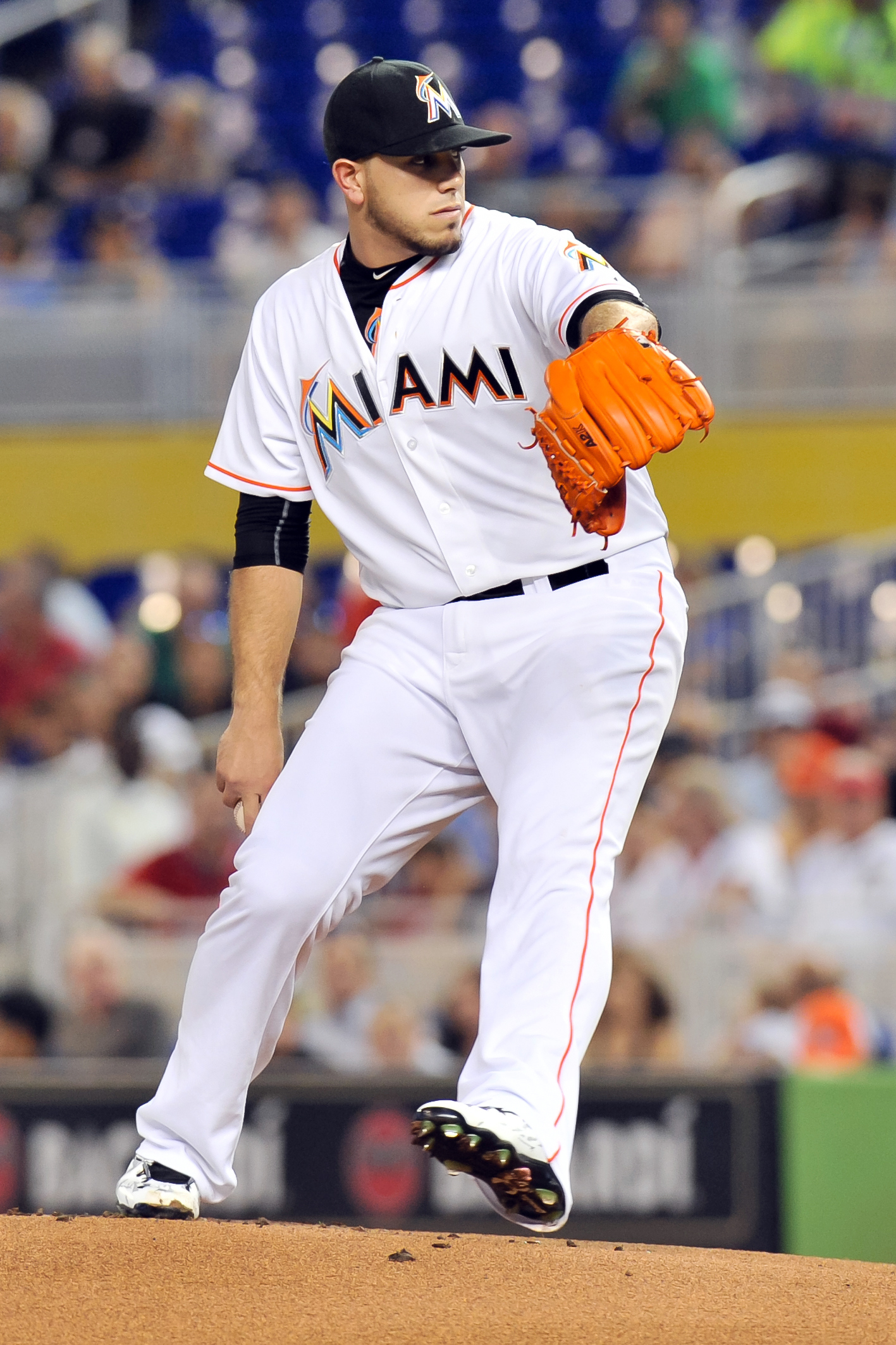
1. Jose Fernandez, Marlins SP. Marlins President of Baseball Operations Larry Beinfest certainly would have been justified giving Fernandez a little more minor league seasoning in 2013. The game’s #5 overall prospect according to Baseball America, Fernandez was just 20 years old and had never pitched above A ball. But when Marlins starters Nathan Eovaldi and Henderson Alvarez got hurt, Fernandez surprisingly made the team.
Was it worth it? Fernandez didn’t make his Marlins debut until April 7th, 2013, so they ultimately traded his five-inning debut for control of his age-26 season, which will happen in 2019. He was clearly ready to make the jump, as Fernandez won the National League Rookie of the Year award. However, over a year of the Marlins’ control of their young ace was lost when he went under the knife for Tommy John surgery the following season. The team put him on the 2013 Opening Day roster even with the knowledge that he was represented by notorious agent Scott Boras, who generally encourages players to avoid extensions that delay free agency. In December, the Marlins reportedly made a six-year offer (with two club options) worth close to $40MM, but no deal was reached. Even if they do reach some kind of precedent-shattering deal, five extra innings from Fernandez as part of a 100-loss season was not worth it for the Marlins.
2. Jedd Gyorko, Padres 2B. Gyorko came into 2013 as BA’s #71-ranked prospect, and he spent Spring Training working on the transition from third to second base. Injuries to Chase Headley and Logan Forsythe helped open the door for GM Josh Byrnes to put Gyorko on the Opening Day roster.
Was it worth it? It’s possible that the goodwill from Byrnes’ lack of regard for service time helped encourage Gyorko to sign a six-year, $35.5MM extension with a club option with the Padres a year later. In that contract the Padres paid a free agent price for the 2019 season ($13MM), which potentially could have been cheaper had that represented his fourth year of arbitration. Or, an extra year of control might have convinced Byrnes to wait another season before proposing an extension. Gyorko struggled mightily with injuries and performance as a sophomore in 2014, and the extension might end up being regrettable.
3. Mike Leake, Reds SP. The Reds drafted Leake eighth overall in 2009 out of Arizona State, and with nothing more than an Arizona Fall League stint under his belt as a pro, he beat Travis Wood for the fifth starter job to begin the 2010 season. He pitched well enough as a rookie, but was moved to the bullpen in August and his season ended on the 24th of that month.
Was it worth it? The Reds won the division by five games in 2010, and Leake was a part of that. Leake was wild on his April 11th debut, but still beat the Cubs. Since GM Walt Jocketty could have easily let him make his debut a few days later, it was not worth it. Controlling Leake for 2016, his age 28 season, would have been valuable, even if he would have cost $14MM through arbitration.
4. Austin Jackson, Tigers CF. Tigers GM Dave Dombrowski acquired Jackson in the epic three-team December 2009 trade that also included Max Scherzer, Curtis Granderson, Ian Kennedy, Edwin Jackson, Phil Coke, and Daniel Schlereth. Jackson was regarded as the #76 prospect in baseball, and he became the Tigers’ Opening Day center fielder.
Was it worth it? Jackson hit quite well in his first dozen games or so, and his performance easily could have led to an additional win or two. It wasn’t worth it in that the Tigers finished at .500, but at the time Dombrowski’s decision was defensible. Jackson was again part of a big three-team deal at the 2014 trade deadline. He would have carried more trade value with 2016 control, though teams will be down on him for next year if his current struggles persist.
5. Jason Heyward, Braves RF. In a situation analogous to Bryant, the Braves had the game’s best prospect prior to the 2010 season in Heyward. Heyward had just three games of Triple-A experience, but GM Frank Wren couldn’t resist putting the 20-year-old on the Opening Day roster after a legendary Spring Training.
Was it worth it? The Braves won the Wild Card by one game and Heyward had a very strong start, so this is a rare case where it was worth it. The Braves traded Heyward to the Cardinals last November with Jordan Walden for Shelby Miller and Tyrell Jenkins. That was a solid return, but of course the Braves would have done better if they controlled Heyward for ’16 as well.
6. Colby Rasmus, Cardinals CF. Rasmus was Baseball America’s #3 prospect prior to the 2009 season. He made GM John Mozeliak’s Opening Day roster, but wasn’t in the outfield when the Cards battled Pittsburgh on April 5th.
Was it worth it? The Cardinals won the Central Division handily in ’09, but since Rasmus didn’t start every game those first few weeks, it probably wasn’t worth putting him on the Opening Day roster. When Mozeliak traded Rasmus to the Blue Jays in an eight-player deal in July 2011, the outfielder had three-plus seasons of control remaining. It was well-known by that point that Rasmus had worn out his welcome in St. Louis, so while the additional year of control always increases a player’s trade value, it might not have made a huge difference here.
7. Elvis Andrus, Rangers SS. In December 2008, Rangers GM Jon Daniels and manager Ron Washington told face of the franchise Michael Young he’d be shifting from shortstop to third base in 2009, paving the way for one of the game’s top 40 prospects in Andrus.
Was it worth it? Andrus hit quite well in those first few weeks, and surely made some plays at shortstop Young would not have. The Rangers won 87 games and fell short of the Wild Card, but at the time the decision was made, it was defensible. Three years later Andrus signed a deal buying out only his arbitration years, and then a year after that Andrus asked agent Scott Boras to get him a long-term extension, even though it meant missing the chance at being the rare 26-year-old free agent. Boras got Andrus a huge deal with a pair of opt-outs. If in spring 2013 the Rangers already controlled Andrus through 2015, they would have at least approached those extension talks differently.
8. Brett Anderson, Athletics SP. Savvy GMs had no problem putting top prospects on Opening Day rosters back in 2009. Even Billy Beane did it with Anderson, the game’s #7 prospect heading into that season, even though the lefty had made only six starts above A ball. Anderson was the team’s fourth starter out of the gate, losing his first couple of starts.
Was it worth it? With a starting pitcher it’s almost never “worth it,” since the extra MLB time amounts to one or two starts. Anderson had a solid rookie year for the A’s, and maybe Beane’s gesture of putting him on the Opening Day roster was a factor in him signing a four-year, $12.5MM deal with two club options a year later. The contract bought back the potential year of control the A’s lost (2015), and that $12MM club option probably still had a bit of value to the Rockies when they acquired Anderson in December 2013. They ultimately chose a $1.5MM buyout instead, as Anderson’s injury woes continued in Colorado.
9. Johnny Cueto, Reds SP. Cueto was BA’s #34 prospect prior to the 2008 season, and he broke camp as part of the Reds’ rotation. Cueto dazzled in his first couple of the starts, and the Reds won his debut by one run.
Was it worth it? That extra Cueto-related win didn’t matter much for the Reds, who finished in fifth place in ’08. It’s possible that some goodwill from GM Wayne Krivsky’s decision came into play in January 2011, when new GM Walt Jocketty signed Cueto to a four-year deal with a club option for ’15 (an easy choice to exercise last fall). If Cueto was held in Triple-A for a few weeks to begin ’08, would he have chosen not to sign an extension later? In that scenario, he would have reached free agency after 2014. It’s also possible that a few weeks as a rookie wouldn’t have mattered to him, and controlling him through ’14 could have meant signing him to an extension running through ’16.
10. John Danks, White Sox SP. White Sox GM Kenny Williams acquired Danks from the Rangers in December 2006, sending Brandon McCarthy to Texas. Like Dave Dombrowski with Austin Jackson, Williams couldn’t wait to get his new acquisition on the big league club. It’s kind of like a kid getting a new toy and opening the box on the ride home.
Was it worth it? Danks would have benefited from additional Triple-A seasoning, as he posted a 5.50 ERA as a rookie. He was decent in his first couple of starts, though the White Sox lost both games en route to a fourth place finish. Williams’ decision set Danks up for free agency after 2012, but he signed a five-year, $65MM extension prior to his walk year. Danks wound up needing shoulder surgery in 2012. An extra year of control might have prevented the White Sox from extending Danks in general, in which case they wouldn’t have him on the books currently.
11. Nick Markakis, Orioles RF/LF. Top Orioles exec Mike Flanagan put Markakis on the team’s Opening Day roster back in 2006. The 22-year-old had played just 33 games above A ball.
Was it worth it? Markakis didn’t play every day in the season’s first few weeks and the Orioles finished in fourth place. Flanagan’s roster decision had Markakis on track for free agency after 2011, but in January 2009 Andy MacPhail signed him to a six-year, $66.1MM extension with a club option for 2015. I don’t think much would have changed with the contract had Flanagan waited a few weeks in ’06 to call Markakis up.
What have we learned? Two weeks of a rookie in April is rarely directly worth trading for a seventh year of control, but the tradeoff can be defensible for certain teams and players. Also, the extra year of control could impact extensions in multiple ways. On one hand, it’s possible some players signed extensions partially because of the goodwill from being placed on the Opening Day roster. On the other hand, an additional year of control might have bought GMs more time to gather data on whether certain extensions were worth pursuing in the first place.
Please note that we looked for examples within the last ten seasons, omitting players like Joe Mauer, and we also left out relievers such as Joel Zumaya and Huston Street.