
Million Dollar Minor League Deals
Last night, MLBTR's Mike Axisa took a look at a list of fifteen players who have signed Major League deals this offseason but failed to secure themselves a guarantee of $1MM. While we don't have the exact figures on all minor league signings, it's interesting to see that so far nine players have signed minor league deals with larger guarantees should they make their club's Major League roster, as shown on MLBTR's Transaction Tracker:
- Joe Beimel: $1.75MM with the Pirates
- Freddy Garcia: $1.5MM with the Yankees
- Andrew Miller: $1.3MM with the Red Sox
- Felipe Lopez: $1MM with the Rays
- Dave Bush: $1MM with the Rangers
- Braden Looper: $1MM with the Cubs
- Jeff Suppan: $1MM with the Giants
- Jason Giambi: $1MM with the Rockies
- Jose Veras: $1MM with the Pirates
Some interesting takeaways from this list:
- The largest minor league contract this season so far was given out to a left-handed reliever. This is Beimel's fourth career minor league deal, according to Cot's Baseball Contracts.
- Three of the players — Bush, Looper, and Suppan — were all members of the same Brewers' rotation in 2009. The trio combined for 470 2/3 innings of 5.53 ERA ball.
- While the move was praised at the time, Boston's plan to acquire Lopez in the hopes of obtaining a supplemental draft pick for him didn't pan out because he signed a minor league deal.
Like the list of six-figure Major League guarantees, this could and likely will grow as Spring Training approaches. Remember too that each of these deals includes incentives to carry them beyond their base. Garcia, for example, could earn up to $5.1MM if he pitches a full, effective season in the Bronx.
The list serves as an interesting reminder that while minor league deals are often times an afterthought, they can still provide lucrative paydays if the recipient performs well.
The Six-Figure Contract Club
Big money contracts rule the offseason and rumor circuit, which is why Ben Nicholson-Smith recently recapped the 20 biggest free agent deals of the offseason. Three players signed for $100MM+, four others signed for $50MM+, and five others signed for $30MM+. Not everyone is that lucky though.
As MLBTR's Free Agent Tracker shows, a total of 15 players have signed guaranteed one-year contracts worth less than a million bucks this winter. That does not include minor league contracts, incentives, or option years. As Spring Training draws closer, you can expect to see more players added to this pool. Here's a list of those 15 players, sorted by highest contract value to lowest…
- Dustin Moseley: $900K with the Padres.
- Joel Peralta: $900K with the Rays.
- Fred Lewis: $900K with the Reds.
- Matt Albers: $880K with the Red Sox.
- Matt Treanor: $850K with the Rangers.
- Jorge Cantu: $850K with the Padres.
- Wil Nieves: $775K with the Brewers.
- Brian Tallet: $750K with the Cardinals.
- Ryan Rowland-Smith: $720K with the Astros.
- Justin Duchscherer: $700K with the Orioles.
- Nick Punto: $700K with the Cardinals.
- Tony Gwynn Jr.: $675K with the Dodgers.
- Jay Gibbons: $650K with the Dodgers.
- Taylor Buchholz: $600K with the Mets.
- Scott Olsen: $500K with the Pirates.
All but Treanor, Cantu, Punto, Duchscherer, and Gibbons were non-tendered. Moseley, Albers, Nieves, Rowland-Smith, Gwynn, and Buchholz all remain under team control beyond 2011 as arbitration-eligible players.
What Doesn’t Apply In Arbitration
Earlier today, MLBTR examined the collective bargaining agreement and surveyed agents and executives to determine what matters in arbitration cases. As the CBA explains, player performance, previous earnings and comparable players figure in to arbitration hearings, but there's a limit to what is applicable. Evidence of the following is not admissable in arbitration hearings:
- The financial position of the player or the team.
- Press comments or testimonials about the performance of either the player or the club. "Recognized annual Player awards for playing excellence" are the exception to this rule, so Josh Hamilton will absolutely bring up his MVP if he and the Rangers go to a hearing.
- Offers made by either side before the hearing.
- The cost of representatives hired by the player or team.
- Salaries in other sports or fields.
- Keep track of the remaining unsigned arbitration eligible players and all the players who have signed with our Arb Tracker.
What Matters In Arbitration
Arbitration matters to teams and players alike, since millions of dollars are often at stake in a single hearing. But the process by which teams and players settle salary disagreements can be confusing, since the system is complex and the hearings are private.
At least one thing is simple about arbitration – the statistics. Sabermetricians have developed stats for just about everything, but teams and agents don't want to risk alienating arbitrators with wOBA, xFIP or UZR, so they stick to the basics. Wins don't necessarily indicate how effective a pitcher has been, but they will impact how much he gets paid. Innings pitched, ERA, RBI, runs, homers and doubles figure in, along with other back-of-the-baseball-card stats like batting average, on-base percentage and slugging percentage.
But arbitration eligible players have at least two-plus seasons of big league experience, so determining precisely which seasons are relevant is subject to interpretation. The collective bargaining agreement between the owners and the players spells out what matters in an arbitration hearing without going into excessive detail.
"The criteria will be the quality of the Player’s contribution to his Club during the past season (including but not limited to his overall performance, special qualities of leadership and public appeal)," the agreement reads, "the length and consistency of his career contribution, the record of the Player’s past compensation, comparative baseball salaries [and] the existence of any physical or mental defects on the part of the Player."
In other words, the player's most recent (or platform) season matters and so do career numbers, previous earnings and comparable players. But those four factors are weighed differently depending on how much service time the player has. MLBTR surveyed MLB executives and agents to make sense of the CBA and determine what matters most in arbitration.
When a player is arbitration eligible for the first time, the "the length and consistency of his career contribution" matters a whole lot. It's the first opportunity for the player to reap the benefits of his first few major league seasons, so his entire career matters, not just the platform year.
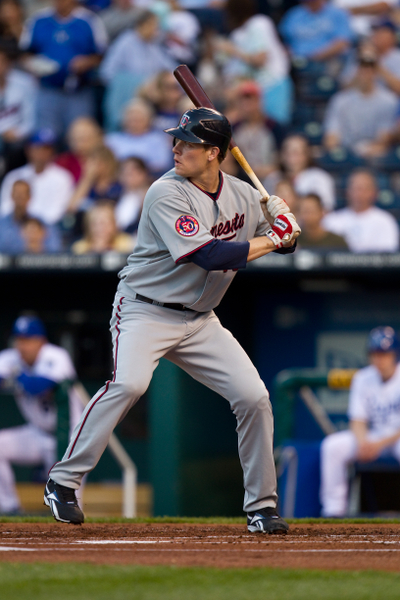
That's why Justin Morneau (pictured) earned 'only' $4.5MM in his first year of arbitration eligibility. He had just won the American League MVP, but earned less than Albert Pujols, Miguel Cabrera and Ryan Howard did as first-time arbitration eligible players because his career numbers weren't as impressive. The platform year vaulted him into the $4-5MM range, but his career numbers couldn't push him into the $6MM club with the others.
Players' career numbers do matter when they go to arbitration for the second, third and, potentially, fourth time, but not to the same extent. Teams and players generally agree on a raise based on the player's previous salary and what he did in his most recent season. The 'raise' argument, which is common in arbitration cases, depends heavily on the platform year, rather than career totals.
Career contribution matters after a player's first season of arbitration eligibility, though. Consistent players like Mark Teixeira, Prince Fielder and Pujols were well-compensated as arbitration eligible players partly because of their steady careers and partly because they were working from strong platform seasons and high salaries.
In some cases – say a player is non-tendered or injured – career contribution becomes a more significant factor after a player's first arbitration season, as the sides attempt to re-set the player's value.
Because the CBA is ambiguous, teams and agents can weigh platform seasons, career contributions and other factors like "leadership and public appeal" as they see fit. For example, Jose Bautista and Jonathan Papelbon, who are both a year away from free agency, likely emphasized their 2010 seasons differently in discussions with their respective teams. Bautista will likely explain to the Blue Jays that his historic 2010 season outweighs a previously pedestrian career, while Papelbon likely pointed to his history of dominance instead of his disappointing 2010 season.
There are guidelines for arbitration, but there's room for interpretation, which is why teams and agents can look at the same facts and reach vastly different conclusions about a player's value.
Photo courtesy of Icon SMI.
MLB Trade Rumors On Kindle
MLB Trade Rumors is now available on the Amazon Kindle. Amazon has priced the subscription at $1.99 per month. If you own a Kindle, check it out!
Ten Well-Paid Arbitration Eligible Players
Free agents are often well-paid and extensions provide arbitration eligible players with security, but going year to year can be lucrative, too. Many players have already doubled or tripled their 2010 salaries through arbitration and some of the 14 unsigned arbitration eligible players are set to do the same this month, as our Arb Tracker shows.
These are the ten arbitration eligible players who will earn the most on one-year deals in 2011 (not counting players like Dan Uggla, Joey Votto and Wandy Rodriguez, who agreed to extensions):
- Prince Fielder – $15.5MM
- Jonathan Papelbon – $12MM
- Heath Bell – $7.5MM
- Matt Capps – $7.15MM
- C.J. Wilson – $7.05MM
- Ryan Ludwick – $6.78MM
- Cody Ross – $6.3MM
- Chad Billingsley – $6.28MM
- Josh Willingham – $6MM
- John Danks – $6MM
Three players (Josh Hamilton, Jose Bautista and Jered Weaver) will definitely crack the top ten if they agree to one-year deals and six others (Rickie Weeks, Hunter Pence, Luke Scott, Jeremy Guthrie, Kelly Johnson and Delmon Young) could make the list if they settle for enough money or win their case in a hearing.
The 20 Biggest Free Agent Deals Of The Offseason
Unless Vladimir Guerrero, Scott Podsednik or another free agent signs an unexpectedly lucrative deal, the biggest contracts of the offseason have all been finalized. As MLBTR's Free Agent Tracker shows, 20 free agents signed deals worth $15MM or more this offseason.
That's not counting the extensions that non-free agents like Troy Tulowitzki and Jay Bruce signed and we're only talking about guaranteed dollars. Many of the players below could earn more or less than the figures listed, depending on player opt-outs and vesting options. With that in mind, here are the 20 free agents who signed for the most guaranteed money this offseason:
1. Carl Crawford – Red Sox – $142MM
2. Jayson Werth – Nationals – $126MM
3. Cliff Lee – Phillies – $120MM
4. Adrian Beltre – Rangers – $80MM
5. Adam Dunn – White Sox – $56MM
6. Derek Jeter – Yankees – $51MM
7. Victor Martinez – Tigers – $50MM
8. Paul Konerko – White Sox – $37.5MM
9. Rafael Soriano – Yankees – $35MM
10. Ted Lilly – Dodgers – $33MM
11. Jorge de la Rosa – Rockies – $32MM
12. Mariano Rivera – Yankees – $30MM
13. Aubrey Huff – Giants – $22MM
14. Juan Uribe – Dodgers – $21MM
15. John Buck – Marlins – $18MM
16. Joaquin Benoit – Tigers – $16.5MM
16. Carl Pavano – Twins – $16.5MM
16. Jake Westbrook – Cardinals – $16.5MM
19. Adam LaRoche – Nationals – $16MM
20. Scott Downs – Angels – $15MM
What To Expect In February
The biggest trades and free agent signings of the offseason have already taken place, but if last year is any indication, we're in for a busy February filled with minor league deals and extensions. Here's what happened a year ago:
Signings
The Twins signed Jim Thome and Orlando Hudson; the Rockies signed Melvin Mora; the Orioles signed Mark Hendrickson and Will Ohman; the Padres signed Yorvit Torrealba; the Mariners re-signed Mike Sweeney and Erik Bedard; the Rays signed Joaquin Benoit; the Nationals signed Chien-Ming Wang, Adam Kennedy and Willy Taveras; the Blue Jays signed Jose Molina and Kevin Gregg; the Dodgers signed Eric Gagne, Reed Johnson and Brian Giles; the Tigers signed Johnny Damon; the Reds re-signed Jonny Gomes and signed Orlando Cabrera; the Mets signed Rod Barajas; the Indians signed Russell Branyan; the Cardinals signed Felipe Lopez and the Yankees signed Chan Ho Park and Dustin Moseley after signing Randy Winn and Marcus Thames.
Extensions
The Giants agreed to a two-year deal with Tim Lincecum; the Tigers extended Justin Verlander and the Twins made progress on an extension with Joe Mauer.
Front Office Changes
The Astros extended GM Ed Wade and the Indians announced that Chris Antonetti would replace Mark Shapiro as GM.
Arbitration
Corey Hart won his hearing with the Brewers; the Rays won their hearing with B.J. Upton; Cody Ross won his hearing with the Marlins; the Nationals won their hearings with Sean Burnett and Brian Bruney; the Cubs won their hearing with Ryan Theriot and Jeff Mathis won his hearing with the Angels.
Trades
The Blue Jays acquired Dana Eveland from the A's and the Reds and A's completed a multi-player trade that sent Willy Taveras and Adam Rosales to Oakland for Aaron Miles.
This Year
It's pretty clear that more top free agents remained on the market at this time last year, but some difference makers (Andy Pettitte and Vladimir Guerrero) are currently free agents. And even though there aren't many big-name free agents out there, players could sign this month and emerge as bargains over the course of the season, just as Joaquin Benoit did a year ago.
There are 15 unresolved arbitration cases, all of which will come to some sort of resolution this month. Some of the unsigned arbitration eligible players could agree to multiyear deals, as Lincecum and Verlander did last year. But it's Albert Pujols' possible extension that will dominate headlines in 2011 – at least until his Spring Training deadline for a deal.
We could also see front office changes – Rangers GM Jon Daniels is an extension candidate – and a few waiver claims this month. Just don't expect many trades. If last year is any indication, February is not much of a month for deal-making.
MLBTR At FanGraphs: The Braves & Free Agency
22 Teams Hand Out Multiyear Free Agent Contracts
Nearly three quarters of baseball's 30 teams signed at least one free agent to a multiyear contract this offseason. A year ago 17 clubs signed free agents to multiyear deals and that figure rose by five to 22 this winter. Only the Blue Jays, Rays, Indians, Royals, Braves, Brewers, Astros and Cubs have limited themselves to one-year commitments to this point.
Over the course of the entire 2009-10 offseason, 27 free agents signed multiyear contracts. This offseason, teams handed out 44 multiyear free agent contracts, as MLBTR’s Transaction Tracker shows*.
There's a chance that Vladimir Guerrero, Scott Podsednik or another free agent signs with one of the eight clubs above, but that seems unlikely at this point in the winter. There probably won't be any more multiyear free agent contracts for the 2010-11 offseason.
Most teams spent on free agents this winter, but it's worth noting that small-market clubs weren't the only ones shying away from the winter's robust free agent market. Teams such as the Braves and Cubs also avoided long-term free agent contracts, while small-market clubs including the Pirates and A's signed multiple free agents to multiyear deals.
*I am not counting Tsuyoshi Nishioka's deal, since he was not available on the open market. No extensions for players under team control count, either. I am counting the extensions for Ted Lilly and Brandon Inge, since they were on the brink of hitting the open market, when they signed their respective contracts.