
This is the latest entry in MLBTR’s Offseason In Review series. The full index of Offseason In Review posts can be found here.
Two major pitching additions have the Red Sox hoping for a return to contention in David Ortiz‘s final season.
Major League Signings
- David Price, SP: Seven years, $217MM
- Chris Young, OF: Two years, $13MM
- Sandy Leon, C: One year, $534K ($273K if he remains in the minors)
- Total spend: $230.273MM guaranteed
Trades And Claims
- Acquired RP Craig Kimbrel from Padres for OF Manuel Margot, SS Javier Guerra, IF Carlos Asuaje, and LHP Logan Allen
- Acquired RP Carson Smith and SP/RP Roenis Elias from Mariners for SP Wade Miley and RP Jonathan Aro
- Acquired cash considerations from Brewers for 3B/OF Garin Cecchini
Notable Minor League Signings
- David Murphy ($2MM if he makes the MLB roster), Sean O’Sullivan, Carlos Marmol, Brennan Boesch ($1MM if he makes the MLB roster), Anthony Varvaro, Dan Butler
Extensions
- None
Notable Losses
Needs Addressed
Basically from the moment Jon Lester was traded to Oakland in a 2014 deadline deal, Boston fans and media have been clamoring for the Red Sox to acquire a new ace. That box can be officially checked now that the Sox have landed one of the game’s best pitchers in David Price. There was little doubt headed into the winter that the Sox would pursue a front-of-the-rotation arm, with the real question being whether the team would trade for an ace or sign one. The latter option wasn’t a given considering how the organization had a well-publicized hesitation to signing pitchers to big contracts through their 30s.
Needless to say, that hesitation is no more since the Red Sox signed Price to the largest contract ever given to a pitcher. Price’s track record of durability undoubtedly factored into Boston’s willingness to make a deal, and it’s possible the team could avoid paying Price into his late 30s altogether if he exercises the opt-out clause in his deal after the 2018 season. An opt-out would turn the contract into “only” a three-year/$90MM commitment over Price’s age 30-32 seasons.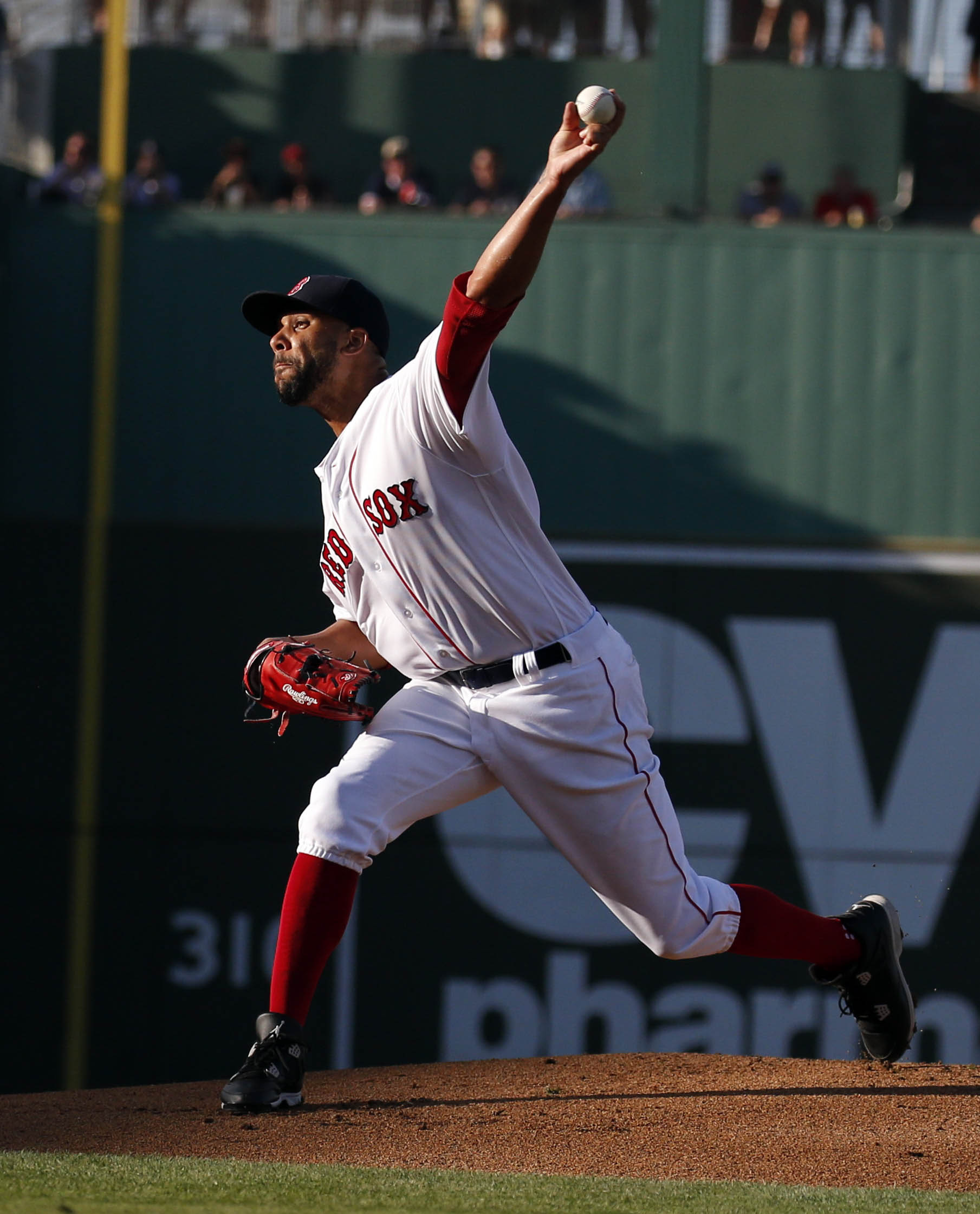
Price will headline a rotation that includes Clay Buchholz (whose $13MM club option for 2016 was unsurprisingly exercised by the team), Rick Porcello, Eduardo Rodriguez and Joe Kelly. Rodriguez will likely miss the first few weeks of the season recovering from a dislocated kneecap, so new acquisition Roenis Elias or knuckleballer Steven Wright will compete to be Rodriguez’s fill-in or even push Kelly for the fifth spot.
The Sox had something of a rotation surplus even before Price signed, so the team was comfortable letting late-season surprise Rich Hill leave in free agency. After Price joined the club, Boston made room by dealing Wade Miley to Seattle in exchange for Elias and righty reliever Carson Smith.
While the rotation took the brunt of the criticism last year, Boston’s bullpen was actually the worse (by far) of the two pitching units and perhaps even more in need of an overhaul. President of baseball operations Dave Dombrowski and GM Mike Hazen addressed this need in a major way early in the offseason by acquiring Craig Kimbrel from the Padres for a very significant prospect package.
It’s a sign of just how dominant Kimbrel has been over his career that 2015 was easily his worst overall season, despite posting a 2.58 ERA, 13.2 K/9 and 3.95 K/BB ratio. In adding arguably baseball’s best closer, the Red Sox now have a more stable answer in the ninth inning than Koji Uehara, who suffered a fractured wrist last season and turns 41 in April. This being said, Uehara did nothing performance-wise to merit the demotion, so he projects as a very dangerous setup man.
Kimbrel and Smith (if healthy, as we’ll address later) stand as huge upgrades to a relief corps that includes Uehara, Junichi Tazawa and lefties Robbie Ross and Tommy Layne, with Elias likely to figure in as additional southpaw depth. The wild card is Carlos Marmol, signed to a minor league deal so the Sox can see if they can solve Marmol’s long-standing control issues and revive his career.
Veteran Chris Young was signed to provide some outfield depth in left and center, and Young also provides a lefty-mashing bat that could make him a natural platoon partner with the left-handed hitting Jackie Bradley. Boston also landed more veteran depth in the form of David Murphy, who could be a bargain on a minor league contract provided that he doesn’t opt out at the end of Spring Training.
Questions Remaining
The biggest issue facing the Red Sox as they head into the 2016 season is that they’re still not sure exactly what they have in four projected regulars — Bradley, Rusney Castillo, Pablo Sandoval and Hanley Ramirez. It’s still an open question as to whether Bradley or Castillo can consistently hit Major League pitching, though the Sox have enough invested in both players (Bradley as a prospect and Castillo because he’s owed $56.5MM through 2020) that they’ll continue to get chances. Boston has enough confidence in Bradley, in particular, that they held onto him despite quite a bit of trade interest. Young, Murphy and Brock Holt are on hand as platoon partners or even replacements should Bradley and/or Castillo struggle, though if either player can provide even average production at the plate, their outstanding defense will generate a lot of value.
As for Sandoval and Ramirez, the Sox have to hope that the two high-priced veterans rebound after hugely disappointing debut seasons in Boston. It’s no shock that Ramirez was shopped this offseason, and it’s equally unsurprising that the Red Sox were unable to find a trade partner given Ramirez’s tough 2015 campaign. Had Ramirez been dealt, the Sox were rumored to have been interested in signing Chris Davis, who would’ve provided a more solid answer at first base than Boston’s current plan of having Ramirez learn his second new position in as many years. Moving to first should be an easier transition for Ramirez than moving to left field, though beyond just defense, the Sox have to hope his bat awakens after he posted only a .717 OPS in 430 plate appearances.
Sandoval has been hampered by a sore back this spring and is facing a threat to his playing time in Travis Shaw. The sophomore Shaw is enjoying a huge Spring Training and his ability to play both third and first will probably make him Boston’s top option if Sandoval or Ramirez struggle again (or if Sandoval’s back causes him to miss time). Would the Red Sox actually bench either veteran to start Shaw or Holt? Despite what Dombrowski has said about contracts not dictating playing time, you’d have to think the Sox would give Sandoval and Ramirez an extended opportunity to get back on track.
The Sox have quite a bit of homegrown position player depth to fall back on, though some cracks in the armor will quickly become apparent if (as in 2015) multiple regulars are injured or struggling. It puts even more pressure on the members of the Red Sox lineup who did play well last year (i.e. Ortiz, Mookie Betts, Xander Bogaerts, Dustin Pedroia) to keep producing and carrying the club.
While the Red Sox had minor league depth to spare, they still gave up quite a bit to land Kimbrel from San Diego. In addition to absorbing the $25MM remaining on Kimbrel’s contract, the Sox also parted ways with two consensus top-60 prospects (Manuel Margot and Javier Guerra) and two more well-regarded youngsters (Carlos Asuaje and Logan Allen). That’s a hefty price tag for any reliever, even an elite closer. This is just my speculation, but I wonder if the Sox would’ve been better served by adding Margot or Guerra to a Hanley Ramirez trade package to try and entice a suitor to take Ramirez off Boston’s hands.
Price on the mound every fifth day is a big help, though given how many question marks remain on the pitching staff, adding another proven hurler would’ve done a lot of solidify the rotation. The Red Sox now have to hope that Porcello and Kelly pitch as they did late in the season as opposed to their rough early outings, Rodriguez continues to develop into a quality starter once he returns from the DL, and Buchholz can stay healthy.
Catcher is also an interesting position for the 2016 Red Sox, as former top prospect Blake Swihart will start after a solid rookie season. Swihart got the call perhaps a bit earlier than expected last season when Christian Vazquez (himself a highly-touted prospect) underwent Tommy John surgery. If Vazquez is able to return in good health and good form, the Sox could use him or veteran Ryan Hanigan as a trade chip at the July trade deadline. Vazquez could also simply be kept at Triple-A to get him fully re-acclimated to regular playing time, and Boston could revisit the catching question next winter when the team holds a $3.75MM option on Hanigan for 2017.
Deal Of Note
Smith will begin his Red Sox career on the disabled list due to a strained flexor mass in his right forearm, and while there isn’t yet a timetable for his return, the Sox don’t believe Smith’s injury is a long-term problem. Since any forearm injury raises the specter of Tommy John surgery, Smith and the Red Sox can perhaps already feel fortunate about what seems to be a lesser injury.
Losing Smith for an extended period of time, of course, would greatly impact Boston’s bullpen and its net return on one of the winter’s more intriguing under-the-radar trades. In his rookie year, Smith quietly delivered one of the best seasons of any reliever in 2015. The 26-year-old posted a 2.31 ERA that was more than backed up by ERA predictors (2.12 FIP, 2.36 xFIP, 2.04 SIERA), as well as a 64.8% ground ball rate, 11.8 K/9 and 4.18 K/BB rate over 70 innings of work.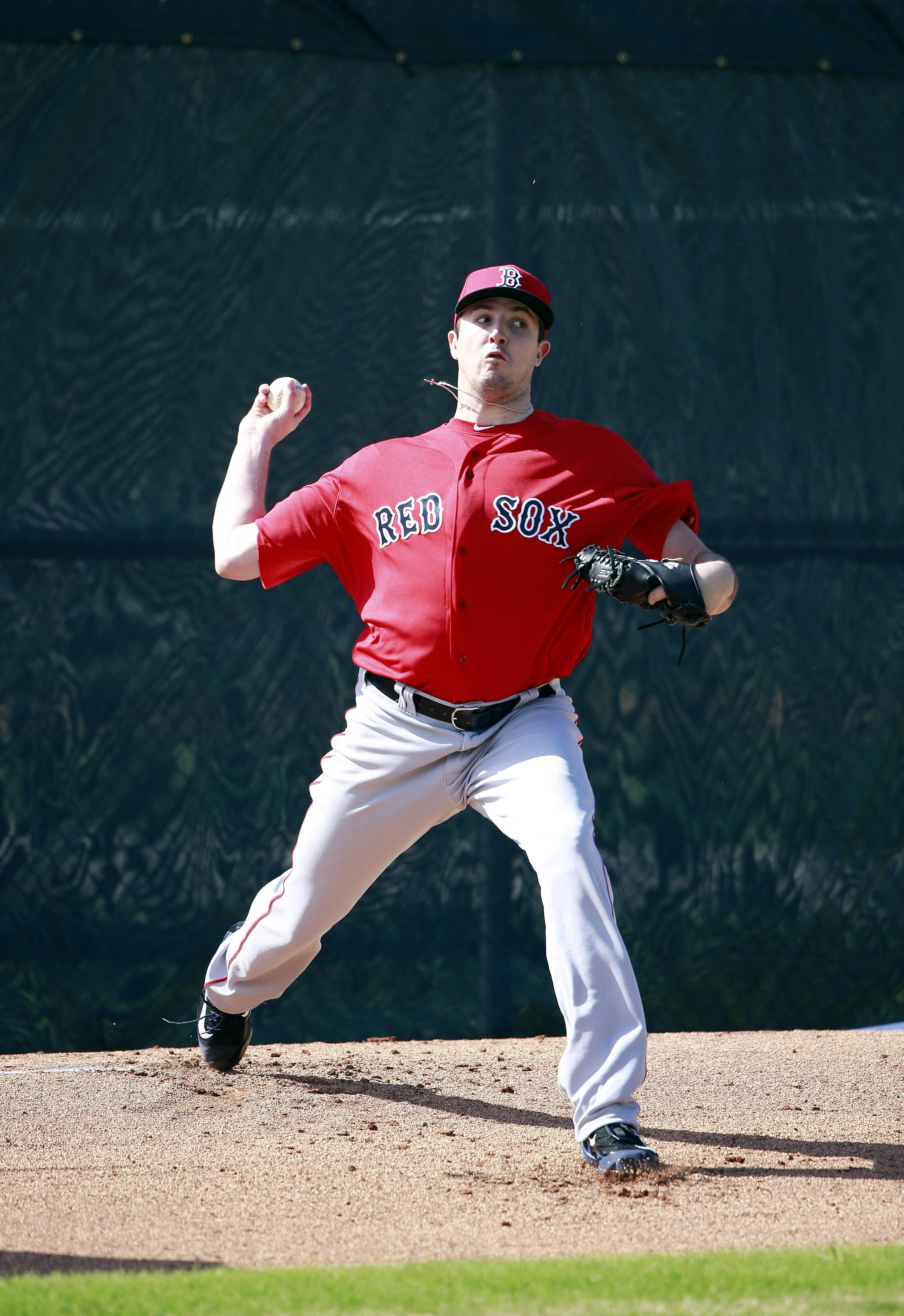
For comparison’s sake, Smith topped Kimbrel in ERA, FIP, xFIP, SIERA, ground ball rate, homer rate, walk rate, innings and games pitched last season, while Uehara only came ahead of Smith in ERA, homer rate and walk rate. Looking at other notable relievers who switched teams this winter, Smith also bested Ken Giles in most of those statistical categories. While Smith is a year older than Giles and has one fewer season of MLB domination, the Sox gave Seattle much less for Smith than the prospect haul the Astros needed to acquire Giles from the Phillies.
An eighth-round pick for the Mariners in 2011, Smith has pitched exclusively out of the bullpen, racking up big strikeout totals in the minors and showing a career-long propensity for keeping the ball in the ballpark. Smith has allowed just eight homers in 253 1/3 professional innings (including two last season), a talent that will come in handy at Fenway Park.
While Miley’s ability to eat innings is no small feat, he was an expendable piece in Boston and his 2016 role could perhaps more or less be filled by Elias, a lefty swingman who dominates left-handed hitters. Jonathan Aro is a promising young relief arm, though Smith has already delivered in a big way on the Major League stage.
It may well be that Smith regresses a bit after the league gets more looks at him, though if he’s healthy and even close to his 2015 form, the Kimbrel/Uehara/Smith combination could be as dominant a late-inning trio as any in baseball. Kimbrel is under contract through 2017 with a club option for 2018, so it’s possible the Red Sox could even see Smith as an eventual long-term replacement at closer. Smith (and Elias) are controlled through the 2020 season and aren’t even eligible for arbitration until 2018.
Overview
The Price and Kimbrel acquisitions were two of the offseason’s biggest moves, though in terms of sheer volume of transactions, it was a relatively quiet winter by Red Sox (or Dombrowski) standards. The Sox offseason had the feeling of a team adding some finishing touches to a contender rather than looking to overhaul a last-place unit. The Sox clearly seem to think they’re closer in form to the everything’s-clicking team that went 34-26 down the stretch in 2015 rather than the struggling unit that began the year with a 44-58 record. If another piece is needed during the season and the Sox are in contention, Dombrowski is no stranger to making a big deadline trade for additional upgrades.
There’s certainly enough talent on Boston’s roster to make a quick turnaround very feasible…though the same thing could’ve been said last offseason when the Sox were coming off another last place finish. An ace in the rotation and an ace in the bullpen can only do so much if multiple key members of the roster continue to underachieve.
How would you grade the Red Sox offseason? (Mobile app users, click here to access the poll)
How Would You Grade The Red Sox Offseason?
-
B 53% (1,477)
-
A 30% (831)
-
C 13% (347)
-
F 2% (69)
-
D 1% (41)
Total votes: 2,765
Photos courtesy of USA Today Sports Images
Price + Kimbrel + Smith + Young = A+
There is a reason why my Sox are favorites in the AL.
They aren’t even the favorite in their division. Toronto still looks like a better team.
Blue Jays are the best team in the division
Same team that was dead last the last two times they were projected to finish first! I project them not above a .500 club. To many antiques on the club that are poor role models for our kids and are morbidly obese… Ok just plain fat! Ortiz and Sandoval can’t ride an elevator together I doubt.
no no no you’re wrong about that last part. Ortiz is 40, and he’s not expected to play the field or anything and will more than likely pull his weight on the team. Sandoval is the issue, not Ortiz
No. Wrong.
The Red Sox rotation is weak behind Price. They needed to add another starter or two besides Price. The Blue Jays & Rays have better pitching staffs and the Blue Jays have the best offense by far
I wouldn’t bet money on them ending up with a better record than any other AL East team. It’s an absolute crapshoot this year.
If I had to guess
Blue Jays
Red Sox
Rays
Yankees
O’s
Yet I feel like the O’s may be the most balanced team in the division.
I really like Tampa this year, their offense reminds me of KC’s last year.
The one thing I’d bet money on is that no team will lose less than 85 games.
Not to fight with you R.D., but I so see it the opposite about Baltimore. I see them as the most unbalanced team in the entire lg. They are literally a softball team. If you are forced to bat Machado first in the lineup due to his .359 OBP, you just set yourself up for 35 solo homeruns. If your next best option is a guy with a a ,247 BA and a .344 OBP that might not even get enough at bats to qualify for anything in Reimold, you are not balanced, I just don’t see that as balance when you have no OBP guys but a bunch of free swingers and strike out artists and no pitching staff to scare even a minor lg team. Not trying to pick your post apart, i agree with everything else you said, but the Orioles NEEDED Fowler to balance their lineup. Balls will fly out of the park in Camden, but they have a bunch of the same guys all over the field.
“” . . . lose less than 85 games.'” So, they’ll all be sub-.500 losers with one lucky enough to win, at best, 77 games and get to the playoffs? I have some tropical real estate on Baffin Island I’d like to sell you. Interested?
It doesn’t make the rest of the rotation and Sandoval and Hanley good. There is a ton of deadweight on the roster. They will be better than last year, sure, but favorite in the AL East? Don’t be a homer.
High profile signings and trades don’t necessarily make a good team, they have some good pieces but also question marks and holes
Can you just stop? You are making Red Sox fans look worse than we already do.
To everyone that’s been dealing with this guy: we’re not all like this, I promise.
No
Now that I really look at it, I don’t really like any of the deals/contracts they made other than the Carson Smith deal.
I voted for a C.
Haters gon’ hate.
I’m not sure where I’m hating. As you would say, I’m just giving my opinion.
They gave out the largest deal ever to a 30 year old pitcher, which is never really a good thing.
Gave a multi year deal with a notable salary to a platoon 5th outfielder
Traded 2 top prospects for a closer coming off the worse year of his career
Plus they actually gave away a former top 100 prospect to the Brewers for nothing.
They could finish 1st, but they could also finish 4th (I don’t see them being worse than the Orioles).
I think the Kimbrel trade was one of the worst of the offseason (not worse than Shelby Miller). That’s probably the first good trade the Padres have made under Preller.
That’s pretty harsh. The Redsox added a bonadafide ace and two top level relievers and didn’t part ways with any of their young core (Bogaerts, Betts, Swihart, Owens, Erod) nor did they part ways with any of their top 4 prospects ( Benintendi, Moncada, Espinoza, Devers).
Of course, I wasn’t a fan of the Kimbrel trade but I think you have to give respect to DD for improving the team without trading any of the organizations top level elite talent.
I give them a solid B simply because I though the Kimbrel trade was an overpay, but I think c is a harsh grade
Also I thought the CY signing was great. Young has the highest fly ball pull % in all baseball. Guess where he’s playing half his games? Fenway park. Young is one of the most Fenway-suited hitters in baseball. I liked the signing a ton
Right and there’s the part where Young may see a ton of action depending on how Castillo and JBJ play. He has a big contract but he may play 100 games +. The only issue I don’t think they addressed is a lefty reliever. Although the relievers they do have don’t have horrible splits against lefties. That’s why I gave a B. Yes Kimbrel was an overpay, but that was what the Padres wanted. They overpaid to resolve one of their biggest issues early in the offseason. If those guys could have been traded to get an elite started DD would have made the deal. That was what Kimbrel cost.
CY is probably going to look like one of the best overall signings of this off season. He absolutely mashes lefties. Combine that with Fenway, and you have the makings for an absolute beast when platooned. He had some big at bats for the Yankees and I was sorry to see him go.
I gave them an A even though the Kimbrel trade was lopsided. I kind of combined the Kimbrel trade and the Smith trade and then looked at it. Kimbrel and Smith for Miley, Margot & co, actually, looks solid on the Red Sox end. Also, if anyone can hold up health wise into their late 30s it will be Price.
The Sox had a solid off season overall, but as stated before they probably should have packaged a good prospect or 2 with Sandoval and traded him back to the NL. They have enough prospect depth and with the way prospects are overvalued these days I am sure they would have found a taker. Just my 2 cents.
Says the biggest troll on the trade rumors LOL Go have some milk and cookies.
I agree with Brixton. The Price deal will give the Sox about 12 wins and with that team, I don’t see Kimbrel getting much more than 30 saves. Smith (if healthy) was a good addition over the bullpen that’s average age is about 38. Chris Young is nothing more than a platoon player that’s capable of hitting about .240 with 8-10 home runs. They MIGHT have a good team this year but I don’t see more than 75-80 wins and probably 4th or 5th in the division. There are still too many questions with this team.
fangraphs.com/depthcharts.aspx?position=Standings
They project as the best team, people dont realize hanley and panda were -4 war last year. Hanley will bounce back to a 2 war player and panda will be benched if he has a bad april for at least a 1 war player. That alone is a 7 win swing! If they are both above average which isnt out of the realm of possibility thats a 10 win swing just from bouncebacks.
Just like they were PROJECTED as the best team last year and the year before and where did they finish? That’s right last. Hanley and Sandoval are NOT going to be any better this year than they were last year. I don’t understand why so many people can’t understand this.
Because hanley has hit for his whole career and only didnt hit after he hurt his shoulder. Sandavol doesnt have to improve because if he doesmt he just wont play which is a 2 win upgrade. Dombrowski didnt sign him so there is a much shorter leash. Its just red sox haters that dont see either of them at least being average
And 78 wins while last place in that division is much more than just last place. That was 78 wins with everything going wrong. Its embarrassing the irrationality shown by the haters though. They also finished last before their last world series f.y.i, the cubs and astros were a last place team before last year. Using last years standings to say that means they fail this year is dumb. If you play poker and go all in with jacks against aces preflop and win 2 in a row, does that mean you will win the next one when in reality you have a 19% chance?
I am not sure the Sox did enough to put them on top of the AL east. They added 1 starter, 1 closer , 1 middle reliever and a 4th our fielder. They have a untested first baseman and plenty of other question marks in the rotation. They have a few real bad contracts that I dont see them being able to unload with out eating half if not more of the salary. I do see them better then they where last year and I have them sitting around 83 wins.
Calling Carson Smith a middle reliever is hardly fair. He’s a setup man who along with Kimbrel completely transforms their bullpen, provided his recent injury isn’t a big deal.
If you are not a closer and not a starting pitcher then you are a middle reliever. No other way to look at it but you are welcome to call him anything you want.
Do the words long reliever and set up man meaning anything to you? The roles in the pen are very specialized now. Calling him a middle reliever isn’t really an apt description. He’s not a mop up guy. He’s an elite setup man.
And he is also injured at the moment so you can call him anything you want. Still does not change he pitches in the middle of the games. If your started goes 7 inning and then you bring in Smith for the 8th and you have your closer for the 9th that makes Smith a middle reliever.
Delin Betances leads all relievers in WAR the past 2 years and he has 10 saves. Is he just a middle reliever too?
Mark is just as bad as bigpapi4ever, trolls just as much as him with his hatred for the Sox.
Robbie Ross, Matt Barnes, Tazawa are middle relievers.
Smith, Betances, Koji, A. Miller(once Chapman comes back) are Set Up Men.
But baseball fans understand the difference between a middle reliever and a true setup man, which is weird because Mark in another thread said he is a true baseball fan and wants to speak and comment with other knowledgable baseball fans
No it really doesn’t. The 8th isn’t the middle of anything.
Middle relievers are pitchers who arent long relievers and dont have a specified inning. 7, 8, are set up guys, 9 is closer, one long reliever, the other 3 or 4 depending on team are middle relievers.
Now yo uare talking like a fool. At no time do I ever bad mouth the Red Sox. I dont bash any team. And I dont go around saying the Yankees are the best. Get your story right.
So in your mind Betances and Miller are just middle relievers? That is a foolish statement.
It is not even the best bullpen in the division.
Dombrowski made some big splashes. It might have been best to make more little splashes. There are still uncertainties in the rotation. Offensive upgrades may be needed at two of the OF positions. They still have Sandoval on the roster, and need to hope Ramirez returns to form, and Papi doesn’t suddenly show his age. I like the bullpen moves, but they did pay a lot for them. (I also believe Dombrowski is cursed when it comes to relievers). Given he is a new GM for this team, this is probably the year for him to see what his team has. I would have liked another solid starter. Next year they will be more the finished product. I gave them a B.
I gave them a C. Their best move was Price, but they had to offer a lot more than the other clubs to get him to pitch in that park, with a bad defensive team behind him. I heard that it was as much as $30m more. I agree that the Kimbrel trade was probably the second worst trade of the off-season. I’m probably being harsh because of HanRam, (even though he was acquired last season), but I’m faulting them this season for the 2nd new position in 2 years. They might contend, but given the vagaries of baseball, their season just might go sideways as well.
It’s weird how two years ago the Mets gave Chris Young a one-year deal at similar AAV to the one he just signed and Mets fans were pretty irate but now after a good season and a half of platooning there has been little critism of a deal that doubles the Mets’ one. (I am seeing a good amount here finally, even if it’s somewhat muted.) I guess maybe because with the Mets he was their big offseason acquisition while with the Sox he is purely ancillary so there’s more of a “who really cares” attitude.
People are acting like the Redsox are just a 78 win team + Price and Kimbrel. That simpy isn’t true.
For starters, Sandoval and Ramirez are going to almost certainly give them better production. Both these players were very good above average players just 1 season ago. Last season, they were literally two of THE WORST players in baseball combining for negative -4 WAR. I’m not saying they will rebound to their former star levels, but you can almost expect much better seasons from these two. Consider this, the Redsox were the 4th best offense in baseball last season despite both Sandoval and Hanley being terrible.
Also, the Redsox have ATON of potential breakout players. Last season saw Bogaerts and Betts go from top prospects to stars. The Redsox have Swihart, Erod, JBJ, Castillo, Owens, among others who could take that next step. Of course, I’m in no way saying they all will, but if one or two of them improve, that is a nice add.
Then you have Porcello and Kelly who last season gave the Redsox a horrid ERA’s despite their peripherals all indicate they were more like a 3.7-4.3 era pitchers. Better run prevention from these pitchers is certainly possible, especially for Porcello.
Last season a ton went wrong for the Redsox and they were still able to win 78 games. Some positive regression from some of their veterans, along with the impactful additions they made ( adding one of the best starters and two of the best relievers) is why people are so bullish on the Redsox. They are a very deep and talented team. That’s not to say there aren’t question, but I think on paper your looking at a 85-90 win team
Analysis was great but your win total is off… 102-60 baby
Keep dreaming bud
Maybe in another division, but probably not. But with the level of competition in the AL East, and those teams beating up on each other, no one is going to run away with it. The Cubs have more talent than the Red Sox, and they’re not going to 102 games either with the competition in the NL Central.
If the Red Sox win 102 games I’ll eat my hat. And not just some old hat. I’ll eat my good Rangers hat. And I’ll eat it raw.
Lol… I doubt you’ll see any 100 game winner in the ALE! Anyone realistic can see 5 good teams with a lot of question marks in various areas. It’s the team that adjusts down the stretch to the challenges and question marks that wins the division. A team on paper is worthless. It doesn’t account for injuries, comebacks, or regression. This will be an exciting division!! And bigpapi4ever will one day learn (hopefully) that running his mouth doesn’t increase the win totals and performance on the field either!
Sounds accurate to me. But in the last 4-5 years, things go exactly opposite for the Sox. They lose when they should win, and they win when they should lose
Perhaps that crazy trend ends in 2016
Yeah I’m not seeing why people are looking at this in a vacuum either. Sandoval may not be any better, but he also may not play very much. Hanley on the other hand is almost a shoe in to play better. It’s not like they added a certain amount of wins to a 78 win team. Their are some guys who will definitely improve. There are still some question marks, but this time could win in the high 80’s or low 90’s if guys play like they should.
You can make the same argument about every team. The BIG IF. If all the teams play the way they are capable of playing they should all win 90 plus games. In the real work that dont happen. Not saying they are not a better team then last year but lets agree that they just like all the AL east teams have plenty of question marks. To call them a shoe in for the division is troll like. Just ask bigpapi4ever. According to him they already took home the WS trophy. The AL east is up for the taking and any one of the teams can finish with 75 wins and any of them can finish with high 80’s wins. I just dont think Handley and Sandovol are going to improve much amd they did loose 14 wins from Miley and Hill. So does Price give them that many more wins then those 2 combined? There rotation is full of IF’s.
Because again, you simply cannot look at it as someone new GIVES a team more wins. It’s a childlike way of looking at something that has a ton of moving parts. And I never predicted a division win. It’ll probably take more than high 80’s to low 90’s to get a team the division.
What stastical evidence is their that hanley regressed though other than your hot take? He hit 275/350/500 before he got hurt and is a lifetime 296/367/494 hitter. Yes he was terrible in leftfield but his hitting was fine pre injury.
The Red Sox have a very difficult team to project. The ‘ifs’ include…
– can Hanley and panda possibly have another year as bad as they did.. Probably not, but the again they just did
– can Papi hold of age once again in his age 41 season?
– can a starting staff of a bunch of 3-5 pitchers (other than price) hold up against solid #2’s and #3’s or are the six destined to to fight for 2-3 splits every series
– can all these rookies avoid sophomore slumps when xx% of high performing always slump
– can this team play defense? What happens to price’s pitch count and/or wear and tear by throwing in unnecessary 25-35 pitch innings
Man… Good luck rolling dice on so many fronts. There are enough wild cards to say that a 90 win season will be a success. I just hope that dombrowski doesn’t get ‘loose’ with your prospects around July 31 and trade away the foundation that will make 2017-2018 stronger than 2016
Why is it that the bad players are going to get better, but the players that had breakouts or career years are never even considered for regression? Betts and Boegarts may improve, or the league may take them more seriously now that they have established themselves. There is no guarantee they will be as good as last year. Even if they stall, they still have great futures.
Yes the league taking someone more seriously is a reason for regression. Lollllll
Yes, it is. More scouting. More insight into where a player hits, for positioning. A better idea of what pitches and where to throw them. Abreu, for the White Sox, had a nice year, but was not as good as his previous season. The league learned about him, and reacted. It is not to say Betts, and Boegarts will regress, but just that it would not be surprising, I believe many have called it the “sophomore slump”.
The sophmore slump is derived from players rekaxing because they dont get as amped as they do when they are rookies and losing focus. So your theory is the league didnt take abreu seriously when he was hittjng 35 homers and over .300? This is the mlb. After a month they have scouting reports, pitchers take every hitter seriously because it can cost them millions not to.
The problem with the 4th best offense is that there are two other offenses that rank higher within their own division…
Some serious regression in store for the jays hitters. Colabello overperformed, bautista, ee and martin arent young. They have no hitters last year that underperformed, so basically everyone is banking on that as a bottom line. Hate to break it to yall donaldsons great but he isnt repeating that year with his contact rates.
Do you ever say anything good about a player or do you talk bad about everyone in the league?
Lol im a realist. Im not saying they are bad players. Im saying that last years blue jays were the peak performances from all concerned which is why all projection models have those players due for regression. If they were in their peak or pre peak i would say it was sustainable. But i dont expect age 33, 36, 33(and a catcher) players to maintain peak level performance and all remain healthy a whole year. I think stromans a beast but he should have his innings limited. The jays are an old team just a fact.
I wouldn’t say the Blue Jays got many “career years” from their pitching staff.
There is reason to think the pitching staff can be better, to make up for any drop in offense. They lost half a season of Price, but will gain Stroman. Not a big drop, and its really unknown how good Stroman can be.
Really? Marco estrada… marke beurhle, each had the best years in the last 10 basically. And i listed the offensive guys as due fir regression but estrada had serious babip luck.
I was dreading this review…any guesses why?
Red Sox Projected/Actual win totals last 4 years
2012 – 87 projected wins/Actual – 69
2013 – 79/97
2014 – 86/71
2015 – 86/78
For 2016, they are projected to win 88. They’ll probably win 75-80 or 100-105
As a long time reader of MLBTR, I just could not standby anymore without commenting on bigpapi4ever’s posts. All I have to say is anyone whose username celebrates the legacy of a player that failed at least one PED test in 2004, shamelessly complains with official scorers when he does not get a hit, and whines about every strike called on him, says it all.
Ask Boston Globe writer Dan Shaughnessy what he thinks about Big Papi regarding these topics.
In addition, bigpapi4ever does not have a monopoly on dramatically over hyping Red Sox prospects. It is found in the genetic code of most New Englanders.
bigpapi4ever is a mindless fan, but don’t go citing Shaughnessy as any kind of authority. He’s the worst kind of sportswriter; his only goal when writing columns is to stir the hornet’s nest. He’s a professional, ink & paper troll who only prophesies doom & gloom for the Red Sox. He seems practically sulky when they do well, since it doesn’t fit his narrative. What Shaughnessy thinks about Ortiz doesn’t concern me one bit. If anything, I like Ortiz more because Shaughnessy doesn’t.
On target regarding Shaughnessy. What a dbag. I stopped reading him ages ago.
Look this division is going to be up for grabs for any team. Like the last 2 years been. I’m a Yankees fan but I love baseball here. The Orioles look similar to the blue jays big offense but no starting pitching. But if we look the last two years everyone building there back end of their bullpens. Like in my opinion your talking about maybe in the AL best five bullpens being royals/Yankees , Red Sox and Orioles. But the Orioles are known for their defense. The Rays may have the better young starting pitching staff then maybe the Red Sox, and yanks in this division. But with all these teams is can these guys stay healthy for 162 games? Can a starter in Major League Baseball pitch more than 6 or more innings without wear and tear on that bullpen. But that’s my 2 cents.
Look I understand how bigpapi thinks , I used to think that his age. But I’ve gotten to Learn the sport from the beginning of every team, the historical stats and numbers.
They need a solid #2 they should look at Cleveland for some arms
Awesome writing Mark!
My 2 cents on the Red Sox:
There is a Softball team in Baltimore that will lead the lg in solo homeruns. But that’s about the only thing besides getting struck out more than any other team that they threaten to lead the lg in. That appears to be the only team that the Red Sox are better than. I really think DD went out and did about as much as he could to improve the team. Very good pick ups in Ace Price and kimbrel. Kimbrel’s price is just what it was, you have to pay for what you want, so the overpay is what it is. Not an overpay at all if you got what you wanted. They just paid retail. You paid retail for your last car too, what’s the difference? The Yankees didn’t get worse, and the Blue jays are what they are, which could be the best in the division. The Rays keep on fielding good teams somehow. I believe that the Red Sox have as good a chance as anyone in the division to win it, but they really don’t seem poised to simply be the best team in the division by showing up. Why do I say that? Papi will be Papi, he’s going to crush his homers and hit his normal average. Ace is going to show up every 5 days and be the best pitcher in the division. The kids will grow into better players, and second base will be handled as always with + defense and offense by Dustin. The problem is everything else. Rusney is no sure thing. Hanley is a project, merely a DH forced to play first in order to earn his keep. He can still hit, so the runs he loses by errors, he’ll make for on the other end hopefully. Pitchers 2-5 are no locks to be healthy, good, or even above replacement level. No guarantees in that group. They could all perform up to and above expectations, but there is nothing saying that they will do anything more than what they have done in the past. Pablo? Man, he has to get better. No way he can be as bad as he was last year. But he’s still a question mark. Shaw could potentially get some reps in his stead, but that will play itself out. I hope that the Red Sox perform up to the level of talent that they have. But, that’s why you play the game. They could win 100 games if everybody had career years this year. Or they could duplicate last year with everybody just playing at the level of what’s on the back of their baseball cards. I am hoping for the former. It is always great to see the Yanks and Red Sox in contention. It is great for baseball! I simply think there are too many unanswered questions on the Red Sox for them to be anointed champs prior to the season. No fault of DD, I am sure he did all he could. I see this as a platform year where the kids grow up and next year they make a bunch of noise.
That’s my opinion, but I am not that smart, so no need to rip my post apart. lol
The two biggest splashes that DD made were seen as some of the worst for the offseason, but they fit right into Boston nature and set them up to be competitive for the next couple years (but handcuff them a little long term). They still have some glaring issues that weren’t addressed, but talks of moving Pablo (albeit for James Shields) will improve this team even more. The AL east has a plethora of competitive teams but each team has a glaring weakness, and the BoSox are no exception. Boegarts Betts and Price can really carry this team. Granted, this team can just as easily fail, but this post season made them from pretenders to contenders.
I rank a C bc he landed good players but how hard is it to give whatever it takes to land Price and trade 2 top 50 prospects one being a top 5 OF prospect for a really good 60IP closer?
Price also is basically a 2 year guy which may be better for the team, but again with a big market is it hard to tell the agent, “come to me with your best offer and we will beat it.”
How fast do you think SD took to accept that offer?
Look, Redsox nation loves their players so this will get blasted, but I advise you to look at the Tigers and that’s the Redsox future. Pay a ton for guys who have done it before and over pay for MLB talent with the farm system.
Someone’s going to win that division. I don’t think that any of these teams are a favorite (like KC or Houston are), but I can appreciate the Red Sox’s depth. I personally am against the majority in liking the kimbrel trade; he has been outstanding in his career, still not in his late 20s, and had one lesser year with a new team which can be difficult on a player, while I am not high on Margot at all as a prospect (bat reliant player who has not batted .300 recently in the minors). Hate the Price deal. With a contract like that, he most likely won’t opt out and long term pitcher contracts are the riskiest contract in baseball.
Houston is considered a favorite?
I really like the Rangers and thought they are right up there with them.
They don’t have great starting pitching. If something happens to Darvish on his way back, the Rangers are in some serious trouble. Lewis is 36 and has a 4.6 ERA, Holland is an injury risk every year.
I’ve seen Cleveland, Chicago, and Detroit mentioned for the Central, as well as KC. I see very few teams that don’t have a chance to win in the AL.
I completely agree that most teams in the AL have a shot, but from my opinion, the Royals and the Astros need less to go right than other teams. That’s why I called them the favorites. The Indians, white sox and Tigers all need some big components to go right in order to win the division, and that’s coming from a Tigers fan.
I’m a Tigers fan, also. But I see KC as taking a step back, while others in their division improved, which makes the division up for grabs. It should come down to which team stays healthy, or has the depth to cover for injuries. As it usually does.
Agreed on Texas. Personally, I think they’re the top team in the AL. Strong lineup, good bullpen, OK rotation, and a strong crop of high-level prospects that give them the ability to reel in another top starting pitcher if need be
The Price deal is probably going to blow up in the Red Sox’s faces eventually but it was a deal they absolutely had to make. They barely have a #2 starter let alone an ace. They got better but they needed to add more in the rotation. Their lineup needs Hanley and Pablo to rebound and who knows if that will happen. I can’t call them a favorite in the East and I don’t think there is any favorite for the division. Dombrowski does what he does best and spent money and traded prospects. I give him a C+.
I understand the concerns about the rotation but I also wonder if the team will hit enough. The OF in particular is a spark plug and 2 question marks.
Jbj and Castillo are huge question marks in my eyes, especially from an offensive standpoint.
Bringitin247 is right there is no way Ortiz and Sandoval could ride an elevator together
I didn’t understand the Sox thinking last year with their big contracts to hanley, Pablo and porcello. With a great farm system filled with major league ready players why block or be forced to block these kids with garbage like that? Not to mention that they didn’t learn their lesson with the last time they had their shopping spree with crawford, gonzalez. Got lucky to get out from under that but then to do it all over again a couple years latet? Makes no sense.
With that said, they have done an excellent job building a good system of positional players. Now they just have to play them. No reason for them to even entertain the thought of not starting the season with shaw in the lineup. He had an excellent year last year and mashed in ST.
Other thing that is see is that boston for quite some time, can’t seem to produce good starting pitching on their own. When and who was the last perennial all star starting pitcher to come through their system other than lester, and that was like 8 years ago?
All in all, I like the price deal because of the opt out. Kimbrel deal I didn’t like at all. TBD on the carson smith deal. Other than that, I see them 3rd or 4th in east as their SP beyond price and age of their lineup wil catch up to them in a negative way.