
MLBTR Chat Transcript
Click here to read the transcript of tonight’s live baseball chat
Gerrit Cole Triggers Opt-Out In Deal With Yankees
TODAY: The Yankees’ deadline to decide on Cole is 4pm CT on Monday, according to MLB.com’s Mark Feinsand (X link). The New York Post’s Jon Heyman reported earlier today that the deadline was on Monday, rather than tonight.
NOVEMBER 2: Right-hander Gerrit Cole has triggered the opt-out in his deal with the Yankees, per Kiley McDaniel and Jeff Passan of ESPN on X. However, he is not yet a free agent, as the club has a chance to void the opt-out by tacking on an extra year at the same $36MM salary as the rest of the contract.

Cole’s original deal with the Yanks was for $324MM over nine years with even salaries of $36MM in each season, starting in 2020. Per that deal, he could opt out after five years, walking away from the final four years and $144MM. The Yanks could then tack on another $36MM for 2029 and negate the opt-out. Now that Cole has triggered his opt-out, the Yankees now have to effectively decide if they want Cole back for $180MM over the next five years. If not, Cole will return to free agency.
For the first few years of the contract, Cole continued to pitch to his usual excellent standards. From 2020 through 2023, he tossed 664 innings, allowing 3.08 earned runs per nine. He struck out 31.1% of batters faced, limited walks to a 5.9% clip and got grounders at a 41.1% clip. He racked up 15.4 wins above replacement in that time, per the calculations of FanGraphs, fifth in the majors behind Zack Wheeler, Corbin Burnes, Kevin Gausman and Aaron Nola. He won the American League Cy Young last year by posting a 2.63 ERA over 209 innings.
Throughout that time, it seemed quite obvious how the contract situation would play out. Cole would make the no-brainer decision to trigger his opt-out while the Yanks would make the equally-easy decision to add on the extra year, bringing their total commitment to $360MM over 10 years.
But the road ahead became a little less certain as things developed in 2024. Cole dealt with some elbow inflammation during spring training and was shut down for a while. No structural damage was found but he was sent to the 60-day injured list as he underwent his non-surgical rehab. He was eventually able to get back on the mound, making his season debut in the middle of June.
He was a little shaky at first, with a 6.75 ERA through his first four starts, but his numbers were far more Cole-like from there. He posted a 2.67 ERA in his final 13 starts of the year. His 25.7% strikeout rate wasn’t quite all the way back to his usual level but his 6.8% walk rate was still quite strong. He made another five postseason starts with a 2.17 ERA, helping the Yanks reach their first World Series since 2009.
While Cole has seemed like his old self for months, the Yanks may still have to think about this one. As seen in MLBTR’s Contract Tracker, the largest deal for a pitcher aged 34 or older was the five years and $185MM that the Rangers gave to Jacob deGrom. That deal hasn’t gone well so far, as deGrom required Tommy John surgery and hardly pitched for the Rangers in the first two years of that pact. The Yankees would have to essentially match that deal to prevent Cole from getting away. As mentioned, tacking on the extra year would mean committing to paying Cole $180MM over the next five years, just shy of the deGrom deal.
Cole’s record of durability is far better than deGrom’s. Cole has thrown almost 2,000 innings to this point in his career while deGrom was just over 1300 when he signed with Texas. Still, Cole is just recovered from a notable absence related to his throwing elbow. Most of the other pitchers in this age bracket signed shorter deals with higher average annual values, with Wheeler’s recent extension with the Phillies coming in at $126MM over three years. Max Scherzer‘s deal with the Mets was $130MM over three, though he was a few years older, starting that deal at age-37.
The Yankees are facing the prospect of Juan Soto hitting free agency and Cole is potentially a second superstar departure. Some have argued that the Soto situation should motivate the Yanks to keep Cole, just to stave of that possibility of losing two stars on the heels of a frustrating World Series loss. On the other hand, some have suggested that the Yanks might welcome having an extra $36MM of payroll space to use on luring Soto back to the Bronx.
The latter line of thinking would leave a big hole in the rotation, but it wouldn’t be an awful group without Cole. The projected rotation would still include Carlos Rodón, Luis Gil, Clarke Schmidt, Nestor Cortes and Marcus Stroman. If the Yanks let Cole go, they could focus on Soto and circle back to him later or pursue some other starting pitchers. They had reported interest in Blake Snell last winter and he is opting out of his deal, becoming a free agent again. The market will also feature Burnes, Jack Flaherty, Max Fried and plenty of others. Garrett Crochet, Erick Fedde and dozens of other could be available in trade.
It’s one of the more interesting decisions of the offseason. Most free agent contracts bring back the best returns in the early years and get more painful as the deals go along. The Yankees have a chance to walk away after the best years and perhaps avoid the downside. But doing so would mean letting one of the best pitchers in the league slip through their fingers. They have until Sunday evening to decide, per Bob Nightengale of USA Today on X.
Nationals Decline Their Side Of Joey Gallo’s Mutual Option
The Nationals announced that they declined their end of Joey Gallo‘s $8MM mutual option for the 2025 season. Gallo will instead receive a $2.5MM buyout as he heads into free agency for the third consecutive winter. Last offseason, Gallo signed a one-year deal with Washington worth $5MM in guaranteed money, broken down as a $2.5MM salary and then at least $2.5MM via the buyout.
The rebuilding Nats have made a habit of signing veterans to short-term deals and then looking to flip them at the trade deadline, though multiple injuries and Gallo’s overall struggles scuttled any trade value. Gallo hit only .161/.277/.336 with 10 home runs over 260 plate appearances, translating to a 76 wRC+ and a below-replacement value of -0.2 fWAR.
Gallo’s 12.3% walk rate and 13.1% barrel rate were still solid in comparison to the rest of the league, if well below his career averages (14.6BB%, 19.6% barrel rate). His 39.2% strikeout rate was slightly higher than his career average, yet the third aspect of Gallo’s “three true outcomes” approach failed him greatly. Gallo’s .175 Isolated Power number was his lowest in any full season.
On the health front, Gallo missed about three weeks due to an AC sprain in his left shoulder, and then over two months due to a hamstring strain. It might be fair to chalk up Gallo’s shaky production to these injuries, though his overall performance has been very up-and-down over the last five seasons, evening out to almost a perfectly average 99 wRC+ in his last 1844 plate appearances.
This inconsistency has led to Gallo playing for five different teams in the last four years, going from the Rangers to the Yankees to the Dodgers in trades, and then to free agent deals with the Twins and Nationals. He might have to settle for a minor league contract in the wake of his rough 2024 campaign, though Gallo should still draw some attention based on his past track record. Gallo is a veteran of 10 MLB seasons but is still only just a few weeks away from his 31st birthday.
Gallo primarily served as the left-handed side of the Nationals’ first base platoon, with a few appearances in both corner outfield slots and at DH. It was no surprise that Washington would be passing on Gallo’s mutual option, as it is widely assume that the Nats will be looking for a big upgrade at first base this winter. This could manifest itself as a full-time regular, or perhaps another left-handed bat to split time with Juan Yepez.
Yankees Decline Club Option On Lou Trivino
The Yankees announced that they declined their $5MM club option on Lou Trivino‘s services for the 2025 season. No buyout was attached to the option, and the 33-year-old reliever will now head to the open market.
Trivino hasn’t pitched in the majors since Game 3 of the 2022 ALCS, as he suffered an elbow sprain during the following Spring Training and then underwent a Tommy John surgery in May 2023. He returned to the mound to toss 11 minor league innings in New York’s organization this season, though he dealt with elbow inflammation that delayed the start of his rehab work, and then some shoulder soreness brought an early end to his 2024 season.
The Yankees non-tendered Trivino last offseason and then re-signed the righty to a $1.5MM guaranteed contract with the $5MM option for 2025. These types of contracts for pitchers recovering from major arm surgeries have become fairly common around the league, as the Bombers were betting that Trivino would get healthy and show enough to put himself into the club’s plans for next season. However, Trivino’s continued health concerns made it a pretty easy call for New York to move on. Another contract with the Yankees wouldn’t be a surprise, if the team still has interest in Trivino but simply at a lower price point than $5MM.
Trivino has a 3.86 ERA over 284 2/3 MLB innings, with 263 of those innings coming with the Athletics from 2018-21. The A’s dealt Trivino and Frankie Montas to the Yankees in a prominent deal at the 2022 trade deadline, and Trivino had a 1.66 ERA in his first 21 2/3 frames in the pinstripes, as well as 3 2/3 scoreless innings in the 2022 playoffs.
Brewers Decline Club Option On Devin Williams, Retain Control Via Arbitration
The Brewers have declined their $10.5MM club option on closer Devin Williams, according to ESPN’s Jeff Passan. Williams will receive a $250K buyout and remains under team control for the 2025 season via arbitration, where MLBTR contributor Matt Swartz projects him to earn $7.7MM in his final season prior to free agency.
The move hardly comes as a surprise given that the Brewers figure to save around $2.5MM by declining Williams’s option. The 30-year-old may have been able to put together a season where he played well enough to justify picking up that option had he been healthy, but multiple stress fractures in his back left Williams unable to pitch until late July this year. Once he was on the mound again, Williams was nothing short of his dominant self with a sensational 1.25 ERA and a 2.06 FIP in his 22 appearances during the regular season this year. In his limited playing time this season, Williams posted his typical elevated walk rate of 12.5% but made up for it as per usual with an otherworldly strikeout rate as he punched out a whopping 43.2% of opponents this year.
Eye-popping as those numbers may seem, they generally are not a product of sample size. Williams has been among the very best relievers in the sport ever since he broke out during the shortened 2020 season to earn the NL Rookie of the Year award, a top-7 finish in NL Cy Young award voting, and even down-ballot MVP consideration.
Since that incredible rookie year, Williams has pitched to a 1.70 ERA that’s 248% better than league average by ERA+ in 222 innings of work. That’s the second best ERA in baseball among qualified relievers over the past five years, second only to Emmanuel Clase. Meanwhile, Williams’s 2.24 FIP ranks third behind only Edwin Diaz and Matt Brash, and his 40.8% strikeout rate is second only to Diaz.
As one of the very best relievers in baseball over the past half decade, Williams has been vital to Milwaukee’s success in recent years, particularly following the departure of Josh Hader at the 2022 trade deadline. While that could make Williams difficult for the club to replace in 2025 and beyond, the Brewers managed to remain successful in 2024 even after dealing Corbin Burnes to the Orioles last winter. Given that the first half of 2024 showed the Brewers were more than capable of getting by without Williams thanks to excellent performances from Trevor Megill, Bryan Hudson, Jared Koenig, and Joel Payamps in the bullpen, it would hardly be a surprise if Williams found himself dealt at some point this winter. MLBTR ranked Williams #4 on our recent list of the Top 35 offseason trade candidates, and even club GM Matt Arnold acknowledged last month that the Brewers will need to remain “open-minded” about the possibility of shipping Williams elsewhere this winter.
Of course, that doesn’t mean a trade is guaranteed. Even as the Brewers parted ways with Burnes, they decided to retain shortstop Willy Adames for his final season of team control. Adames figures to reject a qualifying offer and sign elsewhere this winter, but his resurgent 4.8-fWAR campaign proved crucial to the club’s offense throughout the year as the Brewers claimed their second consecutive NL Central title. If offers for Williams aren’t sufficiently enticing or the club decides Williams is too important to the club’s hopes of winning in 2025 to part ways with, it’s certainly possible he remains with the club for his final trip through arbitration before free agency.
Rays Notes: Tropicana Field, 40-Man Roster, Aranda, Morel
The Rays’ offseason has been dominated so far by uncertainty surrounding Tropicana Field in the aftermath of Hurricane Milton. It’s not currently clear when the Rays will be able to return to play at the Trop, if ever. While the Rays try and sort out alternate plans for at least the beginning of the 2025 season, however, local officials have been working on assessing the damage to the stadium and determining whether or not its worth fixing.
The city of St. Petersburg took a step toward potentially fixing up the stadium recently, however, as John Romano of the Tampa Bay Times writes that the St. Pete city council agreed last week to spend up to $6MM in order to create a temporary drainage system and waterproof exposed areas of the stadium. Romano adds that this mitigation process figures to take up to eight weeks, though the process (and the related spending) could be halted if the stadium is declared impossible to salvage. The decision to spend comes as an attempt by the city to protect itself from an insurance dispute; Romano suggests that the city’s claim could be disputed if additional rain causes damage during the evaluation process.
Even as the decision to combat potential future damage to the Trop is seemingly being made for insurance reasons, Romano suggests that the move indicates some belief by local officials that the stadium can be salvaged. The Rays are already scheduled to depart the stadium for a new one that will be constructed in time for the 2028 season, a reality that has led to some questions over whether the Trop will be repaired at all or if the Rays will simply find a temporary home for the next three seasons. In any case, the Trop is not expected to be ready in time for Opening Day 2025 and so the Rays will have to find a new home for at least the early part of next season regardless of whether the stadium can be salvaged or not.
In other off-the-field news, Marc Topkin of the Tampa Bay Times reported some good news for the Rays today: embattled shortstop Wander Franco, who last played in August of 2023 due to ongoing legal proceedings regarding allegations against him of inappropriate relationships with minors, will not need to be reinstated from the restricted list this offseason. That means the club will not need to dedicate a 40-man roster spot to the 23-year-old this winter, a contrast from when he was on administrative leave. That should open up additional roster flexibility for the Rays throughout the offseason, although they’ll still need to make room on their 40-man roster for lefty Shane McClanahan, who has been on the 60-day injured list all season while rehabbing from Tommy John surgery.
Turning to baseball, Topkin notes that one of the biggest questions facing the club this winter is how best to deploy midseason trade addition Christopher Morel in 2025. Morel, 25, endured the worst season of his young career in 2024 as he slashed just .196/.288/.346 (82 wRC+) in 611 trips to the plate split between the Cubs and Rays. His results after coming to Tampa as part of the return in the Isaac Paredes trade were particularly brutal, as he hit just .191/.258/.289 in his final 190 trips to the plate. Much of that lackluster production with the Rays was due to a power outage; Morel hit just three home runs in 49 games with the club as compared to 18 homers in 103 games with the Cubs earlier in the season.
Overall, Morel’s production was not that of a quality regular last season, particularly due to his lackluster defense. While Morel has the versatility to play anywhere on the field, with reps in the majors at all three outfield spots, second and third base, and even shortstop, he’s been below average with the glove at all of those positions. While he likely profiles best as a DH, Topkin suggests that the club hopes to expand Jonathan Aranda‘s role next year after he slashed .234/.308/.430 in 44 games in the big leagues this season. Aranda also profiles best as a DH, and Topkin suggests that the club figures to juggle Aranda, first baseman Yandy Diaz, and second baseman Brandon Lowe between DH and the right side of the infield in 2025.
The Rays tried Morel primarily at second base when he played in a position in 2024, but if Lowe and Aranda figure to get the lion’s share of starts at the keystone and DH Topkin suggests they could give him a look in left field. If Morel is able to revert to the offensive form he showed with the Cubs earlier in his career, whatever defensive shortcomings the youngster would have in an outfield corner would be more than made up for by his bat. In 2023, Morel appeared in 107 games for the Cubs and slashed an excellent .247/.313/.508 (121 wRC+) as their primary DH.
The young slugger has 63 home runs in just 372 games as a big leaguer so far, and despite his lackluster results this year actually posted career-best strikeout (26%) and walk (10%) rates. The Rays would surely love to see Morel combine that improved discipline with the power he showed in previous years, but even reverting to the .229 ISO, 31.6% strikeout rate form he flashed in his first two years with Chicago would constitute a major step in the right direction.
MLB Investigation Discovers Prospect Linked To Padres Falsified Age
Major League Baseball recently conducted an investigation that found a top prospect in the Dominican Republic falsified his paperwork and is five years older than previously believed, according to a report from Jorge Castillo and Alden Gonzalez of ESPN, who note that the Dominican Baseball Federation is also investigating the situation.
The prospect, who was playing under the name Cesar Altagracia, is currently 19 years despite documents claiming him to be just 14. Castillo and Gonzalez note that Altagracia has represented the Dominican Republic at international youth tournaments he qualified for based on his falsified age but was actually too old to participate in, including the 2022 U-12 Baseball World Cup (when Altagracia would have been 16 or 17 years old) and the U-15 Pan American Championship this past summer.
Per Castillo and Gonzalez, Altagracia had a verbal agreement with the Padres to sign for around $4MM during the international signing period that’s set to begin in 2027, when Altagracia’s documents would have claimed him to be 16 years old. Verbal agreements of this sort made years in advance are par for the course when it comes to international amateurs, and in the years since the 2012 collective bargaining agreement between MLB and the MLBPA imposed a spending cap on the international market has led these verbal agreements to be made when prospects are as young and 12 or 13 years old despite the fact that they may not sign until they turn 16.
Those verbal agreements don’t always come to pass, however. Altagracia’s certainly won’t, as Jeff Sanders of the San Diego Union-Tribune reports that his offer from San Diego has been revoked and that he will be suspended for his offense. Castillo and Gonzalez add that it’s typical for a prospect who falsified his age to be suspended for one year before he can re-apply, meaning Altagracia could once again be available to clubs ahead of his age-20 season next winter. Since Altagracia wasn’t scheduled to officially sign until January 2027, the revoked agreement will have no impact on the Padres’ financial flexibility when striking deals with international amateurs this winter.
Cases of falsified age or other improper conduct by a prospect are far from the only reason a verbal agreement can be reneged upon. As noted by Castillo and Gonzales, it’s “not uncommon” for teams to pull out of deals just weeks before pen was set to be put to paper in cases where the player did not develop as expected or there was turnover in the club’s front office between the verbal agreement being made and signing day that led to a change in philosophy. Castillo and Gonzalez’s report goes on to suggest that Altagarcia isn’t alone in his situation, as there has been an “uptick” in high-profile prospects falsifying their age, leading to their agreements with clubs being revoked.
Concerns surrounding corruption in the international amateurs arena were a point of discussion during the league’s push to implement an international amateur draft similar to the one MLB has in place for prospects in the U.S. and Canada during the last round of CBA negotiations between the league and players’ union. The league attached their proposal for an international draft to eliminating the qualifying offer and continued negotiating even after a new CBA was put into place, but those negotiations fell apart in July of 2022. Since then, the current system of international amateurs has remained in place, as has the QO. It’s possible that both issues could come up again in the next round of CBA talks, which figure to begin at some point before the current CBA expires on December 1, 2026.
12 Players Elect Free Agency
As the offseason nears, a number of players elect minor league free agency each week. These players are separate from six-year MLB free agents, who’ll reach the open market five days after the conclusion of the World Series. Eligible minor leaguers can begin electing free agency as soon as the regular season wraps up. These players were all outrighted off a team’s 40-man roster during the year and have the requisite service time and/or multiple career outrights necessary to reach free agency since they weren’t added back to teams’ rosters.
Electing free agency is the anticipated outcome for these players. There’ll surely be more to test the market in the coming weeks. We’ll offer periodic updates at MLBTR. These transactions are all reflected on the MiLB.com or MLB.com logs unless otherwise stated.
Infielders
- Jose Barrero (Rangers)*
- Bobby Dalbec (Red Sox)*
- Kevin Smith (Yankees)
- Jamie Westbrook (Red Sox)*
Pitchers
- David Buchanan (Reds)
- Shintaro Fujinami (Mets)
- Brad Keller (Red Sox)*
- Josh Maciejewski (Yankees)
- Darren McCaughan (Marlins)
- Anthony Misiewicz (Yankees)
- Nick Ramirez (Dodgers)
- Naoyuki Uwasawa (Red Sox)
* Chris Cotillo of MassLive reported that Dalbec, Westbrook, and Keller have elected free agency. Francys Romero reported that Barrero has elected free agency.
Cody Bellinger Exercises Player Option With Cubs For 2025 Season
Cody Bellinger has exercised his $27.5MM player option for the 2025 season, according to ESPN’s Kiley McDaniel and Jeff Passan (X link). Bellinger’s three-year, $80MM deal with the Cubs last winter included opt-outs after both the 2024 and 2025 seasons, but Bellinger will pass on the first opt-out (and $2.5MM buyout) in order to remain in Chicago for at least one more year.
Bellinger also earned $27.5MM in the first year of his contract, so he’ll have a $25MM decision waiting for him with next year’s opt-out. With $5MM attached to that opt-out, Bellinger has now guaranteed himself $60MM of that initial $80MM payday, and could potentially be in line for another long-term contract if he delivers a big 2025 season.
Of course, Bellinger thought that his big 2023 season might’ve set him up for a lucrative long-term contract last winter, yet he ended up rejoining the Cubs for that three-year pact. Similar option-heavy shorter-term deals were also in the cards for other notable Scott Boras clients like Blake Snell, Matt Chapman, and Jordan Montgomery, leading the quartet to be known as the “Boras Four” as their trips through free agency dragged deep into Spring Training.
Bellinger signed near the end of February so he still had the benefit of most of spring camp, though injuries were probably the bigger reason why the former NL MVP’s performance dropped off from 2023. A fractured right rib and a fractured left middle finger resulted in a couple of relatively brief trips to the injured list, though Bellinger hit a modest .266/.325/.426 with 18 home runs over 569 plate appearances.
While his 109 wRC+ was still above the league average, it also wasn’t the kind of standout platform year that would’ve made Bellinger a lock to top the remaining salary on his Cubs contract. As a result, Bellinger was still reportedly unclear about his opt-out decision as late as September 20, and he has now chosen perhaps the slightly more cautious move of just sticking in Wrigleyville for another season.
There’s plenty of logic in Bellinger’s decision, beyond the obvious appeal of a $27.5MM payday. After being a free agent in each of the last two offseasons, a quiet winter with his 2025 destination already established surely had some appeal for Bellinger. He has also been vocal about how much he has enjoyed playing for the Cubs, so he’ll now stay in a familiar and welcome environment of the Friendly Confines.
From the Cubs’ perspective, they now have a pretty big salary on their books for 2025. Of course, a one-year outlay for a player with Bellinger’s upside isn’t exactly a bad outcome, and obviously it was an outcome the front office has planned for given the three-year contract. With Pete Crow-Armstrong now establishing himself in center field, Bellinger will probably be the Cubs’ primary right fielder next season, with Seiya Suzuki perhaps getting the bulk of DH duty. Bellinger’s ability to also play center field and first base adds to his versatility, and gives manager Craig Counsell some flexibility in figuring out his daily lineups.
As per RosterResource, the Cubs’ projected payroll for next year up to roughly $183.5MM, factoring in Bellinger staying and Drew Smyly leaving after Chicago declined their end of the veteran pitcher’s mutual option. This leaves the Cubs with plenty of spending space before they get up to the $241MM luxury tax threshold, provided the threshold is any sort of real barrier for ownership. The Cubs didn’t pay the tax in any of the 2021-23 seasons but may have just barely crossed the threshold this season, depending on the league’s final calculations.
Braves Sign Reynaldo López, Aaron Bummer To New Contracts
The Braves announced today that they have signed both right-hander Reynaldo López and left-hander Aaron Bummer to new contracts. They also selected right-hander Domingo Gonzalez to the roster.
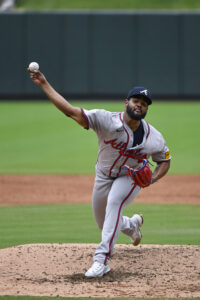 López will make $30MM over the next three years: $8MM in 2025, $14MM in 2026 and $8MM in 2027. On his previous deal, he was set to make $11MM in ’25 and ’26 with an $8MM club option and $4MM buyout for ’27. This deal effectively guarantees that club option ahead of time while allowing Atlanta to move some of his money from the ’25 ledger to the ’26 ledger.
Bummer’s deal had two club options for ’25 and ’26, both valued at $7.25MM with $1.25MM buyouts. Per today’s announcement, he is now guaranteed $13MM over the next two years: $3.5MM in ’25 and $9.5MM in ’26. That’s slightly less than the $14.5MM he could have made if both options were eventually picked up but he gets the security of having it locked in now, staving off any chance of an injury or a decline in performance hurting his future earning power. In this instance as well, the club moves some money from ’25 to ’26.
Before the offseason has really even begun in earnest, Atlanta’s payroll and competitive balance tax situation have already been a clear focus. Almost as soon as trades were allowed to happen, outfielder/designated hitter Jorge Soler was flipped to the Angels, essentially as a salary dump. Atlanta got right-hander Griffin Canning in return but it seems their primary motivation was to get rid of the two years and $26MM left on Soler’s deal. Now, a couple of days later, they announced these reworked deals. In both cases, the goal was seemingly to give Atlanta a bit more spending power in the upcoming offseason.
According to RosterResource, Atlanta is currently slated to have a payroll of $191MM and a CBT number of $210MM. The latter is higher because it’s calculated based on a contract’s average annual value rather than what the club is set to actually pay in 2025. The club has signed some backloaded extensions, which leads some players to have a higher CBT hit than their current salary.
The club finished 2024 with a payroll of $232MM and $277MM. Looking ahead to 2025, there’s some breathing room relative to last year’s numbers, but triggering options on Marcell Ozuna ($16MM), Travis d’Arnaud ($8MM) and Luke Jackson ($7MM) will eat up some of that. The club also has plenty on its offseason to-do list, with Max Fried and Charlie Morton now free agents, opening up two holes in the rotation. The club might consider upgrading on Orlando Arcia at shortstop, Sean Murphy at catcher or Jarred Kelenic in the outfield.
In the case of López, his new deal won’t impact his CBT hit. He signed a three-year, $30MM deal with Atlanta last winter, a deal that came with a $10MM luxury tax calculation. This new deal also has him slated to make $30MM over the next three years, keeping the CBT hit the same.
In terms of pure dollars, he is now guaranteed $4MM extra than previously, with that club option locked in. If he should suffer an injury or a decline in performance between now and then, he has prevented the club from going with the buyout. In exchange, the club gets a small increase in spending power this winter by moving $3MM of his salary ahead by a year. His return to a starting role was a big success this year as he posted a 1.99 earned run average in 135 2/3 innings.
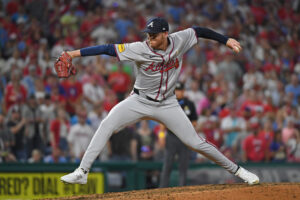
With Bummer, the club clearly wanted to keep him around but worked out some details that they liked better than those options. This will actually increase his CBT hit relative to 2024, but by a bit less than if they had just picked up the option.
Atlanta acquired Bummer a year ago when he still had one guaranteed season left on his deal with the White Sox. Per the rules of the collective bargaining agreement between the league and the players union, a player’s CBT hit is recalculated at the time of a trade. Bummer was set to make a $5.5MM salary in 2024 and $1.25MM buyout on the option, so his CBT hit was $6.75MM in 2024. He had a strong season, posting a 3.58 ERA out of Atlanta’s bullpen this year.
If Atlanta had picked up the ’25 option, his CBT hit would have jumped to $8.5MM, when factoring in the $7.25MM salary and the $1.25MM buyout on the ’26 option. Instead, Atlanta has locked him in at $13MM for the next two years, reducing his CBT hit to $6.5MM. They also backloaded the salary so that they have more money to spend on the ’25 club. For him, he’s potentially leaving a small amount of money on the table, as he could have eventually made $14.5MM if both options were triggered. But he now has more guaranteed up front, so he’s protected against a big surgery or some other unfortunate developments cropping up between now and his second option decision.
Perhaps Atlanta expects to have a bit less of a payroll crunch a year from now. Ozuna’s contract will be done after 2025, as will that of Raisel Iglesias. They have ’26 club options for players like Chris Sale, Pierce Johnson, Ozzie Albies, David Fletcher and Arcia that they could walk away from, depending on each player’s health and performance between now and then. RR currently pegs Atlanta for a $137MM payroll and $136MM for CBT purposes in 2026. However, those numbers will eventually climb based on the options and players who qualify for arbitration, as well as with any multi-year deals the club gives out this winter.
Gonzalez, 25, was originally signed by the Pirates but Atlanta nabbed him in the minor league phase of the 2022 Rule 5 draft. Players who have played parts of seven years in the minors, including the cancelled 2020 season, can qualify for minor league free agency. That was about to be the case for Gonzalez but Atlanta wanted to keep him around, so they’ve added him to the roster today.
He was in a swingman role when in the Pirates’ system but Atlanta has had him working primarily in relief since they grabbed him. He has posted huge strikeout totals but also given out a high number of walks. He spent all of last year in Double-A, posting a 4.19 ERA in 53 2/3 innings. He struck out 30.5% of batters faced while giving out free passes at a 13.3% rate. This year, he split his time between Double-A and Triple-A. He had a 2.91 ERA in 52 2/3 innings, increasing his strikeout rate to 38.8% while decreasing the walks to 10.3%. Those strong results will get him onto a major league roster for the first time and he should compete for a role in Atlanta’s bullpen next year.