
Injury Notes: Brito, Skaggs, Boxberger, Duffy
D-backs outfielder Socrates Brito suffered a dislocated finger while sliding headfirst into home plate today, tweets MLB.com’s Steve Gilbert. He’s being further evaluated, though Nick Piecoro of the Arizona Republic tweets that manager Torey Lovullo wouldn’t rule out surgery as a possibility. Brito is behind Yasmany Tomas, A.J. Pollock and David Peralta on the Diamondbacks’ outfield depth chart, but he certainly has a chance to make the team’s roster (or to re-emerge in the Majors midseason) if healthy. While Brito hasn’t hit much in his brief taste of the Majors, the 24-year-old has been fairly productive in Double-A and Triple-A in each of the past two seasons.
A few more injury updates from around the league…
- Lefty Tyler Skaggs has been scratched from his upcoming Cactus League start due to weakness in his left shoulder, writes Mike DiGiovanna of the Los Angeles Times. While the Angels are calling the setback minor in nature, DiGiovanna notes that there’s some cause for trepidation given Skaggs’ lengthy injury history. Shoulder troubles limited Skaggs as recently as 2016 — his first campaign back from Tommy John surgery that was performed late in the 2014 season. Furthermore, DiGiovanna cites scouts who attended Skaggs’ first outing of the spring in reporting that the southpaw’s fastball dipped from 89-92 mph early in that outing to the 86-88 mph range near the end of his day. Skaggs walked four hitters and didn’t complete one inning in that outing, though obvious Spring Training caveats come along with that unsightly outing. The current plan is for Skaggs to throw a ‘pen session this weekend.
- Right-hander Brad Boxberger had “a little bit of a setback” with his right lat muscle, Rays manager Kevin Cash tells Marc Topkin of the Tampa Bay Times (Twitter links). The pitcher himself tells Topkin that he’s not concerned by the issue and isn’t feeling any discomfort in his arm. Both player and team are still hopeful that Boxberger can be ready for Opening Day. The now-former Rays closer — Alex Colome seized that role in 2016 — missed the majority of the most recent season due to groin and oblique issues.
- Topkin also reports that shortstop Matt Duffy‘s target to appear in Grapefruit League games has been pushed back from its original mid-March placement (Twitter links). Duffy, whose 2016 season ended when he underwent surgery to repair the injured Achilles tendon in his left heel, tells Topkin that his progress has been a bit slowgoing. Topkin notes that the delay in his return to the playing field could impact Duffy’s Opening Day availability, though Cash wouldn’t rule out the possibility that Duffy could be ready by that point. Nevertheless, one can imagine that the Rays aren’t keen on rushing the 26-year-old back to the field, so a backdated DL stint to begin the year seems plausible. Tampa Bay acquired Duffy alongside prospects Lucius Fox and Michael Santos in last summer’s Matt Moore swap with the Giants.
D-Backs Assistant GM Jared Porter Traces His Path to Arizona
A 69-win season spelled an abrupt end for the D-backs front office regime that was led by chief baseball officer Tony La Russa (who remains in the organization in another capacity), general manager Dave Stewart and senior vice president De Jon Watson.
Enter new Arizona GM Mike Hazen, who tapped former standout Boston execs Amiel Sawdaye and Jared Porter, along with former Red Sox bench coach Torey Lovullo, to remake a franchise that may have lost its way.
We caught up to Porter, Arizona’s senior vice president and assistant GM, in order to get a peek into the changes the Diamondbacks are implementing this season.
But in part one of this interview, Porter traces his remarkable fortune in the game so far, including four championships (three in Boston, one with the Chicago Cubs). Is he a lucky charm? Well, Diamondbacks fans can be heartened that in his first seasons in Boston and Chicago, he helped the clubs snap World Series droughts of 86 and 108 years, respectively:
—
Much is made of the Boston roots of Mike Hazen, Amiel Sawdaye, you, and even new manager Torey Lovullo. Given the different roles you all played with the Red Sox, did you conceive of a time when you might all be together again, with commensurate promotions?
I’m very fortunate to have been able to learn from and work with so many talented executives in Boston. It’s one of those things where you don’t realize just how much your career can be shaped by who you work for and learn from early on—and it’s immeasurable.
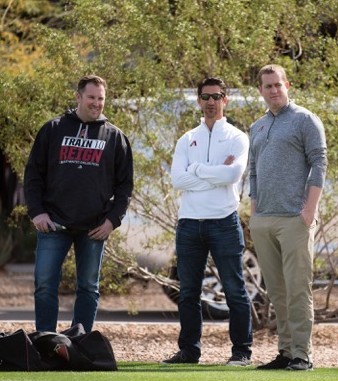
In my case, I happened to get an internship working with and for the best executive in baseball history, Theo Epstein. The culture that Theo created in Boston (and now in Chicago, with Jed Hoyer) is so unique. I feel like I’ve been part of an incredible and captivating baseball operations think tank ever since I started as an intern with Boston in 2004, with everybody working as hard as they can and trying to learn as much as they can, with the freedom and comfort to express opinions and explore both old and new ways of thought with regards to player evaluation, acquisition, development and analysis. I’m forever grateful to Ben Cherington, for hiring me and giving me my first opportunity.
That think tank culture is certainly something we are going to try as hard as we can to replicate in Arizona. Along with others such as Theo, Jed, Ben, Raquel Ferreira, Brian O’Halloran, Jason McLeod, and Allard Baird, Mike and Amiel were big parts of that culture, with their fingerprints all over Boston’s World Series championships and current roster.
Did you have an inkling that you were valued to such a degree by Mike that he would seek you out in Arizona as he did? When you left Boston after the 2015 season, leaving them behind for a year, was there any sort of exit interview/between the lines/wink-wink where you had a sense you might work together again down the line?
Things never seem to happen in a linear manner when it comes to a career path, so there was never any sort of “wink-wink,” but Mike, Amiel, and myself have always been very close and have always enjoyed working together. With that said, the preexisting relationships I had when I went to the Cubs along with some very strong ones I developed over the year-plus I spent in Chicago made it a very tough place to leave, on both a personal and professional level.
I think the Cubs will be just fine without me, though!
What was your adjustment moving from a Ben Cherington front office in Boston to Theo’s in Chicago? Given the enormous successes both teams have had, there must be a lot of similarities. But is there a single contrast that stands out?
We all worked together for so many years in Boston, making the front offices very similar in style and goals. It was a smooth transition from Boston to Chicago, given the similar styles and scouting/development infrastructures coming from what Theo instilled in all of us in Boston.
The biggest difference between the two front offices is that the Cubs have really pressed forward with regards to analytics and new forms of data analysis, because Theo was able to pick up from he left off in Boston while starting from scratch in Chicago. Data analysis is nonstop for them, with a perfectly designed platform to access all of this information. From minor league coaches, to scouts, to major league coaching staff, the analytics make everyone more efficient and knowledgeable. It’s an area that we have already started, and will continue to press forward with, on the Diamondbacks.
Does Theo give you crap for walking into a 103-win team and cherry picking a ring?
[Laughing] No, he doesn’t. But I give it to myself!
Admittedly, it was great timing for me. I’m really lucky that he and Jed gave me the chance to be a part of winning a World Series with the Cubs. The ring is a nice bonus, but the amount I was able to learn being around those guys again for another year-plus, and being ingrained into the great culture they (along with manager Joe Maddon) have created in Chicago is my biggest takeaway. Theo’s probably given me more crap for cherry picking from the culture, and I don’t blame him. They have a great thing going there.
As long as we’re talking Cubs, can you give me your personal Game 7 experience?
Oh man, what an incredible game and series. [Ex-Cubs pitcher and current team exec] Ryan Dempster said it best on the bus ride from Progressive Field to the airport after the game, something to the effect of, “There’s no way the Cubs were going to win their first World Series in 108 years without some sort of dramatic story within the game.”
And it’s true. The twists and turns throughout the Series and specifically in Game 7 were captivating and gut-wrenching. The Indians were and are a great team; it could have gone either way. I’ve been fortunate to be a part of a few world champions over the years, so the best part for me is seeing players, coaches, front office executives and scouts win one for the first time. To me, that provides an incredible amount of gratitude. It serves as a reminder of how tough it is to be part of a team that wins it, and also how lucky all of us who work in baseball are to be a part of it.
Speaking of breaking 108-year droughts, do you practice any particular superstitions in spite of being an analytics-driven kind of fella?
I don’t want to say too much here—and acknowledging that it’s the players who win games on the field—but we’ll do just about anything in the front office suite during a game to change our luck and try to will the team to get a few runs. Typically it involves a lot of hot dogs, chocolate cake, and even the occasional vegetable crudité and tapenade combo.
Part two of this Q&A, which focuses on Porter’s preferred statistics/metrics for player evaluation, his front-office responsibilities in Arizona and the Diamondbacks’ 2017 roster, will run tomorrow afternoon.
Follow Brett Ballantini on Twitter: @PoetryinPros.
Photo courtesy of Sarah Sachs / Arizona Diamondbacks communications department.
Quick Hits: Scouting Changes, Data Sources, Pitching Strategy
It has been a quiet few days in the transactional world, but there are plenty of interesting things being written with possible implications for the player market. Here are a few pieces well worth a read:
- ESPN.com’s Keith Law (Insider link) takes a look at players who entered camp with notable tweaks to their respective games, rounding up the impressions of scouts from around the game. Diamondbacks righty Taijuan Walker is said to have impressed with his latest mechanical overhaul, and he’s showing improved fastball command along with a sharper cut fastball. For White Sox shortstop Tim Anderson, the change has come more on the mental side; it seems he’s improving his ability to recognize pitches and decide whether to swing. The results haven’t been all that promising for Cubs outfielder Jason Heyward, Law suggests, who still seems to lack bat speed despite a newly reworked swing.
- R.J. Anderson of CBS Sports writes about the sources of the data that we read so much about. Beyond the obvious and well-known sources, there’s also a cottage industry of individuals and small companies who sell various kinds of information to ballclubs. While burgeoning in-house analytical departments have obviated the need for certain third-party services, the appetite for data has led to new avenues. It’s a fascinating and lengthy look at this important topic that you’ll want to read in full.
- With research from Willie Harrison and John Salmon suggesting that the home-team advantage shows up most prominently in the poor performances of visiting starters in the first inning, Dave Cameron of Fangraphs examines the possible implications. Cameron suggests that there could be merit to the idea of utilizing a reliever to throw an inning to open games for visiting teams, before turning things over to the “starter” in the bottom of the second. While that’d be a tough strategy to implement over most of the season, it could be of greater function when rosters expand or during the postseason.
- For individual pitchers, we know that stuff doesn’t always equate to results. Eno Sarris of Fangraphs addresses that general topic by looking closely at the differing 2016 seasons put up by Reds pitchers Cody Reed and Dan Straily (the latter of whom has since been traded to the Marlins). Sarris’s breakdown suggests that predictability — or, the lack thereof — is an important ingredient for a major league pitcher, regardless of what kind of raw offerings he possesses. For Straily, being able to throw offspeed pitches for strikes in hitters’ counts last year was an important part of his renaissance. In Reed’s case, Sarris discovers, he relied too heavily not just on his fastball, but in throwing it to a certain spot (outer half). Be sure to check out the full piece for all the details and nuance in the analysis.
NL West Notes: Solarte, Casilla, Seager, Nakaushiro
Yangervis Solarte enjoyed a very good season for the Padres in 2016 despite dealing with unimaginable tragedy off the field. Yuliette Solarte, Yangervis’ wife, was diagnosed with liver cancer in late 2015 and passed away last September at age 31. As the infielder tells Jeff Sanders of the San Diego Union-Tribune, Solarte was prepared to skip last year’s Spring Training to spend time with his wife and their three daughters, but Yuliette urged him to focus on baseball in order to continue providing for their family’s future. Yuliette saw her husband secure his first life-changing payday last spring in the form of a $3.15MM brand contract with Fantex, and Solarte gained even more financial security by signing a two-year extension with the Padres this past January. Sanders’ touching piece is well worth a full read, chronicling the couple’s life together, Solarte’s journey to the big leagues and Yuliette’s battle after her heartbreaking diagnosis.
Here’s more from around the NL West…
- Santiago Casilla is happy to be back in the Athletics organization after not being offered a contract by the Giants this last winter, John Shea of the San Francisco Chronicle writes. A reunion between Casilla and the Giants never seemed likely given how Casilla became a virtual afterthought for the team after he was removed from the closer’s job in September, and the two sides didn’t do much in the way of offseason negotiating.
- Corey Seager has missed the Dodgers‘ last two games and will miss Monday’s game as well due to a minor back injury suffered while turning a double play on Friday. Both Seager and manager Dave Roberts told reporters (including Bill Shaikin of the L.A. Times) that the injury isn’t considered serious, and the team isn’t even sending Seager in for tests. Seager has seen little action on the field during Spring Training as he was previously sidelined with a shin injury, though it sounds like the Dodgers are simply playing it safe with their young star.
- Lefty Yuhei Nakaushiro was one of the first cuts from the Diamondbacks‘ spring camp but manager Torey Lovullo told reporters (including MLB.com’s Chris Gabel) that the Japanese southpaw isn’t far off from his big league debut. “Instead of putting pressure on himself [in big league camp] and every third day getting a look, we felt like he could go down to player development. The last thing we said to him is that he’s very close,” Lovullo said. “We will see him at some point during the year. We know that. We feel very comfortable with that.” The 27-year-old signed a minor league deal with Arizona last winter and posted very strong numbers in his first taste of North American baseball; Nakaushiro rose from rookie ball to Triple-A, posting a combined 1.23 ERA, 12.3 K/9 and 3.08 K/BB rate over 29 1/3 combined innings.
Make-Or-Break Year: Shelby Miller
MLBTR is rebooting its “make or break year” series, in which we analyze players who enter the season with up-and-down track records but also an opportunity to stake a claim to significant future earnings.
Relative to expectations, few major leaguers are coming off poorer seasons than Diamondbacks right-hander Shelby Miller, whose first year in Arizona couldn’t have gone much worse. Miller had been a quality starter with the Cardinals and Braves over the three prior seasons, but the Diamondbacks’ decision to send a haul to Atlanta for him in December 2015 was universally panned from the get-go.
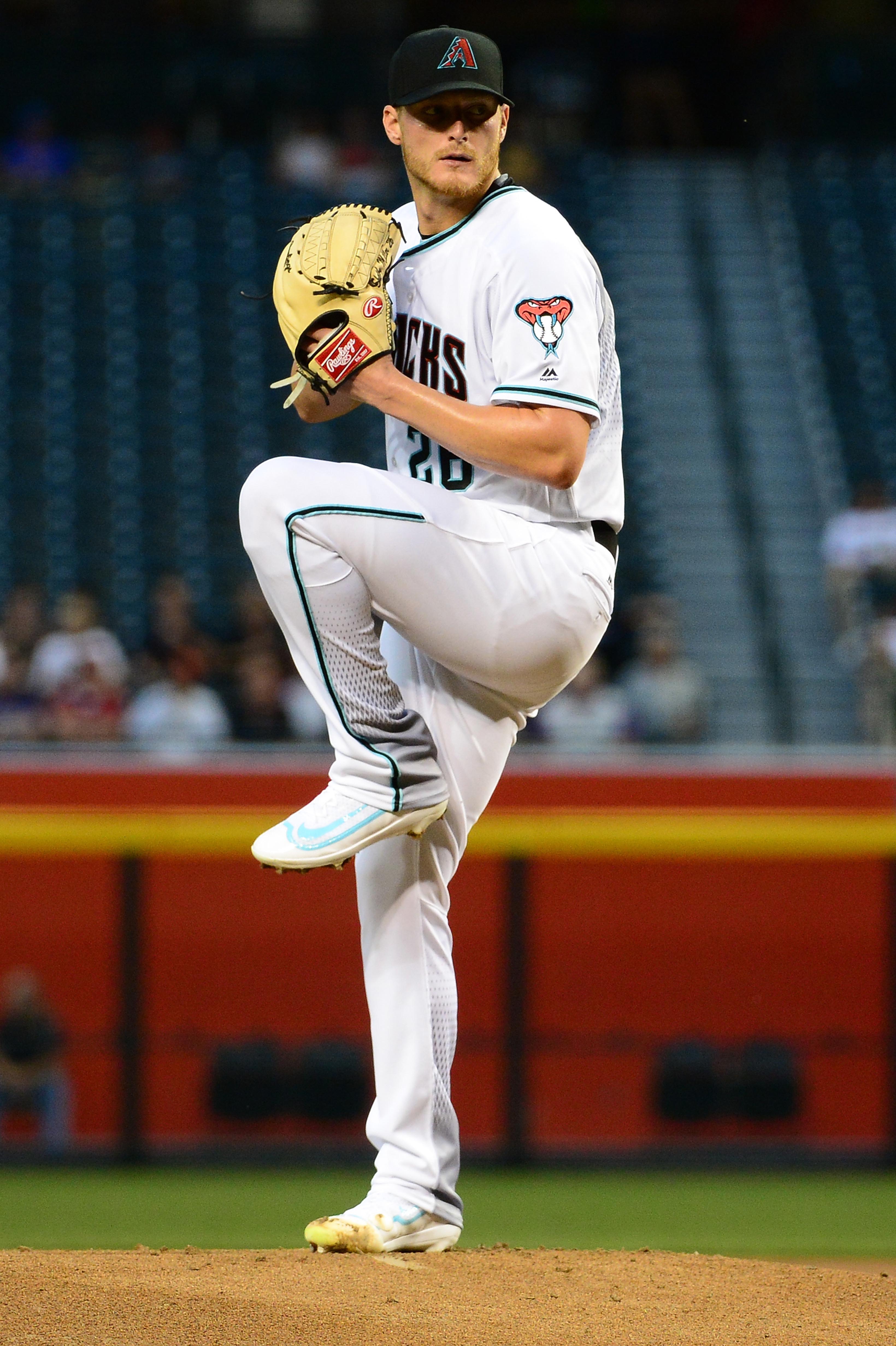
Clearly regarding Miller as an ace, the D-backs’ front office parted with two well-regarded prospects, shortstop Dansby Swanson (the No. 1 pick in the 2015 draft) and righty Aaron Blair, as well as highly valuable center fielder Ender Inciarte to land him. That choice ultimately helped cost Diamondbacks general manager Dave Stewart and senior vice president of baseball operations De Jon Watson their jobs this past offseason, which came on the heels of dreadful performances from Miller and the 69-win team the executives helped build.
In a year that included a stint on the disabled list, a midsummer demotion to Triple-A and nearly another trade, Miller posted career worsts in ERA (6.15), K/9 (6.24), BB/9 (3.74) and swinging-strike percentage (7.0) across 101 innings. On Atlanta’s end, Blair endured an even worse 70 frames in his first taste of big league action, but Swanson impressed in his 145-plate appearance debut and figures to serve as their long-term answer at short. The defensively adept Inciarte, meanwhile, played well enough to land a lucrative contract extension.
While the trade is never going to turn into a positive for the Arizona organization, it’s possible Miller will revert to being a valuable contributor. He’s still only 26, after all, and not far removed from the aforementioned 2013-15 stretch that saw him register a terrific 3.27 ERA over 561 2/3 innings, albeit with so-so strikeout and walk rates (7.48 and 3.25 per nine) and a below-average ground-ball percentage (42.3). He’ll also have help from behind the plate, with new GM Mike Hazen having ditched a poor pitch-framing catcher (Welington Castillo) in favor of a good one (Jeff Mathis) during the offseason. Moreover, Hazen added ex-major league hurlers Dan Haren and Burke Badenhop (a former MLBTR contributor) to the front office, and those two will attempt to aid Miller and the team’s other pitchers in their new roles.
Miller revealed last month that attempting to live up to the trade hindered him last season, and he told FOX Sports’ Ken Rosenthal that he’s trying to “almost go back to being a Little Leaguer and have fun.” It’s only spring, granted, but it appears that approach is working. In his most recent outing on Thursday, Miller hit 99 mph on the radar gun and shut down the Cubs over three innings of one-hit ball, per Nick Piecoro of the Arizona Republic.
Diamondbacks pitching coach Mike Butcher then raved about Miller to Piecoro on Sunday, saying (via Twitter): “Mentally, he’s in a great place. He’s where he needs to be. He just looks really, really good right now. And he’s confident. He’s on a mission, man.”
Whether Miller’s encouraging spring carries over into the regular season will obviously affect his earning power for years to come. Thanks to his minor league demotion last season, Miller didn’t accrue a year of big league service time, meaning he could be under Arizona’s control through the 2019 campaign. Miller will earn $4.7MM this year after the Diamondbacks defeated him in arbitration during the offseason, and he’ll be a prime non-tender candidate next winter if he fails to rebound in 2017. On the other hand, flashing something resembling the form he showed prior to 2016 would net Miller a raise in arbitration or even a contract extension. It’s fair to say, then, that Miller’s in for a make-or-break year.
Photo courtesy of USA Today Sports Images.
Diamondbacks Sign T.J. McFarland To Minor League Deal
The D-backs announced on Friday that they’ve signed southpaw T.J. McFarland to a minor league contract and invited him to Major League Spring Training. The former Orioles reliever was designated for assignment and subsequently released last week. Baltimore had reportedly hoped to retain McFarland on a new minor league deal, but the left-hander apparently saw a better opportunity in the Diamondbacks organization.
The 27-year-old McFarland enjoyed a solid season with the Orioles in 2014 — one year after spending the 2013 season with the team as a Rule 5 pick. However, he’s yet to replicate the 2.76 ERA he notched in 58 2/3 frames that season. Rather, he’s struggled to a 5.68 ERA with 4.6 K/9 against 3.9 BB/9 in his past 65 big league innings. McFarland was hit hard by left-handed opponents last year — the worst season of his career — but held opposing lefties to a combined .246/.309/.330 batting line in a total of 194 plate appearances between the 2014-15 campaigns. He also boasts a gaudy 60.7 percent ground-ball rate in his Major League career, which undoubtedly appeals to the Diamondbacks, who play their home games in an extremely homer-friendly environment.
Presently, Andrew Chafin is the only left-hander that’s guaranteed a role in the Arizona bullpen. Looking further, the D-backs aren’t carrying an abundance of options in camp, with Steve Hathaway representing an optionable candidate for a second spot in the ‘pen. Non-roster options with whom McFarland will compete include veteran Jorge De La Rosa, Triple-A lefty Jared Miller and former teammate Brian Matusz.
Latest On Potential MLB Rule Changes
6:54pm: It now appears there will be one big change in 2017: MLB will switch to a dugout signal for intentional walks, team and union sources informed Howard Bryant of ESPN The Magazine (Twitter link).
6:12pm: Clark has responded to Manfred’s comments (via FOX Sports’ Ken Rosenthal):
“Unless your definition of ‘cooperation’ is blanket approval, I don’t agree that we’ve failed to cooperate with the Commissioner’s office on these issues.”
“Two years ago we negotiated pace of play protocols that had an immediate and positive impact. Last year we took a step backward in some ways, and this off season we’ve been in regular contact with MLB and with our members to get a better handle on why that happened.”
“I would be surprised if those discussions with MLB don’t continue, notwithstanding today’s comments about implementation. As I’ve said, fundamental changes to the game are going to be an uphill battle, but the lines of communication should remain open.”
“My understanding is that MLB wants to continue with the replay changes (2min limit) and the no-pitch intentional walks and the pace of Game warning/fine adjustments.”
4:01pm: Major League Baseball proposed some notable rule changes to the MLBPA earlier this month, but none of those will take effect in 2017, commissioner Rob Manfred announced Tuesday. A frustrated Manfred explained to various reporters, including Bill Shaikin of the Los Angeles Times, that the union’s “lack of cooperation” will prevent the adjustments from coming to fruition this year (Twitter link).
Manfred, who cited the need to improve “pace and action” of games, revealed that the league and the union discussed implementing a pitch clock, introducing automatic intentional walks, changing the strike zone and cutting down on mound visits (Twitter link via Yahoo Sports’ Jeff Passan). Placing a runner on second base during major league games which go to extra innings didn’t come up, and nor will it, as Manfred said that rule’s only use will be in “developmental leagues” (Twitter link via Bill Plunkett of the Orange County Register).
While it will be business as usual with big league rules this year, that won’t be the case in 2018. The collective bargaining agreement enables owners to make changes unilaterally, and Manfred indicated that they will next year (Twitter link via Shaikin). Even though the owners and the union agreed to a new CBA back in December, MLBPA executive director Tony Clark said it’s not yet official. However, the sides are “in the process” of finalizing it and “everything has been agreed to with respect to the big moving pieces” (via Evan Drellich of the Boston Herald).
After touching on potential rule changes, Manfred mentioned a desire for each franchise to have a “major league-quality stadium” and opined that the Diamondbacks’ 19-year-old facility, Chase Field, “needs work” (via Nick Piecoro of the Arizona Republic, on Twitter).
“It’s absolutely clear from the material that has been made available to me there are serious maintenance needs that need to be met with respect to the stadium,” he continued. “Unfortunately, they have not been able to reach a consensual agreement on how that was going to happen.”
The Diamondbacks’ goal to land a new stadium came to the fore nearly a year ago, and the team brought a lawsuit against Maricopa County, which owns Chase Field, last month. While there’s no indication the D-backs plan to leave Arizona, Manfred did note that the league might eventually consider placing a team in Las Vegas, saying that “it could be a viable market” (Twitter link via Passan). He also brushed off the notion that the city’s status as the gambling capital of the United States would be a deterrent.
West Notes: Angels, Dodgers, Mariners, Diamondbacks
Angels right-hander Ricky Nolasco hasn’t eclipsed the 200-inning plateau since 2011, but he’s motivated to log at least 202 1/3 frames this year, writes Pedro Moura of the Los Angeles Times. That would give Nolasco 400 innings from 2016-17, meaning his $13MM club option for 2018 would vest; otherwise he could end up with a $1MM buyout next offseason. “It’s a big deal to me,” Nolasco told Moura. “I know what’s at stake — something that, obviously, I want to get to, no matter what happens. When I first signed that contract with the Twins, I thought, ‘Well, as long as I stay healthy, this is a five-year deal.’ It’s kind of been on my mind since day one.” Nolasco came close to 200 innings last year, when he combined for 197 2/3 with the Twins and Angels, and Halos general manager Billy Eppler is rooting for him to surpass the mark this season. “I hope Ricky takes the ball every fifth day and does his thing and goes deep in games and wins a lot of ballgames,” said Eppler. Manager Mike Scioscia, meanwhile, stated that he doesn’t “even want to hear about” Nolasco’s contract, adding that “he’s gonna pitch, and hopefully pitch well.”
More from the West Coast:
- Another Angels starter, left-hander Andrew Heaney, is recovering well from his Tommy John procedure last July and holding out hope for a return this season, per Moura. Scioscia isn’t optimistic, however. “From the information I have available right now, there is nothing that would make him available to pitch this year,” he said. “I just don’t see it happening.” Heaney took the mound only once last season, in a six-inning start on April 5, and attempted stem-cell therapy treatment on his elbow before opting for surgery. That worked for teammate Garrett Richards, but not Heaney.
- Before the Dodgers traded southpaw Vidal Nuno to the Orioles on Sunday, they offered him back to the Mariners, who declined thanks to a lack of roster space, reports Bob Dutton of the Tacoma News Tribune. Nuno spent most of the past two seasons in Seattle, which sent him to Los Angeles for catcher Carlos Ruiz in November.
- The Diamondbacks are “looking into building the industry’s most intelligent catchers,” including focusing on pitch framing, catching coach Robby Hammock told Nick Piecoro of the Arizona Republic. “The catching staff tries to throw out attempted base-stealers 80-120 times a year as opposed to receiving 20,000 to 25,000 pitches a year,” Hammock said. “What do you want to emphasize?” Hammock’s views explain the Diamondbacks’ offseason decision to jettison Welington Castillo, a poor framer, in favor of the defensively adept Jeff Mathis. Fellow free agent addition Chris Iannetta, on the other hand, hasn’t fared too well as a framer (via Baseball Prospectus), though the D-backs are optimistic they can help fix his issues. “It’s a skill,” analytics head Mike Fitzgerald observed. “So if it’s a skill, you can improve at it or decline at it. There’s a decent amount of empirical evidence that guys can improve on this.”
West Notes: Romo, Hahn, M’s, D-Backs
Newly minted Dodgers righty Sergio Romo discussed his interesting journey to joining his hometown team with Ken Rosenthal of FOX Sports. Personal trials and the strain of an increasingly high-profile role in the Giants bullpen put a strain on the veteran hurler, he tells Rosenthal. He credits several former teammates, including lefty Javier Lopez, with helping him to find his footing once again. Also of note, Rosenthal says that Romo “reject[ed] a higher offer from the Rays” to head to Los Angeles, due in part to the ability to live closer to his family.
Here’s more from out west:
- Righty Jesse Hahn is set to receive the Athletics‘ first start this spring, as Susan Slusser notes on Twitter. That’s a solid indication that he’s under serious consideration for the fifth starters’ role, she notes. The 27-year-old is looking to bounce back after a rough 2016 campaign in which he pitched to a 6.02 ERA with just 4.5 K/9 against 3.7 BB/9 in his 46 1/3 MLB innings. Hahn had generated quality results in his first two MLB campaigns, which occurred on both sides of a trade that sent him to Oakland from the Padres in exchange for catcher Derek Norris. But elbow troubles interrupted his 2015 campaign, and he has yet to get back on track.
- Mariners president Kevin Mather issued a statement to MLB.com in advance of the 2017 campaign, expressing high hopes for the organization. While any executive would express an intention to win a championship, his words seem to carry a certain set of expectations for the near term. “It is time to play October baseball in Seattle,” writes Mather. “Our fans deserve playoff baseball, and I’m not just talking about a Wild Card Game. Once in the playoffs, our goal is to win the World Series. Period. And having said that, we don’t want to win just one.”
- New Diamondbacks exec Amiel Sawdaye — whose title is senior VP and assistant GM — spoke with David Laurila of Fangraphs about the organization’s new approach. Sawdaye is only one of several key figures in Arizona with deep ties to the Red Sox, so it’s not surprising to learn that Boston’s approach will be reflected. He describes the intended decisionmaking process as “more of a flat hierarchy.” Sawdaye emphasized, though, that the D-Backs had strong player development and scouting units, good young front office people, and a “decent infrastructure” for analytics already in place. There are several other topics covered in the interesting chat, including the Jean Segura trade and the team’s possibilities for 2017.
- Jorge De La Rosa is among the players competing for a role with the Diamondbacks this spring, and as MLB.com’s Steve Gilbert notes, he’s hoping to finally crack the big league roster there in his third stint with the organization. Of course, De La Rosa had only previously actually suited up for a few minor-league outings as an 18-year-old; his second run with Arizona only lasted a few days. Now 35, the veteran southpaw will be looking for a chance to pitch against his former club, the division-rival Rockies. “I have always liked this team, and I like the talent we have here,” says De La Rosa of the D-Backs. “I know we can do some really good things. That’s why I chose to be here.”
Diamondbacks Notes: Miller, Sawdaye, Segura
Former Diamondbacks GM Dave Stewart recently expressed regret for trading a package headlined by Dansby Swanson for Shelby Miller. But the Snakes control Miller for three more years, and Miller is hoping to redeem himself this season, as FOX Sports’ Ken Rosenthal writes. Miller says he struggled with the pressure of being the marquee player in a high-profile trade. “I wasn’t using my stuff like I did in the years before. I wasn’t as confident in my pitches as I should have been. I really didn’t throw any sinkers. My cutter wasn’t good,” he says. Now, he says, he’s trying to “almost go back to being a Little Leaguer and have fun.” Here’s more out of Arizona.
- The Diamondbacks’ new braintrust contains a number of former employees of the Red Sox organization, including GM Mike Hazen, manager Torey Lovullo, and assistant GM Amiel Sawdaye and Jared Porter. The new D’backs front office wants to emulate the Red Sox’ in some respects, Sawdaye tells David Laurila of FanGraphs. “We’re trying to build a culture similar to the one we were used to in Boston,” Sawdaye says. “We want people to want to come to work. We want them to be open with each other and communicate well. A lot of good decisions are made that way — in conjunction with other’s opinions. … We’ve worked on implementing that. It’s something that was maybe not here in the past, or at least it was a little different.” In the same interview, Sawdaye also describes the way the front office has reshaped the Diamondbacks’ analytics and scouting departments.
- Interestingly, Sawdaye notes that one factor in the Diamondbacks’ big November trade involving Jean Segura and Taijuan Walker this offseason was that the D’backs’ front office was new and therefore didn’t directly experience Segura’s success last season. “[I]n some ways, not being here last year was probably a little helpful,” says Sawdaye. “[H]aving not been here to see how good Segura was, day in and day out, took any bias out. We were able to be more objective with our assessment.”