
Marlins Notes: Meyer, Garrett, First Base
With Spring Training on the horizon, the Marlins are hosting their annual FanFest today at LoanDepot Park. The club’s rotation was underwhelming last year outside of Eury Pérez and the since-traded Edward Cabrera, but today’s events offered updates on two key figures for 2026 in Max Meyer and Braxton Garrett.
Meyer spoke to reporters about his rehab from left hip surgery (link via Kevin Barral of Fish On First). He underwent the procedure for a labrum tear back in June. In October, general manager Peter Bendix told reporters that Meyer would be ready for Spring Training. That is indeed the case, as Meyer told reporters, “Everything feels good, how it should feel.” He added that he was able to start running halfway through his rehab and more or less followed a normal throwing program this offseason. Per manager Clayton McCullough, the team is committed to using Meyer as a starter rather than a reliever (link via Barry Jackson of the Miami Herald).
The 26-year-old right-hander was the Marlins’ first-round draft pick in 2020. Since debuting in 2022, he has thrown 127 2/3 innings over 25 starts with a 5.29 ERA, a 21.5% strikeout rate, and a 7.3% walk rate. While his 49.4% groundball rate is strong, Meyer also allows a lot of hard contact. His average exit velocity of 91.2 MPH and 47.8% hard-hit rate are both worse than average. He’s particularly struggled to keep the ball in the yard, allowing 1.97 home runs per nine innings in his career.
Meyer’s 2025 consisted of a 4.73 ERA in 64 2/3 innings before the aforementioned hip surgery. That workload was actually a career-high for Meyer, who missed the latter half of 2022 and all of 2023 due to Tommy John surgery. That said, he is still young, inexpensive, and a former Top-100 prospect. He’ll continue to get his chances in the rotation, though a full starter’s workload would be quite a reach even if he stays healthy.
The 28-year-old Garrett underwent an internal brace procedure on his throwing elbow in January 2025 and missed the entire season. He previously made just seven starts in 2024 before missing most of that season with a flexor strain and general elbow soreness. Per Jackson, Garrett is now healthy and will compete for a mid-rotation spot, with Sandy Alcantara and Pérez being locks at the front of the rotation.
Like Meyer, Garrett is a former first-round draft pick – No. 7 overall in 2016. Garrett has the more impressive track record of the two, having established himself as a mid-rotation arm from 2022-23. He threw 247 2/3 innings in that time over 48 appearances (47 starts), posting a 3.63 ERA with a 23.8% strikeout rate and an exceptional 5.1% walk rate. Garrett also induces groundballs 48.2% of the time and excels at getting hitters to chase, ranking in at least the 76th percentile in chase rate in 2022 and 2023.
That quality production came before two injury-ruined seasons, so it is fair to wonder if Garrett can return to his previous form. Like Meyer, he probably won’t be counted on for 150+ innings. That said, just having a healthy season will be a good outcome for the Marlins, who have traded Cabrera and Ryan Weathers and are counting on a separate return to form from Alcantara. Garrett has one option year remaining, so in the worst case scenario, he can be sent to Triple-A if he needs more time after a year off.
Turning now to the position players, McCullough implied that the Marlins will have “a lot of competition for playing time” at first base in 2026 (link via Barral). He specifically mentioned that Christopher Morel is “open to giving it a shot,” with Griffin Conine and Liam Hicks also being options. Morel and Conine are surprising candidates, as neither has played first base in the majors or minors. Hicks is the only one of the three with experience at the cold corner. Eric Wagaman was the team’s primary first baseman in 2025, though he was traded to the Twins last month.
Morel was signed by the Marlins in December after being non-tendered by the Rays. He was an above-average hitter in his first two seasons from 2022-23 but has struggled more recently, grading out 10% below average by wRC+ in 2025. He has bounced around at multiple positions and hasn’t graded out well at any of them. Conine debuted in 2024 and has exclusively played the outfield. McCullough merely described him as “open-minded” about first base, so it’s possible the club will give Conine reps in Spring Training but only consider him an emergency option. The left-handed hitting Hicks batted .247/.346/.346 with a 98 wRC+ last year but was 4% better than average against righties. The club could consider a timeshare with Hicks starting against righties and the right-handed hitting Morel against southpaws.
Photo courtesy of Denis Poroy, Imagn Images
Phillies Re-Sign Lou Trivino To Minor-League Deal
The Phillies and reliever Lou Trivino are reuniting on a minor-league deal, according to Ken Rosenthal of the Athletic. The deal includes an invite to major-league Spring Training.
Trivino, 34, returns to Philadelphia after spending the end of the 2025 season with them. The club signed him to a minor-league deal in early August and selected his contract at the end of that month. In ten appearances down the stretch, Trivino had a shiny 2.00 ERA in nine innings despite some less-than-encouraging peripherals, including a 4.06 xERA and a 25.0% groundball rate. The same was true of his season overall. In 47 2/3 innings split between the Giants, Dodgers, and Phillies, Trivino posted a 3.97 ERA against an expected figure of 5.10 and a below-average 33.8% groundball rate.
The fact that he was pitching at all was a positive development considering he missed the 2023-24 seasons entirely. He underwent Tommy John surgery in 2023 and attempted to rehab in 2024 before suffering a shoulder injury. Prior to that, he had been a steady reliever since debuting with the Athletics in 2018. In 284 2/3 innings with the A’s and Yankees from 2018-22, Trivino had a 3.86 ERA with a solid 24.5% strikeout rate against a 10.6% walk rate. He was predominantly a fastball pitcher and got positive grades on his cutter and four-seamer early on in his career, including a run value of 14 on the cutter in his debut season.
Trivino’s stuff wasn’t as sharp in his first year back from injury. While his four-seam velocity of 94.8 MPH in 2025 was still above-average, it was down from 95.6 MPH in 2022. His cutter velocity of 91.8 MPH was his lowest since the 2020 season, while his sinker velocity also declined slightly. Meanwhile, his 17.9% strikeout rate and 33.8% groundball rate were both career-worst marks. The latter was troubling compared to his 47.4% groundball rate from 2018-22, including a 52.6% rate in 2022.
The deal is a no-risk flier for the Phillies. While his performance in 2025 was rusty overall, Trivino excelled at limiting hard contact. His average exit velocity allowed and hard-hit rate were both in the 93rd percentile or better according to Statcast. Those qualities alone won’t return Trivino to peak form, but they will play up if he can induce more strikeouts and groundballs. The Phillies have Jhoan Duran, José Alvarado, and Brad Keller headlining their bullpen. If Trivino performs well in Spring Training, he might vie for a middle-relief role alongside Tanner Banks, Jonathan Bowlan, and Orion Kerkering.
Photo courtesy of Eric Hartline, Imagn Images
Red Sox, Matt Thaiss Agree To Minor-League Deal
The Red Sox have agreed to a minor-league deal with catcher Matt Thaiss, according to Andrew Parker of SoxProspects (link via Chris Cotillo of MassLive). Thaiss receives an invite to big-league Spring Training.
The 30-year-old was a first-round pick out of the University of Virginia in 2016 by the Angels. He debuted for them in 2019, batting .211/.293/.422 with an 86 wRC+ and a .211 ISO in 164 plate appearances that year. Thaiss has continued to post mid-80s wRC+ values throughout his career. After not getting much playing time from 2020-22, he got an extended look in 2023, making 307 PA in 95 games for the Halos. His 27.0% strikeout rate that year was worse than average, though his above-average 11.7% walk rate kept his on-base percentage above .300 even as he posted a low batting average.
In 2024, Logan O’Hoppe‘s ascension to the starting catcher role limited Thaiss’s playing time. That November, the team signed Travis d’Arnaud as their new backup catcher and designated Thaiss for assignment. He was traded first to the Cubs and then eventually to the White Sox. He split 2025 between the White Sox and the Rays, batting .218/.349/.288 with an 89 wRC+ that was plenty serviceable for a backup catcher. Reviews of his defense were mixed. He was worth 3 Defensive Runs Saved in 411 2/3 innings behind the plate this year, drawing positive marks for his blocking. On the flip side, Statcast rated his caught stealing rate, framing, and pop time all in the 18th percentile or lower.
For the Red Sox, Thaiss is a no-risk depth option behind incumbent Carlos Narvaez and Connor Wong. Narvaez had a 97 wRC+ in 446 PA this year and was worth 10 DRS behind the plate. Wong and Thaiss won’t challenge him for starting time, but Thaiss’s consistent mid-80s wRC+ and above-average walk rate could challenge Wong for the backup spot, where Wong was a decent defender but a black hole offensively in 2025 (39 wRC+). Thaiss has over three years of service time and is out of options.
Photo courtesy of Vincent Carchietta, Imagn Images
Luis Arraez Weighing Multiple Offers, Wants To Play Second Base
With Spring Training set to begin in just a couple of weeks, three-time batting champion Luis Arraez continues to linger on the market. Having played out his final arbitration year with the Padres, Arraez always figured to be an interesting case in free agency. His high contact and low strikeout rates earn him plenty of old-school fans. On the flip side, his lack of power, low walk rates, and defensive limitations make his value questionable from an analytics standpoint.
The rumor mill has been extremely quiet on Arraez outside of the Padres’ reported interest in a reunion back in November. Early last week, 75.17% of MLBTR readers predicted that he would settle for a one-year deal rather than hold out for a multi-year pact. Now, Mark Feinsand of MLB.com reports that Arraez is weighing one-year and multi-year offers from clubs, with a priority of returning to playing second base.
The 28-year-old has played at every infield spot since debuting with the Twins in 2019. Second and first base account for the overwhelming majority of those innings. Defensive metrics have been largely negative on his glove at second. In 2,793 defensive innings there, Arraez has been worth -6 Defensive Runs Saved and -35 Outs Above Average. His most recent year as a regular second baseman was 2023 with the Marlins. In 1,124 innings that year, he was worth 4 DRS but -11 OAA. His glovework at the keystone was last seen positively by both metrics in 2022 (3 DRS and 1 OAA), but that was in just 277 2/3 innings.
Statcast considers Arraez’s range and arm strength well-below-average, both of which limit his value. Perhaps recognizing that, the Padres shifted him to first base after acquiring him in May 2024. From 2024-25 with San Diego, Arraez played 1,517 2/3 innings at first base compared to just 140 innings at the keystone. That move didn’t necessarily improve his defensive value. DRS painted him as an average first baseman in that span (0 DRS), while OAA remained negative in their outlook (-11 OAA). His -6 OAA in 2025 tied with the Athletics’ Nick Kurtz for third-worst among qualified first basemen.
From that track record, it’s not unreasonable that teams might want to limit his time in the field. Of course, that raises the issue of whether Arraez’s offense is enough for a full-time DH role. In 2025, designated hitters posted a 110 wRC+ with a .188 isolated power output. Arraez’s 107 wRC+ since the start of 2024 is comparable to that, but his .089 ISO is less than half the usual mark for the position. Feinsand’s post doesn’t specify the interested teams or the terms of their offers, so it’s still not clear how the market values Arraez overall. In any case, the fact that he is prioritizing a return to second base could limit his earning power, especially on a multi-year deal.
The one-year route may be his best option. Arraez turns 29 in April and has several prime years remaining, so if he performs well in 2026, he could return to the market still young enough for a multi-year deal. He’ll never become a Gold Glover, but a pillow contract could at least allow him to improve his offense relative to his walk year this time around. His .292/.327/.392 slash line in 2025 amounted to a 104 wRC+. Though above-average, it was underwhelming production at first base, a position with 9% better-than-average offense by wRC+ this year. In contrast, second basemen were 10% below average as hitters, though with much better defense than first basemen.
From that lens, the question is which version of Arraez the market values more. He doesn’t hit as well as the average first baseman, but poor defense isn’t unusual for that position anyway. As a second baseman, Arraez’s offense plays up, but his defense becomes a much bigger liability. He has reportedly been working on his defense at second base during the offseason (link via Daniel Alvarez-Montes of El Extrabase), though it remains to be seen how much that matters to the teams alluded to by Feinsand.
Photo courtesy of Jayne Kamin-Oncea, Imagn Images
Yu Darvish Contemplating Retirement, Has Not Made Final Decision
7:05 pm: Darvish added in another statement that he and the Padres have discussed terminating his contract since last year, although discussions between those parties and the Players’ Association have not been finalized. He maintained that he wants to pitch again if his rehab goes well. “If I can thoroughly complete my rehab and feel confident that I can pitch in games both mentally and physically, I’d like to start over and compete from scratch again. As for this year, I plan to go to Petco Park for rehab as well, and also attend a bit of spring training.”
5:50 pm: Padres starter Yu Darvish is contemplating retirement, but he has not yet made a final decision. An initial report from Kevin Acee of the San Diego Union-Tribune indicated that Darvish was retiring. Darvish’s agent, Joel Wolfe, refuted that, saying, “Yu has not made a final decision yet. This is a complicated matter we are still working through” (link via Alden Gonzalez of ESPN).
Darvish addressed the situation through a statement on his X account. “Although I am leaning towards voiding the contract,” he said, “there’s still a lot that has to be talked over with the Padres so the finer details are yet to be decided. Also I will not be announcing my retirement yet. Right now I am fully focused on my rehab for my elbow, and if I get to a point where I can throw again, I will start from scratch again to compete. If once I get to that point I feel I can’t do that, I will announce my retirement.”
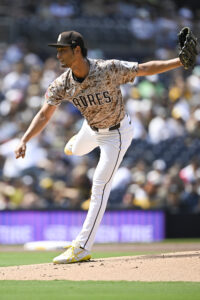
The 39-year-old right-hander is owed $43MM over 2026-28 from the extension he and the Padres signed in 2023. If he retires without reaching a settlement, he would forfeit that money. As Darvish indicated, he and the Padres may be working on a buyout that would see him keep some portion of his salary while giving the team significant cost savings over the next three years.
If he does decide to retire, he’ll be wrapping up an incredible 21-year career across Japan’s Nippon Professional Baseball and MLB. In 2005, Darvish made his debut at age 18 for the Hokkaido Nippon-Ham Fighters in NPB. He pitched 94 1/3 innings over 14 starts as a rookie that year, following it up with a 2.89 ERA in 149 2/3 innings in 2006. The Ham Fighters won the Japan Series in the latter year, with Darvish making his first start in Game 1 and earning the win in the clinching Game 5.
From 2007-11, he was absolutely dominant, totaling 1,024 1/3 innings with a 1.72 ERA and 1,083 strikeouts. Darvish was an NPB All-Star in every season in that span, twice being named the Pacific League MVP (2007 and 2009) and winning the Sawamura Award (NPB’s equivalent of the Cy Young) in 2007. His final NPB season in 2011 was sensational. Darvish posted an 18-6 record in a career-high 232 innings with a microscopic 1.44 ERA, along with 276 strikeouts and just five home runs allowed all season.
Following the season, the Ham Fighters made him available to MLB clubs via the posting system. The Texas Rangers outbid the other suitors with a massive $51.7MM posting fee to the Ham Fighters (proportional posting fees not having been established yet). The team ultimately signed Darvish for a six-year, $56MM guarantee.
In his debut MLB season in 2012, Darvish pitched 191 1/3 innings over 29 starts with a 3.90 ERA, a 27.1% strikeout rate, and a stellar 46.2% groundball rate. He made his first playoff start in the AL Wild Card Game against the Orioles, pitching 6 2/3 innings with seven strikeouts and no walks but earning a tough-luck loss. He was valued at 4.7 WAR that year according to FanGraphs, which stands as the highest mark of his career to date. He also earned the first of five All-Star nods in the majors and finished third in AL Rookie of the Year voting.
His 2013 season was just as dominant. Darvish lowered his ERA to 2.83 in 209 2/3 innings as the Rangers’ ace and upped his strikeout rate to 32.9%. He earned his second All-Star nod and finished as the runner-up to Max Scherzer in the AL Cy Young vote, while his 277 strikeouts that year were the best of his MLB career. He was an All-Star again in 2014, but he was placed on the injured list with elbow inflammation in mid-August and missed the rest of the season. He experienced further soreness during Spring Training the following year and ultimately underwent Tommy John surgery, missing the entire 2015 season.
Darvish returned in May 2016 and picked up where he left off. In 100 1/3 innings over 17 starts that year, he posted a 3.41 ERA with a 31.7% strikeout rate and a 7.5% walk rate. He was a bit less effective the following year, with a 4.01 ERA in 22 starts before being sent to the Dodgers at the trade deadline in exchange for three prospects led by Willie Calhoun. Darvish’s strikeout and walk numbers improved in nine regular-season starts in Los Angeles, but he struggled in the World series against the Astros with subpar starts in Games 3 and 7.
Still, Darvish’s track record as a front-of-the-rotation arm made him a top target in free agency. In February 2018, he signed a six-year, $126MM deal to join the Cubs. He wound up spending 2018-20 on the North Side. He struggled with injuries and ineffectiveness in 2018, pitching just 40 innings over eight starts. He rebounded in 2019 with a 3.98 ERA and a 31.3% strikeout rate in 178 2/3 innings. In 12 starts during the COVID-shortened 2020 season, he was utterly dominant with a 2.01 ERA and just a 4.7% walk rate, finishing second in the NL Cy Young vote.
The Cubs traded Darvish to the Padres that December, and he has been with San Diego ever since. Darvish’s strikeouts began to wane in his mid-30s, but he compensated by improving his control. From 2021-25, his walk rate sat in the 6% range and never topped 7.5% in a season (2023). His best Padres season to date was in 2022, as Darvish made 30 starts with a 3.10 ERA and a 20.8% K-BB rate, the latter being ninth-best among qualified starters.
The club was confident enough in his performance to extend him heading into 2023. The deal was for six years and $108MM, of which five years and $90MM were new money. In the first three years of that deal, Darvish has made 55 starts with a 4.41 ERA while struggling with injuries. He made five trips to the IL from 2024-25, most recently for an internal brace procedure on his throwing elbow this past October. While coming with a shorter recovery period than a second Tommy John surgery, Darvish was still set to miss the entire 2026 season regardless.
In an interview last month, Darvish indicated that he was focused on getting healthy and returning to pitching, though a later report from Acee indicated that retirement was on the table. This latest update suggests that Darvish is contemplating the end of his career, but that he is still open to returning if his rehab goes well. Further details could be made public soon, pending the outcome of his talks with the Padres.
Photo courtesy of David Banks, Imagn Images
Padres Sign Samad Taylor To Minors Contract
The Padres have signed infielder Samad Taylor to a minor-league deal with an invitation to Spring Training, according to Chris Cotillo of MassLive. Taylor was designated for assignment by the Mariners last week and elected free agency prior to signing this new deal.
Taylor, 27, was a tenth-round draft pick by Cleveland in 2016 and spent 2016-22 in the minors with them and the Blue Jays. He reached the Triple-A level in 2022, batting .258/.337/.426 with a 104 wRC+ in 280 plate appearances. He showed solid on-base ability with a 10.0% walk rate and also showed off his speed by stealing 23 bases. He also cut his strikeout rate down to 22.1% after sitting at 29.4% in Double-A in 2021. In August 2022, he was traded to the Royals alongside right-hander Max Castillo as part of the deal sending Whit Merrifield to Toronto.
After starting 2023 at Triple-A, Taylor was called up by the Royals in mid-June for his big-league debut. In a 69-PA cup of coffee, he batted .200/.279/.267 with a wRC+ of just 50, although he maintained his strong walk rate (10.1%) and speed (eight stolen bases). That stands as his most significant big-league playing time to date. Taylor was traded to the Mariners for a player to be named later in January 2024, but made just five big-league plate appearances that year and just nine in 2025.
He performed decently at Triple-A from 2024-25. Although he was 9% below average by wRC+ in 2024, he got on base at a 35.2% clip and remained a threat on the basepaths with 50 stolen bases in 136 games. In 2025, he maintained his on-base ability and speed while upping his slugging percentage to .461 and cutting his strikeout rate to 18.7%. That brought his 2025 batting line up to .296/.378/.461, which was 14% better than average by wRC+.
Taylor has less than a year of big-league service time and is out of minor-league options. For the Padres, there’s no harm in keeping him in Triple-A as a depth piece. The club has Manny Machado, Xander Bogaerts, and Jake Cronenworth entrenched at three infield spots. Newcomer Sung Mun Song is slated for time around the infield and potentially the outfield, though he could start the year on the injured list following an oblique injury. An infielder by trade, Taylor spent 1,136 innings in the outfield in the minors from 2023-25 and profiles as a utility depth piece.
Photo courtesy of Stephen Brashear, Imagn Images
Blue Jays Met With Framber Valdez In November
Fresh off a run to the World Series, the Blue Jays have been very active on the free agent market. They signed top free agent starter Dylan Cease to a seven-year deal and also brought in Kazuma Okamoto, Tyler Rogers, and Cody Ponce. The past few days have not gone in their favor, though. Toronto was one of the top suitors for Kyle Tucker and offered him $350MM over ten years before he signed with the Dodgers. They also hoped to re-sign Bo Bichette, but he opted for a short-term, high-AAV deal with the Mets yesterday.
After coming up short on Tucker and Bichette, it’s plausible the team could shift their focus back to adding more pitching. Lefty Framber Valdez remains available, and Ben Nicholson-Smith of Sportsnet reports that the Blue Jays met with him at the GM meetings back in November. Nicholson-Smith clarifies that the meeting was before Cease’s signing, but there was mutual interest between the two sides at the time.
Valdez has so far been publicly linked to the Orioles, Giants, Mets, and Red Sox. The Orioles’ interest was reported even after they signed Pete Alonso for $155MM over five years. The Giants are more interested in a short-term deal, while the Mets reportedly prefer to add pitching via trade. The Red Sox also Met with Valdez in November, but they may no longer be a fit after signing Ranger Suarez and trading for Sonny Gray and Johan Oviedo.
As for the Blue Jays, their current interest in Valdez is unclear, as is their ability to fit him into the payroll. RosterResource has their 2026 payroll at $282MM and their CBT payroll at $310.5MM, which puts them over the maximum luxury tax line of $304MM. While their offer for Tucker would have carried a $35MM AAV plus a $31.5MM luxury tax bill, he may have been a special case as the clear top hitter on the market.
Meanwhile, Valdez is older than all three of Tucker, Bichette, and Cease. He was predicted to land a five-year, $150MM deal on MLBTR’s Top 50 Free Agents list. As a second-year luxury tax payor, the Jays would owe $27MM in tax penalties on that $30MM AAV, making Valdez a $57MM total cost in 2026 if they were to sign him. He also rejected a qualifying offer from the Astros, so he would cost the Jays their second- and fifth-highest draft picks in 2026. With a projected rotation of Cease, Trey Yesavage, Kevin Gausman, Shane Bieber, and Ponce, it’s possible that Valdez is both too expensive and more of a want than a need for Toronto.
Of course, none of that takes away from Valdez’s track record. From 2022-25, he was worth 16.5 fWAR, which was fifth-best among qualified starters between Gausman and Cease. A lot of that success has come from Valdez’s suppression of home runs and exceptional groundball rates. In those four seasons, his 0.68 HR/9 is tied for fifth-best among qualified starters. His groundball rate of 60.0% is tops among starters with at least 500 innings. For Valdez, that number has never dipped below 54.2% in a full season.
He has also built a reputation for durability. Valdez’s 767 2/3 innings since the start of 2022 are second-most in the majors behind only Giants ace Logan Webb. This past year was more of the same. In 31 starts with the Astros, Valdez pitched 192 innings with a 3.66 ERA, a 58.6% groundball rate, and an above-average 14.8% K-BB rate.
He did show some signs of wear as the season went on, posting a 5.20 ERA in 71 innings in the second half. The last two months were especially rough. In August, Valdez only struck out 12.8% of hitters. In September and October, he became uncharacteristically homer-prone, allowing six long balls in 27 2/3 innings (1.95 HR/9). On the positive side, his sinker remained a dominant pitch, with a run value of 15 according to Statcast as well as above-average vertical break. While a long-term deal would take Valdez into his mid-30s, he should at least maintain a strong floor thanks to his durability and extreme groundball tendencies.
The market has been solid for pitchers looking for long-term deals. Cease was coming off an uneven walk year with the Padres and still got seven years from the Jays. Suarez just got five years and $130MM from Boston, matching our contract prediction in length and outdoing it by $15MM in value. Tatsuya Imai is perhaps the only starter expected to get a long-term deal who settled for a shorter pact (three years, $54MM with the Astros). Age aside, Valdez has a lengthy track record and should do better than Imai, at least in terms of AAV.
Photo courtesy of Troy Taormina, Imagn Images
Cubs Sign Alex Bregman
The Cubs have made their third-largest signing in franchise history official, announcing Wednesday that they’ve signed third baseman Alex Bregman to a five-year contract that’ll reportedly guarantee him $175MM. Bregman, a client of the Boras Corporation, receives a full no-trade clause. Unlike his prior contract with the Red Sox, there are no opt-out opportunities. The deal reportedly includes $70MM of deferred money, dropping the net present value from a $35MM average annual value to something in the $30-31MM range. A full breakdown of the deferrals can be found at the bottom of this post. He’ll be introduced in a press conference tomorrow morning at 10:30am CT.
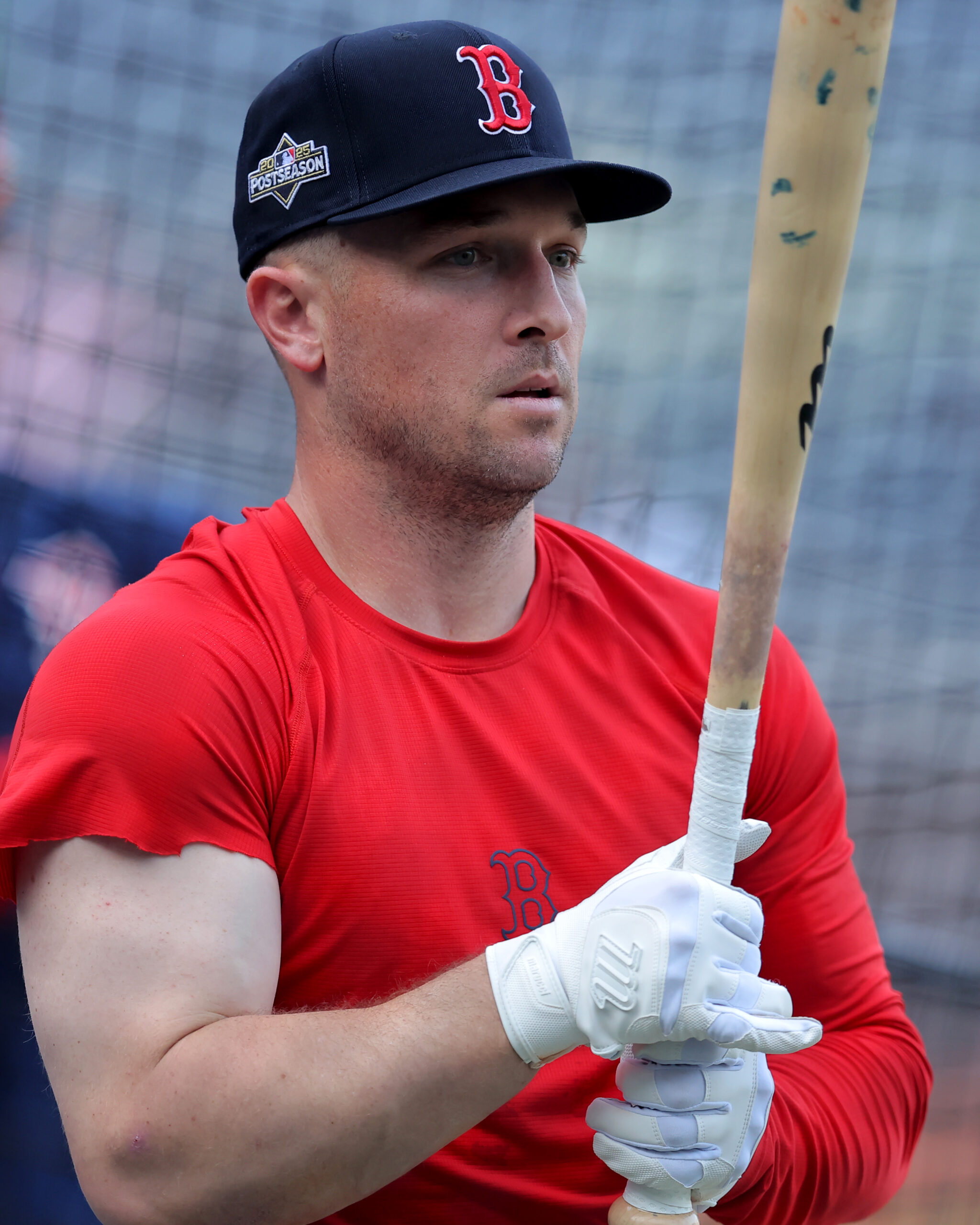
When last offseason’s proposals fell short of Bregman’s expectations, he pivoted to a heavily-deferred three-year, $120MM deal with the Red Sox. The quality of his 2025 season, plus his ineligibility for a qualifying offer this time around, led to this long-term deal.
MLBTR projected a six-year, $160MM contract for Bregman back in November. He ultimately landed a bit shy of that on a five-year term, when accounting for deferrals. It’s still the largest average annual value in Cubs franchise history, and the total guarantee trails only Jason Heyward ($184MM) and Dansby Swanson ($177MM). The inclusion of deferrals is a notable departure for the Ricketts family ownership group; just last offseason, they appeared staunchly against utilizing deferred money in free agent negotiations.
For the Cubs, the addition of Bregman is the biggest splash in an active offseason. The club acquired young starter Edward Cabrera from the Marlins three days ago, adding upside to the rotation at the expense of a top-50 prospect in Owen Caissie. The Cubs have largely rebuilt their bullpen with a quintet of free agent signings: Phil Maton, Hunter Harvey, Caleb Thielbar, Hoby Milner, and Jacob Webb. They also retained swingman Colin Rea and starter Shota Imanaga.
Bregman gives the Cubs a major offensive upgrade without the loss of a draft pick, as he rejected a qualifying offer from the Astros in 2024. His salary brings the team’s projected 2026 payroll to $231MM, a full $25MM over last year’s $206MM figure, according to RosterResource. Meanwhile, their CBT payroll stands around $243MM for 2026, putting the Cubs just shy of the first luxury tax threshold. The Cubs did not exceed the CBT in 2025, so they’ll reside in the lightest tax bracket if they go over in ’26.
Bregman, 31, played in 114 games with Boston this year, making 495 plate appearances. Although he missed a month and a half with a right quad strain, he continued to excel on offense, batting .273/.360/.462 and grading out 25% better than average by wRC+. After posting a career-low 6.9% walk rate in his final year with the Astros, Bregman bumped that up to 10.3% in 2025. He maintained his reputation as a high-contact hitter, with his 14.1% strikeout rate grading out in the 88th percentile. His 90.1 mph average exit velocity and 44.4% hard-hit rate were both career bests. He also continued to perform well defensively, earning 3 Outs Above Average for his work at third base. Overall, Bregman’s 2025 contributions were good for 3.5 fWAR and his third career All-Star nomination.
A lot of that came from his red-hot first two months. At the time of his injury, Bregman had a 156 wRC+ through 226 PA. His production following his return was more uneven. He posted a 128 wRC+ in July, followed by a 108 wRC+ in August and just a 76 wRC+ in September. In the first half, Bregman was 52% better than average by wRC+. In the second half, he was right around average.
Though he wasn’t his usual self in the last two months of the year, Bregman’s lengthy track record still made him one of the top free agents in this year’s class. Since debuting with the Astros in 2016, he has batted .272/.365/.481 with 209 home runs and a 133 wRC+. His first two All-Star appearances came in 2018-19. Bregman averaged 8.1 fWAR and finished in the Top 5 in AL MVP voting in both years, finishing as the runner-up in 2019.
While he hasn’t reached those heights in the years since, Bregman has still been a well-above-average hitter. He has posted a wRC+ between 117 and 137 in every year from 2020-25. Bregman’s defense has also held firm. Since the start of 2020, he has been worth 10 DRS and 17 OAA. He ranks eighth among qualified third basemen in that span by OAA.
That track record, Bregman’s excellent clubhouse reputation, and his still-excellent 2025 drew ample interest in free agency. The Red Sox were clearly keen on a reunion, with recent reports indicating they had made him an “aggressive” offer. Outside of them and the Cubs, his known suitors included the Tigers, Diamondbacks, and Blue Jays (before they signed Kazuma Okamoto). The Tigers and Cubs were interested in Bregman last offseason as well. Detroit reportedly offered him six years and $171.5MM, albeit with significant deferrals. Chicago’s offer was in the four-year, $115MM range. One year later, the Cubs put forth more than $40MM more to lock him up, even when considering the surprising deferred money.
Bregman likely sought a $200MM guarantee during the 2024-25 offseason. He got to $215MM on paper in total, though deferred money on both contracts probably puts him a little short of a true $200MM. Regardless, returning to the market after opting out of a short-term deal is a strategy we’ve seen Boras execute successfully with Bregman, Carlos Rodon, Blake Snell, Matt Chapman, and Pete Alonso in recent years, with Cody Bellinger serving as the next test case.
With Bregman slotting in at third base, the most impacted player on the Cubs’ roster is incumbent third baseman Matt Shaw. As a rookie, Shaw posted a .226/.295/.394 line in 437 plate appearances, good for a 93 wRC+. Factoring in his serviceable defense (-1 DRS), Shaw was worth 1.5 fWAR in 2025. That was acceptable production for the rookie and former top prospect, though there are clear areas for improvement heading into his sophomore season. Shaw’s average exit velocity and hard-hit rate ranked in the third and seventh percentiles, respectively. He also struggled against fastballs, with a -6 run value against sinkers and a -1 value against four-seamers.
Shaw came up through the system as a middle infielder before shifting to third base in earnest in 2024. At present, Swanson and Nico Hoerner occupy the shortstop and second base spots on the big-league roster. Swanson is under contract through 2029 and won’t be moving off short any time soon. Hoerner has been an above-average hitter and excellent defender in the past four seasons, tallying 17.5 fWAR. Hoerner moved to second base in 2023 in deference to Swanson.
With the 28-year-old Hoerner eligible for free agency after 2026 – with earning power likely to get a boost from his ability to play shortstop – his name has surfaced in trade rumors this winter. The best 2026 Cubs team has Hoerner at second base and Shaw in a utility infield role, but it’s at least conceivable that either player could be dealt this offseason.
For Red Sox fans, the past seven months have provided a painful sequence of events at third base. Rafael Devers was dealt to the Giants in a surprise June blockbuster, and now Bregman has departed as well. According to Peter Abraham of the Boston Globe, the Red Sox “did not come close financially and were not willing to give Bregman a full no-trade clause.”
The Red Sox, the only team yet to have signed a Major League free agent this winter, could turn to Bo Bichette to play second base. Bichette will likely require a long-term deal of his own, however, and chief baseball officer Craig Breslow has yet to sign a free agent for more than Bregman’s three years (which only lasted one).
Jon Heyman of the New York Post first broke news of the signing, with ESPN’s Jeff Passan adding terms and Bob Nightengale of USA Today providing further details. Ken Rosenthal of The Athletic reported that the deal includes deferred money.
The full details of the deferrals were reported by Jay Cohen of The Associated Press. $15MM is deferred in 2026 and 2029, $10MM in 2027 and 2028, then $20MM in 2030. He will be paid the deferred money via eight annual instalment each July 31st from 2034 to 2041.
GM Mike Hazen Discusses Diamondbacks’ Remaining Offseason Goals
Ketel Marte is officially off the market, but even if the Diamondbacks aren’t swinging a big trade this winter they still have plenty of work to do. The team’s biggest move of the offseason has been reuniting with Merrill Kelly in free agency. They’ve also signed right-hander Michael Soroka and catcher James McCann to one-year deals while shipping lefty Kyle Backhus and outfielder Jake McCarthy out in trades.
Those relatively small moves aren’t the end of the team’s offseason maneuvers, as general manager Mike Hazen told reporters (including Alex Weiner of Arizona Sports) that he would like to bolster the pitching staff and also add “a couple of bats” to the offense. More specifically, Hazen said that he is “still in the process of trying to add to our pitching staff. Bullpen, starting, whether it’s depth, whether it’s jumping into the rotation is still the main area of focus.” Those comments are obviously broad, and leave open plenty of avenues for improving the roster.
Arizona’s 2025 rotation was below-average overall amid injury woes and nearly across-the-board underperformance. Despite pitching the third-most innings of any rotation, the group’s 9.0 fWAR ranked 21st in the league. Staff ace Corbin Burnes had a 2.66 ERA in 64 1/3 innings before undergoing Tommy John surgery in June. He’ll miss most, if not all, of the 2026 season but remains under contract through 2030. Losing Burnes wouldn’t have been quite so disastrous had righty Zac Gallen remained a top-of-the-rotation caliber arm after being demoted to the #2 spot behind Burnes, but that didn’t come to pass. Gallen was healthy all season but posted a 4.83 ERA and allowed the third-most home runs of any starter in the league with 31. He’s now a free agent, and a reunion between the sides seems unlikely.
Brandon Pfaadt and Eduardo Rodriguez, meanwhile, both remain under club control but had similar struggles with run prevention and long balls, as both finished the year with ERAs north of 5.00. Rodriguez is guaranteed $46MM over the next two seasons (including a $6MM buyout on a 2027 mutual option), while Pfaadt is entering the first year of his five-year, $45MM extension with the team. Ryne Nelson looked good after moving into the rotation in May and is controlled via arbitration through 2028. Kelly actually led the rotation with 2.3 fWAR, despite spending the back half of the season with the Rangers after a deadline trade. Even with him re-installed on a two-year deal, the downgrade from Gallen to Soroka and Burnes’s uncertain status combine to leave the rotation looking much thinner than it did a year ago.
Vague as Hazen was about his specific plans for the pitching staff, adding another starter seems like a worthwhile endeavor. Kelly and Nelson currently project as the rotation’s top two starters, but on most contending teams would surely fit in closer to the middle of the rotation. Pfaadt and Rodriguez are both coming off the sort of brutal season from a results perspective that makes it hard to count on them for more than back-of-the-rotation innings eating, while Soroka was signed to be a starter but has long performed better when used out of the bullpen and last pitched more than 100 innings in 2019.
The main hurdle to another rotation signing is the payroll. RosterResource has the Diamondbacks at $166MM in payroll right now. That’s down from $188MM in 2025, but principal owner Ken Kendrick has indicated a desire to spend less on payroll this year. It’s unclear what the team’s exact payroll limitations are, but it’s hard to imagine the team finding room in the budget for an impact free agent starter like Ranger Suarez (or even a reunion with Gallen) without extending themselves. Perhaps the trade market, where players like Freddy Peralta and Kodai Senga could be available, would make for a better path towards bringing in pitching help if the team wants to pursue a starter.
If the team is going to focus on free agency, however, adding to the bullpen might make more sense. As much as the rotation struggled throughout parts of 2025, things were even worse in the relief corps. The club’s 4.82 bullpen ERA was the fourth-worst figure in all of baseball last year. Much of those struggles can be attributed to losing top relievers Justin Martinez and A.J. Puk for most of the season, but both underwent Tommy John surgery in June and will join Burnes in missing at least the first half of the season and potentially all of it. That leaves the team without much continuity or reliability in the bullpen headed into 2026. Ryan Thompson and Kevin Ginkel will return, with the former coming off a decent season while the latter struggled badly but has the track record to bounce back. The top returning reliever is lefty Andrew Saalfrank, who put up a dazzling 1.24 ERA in 29 innings last year but is unlikely to repeat that performance considering his meager 16.8% strikeout rate.
There’s a number of interesting young arms on the team’s 40-man roster, but the Diamondbacks bullpen could clearly use an established late-inning arm to help stabilize things while Martinez and Puk are on the shelf. Hazen didn’t name specific targets in his recent comments, but it seems Arizona is interested in just that sort of player given the club’s interest in Pete Fairbanks before he landed in Miami last month. Seranthony Dominguez is the top relief arm still available in free agency and would make plenty of sense in the desert. If his contract ends up being too rich for their tastes, other options like Pierce Johnson, Michael Kopech, and Danny Coulombe also remain available in a relief market that’s seen most of the high-leverage options picked over in the early months of the winter.
Turning to the offense, Weiner suggests that the Diamondbacks’ pursuit of help on offense could be focused more on adding platoon players rather than everyday regulars. Between the team’s limited financial flexibility and the players already available on the roster, that’s an understandable course to take. Pavin Smith has spent most of his career as a platoon bat, and getting a right-handed complement at first base seems like an obvious addition. Diamondbacks legend and likely future Hall of Famer Paul Goldschmidt is on the market and would fit that bill, as would Rhys Hoskins. Lower level options for that role in free agency include Connor Joe and Ty France. A right-handed hitting outfielder to platoon with Alek Thomas and take occasional reps at DH could also be valuable. Someone like Miguel Andujar, Chas McCormick, or perhaps even old friend Randal Grichuk could make some sense in that role. One other intriguing option would be switch-hitting super utility man Willi Castro, who could serve as a reserve outfield option while also backing up youngster Jordan Lawlar at third base.
Phillies Interested In Bo Bichette
Free agent infielder Bo Bichette has thus far drawn interest from the Blue Jays and Red Sox. The Yankees, Cubs, and Dodgers have also checked in on his market. Now, Jon Heyman of the New York Post adds that the Phillies are among the big-market suitors for Bichette.
Philadelphia’s biggest offseason move has been the re-signing of Kyle Schwarber to a five-year, $150MM contract. Outside of that, the team has added Adolis Garcia to the outfield mix on a one-year deal. They also retooled the bullpen by trading away Matt Strahm, acquiring Kyle Backhus, and signing Brad Keller and Zach Pop. Last month, it was reported that the club is looking for a righty platoon bat and some rotation depth, as well as a reunion with J.T. Realmuto. In contrast, the infield hasn’t been mentioned as a target for an upgrade, so it’s possible that the Phillies are just doing due diligence on Bichette.
The club has Trea Turner entrenched at shortstop. The 32-year-old continues to perform at a high level. In 2025, he batted .304/.355/.457 in 141 games with a 125 wRC+ that was sixth-best among qualified shortstops. He also lowered his strikeout rate to just 16.7% and hit 15 home runs while stealing 36 bases. Crucially, after two seasons of below-average defense, Turner was worth 2 Defensive Runs Saved as well as 16 Outs Above Average in 2025, the latter ranking fourth among qualified shortstops. That stands in stark contrast to Bichette, who was worth -12 DRS and -13 OAA for the Blue Jays this year.
The presence of Turner makes the Phillies less of an obvious fit for Bichette the shortstop. With Schwarber taking the DH slot, Bichette would need to play second or third base if he were to sign. The keystone is the more likely outcome, with Bichette telling interested teams that he is willing to play there. He notably played five games at second base during the World Series, with Andres Gimenez covering shortstop. Before that, Bichette had only spent 262 1/3 innings at the keystone in his career, all in the minor leagues.
Statcast takes an unfavorable view of Bichette’s arm strength (36th percentile) and sprint speed (21st percentile). A move to second base would allow him to make shorter throws and limit his exposure to batted balls from right-handed hitters, with which he has historically struggled. Meanwhile, the Phillies’ incumbent second baseman is Bryson Stott. His 2025 batting line of .257/.328/.391 was league average by wRC+. On defense, he was seen as average (0 DRS) to positive (7 OAA). Altogether, he was worth 3.1 fWAR this year, which was sixth among qualified second basemen.
Signing Bichette to play second might force Stott to the hot corner, where has only played 15 big-league innings. That could still be a good defensive alignment of the two. Whereas Bichette struggles against batted balls by right-handed hitters, Stott was worth an equal 4 OAA against right-handed and left-handed batters in 2025. Slotting him at third base to accommodate Bichette wouldn’t be a perfect fit, given Stott’s below-average arm strength. Still, his better performance against batted balls by righties, as well as his plus range and sprint speed, could help him adapt to the hot corner better than Bichette could.
An alignment of Stott at third, Turner at short, and Bichette at second would leave Alec Bohm without a regular position. Bohm batted .287/.331/.409 with a 105 wRC+ in 120 games this year as the Phillies’ primary third baseman. That’s certainly not terrible, but it was a drop-off from his 113 wRC+ in 2024. He also declined on defense, dropping from 4 OAA in 2024 to -2 OAA this year. Bohm is entering his last year of team control and is projected for a $10.3MM salary in arbitration, which makes him a potential trade candidate. Indeed, back in October, 69.72% of MLBTR readers believed the Phillies would trade him.
It remains to be seen whether the Phillies are seriously interested in Bichette or just doing their due diligence. That said, if they were to sign him and trade Bohm, they’d be upgrading their offense and potentially their infield defense. We at MLBTR ranked Bichette at No. 2 on our Top 50 Free Agents list, projecting an eight-year, $208MM deal. Adding that $26MM annual salary while subtracting Bohm’s $10.3MM would bring the team’s 2026 payroll to just under $281MM, according to RosterResource. That would leave about $10MM for a reunion with Realmuto and other additions, assuming the team matches its 2025 payroll of $291MM.
Photo courtesy of Dan Hamilton, Imagn Images