
Phillies Reportedly Made Seven-Year Offer To Bo Bichette
The Mets and Bo Bichette reportedly have a deal in place, a three-year deal with a huge average annual value and opt-outs after each season. It seems he almost went the more traditional route. Bob Nightengale of USA Today reports that the Phillies thought they were going to land Bichette with a $200MM deal over seven years until the Mets swooped in with their offer after losing Kyle Tucker to the Dodgers last night. Matt Gelb of The Athletic says the offer was between $190MM and $200MM.
The full breakdown of the offer from Philly isn’t known, so it’s hard to fully compare the two paths. For instance, the Philly offer may or may not have contained deferred money or opt-outs, which could change the perception of its value.
But the basic structure is more in line with expectations from the beginning of the offseason. Back in November, MLBTR predicted Bichette for a $208MM deal over eight years, an average annual value of $26MM. Philly’s offer, assuming no deferrals were involved, would have been a slightly lower guarantee but at a higher AAV of $28.6MM.
That kind of deal would have been in line with other deals received by All-Star middle infielders in recent years. Willy Adames, Dansby Swanson, Marcus Semien, Javier Báez and Trevor Story all received guarantees between $140MM and $182MM in recent years, on deals of either six or seven years in length.
Bichette has decided to go a different route and it’s understandable why he would. He is still quite young, only 27 years old, turning 28 in March. With this Mets deal, the specific structure hasn’t yet been reported, but it’s a $42MM average annual value. If he stays healthy and productive, he can bank more than 20% of what the Phils offered him in one year, then return to the open market in search of another long-term offer. If he has an injury-shortened season or his performance takes a downturn, he can decline his opt-out and continue earning at a high rate. Even if he plays out all three years of his deal with the Mets, he will have earned almost two thirds of the Philly offer. He’ll be going into his age-31 season and could look to make up the difference then.
He can also re-evaluate the spending environment more generally. The current collective bargaining agreement expires next winter. The industry is expecting a lockout, just as there was the last time a CBA expired, but that lockout resulted in gains for free agents. The competitive balance tax thresholds went up, which helped spur spending over the past few years. The owners are expected to push for a salary cap next winter but that’s nothing new for them. They’ve pushed for that before without the players agreeing to it, so it’s entirely possible the players make gains in the CBT area again.
Both Tucker and Bichette decided to go the short-term, high-AAV route. Usually, top free agents go out looking for the security of a long-term deal but pivot to these kinds of arrangements when they don’t find what they’re looking for. In at least Bichette’s case, it appears he didn’t have to go this way but chose to. It’s possible Tucker did as well. Jesse Rogers of ESPN reports that he had long-term offers, getting up to even ten years. No specifics have been reported on those offers but they may have come from the Blue Jays. Recent reporting has suggested they were more willing to go long-term than the Mets or Dodgers.
It’s difficult to say if this is indicative of some sort of trend from the team perspective. Ultimately, we’re talking about two data points here with Tucker and Bichette. It’s understandable why the teams would want to avoid long-term commitments. Signing a top free agent often involves offering him a longer deal than other teams are willing to do. Those later years can be painful as a player pushes into his late 30s and his production declines.
But convincing a player to go the short-term route usually means cranking up the AAV levels. The teams who can most afford to do that usually have high payrolls to begin with, and therefore high tax bills. With the Tucker deal, the Dodgers are not going only to pay him a $57.1MM AAV, factoring in deferrals. They’re also going to pay a 110% tax on that AAV, leading to a tax bill of almost $63MM. That means they’re valuing Tucker’s 2026 campaign around $120MM. Unless they dip below the top tax bracket in 2027, the same will be true for that season.
The Dodgers seemingly preferred this route due to various circumstances. They have a relatively old roster, with many of their core players in their mid-30s. They presumably know that they can’t field a successful team like that forever and need younger players to step up. Many of their top prospects are outfielders who have not yet reached Triple-A and are therefore still a bit over the horizon. Tucker’s short-term deal is therefore a perfect bridge to that next era.
For the Mets, president of baseball operations David Stearns got his job with the club already having a lot of money on the books and he seemingly has a reluctance to adding to it. Despite having access to Steve Cohen’s checkbook, he has mostly capped the club at three-year deals. An exception was made for Juan Soto‘s epic deal, though he was a special case as a free agent going into his age-26 season.
Apart from Soto, Stearns hasn’t given anyone a deal longer than three years. They reportedly stretched a bit by offering Tucker four years, though he took a very similar offer from the Dodgers. The Mets then pivoted to give a strong three-year deal to Bichette. It seems the club would rather spend more money now, both in terms of salary and taxes, in order to not bog down the long-term picture with deals for aging players. The full details of the Bichette deal with the Mets haven’t been released but the Mets will probably pay more than $40MM in annual taxes, on top of what Bichette will receive.
That’s consistent with some of their other pursuits. They swapped out the five years remaining on Brandon Nimmo‘s deal for Marcus Semien, signed for three years but at a higher rate. They seemed unwilling to go beyond three years for either Pete Alonso or Edwin Díaz, who both signed elsewhere. The Mets have also been on the lookout for starting pitching but reportedly have a preference to avoid long-term deals there as well.
It’s unclear if these kinds of preferences are going to be fairly permanent or if they’re due to current circumstances. TheMets have a decent veteran contingent on the roster but are waiting for younger guys like Nolan McLean, Jonah Tong, Brandon Sproat, Carson Benge, Jett Williams and others to form a new young core. Perhaps as those players become established at the big league level, and big-money contracts expire, the front office will be more willing to make long-term investments.
Whether or not this is a trend will surely depend on the upcoming collective bargaining agreement. The current CBA, negotiated during the 2021-22 lockout, saw the tax brackets get pushed up noticeably. That has seemingly worked out fairly well for players, as spending has stayed robust since that CBA was signed. Some teams will argue that this kind of spending is why a salary cap is necessary but they benefit from the current arrangement. Half of the tax money collected from big-spending clubs gets redistributed to other teams, alongside other revenue-sharing payments.
The players seem unlikely to agree to a salary cap regardless. They would also likely point out that a cap system would probably still see marquee free agents paid well, whereas the middle tier and lower free agents would be more likely squeezed out.
If this does turn out to be a trend, it will be notable to watch it play out in the long run. Perhaps onerous deals like those for Kris Bryant or Anthony Rendon will become less common but players who stay productive could earn far more by continually commanding premium salaries.
The Phillies were less keen on the Dodgers/Mets path. Gelb reports they were not willing to offer Bichette a short-term, high-AAV deal because of their tax situation. Like the Dodgers and Mets, they are repeat tax payors in the top CBT bracket, which means a 110% tax on additional spending. They therefore preferred to make a longer offer, signing Bichette into his mid-30s at a lower annual rate.
It seems they’ve already pivoted and spent the money that Bichette didn’t take. They reportedly have a three-year, $45MM agreement in place to bring back J.T. Realmuto. The $15MM AAV on that deal is well south of what they offered Bichette, but the Bichette deal was likely going to lead to a trade of third baseman Alec Bohm, who is going to make $10.2MM this year. The Phils will be sticking with Realmuto and Bohm for roughly the same annual price as they would have paid to Bichette.
It would have been an interesting alternate path for the Phils. A seven-year commitment would have added another long-term deal for a club that already has a number of those. But on the other hand, Bichette would have been a welcome infusion of youth. Most of the core players on the Phillies are both in their mid-30s and signed long term. Tagging in the 28-year-old Bichette would have counteracted that but he has gone a different path, leaving the Phils to stick with Realmuto and a very similar club to last year’s.
Photo courtesy of Dan Hamilton, Imagn Images
White Sox Interested In Michael Conforto
The White Sox have some interest in free agent outfielder Michael Conforto, according to Jon Heyman of The New York Post. Conforto was with the Dodgers in 2025 but never seemed likely to return there even before Los Angeles made their stunning agreement with Kyle Tucker last night.
Conforto, 33 in March, is coming off a few down years. His best stretch of play was with the Mets earlier in his career. Through the end of the 2020 season, he had 623 games under his belt, with a .259/.358/.484 line and 128 wRC+. He was good for 30ish home runs from 2017 to 2019 and then hit nine over the fence in the shortened 2020 season.
He hasn’t really been at that level since. His production scuffled in 2021, with just 14 home runs and total offense closer to league average. Shoulder surgery wiped out his 2022 season entirely. He then signed a two-year deal with the Giants. In 2023, he was again around league average overall, with 15 home runs for the year.
The second year of that pact was a bit more encouraging. Conforto hit 20 home runs and slashed .237/.309/.450. That line was 12% better than league average by measure of wRC+. That wasn’t up to his prime years with the Mets but was his best showing in a while.
It was also possible to squint and see the potential for more. His first half was interrupted by a hamstring strain and he never seemed to get into a groove. He stayed healthy in the second half and caught fire, with a .272/.337/.543 line and 143 wRC+ in his final 169 plate appearances.
The Dodgers decided to make a bet on that hot finish, signing Conforto to a one-year pact worth $17MM but with deferrals. That didn’t work out. Conforto slashed .199/.305/.333 on the year for an 83 wRC+. The Dodgers did not carry him on the roster into the postseason.
After that down season, his earning power should be lower than it was a year ago. He would therefore make sense for the White Sox as a buy-low option who theoretically has some upside. He has only sporadically shown that upside lately but even his down 2025 season had some theoretical reasons for optimism.
His 11.5% walk rate last year was quite strong. His 24.9% strikeout rate a tad high but pretty normal for him. His .247 batting average on balls in play was quite low, so he may have had poor luck on the year. His Statcast data wasn’t elite but wasn’t poor either. His bat speed was in the 77th percentile of big leaguers. His barrel rate was 56th, his hard hit rate 53rd and his average exit velocity 48th.
The Sox are deep in a rebuild and won’t be contending soon. They would be one of the clubs best suited to take a flier on Conforto and hope for a return to form, as a contending club would presumably prefer a player with a more impressive recent track record. If he has a strong first half, he could then be flipped at the trade deadline for a prospect or two.
Chicago’s outfield currently projects to include Luis Robert Jr. and Andrew Benintendi in two spots. Those two are themselves candidates to be traded this year. They could each also stand to spend some time in the designated hitter slot, given their injury histories.
Brooks Baldwin, Tristan Peters, Derek Hill, Everson Pereira and some other young players should be in the mix for outfield playing time. Baldwin and Peters still have options and could be sent to the minors. Hill and Pereira are out of options but are the kind of fringe roster players who could clear waivers and be outrighted to the minors as non-roster depth.
With Tucker now signed, the outfield free agent market has Cody Bellinger up top and then a notable gap to the other options. Harrison Bader would arguably be the second-best option, with guys like Conforto, Mike Tauchman, Austin Hays, Miguel Andujar and others forming the next tier. Max Kepler would have been in this cluster somewhere but he recently received an 80-game PED suspension. That cuts into his appeal both because he’ll miss the first half of the season and then wouldn’t be eligible for the postseason.
Photo courtesy of Jayne Kamin-Oncea, Imagn Images
Mariners Acquire Yosver Zulueta
The Mariners and Reds announced a trade sending reliever Yosver Zulueta to Seattle for minor league pitcher Dusty Revis. Zulueta was just designated for assignment by Cincinnati a few hours ago when they made their Pierce Johnson signing official. Seattle designated infielder Samad Taylor for assignment in a corresponding move.
Zulueta, who turns 28 next week, has a limited major league track record. He has thrown 23 2/3 innings for the Reds over the past two seasons. In that time, he has allowed 5.32 earned runs per nine frames. His 10.9% walk rate is on the high side but his 24.8% strikeout rate and 54% ground ball rate are both strong figures.
Despite the short résumé, the stuff is intriguing. His four-seamer and sinker have both averaged in the upper 90s during his time as a big leaguer. He has also thrown a slider and changeup in the upper 80s. His minor league numbers are also enticing, though with similar control issues as his time in the majors. At Triple-A last year, he tossed 60 1/3 innings with a 3.28 ERA, 31.2% strikeout rate and 56.5% ground ball rate but a 12.8% walk rate.
Zulueta first got a 40-man spot from the Blue Jays in November of 2022. He has mostly been on optional assignment in the three seasons since then, with a waiver claim by Cincinnati along the way.
That would normally position him to be out of options but he may qualify for a fourth option. A player can qualify for a fourth option if he doesn’t have five “full” seasons as a professional, with a “full” season usually consisting of 90 days on an active roster. Zulueta made his professional debut in 2021 but only made one appearance in Single-A that year, so he may only have four “full” seasons. That’s likely why his FanGraphs page lists him as still having an option.
The Mariners have a pretty good reputation of getting good results from unheralded relievers. That doesn’t mean they succeed with every guy they pick up but Zulueta clearly has a powerful arm, so perhaps Seattle can figure out a way to make good use of it. If things go well, Zulueta has less than a year of service time and can be affordably controlled into the foreseeable future.
Cincinnati takes a flier on Revis, whom Seattle drafted in the 11th round last summer. The 6’2″ righty turned in a 4.04 ERA across 15 starts during his final season at Western Carolina University. He didn’t pitch after the draft. Josh Kirshenbaum of MLB Pipeline wrote on draft day that he held his fastball velocity in the mid-90s while working out of the Catamounts rotation.
Francys Romero of BeisbolFR.com first reported that Zulueta was being traded to Seattle. Photo courtesy of Katie Stratman, Imagn Images
Cubs Could Use Matt Shaw In Outfield
The Cubs made a big addition to their infield this week by signing Alex Bregman to a five-year deal. That has led to speculation about the club then pivoting to a trade of another infielder, such as Nico Hoerner or Matt Shaw. At Bregman’s introductory press conference today, president of baseball operations Jed Hoyer admitted that they have received more calls from other clubs about Hoerner and Shaw this week, per Bruce Levine of 670 The Score. But that doesn’t mean they plan to trade either and Hoyer said Shaw could spend some time in the outfield this year, per Jesse Rogers of ESPN, which would help him get into the lineup more.
The Cubs came into the winter with a projected infield alignment of Shaw at third, Dansby Swanson at short, Hoerner at second and Michael Busch at first. Adding Bregman at third blocks Shaw from a regular role. He has primarily been a third baseman but has dabbled in the middle infield as well. That has contributed somewhat to the Hoerner trade speculation. Since Hoerner is an impending free agent, there’s an argument for flipping him now and putting Shaw at second base.
But Hoerner is far more established as a useful big leaguer than Shaw. The latter just made his debut last year and has 126 big league games under his belt. In that time, he produced a subpar batting line of .226/.295/.394, leading to a 93 wRC+. He was better in the second half, with a .258/.317/.522 line and 130 wRC+, but in a fairly small sample of 205 plate appearances.
Hoerner, on the other hand, has been a regular for years. He played in at least 135 games in each of the past four campaigns. He doesn’t have huge power but is tough to strike out and has consistently been an above-average hitter with that contact approach. He also has excellent defense and speed. The combination has been worth at least 3.9 wins above replacement for four straight years, per FanGraphs.
Subtracting Hoerner and subbing in Shaw would run the risk of noticeably downgrading the team in 2026, a year in which the Cubs clearly want to compete. They just made the postseason in 2025 and have been aggressively adding to the club this winter via their Bregman signing and the Edward Cabrera trade.
If some team gives them a strong offer, they would naturally have to consider the pros and cons. Just in the past week, the Giants, Mariners and Yankees have been connected to Hoerner in rumors. But it also appears the club could be leaning towards using Shaw in a utility capacity this year. If Hoerner is not extended, he would depart after 2026, opening up second base for Shaw to have a more regular role.
Shaw doesn’t have outfield experience as a professional. Since being selected 13th overall in 2023, he has played third base and the two middle infield spots in the minors. In the big leagues last year, he mostly played third with just six innings at the keystone and none at shortstop. He did play a bit of outfield in the early parts of his collegiate career but was mostly kept in the middle infield as time went on.
During his major league time last year, Shaw’s sprint speed was ranked in the 90th percentile of major leaguers. That athleticism gives him a nice head-start in terms of being a viable outfielder but the Cubs will presumably want to get him reps in spring if they plan to follow through on using Shaw as a super utility guy.
Teams love that kind of versatility and there could be clear benefits for the Cubs in terms of playing matchups. Shaw hits from the right side and had noticeable platoon splits in his first big league season. He had a .218/.287/.362 line and 82 wRC+ against righties but a .250/.318/.490 line and 125 wRC+ with the platoon advantage.
The Cubs project to have a few lefty bats in their regular lineup, with Pete Crow-Armstrong in center, Busch at first base and Moisés Ballesteros likely doing some catching and serving as the designated hitter. They all have fared better against righties in their respective careers, with Crow-Armstrong having particular struggles against southpaws. Ian Happ is also a switch-hitter who has had more success as a lefty bat in his career.
There’s also the fact that Seiya Suzuki could spend more time in the outfield with the way the roster is currently constructed. He was largely the designated hitter last year but the departure of Kyle Tucker means he is slated to take more time on the grass. Outs Above Average has ranked Suzuki as six outs below par in his career and Defensive Runs Saved has put him at negative five. Even if he gets a lot of starts, the Cubs could look to replace him defensively late in games. Having another viable outfielder on the roster naturally helps there.
This is all contingent on everyone being healthy, as one injury quickly changes the whole picture, but that also underscores the importance of having some versatility. If Shaw is able to viably play the outfield, then it makes it easier to rotate players around based on health and matchups. Currently, the bench projects to have backup catcher Miguel Amaya and first baseman Tyler Austin alongside Shaw and outfielder Justin Dean. The latter is a strong defender and baserunner but has bigger questions about his bat. He is also still optionable.
Getting into the lineup regularly would also be good for Shaw from a developmental perspective. As mentioned, he only just made his major league debut last year. He was subpar at the plate overall but seemingly got better as the season progressed. Going into a part-time role and missing reps wouldn’t be ideal for the long term, especially if he’s to take over for Hoerner at second base a year from now. Finding a way for him to take 400 to 600 plate appearances, even though he doesn’t have a clear position, would be good for both him and the club.
Photo courtesy of Michael McLoone, Imagn Images
Rockies Sign Willi Castro To Two-Year Deal
The Rockies and utility player Willi Castro have reportedly agreed to a two-year deal that guarantees the ISE Baseball client $12.8MM. Colorado has a full 40-man roster and will need to make a corresponding move to make this official.
Castro, 29 in April, just finished a strong three-year run as one of the better multi-positional players in the sport. That run ended with a deep slump just before he hit free agency but he has still secured a nice deal for himself.
He was non-tendered by the Tigers after the 2022 season and then landed with the Twins via a minor league deal ahead of the 2023 campaign. That minor league pact turned into a huge win for Minnesota. Castro cracked the Opening Day roster in 2023 and went on to have a strong season, getting into 124 games and stepping to the plate 409 times. The switch-hitter launched nine home runs and drew walks at an 8.3% clip. His .257/.339/.411 batting line led to a 107 wRC+, indicating he was seven percent above average at the plate overall. He also stole 33 bases in 38 attempts.
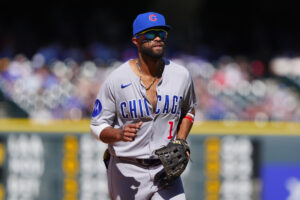
Defensively, he bounced all around the diamond, spending time in all three outfield spots and the three infield positions to the left of first base. He got strong marks almost everywhere the Twins put him. He even got a few mop-up appearances on the mound. The total package added up to 2.5 wins above replacement on the season, according to FanGraphs.
His 2024 season ended up being quite similar. He slashed .247/.331/.385 for a 106 wRC+, swiped 14 bags and played every position except for catcher and first base. His fWAR total nudged up to 2.9 in slightly more playing time.
Last year, he was on essentially the same pace through the trade deadline. He got into 86 games for the Twins, had a .245 /.335 /.407 batting line, 109 wRC+, and nine stolen bases while moving all around.
The Twins fell out of the race and pivoted to selling at the deadline. They flipped Castro to the Cubs for minor league pitchers Ryan Gallagher and Sam Armstrong. Castro’s performance plummeted after the swap. He slashed .170/.245/.240 for a wRC+ of just 40. He wasn’t helped by a .222 batting average on balls in play but the Cubs scaled back his playing time regardless. He only started two of the final 11 games of the regular season. He appeared in two playoff games for the Cubs but without getting sent to the plate.
That was unfortunate timing, with Castro just heading to the open market, but it was also only 110 plate appearances. It seemed possible that clubs would still value his versatility and would focus more on the positives of that three-year run, overlooking the poor finish. At the beginning of the offseason, MLBTR predicted Castro for a two-year, $14MM deal. In December, it was reported that Atlanta, Pittsburgh and Colorado were interested in Castro. The Rockies have landed him by giving him a solid two-year deal just below MLBTR’s prediction.
The Rockies don’t have a lot of certainty on their roster, which is to be expected for a team that just lost 119 games, getting to the century mark in the loss column for a third straight year. They tried bolstering the roster last winter with veteran utility signings. They gave Thairo Estrada $4MM and Kyle Farmer $3.25MM, both on one-year deals. Neither panned out. Estrada was injured for most of the year and hit just .253/.285/.370 in the 39 games he was able to play. Farmer avoided the injured list but put up an even less impressive line of .227/.280/.365.
Ideally, Castro will move past his struggles with the Cubs and return to form. Where he plays will depend upon what happens with the other young players on the Colorado roster. The outfield playing time will likely be divvied up to some combination of Brenton Doyle, Jake McCarthy, Mickey Moniak and Jordan Beck.
Ezequiel Tovar will be the regular at shortstop but the rest of the infield is fairly wide open. Adael Amador could play second but he also has just 164 big league plate appearances with a .176/.242/.250 line. Third baseman Kyle Karros got 156 plate appearances last year but hit just .226/.308/.277. Tyler Freeman will be in the mix somewhere as another multi-positional guy but he’s also coming off a subpar season. Ryan Ritter can also bounce around a bit but he has a .241/.296/.337 line in his 207 big league appearances.
With the Rockies so far from contention, they will be focused on development and will want to have playing time open for anyone in that group who earns it. Castro will likely change positions throughout the year depending on the health and performance of all those other guys. If his offense gets back to where it was during his time in Minnesota, then the Rockies will likely make him available on the trade block this summer, as they aren’t likely to return to contention during the course of this contract.
RosterResource now estimates the Rockies for a payroll of $110MM, assuming the money on this deal is equally distributed across the two years. They spent $124MM on last year’s club and could still have some powder dry if they’re planning for a similar level of spending this year. Earlier this month, general manager Josh Byrnes expressed a desire to add a couple of veterans to the rotation. They have since signed Michael Lorenzen but could still have room for one more starter. It’s also possible to see room for some relief pitchers or perhaps another infielder.
For clubs who missed on Castro, the free agent market still features a couple of other utility guys, including Isiah Kiner-Falefa, Ramón Urías, Adam Frazier, Enrique Hernández, Jon Berti, Jorge Mateo and others.
Jorge Castillo of ESPN first reported the Rockies and Castro had a two-year deal. Robert Murray of FanSided reported the $12.8MM guarantee. Photo courtesy of Jordan Godfree, Ron Chenoy, Imagn Images
Guardians Acquire Franklin Gomez From Mets
The Guardians have acquired minor league left-hander Franklin Gomez from the Mets, according to announcements from both clubs. The Mets receive international bonus pool space in return. The pool space changing hands is $1.5MM, reports Mike Mayer of Metsmerized. Gomez does not have a 40-man roster spot, so no corresponding moves are necessary.
Today marks the start of the 2026 international signing period. Ben Badler of Baseball America is tracking all of the signings as they become known. Under this pool system, each team has a finite amount of money they can spend on international amateurs. This year’s pools are all between $5MM and $9MM. Broadly speaking, the smaller-market clubs get bigger pools and the larger-market clubs get smaller pools.
The Mets were initially allocated a pool of $5.44MM and the Guardians $8.03MM. Teams are allowed to trade pool space in $250K increments, but a team can’t increase its initial pool size by more than 60%.
Adding pool space was important for the Mets. Most teams make verbal agreements with prospects years in advance of the official signings, so they have usually agreed to allocate most of the pool space ahead of time. The Yankees had a verbal agreement in place with Wandy Asigen, an infielder from the Dominican Republic, but reports emerged in December that he was going to sign with the Mets instead. Francys Romero of BeisbolFR and Badler covered the development at the time. Asigen officially signed with the Mets today for $3.9MM.
That signing bonus would have taken up the majority of the Mets’ initial pool. That may have necessitated the Mets breaking their verbal agreements with other prospects. Mayer suggests this deal with Cleveland allowed the Mets to have enough pool space to also sign Venezuelan outfielder Cleiner Ramirez as part of this year’s class.
For the Guardians, it seems they would rather have Gomez than the pool space. The 20-year-old Venezuelan was himself an international signee a few years ago, securing a bonus of just $10K from the Mets in 2022. He has raised his stock since then. Matt Eddy of Baseball America just recently wrote about Gomez earlier this month, noting that his fastball velo ticked up in 2025, going from the 89-90 mph range in 2024 to 92-93 last year. His other pitches also made similar jumps.
He finished the year having thrown 71 2/3 innings split between Single-A and High-A, allowing 2.76 earned runs per nine. He struck out 22.1% of batters faced, gave out walks at an 11.1% clip and induced grounders on 48.4% of balls in play. BA recently listed him as the #22 prospect in the Mets’ system, noting that he has a chance to be a future starter, with a relief role as a fallback.
The Guards have undercut their ability to use this year’s pool of unsigned players but Gomez should have more ability to help them in the near term. Most international signees today are 16 years old whereas Gomez is four years older than that and has already climbed a few rungs of the minor league ladder.
Photo courtesy of Ken Blaze, Imagn Images
Cubs Promote Garrett Chiado To Assistant General Manager
The Cubs announced a series of internal promotions within their baseball operations department yesterday, as relayed by Jordan Bastian of MLB.com. Among them, Garrett Chiado is now an assistant general manager.
Chiado was first hired by the Cubs in 2016 in the research and development department. He subsequently served as director of pro strategy and director of pro analytics. Now he gets a bump up the chain to the assistant general manager position.
Chicago’s front office is headed by Jed Hoyer, who is the president of baseball operations. Just beneath him is general manager Carter Hawkins. With Chiado’s promotion, they now have three assistant general managers. Ehsan Bokhari was hired away from the Astros in October of 2021. Jared Banner was promoted from the vice president of player development role in November of 2023.
Hoyer took over in November of 2020 and the club has largely been focused on player development in his time. The big league team hovered around .500 from 2021 to 2024 but took a big step forward in 2025 by winning 92 games and beating the Padres in the Wild Card round, before falling to the Brewers in the NLDS. They have recently made some aggressive moves to build out the 2026 roster, trading for Edward Cabrera and signing Alex Bregman.
Photo courtesy of David Banks, Imagn Images
Padres Sign Nick Solak, Omar Cruz To Minor League Deals
The Padres have signed infielder/outfielder Nick Solak and left-hander Omar Cruz to minor league deals, according to Matt Eddy of Baseball America. Presumably, both players will be invited to big league camp in spring training.
Solak, 31, was once a prospect of note with the Rangers but he has struggled to hang around as a useful major leaguer. He stepped to the plate 974 times as a Ranger from 2019 to 2022 but produced a tepid .252/.327/.372 batting line. That translated to a 93 wRC+, indicating he was seven percent worse than league average at the plate.
That subpar offense made for a rough combination with his lack of defensive value. He has played the three non-shortstop infield spots and spent some time in the outfield but has largely received poor grades anywhere he has landed on the diamond.
He has continued to rake in the minors, however. Just last year, in the Pirates’ system, he stepped to the plate 482 times at the Triple-A level. He had a 10% walk rate, 13% strikeout rate, .332/.411/.492 line and 143 wRC+. That was aided by a .364 batting average on balls in play but it likely still would have been decent production even with a bit of regression there. He briefly got called up by Pittsburgh but only got into four games. Since he’s out of options, he was bumped off the 40-man roster entirely.
A right-handed hitter, Solak has notable platoon splits, with a .279/.358/.420 line and 115 wRC+ against lefties in his career. Perhaps that could help him carve out a bench/utility role, helping the Friars keep southpaws away from lefty hitters like Gavin Sheets, Sung Mun Song and Jake Cronenworth in the first base/second base/designated hitter rotation. For now, Solak gives them a bit of position player depth without taking up a roster spot.
Cruz, 27 later this month, just made his major league debut with San Diego last year. He tossed 3 2/3 innings for the Padres, allowing two earned runs on four hits and three walks while striking out five.
There’s only one day in the year where a player can be cut from a roster and sent to free agency without being exposed to waivers. That day is the non-tender deadline. The Friars non-tendered Cruz, sent him to free agency, and have now brought him back in a non-roster capacity.
Cruz was a starter for much of his minor league career. He was mostly used as a reliever in 2024 and appeared to have a bit of a breakout year. He had a 3.96 ERA in the minors, striking out 32.3% of batters faced and posting a 9.9% walk rate. Last year, the Padres tried stretching him out again but eventually gave up and moved him back to the bullpen. The result was 83 1/3 Triple-A innings for the year with a 4.75 ERA, 23.2% strikeout rate and 14.5% walk rate.
Whether the Padres still have dreams of stretching him out or will keep him in relief remains to be seen. Either way, he gives them some left-handed non-roster depth for now. If he eventually gets a roster spot again, he still has a couple of option seasons remaining.
Photo courtesy of Mark J. Rebilas, Imagn Images
Padres Hire Wil Myers, Bud Black
The Pades are bringing back some old friends in new jobs. Wil Myers has been hired as a special assignment coach in player development while Bud Black will be a senior advisor to baseball operations. Jeff Sanders of the San Diego Union-Tribune was among those to pass the news along.
Myers played in the big leagues from 2013 to 2023. The bulk of that playing career, from 2015 to 2022, was as a Padre. Over those eight seasons in San Diego, he got into 888 games, hitting 134 home runs and stealing 94 bases. His combined line of .254/.330/.451 translated to a 111 wRC+. FanGraphs credited him with 13.6 wins above replacement.
In December of 2024, Myers announced that he had decided to stop playing but would never officially retire. It now appears he has taken a step into his next chapter by taking this gig, dipping his toe into the coaching world.
Black played in the big leagues in the ’80s and ’90s, then pivoted to coaching towards the end of the latter decade. The Padres gave him his first managerial gig in 2007. The Friars were mostly a low-payroll bottom feeder at that stage of their history. He held that gig for more than eight years, with the club posting a 649-713 record in that time. Despite the poor overall record, he won National League Manager of the year in 2010, a season in which the Padres went 90-72 but didn’t make the playoffs. He was fired in June of 2015.
He got another managerial gig with the Rockies beginning in 2017. The team did fairly well initially, making the playoffs in each of his first two seasons in Colorado. But the bottom fell out from there and they have become one of the worst teams in the league more recently. Black was fired in May of 2025.
In October, he mentioned to Bob Nightengale of USA Today that he would love to have another managerial gig but would also be open to staying in the game in some other role. He wasn’t able to secure another skipper job, at least for now, but is staying in baseball via this role with the Padres.
Photo courtesy of Kelley L Cox, Imagn Images
Orioles Outright Jhonkensy Noel
The Orioles announced that outfielder Jhonkensy Noel has cleared outright waivers and been assigned to Triple-A Norfolk. He will stay in Baltimore’s system but without taking up a spot on the roster.
The O’s are one of the most aggressive clubs when it comes to claiming players from the waiver wire and then putting them back out there shortly thereafter. The desired result is that the player clears, allowing the club to keep the player in a non-roster capacity, which has happened in this case.
From there, the best-case scenario is that the player follows in the footsteps of Ryan O’Hearn. The O’s acquired O’Hearn from the Royals in January of 2023 and then passed him through waivers. He hit his way back onto the roster a few months later. He spent more than two years as a productive member of the club before being traded to the Padres alongside Ramón Laureano for a package of prospects at the 2025 deadline.
Noel, 24, has flashed big power in his career but has been a poor hitter apart from that. In 351 plate appearances with the Guardians over the past two seasons, he launched 19 home runs but his 4.8% walk rate and 32.8% strikeout rate were both significantly worse than league average. He had a .193/.242/.401 batting line and 79 wRC+ in that time. Since he’s not an especially strong defender or baserunner, that offense was untenable.
He exhausted his final option season in 2025, which pushed him off the edges of Cleveland’s roster and onto the waiver wire. The O’s were able to grab him and then pass him through unclaimed today. He’ll return to the Triple-A level, where his offense has been more encouraging. He stepped to the plate 536 times at that level over the past two years with a 7.5% walk rate and 23.7% strikeout rate, still not great numbers but better than his big league work. His combined .285/.349/.538 Triple-A slash line in that time led to a 130 wRC+.
Even if Noel succeeds in Norfolk, he doesn’t have an amazing path back to the majors. Baltimore’s outfield mix currently includes Colton Cowser, Taylor Ward, Dylan Beavers, Tyler O’Neill, Jeremiah Jackson, Leody Taveras, Reed Trimble, Heston Kjerstad and Marco Luciano.
Photo courtesy of Ken Blaze, Imagn Images