
Orioles Sign Hunter Cervenka
The Orioles have signed lefty Hunter Cervenka to a minor-league deal, per a club announcement. He’ll join the minor-league side of camp.
Cervenka, 28, lost his 40-man spot with the Marlins late last year and was released a few days ago. Things just never worked out in Miami after the team picked him up from the Braves via trade in the summer of 2016.
Baltimore will hope that Cervenka can finally learn to tamp down on the free passes that have long plagued him. He’ll presumably spend the rest of camp fighting for a placement with one of the club’s top affiliates and, eventually, a chance to earn a call-up if a need arises at the MLB level.
Market Notes: Jay, Moustakas, Cobb
Several reporters have turned their gazes back on the more confounding free-agent market in recent memory, chronicling some of the more incongruous results and providing additional reporting on how it all unfolded. We’ll run through some of the key points here:
- It’s always worth remembering that free agency is a game that features plenty of variability and would never (theoretically) be played the same way twice. Buster Olney of ESPN.com reports on what might have been for some players. Logan Morrison and Greg Holland both asked for more than was being offered and ended up being bypassed when teams checked down to other targets. The Mariners, says Olney, dangled three years to veteran outfielder Jon Jay before they struck a trade for Dee Gordon. (That rather surprising offer could have had quite a domino effect on the outfield and second base markets had it been accepted.) On the other hand, Olney cites Angels sources that reject the notion the club offered Mike Moustakas a $45MM contract, as had been reported. Of course, had any of those situations developed differently, it’s possible we’d just be talking about different players whose markets collapsed.
- As part of his lengthy examination of the brutal winter for free agency, Jeff Passan of Yahoo Sports has an interesting note on one of the few top players yet to have signed. Veteran starter Alex Cobb, he says, was in position to secure a four-year, $48MM offer at one point earlier in the winter (from an unknown team) and “easily” could have landed a three-year guarantee. We’re obviously still waiting to see just what Cobb will ultimately earn, but needless to say, it seems unlikely he’ll reach the levels he might have had previously. In the meantime, several lesser pitchers have gone on to sign fairly solid, multi-year deals, perhaps absorbing some of the demand that might have led to a better payout for Cobb.
- Every period of free agency produces highs and lows, of course, but they seem particularly pronounced this time around with such an array of outcomes. Bob Nightengale of USA Today and Jon Heyman of Fan Rag have each run through the winners and losers on this shocker of a market.
Alex Anthopoulos On Jays Tenure, Braves Future
Current Braves and former Blue Jays GM Alex Anthopoulos joined MLB.com’s Mark Feinsand for a wide-ranging podcast chat. It’s a great listen in full for fans of either of those organizations or anyone interested in learning more about Anthopoulos’s path in the game.
Anthopoulos opened up on some key elements of his time in Toronto now that a few years have passed. He served as GM there from 2010 to 2015 before moving on to a stint with the Dodgers front office and then landing the GM gig in Atlanta last fall.
While the end to his perch atop the Jays’ baseball ops department was obviously bittersweet, particularly as it came right on the heels of a bitter ALCS loss, Anthopoulos also made abundantly clear that he feels no ill will at all toward current club president Mark Shapiro. Rather, he says, the fit just did not seem optimal and he elected not to sign a five-year offer to remain.
Anthopoulos answered a bevy of questions about some of the key deals swung during his tenure, going all the way back to the organization’s admitted good fortune of landing of pre-breakout stars in Edwin Encarnacion and Jose Bautista. Of note, he acknowledged — as he was not really willing to do at the time — that Bautista might not have been extended in early 2011 had it not been for the earlier swap that took Vernon Wells‘s extension off the books. (Anthopoulos also acknowledged feeling some unease after many big moves, including the Bautista extension and even the acquisition of Josh Donaldson.)
There’s plenty more historical examination in the chat, including the recruitment of Russell Martin. That deal went down when the Jays decided to offer an additional season and $8MM in guaranteed money, boosting the organization’s offer over the four-year, $74MM scenarios that other teams had dangled. Among other memorable moves, Anthopoulos explains the trade deadline double-play that landed Troy Tulowitzki (link) and David Price (link). That mid-season, go-for-it maneuver came about because the team (correctly) believed it had a rare chance at a big run if only it could shore up its run prevention.
Anthopoulos says he received interest from a number of clubs after deciding to leave the Jays, but his decision ultimately boiled down to one between the Astros and Dodgers. In the end, he cites his longstanding relationships with president of baseball ops Andrew Friedman and GM Farhan Zaidi as the primary decisions to choose the opportunity presented by the Dodgers.
Likewise, in moving on to Atlanta, Anthopoulos said he was convinced not only of the state of the organization’s resources but also that it’d be enjoyable to work under team chairman Terry McGuirk. The international signing scandal that opened the GM seat cost the organization some prospects, but Anthopoulos suggests that does not change the overall trajectory of the team, which he says is loaded with young talent.
The Braves certainly have not engaged in a ton of momentous dealmaking since Anthopoulos took over, but he did discuss the massive salary-swapping arrangement he worked out with the Dodgers. It helped, he acknowledged, that he had just been with the Los Angeles organization, as he knew its intentions and had plenty of trust with its leadership. While both sides explored other possibilities before pulling the trigger on the deal, Anthopoulos says it was the “only deal that was going to make sense” for the Braves involving Matt Kemp.
Moving Kemp to clear the way for the eventual call-up of Ronald Acuna was the “number one priority from a player standpoint,’ says Anthopoulos. Reallocating salary commitments to the 2018 season functioned to create ample “financial flexibility” for the organization moving forward. It seems the goal for the coming season is to develop and assess young players before deciding whether and how the organization “might need those dollars” it freed for the future.
At spring camp, Anthopoulos says, he’s focused on getting to know the young players who are vying to become parts of the organization’s future. Some, he acknowledges, may end up being traded. The spring offers a chance to gain new insight on the “human element,” Anthopoulos says, calling that one of the many elements he has gained additional appreciation for over his decades in the game.
Athletics Sign Jonathan Lucroy
MONDAY: The A’s have announced the signing.
SATURDAY: Lucroy’s one-year deal with the A’s will guarantee him $6.5MM, tweets Susan Slusser of the San Francisco Chronicle. Slusser also adds that the deal does not come with any incentives.
FRIDAY: The Athletics have agreed to sign catcher Jonathan Lucroy, per MLB.com’s Jane Lee (via Twitter). It’s a one-year deal for the Excel client, according to the report.
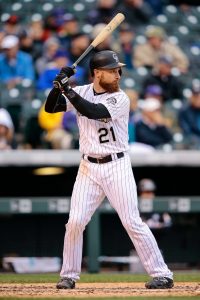
Entering the winter, MLBTR predicted that Lucroy would command a two-year, $24MM commitment. We cited the A’s as a possible suitor, but at the time it seemed likelier that the 31-year-old would choose a team more clearly positioned to contend, given his own comments on the subject.
As was the case for others, of course, the free-agent market did not really develop as expected for the veteran backstop. The Rockies — who employed Lucroy for the second half of the 2017 season — had interest but pivoted to Chris Iannetta, who ended up being one of three catchers (joining Welington Castillo and Alex Avila) to secure two-year commitments.
Lucroy’s free-agent experience was long expected to be much more rewarding. When the 2016 season drew to a close, after all, he stood as one of the best all-around receivers in the game, having just wrapped up a five-year run of .291/.353/.465 hitting during which he was also reputed to be among the game’s best defensive catchers.
The 2017 season, though, did not go well at all. Lucroy got off to a disastrous start at the plate with the Rangers before a mid-season trade to the Rockies. While he rebounded with a robust .429 on-base percentage (with 27 walks against just 19 strikeouts) down the stretch, Lucroy’s power never returned and he finished with a .265/.345/.371 slash line and six home runs over 481 plate appearances on the year.
Optimists will point to the still-impeccable zone control and long history of productivity. Pessimists can handily cite the fact that Lucroy delivered little hard contact, lots of grounders, and a career-low full-season dinger tally in a 2017 season marked by a leaguewide offensive surge.
Defensive questions also arose. While the Rockies credited Lucroy’s work at managing the pitching staff, suggesting he retains his good reputation in that hard-to-quantify realm, there was surprising slippage in the framing department. Once lauded as the master of winning strikes for his pitchers, Lucroy graded miserably in that key metric in 2017.
Of course, we at MLBTR were still somewhat bullish on Lucroy’s market situation despite those areas of concern. Indeed, I argued for more than our collective prediction, writing in early October that he could command a three-year commitment with an annual salary of $10MM or more. In a market full of surprises, Lucroy’s shortfall is among the most eye-opening. While he surely could have commanded a larger payday had he signed earlier in the winter, with timing playing a role in the ultimate contract, it remains notable that such an accomplished player was forced to settle for such a commitment.
[RELATED: Updated Athletics Depth Chart]
For Oakland, it’s an eminently sensible risk to take. The club had said it expected to utilize Bruce Maxwell as the primary option, but he had a tough season at the plate in 2017 as well as a troubling offseason run-in with the law. While he undoubtedly remains part of the future plans, it could be that he’ll open the year in the minors with Josh Phegley supplementing Lucroy at the MLB level.
Even with Lucroy aboard, it’s tough to pick the A’s as a favorite in the AL West that’s led by an outstanding Astros club and is competitive from top top bottom. But if he can coax breakout performances from a youthful pitching staff, if not also rebound with the bat, then perhaps there could yet be a surprise in store.
Lee and ESPN.com’s Jerry Crasnick previously reported a deal was close.
Photo courtesy of USA Today Sports Images.
Blue Jays Release Ezequiel Carrera
MARCH 11: The Blue Jays have now elected to release Carrera, according to Ben Nicholson-Smith of Sportsnet (Twitter link).
MARCH 1: The Blue Jays announced that outfielder Ezequiel Carrera has been outrighted after clearing waivers. He had recently been designated for assignment but will now return to camp as a non-roster invitee. That’s the best possible result for Toronto, which had to expose Carrera to the waiver wire in order to add reliever Seung-hwan Oh.
It appears that Carrera has accepted his assignment, as he would have had the right to opt instead for free agency. The fact that the remainder of the league passed on claiming him isn’t promising, though that would’ve meant stepping into a $1.9MM arbitration salary.
It is not immediately clear whether Carrera is still playing pursuant to that arb agreement, or whether instead the team now controls him on alternative terms such that he’d earn at a different rate if he stays with the club into the start of the season. Regardless, the Jays will owe Carrera at least thirty days’ worth of termination pay (just over $300K).
The Jays are obviously fond of the 30-year-old, who has appeared in 332 games with the organization over the past three seasons. He has never been better than 2017, when he turned in a healthy .282/.356/.408 batting line in 325 trips to the plate while also adding eight homers and swiped ten bags.
Still, later developments in the offseason evidently led the club to go in a different direction. The signing of Curtis Granderson — the only other left-handed-hitting outfielder who seems likely to be in the mix in the early portion of the season — certainly didn’t help Carrera’s cause. And the acquisition of Randal Grichuk likely took away the possibility of a strict platoon scenario. With the switch-hitting Dalton Pompey and lefty-swinging Dwight Smith Jr. also in the mix, the Jays obviously felt they did not need to keep another southpaw bat on the 40-man roster.
Royals Re-Sign Mike Moustakas
FRIDAY: Bob Nightengale of USA Today Sports tweets that Moustakas has passed his physical and is officially back with Kansas City.
THURSDAY: The Royals have struck a one-year deal with third baseman Mike Moustakas, according to Jeff Passan of Yahoo Sports (Twitter links). Jon Heyman and Robert Murray of Fan Rag had reported earlier that the Scott Boras client was nearing a deal to return to Kansas City.
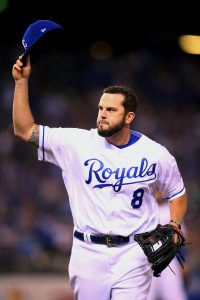
The contract will guarantee Moustakas just $6.5MM — far shy of expectations heading into the winter. That comes in the way of a $5.5MM salary for the coming season and a $1MM buyout of a $15MM mutual option for the 2019 campaign. Moustakas can also earn up to $2.2MM via incentives for the coming season, per Passan. The bonuses begin at 225 plate appearances and would be maxed out at an achievable 450, per Bob Nightengale of USA Today and Rustin Dodd of the Kansas City Star (Twitter links).
Clearly, Moustakas expected more when he turned down a $17.4MM qualifying offer from the Royals at the outset of the offseason. And for good reason: the 29-year-old was viewed by many as one of the best players on the open market. Indeed, MLBTR predicted the 29-year-old would secure an $85MM guarantee over a five-year term.
As things turned out, the market just never developed for Moustakas. Potential landing spots dried up throughout the winter as organizations signed other players, found cheaper alternatives, or decided largely not to add to their MLB rosters.
Meanwhile, the Royals spent much of their own offseason trimming costs and waiting to see if they could coax back Moustakas’s long-time corner infield mate, Eric Hosmer. That pursuit ended without a deal, seemingly leaving the Royals positioned to embark upon a full-blown rebuild.
Bucking the leaguewide trend, though, Kansas City has elected to dedicate some cash to put a quality product on the field in 2018. It may not be enough to make for a clear-cut contender, but the Royals have certainly added a lot of productivity in signing Lucas Duda, Jon Jay, and now Moustakas in short succession.
Better still, the team has improved its 2018 outlook quite a bit without tying its hands for the future. It still seems that a longer-term outlook will define the team’s approach, and it’s certainly possible that some of the new additions will end up being traded at some point in the coming season, but the Royals promise to be competitive for the coming season.
Signing Moustakas does come with a cost beyond the payroll hit. Since he returned to Kansas City after declining a qualifying offer, the organization will not add a compensatory draft choice that it would have if he had joined Hosmer and Lorenzo Cain in heading elsewhere. The Royals will still add two selections after the conventional first-round of the draft for those departures. As for Moustakas, he’ll re-enter the market next winter (assuming the mutual option is not exercised) without the hindrance of any draft compensation, though he’ll also face stiff competition in an anticipated market full of stars.
There’s plenty to digest about this signing, needless to say. Most broadly, it’s as clear a sign as any about the market’s valuation of power. As the ball flies out of the yard at record rates around the league, lofty dinger tallies just aren’t paying in free agency.
It was bad timing, then, for Moustakas, whose power stroke is his chief attribute. He launched a career-high 38 long balls in 2017 and finished with steadily above-average overall offensive production. Despite tepid output earlier in his career, Moustakas has been a .275/.329/.496 hitter over the past three seasons.
Of course, that’s something of the rosy version of his attributes as a hitter. Moustakas managed only a .314 OBP last year and carries an ugly .305 career mark. While he doesn’t strike out much, he also doesn’t draw many free passes; in 2017, he finished with a career-low 5.7% walk rate. And his 17.8% HR/FB rate from last year sits well above his career average of 10.6%. Any decline in that number could be problematic. Statcast suggests Moustakas was fortunate to fare as well as he did, crediting him with a .331 xwOBA that falls shy of the .355 wOBA he ended up posting.
Teams certainly may also have been a bit wary of Moustakas’s abilities in the field and on the bases. Fangraphs’ total baserunning statistic marks him as one of the league’s worst baserunners, with -5.4 runs tallied in both 2017 and 2015 — suggesting that his intervening ACL tear wasn’t solely to blame. Defensive metrics panned his glovework, too, with DRS (-8 runs) and UZR (-3.1) both casting Moustakas as a below-average performer despite previously rating him at times as a quality defender at the hot corner.
In any event, those facts and figures are of no real concern to the Royals, who are intimately familiar with a player they drafted (second overall in 2007) and developed into a productive big leaguer. Whatever qualms they may have about his long-term outlook are nullified in this agreement, anyway, and there’s no denying that Moustakas represents a remarkable bargain at this rate of pay for a single season’s commitment. (Compare to Pablo Sandoval (five years, $95MM) and Chase Headley (four years, $52MM).)
Photo courtesy of USA Today Sports Images.
Quick Hits: Early FA Offers, Padres, Labor Relations
Let’s round out the day’s coverage with a few interesting notes from around the game:
- Three prominent players have reportedly agreed to terms in recent days, all settling for much less in dollars and years than had been expected. Reports also suggest that those players could have had greater earnings had they taken offers available previously. Though agent Scott Boras says Mike Moustakas never received a multi-year contract offer before returning to the Royals, two sources tell Sam Mellinger of the Kansas City Star that the Angels dangled a three-year pact in the range of $45MM. Meanwhile, the Rockies are said to have offered slugger Carlos Gonzalez an extension in the realm of three years and $45MM this time last year, Bob Nightengale of USA Today reports on Twitter. And the Rox also were willing to go to three years, at a $21MM guarantee, to catcher Jonathan Lucroy earlier this winter, Nightengale adds on Twitter. (Lucroy is reportedly in agreement on a one-year deal with the Athletics, though terms are not yet known and the deal is not finalized.) Of course, in each case it’s easy to understand why the player in question might have elected against jumping at the reported opportunity at the point at which it was presented.
- In other news that’s largely of historical interest, Jon Heyman of Fan Rag provided some notes on the Padres‘ offseason efforts. The team was able to land Eric Hosmer after Kansas City was unable to earn ownership authorization for its initially reported, seven-year offer, Heyman reports. That seemingly helps explain why subsequent reports indicated that K.C. never went that high in the bidding. San Diego also “made a big play” for outfielder Christian Yelich before he was shipped from the Marlins to the Brewers, Heyman notes in his leaguewide rundown of information. Notably, the Pads effectively ended up adding an outfielder when they inked Hosmer, thus pushing Wil Myers back onto the grass.
- Some of the above information suggests, to an extent, that some players missed chances at bigger earnings, though perhaps it might only mean that others would have ended up enduring rough trips through free agency. And the reported offers are hardly overwhelming numbers for those players. Those interested in the broader subject of labor relations will certainly want to read this recent piece from Evan Drellich of NBC Sports Boston, who takes a long look at what the union could do to begin fighting back against some of the problems that have arisen from the players’ perspective under the current CBA. Meanwhile, J.J. Cooper of Baseball America also tackles the subject, arguing that the owners will need to be careful not to press their advantage too strongly. And union chief Tony Clark discussed some of the qualms with the Marlins, who are one of the teams facing a grievance from the MLBPA, as Clark Spencer of the Miami Herald reports.
NL Notes: Cubs, Gohara, Norris, Mets
The Cubs have a pair of former players entering their front office, per a club announcement. MLB veterans Chris Denorfia and Matt Murton have been named, respectively, as special assistant to the president/GM and baseball operations assistant. Denorfia, a ten-year big-leaguer, spent just one year in Chicago — his final campaign in the majors, 2015. Murton, meanwhile, broke into the majors with the Cubs but mostly found success abroad as a member of Japan’s Hanshin Tigers.
Here’s the latest from the National League:
- Braves southpaw Luiz Gohara is going to be shut down for at least two weeks after suffering an ankle sprain, as David O’Brien of the Atlanta Journal-Constitution reports. Though it doesn’t seem as if there’s anything approaching long-term concern for the injury itself, there are implications. For one, there’s now little chance that Gohara will open the season in the rotation, as he has already been limited in camp. That means another pitcher — O’Brien suggests Max Fried or Scott Kazmir, though others are also certainly in the mix — will likely take that slot. When Gohara is back to health, moreover, he’ll presumably need to boost his conditioning along with getting his arm up to full speed. The big-bodied southpaw previously strained his groin in a camp workout and has long faced questions about his weight. Of course, that did not prevent him from an impressive five-start debut showing in 2017.
- The Cardinals have decided to put righty Bud Norris in the bullpen, Rick Hummel of the St. Louis Post-Dispatch reports. That’s not terribly surprising, but the organization had at least been stretching him out as a starter to open camp. Norris showed some renewed vigor at times last year as a late-inning reliever and could be used in that capacity, though skipper Mike Matheny also did not rule out relying upon Norris for multiple innings in a swingman role. In other news from St. Louis, the club announced that outfielder Tyler O’Neill has been diagnosed with a hamstring strain. The severity is not known, but the the odds were already stacked against the well-regarded prospect cracking the Opening Day roster.
- Kevin Plawecki could receive the lion’s share of the time behind the dish for the Mets, Tim Healey of Newsday writes. New skipper Mickey Callaway says it will often come down to platoon splits in deciding whether Plawecki or Travis d’Arnaud is behind the dish, with the former’s advantage against right-handed pitching perhaps leading to greater opportunities. Surely performance levels over the course of the season will weigh into the calculus, but Callaway clearly indicated that the organization is disinclined to match up their backstops with particular starters.
Junior Guerra Has Fourth Option Year
The Brewers have some more flexibility with righty Junior Guerra than had generally been realized, as MLB.com’s Adam McCalvy tweets. Milwaukee GM David Stearns says that the hurler has one option season remaining.
It seems that Guerra was granted an additional option season at some point in the past, though the details aren’t perectly clear. Players presumptively may only be optioned in three seasons, but in certain circumstances will be granted a fourth year. (Of course, whether or not it’s more beneficial to the player or his current team is not always immediately evident.)
Fourth options are given where a player misses all of an option year to due injury or has all three options burned before he has finished his fifth season as a professional. The latter provision seems to apply to Guerra’s unusual background. He appeared in the minors in 2006 and 2008 before reappearing in affiliated ball in 2015, kicking off a series of three campaigns in which he spent time on optional assignment.
In any event, the news means that the Brewers won’t be forced into a tough decision on Guerra’s status, either at the end of camp or during the season. Instead, the club can make its determination on whether and how he’ll be utilized in the majors based upon merit — along with a healthy consideration for the contract situations of other options.
Guerra, 33, struggled to a 5.12 ERA last year after a remarkable breakout effort in 2016. As the Brewers plot their staff for the season to come, he may or may not end up being seen as the best choice to take a rotation spot to open the year. With Wade Miley and Yovani Gallardo among the hurlers battling for jobs in camp, it’s certainly possible that Milwaukee will best be able to preserve its depth by holding Guerra in the minors to open the year.
At this point, the team’s course is hardly clear; indeed, there’s ample speculation about the possibility of acquiring another hurler altogether. But Guerra’s option year adds to the slate of possibilities for the Brewers front office.
Athletics Expect To Land Veteran Catcher
3:28pm: The Athletics are nearing agreement with Lucroy, per ESPN.com’s Jerry Crasnick (via Twitter).
3:14pm: The Athletics are pursuing a veteran catcher and expect to acquire one, per MLB.com’s Jane Lee (via Twitter). Specifically, the club anticipates either signing Jonathan Lucroy or acquiring Matt Wieters from the Nationals.
Lucroy remains one of the top remaining un-signed free agents. He entered the winter as the top-rated catcher available.
Needless to say, the latter possibility hints at the potential for lots of creative trade scenarios — especially given the long trade history between these organizations’ current front office leadership. The Nats owe Wieters a hefty $10.5MM salary after his poor 2017 season. At the same time, the team would surely only move him (and as much of the salary as it can) if it has an upgrade lined up.
Of course, it could be that the Nats would see Lucroy himself as a preferable option to Wieters, adding yet another potential dimension to the situation. Lucroy entered the winter emphasizing his desire to play for a competitor, after all. Washington has also long been tied to quality young Marlins receive J.T. Realmuto, though it’s not clear whether there has been any recent movement on that front.
At this point, though, the trade possibilities are all speculation.