
Mariners Expected To Increase Payroll In 2025
The Mariners missed qualifying for the postseason by just one game — a heartbreaking outcome for a club that held a commanding 10-game lead in the American League West back in June. Seattle’s offense floundered all year on the heels of a 2023-24 offseason punctuated by payroll restrictions and a series of salary-driven trades to help balance the lineup while adhering to a budget that was tighter than most anticipated.
Ryan Divish and Adam Jude of the Seattle Times have some relatively good news for frustrated M’s fans on that front, reporting that ownership expects payroll to increase in 2025. That’s a breath of fresh air after it became clear almost immediately last offseason that payroll had minimal room to grow. On the other hand, the Times duo adds that a major free agent splash is not expected, thus suggesting that any uptick in payroll could be fairly modest in nature.
Seattle’s roster is overwhelmingly cost controlled, as the bulk of its core is either signed long-term or in the early stages of arbitration. As is the case with all teams fitting that description, there are some natural payroll increases that should be baked into the offseason.
Julio Rodriguez will see his salary jump from $10MM to $18MM under the terms of his long-term extension, for example. Victor Robles only cost the Mariners the prorated league minimum this year after being released by the Nationals, but he’ll earn $3.5MM next year on the two-year extension he signed in August. Dylan Moore, Andres Munoz and Mitch Garver will also see small salary increases on their guaranteed multi-year deals, all of which are slightly backloaded. It’s not all increases, however. Mitch Haniger‘s deal is frontloaded, and he’ll actually see his salary drop from this year’s $20MM mark to the $15.5MM level on a player option he’s sure to exercise.
The bigger area for increase lies within the Mariners’ arbitration class. First-time candidates include Cal Raleigh and George Kirby, both of whom should command significant raises and could go from costing the club a combined $1.5MM to somewhere in the combined $10MM range. Randy Arozarena ($8.1MM in 2024), Logan Gilbert ($4.05MM) and Josh Rojas ($3.1MM) are in line for the most notable raises among the rest of the group, though relievers like Trent Thornton ($1.2MM in ’24), Austin Voth ($1.25MM), JT Chargois ($1.285MM), Gabe Speier (pre-arb) and Tayler Saucedo (pre-arb) could all get boosts as well. Luis Urias is all but a surefire non-tender candidate, and injured utilityman Sam Haggerty isn’t necessarily guaranteed to be tendered.
Assuming the Mariners decline Jorge Polanco‘s $12MM option after a disappointing 2024 season — Divish and Jude unsurprisingly write that they’re likely to do so — and tender contracts to Raleigh, Kirby, Gilbert, Rojas, Thornton, and Saucedo, they’ll land somewhere in the $140MM payroll range before making a single move this offseason (including a slate of pre-arbitration players to round out the roster). This year’s payroll was finished just shy of $145MM, per RosterResource.
An increased payroll, then, doesn’t necessarily signify the looming addition of any large salaries to be acquired via free agency or trade. That said, word of an increasing payroll also does lend some insight into the direction the team will take. For instance, we’ve already seen the Cardinals plainly state that next year’s payroll will decrease. It became clear almost immediately in the Twins’ offseason last year that payroll would decline from 2023 to 2024. We’re five years removed (to the day) from Rockies ownership kicking off the winter by saying they lacked flexibility for additions of note. With Jerry Dipoto returning as president of baseball operations, there’s always a “never say never” caveat attached to virtually any player’s trade candidacy, as he’s among the game’s most active executives on that market. Still, there’s no reason to anticipate sweeping changes among the team’s excellent young core.
Rather, the focus once again seems likely to be on reinventing an offense that has been continually stagnant despite repeated personnel changes. The M’s would no doubt welcome the opportunity to get out from some or all of their commitments to Haniger and Garver, but that’ll be no small feat. They’ll again be looking to upgrade at third and/or second base after last year’s pickups of Polanco and Urias didn’t yield the intended results. First base is an open question, though the hope is that young Tyler Locklear can solidify the position.
The outfield/designated hitter mix — Arozarena, Rodriguez, Robles and Luke Raley — is largely set, and the Mariners don’t figure to be major players in the starting pitching market. Gilbert and Kirby will be rejoined by Luis Castillo, Bryce Miller and Bryan Woo, comprising a brilliant rotation. Other clubs will surely try to pry some of those young, cost-controlled arms away from the Mariners while dangling promising young hitters in return. However, Dipoto and GM Justin Hollander opted not to deal from that rotation stock last year and would surely be reluctant to do so this coming offseason, given the near-unmatched blend of excellent results and affordable price tags they have throughout the starting staff.
Divish and Jude write that Dipoto spoke of ways to “address our holes that maybe don’t include [trading away] the players that are here” — a potential nod to dealing from a deep farm rather than subtracting from the big league roster. Prospects like Locklear, catcher/outfielder Harry Ford, right-hander Logan Evans, outfielders Jonny Farmelo and Lazaro Montes, and infielders Colt Emerson, Cole Young and Felnin Celesten have all garnered fanfare among the game’s top-100 prospects since midseason. More broadly, the Mariners rank 11th or better on the midseason farm system rankings from ESPN’s Kiley McDaniel (11th), MLB.com (ninth) and Baseball America (seventh). Dipoto and Hollander will have no shortage of coveted young talent to peddle on the market if the goal is to augment the lineup without heavily subtracting from the current big league roster.
Justin Verlander Not On Astros’ Wild Card Roster
The Astros announced their Wild Card Series roster this morning, and it does not include struggling veteran Justin Verlander. Houston is carrying a slate of 15 position players, including three catchers, and 11 pitchers for their date with the upstart Tigers.
Verlander, 41, missed a substantial portion of the season due to shoulder and neck injuries. Houston reinstated him from the injured list in late August after an absence of more than two months owing to said neck issues, and while he was solid in his return effort (two runs in five innings versus the Red Sox), his season quickly snowballed thereafter. The three-time Cy Young winner and future Hall of Famer was torched for a catastrophic 8.89 ERA over his final six starts, which included individual games that saw him yield four, five, six and eight runs. Manager Joe Espada tells the Astros beat that the conversation with Verlander was “very easy,” crediting him for being “a true pro” about the decision (X link via Brian McTaggart of MLB.com).
One notable return to the lineup, however, is Yordan Alvarez. The Houston slugger has been out of action for more than a week due to a sprained knee, but he’s in the lineup hitting second and serving as Houston’s designated hitter. Espada tells the Astros beat that Alvarez is not 100% and isn’t likely to run at full speed or slide (X link via Chandler Rome of The Athletic). Still, Alvarez’s game-changing power and general excellence at the plate — he hit .308/.392/.567 with 35 homers in 147 games — are enough that the ‘Stros will live with those shortcomings to get his bat into the order.
The Astros are sending Framber Valdez to the mound to start Game 1 opposite Tigers ace Tarik Skubal. They’ve yet to announce the second and third starters for the potential three-game set. Starters Yusei Kikuchi, Hunter Brown, Ronel Blanco and Spencer Arrighetti are all on the playoff roster, as are relievers Bryan Abreu, Caleb Ferguson, Josh Hader, Bryan King, Hector Neris and Ryan Pressly.
On the position player side of things, the ‘Stros are going with catchers Victor Caratini, Yainer Diaz and Cesar Salazar; infielders Jose Altuve, Alex Bregman, Zach Dezenzo, Mauricio Dubon, Grae Kessinger, Jeremy Pena and Jon Singleton; and outfielders Jason Heyward, Chas McCormick, Jake Meyers and Kyle Tucker. Alvarez, listed as an outfielder, seems quite likely to serve as the DH for this series at least, given the physical limitations outlined by Espada.
Royals Activate Vinnie Pasquantino For Wild Card Series
The Royals announced their Wild Card Series roster this morning, revealing within that first baseman Vinnie Pasquantino is being reinstated from the injured list. He’ll be back in the middle of the Kansas City lineup taking on Orioles ace Corbin Burnes in today’s Game 1 matchup.
It’s a rapid return for Pasquantino, who suffered a broken thumb back on Aug. 29 and was originally projected for a recovery period of six to eight weeks. He’ll instead return to the lineup in about five weeks’ time and jump right back into the fray without the benefit of a rehab assignment.
There’s some obvious risk for rust or lingering effects of that fractured digit, but the Royals are surely thrilled to have one of their best hitters cleared to take the field. The 26-year-old Pasquantino hit .262/.315/.446 (108 wRC+) this season and ranked third on the team with 19 homers and 97 runs plated. He’s the toughest strikeout among Royals regulars, too, fanning in a tiny 12.8% of his trips to the plate this season.
Pasquantino’s ahead-of-schedule return will effectively squeeze Robbie Grossman off the team’s postseason roster, at least for this round. Kansas City is going with 11 pitchers and 15 position players. Cole Ragans, Seth Lugo and Michael Wacha are lined up to start the three games, with a contingent of Kris Bubic, Lucas Erceg, Sam Long, Michael Lorenzen, Daniel Lynch IV, John Schreiber, Brady Singer and Angel Zerpa available in relief. They’ll carry eight infielders (Pasquantino, Paul DeJong, Adam Frazier, Maikel Garcia, Yuli Gurriel, Garrett Hampson, Michael Massey and Bobby Witt Jr.) in addition to five outfielders (Dairon Blanco, Kyle Isbel, MJ Melendez, Tommy Pham, Hunter Renfroe) and their two catchers (Freddy Fermin, Salvador Perez).
Giants Fire Farhan Zaidi, Name Buster Posey President Of Baseball Operations
The Giants announced Monday that they have fired president of baseball operations Farhan Zaidi. Franchise icon Buster Posey will serve as the team’s new president of baseball operations, the team announced. Posey is one of six on the Giants’ board of directors and will now oversee the roster’s construction as well. Susan Slusser of the San Francisco Chronicle first reported that Zaidi, who was under contract through the 2025 season (with a 2026 option), was being dismissed.
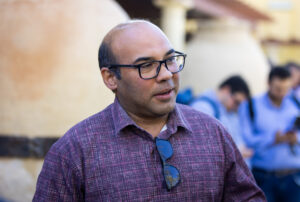
“We appreciate Farhan’s commitment to the organization and his passion for making an impact in our community during six years with the Giants,” chairman Greg Johnson said in statement within today’s press release. “Ultimately, the results have not been what we had hoped, and while that responsibility is shared by all of us, we have decided that a change is necessary. While these decisions are not easy, we believe it is time for new leadership to elevate our team so we can consistently contend for championships. I wish Farhan and his family nothing but the best moving forward.
“As we look ahead, I’m excited to share that Buster Posey will now take on a greater role as the new President of Baseball Operations. We are looking for someone who can define, direct and lead this franchise’s baseball philosophy and we feel that Buster is the perfect fit. Buster has the demeanor, intelligence and drive to do this job, and we are confident that he and [manager] Bob Melvin will work together to bring winning baseball to San Francisco.”
The writing has in many ways been on the wall for Zaidi for some time now. The 2024 season was viewed as a pivotal one for the Giants, who unsuccessfully pursued Shohei Ohtani over the offseason and instead wound up signing Matt Chapman, Blake Snell, Jung Hoo Lee, Jorge Soler and Jordan Hicks as they looked to get back on track after consecutive losing seasons. The Giants won 107 games under Zaidi in 2021 but have not had a winning season under his watch otherwise. The lack of consistent results prompted many to wonder whether Zaidi could survive another sub-.500 season.
The most telltale portent for change, however, came late this summer, when the Giants announced a six-year, $151MM contract extension for the aforementioned Chapman. Signing the star third baseman on the heels of a down season proved to be a home run swing for Zaidi & Co., as Chapman rebounded with one of the best seasons of his career. However, The Athletic reported not long after the extension was completed that Posey had stepped in to run point on negotiations after ownership had become “frustrated” with the lack of early progress in talks.
The Giants had plenty of individual player acquisition successes under Zaidi’s watch. San Francisco became a destination for pitchers looking to turn their careers around, as veterans like Kevin Gausman, Carlos Rodon, Anthony DeSclafani, Drew Smyly, Drew Pomeranz and Derek Holland all strong seasons at Oracle Park before cashing in on more lucrative deals (Holland’s in a one-year return to the Giants that did not pan out as well). Gausman’s resurgence, in particular, proved to be a major win for the Giants. He thrived on a one-year deal during the Covid-shortened 2020 season, accepted a qualifying offer that winter, and was dominant in a full season in ’21.
That list of successes is also emblematic of another hallmark of Zaidi’s tenure, however: an aversion to long-term spending. The Giants opted to let Gausman walk in free agency rather than commit long-term. His five-year, $110MM deal with the Blue Jays has been a bargain for Toronto thus far. Similarly, the Giants let Carlos Rodon depart after his own tremendous season in orange and black, although the early returns on his six-year deal with the Yankees might have the Giants feeling better about that decision than the Gausman one. The Giants did pay up to keep DeSclafani, who returned on a three-year, $36MM contract after a terrific 2021 season, but that contract almost immediately went south.
On the position-player side of things, the Giants have struggled to attract hitters to their spacious park and to develop key contributors. Zaidi’s early tenure included some unmitigated successes in terms of bargain bin shopping. He acquired Mike Yastrzemski, LaMonte Wade Jr., Donovan Solano, Thairo Estrada and Darin Ruf for next to nothing. All became vital regulars or role players for several years. But the Giants were also unable to land big fish like Aaron Judge and Bryce Harper, while the attempted 13-year deal with Carlos Correa was scuttled by medical concerns.
The Giants have regularly pivoted to Plan B or Plan C after missing on big-name free agents — as they did last year following Ohtani’s deal in L.A. — and have a much spottier track record on those deals. Soler, Mitch Haniger and Michael Conforto all fell well shy of being the middle-of-the-order presences the Giants hoped. It’s too early to tell how the aforementioned six-year deal for Lee will play out after his season ended early due to shoulder surgery, but the sheer magnitude of that $113MM contract was a surprise to some in the industry.
The missteps weren’t all limited to the team’s pursuit of big bats. San Francisco has also had its share of misses on smaller-scale free agent investments; Tommy La Stella, Luke Jackson, Ross Stripling and Tom Murphy have all fallen shy of expectations. La Stella was released before the final season of his three-year deal. Jackson and Stripling were shipped out in salary-dump deals. Murphy’s signing — which helped push Joey Bart out of town and over to Pittsburgh, where he enjoyed a breakout year — has been a flop thus far and could make him a salary dump candidate himself this winter.
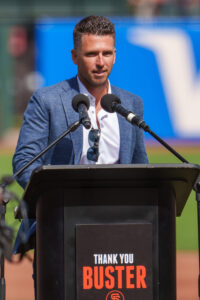
Posey will now be tasked with engineering a turnaround at the stadium he called home for the entirety of his 12-year playing career. His instantaneous ascension to president of baseball operations is far more surprising than Zaidi’s departure. Posey joined the Giants’ board of directors barely two years ago, when he purchased a minority stake in the team.
At the time, it seemed to be little more than a ceremonial move from a beloved player. Posey even stated at the time of the announcement that he was not taking on any type of front office role and that he was viewing his new role as “another opportunity for me to learn more about the game, more about the business and really commit my time to an organization in a city that I’ve grown to love.”
What happens from here remains to be seen, of course. Johnson’s statement did not indicate that general manager Pete Putila is in any danger of being dismissed, though even if he stays on board, he’d be second on the team’s baseball operations hierarchy, behind Posey. Longtime assistant general manager Jeremy Shelley remains with the club as well. Still, today’s press release did include a reference to conducting searches for any “open positions.” Virtually any change at the top of a baseball operations department is eventually accompanied by some personnel changes down the ladder, so it remains possible there are still some alterations to the tapestry of the Giants’ front office that have yet to come to light.
Posey, of course, has no baseball operations experience outside of whatever interactions occurred between him and Chapman earlier this summer. He’s likely been at least tangentially involved in some roster construction elements since purchasing his stake in the club, but he’s never held any sort of baseball operations title and more or less went directly from the team’s everyday catcher to minority owner, purchasing his share of the club less than one calendar year after playing his final game.
It’s rare, albeit not unprecedented in today’s game, for someone to be tabbed as a baseball operations leader with zero prior baseball operations experience. Agents Brodie Van Wagenen and Dave Stewart (a former big leaguer himself, of course) were hired as the general managers for the Mets and Diamondbacks within the past decade, respectively. Neither lasted more than a few seasons in their posts, however. Current Rangers general manager Chris Young pitched in the majors until 2017 and was working in the league’s central offices as MLB’s senior vice president of on-field operations, initiatives and strategy when Texas hired him as GM under then-president Jon Daniels.
Posey’s ascension to the top of a baseball operations department is far more sudden and rapid than any of those executives. Van Wagenen had been one of the highest-profile agents in the sport for more than a decade, negotiating countless contracts — albeit on the other side of the proverbial table. Stewart was retired as a player for nearly 20 years and, like Van Wagenen, had been representing players for quite some time, giving him plenty of familiarity with that side of the game. Young wasn’t much further removed from his playing days but had spent two years working in the league’s central offices. He was also hired as the No. 2 executive on the Rangers’ front office chart and spent more than two years working under Daniels before being promoted to the top post in Arlington.
Posey will now be tasked with revamping a Giants roster that has regularly lacked star power, relied heavily on platoons and has too often been permeated by aging players with waning athleticism. He’ll simultaneously need to build up a farm system that’s regarded as lackluster and work to improve a player development operation that has frequently seen top prospects either underperform or fizzle out. Homegrown talents like Logan Webb, Kyle Harrison, Heliot Ramos, Tyler Fitzgerald and Patrick Bailey all look like viable core pieces. But a number of the team’s other top prospects over the years — Bart, Luis Matos, Marco Luciano, Hunter Bishop, Will Bednar, Casey Schmitt — have not developed as hoped.
The $151MM Chapman extension signals that even with this change in baseball operations, the Giants aren’t planning on taking any kind of step back. They’ll look to get back into competition in the National League West next year and do so alongside a perennial Dodgers powerhouse, an ascendant Padres club and a D-backs squad that went to the World Series as recently as last season. It’s a tall order for any executive, let alone a rookie one — though Posey’s last rookie season certainly produced strong results.
Contract Notes: Kiner-Falefa, Heaney, Flexen
The Pirates drew plenty of scrutiny for designating first baseman Rowdy Tellez for assignment when he was four plate appearances shy of reaching a $200K bonus in his contract, though management has publicly disputed that the bonus had anything to do with the decision. Another Pittsburgh veteran ultimately landed in a similar spot, but infielder Isiah Kiner-Falefa tells Alex Stumpf of MLB.com that he declined an opportunity to enter the lineup and collect a $250K bonus. The infielder finished the season at 496 plate appearances, when his contract would’ve afforded him a $250K bonus for reaching 500 trips to the plate. Manager Derek Shelton initially omitted Kiner-Falefa from the Pirates’ Sunday lineup but, upon learning of the looming bonus, attempted to plug the infielder back into the lineup.
“I didn’t think it was fair to take a spot from [Liover Peguero], or one of the young guys, an opportunity to play at Yankee Stadium away from them,” says Kiner-Falefa, whom the Pirates acquired from the Blue Jays at the trade deadline. “I got hurt this year. I missed a month. If that doesn’t happen, or if we’re actually in a real race, I crush those incentives by a long shot. So, at the end of the day, I feel like I didn’t deserve it from that aspect. It’s nothing the team did. They tried to make it right at the end. That meant a lot to me right there. I’m thankful to [Shelton] and the organization to give me that opportunity.”
A couple more interesting contract notes from the final weekend of the season…
- Rangers lefty Andrew Heaney began his final start of the season Sunday at 156 innings, just four frames away from unlocking a $1.5MM bonus in his two-year deal. Evan Grant of the Dallas Morning News writes that although he was hit hard through the first three innings of the game (seven runs allowed), Heaney was allowed to complete the fourth inning as a reward for the selflessness he’s shown in his two seasons with the club and for the value he’s provided as a teammate in the clubhouse. “[General manager Chris Young] said we are going to do the right things by people, by players and by fans,” Heaney tells Grant. “Chris and [manager] Bruce Bochy are baseball lifers and they understand what it means. I believed everything Chris told me when I signed here. It has been everything he presented and more.” The 33-year-old Heaney finished out the 2024 season with a 4.28 ERA in his 160 frames and logged an overall 4.22 ERA in 307 1/3 innings over his two years in Texas. He’s a free agent this winter.
- Right-hander Chris Flexen has eaten innings at the back of the White Sox’ rotation amid the team’s historically feeble season, and the club made sure in his final start of the season that Flexen was able to reach the final incentive milestone in his one-year, $1.75MM contract, USA Today’s Bob Nightengale points out. Flexen’s deal called for $250K bonuses at each of 75, 100, 125 and 160 innings. The right-hander entered Sunday’s start with 153 2/3 innings under his belt. Flexen made the decision pretty easy for the Sox, as he tossed 6 1/3 shutout innings against the Angels. Still, few would’ve questioned the decision to pull Flexen after six scoreless innings, 88 pitches and a 7-0 lead. But the Sox made sure to send Flexen back out for the seventh and only lifted him after he’d recorded that first out to get him to that 160-inning threshold. He finished out the season with a 4.95 ERA, leading the team in innings and ranking second to Garrett Crochet with 30 starts. Flexen will head back to free agency this winter.
Previewing The 2024-25 Free Agent Class: Starting Pitcher
MLBTR’s positional preview of the upcoming free agent class continues with a look at the starting pitching market. It’s a deep group headlined by multiple former Cy Young winners and a “second tier” of front-of-the-rotation arms who are likely to command nine-figure deals.
Player ages, listed in parenthesis, are for the 2025 season. Stats are through play on September 25. Only players who have appeared in the majors this year are included.
Other Entries: Catcher | First Base | Second Base | Shortstop | Third Base | Center Field | Corner Outfield | Designated Hitter
Former Cy Young Winners in Their Prime
Corbin Burnes (30)
Burnes will likely command the largest contract of any pitcher in the class. He’s two years younger than Blake Snell, healthier than Max Fried and has the best recent track record of any pitcher on this year’s market. Dating back to 2020, Burnes touts a 2.88 ERA in 811 2/3 innings. He’s currently working on his fourth sub-3.00 ERA during that five-year span and his third straight season of 32 or more starts (four straight years with 28+ starts).
Burnes isn’t without his red flags. He’s nowhere near the strikeout machine he was earlier in his career. This year’s 22.4% strikeout rate is only narrowly north of the 22% league average for starting pitchers. He’s not homer-prone, averaging exactly one big fly per nine innings pitched, but that’s still a marked increase over the 0.36 HR/9 he averaged in 2020-21 — when he was still punching out 36% of his opponents.
That said, Burnes is throwing harder than ever, sporting career-high average velocities on both his cutter (95.3 mph) and sinker (97 mph), per Statcast. He’s avoiding hard contact and free passes alike, sitting on a 6.1% walk rate that would give him a better-than-average rate in three of the past four seasons. Burnes doesn’t look as overpowering as he did in his Cy Young season, but he’s still a durable workhorse and one of the ten or so best pitchers in the sport. In the past decade, there have only been nine free-agent deals of six years or more for a pitcher beginning in his age-30 season or later. Burnes will very likely become the tenth as he and agent Scott Boras aim for a $200MM+ deal. He’ll receive and reject a qualifying offer from the Orioles.
Blake Snell (32)
Snell didn’t land the $200MM+ he was seeking last year, with skeptics surely wary of his sky-high walk rate and his relatively up-and-down history. His two-year, $62MM deal with the Giants contains an opt out that’ll let him reenter the market, however. Early this season, that clause looked like a non-factor. Snell missed most of spring training while his free agency lingered, was rocked for 15 runs in 11 2/3 innings through his first three starts, and went on the injured list with an adductor strain. He returned in late May, served up another 10 runs in 12 innings, and went back on the 15-day IL.
A bit more than a month later, Snell not only returned from the injured list — he returned to form. And then some. With the adductor injury behind him and the rust of a missed spring training shaken off, Snell looks better than ever. He no-hit the Reds in Cincinnati on Aug. 2 and has recorded double-digit strikeouts five times, including a career-high 15 punches against the Rockies on July 27. Snell has rattled off 80 1/3 innings of 1.23 ERA ball and worked six-plus innings in 10 of 14 starts since returning. He’s whiffed 38.1% of his opponents in that time against a 10% walk rate that’s still higher than average but worlds better than the 13.4% mark he posted in 2023.
Snell is arguably the best pitcher in baseball at the moment. The early struggles now look like anomaly. Snell has a 2.82 ERA over the past three seasons now (2.57 since Opening Day 2023), and he’s whiffed 32.4% of his opponents in that time. He’s been too dominant to be limited to a short-term deal this time around, unless he simply prefers the high-AAV, opt-out gambit. He should get the big contract that eluded him last winter. He’s unlikely to command $200MM, but a five- or six-year deal with a premium AAV should be on the table, especially since he cannot be issued a second qualifying offer after receiving one last winter.
Other Potential No. 1 Starters
Jack Flaherty (29)
After several seasons marred by injuries, Flaherty enjoyed a mostly healthy season in 2023 — just in time for free agency. His 4.99 ERA between the Cardinals and Orioles was hardly appealing, but he hit the market as a 28-year-old former top prospect who, earlier in his career, looked to be emerging as one of the NL’s better young arms. Flaherty bet on himself with a one-year deal in Detroit, and he now looks very much like that budding ace we saw back in 2019 and in the healthy portion of his 2021 season. In 162 innings, Flaherty has turned in a 3.17 ERA with a terrific 29.9% strikeout rate and very strong 5.9% walk rate. He’s hit a bit of a rough patch with a 6.43 ERA over his past three starts, but that’s only 14 innings.
The Tigers traded Flaherty to the Dodgers prior to the deadline, thus rendering him ineligible for a qualifying offer. There was some concern about the health of his back, but he’s made every start since that swap and carries a sharp 3.58 ERA with Los Angeles. If his struggles continue into the postseason and/or he misses a start due to back discomfort, his health could become a larger issue in free agency. As it stands though, he’s heading back to the open market ahead of his age-29 season and coming off a terrific all-around season. His age will give him a chance at landing a six-year deal, and even on five years he’s pitched well enough for an AAV that’d push him north of $100MM.
Max Fried (31)
Fried — Flaherty’s high school teammate — hasn’t had his best season, but he’s picked up the pace at the right time, rattling off seven starts and 44 innings of 2.86 ERA ball dating back to late August. That’s dropped his season-long ERA to a quality 3.42 mark. It’s not quite the same standard we’ve come to expect from Fried, who posted a combined 2.66 earned run average from 2020-23, but when your “down” season is a 3.42 in 165 2/3 innings, you’re in strong position for free agency.
Fried hasn’t been ultra-durable, never topping 30 starts or reaching 190 innings in a season, but he’s been consistently excellent since establishing himself in Atlanta’s rotation back in 2019. He’s given the Braves 816 frames of 3.09 ERA ball in that time, with his only real long-term injury coming last season, when he missed nearly three months with a left forearm strain. That same forearm sent him back to the shelf for two weeks in 2024, this time for neuritis (inflammation of a nerve). There could be some trepidation regarding that forearm in free agency, but Fried is a borderline ace with a pair of All-Star nods, two top-five Cy Young finishes and even three Gold Gloves. Only five pitchers in the past decade have scored a six-year deal in free agency as they head into their age-31 season, but Fried has a good chance to add to the list. He’ll receive and reject a qualifying offer.
Mid-Rotation Arms
Matthew Boyd (34)
Boyd has come roaring back from 2023 Tommy John surgery, stepping up in a big way for the AL Central-champion Guardians. He’s made eight starts since coming off the injured list and snapped off a 2.72 ERA with a big 27.7% strikeout rate and strong 7.8% walk rate. The injury bug has been a constant thorn in Boyd’s side, as he hasn’t made a full season of starts since taking the mound 12 times in the truncated 2020 season. The last time Boyd pitched more than 15 games in a season was back in 2019. Boyd has long shown the ability to miss bats and limit his walks. He has, at times, appeared on the cusp of breaking out as a big-name pitcher. He’s back at that precipice again, and while his age and injury history are going to limit the length of his contract, he could still secure a two- or three-year pact on the back of his outstanding rebound.
Andrew Heaney (34)
Like Boyd, Heaney at multiple points early in his career appeared primed for a breakout. It never happened with the Angels, as he was oft-injured and inconsistent when healthy. Heaney landed with the Dodgers on a one-year deal in his first foray into free agency and parlayed a big showing in another injury-shortened campaign into two years with the Rangers. He’ll return to the market as a more solidified starter, having tossed 303 1/3 innings of 4.06 ERA ball over the past two seasons (including a 3.98 mark this year). Add in his brilliant half season in L.A., and Heaney can sell teams on 376 innings of 3.88 ERA ball with strong strikeout and walk rates (25.7% and 7.4%, respectively). Another multi-year deal should be there.
Yusei Kikuchi (34)
Clearly talented but lacking consistency, Kikuchi may have finally found a recipe for success after being traded to Houston. The Astros have more than doubled his slider usage and reduced his curveball to a seldom-used change-of-pace offering. He’s annihilated opponents since the trade, spouting off 60 innings with a 2.70 ERA, 31.8% strikeout rate and 5.9% walk rate. Kikuchi is still sporting a heater that averages better than 95 mph, and he’s now missing bats and eschewing walks at career-best rates. His age won’t help his case in free agency, but the trade ensures that he can’t be hit with a qualifying offer. He’s wrapping up a three-year, $36MM deal right now that was signed largely based on potential and upside. He could find a larger three-year deal this time around now that he’s manifested that upside into high-end results.
Nick Pivetta (32)
Pivetta misses bats at plus rates and has improved his command considerably in recent seasons, placing him among the league leaders in K-BB% since 2023. Excellent as his rate stats are, however, they’re frequently undercut by his penchant for serving up home runs. Pivetta is among the most homer-prone starters in the sport, with a career 1.54 HR/9 mark and a whopping 1.81 homers per nine frames this season. Metrics like SIERA and xFIP, which normalize homer-to-flyball rate, frequently peg Pivetta in the mid-3.00s despite his earned run average regularly clocking into the mid-4.00s. It’s still likely that teams will be tantalized by his K-BB profile, however, and also by his durability. Pivetta missed a month earlier this season with a minor flexor strain, but that’s the only time he’s been on the big league injured list (outside a pair of stints on the Covid-related injured list a few years back). He’s a candidate for a two- or three-year deal, especially for clubs that play in pitcher-friendly parks.
Luis Severino (31)
Injuries ruined Severino’s final few years in the Bronx — but not in New York. He signed a one-year pact with the Mets last offseason as has proven to be one of the best short-term pickups for any club. Severino’s average fastball is down from its 97.7 mph peak but still sitting at a healthy 96.3 mph. He’s chewed up 182 innings over 31 starts for the Amazins and turned in a sharp 3.91 ERA along the way. His formerly plus strikeout rate is now a bit below average, at 21.2%, but his 7.9% walk rate and 46% grounder rates are plenty good. He’s also inducing infield flies at the best rate of his career, and his career-high 23 pop-ups generated this year are just as good as strikeouts. Severino has a big pedigree but hasn’t seen his results return to the ace-level form he displayed in 2017-18. He’s a qualifying offer candidate and could potentially even accept, but we’ve seen less-successful pitchers command strong four-year deals in recent years (e.g. Taijuan Walker, Jameson Taillon).
Spencer Turnbull (32)
A lat strain derailed what was shaping up as an excellent rebound campaign for Turnbull. The longtime Tigers hurler has been sidelined for two months with that injury and only pitched 31 innings from 2022-23 due to Tommy John surgery. He inked a $2MM deal with the Phils last winter and has given them 54 1/3 frames between the rotation and bullpen, notching a tidy 2.65 earned run average with a big 26.1% strikeout rate. His 9% walk rate is a bit higher than average but only by a percentage point. His velocity is down nearly two miles per hour from peak levels, but Turnbull looked impressive when healthy and could find the first multi-year deal of his career if he finishes on a healthy note. He’s on a rehab assignment right now and could factor into the postseason pitching plans.
Fourth/Fifth Starters
Chris Flexen (30)
Flexen has been on a good run since late August, logging a sub-4.00 ERA in his past eight trips to the bump. That’s still only dropped him to a 4.95 mark on the season overall. He’s cleared 160 innings with below-average strikeout and grounder rates while yielding too many homers. It’s not a great profile, but he’s having a much better season than he did in 2023, when he landed a $1.75MM guarantee from the White Sox in free agency. Perhaps they’ll give him a raise and keep him for a similar role in 2025. If not, Flexen could slot into the back of a rebuilding club’s rotation on a cheap one-year pact.
Michael Lorenzen (33)
Lorenzen is in his third year as a starter and has signed three one-year deals in his previous trips through free agency. This year’s 3.37 ERA is his best out of a rotation, but his middling strikeout and walk rates (17.8% and 11.4%), coupled with his age, are going to limit interest to an extent. He could still land a two-year deal, and even if he takes another one-year pact, he should still get a raise on this year’s $4MM guarantee.
Frankie Montas (32)
Montas was dominant for the 2021 A’s and has been mediocre since, due in no small part to shoulder surgery that wiped out nearly all of his 2023 season. His one-year deal with the Reds (who eventually traded him to the Brewers) has produced lackluster results. Montas’ 4.85 ERA isn’t much to look at, but he’s at least proven to be healthy (29 starts, 146 2/3 innings). He’s also seen a velocity spike and uptick in swinging strikes since being traded to Milwaukee, but it still feels like he’s probably looking at another one-year deal.
Martin Perez (34)
Perez is eating innings one five-inning start at a time. He posted bleak numbers with the Pirates but has flourished since a trade to the Padres, for whom he’s made nine starts and notched a 2.61 ERA. Perez’s strikeout and walk rates have improved as San Diego more than doubled his curveball usage, but he still misses fewer bats than average. He’s a durable fifth starter who’ll likely land another one-year pact in free agency.
Joe Ross (32)
Ross missed the 2022-23 seasons due to injury but returned to the majors with Milwaukee this season and has turned in a 3.93 ERA in 71 frames. He’s split his time between the rotation and bullpen, but he showed well as a starter early in the season. He’s throwing harder than ever and still just 31 years old. His injury history probably limits him to one-year offers, but he’s a sneaky candidate to plug into a rotation on an incentive-laden deal.
Jose Urena (33)
Urena rode a minor league deal to a season-long spot on the Rangers’ staff. He’s pitched in 33 games, nine of them starts, and logged a 3.80 ERA despite a bottom-of-the-barrel 15.1% strikeout rate. He doesn’t have great command, but Urena throws hard and racks up grounders. This is his first season with an ERA under 5.00 since 2018. He could land a small one-year deal as a fifth starter or swingman.
Trevor Williams (33)
Williams was brilliant in 11 starts before a forearm strain cost him more than three months. He returned last week with five one-run innings against the Cubs. Williams has a 2.19 ERA on the year, but teams will take that with a grain of salt, given that it’s accompanied by an average strikeout rate (22.3%) and a heater that sits at 89 mph. He posted a 4.54 ERA overall in his two seasons as a National. This year’s showing might get him another two-year deal, but a soft-tossing 33-year-old coming off an injury-shortened season feels likelier to command a one-year deal.
Older Veterans
Alex Cobb (37)
Cobb’s return from hip surgery was slowed by a shoulder issue and blister troubles during his rehab process. He was traded from San Francisco to Cleveland before making his 2024 debut. The Guardians have gotten just three starts out of him due to blisters and a cracked fingernail on his pitching hand. Cobb was quite good from 2021-23. He should be able to land an incentive-laden one-year contract.
Patrick Corbin (35)
Corbin was an indispensable piece of the Nationals’ 2019 World Series run, but the final five seasons of his six-year deal have been a disaster. To his credit, he’s been durable and continued to eat up innings, even as his results have withered, which has at least helped spare the bullpen and avoid relying too heavily on untested young arms. Corbin has a 5.62 ERA this year — his fourth straight season over 5.00. He’s actually had more competitive starts than one might think, as his ERA is skewed by a handful of meltdowns (10 earned runs, eight earned runs, and a pair of seven earned run outings). He’s still looking at a one-year, innings-eater deal at best.
Charlie Morton (41)
Morton hasn’t yet indicated whether he’ll pitch again in his age-41 season. He hasn’t had his best showing in ’24, but 161 innings with a 4.08 ERA and a 24% strikeout rate that’s still better than average suggest he could have something left in the tank. He’s been back with the Braves for four years now, and if he wants to continue, another year at Truist Park makes the most sense.
Jose Quintana (36)
Quintana looked like he was running out of gas in mid-August. He’s since tossed at least six shutout frames in four of his past five outings. He’s allowed just one earned run in his past 32 frames and is now sporting a sharp 3.74 ERA on the season. His two-year deal with the Mets has been a success. He’ll hit the market in search of a similar pact but might have to settle for one year based on his age.
Max Scherzer (40)
Scherzer only made it into nine games this year after undergoing offseason back surgery. He never looked fully healthy, sitting on a career-low 92.6 mph average fastball and averaging fewer than five innings per start. The future Hall of Famer still kept his ERA just under 4.00 with solid strikeout and walk rates. If he wants to pitch in his age-40 season, he’ll surely find a one-year deal — likely with a decent base salary and plenty of incentives.
Drew Smyly (36)
Smyly has notched a 3.88 ERA in 58 innings working exclusively as a reliever this season. He’s primarily been a starter in recent years, however. The lefty’s ability to miss bats and pitch in a variety of roles should lead to a one-year deal. He’ll likely get interest both as a starter and reliever this offseason.
Ross Stripling (35)
Stripling started the season with seven good starts before being shelled for 24 runs (17 earned) in his next four starts and landing on the injured list for two months due to an elbow strain. He returned with a pair of decent starts in July, and was rolling after moving to the bullpen (one run in his first 8 1/3 relief innings). He’s since been obliterated for 10 runs in 3 2/3 innings across two relief outings. Injuries, a poor finish and an ERA north of 6.00 are going to limit the veteran swingman to a small one-year deal or even a minor league pact this winter.
Justin Verlander (42)
Shoulder and neck injuries limited Verlander to 16 starts this season, and his struggles since returning from the IL have been so pronounced — 27 runs in 27 1/3 innings — that his spot on Houston’s playoff roster is in jeopardy. Verlander has said he wants to continue pitching, and his track record will earn him another shot … just not at anywhere close to his current $43.333MM AAV.
Rebound Hopefuls
Shane Bieber (30)
Everyone knows how good the former AL Cy Young winner can be at his best. He hasn’t been there for some time. After an injury-shortened 2023 season that featured a prominent velocity dip, Bieber looked great in two starts (12 shutout innings) before requiring Tommy John surgery. He’ll be sidelined into May or June of the upcoming season in all likelihood.
Walker Buehler (30)
In his first season back from the second Tommy John procedure of his career, Buehler has delivered career-worst marks in strikeout rate (18.6%), walk rate (8.1%), average fastball velocity (95 mph), swinging-strike rate (8.2%) and HR/9 (1.91). He pitched at an ace level from 2018-21, but this version of Buehler bears little resemblance to that budding young star. He’ll likely look to follow Jack Flaherty’s lead and max out on a one-year deal in hopes of rebuilding his stock.
Anthony DeSclafani (35)
DeSclafani underwent season-ending flexor surgery before the season started. He posted a 5.16 ERA in 118 2/3 innings for the Giants in 2022-23. The 167 frames of 3.17 ERA ball with the ’21 Giants that prompted them to re-sign him for three years and $36MM feels like a distant memory. He’ll likely sign a minor league deal.
Marco Gonzales (33)
Gonzales underwent flexor surgery earlier this month — an operation that’ll sideline him for nine to twelve months. It’s not clear if he’ll pitch next season at all, but he was solid in his first five starts with the Pirates this year before getting shelled in his final two appearances and heading to the injured list.
Kyle Hendricks (35)
A mainstay with the Cubs, Hendricks has been a Cy Young finalist at his best but has labored to an ERA north of 6.00 in 2024. He’s been a bit better since June, with a 4.66 ERA in 87 innings, but the 35-year-old’s strikeout rate is at a career-low 15.7%. His walk rate, while still better than average at 7.6%, is the highest of his career. Hendricks plans to pitch next year even if the Cubs don’t re-sign him. A one-year deal or minor league pact is in his future.
Adrian Houser (32)
A quietly solid member of Milwaukee’s rotation from 2019-23, Houser was one of former Brewers president/current Mets president David Stearns’ first acquisitions with his new club. Things didn’t pan out. Houser was torched for a disastrous 8.55 ERA as a starter. He initially performed better upon a move to the ‘pen but was cut loose after surrendering nine runs on five homers in a span of nine relief innings. He’s with the Orioles on a minor league deal now but didn’t pitch well in three Triple-A starts. He’ll be a minor league free agent at season’s end and look for a minor league deal this winter.
Wade Miley (38)
Miley underwent Tommy John surgery early in the season. He said at the time he was leaning toward a comeback effort once he wrapped up a yearlong rehab but would make a final determination based on how the rehab process goes and how his body feels. Miley was excellent in Milwaukee last year (3.14 ERA in 120 innings) and clearly likes it there. A reunion on a minor league deal or incentive-laden one-year pact would make some sense.
John Means (32)
Talented but snakebit, Means underwent his second UCL operation in three years back in June. He pitched just eight innings in 2022, made it back for 23 relief frames late in 2023, and pitched in only four games in 2024 before requiring that elbow surgery. When healthy, Means is a quality mid-rotation lefty, but he’s a wild card coming off such significant arm troubles and pitching only 52 1/3 innings over the past three seasons.
Michael Soroka (27)
The White Sox bought low on the once electric Soroka in hopes that he could rebound after enduring a pair of Achilles tears in addition to shoulder and elbow troubles. He was rocked for a 6.39 ERA in nine starts that saw him walk as many batters as he struck out (24 in 43 2/3 innings). Soroka has been much better in relief, with a 3.00 ERA and mammoth 37.9% strikeout rate. That might lead to interest as a reliever this offseason, but some clubs might still view him as a viable starter.
Alex Wood (34)
Wood’s one-year, $8.5MM deal with the A’s resulted in a 5.26 ERA over just nine starts. He had surgery to repair his rotator cuff in July. Wood has typically been effective when healthy (3.78 ERA in 1258 MLB innings), but that’s a major caveat for a pitcher who’s been on the injured list 11 times since the 2016 season.
Depth Arms
Chase Anderson (37)
Anderson has pitched for seven teams across the past five seasons. This year’s 5.40 ERA (in 58 1/3 innings) is his lowest mark along the way. He’ll eat innings as a fifth starter or long reliever and can get another minor league deal.
Carlos Carrasco (38)
Cookie’s return to Cleveland was a feel-good story but didn’t go as planned. He’s now posted an ERA of 5.64 or worse in three of the past four seasons. Cleveland designated him for assignment this month. He’ll need to take a minor league deal if he plans to continue pitching.
Mike Clevinger (34)
Clevinger’s return to the ChiSox lasted only four starts and 16 innings. He posted a 6.75 ERA before hitting the IL with an elbow injury and eventually undergoing season-ending surgery to replace a disc in his neck.
Domingo German (32)
The longtime Yankees hurler was rocked for 18 runs in 20 2/3 innings with the Pirates. He posted a 5.04 ERA in 75 Triple-A frames as well. German was limited to minor league offers last winter and should be again this winter, on the heels of that performance.
Brad Keller (29)
Keller has been solid in Triple-A this season but limped to a 5.44 ERA in 41 big league frames in his first year after thoracic outlet surgery. He was a solid arm in Kansas City from 2018-20 but has struggled since, ticketing him for another non-guaranteed deal.
Julio Teheran (34)
Teheran’s 2023 resurgence with the Brewers proved fleeting. He gave up four runs in 2 2/3 innings with the Mets in his lone start of the season and has been tagged for 49 runs in 49 1/3 innings pitched in Triple-A between the Orioles and Cubs organizations.
Pitchers with 2025 Club Options
Kyle Gibson (37) — $12MM option with $1MM buyout
Gibson has done exactly what he was signed to do. He’s eaten up innings and stabilized the back of the St. Louis rotation, tossing 165 2/3 innings of 4.13 ERA ball. His strikeout and walk rates are a bit worse than average, but he still gets plenty of grounders and has by all accounts emerged as a leader in the Cards’ clubhouse. It’d be a genuine surprise if his option isn’t picked up.
Merrill Kelly (36) — $7MM option with $1MM buyout
Shoulder problems have limited Kelly to a dozen starts, but he’s been sharp when healthy. With a 3.71 ERA, 20% strikeout rate and 6.6% walk rate, this is an easy call at a net price of $6MM. The D-backs will pick this one up.
Lance Lynn (38) — $12MM option with $1MM buyout
A balky right knee hobbled Lynn throughout the season, but he still made 23 starts and notched a 3.84 ERA in 117 1/3 innings. The Cardinals have a pretty full rotation outlook and needs in both the lineup and bullpen. They could exercise the option and look for a trade partner, but it seems likelier that Lynn will be bought out and return to the market in search of another one-year deal.
Freddy Peralta (29) — $8MM option with $1.5MM buyout
Among the easiest calls in this slate of club options, Peralta currently has a 3.68 ERA in 32 starts and 173 2/3 innings of work. He’s set down 27.6% of his opponents on strikes and issued walks at a 9.4% clip. If his steady mid-rotation work over the years wasn’t incentive enough to pick up this option — and, for the record, it very much is — the contract contains a second club option for the 2026 season, which is also valued at $8MM.
Colin Rea (34) — $5.5MM option with $1MM buyout
As with his teammate Peralta, this is an easy call for Milwaukee. Rea has been a godsend for an injury-riddled rotation, making 26 starts (and five relief appearances) and piling up 162 innings with a 4.17 ERA, 19% strikeout rate and excellent 5.9% walk rate. At a net $4.5MM price point, the Brewers shouldn’t have to think long about exercising his option.
Player Options and Opt-Out Candidates
Gerrit Cole (34)
Cole presents one of the most fascinating opt-out scenarios in recent memory. He can walk away from his remaining four years and $144MM, but if he exercises his out clause, the Yankees can void his decision by tacking on an additional year at $36MM. That’d bring Cole’s contract to another five years and $180MM over his age-34 through age-38 seasons. On the heels of a typical Cole season, that might’ve seemed like an obvious call all-around. Cole, however, missed the first two-plus months with elbow inflammation and has been more good than elite (although he’s been heating up since mid-August). On the one hand, it’s hard to imagine the Yankees letting him go. On the other, five-year deals for pitchers beginning in their age-34 season or later are exceedingly rare.
MLBTR’s Anthony Franco recently broke down Cole’s opt-out for Trade Rumors Front Office subscribers, examining the decision through historical precedent in an effort to determine whether there are scenarios where Cole could unexpectedly end up back on the open market. Most seem to expect Cole to remain with the Yankees, but the manner in which his season has played out makes it less of a slam dunk and will shift more focus onto his playoff performance.
Nathan Eovaldi (35)
Eovaldi reached enough innings this year to trigger a $20MM player option in his contract. He’s a Texas native, so perhaps he’d prefer to simply stay put. But if he’s open to going through the free-agent process again, he should have no trouble topping that $20MM guarantee on a new contract. Eovaldi’s last deal was for two years and $34MM. He tacked on another $4.5MM via innings incentives. The right-hander carries a 3.80 ERA, 23.5% strikeout rate and 7.1% walk rate in 307 2/3 innings during his two years as a Ranger. He can’t receive a qualifying offer since he received one earlier in his career. Even if he doesn’t land a $20MM AAV, he could command a similar total guarantee to his last deal.
Lucas Giolito (30)
Giolito has a $19MM player option. He won’t turn it down after undergoing UCL surgery before the season even began.
Clayton Kershaw (37)
Kershaw is still “weeks” from returning. He’s pitched in only seven games and totaled 30 innings this year after undergoing shoulder surgery following the 2023 campaign. His player option has a $5MM base salary.
Sean Manaea (33)
Manaea has been unstoppable since early this summer. He’s sporting a sub-3.00 ERA over his past 19 starts, including a 2.63 mark with a masterful 30.3% strikeout rate and 5.9% walk rate in his past 11 trips to the mound. He’s been the Mets’ best pitcher this season. There’s no way he’ll simply exercise his $13.5MM player option. Manaea will reject that and at the very least consider a more enticing qualifying offer. He’s pitched well enough that he could decline that QO in search of a three-year deal, though, perhaps along the lines of the $63MM pact his former teammate Chris Bassitt signed a couple offseasons ago.
Nick Martinez (34)
Martinez has pitched too well for the Reds to give much consideration to exercising his $12MM player option. He’s spoken highly of his time in the Reds organization and would welcome a return, though in saying as much he implied that it’d have to be on a new deal because of his out clause. “If what I want lines up here, and I think it does … there’s a more delicate issue that I think needs to be talked about,” Martinez told MLB.com’s Mark Sheldon. MLBTR’s Anthony Franco recently took an in-depth look at Martinez’s looming opt-out clause for Trade Rumors Front Office subscribers. He should at least have another two-year deal out there, if not a three-year offer.
Jordan Montgomery (32)
Montgomery has a $25MM player option and will be exercising that after limping to a 6.23 ERA in 117 innings during an injury-marred debut campaign with the D-backs.
Robbie Ray (33)
Ray can opt out of the remaining two years and $50MM on his deal, but it’d be a surprise if he did so on the heels of a Tommy John return effort that has seen him make just seven starts (4.70 ERA in 30 2/3 innings). A hamstring strain sent Ray back to the injured list early this month. He’s hoping to make one final start this weekend. The former AL Cy Young winner is ultra-talented, but he’s not topping $50MM in free agency this winter.
Michael Wacha (33)
After taking three straight one-year deals in his first three trips through free agency, Wacha has now begun to play the opt-out game. His four-year deal with the Padres and current two-year deal with the Royals both contained out clauses after the first season. Last year’s opt-out was an easy call after he pitched 134 1/3 innings of 3.22 ERA ball. He has a nominally tougher call this time around, with a weightier $16MM player option looming, but Wacha will still very likely opt out in search of another multi-year deal (perhaps with another opt-out). He’s racked up 166 2/3 innings of 3.35 ERA ball with a slightly below-average strikeout rate and plus command.
From Minor League Deal To Top Reliever In The Upcoming Free Agent Class
Perhaps you haven't heard this before, but relief pitching is volatile. Reliever performance often fluctuates wildly from year to year. At times, that leads to rapid ascensions from obscurity to stardom for players. Look no further than last year's three-year, $33MM deal for Robert Stephenson with the Angels. He'd been designated for assignment less than a calendar year prior but was so dominant in 42 games with the Rays that the Angels ponied up that weighty three-year deal.
Stephenson is just one of many instances of this, of course. Liam Hendriks had been designated for assignment by four different teams before breaking out with the A's. In fact, Oakland was one of the four teams who'd chosen to DFA him. He went unclaimed on waivers. Drew Pomeranz had been bounced from the Giants' rotation in 2019 and was potentially on the cusp of being cut loose himself when a stretch of just four relief appearances prompted the Brewers to give up a legitimate infield prospect (Mauricio Dubon) to acquire him in a trade. Pomeranz dominated for Milwaukee for two more months and went on to ink a four-year, $34MM deal in free agency.
Reliever fortunes can turn quickly, and the upcoming free agent class offers the latest example. It's always fun to wonder who might be the next Hendriks, Pomeranz or Stephenson -- and in this instance, it's even more fun because the buzz name on the market was traded for one of those very relievers just a few years back.

Unlock Subscriber-Exclusive Articles Like This One With a Trade Rumors Front Office Subscription
- Access weekly subscriber-only articles by Tim Dierkes, Steve Adams, and Anthony Franco.
- Join exclusive weekly live chats with Anthony.
- Remove ads and support our writers.
- Access GM-caliber tools like our MLB Contract Tracker
Chaim Bloom To Take On Larger Role In Cardinals’ Front Office
The Cardinals are set to hold a press conference early next week, and it’s already been reported that there will be some notable organizational changes announced at that time. Jeff Jones of the Belleville News-Democrat suggested as much earlier this week, and USA Today’s Bob Nightengale reported a couple weeks back that former Red Sox chief baseball officer Chaim Bloom, hired as an adviser last winter, could see his role expand. That’ll indeed be the case, and Katie Woo of The Athletic now further details that Bloom will be tasked with hiring a new director of player development and overhauling that department.
It’s not fully clear what title Bloom will hold, but Woo spoke with multiple Cardinals staffers about the manner in which their player development system — once the gold standard in the sport — has become antiquated and been neglected over time. Cardinals employees who spoke to Woo for a simultaneously fascinating and damning overview of the organization suggest the club is lacking in coordinators, minor league coaches, technology and other resources, leaving players unprepared to make the jump to the majors.
That’s created a vicious cycle, forcing president of baseball operations John Mozeliak to spend more in free agency to offset the lack of homegrown contributors. In doing so, he’s increasingly had to allocate his baseball operations budget to the big league roster at the expense of player development. It’s become a self-fulfilling prophecy in many ways. Readers (especially Cardinals fans) are encouraged to check out Woo’s piece in full for an exhaustive breakdown of how the Cardinals’ once unparalleled development practices have faltered and failed to position touted prospects like Jordan Walker, Nolan Gorman, Matthew Liberatore, Dylan Carlson and others for big league success.
From an even bigger-picture standpoint, the matter of Mozeliak’s future with the club has also been thrust into the spotlight. He’s signed through 2025 and has suggested previously that he’s likely to step down after that contract. MLB.com’s John Denton reports that it’s at least possible Mozeliak steps aside or transitions to a different role sooner than the end of his contract, however. Changes on the coaching front are expected too, as Jones reported earlier this week. Woo writes that manager Oli Marmol is expected to remain in place but points out that hitting coaches Turner Ward and Brandon Allen, game-planning coach Packy Elkins, first base coach Stubby Clapp and assistant pitching coach Julio Rangel are all signed only through the current season.
The full scope of the looming changes likely won’t be ascertainable until the Cardinals host their press conference Monday. What’s increasingly clear is that ownership and the majority of the baseball operations and player development staff recognize that changes are needed. Whether that results in a rebuilding effort of any magnitude isn’t yet clear. Woo reports that the Cardinals do not intend to go into a tanking-style rebuild but also plan to shift more focus on building up the player development staff and strengthening the minor league system.
Marmol, for his part, isn’t speaking like a manager who expects a pronounced step back. The recent focus on getting to 82 wins to avoid the first back-to-back losing seasons the Cardinals have endured in six decades hasn’t sat well with him, he tells Derrick Goold of the St. Louis Post-Dispatch. “It’s not a goal of mine when I go into a season to only finish above .500, if I’m being quite honest,” says Marmol. “I understand not wanting to have back-to-back losing seasons. We have aspirations for a lot more than that, and we have to build toward it, bottom line.”
Goold joins the rest of the Cards beat in reporting that large-scale changes are indeed expected Monday at a press conference where the team’s “next direction” will be among the topics. The Cardinals face several pivotal decisions, many of them on aging veterans. They hold $12MM club options over starters Kyle Gibson and Lance Lynn — both coming with a $1MM buyout. Paul Goldschmidt is a free agent, though there’s been talk of a potential reunion. Veteran reliever Andrew Kittredge is also a free agent, and the Cards have some interest in re-signing him. The 2025 season is closer Ryan Helsley‘s final year of club control. Prospects like Walker and Gorman aren’t necessarily at a crossroads but have also failed to cement themselves in the team’s plans. Both were optioned to the minors this season, though both have at least one option year remaining beyond the current season (two, in Gorman’s case).
Monday’s press conference should shed light on how some of those vital organizational decisions will play out. The broad takeaway, for now, is that simply maintaining the status quo no longer feels tenable.
White Sox Notes: Sizemore, Managerial Search, Crochet, Moncada
When the White Sox fired manager Pedro Grifol (along with bench coach Charlie Montoyo, assistant hitting coach Mike Tosar and third base coach Eddie Rodriguez), they handed Grady Sizemore the unenviable task of steering the ship for the remainder of a historically inept season. The Sox are currently tied for the modern era record with 120 losses and figure to establish a new benchmark for futility in the coming days. At the time Sizemore was elevated to the top job in the dugout, general manager Chris Getz plainly stated that the Sox would conduct a managerial search and hire a new skipper from outside the organization after the season. It now seems that Sizemore will at least be considered for the permanent post, however.
“Grady’s in consideration,” Getz said this week (link via Daryl Van Schouwen of the Chicago Sun-Times). “He has a lot of traits we’re looking for.”
The Sox will still conduct an extensive search for their next skipper, Getz emphasized. Sizemore will be one of many candidates from what the GM called a “deep pool” that they’ve cultivated since Grifol’s dismissal. (It’s not clear whether that pool will include Double-A manager and former Sox reliever Sergio Santos, but he’s publicly thrown his hat into the ring and voiced a desire to manage the club.) Still, Getz noted that Sizemore’s “temperament is exactly what we needed” for the remainder of the current season and praised his rookie manager’s communication skills with the players. Van Schouwen adds that Sizemore has another year remaining on his coaching contract, so it seems likely he’ll remain with the organization beyond the ’24 season in at least some capacity.
ESPN’s Buster Olney and Jesse Rogers report that Sizemore had never voiced a desire to manage prior to being promoted to his current post, but his strong relationship with the players made him the front office’s pick. Time will tell whether that leads to a more solid appointment following the season.
More broadly, Olney and Rogers explore the staggering levels of dysfunction that have permeated the White Sox organization this season. It’s a deep dive into the team’s many failures across virtually all levels, highlighting clubhouse rifts that date back to the 2023 season and questionable decisions from owner Jerry Reinsdorf, among many other fascinating aspects.
As has been suggested in the past, Rogers and Olney write that former general manager Rick Hahn appeared to have zeroed in on A.J. Hinch as the team’s new manager following the 2020 season when Reinsdorf went over his head and hired longtime friend and former White Sox skipper Tony La Russa. One club source told the ESPN pair that Grifol inherited “as negative a place as I’ve seen anywhere” in the game when he took over as manager. La Russa remains involved with the organization as an advisor and, notably, gave positive feedback about Getz when Reinsdorf fired longtime baseball operations leaders Hahn and Kenny Williams. That’s not to say Getz was promoted based solely on La Russa’s recommendation, but it’s a notable bit of context given that he was tabbed the new GM after just nine days and with no external search conducted.
There are countless other bits throughout the ESPN piece making it a must-read piece for fans not only of the White Sox but any club. Rogers and Olney delve into some specifics on the trade deadline, noting that the Sox targeted top Phillies prospect Andrew Painter when Philadelphia was in pursuit of Garrett Crochet — a price at which the Phillies balked. The Dodgers, per the report, believed they could make a compelling offer without including catcher Dalton Rushing, but that offer “never developed” in the end. They instead acquired Jack Flaherty from Detroit in exchange for another top catching prospect, Thayron Liranzo, and current Tigers shortstop Trey Sweeney.
Crochet stayed in Chicago, as Getz and his staff were intent on getting their price met or revisiting the trade market for Crochet this winter. That’ll surely be the case, and Crochet will enter the season as perhaps the top trade candidate in the sport. The asking price will again be astronomical, but there will also theoretically be more bidders for him — in addition to a lack of concern about his status for pitching in the postseason and/or his reported desire for a contract extension.
Crochet and Luis Robert Jr. will be the last vestiges of the core that propelled the White Sox to playoff berths in 2020 and 2021. The rest have either been traded or, like third baseman Yoan Moncada, will become free agents at season’s end. Moncada has a $25MM club option, but the Sox will pay a $5MM buyout on that option and send him into free agency for the first time in his career.
Moncada, still just 29 years old, tells Bruce Levine of 670 The Score that he plans to play winter ball this offseason in order to showcase his health for the other 29 teams in the game. He missed nearly the entire season due to an adductor strain and has scarcely played since being reinstated from the 60-day injured list earlier this month. Chicago has been committed too getting the younger Miguel Vargas — acquired at the deadline in the three-team Erick Fedde/Michael Kopech/Tommy Pham swap — regular playing time at the hot corner even as he struggles mightily at the plate.
That’s left Moncada with just one plate appearance this month, despite the fact that he was activated back on Sept. 16. He’s hitting .275/.356/.400 on the season in a tiny sample of 45 plate appearances. On the one hand, it’s confounding that the Sox would leave a talented and fairly productive veteran out of the lineup as they try to stave off their inevitable date with history. On the other, Moncada clearly isn’t in the team’s plans going forward, so there’s some sense to allocating those at-bats to younger players.
Moncada once ranked as the top prospect in the sport. He signed with the Red Sox after leaving Cuba, taking home a massive $31.5MM signing bonus (which cost Boston a 100% tax under the former international free agent system, bringing their total price to $63MM). He landed in Chicago alongside Kopech as one two headliners in the trade sending Chris Sale to Fenway Park. It took a couple years, but by 2019 Moncada looked on the cusp of stardom. He swatted 25 homers while batting .315/.367/.548 in just 559 plate appearances. That breakout contributed to Chicago extending Moncada on a five-year, $70MM deal covering the 2020-24 seasons.
The contract hasn’t aged well. Moncada gave the Sox one healthy, productive season in 2021 but has otherwise spent more time on the injured list than in the lineup. Even when healthy, he’s been below-average at the plate more often than not. He’s appeared in 404 of 703 possible games during that five-year period and slashed .244/.326/.395 along the way. That’s league-average production on the whole (101 wRC+), but the vast majority of that positive output came during the aforementioned ’21 season.
A healthy showing in winter ball would surely help Moncada’s stock this offseason. He’s likely looking at a low-cost one-year contract with incentives baked in to potentially boost his guarantee. There’s clearly a talented player beneath all the recent health troubles. Moncada has had seasons worth five wins above replacement (2019) and four WAR (2021). He’s still on the right side of 30. It wouldn’t be a total shock to see him return to form in ’25 — almost assuredly with a new club — and then cash in on a multi-year deal the following offseason.
Reds Outright Alan Busenitz
Reds right-hander Alan Busenitz went unclaimed on waivers and has been assigned outright to Triple-A Louisville, per the team’s transaction log at MLB.com. He’ll have the opportunity to reject the assignment in favor of free agency, though he can become a minor league free agent at season’s end anyhow. Cincinnati also reinstated outfielder/designated hitter Nick Martini from the 60-day injured list and opened a 40-man roster spot by transferring southpaw Brandon Williamson from the 15-day IL to the 60-day IL. Martini was optioned rather than being added to the active roster.
Busenitz, 34, has allowed six runs in four innings with Cincinnati this season and eight runs in 11 frames over the past two seasons combined. The journeyman right-hander has spent the bulk of his time with the Reds organization in Triple-A, He’s had a solid season in Louisville this year, logging 66 1/3 innings of 4.07 ERA ball with a 21.6% strikeout rate and 7.9% walk rate.
Busenitz came to the Reds organization on a minor league deal after a nice four-year run in Japan’s Nippon Professional Baseball, where he worked to a 2.83 ERA across four seasons with the Rakuten Golden Eagles. Prior to that NPB stint, he pitched in parts of two seasons with the Twins, posting a 1.99 ERA in 31 2/3 innings as a rookie in 2017 before being shelled for a 7.82 ERA in 25 1/3 innings the following season. In all, he’s pitched 68 big league innings with a 4.90 ERA.
Martini tore a ligament in his thumb back in July on a headfirst slide into second base. He underwent surgery a couple days later and ultimately missed more than two months of action. The 34-year-old opened the season on a tear, blasting a pair of Opening Day homers and hitting .290/.303/.677 through his first 11 games. He then fell into a prolonged slump before being optioned to Louisville in early May. The well-traveled outfielder hit .212/.272/.370 in 162 plate appearances with the Reds and carries a career .252/.336/.400 line in 575 big league plate appearances. The Reds can control him for another four seasons, but there’s a good chance he’ll be removed from the 40-man roster after the season and wind up a minor league free agent.