
Kolby Allard Out With Grade 2 Oblique Strain
Braves lefty Kolby Allard has been shut down after being diagnosed with a Grade 2 oblique strain, per Justin Toscano of the Atlanta Journal-Constitution (Twitter link). He’ll begin the season on the injured list.
There’s no specific timetable for Allard to return just yet, but even Grade 1 strains can lead to a month-long absence at times. Every injury is different, of course, but for some recent context, Rays righty Tyler Glasnow was diagnosed with a Grade 2 oblique strain earlier this month and received a timetable of six to eight weeks.
Allard wasn’t expected to open the season in the Atlanta rotation, but he’s on the 40-man roster and has been sharp in limited spring innings thus far, allowing a run on three hits and a walk with four strikeouts through five innings.
The 25-year-old Allard was the No. 14 overall pick by the Braves back in 2015 but was traded to the Rangers in a 2019 deadline swap that brought righty Chris Martin to Atlanta. The Braves reacquired him in the offseason trade that sent veteran right-hander Jake Odorizzi back to Texas (with Atlanta covering $10MM of Odorizzi’s $12.5MM salary). Allard has a career 3.73 ERA in 316 1/3 innings of Triple-A ball, but he’s been hit hard in parts of five MLB seasons, recording a 6.07 ERA in 232 2/3 frames.
The Braves’ rotation again looks quite strong, led by Cy Young runner-up Max Fried. He’s followed by Charlie Morton, Kyle Wright and Rookie of the Year runner-up Spencer Strider. Candidates for the fifth spot include righties Ian Anderson, Bryce Elder and Mike Soroka. Two of those three will likely join Allard (once healthy) in serving as rotation depth with Triple-A Gwinnett.
Offseason In Review: Milwaukee Brewers
In conjunction with this entry in our annual Offseason in Review series, MLBTR will be hosting a Brewers-centric chat on March 10 at 10am CT. Click here to submit a question in advance.
The Brewers’ offseason began with a changing of the guard in the front office, as longtime president of baseball operations David Stearns stepped into an advisory role and handed the keys over to general manager Matt Arnold.
Major League Signings
- Wade Miley, LHP: One year, $4.5MM
- Brian Anderson, 3B/OF: One year, $3.5MM
- Justin Wilson, LHP: One year, $1MM (plus club option for 2024 season)
- Blake Perkins, OF: One year, $720K
Total spend: $9.72MM
Option Decisions
- Exercised $10MM club option on 2B Kolten Wong
- Declined $3MM club option on RHP Brad Boxberger in favor of $750K buyout
Trades and Waiver Claims
- Acquired C/DH William Contreras and RHP Justin Yeager from the Braves and RHP Joel Payamps from the A’s in a three-team deal sending OF Esteury Ruiz from Milwaukee to Oakland (A’s sent C Sean Murphy to Atlanta and received LHP Kyle Muller and RHPs Freddy Tarnok and Royber Salinas from the Braves)
- Acquired RHPs Janson Junk, Elvis Peguero and Adam Seminaris from the Angels in exchange for OF Hunter Renfroe
- Acquired OF/DH Jesse Winker and INF Abraham Toro from the Mariners in exchange for 2B Kolten Wong and cash
- Acquired RHP Joseph Hernandez from the Mariners in exchange for RHP Justin Topa
- Acquired C Payton Henry from the Marlins in exchange for OF Reminton Batista
- Acquired RHP Javy Guerra from the Rays in exchange for a player to be named later
- Acquired INF Owen Miller from the Guardians in exchange for a player to be named later or cash
- Acquired RHP Bryse Wilson from the Pirates in exchange for cash
- Claimed RHP Tyson Miller off waivers from the Rangers
- Selected RHP Gus Varland from the Dodgers in the Rule 5 Draft
Extensions
- None
Notable Minor League Signings
- Luke Voit, Tyler Naquin, Alex Claudio, Josh VanMeter, Eddy Alvarez, Colin Rea, Monte Harrison, Skye Bolt, Thomas Pannone, Jon Singleton, Thyago Vieira, Robert Stock, Tobias Myers, Andruw Monasterio, Collin Wiles
Notable Losses
- Hunter Renfroe, Kolten Wong, Taylor Rogers, Andrew McCutchen, Omar Narvaez, Jace Peterson, Brent Suter, Brad Boxberger, Trevor Rosenthal, Esteury Ruiz, Pedro Severino, Trevor Gott, Jandel Gustave, Pablo Reyes, Justin Topa, Jonathan Davis, Trevor Kelley, Luis Perdomo, Mario Feliciano, Miguel Sanchez
Early in the offseason, there was some belief that between Stearns stepping down and some of the early transactions under Arnold, the Brewers were shifting into a rebuilding mode. After all, they’d traded Josh Hader at the deadline, missed the playoffs and opened the winter by dealing away both Hunter Renfroe and Kolten Wong.
However, moves of that ilk have become par for the course in Milwaukee as players approach the end of their club control. The Brewers are not and never have been a large-payroll club, and though they’ve made some big-scale splashes (e.g. extending Christian Yelich, signing Lorenzo Cain), Milwaukee generally operates on the margins and makes extreme value-driven decisions that often look a bit befuddling.
This is the same club that non-tendered Chris Carter after he led the league in home runs and the same club that has regularly declined affordable options on role players like Brad Boxberger, Jedd Gyorko and Eric Thames over the years, believing (often correctly so) that slightly better values will surface late in the offseason.
In the case of Renfroe, he was only acquired in the first place as a means of Milwaukee jettisoning the remainder of their ill-fated contract with Jackie Bradley Jr. The Brewers parted with a pair of prospects in order to shed that contract, but the Renfroe swap was a financially motivated one to begin with. Moving one year of control over Renfroe on the heels of a nice season for three near-MLB righties feels like an on-brand move for this team, given Renfroe’s OBP and $11.9MM salary. It’s a reasonable price, but the Brewers probably didn’t consider there to be much surplus value.
The decision on Wong was somewhat similar. The Brewers have depth in the middle infield, headlined by prospect Brice Turang — the favorite for to succeed Wong at second base. Wong’s $10MM salary was effectively market value for a player of his age and skill set — perhaps a bit over — and the Brewers flipped him for a buy-low DH/corner outfield candidate who could help cover for Renfroe’s departure (Jesse Winker) and a controllable infielder who has had his share of struggles but was once a well-regarded prospect (Abraham Toro). Winker, in particular, is an interesting rebound candidate after he played through knee and neck injuries last year, both of which required offseason surgery. Prior to that, he was one of the game’s most productive bats against right-handed pitching.
The trades of Renfroe and Wong weren’t as much about shedding payroll — though that was surely a piece of it — as converting one year of control over a near-market-value asset into several years of control over a handful of largely big league-ready players, even if they’re seen as projects with limited ceilings.
Many fans and pundits braced for subsequent trades of stars like Corbin Burnes, Brandon Woodruff and Willy Adames, but the Brewers instead told other clubs they planned to hang onto that trio of core players. It’s fair to wonder just how long that’ll last. Woodruff and Burnes are both controlled two more seasons, both owed over $10MM in 2023 and will both likely top $15MM in salary for the 2024 season. Neither seems likely to take a discount on an extension at this point — certainly not Burnes, after voicing frustration regarding the Brewers’ tactics in arbitration. Adames is more affordable, but only slightly so ($8.7MM). He’s also the youngest of the bunch and recently commented on how this offseason’s class of free-agent shortstops “set the bar” for future free agents at the position.
All three of those All-Star-caliber talents will be Brewers to begin the season, but by this summer, there’ll be increased focus on them. If the Brewers are out of contention or even on the cusp of it, they could be forced into decisions that rival last summer’s Hader dilemma: either ride out a star player’s penultimate year of club control in hopes of reaching the postseason (and in doing so lessen his trade value in the offseason), or make a trade that’s unpopular in the clubhouse and among fans in the name of restocking the system with near-MLB pieces.
It’s an unenviable spot, but that’s life for many small- and mid-market clubs with payrolls in the bottom half of MLB. Unpopular as the Hader trade was, the Brewers secured Esteury Ruiz in that swap — in addition to a near-MLB-ready rotation piece in Robert Gasser — and just months later flipped Ruiz to acquire five years of control over slugging catcher William Contreras.
The acquisition of Contreras (and righties Joel Payamps and Justin Yeager) pushed back on any notion that the Brewers were rebuilding. Contreras was a win-now piece with less team control (albeit by just one year) than the prospect surrendered to add him. He’ll step right into the heart of the lineup. The younger brother of Willson Contreras, William slashed .278/.354/.506 with 20 round-trippers in 376 plate appearances last season. His defense is a work in questionable at best, but Milwaukee has developed a reputation as one of the better clubs at improving catchers’ defense (as Omar Narvaez can attest). If Contreras can even be just slightly below-average in terms of framing and overall defense, he could rate among the game’s best all-around backstops.
The rest of Milwaukee’s whopping eight trades were more minor — depth moves that came at little expense to the farm or MLB roster. Out-of-options righties Bryse Wilson and Javy Guerra give Milwaukee a seventh/eighth rotation candidate and a flamethrowing bullpen wild card, respectively. Neither is guaranteed to make it through spring training, but the cost was cash and a PTBNL, so there’s little harm in rolling the dice on a pair of somewhat interesting right-handers.
Owen Miller, also picked up for a PTBNL, gives Milwaukee a right-handed-hitting depth piece who faded after a hot start with Cleveland in 2022. Milwaukee knows catcher Payton Henry quite well, having drafted him in 2016 and traded him to the Marlins in 2021 to acquire John Curtiss. He returns as a slugging third or fourth catcher who’s yet to hit above Double-A but cost only a Dominican Summer League lottery ticket (18-year-old Reminton Batista).
On the free-agent front, the Brewers stayed true to form and eschewed big-money deals, instead waiting out some potential bargains who all signed after the new year. A one-year, $4.5MM to bring southpaw Wade Miley back to the organization was a bit of a head-scratcher at the time, with Burnes, Woodruff, Freddy Peralta, Eric Lauer, Adrian Houser, Aaron Ashby and Wilson already on the roster. Just a month later, the Brewers announced that both Ashby and righty Jason Alexander were out at least a month of the regular season due to shoulder troubles. Miley suddenly looked like a more sensible addition, whether the Brewers knew at the time of the deal that their rotation was compromised or whether that proved to be sheer serendipity.
With Miley stepping in behind Burnes, Woodruff, Peralta and Lauer, it seemed as though the out-of-options Houser could find himself moved to another club with a clear rotation vacancy. That could still potentially come to pass, but with Ashby and Alexander ailing, the rotation depth is thinner. Houser’s the next man up in the event of an injury to any of the top five, and with a reasonable $3.6MM salary and two seasons of club control remaining, the Brewers aren’t going to just give him away even if there’s no rotation spot open.
Anderson is a classic buy-low candidate on the heels of a non-tender from the Marlins. Shoulder and back injuries have derailed his once-promising trajectory, as he’s only appeared in 165 games and posted a tepid .233/.321/.359 batting line over the past two seasons. Prior to that, he was one of Miami’s best players. From 2018-20, Anderson split time between third base and right field, batting .266/.350/.436 in Miami’s pitcher-friendly home park. Picking him up at a $3.5MM price point has the potential to prove one of the offseason’s best bargains for any club, if he can recapture that peak form.
The defensive versatility Anderson offers shouldn’t be undersold. It may already be coming into play, in fact. While it looked early on as though he’d handle the bulk of the work at the hot corner, that’s no longer certain. Tyrone Taylor, the Brewers’ lone righty-swinging outfielder, is dealing with an elbow sprain that’ll cost him at least the first month of the season. Anderson can slide into right field, with Luis Urias slotting back in at the hot corner and Turang — assuming he shows well this spring — taking up everyday reps at second base. If Taylor returns as quickly as the Brewers hope, Anderson can either slide back to third base and push Urias into a utility role — or the Brewers can simply deploy Taylor as a traditional fourth outfielder. Even the Milwaukee brass probably doesn’t quite know how it’ll all shake out, but the mere fact that there are multiple courses of action to ponder is a testament to Anderson’s flexibility.
Beyond that group, most of Milwaukee’s offseason transactions exist around the periphery of the roster. Outfielder Blake Perkins landed a 40-man roster spot due to his ability to play all three positions and a .246/.357/.456 showing between Double-A and Triple-A with the Yankees last year. It’s a league-minimum deal if he’s in the Majors, and if not, he gives Milwaukee some depth.
The team inked veteran lefty Justin Wilson to a one-year contract with a 2024 club option as he recovers from Tommy John surgery. He can perhaps help down the stretch, and if he returns to form, a net $2.35MM option on him for 2024 makes this a vintage Brewers type of move.
Minor league deals with veterans are commonplace, but Luke Voit and Tyler Naquin are fairly high-profile names to receive such deals, given Voit’s pre-injury track record and Naquin’s performance in Cincinnati over the past couple seasons. The injury to Taylor thins the outfield and seemingly increases Naquin’s chances of landing a roster spot. If the team instead prefers to push Winker into more of an everyday outfield role, that could help Voit’s chances. Right-handed bats Mike Brosseau and Keston Hiura make Voit perhaps redundant, but Hiura could be in for a make-or-break spring himself. The former first-rounder and top prospect is out of minor league options and has never replicated his huge rookie year, struggling with massive strikeout rates and poor defense at multiple positions in the seasons since.
Just as there’s uncertainty surrounding the final bench spots, there are questions in the bullpen. Milwaukee did little to address the relief corps, adding only a trio of out-of-options righties via trade: Wilson, Guerra and Payamps. Of the bunch, Payamps is coming off the best season and is the likeliest to make the roster. If Milwaukee carries all three, they’ll join Houser and Matt Bush as out-of-options arms in the bullpen, leaving Milwaukee with minimal flexibility.
It’s a big bet on a largely unproven group, but the Brewers seem comfortable with a back-end featuring All-Star Devin Williams, Bush and breakout rookie Peter Strzelecki (2.83 ERA, 27% strikeout rate, 10.1% walk rate in 35 innings). Southpaw Hoby Milner quietly enjoyed a nice 2022 season as well. Milwaukee makes enough moves around the edges of the roster that it shouldn’t surprise anyone if they move on from a less-established, out-of-options arm in the name of greater flexibility, but spring training will serve as a proving grounds for Wilson and Guerra.
In the outfield, the Brewers will hope that even with Renfroe gone, they can get a resurgence from Yelich and lean on a combination of Winker, Anderson, Taylor (once healthy) and perhaps Naquin in the corners. They didn’t add a center fielder, which is likely reflective of the thin market at the position, Taylor’s ability there and the organization’s faith in former first-rounder Garrett Mitchell, who hit .311/.373/.459 in 68 plate appearances as a rookie last year. The 24-year-old whiffed in 41% of those plate appearances and was propped up by a ludicrous .548 BABIP, but Mitchell also batted .287/.377/.426 across three minor league levels with far less concerning strikeout numbers. Behind him are prospects Sal Frelick and Joey Wiemer, both of whom made some top-100 lists in the offseason. Both annihilated Triple-A pitching in 2022 and both have experience at all three outfield slots. Outfielder Jackson Chourio, meanwhile, is one of the top ten prospects in the entire sport. He’ll turn just 19 this weekend but already briefly reached Double-A in 2022. That youth makes him a long shot for 2023, unless the Brewers put him on a Juan Soto-esque fast track.
For all the fretting post-Renfroe/Wong, the Brewers still have a dominant rotation, one of the game’s best relievers, and a lineup with several solid regulars and multiple intriguing youngsters (Mitchell, Turang, with Frelick and Wiemer looming). Neither Pirates nor the Reds are threats in the NL Central, with both at differing stages of their rebuilding processes. The Cubs are improved but still building up and may be another year from truly reemerging. They could beat expectations and find themselves in the race, but right now, the division again looks like a battle between Milwaukee and St. Louis.
The Brewers have a good shot at competing, and if they get to the postseason, the presence of Burnes, Woodruff, Peralta and Williams is so formidable that they can’t be counted out. But if things are more borderline this summer or they’re totally out of it, Burnes, Woodruff and Adames could become some of the most fascinating (and expensive) names on the market.
One way or another, we’re nearing the end of this group’s run together, but the Brewers have proven that they’re willing to make difficult trades in the name of establishing a new core, and they’ve managed to be competitive more often than not under the Stearns/Arnold regime. We’ll see if that changes with Stearns stepping to the side.
How would you grade the Brewers’ offseason?
How would you grade the Brewers' offseason?
-
C 39% (872)
-
B 38% (856)
-
D 13% (294)
-
A 5% (123)
-
F 5% (113)
Total votes: 2,258
Rangers Notes: deGrom, Center Field, Carter
New Rangers ace Jacob deGrom threw 35 pitches while facing several of his teammates in a simulated game setting yesterday, writes Evan Grant of the Dallas Morning News. The two-time Cy Young winner sat 98-99 mph with his heater and reached triple digits on his final pitch of the day. It’s possible that’ll be the only tune-up he needs before stepping into a Cactus League game sometime next week. Whether that’s the next step or whether deGrom needs to face live hitters once more, it’s good news that the righty came away from the session without incident. Rangers fans were holding their breath when deGrom had some tightness in his side and had his throwing program slowed early in camp, but it seems he’s now progressing without restrictions.
Signed to a five-year, $185MM contract over the winter, deGrom has pitched just 156 1/3 innings over the past two seasons due to a forearm injury and a stress reaction in his right shoulder blade.
A bit more on the Rangers…
- Texas still isn’t sure whether center fielder Leody Taveras will be ready to start the season, as he was been diagnosed with a low-grade oblique strain earlier in the week and won’t even attempt to resume baseball activities until next week, at the earliest. If Taveras is to open the season on the shelf, there are three fairly clear alternate plans in center field: give fleet-footed Bubba Thompson the bulk of the workload while Taveras mends, move Adolis Garcia over from right field, or select the contract of a non-roster player like Travis Jankowski to begin the season (which would require a corresponding 40-man move). Of the bunch, MLB.com’s Kennedi Landry writes that GM Chris Young implied Thompson is the likeliest short-term solution, noting that he’s “ready for the challenge” even if his offensive approach still needs further refinement. It’s a different tone than he struck with regard to the possibility of moving Garcia, on which he stated: “…we’ll have to work through how much it makes sense to move Adolis over at all.”
- One player who’s not under consideration for an Opening Day roster spot at this time, unsurprisingly, is 20-year-old top prospect Evan Carter, manager Bruce Bochy confirmed to Levi Weaver of The Athletic (Twitter link). The 2020 second-rounder erupted with a combined .295/.397/.489 batting line between High-A and six games at Double-A last year, vaulting himself onto to top prospect rankings at Baseball America (No. 25), MLB.com (No. 41) and Baseball Prospectus (No. 22). However, advanced as Carter’s approach at the plate is — he walked in 13.5% of his plate appearances last year despite facing far older and more experienced competition — Bochy indicated that a leap right to the Majors “would be pushing a kid too much.” Carter has all of 28 plate appearances above A-ball and isn’t on the 40-man roster, so he never seemed a particularly likely option, but it’s still of some note that Bochy confirmed as much. It still stands to reason that if Carter opens the year in Double-A, he could play his way into consideration for a call to the big leagues later in the 2023 campaign.
Rockies’ Sean Bouchard To Undergo Biceps Surgery
Rockies outfielder Sean Bouchard has been diagnosed with a left distal biceps rupture that’ll require surgery, tweets Thomas Harding of MLB.com. He and the team are both hoping that the injury won’t end his season, but a timeline for his recovery has not yet been provided. Bouchard left yesterday’s Cactus League game with an arm injury, and an MRI performed earlier this morning revealed the rupture.
Bouchard, 26, made his big league debut in 2022 and posted a huge .297/.454/.500 batting line in 97 plate appearances. The 2017 ninth-rounder swatted three homers, six doubles and piled up a massive 21 walks (21.6%) against 25 punchouts (25.8%). That eye-opening debut came on the heels of a sensational .300/.404/.635 breakout in Triple-A, where he added another 20 homers, 15 doubles six triples and 12 steals to go along with a 14.1% walk rate and 22.4% strikeout rate.
Bouchard played exclusively in left field during his big league call-up — a spot that’s ideally slated to be occupied by a healthy Kris Bryant in 2023. However, he’s also spent substantial time at first base in his minor league career, and he has 400-plus innings both at third base and in right field as well. Between his familiarity with the four corner positions, plus some potential for reps at designated hitter, Bouchard looked to have a clear path to making his first Opening Day roster in 2023.
That clearly won’t be the case now, as he’ll instead become a 60-day IL candidate for Colorado. The silver lining there would be that he’d accrue Major League service time and pay after spending a half decade in the minors, but it’s nonetheless a brutal injury for both player and team. Bouchard’s injury could open the door for outfielder Brenton Doyle and first baseman/outfielder Michael Toglia to make the roster — both 24-year-olds are already on the 40-man — and it could create a stronger opportunity for non-roster invitee Harold Castro, as well.
The Mets’ Options If Jose Quintana Misses Time
The Mets entered spring training with a deep but revamped rotation. Gone were longtime ace Jacob deGrom and steady right-handers Chris Bassitt and Taijuan Walker. In their place, the Mets signed future Hall of Famer Justin Verlander, NPB star Kodai Senga and veteran lefty Jose Quintana, who had a resurgent campaign between the Pirates and Cardinals this past season.
That the first injury of the season for manager Buck Showalter’s club came from the typically durable Quintana is both unexpected and unwelcome news. The 34-year-old southpaw logged 32 starts between Pittsburgh and St. Louis in 2022, logging an excellent 2.93 ERA with a 20.6% strikeout rate, 6.9% walk rate and 46.4% ground-ball rate. It was a vintage Quintana showing, hearkening back to his peak years in Chicago — and it was impressive enough to land him a two-year, $26MM contract (13 times larger than the one-year, $2MM guarantee he received from Pittsburgh one winter ago).
Quintana will be out for a yet-to-be-determined period of time, however, owing to a stress fracture in his rib. There’s no sense running wild with speculation as to whether that’ll amount to weeks or months at this juncture, but at the very least, Opening Day doesn’t appear to be in the cards. Quintana exited after just one inning in his most recent Grapefruit League start due to discomfort, so this isn’t likely to be an injury he can just pitch through.
If there’s a silver lining for the Mets, it’s that even through all of the turnover in the rotation, they’ve managed to maintain a solid amount of depth beyond the projected Opening Day quintet of Max Scherzer, Verlander, Senga, Quintana and Carlos Carrasco. There were times when the team appeared open to moving Carrasco, but the early setback for Quintana highlights the importance of retaining him and so much of the other depth from which they could’ve dealt.
To that end, with what looks to be at least a short-term vacancy in the rotation, let’s run through the Mets’ options to fill the spot.
The Two Favorites
David Peterson, LHP, 27 years old
About as overqualified a sixth starter as you’ll find in the league, Peterson was the 20th overall pick in the 2017 draft and has spent parts of three seasons in the big leagues with the Mets: two of them good and the middle one (2021) quite bad. The lefty sandwiched an ugly 5.54 ERA between a pair of sub-4.00 efforts, with the end result being a solid 4.26 ERA (4.18 FIP, 4.14 SIERA) in 222 innings at the big league level.
Peterson leaned more heavily on his four-seamer and slider than ever before in 2022, dropping his sinker/two-seam usage from 26.3% in 2021 to 12.3% last season. He posted career-best totals in swinging-strike rate (12.8%), opponents’ chase rate (31.2%) and opponents’ contact rate (71.2%). It’s tempting to think that some of those gains might be from working out of the bullpen for a spell, but while Peterson had similar ERAs as a starter and a reliever, he had better strikeout and walk rates while working out of the rotation.
Fresh off a season that saw him toss 105 2/3 innings of 3.83 ERA ball with a 27.8% strikeout rate, 10.6% walk rate and 49.4% grounder rate, Peterson is the ostensible front-runner to take any early starts that Quintana might miss. Other clubs surely had interest in him this winter — particularly once the Mets had signed all three of Verlander, Senga and Quintana — but the decision to hold onto him is already paying off.
Tylor Megill, RHP, 27
If Peterson is the favorite, Megill might not be all that far behind. He made 18 respectable starts in 2021, pitching to a 4.52 ERA with more impressive strikeout and walk rates (26.1% and 7.1%, respectively). In 2022, when the Mets needed a starter, Megill stepped up and took the ball on six occasions from April 7 through May 4, pitching to a sterling 2.43 ERA with a gaudy 36-to-8 K/BB ratio in 33 1/3 innings of work. His fastball, which averaged 94.7 mph in 2021, was up to nearly 96 mph on average in 2022, and Megill suddenly looked like far more than a band-aid on an injury-marred starting staff — at least until the injury bug bit him, too.
The Mets placed Megill on the 15-day injured list with biceps inflammation on May 12, just days after he was tattooed for eight runs in 1 1/3 innings against the Nationals. He returned on June 10, made a pair of starts that lasted 3 1/3 frames apiece (yielding a combined six runs in the process) and went back on the IL just seven days after being activated — this time due to a shoulder strain. The absence proved far more substantial this time around. Megill was transferred to the 60-day IL just 10 days after his original placement, and he remained sidelined all the way until Sept. 19.
In his career, Megill has overwhelmed right-handed opponents with a power fastball/slider combination, but his changeup has been generally ineffective, leaving him susceptible to left-handed batters. That bears out in his alarming platoon splits. Righties have been downright flummoxed by him, batting only .202/.247/.331. Lefty bats, however, have absolutely clobbered Megill at a .307/.368/.568 clip. He’ll have a chance to win the job, but if he’s going to find long-term success, he’ll need to find a better offering to neutralize opponents in platoon settings.
Longer Shots Who Could Start At Some Point In 2023
Joey Lucchesi, LHP, 29
Acquired from the Padres in the three-team deal that sent Joe Musgrove from Pittsburgh to San Diego, Lucchesi made 11 solid appearances for the Mets in 2021, serving in this exact type of sixth starter role that’s now resurfaced in Queens. Eight of those appearances were starts, and the former fourth-round pick worked to a decent 4.46 ERA with a more-impressive 3.40 FIP and 3.79 SIERA. Lucchesi punched out a strong 26.1% of his opponents against a similarly strong 7.1% walk rate. He might’ve held that role down the stretch — and into 2022 — had he remained healthy, but a late-June diagnosis of a torn ulnar collateral ligament led to Tommy John surgery. Lucchesi missed the remainder of the 2021 season and all of the 2022 campaign.
Early in his career with the Friars, Lucchesi looked the part of a solid fourth starter, pitching to a 4.14 ERA in 56 starts and 293 2/3 innings from 2018-19. He’s thrown just 44 innings since that time, due primarily to injury, but he owns a 4.24 ERA in 337 2/3 big league innings. He still has a pair of minor league options remaining, so the Mets can send him to Triple-A Syracuse to stay stretched out and monitor his workload if they go another route in the rotation. Given that he missed all of the 2022 season, Lucchesi is likely to have his innings capped this season, which probably works against him — especially in the early stages.
Elieser Hernandez, RHP, 27
An offseason acquisition made with an eye toward bolstering the pitching depth, Hernandez came over alongside reliever Jeff Brigham in a deal sending minor leaguers Franklin Sanchez and Jake Mangum to Miami. He’s fresh off a tough 2022 season, but the former Rule 5 pick — the Marlins selected him out of the Astros organization in 2017 — was once a promising member of the Marlins’ young core of arms. From 2020-21, he pitched 77 1/3 innings of 3.84 ERA ball with plus strikeout (26.3%) and walk (5.7%) rates.
Home runs and injuries have been a problem for Hernandez throughout his career, however. His breakout 2020 campaign was shortened by a lat strain, and his 2021 season was interrupted both by a strained quadriceps and inflammation in his right biceps. He’s only shown glimpses of his potential in the Majors, but Hernandez also sports a stout 2.86 ERA, 32.4% strikeout rate and 6.5% walk rate in 129 Triple-A frames spread across parts of four seasons. He has a minor league option remaining, but he could also make the club as a long reliever.
Jose Butto, RHP, 25
Butto, who’ll turn 26 in less than two weeks, made his big league debut last year when he tossed four innings but was knocked around by the Phillies, who scored seven runs against him at Citizens Bank Park. It wasn’t a great first impression, but Butto nonetheless had a strong year in the minors, logging a combined 3.56 ERA in 129 innings between Double-A and Triple-A.
Scouting reports at each of Baseball America, MLB.com and FanGraphs laud Butto’s plus changeup and above-average heater, but he lacks a third offering, leading to plenty of speculation that he’ll ultimately settle in as a long reliever or swingman. There’s more upside here if he can improve either his curveball or his slider, but he’d be hard-pressed to leapfrog the names ahead of him for starts early in the season. Still, he’s already gotten his feet wet in the Majors and had success in the upper minors, so with some improvements to his secondary pitches and/or a big early performance in Syracuse, Butto could find himself making some starts at some point this year, as injuries on the big league roster necessitate.
—
As far as non-roster options go, the Mets are generally light on MLB-ready starting pitching in the upper levels of their system (beyond the 40-man names already covered above). Recent trades have thinned out some of that depth, with both J.T. Ginn and Adam Oller going to the A’s for Chris Bassitt, while Thomas Szapucki went to the Giants as part of the Darin Ruf swap. Most of the Mets’ very best prospects are position players, and the top-ranked pitchers in their system are generally multiple years from MLB readiness.
The presence of Peterson, Megill, Lucchesi, Hernandez and Butto gives the Mets ample depth from which to draw, particularly given how solid both Peterson and Megill looked at times last year. Still, pitcher performance is volatile and injuries are inevitable. If the Mets want to further cultivate some depth, there are a handful of recognizable veteran names who’ve yet to sign — Michael Pineda, Chris Archer and Dylan Bundy among them. Whether that trio, or any of the other remaining starters on the market, is willing to take a minor league deal remains to be seen.
Failing that, the Mets can perhaps keep an eye on other veterans around the league who are currently on minor league/non-roster deals. Many of those pitchers have opt-out opportunities if they don’t make their current club’s roster or upward mobility clauses that allow them to leave the current organization if another team is willing to offer an immediate 40-man roster spot.
For the time being, it doesn’t appear particularly crucial for the Mets to make another addition, but a second injury in the rotation would start to leave an otherwise strong staff looking vulnerable, and there’s little harm in stockpiling depth to the extent possible.
AL East Notes: Armstrong, Jones, Turner
Rays righty Shawn Armstrong won’t be ready for the start of the season, reports Marc Topkin of the Tampa Bay Times. Armstrong, who’s dealing with a neck injury, is “highly unlikely to be ready” for Opening Day, manager Kevin Cash tells Topkin. The team is still working to ascertain a more specific diagnosis.
Armstrong, 32, bounced between four teams from 2019-22 but twice found his way to the Rays and, in 2022, finally had the breakout showing of which several clubs clearly believed him to be capable. In 55 innings with Tampa Bay, he posted a solid 3.60 ERA with even more encouraging strikeout, walk and ground-ball rates of 26%, 6% and 49.7% — all of which are better than the league average. Armstrong’s heater sat at a career-best 95.6 mph with Tampa Bay in 2022, and his 12.3% swinging-strike rate, and 38% opponents’ chase rate both suggest he could have more strikeouts in the tank.
Armstrong was a lock to make the club, both based on last year’s performance and his lack of minor league options, so he’ll be placed on the Major League injured list at some point. Candidates to replace him in the big league bullpen to begin the season include righties Calvin Faucher and Rule 5 selection Kevin Kelly, both of whom are on the 40-man roster. Kelly would have to hold his spot on the MLB roster or be offered back to the Guardians upon clearing waivers. The Rays are expected to select the contract of non-roster righty Trevor Kelley later this month, and other non-roster veterans who’ll be vying for the open spot include Heath Hembree, Kyle Crick and Ryan Burr — among many others.
Some other notes from the division…
- The Rays are going to begin taking a look at shortstop prospect Greg Jones out in the outfield, tweets Topkin. The 2019 first-rounder has played exclusively at short in his minor league career to date, but the Rays place an emphasis on defensive versatility in all their players and the team has Wander Franco entrenched at shortstop. Jones, who was selected to the 40-man roster over the winter, ranked as the No. 91 prospect in baseball prior to the 2022 season, per MLB.com, but his stock dipped a bit with last year’s .238/.318/.392 showing in 358 Double-A plate appearances. Jones appeared in 79 games, but that was actually a career-high, as he’s been plagued by both shoulder and leg injuries in his young career. FanGraphs credits Jones with 80-grade speed, and Baseball America lauds his athleticism, writing that some scouts believe he can be a plus defender in center field. Adding some outfield work to his skill set will only create further opportunities for the 25-year-old switch-hitter to work his way onto the big league roster.
- The Red Sox got a scare earlier this week when infielder Justin Turner was hit in the face with a pitch. Though the scene was quite scary to look at, with a trainer holding a towel to Turner’s bloody face, it appears for now as though Turner has avoided any kind of nightmare scenario. Turner’s wife later reported that the slugger required 16 stitches but didn’t fracture anything. Manager Alex Cora provided an update today, relayed by Mike Monaco of NESN, saying that Turner will probably get those stitches removed in two weeks. With just over three weeks until Opening Day, there could be some time there for Turner to make it back on the field, but Cora says it’s too early to think about that. It’s possible Turner might still miss a bit of time, but given how gruesome the scene was to watch, a small absence would likely be considered a good outcome.
Pirates’ Jarlin Garcia Shut Down For Several Weeks
Pirates lefty Jarlin Garcia, who signed a one-year, $2.5MM deal with a club option for the 2024 season this offseason, will go multiple weeks without throwing, director of sports medicine Todd Tomczyk announced Wednesday (Twitter link via Jason Mackey of the Pittsburgh Post-Gazette). While scans of Garcia’s elbow and shoulder have come back clean, he’s still unable to grip a baseball after leaving his most recent spring outing with tightness in his left arm. The club is still in the process of trying to secure a more concrete diagnosis, but the fact that they’re expecting a weeks-long break from throwing effectively rules Garcia out for Opening Day.
Garcia, 30, spent the past three seasons with the Giants and was with the Marlins for the three seasons prior. He’s not a household name but has emerged as a solid reliever over the past several years. Dating back to 2019, he’s tossed 202 2/3 innings of 2.89 ERA ball while picking up a pair of saves and 27 holds. Garcia’s 21.6% strikeout rate and 42.1% ground-ball rate are both a few ticks below the league average in that time, but his 7.2% walk rate is a fair sight better than league average as well. He sits 93.4 mph with his heater, his primary offering, and complements it with a changeup and slider that he uses equally as often as the other — though the former is the more effective offering of the two.
The injury to Garcia leaves the Pirates with just one left-handed bullpen option on the 40-man roster: Rule 5 pick Jose Hernandez, whom they selected out of the Dodgers organization. Hernandez has yet to pitch in Triple-A but posted a 2.14 ERA and 22-to-7 K/BB ratio in 21 High-A frames last year before moving up to Double-A and logging a 3.96 ERA in 38 2/3 frames. He fanned an impressive 29.7% of his opponents in Double-A but also issued walks at an unsightly 11.4% clip.
An absence from Garcia would certainly seem to increase Hernandez’s chances of breaking the roster, though the Bucs may not relish the idea of a Rule 5 pick with no Triple-A experience being their lone left-on-left options late in games to begin the season. As such, non-roster invitees like Caleb Smith, Rob Zastryzny, Angel Perdomo and Daniel Zamora could all see increased chances of making the club. The free-agent market still has a few lefties of note as well, including Zack Britton, Mike Minor and Ross Detwiler.
Alternatively, Pittsburgh has a few other paths to consider. Many veterans on minor league deals with other clubs will exercise opt-outs in their contracts between now and Opening Day, upon being informed they haven’t made their current club’s roster. There’s also the waiver wire to monitor and the spring trade market, both of which will pick up in a few weeks when teams begin selecting the contracts of non-roster veterans who’ve made the club and, in corresponding moves, shedding others from the 40-man roster.
Mitch Moreland Announces Retirement
Twelve-year big league veteran Mitch Moreland didn’t play during the 2022 season, and the 37-year-old confirmed to Rob Bradford of WEEI.com that his days as a player are now behind him. “I’m retired,” Moreland said, noting that he’s enjoyed being able to spend the past year-plus with his family. Bradford adds that Moreland is currently in Red Sox camp to work with some younger players after getting an invite from chief baseball officer Chaim Bloom and manager Alex Cora.
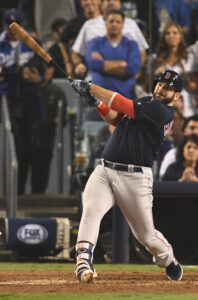
Selected by the Rangers in the 17th round of the 2007 draft, Moreland was in the big leagues just over three years later, making a strong impression with a .255/.364/.469 slash and nine homers in 173 plate appearances as a rookie. That strong showing set the stage for a torrid postseason effort in which a then 24-year-old Moreland batted .348/.400/.500 with a homer and four doubles, helping Texas advance to the World Series, where they fell to the Giants in a 4-1 series loss.
From that point forth, Moreland was entrenched as a big leaguer. He logged regular time in each of the next 11 seasons, serving as a slick-fielding, righty-mashing slugger in the middle of the order for the Rangers, Red Sox and — more briefly — Padres and Athletics. Along the way, Moreland won a Gold Glove for his work at first base with the Rangers and secured an All-Star nod with the Red Sox, who signed him as a free agent prior to the 2017 season and twice re-signed him in free agency — first for two years (2018-19) and then for another one-year deal (2020).
The 2018 season was a big one for Moreland not only due to his All-Star selection but also from a big-picture standpoint; while Moreland’s Rangers fell shy in consecutive World Series appearances in 2010-11, he reached the Fall Classic for a third time with the ’18 Red Sox and this time captured the championship that had twice eluded him in the past. As with the 2010 Rangers, Moreland played a big role in the Red Sox’ postseason success that year, slashing .294/.368/.529 in 19 plate appearances. That included a pinch-hit, three-run bomb at Dodger Stadium in the seventh inning of Game 4 of the World Series — a blast that jumpstarted a late-inning rally which saw Boston score nine runs en route to a comeback victory (video).
The Red Sox wound up trading Moreland to the Padres for a pair of prospects (Hudson Potts, Jeisson Rosario) during the shortened 2020 season. He scuffled through a small sample of 73 plate appearances before again heating up in the postseason, where he went 4-for-8 with a double. Moreland inked a one-year deal with Oakland that offseason but was limited to 82 games by ribcage and wrist injuries.
That proved to be the final season of Moreland’s playing career, and while it may not have ended with a flourish, it’s easy to look back and see a successful career — particularly for a 17th-round pick. Moreland retires as a lifetime .251/.318/.446 hitter in the regular season. He slugged 186 home runs, 219 doubles and nine triples along the way, while piling up 1,020 hits, 527 runs scored and 618 runs batted in. As previously mentioned, he won a Gold Glove and was named to the American League All-Star team. Between his solid arbitration numbers and a quartet of free-agent contracts, Moreland made about $36MM in salary over the course of his 12 seasons in the Majors.
And, while many players go the majority of their career without sniffing the postseason, Moreland’s teams reached the playoffs in an incredible eight of his 12 big league seasons. He added on another 150 plate appearances over the life of 52 postseason games, batting .259/.329/.422 during that time. Congratulations to Moreland on a fine career, and best wishes in whatever lies ahead in his post-playing days.
The Cardinals’ Backup Catcher Competition
The Cardinals wasted little time finding a replacement for franchise icon Yadier Molina following his retirement, inking longtime division rival Willson Contreras to a five-year contract in free agency. That solidifies the lion’s share of catching time in the immediate future, but there’ll at least be some competition with regard to who’ll back Contreras up in 2023 and perhaps beyond. While Andrew Knizner was Molina’s backup in recent seasons, MLB.com’s John Denton tweets that manager Oli Marmol “made it clear” that the backup job behind Contreras is a competition. Specifically, non-roster invitee Tres Barrera has made strong impressions early in camp.
Knizner, 28, has appeared in 160 games and tallied 478 plate appearances for the Cards over the past two seasons, but he’s managed just a .200/.294/.276 batting line in that time — about 33% worse than that of a league-average hitter (67 wRC+). Knizner has been good at controlling the running game in his career (29.8% caught-stealing rate), but he’s posted poor framing marks and been dinged with a minus-15 Defensive Runs Saved mark dating back to his 2019 MLB debut.
To his credit, Knizner was a well-regarded prospect and has a strong track record in the upper minors (.318/.368/.445 in Double-A; .283/.362/.453 in Triple-A). Scouting reports throughout his minor league tenure praised him as a bat-first option at catcher, but he’s yet to match those expectations. He’s also rarely had stable playing time in the big leagues, but with Contreras signed that’s unlikely to change.
As for the 28-year-old Barrera, he’s spent his entire career to date in the Nationals organization, receiving very limited looks in the Majors. He’s tallied just 51 games and 162 plate appearances, batting .231/.317/.315 with a pair of homers. In parts of six minor league seasons, Barrera has put together a .251/.332/.388 batting line, including a .228/.320/.356 slash in 402 Triple-A plate appearances.
Barrera has drawn average or better framing marks in his small MLB sample, but he’s had the opposite problem of Knizner, throwing out a woeful three of 34 attempted thieves on the basepaths (8.8%). However, he’s been far better in the minors over a much larger sample — 106-for-421, for a 25.2% rate — so there’s reason to expect him to improve on that currently unsightly number.
Not mentioned in Denton’s report but also in camp is top prospect Ivan Herrera. Once regarded as the heir-apparent to Molina, the 22-year-old Herrera made his big league debut in 2022 and went 2-for-18 with eight punchouts in 22 plate appearances. However, he also turned in a solid .268/.374/.396 batting line in Triple-A (111 wRC+) and has generally been an average or better bat at every minor league stop. He’s a career .276/.375/.415 hitter in parts of five minor league seasons and placed 75th among all prospects on FanGraphs’ rankings prior to the 2022 season.
With Contreras now installed behind the dish, Herrera’s main role with the Cardinals — at least in the short term — would appear to be a backup. He’s on the 40-man roster and has a minor league option remaining, so for now he can be sent to Triple-A to keep getting regular work in the event of an injury to Contreras. Longer term, there’s no longer a clear starting spot on the roster for Herrera. Having an overqualified backup isn’t a bad thing, though, and Contreras has enough bat to play some designated hitter as a means of keeping him fresh, which could theoretically open some additional playing time. There’s also the obvious likelihood that other clubs will come calling on Herrera’s availability, but to this point there’s been little indication the Cardinals have seriously entertained any overtures.
Reds Add Chase Anderson To Major League Camp
The Reds’ original minor league deal with Chase Anderson last month did not contain an invite to Major League spring training, but Cincinnati announced today that he’s now been added to big league camp. Furthermore, manager David Bell tells Reds beat writers that Anderson is in the mix for a spot in the big league bullpen or rotation (Twitter link via Mark Sheldon of MLB.com).
Anderson, 35, spent part of the 2022 season in the Reds organization as well, though he was hit hard in 24 innings, yielding 17 runs on 17 hits and 15 walks. He fanned 23 of 103 opponents (22.3%) but posted the worst walk rate of his career as well (14.6%). Anderson was also with the Triple-A affiliates for the Rays and Tigers in 2022, logging a combined 4.50 ERA in 80 innings.
The past three seasons, in general, have been a struggle for Anderson — at least at the MLB level. However, from 2014-19 he was a solid mid-rotation hurler, pitching to a combined 3.94 ERA in 857 innings between the D-backs and the Brewers.
The Reds have traded away most of their established pitchers in recent seasons and are now left with a staff short on experience. The rotation figures to be fronted by three young hurlers who just debuted last year in Hunter Greene, Nick Lodolo and Graham Ashcraft. The favorites for the final two spots are Luis Cessa and Luke Weaver. The former has primarily been a reliever in the majors and only recently made the switch to the rotation, while the latter has been a starter but struggled so much that he got bumped to a bullpen role last year.
In the bullpen, Tejay Antone and Tony Santillan seem slated to being the season on the injured list, potentially opening up a couple of spots back there. Anderson has been more of a starter than a reliever but could potentially help the Reds out by providing a veteran presence for either role.