
Trade Rumors Front Office Subscriber Chat Transcript
Steve Adams
- Greetings! Sorry for the abnormal Thursday FO chat and the suddenness of it. Just being a bit proactive since I may have some conflicts arise tomorrow and I want to be sure I get this week's second FO chat in!This will be in lieu of the standard Friday afternoon chat -- sorry if that causes anyone to miss it, but hey, maybe we get some folks who can't make our usual Mon/Fri ones in here.
I'll get going at 3pm CT today, but feel free to submit questions in advance, as always. We should be back on our usual Mon/Fri schedule next week.
- Hello!
- Let's get going
Michael
- Why don’t the Yankees or other teams chose not to offer deferred money in contracts? Sure works for the Dodgers.
Steve Adams
- In short ... they do! I would say the majority of teams throughout the league have leveraged deferrals. Even the Ohtani deal, the most extreme example, was a framework that was amenable to both the Blue Jays and Giants. (Not the Angels, notably)This is largely off the cuff, but here's a quick rundown of some teams' notable deferred contracts over the years...
Blue Jays (Cease, Santander), D-backs (Burnes, Ketel Marte) Royals (Sal Perez), Mets (Lindor, Devin Williams, Manaea), Reds (Homer Bailey, Nick Castellanos), Nationals (basically like every FA they've ever signed), Orioles (Chris Davis), Brewers (Yelich), Rockies/Cardinals (Arenado), Red Sox (Sale, Devers)
- I'm 100% spacing on plenty of names, but deferrals are extremely common, even if the Yankees haven't gone down that road really.
walterj23
- Cubs are rumored to be in on Gallen . How does he fit in the rotation and is it a smart investment?
Steve Adams
- Not convinced Gallen is enough of an upgrade over their in-house options to justify the price tag. If the Cubs really want another rotation splash, they should just sign Framber Valdez, who fits them better anyhow with that huge ground-ball rate in front of that Chicago infield defense.
Brewers
- We win 97 games, the most in MLB and we trade our ace. How can people say it is the Dodgers are what is wrong with baseball with a straight face.

Unlock Subscriber-Exclusive Articles Like This One With a Trade Rumors Front Office Subscription
- Access weekly subscriber-only articles by Tim Dierkes, Steve Adams, and Anthony Franco.
- Join exclusive weekly live chats with Anthony.
- Remove ads and support our writers.
- Access GM-caliber tools like our MLB Contract Tracker
Nationals Claim Gus Varland
The Nationals have claimed right-hander Gus Varland off waivers from the Diamondbacks, reports Chris Cotillo of MassLive.com. Arizona designated him for assignment last week after signing righty Taylor Clarke to a one-year deal.
Varland, 29, is the older brother of Blue Jays setup man Louis Varland. He missed most of the 2024-25 seasons due to injury, most notably a significant lat strain. He didn’t pitch in the majors this past season but logged 26 1/3 frames between the Dodgers and White Sox in 2024, turning in a 3.42 ERA, 23.5% strikeout rate and 7% walk rate. Varland sits 95-96 mph with his four-seamer and complements the pitch with an 88-89 mph slider and a rarely used show-me changeup that he’s tossed at only a 5% clip in the big leagues.
Varland has generally been hit hard in the upper minors but still throws relatively hard and shows a penchant for missing bats and limiting walks at a passable clip. Home runs have been a modest issue, but he’s also been plagued by lofty BABIP numbers and low strand rates. Assuming he’s healthy now, there’s little harm in a rebuilding club like the Nats taking a speculative look in hopes that he can hold down a bullpen spot. Varland still has a minor league option remaining, so even if he doesn’t break camp with the Nationals, they can send him to Triple-A Rochester without first needing to pass him through outright waivers.
Orioles Claim Weston Wilson, Designate José Suarez
The Orioles have claimed utilityman Weston Wilson off waivers from the Phillies and designated left-hander José Suarez for assignment, reports Ari Alexander of 7 News.
Wilson, 31, was designated for assignment by the Phillies last week when they re-signed J.T. Realmuto. He’s spent parts of the past three seasons in the majors with them, hitting a combined .242/.328/.428 with nine home runs in 245 trips to the plate. Almost all of that production came in 2023-24, however. Wilson hit just .198/.282/.369 in a career-high 125 plate appearances this past season but raked at a .288/.375/.490 clip the prior two seasons.
Wilson has never hit righties much but feasted on southpaws in ’23-’24 before taking a huge step back in ’25. Even with last year’s lack of production in platoon settings, he’s a career .250/.359/.475 hitter (130 wRC+) against left-handed pitching. Wilson also owns a solid .247/.339/.462 output in nearly 1700 plate appearances of Triple-A work.
He’s played all around the diamond, but despite occasional reps in the middle infield, Wilson is primarily a corner infielder/outfielder. He’ll give the O’s some righty-swinging depth at all four corner spots, but he’s also out of minor league options, which significantly hinders his chances of sticking on the roster. He’d need to break camp on the club or else be designated for assignment once again.
The Orioles are as aggressive as any team in the sport when it comes to claiming players off waivers and then trying to pass them through waivers themselves in order to cultivate depth. Suárez, who’s being designated for assignment, is a product of that very churn. It should come as no surprise to anyone if Wilson is designated for assignment in the near future, whenever the O’s make their next waiver addition or sign their next free agent. At that point, they’d hope to outright him and keep him in Triple-A.
Baltimore claimed Suarez just one week ago, plucking him off waivers from the Braves, who’d signed him to a $900K deal to avoid arbitration. He’s out of minor league options, so simply optioning him to Triple-A Norfolk was never in the cards. The O’s will hope to sneak him through waivers and stash him in Triple-A as depth. Suarez has enough service time to reject an outright assignment, but doing so would mean forfeiting the $900K base salary on the big league portion of his deal (and any notable minor league split he secured as well).
Injuries limited Suarez to 19 1/3 innings this past season, but he posted a sharp 1.86 ERA in that time — albeit with a less-encouraging 16-to-10 K/BB ratio. The 28-year-old has started 62 games and made another 44 relief appearances in a career that’s seen him amass 396 innings with a 5.30 earned run average. Suarez posted disastrous numbers with the Angels in 2020, 2023 and 2024 but was a strong swingman for them in 2021-22. During those two seasons, he logged 207 1/3 frames with a 3.86 ERA, 21.5% strikeout rate and 7.9% walk rate.
The Orioles can trade Suarez or place him on outright waivers at any point within the next five days. Waivers are a 48-hour process. His DFA will be resolved by next Thursday afternoon.
Latest On Red Sox’ Infield Pursuits
The Red Sox pivoted quickly after losing out on third baseman Alex Bregman, bringing lefty Ranger Suárez in to join an already deep rotation. They’re still in the market for help on the infield, and comments from chief baseball officer Craig Breslow at Suárez’s introductory press conference perhaps shed some light on the potential moves they could yet have in store (links (via Chris Cotillo of MassLive.com, Rob Bradford of WEEI and Jen McCaffrey of The Athletic).
“I don’t think there’s a question anymore that the identity of our team and the strength of our team is going to be our pitching and our ability to prevent runs,” Breslow said .
Breslow, unsurprisingly, wouldn’t comment directly on whether any subsequent additions are on the horizon. The third-year baseball ops leader acknowledged (via Bradford) that “teams call about some of our depth” but added that it’s “hard to tell” whether anything will come together in the near future, just given the sudden nature with which offseason negotiations can either accelerate or crumble at any given point.
Regarding the team’s in-house options, McCaffrey reports that the organization prefers Marcelo Mayer at third base rather than at second base. That’s not necessarily set in stone, and the Sox would presumably be open to Mayer at second base if an unexpected opportunity arose at the hot corner, but it’s nevertheless notable that that’s where they’d lean, all else being equal. Breslow emphasized that the Red Sox “will be very mindful of the defensive skill set” of any addition to the infield. McCaffrey suggests that the ideal target for the Red Sox would be a plus defensive second baseman.
That’s not great news for Eugenio Suárez, who has drawn some level of interest from Boston, Pittsburgh and the incumbent Seattle. (Surely, others are also in the mix to varying extents.) The 34-year-old is fresh off a 49-homer campaign and would absolutely give the Sox the power bat they said they were targeting early in free agency, but Breslow’s comments following the Bregman pivot seem more focused on defense, and Suárez was dinged for negative grades by both Defensive Runs Saved (-6) and Outs Above Average (-3) between the D-backs and Mariners this past season.
On the flip side, it only further strengthens the idea of Boston taking a genuine run at Cubs second baseman Nico Hoerner or, to a lesser extent, Cardinals second baseman Brendan Donovan. Hoerner is the premier second base defender in MLB and is earning $12MM in the final season of his contract. He hit .297/.345/.394 with a microscopic 7.6% strikeout rate and 29 steals this past season. The Cubs have at least heard out interested teams on Hoerner, particularly after signing Bregman, but they’d need immediate MLB-ready help on the pitching side of things to even consider moving him. It’s also feasible that they could listen on young infielder Matt Shaw, but he’d also come with a lofty ask given his six years of remaining club control.
Circling back for a third separate trade with the Cardinals, where Breslow’s predecessor Chaim Bloom is running baseball operations, would be highly unusual — but the fit is sensible. Bloom obviously is quite familiar with many of Boston’s farmhands, and the Cardinals are looking to max out Donovan’s trade value while he still has two seasons of club control left. Donovan is a left-handed hitter and isn’t as strong defensively as Hoerner, making him a lesser fit, but the multiple seasons of control and ability to pretty seamlessly slide to third base or left field — depending on team health/needs — is certainly appealing.
Payroll-wise, there shouldn’t be much off the table for the Sox. RosterResource pegs them at about $197MM in actual cash payroll, which is down from 2025’s mark and not close to the franchise-record $236MM Opening Day mark. Their $265MM luxury tax ledger is far heftier, thanks in large part to backloaded deals for Suárez, Roman Anthony, Brayan Bello, Kristian Campbell and Ceddanne Rafaela. They’re second-time payors who are currently in the second penalty tier, thus subjecting them to a 42% tax on the the next $19MM or so that they spend.
If the Red Sox were to add another $20MM or more to the CBT ledger, that’d bump the tax rate to 75% for subsequent additions and, more notably, drop their top pick in the 2026 draft by ten spots. That’s probably the primary deterrent to spending beyond that point, though with the possible exception of Eugenio Suárez, none of the potential infield targets in question would thrust Boston into the third tier of penalization anyhow.
Readers — Red Sox fans in particular — are encouraged to check out the three linked pieces in full, as each has more extensive quotes from Breslow on the team’s offseason goals and the team’s pursuit of (Ranger) Suárez.
Twins Sign Taylor Rogers
The Twins announced they’ve brought back old friend Taylor Rogers on a one-year deal. It’s reportedly a $2MM contract. Rogers, who’s represented by Frontline Athlete Management, spent the 2016-21 seasons in Minnesota, spending the latter three as their closer and earning an All-Star nod in 2021.

A reunion with the 35-year-old Rogers makes sense for a Twins club that’s in dire need of steady arms in the bullpen. While the left-hander isn’t close to the peak form he showed late in his original run with Minnesota, he pitched to a solid 3.38 ERA with an above-average 24% strikeout rate in 50 2/3 innings between the Reds and Cubs in 2025. Rogers’ 10.4% walk rate was the second-highest of his lengthy career and more than double the 4.3% mark he posted over his best three seasons as a Twin (2019-21), but he was a useful middle relief arm in both Cincinnati and Chicago this past season.
Beyond the decline in command, Rogers has seen a fundamental decline in the strength of his repertoire. He averaged 95.7 mph on his sinker and 84 mph on his slider back in 2021. In 2025, those pitches were carried respective average velocities of 92.7 mph and 78.4 mph. Accordingly, Rogers has seen a notable drop in his swinging-strike rate and significant upticks in his opponents’ contact rate.
Rogers was traded from the Twins to the Padres just prior to Opening Day in 2022 — a deal that brought Chris Paddack and Emilio Pagan back to Minnesota. (Brent Rooker was also shipped to San Diego in that deal, but he was cut loose by both the Friars and Royals before breaking out with the A’s.) He went on to sign a three-year, $33MM deal with the Giants, who traded him to the Reds late last offseason.
The Giants seemed to quickly sour on using Rogers in high-leverage spots. He collected a dozen holds and a pair of saves while pitching decently in year one of his contract but was moved to a middle-relief capacity the following season. In terms of leverage index, Rogers has worked primarily in low-leverage spots over the past two seasons. On the whole, the results over the life of that three-year contract were sound (3.16 ERA), but Rogers’ rate stats have faded steadily.
Even a lesser version of Rogers than the one remembered and beloved by many Twins fans will be an improvement to a Minnesota bullpen that was gutted at last year’s trade deadline. The Twins traded five relievers — Jhoan Duran, Griffin Jax, Louis Varland, Danny Coulombe, Brock Stewart — as part of a fire sale that netted a combination of MLB-ready young players (e.g. Mick Abel, Taj Bradley, Alan Roden) and well-regarded prospects (e.g. Eduardo Tait, Kendry Rojas). That slate of trades decimated what had been one of the best bullpens in the sport; Twins relievers posted the fourth-worst ERA in the sport following last year’s deadline.
There’s virtually no certainty in the Twins’ bullpen at present. Rogers immediately becomes the most experienced member of the group and, for now anyway, could be an option for high-leverage spots or even save opportunities. He’ll join Justin Topa, Cole Sands and Kody Funderburk (who excelled down the stretch following last year’s fire sale) as the only current members of the bullpen with even one full year of major league service time.
The Twins have a deep collection of young starters, several of whom could end up in the ‘pen over the long run, but there’s clearly room to add another veteran arm here — if not multiple arms. Rogers’ modest $2MM guarantee bumps Minnesota’s payroll to just under $109MM, per RosterResource’s estimates.
That’s around $25MM lower than last year’s mark, so even with ownership scaling back payroll, the front office should still have sufficient resources to bring in another arm. Hard-throwing righty Seranthony Dominguez is among the relievers to whom the Twins have reportedly spoken, while other yet-unsigned relief options of note include Michael Kopech, Nick Martinez, Tommy Kahnle, Paul Sewald and Coulombe.
Aaron Gleeman and Ken Rosenthal of The Athletic first reported the agreement and salary.
Braves Sign Sean Reid-Foley To Minor League Deal
The Braves have signed right-hander Sean Reid-Foley to a minor league contract, as first indicated on the MLB.com transaction log. There’s no invitation to major league camp on the righty’s deal.
The 30-year-old Reid-Foley was a second-round pick by the Blue Jays back in 2014 and ranked as a well-regarded pitching prospect for a couple years early in his pro career. He’s shown huge swing-and-miss ability but also persistent command troubles — all amid ongoing injury problems. Most notably, he underwent Tommy John surgery in 2022, which wiped out more than a calendar year. Reid-Foley also had multiple stints on the injured list due to a shoulder impingement in 2024.
In 131 2/3 innings at the major league level, Reid-Foley has posted a 4.10 earned run average while punching out 25.6% of his opponents. His strikeout numbers spiked in 2023-24, in particular, as he fanned nearly one-third of his opponents (backed by a 13.5% swinging-strike rate) — albeit in a small sample of 29 1/3 innings. His workload during those two seasons was cut short by that Tommy John rehab and the subsequent shoulder impingement.
Reid-Foley split the 2025 season between the D-backs and Mets organizations, pitching exactly 14 innings for each club’s Triple-A affiliate. He struggled considerably. In last year’s 28 frames, Reid-Foley was roughed up for a 7.07 ERA thanks to a glut of both home runs and walks.
Command has long been an issue for Reid-Foley. Even as he’s piled up big strikeout totals and rates in prior seasons, he’s struggled to keep runners off base due to his lack of precision. The 6’3″, 230-pound righty has walked a bloated 14.2% of his major league opponents and had similar struggles in parts of six seasons at Triple-A, where his career 13.7% walk rate is only marginally better than his major league rate.
With Atlanta, Reid-Foley doesn’t have a clear path to the majors — and wouldn’t even if he had a big league invite on his deal — given the Braves’ crowded, very veteran bullpen. He’ll be slated to open the season with Triple-A Gwinnett and could emerge as an option later in the year if the Braves incur injuries in the majors and/or if he can bounce back from last year’s dismal Triple-A results.
Mets Sign Luis García
3:55pm: The Mets have now officially announced the Garcia signing. Infielder Tsung-Che Cheng was designated for assignment as the corresponding move.
2:40pm: García has passed his physical, MLBTR has learned.
1:02pm: The Mets and veteran right-handed reliever Luis García are in agreement on a contract, reports Joel Sherman of the New York Post. It’s a one-year, $1.75MM major league deal that can be worth up to $3MM after incentives, per Bob Nightengale of USA Today. The deal is pending a physical. García is represented by agents Larry Reynolds, Rosie-Lopez Herrera and Noah Herrera.
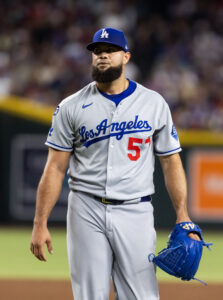
García, 39 next week, is a veteran of 13 big league seasons who’s pitched for eight clubs to this point in his career. He sports a lifetime 4.07 earned run average but has pitched better than that in the latter stages of his career; dating back to 2021, he carries a 3.86 ERA with even better marks from metrics like SIERA (3.55) and FIP (3.45). García split the 2025 season between the Dodgers, Nationals and Angels, combining for a 3.42 ERA. His strikeout rate (20.6%) and walk rate (11.2%) were both worse than average, but he induced grounders at a strong 49.7% clip and averaged just under 97 mph on his sinker.
While García almost certainly won’t sustain a minuscule 0.33 HR/9 mark and 4.7% homer-to-flyball ratio moving forward, there’s a good chance he can improve on last year’s command. He entered the 2025 season with a 7.8% walk rate across the four prior seasons, making last year’s 11.2% clip somewhat uncharacteristic. García’s roughly average swinging-strike and opponents’ chase rates would support a modest bump in strikeouts as well, though he’s now turned in a below-average strikeout rate in three consecutive seasons.
The Mets have now added three free agent relievers to the bullpen this winter, although García’s contract is obviously on a much smaller scale than those of presumptive closer Devin Williams (three years, $51MM) and top setup man Luke Weaver (two years, $22MM). García will slot into the middle-relief mix and figures to work lower-leverage situations than Williams, Weaver, A.J. Minter and Brooks Raley, although with 17 career saves and 117 holds, he’s no stranger to high-pressure settings.
With the Mets already in the top tier of luxury penalization, García’s $1.75MM base salary will actually cost the team $3.675MM. The additional $1.25MM worth of incentives, if unlocked in full, would cost the club a total of $2.625MM. Of course, if he maxes out his incentive package, it’ll likely because he’s pitched well enough to make the end-of-day $6.3MM price point well worth the cost.
Cubs, Trent Thornton Agree To Minor League Deal
The Cubs have agreed to a deal with right-hander Trent Thornton, as first announced on Instagram by his trainers at Tread Athletics. It’s a minor league deal with a non-roster invitation to spring training, MLBTR has learned.
Thornton, a Wasserman client, has pitched in parts of seven big league seasons, all coming between the Blue Jays and Mariners. The 32-year-old had more success with the latter, pitching to a combined 3.65 ERA in 140 2/3 frames from 2023-25. Thornton was sitting on a 4.68 ERA in 42 1/3 innings this past season, his numbers still recovering from a five-run meltdown early in the season, when he suffered a torn Achilles that ended his season.
Tread’s announcement on the deal noted that Thornton is “ahead of schedule” in his rehab from that season-ending injury. A source tells MLBTR he’s full-go off the mound already and will be healthy for spring training.
Thornton began his career as a starter with the Jays, taking the ball 29 times and tossing 154 1/3 innings as a rookie in 2019. He struggled in 2020 and was moved to the bullpen the following season. After a couple years of middling numbers in Toronto’s bullpen, Thornton landed in Seattle and turned his career around. He logged a 2.08 ERA with solid rate stats in 26 innings during the 2023 season and then tossed 72 1/3 innings with a 3.61 ERA the following season.
During that 2024 season, Thornton sat 95.5 mph with his heater but leaned far more heavily on a mid-80s slider, tossing it at a near-52% clip. Overall, during his Mariners stint, Thornton fanned 22.5% of opponents against a 6.6% walk rate. His 39.7% ground-ball rate was a bit lower than average.
Thornton won’t be guaranteed a spot in the Chicago ‘pen but will hope to follow the Brad Keller model, parlaying a non-roster deal into a relief job and a hearty free-agent contract next winter. The bullpen at Wrigley Field has become more crowded after offseason signings of Phil Maton, Hoby Milner, Hunter Harvey and Jacob Webb, as well as the re-signings of Colin Rea and Caleb Thielbar. Those six, along with holdover Daniel Palencia, will comprise the majority of Chicago’s bullpen. Thornton could compete for the final spot and, with a good showing in spring (or early in the Triple-A season) could be one of the first names up in the event of an injury.
Dodgers Designate Michael Siani For Assignment
The Dodgers announced this afternoon that outfielder Michael Siani has been designated for assignment. His spot on the 40-man roster goes to Kyle Tucker, whose record-breaking four-year contract has now been formally announced by the club.
Siani has bounced around the waiver circuit this offseason and now could find himself changing hands once again. The 26-year-old was an over-slot fourth-rounder by the Reds back in 2018 and has bounced from the Cardinals, to the Braves, to the Dodgers since the season ended. He’ll now be traded or placed on waivers within the next five days.
Siani has spent his entire playing career in the National League Central. He very briefly debuted with Cincinnati back in 2022 but made only 25 major league plate appearances with his original organization before being claimed off waivers by St. Louis in September of 2023. He was a frequently used, defensive-minded fourth outfielder with the 2024 Cardinals when he logged a career-high 334 plate appearances.
In parts of four major league seasons, Siani owns an anemic .221/.277/.270 batting line (58 wRC+) but good grades for his defense and baserunning. He’s played 1014 major league innings in the outfield — primarily in center but with fleeting corner appearances mixed in — and been credited with overwhelmingly positive marks from Statcast’s Outs Above Average (16) and from Defensive Runs Saved (7). He’s also gone 21-for-26 in stolen base attempts, giving him a success rate of nearly 81%.
The left-handed-hitting Siani still has a minor league option remaining. He could be a pickup for any club looking to bring in a speed-and-defense option off the bench — particularly one who can freely be shuttled between Triple-A and the majors.
Getz: White Sox Expect To Be “Very Active” Following Robert Trade
Last night’s trade of Luis Robert Jr. to the Mets trimmed $20MM from the White Sox’ 2026 budget. General manager Chris Getz spoke to reporters this morning and made clear that some of that money will be reinvested into other areas of the roster. Via MLB.com’s Scott Merkin, Getz was asked whether he felt his outfield was set and replied that he expects to be “very active” with the “financial flexibility” that will make it easier to bring in additional talent.
Even with Robert on the roster, there shouldn’t have been much of a financial argument for Chicago to feel its roster was set. RosterResource had the South Siders at about $87MM in terms of 2026 payroll prior to moving Robert. That’s now dropped to about $67MM. The White Sox’ franchise-record Opening Day payroll, set back in 2022, is $193MM. There was already ample payroll space available, but shedding the Robert deal still clearly gives Getz & Co. more leeway relative to whatever budget has been set by owner Jerry Reinsdorf.
Looking at the White Sox’ roster, there are plenty of areas for obvious improvement. Andrew Benintendi remains entrenched in left field, but the first three seasons of his five-year, $75MM contract haven’t gone as hoped for either the Sox or the player himself. Center field and right field should be up for grabs.
Luisangel Acuña, acquired in the Robert trade, could factor into the center field mix but could play in the infield, depending on the health and development of young players like Chase Meidroth and Colson Montgomery. Other outfield options include utilityman Brooks Baldwin, journeyman Derek Hill and former top Yankees prospect Everson Pereira. Top prospect Braden Montgomery could eventually push for a spot on the big league roster, but he’s still only played 34 games at the Double-A level and none in Triple-A. Further minor league seasoning is surely on the horizon for him.
Things are at least more tentatively set in the infield. Montgomery ripped 21 homers in 71 games as a rookie and batted .239/.311/.529 overall. Strikeouts are a concern, but he’s going to get a look as the regular shortstop. Meidroth played solid defense and got on base at a decent clip, albeit with virtually no power of which to speak. Miguel Vargas popped 16 homers and turned in league-average offense at third base. NPB star Munetaka Murakami will get the chance at first base after signing a surprising short-term deal in free agency. The Sox are generally set behind the plate with young backstops Kyle Teel and Edgar Quero.
Both the rotation and bullpen could use veteran reinforcements. The Sox brought lefty Anthony Kay back from Japan on a two-year deal and signed swingman Sean Newcomb, who’ll get the opportunity to win a rotation job this spring, but the rotation still lacks experience overall. Shane Smith, Sean Burke and Davis Martin will probably open the season alongside Kay and whichever of Newcomb or Jonathan Cannon claims the fifth spot — at least as things presently stand. The bullpen is even less settled. The Sox don’t have a reliever with even three years of major league experience. Lefty Tyler Gilbert is the only one on the 40-man roster who has even two years of service time (assuming Newcomb is viewed as more of a starter than a reliever at present).
Free agency has been largely picked over, particularly in the bullpen, but there are still some interesting names remaining. The ChiSox reportedly have some interest in Griffin Canning and would be a sensible landing spot for any veteran arm on a short-term deal. The market is littered with “old friends” for Sox fans, including Chris Bassitt, Aaron Civale, Jose Quintana, Lucas Giolito and Martin Perez. Rebound candidates in the rotation market include Walker Buehler, Nestor Cortes and Chris Paddack. On the relief side of things, veterans like Seranthony Dominguez, Paul Sewald, Tommy Kahnle, Danny Coulombe, Michael Kopech and Jose Leclerc are unsigned.
It’d be unwise to anticipate a major signing along the lines of Cody Bellinger or Framber Valdez — clear roster fit notwithstanding — given the current state of the team overall. The White Sox have grown the farm system and culled payroll over the course of the current rebuild but have yet to make an earnest win-now push. Either Bellinger or Valdez would require a franchise-record commitment, and we’re only a couple months removed from Getz suggesting he’s reluctant to even sign free agents to contracts that push beyond the 2026 campaign (though he’s since done so with Kay and Murakami — albeit only after the latter’s market failed to develop as hoped).
Perhaps a notable free agent like Zac Gallen will eventually pivot to a shorter-term contract, but he’d cost the White Sox their second-highest pick, which currently sits 41st overall. That seems like a price a rebuilding club would prefer not to pay — particularly for a short-term veteran on a contract with opt-out potential.
Of course, there are opportunities available beyond the free agent market. Trade candidates abound throughout the league — some of whom could be acquired at minimal cost if the White Sox opt to use their currently tiny payroll to absorb unwanted contracts. Jose Berrios, Kodai Senga, Taijuan Walker and Eduardo Rodriguez are among the names who could fit that description, and the Sox have an improved farm that could help them pull in more meaningful, controllable talent if Getz and his staff find an opportunity to their liking.
Speaking in broad terms, Getz acknowledged the wide-open slate of possibilities before him (again, via Merkin): “[Additions] could come in starting pitching, relievers, balancing right-handed vs. left-handed. So we are very open minded and excited in getting to work in being creative and bringing in that talent.”