
Rays, Daniel Robertson Finalizing Minor League Deal
The Rays are bringing utilityman Daniel Robertson back to the organization on a minor league contract with an invite to spring training, tweets Marc Topkin of the Tampa Bay Times. The two parties are in the process of finalizing the contract.
Robertson, 29 next month, hasn’t appeared in the Majors since a 50-game stint with the 2021 Brewers, but he spent the 2017-19 seasons as an oft-used bench piece for the Rays, batting .231/.340/.352 with 16 home runs, an 11.6% walk rate and a 25.2% walk rate in 831 plate appearances along the way. He’s most frequently appeared at second base in his big league career (816 innings) but does have ample experience at third base (601 innings) and shortstop (569 innings) in addition to brief looks in the corner outfield (38 innings) and at first base (eight innings).
Tampa Bay traded Robertson to the Giants for cash back in 2020, and he appeared in 63 games between San Francisco and Milwaukee from 2020-21. He didn’t hit much in a tiny sample of 114 plate appearances, however, and those struggles continued in Triple-A last year, when he hit a combined .219/.319/.395 between the top affiliates for the Twins and the Phillies.
Still, Robertson can play all over the diamond and has had some modest success both in Triple-A and in the Majors over the course of a decade-long professional career. He’s the second veteran utilityman signed by Tampa Bay in as many days, as the Rays also inked Charlie Culberson to a similar pact yesterday. The Rays will see a dozen of their players depart for the World Baseball Classic in early March, including infielders Jonathan Aranda, Wander Franco and Isaac Paredes, so having some extra veterans in camp will come with an additional benefit.
Rangers Still Open To Outfield Addition
It’s been a busy offseason for the Rangers in terms of pitching acquisitions, with Jacob deGrom, Nathan Eovaldi and Andrew Heaney joining the rotation alongside holdovers Jon Gray and Martin Perez (who accepted the team’s one-year, qualifying offer at the outset of free agency). Texas has also acquired veteran Jake Odorizzi in a deal with the Braves and brought in a slew of veteran players — pitchers and hitters alike — on non-roster deals with invites to spring training.
One glaring hole from the 2022 club that’s yet to be addressed, however, is the outfield. Adolis Garcia has one spot locked down (likely right field), and Texas seems content to turn center field over to fleet-footed, slick-fielding Leody Taveras. Left field remains a question mark, however, and although the team has been connected to names like Bryan Reynolds and old friend Jurickson Profar even since the calendar flipped from 2022 to 2023, the Rangers haven’t brought an outfielder into the mix on a guaranteed deal.
General manager Chris Young didn’t exactly strike an aggressive tone in discussing the void, but he did tell Evan Grant of the Dallas Morning News that his front office will “continue to monitor leading up to spring training and through spring training” to “see what the options are both internally and externally.”
It’s a fairly generic statement, admittedly, but Young’s comments come on the heels of several other front office leaders around the league all but proclaiming that their teams are done making additions to the roster (e.g. Giants, Mariners, Reds). Given that context, it’s at least somewhat notable that Young is still speaking about the possibility of bringing in talent from outside the organization.
Of course, the free-agent market for outfielders has largely been picked over, and the asking price for the aforementioned Reynolds — which Texas and other clubs have clearly deemed too high — isn’t likely to come down anytime soon. That said, Profar is still looking for an employer for the 2023 season, and the market has a handful of solid platoon bats who could be paired with what’s currently a hodgepodge of unproven youngsters and veteran rebound hopefuls. David Peralta, Robbie Grossman and Tyler Naquin are among the yet-unsigned possibilities.
As it stands, the Rangers have Josh Smith, Bubba Thompson, Mark Mathias, Brad Miller and Ezequiel Duran on the 40-man roster. Thompson is the only pure outfielder by trade — the others are infielders with some outfield experience — but he also needed a .389 BABIP to offset his 30.9% strikeout rate and get to a .265/.302/.312 slash in last year’s MLB debut. That clocked in 23% below-average, by measure of wRC+. As for the team’s non-roster invitees, they’ll give looks to Travis Jankowski, Clint Frazier, Joe McCarthy and Elier Hernandez.
The Rangers are already in line to shatter their previous franchise-record payroll, soaring past that old $165MM mark with what Roster Resource projects as a $196MM Opening Day outlay. Any addition at this point isn’t likely to be all that expensive, barring an unlikely scenario where the Rangers take on a contract of some note in a trade. It’s fair to wonder just how high ownership is willing to push payroll, but after spending nearly $825MM in free agency over the past two offseasons alone, it’s likely that they’d provide Young with the green light to make another modestly price addition (e.g. Profar, Peralta) if the front office determines that to be a prudent course of action.
Rangers left fielders ranked dead-last in the Majors last season in batting average, on-base percentage and slugging percentage, combining to post an almost unfathomably feeble .186/.253/.255 batting line. That translated to a 47 wRC+, or roughly 53% worse than league-average production after weighting for home park and the league run-scoring environment. Rangers left fielders also struck out at a 29.6% clip (28th in MLB), hit 11 home runs (27th), and managed only five doubles (last in the Majors) and no triples.
Padres Sign Yu Darvish To Extension
Feb. 10: Darvish will be paid a $6MM signing bonus and receive a $24MM salary in 2023, tweets Jon Heyman of the New York Post. He’ll then be paid $15MM in 2024, $20MM in 2025, $15MM in 2026 and $14MM apiece in 2027-28. The contract also contains a full no-trade clause, and any Cy Young win in the contract’s first five seasons would boost his 2028 salary by $1MM.
Feb. 9: The Padres have locked up a second key member of the rotation for the long haul. San Diego announced a new six-year contract with right-hander Yu Darvish that’ll keep him in the fold through the 2028 season. The deal reportedly guarantees the Wasserman client $108MM overall. Since Darvish had already been under contract for $18MM for 2023, it’s five years and $90MM in new money.

It’s a remarkable contract when considering Darvish’s age, although at an average annual value of $18MM, Darvish hardly needs to perform like an ace in order to continue to justify the price tag. That’s the same AAV the Phillies committed to Taijuan Walker this offseason, for instance, and over the life of the new contract, the AAV for high-end pitching only figures to continue to increase. That said, any long-term deal running through a pitcher’s age-41 season — Darvish will turn 42 about six weeks before the contract ends — is obviously teeming with risk.
As things currently stand, however, Darvish remains among the game’s best starters. The right-hander’s age-35 campaign saw him pile up 194 2/3 innings of 3.10 ERA ball with strikeout and walk rates (25.6% and 4.8%) that were far better than league average (particularly the walk rate). Darvish’s 95 mph average fastball was actually the second-best mark of his career, and those 194 2/3 fames were the second-highest single-season total he’s logged since signing with the Rangers back in 2012.
Darvish had Tommy John surgery back in March 2015, missing the entirety of that season and a substantial chunk of the 2016 campaign while recovering. His 2018 season with the Cubs, who originally signed him to the six-year $126MM deal on which he’d previously been playing, was limited to just 40 innings thanks to a triceps injury. Since that time, however, Darvish has been quite durable. He made all 12 of his starts during the shortened 2020 season, and in each of his past three 162-game seasons, he’s taken the hill at least 30 times.
The Padres had been set to lose both Darvish and Blake Snell to free agency following the 2023 season, with both heading into the final seasons of their respective contracts. Darvish, however, now looks likely to not only remain in San Diego but finish out his career as a member of the Padres under president of baseball operations A.J. Preller, who played a major role in signing Darvish when he was in the Rangers’ front office. Darvish joins San Diego native Joe Musgrove, who inked a five-year extension last summer, as the bedrock of the Padres’ rotation for the foreseeable future.
Keeping Darvish under contract is of particular benefit with the final two spots on the starting staff already going to relievers who’ll be making the shift to full-time starters in 2023: Nick Martinez and Seth Lugo. Both players have player options on their contracts for 2024, meaning if things go smoothly they’ll likely opt out of the contracts and test free agency on the heels of improved platform seasons. If the shift to starting roles don’t work out, then the Padres will obviously be seeking alternative options, be they in-house or external acquisitions. Either way, prior to the Darvish extension it was possible — if not downright likely — that San Diego would’ve entered the 2023-24 offseason in search of as many as four starting pitchers. That’s no longer the case.
Darvish carries extra importance from a long-term vantage point when considering the Padres’ dealings in recent years. Preller is among the sport’s most aggressive executives on the trade market, and with the Friars in an all-out, win-at-all-costs blitz, they’ve shown little concern with dismantling their once-vaunted farm system as a means of bringing in Major League talent. Trades of names like MacKenzie Gore, Chris Paddack, Cal Quantrill and Luis Patino have depleted the organization’s pitching pipeline, while the general attrition (injuries and/or poor performances) from the remaining prospects like Ryan Weathers, Adrian Morejon and Pedro Avila leave the system without much immediate help on the horizon.
Beyond the sheer need for long-term help in the rotation, there’s surely an element of financial creativity at play here. Darvish’s preexisting six-year, $126MM contract came with a $21MM luxury hit (based on the contract’s AAV). Since this new deal is being tacked onto the end of that old contract, it effectively becomes an 11-year, $216MM deal. That comes with a reduced luxury hit of $19.64MM. It’s not a major savings, but the Padres were right up against the third tier of luxury penalization, so any newly created breathing room is quite welcome. Once crossing into that third luxury tier, a team is penalized not only in the form of steeper tax rates but also by having their top pick in the next year’s draft dropped by 10 places.
The Darvish extension puts some distance between the team and that particularly undesirable slap on the wrist. It also makes things slightly easier for Preller and his staff if they hope to remain under that tax level but still want to create some wiggle room for in-season acquisitions on the trade market.
The deal is also heavily front-loaded, with Darvish’s 2023 salary jumping from $18MM to $30MM. That leaves $78MM to be distributed over the final five years. That’s of particular note given changes in the recent collective bargaining agreement, which stipulate that upon being traded, only the remainder of a player’s contract counts toward the new team’s luxury tax. Previously, the tax hit would remain the same. In other words, a potential trade of Darvish down the road will come with a considerably lighter luxury hit for an acquiring team by virtue of the contract’s front-loaded nature. Of course, with the full no-trade protection he’s been granted, that could very well end up a moot point.
If the $273MM tax barrier remains a hard stopping point for the Padres once the season’s underway, that’ll likely require the Padres to convince a trade partner to include some money or take on a contract in return. Nonetheless, this extra bit of space could prove useful in accommodating more complementary additions like bullpen help or added bench depth. Alternatively, it could provide necessary space to eventually select the contract of a non-roster veteran with a salary of modest note — someone like reliever Craig Stammen or catcher Pedro Severino, for instance.
As we saw with the Padres’ 11-year signing of Xander Bogaerts — and their reported overtures toward Aaron Judge and Trea Turner — the team is clearly comfortable paying a player into his early 40s if it means lowering the overall luxury bill. All of those offers, Bogaerts and Darvish included, featured annual rates comfortably shy of where the players might have otherwise landed on a more conventional structure. Darvish’s newly added $90MM in guarantees, for instance, could perhaps have been obtained over a three- or certainly a four-year deal had he opted to play out the final season of his contract and return to free agency. Instead, he’ll effectively take three- or four-year money and spread it out over a five-year extension of his contract in order to remain with a contending team and a setting where he’s clearly comfortable.
Those benefits, in the end, are generally secondary. The Padres clearly had a desire to extend Darvish, and likely agreed upon the requisite dollars before determining the length of the contract and, thereby, the extent to which they could tamp down their tax bill. The end result is that Darvish and Musgrove will continue to form a formidable one-two punch in the years to come. And while paying Darvish in his age-40 and age-41 seasons might prove an untenable outcome, it also perhaps creates some present-day savings in terms of luxury taxes that will make those final years a bit easier to stomach.
AJ Cassavell and Mark Feinsand of MLB.com first reported Darvish and the Padres had agreed to a six-year, $108MM contract. Feinsand reported it was a front-loaded deal that contained a $30MM salary for 2023.
Latest On Yuli Gurriel, Astros
Longtime Astros first baseman Yuli Gurriel remains one of the most recognizable names on the free-agent market, but it’s been a generally quiet offseason with regard to interest in the former batting champion and Gold Glove winner. The 38-year-old has drawn interest from the Marlins, Twins and incumbent Astros, but Miami reportedly backed down in its pursuit of Gurriel late last month. Newly minted Astros GM Dana Brown spoke to the Houston media yesterday and touched on Gurriel, effusing praise but also rather candidly suggesting they may not have enough playing time for him following the signing of Jose Abreu earlier in the winter (Twitter link, with video, via Mark Berman of Houston’s FOX 26).
“The tough part about Gurriel is he’s so well-liked,” said Brown. “In the clubhouse, he was outstanding. The players love him. The coaches love him. When we signed Abreu, it makes it tough to go out and get Gurriel because now it’s more of a want as opposed to a need. I think you have to stick with the needs before you jump into the wants, because if you get into the wants, now you have too much of a surplus in one area and it causes weaknesses in other areas. We love the player and would love to have him back, but we have to figure out if there’s any room where he can get at-bats with Abreu here.”
The apparent lack of a market for Gurriel isn’t a total surprise, as he’s coming off a down season in which he slashed just .242/.288/.360 with a career-low (for a full season) eight home runs inn 584 plate appearances. Gurriel won a batting title as recently as 2021, when he hit .319/.383/.462, and he took home a Gold Glove at first base that season as well. However, even his typically strong defensive grades took a nosedive in 2022; Gurriel rated as a negative in the eyes of Defensive Runs Saved (-2), Ultimate Zone Rating (-0.2) and Statcast’s Outs Above Average (-9).
The downturn at the plate wasn’t merely a matter of poor fortune, either. While Gurriel was plagued, to an extent, by a .266 average on balls in play that falls well shy of his career .294 mark, some of that is attributable to a decline in the quality of his contact. His line-drive rate dipped to a career-low 18.5%, for instance, and Statcast measured his average exit velocity (88.2 mph), hard-hit rate (35.4%) and barrel rate (just 1.9%) at career-low levels. Furthermore, while Gurriel’s strikeout rate remained excellent relative to league-average 22.4%, his 12.5% mark was nonetheless a career-worst. That’s a testament to his superlative bat-to-ball skills, but the handful of extra punchouts still further dragged down his overall production.
Brown’s comments Thursday certainly don’t sound as though they’re a portent for a reunion with Gurriel, however beloved he may be in the clubhouse and throughout the organization as a whole. With Abreu taking the lion’s share of time at first base and a corner outfield/designated hitter mix slated to feature productive hitters like Kyle Tucker, Yordan Alvarez and Michael Brantley, it would indeed be tough to bring Gurriel aboard as anything more than a bench bat. But while the Marlins were weighing Gurriel as an option to split time between first base, second base and third base, it’s doubtful every team would consider him for such a versatile role. With the exception of two emergency innings at third base in 2021, Gurriel has played exclusively as a first baseman or designated hitter dating back to Opening Day 2020.
The Twins have more of an opening at first base, where longtime prospect Alex Kirilloff is the favorite for at-bats right now. Kirilloff, a former first-round pick and top-20 prospect in the sport, has just a .251/.295/.398 slash in 387 big league plate appearances, but that production has been adversely impacted by wrist injuries that have required a pair of surgeries. He’s a career .323/.378/.518 hitter in the minors and only just turned 25 this offseason, so Minnesota undoubtedly hopes he can be a big part of the outlook moving forward. Gurriel would give them a right-handed complement to the left-handed Kirilloff and provide some insurance should injuries again sideline him, but Minnesota’s bench is deep in right-handed bats as it is and signing Gurriel would likely mean optioning Trevor Larnach (another former first-rounder and top prospect who’s been beset by injuries) to Triple-A.
Clear fits for Gurriel aren’t exactly plentiful at the moment, though there are some teams that could potentially work him into a part-time first base/DH role (e.g. Rangers, Reds, to name a couple). It’s certainly possible that some spring injuries will open the door for a new opportunity once camps begin to get underway, however. At this point, that might be what it takes for Gurriel to find a semi-regular role.
Phillies, Jose Alvarado Avoid Arbitration
9:19am: Alvarado and the Phillies settled at $3.45MM, tweets Daniel Alvarez Montes of El Extra Base.
8:55am: The Phillies and left-hander Jose Alvarado have agreed to a one-year contract, per a team announcement. That avoids an arbitration hearing that had been scheduled for later today. Alvarado, a client of the OL Baseball Group, had filed for a $3.7MM figure, while the Phillies submitted a $3.2MM sum.
The 27-year-old Alvarado (28 in May) originally came to the Phils from the Rays in a three-team deal that saw Philadelphia send lefty Garrett Cleavinger to the Dodgers. It was one of the first swaps president of baseball operations Dave Dombrowski made upon being hired in Philadelphia and has proven to be a key pickup, as Alvarado has emerged as one of the team’s best relievers.
Over the past two seasons, the flamethrowing Alvarado has averaged 99.6 mph on his sinker and fanned 32% of his opponents while working to a 3.71 ERA. That mark is weighed down a bit by a 2021 season in which Alvarado walked an alarming 18.7% of his opponents, but he pared that number down to 11.2% in 2022 while also upping his strikeout rate to a mammoth 37.9%. This past season’s 3.18 ERA is sharp to begin with, but metrics like FIP (1.92) and SIERA (2.37) feel he’s been even better.
Alvarado has saved seven games for the Phillies and piled up another 38 holds over the past two seasons, cementing himself as one of the organization’s most trusted options in high-leverage settings. He’ll join a high-octane group of relievers in the late innings under manager Rob Thomson, including righty Seranthony Dominguez and offseason acquisitions Gregory Soto and Craig Kimbrel.
The 2022 season will be a crucial one for Alvarado, who’ll be entering his final season of club control. Given his age, elite velocity, strikeout prowess and outstanding ability to miss bats (16.7% swinging-strike rate; 37.3% opponents’ chase rate), Alvarado could position himself as one of the top relievers on the market next offseason with another year like his 2022 campaign.
Walks have long been an issue for the left-hander, but Alvarado had the seventh-highest strikeout rate, fifth-best average velocity on his primary fastball (sinker) and 13th-best swinging-strike rate of the 347 pitchers who pitched at least 50 innings in 2022 (starters included). He also induced grounders on a huge 56.1% of the batted balls against him and yielded just 0.35 homers per nine innings. Command issues notwithstanding, Alvarado has the arsenal to become one of the game’s top relievers.
Aaron Ashby Unlikely To Be Ready For Opening Day Due To Shoulder Fatigue
FEBRUARY 9: Skipper Craig Counsell implied Ashby was unlikely to be ready for Opening Day when speaking with reporters this evening (via McCalvy). Noting that the current soreness was related to the issue that affected him late last summer, Counsell said the southpaw “had to take a pretty big step back as far as rest.”
FEBRUARY 8: Brewers lefty Aaron Ashby will be behind schedule this spring as he’s dealing with shoulder fatigue, general manager Matt Arnold announced today (Twitter link via Adam McCalvy of MLB.com). The team didn’t provide a timetable for when Ashby might be ready, but it’s a suboptimal start to the talented southpaw’s 2023 season.
Ashby, 24, opened the 2022 season in the Milwaukee bullpen, made a pair of spot starts in April and had forced his way into the rotation by late May. Through the season’s first two months, the 2018 fourth-rounder had pitched 40 innings of 2.70 ERA ball with a 29.8% strikeout rate.
After a shaky three-start showing in June, however, Ashby hit the injured list due to inflammation in his left forearm. He returned after a minimal two-week absence but was placed back on the 15-day IL in late August, this time due to inflammation in the same left shoulder where he’s now experiencing fatigue. Ashby did make it back to the mound in late September, when he tossed 11 innings with a 3.27 ERA and a 10-to-4 K/BB ratio in his final four appearances.
On the whole, Ashby’s first full big league season resulted in 107 1/3 innings of 4.44 ERA ball with a strong 26.5% strikeout rate, an elevated 9.9% walk rate that he’d surely like to pare back, and a massive 56.9% ground-ball rate. The Brewers, undeterred by Ashby’s June injury, signed the lefty to a five-year, $20.5MM contract extension in late July. The deal contains a pair of club options that can push the former top prospect’s guarantee to $40.5MM, plus a series of incentives and escalators that can bring the deal to a maximum of $53MM over a seven-year term.
Based on that investment, the Brewers clearly feel that Ashby can be a part of the team’s rotation over the long haul, but his current injury status clouds that outlook in the immediate future. Milwaukee already had a crowded rotation that might’ve left Ashby on the outside looking in, as Corbin Burnes, Brandon Woodruff, Freddy Peralta, Eric Lauer and veteran Wade Miley give the club a solid quintet on which to lean this year. Right-hander Adrian Houser gives them a sixth strong option, too, even with Ashby sidelined to begin camp.
Uncertainty surrounding Ashby makes the Brewers’ rotation depth all the more critical. After the club signed Miley, it seemed safe to wonder whether the out-of-options Houser might emerge as a trade candidate, given both his $3.6MM salary and his ostensible drop to seventh on the rotation depth chart. Such a scenario seems less likely now, although Milwaukee still has further depth options on the 40-man roster, including Bryse Wilson (also out of minor league options), Jason Alexander, Janson Junk, Ethan Small, Gus Varland and Tyson Miller. Non-roster pitchers in spring training include righty Colin Rea and prospect Robert Gasser, acquired from the Padres last July.
It’s also fair to wonder whether any questions surrounding Ashby’s shoulder will prompt the Brewers to look for some further left-handed help. If the plan was to begin the season with Ashby in the bullpen, thanks to the veteran quintet ahead of him on the rotation depth chart, then a potential trip to the injured list for Ashby leaves Hoby Milner as the Brewers’ only lefty in the bullpen. There are several notable lefty relievers available in free agency, however; Andrew Chafin, Matt Moore, Brad Hand, Will Smith and Zack Britton are among the many yet-unsigned relievers with considerable big league experience.
Brown: Astros Pursuing Extensions With Multiple Core Players
It’s been two weeks since the Astros tabbed now-former Braves vice president of scouting Dana Brown as their new general manager, but Brown has wasted little time in embarking on extension talks with Houston’s core players. The GM acknowledged earlier this week that he’s had talks with Kyle Tucker‘s camp in the run-up to Tucker’s arbitration hearing, but there are far more players under consideration, it seems.
Brown told reporters today that he’s held discussions not only with Tucker and his reps but also with the agents for right-hander Cristian Javier. Furthermore, the newly minted GM publicly expressed interest in extending third baseman Alex Bregman and second baseman Jose Altuve (Twitter links, with video, via Mark Berman of Houston’s FOX 26). Both Bregman and Altuve are currently signed through 2024. Bregman told the media today that Brown and agent Scott Boras have already had conversations.
The Astros haven’t necessarily been shy about extensions under prior front office regimes, but it’s a change of pace to hear the team’s top baseball operations executive so candidly discuss such matters. Houston has, in recent years, brokered long-term deals with Bregman (five years, $100MM), Altuve (five years, $151MM), Yordan Alvarez (six years, $115MM) and Lance McCullers Jr. (five years, $85MM) before each reached free agency.
That said, the team hasn’t been quite so aggressive with players early in their pre-arbitration years — a recent hallmark of the Braves organization which Brown just departed. Outside of Altuve’s original four-year, $12.5MM extension, the Astros have generally waited until their players have accrued three or more years of service time, hence the heftier nature of the annual salaries on those previously mentioned long-term pacts. That, it seems, is something Brown endeavors to change (Twitter links via Chandler Rome of the Houston Chronicle).
“I think [owner Jim Crane] and I are going to meet somewhere in the middle,” said Brown. “I’m more on the aggressive side of signing them, he may be more on the conservative side, but he’s very open to getting these players signed.” Brown also added that he’s told Crane to “fasten his seatbelt — it’s time.”
It’s likely music to the ears of Astros fans, who saw substantial roster turnover from the 2017 World Series team to the 2022 World Championship club. Bregman, Altuve, McCullers, Yuli Gurriel and Justin Verlander — who’s since departed via free agency — were the only players on both rosters. While that quintet eventually signed new contracts (Verlander opted out of his most recent deal to again test free agency; Gurriel took a one-year extension with a club option covering 2021-22), none of the team’s newly emerged core has put pen to paper on a long-term arrangement just yet.
Brown spoke with particular optimism regarding the progress made on a potential long-term deal with Javier, the 25-year-old right-hander who has emerged as one of the team’s best starting pitchers. Javier logged a career-high 148 2/3 innings this past season, notching an outstanding 2.54 ERA and fanning a massive 33.2% of his opponents against a respectable 8.9% walk rate. He’s controlled for another three seasons and, like Tucker, is working to avoid a looming arbitration hearing. Javier filed for a $3.5MM salary to the Astros’ counter of $3MM, but it seems there’s a decent chance the two parties work out a lengthier arrangement. “We feel really good about that one,” Brown stated.
Contract extensions for arbitration-eligible players like Javier tend to be based heavily on precedent, which at least provides some potential clues to where the numbers could eventually fall. Recent examples of long-term deals for pitchers with between three and four years of service time (Javier has three exactly), include Aaron Nola‘s four-year, $45MM deal from 2019 (which contained a club option for a fifth season) and, more recently, Sandy Alcantara‘s five-year, $56MM extension (with an option for a sixth season).
On a rate basis, Javier stacks up favorably to both Alcantara and Nola at the time of their respective extensions; he’s arguably been even better, with a lower ERA (3.05 to Nola’s 3.35 and Alcantara’s 3.49) and a considerably better strikeout rate (30.9% for Javier, 25.7% for Nola, 21.2% for Alcantara). However, both Nola and Alcantara had amassed vastly higher innings totals heading into their first arbitration seasons. Javier has just 304 1/3 career innings (partly due to ample time in the bullpen before a more permanent move to the rotation in 2022), whereas Alcantara had 487 1/3 innings and Nola had piled up a massive 569 frames.
That workload discrepancy is the primary reason that Javier’s projected $3.3MM salary (via MLBTR contributor Matt Swartz) falls well shy of the $4.5MM at which Alcantara was projected prior to his extension and the $6.6MM at which Nola was projected. That’s not to say Javier can’t find a way to top the guarantees on either deal, but his camp would need to secure a larger AAV on the free-agent years or perhaps agree to a sixth guaranteed year in order to do so, as his arbitration seasons are inherently going to be valued at lesser rates than those recent comps.
Turning back to a broader look at today’s press conference, Brown didn’t tip his hand on every player with whom he plans to pursue a contract extension, though it’s easy enough to look up and down the roster and identify a few speculative candidates. Shortstop Jeremy Pena has just one year of MLB service under his belt. He’s two years from reaching arbitration and another five years from free agency. Lefty Framber Valdez and righty Luis Garcia, meanwhile, are three and four seasons away from reaching the open market, respectively. Looking to how the Braves operated, it also wouldn’t be a shock to see top prospects like Hunter Brown (0.89 ERA in a 20 1/3 inning MLB debut last year) approached about long-term arrangements fairly early on in their MLB tenures.
Not every overture to sign a player will be successful, of course, but Brown made clear that one of his philosophical beliefs about the job is to correctly identify core players early on and aggressively present scenarios intended to keep them with the club beyond their base six years of control.
“I want you guys to know if a guy walks out of here, it’s not going to be because we didn’t go after him aggressively,” said Brown. “We’re trying to sign players.”
Rays, Charlie Culberson Agree To Minor League Deal
The Rays and veteran utilityman Charlie Culberson have agreed to a minor league contract, reports Marc Topkin of the Tampa Bay Times (via Twitter). He’ll be in big league camp this spring and compete for a bench job.
Culberson, 33, brings a veteran right-handed bat and a versatile glove that can be deployed at just about any position to the Rays’ spring training roster. He spent the 2022 season with the Rangers, batting .252/.283/.357 with a pair of homers and six doubles in 124 trips to the plate. Those are roughly in line with Culberson’s career numbers in parts of 10 big league seasons (1311 career plate appearances), though the former No. 51 overall draft pick has been far better against lefties in his career. Through 582 plate appearances versus southpaws, Culberson is a .285/.313/.431 hitter with 11 homers, 37 doubles and five triples.
The only positions that Culberson hasn’t played at the MLB level are center field and catcher. He’s appeared at all four infield spots, played both outfield corners and even logged 7 1/3 innings of mop-up duty on the mound — incredibly allowing just one run on seven hits and three walks (with one strikeout) in that time. The bulk of his work has come at third base (1033 innings), but Culberson has at least 425 career innings at shortstop, second base and in left field as well.
The Rays already have a heavily right-handed big league roster and, as usual, are brimming with multi-position players who could fill a utility role. That makes the right-handed-hitting Culberson something of an odd fit, although there’s certainly no harm in bringing a seasoned veteran in on a no-risk deal — particularly one whose personality and clubhouse presence is so well regarded. Still, with the out-of-options Vidal Brujan all but a lock to make the roster and myriad other infield/outfield options on the 40-man (e.g. Isaac Paredes, Jonathan Aranda, Taylor Walls, and top prospects Curtis Mead and Greg Jones), Culberson could have a tough time cracking the Opening Day roster.
NPB’s Orix Buffaloes Could Post Ace Yoshinobu Yamamoto Following 2023 Season
There’s a “strong belief among MLB teams” that the Orix Buffaloes of Japan’s Nippon Professional Baseball will post ace Yoshinobu Yamamoto following the 2023 season, reports Joel Sherman of the New York Post. If that indeed comes to pass, he’d be the second high-profile player set to be posted from the top professional leagues in Asia next offseason; the Kiwoom Heroes of the Korea Baseball Organization are also expected to post reigning KBO MVP Jung Hoo Lee, as covered here last month.
Yamamoto will command more attention between the two. The 24-year-old Yamamoto is already a four-time NPB All-Star and has taken home both the Pacific League MVP Award and the Sawamura Award (Japan’s equivalent to MLB’s Cy Young Award) in each of the past two seasons. It’s not hard to see why.
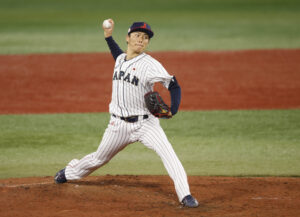
Dating back to Opening Day 2021, Yamamoto has compiled a comical 1.54 ERA while striking out 27.7% of his opponents against a tiny 5.5% walk rate. He’s averaged better than 7 1/3 innings per start along the way, hurling 10 complete games and six shutouts, and only yielded an average of 0.30 home runs per nine innings pitched. One of those shutouts was a no-hitter this past June. In just shy of 800 career innings in NPB, Yamamoto possesses a 1.84 ERA that already looks inhuman on the surface and becomes all the more impressive when you factor in his age. He debuted as an 18-year-old back in 2017, and that season’s 2.35 ERA is the highest mark of his career.
Scouts to whom Sherman spoke raved about Yamamoto’s potential in the big leagues, touting a heater that sits mid-90s and reaches the upper-90s, a “plus-plus” (i.e. 70-grade) splitter, a “world class” curveball, a quick delivery to the plate and the athleticism to field his position well. One evaluator speaking to Sherman tabbed him a “full [scouting] grade” (on the 20-80 scale) ahead of right-hander Kodai Senga, who signed a five-year, $75MM deal with the Mets this offseason.
Brandon Tew of Sports Info Solutions took a deep dive into Yamamoto’s no-hitter back in June, profiling the right-hander’s “electric” arsenal, highlighting some of his pitch grips and release points while providing some general scouting insight into the tantalizing young righty. The Athletic’s Keith Law wrote back in December that Yamamoto “might be a No. 1 starter in MLB and doesn’t have any of the reliever concerns that Senga carries,” suggesting that he could more than double Senga’s guarantee when he’s eventually posted.
That all depends on health and performance in 2023, of course. Yamamoto has been healthy and dominant to this point in his career, but all players (pitchers, in particular) are one major injury away from changing their outlook. Any scouting report on Yamamoto will point out that his slight frame — he’s listed at 5’10” and 170 pounds — is of at least come concern to big league scouts. There’s simply very little track record for pitchers of this size both holding up physically with a starter’s workload and performing at an elite level. That’s not to say Yamamoto can’t be an exception, of course; the general consensus seems to be that he has a very good chance of doing just that.
Yamamoto is expected suit up for Team Japan in next month’s World Baseball Classic, just as Lee is likely to be on South Korea’s team. MLB fans looking ahead to next offseason might want to keep an extra-close eye on the pair and on the WBC in general, as the tournament provides North American fans some rare access to not only see foreign talents of this caliber, but also to see them against high-end opposition.
If Yamamoto is indeed posted for MLB teams, he’ll be subject to the NPB-MLB posting system, which grants all 30 teams equal rights to negotiate with the player but subjects the signing team to what, in the case of Yamamoto, could be a particularly steep posting fee. The MLB club that eventually signs Yamamoto would need to pay the Buffaloes a fee that is equal to 20% of the contract’s first $25MM, plus 17.5% of the next $25MM and 15% of any dollars committed thereafter.
On, say, a $150MM contract — a purely speculative number for the sake of this example, and one that could ultimately prove low — that’d come out to a $24.375MM posting fee that needs to be paid out to the Buffaloes in addition to the money guaranteed to Yamamoto. Any additional earnings that come via contractual mechanisms like performance incentives, club options, etc. would also be subject to that 15% once the money becomes guaranteed.
If the Buffaloes opt not to post Yamamoto next winter, they could do so again following the 2024 season as well. NPB players aren’t eligible for unrestricted free agency until they’ve compiled nine years of service time. Yamamoto, despite his youth, is entering his seventh season in NPB.
Guardians Sign Zack Collins To Minor League Deal
The Guardians announced Thursday that they’ve signed catcher Zack Collins to a minor league deal and invited him to big league camp this spring. Cleveland also confirmed its previously reported minor league deals/non-roster invites with lefty Phillip Diehl and righty Dusten Knight.
Collins was the tenth overall pick by the White Sox back in the 2016 draft. As with most players who have that type of draft pedigree, he once ranked among the sport’s consensus top-100 prospects, though he’s yet to establish himself as a viable big leaguer on either side of the ball.
The 28-year-old Collins has logged big league action in each of the past four seasons, batting a combined .185/.295/.327 with an impressive 12.9% walk rate but a troubling 33.6% strikeout rate through 459 plate appearances. He split the 2022 campaign between Toronto and Pittsburgh, slashing .155/.231/.320 in 108 trips to the plate. He’s notched a much more impressive .248/.377/.495 output in 570 plate appearances at the Triple-A level, but strikeouts have been an issue there as well (26.9%).
Defensively, Collins has graded out poorly in the Majors, recording negative framing marks and being dinged for -23 Defensive Runs Saved in just 608 career innings behind the plate. He’s also thrown out a below-average 18% of base thieves at the MLB level, though his 32% caught-stealing rate in the minors is far better and comes in a much larger sample. Each of the White Sox, Blue Jays and Pirates have given Collins some time at first base in the Majors, and he’s tallied another 304 innings there in the minors, so there’s a bit of versatility in his skill set.
Mike Zunino, signed to a one-year, $6MM deal earlier in the offseason, is slated to shoulder the bulk of the Guardians’ workload behind the plate in 2023, at least in the season’s early stages. His backup, however, remains something of an open question. Top catching prospect Bo Naylor is viewed as the organization’s catcher of the future, but the team may prefer that he heads to Triple-A and logs regular playing time early in the year. Bryan Lavastida is the only other catcher on the 40-man roster, though minor league veterans like Cam Gallagher and Meibrys Viloria will join Collins in camp as non-roster invitees.
That gives Cleveland as many as four catchers who could open the season in Triple-A Columbus, although Collins’ ability to mix in at first base could help them carry at least three backstops on the Triple-A roster. Still, it seems likely that at least one of the NRIs in camp could be cut loose at some point. For now, there’ll be some healthy competition to determine who opens the year as Zunino’s backup.