
Twins’ Owner: Team “Absolutely Not” Going Into Rebuild
Anyone who’s even loosely followed the 2021 MLB season knows it’s been a disaster year for the Twins. The American League Central’s last-place club, Minnesota has already traded Nelson Cruz, will likely trade Michael Pineda in the coming days and will surely have interest in several other key pieces. That said, given the team’s payroll space, cost-controlled group of young hitters, solid farm system and other factors, it’s long seemed likely they’ll aim to reload and be competitive again in 2022. Owner Jim Pohlad effectively confirmed that this week in an interview with Dan Hayes of The Athletic.
Asked by Hayes whether this nightmarish season could “change your direction to rebuilding,” Pohlad replied emphatically: “Absolutely not. We want to be in the win window all the time. We expected that to be the case this year.”
Obviously, that didn’t happen for the Twins, who have weathered absences for Byron Buxton, Mitch Garver, Luis Arraez, Max Kepler, Kenta Maeda, Pineda and others. More problematic has been that nearly all of Minnesota’s offseason free-agent expenditures (the since-traded Cruz being a notable exception) have failed to live up to expectations.
The subsequent 43-58 record has positioned the Twins as a clear deadline seller, but Pohlad’s comments today reinforce what was already widely expected: this isn’t likely to be an “everything must go” fire sale. The team is receiving interest in players controlled beyond 2021, most notably top starter Jose Berrios, but the asking price on him has reportedly been high and focused on near-MLB assets. Given Pohlad’s comments and the fact that the Twins zeroed in on Triple-A pitchers in last week’s Cruz trade — both Joe Ryan and Drew Strotman could be options in Minnesota this year — that focus on big-league-ready talent is to be expected.
All of this is particularly worth considering as the clock ticks toward Friday’s 4pm ET trade deadline. For instance, MLB.com’s Jon Morosi tweeted this morning that the Twins have had some early talks on Kepler. That was already known after multiple reports linked Kepler to the Yankees last week, but the broader question of Kepler’s general “availability” (or lack thereof) should be considered in conjunction with ownership’s comments. Were the Twins looking to completely start over, players like Kepler, Berrios, Taylor Rogers (prior to his finger injury) and others would be strong trade candidates. As it stands, they’re more long shots with weighty asking prices.
It’s also possible that some of the impending free agents who do seem like locks to move could be flipped and then again pursued in free agency. Pineda, who pitched well tonight in what could be his final start with the Twins, told reporters after the game that Minnesota has come to feel like home and he hopes to remain (Twitter link via MLB.com’s Do-Hyoung Park). A trade still seems overwhelmingly likely, but Hayes tweets that Pineda would have interest in returning for 2022 and beyond even if (or when) he is ultimately traded this week.
Cubs Trade Andrew Chafin To A’s
The A’s have made their first upgrade of deadline season, acquiring veteran left-handed reliever Andrew Chafin from the Cubs in exchange for minor league outfielder Greg Deichmann and minor league right-hander Daniel Palencia, per a club announcement.
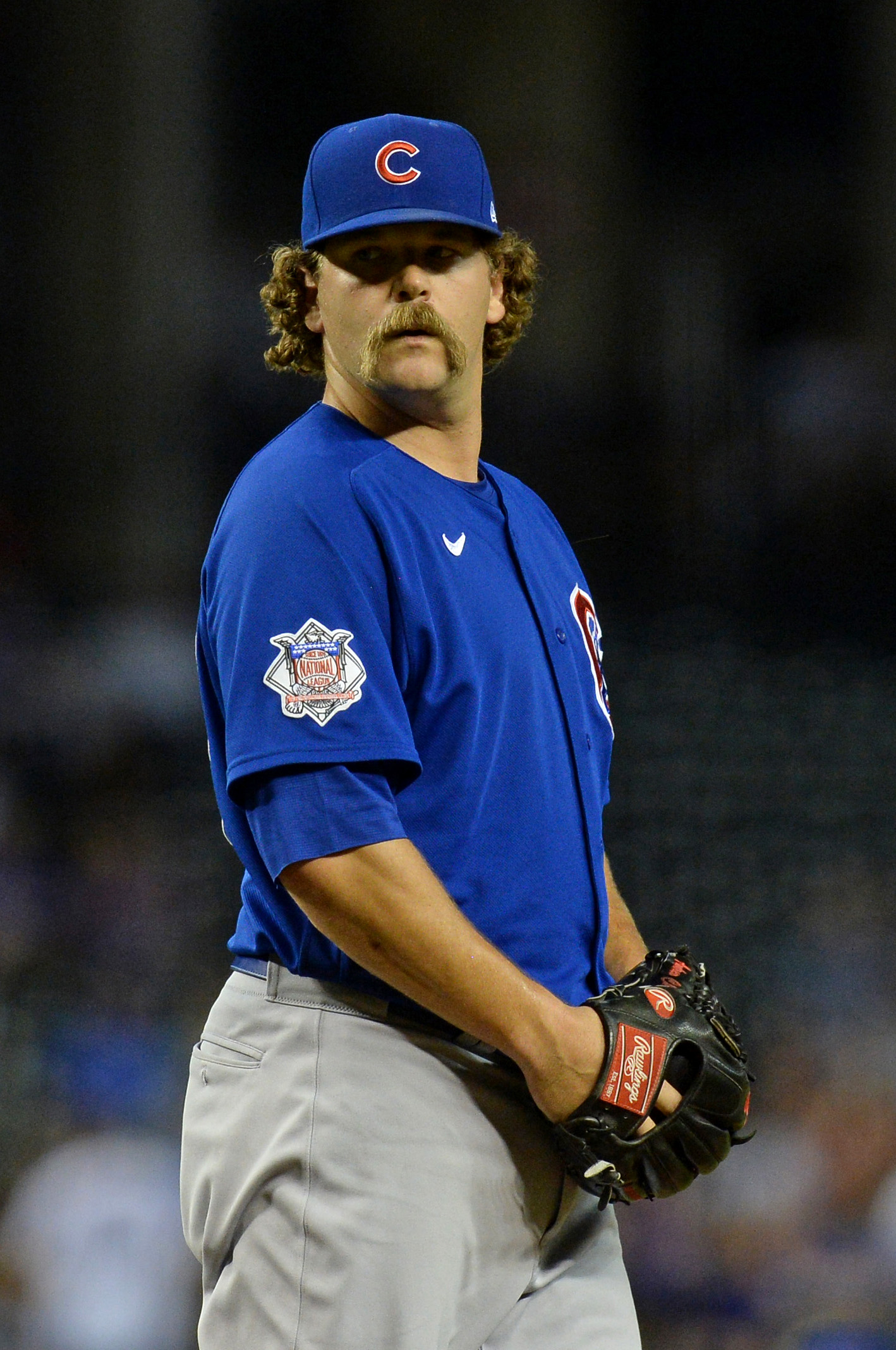
Chafin, 31, inked a one-year, $2.75MM deal over the winter. It contains a $5.25MM mutual option for the 2022 season ($500K buyout), though it’s exceedingly rare for both parties to pick up their side of a mutual option. Generally speaking, if the team exercises their end of a mutual option, it’s because the player has performed well enough to make that price a bargain, which prompts the player to decline and return to free agency. If the player picks up his half, it’s usually due to poor performance or injury, and the team will subsequently decline its half. More often than not, mutual options are simple accounting measures. The A’s likely view him as a rental reliever for the remainder of the season, though the option technically creates the chance that he’ll return.
The Cubs have consistently taken a frugal approach to their offseason bullpen construction in recent years, but Chafin is one of their better low-cost signings. The longtime D-backs lefty has a 2.06 ERA with a 24.7 percent strikeout rate, an eight percent walk rate and a 50 percent ground-ball rate in 39 1/3 innings. It’s the best season of what has quietly been a solid career for Chafin, who carries a 3.14 ERA and strong 24.9 percent strikeout rate through 314 innings at the big league level.
Oakland relievers rank tenth in the Majors with a collective 3.78 ERA and 12th with a 4.16 FIP, and adding Chafin will only further strengthen an already solid group. There’s value beyond simply adding another effective arm, though. Jake Diekman has been the only consistent left-handed presence in manager Bob Melvin’s bullpen, so adding Chafin to the bunch will give the A’s an easier time matching up late in games. Athletics relievers also have the second-lowest combined strikeout percentage of any bullpen in MLB (20.6 percent), and Chafin will give them a solid boost in that department.
From a payroll standpoint, the A’s are only on the hook for about $835K of Chafin’s remaining base salary, although there are other factors to consider. The mutual option comes with a $500K buyout, and Chafin’s deal also comes with $500K worth of incentives that are fairly easy to unlock. He can earn a quartet of $125K bonuses based on games pitched, beginning with his 50th appearance of the season. Chafin, who has pitched in 43 games already, would then earn an additional $125K for each of his 55th, 60th and 65th appearances of the year.
Deichmann is a solid get in a deal for a rental reliever, as he’s a largely MLB-ready prospect enjoying a strong 2021 season in Triple-A. The 2017 second-rounder ranks ninth among Oakland farmhands at FanGraphs and at MLB.com, and he’s currently batting .300/.432/.449 (127 wRC+) in 257 plate appearances with Las Vegas.
There have been concerns about his bat-to-ball skills in the past — understandably so after he whiffed at a 34.1 percent clip in Class-A Advanced in 2018 — but Deichmann’s 23 percent punchout rate so far in Triple-A is the lowest of his career. Those strikeouts are also part of the expected package for a player with this type of pop; FanGraphs’ Eric Longenhagen pegs Deichmann’s raw power at a 70 (on the 20-80 scale), but he’s yet to unlock that prodigious power in games. Deichmann’s career-high in home runs is 11, and he’s connected on four so far in 2021. It’s worth noting that he’s had some injuries that might’ve impacted that, including a broken hamate bone and a shoulder injury sustained on a diving catch (link via MLB.com’s Jim Callis).
Palencia, 21, signed as an amateur free agent out of Venezuela in 2020 and has only recently made his professional debut. He’s tossed 14 1/3 innings for the Athletics’ Low-A affiliate in Stockton, yielding 11 runs on 17 hits, six walks and three hit batters with 14 strikeouts. FanGraphs pegs him 12th in the Oakland system, noting that his plus fastball and above-average breaking ball impressed in a short look this spring before he was sent out of camp. Obviously, with last year’s scratched minor league season and the fact that Palencia only signed in early 2020, scouts haven’t gotten long looks at him, though the Cubs clearly saw enough to pique their interest despite some rough surface-level numbers in Stockton.
MLB.com’s Mark Feinsand had first indicated that the Cubs were closing in on a trade involving Chafin (Twitter link). Ken Rosenthal of The Athletic reported the A’s were the second team and that Deichmann was going back to Chicago (Twitter links). The Chicago Tribune’s Meghan Montemurro first reported Palencia’s inclusion.
Cubs Not Actively Shopping Kyle Hendricks
The Cubs have already traded Joc Pederson and are expected to make several more deals before Friday’s 4pm ET trade deadline, but MLB.com’s Mark Feinsand reports (via Twitter) that top starter Kyle Hendricks is “definitely not being shopped” and that the team would only move him if approached with a strong offer.
Cubs president of baseball operations Jed Hoyer effectively confirmed earlier this month that an 11-game losing streak had pushed his club into seller territory. At the time, Hoyer spoke generally about keeping an open mind to moves “that can help build the next great Cubs team.” So while the Cubs may not be calling all 29 other teams and actively trying to find a taker for Hendricks, it stands to reason that a team could put together an offer that makes Hoyer & Co. consider parting with its longest-tenured pitcher.
Hendricks, 31, signed a four-year, $55MM contract extension with a fifth-year option a couple springs ago and is still not halfway through that deal. He’s owed $14MM both in 2022 and 2023, and the contract contains a $16MM option with a $1.5MM buyout. As of this writing, he’s owed $5.19MM through the end of the 2021 season, bringing the total sum he’s still guaranteed on the contract to $36.19MM (including the option buyout).
It’s a more-than-reasonable price to pay for a starter of Hendricks’ caliber. The right-hander ranks 16th in the Majors with 117 1/3 innings pitched this season and ranked third among all MLB pitchers in total innings during last year’s shortened season (81 1/3 frames). He’s worked to a solid 3.61 ERA so far in 2021 and continued to demonstrate some of the game’s best command. Hendricks has walked 4.5 percent of his opponents, and while his 17.5 percent strikeout rate is below both the league average and his career average, he’s had success for his entire career in spite of below-average strikeout numbers.
Hendricks has been one of the game’s most durable starters since breaking in with the Cubs back in 2014. He’s only had two trips to the injured list in his big league career: a 16-day absence for shoulder inflammation back in 2019 and a six-week absence due to tendinitis in his hand back in 2017. He made 12 starts during last year’s 60-game schedule, averaged 30 per year from 2015-19 and is on pace for another full slate of games in 2021, having already taken the hill on 20 occasions.
An oddity in today’s game, Hendricks averages just 87.4 mph on his fastball and hasn’t cracked even an 89 mph average since the 2014 season. He relies on that aforementioned command, strong ground-ball tendencies and gobs of weak contact to find his success. There are few pitchers like that in 2021, but he’s made it work for several years now. He probably won’t ever repeat 2016’s 2.13 ERA and third-place Cy Young finish, but Hendricks carries a 3.33 ERA through 714 1/3 innings in the five seasons since that third-place finish.
If the Cubs aren’t presented with a sufficient offer for Hendricks over the next four days, it seems likely that he’ll again see his name kicked about the rumor circuit over the winter. Hoyer has pushed back in the past on the notion that the Cubs are going to engineer a full-scale rebuild, but between the offseason Yu Darvish deal and Hoyer’s acknowledgment of change on the horizon this summer, it’s clear that Chicago is taking at least something of a step back. Hendricks would have even wider appeal this winter than he does at the deadline, when more clubs are viewing themselves as contenders and when many have reset the luxury-tax concerns that are currently hamstringing their front offices’ ability to acquire players on notable salaries (e.g. Hendricks).
Blue Jays Select Kirby Snead, Designate Jacob Barnes
The Blue Jays announced Monday that they’ve selected the contract of left-hander Kirby Snead to the Major League roster and opened a spot by designating right-hander Jacob Barnes for assignment.
Snead, 26, was Toronto’s tenth-round pick back in 2016 and has steadily put together an impressive minor league track record. He reached Triple-A for the first time in 2019 and would’ve gotten another look there in 2020 were it not for the minor league season being shut down. He’s made the most of his second go-around there in 2021, however, pitching to a 2.01 ERA and 2.28 FIP with a huge 35.5 percent strikeout rate, a 9.9 percent walk rate and a 57.4 percent ground-ball rate in 31 1/3 frames.
Outside of one lone start earlier this year, when he worked two innings (presumably as an opener), Snead’s entire career has been spent working in relief. He’s a pure bullpen addition for the Jays — one who’s never had an ERA north of 3.88 at any level to this point in his career.
Barnes pitched nine innings for the Jays after coming over from the Mets and whiffed 30 percent of the 43 batters he faced, but he also walked six and hit another (16.3 percent). Now 31 years old, Barnes looked at one point like he might be a long-term piece in the Brewers’ bullpen. From 2016-18, he racked up 147 1/3 innings of 3.54 ERA ball with solid strikeout numbers, but he hasn’t been able to recreate that production. From 2019-21, Barnes has 78 1/3 big league innings split among five different teams, but he’s pitched to just a 6.55 ERA.
Barnes keeps getting chances with other clubs, likely owing to a combination of his fastball velocity, spin, chase rate and a strong minor league track record. There’s clearly some tantalizing aspects of his repertoire — you don’t see five teams take a chance on a 40-man roster spot for a player if there isn’t — but he hasn’t found consistency over the past few years. The Blue Jays will now have until Friday to trade Barnes, otherwise they’ll have to place him on outright waivers or release him.
Pirates Trade Clay Holmes To Yankees
The Yankees announced Monday that they’ve acquired right-handed reliever Clay Holmes from the Pirates in exchange for minor league infielders Diego Castillo and Hoy Jun Park. Catcher Rob Brantly, who’d been on the roster as a Covid-related replacement player, has been returned to Triple-A Scranton/Wilkes-Barre to open a roster spot. Jason Mackey of the Pittsburgh Post-Gazette reported about a minute before the announcement that Holmes was being traded to the Yankees for a pair of minor leaguers (via Twitter).
Holmes, 28, has spent the season in the Pittsburgh bullpen and pitched to a 4.93 ERA, a 23.3 percent strikeout rate, a 13.2 percent walk rate and an enormous 72.8 percent ground-ball rate. To offer a bit more context on that percentage, Holmes has pitched 42 innings this season and surrendered just 16 fly-balls (three of which were pop-ups) and 15 line drives. He’s induced 83 grounders.
Control has been an obvious issue for Holmes, who has always hit four batters and thrown five wild pitches, but he’s only allowed 10 home runs in 119 2/3 career innings (0.75 HR/9). He’s also among the game’s best at limiting premium contact so far in 2021 (86th percentile average exit velocity; 91st percentile barrel rate).
Holmes has yet to reach arbitration but will be arb-eligible for the first time this winter. He’s making scarcely more than the league minimum and can be controlled all the way through the 2024 season if he ultimately sticks in the bullpen. He’ll have to prove his mettle with the Yankees at the Major League level, however, as he’s out of minor league options and cannot be sent down without first being exposed to waivers.
For much of his minor league career, Holmes worked as a starting pitcher. He’s made just four starts in the Majors, however, against 87 bullpen appearances. Because he can’t be sent down, it’s unlikely that the Yankees would try to stretch him out at the MLB level. He’ll head into the bullpen for now, where he can give them some length. Holmes has worked several outings of one-plus or two innings at a time and topped 30 pitches in an appearance on a few occasions.
Ground-ball rate looks to be something the Yankees have zeroed in on in recent years, at least with regard to their bullpen. Zack Britton is one of the most prolific ground-ball pitchers in history, and the current Yankee bullpen sports five more pitchers who’ve tossed at least 10 innings of relief this year with a grounder rate of 50 percent or better: Albert Abreu, Luis Cessa, Jonathan Loaisiga, Mike King and Wandy Peralta. At a time when the league is working to curb the use of foreign substances that increase the spin rate on four-seam fastballs and sliders, it’s perhaps not coincidental that the Yankees are seeking out another extreme ground-ball pitcher who relies on a low-spin sinker.
Yankees fans may be surprised to see Park included in this deal after he’s posted a .327/.475/.567 slash with 10 homers, nine doubles, a triple and eight stolen bases in 223 Triple-A plate appearances so far. The 25-year-old was recently called to the big league roster for the first time but only got one appearance before being sent back out.
Notably, however, the Yankees outrighted Park to Triple-A, however, indicating that he went unclaimed on outright waivers at the time of the move. The Pirates (or another club) could’ve had Park for free at that point, were they willing to dedicate a 40-man roster spot to him. The 29 other clubs passed. The Bucs will now pick up his rights (without having to dedicate a 40-man spot) and hope he can continue to build on that breakout showing he’s enjoyed so far in Triple-A this year. FanGraphs’ Eric Lonenhagen ranked Park 31st among Yankees farmhands prior to this deal, noting that his ability to play a viable shortstop an control the strike zone make him a “high-probability utility infield piece.”
Castillo, 23, had a history as a light-hitting middle infielder with premium contact rates before his production exploded in a pitcher-friendly Double-A setting this year. He’s hitting .277/.345/.504 (127 wRC+) with 11 home runs, 18 doubles and eight steals in 249 plate appearances on the year. Castillo has walked at a career-best 8.4 percent against a 13.4 percent strikeout rate. He’s another shortstop-capable infield prospect to add to the middle levels of the Pirates’ system — one whom Longenhagen ranked 21st in the Yankees’ system at the time of the swap.
Indians Claim Alex Young, Transfer Aaron Civale To 60-Day IL
The Indians on Monday claimed lefty Alex Young off waivers from the Diamondbacks and opened a spot on the 40-man roster by transferring right-hander Aaron Civale from the 10-day injured list to the 60-day injured list, according to a club announcement. Young was optioned to Triple-A Columbus.
Young, 27, was designated for assignment in Arizona last week after struggling over the past two seasons. The former second-round pick (No. 43 overall) had a solid rookie season back in 2019 when he tossed 83 1/3 innings of 3.56 ERA ball over the life of 17 appearances (15 starts). Young’s 20.3 percent strikeout rate that season wasn’t especially impressive, but he had strong control (7.7 percent walk rate), kept the ball on the ground at an above-average 48.1 percent clip and was generally stingy when it came to allowing hard contact. It was a generally promising debut for a 25-year-old with a strong draft pedigree.
Things haven’t panned out as hoped since that time. Young has pitched 88 innings since that time, mostly out of the bullpen (36 relief appearances, nine starts). His strikeout rate and walk rate have each gone in the wrong direction, but only by about one percent. However, Young has begun yielding hard contact in droves while surrendering more fly balls; as one might expect, he’s been immensely homer-prone since those trends began. Over his past 88 frames, Young has served up 22 home runs en route to a 5.83 ERA.
While Young’s time with the D-backs didn’t go as the organization (or the player himself) hoped, he’ll get a fresh start with a new club that has a reputation for pitching development. Young can be optioned both in 2022 and 2023, so he gives Cleveland a potential depth arm for the foreseeable future — or a potential piece to the big league pitching staff if he can indeed right the ship following his change in environs.
The move to shift Civale from the 10-day injured list to the 60-day now means that he won’t return until at least late August. We’re just over one month past Civale’s initial placement on the 10-day injured list due to a finger sprain. He was initially projected to miss four to five weeks, so the fact that he’s now shelved for a minimum of two months suggests that his rehab from that injury has not been as swift as initially expected.
With Civale and reigning Cy Young winner Shane Bieber on the shelf, the Indians have been relying on Zach Plesac, Triston McKenzie, Cal Quantrill, J.C. Mejia, Eli Morgan and Sam Hentges to start. Despite the team’s aforementioned knack for churning out quality young pitchers, this particular group has struggled for the most part. Plesac only just returned from a broken thumb and hasn’t been as sharp as usual. Quantrill has a solid enough 3.84 ERA on the season, but he has a 5.11 ERA as a starter and a 1.88 mark as a reliever. Young could give Cleveland another option to add to that carousel, depending on how he’s used.
Rays Trade Rich Hill To Mets
The Mets, in dire need of some rotation help, have found some of the rotation depth they’ve been seeking. The team announced Friday that it has acquired lefty Rich Hill from the Rays in exchange for minor league catcher/infielder Matt Dyer and veteran right-hander Tommy Hunter (who is currently on the injured list). Right-hander Robert Stock, out with a hamstring strain, was transferred to the 60-day injured list in order to open a spot on the Mets’ 40-man roster.
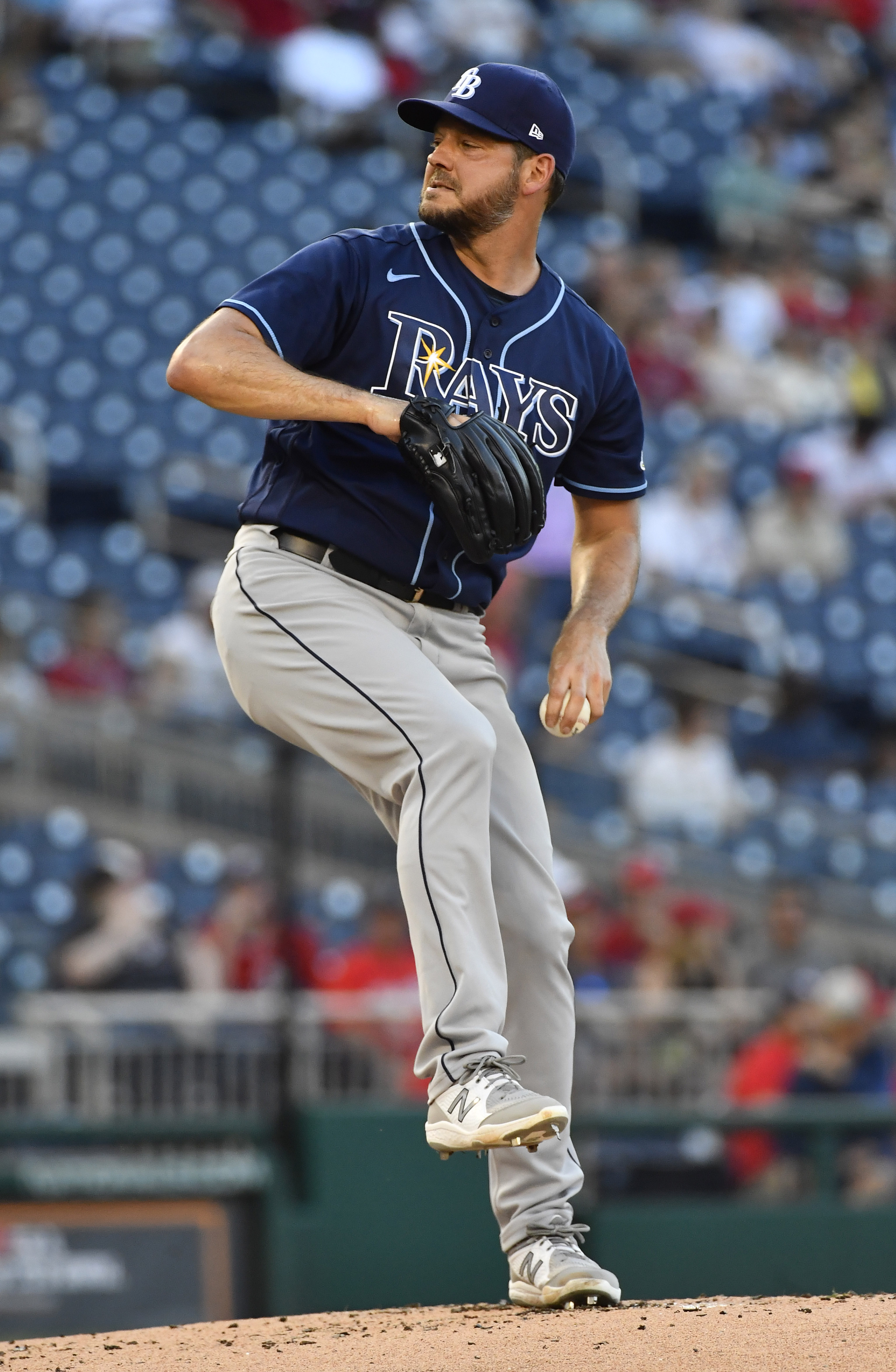
The swap will come as a surprise to many, given the Rays’ place in the standings and last night’s acquisition of Nelson Cruz, but it serves as another reminder that in today’s game, many clubs can’t be simply boxed into strict “buyer” or “seller” categories.
Hill, 41, has pitched to a 3.87 ERA through 95 1/3 innings so far in 2021, but he’s also struggled rather considerably since mid-June. In his past seven starts, he’s tallied just 33 1/3 innings and yielded 20 runs on 34 hits and 16 walks. Seven of those hits have left the yard, and Hill’s 28 strikeouts (19.3 percent) in that time represent a pretty pronounced decline.
Overall, Hill is sitting on a 5.40 ERA and 5.25 SIERA since June 12. As the New York Post’s Joel Sherman observes (Twitter link), he’s seen his spin rates drop considerably in the aftermath of MLB’s crackdown on foreign substances. I’d add that it may not be coincidental that Hill began incorporating a changeup (ideally a low-spin offering) into his pitch mix in early June. The 41 changeups he’s thrown over his past eight starts are already the most he’s thrown in a season since 2009.
Despite his recent struggles, Hill gives the Mets a much-needed veteran arm to plug into the back of an ailing rotation — one with more upside and a much greater track record than recent options they’ve tried. New York has yet to receive an inning from Carlos Carrasco or Noah Syndergaard in 2021, and depth options like Joey Lucchesi, Jordan Yamamoto and Thomas Szapucki are all sidelined through season’s end. Ace Jacob deGrom hit the injured list recently due to a forearm issue, and fifth starter David Peterson is out with an oblique strain.
With all of those injuries piling up, the Mets have leaned heavily on righties Marcus Stroman and Taijuan Walker, who’ve both exceeded expectations and pitched brilliantly so far in 2021. Young righty Tylor Megill has also fared well in his first five big league outings, but the Mets had a clear and pressing need to get some sort of stability into the rotation. Hill can provide that, and if he can return to his prior levels of production it could prove a difference-making move for the Mets.
From the Rays’ vantage point, it’s possible that Hill had simply fallen out of favor as one of the organization’s preferred rotation options. Tampa Bay has Ryan Yarbrough, Shane McClanahan, Luis Patino, Michael Wacha and Josh Fleming as alternatives on the big league roster, and there are several depth options behind them in Triple-A (including ballyhooed righty Shane Baz). It’s also eminently possible that the Rays will add another name of note to the rotation over the next week as they load up to chase the Red Sox in a competitive AL East title picture.
Hunter’s inclusion in the swap is seemingly as a financial counterweight to Hill. The New York Post’s Mike Puma recently indicated that it was doubtful Hunter, who has been out since May with a back strain, would be able to return in 2021. Hunter’s $2.25MM salary is a bit lighter than Hill’s $2.5MM salary, so the Rays are saving a fairly nominal $99K by agreeing to take on his contract in return.
The Rays do come away with an interesting prospect in the 23-year-old Dyer, whom the Mets selected in the fourth round of the shortened 2020 draft. Dyer has spent the season with the Mets’ Class-A affiliate and shown some concerning swing-and-miss tendencies (30.9 percent strikeout rate), but he’s also walked at a high clip and shown good power. He’s hitting .194/.329/.452 with seven homers, seven doubles, a pair of triples and six steals, and Dyer has spent time at catcher (65 innings), at first base (80 innings), at third base (66 innings) and in right field (18 innings) so far this season.
Baseball America’s scouting report on Dyer prior to last year’s draft suggested that he had a plus arm, average sped and the potential to be an average or better defender at as many as five positions, including catcher, which sounds like a player tailor-made for the Rays organization. This year’s strikeout concerns underscore that he’s far from a sure thing to hit enough to realize that potential, but he’s a somewhat interesting name to add to the system in return for a struggling pitcher on an expiring contract.
While it’s not a trade many would’ve expected to see come together today, there’s some sense to it for both sides. The Mets are plugging a hole in their rotation with a veteran arm who’ll practically be free from a financial standpoint, while the Rays are turning to younger options on the starting staff and acquiring a super-utility lottery ticket while dealing from a position of depth.
MLB.com’s Anthony DiComo first reported (via Twitter) that the two sides had engaged in discussions regarding Hill. Fansided’s Robert Murray reported that a deal was close. Jon Heyman of MLB Network first reported an agreement had been reached. Joel Sherman of the New York Post reported the other players involved in the deal (Twitter links).
Marlins Select Deven Marrero, Designate Andrew Bellatti
The Marlins have designated right-hander Andrew Bellatti as part of a series of roster moves, per a team announcement. Miami also placed infielder/outfielder Jon Berti on the 7-day concussion IL, selected the contract of infielder Deven Marrero and recalled catcher Chad Wallach from Triple-A.
Bellatti, 29, pitched in two games with the Fish and wound up yielding five earned runs in just 2 1/3 innings of work. That marked his first Major League appearance since a 2015 cup of coffee with the Rays, during which time he’d pitched to a 2.31 ERA with some more dubious peripheral marks. He might’ve gotten another look at some point in 2016 even in spite of a low strikeout rate and lofty walk rate, but shoulder troubles derailed much of his season. He pitched a total of just 14 innings that year and was eventually designated for assignment.
From there, Bellatti bounced to the Orioles on a minor league deal but was again derailed by injury. He never pitched for an O’s affiliate and had to parlay a stint with the then-independent Sugar Land Skeeters into another minor league look with the Yankees. He joined the Marlins on a minor league deal back on June 1 and quickly ascended to the Majors once he posted a 2.03 ERA and 16-to-5 K/BB ratio in 13 1/3 innings. The Marlins will have a week to trade Bellatti, pass him through outright waivers or release him.
As for the other moves announced today, the loss of Berti will strip the club of some speed and defensive versatility for the time being. The 31-year-old’s bat has taken a nosedive in 2021 — .210/.311/.313 after hitting .269/.362/.388 in 2019-20 — but Berti’s jack-of-all-trades skill set has still surely been appreciated by skipper Don Mattingly. He’s played every position on the diamond other than catcher and first base so far in 2021.
Marrero, a 2012 first-round pick of the Red Sox, will return for a third stint with the Marlins. He’s played in six games with the Fish since 2019 and gone 0-for-8 in that very minimal opportunity. Marrero is known as a solid defensive infielder, but his bat never developed as hope. He’s a .193/.244/.276 hitter in 351 MLB plate appearances and a .233/.291/.338 hitter in parts of seven Triple-A campaigns.
Mariners Designate Rafael Montero For Assignment
The Mariners announced Friday that they’ve designated right-hander Rafael Montero for assignment. His spot on the active and 40-man rosters will go to righty Casey Sadler, who has been reinstated from the 60-day injured list.
Acquired from the Rangers in an offseason trade that sent a pair of 18-year-old prospects — righty Jose Corniell and infielder Andres Mesa — to the Rangers, Montero opened the season as the closer in Seattle. He struggled early in the year and eventually relinquished that ninth-inning job to breakout righty Kendall Graveman.
Montero never found much consistency, even in a setup capacity, but his results dating back to the end of June have just become too much for the club to overlook. Montero has not only been scored upon in seven of his past eight appearances — he’s given up multiple runs in each of those seven outings. Since June 25, he’s pitched to a whopping 13.09 ERA in 11 innings — surrendering 16 runs on 25 hits and four walks with 11 punchouts in that time. That brutal stretch has ballooned his season ERA all the way to 7.27.
As rough as the 2021 season has been for Montero, the former Mets farmhand was quite good in his two seasons with Texas. He signed with the Rangers while rehabbing from Tommy John surgery and eventually made his debut partway through the 2019 season, slowly earning the team’s trust in higher-leverage spots. By the 2020 season he was the primary closer in Arlington, leading the club with eight saves. Montero’s two years in Texas produced a 3.09 ERA with a strong 28.6 percent strikeout rate against just a 5.9 percent walk rate.
Things clearly didn’t work out in Seattle, and the Mariners will now have a week to trade Montero, place him on outright waivers or simply release him. He’s on a $2.25MM salary, making it highly unlikely that a team would either trade for him or claim him on waivers if placed there. And, even if Montero goes unclaimed, he reached five years of Major League service time in 2021, giving him the right to reject the outright assignment in favor of free agency — without forfeiting the remaining guarantee on his deal.
As such, it seems quite likely that today will spell the end of Montero’s time with the organization. If he does either receive his release or reject an outright assignment, he’ll hit the open market in search of a change of scenery and fresh opportunity. Given how well Montero pitched in 2019-20, other clubs would surely have interest on what would essentially be a free look.
As for the 31-year-old Sadler, he’ll return to the Mariners and look to build on what was a strong start to his time with the club. Seattle plucked him off waivers out of the Cubs organization in 2020, and he’s proceeded to give them 21 innings of 3.00 ERA relief work dating back to the time of that claim. Sadler has fanned exactly a quarter of the 88 batters he’s faced as a Mariner and kept the ball on the ground at a roughly 44 percent clip as well.
Rangers Option Nick Solak, Designate John Hicks
The Rangers announced Friday that they’ve selected the contract of minor league first baseman Curtis Terry (as previously reported) and opened a spot on the 40-man roster by designating catcher John Hicks for assignment. Texas also reinstated catcher Jose Trevino from the 10-day injured list and, perhaps most notably, optioned struggling infielder Nick Solak to Triple-A Round Rock.
Hicks, 31, smacked four home runs in 10 games for the Rangers prior to his DFA but was squeezed out by Trevino’s return. He’s 8-for-31 on the season with those four dingers and has also posted a .275/.352/.440 slash in 122 Triple-A plate appearances.
Of course, Hicks has had numerous chances in the Majors prior to the 2021 season and has yet to establish himself as a consistent MLB presence. He made his big league debut with the Mariners back in 2015 and then saw action in parts of four straight seasons with a rebuilding Tigers club. He’s a career .236/.279/.401 hitter with a 32 percent caught-stealing rate but more questionable marks in the pitch framing and pitch blocking departments. Texas will have a week to trade him, place him on outright waivers or release him.
Solak, 26, opened the season as the primary second baseman in Arlington and got out to a blistering start. He carried an OPS north of .900 as far into the season as early May, but his production has been in a rapid tail spin since that time. Over his past 255 plate appearances, Solak is hitting just .190/.256/.273. It’s been nearly a month since he logged multiple hits in a game, and since that two-hit night back on June 29, he’s posted a .149/.216/.191 batting line.
Given those struggles, it’s plenty understandable that the Rangers feel it’s in his best interest to get something of a reset. It’s unlikely that this will impact Solak’s service time or general path to free agency. He entered the season with a year and 41 days of service time and would remain on track for free agency post-2025 so long as he accumulates a total of 131 days of service in 2021. He’s already at 113 days of service time this year, so unless he remains in the minors through season’s end, he’ll accumulate the necessary service to sustain that trajectory.