
Butterfly Effects & The Jason Heyward Signing
‘Twas the winter of 2015-16. Jason Heyward wasn’t the best-available player in a well-stocked free agent class. But he was a high-quality performer and still tantalizingly young (26). While hardly a traditional corner outfield star due to his middling power, Heyward was well-established as a quality hitter and superlative defender and baserunner.
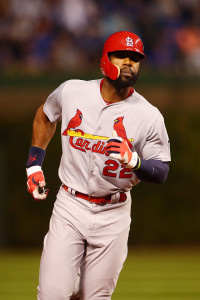
The debate raged long before the offseason arrived: how much can you really pay for a player like this? All agreed he was good. But the traditionalists howled at the notion of a right fielder who hadn’t even hit forty home runs over the prior three seasons landing a premium contract. The analytically minded countered that, well, runs are runs regardless of how they’re added or prevented. Heyward was a 6.9 rWAR / 5.6 fWAR performer in 2015. With exceptional glovework and a steady OBP, Heyward seemed to be a high-floor player who might have some ceiling as well.
[RELATED: Jason Heyward & Chris Davis Have Two Of The Worst Free Agent Contracts … In Different Ways]
We predicted that Heyward would earn $200MM over a full decade — second-most in a rather well-stocked free agent class. That didn’t quite happen, but the real deal was actually more favorable to Heyward than the one we had guessed. He landed $184MM over an eight-year term and also got two opt-out opportunities (which was worth something at the time the deal was struck, even if they weren’t exercised). The deal delivered a nice $23MM AAV over quite a lengthy term.
Now that we’re all reacquainted with the contract as it turned out … let’s try to remind ourselves of the state of play in the market when it was struck. At the time of the pact, there were hints that the Cubs may not have been the high bidder. The Nationals supposedly had the top offer on the table, though we may presume it’d have been deferred. The incumbent Cardinals were also known to be in pursuit. And the Angels and Giants were still involved in rumors right up until the end.
So … what would things have looked like if Heyward had landed elsewhere?
Nationals
Whoa … would the Nats have hoisted the commisioner’s trophy last fall had they signed Heyward? That’s obviously not something that can be assessed fairly given the innumerable butterfly effects potentially at play. But the counter-factual does actually present a pretty similar situation to what actually happened in 2019. In right field, the Nationals got solid but hardly otherworldly work out of Adam Eaton — another left-handed hitter whose skillset is rather similar to that of Heyward.
More interesting to consider is the fact that the Nats probably wouldn’t ever have dealt for Eaton had they already acquired Heyward. Eaton landed in D.C. after the team missed on its effort to acquire Chris Sale for the White Sox. The swap cost the Nationals pitchers Lucas Giolito (reimagine 2019 with him on the staff), Reynaldo Lopez, and Dane Dunning. Of course, Eaton has been much more affordable than Heyward this whole time. Who knows if the Nats would’ve inked Patrick Corbin last winter had Heyward been on the books.
Ultimately, the Washington organization has deep enough pockets that it would’ve been just fine with an underperforming $23MM salary on the books — not unlike the Cubs. At the same time, also not unlike the Cubs, the Nats have been focused on getting and staying just under the luxury tax line, so this deal would’ve been a constant nuisance that would’ve interfered with any number of lower-cost veteran signings and acquisitions over the past several seasons.
Cardinals
Much like the Nats, the Cards eventually made a big deal for a somewhat similar player. One winter after missing on Heyward (despite reportedly offering as much or more as the arch-rival Cubbies), the Redbirds reversed the talent flow by inking former Chicago center fielder Dexter Fowler. The switch-hitting Fowler wasn’t nearly as expensive as Heyward, but his own five-year, $82.5MM deal has worked out about as poorly. The Fowler contract probably wouldn’t have been signed had Heyward been around, but this is probably to the Cardinals’ benefit since the Heyward deal features a bigger and longer hit. Perhaps the Cubs would’ve ended up retaining Fowler had they missed on Heyward. You could argue over the details, but it’s probably not far from a wash.
Of course, the Cards went without either of those players in that 2016 campaign … which helped open the door to the memorable shooting star of Jeremy Hazelbaker. It’s tough to say whether there were significant long-term effects on the way the Cards’ outfield picture developed. Going without Heyward in 2016 opened more playing time for outfielders Randal Grichuk, Stephen Piscotty and, to a lesser extent, a pre-breakout Tommy Pham. Perhaps one or more would’ve been shipped out of town earlier had Heyward been retained. Maybe Pham’s breakout would’ve occurred elsewhere, thus eliminating his successive trades (to the Rays and then to the Padres), though it’s impossible to say that with any degree of confidence.
Angels
We don’t know whether the Halos were really strong pursuers of Heyward, but it’s worth considering what might’ve been. The club ended up foregoing any big free agent splashes that winter. (It had already acquired Andrelton Simmons.) Adding Heyward surely wouldn’t have forestalled the string of four-straight losing seasons, given the way he has played. But it might’ve prevented the Angels from eventually trading for and then extending Justin Upton. And it certainly could’ve gummed up this winter’s signing of Anthony Rendon.
Giants
Likewise, it’s not entirely clear that the Giants were heavily involved in bidding up Heyward’s price, but the team clearly had some real interest. The San Francisco org splashed a lot of regrettable cash that winter regardless. It had already inked Jeff Samardzija and ended up signing Johnny Cueto after Heyward landed with the Cubs. The Giants did find a rather direct alternative to Heyward, inking Denard Span to a three-year, $31MM pact. That didn’t quite go as hoped but was hardly a significant disaster. Suffice to say that having Heyward on the books would’ve further complicated an already difficult stretch for the organization.
Cubs
Ah, yes. The Cubs. Lauded at the time by some for landing Heyward for less than others would’ve paid — really, the deal was probably right at the market rate, give or take — the Cubbies have obviously not benefited from the signing.
Remember how we started this post? The debate over paying out a non-slugging right fielder. Consider these contemporaneous comments. On the one hand …

On the other …

To some degree, neither turned out to be right. And the lack of power was largely beside the point. Heyward did top twenty long balls in 2019, but he was still an average-or-worse hitter for the fourth-straight year. It was certainly his best offensive season for the Cubs … but also the team’s own worst effort in this four-year span. No, the Cubbies haven’t exactly dominated the National League over the span of this deal, but they did capture that elusive crown in 2016.
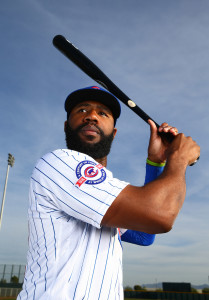
So does the World Series justify it? Eh … this isn’t as clean an analysis as the Gleyber Torres-for-Aroldis Chapman “you do what it takes!” situation. Heyward was terrible in 2016 and even worse in the postseason, when he contributed just five hits and a walk over fifty plate appearances.
There’s no two ways about it: the deal hasn’t worked out at all as hoped. Heyward has by all accounts worked hard and been a total class act, as ever. And he has trended back up with the bat, which is somewhat promising with regard to the final three seasons of the deal. But the net return to the Cubs — 7.1 rWAR and 6.0 fWAR — has not remotely justified the outlay.
Anybody that has watched the Chicago organization operate these past two winters can see the effects of this contractual miss. The Cubs have decided not to move past the luxury tax line, so every dollar going to Heyward has been another buck that couldn’t be allocated elsewhere. Of course, the Heyward whiff isn’t the only one that has stung in recent years, as MLBTR’s Tim Dierkes recently examined. And it’s worth emphasizing the he’s still just 30 years of age and still capable of contributing. It’s not outside the realm of possibility that he could even morph back into a quality regular. All things considered, this contract certainly didn’t single-handedly obstruct the Cubs’ dynasty-that-wasn’t … but it certainly played a leading role.
Photos courtesy of USA Today Sports Images.
Extension Candidates: NL Central
We don’t really know whether or to what extent extension talks will continue during the coronavirus hiatus. But as I wrote yesterday, it seems reasonable to think they’ll be explored. Some may already have advanced nearly to completion before the global pandemic intervened.
While we may have to wait to learn who the targets are and see what deals get done, there’s a silver lining: more time for rampant speculation! Okay, we’re not going to speculate here; rather, we’ll tick through some interesting possibilities on paper. Remember, we’ve seen an increasing prevalence of deals with less-experienced players (even some without any MLB service) and with new player types (early-career relievers and utilitymen).
In the present MLB environment, value is king and the old forms are fading. Here are some names to chew on from the NL Central …
Brewers
The Brew Crew already reached two deals this winter, both of which are quite interesting for very different reasons. The Milwaukee organization reached a big new extension (that still feels team-friendly) with superstar Christian Yelich. And it placed a upside bet on young hurler Freddy Peralta, whose ERA hasn’t quite yet matched his talent.
Scanning the rest of the roster, the name that jumps off the page is Josh Hader. True, he just lost an arbitration hearing to the team. But he’s still got a big $4.1MM starting point to build from for three more seasons and his salary could go wild if the Brewers keep him in the closer’s role. Perhaps there’s a path to a deal, even if it doesn’t expand the Brewers’ control rights past arbitration much (if at all).
Likelier, perhaps, are highly talented youngsters Keston Hiura and Brandon Woodruff. The former isn’t even close to arbitration but seems like an easy bet to keep hitting. The latter is a year away from Super Two qualification, so this might be the best opportunity to get him locked in at a palatable price. Given the aggressive stance the Brewers took in the Peralta deal, you can’t rule out negotiations with fellow hurlers Adrian Houser and Corbin Burnes.
Cardinals
The Cards are known to be interested in working something out with franchise pillar Yadier Molina. It’s pretty likely they’ll get a deal done at some point given the obvious mutual interest.
Of greater long-term intrigue is the situation of staff ace Jack Flaherty. But odds of an agreement seem long, particularly after the club renewed his contract at a rather meager rate this spring. Perhaps fellow starter Dakota Hudson is a likelier target. If the club gets creative in exploring deals with the staff, relievers Giovanny Gallegos and John Brebbia might be approached, though neither is terribly youthful.
Two years out from free agency, Kolten Wong is a conceivable but hardly pressing potential target. It’s more interesting to contemplate an early pact with emerging utilityman Tommy Edman. But most intriguing of all? A pre-debut pact with top prospect Dylan Carlson. That would free the club to promote him whenever it wishes and perhaps secure a potential new franchise star for his entire prime.
Cubs
If you can’t trade ’em, extend ’em? Perhaps not in all cases, but the Cubs have a lot of quality players that could be targeted for extensions — now that the team has elected not to deal them over the winter and likely won’t have a chance to revisit its decision in the middle of the 2020 season. Kris Bryant, Willson Contreras, and Kyle Schwarber could in theory all fall in this bucket.
The likeliest candidate, though, is shortstop Javier Baez. He was never really on the block, so far as anyone knows, and there’s clearly mutual interest in a deal. Baez is two years from free agency but already well into bigger earnings via arbitration. Talks have been up and down thus far.
Otherwise, the Cubbies could explore ways of locking in lower prices on non-stars for the foreseeable future. What if — and believe me, this is a hypothetical — but what if the team saw some value in the right arrangement with a younger, less-established player? The most interesting possibilities: infielder Nico Hoerner, backstop Victor Caratini, and center fielder (for the time being, anyway) Ian Happ. Having already done a deal with David Bote, this sort of possibility can’t be ruled out.
Pirates
Thankfully, in this case the team has more or less provided its own list (through unnamed sources that spoke with reporters). Younger big leaguers Bryan Reynolds, Kevin Newman, and Joe Musgrove are all said to be of interest, as is top prospect Ke’Bryan Hayes. Now that we know talks have been initiated, it’s a matter of seeing if anything gets done.
Notably absent from that group? Slugging first baseman Josh Bell. The 27-year-old is in his first season of arbitration eligibility after a big 2019 season. The absence of reporting doesn’t necessarily mean that Bell isn’t of interest, though he may be a bit spendy for the Bucs to commit to.
Beyond that, it gets pretty speculative. The Pirates have big hopes for high-upside youngsters Mitch Keller and Oneil Cruz, but probably want to see them develop more before thinking about a long-term contract.
Reds
The Cincinnati ballclub has made a host of interesting moves of late. But there’s still potential for greater contractual action with regard to a few in-house players.
Excellent right-hander Luis Castillo is easily the top target. He’s in classic starting pitcher extension territory as a 2+ service-class player with two full seasons of increasingly productive moundwork. The team can surely envision quite a lot of upside and he has some real incentive to dodge the risk of another MLB campaign before getting paid.
Perhaps there’s also an argument for considering talks with lefty Amir Garrett or reliever/pinch-hitter/CF Michael Lorenzen. If teams can strike deals with pitchers like Peralta and Aaron Bummer, then these guys can’t be ruled out.
It’s awfully intriguing to think about a deal for everywhere-but-nowhere man Nick Senzel. But his precise place in this organization has yet to be determined. While the team would probably buy in at the right price, he’s probably not going to sell himself short and buy into an uncertain situation. There are a few other conceivable candidates on this roster — outfielder Jesse Winker; starter Anthony DeSclafani — but it’s quite a bit harder to see a path to a mutually agreeable deal in those cases.
Video: How Did These Become Two Of The Worst Free Agent Contracts?
Within a span of 37 days back in the 2015-16 offseason, the Cubs granted $184 million to Jason Heyward and the Orioles committed $161 million to Chris Davis. Four seasons in, these have become two of the worst free agent contracts in recent memory. MLBTR’s Jeff Todd breaks down how the players were perceived at the time and what’s gone wrong, in today’s video.
9 NL Central Pitchers Looking For Bounce-Back Years
Nobody knows when the 2020 Major League Baseball season will begin, but we can still look forward to its start. With that in mind, we’ll continue our series on potential bounce-back players from each division, this time focusing on notable National League Central pitchers whose production fell off from 2018 to ’19.
Craig Kimbrel, RHP, Cubs:
Undoubtedly among the greatest relief pitchers in baseball history, Kimbrel’s numbers careened off a cliff in his first season as a Cub. In fairness, though, Kimbrel didn’t have a normal offseason before finally joining the Cubs on a three-year, $43MM contract. The 31-year-old flamethrower went without a deal until the first week June, and he never really got on track after debuting later that month. Kimbrel battled elbow issues and threw just 20 2/3 innings, over which he allowed 15 earned runs on 21 hits (including a whopping nine home runs) and 12 walks. Although Kimbrel did strike out 30 hitters and continue to throw upward of 96 mph, it wasn’t enough to overcome the other problems. Considering what the Cubs have invested in him, not to mention the losses their bullpen suffered in free agency, it’s a must for him to return to form this year.
Jeremy Jeffress, RHP, Cubs:
Jeffress was a lights-out part of the Brewers’ bullpen in 2018, but last season represented an enormous step backward. In fact, it went so badly for Jeffress that the Brewers – then vying for a playoff spot – released him during the first week of September. Jeffress wound up with a ghastly 5.02 ERA in 52 innings and saw his typical fastball go from 95.3 mph in 2018 to 93.8. He also lost 4 percent on his swinging-strike rate, almost 10 percent on his strikeout rate, and 8 percent on his groundball rate. Consequently, he was only able to secure an $850K guarantee in free agency.
Trevor Bauer, RHP, Reds:
Bauer went from one of the absolute best pitchers in the sport two years ago to someone whom the opposition shelled after the Reds acquired him from the Indians at last summer’s trade deadline. The 29-year-old kept throwing hard, averaging about 95 mph on his fastball, but yielded 57 hits (including 12 home runs) en route to a 6.39 ERA in 56 1/3 innings as a Red. Between the two teams, his combined 4.48 ERA and 4.34 FIP were each more than two runs worse than the production he logged in 2018. Bauer also experienced an almost 7 percent fall in groundball rate, and he wasn’t any kind of Statcast hero, ranking near the middle of the pack in multiple important categories.
Pedro Strop, RHP, Reds:
Strop, 34, had several terrific years with the Cubs, but last season wasn’t one of them. His average fastball dropped by 1.5 mph (93.6), his walk rate spiked to its highest level since 2012 (4.32 BB/9) and he gave up more home runs than ever (1.3 per nine). All of those factors helped lead to career-worst run prevention totals for Strop (4.97 ERA/4.53 FIP), which came at a less-than-ideal time for the pending free agent. Strop’s subpar output last year stopped him from cashing in on the open market, but if he can rebound, the Reds will have a bargain on their hands at $1.825MM.
Chris Archer, RHP, Pirates:
MLBTR’s Steve Adams just took a more in-depth dive into the surprising struggles Archer has gone through as a Pirate. The former Rays standout has been a shell of himself since Pittsburgh acquired him from Tampa Bay in a July 2018 trade that looks incredibly lopsided in the Rays’ favor. But not all hope is lost for Archer, who – at the Pirates’ behest – grew too reliant on a sinking fastball that the opposition hammered. Archer bagged the pitch last summer and proceeded to post far better numbers during the second half of the season than he did before then, making the 5.19 ERA/5.02 FIP, 4.14 BB/9, 1.88 HR/9 and 36.3 percent groundball rate he put up over 119 2/3 innings look somewhat deceiving.
Derek Holland, LHP, Pirates:
Holland resurrected his career two years ago in San Francisco, only to fall apart between the Giants and Cubs last season. While Holland made 30 starts in 2018, he had such a rough time a year ago that he spent most of it in the bullpen, where he amassed 43 of 51 appearances. The 33-year-old limped to a 6.10 ERA/6.08 FIP with 8.75 K/9, 4.8 BB/9 and 2.13 HR/9, forcing him to settle for a minor league contract with Pittsburgh in the offseason.
Andrew Miller, LHP, Cardinals:
The first season as a Cardinal didn’t go well for Miller, whom they signed to a two-year, $25MM pact beforehand. The majority of his numbers, including a 4.45 ERA/5.19 FIP in 54 2/3 innings, went the wrong way. Miller, who barely walked more than one hitter per nine during his career-best season back in 2016, issued almost four and a half free passes last season. Moreover, he endured a 10.5 percent dip in groundball rate from 2018 and saw his home run-to-fly ball rate skyrocket to 21.6 percent. The 34-year-old has since dealt with some health troubles this spring, though the latest update on his status was encouraging.
Corbin Burnes, RHP, Brewers:
Burnes had a promising debut from Milwaukee’s bullpen in 2018. However, the spin rate darling’s propensity for surrendering homers proved to be his undoing last season. Burnes, 25, gave them up on 38.6 percent of fly balls, leading to an awful 8.82 ERA/6.09 FIP in 49 innings and canceling out a strong strikeout rate of 12.86 per nine and a borderline elite swinging-strike percentage of 17.2.
Corey Knebel, RHP, Brewers:
Knebel’s on the list for injury reasons, not ones related to performance. He was a huge piece of the Brewers’ relief corps from 2017-18, but Tommy John surgery kept him off the mound a season ago. Knebel, who underwent the procedure just under 12 months ago, had been lining up for an early May return before the game shut down, according to Adam McCalvy of MLB.com. So, the longer baseball’s hiatus last, the better Knebel’s odds are of returning to his past role as a Brewers contributor over a full season.
Video: The Cubs’ Quiet Offseason
Jeff Todd tackles the Cubs’ quiet offseason and 2020 outlook in today’s video.
10 NL Central Hitters Looking For Bounce-Back Years
Our series focusing on notable players looking for bounce-back seasons in 2020 rolls on with the National League Central. We’ll start with 10 of the division’s hitters who hope to return to form this year…
Joey Votto, 1B, Reds:
Votto is one of the greatest hitters who has ever lived, so it was rather surprising – even at the age of 35 – to see him turn in such pedestrian numbers in 2019. He ended up with what was essentially a league-average line of .261/.357/.411 with 15 home runs in 608 plate appearances, mustering just 0.7 fWAR during that span. Compared to 2018, the ever-patient Votto saw his walk rate fall by almost 5 percent, his out-of-zone swing rate jump by nearly 5 percent and his strikeout rate climb by 4 percent. Regarding his performance last year, Votto admitted in February (via Mark Sheldon of MLB.com): “It’s the worst season I’ve had in my career, pretty clearly. I don’t think it’s close. Everything went the wrong way.” Now, the six-time All-Star and former MVP is “motivated” to turn things around as part of what could be the Reds’ first contending team in several years.
Lorenzo Cain, CF, Brewers:
Cain joined Votto in logging uncharacteristically mediocre numbers last season. But Cain, a 5.7-fWAR player as recently as 2018, was clearly hampered by a right thumb injury. That issue played a part in limiting the 33-year-old to 1.5 fWAR and a .260/.325/.372 line across 623 trips to the plate. From 2018-19, his walk rate fell by 3.5 percent, his wRC+ plummeted by 41 points (124 to 83) and he stole 12 fewer bases (30 to 18).
Justin Smoak, 1B, Brewers:
One of the Brewers’ offseason free-agent pickups, Smoak is coming off a year in which he matched Votto in wRC+. That’s normally a good thing, but at 101, that wasn’t the case last season. In his final campaign with the Blue Jays, the switch-hitting Smoak only put together a .208/.342/.406 line in his 500 PA. But his hard-hit rate increased by almost 9 percent, according to FanGraphs, and Statcast was a fan of his work. Notably, the 33-year-old’s expected weighted on-base average (.366) far outpaced his real wOBA (.323).
Jedd Gyorko, INF, Brewers:
Another of Milwaukee’s offseason signings, Gyorko is on the heels of a brutal and injury-wrecked 2019 spent with the Cardinals and Dodgers. He accounted for minus-0.7 fWAR in just 101 PA, thanks in large part to an unsightly .174/.248/.250 line. Before that, Gyorko totaled three straight seasons of above-average offensive production. For an affordable $2MM, Milwaukee’s hoping a healthy version of the 31-year-old will return to his 2016-18 days.
Paul Goldschmidt, 1B, Cardinals:
There was nothing wrong with Goldschmidt’s output in 2019, per se; it just didn’t match up to the brilliance we’ve come to expect from him. A middling start to the six-time All-Star’s first season as a Cardinal tamped down his overall numbers, helping limit him to a .260/.346/.476 showing and 2.9 fWAR (though he did hit 34 home runs). Remember, Goldschmidt entered the year as a lifetime .297/.398/.532 hitter with six consecutive seasons of between 4.0 and 7.2 fWAR.
Matt Carpenter, 3B, Cardinals:
Carpenter, like Goldschmidt, was a star in the several seasons preceding 2019. But last year went awry for Carpenter, who – for the first time in his career – failed to record even average offensive production. The 34-year-old finished the season as a .226/.334/.392 hitter in 492 PA, notching a career-worst 1.2 fWAR in the process. Compared to 2018, Carpenter’s walk and strikeout rates went in the wrong direction by about 3 percent apiece, his ISO plummeted by a stunning 100 points, and his hard-hit percentage fell by eight points.
Yadier Molina, C, Cardinals:
The Cardinals are currently working to extend the 37-year-old Molina, one of the best players in franchise history, though the potential Hall of Famer wasn’t his usual self in 2019. He produced his lowest fWAR (1.2) since 2006 and batted a powerless .270/.312/.399 in 452 PA. On the other side, Molina’s caught-stealing rate went down by a few points to 27 percent (still a bit better than average), and his pitch-framing output also dropped.
Harrison Bader, CF, Cardinals:
With this many Cardinals on the list, it’s a wonder they took the division last season. Anyhow, Bader was a major contributor to the team in 2018 – his first full season – but couldn’t come close to replicating that performance in ’19. His fWAR was cut in half by 50 percent (3.6 to 1.8), largely because of a disappointing .205/.314/.366 line over 406 trips to the plate. A 4 percent increase in strikeout rate was among the culprits. To Bader’s credit, though, he did slash his soft-contact rate and continue to thrive in the outfield, where he tallied 14 Defensive Runs Saved and a 12.9 Ultimate Zone Rating.
Gregory Polanco, OF, Pirates:
It would be fair to give Polanco a mulligan for his poor year, as he underwent left shoulder surgery in September 2018 and dealt with problems in that area throughout last season. He only appeared in 42 games and amassed 167 PA, batting .242/.301/.425.
Daniel Descalso, INF, Cubs:
The typically light-hitting Descalso was so effective as a Diamondback in 2018 that it convinced the Cubs to give him a two-year, $5MM contract heading into last season. That decision has not paid off at all so far. The 33-year-old Descalso’s initial season in Chicago couldn’t have gone much worse, as he batted .173/.241/.250 over 194 PA and accounted for minus-0.8 fWAR. Among 411 hitters who racked up at least 150 PA, Descalso ranked seventh worst in wRC+ (42) and 14th from the bottom in ISO (.077). If you’re skeptical that he’ll turn back into a decent contributor this year, you’re not alone, but there’s really nowhere to go but up.
MLBTR Poll: How Good Are The Cubs?
It’s no secret that it was a quiet winter for the Cubs, a team coming off a 2019 collapse and a disappointing 84 wins. MLBTR’s Tim Dierkes recently took a deep dive into the Cubs’ unpopular offseason, in which they spent a meager $3.5MM on major league free agents and didn’t make any earth-shattering trades.
There was some expectation the Cubs would deal at least one high-profile player (third baseman/outfielder Kris Bryant, for instance), but having found no offers to their liking, they seem prepared to bring back a roster somewhat similar to last year’s. That is, minus a handful of notable players – Nick Castellanos, Cole Hamels, Steve Cishek and Brandon Kintzler – who performed well for Chicago in 2019 and then exited in free agency.
Despite those losses, there is still a case that the Cubs are more talented than your average club. Bryant, shortstop Javier Baez, first baseman Anthony Rizzo, catcher Willson Contreras and left fielder Kyle Schwarber are still around to drive their position player group. That unit finished top 10 in the majors in runs and fWAR last year (though Castellanos’ second-half tear contributed to both figures).
As with the loss of Castellanos, Hamels’ departure seems likely to hurt. Although injuries hampered Hamels in his last season as a Cub, he still racked up 141 2/3 innings of solid production (3.81 ERA). They’d love that this year from the beleaguered Tyler Chatwood or some other fifth starter (Alec Mills? Jharel Cotton? Adbert Alzolay?), but it’s tough to bet on it happening. The good news is that the club’s top four – Kyle Hendricks, Yu Darvish, Jon Lester and Jose Quintana – should continue to at least post decent numbers. The same can’t really be said of the team’s bullpen, however. The unit received horrid production from the normally great Craig Kimbrel a year ago and, despite waving goodbye to Cishek and Kintzler (among others), didn’t do anything of significance to augment its relief corps in the winter.
Fortunately for the Cubs, the National League Central looks as if it’ll be almost anyone’s to win in 2020. The Pirates have almost no shot to contend for the crown, granted, though it could be a four-way race with the Cubs, Brewers and the reigning champion Cardinals vying against the much-improved Reds. If we’re to take this year’s PECOTA projections at face value, the Cubs will fall shy just of an NL Central title en route to 84-85 wins, yet they will earn a wild-card spot. But how do you feel about their chances under rookie manager David Ross? Do you expect a return to contention?
(Poll link for app users)
How many Cubs wins do you expect?
-
86-89 36% (4,445)
-
80-85 33% (4,145)
-
90-95 19% (2,391)
-
Fewer than 80 8% (1,055)
-
More than 95 3% (429)
Total votes: 12,465
NL Central Notes: Pirates, Lorenzen, Chatwood
The Pirates were “behind the times” in their approach to developing pitchers under the previous front-office/coaching regime, right-hander Tyler Glasnow opines in a fascinating interview with Jason Mackey of the Pittsburgh Post-Gazette. Glasnow details the manner in which the Pirates emphasized pitching down and inside even as the rest of the league evolved to attacking the top of the strike zone with four-seamers and ramping up the usage of breaking balls. The right-hander calls the Pirates’ approach “a good strategy for [2013-15]” but an outdated one in the current era of data-driven approaches to pitching and game-planning. Glasnow explains how he began working at the top of the strike zone on his own toward the end of his time as a Pirate — he was never approached by the club about doing so — and that was the first thing the Rays encouraged him to do following the trade. The interview is rife with interesting (and, if you’re a Pirates fan, frustrating) quotes from Glasnow and is well worth a full look regardless of which team you follow.
Taking a look elsewhere in the division…
- The “two-way player” criteria established by Major League Baseball within this winter’s slate of rule changes puts National League clubs at a disadvantage, writes Ken Rosenthal of The Athletic (subscription required). The rules, which stipulate that a pitcher who wishes to gain two-way designation must start 20 games as a position player (with three plate appearances per start), appear to have been written with Shohei Ohtani in mind (and perhaps Brendan McKay) but don’t allow for someone like the Reds‘ Michael Lorenzen to easily attain that status. Lorenzen played 29 games in center last season, including six starts. In two of those instances, he played every inning of an extra-inning game in the outfield, and in another he came in to throw two innings of relief before returning to center. Lorenzen called the criteria “obnoxious” in chatting with Rosenthal, who notes that the Reds are among the teams that have approached the league about the issue. Over the past two seasons, Lorenzen has batted .241/.302/.468 with five home runs in 87 plate appearances. He logged 89 innings in center field last season after serving as a frequent pinch-hitter a year prior in 2018.
- Cubs skipper David Ross has at least considered utilizing righty Tyler Chatwood as a multi-inning reliever, he tells Gordon Wittenmyer of the Chicago Sun-Times. Ross still calls Chatwood the favorite for the fifth slot in the rotation, but he also points to Chatwood hitting 99 mph out of the bullpen and the fact that he pitched in every inning while functioning in various roles last season. Ross likens Chatwood to Kenta Maeda, suggesting that he could function as a starter for much of the season before shifting to a multi-inning relief option late in the year and potentially into the postseason. If Chatwood once again struggles as a starter early in the season, it seems likely the organization will shift him back into that role and look to alternative options in the rotation.
NL Notes: Castellanos, Cubs, Chatwood, Mills, Nats, Ross, Voth
Nicholas Castellanos spoke eloquently about his experience dealing with the Cubs this offseason – which is to say, he experience not dealing with them. And yet, the Cincinnati Red appears to harbor no ill will towards the Cubs. Instead, he offered nuanced insight and thoughtful considerations about the challenges facing ownership, per The Athletic’s Sahadev Sharma. Said Castellanos, “I don’t know the intricacies of owning a team. The only thing I can speak on when it comes to the Cubs is what a tremendous and incredible soul that organization has when it has life. The only thing I would care about if I owned the Cubs would be to give it as much life as possible. It’s hard, I don’t know what it’s like to own a business.” Polite and diplomatic as he may be, Castellanos does offer an implicit criticism of a Cubs organization that has exhibited, shall we say, less “life” than in years past. Though Castellanos seems to understand and accept why the Cubs made no contact with him after his exit interview, he did wonder broadly about the lack of interest from teams league-wide. Let’s check in on some fifth starter races..
- Cubs’ manager David Ross gives Tyler Chatwood the lead in the race for the Cubs’ fifth starter role, tweets MLB.com’s Jordan Bastian. Alec Mills is also a contender for the role, though whoever wins the spot on opening day is likely to keep it until performance dictates otherwise. Ross has no interest in modernizing his approach to the fifth starter role, preferring to let players earn a role in spring training and enter the season thusly, per Bastian. Mills is out of options, but he’s a heavy favorite to land a bullpen spot if he can’t unseat Chatwood for the rotation.
- Joe Ross has pole position to break camp as the fifth starter for the World Champion Washington Nationals, per MASN’s Mark Zuckerman. Austin Voth has pitched well enough to provide a legitimate challenge, but given that both players are likely to make the team, Ross has the track record to give him an edge. He also has the gaudy bullpen ERA to suggest he’s best utilized in the rotation. It’s fair to question the significance of rotation/bullpen splits, but few can boast a Jekyll-and-Hyde routine like Ross’ 2019. The 26-year-old put up an 11.17 ERA over 19 1/3 innings as a reliever, only to counter with a 3.02 ERA in 44 2/3 innings as a starter during the second half. Voth, meanwhile, is more of a late-bloomer at age-27, and he has yet to be tested in a relief capacity. Since making his professional debut in 2013, he has just 3 minor league relief appearances to go with 3 major league appearances out of the pen. Since the right-hander is out of options (as is Ross), Voth is likely to get his first real taste of bullpen life in 2020.
Camp Battles: Cubs’ Second Base Competition
As MLBTR’s Tim Dierkes detailed earlier this week, the Cubs are coming off a rather quiet offseason. There were no earth-shattering trades, no significant free-agent signings. The high-payroll club doled out just $3.5MM in guaranteed contracts over the winter, though it did add at least a couple familiar names by way of the minor league market. One of those pickups, longtime Indian Jason Kipnis, is vying to begin the season as the Cubs’ starting second baseman. The position was a sore spot last year for a what was overall a disappointing Chicago team – one that received little from Ben Zobrist (who missed a sizable portion of the season because of a personal matter), Addison Russell and Daniel Descalso. The lone member of that trio still with the organization is Descalso, who’s competing with Kipnis and a couple others to become rookie manager Davis Ross’ Opening Day choice at the keystone. Here’s a rundown of the quartet that’s in the mix…
- Jason Kipnis: He was a two-time All-Star in Cleveland during his heyday, but it has been a few years since Kipnis even came close to putting up average offensive production. The 32-year-old’s .245/.304/.410 line in 511 plate appearances in 2019 helped prevent him from scoring a guaranteed contract in his first trip to free agency. Kipnis was much better during the second half of the season, though, and the left-handed hitter was playable against right-handed pitchers. As someone who has regularly performed better versus righties than southpaws, he could wind up as part of a platoon for the Cubs.
- Daniel Descalso: The normally light-hitting Descalso had a solid season with the Diamondbacks in 2018, thereby convincing the Cubs to give him a two-year, $5MM guarantee in the ensuing winter. Thus far, however, the deal has blown up in the team’s face. Descalso, 33, limped to a .173/.271/.250 line with just two home runs in 194 trips to the plate. Along the way, his ISO (.077) dropped off 121 points from the prior season, while his strikeout and walk rates also trended in the wrong direction.
- David Bote: The versatile Bote, 26, recorded adequate numbers for the second straight year in 2019, slashing .257/.362/.422 with 11 homers and 1.5 fWAR in 356 PA. On paper, it may make sense to attempt a platoon between the right-handed Bote and Kipnis, but Bote actually posted far superior production versus same-handed pitchers than southpaws last season.
- Nico Hoerner: The 22-year-old Hoerner debuted with the Cubs last September, at which point the recent first-round pick (No. 24 in 2018) was regarded as a top-50 prospect. Hoerner ultimately didn’t log great numbers in his initial taste of MLB action (.282/.305/.436), but it was just an 82-PA sample; furthermore, it was the first time Hoerner had even played above the Double-A ball, making it all the more understandable he didn’t light the league on fire in his initial try. Hoerner may end up as Chicago’s long-term solution at second, but if the club doesn’t think he’s ready yet, it’ll have the option of sending him to Triple-A Iowa for more seasoning and regular playing time.