
Cubs Designate Anthony Kay For Assignment
The Cubs announced Friday that left-hander Anthony Kay has been designated for assignment in order to clear a spot on the 40-man roster for first baseman/outfielder Trey Mancini, whose previously reported two-year, $14MM deal is now official. The 27-year-old Kay’s stay in the organization could prove quite brief, as he was only claimed off waivers from the Blue Jays back on Dec. 23.
Kay, whom the Mets originally drafted with the No. 31 overall pick back in 2016, made his way from New York to Toronto by way of the Marcus Stroman trade and has spent parts of four seasons in the Majors with the Jays. He’s struggled in each, compiling a 5.48 ERA with a solid 23.6% strikeout rate but a bloated 11.6% walk rate in that time. Home runs have been a bit of an issue, as he’s yielded 1.27 long balls per nine frames, but he’s also been plagued by a bloated .340 average on balls in play that points to at least some degree of poor fortune. That appears especially true, given that Kay has yielded just an 87.5 mph average exit velocity and a 34.8% hard-hit rate in his career — both comfortably better than the league-average marks over the past few years.
Interestingly, it’s been fellow lefties who’ve tormented Kay to this point in his big league career. Same-handed opponents have crushed Kay to the tune of a .319/.398/638 batting line in 108 career plate appearances, while righties have hit him at a .251/.352/.390 clip. That line from right-handers is still concerning, particularly the OBP aspect, but if Kay were able to shut down lefties like so many other southpaws, he could yet develop into a serviceable bullpen option.
Kay has averaged better than 94 mph on his fastball over the past two seasons and has consistently generated above-average spin on the pitch — but opponents have still batted .301/.409/.526 against it in his career. He’s gotten far better results with his curveball (.186/.239/.326), which was perhaps part of his appeal to the Cubs in the first place.
Kay has one minor league option year remaining and was once a fairly well-regarded pitching prospect, so it’s possible another team will look to bring him into the fold via the waiver wire. The Cubs will have a week to trade him or pass him through outright waivers. If he goes unclaimed, he’ll remain with the organization and likely head to spring training as a non-roster invitee.
Cubs Outright Mark Leiter Jr.
Cubs right-hander Mark Leiter Jr. has gone unclaimed on outright waivers, tweets Meghan Montemurro of the Chicago Tribune. He’d been designated for assignment last week once Chicago finalized their one-year deal with Eric Hosmer.
Leiter, 32 in March, signed a minor league contract with Chicago last offseason. He cracked the big league roster by the second week of the season. Leiter held his spot on the 40-man all year and bounced a few times between Wrigleyville and Triple-A Iowa. Working primarily as a long relief option in the majors, he tossed 67 2/3 frames through 35 outings (including four starts). Leiter put together a decent 3.99 ERA with better than average strikeout and ground-ball marks (25.9% and 48.9%, respectively).
Despite that generally solid work, he was squeezed off the roster this winter. That’s presumably a result of some skepticism around the league that Leiter could maintain his 2022 form, as he carried a 5.53 ERA in 114 career major league innings headed into last year. He didn’t appear at the highest level at all between 2019-21 thanks to an intervening Tommy John surgery.
Leiter was previously outrighted by the Blue Jays back during the 2018-19 offseason. Clearing waivers a second time in his career gives him the right to elect minor league free agency instead of accepting an assignment to Iowa. The Cubs haven’t yet announced whether he’ll do so.
Adam Warren Announces Retirement
Right-hander Adam Warren confirmed to Bryan Hoch of MLB.com yesterday that he’s retired as a player after spending parts of eight seasons in the Majors (Twitter link, with video, to Hoch’s interview with Warren). Warren, who was making an appearance at Yankees Fantasy Camp, told Hoch that he’s been enjoying time with his family but also misses being around the game and would be open to “maybe getting into some kind of coaching” role in the future.
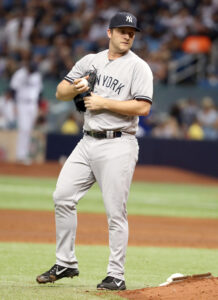
“There’s no more attempt to come back or anything like that,” Warren replied upon being asked if he’s formally put an end to his playing career. “I’m happy with it. I had a great career — didn’t really leave anything out there, so no regrets. Totally happy with it.”
Originally signed by the Yankees as a fourth-round pick out of UNC back in 2009, Warren made his big league debut as a 23-year-old in 2012 — a spot start that proved to be his lone MLB appearance that season. He made the Opening Day roster the following year, however, and quickly established himself as a pivotal swingman providing quality, multi-inning relief out of then-manager Joe Girardi’s bullpen. Warren’s official rookie season resulted in 77 innings of 3.39 ERA ball; he made two starts, finished 11 games and picked up his first Major League win, save and hold along the way, foreshadowing the jack-of-all-trades approach to pitching that he’d embody throughout his career.
Warren worked as a setup man for the Yankees in 2014, tallying 23 holds and saving three games while pitching to a sharp 2.97 ERA in 78 2/3 innings. He stepped into the rotation for part of the 2015 season and did so almost seamlessly, starting 17 games (plus another 26 relief appearances) and working to a 3.29 ERA over the life of a career-high 131 2/3 frames. His early Yankees work caught the attention of the Cubs, who acquired him that offseason in a trade that sent Starlin Castro to the Bronx.
Warren’s time with the Cubs in 2016 went poorly and proved to be short-lived, as he was knocked around for a 5.91 ERA. As the trade deadline approached, the Cubs, then hoping to bolster the roster for a World Series push (an endeavor that ultimately proved successful) quickly traded Warren … back to the Yankees, as one of four players in a package that shipped Aroldis Chapman to Chicago. Warren almost immediately righted the ship in his return to the Bronx, and he went on to have strong performances with the Yankees in both 2017 and 2018 before being traded to the Mariners, where he had a nice finish to his 2018 campaign.
Upon reaching free agency, Warren signed with the Padres, but his time in San Diego was marred by injury. After just 25 appearances, the right-hander landed on the injured list with an arm issue that ultimately proved to be a ligament tear in his pitching elbow. He underwent Tommy John surgery that year, rehabbed in 2020 and eventually made his way back to the mound for a third stint with the Yankees organization — this time with their Triple-A affiliate in 2021.
Though Warren posted solid results in Scranton that season — 3.59 ERA in 57 2/3 innings — he didn’t receive a call to the big leagues. Warren told Hoch that “the velocity never came back like I wanted it to.” That season proved to be the final chapter in his playing career, as Warren didn’t suit up for the 2022 campaign and now, at 35 years old, doesn’t appear to be contemplating a comeback.
Warren’s career draws to an official close with a 3.53 ERA, a 20.9% strikeout rate, an 8.3% walk rate, a 30-24 record, 57 holds and six saves over the course of 492 1/3 innings. He pitched for four different big league clubs, but fans will surely remember him as a versatile, quietly excellent member of the Yankees’ pitching staff who found success in just about every role asked of him. Baseball-Reference pegs his career earnings at approximately $11.5MM, and if Warren indeed plans to pursue potential coaching opportunities, there’ll surely be chances for him to add to that tally in the next phase of his career.
Yankee fans will want to check out the entire clip of Hoch’s chat with Warren, as he talks briefly about his favorite moments in pinstripes and notes that with so many great teammates over the years, “it’s just nice to be remembered” by fans with whom he interacts. That humble mentality undersells the right-hander’s importance to the Yankees’ staff during his run with the club, and it seems quite safe to say that their fans in particular will have plenty of fond memories Warren’s time in the Bronx. Best wishes to Warren and his family in whatever’s next, and congratulations on a very fine career.
Cubs Claim Julian Merryweather, Designate Manuel Rodríguez
The Cubs have claimed right-hander Julian Merryweather off waivers from the Blue Jays, reports Meghan Montemurro of the Chicago Tribune. Merryweather had been designated for assignment by the Jays last week. In a corresponding move, fellow righty Manuel Rodríguez has been designated for assignment.
Merryweather, 31, was drafted by Cleveland but went to the Blue Jays in the 2018 trade that saw Josh Donaldson go the other way. He has pitched in each of the past three MLB seasons, flashing elite velocity on his fastball, which has averaged in the 96-98 mph range in each of those campaigns.
Despite that blazing speed, Merryweather hasn’t had good results so far. He struck out 27.3% of batters faced in 2020 but saw that number drop to 21.8% and 19.3% in the past two seasons. That coincided with an increase in his ERA, going from 4.15 to 4.85 and 6.75 in the most recent season. In addition to those struggles, health is an ongoing concern. Though he pitched over 40 innings in 2022, the previous four years each saw him fall short of 20 frames.
Merryweather’s been much better in the minors, such as pitching 14 1/3 scoreless innings at Triple-A last year with a 32.7% strikeout rate. However, he’s now out of options and the Cubs will have to keep him on their active roster or else send him into DFA limbo again. If they can help him turn his huge velocity into better results, they can keep him around for many seasons via arbitration since Merryweather has just over two years of MLB service time.
In adding one flamethrower, the Cubs are risking losing another. Rodríguez, 26, averaged 97.2 mph on his sinker in 2021 and 95.9 mph last year. But like Merryweather, he hasn’t turned that into punchouts, striking out just 17.1% of batters faced in 31 1/3 major league innings thus far. He has gotten ground balls at a solid 53.2% clip but has also given free passes to 15% of batters faced.
The Cubs will now have a week to trade Rodríguez or pass him through waivers. He still has one option year remaining and just over a year of service time. Given his youth and potent velocity, he could find interest from other clubs that are looking for some pitching depth.
Frank Thomas, MLB Outfielder From 1951-66, Passes Away
Three-time All-Star Frank Thomas has passed away, according to announcements from the Mets and Pirates. Thomas, not to be confused with the Hall of Fame designated hitter who played 16 seasons with the White Sox, played for seven teams between 1951-66.
A Pittsburgh native, Thomas signed with his hometown Pirates out of high school in 1947. He spent three-plus seasons in the minors before making his MLB debut at the tail end of the 1951 campaign. Thomas saw sporadic playing time for his first couple years before getting his first extended action during his age-24 season in 1953.
Listed at 6’3″ and 200 pounds, the right-handed hitting outfielder quickly cemented himself as an excellent power hitter. He connected on 30 home runs with a .255/.331/.505 line during his first full season, earning some down-ballot MVP votes as a result. He’d remain a staple on MVP ballots throughout his run in Pittsburgh. Thomas secured at least some support in five of the six seasons from 1953-58, earning All-Star nods in ’54, ’55 and ’58. He peaked at fourth in the voting in 1958, finishing behind Ernie Banks, Willie Mays and Henry Aaron.
Thomas topped 20 longballs every year from 1953-58. His 161 homers over that time ranked 10th in the majors, with seven Hall of Famers in the group of nine players with more. Thomas had a cumulative .277/.335/.480 line in a little less than 3700 plate appearances for the Bucs in that time. He twice finished among the National League’s top ten in slugging and runs batted in, including a second-place finish with 109 RBI in 1958.
Over the 1958-59 offseason, Pittsburgh traded Thomas to the Reds as part of a seven-player deal that landed catcher Smoky Burgess and starter Harvey Haddix in the Steel City. He played one year in Cincinnati but struggled. The Reds dealt him to the Cubs for a three-player package headlined by reliever Bill Henry the next offseason. Thomas spent a bit more than a year with Chicago but continued to scuffle, with the Cubs dealing him to the Braves in May 1961. He righted the ship with 25 homers in 124 games for the then Milwaukee-based franchise.
The next winter, the Braves traded Thomas to the Mets. He joined the expansion club for their inaugural campaign in 1962 and connected on a team-leading 34 homers that season. Thomas would spent around two and a half seasons in Queens before being traded to the Phillies. He firmly settled into journeyman status to wrap up his career, playing with Philadelphia, Houston and second stints as a Brave and Cub before his playing career concluded in 1966.
All told, Thomas appeared in parts of 16 big league campaigns. He hit .266/.320/.454 across 1766 games. Thomas connected on 286 home runs, tying him for 177th on the all-time leaderboard. He doubled 262 times, drove in 962 runs and scored 792 times. His most productive seasons came with his hometown Pirates, though he played multiple seasons for five different clubs.
MLBTR sends our condolences to Thomas’ family, friends, former teammates and loved ones.
Boras: Blue Jays, Cubs, Twins “Were Really After” Xander Bogaerts
Xander Bogaerts‘ first visit to free agency resulted in an 11-year, $280MM deal with the Padres that greatly exceeded projections, even for a player who was expected to land one of the offseason’s biggest contracts. Agent Scott Boras discussed some of the twists and turns of Bogaerts’ free agent trip with USA Today’s Bob Nightengale, and Boras identified that Bogaerts was San Diego’s second choice, once Trea Turner rejected a reported $342MM offer from the Padres.
Once Turner turned down the Padres’ offer to sign with the Phillies, “we kind of knew the Padres’ guy was Bogaerts,” Boras said. “They wanted that personality, that leadership in that locker room.” Left unspoken by Boras was the fact that the Padres were clearly itching to land a big target of some kind, even to the point of considering a $400MM bid for Aaron Judge. With Judge and Turner off the board, the Padres may have been more willing to go above and beyond to sign Bogaerts, and ensure that their offseason endeavors would include at least one superstar name.
The Red Sox reportedly made a last-ditch effort to sign Bogaerts in the hours preceding his deal with San Diego, though Sox chief baseball officer Chaim Bloom later downplayed the chances that a reunion between Bogaerts and the Red Sox was becoming a possibility. There were mixed signals from Boston’s ownership and front office all season long about the franchise’s willingness to retain Bogaerts, and from Boras’ perspective, the Red Sox weren’t ever a major bidder.
“It was just really clear to us there was a separation where Boston was going to go for Bogaerts, compared to where the market was,” Boras said. “They probably made a decision they were going to sign [Rafael] Devers, and were going to pay only one of them. So we knew at the forefront that Bogey would be somewhere besides Boston.”
Sure enough, the Red Sox indeed ended up extending Devers, while Bogaerts landed in San Diego. As for other teams in the hunt, such teams as the Phillies, Diamondbacks, Orioles, Mariners, Dodgers, and Giants were all linked to Bogaerts at various points in the offseason, even if some of these pursuits were perhaps more cursory than others. Boras implied that three teams in particular (beyond the Padres) separated themselves from the pack, saying that “Minnesota, the Cubs, the Blue Jays, they were really after” Bogaerts’ services.
The Cubs and Twins were already known to be Bogaerts’ suitors, and as both clubs were monitoring the high-end shortstop market and eventually came away with two of the winter’s top options at the position — Chicago signed Dansby Swanson, while Minnesota (eventually) reunited with Carlos Correa. The Twins’ interest in Bogaerts was framed as a backup plan if Correa signed elsewhere, though Bogaerts ended up signing with the Padres before Correa agreed to his initial deal with the Giants. As for the Cubs, MLB.com’s Mark Feinsand wrote that the team gave some consideration to the idea of signing both Bogaerts and Swanson, with Bogaerts playing third base in that blockbuster scenario.
It makes for some fascinating “what-if” material, since neither the Twins or the Cubs were previously considered top candidates to sign Bogaerts. However, the Blue Jays’ involvement is perhaps the most interesting, as Toronto hadn’t previously been linked to Bogaerts or any of the top shortstops whatsoever. While the aggressive Jays are known to be a team that routinely checks in on most free agents as a matter of due diligence, Toronto’s focus was known to be on the club’s greater needs in the outfield and in the rotation. Such names as Justin Verlander, Brandon Nimmo, and Kodai Senga were among the many players linked to the Blue Jays, and Toronto has thus far signed Chris Bassitt, Kevin Kiermaier, and Brandon Belt, while Daulton Varsho and Erik Swanson were respectively acquired in major trades with the Diamondbacks and Mariners that saw Gabriel Moreno, Lourdes Gurriel Jr., and Teoscar Hernandez change uniforms.
These moves have sent the Jays’ payroll to franchise-record heights, and set the team up to exceed the luxury tax threshold for the first time. So in that sense, making a splash to sign Bogaerts wouldn’t have been out of line with the Blue Jays’ spending habits, even if obviously landing Bogaerts would have entirely changed the scope of Toronto’s offseason.
First and foremost, the Blue Jays already have a star shortstop in Bo Bichette, who is only entering his age-25 season and already amassed two top-12 finishes in AL MVP voting, an All-Star nod, and 9.6 fWAR in 2021-22. (For comparison, Bogaerts had 10.4 fWAR in 2021-22.) Bichette’s success at the plate, however, was tempered by a rather drastic defensive decline in 2022, as public metrics placed Bichette among the league’s worst defensive players. Ironically, Bogaerts’ glovework had long been a source of controversy, but he quelled some doubts over his viability as a shortstop by delivering the best defensive season of his career in 2022.
Had the Jays signed Bogaerts, they could’ve installed him at shortstop and moved Bichette to second base, and then used the current collection of second-base options (i.e. Santiago Espinal, Cavan Biggio, Whit Merrifield) either purely as depth options or as trade chips. Since Matt Chapman is a free agent after the 2023 season, the Blue Jays might’ve considered moving Bogaerts to third base at that point and returning Bichette to shortstop, if Chapman wasn’t retained. Or, if signing Bogaerts would’ve taken up much or all of Toronto’s payroll space, the Blue Jays might have been considered trading Bichette in order to address other needs. If the Jays hadn’t had the money to sign a Bassitt-level starter, for instance, Bichette could have been shopped to land a front-of-the-rotation arm.
Quick Hits: Wacha, Hendricks, Profar
The Orioles have continued their previously reported interest in free-agent starter Michael Wacha, per Roch Kubatko of MASNsports.com. There is no indication that talks between the two parties have been particularly serious. Wacha would give the Orioles a second free-agent veteran arm signing, with the club having already added Kyle Gibson on a one-year, $10MM deal in early December.
Wacha, 31, threw 127 1/3 innings with a 3.32 ERA during the 2022 season. His 20.2% strikeout rate and 41.2% ground ball rate were both below the league average for starters, but he coupled that with a strong 6.0% walk rate. Nevertheless, advanced fielding-independent metrics were not as bullish on his baseline ERA work, with Wacha finishing the season posting a 4.14 FIP and a 4.07 SIERA. Likely contributing to these higher metrics was the 80.3% strand rate that set a career-high by nearly 7% and some luck with balls in play (.260 BABIP).
Notably, 2022 was Wacha’s first season since 2015 in which he threw over 100 innings with a sub-4 ERA. Additionally, 2022 marked the righty’s fourth consecutive season where he was limited to less than 130 innings, excluding the COVID-19 2020 season. Wacha required two separate stints on the injured list during the 2022 season, missing a couple of weeks with left intercostal irritation in May and missing the bulk of July dealing with right shoulder inflammation.
The Birds are projected to start 2023 with a rotation comprised of Gibson, Dean Kremer, Austin Voth, Tyler Wells, and Kyle Bradish. Additionally, Mike Baumann and DL Hall, who made their MLB debuts during the 2022 season, figure to have roles with the big league club during the 2023 season, while top prospect Grayson Rodriguez will likely earn a call-up as well. Veteran John Means is also projected to return to Baltimore during the 2023 season, having undergone Tommy John surgery in April.
Wacha is the last unsigned starting pitcher on MLBTR’s Top 50 Free Agent List and would aid the Orioles in their quest to return to the playoffs for the first time since the 2016 AL Wild Card game. MLBTR predicted that Wacha would sign a two-year, $16MM deal at the start of the offseason.
Some more notes from around the league…
- Cubs‘ starter Kyle Hendricks expects to be throwing off a mound around March 1, per Meghan Montemurro of The Chicago Tribune (Twitter Link). Hendricks ended the 2022 season on the injured list after dealing with a capsular tear in his right shoulder that limited him to 16 starts. The 33-year-old’s rehab has reportedly been behind schedule, but the righty has told reporters, including Montemurro, that his shoulder feels “amazing” and that the Cubs want him to “take advantage of this ramp up of the long toss program,” which will likely delay his 2023 debut. The 2023 season is Hendricks’ last year with a guaranteed contract, with the Cubs holding a $16MM club option for the 2024 season.
- The Rockies are not one of the teams interested in Jurickson Profar, reports Patrick Saunders of The Denver Post. The switch-hitting outfielder finished the 2022 season with a .243/.331/.391 slash line, popping 15 home runs and 36 doubles. Additionally, Profar is ranked by MLBTR as the top remaining free agent and is the lone unsigned position player from the list. MLBTR’s own Anthony Franco recently wrote an article detailing which teams make the most sense for the 29-year-old veteran, with the Rangers, Marlins, and Braves standing out as potential suitors. The Astros had reportedly expressed interest in Profar before re-signing Michael Brantley.
Cubs To Sign Trey Mancini
The Cubs have agreed to sign Trey Mancini to a two-year contract, according to ESPN’s Jesse Rogers (Twitter link). Mancini, a client of the Frontline agency, can opt out of the deal following the 2023 season if he amasses at least 350 plate appearances in the first year of the contract, 670 The Score’s Bruce Levine reports (via Twitter). Also from Levine, Mancini will earn $14MM in guaranteed money over the two years of the deal, and another $7MM is available in bonus clauses related to plate appearances.
Reports linking Mancini to the Cubs first surfaced in December, and even though Chicago addressed its first base need by signing Eric Hosmer just over a week ago, the Wrigleyville club maintained its interest in Mancini’s services. Of course, Mancini can also play both corner outfield spots in addition to first base, and Mancini’s right-handed bat provides a nice complement to lefty-swingers Hosmer and Matt Mervis in the first base/DH mix.
As Rogers indicated in a follow-up tweet, Mervis might now be slated to begin 2023 in Triple-A, rather than immediately step into a regular role in the Cubs lineup in his first taste of MLB action. Mervis is entering only his third season of affiliated baseball, and while Mervis more or less came out of nowhere to shred minor league pitching in 2022, it looks like the Cubs would prefer to ease Mervis into the big leagues, and rely more on established veterans like Mancini and Hosmer at least in the early part of the 2023 campaign.
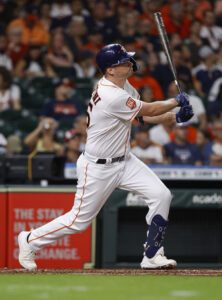
After spending his entire career with the Orioles, Mancini is now playing for his third organization in less than six months, following the trade deadline move that sent Mancini from Baltimore to Houston. Mancini’s time with the Astros paid off in the biggest form possible once Houston captured the World Series, though Mancini himself wasn’t a big part of that push to the championship. Mancini hit only .176/.258/.364 over 186 plate appearances with the Astros during the regular season, and then had only a single hit over 24 PA in the playoffs.
With this underwhelming finish in mind, it isn’t surprising that Mancini and his representatives sought out an opt-out clause, as a more impressive platform year could set Mancini up nicely for a pricier contract next winter. Mancini turns 31 in March, but even if he re-enters the market next winter in advance of his age-32 season, the veteran should still be in position to land a solid multi-year commitment if he returns to his old form. Mancini hasn’t been in that top form since 2019, though obviously some very difficult circumstances have interfered in his career path.
After missing the entire 2020 season due to a battle with Stage 3 colon cancer, Mancini played in 147 games with the Orioles in 2021, winning AL Comeback Player Of The Year honors for his inspirational return. Mancini got off to a strong start at the plate that year before fading down the stretch, as he had to get re-acclimated after missing a full season. Mancini’s traditionally strong production at Camden Yards took a dip, as the right-handed hitter was naturally impacted by the Orioles’ decision to move back the left-field fences prior to the 2022 season. The result was a modest .283/.338/.411 slash line over 198 PA at Camden Yards last year, well below his career norms.
All in all, Mancini has hit .247/.323/.412 over 1203 PA since the start of the 2021 campaign, translating to a 104 wRC+ that is only slightly above the league average. Between the new dimensions in Baltimore and the midseason adjustment to playing in Houston, Mancini’s bat could re-awaken simply by playing his home games in the Friendly Confines of Wrigley Field. In addition, Mancini has now had a full and normal offseason, as even last winter’s preparations were interrupted by the lockout.
It has been a busy offseason for Cubs president of baseball operations Jed Hoyer, who has aggressively added veteran talent in order to turn the Cubs back towards contention after most of the last two seasons were spent in a rebuild. Like Mancini’s deal, most of the contracts have been shorter-term arrangements, such as a one-year deal with Cody Bellinger, or the Hosmer signing for a minimum salary (since the Padres are still on the hook for the remainder of Hosmer’s contract).
Beyond these shorter deals, Chicago also splurged in inking Dansby Swanson to a seven-year, $177MM contract and Jameson Taillon to a four-year deal worth $68MM. Roster Resource projected the Cubs for roughly a $176.6MM payroll before Mancini’s $7MM average annual value was added to the mix, so there could be more spending capacity for further moves considering the Cubs spent well over the $200MM mark as recently as 2019.
Photo courtesy of USA Today Sports Images
Cubs Interested In Andrew Chafin, Matt Moore
The Cubs continue to look for relief help, and The Athletic’s Sahadev Sharma reports that left-handers Andrew Chafin and Matt Moore are both on the team’s radar. It isn’t clear whether the Cubs are necessarily willing to meet either pitcher’s asking price, as president of baseball operations Jed Hoyer had previously indicated that his team preferred one-year deals for relievers, and the Cubs have traditionally found success in adding relief pitching at lower-cost deals.
As Hoyer told Sharma and other reporters at today’s Cubs Convention fan event, this past strategy is now “a lot more difficult” in the current free agent market. “If you look at the cost on some of the players we were able to do that on, it was really low stakes as far as what we were paying those guys. I do think the buy-low reliever market has been a lot higher than the past. It’s made that job difficult.”
Of course, neither Chafin or Moore are buy-low players any longer, adding another wrinkle to Chicago’s interest. Chafin was in fact a bounce-back type when he signed a one-year, $2.75MM deal with the Cubs in the 2020-21 offseason, as the southpaw had struggled with the Diamondbacks in 2020 before the Cubs initially picked him up at the trade deadline.
That rough (and brief, at only 6 2/3 innings) stint with the D’Backs represented Chafin’s only real down point of the last six seasons, as the lefty has been an otherwise solid and occasionally dominant relief arm. Last year with the Tigers, Chafin posted a 2.83 ERA and an above-average 27.6% strikeout rate, and 51.3% grounder rate over 57 1/3 innings, giving him a solid platform to re-enter the free agent market. Chafin declined his $6.5MM player option for 2023, opting to leave Detroit in search of a more lucrative multi-year offer. Chafin certainly has familiarity with Wrigley Field, and could theoretically have interest in a reunion — especially with the Cubs now looking to contend after a short rebuilding period.
MLBTR listed Chafin 39th on our ranking of the offseason’s top 50 free agents, projecting the veteran southpaw for a two-year, $18MM deal. Moore was an honorable mention on the list, as while he only has one season of full-time relief work under his belt, Moore looked quite sharp in his first year as a bullpen regular. The left-hander posted a 1.95 ERA over 74 innings with the Rangers, even if a 3.69 SIERA and a .257 BABIP indicated Moore enjoyed some good fortune.
Still, secondary metrics tended to back up Moore’s revival. He had a strong 27.3% strikeout rate and did an outstanding job of limiting hard contact, as both his hard-hit ball and barrel rates ranked above the 91st percentile of all pitchers. However, control was still a major issue for Moore, as his 12.5% walk rate sat near the bottom of the league.
Signing either Chafin or Moore would add some left-handed balance to a Chicago bullpen that is mostly full of right-handers, as Brandon Hughes looks to be the only southpaw assured of a spot on the Opening Day roster. The Cubs did bolster their left-handed depth by signing Roenis Elias, Ryan Borucki, and Eric Stout to minor league deals, while Anthony Kay was claimed off waivers from the Blue Jays last month.
Hoyer said that “bench and bullpen” are remaining target areas for the Cubs, with Sharma noting that the team could be looking for a player who can serve as a DH and possibly play some first base. Rather than free agency, the Cubs could potentially look to address their needs in a trade, and perhaps to this end, Sharma writes that the versatile Zach McKinstry “has also been a popular name when other teams call the Cubs regarding trade possibilities.” Sharma opines that Chicago could possibly trade McKinstry and replace him from within with Miles Mastrobuoni, a similar player who (unlike McKinstry) has minor league options remaining.
NL Central Notes: Cards’ Rotation, McCutchen, Cubs
While the Cardinals are again shaping up nicely to compete for top honors in the National League Central, they’ll be faced with some important decisions a year or so from now. Among their starting rotation, only Steven Matz is signed beyond the 2023 season, with Jordan Montgomery, Adam Wainwright (who will retire), Miles Mikolas and Jack Flaherty all slated for free agency in November.
Replacing four starters in free agency is no easy feat, particularly given the way starting pitchers were priced this winter, and while they do have Dakota Hudson and prospect Matthew Liberatore as options, it should come as little surprise that Derrick Goold of the St Louis Post-Dispatch reports that the team is planning to open discussions over an extension with two starters this spring.
As Goold notes, Mikolas and Montgomery would appear to be the obvious candidates, with Flaherty a possibility as well – although he has dealt with injuries over the past few years. Montgomery, 30 last month, worked to a 3.11 ERA over 11 starts for the Cards after coming over from the Yankees at the deadline last year. He’s been a steady mid-rotation arm for a few years now and agreed to a $10MM salary in his final year before free agency. Mid-rotation arms such as Taijuan Walker and Jameson Taillon were sought-after commodities in free agency this year, and Montgomery would likely fit into that bracket next winter.
Mikolas, 34, worked to a 3.29 ERA over 202 1/3 innings last season. Another year like that in 2023 would set him up for a nice payday late in his career, so perhaps the the Cardinals could try and get ahead of that and lock up Mikolas for another few seasons.
Here’s some more notes from around the NL Central:
- The Pirates move to bring back franchise icon Andrew McCutchen has been met with positivity around baseball, and Jason Mackey of the Pittsburgh Post-Gazette sheds some more light on the matter. As it turns out, a return to Pittsburgh seemed unlikely until as recently as New Year’s Day when McCutchen sent a text message to Pirates owner Bob Nutting laying out his desire to return to Pittsburgh to finish his career. As Mackey relays, Nutting then approached general manager Ben Cherington, who then met McCutchen for coffee in Pittsburgh’s northern suburbs to see if a deal could be made.While veteran signings on rebuilding clubs are often done with an eye towards the trade deadline, Mackey reports that it’s more likely McCutchen returns to the Pirates in 2024 than is flipped at the deadline. That’s not to say there’s no chance of a trade, but it does seem like McCutchen is motivated by helping Pittsburgh’s young core return to relevance, and Mackey adds that the 2013 MVP sees similarities in Pittsburgh’s 2009-12 rebuild that wound up in the team going to the playoffs three straight years between 2013-15. The Pirates don’t seem quite ready to return to playoff baseball just yet, but it would make for quite the fairytale if McCutchen were to be part of the next playoff team in Pittsburgh.
- The Cubs have been aggressive in free agency this winter as they look to return to the top of the Central. The team has inked long-term deals with Dansby Swanson, Jameson Taillon and Drew Smyly, while also adding the likes of Cody Bellinger on significant deals. The team currently has a bit of wiggle room under the first luxury tax marker, but they’ll surely be approaching it over the next few years as they make more free agent additions and deal with Nico Hoerner‘s arbitration raises. Per a report from Meghan Montemurro of the Chicago Tribune, owner Tom Ricketts spoke of a strategic approach to the luxury tax as the team moves forward.“There will be times I’m sure in the near future where we’ll go over. But we’ll always keep in mind that there’s a balance there you have to always look to manage. Just like we did a few years ago, we’ll go over, but we have to be careful of how long and by how much,” Ricketts said.The Cubs’ luxury tax payroll currently sits at $215MM (according to Fangraphs’ calculation), with the first threshold coming at $233MM.