
Mets Reinstate A.J. Minter From 60-Day IL, Select Eric Wagaman
5:05pm: The Mets announced that outfielder Luis Robert Jr. has been transferred to the 60-day IL to open up a 40-man spot. He originally landed on the IL in late April due to lumbar disc herniation. He is now ineligible to return until late June. His current status is unknown. As of a couple of weeks ago, manager Carlos Mendoza said Robert wasn’t progressing as hoped, per Anthony DiComo of MLB.com.
1:50pm: The Mets announced that they have reinstated left-hander A.J. Minter from the 60-day injured list. Additionally, infielder/outfielder Jared Young has been reinstated from the 10-day injured list and infielder Eric Wagaman has been selected to the roster. In corresponding active roster moves, outfielder Tyrone Taylor has been placed on the 10-day IL with a right hip flexor strain, while right-hander Jonathan Pintaro and outfielder Nick Morabito have been optioned. In terms of 40-man spots for Minter and Wagaman, the Mets had one vacancy. They said a corresponding move to open another spot will be announced prior to game time. Tim Britton and Will Sammon of Athletic reported most of these moves prior to the official announcement.
Minter and the Mets agreed to a two-year, $22MM deal going into the 2025 season. They haven’t been able to get much return on that investment yet. Minter tossed 11 innings last year before a lat strain sent him to the IL and ultimately required season-ending surgery. Here in 2026, he and the Mets started his spring ramp-up a bit behind the other pitchers. He started the season on IL but was able to start a rehab assignment in April. Unfortunately, some left hip discomfort slowed him down, which got him moved to the 60-day IL.
Ideally, Minter can now finally give the Mets an extended stretch of health and good results. Prior to this injury odyssey, he was quite an effective reliever for a division rival. From 2020 to 2024, he posted a 2.85 earned run average over 243 innings for Atlanta, striking out 30.1% of batters faced in that time. But he’s been injured for most of the past two years, actually dating back to before the Mets signed him, as he dealt with hip issues in 2024 and required surgery that summer.
Brooks Raley has been the club’s primary lefty reliever this season. Sean Manaea is also in the bullpen but is mostly working as a bulk reliever. Minter and Raley should be the primary options for situations where a traditional lefty reliever is wanted.
The Mets have been out to a rough start, with a 22-32 record, putting them 7.5 games back of a playoff spot. If they can’t climb in the standings, they could go into the deadline as sellers. Minter and Raley are impending free agents, so both would be natural trade candidates if that’s the way things go.
Wagaman was claimed by the Mets last month and optioned to the minors. Not long after that, he was put on waivers and cleared. He has put up a massive .372/.462/.581 line in 13 games for Syracuse since that claim. Now he gets back onto a 40-man roster.
While it’s nice that Wagaman has been crushing the ball, some caveats apply. For one thing, that line came in a small sample of 52 plate appearances. For another, he had a huge .424 batting average on balls in play in that time. Furthermore, Wagaman has often put up good minor league numbers. From 2022 to 2024, he had a .276/.348/.473 line and 131 wRC+ in 897 plate appearances on the farm.
That has led to major league opportunities that he hasn’t been able to capitalize on. He has a .250/.293/.381 line and 85 wRC+ in 588 trips to the plate in the big leagues. The Marlins designated him for assignment in the winter and traded him to the Twins. Minnesota kept him in the minors to start the year and designated him for assignment a month into the season, which is when the Mets claimed him.
Wagaman has experience at the four corner spots, though the Mets have only been using him as a first baseman and designated hitter for Syracuse. The Mets are getting subpar results from Mark Vientos at first base this year. With Jorge Polanco on the IL, a lot of DH at-bats have gone to MJ Melendez. Though Melendez was red hot when the Mets first called him up, he has a .119/.288/.167 line since the calendar flipped to May.
In the outfield, Juan Soto, A.J. Ewing, Carson Benge, Morabito and Taylor have been splitting the work out there. Now that Morabito and Taylor are out, Young will jump in and perhaps Wagaman could get some time in the outfield as well.
Photo courtesy of Reinhold Matay, Imagn Images
2026-27 Club Options: NL East
In recent weeks, MLBTR has looked forward to next winter’s option classes. We’ll move now to the NL East, where a former MVP and Cy Young winner are the most notable names.
Previous: AL East, AL Central, AL West
Atlanta Braves
- Ronald Acuña Jr., RF: $17MM club option ($10MM buyout)
This is as easy as they get. The Braves will exercise their $17MM option for 2027 and have a matching provision for the ’28 season. The first comes with a $10MM buyout, while the second has no buyout. It’s highly likely the Braves are going to pick them both up anyway, but it could be a moderately closer call for Atlanta after 2027 if Acuña has a bad or injury-riddled year.
The Braves have remarkably raced to the second-best start in MLB despite relatively underwhelming work from the five-time All-Star. Acuña has only connected on two home runs with a .252/.367/.382 slash line through his first 35 games. He missed a couple weeks with a Grade 1 strain of his left hamstring and returned to the lineup yesterday.
- Ozzie Albies, 2B: $7MM club option (no buyout)
Albies agreed to a pair of $7MM team options on his exceedingly club-friendly 2019 extension. He signed away up to four free agent years for a $35MM guarantee that’d max out at $45MM if the Braves exercised the options — the first of which contained a $4MM buyout.
For a few years, it was among the biggest bargain contracts in the league. A pair of down seasons in 2024-25 reduced the surplus value somewhat, though Atlanta still had an easy call to exercise the first option last winter. Picking up the second should require even less deliberation.
Albies has rebounded to hit .271/.329/.441 and is third among second basemen with eight home runs. The NL second base field is crowded, but Albies is putting together a strong case for his fourth All-Star selection while playing on a salary just above what Isiah Kiner-Falefa and Miguel Rojas commanded as free agents.
- Tyler Kinley, RHP: $5.5MM club option ($1.25MM buyout)
Atlanta acquired Kinley from the Rockies last summer. He pitched brilliantly down the stretch, but they nevertheless declined his $5.5MM option for 2026 in favor of a $750K buyout. They re-signed Kinley two months later on a $4.25MM free agent deal. He’s making $3MM this season and will be paid either a $1.25MM buyout or stick around for next season via $5.5MM team option.
Kinley, a slider specialist, has had a somewhat shaky start this season. His 23% strikeout rate is virtually unchanged from last year, but his walks have ticked up and he has been victimized by the home run ball. Kinley has given up a longball in four of his last eight times out. He’s up to 10 runs allowed (nine earned) across 20 2/3 innings.
The Braves have still used Kinley in a decent number of leverage situations. He’s tied for second on the team behind Dylan Lee with six holds. This one could go either way, but he’ll need to get on track to remain in skipper Walt Weiss’ circle of trust.
Miami Marlins
- Sandy Alcantara, RHP: $21MM club option ($2MM buyout)
The Marlins’ deadline will hinge largely on what to do with Alcantara. He’s making $17MM in the final guaranteed season of the $56MM extension he signed in 2021. Alcantara has rebounded from an abysmal first half of the ’25 campaign, as he clearly had trouble dialing in his command when he initially returned from a Tommy John procedure.
Alcantara carries a 3.53 ERA with an above-average 49% grounder rate over his first 10 starts. He has allowed 3.47 earned runs per nine in 23 starts going back to last summer’s All-Star Break. The Cy Young form probably isn’t coming back, but Alcantara would be a lock for a team’s playoff rotation. He’s still sitting in the 97-98 mph range with his four-seamer and sinker, albeit with a slight drop in strikeouts.
Miami’s only guaranteed money for the 2027 season is the $10MM they’ll send to the Yankees on the Giancarlo Stanton contract. None of their arbitration-eligible players would cost more than a few million dollars. Ken Rosenthal of The Athletic wrote earlier this month that Alcantara is a favorite of owner Bruce Sherman.
It would take another major injury or an atrocious second half for Alcantara’s option not to get picked up. The bigger question is whether that’ll be by the Marlins. They’re 22-27 and fourth from the bottom in a competitive National League. FanGraphs has their postseason chances below 5%. The prospect return would be higher this summer than it’d be at the 2027 deadline given the extra playoff run they’re marketing to a contender. Will the Fish keep Alcantara as a veteran rotation anchor or shop him as one of the best available arms?
New York Mets
- Luis Robert Jr., CF: $20MM club option ($2MM buyout)
The Mets took on Robert’s $20MM salary for the 2026 season in last winter’s trade with the White Sox. They didn’t surrender a whole lot in terms of young talent — Luisangel Acuña’s stock has tumbled over the past couple seasons — but it was still a sizable financial bet on Robert staying healthy and rebounding from two straight subpar offensive years.
Robert hit well for the first two weeks before falling into a slump in the middle of April. He had a .224/.327/.329 slash over 98 plate appearances when he landed on the injured list with lumbar disc inflammation. Initial hopes that it’d be close to a minimal stint haven’t panned out. He’s coming up on a monthlong absence without a clear timeline for when he’ll ramp up baseball activities.
The bet on Robert’s tools and early-career success hasn’t panned out so far. They’ve needed to call upon prospect A.J. Ewing earlier than expected. Ewing has shown a very disciplined approach through his first eight MLB games after an excellent start to the year in Triple-A. It’s too early to simply lock Ewing into the 2027 center field job, but the Mets would be better for it if he nails down the position with a strong rookie season. That’d solidify the increasingly probable chance that Robert gets bought out.
Philadelphia Phillies
- None.
Washington Nationals
- Zack Littell, RHP: $12MM mutual option ($4MM buyout)
Washington added Littell on a one-year, $7MM free agent deal. They included a $12MM mutual option that comes with a $4MM buyout. That’s an accounting mechanism that allows them to pay Littell more than half the money at the end of the season rather than throughout the summer in salary. They presumably hoped to shed some of the buyout responsibility by flipping Littell at the deadline, though the backloaded nature meant they’d have needed to cover some of it to find a trade partner.
That’s probably a moot point, as Littell hasn’t pitched well enough to merit much attention. He owns a 6.10 ERA with a career-low 10.6% strikeout rate while giving up 14 home runs in just 41 1/3 innings. He’s the only pitcher with 40+ frames who is allowing a homer once in every three innings pitched. Most of that damage came in April, but Littell has only recorded four strikeouts in 12 1/3 frames this month. If the Nationals didn’t have one of the worst rotations in MLB, they’d probably have given more consideration to moving on from Littell already.
Note: The Nationals hold respective club options on Cade Cavalli ($4MM) and Max Kranick ($850K). Both players would remain eligible for arbitration if Washington declines.
Mets Place Luis Robert Jr. On Injured List
11:30am: Robert is receiving an epidural injection and will be reevaluated in a week to 10 days, per Tim Britton of The Athletic. The Mets don’t currently expect him to miss too much more than the minimum.
9:20am: The Mets have formally placed Robert on the 10-day injured list due to a lumbar disc herniation. Corner infielder Eric Wagaman is up from Triple-A to take his spot on the roster.
9:12am: The Mets are expected to place center fielder Luis Robert Jr. on the 10-day injured list today, reports SNY’s Chelsea Janes. Robert has been battling back discomfort for several days and underwent an MRI yesterday, MLB.com’s Anthony DiComo noted.
Trips to the injured list are nothing new for Robert, a star-caliber outfielder whose health hasn’t allowed him to regularly reach his sky-high ceiling. The 28-year-old raked at a .264/.314/.542 clip and belted 38 homers to go along with 20 steals and plus-plus defense with the White Sox back in 2023. He’s only played in 234 of 354 possible games since that time (66.1%). That 2023 season is the only time Robert has reached even 450 plate appearances or exceeded 110 games played in a single season. (He did play in 56 of 60 possible games as a rookie in the shortened 2020 season.)
Along with that decline in health came a downturn in performance. Robert suffered an MCL sprain at the end of September in 2023 and a hip flexor strain early in 2024, the latter costing him about two months of action. When he was on the field in ’24, he stumbled through the least-productive season of his career, slashing just .224/.278/.364 with a career-worst 33.2% strikeout rate.
It was more of the same to begin the 2025 season, though Robert caught fire in early June after the Sox sat him for a few days to refocus his mechanics in the batter’s box. Robert took a few games to find his stroke even after that little breather, but he went on a tear thereafter, slashing .282/.344/.471 (125 wRC+) in nearly 200 plate appearances … before again returning to the injured list — this time due to his second hamstring strain of the ’25 campaign.
Along the way, the White Sox fielded trade interest in Robert, but they opted to hang onto him after not finding offers to their liking. They exercised the first of two $20MM club options on Robert to begin the offseason, and several months later the Mets landed him in a trade sending infielder/outfielder Luisangel Acuña and minor league righty Truman Pauley back to Chicago.
Robert is currently mired in a 2-for-19 slump, dropping what was a solid .258/.372/.379 batting line to a .224/.327/.329 output that checks in about 7% worse than league-average overall, by measure of wRC+. The dip in production coincides with the Mets beginning to sit Robert on occasion about a week and a half ago. Manager Carlos Mendoza eventually revealed that Robert has been dealing with back discomfort. Last night’s MRI, it seems, did not produce favorable results.
A formal diagnosis isn’t clear. The Mets have not yet announced an IL placement and thus have not revealed the nature of Robert’s ailment. Robert last appeared in a game on April 26, so his IL stint can be backdated to April 27 — the maximum three days allowed. That technically makes him eligible to return in just a week’s time, though his actual timetable will naturally hinge on the specific injury that’s been plaguing him.
Robert joins Francisco Lindor and Jorge Polanco on the shelf. That’s a third of the Mets’ starting lineup sidelined. With Robert out of the equation for the time being, the Mets’ options in center field include veteran Tyrone Taylor and rookie Carson Benge (who’s been their primary right fielder but has four games in center this year). Recently signed veteran Austin Slater has a fair bit of center field experience but hasn’t played there this season and has only logged 63 frames at the position since Opening Day 2024.
Down in Triple-A, the Mets have 2022 No. 75 overall pick Nick Morabito, who’s already on the 40-man roster (but has yet to debut) and is slashing .262/.382/.452 with four homers, four doubles and six steals. Morabito entered the season ranked 11th among Mets farmhands at Baseball America. He’s the Mets’ No. 12 prospect at MLB.com and No. 19 over at FanGraphs. Scouting reports peg him as a plus runner and center field defender with well below-average power.
Mets Designate Carl Edwards Jr. For Assignment
The Mets announced Thursday that reliever Carl Edwards Jr. has been designated for assignment. They also confirmed the previously reported IL placement for center fielder Luis Robert Jr., who’s been diagnosed with a lumbar disc herniation. Righty Austin Warren and recently claimed corner infielder Eric Wagaman are up from Triple-A Syracuse in a pair of corresponding moves.
Edwards, 34, signed a minor league deal back in December. The longtime reliever opened the season as a starter in the Mets’ Syracuse rotation but was added to the big league bullpen earlier this month. He’s pitched well, holding opponents to one run in six innings. Edwards has punched out a whopping 44% of his opponents (11 of 25) but has also dished out four free passes already (16%).
A key member of the Cubs’ bullpen from 2016-18, Edwards has bounced around the league in the eight years since. The Mets are Edwards’ ninth club in the majors, and this year’s six innings already tie his highest single-season workload since 2023.
Edwards also had a productive two-year stint with the Nats in 2022-23, but his stops with the other seven clubs for which he’s pitched have typically been fleeting. In addition to the Cubs and Nationals, he’s suited up for the Padres, Mariners, Braves, Blue Jays, Angels and Rangers. However, Edwards hasn’t pitched more than six innings for any of those teams. Overall, he carries a career 3.51 ERA in the majors, though most of his production came during that initial run with the Cubs, when he had about three extra miles per hour on his fastball over his current 92.5 mph average velocity.
The Mets will have five days to place Edwards on waivers, release him, or trade him. He has enough service time to reject an outright assignment to the minors even if he clears waivers, so barring a minor trade for cash, he’s likely to end up a free agent. The waiver process takes 48 hours, so his DFA will be resolved in no more than seven days.
Mets Notes: Baty, Robert, Alvarez, Polanco
The Mets provided reporters with a few updates on players in camp this week, with Anthony DiComo of MLB.com among those to pass them along. Perhaps most notably, Brett Baty had a minor hamstring issue a few weeks ago and will be on a slower progression.
It doesn’t appear there’s any concern with Baty missing the start of the season. There’s still over a month until Opening Day, so there’s lots of time for Baty to get enough reps before the start of the schedule. Baty had a bit of a breakout in 2025, hitting 18 home runs and slashing .254/.313/.435 for a 111 wRC+. He also seemed to establish himself as a viable defender at both third and second base.
Coming into 2026, he doesn’t have a clear position. The Mets acquired Marcus Semien to cover second and signed Bo Bichette to play third. Baty could roam around the field, playing different spots, perhaps even getting into the outfield with the departure of Brandon Nimmo.
For the early part of the season, there’s already a potential change in plans. Shortstop Francisco Lindor recently required hamate surgery. The Mets are hoping he can be back for Opening Day but it’s also possible he lands on the injured list. In that scenario, perhaps Bichette would spend some time at his previous shortstop position, which would open playing time at third for Baty. The Mets could also keep Bichette at third to get reps and put Ronny Mauricio at short. That would leave Baty potentially battling for right field time with Carson Benge, MJ Melendez, Mike Tauchman and others.
DiComo adds that outfielder Luis Robert Jr., Francisco Alvarez and Jorge Polanco will also be slow-played a bit in camp, not playing in the earlier spring games. In Robert’s case, the club wants him to focus on strengthening his lower half. Robert can be a borderline MVP candidate when healthy but injuries have often led to absences and slumps. Many of his injuries have been related to his hips or hamstrings. He has six big league seasons but has only once played more than 110 games.
The past two seasons have seen Robert post subpar offensive numbers around his injuries. Despite that, the Mets took on his $20MM salary, a notable sum for a club paying a 110% tax on payroll additions. They also gave up Luisangel Acuña and Truman Pauley to get him from the White Sox. With that notable investments, the Mets naturally want Robert to be as healthy as possible for the upcoming campaign. His deal has a $20MM club option for 2027 with a $2MM buyout.
As for Polanco and Alvarez, both have notable injury histories. Polanco has been battling knee issues in recent years. He was limited to 118 games in 2024 and had one of the worst offensive seasons of his career. He was back on the field in 2025 and bounced back offensively but was mostly limited to the designated hitter spot through the first half.
The Mets believed in that bounceback enough to give him a two-year, $40MM deal. They will naturally want to monitor his knee health but also may need to strike a balance as Polanco is expected to move to first base, a new position for him, while bouncing to other spots. He and the Mets will want him to get a decent amount of reps during exhibition play, so they will have to weigh that against the desire for load management.
Alvarez has dealt with a left thumb sprain, left hamate fracture and right thumb sprain over the past two years. Those ailments have limited him to 176 games over the past two years. Keeping him healthy for Opening Day is sensible but, as the starting catcher, he will also need to get in work with all the club’s pitchers.
Photo courtesy of Vincent Carchietta, Imagn Images
MLBTR Podcast: Examining MLB’s Parity Situation – Also, Bellinger, Peralta, Robert, And Gore
The latest episode of the MLB Trade Rumors Podcast is now live on Spotify, Apple Podcasts, and wherever you get your podcasts! Make sure you subscribe as well! You can also use the player at this link to listen, if you don’t use Spotify or Apple for podcasts.
This week, host Darragh McDonald is joined by Tim Dierkes of MLB Trade Rumors to discuss…
- Tim’s recent post looking at MLB’s economics and issues of parity (1:20)
- The possibility of a salary cap coming into existence at some point in the future (5:25)
- Comparing the salary cap path to alterations to the current revenue sharing system (8:40)
- The public relations battle with fans knowing all about players and their salaries but not necessarily knowing so much about the owners and their finances (17:35)
- Is there any hope of the owners working out some new revenue sharing arrangement? (20:45)
- Are deferrals a massive problem or is the Shohei Ohtani deal just an extreme outlier that had led to increased angst? (26:50)
- What kind of compromise are we likely to get in the next collective bargaining agreement? (32:45)
- The Yankees re-signing Cody Bellinger (37:35)
- The Mets acquiring Freddy Peralta from the Brewers and Luis Robert Jr. from the White Sox (47:20)
- The Brewers‘ end of the Peralta trade (53:20)
- The White Sox‘ end of the Robert deal (56:15)
- The Rangers sending five prospects to the Nationals to acquire MacKenzie Gore (1:02:00)
Check out our past episodes!
- What The Tucker And Bichette Contracts Mean For Baseball – Also, Nolan Arenado And Ranger Suarez – listen here
- The Cubs Land Cabrera And Bregman, Remaining Free Agents, And Skubal’s Arbitration Filing – listen here
- Contracts For Imai And Okamoto, And Thoughts On The Pirates And Giants – listen here
The podcast intro and outro song “So Long” is provided courtesy of the band Showoff. Check out their Facebook page here!
Photo courtesy of Michael McLoone, Imagn Images
Getz: White Sox Expect To Be “Very Active” Following Robert Trade
Last night’s trade of Luis Robert Jr. to the Mets trimmed $20MM from the White Sox’ 2026 budget. General manager Chris Getz spoke to reporters this morning and made clear that some of that money will be reinvested into other areas of the roster. Via MLB.com’s Scott Merkin, Getz was asked whether he felt his outfield was set and replied that he expects to be “very active” with the “financial flexibility” that will make it easier to bring in additional talent.
Even with Robert on the roster, there shouldn’t have been much of a financial argument for Chicago to feel its roster was set. RosterResource had the South Siders at about $87MM in terms of 2026 payroll prior to moving Robert. That’s now dropped to about $67MM. The White Sox’ franchise-record Opening Day payroll, set back in 2022, is $193MM. There was already ample payroll space available, but shedding the Robert deal still clearly gives Getz & Co. more leeway relative to whatever budget has been set by owner Jerry Reinsdorf.
Looking at the White Sox’ roster, there are plenty of areas for obvious improvement. Andrew Benintendi remains entrenched in left field, but the first three seasons of his five-year, $75MM contract haven’t gone as hoped for either the Sox or the player himself. Center field and right field should be up for grabs.
Luisangel Acuña, acquired in the Robert trade, could factor into the center field mix but could play in the infield, depending on the health and development of young players like Chase Meidroth and Colson Montgomery. Other outfield options include utilityman Brooks Baldwin, journeyman Derek Hill and former top Yankees prospect Everson Pereira. Top prospect Braden Montgomery could eventually push for a spot on the big league roster, but he’s still only played 34 games at the Double-A level and none in Triple-A. Further minor league seasoning is surely on the horizon for him.
Things are at least more tentatively set in the infield. Montgomery ripped 21 homers in 71 games as a rookie and batted .239/.311/.529 overall. Strikeouts are a concern, but he’s going to get a look as the regular shortstop. Meidroth played solid defense and got on base at a decent clip, albeit with virtually no power of which to speak. Miguel Vargas popped 16 homers and turned in league-average offense at third base. NPB star Munetaka Murakami will get the chance at first base after signing a surprising short-term deal in free agency. The Sox are generally set behind the plate with young backstops Kyle Teel and Edgar Quero.
Both the rotation and bullpen could use veteran reinforcements. The Sox brought lefty Anthony Kay back from Japan on a two-year deal and signed swingman Sean Newcomb, who’ll get the opportunity to win a rotation job this spring, but the rotation still lacks experience overall. Shane Smith, Sean Burke and Davis Martin will probably open the season alongside Kay and whichever of Newcomb or Jonathan Cannon claims the fifth spot — at least as things presently stand. The bullpen is even less settled. The Sox don’t have a reliever with even three years of major league experience. Lefty Tyler Gilbert is the only one on the 40-man roster who has even two years of service time (assuming Newcomb is viewed as more of a starter than a reliever at present).
Free agency has been largely picked over, particularly in the bullpen, but there are still some interesting names remaining. The ChiSox reportedly have some interest in Griffin Canning and would be a sensible landing spot for any veteran arm on a short-term deal. The market is littered with “old friends” for Sox fans, including Chris Bassitt, Aaron Civale, Jose Quintana, Lucas Giolito and Martin Perez. Rebound candidates in the rotation market include Walker Buehler, Nestor Cortes and Chris Paddack. On the relief side of things, veterans like Seranthony Dominguez, Paul Sewald, Tommy Kahnle, Danny Coulombe, Michael Kopech and Jose Leclerc are unsigned.
It’d be unwise to anticipate a major signing along the lines of Cody Bellinger or Framber Valdez — clear roster fit notwithstanding — given the current state of the team overall. The White Sox have grown the farm system and culled payroll over the course of the current rebuild but have yet to make an earnest win-now push. Either Bellinger or Valdez would require a franchise-record commitment, and we’re only a couple months removed from Getz suggesting he’s reluctant to even sign free agents to contracts that push beyond the 2026 campaign (though he’s since done so with Kay and Murakami — albeit only after the latter’s market failed to develop as hoped).
Perhaps a notable free agent like Zac Gallen will eventually pivot to a shorter-term contract, but he’d cost the White Sox their second-highest pick, which currently sits 41st overall. That seems like a price a rebuilding club would prefer not to pay — particularly for a short-term veteran on a contract with opt-out potential.
Of course, there are opportunities available beyond the free agent market. Trade candidates abound throughout the league — some of whom could be acquired at minimal cost if the White Sox opt to use their currently tiny payroll to absorb unwanted contracts. Jose Berrios, Kodai Senga, Taijuan Walker and Eduardo Rodriguez are among the names who could fit that description, and the Sox have an improved farm that could help them pull in more meaningful, controllable talent if Getz and his staff find an opportunity to their liking.
Speaking in broad terms, Getz acknowledged the wide-open slate of possibilities before him (again, via Merkin): “[Additions] could come in starting pitching, relievers, balancing right-handed vs. left-handed. So we are very open minded and excited in getting to work in being creative and bringing in that talent.”
White Sox Trade Luis Robert Jr. To Mets
The long-awaited Luis Robert Jr. trade has arrived. The Mets announced they’ve acquired the former All-Star center fielder from the White Sox for young infielder/outfielder Luisangel Acuña and minor league right-hander Truman Pauley. There’s no cash involved and no corresponding moves because Robert and Acuña were each on the 40-man roster.
This brings an end to what had been years of Robert trade rumors. The White Sox have held their center fielder through multiple rebuilding seasons. In retrospect, they surely wish they’d moved him over the 2023-24 offseason. Robert was coming off a career year and looked like a budding star entering the prime of his career. The past two seasons have been more challenging, as he has battled injuries and struggled while fielding questions about when he would be traded.
Robert was a high-profile prospect when he signed with the Sox out of Cuba in 2017. He commanded a $26MM bonus, the kind of hefty sum for an international amateur that would subsequently be prohibited in the collective bargaining agreement. Robert’s dominant minor league performance further spurred optimism, and the White Sox signed him to a $50MM extension over the 2019-20 offseason. At the time, it was the largest extension for a player who had to make his MLB debut, and it ensured he’d break camp in 2020 without any kind of service time games.
While that year’s schedule would be shortened by the pandemic, Robert popped 11 homers and won a Gold Glove in center field. He placed second in Rookie of the Year balloting. Robert’s numbers jumped in year two, as he hit .338/.378/.567 across 296 plate appearances. A torn flexor tendon in his right hip cost him three months, however, and the blend of tantalizing talent and frustrating durability would be a recurring theme in his career.
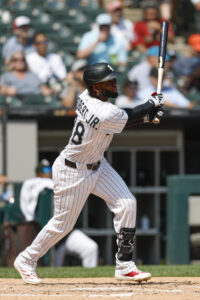
Robert had a trio of injured list stints, albeit all for minor issues, the following season. He stayed healthy for almost all of the ’23 campaign and showed the star-level ceiling he possesses at full strength. Robert drilled 38 homers, 36 doubles and one triple across 595 plate appearances. He hit .264/.315/.542 to win a Silver Slugger Award. FanGraphs and Baseball Reference each valued his season around five wins above replacement after accounting for his excellent center field defense.
The White Sox nevertheless went 61-101 and were outscored by 200 runs. It was clear they were amidst a multi-year teardown, but they elected to hang onto Robert when they had four years of affordable contractual control. They could have netted multiple top prospects if they’d shopped him.
Robert’s production has tanked as the team has slogged through two more terrible seasons. He’s a .223/.288/.372 hitter in 856 plate appearances since the start of 2024. He has struck out at a near-30% rate while continuing to battle injuries. The right hip flared up early in the ’24 season and kept him out for two months. A pair of left hamstring strains were the culprit last summer, with the latter costing him all of September.
The physical tools remain encouraging. Robert is one of the fastest players in the league despite the various lower body injuries. He ranks in the 92nd percentile in bat speed, according to Statcast. He’s an aggressive hitter who is always going to have his share of strikeouts. Teams would happily live with a lower on-base percentage if he’s making the kind of power and defensive impact he did during his best days in Chicago.
It’s largely a change-of-scenery bet from the Mets’ perspective. Robert only turned 28 in August and hasn’t shown signs of physical decline. He has spent the past three seasons on one of the worst teams in MLB, fully aware that he’d be traded at some point. A new environment could help him get back on track, although the durability concerns will persist even if his numbers improve.
Robert will at least upgrade the defense and bring some upside on the bases. He has stolen 20+ bags in three straight seasons and went 33-41 in stolen base attempts last year. He should also bring some juice against left-handed pitching, as he’s a career .293/.367/.505 hitter with the platoon advantage. His production against southpaws tanked in 2024 but rebounded last season.
The biggest risk for the Mets is financial. They’re assuming the entirety of Robert’s $20MM salary and committing to a $2MM buyout on a $20MM club option for the 2027 season. It’s not a small amount to spend on a player who hasn’t produced much over the past two years, and that’s before considering the tax implications.
The Mets pay a 110% tax on spending as a three-time repeat luxury tax payor whose CBT payroll is above $304MM. Robert is guaranteed $22MM for one season — the option buyout is guaranteed money — so they’re tagged with a $24.2MM tax hit. It’s a $46.2MM commitment overall, albeit one that comes with the upside of what could be a bargain option in ’27 if Robert hits his ceiling. RosterResource calculate their CBT number around $357MM, putting them on track to exceed last year’s season-ending $347MM mark — which required a $91.6MM tax payment. There’s a good chance they’ll have a tax bill north of $100MM by the end of the ’26 season.
They’ve taken on $64MM in AAV commitments for the 2026 season between the Robert trade and Bo Bichette signing over the past five days. The Mets haven’t wanted to lock themselves into lengthy deals one offseason after the Juan Soto signing. They’ve compensated with significant short-term investments to chase upside. Robert should be the everyday center fielder as long as he’s healthy. That’d push Tyrone Taylor either into a fourth outfield role or as a stopgap in left field if prospects Carson Benge and Jett Williams open the season in Triple-A. It seems likely to take them out of the running on Cody Bellinger, the top unsigned position player.
Although the White Sox missed their opportunity to trade Robert at the apex of his value, they deserve some credit for exercising this year’s option rather than cutting him loose for nothing in free agency. That at least netted them an intriguing depth piece in Acuña, who felt superfluous on the Mets but is a fine target for a rebuilding team.
The younger brother of Ronald Acuña Jr., Luisangel is a former Rangers signee whom the Mets acquired in the 2023 Max Scherzer deadline deal. His bloodlines and previous inclusion in one marquee trade have made him a more well-known prospect than his production probably warrants, but he’s not yet 24 and provides some multi-positional utility for skipper Will Venable.
Acuña signed as a shortstop and has the arm strength to profile on the left side of the infield. There weren’t many shortstop reps available on a team with Francisco Lindor, leading the Mets to bounce him around in a utility capacity. Acuña has plus-plus speed and could be an option in center field as well. He’s splitting his time between shortstop and center field in the Venezuelan winter league, but the majority of his MLB experience has come as a second baseman.

The White Sox shouldn’t have any issue getting Acuña in the lineup even if he’s not expected to push Colson Montgomery off shortstop. He could step into the everyday center field role vacated by the Robert trade or push for second/third base playing time alongside Chase Meidroth, Miguel Vargas and Lenyn Sosa.
The question is whether Acuña will bring enough to the table offensively to warrant playing time once the Sox are better positioned to contend. He’s a .248/.299/.341 hitter in his first 233 MLB plate appearances. Acuña has had a similarly light bat against Triple-A pitching. The right-handed hitter owns a .265/.307/.360 line in more than 700 trips to the plate at the top minor league level. Acuña has solid contact skills but puts a lot of balls on the ground without big exit velocities. He’s a slash-and-dash type hitter whose best current ability is as a runner, where he went 16-17 in stolen base tries over 95 MLB games last year.
Acuña is out of minor league options, so the White Sox will need to keep him on the MLB roster. They wouldn’t have traded Robert for him if they didn’t intend to do so. The lack of roster flexibility was a much bigger hangup for the Mets, who also cannot option Mark Vientos and are unlikely to send Brett Baty back to Triple-A. They knew they’d lose Acuña on waivers but weren’t positioned to offer him the playing time to take a step forward offensively. Chicago can control him through the 2031 season, as Acuña has yet to reach a year of MLB service.
The White Sox also add a low minors arm in Pauley, a 6’2″ righty whom the Mets took in the 12th round of last year’s draft. The Harvard product received an above-slot $400K signing bonus. Baseball America ranked him the #435 prospect in the draft, writing in June that teams like the riding life on his mid-90s fastball and plus spin rates on his breaking ball. Pauley walked more than 15% of opponents with a 4.61 ERA in his draft year. His command will need to take a significant leap if he’s to get to the majors, even as a reliever, but the Sox’s player development team is clearly intrigued by his raw stuff.
From a payroll standpoint, dealing Robert drops Chicago’s projected spending to $67MM. They opened last season around $81MM, so this could free them up for a late-offseason depth addition or two. The Sox could bring in a veteran middle reliever and/or a fourth outfielder whom they’d try to flip for another lottery ticket prospect in the Pauley mold at the deadline.
Jeff Passan of ESPN was first on the trade terms. Jon Heyman of The New York Post reported that the Mets were assuming the full salary. Respective images courtesy of Kamil Krzaczynski, Jay Biggerstaff of Imagn Images.
Yankees Have Shown Interest In Nico Hoerner, Luis Robert Jr.
At the start of the offseason, it felt inevitable that the Yankees and Cody Bellinger would reunite. That may still happen but it seems up in the air at the moment. Talks between the two sides have seemingly stalled out. Jon Heyman of The New York Post reports today that both sides have been exploring alternatives lately. Bellinger has interest from other clubs. Meanwhile, the Yankees have been touching base with free agents Bo Bichette and Kyle Tucker, who they have been connected to previously. They’ve also checked in on trade candidates Luis Robert Jr. of the White Sox and Nico Hoerner of the Cubs. The Yanks’ interest in Hoerner was first reported by Pat Ragazzo of SI.
Bellinger spent 2025 in the Bronx and it seemed to go well. He hit 29 home runs and slashed .27/.334/.480 for a wRC+ 125. He stole 13 bases and played all three outfield slots as well as first base. He appeared to be especially comfortable in Yankee Stadium, slashing .302/.365/.544 there. He opted out of the final season of his contract, taking a $5MM buyout and leaving a $25MM salary on the table. At the start of the offseason, MLBTR predicted Bellinger to have enough juice for a five-year, $140MM deal.
It was reported on New Year’s Day that the Yanks had made an offer to Bellinger. A few days later came reports of a second offer. No details of either offer were initially revealed but further reporting indicated the sides weren’t close to a deal. Subsequent reporting has put the Yankee offer at five years and over $30MM annually, putting the guarantee somewhere in the vicinity of $155MM. That hasn’t been enough to get a deal done with Bellinger hoping to get to seven years.
It seems the two sides have taken a break from the staredown to look elsewhere. Heyman says they continued talking over the weekend but each party is considering alternatives. Heyman mentions the Dodgers, Giants and Mets as clubs believed to have interest in Bellinger. Those clubs have all been tied to Bellinger via rumors earlier this winter but are imperfect fits. All three could use outfield help to varying degrees but they also appear to be trying to avoid long-term commitments at the moment.
Since the hold-up between the Yankees and Bellinger appears to be the length of their offer, it’s hard to envision any of these clubs outbidding the Yankees. Any of the three could perhaps change their stance to take advantage of this opportunity but it also could be more likely that those clubs would prefer to get Bellinger via another short-term, opt-out laden deal. It’s unclear if he would want to do that after going down that road a couple of years ago, but it presumably depends on where things go in the next few weeks.
The Blue Jays have also been connected to Bellinger this winter but it seems they are more focused on Bichette and Tucker with Bellinger perhaps a backup plan. The Cubs were also connected to their old friend Bellinger this winter but signing Alex Bregman is presumably their big splash of the winter.
For the Yankees, they could perhaps increase their offer but are also seeing what else is on the menu. With Hoerner, it’s unclear if the Cubs have any interest in trading him but he has been in rumors and it’s arguable they should consider it. Hoerner is a good player but is a free agent after 2026. With the Cubs recently signing Bregman, their infield is now a bit cluttered. Putting Bregman at third bumps Matt Shaw to the bench.
If they wanted to, the Cubs could trade Hoerner and then move Shaw to second base. That would declutter things a bit and also should bring back something of note. Hoerner’s $12MM salary this year is very affordable considering his production. He doesn’t hit a ton of home runs but rarely strikes out, relying on his contact, speed and defense to provide value. It’s a combination that works, as FanGraphs has credited him with 3.9 wins above replacement or more in each of the past four years.
It could also give the Cubs a bit more breathing room in terms of the competitive balance tax. The Cubs went narrowly above the CBT in 2024 but have otherwise stayed under the line in each season from 2021 to the present.
RosterResource currently estimates them for a CBT number of just over $243MM, putting them less than a million from this year’s line. A team’s CBT number isn’t calculated until the end of the year, so in-season moves can move a club up or down. If the Cubs want to avoid the tax in 2026, creating some space now could be something they consider to give them more ability to make moves at the deadline.
For the Yankees, Hoerner wouldn’t help replace Bellinger in the outfield but he should make the team better. Though he has largely been a second baseman for the Cubs, he is considered good enough to be a shortstop. He has just been on the other side of the bag in deference to Dansby Swanson.
The Yanks have an uncertain shortstop situation at present, hence their previous connection to Bichette. Anthony Volpe is coming off a down year and may not be ready for Opening Day 2026 as he recovers from shoulder surgery. José Caballero currently projects as the top shortstop for the early season, though he has mostly been a utility guy in his career. If the Yanks add a shortstop, then he could return to that role.
The thinking with signing Bichette had a couple of attractions. He could upgrade the shortstop position now, then second base in the future. Jazz Chisholm Jr. is currently the club’s second baseman but he is slated for free agency after the upcoming season. With the Yanks having shortstop prospect George Lombard Jr. waiting in the wings, Bichette could cover short for a year and then slide to the other side of the bag with either Lombard or a resurgent Volpe at short.
Hoener wouldn’t be quite the same acquisition, barring an extension, as he is only signed through 2026. Still, that would likely have appeal for the Yankees in a different way. They could upgrade the middle infield for now without making a huge commitment. After 2026, depending on how things go with Lombard, Volpe, Hoerner and Chisholm, they could then decide about how to invest in the middle infield for the long term.
They would, however, have to give the Cubs something of value in return. As mentioned, it’s unclear if the Cubs have any interest at all in flipping Hoerner. Even if they do, they would presumably be looking for some kind of win-now upgrade, likely on the pitching staff. With the Yanks looking for pitching help themselves, it may be challenging to line up a deal that makes sense for both sides.
As for Robert, he is surely available but also tricky to value. He has shown borderline MVP upside but is coming off two years marred by injuries and underperformance. In 2023, he hit 38 home runs and stole 20 bases, slashed .264/.315/.542 and got strong grades for his center field defense. But since then, he has made a number of trips to the injured list while slashing .223/.288/.372 for a wRC+ of 84.
The White Sox are rebuilding and will surely trade Robert but are seemingly hoping to trade him at peak value. He wasn’t moved in 2025 even though it was the final guaranteed year of his contract. They picked up a $20MM option for 2026. Teams like the Yankees and others might want to buy low but the Sox are likely motivated to wait. After his down year, it would make sense to hold him until the deadline, with the hope of him getting back in form and therefore increasing his trade value.
The Yankee outfield currently projects to include Aaron Judge and Trent Grisham in two spots. If the season started today, Jasson Domínguez and Spencer Jones would battle for a third. Domínguez is coming off a rough year in 2025, with an average bat and poor defense. Jones hit 35 home runs in the minors last year but also struck out 35.4% of the time, creating some doubt about how viable his bat will be in the majors.
Acquiring Hoerner wouldn’t do much to change that picture but perhaps the Yanks would be more comfortable with the uncertainty of the Domínguez/Jones combo with a stronger infield. Bringing back Bellinger, signing Tucker or acquiring Robert would strengthen the outfield group, bumping Domínguez to more of a part-time role and keeping Jones in Triple-A.
There are many moving pieces here as the offseason moves into the final weeks before pitchers and catchers report to spring training. Tucker, Bichette and Bellinger are the top position players still out there, with a lot of overlapping interest. The Jays are seemingly in on all three, considered by some to be the favorites for Tucker but a Bichette reunion also makes sense. Like Bellinger, Bichette is considering other options. He is meeting with the Phillies today, although that is a bit complicated, as Philadelphia would seemingly have to move on from both J.T. Realmuto and Alec Bohm to fit Bichette onto the roster and into the budget. The Red Sox just missed on Bregman and could turn to Bichette but they don’t seem too keen on big long-term investments. The Dodgers, Giants and Mets may be looking to get opportunistic if a nice short-term opportunity becomes possible.
It’s a bit of a game of musical chairs with the Yankees and Bellinger some of the key participants. Bregman just found a seat in Chicago but others will have to sit soon. Pitchers and catchers report to spring training in about a month, so the music is slowing down.
Photo courtesy of Sergio Estrada, Imagn Images
Reds Among Teams Showing Interest In Luis Robert Jr.
Last offseason, the Reds were among the teams linked to Luis Robert Jr. in trade conversations. The White Sox surprisingly held onto their center fielder both last winter and beyond the trade deadline. They’ve been content to keep him into 2026 but aren’t closed off to talks.
Bob Nightengale of USA Today and Gordon Wittenmyer of The Cincinnati Enquirer each report that the Reds have resumed discussions with the Sox. Nightengale also lists the Mets as a possibility. Robert has been more loosely tied to Pittsburgh, San Diego and Philadelphia at points throughout the offseason.
The Reds have yet to upgrade a lineup that ranked 14th in scoring despite playing half its games at Great American Ball Park. Their park-adjusted offense was eight percentage points below league average. That tied them with the Angels and Rangers for fifth-worst in MLB. Cincinnati made a run at Kyle Schwarber but reportedly viewed the Ohio native as a unique free agent. There’s no indication they’re going to reallocate the $25MM annual salary that they offered Schwarber elsewhere on the free agent market.
Robert will make $20MM next season. Wittenmyer writes that the White Sox may be willing to eat roughly half that salary to facilitate a trade. There’s a matching club option for the 2027 campaign. Chicago’s seeming willingness to pay down part of the contract would be conditional on getting a package of controllable talent that they like. Robert isn’t a pure salary dump. If the Sox had viewed him as a negative value asset, they would have bought him out for $2MM at the beginning of the winter.
Cincinnati has a quality center fielder in TJ Friedl. They don’t have an everyday option in left, where Friedl’s below-average arm strength would be less of a concern. Robert would certainly upgrade the outfield defense, though it’s less clear whether he’s a consistent enough hitter to be Cincinnati’s marquee offseason pickup. He has been a well below-average hitter since his 38-homer campaign two years ago. Robert owns a .223/.288/.372 batting line with a near-30% strikeout rate in 856 plate appearances since the start of 2024. He looked like he was turning a corner in the second half of ’25 but suffered a season-ending hamstring strain in August.
The Mets have a clearer need in center field. Tyrone Taylor projects as the starter despite hitting .223/.279/.319 across 341 plate appearances this past season. Top prospect Carson Benge is looming but struggled in his first 24 Triple-A contests after raking up through Double-A. He’s likely to begin the year in the minors. Left field is wide open following the Brandon Nimmo and Jeff McNeil trades.
New York is virtually certain to add an outfielder. Ken Rosenthal and Will Sammon of The Athletic write that they’re looking to add a right-handed bat somewhere in the lineup. Robert qualifies and is coming off a strong season against left-handed pitching. He was terrible against southpaws in 2024 but raked against them in every other season and has a lifetime .293/.367/.505 slash with the platoon advantage.