
A’s Re-Sign Mike Fiers
Having freed up some money in today’s earlier trade, the A’s put some of that money immediately to use by bringing starter Mike Fiers back into the fold. Fiers and the A’s have agreed to a one-year, $3.5MM deal, per the Athletic’s Ken Rosenthal (via Twitter). Fiers is a client of BASH Baseball.
The A’s were the only team to make an offer to Fiers, notes Susan Slusser of the San Francisco Chronicle, though Fiers had also made clear his desire to return to Oakland. Given Fiers’ notoriety as the whistleblower of the Astros sign-stealing scandal, it’s interesting to note the lack of league-wide interest, though Fiers also doesn’t own the pitching profile that typically generates bidding wars in free agency.
The 35-year-old righty is coming off a 4.58 ERA/5.41 SIERA season over 59 innings for the A’s with a 35 percent groundball rate, a very low 14.4 strikeout rate, and an above-average 6.2 percent walk rate. As a contact-friendly flyball artist, Fiers’ game is particularly well-suited for the spacious confines of the Coliseum in Oakland. Since joining the A’s mid-season in 2018, Fiers’ raw run prevention numbers have routinely outperformed SIERA and fielding independent pitching metrics, thanks largely to low BABIP numbers.
At his best, Fiers can bedevil opponents with his arsenal, as evidenced by two career no-hitters. But overall, the Athletics will be pleased if Fiers can continue his 2019-20 performance level, and especially if Fiers can eat up some innings at the back of the rotation. Averaging 172 innings per season from 2015-19, Fiers offers some durability to an Oakland pitching staff that has been hit by a lot of injuries in recent years.
Braves Re-Sign Marcell Ozuna
7:56pm: The Braves have designated outfielder Kyle Garlick for assignment to make room on the 40-man roster for Ozuna’s re-signing, according to David O’Brien of The Athletic. Formerly a Dodger and Phillie, Garlick joined the Braves as a waiver claim on Jan. 23.
7:27pm: The Braves are re-signing outfielder Marcell Ozuna to a four-year deal, Joel Sherman of the New York Post tweets. The club has announced the move, and it’s a $65MM guarantee that could reach $80MM if the Braves pick up an option in Year 5, per Robert Murray of Fansided. Hector Gomez reported earlier Friday that Ozuna was close to returning to Atlanta. The buyout in 2025 is worth $1MM, Craig Mish of SportsGrid relays. Ozuna is a client of CAA Sports.
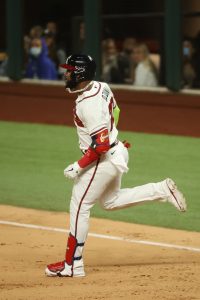
This is an enormous raise for Ozuna, a former Marlin and Cardinal who parlayed a history of above-average production into an $18MM guarantee with the Braves last winter. It ended up as a great move by Atlanta, as Ozuna slashed a monstrous .338/.431/.636 with 18 home runs in 60 games and 267 plate appearances. Along with his stellar bottom-line numbers, Ozuna ranked as an elite hitter by Statcast’s standards.
If there’s any criticism of Ozuna’s 2020, it’s that he didn’t play much defense, only lining up in the outfield 21 times during a year in which the National League featured the universal designated hitter. It remains unclear whether the NL will keep the DH around in 2021, but even if it doesn’t, the Braves will bank on the 30-year-old Ozuna’s offensive abilities remaining intact. The back-to-back-to-back NL East champions clearly needed to either re-sign Ozuna or pick up another big bat to replace him this offseason, and now they have succeeded in retaining one of MLB’s premier hitters.
Braves general manager Alex Anthopoulos isn’t known for signing players to long-term deals, but he made an exception in this case to keep together an offense built around Ozuna, 2020 NL MVP Freddie Freeman and Ronald Acuna Jr. The Braves made earlier notable free-agent signings when they added starters Charlie Morton and Drew Smyly on shorter pacts. Considering what the Braves have done this offseason, they ought to be a force again in the NL East next season, though the Mets, Nationals, Phillies and Marlins should make it difficult on them to win the division yet again.
The MLB offseason got off to an incredibly slow start, but high-end free agents have come flying off the board in the past few weeks. Ozuna’s re-signing means none of MLBTR’s top 10 free agents from the beginning of the winter are left without jobs. MLBTR ranked Ozuna fourth among available players and predicted he would earn a four-year, $72MM deal.
Cubs To Sign Joc Pederson
FEB. 5: The mutual option includes a $10MM salary or a $2.5MM buyout, Jon Heyman of MLB Network tweets. Pederson could also earn an extra $125K for 500, 525, 550 or 575 plate appearances.
JAN. 29, 9:05am: There’s a mutual option for the 2022 season on the contract as well, Sherman tweets. As with many mutual options, it comes with a notable buyout, so Pederson’s actual 2021 salary will come in a ways south of that $7MM sum. (Option buyouts are always included in the “guaranteed” portion of a contract.)
Mutual options are typically used as accounting measures more than anything else. A player who overperforms his contract will generally decline his half of the option in favor of a return to market in search of a more lucrative deal; similarly, a player who underperforms may opt into his side of the deal, but the team will turn down its half in those settings. It’s not unprecedented for both sides to exercise a mutual option, but it is quite rare. In other words, the overwhelming likelihood is that Pederson will again be on the open market next winter.
8:30am: It’s a one-year, $7MM deal for Pederson, tweets ESPN’s Jeff Passan. The contract carries an additional $500K of available incentives, tweets Joel Sherman of the New York Post. Passan suggests that the Cubs will give Pederson an opportunity to play on an everyday basis rather than platooning him — a component of the deal that was particularly appealing for Pederson.
7:24am: The Cubs are in agreement on a deal with free-agent outfielder Joc Pederson, reports Ken Rosenthal of The Athletic (via Twitter). The Excel Sports Management client’s contract is still pending the completion of a physical.
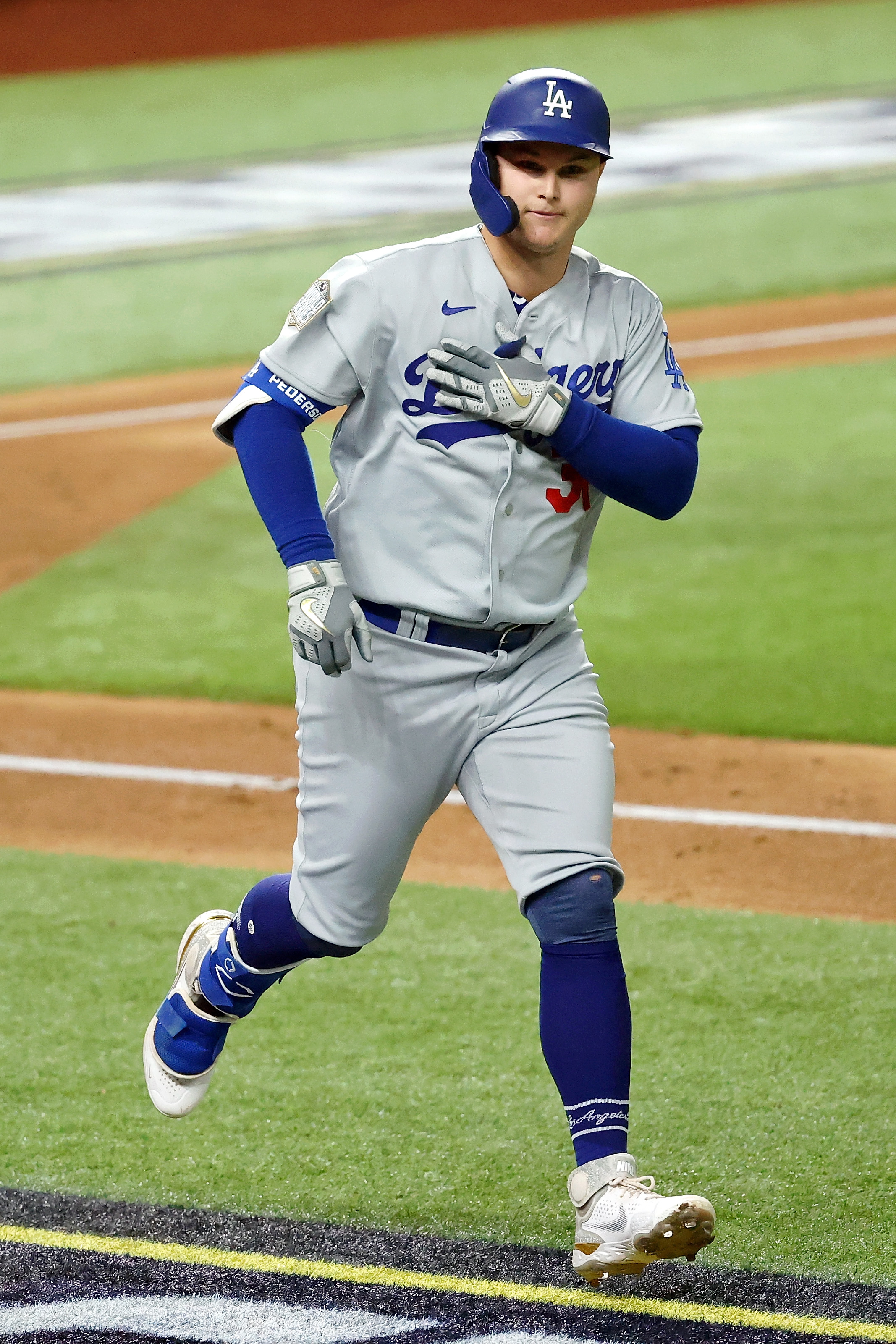
Pederson, 28, represents the first notable addition of the offseason for a Cubs team that has otherwise been quiet on the free-agent front this winter (small deals with Austin Romine and Kohl Stewart notwithstanding). Pederson, in fact, will become the most prominent name to sign a free-agent deal with the Cubs since Craig Kimbrel. The team has generally eschewed the pursuit of notable free agents in each offseason since signing Yu Darvish to a six-year deal, as owner Tom Ricketts has openly lamented a lack of resources and declared 2020’s revenue losses to be “biblical” in proportion.
Chicago, of course, traded Darvish and Victor Caratini to the Padres earlier this season and non-tendered Kyle Schwarber as well. They’ll reinvest some of those savings into this deal with Pederson, though it’s at least something of an odd fit given the vast similarities he has to Schwarber. Pederson is a career .230/.336/.470 hitter to Schwarber’s .230/.336/.480 batting line, though Pederson has put up that nearly identical line in a more pitcher-friendly setting (hence the gap in their respective 118 and 113 wRC+ marks).
Both left-handed hitters are largely considered to be platoon bats, and as is the case with their overall numbers, their splits against righties are nearly identical: .238/.349/.501 for Pederson against .239/.345/.514 for Schwarber. The same five-point gap in wRC+ (128 vs. 123) leans in favor of Pederson because of his home park. The primary difference seemingly comes down to defense, where Pederson has a solid track record in left field and Schwarber has been consistently below average. Still, it’s rather surprising to see the Cubs go out and sign a player whose offense is a near-mirror image of an established clubhouse presence they cast aside not two months ago.
With Pederson on board, the Cubs’ projected payroll jumps to about $152MM for the upcoming season, although future dealings could still impact that number. Both Willson Contreras and Kris Bryant are still candidates to be moved prior to Opening Day, with Bryant in particular standing out as a candidate given his lone remaining year of club control (at a hefty $19.5MM salary). The Cubs also figure to explore extensions with Anthony Rizzo and Javier Baez as the season approaches.
Tigers To Re-Sign Jonathan Schoop
The Tigers are re-signing second baseman Jonathan Schoop to a one-year, $4.5MM contract, Ken Rosenthal of The Athletic reports. Schoop is a client of VC Sports Group.
A member of the Orioles, Brewers and Twins earlier in his career, Schoop signed a $6.1MM deal with the Tigers heading into last season. At his best, Schoop slashed .293/.338/.503 with 32 home runs in 675 plate appearances as an Oriole in 2017. Schoop has never been that effective in any other season, but he did do a nice job last year as a member of the Tigers, with whom he batted .278/.324/.475 with eight homers over 177 trips to the plate. However, the 29-year-old did have a difficult season by Statcast’s standards, ranking way below average in most important categories, including exit velocity, hard-hit rate and expected weighted on-base average.
The Tigers, though, aren’t necessarily pushing for a star at the keystone right now. For the most part, as a rebuilding team that doesn’t figure to fight for a playoff spot in the near future, Detroit wants veteran Band-Aids to fit positions not occupied by younger players. Keeping the 29-year-old Schoop seems to make sense for the Tigers, then, considering they’re only guaranteeing him one more season on their roster. Meanwhile, free agency has lost yet another capable starter at second.
Trevor Bauer Announces He Will Sign With Dodgers
The Dodgers have agreed to a deal with top free agent starter Trevor Bauer, reports MLB Network’s Jon Heyman (via Twitter). It’s a three-year deal with opt-outs after year one and year two, per ESPN’s Jeff Passan. MLB.com’s Mark Feinsand adds that Bauer is guaranteed a total of $102MM on the deal, which includes a $40MM salary in 2021 and a $45MM salary in 2022. Both marks establish new records for the highest single-season salary, though the contract’s overall $34MM average annual value is still a bit shy of Gerrit Cole‘s record $36MM. Bauer himself has confirmed the signing on YouTube.
The Mets offered Bauer more than the Dodgers did in the end, Joel Sherman of the New York Post tweets, but the Santa Clarita native and UCLA product was drawn both to Southern California, the opportunity to help defend a World Series championship and to the Dodgers’ “cutting edge,” technologically and data-driven pitching practices, per Sherman.
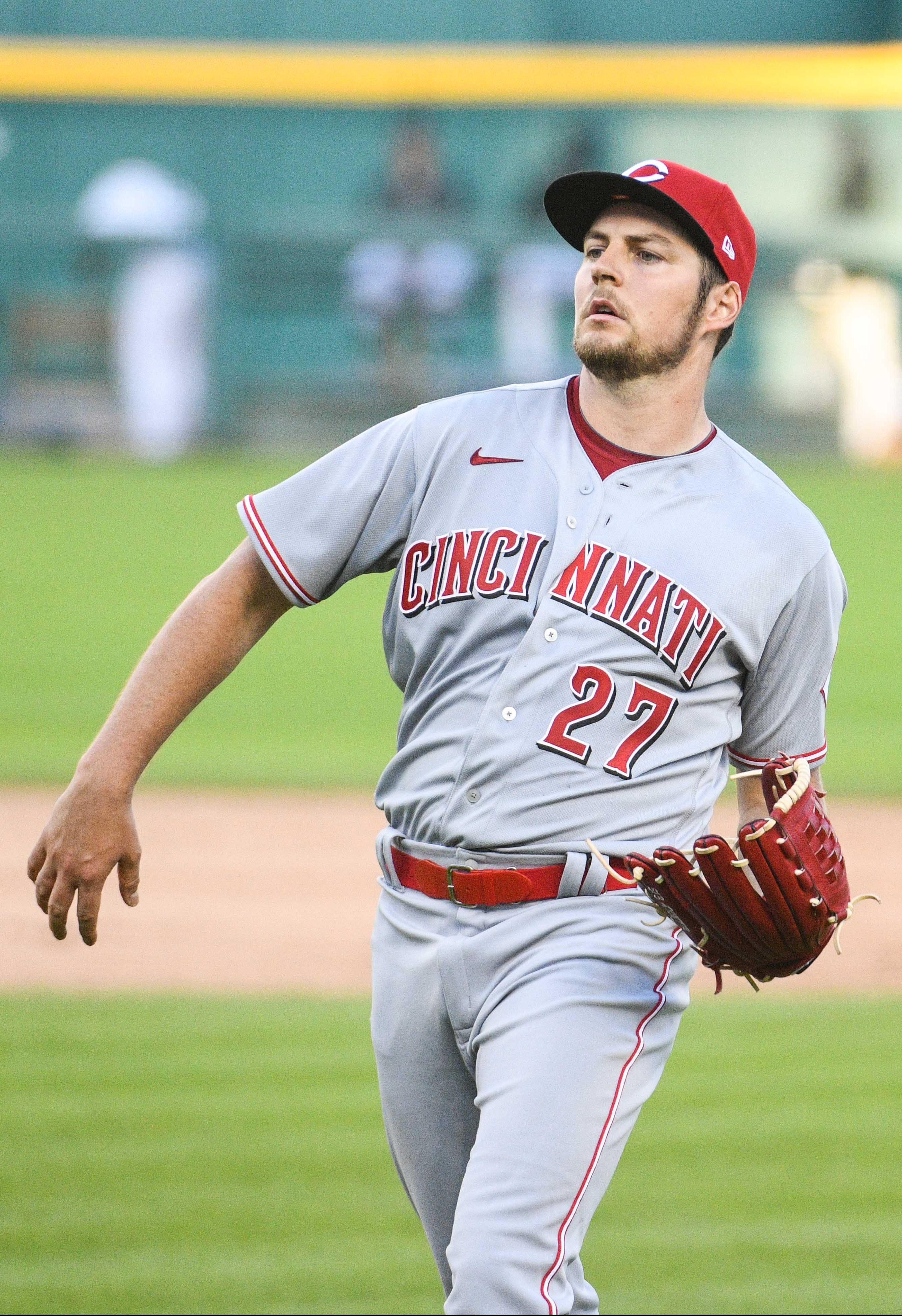
By landing Bauer, the Dodgers will be able to boast one of the more imposing rotations in recent memory. The reigning NL Cy Young winner will join a starting staff that already includes Walker Buehler, Clayton Kershaw, Julio Urias and David Price, with youngsters Dustin May and Tony Gonsolin available to soak up some innings as well as the club tries to manage workloads after a shortened 2020 schedule.
Bauer is a polarizing arm among MLB fans, both for his social media presence and for the volatility of his on-field performance. The right-hander was the No. 3 overall pick out of UCLA back in 2011, and while he was always billed as a potential top-of-the-rotation arm as a prospect, he settled in as more of a mid-rotation starter with tantalizing stuff for much of his early career.
Things changed in 2018 when Bauer broke out with a brilliant, Cy Young-caliber season. He may well have won the AL Cy Young with the Indians that year had a stress fracture in his right tibia not cut his season short by a month. Bauer started 27 games in 2018 and pitched to a pristine 2.21 ERA and 2.94 SIERA while striking out 30.8 percent of his opponents against just a 7.9 percent walk rate. Bauer posted a 13.3 percent swinging-strike rate that year, averaged 95 miles per hour on his four-seamer and, at age 27, looked to be breaking out as the ace he’d long been expected to become.
The pendulum swung back in the opposite direction early in 2019, however. Bauer got out to a fine start, pitching to a 3.49 ERA and racking up 152 1/3 innings through his first 23 starts before he was blown up for eight runs in a now-infamous start that saw him hurl the ball over the center field fence at Kansas City’s Kauffman Stadium upon being removed from the game. Bauer was surprisingly traded to the Reds just days later, and his initial stint in Cincinnati didn’t go well, to say the least. In 10 games with the Reds down the stretch in 2019, Bauer was hammered for a 6.39 ERA.
That bloated mark was due largely to a fluky home run rate, however, and Bauer saw both his strikeout and walk rates remain strong. Fielding-independent pitching metrics were more bullish on his work, and his velocity held up. Entering the 2020 season, he looked like a potential rebound candidate, and he achieved that feat and then some.
Bauer’s 1.73 ERA paced the National League and was second in all of MLB to Shane Bieber, while his 2.94 SIERA ranked fourth behind Bieber, Jacob deGrom and Kenta Maeda. Bieber and deGrom were the only two starters in the game to top Bauer’s 36 percent strikeout rate, and that same pair were the only two starters with a better K-BB% than Bauer’s 29.9.
Obviously, the historic contracts that both the Dodgers and Mets were willing to put forth in order to sign Bauer are bets not necessarily on his career marks but on his ability to continue pitching at his 2018 and 2020 levels. His detractors will regularly point out that Bauer has “only” had 1.5 elite seasons, while supporters can point to the fact that outside his final 11 starts in 2019, Bauer has been pitching at a front-of-the-rotation level since Opening Day 2018. Even with that brutal finish to the 2019 season, he owns a 3.18 ERA and 3.61 SIERA with premium strikeout and walk rates over the past three years combined.
Fans can — and will — debate whether that’s worth a record-setting investment, but it should also be noted that the reason for his sky-high AAV is that both the Dodgers and Mets were willing to pay a premium to limit the length of the contract. Had Bauer sought a contract of five, six or seven years in length, as most pitchers of his age and with his track record would have done, he’d have commanded a strong but decidedly smaller annual salary. The Dodgers have previously pursued this type of arrangement with other premier free agents, most notably including Bryce Harper, whom they reportedly offered roughly $45MM annually over a four-year term during his free agency a few years ago.
The Bauer contract will send the Dodgers skyrocketing past the $210MM luxury-tax barrier, making them the lone club in baseball this winter that has been willing to surpass that mark. While many owners have treated that threshold as a salary cap, the reality is that the Dodgers’ penalty for signing Bauer won’t be particularly heavy. They’d dipped south of the luxury line in 2019 and 2020, so they’ll be considered a first-time offender.
The Dodgers owe a 20 percent tax on the first $20MM by which they exceed the $210MM mark and a 32 percent tax on the next $20MM. Roster Resource’s Jason Martinez projects the team’s luxury obligations at roughly $239.5MM — meaning the Dodgers’ tax penalty, at present, will be a hair north of $7MM. That’s assuming no further additions or subtractions to the payroll, of course, but it’s certainly possible they could look for some creative trades to alter that financial outlook — particularly if they still hope to bring back franchise cornerstone Justin Turner.
We also can’t forget the Reds when talking about Bauer’s signing. While Cincinnati never looked like a realistic option to re-sign the Cy Young winner, the Reds did make him an $18.9MM qualifying offer, meaning they’re entitled to draft compensation. They’ll receive a pick at the end of the first round of next year’s draft, whereas the Dodgers will forfeit their second-highest selection in next year’s draft and also lose $500K of next year’s international bonus pool.
The last-minute Bauer strike by the Dodgers only further boosts what was already one of the game’s deepest and most talented pitching staffs. It also serves as counterpunch of sorts to an uber-aggressive winter from the division-rival Padres, who’ve added the likes of Blake Snell, Yu Darvish and Joe Musgrove to their own staff. With the Rockies dealing away Nolan Arenado, the Giants making rather minimal additions and the D-backs largely sitting out the offseason, the stage is set for a two-team race for NL West supremacy.
While Bauer’s three-month free-agent saga has drawn to a dramatic close, it’s quite possible a similar cycle will play out again next winter. Tempting as the $45MM salary in 2022 would be, he’ll “only” have two years and $62MM remaining on his contract next winter. A $31MM annual value over a two-year term makes for quite the safety net, but if Bauer again pitches at an ace-caliber level, he’d surely be able to command a larger guarantee over a lengthier term — or at least secure a similar three-year deal with ultra-premium annual salaries once again.
Opting out of the $45MM salary in 2022 may seem unthinkable to some, but remember that as recently as 2019, Bauer was planning to only ever sign one-year contracts in his career, believing strongly in furthering the market for future pitchers, maintaining control over his career and maximizing his earnings through a series of year-to-year arrangements wherein he was taking on more risk than teams. Bauer obviously softened his stance and displayed a willingness to consider multi-year pacts this winter, but the opt-out provisions in this contract give him all the flexibility of a one-year pact, and he could look for a similar opportunity next winter if he has earning power beyond that $62MM guarantee.
Brewers Sign Kolten Wong
Kolten Wong is staying in the NL Central, but the longtime Cardinals second baseman will don a new jersey. The Brewers announced Friday that they’ve signed Wong to a two-year contract with a club option for a third season. The PSI Sports Management client will reportedly be guaranteed $18MM on the deal, and the club option would push the total to $26MM, if exercised.
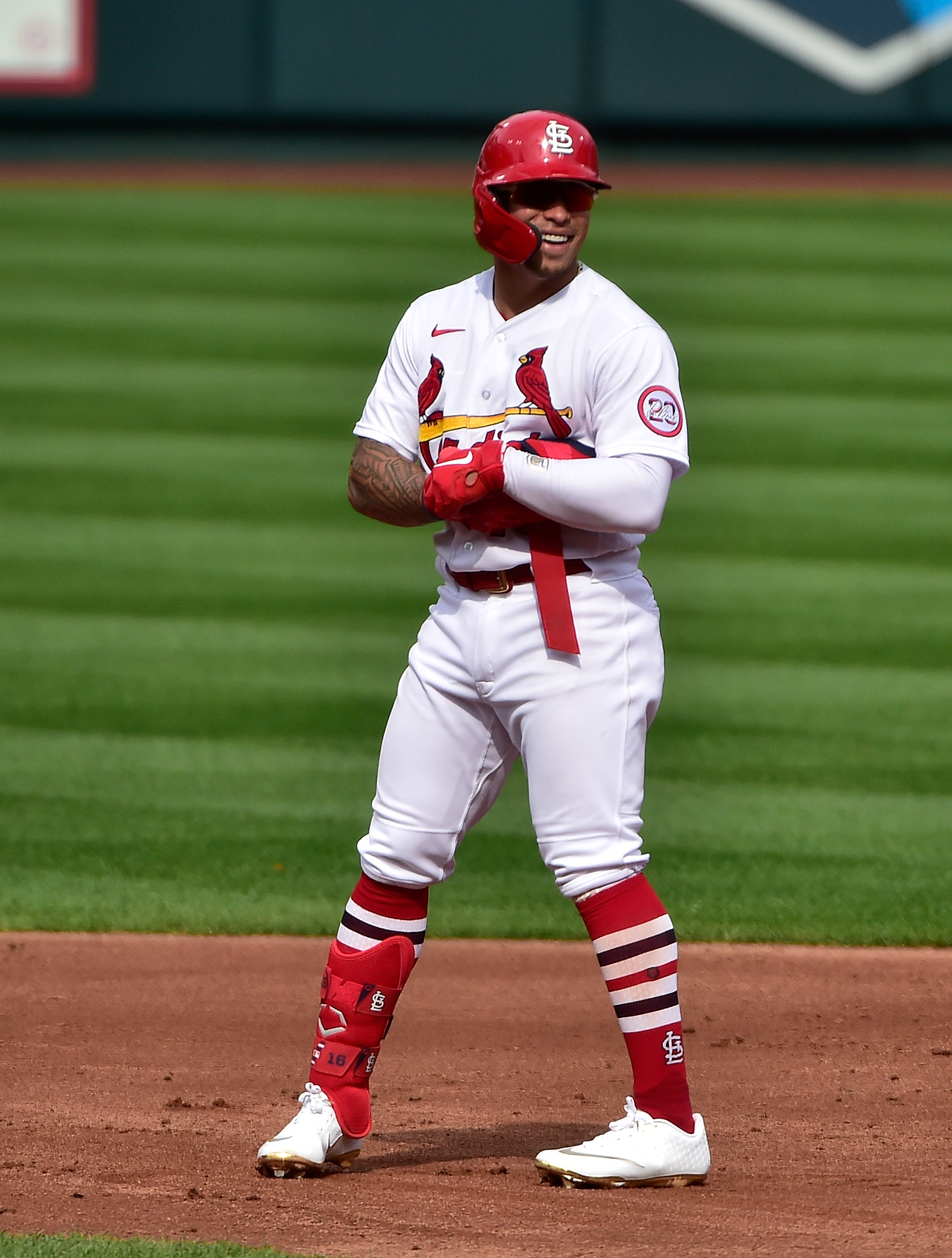
Milwaukee is plenty familiar with Wong, 30, after he spent the past eight seasons with the Cardinals — mostly as their everyday second baseman. He hit the open market earlier this winter after the Cards declined a $12.5MM club option in favor of a $1.5MM buyout — a decision that surprised many of their fans. Wong had an up-and-down tenure with the Cardinals early in his career, but he’s been a mainstay in the lineup since late in the 2016 season.
Over the past four seasons, Wong has settled in as a roughly league-average offensive performer, with much of his offensive value coming through a keen eye at the plate. He’s a .273/.356/.398 hitter in that time and has added some value on the bases as well, swiping 43 bags in 56 tries (77 percent).
Where Wong truly shines, of course, is with the glove. He’s established himself as the game’s premier defender at his position, securing Gold Glove wins in each of the past two seasons and standing out as the runaway leader at second base in Defensive Runs Saved in recent years. In fact, over the past three years, Wong’s 41 Defensive Runs Saved are the fourth-most for any player at any position in all of Major League Baseball. Ultimate Zone Rating and Outs Above Average are similarly bullish on his glovework in that time.
With the Brewers, Wong will surely slot in as the everyday option at second base due to that defensive wizardry. That will displace Keston Hiura, but he’s more of an offensive-minded player with questions about his defense at second base anyhow (-13 DRS in 1085 career innings).
There’s been talk of getting Hiura some work at first base in the past, and a deal with Wong figures to push Hiura there on a a near-everyday basis. The Brewers don’t have a set option at first beyond journeyman Daniel Vogelbach, who hit well for them in a small sample of 2020 at-bats but was also designated for assignment by a pair of clubs prior to landing in Milwaukee. His grasp on the job wasn’t exactly strong, and he’ll now likely be used as a bench bat, spot starter at first base and designated hitter during interleague play.
Prior to signing Wong, Milwaukee projected to carry about an $85MM payroll, per Roster Resource’s Jason Martinez. Wong’s $9MM salary still won’t bring them to the $97MM they’d have opened with in 2020 (prior to prorating), and the Brewers’ payroll is still nearly $40MM shy of their 2018 payroll levels. With Jurickson Profar, Enrique Hernandez and Tommy La Stella all commanding $6.5MMM to $7MM annually on multi-year deals, it seems Wong was intent on setting himself apart from the pack in terms of annual value, which he managed to do on his new deal.
Serious talks between the two sides were first reported by Ken Rosenthal of The Athletic (Twitter link). MLB.com’s Jon Morosi reported that an agreement was in place, and Rosenthal then broke the terms of the deal.
Angels To Acquire Dexter Fowler
9:57pm: The Angels are receiving $12.75MM in the deal, Maria Torres of the Los Angeles Times tweets.
9:28pm: The Angels will acquire switch-hitting outfielder Dexter Fowler from the Cardinals, per Bob Nightengale of USA Today. Along with Fowler, they’re getting cash considerations from the Cardinals, per an announcement from the Halos. That makes it clear this is a salary dump on the Cards’ part. Fowler waived a no-trade clause to make this swap possible.
The Cardinals signed Fowler to a five-year, $82.5MM contract before the 2017 campaign, but the former Rockie, Astro and Cub hasn’t necessarily lived up to the deal so far. Fowler, who will turn 35 next month, batted .233/.334/.408 with 49 home runs and 21 stolen bases in 1,500 plate appearances as a Redbird. He’s owed another $14.5MM in 2021, the final year of his deal, but the Cardinals are moving on after acquiring former Rockies third baseman Nolan Arenado‘s massive contract earlier this week. Harrison Bader, Tyler O’Neill and Dylan Carlson look as if they’ll be the team’s starting outfielders in 2021.
Fowler should be a stopgap for the Angels, who have the preeminent player in the game in center fielder Mike Trout. Left fielder Justin Upton is also still in the fold, while high-end prospects Jo Adell and Brandon Marsh haven’t established themselves in the bigs yet. Fowler, who played under now-Angels manager Joe Maddon as a Cub, should keep the seat warm in right until one of those two are ready to take over for good.
“We think there’s a lot left in the tank,” Angels general manger Perry Minasian said of Fowler (via Nightengale).
Indians Sign Eddie Rosario
FEB. 4: Cleveland has announced the signing. The deal also includes up to $600K in incentives, Jon Heyman of MLB Network tweets.
JAN. 29, 8:01pm: It’s a one-year, $8MM deal, pending a physical, per Jon Becker of Roster Resource. The deal is done, Paul Hoynes of cleveland.com reports.
7:27pm: The Indians and free-agent outfielder Eddie Rosario are nearing an agreement, Mark Feinsand of MLB.com tweets. Rosario is represented by Kyle Thousand of Roc Nation Sports.
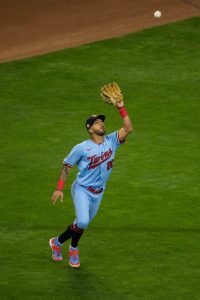
If this deal goes through, it would keep Rosario in the American League Central, where he played with the Twins from 2015-20. Rosario was a three-time 20-home run hitter as a Twin who put up a .277/.310/.478 line over 2,830 plate appearances in their uniform, but the club nonetheless moved on from him after last season. While Minnesota could have kept the 29-year-old for a projected $8.6MM to $12.9MM via arbitration next season, it decided to non-tender him. Rosario then reportedly drew interest from at least a few teams (including the Red Sox, Giants and Brewers) before the Indians landed him.
Cleveland entered the offseason in obvious need of help in the grass, as its outfield finished last in the American League in fWAR with a minus-0.9 fWAR mark in 2020. Their most used holdovers – Oscar Mercado, Jordan Luplow, Josh Naylor and Bradley Zimmer – all endured subpar years, but there wasn’t much expectation the small-budget Indians would sign someone as high-profile as Rosario. They did, after all, start the winter by cutting ties with closer Brad Hand – who had an affordable $10MM option – and they said goodbye to face-of-the-franchise shortstop Francisco Lindor in a trade with the Mets three weeks ago.
Although this has largely been a lean offseason for Cleveland, the team has been busy this week, as it re-signed second baseman Cesar Hernandez before potentially landing Rosario. The latter’s a longtime left fielder who should be the Indians’ top option there, considering Luplow, Naylor and the rest of their choices at the position can’t match his resume.
Twins To Sign Alex Colome
Feb. 4: The option on the deal is mutual, La Velle E. Neal III of the Minneapolis Star Tribune indicates. If the Twins decline the $5.5MM option, they’ll owe Colome a $1.25MM buyout. If the Twins pick up the option but Colome declines in favor of free agency, he won’t receive any buyout.
Feb. 3: The Twins are signing free-agent reliever Alex Colome to a one-year deal, according to Jon Heyman of MLB Network. The contract includes a $5MM salary for 2021 and an option. In all, it’s a $6.25MM guarantee, per Mark Feinsand of MLB.com.
The Twins were mentioned as suitors for Colome earlier Wednesday, so it isn’t surprising they’re bringing in the former Ray, Mariner and White Sox. The 32-year-old right-hander could now be the closer for Minnesota, having saved 138 games in the bigs. He converted 12 of 13 saves with the division-rival White Sox last year.
Colome, who averages 94 mph-plus on his fastball, has saved nearly 86 percent of chances in his career. At times, though, his strikeout numbers have fallen short. Last season, for instance, he ranked 126th out of 141 relievers with at least 20 innings in strikeout percentage (17.8). Colome did, however, finish better than average in walk and groundball rates (9.2 percent and 52.4 percent, respectively). He was also a Statcast darling who ranked above the vast majority of hurlers in several of its important categories.
The Twins’ bullpen checked in third in the majors in fWAR in 2020, though it has since lost Trevor May to the Mets in free agency, while Tyler Clippard and Sergio Romo – who combined for 43 frames – remain available. The addition of Colome should help plug those holes for Minnesota.
Giants Announce Tommy La Stella Signing
The Giants have made their previously reported agreement with infielder Tommy La Stella official, announcing on Thursday that he’s been signed to a three-year contract. The deal reportedly guarantees the Beverly Hills Sports Council client a total of $18.75MM, which will be paid out in heavily backloaded fashion: $2MM salary in 2021, $5.25MM in 2022 and $11.5MM in 2023.

La Stella was the No. 30 free agent on our board early in the offseason, with a projected two-year, $14MM deal ahead of him — a mark he’s surpassed. As for the Giants, their books are almost entirely clear following the 2022 season, where a $13MM club option for Evan Longoria is the only contract currently on the payroll. The $5MM buyout attached to that deal is the only guaranteed money on the books for the 2023 season, so a third year for La Stella is hardly prohibitive, even with the backloaded structure of this arrangement.
La Stella’s story is one of perseverance, as there was a time he considered retirement prior to the 2016 season. Again at the deadline, when the Cubs optioned the then-27-year-old La Stella to Triple-A, he thought about hanging it up rather than continue the grind back and forth between the minors and the Show. He returned, however, to resume his role as a professional pinch-hitter, winning a ring with the 2016 Cubs. When he reached free agency, La Stella looked for an opportunity to play full-time, and he found it with the Angels. He broke out with an All-Star season in 2019 when he slashed .295/.346/.486 with 16 home runs across 321 plate appearances.
He kept it up during the truncated 2020 season, producing 1.2 fWAR and 129 wRC+ that took the shape of a .281/.370/.449 line, solid 11.8 percent walk rate, and minuscule 5.3 percent strikeout rate. Though those numbers came in just 228 plate appearances, the Giants figure they are adding a tough out to the top of their lineup in the form of La Stella, who turns 32 years old at the end of the month.
For the Giants, La Stella fits a need as a left-handed bat that slides into the top of the order. Defensively, La Stella should take over the majority of reps at second base, pushing Donovan Solano back into a utility role. La Stella can also play third base. The Giants can now roll with a starting infield of Brandon Belt, La Stella, Brandon Crawford, and Longoria. Solano, Mauricio Dubon, Wilmer Flores, and Jason Vosler are capable of infield reps off the bench. Buster Posey, if healthy, would figure to spend some time at first base as well. In all, it’s a crowded, if versatile group. It also likely means Dubón spending most of his time in the outfield.
Alex Pavlovic of NBC Sports Bay Area first reported (via Twitter) that the two sides were close to a deal. ESPN’s Jeff Passan added that the deal would be three years in length (Twitter link). MLB.com’s Jon Morosi tweeted that a deal had been reached. The San Francisco Chronicle’s Susan Slusser reported the terms of the deal (Twitter links).