
Projected Arbitration Salaries For 2021
Matt Swartz has created a model to project salaries for arbitration eligible players, which we’ve been publishing at MLB Trade Rumors for ten years. This winter, due to the pandemic and 60-game MLB season, there’s more uncertainty than ever with arbitration, as I explained here.
In the baseball industry, teams and agents determine arbitration salaries by identifying comparable players – a method I hope to illustrate with examples later this winter. To project the entire arbitration class in this way would take a massive amount of time and effort. So, Matt has developed an algorithm to project arbitration salaries that looks at the player’s playing time, position, role, and performance statistics while accounting for inflation. The performance of comparable players matters, but our system is not directly selecting comps for each individual player.
As a disclaimer, I should note that even in a normal year, our projections are not to be used as a scorecard for the agent and team on an individual player level. A player doing better or worse than our projection isn’t indicative of anything. Our arbitration projections are created as a tool for our readers to get a general idea of a team’s payroll situation.
This winter, those involved in the process do not know how arbitration will account for the 60-game season, nor is there an agreement in place between MLB and the MLBPA on how to address it. Many cases may end up getting resolved in a hearing room. To reflect that uncertainty, we’re providing three projections for each player:
- Method 1: Applies model directly with actual statistics from this 60-game season
- Method 2: Extrapolates all counting stats to would-be 162-game totals. One home run becomes 2.7 home runs.
- Method 3: For non-first-time eligibles, finds the raise they’d get in a 162 game season, then gives them 37% of that raise
Keep in mind that with a potential record number of non-tenders, many of these players will be released by December 2nd.
If you find MLBTR’s arbitration projections useful, please consider supporting us with a subscription.
Angels (11)
- Justin Anderson – $700K / $700K / $700K
- Matt Andriese – $1.8MM / $2.8MM / $1.9MM
- Dylan Bundy – $5.9MM / $9.8MM / $6.8MM
- Andrew Heaney – $5.0MM / $8.0MM / $5.7MM
- Mike Mayers – $800K / $1.5MM / $800K
- Keynan Middleton – $1.0MM / $1.1MM / $900K
- Shohei Ohtani – $2.1MM / $3.0MM / $2.1MM (using hitter model)
- Felix Pena – $800K / $1.3MM / $800K
- Noe Ramirez – $1.1MM / $1.2MM / $1.0MM
- Hansel Robles – $3.85MM / $4.1MM / $3.9MM
- Max Stassi – $1.8MM / $2.5MM / $1.4MM
Astros (3)
- Carlos Correa – $8.0MM / $10.2MM / $8.8MM
- Aledmys Diaz – $2.8MM / $3.1MM / $2.8MM
- Lance McCullers Jr. – $4.7MM / $7.0MM / $5.2MM
Athletics (10)
- Chris Bassitt – $3.1MM / $5.6MM / $5.5MM
- Mark Canha – $5.4MM / $8.2MM / $6.1MM
- Matt Chapman – $2.9MM / $4.3MM / $2.9MM
- Tony Kemp – $900K / $1.2MM / $900K
- Sean Manaea – $4.2MM / $6.4MM / $4.7MM
- Frankie Montas – $1.6MM / $2.4MM / $1.6MM
- Matt Olson – $3.5MM / $6.4MM / $3.5MM
- Chad Pinder – $2.2MM / $2.4MM / $2.2MM
- Burch Smith – $600K / $800K / $600K
- Lou Trivino – $900K / $1.1MM / $900K
Blue Jays (3)
- A.J. Cole – $800K / $1.1MM / $800K
- Teoscar Hernandez – $2.7MM / $5.3MM / $2.7MM
- Travis Shaw – $4.2MM / $5.4MM / $4.5MM
- Ross Stripling – $2.5MM / $3.7MM / $2.7MM
Braves (8)
- Johan Camargo – $1.9MM / $2.3MM / $1.9MM
- Grant Dayton – $900K / $1.0MM / $800K
- Adam Duvall – $4.4MM / $7.1MM / $4.7MM
- Max Fried – $2.4MM / $4.6MM / $2.4MM
- Luke Jackson – $1.9MM / $2.1MM / $1.9MM
- A.J. Minter – $1.1MM / $1.6MM / $1.1MM
- Mike Soroka – $1.8MM / $1.9MM / $1.8MM
- Dansby Swanson – $4.3MM / $8.3MM / $5.0MM
Brewers (10)
- Dan Vogelbach – $1.4MM / $1.9MM / $1.4MM
- Orlando Arcia – $2.7MM / $3.8MM / $2.8MM
- Alex Claudio – $2.0MM / $2.3MM / $2.0MM
- Ben Gamel – $1.7MM / $2.1MM / $1.7MM
- Josh Hader – $4.5MM / $6.8MM / $5.1MM
- Corey Knebel – $5.125MM / $5.125MM / $5.125MM
- Omar Narvaez – $2.725MM / $3.1MM / $2.9MM
- Manny Pina – $2.1MM / $2.3MM / $2.0MM
- Brandon Woodruff – $2.3MM / $4.5MM / $2.3MM
- Jace Peterson – $800K / $900K / $700K
Cardinals (6)
- Harrison Bader – $1.2MM / $1.7MM / $1.2MM
- John Brebbia – $800K / $800K / $800K
- Jack Flaherty – $2.2MM / $3.0MM / $2.2MM
- John Gant – $1.5MM / $1.9MM / $1.5MM
- Jordan Hicks – $900K / $900K / $900K
- Alex Reyes – $1.0MM / $1.2MM / $1.0MM
Cubs (12)
- Albert Almora Jr. – $1.575MM / $1.575MM / $1.575MM
- Javier Baez – $10.0MM / $11.9MM / $10.7MM
- Kris Bryant – $18.6MM / $18.6MM / $18.6MM
- Victor Caratini – $1.2MM / $1.6MM / $1.2MM
- Willson Contreras – $5.0MM / $7.4MM / $5.6MM
- Ian Happ – $2.5MM / $4.6MM / $2.5MM
- Colin Rea – $1.0MM / $1.6MM / $1.0MM
- Kyle Ryan – $1.2MM / $1.5MM / $1.2MM
- Kyle Schwarber – $7.01MM / $9.3MM / $7.9MM
- Ryan Tepera – $1.2MM / $1.5MM / $1.1MM
- Dan Winkler – $1.0MM / $1.2MM / $900K
- Jose Martinez – $2.1MM / $2.3MM / $2.1MM
Diamondbacks (5)
- Caleb Smith – $1.3MM / $1.6MM / $1.3MM
- Junior Guerra – $2.7MM / $3.3MM / $2.8MM
- Carson Kelly – $1.3MM / $1.8MM / $1.3MM
- Luke Weaver – $1.5MM / $2.3MM / $1.5MM
Dodgers (7)
- Scott Alexander – $1.0MM / $1.2MM / $1.0MM
- Austin Barnes – $1.4MM / $1.7MM / $1.3MM
- Cody Bellinger – $11.5MM / $15.9MM / $13.1MM
- Walker Buehler – $2.3MM / $3.1MM / $2.3MM
- Dylan Floro – $900K / $1.2MM / $900K
- Corey Seager – $9.3MM / $15.0MM / $10.4MM
- Julio Urias – $1.6MM / $3.0MM / $1.7MM
Giants (9)
- Daniel Robertson – $1.2MM / $1.3MM / $1.1MM
- Tyler Anderson – $2.4MM / $4.3MM / $3.7MM
- Alex Dickerson – $2.0MM / $3.3MM / $1.8MM
- Jarlin Garcia – $900K / $1.3MM / $900K
- Trevor Gott – $700K / $1.0MM / $700K
- Reyes Moronta – $800K / $800K / $800K
- Wandy Peralta – $1.0MM / $1.2MM / $1.0MM
- Darin Ruf – $1.4MM / $1.9MM / $1.4MM
- Austin Slater – $1.1MM / $1.7MM / $1.1MM
- Donovan Solano – $2.2MM / $3.8MM / $2.3MM
Indians (7)
- Austin Hedges – $3.0MM / $3.1MM / $3.0MM
- Adam Cimber – $800K / $1.0MM / $800K
- Delino DeShields – $2.0MM / $2.4MM / $2.1MM
- Francisco Lindor – $17.5MM / $21.5MM / $19.0MM
- Phil Maton – $700K / $1.0MM / $700K
- Tyler Naquin – $1.8MM / $2.4MM / $1.8MM
- Nick Wittgren – $1.4MM / $2.2MM / $1.5MM
Mariners (3)
- J.P. Crawford – $1.3MM / $2.4MM / $1.3MM
- Mitch Haniger – $3.0MM / $3.0MM / $3.0MM
- Tom Murphy – $1.6MM / $1.6MM / $1.6MM
Marlins (9)
- Jesus Aguilar – $3.6MM / $6.1MM / $3.9MM
- Jorge Alfaro – $1.7MM / $2.2MM / $1.7MM
- Brian Anderson – $2.2MM / $4.3MM / $2.2MM
- Garrett Cooper – $1.5MM / $2.2MM / $1.5MM
- Yimi Garcia – $1.4MM / $1.8MM / $1.4MM
- Ryne Stanek – $800K / $800K / $800K
- Jose Urena – $3.8MM / $4.2MM / $3.9MM
- Richard Bleier – $1.1MM / $1.5MM / $1.1MM
Mets (13)
- Guillermo Heredia – $1.4MM / $1.5MM /$1.3MM
- Michael Conforto – $9.0MM /$13.6MM / $10.1MM
- J.D. Davis – $1.7MM / $2.9MM / $1.7MM
- Edwin Diaz – $5.1MM / $6.5MM / $5.6MM
- Robert Gsellman – $1.2MM / $1.4MM / $1.3MM
- Seth Lugo – $2.2MM / $3.1MM / $2.4MM
- Steven Matz – $5.0MM / $5.3MM / $5.1MM
- Brandon Nimmo – $3.0MM / $5.2MM / $3.3MM
- Amed Rosario – $1.8MM / $2.6MM / $1.8MM
- Dominic Smith – $1.9MM / $3.6MM / $1.9MM
- Noah Syndergaard – $9.7MM / $9.7MM / $9.7MM
- Miguel Castro – $1.3MM / $1.8MM / $1.3MM
- Chasen Shreve – $900K / $1.1MM / $800K
Nationals (3)
- Joe Ross – $1.5MM / $1.5MM / $1.5MM
- Juan Soto – $4.5MM / $8.5MM / $4.5MM
- Trea Turner – $9.4MM / $16.6MM / $10.8MM
Orioles (6)
- Hanser Alberto – $2.3MM / $4.1MM / $2.6MM
- Shawn Armstrong – $800K / $1.0MM / $800K
- Trey Mancini – $4.8MM / $4.8MM / $4.8MM
- Renato Nunez – $2.1MM / $3.9MM / $2.1MM
- Anthony Santander – $1.7MM / $3.0MM / $1.7MM
- Pedro Severino – $1.4MM / $2.3MM / $1.4MM
- Pat Valaika – $1.1MM / $1.9MM / $1.1MM
Padres (8)
- Dan Altavilla – $700K / $900K / $700K
- Zach Davies – $6.3MM / $10.6MM /$7.2MM
- Greg Garcia – $1.6MM / $1.7MM / $1.6MM
- Dinelson Lamet – $2.3MM / $4.6MM / $2.5MM
- Emilio Pagan – $1.2MM / $1.9MM / $1.2MM
- Luis Perdomo – $1.1MM / $1.2MM / $1.0MM
- Tommy Pham – $7.9MM / $8.1MM / $8.0MM
- Matt Strahm – $1.6MM / $1.9MM / $1.6MM
Phillies (6)
- Seranthony Dominguez – $900K / $900K / $900K
- Zach Eflin – $3.3MM / $5.5MM / $3.7MM
- Rhys Hoskins – $3.4MM / $5.5MM / $3.4MM
- Andrew Knapp – $1.2MM / $1.5MM / $1.0MM
- Hector Neris – $4.8MM / $6.4MM / $5.3MM
- Vince Velasquez – $3.8MM / $4.8MM / $4.0MM
Pirates (15)
- Josh Bell – $5.1MM / $7.2MM / $5.7MM
- Steven Brault – $1.5MM / $2.5MM / $1.5MM
- Kyle Crick – $800K / $900K / $800K
- Michael Feliz – $1.1MM / $1.1MM / $1.1MM
- Adam Frazier – $3.3MM / $5.2MM / $3.7MM
- Erik Gonzalez – $1.2MM / $1.9MM / $1.2MM
- Chad Kuhl – $1.3MM / $2.2MM / $1.4MM
- Colin Moran – $1.9MM / $3.3MM / $1.9MM
- Joe Musgrove – $3.2MM / $4.4MM / $3.4MM
- Jose Osuna – $1.1MM / $1.3MM / $1.1MM
- Richard Rodriguez – $1.1MM / $1.7MM / $1.1MM
- Jacob Stallings – $1.0MM / $1.4MM / $1.0MM
- Chris Stratton – $800K / $1.2MM / $800K
- Jameson Taillon – $2.3MM / $2.3MM / $2.3MM
- Trevor Williams – $3.2MM / $4.6MM / $3.5MM
Rangers (4)
- Joey Gallo – $4.7MM / $6.8MM / $5.3MM
- Isiah Kiner-Falefa – $1.2MM / $2.3MM / $1.2MM
- Rafael Montero – $1.4MM / $2.5MM / $1.4MM
- Danny Santana – $3.6MM / $3.6MM / $3.6MM
Rays (8)
- Jose Alvarado – $1.0MM / $1.1MM / $1.0MM
- Yonny Chirinos – $1.6MM / $1.8 / $1.6MM
- Ji-Man Choi – $1.6MM / $2.1MM / $1.6MM
- Tyler Glasnow – $2.8MM / $5.1MM / $3.2MM
- Manuel Margot – $2.8MM / $3.6MM / $2.9MM
- Hunter Renfroe – $3.6MM / $4.3MM / $3.7MM
- Joey Wendle – $1.6MM / $2.7 / $1.6
- Ryan Yarbrough – $2.2MM / $3.6MM / $2.2MM
Red Sox (7)
- Matt Barnes – $3.7MM / $5.7MM / $4.1MM
- Ryan Brasier – $1.0MM / $1.6MM / $1.0MM
- Austin Brice – $700K / $900K / $700K
- Rafael Devers – $3.4MM / $6.3MM / $3.4MM
- Kevin Plawecki – $1.6MM / $2.0MM / $1.3MM
- Eduardo Rodriguez – $8.3MM / $8.3MM / $8.3MM
- Ryan Weber – $900K / $1.5MM / $900K
Reds (9)
- Brian Goodwin – $2.7MM / $3.6MM / $2.7MM
- Curt Casali – $2.0MM / $2.4MM / $1.8MM
- Luis Castillo – $3.0MM / $5.8MM / $3.0MM
- Amir Garrett – $900K / $1.4MM / $900K
- Michael Lorenzen – $3.8MM / $4.4MM / $4.0MM
- Tyler Mahle – $1.5MM / $2.5MM / $1.5MM
- Robert Stephenson – $600K / $600K / $600K
- Jesse Winker – $2.0MM / $3.4MM / $2.0MM
- Archie Bradley – $4.3MM / $5.7MM / $4.7MM
Rockies (13)
- Daniel Bard – $1.2MM / $2.2MM / $1.7MM
- David Dahl – $2.5MM / $2.7MM / $2.6MM
- Elias Diaz – $700K / $1MM / $850K
- Jairo Diaz – $800K / $1.2MM / $800K
- Carlos Estevez – $1.5MM / $2.3MM / $1.5MM
- Kyle Freeland – $3.5MM / $5.5MM / $3.9MM
- Chi Chi Gonzalez – $1.2MM / $1.2MM / $1.2MM
- Jon Gray – $5.6MM / $6.5MM / $5.9MM
- Ryan McMahon – $1.7MM / $2.8MM / $1.7MM
- Antonio Senzatela – $2.2MM / $4.9MM / $2.2MM
- Raimel Tapia – $1.5MM / $2.6MM / $1.5MM
- Tony Wolters – $1.9MM / $2.2MM / $2.0MM
- Mychal Givens – $3.4MM / $4.3MM / $3.6MM
Royals (9)
- Franchy Cordero – $900K / $1.0MM / $900K
- Hunter Dozier – $1.9MM / $2.9MM / $1.9MM
- Maikel Franco – $4.5MM / $8.0MM / $5.0MM
- Jesse Hahn – $1.1MM / $1.7MM / $1.0MM
- Jakob Junis – $1.5MM / $1.7MM / $1.5MM
- Brad Keller – $2.4MM / $4.3MM / $2.4MM
- Adalberto Mondesi – $2.1MM / $3.8MM / $2.1MM
- Jorge Soler – $7.4MM / $9.2MM / $8.0MM
- Glenn Sparkman – $600K / $600K / $600K
Tigers (9)
- Matthew Boyd – $5.5MM / $7.8MM / $6.2MM
- Jeimer Candelario – $1.7MM / $3.3MM / $1.7MM
- Jose Cisnero – $900K / $1.3MM / $900K
- Buck Farmer – $1.4MM / $1.9MM / $1.4MM
- Michael Fulmer – $2.8MM / $3.2MM / $2.9MM
- Niko Goodrum – $1.6MM / $2.5MM / $1.6MM
- Joe Jimenez – $1.0MM / $1.7MM / $1.0MM
- Jacoby Jones – $2.2MM / $2.8MM / $2.0MM
- Daniel Norris – $3.0MM / $3.4MM / $3.1MM
Twins (7)
- Jose Berrios – $4.8MM / $7.5MM / $5.3MM
- Byron Buxton – $4.4MM / $5.9MM / $4.1MM
- Tyler Duffey – $1.5MM / $2.6MM / $1.7MM
- Mitch Garver – $1.8MM / $1.9MM / $1.8MM
- Taylor Rogers – $4.8MM / $6.9MM / $5.3MM
- Eddie Rosario – $8.6MM / $12.9MM / $9.6MM
- Matt Wisler – $1.1MM / $1.8MM / $1.1MM
White Sox (7)
- Adam Engel – $1.0MM / $1.4MM / $1.0MM
- Jace Fry – $800K / $1.0MM / $800K
- Lucas Giolito – $2.5MM / $5.3MM / $2.5MM
- Reynaldo Lopez – $1.7MM / $2.2MM / $1.7MM
- Evan Marshall – $1.3MM / $1.9MM / $1.4MM
- Nomar Mazara – $5.6MM / $5.9MM / $5.7MM
- Carlos Rodon – $4.5MM / $4.5MM / $4.5MM
Yankees (11)
- Luis Cessa – $1.1MM / $1.3MM / $1.1MM
- Clint Frazier – $1.6MM / $2.6MM / $1.6MM
- Chad Green – $1.5MM / $2.2MM / $1.6MM
- Ben Heller – $700K / $800K / $700K
- Jonathan Holder – $900K / $1.0MM / $900K
- Aaron Judge – $9.2MM / $10.7MM / $9.3MM
- Jordan Montgomery – $1.2MM / $2.0MM / $1.3MM
- Gary Sanchez – $5.1MM / $6.4MM / $5.5MM
- Gleyber Torres – $2.5MM / $3.4MM / $2.5MM
- Giovanny Urshela – $3.5MM / $5.2MM / $3.5MM
- Luke Voit – $3.7MM / $7.9MM / $3.7MM
Clayton Kershaw Scratched From Game 2, Tony Gonsolin To Start
1:40PM: Dodgers manager Dave Roberts told Jorge Castillo of the L.A. Times (Twitter links) and other reporters that chances are “very good” that Kershaw will pitch in the NLCS but he won’t be starting Game 3. Kershaw’s back spasms developed during his bullpen session on Sunday, Roberts said.
11:57PM: The Dodgers have optimism that Kershaw can be back for Game 4, MLB Network’s Jon Morosi tweets. “If his back improves relatively quickly,” there’s a chance Kershaw could even be ready for Game 3.
11:02PM: Dodgers left-hander Clayton Kershaw has been scratched from his scheduled start in today’s Game 2 of the NLCS due to back spasms. Tony Gonsolin will instead take the ball to start against the Braves.
Kershaw has dealt with back problems at various points during this career, including a bout of back tightness that put him on the injured list for the first week of the 2020 season. Naturally, the timing couldn’t be much worse for Kershaw to again suffer back woes just hours before the start of Game 2, and the question now becomes when exactly the longtime Dodger ace will be able to pitch again.
Depending on the severity of the spasms, Kershaw could potentially start Wednesday’s Game 3, though that would seem to be a quick turn-around. Assuming the spasms are minor, Kershaw could be held off until Game 4 on Thursday, in what could be a series-deciding game should Los Angeles fall behind 3-0.
The Dodgers had been relying on Walker Buehler and Kershaw as the cornerstone of their postseason rotation plan, with the duo starting the first two games of each playoff series thus far. Dustin May started Game 3 of the NLDS against the Padres, and some combination of May, Gonsolin, and Julio Urias was expected to handle the third and fourth starter duties for the remainder of the playoffs, the Dodgers also making liberal use of their bullpen. Alex Wood was also added to the Dodgers’ NLCS roster to provide even more pitching depth given the lack of off-days throughout the series.
More immediately, Gonsolin now faces the immediate and unexpected pressure of having to keep Los Angeles out of an 0-2 series deficit in his postseason debut. Gonsolin has impressed over his two MLB seasons, posting a 2.60 ERA, 3.77 K/BB, and 8.6 K/9 over 86 2/3 innings, starting 14 of his 20 career games. It is something of a tribute to the Dodgers’ depth that a promising young arm like Gonsolin wasn’t even a full-time starter for them heading into October, but he will have a stiff test in a Braves lineup that crushed right-handed pitching this season.
Billy Beane’s MLB Future Uncertain
Athletics executive vice president of baseball operations Billy Beane is co-chair of RedBall Acquisition Corp., a company in talks with current Red Sox ownership, Fenway Sports Group, about a potential merger that would see RedBall take over a 25% ownership stake in the Boston franchise. Those talks are in their early stages and a deal isn’t an inevitability, but there’d be an obvious conflict of interest if the parties do eventually come to an agreement. (Beane also has an approximate 1% ownership stake in the Athletics, notes Susan Slusser of the San Francisco Chronicle).
If the potential RedBall-FSG merger were to go through, Beane would likely step down from his position with the A’s, report Jared Diamond, Joshua Robinson and Miriam Gotffried of the Wall Street Journal. Slusser hears the same, noting that the deal might be finalized by the end of the calendar year. Beane leaving the A’s wouldn’t be surprising under those circumstances, but he’s not planning to make the jump to the Red Sox front office. Rather, Beane would step away from MLB front office work altogether, per the reports, likely to pursue a position with a European soccer club. The 58-year-old has spoken about his affinity for soccer in the past, and he was part of a group that purchased English club Barnsley FC in 2017, as Eric Chesterton of MLB.com detailed at the time.
Red Sox principal owner John Henry has long had an affinity for Beane. Henry tried unsuccessfully to coax Beane out of Oakland in 2002 to take over the Red Sox baseball operations, shortly before the publication of Moneyball helped make the latter one of the most famous sports executives in history. The two men also share a passion for soccer, with Fenway Sports Group purchasing Premier League club Liverpool FC in 2010.
It’s worth reiterating that nothing is yet official between RedBall and FSG. Beane was part of the A’s season-ending media call with general manager David Forst and manager Bob Melvin last week and gave no indication he was contemplating an imminent exit, the Wall Street Journal notes. Beane has declined comment regarding his future, but one source told Slusser he might “like a new adventure.” The A’s front office was especially frustrated with ownership’s decision to institute widespread layoffs and furloughs over the summer, Slusser adds, although it’s unclear if that has any impact on Beane’s thought process.
If Beane were to step away, the A’s would unsurprisingly hand the reins to Forst, Slusser reports. The 44-year-old has been in the organization since 2000 and served as GM for the past five seasons. Forst signed a long-term extension two years ago and has longed seemed the baseball operations leader of the future in Oakland.
White Sox Part Ways With Rick Renteria
The Chicago White Sox and manager Rick Renteria has agreed to “part ways,” per The Athletic’s James Fegan and others (via Twitter). The club announced the move. The rest of the coaching staff will be determined in consultation with their next manager, per Fegan.
The news comes as a surprise after the White Sox stormed the AL Central to make the playoffs for the first time since 2008. Renteria was famously let go by the Chicago Cubs as well in a similar fashion. After one season with the Cubs in 2014, the team jumped at the chance to hire Joe Maddon, just as the team was becoming competitive. The White Sox had lauded Renteria’s work, but ultimately they decided to make a similar move just as their club hopes to embark on a multi-year run of contention.
Renteria spent four seasons with the White Sox totaling a 236-309 (.436) record in that time. Of course, for most of this tenure, the White Sox did not roster a team expected to contend in the AL Central. It was only this season that expectations rose. Renteria seemingly answered the call, leading Chicago to a 35-25 record before falling to the A’s in a 3-game wild card series.
As successful as this season was, however, it was also marred by two late collapses, one to lose the division crown after taking a lead into the week’s final weeks. The other came in the wild card round, when a game one victory brought them to within one win of advancing. GM Rick Hahn, however, said the decision was about the organization’s standing at this time, and it doesn’t have anything to do with specific decision made on Renteria’s part, per Fegan.
Still, neither collapses rate on a grand scale, especially in the playoffs, where a 3-game series hardly allows for enough of a lead to swing expectations. Regardless, GM Rick Hahn felt a change should be made. He will be addressing the media a little later on today.
Joe Morgan Passes Away
In a year defined by loss, the baseball community was hit with more heartbreak this morning. Baseball legend, Hall of Famer, and one of the greatest second baseman of all-time Joe Morgan has passed away at the age of 77, per USA Today’s Bob Nightengale (via Twitter). The Cincinnati Reds released a statement of condolences, as many around the baseball community have already started to share stories and praise Morgan’s character and career.
Morgan played in the major leagues for 22 seasons for the Colt.45s/Astros, Reds, Giants, Phillies, and A’s, most recognizably as a member of the Big Red Machine from 1972 to 1979. Even on a team stacked with all-time greats like Johnny Bench and Pete Rose, Morgan stood out, not only for his iconic wing-flap batting stance, but for his MVP-turn on the field. His acquisition prior to the 1972 season turned Sparky Anderson’s Reds into the juggernaut that we remember them as today. Led by Morgan’s triple slash of .292/.417/.435 – a 9.3 rWAR season – the Reds won the pennant in his first season with the club, falling to the A’s in the seventh game of the World Series.
That was just the beginning for Morgan and the Reds, however. Morgan won MVP honors in back-to-back seasons in 1975 and 1976, leading the Reds to World Series victories in both seasons. He was a 10-time All-Star and 5-time Glove Glove Award winner. A refined eye at the plate contributed to a stellar .392 career OBP and 100.5 rWAR, 31st all-time. Morgan was inducted into the Hall of Fame in 1990 with 2,517 hits, 268 home runs, and 2,649 games played from 1963 to 1984. He is a member of both the Astros’ and Reds’ Hall of Fame. The Reds also retired Morgan’s #8 in 1987, not long after the end of his playing career.
The gregarious and always respectful Morgan took on a second life as a broadcaster after his playing career. Morgan was part of ESPN’s Sunday Night Baseball broadcast team along with Jon Miller from 1990 until 2010, when he took on a role as special adviser for the Reds’ baseball operations department.
We at MLB Trade Rumors extend our condolences to the family, friends and loved ones of Morgan. Morgan will forever be an remembered as a baseball legend.
Whitey Ford Passes Away
The Yankees will head into Game 5 of tonight’s ALDS with heavy hearts. The team announced today that franchise icon and baseball Hall of Famer Whitey Ford has passed away at the age of 91.
A ten-time All-Star and the 1961 American League Cy Young winner, Ford stood as one of the last remaining members of a star-studded Yankees dynasty from the 1950s and 1960s. Ford missed the 1951 and 1952 seasons while serving in the military but took home six World Series rings as a member of the club — including World Series MVP honors for a 1961 series in which he hurled 14 shutout innings with just six hits and one walk allowed.
Ford, born and raised in New York City, spent all 16 of his big league seasons with his hometown Yankees, posting a sub-3.00 ERA in a dozen of them. He finished second in 1950 Rookie of the Year voting, and by the time he retired in 1967, he’d compiled a stellar 236-106 record with a lifetime 2.75 ERA and 1956 strikeouts in 3170 1/3 innings pitched.
The “Chairman of the Board” also racked up 146 postseason frames in his career, and his 2.71 ERA in that time was a near-mirror image of his regular season efforts. Ford twice led the league in ERA (1956 and 1958) and in shutouts (1958 and 1960), and he paced the American League in wins three times as well (1955, 1961, 1963). He topped 20 wins in two different seasons, including a 25-4 season in 1961 that saw him lead the Majors not only in victories but in starts (39) innings pitched (283).
Ford’s legacy with the club will forever be commemorated at Yankee Stadium’s Monument Park, where his iconic No. 16 is retired among the organization’s all-time greats. Ford and lifelong teammate Mickey Mantle were inducted into Cooperstown together in the summer of 1974. No list of the best lefties — or simply the best pitchers, for that matter — in the game’s history would be complete without Ford’s inclusion.
We at MLB Trade Rumors join those throughout baseball mourning the loss of a genuine icon and extend our condolences to the family, friends and loved ones of Ford.
Qualifying Offer Value Set At $18.9 Million
This offseason, Major League Baseball’s qualifying offer will be set at $18.9MM, reports Evan Drellich of the Athletic (via Twitter). The value, which is determined by taking the average of the game’s 125 highest-paid players, represents a $1.1MM raise over last offseason’s $17.8MM figure.
Any team wishing to receive draft compensation for the loss of a free agent will first have to make that free agent a one-year offer worth that $18.9MM value. Qualifying offer recipients will have 10 days to decide whether to accept or reject the offer and are free to talk with other clubs during that window as they get an early sense of their market value. If a player accepts, he’ll have signed at that rate for the 2021 season. Like other free-agent signings, that player would be ineligible to be traded, without his consent, prior to June 15 of the following season.
Only players who spent the entire 2020 season with the same organization are eligible to receive a qualifying offer; midseason trade acquisitions and signings cannot receive one. Additionally, the 2017-21 collective bargaining agreement also added the stipulation that players can only receive one qualifying offer in their career. Twins DH Nelson Cruz, for instance, will hit the open market unencumbered after receiving a qualifying offer from the Orioles in 2014. That also rules out Braves outfielder Marcell Ozuna, who was tagged last year by the Cardinals, and Dodgers third baseman Justin Turner, who received one in 2016.
In past offseasons, teams deployed the qualifying offer rather liberally. Doing so ensured the club would receive draft compensation if a player departed, and the player accepting the QO would only lock them in on a short term, albeit at a relatively lofty rate. With the pandemic-driven revenue losses that plagued MLB in 2020, it’s likely that teams will be more reluctant to put those large single-year salaries on the table for borderline players.
Turning to the upcoming free agent class, a few players stand out as obvious QO candidates despite the broad financial uncertainty. Phillies catcher J.T. Realmuto, Reds starter Trevor Bauer, Astros outfielder George Springer and Yankees second baseman DJ LeMahieu are all established players coming off strong to elite seasons. All four appear to be locks to receive and reject the QO.
More interesting are the potential borderline cases. As Susan Slusser of the San Francisco Chronicle points out (Twitter link), Athletics shortstop Marcus Semien would’ve been an obvious QO candidate in a typical offseason. Between the aforementioned revenue losses and Semien’s disappointing abbreviated season, that no longer appears to be likely. Starting pitchers Kevin Gausman and Marcus Stroman seem unlikely to receive offers from the Giants and Mets, respectively, but they’re plausible candidates. So too are Angels shortstop Andrelton Simmons and Phillies infielder Didi Gregorius, among others.
As a reminder, the parameters for teams signing or losing qualified free agents are as follows:
For teams that signs a qualified free agent…
- A team that received revenue sharing the previous season will forfeit its third-highest selection upon. Signing a second qualified would result in the loss of that team’s fourth-highest selection. Signing a third would result in the loss of its fifth-highest selection.
- A team that did not receive revenue sharing and also did not pay any luxury tax penalties would lose its second-highest selection as well as $500K of the league’s allotted international bonus pool. Signing additional qualified free agents would result in forfeiting the third-highest selection and another $500K of international allotments.
- A team that paid luxury tax penalties must forfeit both its second- and fifth-highest selections in the 2019 draft and forfeit $1MM of international funds. Signing a second would result in the loss of that team’s third- and sixth-highest picks, plus another $1MM in international funds.
For teams who lose qualified free agents…
- A draft pick after Competitive Balance Round B will be awarded if the team losing the free agent did not receive revenue sharing or if the free agent in question signed a contract worth less than $50MM in guaranteed money.
- A draft pick after Round 1 will be awarded if the team losing the free agent received revenue sharing and the free agent in question signed for more than $50MM.
- A draft pick after Round 4 will be awarded if the team losing the free agent paid luxury tax penalties in the preceding season.
KBO’s Kiwoom Heroes To Post Ha-Seong Kim This Offseason
The Kiwoom Heroes of the Korea Baseball Organization will post star shortstop Ha-Seong Kim for Major League clubs this winter, MLBTR has learned. He’d previously voiced a desire to be posted, and the team plans to honor those wishes this winter. All 30 Major League clubs will have the opportunity to bid on the infielder, who’ll turn just 25 years old next week.
Kim’s youth sets him apart from most other players who have made the jump from the KBO (or Japan’s NPB) to the Major Leagues. Current rules in the KBO stipulate that a player cannot be posted until he has accrued seven years of service time. Unrestricted free agency is granted after nine years. Kim’s first full season in the KBO came at just 18 years of age, however, which has him on pace to become available to MLB clubs a few years sooner than most of his peers. He’ll still meet the minimum age (25) and experience (at least six years) requirements set by Major League Baseball in order to be considered a professional rather than an amateur, meaning he can sign a Major League deal of any length and any amount.
While Kim didn’t hit much in that aforementioned rookie season — not surprising given his age — he’s been an average or better bat each year since, by measure of wRC+. However, it’s been the past two years in which Kim has taken his game to a new level. Baseball America’s Kyle Glaser wrote back in early May that Kim would be a Top 100 prospect if he signed at that point, and that was before Kim built on his 2019 breakout with a .304/.396/.522 slash in his first 551 plate appearances in 2020.
Dating back to Opening Day 2019, Kim is a .306/.392/.505 hitter — good for a 141 wRC+. In 2020, Kim has slugged a career-high 27 homers, walked more often than he’s struck out (67 to 58) and gone a perfect 21-for-21 in stolen bases. Over the past two seasons, he’s swiped 64 bags in 68 tries. Kim has also won multiple Gold Glove Awards for his work at shortstop in Korea and has some experience at third base. Given his age and 2019-20 breakout, he should draw interest from a wide range of Major League teams.
For those who need a refresher or who are unfamiliar with the posting process, the latest set of rules agreed upon between MLB and the KBO stipulate that all 30 clubs will be able to negotiate with Kim. The posting fee paid to the Heroes will be tied directly to the size of the contract signed by Kim. It is a separate sum that is paid out to the Heroes as opposed to an amount that is subtracted from Kim’s eventual contract. A signing team would pay 20 percent of the contract’s first $25MM to the Heroes, plus 17.5 percent of the next $25MM and an additional 15 percent on any dollars guaranteed beyond $50MM.
With regard to contractual options and incentives, those clauses are also subject to subsequent fees. A Major League team would only be immediately responsible for posting/release fees on the guaranteed portion of the contract. But if Kim’s new team in the Majors exercised a club option for the 2025 or 2026 season, for instance, that team would owe a supplemental fee to the Heroes once that option is picked up.
Kim’s forthcoming addition to the 2020-21 class of free agent shortstops adds some youth to a group that is headlined by Didi Gregorius, Marcus Semien, Andrelton Simmons and Jonathan Villar. Of that bunch, only Gregorius enjoyed a quality year by his standards, while each of the other three will be hoping for rebounds (to varying extents).
Minors Officially Becomes Branch Of MLB
As we know, changes have long been on the horizon for MLB and MiLB’s working partnership. The agreement between the two entities recently expired, and MLB now plans to bring the minor league system under their governance. MLB took a big step towards accomplishing their goals today.
MLB released a statement today announcing their plans to transplant the minor league offices to MLB’s headquarters in New York City, per Bill Shaikin of the Los Angeles Times (via Twitter). Shaikin also notes that MLB is now referring to minor league clubs as “licensed affiliates.” J.J. Cooper of Baseball America provides MLB’s full statement here.
By joining the offices to MLB headquarters, the minors are now a branch of MLB, notes Maury Brown of Forbes (via Twitter). Part of this process is the hiring of Peter Freund and Trinity Sports Consultants to help MLB and their new “licensed affiliates” transition. Freund owns minor league clubs at three levels, and he is a partner with the Yankees. His broader responsibilities will be in spearheading MLB’s efforts to build a cohesive minor league system and “implementing a modern approach to player development,” per MLB’s statement.
MLB has taken a lot of heat for their movement in this direction, specifically for insufficient minor league players salaries and the cutting of some 40 teams from the minor league system. Minor league ballplayers recently got a big win in the courts when the Supreme Court denied MLB’s appeal, thereby granting players class action status in their lawsuit against Major League Baseball. Basically any minor league player since 2009 can now join the suit in suing MLB for violation of minimum wage laws. This is one of the many issues that MLB hopes to address over the coming months.
To their credit, MLB has committed to maintaining a baseball presence in every market where minor-league baseball currently has a team. What exactly that amounts to is difficult to parse on a broad scale, but in many cases it will mean instructional leagues or camps, wooden-bat leagues – potentially for amateur participants – and youth programs. The goal, MLB insists, is not to eliminate those 40 cities who are losing their minor league teams from the baseball community – but to revamp and streamline the broader system to build a more comprehensive, efficient, and lucrative development pipeline.
Reds President Of Baseball Operations Dick Williams Resigns
The Reds announced this morning that president of baseball operations Dick Williams has resigned from his post in order to “pursue personal interests outside baseball.” He’ll take on a role in his family’s company, North American Properties, per the team’s press release. Bobby Nightengale of the Cincinnati Enquirer reports that Williams met with owner Bob Castellini in August and informed him that he planned to step away after the 2020 season. General manager Nick Krall will continue to serve in his current role.
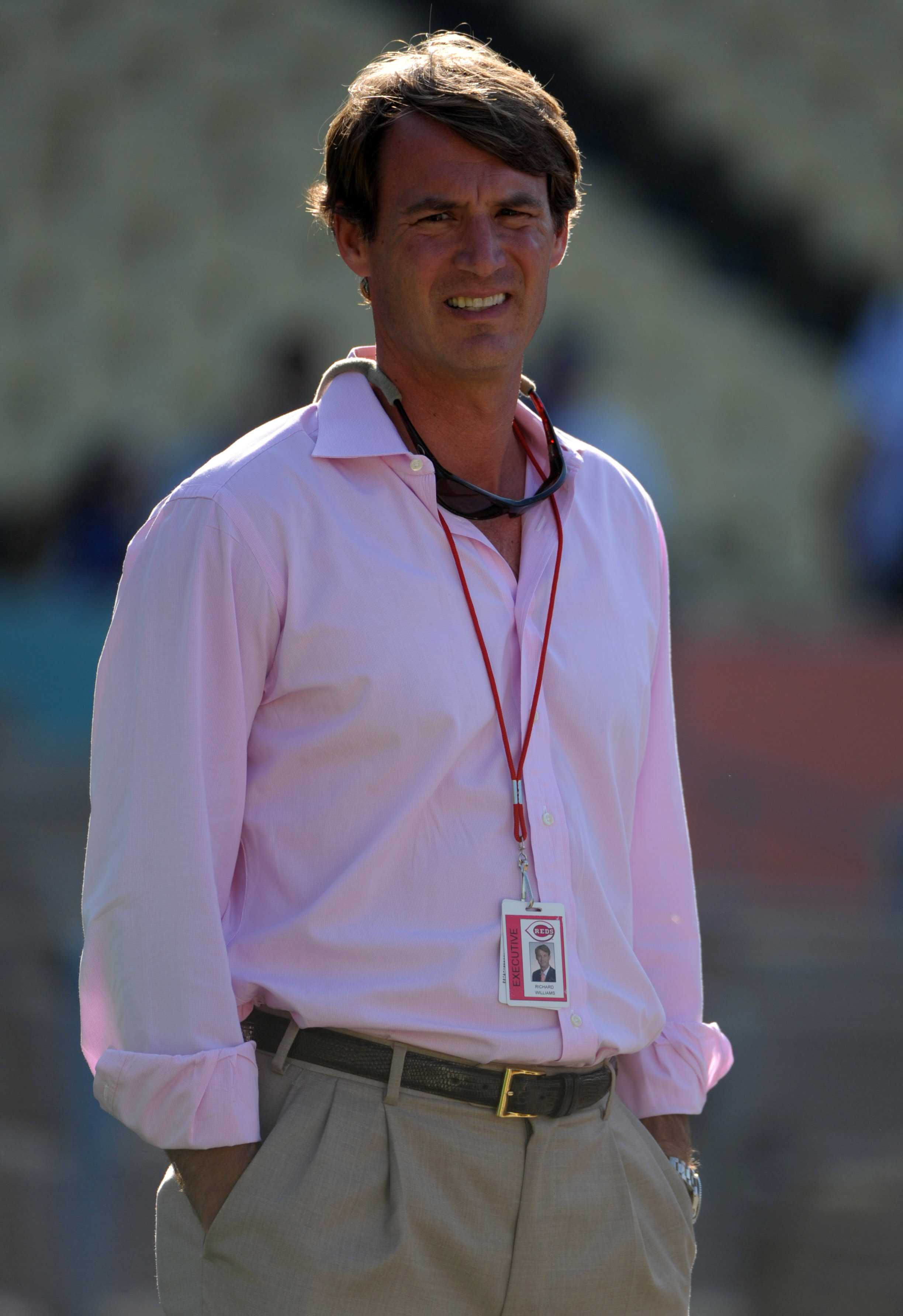
The Williams family has been ingrained with the Reds franchise for decades. Williams’ father and uncle are currently minority shareholders with the club, and his grandfather was at one point a partial owner of the franchise as well. Williams joined the team as director of baseball operations back in 2006, when Castellini purchased a majority stake in the team, and he’s steadily climbed the ranks to his current post. Krall, previously an assistant GM, was elevated to GM status in May 2018. He’ll presumably now shift to head up the entire baseball operations department.
“Dick has been an integral part of the Reds’ success from our first days of ownership in 2006 through our Postseason appearance in 2020,” Castellini said in today’s release. “He took the lead on modernizing every aspect of our baseball operations. Dick was the mastermind behind our incredible facility in Goodyear, drove advances in our scouting and player development systems, expanded capacity for analytics and established our sports science departments, just to name a few. … Dick has an incredible baseball IQ, and his gift for innovation came at the right time in history. We are enormously proud of the contributions he has made to this franchise.”
Much of Williams’ tenure as team president was spent in a rebuilding process that was embarked upon as former GM Walt Jocketty transitioned to an advisory role with the team. The Reds’ path to this year’s postseason berth wasn’t exactly straightforward, and it’s fair to point out that some of the biggest trades made during the Williams-led rebuild didn’t bear much in the way of fruit. The Reds were left with little to nothing to show for their trades of Aroldis Chapman, Todd Frazier and Johnny Cueto, for instance, as none of the younger talent acquired in those swaps contributed to this year’s winning club.
At the same time, Williams struck gold in the trade that sent right-hander Dan Straily to Miami and netted the Reds Luis Castillo. Both his decision to buy low on Sonny Gray and the corresponding contract extension look nothing less than brilliant at this point. Despite likely being out of contention in July 2019, the Reds under Williams took a big swing with an eye on 2020 and acquired NL Cy Young candidate Trevor Bauer in a three-team trade with the Reds and Padres. He was also in charge of baseball operations over the winter when the Reds hired president of Driveline Baseball Kyle Boddy to further a strong push into data-driven innovations in the organization’s pitching program.
Recent success notwithstanding, Williams spoke in today’s press release about a desire to spend more time with a young family that he does not see nearly as often as he would like.
“In order todo this job right, you are at a ballpark, either in the major or minor leagues, every single day, night and weekend from mid-February until deep into the fall,” Williams said. “That was a lot to ask of my young family, and they supported m every step of the way. It is time to pour some of that energy back into them.”