
MLB, MLBPA Reach Agreement On Service Time, Salaries, Draft
MARCH 27, 8:30pm: Union chief Tony Clark says that competitive balance taxes would not be assessed in the event that the season is cancelled, as Bill Shaikin of the Los Angeles Times reports (Twitter links). Generally, Clark indicated that the players are amenable to all manner of creative solutions to get in as much of the season as possible. It sounds as if both sides see merit in expanding rosters to facilitate that effort.
12:35pm: Bob Nightengale of USA Today (via Twitter) and Jeff Passan of ESPN.com (Twitter links) provides further details. This year’s draft class will only be eligible to receive up to $100K of bonus money up front, with the remainder paid in two equal installments in 2021 and 2022. Draft selections and international slots may not be traded in the typical, limited manner. Suspensions will apply as usual for the upcoming season but will not carry further into the future if the 2020 season is cancelled.
11:29am: MLB owners have unanimously ratified the agreement, tweets Joel Sherman of the New York Post.
6:05am: In addition to the dramatically shortened draft, the players acquiesced on signing bonuses for draftees, Rosenthal further reports within a much more expansive piece on the deal between the two sides (subscription required).
Slot values in the draft will be frozen at 2019 levels for the next two years as opposed to the roughly three percent year-over-year increase that has been standard. That decision will surely draw its share of criticism, though it’s clear that the players’ focus is on those currently within their union. Player representatives, in particular, figure to take umbrage with ownership’s push to reduce bonuses; Scott Boras calls it “unconscionable” that ownership would “use a pandemic situation in our country as a means to [reduce draftees’ bonuses].”
MARCH 26: With the coronavirus at least delaying the Major League Baseball season, MLB and the MLBPA reached an agreement on several key issues Thursday night, as Jeff Passan of ESPN first reported. Service time, players’ salaries, roster moves, the draft and the upcoming international signing period are all addressed in the deal, which owners will vote on Friday. If it’s ratified, a roster freeze will go into effect for an indeterminate period of time, according to Evan Drellich of The Athletic.
A typical season would have featured 186 days overall, giving players up to 172 days of service time. We don’t know how many there will be this season, though, and that could have had lasting effects on players and teams had the two sides not hammered something out. Now, thanks to this agreement, all players who are active or on the injured list for the entirety of a shortened 2020 season will receive a full year of service time, according to Ken Rosenthal of The Athletic. Players’ service time will be pro-rated in the event of a truncated campaign, Joel Sherman of the New York Post adds. So, if there’s a 100-day season and a player’s active for 50 of those days, he’ll get half a year of service. If no season happens at all, service time accrued will be based on the amount of days the player earned in 2019, per Rosenthal.
The service time portion of this pact is especially welcome news for many who are due to become free agents next winter. The likes of Mookie Betts, J.T. Realmuto and George Springer will all remain in position to reach free agency then even if a season does not take place. Meanwhile, pre-arbitration players (including names like Matt Chapman and Gleyber Torres) will stay on track to go through the arb process for the first time.
For now, those major leaguers and the rest around MLB will receive a $170MM advance (3 to 4 percent of their full salaries) spread over two months, Rosenthal reports. The union will distribute the money to four classes of players, but those with guaranteed contracts stand to rake in the largest total. The players’ salaries will be pro-rated based on how long the season lasts, and they won’t be able to sue for their full amounts, Rosenthal adds.
Looking ahead to the summer, this year’s amateur draft could go down to five rounds, per Passan, but MLB will have the ability to increase that total, Rosenthal relays, adding that the event won’t occur later than July. Players’ signing bonuses will be deferred, not given out up-front, and they’ll receive 10 percent now and 45 percent over the next two years. Meanwhile, undrafted free agents will be able to sign for up to $20K, per Jon Heyman of MLB Network.
In another decision that will have some effect on young talent from around the game, the upcoming international signing period could be delayed until as late as January 2021, Passan writes. It’s currently scheduled to run from July 2 of this year through June 15, 2021.
These are certainly noteworthy steps for baseball during a time of such uncertainty, though there are still more details to work out. For example, as Rosenthal notes, agreements on spring training and roster size have not come together to this point. Under normal circumstances, we’d have seen 26-man rosters this year, but it’s possible that number will increase for 2020 if a season does occur. According to Passan, there’s a possibility that if the regular season does happen, it will last from June through October and include more doubleheaders. The playoffs would bleed into November and perhaps include games at neutral sites.
MLB Rosters Frozen; Conditions Set For Resumption Of Play
As anticipated, an agreement regarding the coronavirus-driven suspension of the 2020 season has resulted in a freezing of MLB rosters, Bob Nightengale of USA Today reports on Twitter. A date for the resumption of transactions will be set in the future.
As part of their negotiations, Major League Baseball and the MLB Players Association have also reached a set of understandings regarding the resumption of play. Jeff Passan of ESPN.com (Twitter links) reported the details. Roster movement will be permitted once a new Opening Day can be scheduled.
It isn’t fully clear whether the sides have specifically agreed to restrictions as part of their collectively bargained special exceptions to the Basic Agreement. But it seems at minimum the mutual intention is to wait until baseball can conduct business in much the usual fashion before starting the season.
Per Passan, the league and union do not wish to begin play if fans cannot be present. Thus, a lifting of bans on mass gatherings will be a precondition to the start of the season — though he adds there’s a “caveat” by which neutral sits and empty stadiums can be considered as needed.
It’s good there’s some flexibility baked into this set of understandings, as there are no guarantees as to whether and when typical staging of ballgames will be possible. Even if some number of fans are ultimately permitted in to watch a contest, that would always be subject to change.
Much the same holds true of one of the other requirements for resuming play identified by Passan: a lack of travel restrictions. We don’t yet know what kinds of domestic transportation modifications we’ll end up facing in this crisis, but it seems likely the approach will evolve over time as needs change in various areas.
The final main consideration for holding contests is the review of medical experts to ensure it is safe to those on hand. MLB’s precise plans aren’t clear; perhaps the league will engage a consultant to guide the process.
It’s certainly good to hear that the league and union intend to ensure their actions won’t pose a health risk to those involved in the game and/or the broader public. But the set of requirements also seems rather steep given where things stand now in the effort to contain the deadly pathogen. In particular, much as we’d all love to see the game played in front of live audiences, it seems as if that’ll be awfully difficult to pull off in the near term given the vast ongoing uncertainty.
Noah Syndergaard Undergoes Tommy John Surgery
March 27: Syndergaard underwent surgery yesterday at the Hospital for Special Surgery in West Palm Beach, Fla., tweets Anthony DiComo of MLB.com.
March 24, 2:58pm: The Mets have formally announced that Syndergaard will undergo Tommy John surgery on Thursday. He’ll be out until at least April of 2021. General manager Brodie Van Wagenen offered the following statement, via press release:
After experiencing discomfort in his elbow before Spring Training was suspended due to the pandemic, Noah and our health and performance department have been in constant contact. Based on the persistence of his symptoms, Noah underwent a physical examination and MRI that revealed the ligament tear. A second opinion from Dr. Neal ElAttrache confirmed the diagnosis and the recommendation for surgery. Noah is an incredibly hard worker and a tremendous talent. While this is unfortunate, we have no doubt that Noah will be able to return to full strength and continue to be an integral part of our Championship pursuits in the future.
2:41pm: Mets right-hander Noah Syndergaard has been diagnosed with a torn ulnar collateral ligament in his right elbow and is expected to undergo Tommy John surgery, ESPN’s Jeff Passan reports (via Twitter). It’s a rather stunning and out-of-the-blue development, as Syndergaard looked relatively sharp in Spring Training — three runs on five hits and no walks with 11 strikeouts in eight innings — and wasn’t known to be experiencing any notable discomfort.
The Syndergaard news is a devastating blow to a Mets rotation that looked to have the makings of a quality group. Jacob deGrom, of course, has won the past two National League Cy Young Awards and will return to front the staff, but Syndergaard had been slotted into the second spot in the rotation behind him. His injury makes last summer’s acquisition of Marcus Stroman all the more important but also serves to highlight the team’s inability to work out an extension with righty Zack Wheeler despite multiple attempts over the past couple of seasons. Wheeler signed a fjve-year deal with the division-rival Phillies this winter, though an extension prior to reaching the open market likely wouldn’t have proved as costly — particularly were it agreed upon prior to the 2019 campaign.
Beyond the combination of deGrom and Stroman, the Mets will turn to Steven Matz and rebound candidates Rick Porcello and Michael Wacha — both signed to one-year deals in the offseason. Porcello remained a durable workhorse for the Red Sox but was tattooed for a 5.52 ERA and better than 10 hits per nine innings in his 32 starts and 174 1/3 innings last year. Wacha, meanwhile, battled injuries for the third time in four seasons, spending time on the IL due to a knee problem and finishing out the year on the sideline due to shoulder troubles. Since emerging as a full-time member of the Cardinals’ rotation in 2014, Wacha averaged 24 starts and 134 innings per season.
The injury to Syndergaard will put to test general manager Brodie Van Wagenen’s offseason comments about having “probably the deepest rotation in baseball.” After all, if any of deGrom, Stroman, Matz, Porcello or Wacha struggles or lands on the injured list, the Mets’ slate of alternatives in the upper minors looks decidedly pedestrian. Walker Lockett, Stephen Gonsalves, Franklyn Kilome and Corey Oswalt — the latter three of whom were already optioned out of Major League camp — are the top names on the 40-man roster. Veteran righty Erasmo Ramirez was trying to win a job in camp on a non-roster deal after enduring a pair of miserable seasons.
With Syndergaard out for all of the 2020 season — assuming there is one — the Mets will be left with only one year of club control remaining over the powerhouse righty. Syndergaard is owed a $9.7MM salary after avoiding arbitration this winter, and he’ll surely command the exact same salary for the 2021 campaign; virtually all arbitration-eligible players who miss an entire season due to injury are brought back at the same rate they’d earned the previous season (with the exception of first-time eligible players). And given the timing of the surgery, Syndergaard can reasonably expect to pitch the bulk of next season, so there’s almost no chance he’ll be non-tendered, barring some notable setback(s) prior to December. Syndergaard is slated to become a free agent upon conclusion of the 2021 season.
MLB, MLBPA Agree On Framework Of 2020 Draft
Major League Baseball and the MLB Players Association have reached an agreement on the framework of a delayed and shortened 2020 amateur draft, ESPN’s Kiley McDaniel reports (Twitter thread). The notable changes would include pushing the draft back from early June to sometime in July, cutting the event to anywhere from five to ten rounds and partially deferring the payment of signing bonuses into the 2022 season.
Obviously, lopping off 75 percent of the rounds would lead to a vast number of undrafted amateurs — high school, junior college and four-year university students alike. McDaniel notes that there’s been discussion of a maximum bonus for undrafted players, though the $10,000 figure that’s been floated would likely bring about a dramatic uptick in the number of prep prospects opting to attend college and in the number of college juniors returning for a senior season.
The ramifications of such changes are numerous. The 2021 draft class would be immeasurably deeper, and the influx of high-quality college freshmen will in some ways flood college programs — perhaps leading to an increase of players selected out of the Division-II ranks of the NCAA. Many college seniors only sign for $10K as it is, so the financial component of those limited bonuses might not have a substantial impact, but it’ll nevertheless be atypical to see those players effectively create a secondary pool of free agents. As for high school prospects and college juniors who’d typically sign after the 10th round — those players regularly receive $100K bonuses, so the proposed $10K limit would have a far greater impact on their decisions.
Changes to the draft have seemed inevitable for some time now. The event was moved to Omaha in hopes that it would coincide with the College World Series, but the COVID-19 pandemic has wiped out the College World Series and the college and high school baseball seasons across North America. Prospects who command six- and seven-figure bonuses won’t played in front of scouts in months by the time the draft rolls around, and owners have expressed hesitance about paying out the hundreds of millions of dollars worth of combined signing bonuses at a time when the revenue streams of their respective clubs have effectively dried up.
The draft is one of many, many elements being negotiated between the league and the union, with other key points of interest including player salaries, service time, a delayed/altered schedule and the likely expansion of rosters as teams hopefully resume play at some point later this year. Of course, MLB and the MLBPA are also discussing the manner in which they’d be forced to proceed in the event that the 2020 season has to be canceled entirely. The two sides have been exchanging proposals for weeks, and all indications have been that they’re working toward an agreement but still hammering out the specifics of the arrangement.
New App For Youth Baseball Coaches: Baseball Force Out Teacher
Hi! I’m Tim Dierkes, the owner of MLB Trade Rumors. If you’ll indulge me for a minute, I want to talk about an app I’ve created for youth baseball and softball coaches that has nothing to do with MLB or rumors (which of course aren’t happening right now anyway).
How many times have you observed this scene in a youth baseball or softball game?
An infielder makes an amazing stop on a ground ball. It’s the highlight of the kid’s budding career to date. And then…NOOOOOO!!! Why did you throw it to THAT base? Or…why did you think you could just step on THAT base??! We’ve been over this in practice!
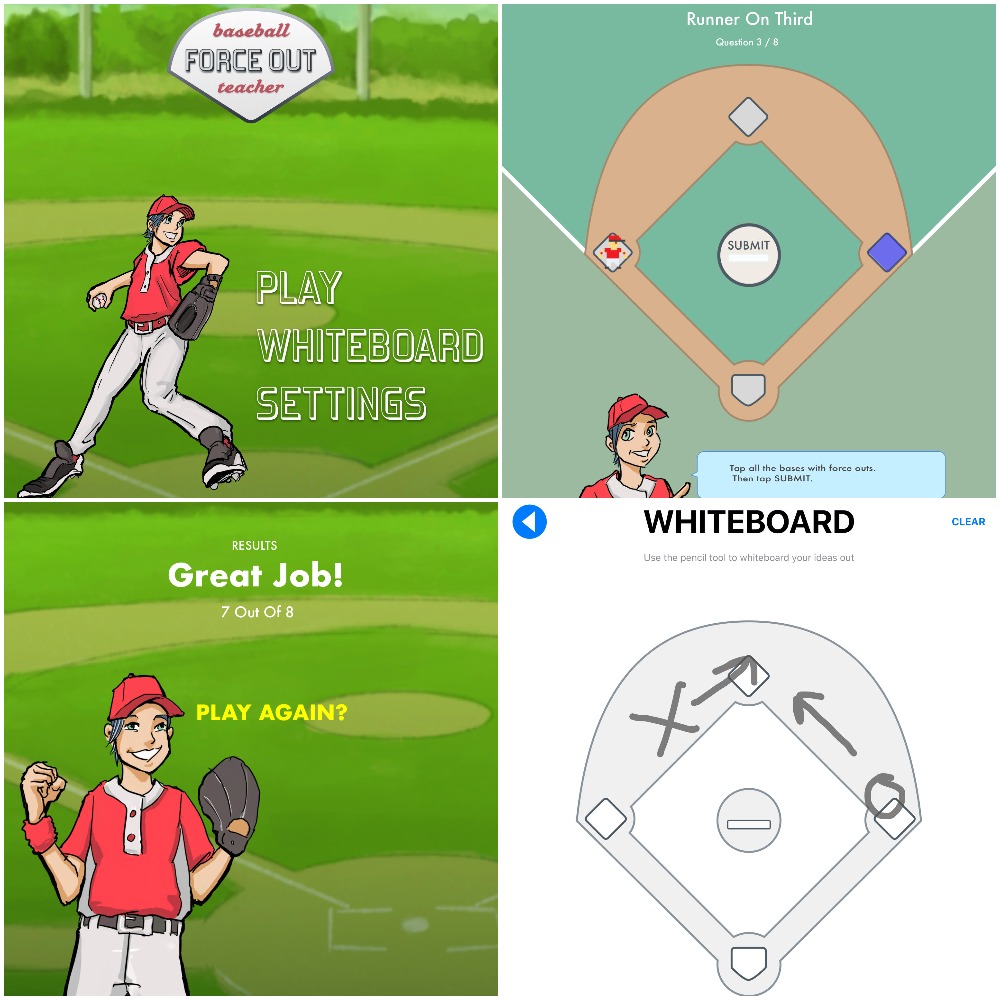
Fundamentals are crucial to understanding and playing baseball or softball. Chief among them: where are the force outs? Our new Baseball Force Out Teacher app for iPhones and iPads is the perfect at-home supplement to any player or watcher’s education.
The eight different baserunner scenarios are randomly presented, and this fun game-like app drills home the correct answers to one crucial question: Where are the force outs? Simply play it over and over until force outs are second nature! Most kids have a little bit of time on their hands currently.
Plus, if you’re a coach looking to freestyle or elaborate on infield scenarios, the app has a handy whiteboard feature.
Tyler Beede To Undergo Tommy John Surgery
Giants right-hander Tyler Beede will undergo Tommy John surgery tomorrow, president of baseball operations Farhan Zaidi told reporters this evening. Beede was diagnosed with a UCL sprain and a flexor strain two weeks ago, and was scheduled for a second opinion last week.
The 26-year-old now faces a recovery timeline of 12-15 months, which will keep him from participating in whatever becomes of the 2020 season and cost him likely at least a couple of months of the 2021 season. The delayed start to the 2020 season wasn’t a chief factor in Beede’s decision to undergo surgery, Zaidi told The Athletic’s Andrew Baggarly and other media members, since Beede was told by doctors that he could face more elbow discomfort if he tried to rehab his injury without a proper procedure.
It’s a discouraging setback for Beede, a former 14th-overall pick (in 2014) who had yet to deliver on that potential over 124 2/3 innings, but was a strong contender to win a spot in San Francisco’s Opening Day rotation after throwing three scoreless innings during Spring Training action. It’s hard to figure how the rotation picture might look if and when the season gets underway, but as it stood when Spring Training was halted, Dereck Rodriguez, Trevor Oaks, Trevor Cahill, and Logan Webb were the top contenders for that fifth starter’s job.
The majority of Beede’s big league exposure came last season, when he posted a 5.08 ERA, 2.46 K/BB rate, and 8.7 K/9 over 117 innings. Like many pitchers in 2019, Beede struggled to limit home runs, allowing a 1.69 HR/9, but his larger issue was with hard contact in general. As per Statcast, Beede allowed hard-hit contract on 43.7% of his balls put into play, with an average 90.8mph exit velocity — both numbers landed in the bottom-fourth percentile of all pitchers.
Chris Sale To Undergo Tommy John Surgery
Red Sox left-hander Chris Sale will undergo Tommy John surgery, as per a team announcement. Sale will be out of action for roughly the next 12-15 months, as per the usual recovery timeline, and will miss all of the 2020 season.
The news less than three weeks after Sale was diagnosed with a flexor strain, following some elbow soreness in his throwing elbow. Sale only resumed throwing yesterday, though it’s fair to assume that he experienced further discomfort that resulted in today’s decision.
The Red Sox press release didn’t include any actual date for Sale’s surgery, and Joel Sherman of the New York Post speculated that it could perhaps be some time before Sale actually goes under the knife, given how elective medical procedures are increasingly being canceled (both in the United States and all around the world) in order to give hospitals and doctors more time to focus on the coronavirus pandemic. It’s also worth wondering if the uncertainty surrounding how much (or any) of the 2020 season will be played could have contributed to Sale’s decision, as he perhaps figured that missing time now was preferable to missing time when games were firmly on the schedule. Regardless, Sale will now miss whatever exists of the 2020 campaign and also likely at least two or three months of the 2021 season.
Due to his relatively thin stature and his unique throwing motion, durability questions dogged Sale as far back as his days as a vaunted prospect coming out of Florida Gulf Coast University, to the point that he dropped to the White Sox with the 13th pick of the 2010 draft. Sale proved those criticisms wrong after almost a full decade as one of the game’s best starters, with a career 3.03 ERA, 11.1 K/9, and the best career K/BB rate (5.37) in baseball history, while also averaging 205 innings per season between 2012-17.
The Red Sox acquired Sale in a December 2016 blockbuster trade that saw budding superstar Yoan Moncada go to Chicago, though the hefty price tag was worth it from Boston’s perspective, given Sale’s strong results for the club and his role in helping the Red Sox win the 2018 World Series. That said, Sale seemed to wear down at the end of the 2017 season and was bothered by shoulder problems late in the 2018 campaign, which led the Sox to limit his innings down the stretch and during their postseason run.
Those injury concerns didn’t stop Boston from signing Sale to a five-year, $145MM extension almost exactly one year ago. That deal covered the 2020-24 seasons, meaning the Red Sox won’t see any return on that investment for at least the next 15 months. Warning signs already began to crop up last season, as Sale got off to a slow start and only somewhat looked like himself (a career-high 4.40 ERA, though advanced metrics painted a much more favorable picture of his 2019 performance) over 147 1/3 innings before being shut down in mid-August due to elbow inflammation. Treatment for that inflammation included a platelet-rich plasma injection in Sale’s elbow, and he was seemingly making good progress in his offseason workouts before a bout of pneumonia set him back a couple of weeks.
Given that so much of Boston’s offseason revolved around getting under the luxury tax threshold, the Sale extension now looms as a seriously questionable decision. If Sale hadn’t been extended and his $25.6MM average annual value wasn’t on the team’s books, the Red Sox wouldn’t have faced nearly the (self-imposed) crunch to reset their tax bill after two years of overages. This could have meant the Sox may have explored other, lower-level methods of getting under the $208MM threshold rather than the extreme measure of trading Mookie Betts and David Price to the Dodgers.
With Sale now out of the picture entirely for 2020, Eduardo Rodriguez is now the ace of the Red Sox rotation following the lefty’s big 2019 performance. E-Rod leaves a staff that is severely lacking in sure things, as Nathan Eovaldi, Martin Perez, and Collin McHugh are all looking to rebound from either injury or inconsistency last season (McHugh could even still wind up in the bullpen). A long list of names were competing for the final two rotation jobs before Spring Training was halted, and manager Ron Roenicke hinted that the Sox would use an opener/bulk pitcher strategy for at least one of the two slots.
MLB Announces “Interim Support” Plan To Pay Minor League Players
Major League Baseball has announced a plan that will see minor league players receive some form of financial help while the baseball world is in limbo due to the COVID-19 pandemic. As per the media release…
Each player who is under a Minor League Uniform Player Contract will receive a lump sum equal to the allowances that would have been paid through April 8th. The exceptions to this plan are non-40-man-roster players who are already receiving Major League allowances; players who are currently receiving housing, food or other services from Clubs; and players who were not participating in, or expected to participate in, Minor League Spring Training. MLB remains in communication with Clubs on the development of an industry-wide plan for Minor League player compensation from April 9th through the beginning of the coming season.
The announcement also called this plan an “initial step,” as “MLB intends to continue working with all 30 Clubs to identify additional ways to support those players as a result of the delayed 2020 season.” In essence, the league now has a couple more weeks to figure out a longer-term answer to the problem of paying minor league players, amidst the countless other issues that must be addressed during this prolonged shutdown.
While some teams (including the Rays, Mets, and Dodgers) have already made arrangements to provide their minor leaguers with a stipend, this news from the league formalizes such payments across all 30 farm systems, covering hundreds of minor league players. It will undoubtedly bring comfort to these athletes, the vast majority of whom didn’t receive any sort of notable signing bonus and have been earning less-than-minimum wage salaries during their playing careers.
The financial difficulties faced by minor league players was a subject of controversy well before the coronavirus outbreak, of course, though the timing of the league-wide shutdown right in the midst of Spring Training (when minor leaguers enjoyed the bonus of lodgings and meal money provided by their organizations) made the situation particularly troublesome. Some clubs like the Diamondbacks have continued to provide these amenities to minor leaguers during the shutdown — as the Arizona Republic’s Nick Piecoro notes, D’Backs prospects thus won’t be subject to the league-wide policy.
MLB Teams Each Pledge $1 Million To Cover Lost Wages For Park Employees During Shutdown
All 30 Major League clubs have established $1MM funds to cover the lost wages of their gameday and event staffs during the league-wide shutdown, ESPN’s Jeff Passan reports (via Twitter). MLB commissioner Rob Manfred offered the following statement on the teams’ actions (Twitter thread via Joel Sherman of the New York Post):
Over the past 48 hours, I have been approached by representatives of all 30 clubs to help assist the thousands of ballpark employees affected by the delay in the start of the Major League Baseball season. Motivated by desire to help some of the most valuable members of the baseball community, each Club has committed $1 million. The individual clubs will be announcing more details surrounding this support effort in their local communities. The timing of these announcements will vary because of the need to coordinate with state and local laws as well as collective bargaining obligations in an effort to maximize the benefits realized by each group of employees. I am proud that our clubs came together so quickly and uniformly to support these individuals who provide so much to the game we love.
It’s a nice gesture of goodwill and solidarity by all 30 teams, as thousands of ballpark employees throughout the league saw their livelihoods impacted and threatened by the absence of games being played. There are still, of course, other issues to address — namely the manner in which minor league players will be compensated during the hiatus.
As covered here earlier today, non-40-man players aren’t protected by the MLBPA and are currently set to go without their already meager salaries during the unexpected work stoppage. Some clubs — the Rays, Mets and Dodgers among them — are allotting a $400 weekly stipend through the end of the month, although that’s a temporary solution to a much larger-scale problem.
Justin Verlander Undergoes Surgery To Repair Groin Injury
The Astros announced Tuesday that right-hander Justin Verlander underwent a surgical procedure on his right groin. He’d been slowed by a lat strain earlier this month, but Verlander was also scratched from an earlier spring start due to tightness in his groin. That was deemed a precautionary measure at the time, but general manager James Click revealed today that the right-hander had a setback in rehabbing the issue.
“The hope was that physical therapy would be the proper course of action,” Click told reporters (Twitter link via Chandler Rome of the Houston Chronicle). “However, after a recent setback in his rehab, the medical staff recommended that a surgical procedure was necessary. The early prognosis is that Justin will be out for about six weeks.”
With the season pushed back at least eight weeks — quite likely longer than that — Verlander should have ample time to get back up to speed once players are cleared to resume training and once a firm target date for Opening Day is established.
Verlander’s health is paramount for the Astros more than ever, now that Gerrit Cole and (to a lesser extent) Wade Miley have departed via free agency. Houston’s 2020 roster is pricey enough that they’ll face luxury-tax penalties for the first time, and the front office opted to spend the limited resources afforded by owner Jim Crane to bring back catcher Martin Maldonado and reliever Joe Smith.
The hope is certainly that a returning Lance McCullers Jr. and young righty Jose Urquidy, whose stock soared in 2019, can join Verlander and Greinke in comprising a formidable top four. Offseason acquisition Austin Pruitt and holdovers like Brad Peacock, Josh James and Framber Valdez could all be in the mix for starts in the final rotation slot. Right-hander Rogelio Armenteros could eventually be in the mix, although he recently underwent surgery to have a bone spur removed from his elbow. Unlike Verlander, he’ll be sidelined for around four months, so he wouldn’t be an option to pitch until July at the earliest. Given the uncertainty regarding Opening Day, it’s anyone’s guess as to what point in the season that’ll be — or if the season will have even started.