
Brewers Sign Lorenzo Cain
January 29th, 6:10pm: Bob Nightengale of USA Today Sports has the details on some incentives in Cain’s contract (Twitter links). The outfielder will reportedly earn $300K every time he makes the All-Star team. He’ll also earn $500K if he’s ever named league MVP, $250K if he finishes second through fifth in the MVP voting, and $125K if he finishes 6th through 10th. Cain can also make an extra $50K by winning the World Series MVP award, and he’ll pocket $25K any time he wins a Gold Glove, Silver Slugger, or LCS MVP. Jon Heyman of FanRag Sports confirms the incentives, and notes that the Brewers will also reserve a suite for Cain at Miller Park during 20 games each season, while pointing out that the estimated value of Cain’s contract with deferments in mind is actually $78,917,630.
January 26th, 2:48pm: Tom Haudricourt of the Milwaukee Journal-Sentinel reports that Cain will earn $13MM in 2018, $14MM in 2019, $15MM in 2020, $16MM in 2021 and $17MM in 2022 (Twitter links). He’ll also receive an additional, deferred payment of $1MM in each of the five years following the contract’s conclusion. The no-trade provision offers complete protection in year one of the deal and limited protection each season thereafter, dropping down to five teams in the final year of the contract. More specifically, MLB.com’s Adam McCalvy adds that Cain can block deals to 15 teams in 2019, seven teams in 2020 and five in 2021-22.
12:00pm: In a stunning turn, the Brewers even further bolstered their outfield, announcing on Friday that they’ve signed Lorenzo Cain to a five-year pact that will reportedly guarantee him $80MM. The All Bases Covered client will reportedly pick up no-trade rights as well, with full protection early in the contract and more limited no-trade provisions in its later years.
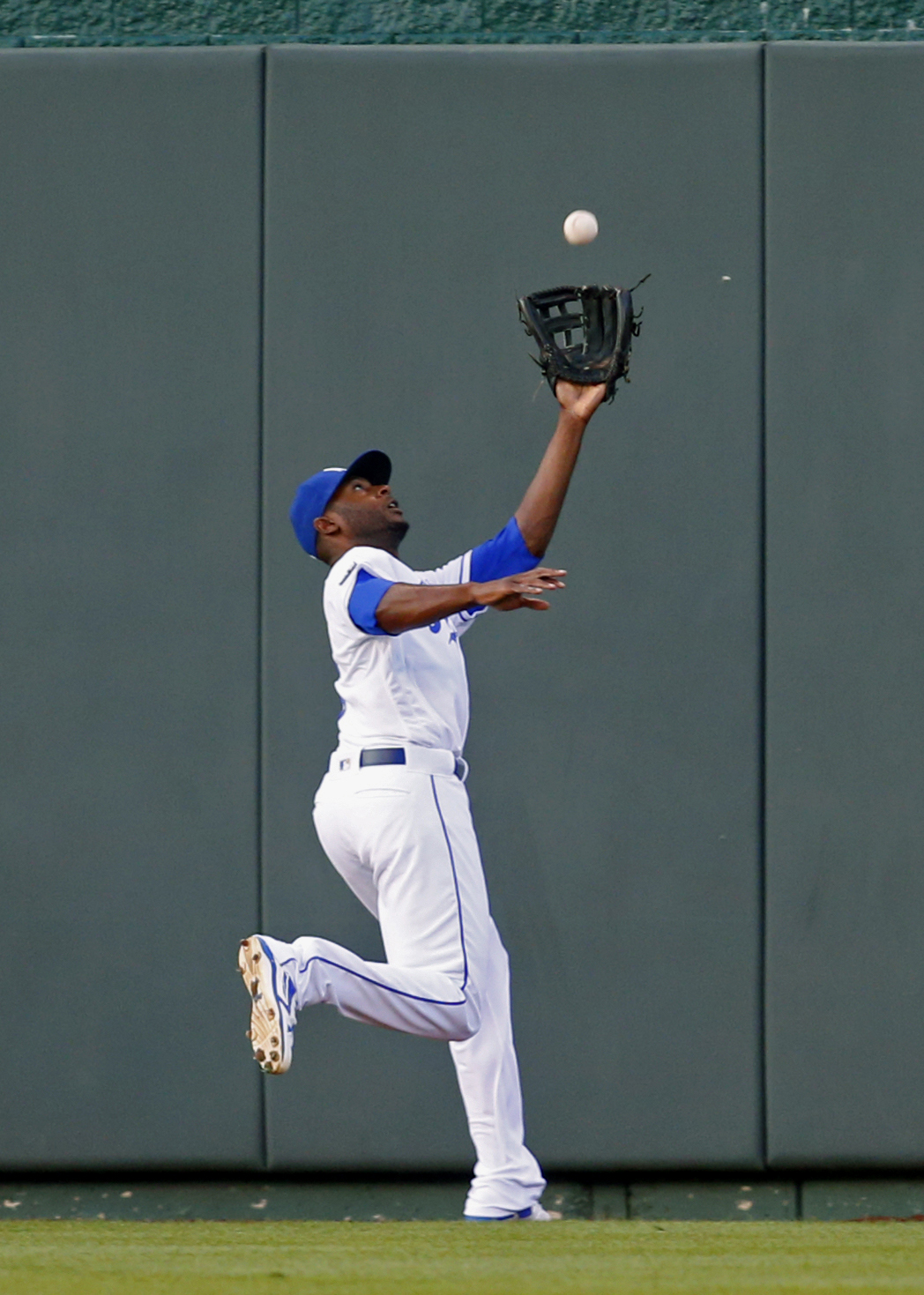
Cain will join Christian Yelich in a stunningly re-made Milwaukee outfield — opening up new avenues for trades of existing players that could shake the market. The signing also breaks open a moribund free agent signing period, with a premium player scoring a big contract for the first time in weeks.
Entering the day, the Brewers featured Ryan Braun and Domingo Santana in the corners, with a trio of young options — Keon Broxton, Lewis Brinson, and Brett Phillips — up the middle. Now, Brinson is out, Cain and Yelich are in, and the remaining players (excepting, perhaps, Braun) appear to be possible trade chips.
[RELATED: Updated Brewers Depth Chart]
Milwaukee had a clear need to improve its rotation when the winter started, particularly given uncertainty surrounding righty Jimmy Nelson. The organization has decided first to improve the outfield, though that could all be part of a plan to move other assets for starting pitching. Santana and Phillips could both be hotly pursued assets, with a variety of teams — the Athletics, Braves, and Rays all make some degree of sense on paper — potentially representing suitors with some pitching on offer.
As much as the signing could mean for the trade market, it’s a welcome sign for players anxiously watching a slow-motion free agent period. In MLBTR’s top 50 free agent ranking, we predicted that Cain would secure $70MM over four years, so this represents a strong contract for the excellent but soon-to-be 32-year-old outfielder. The contract is the first this winter that guarantees more than three seasons and more than $60MM. Cain becomes only the second of MLBTR’s ten top-rated free agents who has signed to this point.
It’s equally intriguing to consider the teams that missed out on Cain. Crasnick again has the details, tweeting that the Dodgers, Cubs, Giants, and Indians were involved in the market. While San Francisco was long known to have interest, tempered by its luxury tax considerations, the other clubs are all rather eye-opening pursuers in various regards. Los Angeles has been tough to decipher all winter long as it watches its own payroll. The Cubs have a fairly well-stocked outfield mix but seem to have irons in a variety of fires. And the Indians have signaled they don’t have much more to spend, but were evidently still willing to consider a major win-now move (presumably with other salary-shedding efforts to accompany it).
It seems hard to recall after his years in Kansas City, but Cain was once a Brewer. Indeed, he joined the Milwaukee organization as a 17th-round pick way back in 2004. As Tom Haudricourt of the Milwaukee Journal-Sentinel notes on Twitter, both Cain and Jeremy Jeffress have returned to the Brewers after being dealt to the Royals in the 2010 Zack Greinke swap.
In the interim, Cain has emerged as a star. He reached his career pinnacle in 2015, turning in elite efforts at the plate, on the bases, and in the field to rack up 6.5 fWAR. After a step back in the ensuing season, which was marred in part by injury, Cain emerged again in 2017.
While initial reports connecting Cain to Milwaukee this offseason came as somewhat of a surprise, it appears he’s been on their radar since the onset of free agency. “They said from the minute free agency opened that I was on the top of their list,” Cain said in a chat with MLB.com’s Jeffrey Flanagan.. “We just had to work through all the details, and eventually we both got to the numbers we liked.”
Even if Cain’s superstar-level ’15 output isn’t likely to be repeated, the Brewers will hope he can keep up his most recent efforts. Last year, Cain dropped his strikeout rate to a career-low 15.5%, walked at a career-best 8.4%, compiled 15 home runs and 26 steals, and ended with an even .300 batting average. While metrics now grade him more as a good than a great fielder in center, Cain remains a high-quality all-around performer.
Since Cain rejected a qualifying offer from the Royals, draft compensation will result from the signing. As an organization that received revenue sharing and did not go past the competitive balance tax line in 2017, Milwaukee will have to sacrifice its third-highest draft pick. Notably, MLBTR has confirmed that Competitive Balance draft picks are exempt from this type of forfeiture, however, meaning the Brewers will only have to surrender their third-round selection. For the Royals, bidding adieu to Cain — since he signed for more than $50MM — will mean recouping a pick after the end of the first round of the 2018 draft.
Ken Rosenthal of The Athletic first reported the agreement (via Twitter). ESPN.com’s Jerry Crasnick reported the terms of the deal (Twitter links).
Photo courtesy of USA Today Sports Images.
Brewers Agree To Terms With Matt Albers
12:02pm: Nicholson-Smith tweets that Albers will have a $2.5MM base salary in each season of the contract, and his incentives begin kicking in with his 35th appearance. He’d max out his incentives by appearing in 65 games in each season of the contract.
11:50am: The Brewers and free agent righty Matt Albers have reached an agreement on a two-year deal, reports Ken Rosenthal of The Athletic (Twitter link). Albers, a client of SSG Baseball, will be guaranteed $5MM on the contract and can earn another $1MM each year based on total appearances, according to Sportsnet’s Ben Nicholson-Smith (Twitter link). The deal is pending a physical.
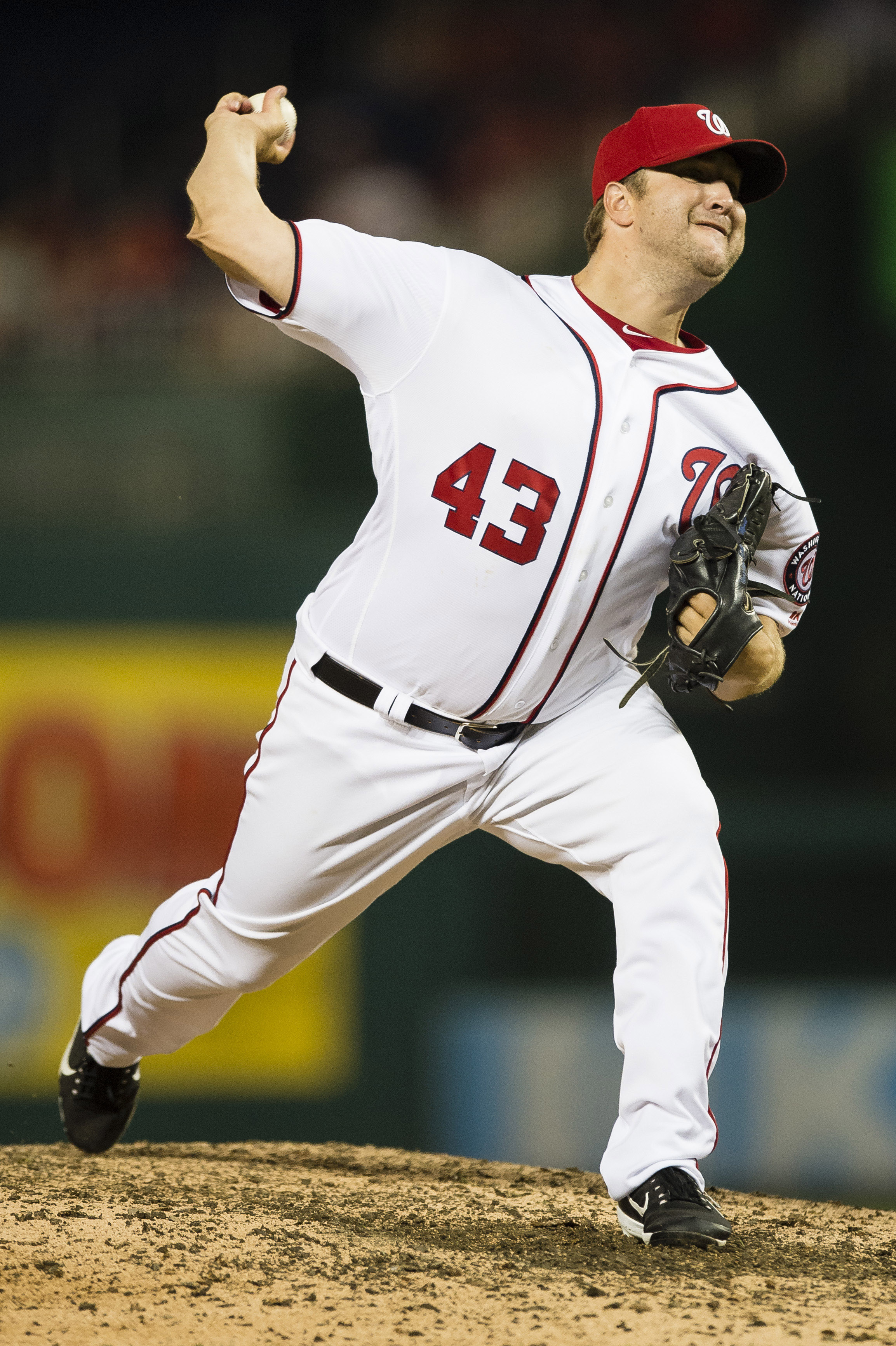
Albers, who turned 35 last week, was the most consistent member of the Nationals’ bullpen in 2017, pitching to a pristine 1.62 ERA with 9.3 K/9, 2.5 BB/9, 0.89 HR/9 and a 51 percent ground-ball rate through 61 innings of work. It represented a terrific bounce-back campaign for Albers, who’d limped to a 6.31 ERA in 51 1/3 innings with the White Sox in 2016.
There are, it should be noted, some indications that Albers had his share of good fortune in 2017, as well, though. His 8.7 percent swinging-strike rate was below the league average and not what one would expect from a pitcher that whiffed better than a batter per inning — a feat he’d achieved in only one season prior to 2017 (with the Red Sox way back in 2011). Albers also benefited from a minuscule .203 BABIP, though while that mark is in for some regression, the extent of said regression may not be as great as one might think at first glance.
Albers posted a hefty 15.9 percent infield-fly rate in 2017, and his batted-ball profile was among the most encouraging of any reliever in the game. Albers allowed a measly 22.8 percent hard-hit rate against him, which was the third-lowest mark in MLB among qualified relievers. He also induced 30.9 soft-contact rate, which was good for the fourth-best in the bigs.
Since establishing himself as a regular big league reliever back in 2009, Albers has been a rather durable asset, appearing in 55+ games in seven of those nine seasons. He was limited to 37 1/3 innings in 2015, though that year was truncated by a broken finger rather than any sort of arm injury. Shoulder trouble kept him out of action for all but 10 innings of the 2014 season, but that’s been the only instance of a notable arm injury keeping him on the shelf for a prolonged period in nearly a decade’s time.
[Related: Updated Milwaukee Brewers depth chart]
Albers won’t factor into the closing mix in Milwaukee, where Corey Knebel is fresh off a breakout season in which he stepped into the spotlight as one of the game’s top strikeout artists. However, the veteran Albers will join lefty Boone Logan as a newly signed addition to manager Craig Counsell‘s relief corps, where he’ll pair with Jacob Barnes, Jeremy Jeffress and Josh Hader to help bridge the gap from the team’s rotation to Knebel at the end of the game.
It’s been an aggressive week for Milwaukee, of course, as GM David Stearns and his staff have also signed Lorenzo Cain and pulled off a blockbuster to acquire Christian Yelich within the past four days alone. Brewers owner Mark Attanasio gave signals over the weekend, too, that the Brew Crew still has the payroll capacity to add a top starting pitcher if Stearns & Co. feel the right deal presents itself.
Photo courtesy of USA Today Sports Images.
MLBPA Raises Revenue Sharing Concerns Regarding Marlins, Pirates
7:23pm: MLB has seemingly thrown some cold water on the situation in issuing the following statement (hat tip to Adam Berry of MLB.com):
“We do not have concerns about the Pirates’ and Marlins’ compliance with the basic agreement provisions regarding the use of revenue sharing proceeds. The Pirates have steadily increased their payroll over the years while at the same time decreasing their revenue sharing. The Marlins’ ownership purchased a team that incurred substantial financial losses the prior two seasons, and even with revenue sharing and significant expense reduction, the team is projected to lose money in 2018. The union has not informed us that it intends to file a grievance against either team.”
5:32pm: Pirates president Frank Coonnelly issued a lengthy statement on the matter, stating that the Pirates are not under investigation (Twitter link via Adam Berry of MLB.com):
“The Pirates are not being investigated by MLB and the Commissioner has no concerns whatsoever with the manner in which the Pirates are investing its revenue sharing receipts into building a winner. The Pirates have and will continue to invest its revenue sharing receipts in an effort to put a winning team on the field As required by the Basic Agreement, we share with MLB and the Union each year the detail as to how our revenue sharing receipts are used to put a winning team on the field. What the detail shows is that while our revenue sharing receipts have decreased for seven consecutive seasons, our Major league payroll has more than doubled over that same period. Indeed, our revenue sharing receipts are now just a fraction of what we spend on Major League payroll, let alone all of the other dollars that we spend on scouting, player development and other baseball investments, several areas in which we are among the League leaders in spending. Thus, the Commissioner is well-equipped to address whatever ‘concerns’ the Union now has over the Pirates’ effort to win.”
1:33pm: The Major League Baseball Player’s Association has raised concern with the commissioner’s office regarding the Marlins and Pirates, according to Barry Jackson of the Miami Herald. Yahoo’s Jeff Passan had recently reported that the union was considering the idea of going to commissioner Rob Manfred with their concerns.
The root of the union’s concern is whether the two teams are appropriately reinvesting the money that they receive under the league’s revenue-sharing program, both Jackson and Passan noted in their reports. The MLBPA issued the following statement to Jackson:
“We have raised our concerns regarding both Miami and Pittsburgh with the Commissioner, as is the protocol under the collective bargaining agreement and its revenue sharing provisions. We are waiting to have further dialogue and that will dictate our next steps.”
As Jackson notes, it wouldn’t be the first time that revenue-sharing concerns regarding the Marlins were raised. A similar scenario occurred back in 2010, at which point Miami did (briefly) increase its spending; the Marlins rolled out their first $100MM+ payroll in 2012, the debut season of a taxpayer-funded stadium in Miami, only to conduct a massive firesale the following offseason.
Jackson reports that the Marlins are set to receive roughly $60MM in revenue sharing profits this season and could take home as much as $160MM from the league between that sum, the $50MM BAMTech payout that all 30 clubs are receiving and the national television contract. At present, we have the Marlins projected for a $97MM payroll in 2018, though there are likely still moves on the horizon that would impact that bottom line. The Marlins could very well find an offer to their liking for star catcher J.T. Realmuto, and Jackson also reports that Starlin Castro has asked the team to be traded. (It’d already been reported that he was “hoping” for a trade out of Miami, though this is a more formal declaration of his preference.)
Neither the Marlins or Pirates have signed a free agent to a Major League deal this offseason; instead, the teams have been largely focused on trading away big league assets. Miami has shipped out Giancarlo Stanton, Marcell Ozuna, Dee Gordon and Yelich, shedding more than $40MM of payroll in the process. Even with all of those dealings, the Marlins still haven’t reached their target of a $90MM payroll, though moving Castro (and possibly Realmuto) would get them to said point.
The Pirates, meanwhile, have traded Gerrit Cole and Andrew McCutchen, though their focus on acquiring MLB-level assets and the remaining presence of players like Starling Marte and Gregory Polanco seemingly indicates that they’re not embarking on an aggressive tanking endeavor in the same manner as the Marlins.
Pittsburgh seems like a better candidate to step out into the open market and add a mid-range player or two. Beyond the aforementioned focus on MLB-ready assets is the fact that the Pirates have recently opened the season with payrolls in the $95-100MM range but currently projects to just a bit over $85MM in 2018. Obviously, no one would expect Pittsburgh to be a player for a top-tier free agent, but a modestly priced upgrade for the back of the rotation, the outfield or the bullpen nonetheless seems plausible.
The Commissioner’s Office has not yet released any kind of statement on the matter, though the collective bargaining agreement stipulates that Manfred can impose penalties onto clubs that do not appropriately reallocate their revenue sharing profits. Per the CBA, the commissioner’s office can also:
“…require a Club to submit a plan for its financial performance and competitive effort for the next two years. Such a plan must include a pro forma financial presentation that specifies its attendance, revenues, payroll, player development expenditures, non-player costs, and capital spending. The Commissioner, after consultation with the Players Association, may direct the Club to change aspects of its plan, including the level of competitive effort reflected in the plan, or take other actions as he considers appropriate (including escrow of a portion of a Club’s revenue sharing payments).”
Brewers Acquire Christian Yelich
The Brewers have announced a blockbuster deal to acquire outfielder Christian Yelich from the Marlins. Outfielders Lewis Brinson and Monte Harrison, infielder Isan Diaz, and righty Jordan Yamamoto make up the return for Miami.
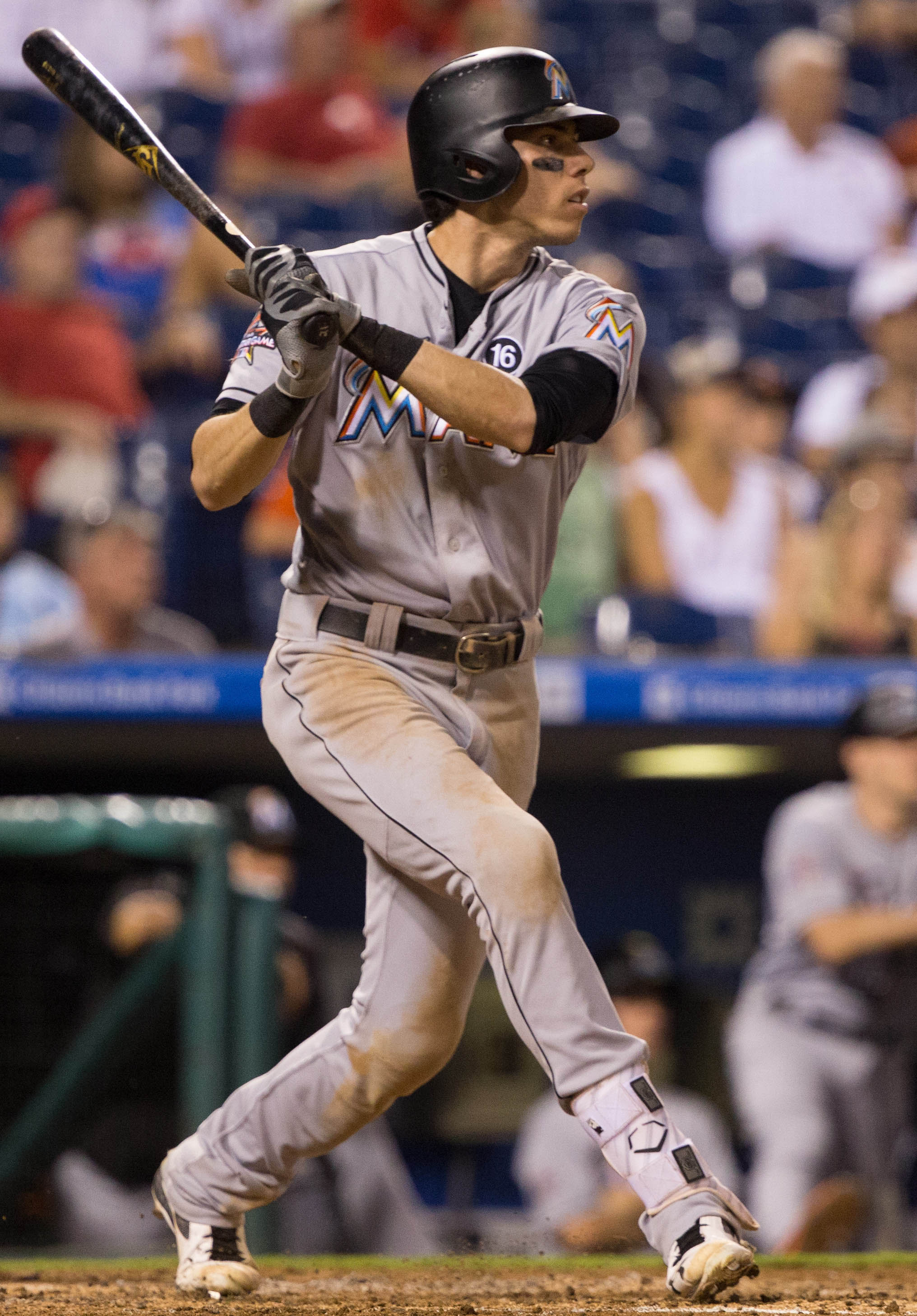
Milwaukee entered the winter with numerous quality young outfield options. Indeed, speculation has centered on the possibility that the organization would deal from its surplus, making this move all the more surprising. On the other hand, the Brewers were relatively unsettled in center field — where Yelich would presumably line up as things stand at present — and were reported recently to have made an offer for the quality young outfielder. The Brew Crew ended up improving an area of strength by sending out two prospects originally acquired via trade (in their recent round of veteran-paring swaps) along with a pair of 2014 draft picks.
What’s most interesting about this swap, perhaps, is that it could set Milwaukee up for yet further moves, perhaps helping to facilitate a move to deepen the organization’s rotation. The organization could still deal other outfielders if it so chooses after parting with Brinson to add Yelich. Keon Broxton and Brett Phillips are among the other players on hand that could be dangled. Interestingly, per Rosenthal (via Twitter), the club will not give up its pursuit of top center fielder Lorenzo Cain despite today’s move; in that scenario, presumably, Domingo Santana could even be dealt. Given that the Brewers also won’t be taking on much in the way of near-term salary in adding Yelich, the team could also still set out onto the open market to find a starter.
Yelich, who only recently turn 26, is guaranteed a manageable $43.25MM over the next four seasons, with a $15MM club option (or $1.25MM buyout) for the 2022 campaign. That’s a bargain rate for a player who has steadily produced at an above-average rate in all areas of the game ever since he cracked the majors in 2013.
In three of the past four seasons, Yelich has racked up exactly 4.5 fWAR. He has done that in different ways, too. Yelich has always hit at an above-average rate, but only once — 2016, when he posted a 132 wRC+ — turned in a truly superlative season at the plate. In 2017, he slashed a productive but hardly world-beating .282/.369/.439 with 18 home runs, but added greater value on the basepaths (a 6.8 BsR grade that ranked sixth in all of baseball). And it was top-notch corner outfield defense that was most noteworthy about Yelich’s performance in 2014.
Perhaps, then, there’s reason still to hope that Yelich can produce even more than he already has in a given campaign. Some also have suggested that his power could still develop, particularly if he spends more time away from Marlins Park. There are a few areas of concern — for instance, Yelich owns a mediocre career .272/.331/.373 batting line against lefties and graded poorly (-6) in center field last year in the view of Defensive Runs Saved. On the whole, though, he’s clearly one of the better young outfielders in baseball.
The price paid reflects the asset acquired here for the Brewers. By consensus, Brinson was the team’s best prospect. Though hardly considered a sure thing, the soon-to-be 24-year-old outfielder — acquired from the Rangers in the Jonathan Lucroy swap — is widely considered one of the 25 or so best pre-MLB assets in baseball. Last year, he slashed a robust .331/.400/.562 with 13 home runs and 11 steals in 340 plate appearances at Triple-A. He’s also considered a top-quality up-the-middle defender. Having briefly touched the bigs for the first time in 2017, Brinson will likely enter camp as the odds-on favorite to start in center for the new-look Marlins.
There’s depth in this prospect package, too. Harrison is likely the second-best asset heading to Miami. He hit on both ends of a promotion from Class A to High-A in 2017, compiling a .272/.350/.481 batting line on the year. Diaz, also a ’14 second-rounder, came to Milwaukee in the Jean Segura trade. He cracked top-100 prospect lists last winter. He ended up scuffling in his first attempt at High-A — .222/.334/.376 with 13 home runs but also 121 strikeouts in 455 plate appearances — but is just 21 and still viewed as a high-quality middle infield prospect. Yamamoto is also a 21-year-old who played last year at High-A. He had an emergent campaign, compiling a 2.51 ERA with 9.2 K/9 against 2.4 BB/9 over 111 frames.
Yelich becomes the third excellent outfielder (joining Giancarlo Stanton and Marcell Ozuna) to depart Miami this winter. The organization has loaded up on interesting young talent and drastically reduced its payroll commitments, but may well not yet be done with the dealmaking. Several higher-priced veterans could still be moved and top remaining assets like J.T. Realmuto, Dan Straily, and Justin Bour could still be discussed in trade talks.
Ken Rosenthal of The Athletic reported the deal (via Twitter). Jon Heyman of Fan Rag reported the inclusion of Brinson and Diaz (via Twitter).
Photo courtesy of USA Today Sports Images.
Latest On Yu Darvish
It has been easy to notice the increased chatter surrounding top free agent pitcher Yu Darvish, but his timeline for signing has largely remained uncertain — as has the likely landing spot. The latest updates seem both to narrow and expand the possibilities:
- The Phillies are “checking in” on Darvish, per Ken Rosenthal of The Athletic (via Twitter), though he also notes that the club is doing the same with other top free agents. Philadelphia appears to be positioning itself as a potential landing spot for players whose markets haven’t developed as hoped. With loads of money to spend, the team could certainly function as an opportunistic buyer, particularly in its greatest area of evident need — the rotation. Unsurprisingly, Rosenthal says, the team would mostly be interested in relatively shorter-term arrangements. That seems to be consistent with the Phils’ approach already this offseason, which has featured relatively hefty salaries on two or three-year arrangements.
- It seems that momentum could now be building toward a decision, as MLB Network’s Jon Morosi tweets that Darvish is “increasingly likely” to reach a deal this week. With just three weeks remaining until Spring Training gets underway, it seems reasonable to expect a break in the long-building free-agent tension. For other starters — and perhaps even some other position players — a deal for Darvish could not only set an important market marker but also free certain organizations to pursue other priorities.
- Otherwise, the Twins remain actively engaged in Darvish, Morosi notes, though that has been known for some time now. We last checked in on Minnesota’s interest yesterday, with indications being that the team wasn’t willing to make a market-topping offer. Of course, numerous other teams — in addition to any mystery entrants — are still also reported to be in pursuit. We’ve heard chatter recently of an offer from the Brewers, significant engagement from the Cubs, and ongoing interest from the Rangers and Dodgers. In sum, there’s still little in the way of clarity in terms of how things will play out. But today’s report suggests that organizations could be readying their final push for Darvish, whose representatives at Wasserman are no doubt working to secure the biggest offers possible and sorting through all the other factors that will weigh into the decision.
Giants Sign Austin Jackson
Jan. 23: Heyman tweets that Jackson will earn $3MM in each year of the deal. His 2019 base salary can rise by $1MM based on the number of plate appearances he tallies in 2018, and his 2019 salary can rise by $1.5MM based on that season’s plate appearance total.
Jan. 22: The Giants have announced the signing of outfielder Austin Jackson, as Jon Heyman of Fan Rag first reported (via Twitter). It’s said to be a two-year, $6MM guarantee, but the Octagon client can also escalate his 2019 salary by as much as $2.5MM if he meets certain plate appearance-based targets, as Andrew Baggarly of The Athletic explains on Twitter.
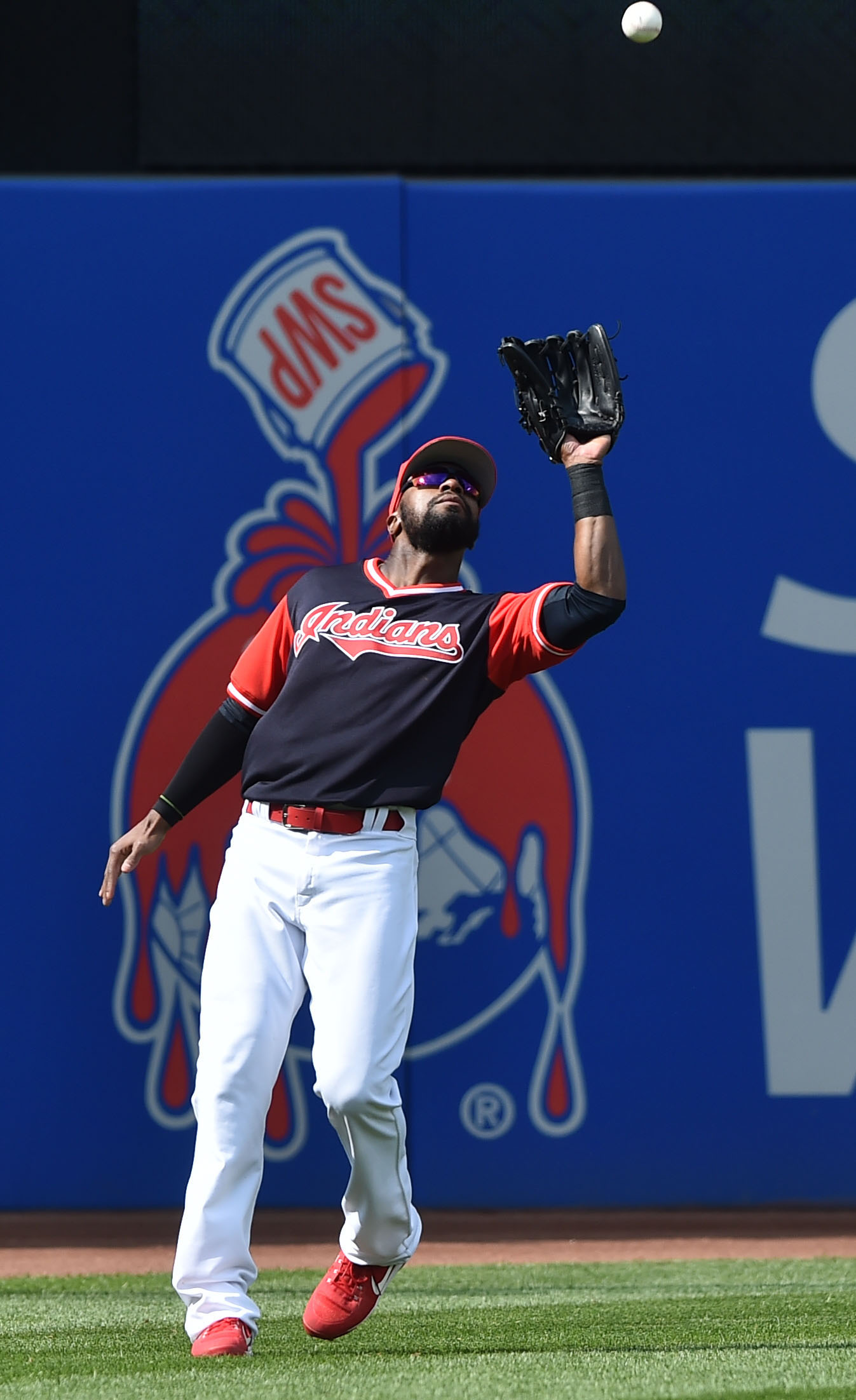
Jackson, who’ll soon turn 31, turned in a nice bounceback campaign in 2017 after three straight seasons of subpar offensive production. Over 318 plate appearances with the Indians, he posted a .318/.387/.482 batting line with seven home runs and three steals.
Though there’s obviously some promise in that output, it comes with a few caveats. On offense, Jackson benefited from a .385 batting average on ball in play that isn’t likely to be repeated. And his is wOBA of .378 widely outpaced his Statcast-based xwOBA of .335. (For what it’s worth, too, he mostly succeeded by dominating left-handed pitching. He has typically carried reverse splits, so it’s somewhat unclear how that ought to be interpreted.)
Importantly, too, Jackson is no longer a top-end asset in the field and on the bases. He has floated in range of average in both areas in recent years, but generally has graded as a slightly below-average fielder for the past several campaigns. It seems reasonable to believe he can still handle center, at least on a part-time basis, but he’ll surely be put to the test at the spacious AT&T Park.
[RELATED: Updated Giants Depth Chart]
There’s plenty of reason to wonder whether Jackson will be capable of coming close to repeating his output from 2017. But the contract seems to be a reasonable one for a player who has had success in both the recent and the more distant past. Certainly, the price is right for the Giants. This move dovetails with the team’s reported preference to fill out a roster without going past the luxury line.
As things stand, Jackson arguably sits atop the San Francisco depth chart in center field. That said, Giants GM Bobby Evans says that Jackson will “provide additional depth at all three outfield positions,” suggesting that the club does not expect to hand him the reins to the regular job in center. (Via John Shea of the San Francisco Chronicle, on Twitter).
The question, then, turns to what other options the Giants have to round out their outfield mix. Internally, right-handed hitters include Gorkys Hernandez, Austin Slater, and Mac Williamson. While the first two of those players are capable of seeing time in center, they wouldn’t add much functionality beyond what Jackson provides, particularly since the team’s veteran corner outfielders — Hunter Pence and Andrew McCutchen — both hit from the right side. The lefty-swinging, out-of-options Jarrett Parker is another option, up the middle, though his recent output does not inspire much confidence.
So, what options remain for the Giants? If a golden opportunity arises to add a higher-end player, particularly a left-handed hitter, then perhaps a move past the luxury tax line could still occur. Alternatively, as Baggarly notes on Twitter, the club could chase a pre-arb player while staying just shy of the tax, though that’d presumably mean either taking a risk on a less-than-certain asset or giving up good value in return. Free agents like Ben Revere could still be pursued, but anyone achievable at a bargain rate likely won’t be a good enough performer to bump Jackson into reserve duties. Of course, the team also surely hopes that left-handed-hitting prospect Steven Duggar will prove himself ready for a MLB trial in relatively short order. If the team truly believes in him but also wants a more established player to open the season without bypassing the luxury line, it’ll have to get rather creative.
Photo courtesy of USA Today Sports Images.
Cubs Re-Sign Brian Duensing
JANUARY 22, 4:40pm: Duensing’s salary is split into two equal installments, per Bob Nightengale of USA Today (via Twitter). Incentives based upon appearances can boost the annual rate by as much as $1.75MM, maxing out if and when Duensing takes the ball for the 65th time.
11:05am: Duensing has passed his physical, as the team has now formally announced his two-year contract. Chicago’s 40-man roster now sits at 39 players.
JANUARY 17: The Cubs have agreed to a two-year deal to bring back lefty Brian Duensing, according to Jon Heyman of Fan Rag (via Twitter). If finalized, it’ll guarantee the southpaw $7MM, per the report. Duensing is a client of the Legacy Agency.
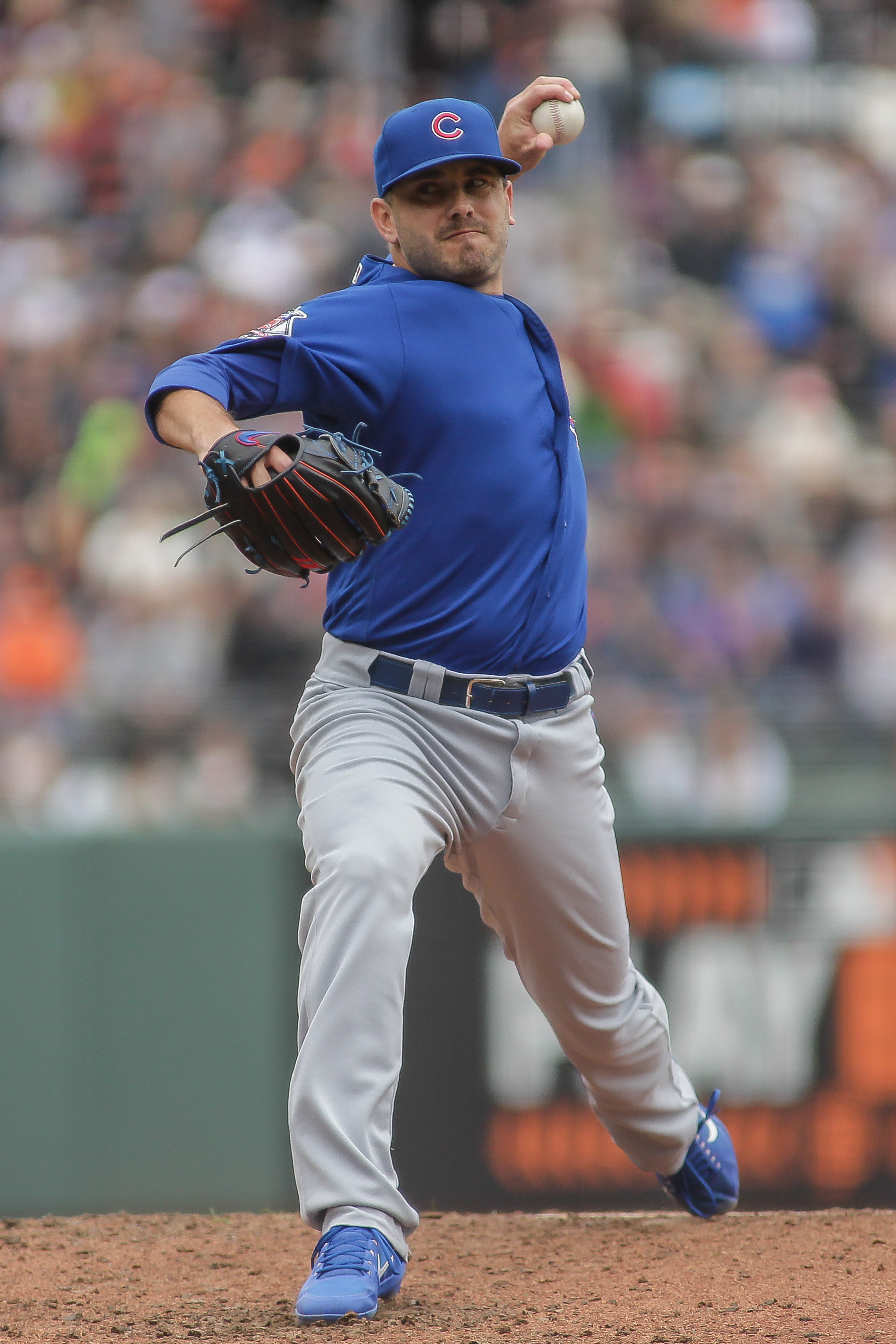
Duensing, who’ll turn 35 years of age before the start of the 2018 season, was targeted by the Cubs last winter. He justified the team’s faith, turning in a quality season on a $2MM salary. Evidently, Duensing also enjoyed his time at Wrigley; per Heyman (via Twitter), Duensing had the chance to earn “significantly more” with other organizations this winter but chose instead to return.
Despite his encroaching age, the results certainly justify the contract. Duensing is fresh off of a 62 1/3-inning campaign in which he carried a 2.74 ERA with 8.8 K/9 and 2.6 BB/9. He also allowed just one earned run on one hit in his five postseason appearances.
In many ways, Duensing’s 2017 work represented a continuation of his typical efforts, as he sat in his usual range of fastball velocity (92 to 93 mph) and continued to bring a starter’s arsenal to bear in the bullpen. He continued a trend in pitch usage, utilizing his offspeed mix (slider/curve/change) more than half the time for the first time in his career, but generally continued down a path he had already embarked upon.
Duensing has generally been tough to square up as a reliever, holding opposing hitters to a .254/.322/.372 slash when he enters from the pen. He was reliable against both lefties and righties in 2017, but he has done that at times previously. Duensing’s 10.3% swinging-strike rate last year was the second highest mark in his career, though that fell mostly in line with prior output. And he carried a solid 48.6% groundball rate in 2017 that doesn’t stand out from his career average, either.
In large part, then, credit is due to the Cubs for recognizing Duensing as an under-appreciated hurler, rather than tweaking his approach. The team will hope that the success can continue even as he continues to age. While the expectation will presumably remain that Duensing will work in a relief role, perhaps it doesn’t hurt that he has a background as (and, as noted, continues to use the pitch mix of) a starter.
Photo courtesy of USA Today Sports Images.
Blue Jays Acquire Randal Grichuk From Cardinals For Dominic Leone, Conner Greene
The Blue Jays have agreed to acquire outfielder Randal Grichuk from the Cardinals, per a Toronto announcement. Righties Dominic Leone and Conner Greene will go to St. Louis in return.
Grichuk becomes the second St. Louis player to move to the Jays via trade this winter, joining infielder Aledmys Diaz. Grichuk also joins Stephen Piscotty as young outfielders who have been swapped out in recent months. This time last year, that trio of departures would have registered as quite a surprise. As things developed, though, those players appeared quite likely to depart.
The Cardinals entered the current offseason determined to upgrade a position-player mix that included quite a few useful pieces but relatively few high-level performers. With the acquisition of Marcell Ozuna, the Cards added a player they feel will take them to the next level. With Dexter Fowler and Tommy Pham also expected to command near-everyday time, the move for Ozuna left Grichuk and Piscotty without obvious roles.
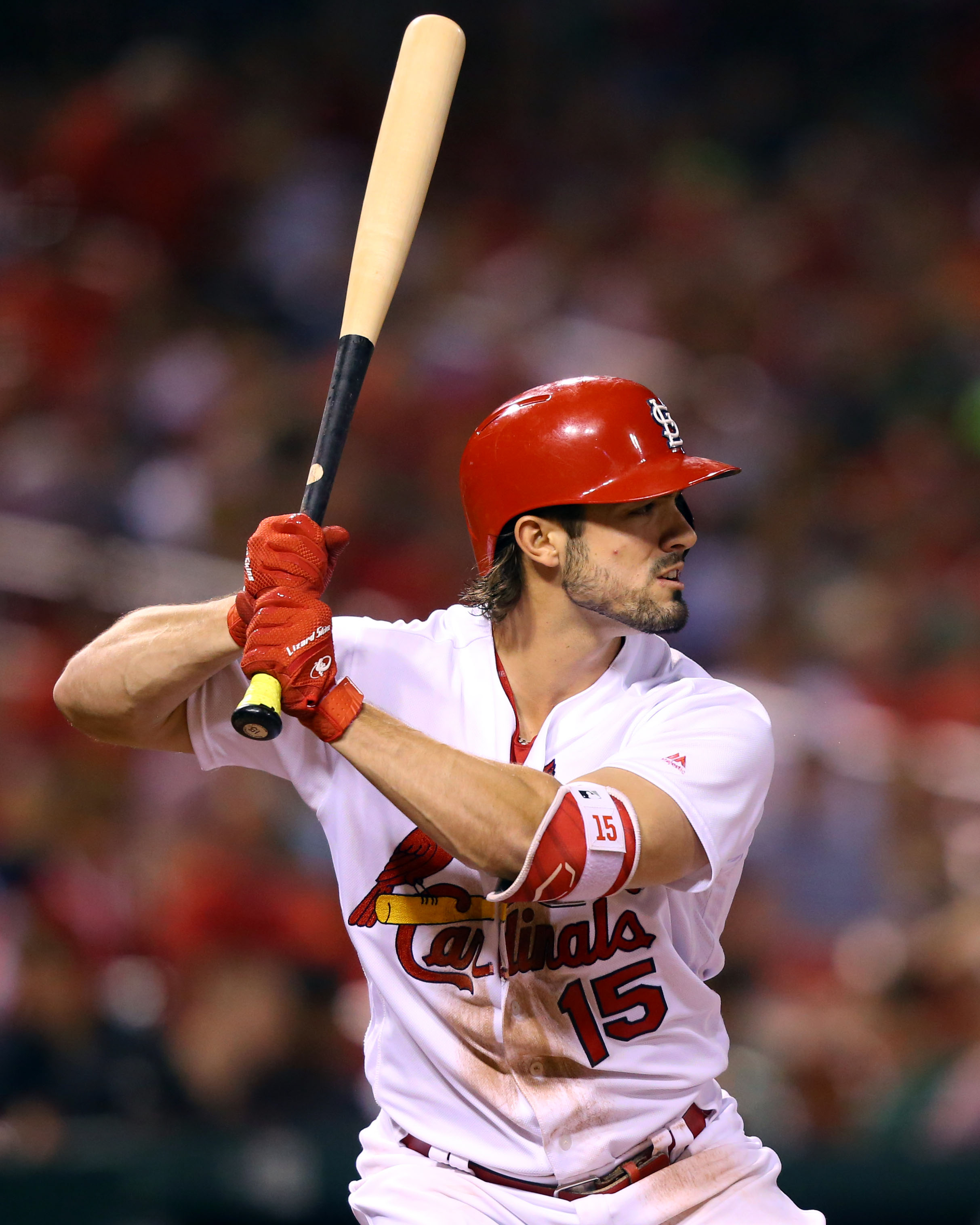
Grichuk turned in a highly promising 2015 season, racking up 17 home runs and a .276/.329/.548 slash in 350 plate appearances. Even then, though, there were some signs of worry — in particular, a 110:22 K/BB ratio.
Since that effort, Grichuk has faded. The right-handed-hitting outfielder is still putting the ball out of the yard at a strong rate. But he has only a .287 on-base percentage and league-average overall offensive output in his 920 plate appearances since the start of the 2016 season.
That said, perhaps there’s still some upside in the bat; he’s still only 26 years of age, after all. And Grichuk continues to provide good value with his glove, generally grading as a slightly above-average performer in center and in the corners. While he’s not much of a stolen-base threat, Grichuk has also rated as a quality overall baserunner.
[RELATED: Updated Blue Jays Depth Chart]
Toronto will pick up three years of control over Grichuk, who’s slated to earn $2.6MM in his first season of arbitration eligibility. He’ll join an outfield mix that already includes a right-handed-hitting center fielder in Kevin Pillar, a corner righty in Steve Pearce, and two left-handed-hitting pieces in Ezequiel Carrera and newly-signed veteran Curtis Granderson. Some platoon matches are to be expected from this group; in that regard, it’s worth noting that Grichuk has carried fairly notable reverse splits in the majors. Of course, it’s still possible the Blue Jays’ outfield unit will undergo some changes before all is said and done.
In return, the Cardinals will add some useful assets. Leone, a 26-year-old righty, has bounced around the league some but is fresh off of an excellent 2017 season. In 70 1/3 innings, he posted a 2.56 ERA with 10.4 K/9 and 2.9 BB/9. He’ll join an increasingly deep relief corps that perhaps will still be boosted by another late-inning arm.
[RELATED: Updated Cardinals Depth Chart]
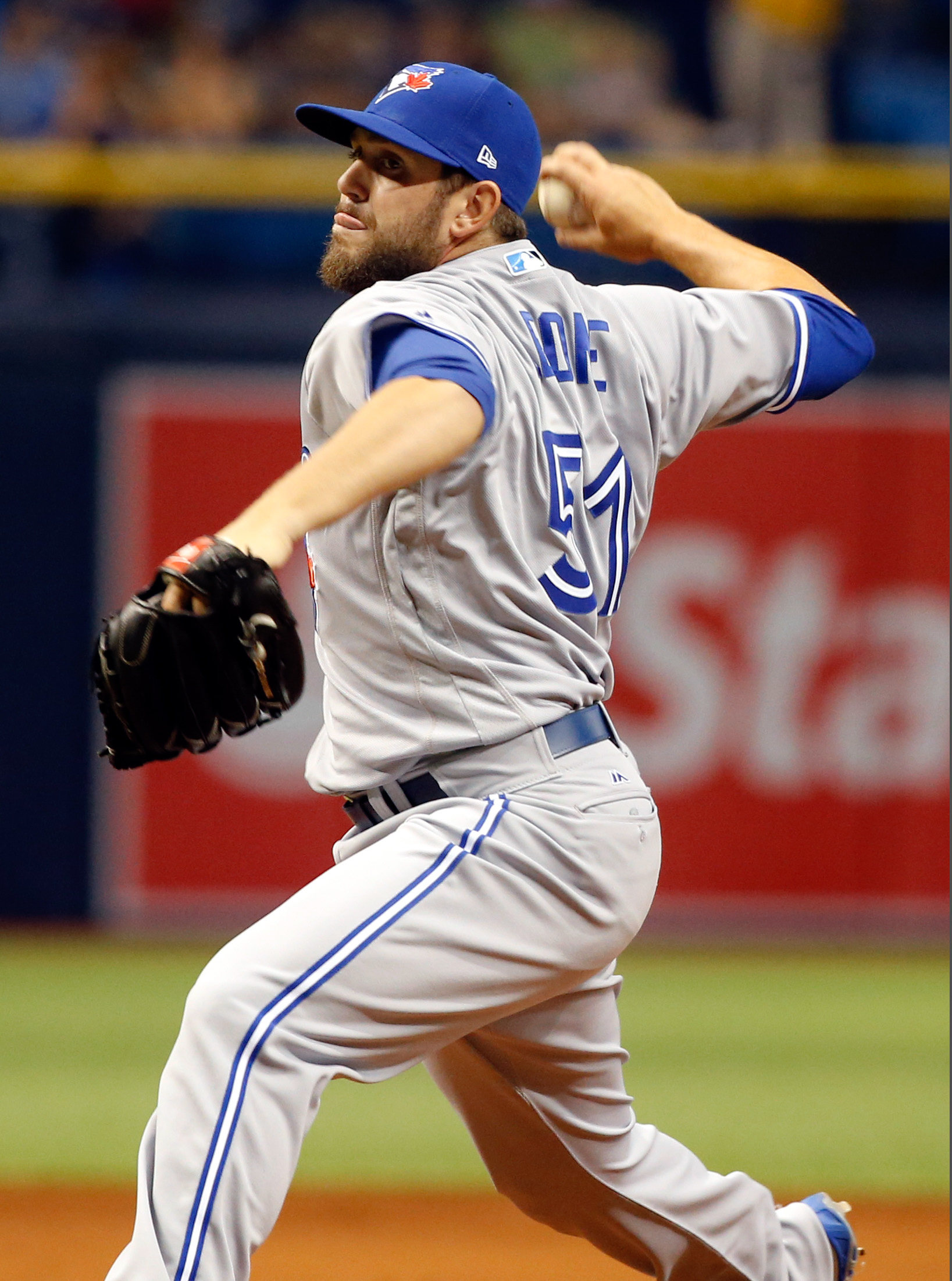
Leone has had similar success previously — in his 2014 debut with the Mariners — but struggled notably in the ensuing two seasons. All said, though, there’s plenty of reason to think he’ll continue to represent a quality asset. In 2017, he delivered his average fastball at 94.9 mph, recorded a personal-high 14.5% swinging-strike rate, and tamped down on the homers that had come to plague him.
Better still, the cutter-heavy Leone was equally effective against both righty (.208/.267/.357) and lefty (.181/.261/.366) hitters. The Cards will have the ability to control him for four more seasons. Leone reached arbitration as a Super Two, agreeing earlier this winter to a $1.085MM salary for the 2018 season.
Greene is a notable part of the deal as well. Still just 22 years of age, Greene has long been credited with interesting tools. He is said to possess a big heater, quality change, and useful slider. That said, there’s still quite a bit of polish needed and questions persist as to whether Greene will make it as a starter.
Last year, Greene struggled to a 5.29 ERA in his 132 2/3 innings at Double-A, managing only 6.2 K/9 against 5.6 BB/9 on the year. That showing obviously did not help his stock. Still, the Jays placed him on the 40-man roster at the end of the season in order to protect him from the Rule 5 draft.
It seems reasonable to expect that Greene will be given another chance to work out the kinks as a starter in the upper minor. But he might also take up a place on the Cards’ relief depth chart.
Photo courtesy of USA Today Sports Images.
Download Our Free Trade Rumors App
Looking for the best possible MLBTR experience on your mobile device? Check out our free Trade Rumors app, available for iOS and Android! Nine of the top ten free agents somehow remain unsigned with less than a month to go until pitchers and catchers report, so there’s a flurry of hot stove action yet to come. The Trade Rumors app allows you to set up custom feeds and notifications for your favorite teams and players and is the perfect way to stay on top of the news.
Pitch Clock Likely For 2018 Despite Ongoing Disagreement Between MLB, MLBPA
Pace of play has been one of the chief initiatives for MLB commissioner Rob Manfred since he succeeded Bud Selig, with a pitch clock among the potential rules changes most frequently discussed in recent months. Today, both Ken Rosenthal of The Athletic (subscription required/recommended) and Jerry Crasnick of ESPN.com are reporting that the Major League Baseball Players Association is expected to reject Manfred’s latest pace-of-play proposal, but that Manfred will likely exercise his power to unilaterally implement the new measure despite a failure to reach agreement with the union.
In a follow-up (Twitter links), Rosenthal says the union has in fact “formally rejected” the league’s proposal, but that Manfred will meet with MLBPA chief Tony Clark next week to negotiate further. Jeff Passan of Yahoo Sports has obtained the memorandum on the subject issued by the commissioner’s office. He details the league’s intentions — including timing rules for pitchers and hitters along with limitations on mound visits — as well as the compromise provisions that had been floated (and could, perhaps, still be discussed).
The reports indicate that a variety of pacing measures will go into effect in 2018, with a 20-second pitch clock perhaps the most visible and notable among them. Pitch clocks aren’t exactly new, as MLB has been experimenting with their use in the minor leagues by way of a 22-second pitch clock. If it does go into effect as the reports suggest, the rule would charge pitchers with a ball if they take more than 20 seconds between pitches (after one warning per game). Hitters, meanwhile, would be required to adhere to a 30-second timer between batters; after a warning (one per game), they would presumably be charged with a strike. Another set of rules would provide that a second mound visit to a given pitcher in the same inning must result in his removal from the game. In addition, future efforts would control the amount of time between innings and the number and length of pitching warm-ups, though that does not appear to be on the docket for the upcoming season.
Understandably, players aren’t particularly excited by the notion of feeling rushed or of rules impacting the count and, perhaps, the outcome of a given plate appearance. Indeed, one player involved in the negotiations tells Rosenthal that he’s never seen players so unified against an issue. Both Rosenthal and Crasnick suggest that the players feel pace of play can be enhanced by making improvements to the instant replay system and more closely monitoring down time between innings — neither of which would require a clock that would limit them on the field. The sentiment appears to be the exact opposite among MLB owners, as Rosenthal reports that they’re “strongly in favor” of the pace-of-play initiatives that the commissioner’s office is pursuing.
Disagreement over pace-of-play efforts won’t do any favors for labor relations. Though the league and union only recently struck a new, five-year collective bargaining agreement, there already appears to be a growing sense of unrest as players and agents alike look for explanations for an unfathomably slow free-agent market (at least for players other than relievers).
Of course, just what has led to the plodding (a perhaps generous choice of adjective) pace of the free-agent market isn’t entirely clear. Theories abound, ranging from the extent of penalization under the luxury tax, to a plethora of Scott Boras clients holding up the market, to a more general sense of groupthink among like-minded general managers that all value players in similar fashion. Some have speculated about the possibility of collusion, though the league has, to no surprise, steadfastly denied and dismissed the very notion — even going so far as to obliquely, and somewhat bizarrely, place the blame on Boras in a statement to Yahoo’s Jeff Passan. (We discussed the situation at length here.)
The proposed pace-of-play changes would hardly be the first significant alterations to the fabric of the game in recent years. The implementation of instant replay itself was and still is a rather polarizing topic, while MLB has also instituted rules to protect middle infielders from injury when turning double plays and to protect catchers at home plate in situations that would previously have resulted in violent collisions. More recently, MLB has eliminated the process of lobbing four pitches outside the strike zone on intentional walks, instead allowing managers to grant a free pass by making a signal to the umpires, and mandated that batters remain in the batter’s box between pitches.
Changes to the game are often met with resistance from fans and players alike. Rosenthal, however, notes that Manfred cites focus groups and surveys in emphasizing that younger fans are “alienated” by the game’s slow pace. That notion may well be true, though there are some counterpoints to his argument. It’s fair to wonder whether trimming a few seconds off the time between pitches and/or a few minutes off the average game would really impact interest levels enough to matter. Moreover, the implementation of additional change creates the risk of turning away dedicated fans who worry that alterations may unduly alter the nature of the game.
Clearly, Manfred and his charges feel that the possibility of converting younger patrons is worth the effort despite backlash from current fans and MLB players. As Rosenthal notes, however, the players’ decision to reject the proposal would grant them absolution in the event that the new rules flop or are received even more poorly among fans than expected — which could put them in a stronger position when negotiating rule changes in future offseasons.