
Tony Clark Accuses MLB Teams Of “Race To The Bottom”
MLBPA chief Tony Clark has issued a statement, first provided by ESPN.com’s Jerry Crasnick, leveling significant accusations at MLB organizations. With a huge number of free agents still un-signed, Clark says that teams have failed to engage the market in earnest.
Here is the full statement:
“Pitchers and catchers will report to camps in Florida and Arizona next week. A record number of talented free agents remain unemployed in an industry where revenues and franchise values are at record highs.
Spring Training has always been associated with hope for a new season. This year a significant number of teams are engaged in a race to the bottom. This conduct is a fundamental breach of the trust between a team and its fans and threatens the very integrity of our game.”
Notably, Clark does not accuse teams of acting in concert to artificially suppress earnings — quite a different, more serious potential charge for which we’ve seen no evidence. Rather, his view seems to coincide with the broad points already presented by some prominent media members and agents (as well as at least one sitting GM): i.e., that more teams than usual are strategically disinterested in trying to win in the coming season.
Unsurprisingly, Major League Baseball has a different view of the matter that reflect prior comments from commission Rob Manfred. In a statement released to Crasnick, the league rejects Clark’s characterization as an “unfair” attack on MLB teams. Arguing that many top free agents are “sitting unsigned even though they have substantial offers,” the league statement suggests that agents have failed to “value their clients” reasonably “in a constantly changing free agent market based on factors such as positional demand, advanced analytics, and the impact of the new Basic Agreement.”
Clark’s statement seems to represent a notable ramp up in the rhetoric surrounding the notably slow free agent process this winter. At the moment, though, it seems that this is mostly a war of words for public relations positioning. Camps will soon open without several prominent players, barring some quick developments in the market, which will dramatically raise the visibility of this long-simmering dispute.
The union/agent stance seems to be a familiar one, arguing that tanking tactics are reducing competition for top free agents. From the league/team side, as the above statement suggests, the rejoinder is that clubs are within their rights to operate as they see fit within the rules regime agreed upon by collective bargaining. It isn’t too difficult to see how each side hopes to draw upon the natural but competing inclinations of fans both to chide “cheap” owners and to turn a skeptical eye toward “selfish” players.
In truth, this debate isn’t a new one. Tanking has been discussed for years. Manfred’s prior argument was, in essence, that the market adequately allows for such a strategy; it’s just not that successful an approach if too many teams employ it, since inevitably plenty of clubs will “lose” the “race to the bottom” and fail to recoup top draft picks, etc. Dave Cameron has argued, though, that this year may be somewhat unique in that, for many teams, the incentives to pursue draft status and cost savings may be sufficient to outweigh an expensive, low-odds effort to chase down the half-dozen “super teams” currently pacing the game.
As Evan Drellich rightly observes on Twitter, the concept of tanking does not really adequately cover the deeper mechanisms at play. There’s more at play here, somewhere in the intermingling of pervasive and deepening analytics; aging curves in a (mostly) post-PED era; and drastically cabined amateur spending and other collectively bargained rules. The most recent collective bargaining agreement largely continued the preexisting rules regime, with a few tweaks, largely reflecting an assumption that market mechanisms would allow player compensation to keep pace with earnings growth. Even as they swim in revenue, though, MLB organizations increasingly seem to be pursuing strategies that eschew major long-term free agent entanglements — potentially challenging the assumptions undergirding the players’ commitment to the existing CBA framework.
Astros Sign George Springer To Two-Year Deal
11:15:am: The Astros have announced the signing.
8:48am: The Astros have agreed to a two-year, $24MM contract with outfielder George Springer, reports Bob Nightengale of USA Today (via Twitter). Springer, a Super Two player who was in his second trip through the arbitration process, will earn $12MM in each year of the deal. Springer is represented by the Legacy Agency.
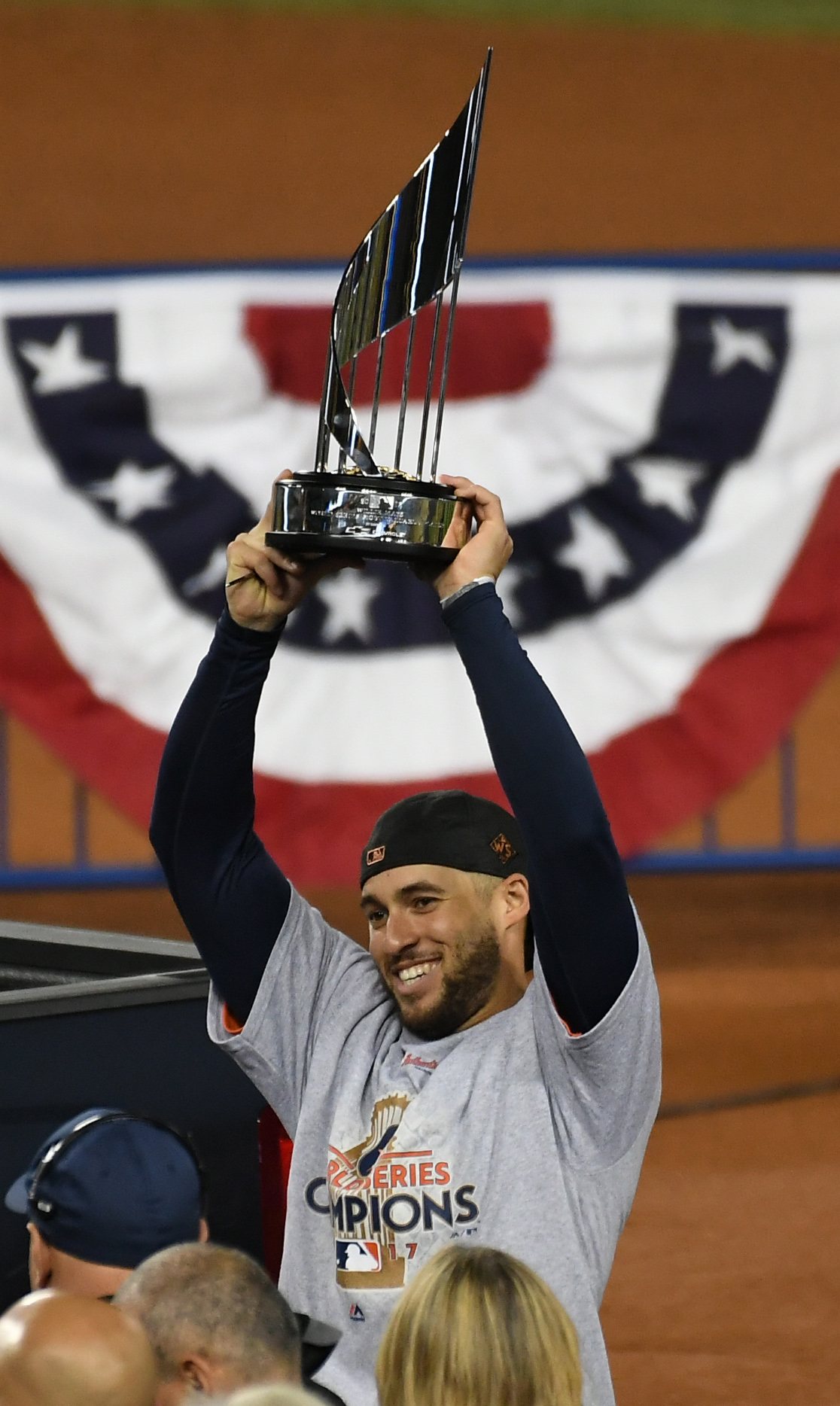
Springer and the Astros had yet to resolve their arbitration case and were scheduled to head to a hearing this month. He’d filed for a $10.5MM salary, while Houston had countered with a figure of $8.5MM (as shown in MLBTR’s 2018 Arbitration Tracker). Instead, the two-year pact will buy out Springer’s second and third years of arbitration eligibility, though he’ll have one remaining year of arbitration left upon completion of this deal given the aforementioned Super Two status.
The 28-year-old Springer is coming off the finest season of his big league career to date, having posted a sensational .283/.367/.522 batting line with 34 homers and 29 doubles through 629 plate appearances. Springer logged a career-high 643 innings in center field this past season and graded well there per both Defensive Runs Saved and Ultimate Zone Rating, although those two metrics, which are usually bullish on his corner-outfield work, didn’t regard his defense in right field very favorably in 2017. (With Josh Reddick, Derek Fisher and Marwin Gonzalez all in the mix for corner outfield time in 2018, Springer figures to once again spend more time in center field than in right field this coming season.)
Overall, Springer was a driving force not only behind the Astros’ romp of the American League West but the team’s first World Series championship in franchise history. Springer went 7-for-17 with a homer, two doubles and two walks in 19 ALDS plate appearances, and after an ice-cold ALCS showing against the Yankees, he laid waste to Dodgers pitching in the World Series en route to MVP honors. Springer belted five homers in seven games and hit .379/.471/1.000 through 34 PAs in the Fall Classic.
Now that Springer has agreed to a two-year deal and Ken Giles has won his arbitration hearing, the Astros’ lone remaining arbitration case if that of Collin McHugh. The right-hander filed for a $5MM salary for the upcoming season, while the Astros countered with a $4.55MM sum.
Photo courtesy of USA Today Sports Images.
Tony Clark, Agents On Slow-Moving Offseason
Player agent Brodie Van Wagenen took aim at MLB owners on Friday regarding this year’s historically slow-moving open market. Reactions to the lack of free agent activity this winter have continued to pour in since, including from MLBPA executive director Tony Clark.
“For decades free agency has been the cornerstone of baseball’s economic system & has benefited Players and the game alike,” Clark said. “Each time it has been attacked, Players, their representatives & the Association have united to defend it. That will never change.”
Clark’s remarks come at a time of growing unrest from the players, many of whom have voiced their displeasure with the fact that owners aren’t opening their checkbooks for free agents this winter. One prominent example is Dodgers closer Kenley Jansen, who, despite signing a five-year, $80MM contract a winter ago, recently raised the idea of the players going on strike when the current collective bargaining agreement expires in December 2021. His teammate Rich Hill, who also received a big payday last offseason (three years, $48MM), told Nick Cafardo of the Boston Globe last week that “how the free agent market has been going has been disconcerting this offseason and a lot of players are concerned about it.” Hill called the situation “really bad” and noted that “players just want what’s fair.”
As FanGraphs’ Craig Edwards pointed out Friday, the majors’ cumulative payroll is almost sure to stagnate or decrease compared to 2017, even though all 30 owners received a $50MM payout this year from MLB’s sale of BAMTech to Disney. To this point of the offseason, only two of MLBTR’s top 10 free agents – the Brewers’ Lorenzo Cain (five years, $80MM) and the Rockies’ Wade Davis (three years, $52MM) – have found teams. Of MLBTR’s pre-offseason top 50 free agents, nearly half are currently unsigned, which is staggering given that the market opened three months ago and spring training is only a few weeks away.
Like their fellow agent Van Wagenen, Seth Levinson of ACES and Joshua Kusnick of Double Diamond Sports Management spoke out against the current state of affairs Friday. In a statement of his own (via Ken Rosenthal of The Athletic), Levinson offered:
“There is a bond that exists between Clubs and its fan base. The integrity of that time-honored relationship is predicated upon the good faith effort of the Club to compete to the best of its ability. The CBA which defines the relationship between Clubs and Players is a good faith effort to create and assure that there is a competitive balance among all Clubs so that the greater good and best interests of the game are served.
“There may be legitimate reasons for the problems that players have encountered in this market. That said, there is no Industry in this country where competing businesses act in virtually an identical manner. It is disconcerting, and disheartening for Clubs that are awash in revenue and or are fully capable of improving its product to choose to do otherwise. Jerry Dipoto so eloquently made the point that there may be more Clubs competing for the 1st pick in the June Amateur Draft than for the World Series.”
As Van Wagenen and Levinson did, Kusnick (via Twitter) suggested that collusion is at play, saying “it is impossible” for him to believe that all 30 teams are suddenly evaluating players the same. He went on to reveal that he has six major league free agents who are currently seeking minors deals, contending that the freeze at the top of the market is preventing teams from showing much interest in lesser FAs.
“It really does trickle down to A-ball, and I have never dealt with anything like this in 15 years,” continued Kusnick, who added that “ownership has historically attempted to subvert the players’ ability to earn the maximum amount of dollars for their services. And just because we have enjoyed an unprecedented stretch of labor peace that has benefited both sides does not mean the players are oblivious to the realities that this market has presented. The MLBPA and players have been tested before but have never broken. It will not happen this time either.”
Kusnick closed with “those who forget the past are doomed to repeat it,” which could be a warning toward owners that players will strike again – as they most recently did in 1994-95 – if necessary. The game’s latest work stoppage resulted in the loss of an entire season two-plus decades ago, and we may be headed down a similar road within the next few years if the league and the union don’t start finding common ground by then. With commissioner Rob Manfred pushing to implement pace-of-play changes that most players are less than thrilled with, the relationship between the sides is seemingly on the verge of getting even worse.
Agent Brodie Van Wagenen Speaks Out On Stagnant Free-Agent Market
In perhaps the greatest show of player unrest of the entire offseason, Brodie Van Wagenen — the co-head of CAA Baseball and one of the game’s most prominent agents — issued a statement today stating that ownership behavior in the 2017-18 offseason “feels coordinated” and referencing a level of player unity against ownership that hasn’t been seen since the most recent MLB labor stoppage back in 1994:
In 2017, the Players were content with a status quo Collective Bargaining Agreement. They enjoyed a 23% increase in their average salary from 2012 ($3.2M) to 2017 ($4.1M).
The average salary grew from $2.8M in 2007 to $3.2M in 2012 (just 13.8% growth). That is a 9.2% increase from the last CBA, during Tony Clark’s first four years as the Executive Director of the Players Association. $100M guaranteed contracts were regular occurrences. $200M contracts: yes. $300M: yes. Not bad by any measure. Free enterprise at its best.
The getting was good for both Players and Owners during an economic boom in the sports industry, based in large part to the value of live content in the entertainment landscape. Yes, Baseball is entertainment and too often teams forget about the audience they serve.
However, the behavior of Owners in this year’s free agent market has changed dramatically. It feels coordinated, rightly or wrongly. Many club Presidents and General Managers with whom we negotiate with are frustrated with the lack of funds to sign the plethora of good players still available, raising further suspicion of institutional influence over the spending. Even the algorithms that have helped determine player salaries in recent years are suggesting dramatically higher values than owners appear willing to spend.
Bottom line, the players are upset. No, they are outraged. Players in the midst of long-term contracts are as frustrated as those still seeking employment. Their voices are getting louder and they are uniting in a way not seen since 1994.
I would suggest that testing the will of 1,200 alpha males at the pinnacle of their profession is not a good strategy for 30 men who are bound by a much smaller fraternity. These 1,200 players have learned first-hand that battles are won through teamwork, and they understand that Championships can’t be achieved by individuals. They are won by a group united by a singular focus. Victory at all costs. They are willing to sweat for it; they are willing to sacrifice for it; they are willing to cry for it; and most importantly, they are willing to bleed for it.
There is a rising tide among players for radical change. A fight is brewing. And it may begin with one, maybe two, and perhaps 1,200 willing to follow. A boycott of Spring Training may be a starting point, if behavior doesn’t change.
Players don’t receive their paychecks until the second week of April. Fine them? OK, for how much? Sue them? OK, they’ll see you in court two years from now. At what expense?
Baseball offers 4,881 dates of live content annually across 27 media markets. Franchise values are at all-time highs. Fans want to see the best players competing at the highest level.
Sign them;
Play them;
Celebrate them;
and then sit back and let them entertain us the way they have more than 100 years.
Van Wagenen’s statements come at a time when there are more than half the league is positioned to head into the 2018 season with lower payrolls than they carried in 2017. As Yahoo’s Jeff Passan detailed this morning, the rebuilding Tigers lead the pack with a payroll that has been slashed by $77.2MM, while the Phillies ($48.2MM), Rangers ($43.3MM), Orioles ($43.1MM) and Dodgers ($40.1MM) have all cut payroll by more than $40MM on a year-over-year basis. Beyond that group, the Yankees, Royals, White Sox and Marlins have all cut their annual payroll by a sum in excess of $30MM.
To be fair, some of those clubs have spent — just not to levels commensurate with past payrollss. The Phillies and Carlos Santana, for instance, agreed to a three-year, $60MM deal. The Phils also agreed to two-year pacts with Pat Neshek and Tommy Hunter. The Rangers, meanwhile, have made their own share of free-agent signings (Mike Minor, Doug Fister, Tony Barnette, Chris Martin).
Several teams, Passan notes — the Marlins, Orioles, Braves, Pirates and Rays — haven’t signed a single Major League free agent this offseason. While the Orioles, who are said to be looking for three starters and a right fielder, certainly figure to do so eventually, it’s a troublesome development for players that one sixth of the league has sat out the open market entirely.
Certainly, a few of the clubs with projected payroll decreases have tried to spend, as well; the Royals, for instance, have reportedly made a seven-year offer to bring Eric Hosmer back to Kansas City. That unsuccessful overture cannot be ignored, nor can the reported five-year offers for J.D. Martinez and Yu Darvish.
But, while (some of) the top names on the market have received lucrative offers, it’s been quieter yet for mid-range free agents that may have, in the past, expected more modest multi-year and even one-year commitments. I’ve had multiple representatives of “middle class” free agents privately express concerns to me this offseason that resemble those voiced by Van Wagenen today, though none has gone so far as to imply the possibility of a labor stoppage.
Obviously, a measure so extreme can only come from the players. But, the fact that such a prominent voice among player representatives has felt enough frustration on behalf of not only his own clients, but all 1200 players on 40-man rosters throughout the league, further underscores a level of tension between players and owners that is approaching historic levels. (For reference, CAA’s free agents this winter include Todd Frazier, Andrew Cashner, Jason Vargas, Matt Belisle, Jon Jay, Andre Ethier and outfielder Chris Young, as can be seen in MLBTR’s Agency Database).
To be clear, there’s yet to be any formal accusation of collusion, nor, more importantly, has there been any proof of the matter. Rather, we’ve seen arguments that run counter to that very notion — some from players themselves — suggesting that the small-scale increase to the luxury tax, the hard cap on draft/international spending and the link between draft compensation and free agency have all disincentivized teams from spending. Those were bargained into the CBA during negotiations between the league and the union, of course, and those factors play no small part in what has been a glacial offseason that has left a significant portion of the industry baffled and divided at a historic high-point for MLB revenues.
Diamondbacks Sign Alex Avila
5:25pm: The D-backs have now announced the signing.
3:45pm: Rosenthal tweets that Avila has already passed his physical, making the deal official. The D-backs have yet to announce the signing, though, which will require a corresponding 40-man roster move.
Jan. 31, 1:19pm: Avila will receive a two-year contract worth $8.25MM, The Athletic’s Ken Rosenthal reports (via Twitter). Another $250K per season will be available to Avila in incentives, according to Heyman.
Jan. 30, 6:44pm: The two sides have a deal, pending a physical, Jon Heyman of FanRag tweets.
6:36pm: The Diamondbacks are nearing an agreement with free agent catcher Alex Avila, Nick Piecoro of the Arizona Republic reports on Twitter. Terms are unknown, but MLBTR predicted a two-year, $16MM contract for Avila at the outset of free agency.
The 31-year-old Avila will add an offensively capable backstop to an Arizona club whose catchers batted a paltry .219/.306/.404 last season. That was with a very good performance from Chris Iannetta, who joined the NL West rival Rockies in free agency, leaving the Diamondbacks with Jeff Mathis and Chris Herrmann as their top options. Mathis, the team’s likely starter prior to the Avila agreement, is known for his defensive prowess. However, his bat has never come close to keeping up with his work behind the plate.
[RELATED: Updated D-backs Depth Chart]
Unlike Mathis, defense is not Avila’s calling card – in fact, he was among the game’s worst pitch framers in 2017, according to both Baseball Prospectus and StatCorner. But the lefty-swinger did his best to make up for it at the plate, where he slashed an outstanding .264/.387/.447 with 14 home runs and a .183 ISO in 376 plate appearances divided between the Tigers and Cubs. Avila’s numbers dropped off after the Cubs acquired him prior to the July 31 non-waiver trade deadline (.274/.394/.475 versus .239/.369/.380), though he still offered the North Siders above-average offensive production relative to his position.
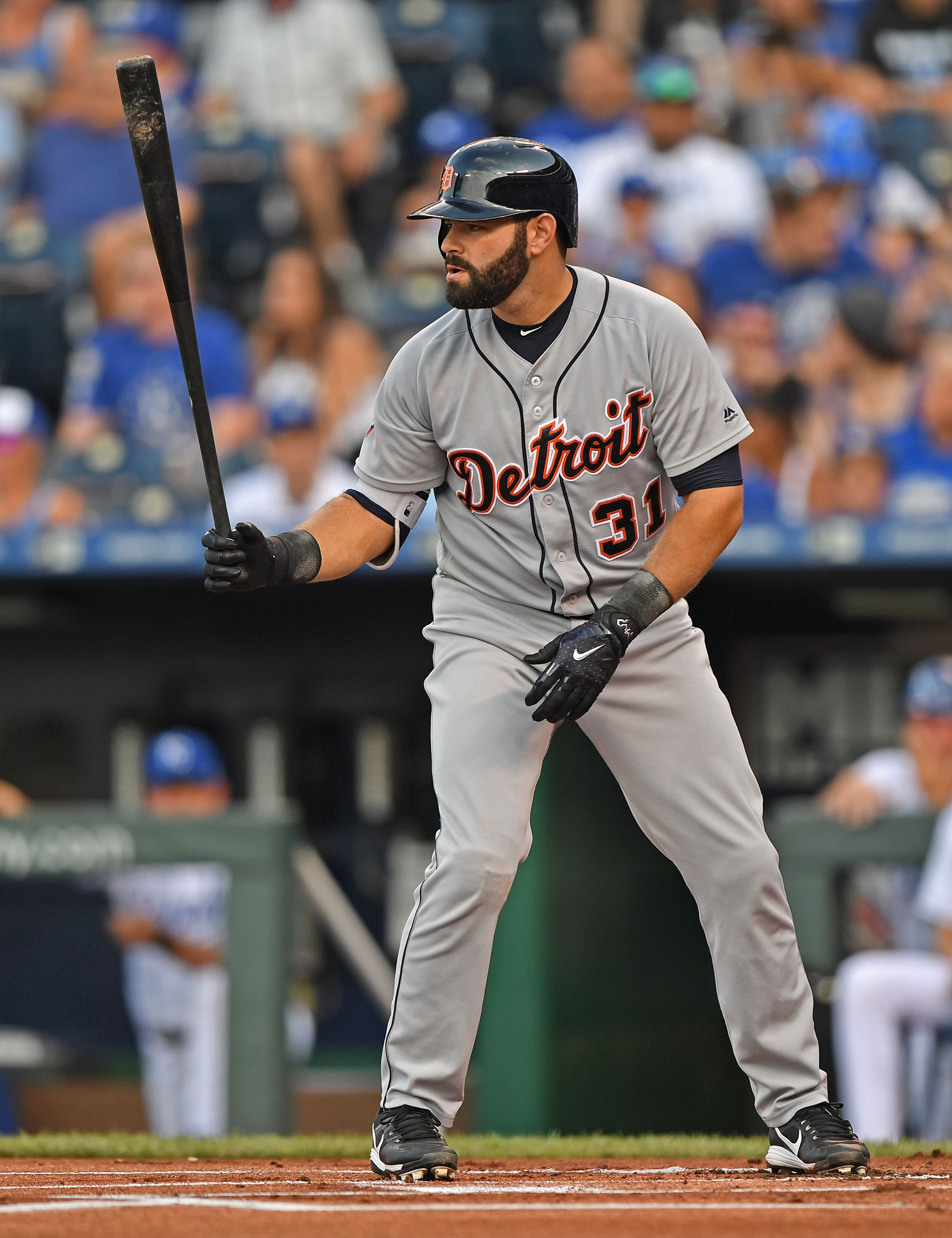
While Avila managed a hard-to-sustain .382 batting average on balls in play last season and struck out in 31.9 percent of PAs, he helped his cause significantly with scorching contact. Among those with at least 300 PAs, Avila ranked second in the majors in hard-hit rate (48.7 percent, compared to a career mark of 36.6). And out of 387 hitters who put at least 100 balls in play, he finished tied for 18th in average exit velocity (90.4 mph) and tied for 21st in barrels per PA (7.4). Consequently, he posted a tremendous xwOBA (.395) that easily outpaced his still-high wOBA (.368).
Last year’s offensive outburst was Avila’s most impressive showing since 2011, when the then-Tiger earned his lone All-Star nod, but success with the bat isn’t anything new for the lifetime .243/.351/.401 hitter. He comes with notable platoon splits, though, having held his own against right-handed pitching (.250/.362/.426) while failing to present a threat versus southpaws (.212/.306/.305) since debuting in 2009. He also brings durability concerns, having gone on the disabled list several times in his career, including twice during a 57-game season with the White Sox in 2016.
After his lone campaign with the ChiSox, Avila returned to the Tigers last winter for a $2MM guarantee. Avila’s sure to do better this time around, but it’ll be interesting to see how much the Diamondbacks will guarantee him. With an estimated $122MM-plus in commitments at the moment, the D-backs are known to have limited payroll flexibility, which is seemingly standing in the way of a reunion with free agent slugger J.D. Martinez – Avila’s former teammate in Detroit – and may lead to cost-cutting trades (they could deal $7.5MM left-hander Patrick Corbin, for instance). The club has only opened a season beyond the $100MM mark twice, including when it spent a franchise-record $112MM-plus in 2014.
Photo courtesy of USA Today Sports Images.
Reds Sign David Hernandez
1:30pm: Buchanan also reports that the contract contains up to $2MM worth of incentives — $1MM in each year (Twitter links). Hernandez would earn $50K for making his 40th appearance in each year of the deal, and he’d earn an additional $100K for his 45th, 50th, 55th and 60th appearances each season. He’ll also earn $150K for making his 65th and 70th appearances, and he can earn $125K for finishing 30 and 35 games in each year of the deal.
1:00pm: The Reds announced on Tuesday that they’ve signed free-agent right-hander David Hernandez to a two-year contract. Cincinnati’s 40-man roster is now full with the addition of the veteran reliever. Hernandez, a client of agent Jason Hoffman, will earn $2.5MM in both years of the contract, Zach Buchanan of the Cincinnati Enquirer reports (via Twitter).
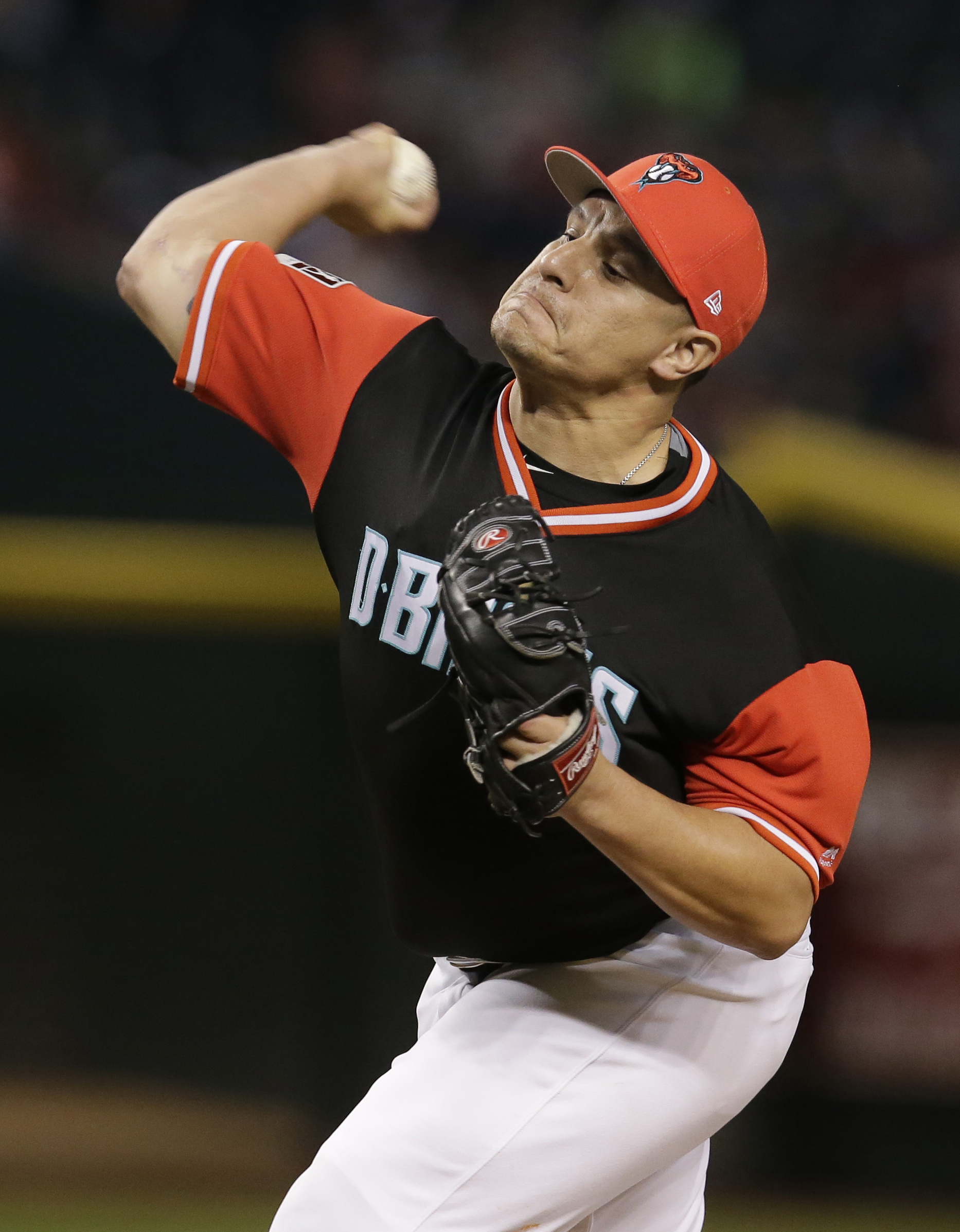
Hernandez, 33, took a winding route to the Majors with the Angels last season, signing a minor league deal with the Giants before being granted his release, signing with the Braves, and ultimately being flipped to Anaheim in exchange for cash in late April. When he finally did arrive back in the Majors, the former closer enjoyed one of his most productive seasons and emerged as one of the Halos’ most dependable relievers.
In 36 1/3 innings with the Angels, Hernandez worked to a pristine 2.23 ERA with 9.2 K/9, 2.0 BB/9 and a 47.3 percent ground-ball rate. Hernandez benefited from his fair share of good fortune, namely in the sense that not a single fly-ball he allowed cleared the fence for a home run. Outside of that, however, his resurgence looked largely legitimate, and his former club, the Diamondbacks, saw fit to swing a trade to acquire him as they pushed for an NL Wild Card berth.
Things didn’t go quite as well for Hernandez in Arizona, as he logged a dismal 4.82 ERA, albeit with a terrific 15-to-1 K/BB ratio in 18 2/3 innings. Hernandez’s evasion of the long ball ran out in the desert, though, as he was tagged for four homers, helping to bloat his ERA despite generally more promising secondary metrics (4.09 xFIP, 3.62 SIERA).
[Related: Updated Cincinnati Reds depth chart & Cincinnati Reds payroll]
Overall, since returning from 2014 Tommy John surgery, Hernandez has been generally successful. An early stint as the Phillies’ closer in 2016 proved disastrous, but he rebounded with a strong finish to the season. Dating back to Opening Day 2015, he’s turned in a solid 3.68 ERA with 9.2 K/9, 2.9 BB/9 and 1.2 HR/9 in 161 1/3 innings while playing most of his home games in hitter-friendly settings (Arizona’s Chase Field, Philadelphia’s Citizens Bank Park).
Cincinnati’s closer role is locked down by emerging star Raisel Iglesias, but Hernandez will give manager Bryan Price an experienced arm to add to a setup corps that features Michael Lorenzen and fellow offseason signee Jared Hughes (who also inked a two-year pact in Cincinnati), as well as sophomore southpaw Wandy Peralta.
The two-year, $5MM term is an exact match (in terms of guaranteed money) with the contract to which fellow veteran Matt Albers agreed with the division-rival Brewers just yesterday. While the price is modest in nature, the contract does project the Reds to push slightly north of the $100MM threshold for what would be the fourth time in franchise history.
Photo courtesy of USA Today Sports Images.
Nori Aoki Reportedly Agrees To Three-Year Deal With NPB’s Yakult Swallows
After spending the past six seasons in Major League Baseball, outfielder Nori Aoki is reportedly headed back to Japan. Both the Kyodo News and Japan Times report that the 36-year-old Aoki has agreed to a three-year contract with the Yakult Swallows of Japan’s Nippon Professional Baseball. The CAA client’s deal is reported to be worth one billion Yen — or $9.19MM in total over that three-year term.
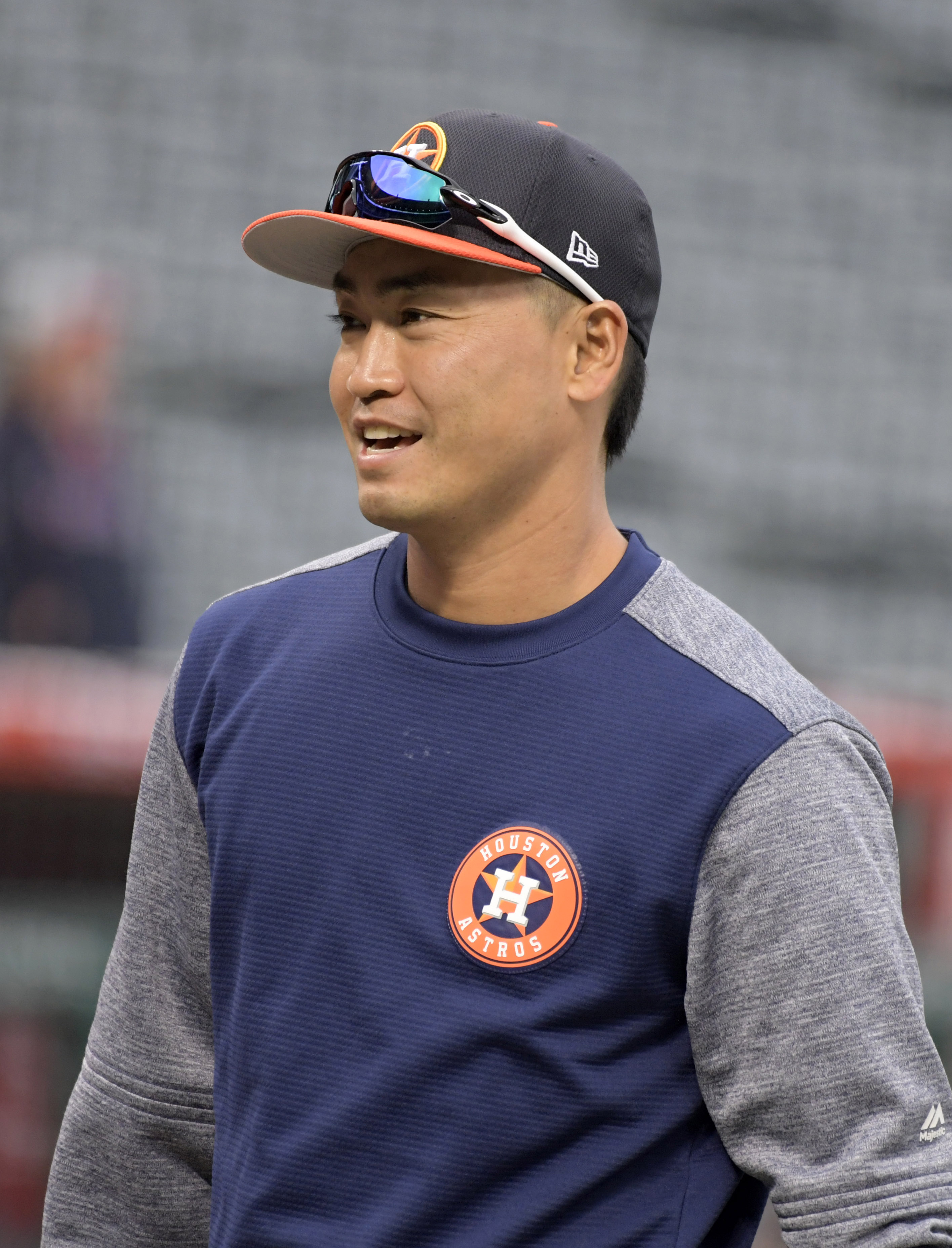
Aoki split the 2017 season between the Astros, Blue Jays and Mets, hitting a combined .277/.335/.393 with five homers and 10 steals over the course of 374 plate appearances. That marked the lowest total of plate appearances he’d received in a season since coming over from NPB with the Brewers in 2012, though his overall output at the plate was still only slightly below the league average in the estimation of metrics like OPS+ (98) and wRC+ (97).
That said, Aoki was one of many options for MLB teams on a crowded free-agent market for outfielders (MLBTR Free Agent Tracker link), and heading into his age-36 campaign, he was also one of the older players on that market. As the game increasingly gravitates away from guaranteeing significant commitments to players in their late 30s, it seems likely that Aoki would’ve had to settle for a minor league pact or a low-salary, one-year commitment from a big league team if he wished to continue playing in North America.
Instead, he’ll head back to the organization where he starred from from 2005-11 prior to making the move to Major League Baseball. In parts of eight seasons with Yakult, Aoki posted a hefty .329/.402/.454 batting line with 84 homers and 164 stolen bases. He’ll return as a well-traveled elder statesman on the tail end of his career, hoping to benefit the team both on the field as well as off the field as he shares his experiences with the organization’s younger talent.
Given that the reported contract will run through Aoki’s age-38 season, it seems quite likely that his days in the Majors could be over. If that indeed proves to be the case, then he more than held his own in the big leagues. The remarkably consistent Aoki hit between .277 and .288 in each of his six seasons here, and his on-base percentage never dipped below this past season’s mark of .335. In all, he batted .285/.350/.387 as a Major Leaguer, spending time with the Brewers, Royals (with whom he appeared in the 2014 World Series), Giants, Mariners, Astros, Blue Jays and Mets.
Photo courtesy of USA Today Sports Images.
Kevin Towers Passes Away
In a sudden piece of heartbreaking news, Bob Nightengale of USA Today Sports reports that former Padres and Diamondbacks general manager Kevin Towers has passed away at the age of 56. Towers had been diagnosed with anaplastic thyroid cancer back in December 2016.
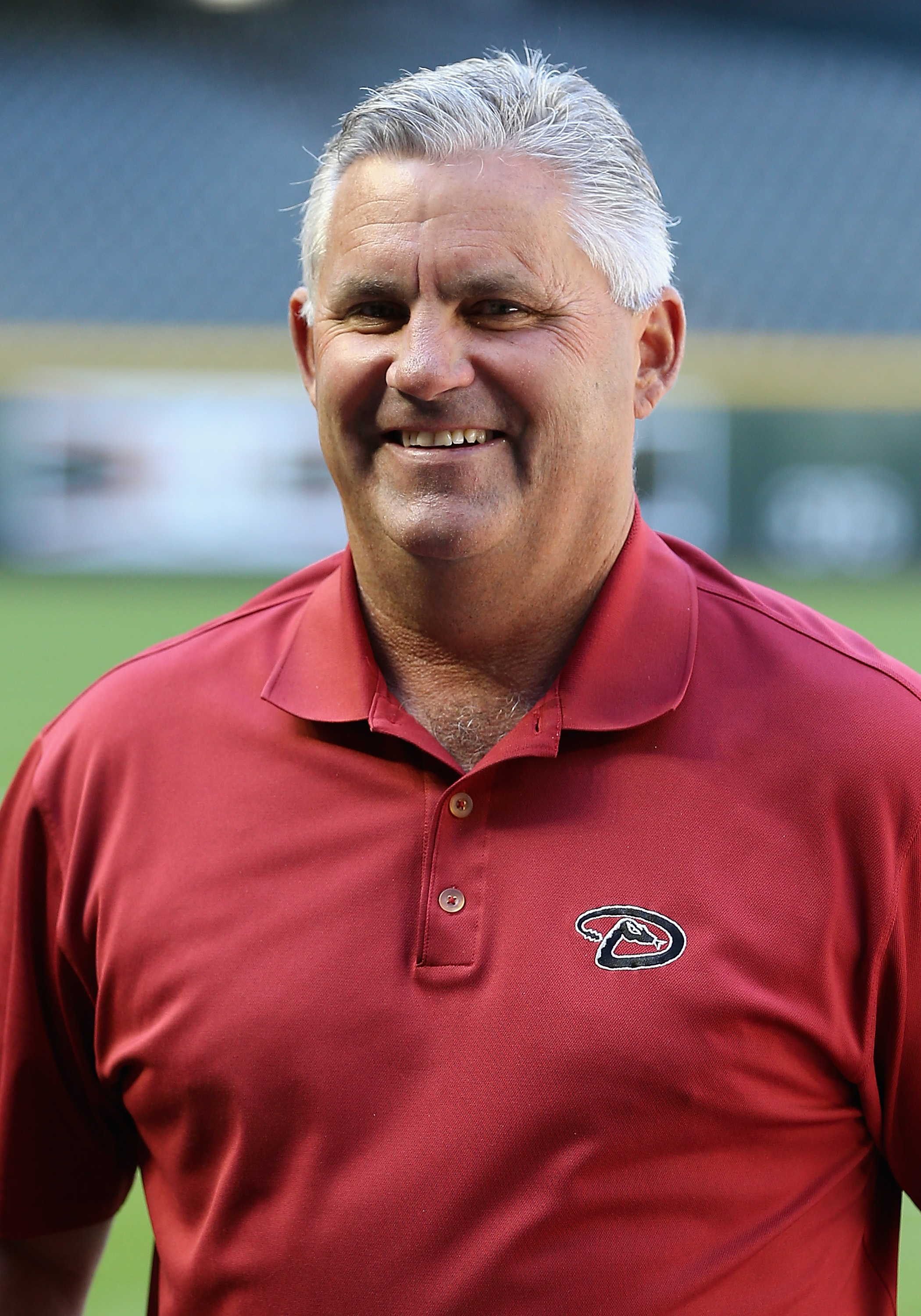
Prior to his days as one of the game’s most prominent and recognizable executives, Towers broke into professional baseball as a player when he was selected by the Padres in the first round of the 1982 draft. A right-hander who starred at Brigham Young University, Towers would pitch in parts of eight minor league seasons that were slowed by injury before ultimately transitioning to the operations side of the game.
Well-respected for his scouting acumen, Towers parlayed his keen eye for player talent into a position as the Padres’ scouting director before ascending to their GM chair in 1996 — a position he’d occupy all the way through the 2009 season. That remarkable run is one of lengthier stints that any GM has enjoyed atop his organization in recent history.
San Diego won its division in two of Towers’ first three seasons at the helm and advanced to the World Series in 1998 under his watch. The Friars would go on to win the West on two more occasions under Towers’ guidance, taking home consecutive division crowns in the 2005-06 seasons. Never afraid to make a bold trade, Towers was affectionately referred to as the “gunslinger” for much of his career as a general manager.
Upon being dismissed after that 2009 season, Towers spent a year as a special assignment scout with the Yankees before being tabbed as the new general manager of the Diamondbacks. From 2010-14, Towers would hold that role, and it was during his tenure that the D-backs signed face of the franchise Paul Goldschmidt to one of the game’s best contracts.
Following his dismissal and replacement by the Dave Stewart/Tony La Russa regime, Towers joined the Reds as a special assistant to GM Dick Williams, specializing in player personnel — a role that he continued to hold even into his battle with cancer.
The immediate outpouring from the media, former players and others in the industry serves as a testament to Towers’ reputation as a venerable ambassador to the game of baseball, as well as to the love and respect that he fostered in more than three decades as a member of the MLB family. Yahoo’s Tim Brown has penned an especially poignant tribute to Towers, encapsulating the magnetic vigor that drew so many to him.
Our deepest condolences to his family, loved ones and the countless men and women both in the industry and the media whose lives he impacted over the course of a 35-year career in professional baseball.
Photo courtesy of Getty Images.
Royals Re-Sign Alcides Escobar
8:47pm: Bob Nightengale of USA Today Sports tweets that Escobar will earn $75K for making 125 plate appearances, and confirms that his incentives will top out at 600 PA. Jon Heyman of FanRag Sports adds that the shortstop will earn $75K for every 25 plate appearances after the first 125, up until the 600 mark.
2:13pm: The Royals aren’t completely breaking up their long-term core, as they announced on Monday that they’ve re-signed shortstop Alcides Escobar to a one-year deal for the 2019 season. Escobar, a client of the Legacy Agency, reportedly receives a $2.5MM base salary and can earn another $1.5MM via plate appearance incentives (topping out at 600 PAs).
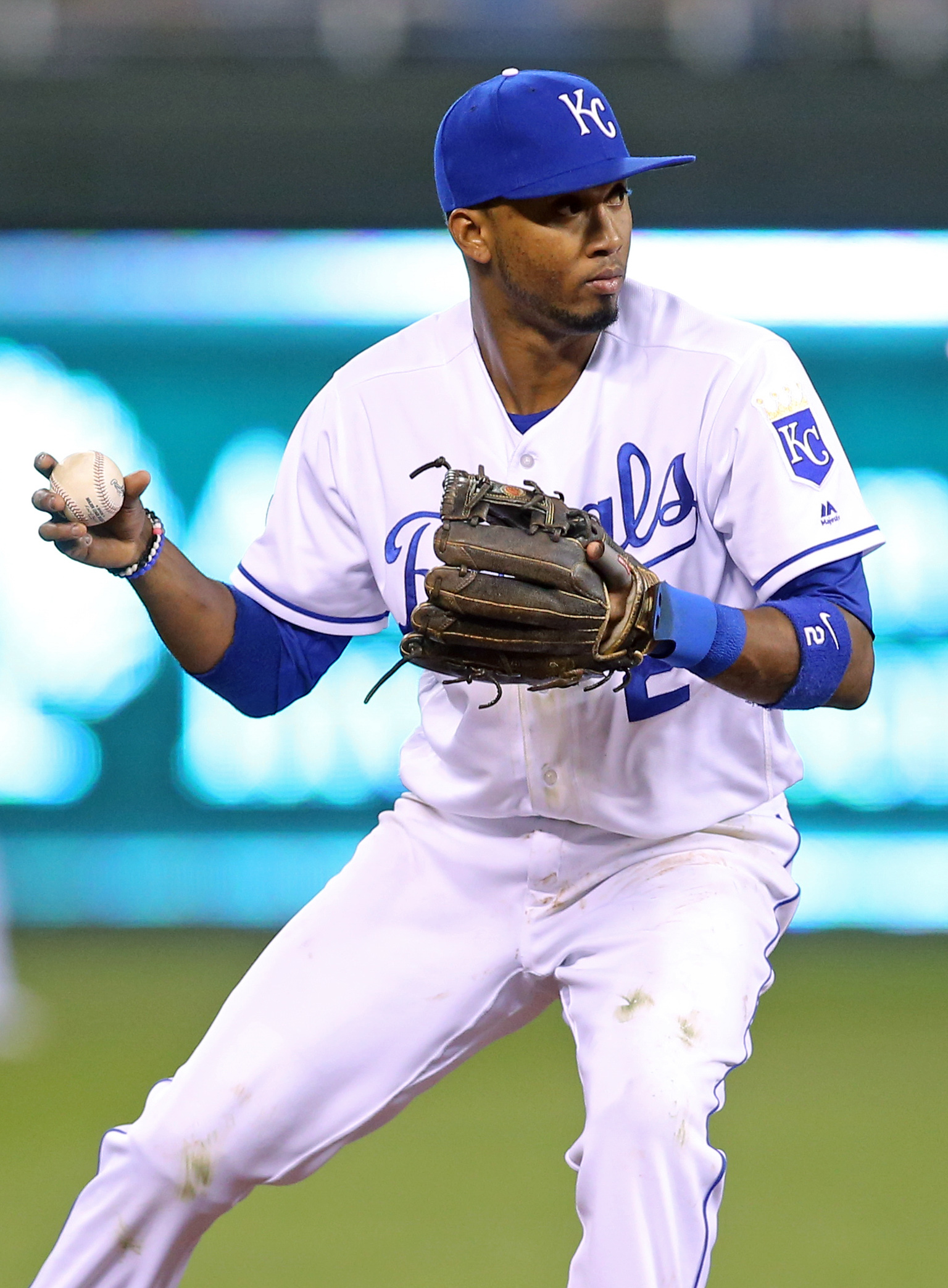
Escobar, 31, has been among the game’s most durable players over the life of his seven-year tenure with the Royals, appearing in 1105 of the team’s 1134 games in that stretch — including consecutive 162-game seasons in 2016-17 (and a third such effort in 2014). While Escobar has managed just a .262/.293/.348 slash line in his seven seasons with the Royals, he comes with an excellent defensive reputation and ranks sixth among Major League shortstops in Ultimate Zone Rating (+18.5) over the past seven seasons.
For the Royals, the question raised by the re-signing of Escobar centers around the future of Raul Mondesi Jr. The 22-year-old has long been considered one of the organization’s top prospects, and while he’s yet to deliver in a tiny sample of 209 MLB plate appearances, he did slash a healthy .305/.340/.539 with 13 homers and 21 steals through 85 games for Triple-A Omaha in 2017. Obviously, the Royals would like to see more plate discipline out of Mondesi, who walked in just five percent of his Triple-A plate appearances, but there’s plenty to like about the second-generation talent.
Royals GM Dayton Moore told MLB.com’s Jeffrey Flanagan last week that, if the deal were to be completed, Escobar would play “a lot” of shortstop. Flanagan notes that Mondesi would either rotate around the diamond or open the season in Triple-A Omaha.
[Related: Updated Kansas City Royals depth chart & Kansas City Royals payroll]
A full-time move to second base doesn’t seem particularly likely for Mondesi, given the presence of Whit Merrifield, though he could see occasional time there, at third base and even in the outfield if moved to a utility role. There was also some chatter earlier this offseason about the possibility of Merrifield being available in trade talks, though there’s been little since that time indicate that the Royals have had anything in the way of serious negotiations with other clubs on the matter. In fact, Kansas City has been surprisingly quiet on the trade front all together, shedding Joakim Soria‘s contract and trading Scott Alexander but hanging onto other movable assets (e.g. Kelvin Herrera, Danny Duffy) despite an expectation that they’d embark on a lengthy rebuild.
Clearly, a reunion with Escobar on a small-scale deal doesn’t signal a change of trajectory for the club, so perhaps the hope is that some veterans that underperformed in 2017 (Herrera, Jason Hammel, Brandon Moss) will boost their stock with a solid showing in 2018, thus building stronger interest heading into the non-waiver deadline. Given his excellent glove, solid baserunning skills and now eminently affordable contract, it’s certainly possible that Escobar himself will emerge as a trade commodity for a team looking to bolster its defense this summer.
FanRag’s Jon Heyman first reported that the two sides were in talks. ESPN’s Jerry Crasnick tweeted that the deal was official. ESPN’s Buster Olney tweeted Escobar’s base salary. MLB.com’s Jeffrey Flanagan and the Kansas City Star’s Rustin Dodd added details on the incentives package (Twitter links).
Photo courtesy of USA Today Sports Images.
A’s Acquire Ryan Buchter, Brandon Moss From Royals For Jesse Hahn, Heath Fillmyer
The Royals and Athletics have agreed to a four-player swap. Left-hander Ryan Buchter and first base/DH-type Brandon Moss will head to Oakland in the deal, while right-hander Jesse Hahn and minor-league righty Heath Fillmyer are ticketed for Kansas City. The Royals also included $3.25MM in cash as part of the deal. Jeffrey Flanagan of MLB.com was first with the news.
Though Moss is certainly the biggest name of the four, Buchter is actually the prize for the Athletics in this deal. In fact, the inclusion of Moss in the deal is probably more related to financial implications. Indeed, Royals GM Dayton Moore told Rustin Dodd of the Kansas City Star that “The economic part of it is very real to us,” which has in turn led to some speculation throughout the industry that the Royals are attempting to clear salary in order to make re-signing Eric Hosmer more feasible. Moore responded to an inquiry from Flanagan on the subject, telling him that it would be “inappropriate” for him to comment on a free agent right now. However, he did add that he’s been “very clear” about what the team’s thoughts are on Hosmer.
Turning away from speculation and rumors and focusing on the here-and-now of the deal, the A’s will fill a bullpen need by getting a much-needed lefty. Prior to this trade, the only southpaw reliever in their projected bullpen was Daniel Coulombe. Buchter will serve as a long-term piece for the budding A’s (perhaps into their next window of contention), as he’s under team control through the end of the 2021 season. The Royals, meanwhile, will add a new potential candidate to their rotation. Per Moore’s conversation with Dodd, Hahn will compete during spring training for a spot in Kansas City’s rotation.
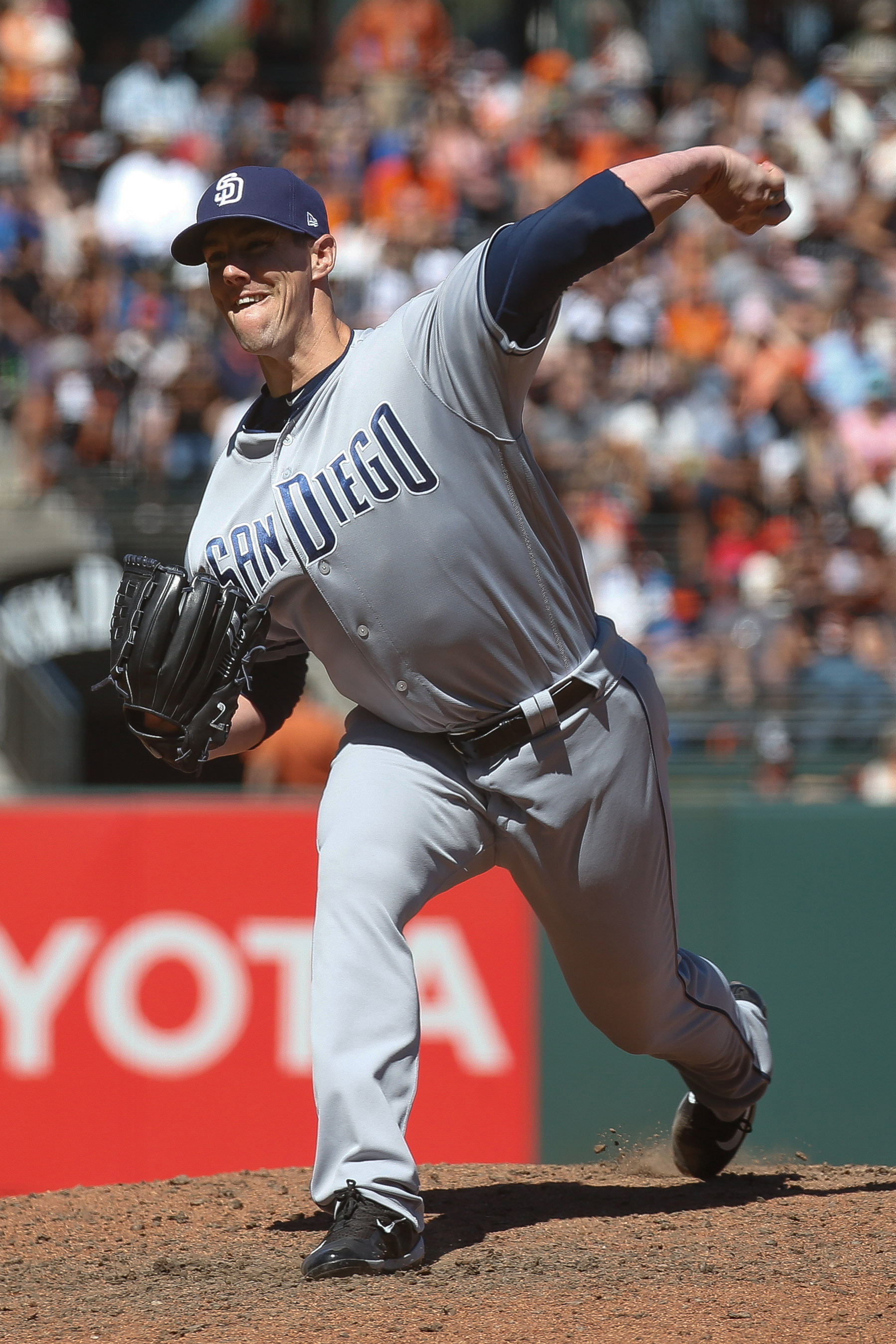
Buchter’s a rare type of pitcher who’s been able to consistently out-perform his peripheral statistics. The soon-to-be 31-year-old has a career 2.85 ERA against a 4.68 xFIP. The latter statistic normalizes a pitcher’s homer/fly ball ratio as a method of estimating a pitcher’s true run-prevention skills, but it doesn’t account for the fact that many of Buchter’s fly balls are actually infield pop-ups, which go for outs nearly 100% of the time. Over the past two seasons combined, Buchter’s 16.7% infield fly ball rate (IFFB) ranks 10th in the majors among qualified relievers. He also ranks 14th during that span with a 26% soft contact rate against.
Buchter is even tougher against lefties, limiting them to a .160/.255/.306 batting line during his MLB career. The late-blooming Buchter spent a whopping eight seasons in the minors before finally making his debut with the Braves in 2014, and was shuffled through the Triple-A affiliates of the Dodgers and Cubs before finally latching on in the majors with the Padres in 2016. Interestingly, the A’s were reportedly competing with the Padres for his services as a MiLB free agent.
As for Moss, 34, he’ll return to the team with which he broke out in 2012. That’s just about the only clarity surrounding his presence in Oakland, however. Athletics GM David Forst has already told him that it’s not clear how he fits on the roster (per Susan Slusser of the San Francisco Chronicle). With young phenom Matt Olson earmarked for the first base job and Khris Davis likely to assume full-time DH duties, the declining Moss doesn’t have a clear path to everyday at-bats. His sub-replacement-level 2017 performance (.207/.279/.428) was a far cry from his peak years in Oakland during which he slugged 76 homers and put up a .844 OPS across 1,381 plate appearances.
Hahn’s had a roller coaster career. The right-hander showed great promise early on, posting a 3.07 ERA and 3.59 xFIP across 12 starts following his major-league debut with the Padres in 2014. Prior to the 2015 season, he was shipped to Oakland in the Derek Norris trade, and continued to impress with a 3.35 ERA and 52.6% ground ball rate through the first day of July. However, a flexor tendon injury sidelined him for the rest of the season, and although he’s shown flashes of brilliance since, he’s not yet been able to maintain good numbers over the course of a full season. Hahn’s posted a 5.59 ERA with a 6.05 K/9 and 3.57 BB/9 across 23 games (22 starts) across the past two years while battling a number of injuries.
Fillmyer, 23, started 29 games for Oakland’s Double-A affiliate last season while pitching to a 3.49 ERA. MLB Pipeline considered him to be the team’s 18th-best prospect in 2017, noting his quick arm and a fastball that can reach 96MPH with good sinking action. Though his control and command took a step backwards last season, their report suggests that he can become a back-end starter at the MLB level. Fillmyer was selected by the A’s in the fifth round of the 2014 draft.
Photo courtesy of USA Today Sports Images