
MLB Strips Braves Of 12 Prospects, Applies Future Amateur Restrictions
The Braves are slated to lose their rights to a dozen young prospects as punishment for international signing violations. Additionally, the Atlanta organization will face limitations on their amateur signing rights in the future.
Most notably, perhaps, the Braves will lose their rights to highly regarded prospect Kevin Maitan, as Jon Heyman of Fan Rag first reported (via Twitter) and as earlier reporting suggested. A long list of others are also being stripped from the organization, as Ben Badler of Baseball America reported earlier. Backstop Abrahan Gutierrez, shortstop Yunior Severino, righty Juan Contreras, shortstop Livan Soto, righty Yefri del Rosario, shortstop Yenci Pena, righty Guillermo Zuniga, outfielder Juan Carlos Negret, and outfielder Antonio Sucre are also heading on to the open market, according to the Baseball America report. Those prospects were members of the club’s vaunted 2016-17 July 2 class. A big name from the following signing period, Korean shortstop Jihwan Bae, is also being taken from the team, per Jeff Passan of Yahoo Sports, with outfielder Brandol Mezquita and shortstop Angel Rojas rounding out the list of departing prospects.
Maitan, in particular, was viewed as one of the best young international players in recent memory at the time of signing. Despite a tough debut in the Appalachian League, the infielder ranks 38th on MLB.com’s latest list of the top prospects in baseball. Even if it’s true that the current front office is not quite as enamored with Maitan as some others, he’s a notable asset to lose. (BA’s J.J. Cooper rounds up the latest impressions of Maitan right here.)
Looking forward, the Braves will also face restrictions for future amateur classes, as Passan details. The club will be capped at $10K per player for the 2019-20 period and will not be allowed to sign shortstop Robert Puason. According to Passan, the investigation found that the team had improperly agreed to a deal with him ahead of his market eligibility. In 2020-21, Atlanta will operate with half of the hard-capped spending capacity it otherwise would have had access to. Also, owing to an offer of “extra benefits” to 2017 draftee Drew Waters, the Braves will lose their third-round pick in next summer’s draft.
Other organizations will surely flock to sign the players that are now free agents. Those prospects will be allowed to retain their original bonuses in addition to negotiating new ones. Generally, those players will be subject to the already-extant rules and limitations in the international arena. But Passan tweets that teams will be allowed to use currently available international funds or draw from their 2018-19 pool to sign these players (but may not utilize both). MLB organizations still have uncommitted international money — some of it likely earmarked for Shohei Ohtani and a few other quality names still available — so there could be quite some competition for the former Braves prospects.
Clearly, the Braves took a significant hit for the amateur infractions that occurred during the regime of president of baseball operations John Hart and GM John Coppolella. Those two executives have departed already (see here and here), with the latter having received the brunt of the public scrutiny. Though precise details are still largely unreported, Passan says signing-bonus packaging was the primary concern identified. While the Yahoo Sports report acknowledges that other organizations have likely engaged in generally similar behavior, it seems the Braves’ actions were particularly brazen and widespread.
Newly minted GM Alex Anthopoulos will still have plenty of talent to work with, but the cupboard of young talent won’t be quite as stocked as the organization had hoped when it snapped up an impressive group of international free agents — evidently, through illicit means. On the one hand, these penalties won’t have any direct effect at the MLB level, since none of these players was close to the big leagues. On the other, Anthopoulos will not have as much flexibility to part with far-off talent if he enters the trade market in search of assets. That’s all the more notable given the restrictions on international spending rights for the coming seasons. The net result is that the Braves’ talent intake at the most youthful level will have been substantially curtailed for multiple consecutive seasons. Such a result runs directly counter to the overall strategy that the organization had employed.
For Anthopoulos to craft an overall slate of players that promises the kind of sustainability that Atlanta (like all organizations) hopes to create, he’ll have to remain all the more mindful of finding opportunities to draw in younger assets even while exploring ways of moving the major league roster into position to contend. Taking chances on talented but risky players on the 40-man roster is one way of infusing talent, but the club would need to sacrifice certainty and/or tie up valuable roster spots to do much of that. It’s also possible that the Braves will end up moving some higher-level prospects to build out the lower levels, though again that’s a diversion of resources that could otherwise be utilized in other ways. Any way you slice it, the organization will be much more constrained than it would have been absent the penalties. Of course, that also seems to be a fairly natural result of the fact that the team acquired these young players in an improper manner (the details of which, somewhat surprisingly, have yet to be fully detailed in firm reports).
John Hart Leaves Braves Organization
The Braves announced on Friday that former president of baseball operations John Hart has stepped down and is leaving the organization “to pursue other opportunities.” Hart’s departure comes less than two months after GM John Coppolella resigned from his post due to infractions on the international free agent market and in the domestic amateur draft.
While it has been reported that the league would not sanction Hart based on its investigation into the matter, Hart was moved to a diminished role (senior advisor) earlier this week when Alex Anthopoulos was hired as the team’s new general manager and given full authority over the baseball operations department.
Through a team press release, Hart issued the following statement:
“This was a difficult decision, but it’s one that I made with the best interests of the Atlanta Braves in mind. With the hiring of Alex Anthopoulos as general manager, this organization is in great hands. I believe that the talent of the Major League players, combined with the young talent soon to arrive, makes the Braves poised for a great run of success. This is a good time to step aside and let Alex and his group put their stamp on this great franchise.
I still have a tremendous passion for this great game, and I plan to stay active and contribute to the game. I want to thank Braves fans – the best fans in baseball – for your patience during this rebuilding time. You will soon see the winning team that you deserve. I also want to thank my beautiful and supportive family. I am very excited to see how the next chapter of our life unfolds. Finally, I want to thank my longtime friend, John Schuerholz, for convincing me to come to Atlanta to oversee the rebuild. And especially to our leader, Terry McGuirk, who has shown such passion for returning to a winning place. Thank you all, and Go Braves!”
The extent to which Hart was or was not involved in the club’s front-office scandal may never be fully known. There’s a prevailing argument, though, that it’s equally as damning for the president of an organization to be completely in the dark while his two of his primary lieutenants (at least) commit what has been reported to be an “unprecedented” level of violations on the amateur talent acquisition front. Suffice it to say, his resignation — whether forced or voluntary — comes with little surprise.
Hart may well land with another organization in an advisory capacity down the road, depending on the findings of the league’s investigation. If it is deemed that his sole transgression was merely a lack of oversight of his charges, a club could look past that in order to hire an advisor with nearly two decades of experience as a president or general manager and is considered one of the more influential executives in MLB history. Hart has also served as a television analyst on MLB Network in the past and could look into other media opportunities as well.
All 9 Recipients Reject Qualifying Offer
THURSDAY: Officially, all nine players have rejected their qualifying offers and become free agents, the MLBPA has announced (h/t Bill Shaikin of the Los Angeles Times, on Twitter).
MONDAY: All nine of the free agents that received a one-year, $17.4MM qualifying offer will reject that offer in favor of free agency, Jon Heyman of FanRag Sports writes. Each of Eric Hosmer, Mike Moustakas, Lorenzo Cain, Jake Arrieta, Wade Davis, Lance Lynn, Alex Cobb, Greg Holland and Carlos Santana will turn down that one-year opportunity in search of a multi-year pact in free agency.
In doing so, that group of nine will also subject themselves to draft-pick compensation and position their former clubs to recoup some value in next year’s amateur draft should they sign elsewhere. Last offseason’s new collective bargaining agreement altered the specifics of that compensation, tying the draft picks received and surrendered largely to the luxury tax threshold, revenue sharing and the size of the contract signed by the free agent in question.
MLBTR’s Tim Dierkes explained which draft picks each of the six teams that issued a qualifying offer would receive, should their free agents sign elsewhere, as well as which picks all 30 teams would be required to surrender if they are to sign a qualified free agent. Prior to that, MLBTR’s Mark Polishuk provided a more comprehensive and in-depth overview of the new QO system, for those that are unfamiliar or would like a refresher on the finer details.
It’s been reported for quite some time that Kansas City will make a strong effort to retain Hosmer. Heyman added over the weekend that the Royals will also push to keep Moustakas but feel that Cain is almost certain to land elsewhere on the open market. The Rockies are known to have interest in re-upping with Holland on a multi-year deal, and Heyman notes within today’s column that the Rays “understand [Cobb] is out of their reach financially” and will sign elsewhere. He also adds that Davis seems to be likelier than Arrieta to return to Chicago.
It’s unlikely that there will be any formal announcements just yet. Among the changes to the QO system under the 2017-21 CBA was that QO recipients would have 10 days, rather than seven, to determine whether to accept or reject the offer. The deadline to issue QOs was last Monday, so the recipients still technically have until this coming Thursday to formally declare their intention. But, barring a last-minute freak injury it seems that each of the nine will go the widely expected route and enter free agency in search of the most substantial contracts in their respective careers.
Mariners Acquire Ryon Healy
The Mariners announced that they’ve acquired first baseman Ryon Healy from the division-rival Athletics in exchange for right-hander Emilio Pagan and minor league infielder Alexander Campos.
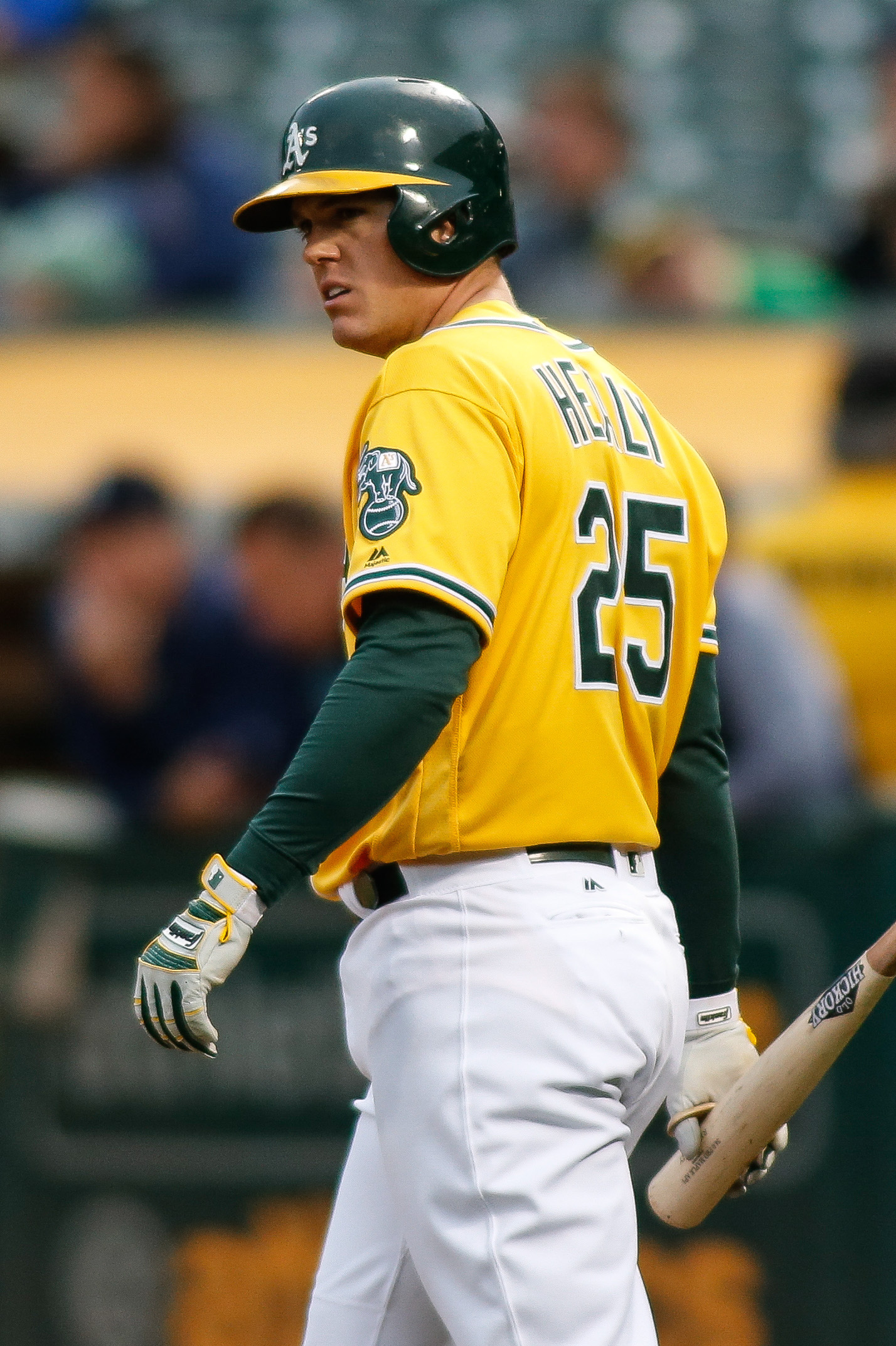
Seattle GM Jerry Dipoto wasted little time in making his first significant move of the offseason, as Healy should now vault to the top of the Mariners’ depth chart at first base. Healy’s name has been oft-suggested as a trade candidate with the emergence of corner infielders Matt Chapman and Matt Olson in Oakland. Susan Slusser of the San Francisco Chronicle has reported on multiple occasions that the A’s would prefer to shift slugging left fielder Khris Davis to DH, and the move of Healy to Seattle allows Oakland to do just that. The A’s are reportedly on the hunt for a controllable, right-handed-hitting outfielder this offseason, and there’s now a more clear vacancy for them in left field.
That, of course, is not to downplay the value of Healy, who comes to the Mariners with another five years of team control. The 25-year-old has belted 38 home runs through his first 888 plate appearances (221 games) with the A’s from the 2016-17 seasons. Healy hasn’t shown much plate discipline to go along with that pop (3.9 percent walk rate), but his overall .282/.313/.475 batting line is solid — especially considering the fact that he’s played half of his games in the spacious Oakland-Alameda County Coliseum.
[Related: Updated Oakland Athletics Depth Chart and Seattle Mariners Depth Chart]
While Healy originally came to the Majors as a third baseman, he quickly moved across the diamond to first base last season in Oakland after posting poor defensive ratings at the hot corner. He’s only played 307 innings of first base in the Majors, though Defensive Runs Saved and Ultimate Zone Rating both peg him at about a run better than average there. Obviously, time will tell whether he’s capable of playing a plus first base over the course of a full season, but the Mariners typically place a premium on defense, so it seems that they’re confident in Healy’s ability to do so for the time being. (Designated hitter Nelson Cruz will be a free agent after this season, so Healy could theoretically slide into that spot next year if his glovework proves to be sub-par.)
“Ryon brings a power bat to our line-up at first base, while providing the flexibility to play third base,” said Dipoto in a statement announcing the move. “He adds to a growing core of productive young players who impact our present and future.”
The move has further ramifications for the Mariners, who have been linked to both Carlos Santana and Yonder Alonso early in the offseason but now seem largely set at first base. The move also further blocks Dan Vogelbach‘s path to regular big league playing time, though the 25-year-old still has a minor league option remaining and can also factor in as a bat off the bench and/or a part-time first baseman and DH himself.
Looking to the Atheltics’ side of the equation, they’ll not only free up a spot for the addition of a new left fielder, they’ll add an intriguing big league setup option to their bullpen in the form of Pagan. Set to turn 27 next May, Pagan logged a 3.22 ERA with 10.0 K/9 against 1.4 BB/9 in 50 1/3 innings with the Mariners in 2016 — his rookie season.
Those K/BB numbers are fairly jaw-dropping, though Pagan’s value last season was curbed by his susceptibility to home runs. While only 9.5 percent of his fly-balls left the yard for homers (well below the league average), Pagan is such an extreme fly-ball pitcher (22.3 percent ground-ball rate, 56.9 percent fly-ball rate) that he still yielded an average of 1.25 homers per nine innings pitched. Pagan has been a pronounced fly-ball pitcher throughout his minor league tenure, though never quite to that extreme, so it’s possible that he could cut back on his home run tendencies a bit moving forward.
Because Pagan didn’t even make his big league debut until midway through the 2017 season, he fell shy of a full year of service time. That gives Oakland six years of control over him if he can indeed settle in as a regular in their bullpen. He also has two minor league options remaining, so the A’s can freely shuttle him back to Triple-A if he needs additional development time.
As for Campos, the 17-year-old shortstop was rated as the No. 15 prospect in Seattle’s farm system per MLB.com’s Jonathan Mayo and Jim Callis. Campos signed for a $575K bonus with the Mariners in July 2016 and went on to bat .290/.413/.367 through 254 plate appearances in the Dominican Summer League this past season. Callis and Mayo praise his above-average speed and “advanced defensive skill set” in noting that while he’s a long ways from the Majors, he profiles as at least a reserve player with the possibility to grow into more as he continues to add strength and develop his offensive game.
Photo courtesy of USA Today Sports Images.
J.D. Martinez Reportedly Seeking $210MM Deal
Nov. 14: USA Today’s Bob Nightengale tweets that Boras and Martinez have set an early asking price of $210MM over the life of a seven-year term.
Nov. 8: Teams that have spoken to agent Scott Boras about new client J.D. Martinez have come away with the impression that Boras and Martinez are seeking a deal in the vicinity of $200MM in total guarantees, tweets ESPN’s Jerry Crasnick. Martinez hired Boras as his new representative just days before the free-agent period began.
It’s a jarring number to see associated with the 30-year-old Martinez, though he certainly helped his case with an otherworldly season at the plate. Though Martinez missed the first five-plus weeks of the season due to a ligament injury in his foot, he nonetheless swatted 45 home runs in a career year at the plate. On the whole, Martinez slashed a ridiculous .303/.376/.690 with a career-high 10.8 percent walk rate through 489 plate appearances between the Tigers and D-backs.
In addition to his newfound plate discipline, Martinez’s 49 percent hard-contact rate was the best in the Majors of any player with at least 450 plate appearances. That stat may even undersell the extent to which he impressed in that regard; the next-highest percentage was Joey Gallo‘s mark of 46.4 percent. Statcast data pegged Martinez’s average exit velocity of 90.8 mph 15th among players that put at least 100 balls in play this past season, and he ranked third in the league in barrel percentage and tied for fourth in total number of barreled balls despite the early-season layoff.
There’s little point in doubting Martinez’s status as an elite bat after his impressive four-year run between Detroit and Arizona, but he still comes with plenty of red flags. Martinez has tallied 1973 innings in right field over the past two seasons and turned in an awful mark of -27 Defensive Runs Saved (though 2017’s mark of -5 was a noted improvement over 2016’s ghastly -22). Ultimate Zone Rating is similarly down on his glovework, rating him 25 runs below average. Statcast’s new Outs Above Average metricT suggested that Martinez converted five fewer outs than an average defensive outfielder would have in 2017. That he’s missed 85 games over the past two years due to injury and will turn 31 next August both figure to limit his earning capacity to some degree as well.
We ranked Martinez as the No. 2 free agent on the market this winter and pegged him for a six-year, $150MM deal. If Boras’ aim is to secure a $200MM payday for his newest client, though, he’ll need to broker a deal of at least seven years in length — if not eight. While that’s difficult to envision, it’s certainly not out of the realm of possibility. Both Jacoby Ellsbury and Shin-Soo Choo landed seven year contracts in their recent trips through free agency, with Choo’s contract beginning in his age-31 campaign. A seven-year contract for Martinez is not outside the realm of possibility, though it also goes without saying that any agent would aim high entering free agency. While Martinez should have no shortage of teams with interest, there are very few clubs that can realistically afford to pay him at that level.
Boras spoke to Nick Piecoro of the Arizona Republic about Martinez’s free-agent case and specifically referenced the free agencies of Ellsbury and Choo — both his clients — as well as fellow Boras clients Matt Holliday, Jayson Werth and Carlos Beltran. Boras indicated that he feels Martinez, who hit 40+ homers this season and has established himself as a .300 hitter, is a cut above that group (and above more recent cases like Yoenis Cespedes and Justin Upton) while entering free agency at a similar age. “It’s a very rare place. It’s a unique place,” said Boras. “…all of these guys that are at this level, they’re really good players. None of them were in the 45 [homer] and .300 [average] category.”
Asked whether he felt the Diamondbacks could be a realistic landing spot in free agency, Boras unsurprisingly suggested that he firmly believes that to be the case.
“You don’t sign Greinke and not sign this guy,” said Boras in a reference to Zack Greinke‘s six-year, $206.5MM contract with the D-backs. “I mean, once you drop in the pool, you’re in the water. Once you’re in the water, it’s kind of hard to say you’re not wet.” Boras called D-backs owner Ken Kendrick a “competitive owner” and suggested that the onus will fall on Kendrick to increase payroll or find a way to fit the slugger onto the team’s books moving forward. Piecoro’s column is full of quotes from the polarizing Boras and is well worth a full read.
Twins Looking At Top-Tier Free Agent Pitchers
The Twins are taking an aggressive stance to open free agency, according to a report from Jon Heyman of Fan Rag. It seems the Minnesota organization is slated to engage at the top echelon of the pitching market.
We’ve heard chatter previously about the Twins investing in an arm, but this news seemingly takes the interest to another level. Per Heyman, the front office is at least “looking at” top free-agent hurlers Yu Darvish and Jake Arrieta, with a “slightly higher evaluation” of the former. Not only that, but the club is said to be “investigating” the best relievers available, including Wade Davis and Greg Holland.
Just how much cash the Twins will pour into the open market remains an open question. As MLBTR’s Steve Adams recently explained, though, the organization not only seems ready to contend in a vulnerable AL Central, but has plenty of open future payroll space. That makes it plausible, albeit hardly certain, to imagine the Twins playing in a segment of free agency that is normally off limits.
It’s not difficult to see why these particular pitchers would be of interest. Minnesota is clearly in need of at least one more quality starter and has an obvious opening at the back of the bullpen. As ever, though, getting the players with the greatest pedigree could mean taking uncomfortable amounts of financial risk.
In this case, the expectation remains that Darvish and Arrieta will receive robust interest. MLBTR’s top 50 list features both among the top four players available, with $100MM or more in likely earnings. Meanwhile, Davis and Holland both warranted inclusion at the back of the top ten, with MLBTR predicting four-year deals for each (at $60MM and $50MM, respectively).
There’s always some possibility that markets won’t develop as anticipated, of course. And patience can pay off in free agency. It’ll be interesting to see, then, whether the Twins go chasing these top hurlers out of the gates or instead take a somewhat more opportunistic approach. The club does have interest in second-tier starters and relievers, Heyman notes. It seems possible that such hurlers could be targeted for value early or that the Twins could hold back and see if a particularly enticing opportunity arises over the course of the winter.
Giants Interested In Billy Hamilton
As the Giants canvas the market for center field upgrade options, the team has “shown interest” in Billy Hamilton of the Reds, per MLB.com’s Jon Morosi (via Twitter). The 27-year-old projects to earn an even $5MM in his second-to-last season of arbitration eligibility.
It’s no secret that the Giants are looking to add a center fielder. And it’s clear that defensive capability is a significant consideration, given that Denard Span is being moved to the corner in large part due to his inability to cover sufficient swaths of the spacious grassland of AT&T Park.
Hamilton would no doubt help in that regard, as he’s one of the game’s premier defenders — and has been ever since becoming regular in 2014. The fleet-footed Hamilton is also one of the very most valuable players in baseball on the basepaths. Trouble is, he has a tough time getting there, with a .298 lifetime on-base percentage.
Unsurprisingly, Hamilton is likely just one of several possibilities at this stage. Morosi recently connected San Francisco to Jackie Bradley Jr. of the Red Sox, who’d be a more appealing all-around option if he’s made available.
No doubt the Giants are looking into others as well, with trade talks and the open market both offering possibilities. Lorenzo Cain is the top free agent available, though he’ll require a significant outlay to acquire. Other names on the open market that could conceivably factor into the Giants’ thinking (some of them as potential fourth-outfield options) include Jarrod Dyson, Carlos Gomez, Austin Jackson, Jon Jay, and Cameron Maybin.
Braves Name Alex Anthopoulos General Manager
NOV. 13: The Braves have issued a press release confirming the hire of Anthopoulos as their new executive vice president and general manager. Anthopoulos signed a four-year contract and will report directly to Braves CEO Terry McGuirk, per the release.
“The past few months have been the toughest in our storied history,” said McGuirk in a statement. “We are excited to have Alex lead our baseball operations team and begin a bright, new chapter for our organization. We chose Alex because he is of the highest character and has a wealth of MLB leadership experience. He is one of the elite baseball executives in our industry and is the perfect person to lead us to a World Series.”
Notably, too, the McGuirk’s statement offers some clarity on Hart’s role. The veteran executive “will relinquish his active involvement in baseball operations and will move into the role of senior advisor to the Atlanta Braves, effective immediately,” per the announcement.
NOV. 12: The Braves will hire Alex Anthopoulos as their new general manager, Joel Sherman of the New York Post reports (Twitter links). The official announcement could come this week during the GM Meetings. Anthopoulos will be the team’s final decision-maker in baseball-related matters, with John Hart remaining as the team’s president of baseball operations for now but in more of a “counsel/figurehead” type of capacity.
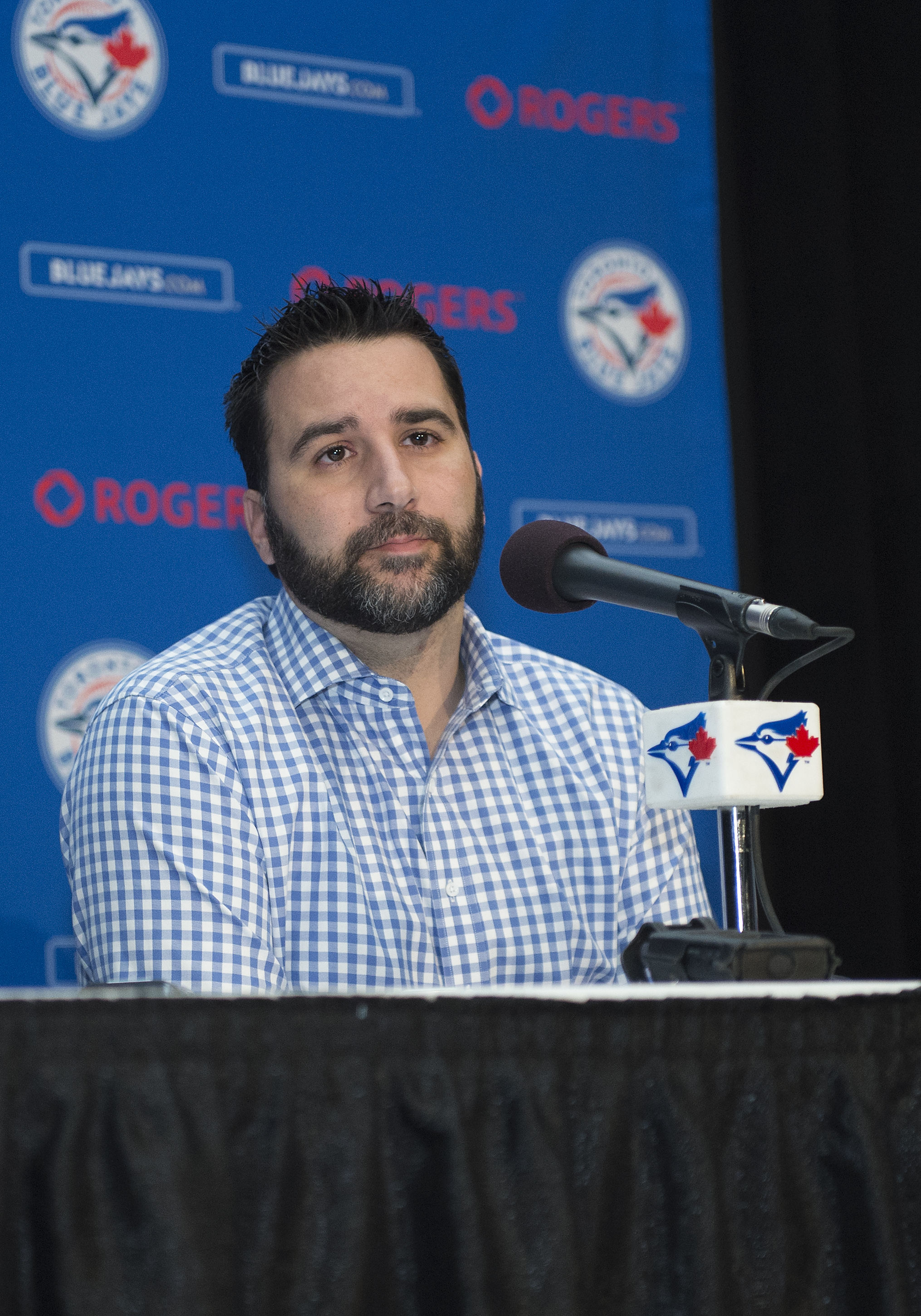
It was less than six weeks ago that Atlanta’s front office was thrown into disarray with the shocking resignations of former GM John Coppolella and international scouting director Gordon Blakely due to accusations that the team had violated international signing rules. Major League Baseball is still conducting an investigation into the matter, which has now expanded to exploring possible misdeeds involving the signings of domestic amateurs in the draft. It isn’t yet known how or when the league will issue its punishments towards the Braves, though the ruling is expected to be severe, given the reported scope of the charges. Hart apparently won’t face any punishment from the league, though he has seemingly lost his previous role atop Atlanta’s baseball operations department. Hart’s contract expired after the season and it remains to be seen if he’ll continue in this apparently reduced role or if he could depart for another job elsewhere.
Royals GM Dayton Moore (who spent more than 11 years working in the Braves front office) was considered to be the team’s first choice for the job, though Royals owner David Glass denied the Braves permission to speak to his general manager, and it wasn’t clear how interested Moore actually was in a return to Atlanta. The Braves were clearly focused on adding an experienced GM to help lead the team through the uncertainty of the MLB investigation, as Nationals assistant GM Doug Harris was the only reported candidate who hadn’t previously run a Major League front office. Beyond Anthopoulos and Moore, other names under consideration included Jim Hendry, Ben Cherington, Dan O’Dowd, Josh Byrnes, and Dan Jennings.
Still just 40 years old, Anthopoulos brings a wealth of front office experience to Atlanta. The Montreal native spent almost a decade in scouting roles with the Expos and Blue Jays and then served as the Jays’ assistant GM before being named Toronto’s general manager in October 2009. Thought to be taking over a rebuilding team (his first major move was trading Roy Halladay to the Phillies), Anthopoulos shifted direction once Jose Bautista unexpectedly emerged as a top slugger in 2010, and his tenure was marked by bold and often surprising transactions.
Anthopoulos’ successes included the team-friendly extensions for Bautista and Edwin Encarnacion, trading Vernon Wells‘ seemingly immovable contract to the Angels, the acquisition of Josh Donaldson from the Athletics, and the twin blockbuster deals at the 2015 July non-waiver trade deadline that brought David Price and Troy Tulowitzki to Toronto. The 2015 team ended up as Anthopoulos’ crowning achievement, as the Jays ended a 22-year postseason drought by winning the AL East and then advancing to the ALCS.
It was just after that season, however, that Anthopoulos left the Jays’ GM job, finishing out his contract after rejecting a pair of extension offers. Mark Shapiro had been hired as the Blue Jays’ new team president and CEO midway through the 2015 season, and Anthopoulos had no interest continuing in what essentially would have been a lesser role in the team’s baseball ops department, with Shapiro now calling the shots. Anthopoulos has spent the last two seasons working as the Dodgers’ VP of baseball operations.
Anthopoulos will now again take the reins of a rebuilding team, though the Braves may also be somewhat close to respectability given the amount of proven (Freddie Freeman, Ender Inciarte, Julio Teheran, Arodys Vizcaino) and on-the-cusp of a breakout (Ozzie Albies, Dansby Swanson) talent on the big league roster. The Braves also boast arguably the best farm system in baseball, including ready-to-debut outfielder Ronald Acuna and top prospect Kevin Maitan (though Maitan’s own signing as an international amateur has been scrutinized by MLB’s investigation).
Photo courtesy of USA Today Sports Images.
Carlos Beltran Announces Retirement
Carlos Beltran will retire after spending parts of 20 seasons in the Majors, he announced today via The Players’ Tribune. The former AL Rookie of the Year and nine-time All-Star won his first World Series championship with the Astros in 2017 and will end a likely Hall of Fame career on that high note.
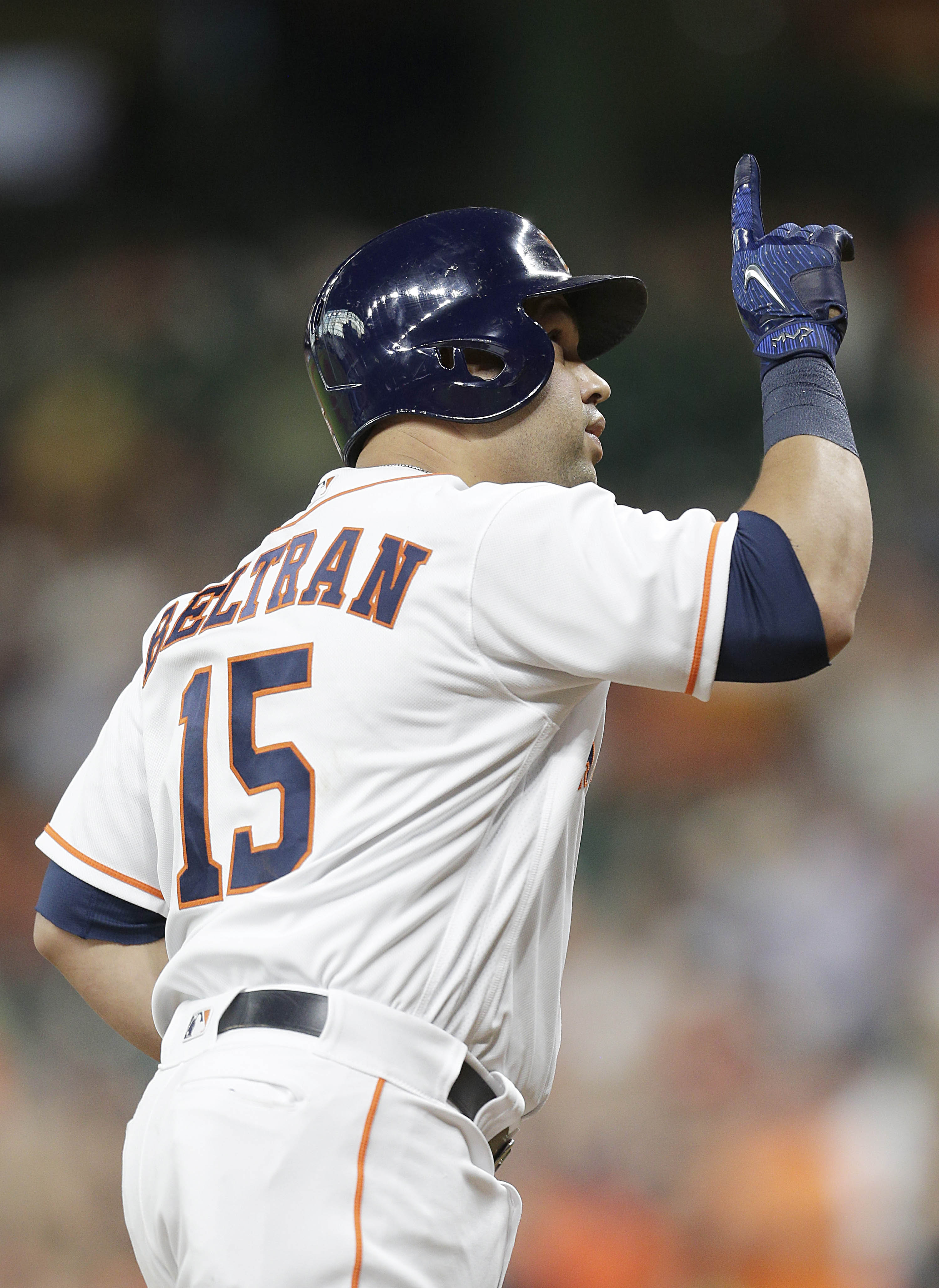
Beltran made his Major League debut at the age of 21 with the Royals in 1998 and made a strong first impression in a small sample of 14 games. He burst onto the scene a year later with a .293/.337/454 batting line, 22 homers, 108 RBIs and 112 runs scored en route to American League Rookie of the Year honors. A knee injury limited Beltran to just 98 games in 2000, but he cemented himself as one of the game’s top young stars with a brilliant, healthy campaign in 2001.
Beltran remained in Kansas City until the 2004 season when the Royals sent him to the Astros in a three-team trade that netted them Mark Teahen and John Buck. Beltran, who had earned his first career All-Star nod that season, starred for the ‘Stros down the stretch before delivering one of the most incredible postseason performances in MLB history that year. Houston topped Atlanta in the NLDS and took the Cardinals to Game 7 of the NLCS, and in those 12 games Beltran put the Astros’ offense on his back; in 56 trips to the plate, he batted a ridiculous .435/.526/1.022 with eight home runs, three doubles, 21 runs scored and 14 RBIs.
That offseason, Beltran inked a seven-year, $119MM contract with the Mets — the largest in franchise history at the time — where he continued to build on his Cooperstown resume. Beltran made the All-Star team in each of his first three seasons with the Mets (and five of his seven overall), and he turned in yet another memorable playoff performance in 2006. While many remember Beltran being frozen at the hands of an Adam Wainwright curveball to close out Game 7 of that NLCS, Beltran’s greater contributions to that outstanding series came in the the form of a 1.054 OPS and three homers in just 31 plate appearances. Overall, he batted .280/.369/.500 in six and a half seasons with the Mets before being traded to the Giants in exchange for Zack Wheeler.
Beltran went on to sign a two-year, $26MM contract with the Cardinals that offseason, making two more All-Star teams and two more excellent postseason appearances. He parlayed his .282/.343/.493 triple slash in two St. Louis seasons into a three-year, $45MM contract with the Yankees. With the Yankees, he received one final All-Star nod (in 2016) and appeared in the 2015 Wild Card game before being flipped to the Rangers a 2016 trade that sent former first-rounder Dillon Tate to New York. Beltran remained an above-average hitter all the way through that run in Texas, hitting a combined .271/.327/.468 over the life of that three-year deal.
The 2017 season was Beltran’s least-productive offensive campaign since that injury-shortened 2000 season, but he still clocked 14 home runs in 509 plate appearances and served as a leader and mentor for much of Houston’s impressive young core. While Beltran served as the postseason engine on many of his teams during his peak years, he played the role of a vocal leader and wise elder statesman in his final postseason run. An emotional Beltran dedicated his team’s World Series victory to his hurricane-ravaged home island of Puerto Rico and to the city of Houston, which was also devastated by Hurricane Harvey earlier this year
Beltran and his wife, Jessica, started a fund to aid in Puerto Rico’s recovery and made an initial donation of $1MM, and he also founded the Carlos Beltran Baseball Academy in Puerto Rico back in 2011 — a bilingual high school emphasizing education in addition to athletics.
All told, Beltran’s remarkable career will come to a close with a lifetime .279/.350/.486 batting line, 435 home runs, 1582 runs scored, 1587 RBIs, 312 stolen bases, nine All-Star appearances, three Gold Gloves, two Silver Sluggers, a Rookie of the Year trophy and a World Series ring. In addition to a superlative body of work in the regular season, he batted .307/.412/.609 with 16 home runs in 65 playoff games (256 plate appearances), making him one of the most decorated postseason batters of all time. He should have one more accolade let to add to the ledger when his name is immortalized among the all-time greats in Cooperstown.
Beltran earned roughly $222MM, per Baseball-Reference, over the life of a career that both B-Ref (69.8 WAR) and Fangraphs (67.2 WAR) consider to be among the absolute best of the past of the past two generations (before even attempting to value his considerable postseason accomplishments). Congratulations to Beltran — one of the best we’ll have the privilege of watching in our lifetimes — on an exceptional career.
Photo courtesy of USA Today Sports Images.
Nippon Ham Fighters Announce They Will Allow Shohei Ohtani To Move To Majors
2:53pm: FanRag’s Jon Heyman tweets that, unsurprisingly, the Fighters will set the posting fee for Ohtani at the $20MM maximum. However, while MLB will sign off on the deal, Heyman notes that the Players Association still has some issues to work through before it will also sign off. Among their concerns, per Heyman, is the fact that the Fighters will recoup $20MM for Ohtani while the player himself stands to be paid only a mere fraction of that amount.
Heyman doesn’t suggest that the Union’s concerns will necessarily jeopardize Ohtani’s ability to make the jump to the Majors or that they could lead to a significant alteration in the current structure of the posting system. It’s unclear when the MLBPA will ultimately sign off, but it seems that their trepidation could delay the process to some extent.
7:13am: The Nippon Ham Fighters announced that they will allow star pitcher/slugger Shohei Ohtani* to come to the majors via the posting system, as the Japan Times was among the outlets to report.
That does not quite make things official, as Major League Baseball and Nippon Professional Baseball continue to try to sort out the rules that will govern the move. The effort had come into some notable difficulties, though Ohtani’s decision to hire a MLB Player’s Association-certified agent was expected to . And it seems the two leagues, at least, have reached agreement on a framework that could help facilitate Ohtani’s move — so long as his representatives, the MLBPA, and the Fighters are all on board.
At a minimum, today’s news seemingly formalizes the Fighters’ commitment to allowing Ohtani to depart. “Everyone in our ballclub accepts his thoughts,” said Fighters skipper Hideki Kuriyama. That also figures to ratchet up the expectations and the pressures on all other interested parties, helping to maintain momentum toward a finalization of talks — which will only represent the beginning of what could be a fascinating process.
[Related: Scouting Shohei Ohtani]
None of the talks will address Ohtani’s own earning capacity, which will be quite slight — at least on his way into the league. That’s the major reason that he promises to be the most widely pursued player ever to hit the open market. With only a few clubs even able to offer him more than $1MM in a bonus, the decision will surely come down to other factors, the precise nature of which — hitting opportunities? geography? comfort? promotional opportunities? promises of a future extension? — remain to be learned.
*Astute readers will note that MLBTR has now adopted a new spelling. Previously, for a variety of reasons, we utilized the anglicization “Otani.” We have now confirmed, however, that the spelling “Ohtani” is the formal spelling likely to be utilized in his potential transition to the majors.