
MLB Ratifies New NPB Posting System, Formally Announces Shohei Ohtani Will Be Posted Today
Major League Baseball announced today that owners of all 30 clubs have ratified a new posting system between MLB and Japan’s Nippon Professional Baseball. The two sides also agreed to an extension of the previous posting system through Nov. 1, 2018, and MLB formally announced within its release that Shohei Otani will be posted by the Hokkaido Nippon Ham Fighters today. The release fee on Otani has been set at the maximum $20MM. Additionally, the Seibu Lions will post submarine right-handed reliever Kazuhisa Makita on or before Dec. 31, MLB announced. A release fee has not yet been set for Makita.
Beginning today, any team that is willing to meet the Fighters’ release fee ($20MM) will be allowed to negotiate with Ohtani and his agent, Nez Balelo of CAA Baseball. Only the team that ultimately secures a contract with Ohtani will be required to pay that $20MM out to the Fighters, however. The negotiation window will run through 11:59pm ET on Dec. 22, according to the league’s release, giving teams three weeks to negotiate.
As for Ohtani, his age means that he falls under the collective bargaining agreement’s designation as an international amateur, meaning he’ll be subject to international bonus pools. At present, the Rangers’ remaining pool of $3.535MM is the largest amount he can be paid. The Yankees ($3.5MM) and Twins ($3.245MM) are next in line. The Pirates can offer north of $2MM, while other suitors for Ohtani’s services like the Mariners and Angels can offer better than $1.5MM.
Ultimately, it seems unlikely that Ohtani’s free agency will come down to a simple matter of the highest bid, though. By coming to the United States right now, he’s forgoing the chance to sign a free-agent contract that could have been worth more than $200MM by simply waiting another two seasons. Balelo has already submitted a memo to all 30 teams asking for presentations including details on evaluations of Ohtani as a pitcher and hitter; player development and medical facilities; Spring Training facilities; cultural assimilation for Ohtani; a “detailed” plan for integrating Ohtani into the organization; a sales pitch on the city itself and what makes it desirable; as well as relevant marketplace characteristics.
Unlike Otani, the 32-year-old Makita is not a young star headed into his prime. Rather, he’s long been a successful starter and reliever. Makita is still subject to the posting system, though, because he did not begin his pro career in Japan until the age of 26, thus leaving him shy of the requisite nine years of service time to be considered a free agent under Japan’s rules. However, under MLB’s collective bargaining agreement, Makita is considered a professional. In other words: he’s subject to the posting system but not to international bonus pools.
Makita owns an excellent 2.83 ERA in 921 1/3 career innings. After moving to the bullpen full time in 2016, he’s posted a minuscule 1.91 ERA in nearly 150 innings. Makita’s submarine delivery could well hold appeal to a wide swath of clubs looking to give opponents a different look in the middle and late innings of a game, but his 5.0 K/9 rate will give teams some pause as well.
Beginning next offseason (Nov. 1, 2018), the release fee associated with a posted player will be directly tied to the size of the player’s contract with an MLB club. Per the league’s release, the sliding scale is as follows:
- For Major League contracts with a total guaranteed value of $25 million or less, the release fee will be 20% of the total guaranteed value of the contract;
- For Major League contracts with a total guaranteed value between $25,000,001 and $50 million, the release fee will be: (i) 20% of the first $25 million of the guaranteed total (i.e. $5 million) plus (ii) 17.5% of the total guaranteed value exceeding $25 million;
- For Major League contracts with a total guaranteed value of $50,000,001 or more, the release fee will be: (i) 20% of the first $25 million of the guaranteed total (i.e. $5 million) plus (ii) 17.5% of the total guaranteed value between $25,000,001 and $50 million (i.e. $4,375,000) plus (iii) 15% of the total guaranteed value exceeding $50 million
- For Major League contracts that contain bonus, salary escalators or options (Club, mutual or vesting), the Club may owe a supplemental release fee at a later date equal to 15% of any bonuses or salary escalators actually earned by the player under his contract, and/or 15% of any compensation paid to the player in Club, mutual or vesting option years that were exercised or vested;
- For Minor League contracts, the release fee will be a flat 25% of the signing bonus. (For Minor League contracts of “Foreign Professionals” that contain Major League terms, a supplemental release fee will be owed if the player is added to the 25-man roster.)
Mariners Sign Hisashi Iwakuma To Minor League Contract
Dec. 1: FanRag’s Jon Heyman tweets that Iwakuma’s contract comes with a $2.5MM base salary upon making the big league roster as well as a hefty $6MM worth of incentives based on games started. Heyman also notes that Iwakuma’s deal contains a separate incentives package based on potential work out of the bullpen.
Nov. 27: The Mariners announced that they’ve re-signed right-hander Hisashi Iwakuma to a minor league contract with an invitation to Major League Spring Training.
Iwakuma, 37 in April, has spent his entire big league career with the Mariners, for whom he debuted back in 2012. Seattle bought out the 2018 club option on his contract after an injury-ruined 2017 season in which a right shoulder injury limited Iwakuma to just 31 innings. However, the veteran told reporters in Japan recently that he was weighing an offer to return to the Mariners. He’ll now head to big league camp with the M’s and try to earn a spot on the roster for what would be his seventh season in the Emerald City.
While the 2017 season wasn’t pretty for Iwakuma, he’s largely been an effective mid-rotation starter in Seattle — and quite a bit more in his best seasons. From 2012-16, Iwakuma turned in 852 2/3 innings of 3.39 ERA ball, averaging 7.4 K/9 against an outstanding 1.8 BB/9 mark while routinely turning in yearly ground-ball rates right around the 50 percent mark. His best campaign by virtually any measure came in 2013, when the then-32-year-old made his lone All-Star team and finished third in American League Cy Young voting on the heels of a 2.66 ERA over the life of 219 2/3 innings.
It’s obviously not reasonable to expect Iwakuma to return to his peak form, but even his 2016 season was a solid effort — one that the Mariners would be happy to see replicated in 2018. That year saw Iwakuma produce 199 innings of 4.12 ERA ball with averages of 6.7 K/9 and 2.1 BB/9 against a 40.8 percent ground-ball rate.
Iwakuma won’t be guaranteed a rotation spot, as he has been in previous seasons with the Mariners, but he ought to have a legitimate chance to reclaim his place in manager Scott Servais’ starting five if he’s health come March. At present, the Mariners have James Paxton, Felix Hernandez and Mike Leake locked into rotation spots. Beyond that mix, however, there would appear to be two open spots. Iwakuma will join a race that includes Erasmo Ramirez, Andrew Moore, Marco Gonzales and Andrew Albers. Righties Chase De Jong, Max Povse, Rob Whalen and Seth Frankoff are all currently on the Mariners’ 40-man roster as well.
Angels Acquire Jim Johnson, International Bonus Money From Braves
6:40pm: Indeed, Angels GM Billy Eppler forthrightly acknowledges that the team sought the spending capacity “with an eye toward” pursuit of Ohtani, as Fletcher tweets. That the market now also features some notable potential consolation prizes in the form of younger international talent surely made it easier for the Halos to justify the gambit.
2:26pm: Jeff Fletcher of the Orange County Register reports that the Angels do indeed plan to use the extra funds in order to enhance their pitch to Ohtani. Further, he tweets that Johnson is technically only owed $4.5MM through the end of his contract, not $5MM, due to a $500K signing bonus that has already been paid out.
1:53pm: Jonathan Mayo of MLB.com reports (via Twitter) that the Angels will receive all of the Braves’ remaining pool space: a total of $1.21MM. While the CBA mandates that pool money must be traded in blocks of $250K, it also outlines an exception in the event that the club’s remaining pool space is less than $250K (which would apply to the $210K that remained after the first million).
As Mayo notes, this now gives the Angels a total of $1.315MM that they can offer Ohtani (or another international free agent, such as former Braves prospect Kevin Maitan).
1:13pm: The Braves announced today that they’ve traded right-hander Jim Johnson to the Angels in exchange for minor league lefty Justin Kelly. The Angels also pick up a yet-undetermined amount of international bonus money in the deal, per each club’s announcement.
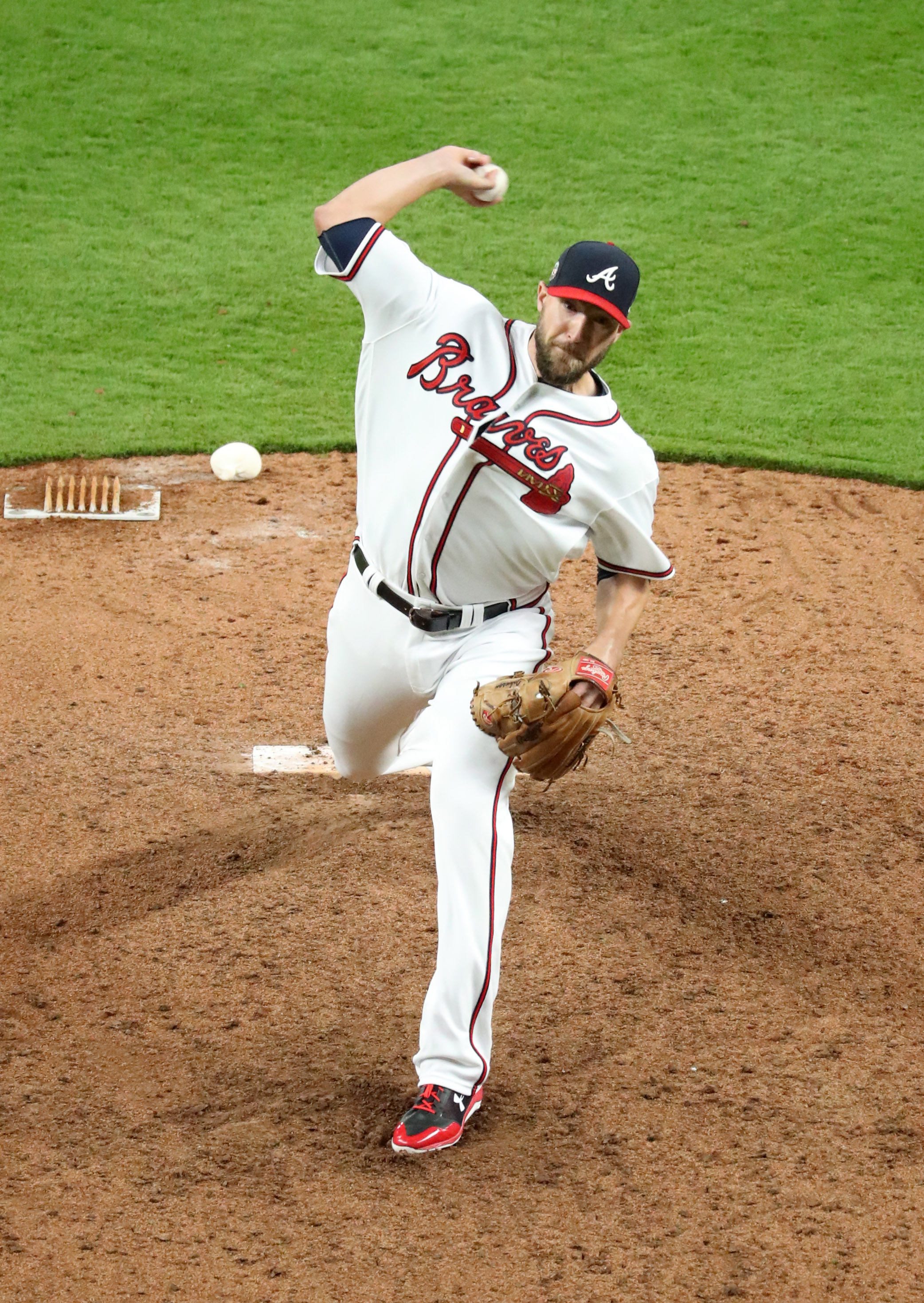
Johnson, 34, parlayed a strong 2016 season into a two-year, $10MM contract with the Braves but flopped to the tune of a 5.56 ERA in the first season of that deal in 2017. The former Orioles closer and two-time American League saves leader logged 56 2/3 innings with 9.7 K/9, 4.0 BB/9 and 1.27 HR/9 in what proved to be his worst season since the 2014 season. Johnson’s once sky-high ground-ball rate (62.3 percent at his peak) sat at a solid but unremarkable level of 48.5 percent in 2017.
Despite the rough year, though, Johnson’s season wasn’t devoid of reason for optimism. His 9.7 K/9 rate was the best of his career, as was his 9.4 percent swinging-strike rate. His fastball maintained its 93-94 mph velocity, and metrics like xFIP (3.98) and SIERA (3.87) were considerably more bullish on his output. Johnson also isn’t far removed from a strong season; as previously alluded to, he turned in a 3.06 ERA with 9.5 K/9, 2.8 BB/9, 0.4 HR/9 and a 55 percent grounder rate in 64 2/3 frames as recently as 2016. For an Angels club that has already lost Yusmeiro Petit and also saw relievers Bud Norris, Andrew Bailey, Huston Street and (in a summer trade) David Hernandez depart, Johnson will give them a rebound option to soak up some of the lost innings.
Of course, Johnson is a bit pricey for a bullpen rebound candidate, earning $5MM in 2018. However, the Halos will also pick up some coveted international funds that they’ll add to what was a reportedly depleted total of $150K in their international bonus pool. International pool space must be traded in increments of at least $250K, per the collective bargaining agreement, so Anaheim will nearly triple its available resources even if they received only the minimum $250K. Those funds, of course, can be used as part of a pitch to Shohei Ohtani or to some of the Braves’ recently lost prospects, who are all subject to international pools.
[Related: Updated Angels Depth Chart and Braves Depth Chart]
Kelly, 25 in April, was a 33rd-round pick out of UC Santa Barbara in 2016 and spent the bulk of his first full professional season in the Class-A Midwest League. In 29 2/3 innings there, Kelly pitched to a strong 2.43 ERA with 7.9 K/9, 3.3 BB/9 and a 44.4 percent ground-ball rate. The Halos gave him brief looks in Class-A Advanced, Double-A and Triple-A late in the season, though none of those three cameos produced enviable results.
Overall, Kelly’s season wrapped up with a composite 3.53 ERA, 8.1 K/9 and 4.1 BB/9 in 63 2/3 innings (six starts, 19 relief appearances). Considering he’s the return in a move that amounts to a salary dump from the Braves, it’s not especially surprising that Kelly wasn’t ranked among the Angels’ top 30 farmhands. He could head to the bullpen for the Braves’ Class-A Advanced affiliate to open the 2018 campaign.
Photo courtesy of USA Today Sports Images.
Diamondbacks Acquire Brad Boxberger
The D-backs announced today that they’ve acquired right-handed reliever Brad Boxberger from the Rays in exchange for minor league right-hander Curtis Taylor.
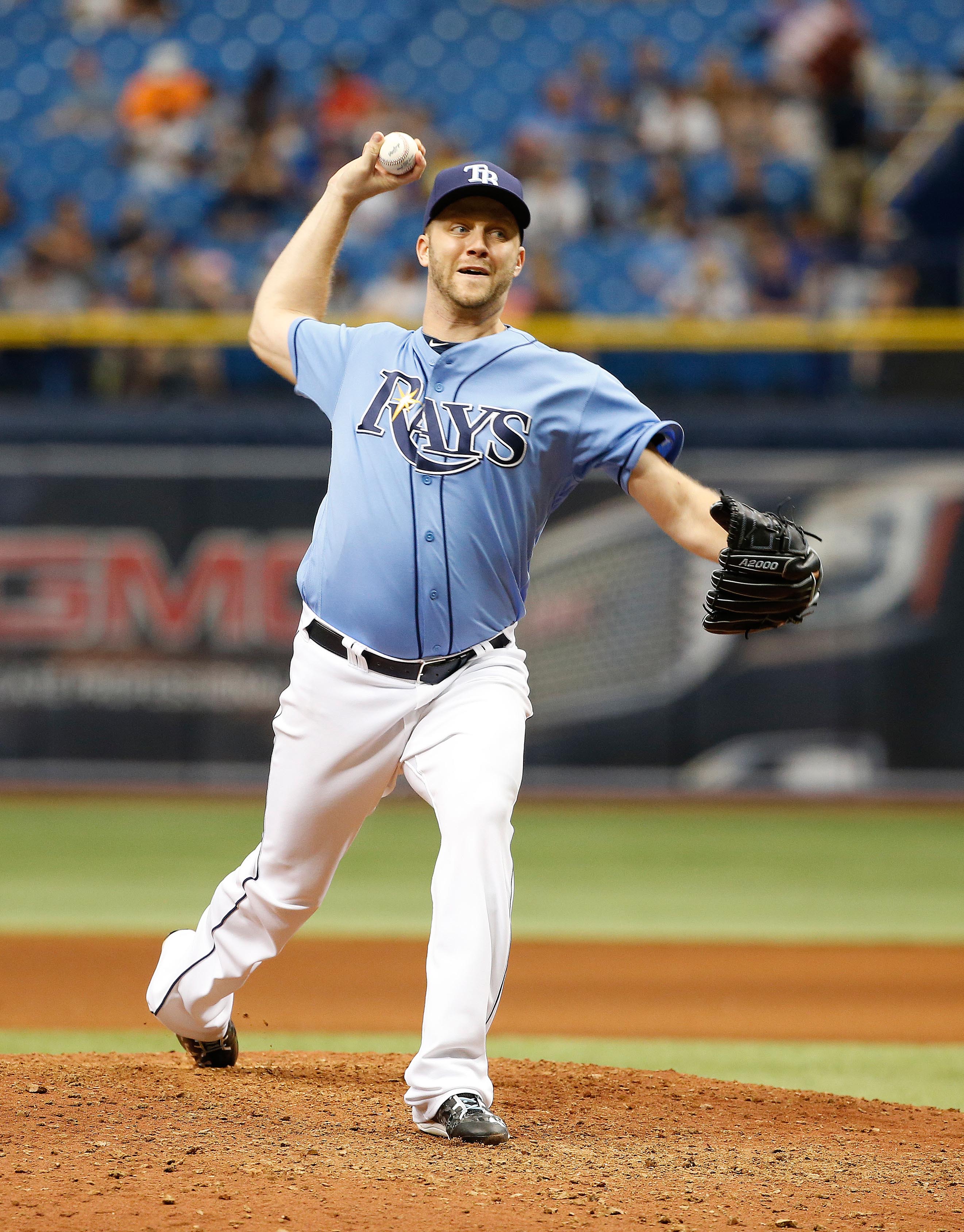
The trade of Boxberger to Arizona sheds one arbitration-eligible player for the Rays, who have a sizable arb class and many decisions to face as they look to trim payroll for the 2018 season. While Boxberger won’t be paid at an exorbitant rate — MLBTR contributor Matt Swartz projects a $1.9MM salary in 2018 — Tampa Bay was facing arb decisions on 12 players, suggesting that further non-tenders or trades of second-tier players could be on the horizon for the Rays.
Boxberger, 30 in May, was an All-Star closer for the Rays back in 2015 when he saved 41 games and pitched to a 3.71 ERA with 10.6 K/9, 4.6 BB/9 and a 36.3 percent ground-ball rate. Arizona’s ninth-inning situation is currently murky after 2017 closer Fernando Rodney hit free agency at season’s end, and while Boxberger could compete for a high-leverage spot depending on the D-backs’ other offseason moves, he won’t simply be handed the job. For one thing, Archie Bradley could well be the in-house favorite to fill that role at present. Furthermore, the bullpen looks like one area for the D-backs to address this offseason, though they’ll face payroll challenges in doing so.
Beyond that, Boxberger hasn’t been closing in Tampa Bay in recent seasons anyhow, as he’s been plagued by groin and oblique injuries as well as a flexor strain in 2017. When healthy, however, he was quite effective this past season, as evidenced by a 3.38 ERA, 12.3 K/9 and 3.4 BB/9 in 29 1/3 frames. Boxberger has totaled just 53 1/3 innings over his past two injury-plagued seasons, though he’ll be a nice addition that the team can control through the 2019 season, via arbitration, if he can remain healthy next year. Boxberger adds to a massive D-backs arbitration class that now includes an astounding 15 players — though the Snakes have several non-tender/trade candidates in that mix themselves (e.g. Chris Herrmann, J.J. Hoover, T.J. McFarland).
[Related: Updated Diamondbacks Depth Chart & Rays Depth Chart]
As for the Rays, they’ll pick up a prospect that ranked 14th in a poorly regarded Diamondbacks farm system, per MLB.com. The 22-year-old Taylor (23 next July) spent the 2017 season with Class-A Kane County, where he pitched to a solid 3.32 ERA with 9.8 K/9, 3.3 BB/9, 0.6 HR/9 and a 43.6 percent ground-ball rate in 13 starts (62 1/3 innings).
Jim Callis and Jonathan Mayo of MLB.com note in their scouting report that the 6’6″ fourth-rounder (2016) has the potential for two plus offerings thanks to a 94-95 mph sinker and an upper-80s slider. Callis and Mayo note that there’s a belief that Taylor could end up in the bullpen ultimately, and Fangraphs’ Eric Longenhagen tweets the same. Per Longenhagen, Taylor has better control than most pitchers of his height and a potential plus slider, but his delivery is better suited for relief work.
Photo courtesy of USA Today Sports Images.
Athletics Sign Yusmeiro Petit
The Athletics are in agreement with free-agent right-hander Yusmeiro Petit on a two-year, $10MM contract with a third-year club option, Ken Rosenthal of The Athletic reports (via Twitter). Petit is represented by Godoy Sports. He’ll earn $3.5MM in 2018, $5.5MM in 2019 and has a 2020 club option for another $5.5MM that comes with a $1MM buyout, I’m told. The deal is pending a physical.
[Related: Updated Oakland Athletics depth chart and payroll outlook]
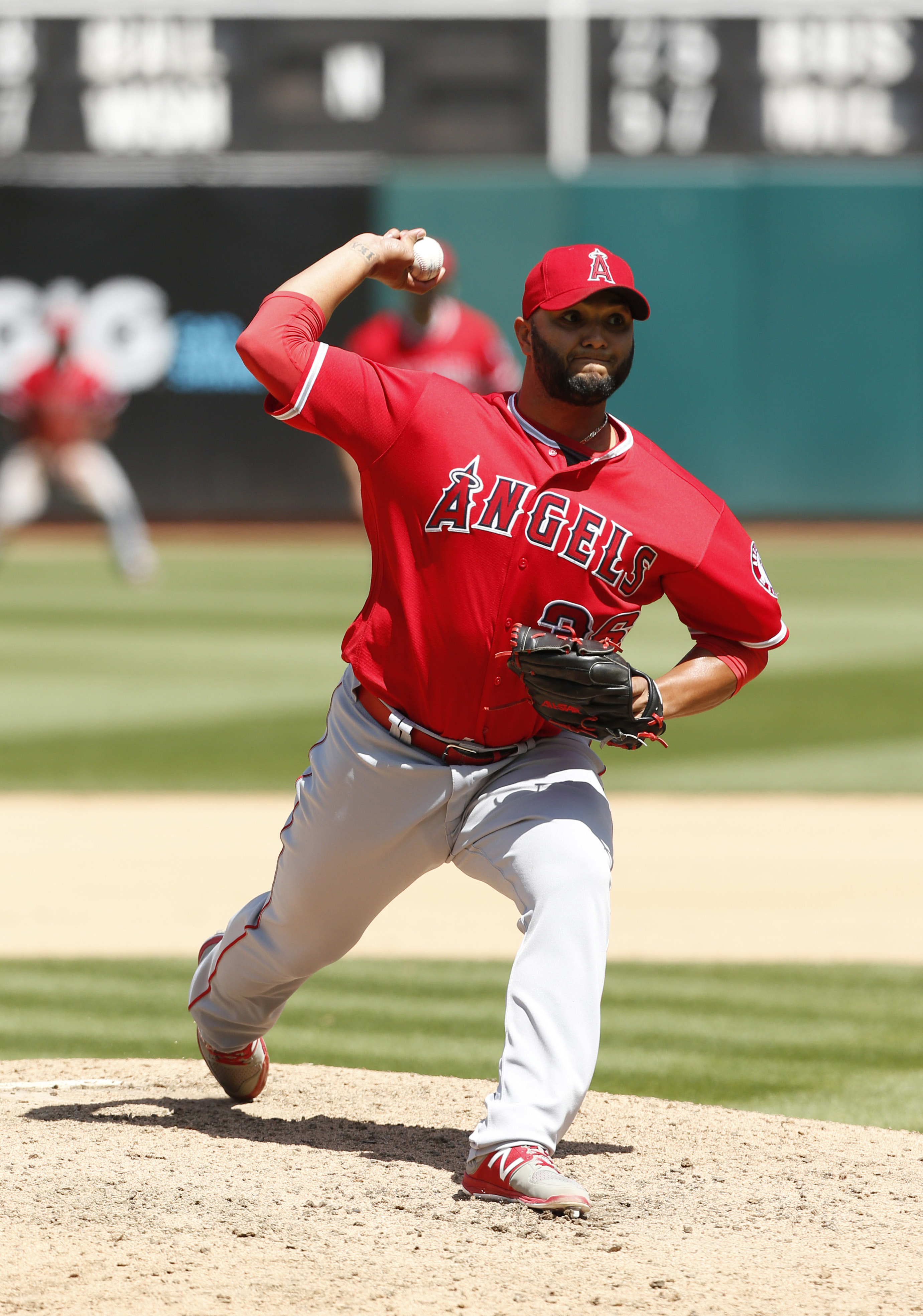
The 33-year-old Petit is fresh off a career year in which he led big league relievers with 87 1/3 innings and also tossed four innings in a spot start. Overall, he pitched to a 2.76 ERA with 10.0 K/9, 1.8 BB/9 and a 32.9 percent ground-ball rate in his 91 1/3 frames with the Halos. Of Petit’s 59 relief appearances, 33 lasted more than an inning, and he was often asked to work two or even three innings at a time. By season’s end, he’d graduated from lower-leverage spots to high-leverage setup appearances and even a few closing opportunities, as he saved four games for the Halos.
While he didn’t establish himself as a regular big league contributor until his age-28 season (2013< Petit has somewhat quietly been a solid ‘pen option for the Giants, Nats and Angels dating back to 2012. In that time, he’s worked to a 3.59 ERA and a 3.40 FIP over the life of 399 big league innings, brushing up against history a few times along the way. He came within a single out of a perfect game for the Giants in September 2013 and went on to set a Major League record for most consecutive batters retired the following season in 2014.
Despite the flashes of greatness, Petit has also struggled at times due to a susceptibility to home runs. The long ball was an issue for Petit early in his career with the Marlins and D-backs, and he saw some flare-ups in that regard in his final season with the Giants (1.3 HR/9) and especially in his lone season with the Nationals (1.74 HR/9). Whether he can continue to average better than a strikeout per inning remains to be seen as well; he averaged 10.2 K/9 in a very strong ’14 season with the Giants but sat around 7.0 K/9 from 2015-16 with the Giants and Nats. Petit doesn’t throw hard, sitting 89-90 mph with his fastball, though Fangraphs’ Eno Sarris wrote back in 2014 about the difficulty opposing hitters face in tracking Petit’s pitches due to deception in his delivery.
Petit will add some length to a bullpen that figures to be anchored by Blake Treinen, who shined in Oakland after being acquired from the Nationals in the trade that sent Sean Doolittle and Ryan Madson to Washington. Manager Bob Melvin’s bullpen figures to also feature right-handers Santiago Casilla, Ryan Dull, Emilio Pagan and Chris Hatcher (assuming Hatcher is tendered a contract). His experience working in longer stints could also give Melvin and the A’s some flexibility to utilize him as an occasional spot starter should the need arise, though it seems likely that he’ll be relied upon as a bullpen arm rather than a candidate for the fifth spot in the rotation.
The A’s — like every other club given the painfully slow pace of the 2017-18 offseason — still have work to do between now and Opening Day, of course. They’re reportedly on the hunt for a controllable right-handed-hitting corner outfielder now that the trade of Ryon Healy (to the Mariners in exchange for the aforementioned Pagan) has paved the way for Khris Davis to serve as their DH. They also need to bring in a center fielder and could look to add some left-handed bullpen options as well as an upgrade at catcher. However, with Petit and Pagan now on board, plus the midseason pickups of Treinen and Hatcher, Oakland doesn’t seem likely to consider additional right-handed relief a top priority.
Photo courtesy of USA Today Sports Images.
Red Sox Among Teams Discussing Jose Abreu Trade Scenarios With White Sox
The Red Sox are among the organizations “in active talks” with the White Sox regarding veteran slugger Jose Abreu, according to Jon Heyman of Fan Rag (via Twitter). It is not clear at the moment which other teams might be involved or how far talks might have progressed.
MLBTR’s Mark Polishuk recently examined the potential market for Abreu, citing Boston as one of the major possible suitors. Of course, there are also quite a few other organizations that would likely see merit in his contract rights, too.
Unlike top trade candidate Giancarlo Stanton and the slate of available free agents, Abreu can be controlled for a limited financial commitment. MLBTR projects that he’ll earn $17.9MM in arbitration for the coming season, a large sum but also less than what other top sluggers would command on the open market. And there’s another season of control that amounts to a floating club option; should he perform well, Abreu will be entitled to (and will likely deserve) another big raise in his final year of arbitration eligibility. If not, he can be allowed to walk.
In all likelihood, it’s something like a two-year, $40MM contract commitment without any possibility of a long-term commitment gumming up future balance sheets. That’s an appealing contract situation for a player that just smacked 33 long balls and slashed .304/.354/.552 in the 2017 campaign. Abreu will not turn 31 until January of next year.
While Abreu wouldn’t necessarily earn significantly more in average annual salary in a hypothetical trip onto the open market this winter, he’d surely command more years. There’s a world of difference between a four or five-year guarantee at this general rate of pay, for instance, and the current commitment to Abreu. To take but one comparison, he’s effectively controlled under a more team-friendly scenario than that which the Blue Jays agreed to with Jose Bautista last January, after the much older player languished on the market and fell shy of earning expectations on the heels of a down season. That contract guaranteed $18.5MM and included only a mutual option, whereas Abreu’s 2019 rights are firmly in club control.
There’s a fair bit of excess value here for the White Sox, who also won’t feel compelled to move Abreu for less than a compelling return. Putting Abreu in crimson hosiery will likely not be cheap, then. Red Sox president of baseball operations Dave Dombrowski has suggested his organization is hesitant to part with significant prospect value to land a slugger, so getting something done here will likely require some creativity and/or tough choices.
Rangers Sign Doug Fister
In what has been a slow offseason for all 30 big league clubs, right-hander Doug Fister has broken the ice and signed a one-year deal with the Rangers, the team announced today. Fister, a client of PSI Sports Management, will reportedly be guaranteed $4MM in the form of a $3.5MM base salary for 2018 and either a $4.5MM club option or a $500K buyout for 2019. The option could reportedly be worth as much as $7MM, and both years include $500K in performance bonuses. The Rangers’ 40-man roster is now up to 39 players.
The Rangers will be the seventh big league organization for the soon-to-be 34-year-old Fister, who went through all of last offseason without landing a contract after struggling with the Astros in 2016. The Angels finally signed Fister to a minor league accord in May, but he opted out of it June 21 after failing to reach the majors with the club.
[Related: Updated Texas Rangers depth chart & payroll outlook]
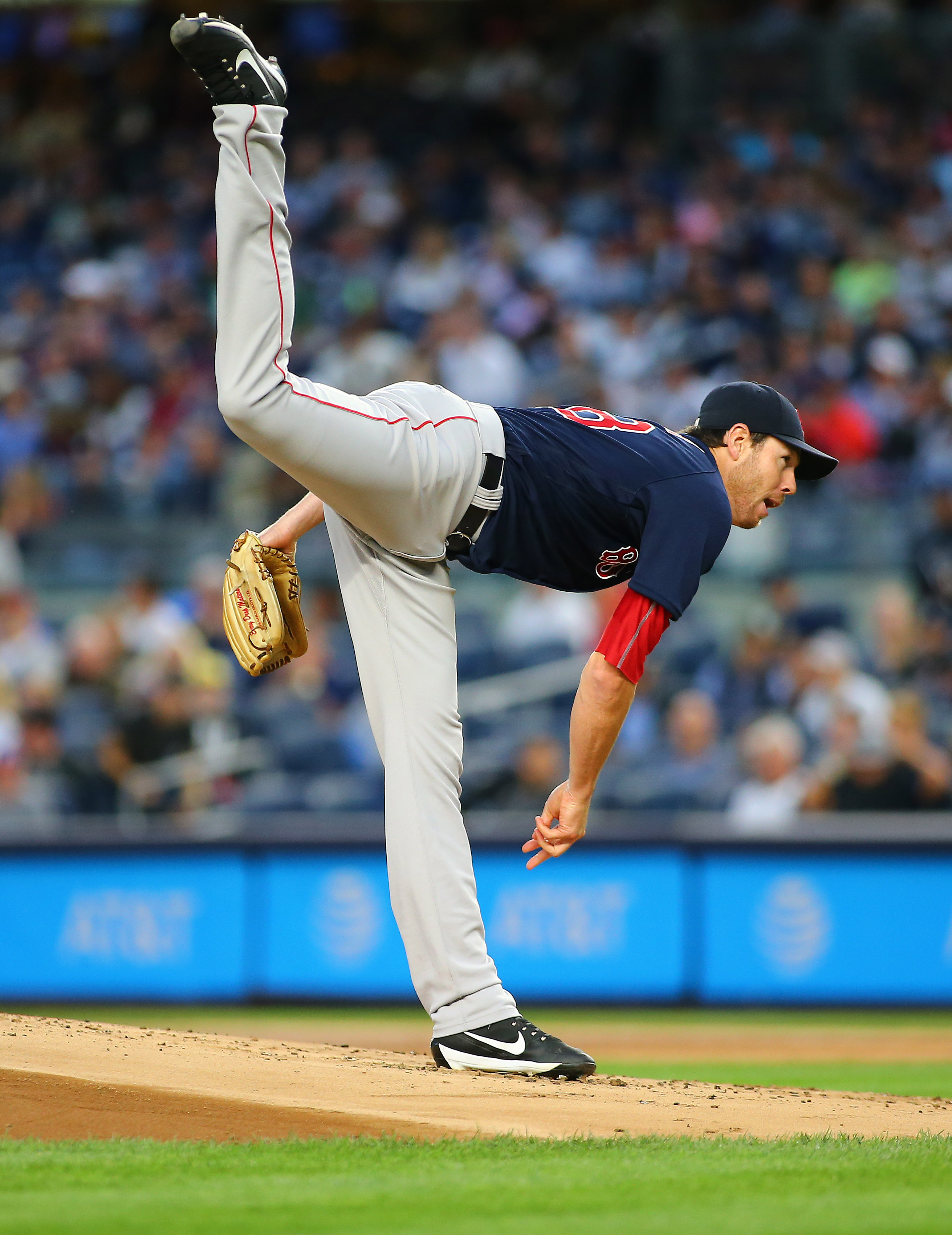
After his Halos stint concluded, Fister quickly caught on via waivers with the Red Sox and ended up turning in 90 1/3 innings (18 appearances, 15 starts) of 4.88 ERA pitching, with 8.27 K/9 against 3.79 BB/9 and a 50.6 percent groundball rate. Fister experienced a notable uptick in velocity during his Red Sox tenure, though he still only topped out in the low-90s, and notched one of the best swinging-strike rates of his career (7.6 percent – up from a league-worst 5.7 percent from 2015-16).
While the 6-foot-8 Fister is no longer the front-line starter he was at times with the Mariners, Tigers and Nationals earlier in his career, the Rangers are banking on his respectable showing in Boston carrying into 2018. With Andrew Cashner and Miguel Gonzalez sitting on the open market, the Rangers entered the offseason in need of multiple starters. Texas’ rotation finished last season 24th in both ERA and fWAR, and that was with 137 quality innings from Yu Darvish, whom the team traded to the Dodgers at the July 31 non-waiver deadline.
For now, the Rangers’ projected starting staff for 2018 includes Fister, Cole Hamels, Martin Perez, A.J. Griffin and Nick Martinez. While Fister, Hamels and Perez are either strong bets or locks to earn spots, the Rangers would hard pressed to count on either Griffin or Martinez, who combined for 178 2/3 innings of replacement-level pitching in 2017. Adding Fister won’t be the Rangers’ last move this offseason as they attempt to repair their rotation, then, but it’s the majors’ first notable free agent signing in what has been an unusually quiet winter so far.
Evan Drellich of NBC Sports Boston first reported the agreement. SB Nation’s Chris Cotillo reported the terms of the contract.
Photo courtesy of USA Today Sports Images.
Shohei Ohtani’s Agent Sends Memo To MLB Teams
With Shohei Ohtani‘s trip to the open market approaching, the phenom’s agent sent a memo on Friday to all major league teams requesting written explanations in both English and Japanese on why they’d be the right fit for the right-handed ace/left-handed slugger, as the Associated Press first reported.
Ohtani’s lead representative, Nez Balelo of CAA Sports, told teams not to include financial terms of a potential contract in their answers. But with Ohtani’s Japanese organization, the Nippon Ham Fighters, primed to post him as early as Dec. 1, Balelo informed major league clubs that he’d like to receive their responses as soon as possible.
Here’s a rundown of the memo’s specifics, courtesy of Bill Shaikin of the Los Angeles Times:
- “An evaluation of Shohei’s talent as a pitcher and/or a hitter;
- “Player development, medical, training and player performance philosophies and capabilities;
- “Major League, Minor League, and Spring Training facilities;
- “Resources for Shohei’s cultural assimilation;
- “A detailed plan for integrating Shohei into the organization;
- “Why the city and franchise are a desirable place to play;
- “Relevant marketplace characteristics.”
While nothing listed above is particularly surprising, it’s the first real look at the factors that will influence the ballyhooed Ohtani’s decision when he officially becomes free to sign with any major league team. Thanks to the rules in the collective bargaining agreement, the 23-year-old Ohtani will have to sign an inexpensive minor league contract this offseason, and the fact that there’s a fairly even financial playing field figures to lead to interest from every big league team. It’s worth noting, though, that the Rangers, Yankees, Twins, Pirates, Marlins and Mariners are entering the Ohtani sweepstakes in the most advantageous positions in terms of international bonus pool space.
Of those six clubs, the Rangers, Yankees and Mariners have had the most success reeling in Japanese stars in the past, which may help in their attempts to win the Ohtani sweepstakes, but this is setting up to be either a 30-team battle royale or something close to it. The major league franchise that outdoes the other 29 in courting Ohtani will have to pay a maximum $20MM posting fee to his Japanese team, though that’s a relative pittance to secure a potential two-way superstar who could dramatically alter an organization both on and off the field.
MLB, MLBPA, NPB Reach “Tentative” Agreement On New Posting System
9:53pm: Jim Allen of the Kyodo News hears that the current expectation is that Ohtani will formally be posted on Dec. 2 (Twitter link). That’d give teams until Dec. 23 to strike a deal with Ohtani, based on the three-week window reported by Sherman.
5:40pm: After a lengthy negotiation period, Major League Baseball, the players’ union and Nippon Professional Baseball have reached a “tentative” agreement on a new posting system that will include this offseason and continue on into the next three offseasons, reports Joel Sherman of the New York Post (via Twitter).
The agreement still must be ratified by the ownership of all 30 Major League teams, which won’t happen until next Friday according to Sherman. As such, the earliest that Shohei Ohtani can formally be posted for clubs will be next Friday — Dec. 1. Submarine righty Kazuhisa Makita has also requested that the Seibu Lions post him and is likely to be made available to MLB clubs by the new posting system as well.
MLB.com’s Jon Morosi tweets that the rules of the previous posting system will apply for this offseason (and Ohtani and Makita). In other words, the Fighters will set the maximum $20MM posting fee for Ohtani, and any club that is willing to meet that release fee will be able to negotiate with Ohtani and his reps at CAA.
Sherman tweets that the union pushed for a shorter negotiation window for Ohtani this offseason, to which NPB consented, so teams will have 21 days to work out a deal, though Ohtani will be considered an international amateur and thus be subject to international bonus pools. The Rangers ($3.535MM) have a slight edge over the Yankees ($3.5MM) for the largest pool, followed by the Twins ($3.245MM).
Previous reports have suggested that the three sides have been brokering a system in which the NPB team that posts a player will receive a sum that is equal to a percentage of the posted player’s contract with a new team. Sticking points in negotiations have included the date range from which NPB players can be posted — the MLBPA has been pushing for a brief posting window early in the offseason so as not to impede domestic free agency — as well as the possibility of the NPB team being able to pull the player back if it is not satisfied with the contract he signs.
According to Sherman, the new posting system will not have a pullback feature. Rather, NPB agreed to scrap that feature in favor of a graduated rate of return based on the overall size of the player’s contract. The scale is as follows, per Sherman:
- For a Major League contract of $25MM or less, an NPB club would receive a sum equal to 20 percent of the contract’s total value.
- For a Major League contract of $25-50MM, an NPB club would receive a sum equal to 17.5 percent of the contract’s total value.
- For a Major League contract of $50MM or more, an NPB club would receive a sum equal to 15 percent of the contract’s total value.
That creates some interesting scenarios, as it would actually be of greater benefit for an NPB club to see its former player sign for $24.5MM than $27MM and more beneficial for a former player to sign for $49.5MM than for $57MM. Beginning next offseason, NPB clubs will have from Nov. 1 through Dec. 5 to formally post a player, and negotiation windows will last for 30 days, Sherman further tweets.
The most important takeaway from the tentative agreement, obviously, is that it now seems clear Ohtani will indeed be posted and thus made available to big league clubs. The further delay in his formal posting means that Ohtani could continue to further delay the development of the market for more expensive arms on the domestic free-agent market, but tonight’s agreement at least gets the ball rolling toward some resolution on the most intriguing international free agent in recent history.
MLB Announces Permanent Ban For John Coppolella
Major League Baseball has instituted a lifetime ban on former Braves general manager John Coppolella, according to an announcement from commissioner Rob Manfred. The heavy punishment comes as the league moves to punish his former organization for amateur signing infractions during his tenure as GM. Coppolella had already resigned from the Atlanta organization.
Beyond the lifetime ban for Coppolella, the Commissioner’s Office has banned former Braves international scouting director Gordon Blakeley for one year, and commissioner Rob Manfred has also indicated that other members of the Braves’ international scouting staff will be disciplined. Here’s the full statement from Manfred:
My office has completed a thorough investigation into violations of Major League Rules by the Atlanta Braves. The Braves cooperated throughout the investigation, which was conducted by MLB’s Department of Investigations. The senior Baseball Operations officials responsible for the misconduct are no longer employed by the Braves. I am confident that Terry McGuirk, John Schuerholz, Alex Anthopoulos and their staffs have and will put in place procedures to ensure that this type of conduct never occurs again and which will allow the Club to emerge from this difficult period as the strong and respected franchise that it has always been.
The investigation established that the Braves circumvented international signing rules from 2015 through 2017. During the 2015-16 international signing period, the Braves signed five players subject to the Club’s signing bonus pool to contracts containing signing bonuses lower than the bonuses the Club had agreed to provide the players. The Club provided the additional bonus money to those players by inflating the signing bonus to another player who was exempt from their signing pool because he qualified as a ‘foreign professional’ under MLB rules. Consistent with the rules, the Braves could have signed all of the 2015-16 players for the full, actual signing bonus amounts. Had the Club signed the five players to contracts containing their actual bonuses, however, the Braves would have exceeded their signing bonus pool by more than five percent and would have been, under MLB rules, restricted from signing any players during the next two signing periods for contracts with bonuses greater than $300,000.
As a result of the 2015-16 circumvention, the Braves were able to sign nine high-value players during the 2016-17 signing period who would have been unavailable to them had the Club accurately accounted for its signings during the 2015-16 signing period. These players were Juan Contreras, Yefri del Rosario, Abrahan Gutierrez, Kevin Maitan, Juan Carlos Negret, Yenci Peña, Yunior Severino, Livan Soto and Guillermo Zuniga. In addition, the Braves entered into additional ‘package’ agreements in 2016 and 2017 in which they signed Brandol Mezquita, Angel Rojas and Antonio Sucre for reduced amounts, and provided additional money to those players’ agents by signing other players affiliated with their agents to contracts with inflated bonuses. In order to remedy these violations, I am releasing these players from their contracts with the Braves and declaring them free agents eligible to sign with any other Club. The procedures governing the players’ release and the signing process will be communicated to MLB Clubs under separate cover.
The investigation also determined that the Braves: (i) agreed to sign six players to inflated signing bonuses pursuant to an agreement with prospect Robert Puason‘s agent in exchange for a commitment that Puason would sign with the Club in the 2019-20 signing period; and (ii) offered prospect Ji-Hwan Bae extra-contractual compensation. In order to remedy these violations, I am prohibiting the Club from signing Robert Puason when he becomes eligible to sign, and disapproving the contract between Bae and the Braves, which has not yet become effective.
While the remedies discussed above will deprive the Braves of the benefits of their circumvention, I believe that additional sanctions are warranted to penalize the Club for the violations committed by its employees. Accordingly, the Braves will be prohibited from signing any international player for more than $10,000 during the 2019-20 signing period, which is the first signing period in which the Braves are not subject to any signing restrictions under our rules; and the Braves’ international signing bonus pool for the 2020-21 signing period will be reduced by 50 percent.
The investigation also determined that the Braves offered impermissible benefits, which were never provided, to a player they selected in the First-Year Player Draft in an attempt to convince him to sign for a lower bonus. As a penalty for the Club’s attempted circumvention involving a draft selection, the Braves will forfeit their third-round selection in the 2018 First-Year Player Draft.
With respect to individual discipline, former Braves General Manager John Coppolella will be placed on the permanently ineligible list, effective immediately. Former Braves Special Assistant Gordon Blakeley will be suspended for a period of one year, effective immediately, and may not perform services for any MLB Club during his suspension. I intend to discipline other Braves’ International Baseball Operations employees who participated in the misconduct after the completion of our internal procedures. My staff will speak to the Players Association and officials in the Dominican Republic regarding appropriate consequences for the representatives of the players who intentionally participated in schemes to circumvent our rules, none of whom are certified by the Players Association.
The ramifications are significant for the Braves, whose capacity for amateur talent acquisition over the next several years will be hammered. Both Maitan and Gutierrez were ranked among the Braves’ top 30 prospects at MLB.com, with Maitan having ranked fifth overall and Gutierrez ranking 30th. The forfeiture of those prospects will mean that more than $10MM worth of amateur bonuses have now been squandered, and the Braves will also feel that pain of MLB’s sanctions in next year’s amateur draft and through the 2021 season on the international market.
The role that former president of baseball operations John Hart did or didn’t play in these infractions remains unclear, but Hart, who was given a reduced role in the front office upon the hiring of new GM Alex Anthopoulos, announced his resignation from the organization last week. A split between the two sides seemed largely inevitable; either Hart played a knowing role in the most significant circumvention of MLB’s international amateur free agency system to date, or he exhibited a stunning level of negligence in allowing these infractions to be committed without his knowledge. Neither of those scenarios seems excusable.
The Braves have also issued a statement on the matter:
Today, Major League Baseball informed the Atlanta Braves organization of sanctions being levied as a result of their investigation. As MLB stated, the Braves cooperated fully throughout this investigation and we understand and accept the decision regarding the penalties that have been handed down. As we expressed last week, our organization has not lived up to the standard our fans expect from us and that we expect from ourselves. For that, we apologize. We are instituting the changes necessary to prevent this from ever happening again and remain excited about the future of Braves baseball. We do not plan to comment further on this matter.
That the Braves won’t comment further on the matter runs somewhat contrary to comments made by Braves CEO Terry McGuirk last month. Speaking with Tim Tucker of the Atlanta Journal-Constitution, McGuirk stated: “I don’t think there will be any questions (unanswered) when we are able to discuss it.”
Meanwhile, Blakeley has also issued a statement on his year-long suspension (via Ken Rosenthal of The Athletic, on Facebook):
I am obviously very disappointed in the Commissioner’s decision regarding my suspension, particularly given my 32 years of untarnished service to the game. That said, I am in the digesting the Commissioner’s findings and considering all of my options going forward. I take responsibility for my actions in this situation; however, I always acted under the direction of my superiors.