
Free Agent Profile: Aaron Harang
Last winter, veteran starter Aaron Harang hooked on with the Indians on a minor league deal and, at the time, he appeared to have a strong chance of being the fifth man in the Tribe’s rotation. In March, when he was informed that he wouldn’t be a part of the Opening Day roster, Harang requested and secured his release. That same day, he agreed to a big league deal with the Braves and he did not disappoint in Atlanta. Now, the 36-year-old is hitting the open market once again and this time around he should only be fielding big league offers.
Strengths/Pros
Harang exceeded all expectations this season as he turned in a 3.57 ERA with 7.1 K/9 and 3.1 BB/9. A lot of pitchers tend to tail off around Harang’s age, but this past year ranks as one of his very best at the big league level. His ERA was the lowest it has ever been (ditto for his identical 3.57 FIP) and his 204.1 innings of work stands as his highest total since 2007. Ultimately, his $1MM deal proved to be one of the better free agent bargains of 2014.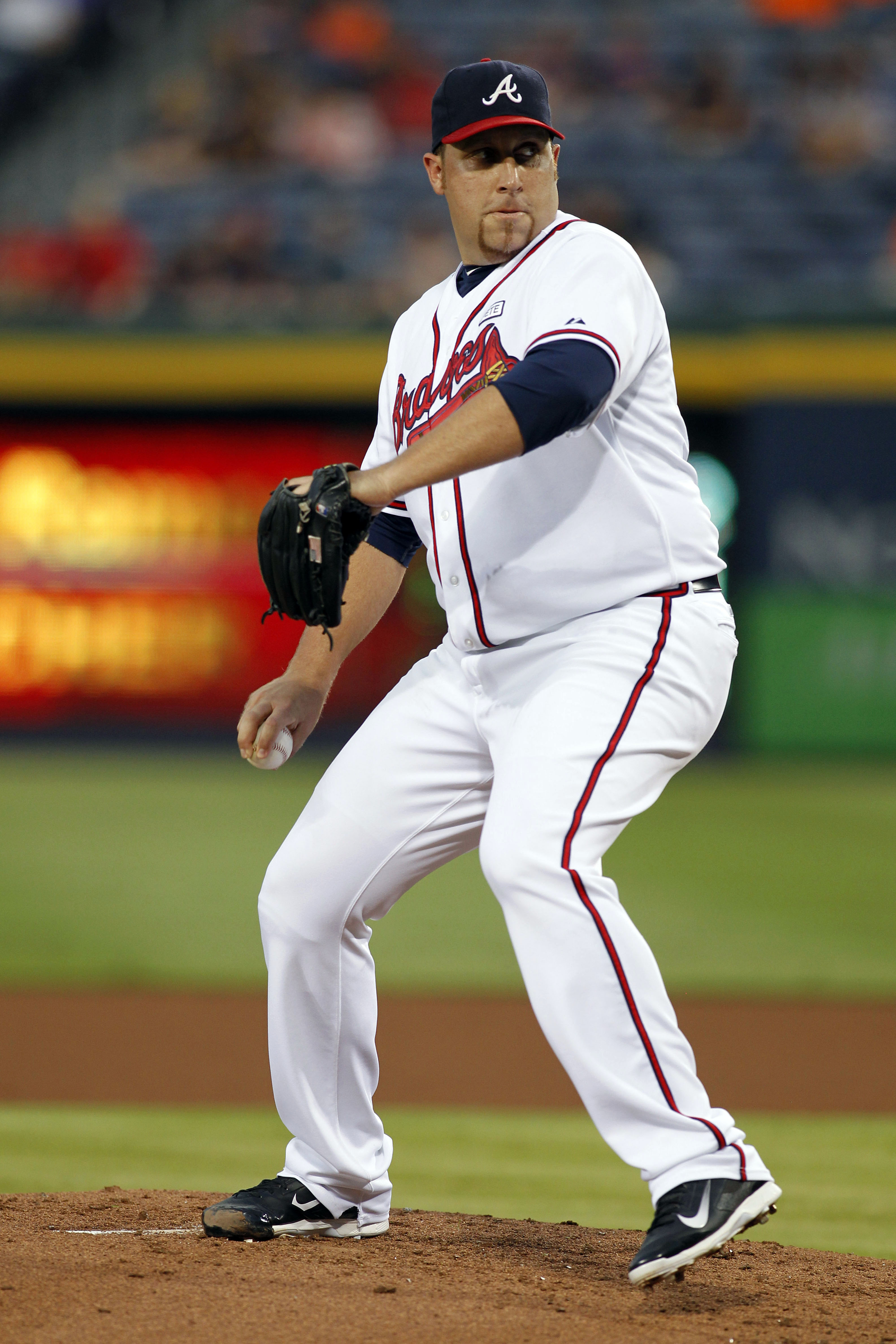
The 36-year-old won’t be held back by a qualifying offer and there’s reason to believe he could continue to deliver a ton of innings for his next team. Harang hasn’t been on the disabled list with an arm-related injury since 2008 and he can hardly be penalized for his late season emergency appendectomy in 2009.
Harang didn’t magically discover the fountain of youth or go on a hardcore Julio Franco-esque diet this past season. Instead, as he explained to David Lee of The Augusta Chronicle late last month, he has become a craftier pitcher in recent years.
“I threw a lot more four-seamers when I was younger,” Harang said. “I had a coach show me how to throw a two-seamer, and I started doing it, and every year it seems to be more effective. Once you get used to throwing it and realize how key that pitch can be, you make those adjustments.”
Harang made a concerted effort to start throwing more two-seam fastballs in 2009. As Lee notes, in 2008, when he threw 64 percent four-seamers and 8 percent two-seamers, he posted a 4.78 ERA and averaged 1.7 home runs per nine innings. This season, it was much more balanced with Harang throwing 29% two-seamers and 30% four-seamers. Harang’s pitch velocity has faded a bit in recent years, but thanks to a different approach on the mound, he has been able to adjust and age more gracefully than a lot of his contemporaries.
Weaknesses/Cons
While Harang’s 2014 performance was strong, his 2013 campaign didn’t go quite as smoothly. At the start of the season, the Dodgers traded Harang to the Rockies for Ramon Hernandez before he was quickly DFA’d and flipped to the Mariners just days later. After posting a 5.76 ERA with 6.5 K/9 and 2.1 BB/9 in 22 starts for Seattle, the M’s DFA’d him in August. Harang finished out the year with the Mets, meaning that he had bounced between four clubs all within that year. In total, Harang had a 5.40 ERA – a number his next club doesn’t want to see – with 7.1 K/9 and 2.5 BB/9.
This year, while his ERA was solid and his strikeout and walk rates were more or less consistent with his career average, some of the advanced metrics aren’t as crazy about his performance. Both xFIP (4.03) and SIERA (4.18) feel that Harang’s ERA should have been a touch higher than 3.57.
Harang is putting less emphasis on his heater than he was earlier in his career, but it’s still hard to ignore his decreasing velocity. Harang threw his fastball at an average of 88.8 MPH, his lowest average in the past eight years that it has been recorded by PITCHf/x. If his velocity continues to lose steam, it’s fair to wonder whether his 6.4% HR/FB ratio from 2014 can be sustained. For his career, Harang has a decidedly less sharp 10.2% HR/FB ratio.
Personal
Harang and his wife Jennifer have three children. He knows how important fatherly wisdom can be as he attributes his 2,100+ innings of major league work to sage advice from his dad.
“I would never teach a kid a breaking pitch until age 13,” Harang said, according to Anna McDonald of ESPN.com. “My dad wouldn’t show me one. He didn’t want [my elbow] to blow out. So I didn’t start throwing a curveball until I was 13 years old. I had the karate-chop one, where you just throw it and it spins up there. Your muscles aren’t developed enough, your ligaments aren’t developed enough to withstand it.”
Harang, a San Diego native, told Dan Hayes (then of U-T San Diego) in 2010 that he prefers fish tacos to Skyline Chili, even though he has spent the bulk of his career in Cincinnati. He also prefers The Simpsons to Family Guy, which is the right choice in my book.
Market
For his part, Harang told reporters, including MLB.com’s Mark Bowman, that he would be interested in pitching for Atlanta again. The Braves undoubtedly appreciate his work this year, but they also know that they can’t retain him with another one-year, $1MM deal. In theory, the Braves can trot out a starting five of Mike Minor, Kris Medlen, Julio Teheran, Brandon Beachy, and Alex Wood. However, Medlen and Beachy are recovering from Tommy John surgery with unknown return dates and it would certainly help to have a battle-tested veteran pitcher at the ready.
Still, he may not be in the budget in Atlanta and he may not take a discount to stay put since this could be his last sizable deal. The Pirates are one team that could use a reasonably priced out-of-house addition to their rotation. Harang may also find a match with teams like the Astros and Rockies if he’s not aiming for a likely contender.
Expected Contract
Last winter, Bronson Arroyo, also at the age of 36, secured a guaranteed $23.5MM over two years from the Diamondbacks with an $11MM club option. Like Arroyo, Harang fits the profile of a durable innings eater who isn’t dependent on velocity for success and both had strong walk years before hitting the open market. However, not all innings eaters are created equal: before Arroyo’s unfortunate UCL tear this season, he pitched 200 innings or more from 2005 through 2013, with the exception of a 199 inning total in 2011. Also, Harang’s vagabond 2013 might hurt his case for big money.
We expect the Levinson brothers to readily bring up Arroyo’s name, but Harang probably won’t match his deal. I predict Harang will land a two-year, $14MM deal this offseason.
Photo courtesy of USA Today Sports Images.
Ned Colletti’s Job Security In Question
7:44pm: Andy Martino of the New York Daily News spoke to multiple Dodgers insiders, with one source telling him, “I’m already hearing all kinds of rumblings” regarding Colletti and, to a much lesser extent, Mattingly. Other sources to which Martino spoke praised Mattingly’s people skills and ability to manage the superstar egos involved in the Dodgers’ four-headed outfield monster. In particular, a source tells Martino, Mattingly was instrumental in getting Ethier to buy into a reduced role.
7:14pm: Following the Dodgers’ postseason loss at the hands of the Cardinals, sources within the organization tell Ken Rosenthal of FOX Sports that GM Ned Colletti could be on the hot seat (Twitter links). Ownership is said to have more of a soft spot for manager Don Mattingly, says Rosenthal. He continues, however, by noting that if the Dodgers do replace Colletti, the new GM may very well want to name his own manager. Mark Saxon of ESPNLosAngeles.com hears similar things, noting that Mattingly’s job appears to be safe, but the outlook for others in the organization is less certain (Twitter link).
This season marked the second straight disappointing exit from the playoffs for the Dodgers, who were considered a favorite by many going into postseason play due to their elite group of starting pitchers. Colletti famously swung perhaps the most talked-about blockbuster in recent history when he acquired Adrian Gonzalez, Carl Crawford, Josh Beckett and Nick Punto from the Red Sox in exchange for Rubby De La Rosa, Allen Webster, James Loney, Jerry Sands and Ivan De Jesus back in August 2012. However, despite solid performances from Gonzalez, Crawford and Beckett this season, the Dodgers will again watch the World Series from home.
Additionally, the Crawford acquisition combined with extensions of Matt Kemp and Andre Ethier to create an expensive logjam of outfielders for the Dodgers. Yasiel Puig‘s emergence as the team’s best hitter has made it impossible for all four to get regular at-bats, and top prospect Joc Pederson has no clear path to everyday at-bats with the Dodgers in the near future, either. Bullpen expenditures Brian Wilson, Chris Perez, Brandon League and Paul Maholm haven’t panned out (though League did recover from a disastrous 2013 with a strong 2014), and trade acquisitions Kevin Correia and Roberto Hernandez yielded sub-par results. Moreover, the team spent a combined $53MM on Cuban infielders Erisbel Arruebarrena and Alex Guerrero, yet neither contributed in 2014 and it’s unclear if both will fit into the long-term picture following the emergence of Dee Gordon.
Of course, there’s plenty to like about some of Colletti’s moves. The decision to re-sign Juan Uribe looks outstanding, and the team’s mere $1MM investment in Justin Turner was perhaps one of the biggest steals of the offseason. That move will continue to pay dividends, as Turner is controllable through the 2016 season. J.P. Howell has produced tremendous results at a reasonable rate over the past two seasons. Also, Arruebarrena and Guerrero had strong performances in the minors, so either could generate trade interest.
If Colletti is replaced, that would incredibly mean that four of the five teams in the National League West would have changed GMs in roughly a five-month span. Padres GM Josh Byrnes was fired in June, while the D’Backs dismissed Kevin Towers in September and the Rockies just announced today that senior director of player development Jeff Bridich would take over as GM, with Bill Geivett and Dan O’Dowd resigning from their posts.
Ryan Dempster To Retire
Right-hander Ryan Dempster, who sat out the 2014 season due to physical issues and a desire to spend more time with his family, will not pursue a contract this offseason and will officially retire, reports Chris Cotillo of SB Nation’s MLB Daily Dish (on Twitter).
The 37-year-old Dempster was placed on the restricted list by the Red Sox following that decision, meaning that he forewent a sizable $13.25MM salary. At the time, Dempster told FOX’s Ken Rosenthal, “I don’t feel like I am capable of performing to the ability and standard that I am accustomed to. I feel it’s in the best interest of both the club but most importantly myself to step away from playing baseball at this time.” Over the summer, Dempster told the Chicago Tribune that he wasn’t ruling out a return to the playing field, but he didn’t miss playing at that point.
Dempster’s career will come to a close with a 4.35 ERA, 7.8 K/9 and 4.0 BB/9 in 2387 Major League innings. The former third-round pick and British Columbia native experienced success both as a starter and as a reliever in his career. He made 351 big league starts and totaled 132 Major League victories, but he also spent three seasons as the Cubs’ closer and totaled 87 saves in his career.
The final season of Dempster’s career certainly wasn’t his finest, but it may be his fondest memory. Dempster posted a 4.57 ERA in 171 1/3 innings for the Red Sox that season and was rewarded with a 2013 World Series ring when all was said and done.
A two-time All-Star, Dempster also finished sixth in the 2008 National League Cy Young voting in a surprisingly dominant campaign as he transitioned from the bullpen back to the rotation. He totaled 206 2/3 innings that season, posting a 2.96 ERA and averaging 8.1 strikeouts per nine innings along the way.
Baseball-Reference.com values Dempster’s career at 22.6 wins above replacement, while Fangraphs pegs him at 27.5 WAR. In parts of 16 Major League seasons with the Marlins, Reds, Cubs, Rangers and Red Sox, Dempster earned more than $89MM, according to B-Ref. We at MLBTR wish Dempster the best of luck in his post-playing days.
Yankees Unlikely To Pursue Tomas; Padres Host Second Private Workout
Cuban slugger Yasmany Tomas is officially a free agent, but George A. King III of the New York Post reports that the Yankees aren’t likely to show serious interest in the outfielder. Meanwhile, the Padres hosted their second private workout with Tomas in the Dominican Republic yesterday, according to Baseball America’s Ben Badler.
The Yankees, according to King, were in attendance for Tomas’ showcase in the Dominican Republic, but rival clubs expect the Yanks to have a similar reaction to Tomas that they did to countryman Rusney Castillo. King adds that New York “showed very little interest” in Castillo after initially watching him. As King notes, the Yankees are hoping that Carlos Beltran can play right field next year in the event that Alex Rodriguez has to spend a lot of time at the DH position. Additionally, King spoke to one official who offered a lukewarm take on Tomas and his rumored price tag of roughly $100MM: “He is a good player, but for $100 million? I don’t know. He is better than [Castillo], but that doesn’t mean he is worth $100 million.”
As for the Padres, Badler reports that newly minted GM A.J. Preller was at yesterday’s private showcase, and he is also known to have attended Tomas’ initial Dominican showcase for all 30 clubs. That would make three times in a three week span that the GM has seen him. Preller is well-known for his prowess on the international scouting front, as Badler notes, and many of the team’s decision-makers have now seen him multiple times as well. Vice president of scouting operations Don Welke and vice president of baseball operations Omar Minaya have both gotten multiple first-hand looks at Tomas.
MLBTR’s Tim Dierkes recently authored a free agent profile of Tomas, ultimately wagering that Tomas, who will play next season at the age of 24, would land a contract worth $105MM over a seven-year term. As Badler notes, the Rangers have also had a private workout with Tomas, as have the Phillies. Reports this week indicated that the Twins, too, were trying to arrange a private workout.
Brian Wilson To Exercise Player Option
Brian Wilson has informed the Dodgers that he will exercise his player option for 2015, which will be worth $9.5MM, reports Chris Cotillo of MLB Daily Dish (Twitter links).
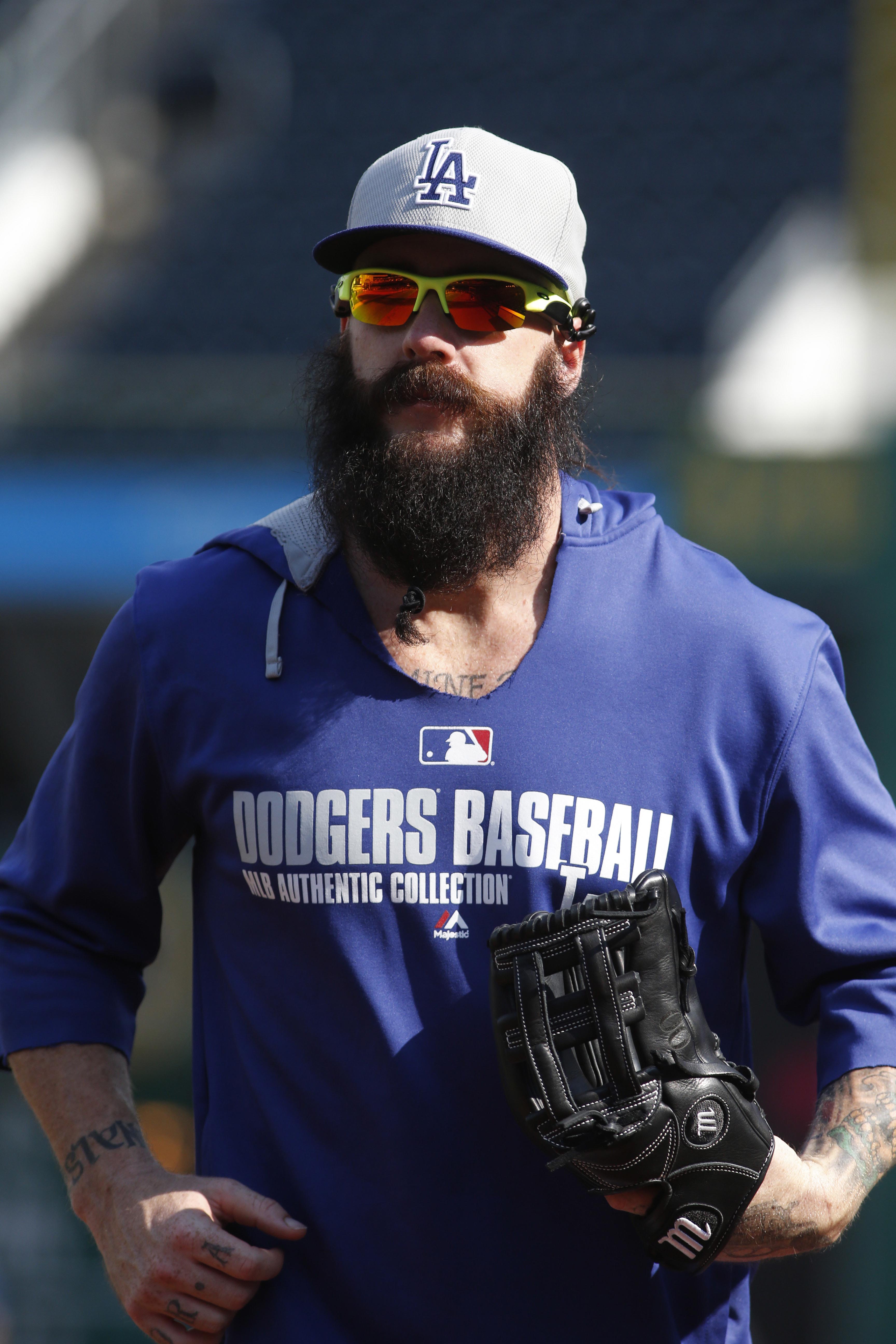
The bearded closer-turned-setup-man appeared in 61 games with the Dodgers this season, totaling 48 1/3 innings of 4.66 ERA ball. In what was his first full season back from his second Tommy John operation, Wilson’s fastball velocity dipped to an average of 92.1 mph, and is command faltered a bit, as he issued 5.4 walks per nine innings pitched. He did, however, maintain his stellar strikeout rate, averaging 10.1 punchouts per nine innings.
Wilson’s tenure with the Dodgers began late in the 2013 season when he inked a $1MM big league deal in August and enjoyed a successful late-season and postseason run with L.A. He allowed one run in 19 2/3 innings between the regular season and postseason, striking out 21 against just six walks. That performance earned him a one-year contract that guaranteed him $10MM in 2014 with a $9MM player option that contained incentives based on appearances.
Were Wilson to again test the open market, he’d have gone up against a strong class of setup men that featured the likes of Luke Gregerson, Andrew Miller and Pat Neshek in addition to a few closers who lost their grip on the ninth inning but pitched well in an eighth-inning role (e.g. Sergio Romo and Jason Grilli). Instead, he’ll return to a contending team’s bullpen with a strong salary relative to his peers. Presumably, Wilson will look to reestablish his command and restore his once-excellent ground-ball rate (his 38.1 percent mark in 2014 was 10 percent lower than his career mark) in hopes of cashing in on a larger multi-year deal next offseason.
Photo courtesy of USA Today Sports Images.
Astros Payroll Could Rise By $20MM
Astros owner Jim Crane says that the club’s payroll could increase by about $20MM next year, as Evan Drellich of the Houston Chronicle reports. Increased payroll availability does not mean that the team will use that cash, Crane cautioned, though he sounded willing to spend if it makes baseball sense.
“I think somewhere around [$20MM],” said Crane. “We’re not going to spend it to spend it. We’re going to try to spend it effectively and you know if we need to stretch a little, we’ll stretch a little. If there’s not a good reason to do that, we won’t do that. But you know we’ll continue to move up.”
Houston started 2014 with about $50MM in payroll on the books, meaning that the team could move into the $70MM range next year. The club has less than $18MM guaranteed heading into the offseason, but will need to pay arbitration raises to several players, including Dexter Fowler, Jason Castro, and Chris Carter.
Crane added that the club’s television rights fee situation will have a major role in setting future spending. “A couple of years ago we only got paid half of our rights fees,” he explained. “This year we didn’t get paid anything and this year hopefully we go back and get something paid for our coverage and it’ll have a big impact on what we’ll be able to spend on the team.” Specifically, Crane indicated that a nine-figure budget could be in the cards depending upon how the TV situation shakes out.
In terms of where that money might be allocated, Crane said that GM Jeff Luhnow would look to “add some more cornerstones.” As the team continues to work to add talent to its developing young core, Crane indicated that it might be expected to sign two or three major league free agents this year.
Free Agent Profile: Chase Headley
One of the game’s best defensive third basemen reaches free agency this winter in Chase Headley. Headley’s MVP-caliber 2012 season saw his offense reach lofty heights, but two years later that’s looking like an anomaly.
Strengths/Pros
Headley’s only Gold Glove award came in that magical 2012 season, but he’s got a good chance at another one this year. By measure of Ultimate Zone Rating, Headley was the best defensive third baseman in baseball in 2014. If you prefer Defensive Runs Saved, Headley ranked third. He was a top ten defender in 2012 and ’13 as well, so it’s not just a one-year fluke.
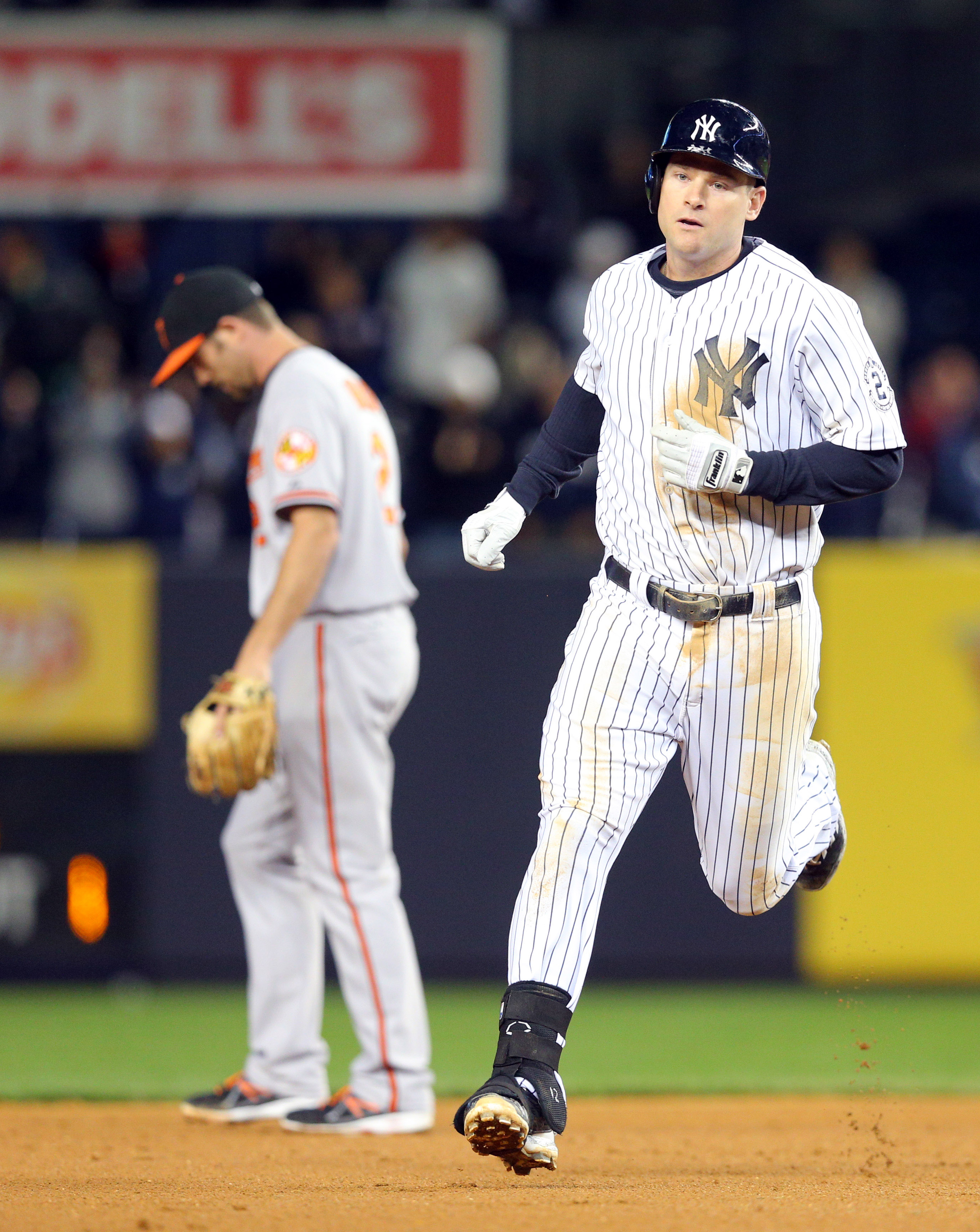
Headley’s defense is a major contributor to his value, leading to roughly four wins above replacement in each of the last two seasons. His WAR ranks tenth among all third basemen for 2013-14, easily ahead of this offseason’s likely top-paid third baseman, Pablo Sandoval. At worst, Headley is Sandoval’s equal, but defense hasn’t caught up with offense in terms of free agent spending.
Headley hit .286/.376/.498 with 31 home runs for the Padres in 2012, despite playing half his games in San Diego. 19 of those home runs came in the season’s final two months. He hit .269/.343/.392 prior to that season and .246/.338/.387 since, and it’s not hard to see that one of these is not like the others. However, the switch-hitting Headley remains capable of a solid on-base percentage, posting a .371 OBP and walk rate near 13% in his 224 plate appearances for the Yankees this year. He is, on the whole, still an above average hitter.
Having been traded midseason, Headley is not eligible for a qualifying offer. Fellow free agents Sandoval and Hanley Ramirez will certainly require draft pick forfeiture, and perhaps Aramis Ramirez too, but Headley is free of that limitation.
Weaknesses/Cons
Prior to being traded to the Yankees, Headley hit an abysmal .229/.296/.355 for the Padres in 307 plate appearances. His Padres’ walk rate of 7.2% was well below his career norm.
Upon the trade, Tony Blengino of FanGraphs examined Headley’s batted ball profile, and it wasn’t promising. Headley was in “steady offensive decline,” wrote Blengino, who explained, “his decline in batted-ball production has been solely attributable to diminished fly ball authority.” Did Headley’s 224 plate appearances after the trade represent a reliable return to form? That will be a crucial question for offseason suitors.
Headley’s recent injury history may be perceived as a negative, though it could also be considered an explanation for his offensive struggles in the first half of the season. He received an epidural in June and avoided going on the DL for his back. After the epidural, Headley hit .273/.359/.400 in 312 plate appearances.
Personal
Headley was born in Colorado and resides in Tennessee with his family. The Headleys recently welcomed a new baby into the world, their second child. According to the Padres’ 2014 media guide, Headley played varsity baseball and basketball all four years in high school in Colorado, and was also valedictorian. He began college at University of the Pacific in California and later transferred to the University of Tennessee, where his older brother was attending.
According to a profile by MLB.com’s Corey Brock in January 2013, Headley owns a large farm in Western Kentucky and has a passion for bow hunting. A religious man since his freshman year in high school, Headley told Mark E. Darnall and Bruce A. Darnall in 2012, “My goal is to have Jesus be the center of everything.”
Market
Any team without an established, reliable third baseman could consider Headley this offseason. Given the uncertainty that comes with Alex Rodriguez, a return to the Yankees is possible. The Red Sox, Astros, Royals, Brewers, Giants, Blue Jays, and Nationals could also seek help at third base, though some of those clubs might only want a short-term solution.
Headley’s competition on the free agent market will include Pablo Sandoval, Aramis Ramirez, and Hanley Ramirez. Whether Aramis Ramirez hits the open market could be a big factor for Headley, as well as whether Hanley Ramirez signs as a third baseman. The trade market could feature Luis Valbuena, Trevor Plouffe, and Pedro Alvarez.
Expected Contract
Headley has never had a multiyear deal in his career, and I think he’ll value long-term security this offseason. The question is whether he signs a three or four-year deal. A few potential comparables to consider are Shane Victorino‘s three-year, $39MM deal from two years ago and Jhonny Peralta‘s four-year, $53MM deal from last offseason. I think Headley will sign a four-year, $48MM deal.
Bridich Named Rockies GM; O’Dowd, Geivett Resign
The Rockies have announced an unexpected front office shakeup, but will apparently not be making any upper-level additions from outside the organization for the time being. General manager Dan O’Dowd and senior VP of major league operations Bill Geivett — long the team’s brain trust — have resigned from their posts, as Ken Rosenthal of FOX Sports first reported on Twitter.

In their place, Jeff Bridich has been promoted to the general manager seat after previously serving as senior director of player development, as initially reported by MLB.com’s Thomas Harding (via Twitter). While a young, fresh voice at the highest tier of baseball operations offers the hope of jumpstarting an idling franchise, it remains to be seen whether new operating philosophies and improved results will follow.
Colorado now becomes the third NL West organization in recent months to find a new GM, though both of their division rivals underwent broad external searches to find their new leadership. The Padres replaced Josh Byrnes with former Rangers executive A.J. Preller, while the Diamondbacks displaced Kevin Towers in favor of player agent Dave Stewart.
O’Dowd had been ensconced atop Colorado’s baseball decisionmaking structure since the fall of 1999, when he was hired as the club’s general manager. Many of the team’s highs and lows have come under his watch. The failed signings of Denny Neagle and Mike Hampton were early mistakes, but O’Dowd put together the talent that led the Rockies to deep postseason runs in 2007 and 2009. Ultimately, though, the club posted winning seasons in only four out of fifteen seasons under O’Dowd.
That less-than-inspiring track record provided the impetus for a front office restructuring in 2012. Though O’Dowd retain his general manager title and position atop the authority structure, he ceded some authority to Geivett, who had joined the Rockies in 2000. As his title reflects, Geivett was placed in charge of running the club at the major league level. Indeed, he made his office in a room adjoining the clubhouse, a situation which seemingly led to some tension. Though it is somewhat difficult to know where to assign credit and blame, the club had a hit-or-miss record on recent trades and signings. The Justin Morneau deal, for example, has already been a clear win, while the Boone Logan signing looks worse now than it did when inked.
Ultimately, the move represents a shift from a recent report from Harding (and many others before it) that made significant change seem unlikely. Both Geivett and O’Dowd reported to owner Dick Monfort, who has an extremely active role in the organization, which operates without a president. Monfort did say over the summer that he held Geivett responsible for the team’s performance. But as Patrick Saunders of the Denver Post reported recently, internal discord has arisen over (among other things) the level of Monfort’s involvement in baseball decisionmaking.
It remains to be seen what decisionmaking structure and processes the Rockies will employ with Bridich now in the GM seat. He becomes just the third general manager in the club’s history. His predecessor, O’Dowd, had been the fourth-longest-tenured GM in the game.
As Harding explains, the 37-year-old had been in charge of the club’s player development system since the fall of 2011 — a role that made him, in the words of Saunders (Twitter link), “O’Dowd’s right-hand man.” Per Harding, Bridich came to Colorado in 2004 as manager of minor league operations. He became senior director of baseball ops in 2006, a role that involved transactional and contractual matters including arbitration. Prior to joining the Rockies, Bridich had a stint in the commissioner’s office after graduating from Harvard, where he played baseball as an undergraduate. Click here for an interesting recent interview with Bridich, regarding his work in player development, from Brian VanderBeek of the Modesto Bee (h/t to Saunders).
Photo courtesy of Brian VanderBeek/The Modesto Bee.
Josh Beckett To Retire
Dodgers righty Josh Beckett said today that he will retire from the game, as MLB.com’s Ken Gurnick reports. The 34-year-old was slated for surgery on his torn left hip labrum, but will not attempt to work back from the injury.
Beckett was having an excellent season before he was stricken with another significant injury. He owned a 2.88 ERA through 115 2/3 frames, striking out 8.3 and walking 3.0 batters per nine. Though his numbers were propped up somewhat by a .257 BABIP and 85.2% strand rate, Beckett’s stuff was good enough that he managed to record the first and only no-hitter of his career.
It has been a memorable career for Beckett, who won the 2003 World Series MVP with the Marlins at just 23 years of age. By that time, he had already established himself as one of the best young starters in baseball. But by the winter of 2005, he was headed to the Red Sox (along with Mike Lowell) in exchange for a package including future stars Hanley Ramirez and Anibal Sanchez.
Beckett had an up-and-down tenure in Boston. Over 2006-11, he averaged 185 innings a year with a 4.04 ERA and 8.2 K/9 against 2.4 BB/9. But he mixed in three All-Star campaigns, including a 2007 effort (3.27 ERA over 204 2/3) in which he was the Cy Young runner-up.
Beckett ultimately signed two extensions with Boston: a three-year, $30MM deal that included a $12MM vesting option and a four-year, $68MM pact that ran through 2014. Of course, the latter contract did not end as might have been hoped at the time. After playing a central role in the public’s dissection of Boston’s 2011 meltdown, Beckett was off to a rough start in 2012 when his contract became part of the massive Red Sox-Dodgers mid-season trade.
Though he may have delivered more value back to Los Angeles than seemed likely at the time of that swap, Beckett continued to be inconsistent. He threw well down the stretch in 2012 before scuffling through an injury-plagued 2013.
Things ended on a high note, of course, and Beckett will leave the game having contributed 35.3 rWAR and 39.0 fWAR to his clubs. For that production, he earned over $116MM. MLBTR wishes Beckett the best of luck in whatever endeavors he chooses to pursue now that his playing days are over.
Offseason Outlook: Philadelphia Phillies
The Phillies fell to the basement of the NL East with a 73-89 record in 2014. Ominously, the club received decent performances from many over-the-hill veterans, suggesting the presence of additional downside. Youngsters and the rotation take most of the blame for the poor season. If there’s one bright spot (and there is only one), it’s the bullpen.
Guaranteed Contracts
- Ryan Howard, 1B: $60MM through 2016
- Cliff Lee, SP: $37.5MM through 2015
- Cole Hamels, SP: $96MM through 2018
- Chase Utley, 2B: $15MM through 2015 (plus three $15MM vesting options from 2016-2018)
- Jonathan Papelbon, RP: $13MM through 2015 (plus $13MM vesting option for 2016)
- Jimmy Rollins, SS: $11MM through 2015
- Carlos Ruiz, C: $17.5MM through 2016
- Marlon Byrd, OF: $8MM through 2015
- Miguel Gonzalez, SP: $7MM through 2016 (plus unknown vesting option for 2017)
Arbitration Eligible Players (service time in parentheses; projections via Matt Swartz)
- Tony Gwynn Jr. (5.147): $900K projected salary
- Antonio Bastardo (5.054): $2.8MM
- Andres Blanco (4.007): $700K
- Ben Revere (3.149): $4MM
- Domonic Brown (3.078): $2.6MM
- Cesar Jimenez (3.020): $600K
- Non-tender candidates: Gwynn, Blanco, Jimenez
Contract Options
- A.J. Burnett: $15MM mutual option or $12.75MM player option ($1MM buyout)
- Mike Adams: $6MM club option
Free Agents
The Phillies entered the July trade deadline with few assets and an obvious need to retool. However, they opted to keep their most marketable pieces like Hamels, Papelbon, and Byrd. That trio were involved in a wide range of trade rumors, but a deal was never finalized. Philadelphia did swing a notable August trade, securing prospects Jesmuel Valentin and Victor Arano from the Dodgers for starting pitcher Roberto Hernandez. The Phillies also netted Gustavo Pierre for backup outfielder John Mayberry Jr.
GM Ruben Amaro Jr. may be on the hot seat due to a combination of bad contracts and a failure to turn veterans into future talent during the season. For example, several playoff-bound clubs like the Tigers, Giants, or Dodgers could have benefited from Papelbon, but Amaro was unable to unload him. For what it’s worth, former team president Dave Montgomery and interim team president Pat Gillick have issued multiple votes of confidence on behalf of Amaro. The club’s failure in 2014 should make it easier for the front office to accept a rebuilding process.
Philadelphia lacks near-ready position prospects beyond Maikel Franco. Their offense ranked 27th in baseball per wRC+, a context neutral advanced statistic. They barely outpaced the Padres, Reds, and Diamondbacks among the league’s worst offenses. A focus on finding new, long-term assets should be the top priority.
While it’s obvious the club should rebuild, the how of it is muddier. The outgoing free agents do not represent a substantial chunk of the payroll, so a Yankees-like spending spree isn’t a possibility. A quick turnaround will require shrewd moves on the free agent, trade, and waiver markets. When this club was last successful, they found Shane Victorino and Jayson Werth on the scrap heap. This time around Philadelphia needs to find even more hidden gems.
Before fixating on the Phillies myriad problems, let’s examine their biggest strength – the bullpen. Papelbon posted a fine season with 39 saves and a 2.04 ERA. His fastball velocity declined for a fourth straight season – now down to 91 mph. His peripherals are worrisome, especially his unusually low .247 BABIP and 2.7% HR/FB ratio. If both numbers regress to league average, we should expect a corresponding bump in ERA.
Papelbon found himself in the rumor mill this summer but ultimately stuck with the club. His contract, vesting option, and reputation as a distraction will make him difficult to trade. He can block deals to 17 clubs, but he’s said he will accept a trade to any contender who uses him as their primary closer. The emergence of Ken Giles – 1.18 ERA, 12.61 K/9, 2.17 BB/9, and 97 mph fastball – gives Philadelphia an alternative to their veteran star. However, Giles has struggled with command in the minors, so it may be prudent to confirm he can maintain a strong walk rate. Cardinals closer Trevor Rosenthal offers a cautionary tale.
Another reliever to emerge this season is Jake Diekman. The left-handed slinger dialed up the gas with an average fastball at 97 mph and the ability to touch triple digits. He improved throughout the season and finished with a 3.80 ERA, 12.68 K/9, and 4.44 BB/9. Diekman’s presence could make Bastardo expendable. The club’s longest tenured lefty reliever is entering his third and final season of arbitration eligibility and is expected to earn $2.8MM. The Phillies can also turn to right-hander Justin De Fratus to shorten games.
Papelbon is not the only player who should expect a swirl of trade rumors this winter. With several high profile players, the question is: will they return? Burnett may consider retirement rather than accept his side of the option (worth at least $12.75MM). Even if he does decide to continue playing, there’s no guarantee he won’t opt to serve with another franchise.
One reason Burnett chose Philadelphia was that he thought he could help them compete. Despite an 18-loss season, teams would probably be willing to bet on Burnett returning to a healthier and more productive state in 2015. He pitched nearly the entire season with a hernia and posted the highest walk rate of his career. A healthy Burnett could more closely resemble his strong 2012-13 seasons.
In many ways, it’s fortunate that outfielder Yasmany Tomas was declared a free agent last Thursday. The Phillies were the first club to organize a private workout with the Cuban and are said to have always preferred him over fellow countryman Rusney Castillo. The power hitter would fit the Phillies need of young talent without necessitating a trade. The outcome of the Tomas pursuit could accelerate the club’s rebuilding plans – assuming they can swallow a possible nine-digit price tag.
If payroll stays consistent around $175MM, Howard, Lee, and Hamels represent over 40 percent of expenditures. Currently, about $132.67MM is guaranteed in 2015 with another $10MM estimated through arbitration. Burnett’s $12.75MM player option will play a big role in available payroll. Depending on his decision, the Phillies appear to have about $20MM to $35MM to spend over the offseason. It’s possible declining attendance will lead to a lower payroll, or perhaps valuable opportunities like Tomas will lead to more spending.
Hamels is the club’s most valuable Major League asset. Amaro reportedly asked teams for their three top prospects in return for Hamels – a price at which many scoffed. Dave Cameron of FanGraphs confirmed that Hamels has some value with his current contract, but the financial cost does make it hard for another club to justify an exorbitant prospect fee.
As the Phillies’ most marketable trade commodity, the club will have trouble pulling the trigger on a Hamels deal. Most rebuilding franchises will conduct a fire sale and count on a quantity of well-regarded prospects to provide value down the road. The Phillies basically get to take one shot at finding their future. Prospect-rich teams like the Cubs, Red Sox, and Dodgers are expected to make a play for Hamels, who can block trades to 20 clubs.
The team has caught a lot of flak over the years for Howard’s contract, and the criticism seems well deserved. Since his current contract kicked in prior to 2012, Howard has provided -1.0 fWAR. That places him among the worst players over that time span despite collecting one of the highest annual salaries.
Philadelphia has tried to dump Howard to any AL franchise while assuming most of the remaining payroll. So far, the fish won’t bite. The club could opt to dismiss the former star and eat his salary, although that seems like a hasty measure without an alternative in place. Darin Ruf is the backup first baseman, with Franco in apparent need of more minor league seasoning.
Lee is another pricey player who might not live up to his contract. Whereas there is little hope of a resurgence from Howard, Lee could recover his past form if the flexor tendon in his left elbow heals over the offseason. This year, he pitched to a 3.65 ERA with 7.97 K/9 and 1.33 BB/9 in 81 innings while missing most of the second half.
Lee’s $27.5MM option for 2016 becomes guaranteed if he throws 200 innings next season without ending on the disabled list with a left arm injury. Otherwise, it becomes a club option with a hefty $12.5MM buyout. An offseason trade of Lee seems unlikely due to his injury, though it’s possible that a team like the Dodgers would be willing to assume some or all of the contract as a way to acquire a possible star at a minimal prospect cost.
With the Phillies’ top three starting pitchers uncertain to return and/or produce in 2015, rotation depth will be a priority for the club. Kendrick could be re-signed as a familiar face. He’s a reliable if unexciting option to absorb innings for a rebuilding club. Internal options include David Buchanan, 2014 draftee Aaron Nola, Miguel Alfredo Gonzalez, and Jonathan Pettibone. Prospect Jesse Biddle could figure as a mid-season addition.
Even if the Hamels, Lee, and Burnett remain in Philadelphia, the team may want to acquire two starters via free agency or trade. A top-flight free agent is an unlikely acquisition, and competition could keep them away from mid-market targets. Again, Tomas’ decision could affect the club’s direction in the rotation. It would be easier to justify signing a Brandon McCarthy if a quick path to contention was evident. Similarly, if Burnett declines his option, the Phillies may be more inclined to investigate other mid-market options.
The outfield is perhaps an area of consternation for the Phillies. Byrd performed as expected, as did Revere. However, Brown turned in a lousy season with just 10 home runs and a .235/.285/.349 line. The club may be ready to execute a change of scenery move. Certainly, Brown’s grasp on regular playing time has eroded.
The free agent market for outfielders is fairly thin, and trading for a notable outfielder could be difficult to balance with the club’s priorities. Philadelphia could still cash in on Byrd over the offseason to take advantage of the paucity of outfielders in free agency. As for depth pieces, the club received solid production from Sizemore and could consider another one-year deal. Perhaps they would consider recently designated outfielder Jose Tabata too. Most internal options like Cesar Hernandez and Gwynn are defense-oriented. The lone exception is prospect Kelly Dugan, but he’s struggled with injuries and has yet to show much in-game power.
On the face of it, the infield is stable. Howard, Utley, and Rollins have manned their respective positions since 2005 while Cody Asche or Franco will probably handle third base. If Howard isn’t back for 2015, the club has a few internal solutions. Utley could move to first base with either Asche, Hernandez, or Freddy Galvis serving at second base. Alternatively, Franco or Ruf could step directly into the first base job. Some speculate that playing first base could help Utley remain healthy and effective, although such claims are not accompanied by evidence.
While an external hire is unlikely, third base is an area of depth in free agency. If Philadelphia has its eyes on the postseason, Aramis Ramirez might be of interest – assuming he turns down his half of a mutual option. Ramirez is entering his age-37 season, which doesn’t appear to be a good fit for the Phillies. However, he could give Asche and Franco space to develop while improving the on-field product. He may come with a qualifying offer attached, but the Phillies’ first round pick is protected, meaning he would require forfeiture of a second-round selection.
Since he’s available to sign now, Tomas appears primed to be the first domino to fall in the free agent market. His decision may affect the direction of the Phillies offseason. If Philadelphia gambles on the Cuban, they might be more inclined to aim for a competitive roster in the next couple years. Unless they find a similarly high-ceiling youngster around which to build, the situation looks bleak.