
GM: Giants Have Been Informed They’re Out Of Running For Roki Sasaki
The Giants are currently introducing future Hall of Famer Justin Verlander at a press conference, but there’s some other headline news coming out of that media session as well. Giants general manager Zack Minasian revealed during his comments that while his team met with Roki Sasaki‘s camp, they’ve now been informed that Sasaki will not be signing there (link via Alex Pavlovic of NBC Sports Bay Area).
There are no further details on the matter than that. It’s not fully clear whether Sasaki visited Oracle Park in San Francisco or whether the meeting being referenced was conducted in Los Angeles, at the headquarters for Sasaki’s agency, Wasserman. That’s moot at this juncture anyhow, though, as the Giants’ elimination from the process is the latest step in narrowing the field.
Agent Joel Wolfe detailed at last month’s Winter Meetings that the plan for Sasaki’s free agency was for teams to submit initial presentations and pitches prior to the holidays. Sasaki and Wasserman hosted interested teams for meetings at a central location — Wasserman’s L.A. headquarters — and the plan was for the 23-year-old righty to then visit some finalists in their home locales after the holidays.
A full list of teams with which he’s visited isn’t publicly known, though Sasaki did travel to Toronto to meet with the Blue Jays recently. Presumably, with Wasserman being based in Los Angeles, Sasaki has met with the Dodgers and nearby Padres — the two long-presumed favorites in the bidding. Other clubs that have been prominently linked to Sasaki include the Rangers, Yankees, Mets, Cubs and Mariners.
With Sasaki not coming to San Francisco and Verlander’s deal now official, the Giants’ rotation appears all but set. Verlander will join Logan Webb, Robbie Ray, Kyle Harrison and Jordan Hicks in rounding out a quintet that’s quite talented but has a handful of question marks (Verlander’s age, Ray’s health, Hicks’ workload). In-house depth options with at least some big league experience include Tristan Beck, Hayden Birdsong, Mason Black and Landen Roupp.
Giants Sign Justin Verlander
January 13: The Giants made the deal official over the weekend and introduced Verlander to the media today. Per Jon Heyman of The New York Post, in addition to the $15MM salary, Verlander’s deal also contains awards bonuses and a full no-trade clause.
January 7: The Giants are in agreement with Justin Verlander on a one-year deal, pending a physical. Verlander, a client of ISE Baseball, is reportedly guaranteed $15MM.
The future Hall of Famer will play his age-42 season in San Francisco. Verlander has previously suggested he hopes to pitch until he’s 45. There was never any doubt that he’d be back on a one-year contract somewhere. It always seemed unlikely to continue in Houston. Verlander had an illustrious run with the Astros around his first half stay with the Mets in 2023. He’s coming off a challenging season, though, leading Houston to let him walk.
Verlander took the ball 17 times and turned in a 5.48 earned run average through 90 1/3 innings. He had a pair of injured list stints — first in April for shoulder inflammation, then a two-month stretch between June and August related to a neck issue. Opponents tagged him for an ERA north of 8.00 over his seven starts after he returned from the latter injury. Verlander conceded after the season that he had come back too soon as he tried to contribute to Houston’s playoff push.
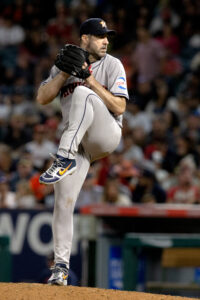
San Francisco believes there’s more in the tank with a healthy offseason. Verlander is only one year removed from an excellent season. He combined for a 3.22 ERA across 162 1/3 innings with New York and Houston in 2023. That came with a 21.5% strikeout rate that was well below Verlander’s prior level. That pointed to regression from his Cy Young form, but he still found plenty of success with diminished swing-and-miss stuff that year.
Verlander averaged 93.5 MPH on his four-seam fastball last season. That’s down slightly from the 94-95 MPH range in which he sat between 2022-23 but hasn’t completely fallen off the table. Pitching at less than full strength could account for that dip. If Verlander is fully healthy in 2025, it’s not outlandish to expect his velocity to rebound.
Health is an obvious caveat for a 42-year-old pitcher. Verlander has already defied expectations once, coming back from Tommy John surgery to win his third Cy Young at age 39 in 2022. Even if he’s not likely to repeat that kind of performance, he could be an asset as a mid-rotation arm and veteran presence in a staff that lost Blake Snell.
Logan Webb will be back to take the mantle as the team’s #1 starter. Verlander and Robbie Ray slot in the middle of the rotation as high-upside veterans who are trying to rebound from injuries. Former top prospect Kyle Harrison should be the fourth starter. President of baseball operations Buster Posey said last month that the Giants intend to give hard-throwing sinkerballer Jordan Hicks another chance at a rotation spot. Younger arms Landen Roupp, Mason Black and Hayden Birdsong could push Hicks for the fifth starter role.
This is the second free agent move of Posey’s first winter atop baseball operations. His big splash was a seven-year deal to install Willy Adames at shortstop. Posey has publicly suggested that continuing to strengthen the offense was a bigger priority than the rotation, but they evidently liked the value of a one-year roll of the dice on Verlander.
San Francisco had roughly $208MM in luxury tax obligations coming into today, as calculated by RosterResource. This will push them to around $223MM, a little less than $20MM shy of the $241MM base threshold. Verlander’s deal matches the $15MM salaries which veteran starters Alex Cobb and Charlie Morton also landed earlier this winter.
ESPN’s Jeff Passan first reported that the Giants and Verlander had agreed to a one-year deal. Jesse Rogers of ESPN reported the $15MM salary. Image courtesy of Imagn.
Roki Sasaki Met With Blue Jays In Toronto
Within the next ten days, we’ll know where right-hander Roki Sasaki will be playing for the foreseeable future. The Japanese right-hander is one of the most talked-about international free agents in recent memory, due to a combination of age (23), pedigree (2.10 ERA in four NPB seasons) and his decision to potentially leave hundreds of millions on the table by pursuing an MLB move right now rather than in two years, when he’d be exempt from MLB’s bonus pool system for international “amateurs.” There’s been plenty of talk about the Dodgers and Padres as favorites, but Ken Rosenthal and Andy McCullough of The Athletic report that Sasaki recently traveled to Toronto to meet with the Blue Jays in person.
Back at last month’s Winter Meetings, agent Joel Wolfe of Wasserman laid out a timeline in which Sasaki would receive presentations from all interested teams and host interested parties at a central location prior to the holidays. The right-hander then planned to narrow the field and, post-holidays, meet with a smaller group of clubs in their home cities. That the Jays hosted Sasaki in Toronto ostensibly indicates that they’re still in the running in what’s effectively the second round of consideration.
That shouldn’t be construed with Toronto being considered any sort of favorite, however. Pinning down any kind of favorite at this stage remains difficult because so much hinges on the preferences of Sasaki himself. Baseball America’s Ben Badler just this morning ranked the Dodgers, Padres, Yankees and Rangers — in that order — as the likeliest to sign Sasaki.
The Dodgers and Padres have been the most heavily speculated landing spots — so much so in the case of the former that Wolfe felt obligated to publicly quash rumors of a pre-meditated deal between the two parties. Los Angeles and San Diego are both still believed to be in the running for Sasaki, who’s also been linked to the Mets, Rangers, Cubs, Mariners and Giants in recent weeks. It’s not yet clear which of those teams have hosted Sasaki for an in-person meeting at their own sites just yet.
Ultimately, the decision will boil down to where Sasaki feels most comfortable and which team he feels gives him the best long-term opportunity to develop as a pitcher. Wolfe has stated that market size isn’t a consideration. He said at last month’s Winter Meetings that he’d advise Sasaki against simply signing for the largest bonus right now, as the difference between theoretical bonus offers would be “negligible” compared to the “long-term arc of [Sasaki’s] career,” which is where he’ll truly earn his money.
Teams will still very likely to try to swing some deals to add space to their international bonus pools as they try to do everything they can to make themselves most enticing, but at least based on Wolfe’s prior comments — and based on how much Sasaki is leaving on the table to come to North American ball right now — it’s fair to presume that Sasaki won’t simply be going to the highest possible bidder.
Trade activity regarding bonus pool space is just one manner in which the international amateur market — which opens on Wednesday — is being thrown into chaos. Will Sammon, Dennis Lin and McCullough report at The Athletic that the Padres have told some international prospects with whom they’d previously reached handshake deals that they’re free to again talk to other clubs. Both the Padres and the Dodgers have also asked some within their expected group of signees if they’d wait to sign until next year’s period, per the report. The Dodgers already lost one high-profile prospect from their class to the Pirates.
It should be noted that while Sasaki cannot formally sign a contract prior to Jan. 15 and must sign by Jan. 23 (the final date in his 45-day posting window), he can agree to terms on a deal prior to either of those dates. It’s not clear of the right-hander is still traveling to meet with prospective clubs in their home locales, but in theory he could make his decision at any point now and simply sign on the dotted line when the international period opens. In that sense, it’s similar to any other free agent; it’s commonplace for an agreement to be reached, leak out to the public and only be formally announced by the team a few days later after the physical has been completed.
As a reminder of how this will all work, Major League Baseball’s international amateur bonus system allows clubs to sign players from Latin America, Asia, Europe, etc. beginning at age 16. Clubs scout players — particularly those in Latin America — for years ahead of time, often agreeing to handshake deals more than a year (sometimes two or three years) in advance. The league hard-caps each team’s bonus pool. Clubs are permitted to trade for up to 60% of the value of their initial bonus pools.
This year’s bonus pools range from $5.146MM (Dodgers, Giants) to $7.555MM (Reds, Tigers, Marlins, Twins, Brewers, A’s, Mariners, Rays). In theory, one of those eight clubs with the maximum pool size could trade to balloon their pool to $12.088MM. There’s no indication any of those clubs will do so, however.
International “amateur” players can only sign a minor league deal for a bonus that fits within a team’s allotted pool space (plus any additional space acquired via trade). Because of the stringent criteria to be classified a “professional” rather than an “amateur,” Sasaki will fall into the amateur bucket. MLB stipulates that a player must be at least 25 years of age and have six or more seasons of experience in a prominent foreign professional league (e.g. Nippon Professional Baseball, Korea Baseball Organization, Mexican League, Chinese Professional Baseball League, Cuban National Series, etc.). Had Sasaki waited two years, he might’ve been in line for the type of contract received by Yoshinobu Yamamoto (13 years, $325MM). Instead, he’ll sign a minor league deal with a bonus valued south (likely well south) of that $12.088MM maximum.
Cubs Sign Colin Rea
Jan. 13: The Cubs have announced Rea’s signing.
Jan. 10: The Cubs are in agreement with Colin Rea on a one-year, $5MM guarantee. Rea receives a $4.25MM salary for the upcoming season and is guaranteed a $750K buyout on a $6MM club option for 2026. The right-hander is represented by Joe Speed. The Cubs have a full 40-man roster and will need to open a spot in order for this deal to become official.
Rea, 34, is coming off a solid two-year run with the Brewers. Over the 2023 and 2024 seasons, he tossed 292 1/3 innings for Milwaukee, making 49 starts and nine relief appearances. He allowed 4.40 earned runs per nine. His 19.9% strikeout rate was a bit below league average, but he showed strong control with a 6.6% walk rate.
The Brewers could have retained Rea for 2025 via a modest $5.5MM club option, but they somewhat surprisingly put him on waivers to see if any other club wanted him at that price point. No team ended up claiming him, so the Brewers simply went for the $1MM buyout instead. By getting $5MM from the Cubs on top of that $1MM buyout, Rea will come out marginally better financially than if the Brewers had simply picked up the option.
By joining the Cubs, Rea will be reunited with manager Craig Counsell, who was the skipper in Milwaukee before coming to Chicago a year ago. Rea was also with the Brewers in 2021, though he only got to pitch six innings in the majors that year. He then headed to Japan for the 2022 season, parlaying his decent performance over there into a return to the Brewers two years ago.
Rea doesn’t overpower hitters, averaging around 93 miles per hour on his fastball over the past two years, but he can keep them off balance with a diverse mix of six pitches. Per Statcast, he also threw a sinker, cutter, sweeper, splitter and curveball. He also didn’t lean on any one pitch too often, topping out with his sinker in each of the past two seasons, around 30% of the time in each year. That’s helped him have fairly neutral splits, with lefties hitting .257/.308/.465 against him last year and righties at .258/.315/.429.
For the Cubs, Rea is likely to slot into a similar swing role to the one he served with the Brewers. Chicago signed Matthew Boyd earlier this winter, adding him to a rotation mix that already had Justin Steele, Shota Imanaga and Jameson Taillon. Rea and Javier Assad have somewhat similar numbers over the past two years and could perhaps compete for the fifth spot in the rotation if everyone is healthy, with the other perhaps getting a long relief role in the bullpen.
Of course, rotations shift over the course of a season. Injuries are inevitable and some players will perform better or worse than expectations. The Cubs have guys like Jordan Wicks, Caleb Kilian, Ben Brown and Cody Poteet also on the 40-man roster, though they all still have options and are fairly lacking in experience. Prospect Cade Horton is not yet on the roster but could force his way into the mix during the upcoming season.
It’s also possible that the Cubs will make further moves to change the rotation plan. Since acquiring Boyd and trading Wesneski, they have been connected to free agent Jack Flaherty and trade candidates like Luis Castillo and Jesús Luzardo. The latter was already traded from the Marlins to the Phillies but another rotation acquisition of some kind is not off the table.
Rea’s role figures to be determined by those moves as well as the health and performance of everyone on the roster, including his own. He improves the depth of the pitching staff at a fairly low cost, relatively speaking. The starting pitching market has been aggressive this winter, as guys like Justin Verlander and Alex Cobb got $15MM guarantees despite being relatively older veterans coming off injury-marred seasons. Rea doesn’t have the same track record or ceiling as those guys but has been healthy and performing well lately, with just one third the salary commitment.
RosterResource now has the Cubs at a payroll of $181MM and a competitive balance tax number of $198MM. Last year, they eventually got to a $228MM payroll and went narrowly over the tax line. It’s unclear if they want to get to the same levels in 2025, but even if they want to avoid the tax, they can still add about $40MM to their CBT number while doing so. This year’s base CBT threshold is $241MM.
MLBTR’s Steve Adams first reported that the Cubs and Rea had agreed to a one-year, $5MM deal. ESPN’s Jesse Rogers reported the presence of a ’26 club option. MLBTR reported the option terms.
Anthony Santander, Jack Flaherty Reportedly Open To Short-Term Offers
As the offseason’s free agent market has developed and with Spring Training looming just over the horizon next month, a report from Ken Rosenthal and Will Sammon of The Athletic this evening suggests that some of the major free agents still available are weighing the possibility of turning towards short-term deals with high average annual values, as the so-called “Boras Four” of Blake Snell, Cody Bellinger, Matt Chapman, and Jordan Montgomery did last winter after not finding the long-term pacts they were hoping for in free agency.
Per Rosenthal and Sammon, outfielder Anthony Santander and right-hander Jack Flaherty are both now open to considering that sort of deal. Sammon also confirmed previous reports that indicated the camp of first baseman Pete Alonso had made an three-year offer to the Mets that includes multiple opt-outs, though it remains unclear if he’s open to similar short-term offers from other clubs at this point.
It’s a notable update to the market of all three players. Both Santander and Flaherty were reportedly looking for five-year deals that could have reached into the range of nine figures. Santander in particular reportedly has a contract offer on the table from the Blue Jays as of last week, though given the fact that he’s now open to exploring short-term deals it seems as though that offer may not have been one the switch-hitter was interested in accepting. It’s easy to imagine the possibility of getting a high-end free agent on a short-term deal opens up the market for these players, or perhaps convincing teams already connected to the players to become more serious about their pursuits.
As one example, Flaherty has previously been connected to the Cubs but there’s been some suggestion that Chicago (who signed Bellinger to a short-term, opt-out heavy deal just last winter) has reservations regarding the right-hander’s asking price. The Tigers, meanwhile, have been connected to both Flaherty and Santander but have remained opportunistic in free agency, locking down one-year deals with Gleyber Torres and Alex Cobb to improve their roster without making long-term commitments. Either of these clubs could theoretically be enticed to step up their efforts if their target is now open to considering a short-term deal.
While shorter-term deals can be attractive to teams as a way to mitigate risk associated with a particular free agent, they can still come with complications. While the deals Snell and Chapman signed in San Francisco last winter were clear successes for both sides, with Snell dominating down the stretch in a Giants uniform before signing a lucrative deal in L.A. back in November while Chapman had a resurgent season and extended with the club long-term, not all deals of this variety work out quite so well. Montgomery’s deal with Arizona quickly turned out to be a disaster as the left-hander endured the worst season of his career, got demoted to the bullpen, and has been shopped as a potential salary dump by the Diamondbacks this winter. Bellinger, meanwhile, posted a solid but unspectacular season in Chicago that led the Cubs to dump his salary in a trade with the Yankees last month in order to create an opening in the lineup for the addition of a more impactful bat than Kyle Tucker.
Even with those potential downsides, it’s easy to see why clubs could prefer a short-term deal rather than one that puts them on the hook for a player’s decline phase. After all, the Cubs were still able to shed the vast majority of the money owed to Bellinger in trade even after a pedestrian 2024 season, and the Diamondbacks could end up doing the same even after Montgomery’s disastrous campaign. Swinging those deals would be far more difficult if either player were on lengthy deals with larger overall guarantees, even if the AAV of those deals would likely be lower.
For the players, this sort of approach comes with both pros and cons. There is of course risk involved that injury or poor performance leads to them hitting the market with less value than they had in their initial trip through free agency. In the case of Flaherty, who is currently unencumbered by a Qualifying Offer, taking a short-term deal comes with a bit of extra risk given that even a wildly successful season could end up not leading to the sort of lucrative long-term deal he’s hoping for given the fact that he could be tagged with a QO in a future offseason. For a player already tagged with a QO like Santander, however, signing a short-term deal and hitting free agency after another strong season could provide an even larger boost to his value by allowing him to re-enter free agency unencumbered in the future.
While a willingness to consider short-term, high-AAV offers should open the market up for these players to an extent, that shouldn’t be taken to mean that a massive shakeup is guaranteed. Those high annual salaries figure to be an obstacle for clubs in or on the cusp of luxury tax territory as well as those dealing with budget crunches. As one example, Rosenthal and Sammon suggest that Alonso could look to seek a deal that offers an average annual value of $31.1MM in order to land the AAV record for first basemen. While that appears to be speculative on the part of the pair and they go on to suggest deferred money that would lower the net present value to be involved, even an AAV in the $25MM to $30MM range is the sort of figure that the majority of small-market clubs and even big spenders deep into luxury tax territory could be even less willing to stomach than a somewhat longer-term deal with a lower annual salary.
Blue Jays Sign Jeff Hoffman
The Blue Jays made a significant bullpen upgrade on Friday evening, announcing a three-year deal with Jeff Hoffman that guarantees $33MM. The CAA client reportedly receives a $5MM signing bonus and can earn another $6MM in incentives. He’d unlock $500K for reaching each of 60, 70, 80 and 90 innings pitched in all three seasons. He’ll make a $6MM salary next season followed by $11MM annually from 2026-27.
General manager Ross Atkins said in a statement that Hoffman “will get an opportunity to close games for us” (relayed by Keegan Matheson of MLB.com). That suggests they’re planning to keep the right-hander in the late innings. Hoffman had reportedly drawn interest from teams as a starting pitcher.
Hoffman, who turned 32 on Wednesday, returns to the organization that drafted him more than a decade ago. The righty was Toronto’s first-round pick (ninth overall) out of East Carolina in 2014. He was a high-profile starting pitching prospect who landed among Baseball America’s Top 100 prospects in each of his first three professional seasons. Hoffman didn’t spend long in the Toronto system. One year after the draft, the Jays dealt him to the Rockies as part of the return in the Troy Tulowitzki deadline blockbuster.
The early portion of Hoffman’s major league career was a struggle. Like many young pitchers, he had a tough time at Coors Field. Hoffman had an earned run average north of 6.00 over parts of five seasons with the Rox. Colorado swapped him to the Reds for Robert Stephenson in advance of the 2021 season. Stephenson and Hoffman were each former top prospects whose careers would take off after a move to the bullpen.
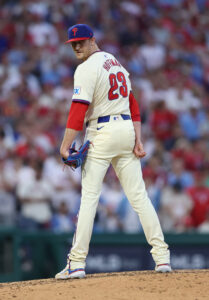
For Hoffman, that didn’t materialize right away. He had a pair of decent but unspectacular seasons in Cincinnati, combining for a 4.28 ERA over 66 appearances. He signed with the Phillies on a minor league deal coming out of Spring Training in 2023. Hoffman had the best two seasons of his career in Philadelphia. He made the big league roster in early May of the first season and turned in 52 1/3 innings of 2.41 ERA ball.
That performance made him a key piece of Rob Thomson’s leverage group heading into 2024. Hoffman posted even better numbers during his second season at Citizens Bank Park. He worked 66 1/3 innings with a 2.17 ERA while striking out more than a third of opposing hitters. Over his tenure with the Phils, Hoffman turned in a 2.28 earned run average with a 33.4% strikeout percentage. He kept his walks to a modest 7.4% clip and held opponents to a .180/.249/.295 slash in 473 plate appearances.
Of the 97 relievers who have logged 100+ innings over the past two seasons, only five (Emmanuel Clase, Tanner Scott, Ryan Helsley, Kirby Yates and Tyler Holton) have a lower ERA. Hoffman also ranks sixth in strikeout rate, trailing Aroldis Chapman, Josh Hader, Fernando Cruz, Kirby Yates, and A.J. Puk. He is in the top 10 in swinging strike percentage. The 6’5″ hurler has the stuff to match those results. His fastball sits around 97 MPH on average. Hoffman mixes four pitches and has overpowered hitters with both the heater and his upper-80s slider.
That production earned him a contract commensurate with what most top setup arms have made in recent offseasons. It’s an exact match for what Stephenson, last winter’s breakout free agent reliever, earned from the Angels. Joe Jiménez, Reynaldo López, Rafael Montero, Taylor Rogers and Clay Holmes all landed three-year deals that guaranteed between $26MM and $38MM. Jordan Hicks signed for $11MM annually but was able to secure a fourth year from the Giants as he entered his age-27 season.
MLBTR ranked Hoffman as the #2 free agent reliever behind Scott. We predicted a four-year, $44MM deal. While the AAV was accurate, teams evidently were unwilling to go to four years at that salary for what would be his age 32-35 seasons. Hoffman was reportedly hoping to land a deal similar to the three years and $38MM that Holmes received from the Mets. He comes up a little bit shy of that, at least in part because New York is going to give Holmes an opportunity to move to the rotation.
Robert Murray of FanSided reported this evening that Hoffman had been set to sign with the Orioles on a three-year, $40MM contract before Baltimore took issue with his throwing shoulder during the physical examination. Teams have different standards for the injury risk that they’re willing to tolerate. Baltimore has a reputation for being particularly attentive to the physical. Hoffman has not spent any time on the injured list over the last two years. He missed a good portion of the second half of 2022 because of a forearm issue. He did miss around two months due to a shoulder impingement early in the ’21 season as a member of the Reds.
The signing is perhaps some evidence of a thaw in what has been a slow-moving reliever market. It’s the second straight day in which one of the top bullpen arms has come off the board, as Baltimore agreed to a $10MM deal with Andrew Kittredge last night (after pulling out of the agreement with Hoffman). Scott remains unsigned and should land the most significant reliever contract of the offseason by a decent margin. Carlos Estévez, Yates and David Robertson are among the next group of back-end arms.
It’s Toronto’s biggest free agent move of the offseason. Their only previous signing had been a two-year, $15MM deal to bring Yimi García back to the organization. They also took on nearly $100MM and acquired middle reliever Nick Sandlin in the Andrés Giménez trade. The Jays had the worst bullpen in the American League last season. They non-tendered Jordan Romano after an injury-plagued season for their former All-Star closer. (Romano signed with Philadelphia as a key replacement for Hoffman.) The trio of new bullpen pickups join holdovers Erik Swanson and Chad Green as potential late-inning options for John Schneider.
According to RosterResource, Toronto’s luxury tax number is up to roughly $239MM. That puts them within a few million of the $241MM base threshold. The Jays narrowly dipped below the CBT line last season. They’d need to be willing to exceed that marker if they’re going to make a notable offensive upgrade beyond Giménez. The outfield is the biggest issue on paper, while the Jays could also look to solidify a third base position that currently features a handful of young, unproven infielders.
Jon Morosi of the MLB Network first reported that the Jays and Hoffman were discussing a multi-year deal. FanSided’s Robert Murray reported the $6MM in bonuses, which Kiley McDaniel of ESPN specified. USA Today’s Bob Nightengale reported the signing bonus, while The Associated Press had the salary structure.
Image courtesy of Imagn.
17 Players Exchange Filing Figures
This evening’s deadline to exchange filing figures has come and gone. The majority of arbitration-eligible players agreed to contracts to avoid going to a hearing. There were 17 instances where the player and team did not come to terms.
Technically, nothing prevents players and teams from continuing to negotiate. However, virtually every team takes a “file-and-trial” approach to the process. Clubs will mostly refuse to continue talks about one-year deals after this date. They’ll often make exceptions for discussions involving multi-year contracts or one-year deals with a club/mutual option. It’s unlikely that all of these players will end up getting to a hearing, but the majority probably will.
If the sides go to a hearing, a three-person arbitration panel will either choose the player’s or the team’s filing figure. They cannot pick a midpoint. That’s designed to prevent the parties from anchoring by filing at extremely high or low figures. Teams’ preferences for the file-and-trial approach follows a similar logic. The idea is to deter players from submitting a higher number from which they could continue to negotiate until the hearing begins.
The list of players who could go to a hearing this winter (service time in parentheses):
Angels
- Luis Rengifo (5.043): Filed at $5.95MM, team filed at $5.8MM (per Jon Heyman of the New York Post)
- José Quijada (4.046): Filed at $1.14MM, team filed at $975K (per Mark Feinsand of MLB.com)
- Mickey Moniak (3.027): Filed at $2MM, team filed at $1.5MM (per Feinsand)
Brewers
- William Contreras (3.112): Filed at $6.5MM, team filed at $5.6MM (per Feinsand)
Cardinals
- Lars Nootbaar (3.076): Filed at $2.95MM, team filed at $2.45MM (per Feinsand)
- Brendan Donovan (3.000): Filed at $3.3MM, team filed at $2.85MM (per Feinsand)
- Andre Pallante (2.145): Filed at $2.1MM, team filed at $1.925MM (per Feinsand)
Cubs
- Kyle Tucker (5.079): Filed at $17.5MM, team filed at $15MM (per Jesse Rogers of ESPN)
Dodgers
- Alex Vesia (4.078): Filed at $2.35MM, team filed at $2.05MM (per Fabian Ardaya of The Athletic)
Nationals
- Nathaniel Lowe (4.145): Filed at $11.1MM, team filed at $10.3MM (per Alden González of ESPN)
Orioles
- Jorge Mateo (5.000): Filed at $4MM, team filed at $3.1MM (per Feinsand)
Padres
- Michael King (5.004): Filed at $8.8MM, team filed at $7.325MM (per Heyman)
Pirates
- Dennis Santana (4.126): Filed at $2.1MM, team filed at $1.4MM (per Feinsand)
- Johan Oviedo (3.079): Filed at $1.15MM, team filed at $850K (per Feinsand)
Rays
- Taylor Walls (3.092): Filed at $1.575MM, team filed at $1.3MM (per Feinsand)
Red Sox
- Jarren Duran (2.155): Filed at $4MM, team filed at $3.5MM (per Feinsand)
Yankees
- Mark Leiter Jr. (4.031): Filed at $2.5MM, team filed at $2.05MM (per Heyman)
—————————————
Tucker and the Cubs have the biggest gap in filing figures at $2.5MM. He’s one of the top two free agents in next year’s class and is unlikely to sign an extension, so they’re almost certainly headed to a hearing. King, who will be one of the best pitchers on the open market next winter, is the only other player with more than $1MM at stake depending on the results of the hearing. The smallest divide is the paltry $150K gap between Rengifo’s and the Angels’ respective filing figures. Hearings are scheduled to begin on January 27 and could run through February 14.
2025 Arbitration Tracker
Today is the deadline for players and teams to exchange figures in arbitration — an annual deadline that leads to a slew of one-year deals and, typically, a handful of multi-year deals. Today should see upwards of 100 players agree to salaries for the 2025 season, although the majority of clubs and players now wait until the very last minute to agree. The deadline for agreements is noon CT, and we’ll see terms on plenty of last-minute/buzzer-beating deals filter in shortly thereafter. Players and teams that do not reach an agreement will exchange salary figures at 7pm CT tonight.
Each player’s service time is in parentheses, and you can of course check back to see each player’s projected salary from MLBTR contributor Matt Swartz. We’ll keep this updated as deals come in — refresh for updates — and break off some of the larger, more prominent agreements in separate entries. All agreements are for one year unless otherwise noted.
Angels
- Luis Rengifo (5.043): Did not reach agreement, figures exchanged (team announcement)
- Taylor Ward (4.164): $7.825MM agreement today (per Robert Murray of FanSided)
- Jose Quijada (4.046): Did not reach agreement, figures exchanged (team announcement)
- Brock Burke (4.045): $1.15MM agreement reached yesterday
- Jose Suarez (4.022): $1.1MM agreement today (per Ari Alexander of KPRC 2)
- Jo Adell (3.085): $2.1MM agreement today (per Murray)
- Scott Kingery (3.051): $770K agreement reached in November
- Mickey Moniak (3.027): Did not reach agreement, figures exchanged (team announcement)
- Reid Detmers (2.159): $1.825MM agreement today (per Murray)
Astros
- Framber Valdez (5.163): $18MM agreement reached today
- Mauricio Dubon (4.162): $5MM agreement reached today (per Robert Murray of FanSided)
- Luis Garcia (4.083): $1.875MM agreement reached yesterday
- Bryan Abreu (4.022): $3.45MM agreement today (per Chandler Rome of The Athletic)
- Chas McCormick (4.000): $3.4MM agreement today (per Chandler Rome of The Athletic)
- Isaac Paredes (3.160): $6.625MM agreement today (per Chandler Rome of The Athletic)
- Jake Meyers (3.044): $2.3MM agreement today (per Rome)
- Jeremy Pena (3.000): $4.1MM agreement today (per Ari Alexander of KPRC 2)
Athletics
- Miguel Andujar (5.053): $3MM agreement today (per Murray)
- Seth Brown (4.096): $2.7MM agreement reached in December
- Brent Rooker (3.059): five-year, $60MM extension earlier this week
Blue Jays
- Vladimir Guerrero Jr. (5.157): $28.5MM agreement reached today
- Erik Swanson (5.059): $3MM agreement reached in November
- Daulton Varsho (4.128): $8.2MM agreement today (per Murray)
- Alejandro Kirk (4.047): $4.6MM agreement today (per Feinsand)
- Nick Sandlin (3.157): $1.63MM agreement today (per Ben Nicholson-Smith and Shi Davidi of Sportsnet)
- Alek Manoah (3.063): $2.2MM agreement today (per Davidi)
- Zach Pop (2.171): $900K agreement today (per Shi Davidi and Ben Nicholson-Smith of Sportsnet)
- Ernie Clement (2.168): $1.97MM agreement today (per the Gate 14 Podcast)
Braves
- Jarred Kelenic (2.169): $2.3MM agreement reached today (via FanSided’s Robert Murray)
- Dylan Lee (2.150): $1.025MM agreement today (per Justin Toscano of the Atlanta Journal-Constitution)
Brewers
- Nestor Cortes (5.094): $7.6MM agreement today (per Murray)
- Aaron Civale (5.058): $8MM agreement today (per Murray)
- Joel Payamps (4.027): $2.995MM agreement today (per Murray)
- Eric Haase (3.159): $1.35MM agreement reached in November
- William Conteras (3.112): Did not reach agreement, will likely exchange figures (per Jesse Rogers of ESPN)
- Nick Mears (3.022): $963K agreement today (per Adam McCalvy of MLB.com)
- Trevor Megill (3.002): $1.94MM agreement reached today (per Murray)
Cardinals
- Ryan Helsley (5.105): $8.2MM agreement today (per Murray)
- JoJo Romero (4.045): $2.26MM agreement today (per Derrick Goold of the St. Louis Post-Dispatch)
- John King (3.145): $1.605MM agreement today (per Ari Alexander of KPRC 2)
- Lars Nootbaar (3.076): Did not reach agreement, will likely exchange figures (per Katie Woo of The Athletic)
- Brendan Donovan (3.000): Did not reach agreement, will likely exchange figures (per John Denton of MLB.com)
- Andre Pallante (2.145): Did not reach agreement, will likely exchange figures (per Derrick Goold of the St. Louis Post-Dispatch)
Cubs
- Kyle Tucker (5.079): Did not reach agreement, will exchange figures (per Jesse Rogers of ESPN)
- Julian Merryweather (4.109): $1.225MM agreement reached in November
- Nate Pearson (4.005): $1.35MM agreement today (per Mark Feinsand of MLB.com)
- Justin Steele (3.143): $6.55MM agreement today (per Murray)
- Eli Morgan (3.091): $950K agreement today (per Meghan Montemurro of the Chicago Tribune)
- Keegan Thompson (3.006): $850K agreement reached in November
Diamondbacks
- Josh Naylor (5.127): $10.9MM agreement today (per Murray)
- Zac Gallen (5.100): $13.5MM agreement today (per Murray)
- A.J. Puk (4.124): $2.95MM agreement today (per Jon Heyman of The New York Post)
- Ryan Thompson (4.095): $2.965MM agreement today (per The Associated Press)
- Kevin Ginkel (4.033): $2.425MM agreement reached today (via MLB.com’s Mark Feinsand)
- Joe Mantiply (4.029): $1.7MM agreement today (per Kiley McDaniel of ESPN)
- Kyle Nelson (3.076): $825K agreement reached today (via Robert Murray of FanSided)
- Geraldo Perdomo (3.015): $2.55MM agreement today (per Murray)
- Pavin Smith (3.015): $1.5MM agreement reached yesterday
Dodgers
- Dustin May (5.059): $2.135MM agreement reached in November
- Michael Kopech (5.041): $5.2MM agreement today (per Jon Heyman of The New York Post)
- Brusdar Graterol (4.167): $2.8MM agreement today (per Fabian Ardaya of The Athletic)
- Tony Gonsolin (4.152): $5.4MM agreement reached in November
- Evan Phillips (4.136): $6.1MM agreement today (per Jack Harris of the Los Angeles Times)
- Alex Vesia (4.078): Did not reach agreement, exchange figures (per Ardaya)
- Anthony Banda (3.135): $1MM agreement today (per Ardaya)
Giants
- Mike Yastrzemski (5.128): $9.25MM agreement reached in November
- LaMonte Wade Jr. (5.035): $5MM agreement today (per Susan Slusser of the San Francisco Chronicle)
- Tyler Rogers (5.034): $5.25MM agreement today (per Jeff Young of FanSided)
- Camilo Doval (3.071): $4.525MM agreement today (per Slusser)
Guardians
- Lane Thomas (5.014): $7.825MM agreement today (per Murray)
- Triston McKenzie (4.002): $1.95MM agreement reached in November
- Sam Hentges (3.157): $1.337MM agreement reached in November
- Steven Kwan (3.000): $4.175MM agreement today (per Ari Alexander of KPRC 2)
- Ben Lively (2.133): $2.25MM agreement reached in November
Marlins
- Anthony Bender (3.153): $1.42MM agreement today (per The Associated Press)
- Jesus Sanchez (3.118): $4.5MM agreement today (per The Associated Press)
- Braxton Garrett (2.168): $1.53MM agreement today (per The Associated Press)
- Nick Fortes (2.149): $1.86MM agreement today (per The Associated Press)
- Edward Cabrera (2.147): $1.95MM agreement today (per The Associated Press)
Mariners
- Trent Thornton (4.148): $2MM agreement today (per Daniel Kramer of MLB.com)
- Randy Arozarena (4.129): $11.3MM agreement today (per Francys Romero of Beisbol FR)
- Logan Gilbert (3.144): $7.625MM agreement today (per Jon Heyman of The New York Post)
- Tayler Saucedo (3.112): $937,500 agreement today (per The Associated Press)
- Cal Raleigh (3.085): $5.6MM agreement today (per Murray)
- Gabe Speier (2.172): $845K agreement today (per The Associated Press)
- George Kirby (2.151): $4.3MM agreement today (per Kramer)
Mets
- Paul Blackburn (5.018): $4.05MM agreement today (per The Associated Press)
- Luis Torrens (4.105): $1.5MM agreement today (per The Associated Press)
- Tyrone Taylor (4.093): $3.025MM agreement today (per The Associated Press)
- David Peterson (4.089): $4.625MM agreement today (per The Associated Press)
- Sean Reid-Foley (3.133): $800K agreement reached in November
- Tylor Megill (3.031): $1.975MM agreement today (per The Associated Press)
- Jose Siri (3.015): $2.4MM agreement today (per Feinsand)
Nationals
- Derek Law (5.081): $2.75MM agreement today (per Andrew Golden of The Washington Post)
- Nathaniel Lowe (4.145): Did not reach agreement, exchanged figures
- Luis Garcia Jr. (3.142): $4.5MM agreement today (per Alexander)
- Josiah Gray (3.075): $1.35MM agreement today (per Golden)
- Mason Thompson (3.046): $770K agreement reached in November
- Riley Adams (3.005): $850K agreement today (per FanSided’s Robert Murray)
- MacKenzie Gore (3.000): $2.89MM agreement today (per Golden)
Orioles
- Gregory Soto (5.102): $5.35MM agreement today (per Andy Kostka of The Baltimore Banner)
- Cedric Mullins (5.078): $8.725MM agreement today (per Murray)
- Jorge Mateo (5.000): Did not reach agreement, likely to exchange figures (per Roch Kubatko of MASNsports.com)
- Ryan Mountcastle (4.105): $6.787MM agreement today (per Murray)
- Keegan Akin (4.083): $1.475MM agreement today (per Jake Rill of MLB.com)
- Trevor Rogers (4.075): $2.6MM agreement today (per Mark Feinsand of MLB.com)
- Ramon Urias (4.025): $3.15MM agreement today (per Kubatko)
- Tyler Wells (3.132): $2.075MM agreement today (per Kostka)
- Dean Kremer (3.112): $2.95MM agreement today (per Andy Kostka of the Baltimore Banner)
- Emmanuel Rivera (3.026): $1MM agreement reached in November
- Adley Rutschman (3.000): $5.5MM agreement today (per Ari Alexander of KPRC 2)
- Kyle Bradish (2.160): $2.35MM agreement today (per Jon Heyman of The New York Post)
Padres
- Luis Arraez (5.121): $14MM agreement today (via Robert Murray of FanSided)
- Dylan Cease (5.089): $13.75MM agreement today (per Kevin Acee of the San Diego Union-Tribune)
- Tyler Wade (5.058): $900K agreement (w/ 2026 club option) reached in November
- Michael King (5.004): Did not reach agreement, will likely exchange figures (per Kevin Acee of the San Diego Union-Tribune)
- Adrian Morejon (4.140): $2MM agreement today (per Kevin Acee of the San Diego Union-Tribune)
- Jason Adam (4.132): $4.8MM agreement today (per Murray)
- Luis Campusano (2.144): $1MM agreement today (per Robert Murray of FanSided)
Phillies
- Ranger Suarez (5.112): $8.8MM agreement today (per Feinsand)
- Jesus Luzardo (4.165): $6.225MM agreement today (per Murray)
- Jose Ruiz (4.148): $1.225MM agreement reached in November
- Edmundo Sosa (4.140): $3MM agreement today (per Alexander)
- Garrett Stubbs (4.120): $925K agreement reached in November
- Alec Bohm (4.106): $7.7MM agreement today (per Murray)
- Brandon Marsh (3.078): $3MM agreement today (per Heyman)
- Bryson Stott (3.000): $3.2MM agreement today (per Feinsand)
Pirates
- Dennis Santana (4.126): Did not reach agreement, likely to exchange figures (per Andrew Destin of the Pittsburgh Post-Gazette)
- David Bednar (4.076): $5.9MM agreement today (per Andrew Destin of the Pittsburgh Post-Gazette)
- Johan Oviedo (3.079): Did not reach agreement, likely to exchange figures (per Andrew Destin of the Pittsburgh Post-Gazette)
- Joey Bart (3.020): $1.175MM agreement today (per Andrew Destin of the Pittsburgh Post-Gazette)
- Colin Holderman (2.144): $1.5MM agreement today (per Alex Stumpf of MLB.com)
- Bailey Falter (2.138): $2.222MM agreement reached today (via Noah Hiles of the Pittsburgh Post-Gazette)
Rangers
- Jonah Heim (4.097): $4.575MM agreement today (per Feinsand)
- Dane Dunning (4.078): $2.66MM agreement reached in November
- Josh Sborz (4.055): $1.1MM agreement reached in November
- Leody Taveras (3.124): $4.75MM agreement today (per Jon Heyman of The New York Post)
Rays
- Zack Littell (5.043): $5.72MM agreement today (per Robert Murray of FanSided)
- Drew Rasmussen (4.111): two-year, $8.5MM extension reached earlier this week
- Cole Sulser (4.031): $900K agreement in November (per Associated Press)
- Taylor Walls (3.092): Did not reach agreement, will likely exchange figures (Per Marc Topkin of the Tampa Bay Times)
- Garrett Cleavinger (3.060): $1.2MM agreement today (per Robert Murray of FanSided)
- Ben Rortvedt (3.043): $1.125MM agreement today (per Marc Topkin of the Tampa Bay Times)
- Shane Baz (2.158): $1.45MM agreement today (per Ari Alexander of KPRC 2)
Red Sox
- Garrett Crochet (4.028): $3.8MM agreement today (per Chris Cotillo of MassLive)
- Tanner Houck (3.100): $3.95MM agreement today (per Cotillo)
- Jarren Duran (2.155): Did not reach agreement, exchanged figures (per Cotillo)
- Kutter Crawford (2.136): $2.75MM agreement today (per Feinsand)
Reds
- Jose Trevino (5.063): $3.425MM agreement today (per Jon Heyman of The New York Post)
- Brady Singer (4.156): $8.75MM agreement today (per Feinsand)
- Santiago Espinal (4.149): $2.4MM agreement reached in November
- Gavin Lux (4.114): $3.325MM agreement today (per Murray)
- Jake Fraley (4.097): $3.125MM agreement today (per Gordon Wittenmyer of the Cincinnati Enquirer)
- Tyler Stephenson (4.056): $4.925MM agreement today (per Alexander)
- Sam Moll (3.075): $1.0075MM agreement today (per Wittenmyer)
- Alexis Diaz (3.000): $4.5MM agreement today (per Robert Murray of FanSided)
- Nick Lodolo (3.000): $1.975MM agreement today (per Gordon Wittenmyer of the Cincinnati Enquirer)
Rockies
- Austin Gomber (5.111): $6.35MM agreement today (per Feinsand)
- Sam Hilliard (4.023): $1MM agreement reached in November
- Lucas Gilbreath (3.148): $785K agreement reached in November
- Jimmy Herget (3.069): $850K agreement reached in November (per Thomas Harding of MLB.com)
- Justin Lawrence (2.167): $975K agreement today (per Harding)
- Ryan Feltner (2.143): $2.275MM agreement today (per McDaniel)
Royals
- Hunter Harvey (5.047): $3.7MM agreement today (per Anne Rogers of MLB.com)
- Kris Bubic (4.135): $3MM agreement today (per Rogers)
- Kyle Wright (4.062): $1.8MM agreement reached in December
- John Schreiber (4.027): $2.3MM agreement today (per Rogers)
- Carlos Hernandez (3.099): $1.16MM agreement today (per Rogers)
- Kyle Isbel (3.043): $1.75MM agreement today (per Feinsand)
- MJ Melendez (2.153): $2.65MM agreement today (per Rogers)
Tigers
- Tarik Skubal (4.114): $10.15MM agreement today (per Jon Heyman of the New York Post)
- Casey Mize (4.111): $2.34MM agreement reached today (via Mark Feinsand of MLB.com)
- Jake Rogers (4.040): $2.64MM agreement reached today (via FanSided’s Robert Murray)
- Will Vest (3.100): $1.4MM agreement today (per Evan Petzold of the Detroit Free Press)
- Zach McKinstry (3.099): $1.65MM agreement reached in November
- Jason Foley (3.033): $3.15MM agreement today (per Petzold)
- Matt Vierling (3.026): $3.005MM agreement today (per Petzold)
- Andy Ibanez (2.170): $1.4MM agreement reached in November
- Beau Brieske (2.134): $1.025MM agreement today (per Petzold)
Twins
- Willi Castro (5.017): $6.4MM agreement today (per Darren Wolfson of Skor North)
- Ryan Jeffers (4.089): $4.55MM agreement today (per Wolfson)
- Michael Tonkin (4.074): $1MM agreement reached in November
- Justin Topa (4.044): $1.225MM agreement (w/ 2026 club option) reached in November
- Bailey Ober (3.093): $3.55MM agreement today (per Dan Hayes of The Athletic)
- Brock Stewart (3.093): $870K agreement reached in November
- Griffin Jax (3.091): $2.365MM agreement today (per Mark Feinsand of MLB.com)
- Joe Ryan (3.033): $3MM agreement today (per Wolfson)
- Trevor Larnach (3.009): $2.1MM agreement today (per Wolfson)
- Jhoan Duran (3.000): $4.125MM agreement today (per Wolfson)
- Royce Lewis (2.142): $1.625MM agreement today (per Wolfson)
White Sox
- Andrew Vaughn (4.000): $5.85MM agreement today (per James Fegan of Sox Machine)
- Justin Anderson (3.122): $900K agreement today (club announcement)
- Matt Thaiss (3.038): $1MM agreement in November (per Associated Press)
- Steven Wilson (3.000): $950K agreement reached today (per Murray)
- Penn Murfee (2.169): $780K agreement today (per Fegan)
Yankees
- Trent Grisham (5.060): $5MM agreement reached in November
- Devin Williams (5.056): $8.6MM agreement today (per Jorge Castillo of ESPN)
- JT Brubaker (5.000): $1.82MM agreement reached in November
- Jazz Chisholm Jr. (4.075): $5.85MM agreement today (per Murray)
- Mark Leiter Jr. (4.031): Did not reach agreement, will likely exchange figures (per Rogers)
- Clarke Schmidt (3.148): $3.6MM agreement today (per Alexander)
- Scott Effross (2.156): $800K agreement reached today (per Murray)
Red Sox, Garrett Crochet Have Had Preliminary Extension Talks
The Red Sox made one of the biggest trade acquisitions of the winter, landing Garrett Crochet from the White Sox for four prospects. Boston apparently has interest in keeping their newly-acquired southpaw for the longer term.
Chris Cotillo of MassLive reports that the Red Sox and Crochet’s camp at CAA have had at least preliminary discussions about a long-term deal. Tomorrow is the deadline for teams and arbitration-eligible players to exchange filing figures on salaries for the 2025 season. That doesn’t preclude the sides from continuing to negotiate, but it stands to reason they’ll attempt to hammer out a deal to avoid an arbitration hearing for this year.
Crochet is coming off his first full season as a starting pitcher. His early-career injuries and usage out of the White Sox’s bullpen limited his arbitration earnings. MLBTR contributor Matt Swartz projects the southpaw for a $2.9MM salary. He’s controllable for one additional year and is on track to reach free agency after his age-27 season.
For the next two seasons, Crochet should offer immense surplus value. He turned in top-of-the-rotation numbers on a rate basis last year. Crochet worked to a 3.58 earned run average with a massive 35.1% strikeout percentage. Chicago limited his workload within starts down the stretch. He finished the season with 146 innings despite taking all 32 turns through the rotation. Boston presumably won’t have any qualms about fully unleashing Crochet in his second season as a starter.
Crochet’s contract status was a key issue heading into last summer’s deadline. The southpaw seemed an obvious candidate to move as the ace of a team that was headed to the worst season in modern history. Chicago held onto him instead, in large part because his camp indicated he wanted an extension to pitch into October. To be clear, there’s no indication that Crochet would take that stance again now that he has a full season under his belt. At the time, ESPN’s Jeff Passan wrote that the asking price would’ve been above nine figures. Passan noted that Crochet’s camp could compare him to Tyler Glasnow, who signed for four years and $110MM in new money on his extension with the Dodgers.
It’s not a perfect comparison. Glasnow was one year from free agency and had banked significantly greater earnings. Crochet is an extra season away. However, Crochet’s second half probably pushes his asking price higher than where it had been at the deadline. He finished the year healthy and is a few months closer to free agency. Even last year’s capped innings tally is above Glasnow’s career high of 134 frames in an MLB season.
Jacob deGrom holds the record for the largest extension for a pitcher with between four and five years of service time. deGrom secured $120.5MM from the Mets covering his age 32-35 seasons. That was an anomaly, as deGrom was a late bloomer but was coming off a Cy Young season. Crochet would certainly look to top more recent precedents like Pablo López’s $73.5MM deal with the Twins and the $71.5575MM in new money which Mitch Keller got from Pittsburgh last spring. A four- or five-year term would seem the most likely midpoint if the sides can reach an agreement. That’d allow the Sox to buy out two or three free agent seasons while Crochet would still have an opportunity to cash in as a free agent at 30 or 31.
A’s Sign Brent Rooker To Five-Year Extension
The A’s have officially announced a five-year contract extension with designated hitter Brent Rooker. The deal includes a club/vesting option for 2030. Rooker, a client of The Bledsoe Agency, is reportedly guaranteed $60MM. The option’s base value is $22MM and could push as high as $30MM based on his MVP finishes. Rooker had been under arbitration control for three seasons, so the deal buys out at least two free agent years.
Rooker receives a $10MM signing bonus and a $2MM salary for the upcoming season. He’ll make $6MM in 2026, $12MM in ’27, $13MM in ’28 and $17MM in ’29. The $22MM option would vest if Rooker reaches 500 plate appearances in 2029 or combines for 900 PAs between 2028-29. He’d also unlock the option with two top 10 MVP finishes between 2027-29. Finishing in the top 10 in MVP balloting in any of the next five years could escalate the option value.
It’s another significant investment in what has been a huge offseason by A’s standards. As shown on MLBTR’s Contract Tracker, Rooker becomes the first A’s player to sign a five-year deal since the club extended starting pitcher Trevor Cahill for $30.5MM in 2011. It’s the team’s second investment for $60MM+ this winter. Last month, they added Luis Severino on a three-year, $67MM free agent deal that represented the largest contract in franchise history.
Rooker securing such a contract would have been impossible to envision two years ago. He landed with the A’s on a waiver claim early in the 2022-23 offseason. Rooker was a 28-year-old DH/corner outfielder who had bounced between the Twins, Padres and Royals without getting much of a look at any stop. As a former top 35 overall draft pick who had hit well in the minors, he was a sensible waiver target. The A’s certainly didn’t envision it working out this well, though.
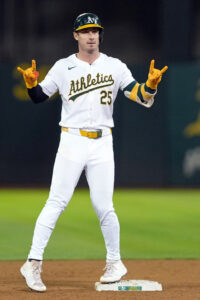
The righty-swinging Rooker has become not only one of the most successful waiver claims in recent memory but one of baseball’s best hitters. He popped 30 home runs in 526 plate appearances to earn an All-Star selection in 2023. While he was snubbed from the Midsummer Classic last season, Rooker took another major step forward. He connected on 39 homers, 26 doubles and a pair of triples with a massive .293/.365/.562 batting line across 614 plate appearances.
Rooker finished tied for fifth (alongside José Ramírez and Marcell Ozuna) in home runs. Only Aaron Judge, Shohei Ohtani, Anthony Santander and Juan Soto hit more. Among hitters with at least 500 PAs, Rooker ranked in the top 20 in all three slash stats. He finished sixth in slugging — trailing Judge, Ohtani, Bobby Witt Jr., Soto, and Yordan Alvarez.
It’s now two seasons of borderline elite offensive production. Rooker has a .272/.348/.528 slash through more than 1100 plate appearances in an A’s uniform. He’s in the top 15 in slugging percentage and ranks ninth in homers since the start of the ’23 campaign. He’s a middle-of-the-order presence.
There is a decent amount of swing-and-miss to his game. Rooker has fanned in more than 30% of his plate appearances with the A’s. Last year’s production was driven in part by a .362 average on balls in play that’ll be difficult to maintain. Rooker makes a ton of hard contact, though, so he’s probably in line for a modest BABIP regression rather than a huge drop-off.
The ball-in-play normalization happened at the end of last season. Rooker carried an unsustainable .390 BABIP into the All-Star Break. That dropped to .333 in the second half. To his credit, Rooker compensated by cutting his strikeout rate to a much more manageable 24.1% clip during that stretch. It remains to be seen whether he’ll maintain that level of contact, but it’s an encouraging development that presumably affirmed the front office’s confidence in his hitting acumen.
Even if he doesn’t hit .290 while pushing 40 home runs on an annual basis, Rooker should remain an impact bat. The A’s have made clear they envisioned him as the long-term anchor of their lineup. The team reportedly took him off the market in advance of last summer’s trade deadline. They had no interest in allowing trade rumors to rekindle during the offseason. GM David Forst declared within a week of the offseason beginning that the A’s weren’t dealing Rooker. They’re doubling down by committing to him through at least the 2029 season.
Rooker surpassed three years of major league service last season. He was entering his first of three arbitration seasons. MLBTR contributor Matt Swartz had projected a $5.1MM salary for next year. Rooker will reportedly receive $30MM over what would have been his arbitration window. That leaves an average of $15MM annually for the two free agent seasons. It’s not quite a front-loaded contract, but it appears Rooker will make a little more in the next couple years than he would have had he gone through the arbitration process.
The team makes that tradeoff for the chance to keep him at below-market rates during the 2028-29 seasons — which are scheduled to be their first two years in Las Vegas. The A’s didn’t have any money guaranteed beyond 2027. Severino and recent trade pickup Jeffrey Springs were their only players signed past next season.
The A’s revenue sharing status has been a significant storyline this offseason. Evan Drellich and Ken Rosenthal of the Athletic reported last month that the team could need to push its competitive balance tax payroll to roughly $105MM to avoid an MLBPA grievance. Teams are required to spend revenue sharing money on the on-field product.
Extending Rooker will push their tax number up, though it’s not by a huge amount. The contract comes with a $12MM average annual value. The AAV is the number used for tax purposes, so it wouldn’t matter how the salaries are distributed. Rooker had already been expected to make around $5MM next season. This adds roughly $7MM to the team’s tax number, which will check in around $97MM (as calculated by RosterResource).
The tax number isn’t finalized until the end of the year, so the remainder of the A’s offseason and in-season activity can push that further. Tax considerations are relevant but are far from the only reason for the A’s to make this deal. If they were solely concerned about pushing next season’s CBT number, they could have signed a handful of mid-tier free agents to one-year contracts.
Rooker turned 30 in November. A five-year commitment runs through his age-34 season. There’s some risk in a five-year deal for a player in his 30s who doesn’t provide much defensive value. Yet if Rooker continues hitting at anywhere near this level, his arbitration price tag would have climbed quickly anyhow. He could have put himself in position for an AAV in the $20-25MM range once he hit free agency, a number that the A’s may have been disinclined to match.
At the same time, it’s easy to see the appeal for Rooker of locking in the security. It wasn’t that long ago that he looked like a fringe roster player. He wouldn’t have gotten to free agency until his age-33 season, when a three- or four-year deal might’ve been the ceiling. Sacrificing a little bit of long-term earning upside to avoid injury risk over the next couple seasons is understandable.
This should also solidify Rooker’s spot in what looks to be an up-and-coming A’s lineup. Lawrence Butler, Jacob Wilson, Tyler Soderstrom, Shea Langeliers, JJ Bleday and rebound candidate Zack Gelof have promise as an offensive core. Last summer’s fourth overall pick Nick Kurtz could move quickly as a polished college hitter. The A’s still need a lot to break right to contend in 2025, but things are starting to come into focus. Soderstrom and Kurtz fit best at first base, so perhaps there’ll be a logjam down the line with Rooker locked in at designated hitter. That’d be a good problem to have if both young first basemen reach their offensive ceilings and Rooker continues to hit at an All-Star level.
Ken Rosenthal of the Athletic first reported that the A’s and Rooker were in agreement on a five-year, $60MM deal with a vesting option that could get to $30MM. Jeff Passan of ESPN reported that the option’s base was $22MM and that Rooker would make $30MM over the first three seasons. Jon Heyman of the New York Post reported the salary breakdown and the vesting provisions.
Image courtesy of Imagn.