
Remember When The White Sox Threw Four Consecutive Complete Games To Win The Pennant?
The 2005 Chicago White Sox get a bum deal as far as legacies are concerned. When they ended their 87-year championship drought by sweeping the Astros, they did so on the heels of the Red Sox breaking their own curse in dramatic fashion just a year before. Not only were the ChiSox overshadowed preemptively by Boston, but their victory left the crosstown Cubs with the lone multi-generational curse, which instantly drew more attention than even the Sox’ victory. Needless to say, Southsiders have long had a much-deserved chip on their shoulder as the less-heralded of the two Chicago baseball clubs.
The 2005 White Sox deserved more attention than they got, but not just because of their own broken curse. Ozzie Guillen’s club accomplished an amazing feat just in getting to the World Series, one that we may never see again. After dropping game one of the ALCS to Vlad Guerrero Sr. and the Los Angeles Angels of Anaheim, the White Sox won the American League pennant behind four consecutive complete games.
There were zero complete games thrown in the 2019 playoffs. Not a one. There weren’t any in 2018 either. We got one in 2017 (Justin Verlander) and 3 in 2016 (though two of those were in losses where the starter only went 8 innings to get the CG). Not only did the 2005 White Sox rattle off eight straight wins to clinch the World Series, but after taking that game 1 loss (their only loss of the postseason), they strung together four straight complete games from this unlikely quartet: Mark Buehrle, Jon Garland, Freddy Garcia, and Jose Contreras.
It’s not impossible that we’ll see this kind of feat again. I mean, hey, Deacon Phillippe threw five complete games in a single postseason. For the 1903 Pittsburgh Pirates. But as far as this century is concerned, Ozzie Guillen’s likely to hold the record for fewest pitching changes in a postseason series.
Speaking of Guillen, you gotta give the guy props for the trust he had in his starting staff. Not only did he ride his starters for all four wins, but not a one of them put up a shutout. There were trials. There were tribulations. But either Guillen forgot the extension for the bullpen phone, or he believed in his horses. It’s not as if this was all that long ago and complete games were a dime a dozen. The four thrown by the White Sox in the ALCS were the only complete games thrown that postseason. There was just one complete game thrown in the playoffs the year before and none the year after. This was a feat. If it were the Red Sox or the Cubs, we’d probably talk about it a lot more.
So let’s take a moment to appreciate the run.
In terms of all-time rotations, Buehrle/Garland/Garcia/Contreras wasn’t exactly Maddux/Glavine/Smoltz/Avery. But it was a solid group who put together a remarkable run. These four starters not only came together at the perfect time, but at the perfect time in their individual careers.
Buehrle had the best career of the four as the long-time ace of the Southsiders, but his chief abilities included otherworldly defense and durability. The soft-tossing lefty led the AL in innings pitched in both 2004 and 2005. He put up 200-inning seasons for 14 consecutive years, falling short of the line only twice: his rookie season when he made just 3 starts and totaled 51 1/3 innings, and his final season in the majors, when at age 36 he put up “just” 198 2/3 innings for the Blue Jays (while still leading the majors with four complete games). Buehrle only once cracked the top-5 in Cy Young voting, but he was the definition of a reliable workhorse, and in limiting the Angels to just 5 hits and no walks over a tidy 99 pitches, he set the tone for the 2005 White Sox. The Sox won game 2 behind Buehrle 2-1, and they wouldn’t look back.
Jon Garland struggled to stay healthy for much of his career, but he was peaking in 2005. The 25-year-old, hulking right-hander won 18 games that season with a 3.50 ERA, earning his lone All-Star appearance. He threw three complete game shutouts that season, but the amazing piece for Garland was that his game 3 complete game was his first-ever postseason appearance. Not only that, but he’d only have one more, as the game 3 starter in Houston for the World Series. Garland made the most of it, giving up 2 runs on 4 hits while striking out 7. Paul Konerko capped off a three-run first inning with a two-run shot off John Lackey, and Garland took them the rest of the way, using 118 pitches to finish off a 5-2 victory and put the White Sox up 2-1. Garland would give the White Sox two more solid seasons in the rotation before they traded him to the Angels following 2007 for Orlando Cabrera. His run with the White Sox, particularly 2005, would easily go down as the highlight of Garland’s playing days.
The White Sox turned to Freddy Garcia in game 4, but they used the same script from the prior night. Konerko hit a 3-run homer off Ervin Santana in the first and the White Sox never trailed. Garcia had failed to capitalize on the tremendous potential he showed as a 24-year-old for the 2001 Mariners, and by 2005 his best years were already behind him. Still, the White Sox acquired him midseason the year before along with another one-time heralded prospect in Ben Davis for a package of Mike Morse, Miguel Olivo and Jeremy Reed. Garcia put up 3.9 bWAR in his first full season in Chicago, going 14-8 with a 3.87 ERA/4.06 FIP. He threw 228 innings in total, and it was probably his best season outside of Seattle.
His game 4 performance put the White Sox on the brink of the pennant, using 116 pitches while giving up 2 runs, 5 hits, and 1 walk. The Sox tacked on solo runs in each of the third, fourth, and fifth innings, and the Angels never came closer than in the bottom of the second when Garcia surrendered a walk and made an error on an infield single. But with the tying run on first and runners on the corners, Garcia coaxed a double play off the bat of Steve Finley to end the threat. Garcia went the distance and the White Sox won 8-2.
After three straight complete games to put the White Sox up on the Angels 3-1, what really was Jose Contreras to do but go out and do the same? Like Garland, 2005 and 2006 was the pinnacle of Contreras’ stateside career. The Cuban import made his MLB debut as a 31-year-old with the Yankees in 2003, but they shipped him to the White Sox after 18 disappointing starts in 2004 for Esteban Loaiza. In 2005, the 33-year-old Contreras finally posted the type of season that was expected of him after coming over from Cuba. He went 15-7 with a 3.61 ERA/4.21 FIP, good for 3.6 bWAR (second only to the 3.8 bWAR he’d put up the following season).
In many ways, Contreras was the perfect guy to wrap up this incredible run. These outings weren’t the high velocity, high spin types of outings of the current era. Contreras, like the others before him, simply put the ball over the plate and let his defense do the work. He finished with 114 pitches, 3 earned runs, 5 hits, 2 walks, and just 2 strikeouts. Only twice did he allow more than one baserunner in an inning, and 5 times he put together 1-2-3 innings (including the final 4 frames). The White Sox trailed 3-2 entering the 7th inning, but they’d tie it with a Joe Crede solo shot, then take the lead in the 8th when the Angels defense got sloppy. As for Contreras, after giving up the lead with those two runs in the sixth, he wouldn’t allow a baserunner the rest of the way.
The White Sox had some cushion in games 2-4, but there may have been cause for Guillen to let his starters go long. Dustin Hermanson (yes, Dustin Hermanson) saved 34 games for Chicago that year, but he was out of the role by the playoffs and would make just 6 more appearances in the majors. Bobby Jenks had taken over as closer in the playoffs, but he had just 6 saves and 32 appearances under his belt. Maybe Ozzie Guillen didn’t trust his bullpen, but either way, when Konerko and Aaron Roward each doubled home a run in the ninth, Guillen went back to Contreras to finish out the 6-3 victory and secure the White Sox’ first pennant since 1959. Amazingly, Guillen didn’t even have to lift a finger to do it.
Offseason In Review: Cincinnati Reds
For the second straight winter, the Cincinnati Reds committed to building a winner the old-fashioned way: by opening their pocketbook. Last winter’s additions were good first steps, but as much as they hoped to unseat the Brewers, Cubs and Cardinals, the Yasiel Puig blockbuster aimed to lure bodies through the turnstiles. This winter’s blusterous free agent spending spree, however, had all the urgency of a team earnestly on the rise. These Reds expect to compete.
Guaranteed Contracts
- Pedro Strop, RHP: one year, $1.825MM (incentives could push total value to $3.5MM)
- Nicholas Castellanos, OF: four years, $64MM (opt out after 2020 and 2021, $20MM club option for 2024)
- Wade Miley, LHP: two years, $15MM ($6MM in 2020, $8MM in 2021, $10MM club option for 2022 with $1MM buyout)
- Mike Moustakas, 2B/3B: four years, $64MM ($20MM club option for 2024)
- Shogo Akiyama, OF: three years, $21MM ($6MM in 2020, $7MM in 2021, $8MM in 2022)
- Total spend: $165.825MM
Trades and Claims
- Claimed LHP Josh Smith off waivers from the Marlins
- Selected Mark Payton from Athletics in Rule 5 Draft
- Acquired RHP Justin Shafer from Blue Jays for cash considerations
- Acquired OF Travis Jankowski for future considerations
- Acquired RHP Jose De Leon from Rays for OF Brian O’Grady and cash
Options Decisions
- Exercised $5.5MM option for SS Freddy Galvis
Extensions
- None
Notable Minor League Signings
- Jesse Biddle, Nate Jones, Boog Powell, Brooks Raley, Matt Davidson, Tyler Thornburg, David Carpenter
Notable Losses
- Kevin Gausman, Jose Peraza, Christian Colon, Keury Mella, Jackson Stephens, Jose Iglesias, Alex Wood, Juan Graterol, Jose Siri, Nick Martini (claimed from Padres, lost off waivers to Phillies), Jimmy Herget
The Reds halted their run of four consecutive 90-loss seasons in 2019, albeit modestly with a 75-87 record. David Bell‘s rookie campaign as the skipper had its ups and downs, but there are plenty more reasons for optimism than the record alone might suggest. Losing seasons, after all, have a tendency to compound on themselves. As the playoffs fade from view, games take on more nuanced objectives than victory alone. For the 2019 Reds, that meant getting a look at new toy Trevor Bauer, letting Aristides Aquino play superman for a time, and evaluating the roster on the whole to identify – with actionable intent – areas to target for improvement in the offseason.
So what did they find? In a nice change of pace, the Reds put together a top-10 pitching staff in 2019 – only to see their offense sink to the 25th ranked unit in the majors. It would have been temping to roll back the same group in the hopes that Aquino continue his power display, Nick Senzel develop as originally projected, and Eugenio Suarez heal enough to put together another .271/.358/.572-type season. But the Reds saw an opportunity to add offense. It’s fair to wonder if they bid against themselves, but the addition of power bats Mike Moustakas and Nicholas Castellanos deepens their lineup enough to forestall the risk of injury depletion elsewhere.
Perhaps most importantly, they filled a hole in center with Japanese import Shogo Akiyama. Akiyama would have been a good fit on a dozen clubs, but the 32-year-old brings his all-around game to Cincy. He’s a true centerfielder with on-base skills that should nicely augment a power-heavy group of sluggers. The Reds aggressively pursued Akiyama from the jump, and now the first Japanese player in franchise history will roam the grass in center on a reasonable contract. Like the Puig deal, Akiyama fits from an on-field perspective, but the business implications of expanding their potential fanbase overseas makes this deal work on multiple fronts.
At shortstop, Freddy Galvis takes over full-time from Jose Iglesias. It’s a lateral move, more-or-less, though Galvis leans a little heavier with the bat. The quality of Galvis’ glove depends on your metric of choice – 11 Outs Above Average from Statcast, 4 DRS and -1.7 UZR from Fangraphs. Let’s assume the Reds are believers. If not, are they just punting on defense? Moustakas is now Galvis’ full-time double-play partner, and he’s been a third baseman for most of his career. That said, Moose graded out okay at second in his limited time there last season (2 OAA, 0 DRS, -0.1 UZR), and it’s at least worth wondering how much body type plays a role in the skepticism over his ability to handle second full-time without a net. It’s natural to assume Senzel will play Moose’s defensive replacement (as well as his understudy), but Senzel is essentially making the same transition with a stopover in centerfield. He looks the part more than Moose, but the jury’s still out on his viability as a defensive upgrade. Regardless, he’s the closest they have to a defensive replacement on the roster.
Which brings us to the first counter-theory to the wisdom of the Reds’ offseason acquisitions. With Castellanos now entrenched in right, the Reds are betting that the offensive contributions from their newcomers will outweigh their defensive limitations. This subplot will be one of the more interesting to track if/when the season gets underway.
The other concern is this: there’s not a lot of flexibility baked into their future rosters given that Votto, Moustakas, Suarez, and Castellanos are all on the payroll for the next four seasons (at minimum). Not only do they need all four to contribute, but even if one falls off the map offensively, the presence of the other three means there’s nowhere to hide (assuming Castellanos opts in after both 2020 and 2021). That said, if Castellanos rakes as one might expect him to in Great American Ballpark, he could very well opt out, and they’d be a little better off in terms of their financial flexibility (while having reaped the benefit of his bat for a year). Positionally, even if Castellanos opts out, it doesn’t lengthen the leash much in the dirt where they’re looking at a 2023 infield of a 31-year-old Suarez at third, 34-year-old Moustakas at second, and 39-year-old Votto at first – but that’s a $54MM problem for the future.
On the other hand, roster flexibility takes many shapes. By upgrading via free agency, the Reds maintained versatility in terms of prospect depth. Nick Senzel steps into a super-utility role, but his name will make the rounds in the trade papers until he finds a regular role or proves himself indispensable. The Reds obviously see a window to compete, and they’re feeling the burn, which turns Senzel and any other prospect in the organization into currency with which they might further upgrade the roster down the line.
On the other side of the ball, the rotation was solid at the outset of the winter. The Reds staffed two of the top 25 starters in the game by measure of fWAR in 2019 (Sonny Gray, Luis Castillo). Bauer was roughed up in his first ten starts as a Red (6.39 ERA), though by FIP he was only marginally worse than his career norms (4.85 FIP). Believe it or not, Anthony DeSclafani tied with Chris Paddack and Robbie Ray for 29th in the NL by fWAR in 2019 (2.4 fWAR). Any team would feel pretty good with one of those guys slotting in as a fourth or fifth starter. Still, the Reds had room for another arm, and they got one in the form of Wade Miley on a two-year, $15MM deal. Miley imploded at the tail end of last season, but he was tipping his pitches. Assuming he’s cleaned that up, Miley solidifies their starting five into one of the more impressive units top-to-bottom in the league.
Tyler Mahle becomes the all-important sixth starter, a role akin to a backup quarterback. Whether or not he sees the field, he’s an important piece of the roster. Mahle doesn’t have a bullpen appearance on his major-league record, but the Reds are going to find out if his stuff plays up coming out of the pen.
As for the rest of the bullpen, there are some question marks. Raisel Iglesias is the foundation, and as far as lockdown artists go, he’s fine. Neither a superstar nor a liability, Iglesias enters the year as the closer for the fourth consecutive season after putting up career-best numbers with 34 saves and, more impressively, a 11.96 K/9 rate in 2019. He also sustained 12 losses and 6 blown saves. He’s a piece, for sure, but he’s far from a sure thing.
Amir Garrett evolved into one of the game’s premiere wildcard personalities in 2019, but he’s in a similar boat to Iglesias when it comes to production. He racked up 22 holds with a 3.21 ERA/4.14 FIP, good strikeout numbers (12.54 K/9), but the control was spotty (5.63 BB/9). Not to mention, he took on one entire roster in fisticuffs.
Pedro Strop adds some veteran chops to the bullpen, but he’s coming off a down year. Michael Lorenzen is an extremely handy bench/bullpen piece, but he’s not elite at any one thing. If there’s a concern for the Reds bullpen, it’s that they lack that one sure-thing, All-Star piece. Still, they have viable arms to choose from, and it’ll be on Bell to mix-and-match them to get the most out of this group.
2020 Outlook
The Reds were one of the more aggressive teams of the winter, and while their stature in the NL Central is rising, it’s not a foregone conclusion that they’ve surpassed any of the three clubs they’re chasing. Fangraphs projections peg them for 83 wins over a full 2020 season – even with the Brewers but behind the Cubbies and ahead of the Cardinals. Defense remains a concern, and the bullpen could end up needing an upgrade or two throughout the season (as many do). All that said, if/when a 2020 season is played, the Reds will be one of the more interesting teams to track. They have the depth in the lineup and the rotation to make a run. With Castellanos and Moustakas joining a perennial bottom-dweller in Cincy, they’re going to have some serious “nobody believes in us” energy to feed off. Did they do enough already to make you believe?
How would you grade the Reds’ offseason moves? (Link for app users.)
How would you grade the Reds' offseason?
-
B 46% (1,604)
-
A 42% (1,461)
-
C 8% (286)
-
D 2% (58)
-
F 1% (49)
Total votes: 3,458
The Obstacles Of Televising MLB Games Without Fans
As other major sports leagues consider the possibility of televising games played in front of empty stadiums, Major League Baseball would love to do the same. The reality of the situation is that even quarantining teams in Arizona or Florida don’t solve all the issues. Too many obstacles remain to make such an arrangement safe under the current conditions, per The Athletic’s Ken Rosenthal. With the amount of asymptomatic carriers unclear, there’s no way to guarantee the health and safety of those involved. There are simply too many moving pieces. Even the most bare bones operation for a single game would involve 52 players, plus coaches, umpires, television crews, hotel accommodations, food service workers, drivers, etc.
There would be financial hurdles as well, mostly in terms of allocating the television money. The fact is, a huge proportion of game day revenue comes from fans in the stadium. Without fan revenue, there would have to be a conversation between the league and players about the players taking reduced pay. Teams would not be able to pay players at their normal rates, and while the league and the players’ union have worked diligently at forming peaceful accords throughout this trying time, the amity alone does not smooth all the edges.
Besides, the revenue from TV contracts would not be able to cover the costs, per Kevin Acee of the San Diego Union Tribune. Acee notes that those teams with their own television networks might be able to make enough for the games to be worthwhile, but for those negotiating with local networks, there would likely be a further reduction in revenue. With the terms of original television contracts altered under the circumstances, the contracts themselves would likely require a renegotiation as well. There have been a few games without fans (or with few fans) aired over the years, and the end product is always a little bit eerie. It might be better than nothing under the circumstances, but where revenue is concerned, every adjustment has trickle down effects that must be negotiated throughout the invested parties.
And of course, there’s the final, most important obstacle, which I’ll relay directly from Rosenthal: “Diverting resources from health care would be another concern. Baseball would need to conduct wide-ranging testing for the virus, isolate anyone who gets sick and provide proper medical attention. Such an effort would require outside assistance, the kind of resources the league could not justify drawing away from the general population in the middle of a public health crisis.”
How To Get A Job In Baseball, According To GMs
Working in baseball operations for a Major League team is a dream job for many baseball fanatics. If front office job-seekers are being honest, the pinnacle would be to one day land in the GM’s chair and call the shots on trades, free agent signings, and draft picks. But in such a competitive field, how do you stand out? What should you focus on to become as appealing as possible to an MLB team in a job interview?
Seven years ago, I polled many MLB executives on their advice for high school students with front office aspirations. With so many new executives in the game since then, I decided to move a bit further down the career path and ask this question:
What one piece of advice would you give to a college student who hopes to work in baseball operations one day?
I posed this question to many of MLB’s top-ranking baseball operations executives. Just like the rest of us, these people are currently sheltered in place with their families trying to get some work done in these difficult and strange times. The following ten execs kindly took the time to answer my question: Ross Atkins of the Blue Jays, Jeff Bridich of the Rockies, Ben Cherington of the Pirates, James Click of the Astros, Mike Elias of the Orioles, Derek Falvey of the Twins, Matt Kleine of the Brewers, Dayton Moore of the Royals, Brodie Van Wagenen of the Mets, and Dick Williams of the Reds. Their answers are below.
I always think of the creative examples of how several of the current team’s GMs and Presidents got their foot in the door when asked this question. Without sharing those ideas specifically, I tell the individual who asked to think of something that they can bring to the table today that would be beneficial for a baseball operations team. Is there something that they do or can do that would have an immediate impact even if very small. It could be data analysis, programming, scouting, performance coaching, or leadership/communication application but ideally in the form of a project or deliverable and in a perfect world something that the organization doesn’t already have.
I believe that if those looking to get into baseball have excelled in other arenas they should think about how they have done that and share that in a way that is applicable to baseball as that is usually an attractive approach to those who are deciding to add to their operations teams. – Ross Atkins, Blue Jays Executive Vice President, Baseball Operations & General Manager
In terms of trying to trying to get into the world of baseball operations out of college, mindset and attitude will determine a lot. Create for yourself a mindset built around relentlessness, flexibility and hard work. The typical college school year and/or graduation timeframe do not lineup perfectly with when most Major League teams are hiring. So there could be some lag time between leaving college and getting hired.
Also, there usually are hundreds, maybe thousands, more applicants for jobs than there are jobs available. So chances are you’ll hear a bunch of “Nos” before you hear a “Yes”. That’s where relentlessness, flexibility and work ethic come into play. Your first opportunity in the baseball industry may not come in the perfect shape, size and package that you desire – but that’s OK. Be flexible in what you are willing to do and where you’re willing to work (be that departmentally or geographically).
At some point in your job search, you may feel like you are being annoying or that you’re bothering team employees too often. But know that relentlessness and persistence often pay off. It’s tough to count up how many times we have said over the years, “You have to give that person credit for his/her persistence,” whether we hired that person or not. If the worst outcome is that you are not hired (yet) but you are given credit for your relentless desire to work in the game, then it’s worth it.
Finally, look at the job search process like it is a job in itself. Put in the time. Make sure your resume is as good as it possibly can be. Ask thoughtful questions of any and all people who could help you. And always be ready – after you’ve sent off your resume and applied for a job, you never know when a team might call you. Those people who are ready for an in-depth discussion at a moment’s notice usually make a good first impression. – Jeff Bridich, Rockies Executive Vice President & General Manager
It’s hard to narrow down to one but if I had to I’d say finding opportunities to solve complicated problems in groups. Almost all of the work we do in baseball operations focuses on assessing, predicting, or improving human performance. Human performance is complicated. Almost none of the work we do in baseball is done by ourselves. Just about everything we do is done by teams of people. So I’d say the more practice combining those two things the better. – Ben Cherington, Pirates General Manager
There’s no magic bullet, no secret code to getting into baseball. All of us have a unique story about how we got here, so play to your strengths and put yourself in as good a position as possible to take any job that you’re offered, even if – especially if – it’s not in the area in which you see yourself long term. Every job is an opportunity to show what you can do, a chance to gain valuable experience and perspective on how the game works, and to make sure that this lifestyle is something you want to take on. Finally, don’t get discouraged! It took a lot of us a long time to get into the game, but it’s worth it. – James Click, Astros General Manager
I think there are so many public forums today to showcase your work online. Whether it’s contract analysis, data analysis, or scouting evaluation that you want to do, you can start to build this body of work on your own, before anyone hires you. It is so helpful when we are interviewing when someone has a portfolio already started. It shows how you work and think, but also shows initiative and that you are truly passionate about this line of work. – Mike Elias, Orioles Executive Vice President and General Manager
I’d recommend that you don’t wait around for the perfect opportunity to come your way and instead find a way to create one. People who want to work in baseball will reach out and say they’re just waiting for that “break” to come their way. It’s not uncommon that a year later we’ll hear from them again still waiting for that opening to show up.
My suggestion – dive into a topic within the game that interests you, learn as much as you can about it, and then generate a work product that shows you have the baseline skills and passion to impact a baseball operation as soon as you walk through the door. Don’t be afraid to try something because you might fail. Of all the resumes we get, it’s the ones that are accompanied by a work product (and therefore a willingness to put yourself out there) that generate the most interest. – Derek Falvey, Twins President of Baseball Operations
My advice to students is to create baseball-specific opportunities for yourself. Don’t wait for them to come to you. Volunteer to capture video, analyze data or operate pitch tracking software for your school’s team. Connect with your Sports Information Director and ask how you can help. Learn SQL. Learn Spanish. Contact baseball-centric websites and volunteer your time. Devise your own work product that attempts to solve meaningful questions you believe are currently unanswered within the public sphere. This is especially important because providing MLB clubs with examples of self-driven work product showcases your curiosity, thought process, and reasoning. It’s equally as important – if not more so – than a strong resume.
Students should also understand that our approach to hiring is shaped by our constant pursuit of the next marginal win. How can the next hire help us win games both today and in the future? Students who approach us with hard skills, novel work product and a strong resume quickly move to the front of that line. – Matt Kleine, Brewers Vice President – Baseball Operations
As it pertains to teams and front office, compatibility is the most important trait. This will only exist if you have an above and beyond attitude with the commitment to do the jobs that others simply find meaningless. You must have an “others first” mindset and model that behavior. Finally, never stop looking at this game from the eyes of your youth. – Dayton Moore, Royals Senior Vice President – Baseball Operations/General Manager
1. When interviewing with a prospective employer/executive, be specific about the area in which you want to work. Prove to your audience that you have you done the research in his/her area of focus. This will enable you to be versed enough to hold a meaningful conversation. Those who want a “PARTICULAR job” are much more compelling than those who simply just want “a job.”
2. Be willing to work in any city that has an opportunity to further your pursuits. Don’t let geography limit your search. – Brodie Van Wagenen, Mets Executive Vice President & General Manager
The best way to get your foot in the door is to figure out how you can solve a problem for me that I may not have even known I had. It makes for a much more effective cold call when you email your resume into an organization if you can articulate what you can do that the Reds are not doing today that could make us better. At least it makes us more likely to read further.
Keep abreast of the evolving trends in the industry and tailor your coursework accordingly. If you have baseball experience, focus on adding database management or machine learning or something technical. And if you are technically skilled, work on adding the baseball experience however you can. – Dick Williams, Reds President of Baseball Operations
Rebound Candidate: Edwin Diaz
If the Mets are going to maximize their potential and break their three-year playoff drought in 2020, odds are they’ll need a bounce-back effort from right-handed reliever Edwin Diaz. It’s still tough to believe how little the Mets got last year from Diaz, whom they acquired in December 2018 in what now looks like a regrettable blockbuster with the Mariners.
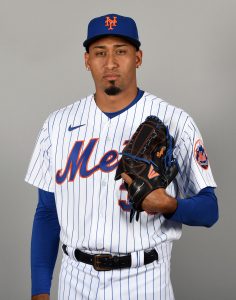
Diaz concluded his three-season Seattle tenure in epic fashion prior to the trade, turning in one of the greatest years a reliever has ever recorded. He collected 57 saves on 61 tries and logged a 1.96 ERA/1.61 FIP with 15.22 K/9 and 2.09 BB/9 in 73 1/3 innings en route to AL Reliever of the Year honors. The Mets surely expected Diaz to compete for the NL version of that award last season. No dice.
Diaz wound up ranking among the majors’ worst at preventing runs in his first year with the Mets, as he finished seventh last out of 158 qualified relievers in ERA (5.59) and well below average in FIP (4.51). The .377 batting average on balls in play hitters registered against Diaz had a hand in his sudden ineffectiveness, though he can’t simply be let off the hook for that. After all, someone who was so dominant just the year before (and very good in the prior two seasons) could no longer seem to keep meaningful contact at bay.
Thanks in part to noticeable decreases in groundball percentage and infield fly rate, Diaz’s hard contact jumped by 18.8 percent from 2018, according to FanGraphs. He ended up in the league’s second percentile in hard-hit percentage and its 11th percentile in average exit velocity against, per Statcast. His slider – a pitch that embarrassed hitters before – was battered to the tune of a .387 weighted on-base average, helping lead to a whopping 16 percent increase in home runs. Many pitchers gave up more HRs than usual during a power-happy 2019, but most didn’t so to that extent.
Despite all of that, the 26-year-old Diaz shouldn’t be counted out just yet. He did show some positive signs last season, believe it or not. Diaz lost nothing on his fastball, a pitch that has averaged 97.3 mph in each of his major league seasons. His strikeouts and swinging strikes dropped from his dream ’18 effort, while his walk rate rose, but he was still far above average in the first two categories and passable in the third. In fact, his strikeout rate (39 percent; 15.38 per nine) ranked in the league’s 99th percentile, and he finished fifth among relievers in swinging strikes (18 percent). And it seems Diaz did deserve better when he threw his slider, evidenced by a .272 expected wOBA against the pitch.
None of this is to say Diaz will ever return to his absolute best form, but he does still seem to have what it takes to succeed in the bigs. Even if he does, the Diaz/Robinson Cano trade (the latter has also struggled so far) probably won’t go down as a positive for the Mets. But if Diaz can help stabilize the back end of New York’s bullpen and aid in a return to the playoffs, that would ease the pain to some degree.
Photo courtesy of USA Today Sports Images.
GM Trade History: Dodgers’ Andrew Friedman
It’s not always fair to judge baseball operations leaders for free agent signings. In many cases, the biggest contracts are negotiated to varying extents by ownership. The same can hold true of major extensions. It’s just tough to know from the outside.
There’s obviously involvement from above in trade scenarios as well. But, when it comes to exchanging rights to some players for others, it stands to reason the role of the general manager is all the more clear.
In any event, for what it’s worth, it seemed an opportune moment to take a look back at the trade track records of some of the general managers around the game. We’ve already covered the Diamondbacks’ Mike Hazen, former Astros GM Jeff Luhnow, the Brewers’ David Stearns, the Angels’ Billy Eppler, the Rockies’ Jeff Bridich, the White Sox’ Rick Hahn, the Tigers’ Al Avila, the Braves’ Alex Anthopoulos, the Padres’ A.J. Preller, the Blue Jays’ Ross Atkins, the Mariners’ Jerry Dipoto and the Phillies’ Matt Klentak. It’s time to head to Los Angeles to check in on the work Andrew Friedman has done since the Dodgers hired the former Tampa Bay GM after the 2014 season. Friedman’s no longer a GM – he has an even more prestigious title as president of baseball operations, and has overseen a perennial powerhouse (albeit one that has fallen short of World Series glory) throughout his reign.
Here’s a rundown of Friedman’s key LA trades, which are in chronological order and exclude minor moves (full details at transaction link):
2014-15 Offseason
- Acquired RHP Joel Peralta and LHP Adam Liberatore from Rays for RHPs Jose Dominguez and Greg Harris
- Acquired RHP Mike Bolsinger from Diamondbacks for cash considerations
- Acquired RHP Juan Nicasio from Rockies for OF Noel Cuevas
- Acquired OF Chris Heisey from Reds for RHP Matt Magill
- Acquired C Yasmani Grandal and RHPs Joe Wieland and Zach Eflin from Padres for OF Matt Kemp and C Tim Federowicz
- Acquired LHP Andrew Heaney, INF Enrique Hernandez, C Austin Barnes and RHP Chris Hatcher from Marlins for INFs Dee Gordon and Miguel Rojas and RHP Dan Haren
- Acquired SS Jimmy Rollins and cash considerations from Phillies for RHP Zach Eflin and LHP Tom Windle
2015 Season
- Acquired RHP Ryan Webb, C Brian Ward and a 2015 Competitive Balance (Round B) draft pick from Orioles for RHP Ben Rowen and C Chris O’Brien
- Acquired INF Alberto Callaspo, RHP Juan Jaime, and LHPs Ian Thomas and Eric Stults from Braves for INF Juan Uribe and RHP Chris Withrow
- Acquired OF Jordan Paroubeck and RHP Caleb Dirks from Braves for international bonus slot worth $249K
- Acquired LHP Grant Dayton from Marlins for LHP Chris Reed
- Acquired LHPs Alex Wood and Luis Avilan, INF Jose Peraza, RHPs Mat Latos, Jim Johnson and Bronson Arroyo, and 1B Michael Morse for OF Hector Olivera, LHP Paco Rodriguez and RHPs Jeff Brigham, Victor Araujo, Kevin Guzman and Zachary Bird in three-team trade
2015-16 Offseason
- Acquired RHP Frankie Montas, INF Micah Johnson and OF Trayce Thompson for INFs Jose Peraza and Brandon Dixon and OF Scott Schebler in three-team trade
2016 Season
- Acquired INF/OF Chris Taylor from Mariners for RHP Zach Lee
- Acquired RHPs Bud Norris and Alec Grosser, OF Dian Toscano and cash considerations from Braves for RHP Caleb Dirks and LHP Phil Pfeifer
- Acquired LHP Rich Hill and OF Josh Reddick from Athletics for RHPs Frankie Montas, Jharel Cotton and Grant Holmes
- Acquired RHP Josh Fields from Astros for 1B/OF Yordan Alvarez
- Acquired C Carlos Ruiz from Phillies for C A.J. Ellis and RHP Tommy Bergjans
2016-17 Offseason
- Acquired 1B Darin Ruf and 2B/OF Darnell Sweeney from Phillies for INF/OF Howie Kendrick
- Acquired 2B Logan Forsythe from Rays for RHP Jose De Leon
2017 Season
- Acquired LHP Tony Cingrani from Reds for OF Scott Van Slyke and C Hendrik Clementina
- Acquired RHP Yu Darvish from Rangers for 2B/OF Willie Calhoun, INF Brendon Davis and RHP A.J. Alexy
- Acquired LHP Tony Watson from Pirates for INF Oneil Cruz and RHP Angel German
- Acquired OF Curtis Granderson from Mets for RHP Jacob Rhame and cash considerations
- Acquired INF/OF Connor Joe from Braves for $500K in international money
2017-18 Offseason
- Acquired OF Matt Kemp from Braves for 1B Adrian Gonzalez, LHP Scott Kazmir, RHP Brandon McCarthy and INF Charlie Culberson
- Acquired LHP Scott Alexander and INF Jake Peter for LHP Luis Avilan, RHP Trevor Oaks and INF Erick Mejia in three-team trade
2018 Season
- Acquired LHP Logan Salow from Athletics for RHP Wilmer Font
- Acquired RHPs Dylan Floro and Zach Neal and international bonus pool space from Reds for RHPs Aneurys Zabala and James Marinan
- Acquired INF Manny Machado from Orioles for OF Yusniel Diaz, RHPs Dean Kremer and Zach Pop, and INFs Breyvic Valera and Rylan Bannon
- Acquired 2B Brian Dozier from Twins for 2B Logan Forsythe, OF Luke Raley and LHP Devin Smeltzer
- Acquired RHP John Axford from Blue Jays for RHP Corey Copping
- Acquired RHP Ryan Madson from Nationals for RHP Andrew Istler
- Acquired 1B/3B David Freese from Pirates for INF Jesus Valdez
2018-19 Offseason
- Acquired RHPs Homer Bailey and Josiah Gray and INF Jeter Downs from Reds for OFs Yasiel Puig and Matt Kemp, LHP Alex Wood, C/INF Kyle Farmer and cash
- Acquired C Russell Martin and cash from Blue Jays for SS Ronny Brito and RHP Andrew Sopko
2019 Season
- Acquired RHP Casey Sadler from Rays for RHP Nathan Witt
- Acquired 1B Tyler White from Astros for RHP Andre Scrubb
- Acquired LHP Adam Kolarek from Rays for OF Niko Hulsizer
- Acquired INF Jedd Gyorko from Cardinals for LHP Tony Cingrani and RHP Jeffry Abreu
- Acquired C Jose Lobaton from Mariners for cash considerations
2019-20 Offseason
- Acquired INF Clayton Daniel from Cubs for RHP Casey Sadler
- Acquired RHP Brusdar Graterol, OF Luke Raley and the 67th pick in the draft from Twins for RHP Kenta Maeda, $10MM and C Jair Camargo
- Acquired OF Mookie Betts, LHP David Price and half of Price’s $96MM guarantee from Red Sox for OF Alex Verdugo, INF Jeter Downs and C Connor Wong
- Acquired LHP Tyler Gilbert from Phillies for OF Kyle Garlick
__
Friedman has no doubt acquired plenty of notable names since he arrived in Los Angeles. How do you think he has fared in trades during his time atop the Dodgers’ front office?
(Poll link for app users)
Grade Friedman's LA trades
-
B 43% (1,966)
-
A 42% (1,912)
-
C 12% (539)
-
F 2% (92)
-
D 2% (85)
Total votes: 4,594
Rangers Executives Take Temporary Pay Cuts
As clubs brace for the possibility of layoffs or staff reduction while revenue is halted, Evan Grant of the Dallas Morning News reports that several top-ranking Rangers executives have taken temporary ~20% pay cuts. The hope is to protect lower-level employees from being laid off or furloughed.
The salary reduction will hit the “top executive staff,” per Grant. That includes president of baseball operations Jon Daniels but not principal owners Ray Davis and Neil Leibman, neither of whom draws a salary. Further details aren’t known.
Whether and when the team will explore further cost-cutting efforts isn’t evident. We have yet to hear much from other teams around the league on this front. The situation is perhaps a bit different in Texas, as the club had been anticipating a massive revenue boost even as it pays (part of) the cost of its still-unused new ballpark.
By leaguewide agreement, all teams already decided to retain their usual salaried employees through the end of April. Players, of course, have been handled separately. And the slate of salaried employees generally does not include a large number of people you’d encounter during a typical trip to the ballpark. Teams each promised $1MM to hourly employees. But that left unaddressed the employees of third-party vendors. At least some teams have expanded their efforts to ensure some money flows to those workers.
Examining Rockies’ Ineffective Free-Agent Spending
It hasn’t been an enjoyable 12 months for the Rockies organization. There was plenty of goodwill to go around heading into last season after back-to-back playoff berths and the long-term extension franchise player Nolan Arenado signed. But just about everything has gone in the wrong direction for Colorado since then. The club fell on its face in 2019, winning a meager 71 games, and its higher-ups have since irked Arenado. The five-time All-Star surfaced in trade rumors while making it known that he was unhappy with the Rockies’ inactivity over the winter.
The Rockies used the offseason to sign only one major league free agent – untested right-hander Jose Mujica – and for a relatively paltry $563K. Now, expectations are that they’ll again sit near the bottom of the league in 2020 (if there is a season). One key reason the team has slid down the standings and just might stay there? An utter lack of big-money success on the free-agent market.
Since general manager Jeff Bridich assumed the reins after the 2014 season, the Rockies have signed eight free agents to guarantees worth $10MM or more. All of those deals have been landmines to this point, and five of those players are still eating into the team’s payroll – one that Jason Martinez of Roster Resource and FanGraphs estimates will check in at a franchise-record $156MM on Opening Day. With that much cash already tied up, owner Dick Monfort was unwilling to authorize Bridich to spend in recent months. Maybe that’s a good thing, as you’ll see below…
2015-16 Offseason
Parra came to the Rockies off a solid season divided between Milwaukee and Baltimore, though he was anything but effective as a Rockie. He ended his tenure in Colorado with minus-1.1 fWAR and a .283/.320/.407 line (just a 77 wRC+ when adjusted for ballpark) over 1,249 plate appearances. Motte, meanwhile, didn’t even see his entire deal through. The Rockies cut ties with him after 2016, a year in which he notched a 4.94 ERA/5.68 FIP with minus-0.3 fWAR.
2016-17 Offseaosn
- Ian Desmond, IF/OF: five years, $70MM
- Mike Dunn, RP: three years, $19MM
It was a head-scratcher from the get-go that the Rockies splurged on Desmond to play first base, as he didn’t look to have the bat to handle the offensively charged position and had spent his career to that point as a shortstop/outfielder. The gamble has not paid off at all for the Rox, who still owe Desmond $25MM through 2021 (including a $2MM buyout for ’22). The 34-year-old accounted for a hideous minus-1.7 fWAR during his first three seasons with the team and batted .252/.313/.429 (80 wRC+) in 1,474 PA. The Rockies moved him back to the outfield last year.
Colorado parted with Dunn late in 2019. He’s now retired after serving as a replacement-level reliever (minus-0.1 fWAR) with the club, though that looks like a generous assessment in light of his 5.93 ERA/5.02 FIP across 85 frames. Injuries limited Dunn to just under 35 combined innings in his final two seasons.
2017-18 Offseason
- Wade Davis, RHP: three years, $52MM
- Jake McGee, LHP: three years, $27MM
- Bryan Shaw, RHP: three years, $27MM
Evidenced by the $106MM spent on these three, the Rockies made a sincere effort to bolster their bullpen after 2017. The decision has blown up in their face. Davis, lights-out for most of his career, has been awful since joining Colorado. His contract’s still the largest ever on a per-year basis for a reliever, but his production has tanked. He pitched to an almost 9.00 ERA in 2019 and didn’t last the full season as the Rockies’ closer. Meantime, McGee and Shaw haven’t been much better, if at all. Combined, these three have registered minus-0.3 fWAR in 227 1/3 innings since they signed their contracts.
2018-19 Offseason
Desmond couldn’t solidify first base for the Rockies. Murphy hasn’t been able to, either. Once among the premier hitters in the game, the 35-year-old Murphy could only muster a line of .279/.328/.452 (good for a career-low 86 wRC+) and a personal-worst minus-0.2 fWAR in 478 PA.
__
If you add up the fWAR for all these players, the figure amounts to minus-3.7. The value of the contracts the Rockies handed this group comes to $256.5MM. That’s a lot of wasted money, and it’s part of the reason the Rockies are in such an unenviable position at the moment.
Prospect Faceoff: Pearson v. Mize
There might not be two finer right-handed pitching prospects in baseball than the Blue Jays’ Nate Pearson and the Tigers’ Casey Mize. At least a few notable prospect outlets essentially have the pair neck and neck. Baseball America ranks Pearson as the game’s seventh-best farmhand and has Mize at No. 13. FanGraphs puts Pearson at No. 8, Mize 16th. And MLB.com slightly favors Mize, rating him seventh and Pearson eighth.
Between the two, Pearson seems to be closer to making his major league debut. The 23-year-old, whom the Blue Jays chose 28th in the 2017 draft, dazzled in spring training before the game shut down as a result of the coronavirus pandemic. Pearson fired seven innings of one-run, two-hit ball with 11 strikeouts and three walks, flashing triple-digit heat along the way. Carving up the competition isn’t anything new for the 6-foot-6, 245-pound Pearson, who just last season combined for a 2.30 ERA with 10.5 K/9 and 2.4 BB/9 and averaged 97 mph on his fastball in 101 2/3 innings divided among the High-A, Double-A and Triple-A levels. It was the first extensive pro year for Pearson, who tossed a meager 1 2/3 frames in 2018 as he dealt with a back injury and a fractured ulna.
Whether Pearson will be handle a starter’s workload over the long haul is one of the few questions surrounding him. He only averaged a little over four innings per appearance in 2019, and Baseball America writes, “The fact that Pearson throws with so much velocity on every fastball also gives some scouts concerns about whether that’s a durability risk.” If Pearson can hold up, though, he clearly has the potential to evolve into a front-line starter at the MLB level.
Mize, 22, has ace upside in his own right. He was the No. 1 pick in the 2018 draft and has lived up to the billing in the minors thus far. Mize doesn’t throw as hard as Pearson (his typical fastball clocked in at 93 mph in ’19), but he was just about untouchable last year in High-A (0.88 ERA over 30 2/3 innings) before earning a promotion to Double-A. Mize continued to wow at the second-highest level of the minors, where he recorded a 3.20 ERA and 8.69 K/9 against 2.06 BB/9 in 15 starts and 78 2/3 frames; however, Mize did miss a few weeks with shoulder inflammation, and the Tigers put an early end to his season to preserve him for future years. He returned during the spring with four innings of three-hit, two-run pitching, notching six strikeouts and a pair of walks.
If health doesn’t fail either of these hurlers in the coming seasons, baseball fans could be treated to another couple of electrifying arms. Which of the two would you take as a building block? (Poll link for app users)
Pick a prospect
-
Nate Pearson 53% (2,162)
-
Casey Mize 47% (1,903)
Total votes: 4,065
Klutch Sports Agency Expands Into Baseball
The Klutch Sports agency announced today that it has acquired the Tidal Sports agency. That’ll bring agent Brodie Scofield and his stable of clients into the growing multi-sport outfit.
Klutch and top agent Rich Paul are already well known in hoops circles. They represent LeBron James and other NBA superstars. A recent investment from United Talent Agency brought the promise of expansion into other sports, which is obviously now underway.
This acquisition comes at a moment when all professional sports are on hold. While NBA players had already earned most of their salaries for the 2019-20 season, MLB earnings are on hold pending the resumption of play. Under the deal agreed to between the league and union, ballplayers would collectively earn just $170MM (less than one-twentieth the expected tally) in 2020.
Of course, MLB players do stand to continue accruing service time even if no baseball is played this year. That’s of particular importance for some of the new Klutch clients, who’ll continue to be represented by Scofield — now the agency’s lead baseball representative.
As MLBTR’s database reflects, the baseball unit now housed at Klutch Sports features some rather prominent players. Astros star Alex Bregman is certainly the top client; he’s entering the first year of the extension he inked in the spring of 2019. Another client, Brewers infielder Keston Hiura, seems a potential extension candidate. Mets starter Marcus Stroman is slated to reach free agency in advance of the 2021 campaign. Other big leaguers on the client list include Kevin Gausman, Sean Newcomb, and Blake Swihart. And the Klutch stable now also features one of the game’s top prospects in Jarred Kelenic of the Mariners.