
Offseason Outlook: Washington Nationals
MLBTR is publishing Offseason Outlooks for all 30 teams. Click here to read the other entries in this series.
Right after wrapping up a dream 2019 season, the Nats are already in the midst of an offseason loaded with big questions and abundant possibilities.
Guaranteed Contracts
- Patrick Corbin: $125MM through 2024 ($10MM deferred)
- Max Scherzer: $70MM through 2021 (all deferred); $30MM in signing bonus payments payable in 2020 and 2021
- Anibal Sanchez: $11MM through 2020 (includes buyout on 2021 club option)
- Adam Eaton: $11MM through 2020 (includes buyout on 2021 club option; Nationals exercised 2020 club option)
- Sean Doolittle: $6.5MM through 2020 (Nationals exercised 2020 club option)
- Kurt Suzuki: $6MM through 2020
Arbitration-Eligible Players (service time in parentheses; projections via MLBTR contributor Matt Swartz)
- Hunter Strickland – $1.9MM
- Javy Guerra – $1.3MM
- Michael A. Taylor – $3.25MM
- Roenis Elias – $1.9MM
- Joe Ross – $1.4MM
- Trea Turner – $7.5MM
- Koda Glover – $700K
- Wilmer Difo – $1.2MM
- Non-tender candidates: Strickland, Guerra, Taylor, Glover, Difo
Free Agents
- Asdrubal Cabrera, Brian Dozier, Jeremy Hellickson, Daniel Hudson, Howie Kendrick, Gerardo Parra, Anthony Rendon, Fernando Rodney, Jonny Venters
- Stephen Strasburg: opted out of remaining contract ($100MM through 2023)
- Matt Adams: paid $1MM buyout in favor of $4MM mutual option
- Yan Gomes: paid $1MM buyout in favor of $9MM club option
- Ryan Zimmerman: paid $2MM buyout in favor of $18MM club option
[Washington Nationals depth chart | Washington Nationals payroll outlook]
Things can change quickly, eh? It wasn’t but a few months ago that the baseball world was shoveling dirt on the 2019 Nationals, with huge and unpredictable ramifications for the organization’s future sure to come. But the Dave Martinez-led troops got back on their feet, dusted themselves off, and ultimately made a stirring run through the postseason to claim a redemptive World Series title. And now, after briefly basking in the glow of that victory … the team’s three longest-tenured stars are free agents, along with a slate of other postseason heroes, contributors, and/or Baby Shark visionaries.
The Nats have never faced a crossroads like this, even when Bryce Harper reached the open market last winter. They’ll come to the intersection wearing a satisfied grin, but make no mistake: there are many difficult decisions soon to be made.
Fortunately, the Nationals have loads of payroll flexibility to work with. The club has carried one of the game’s heftiest commitment levels for the past several seasons, paying some luxury tax in 2018 and barely avoiding it in 2019, and could presumably again top $200MM in payroll in 2020. The Nationals enter the offseason with something like $80MM to $90MM of headroom (depending upon arbitration decisions) beneath the $208MM competitive balance tax line. That should give president of baseball operations Mike Rizzo an awful lot of options to consider. (He’ll also likely be negotiating his own new contract; his current deal runs through 2020.)
It all begins with Rendon and Strasburg, a pair of quiet, Scott Boras-repped stars who each turned in ~6 WAR campaigns in 2019. It was far from inevitable that either would reach free agency this year. Mutual interest in a deal prompted a long-running exchange of offers with Rendon, but never resulted in an extension. And the general consensus, until rather recently, was that Strasburg would be best served staying in his own previously inked extension with the Nats. While there’s some reason to think that each player would prefer to stay in DC, all else being equal, the cost to keep these players will be steep. MLBTR predicted that both would secure $30MM+ average annual values over lengthy commitments. The organization would reportedly prefer to wrap up its talks with these two players early in the offseason, allowing both parties to move on if it isn’t to be.
Should the Nats retain both of these familiar faces, they’ll have committed a big chunk of their spending capacity — but hardly all of it. If either or both players depart, the club will have more cash to spread around. But there are a few open-market alternatives that could cost just as much or even more. If Rendon takes off, the Nationals may look to Josh Donaldson as an alternative. The fiery veteran is not far off from Rendon in present on-field ability and won’t require as lengthy a commitment (or, likely, as big an annual salary). And the loss of Strasburg could lead the Nats to join the pursuit of Gerrit Cole, who’s likely to out-earn all other free agents this winter.
As things stand, we just can’t know how these major decisions will turn out. But they represent major offseason plot twists for these and other teams. An extra thirty or sixty million of spending capacity can open quite a few doors. Rather than trying to guess on Rendon, Stras, et al., we’ll run through the many remaining D.C. roster needs and think about players at different price points that could be fits.
Let’s begin on the position-player side. The Nats are crossing their fingers that Trea Turner will bounce back well from his recent surgery; he’s ensconced at shortstop. It’s mostly fixed in the outfield, where phenom Juan Soto and veteran Adam Eaton will flank Victor Robles. Half of the catching situation is accounted for with Kurt Suzuki. And … that’s really all that’s nailed down at the moment. That’s not to say that we would expect the Nats to have seven new position players on the active roster come Opening Day. But every other spot is at least up for grabs and susceptible to change.
The 3-4-5 spots are especially interesting. We’ve seen indications that Ryan Zimmerman could be slated to return at first base, but the club hasn’t moved to do so yet and would certainly be justified in exploring alternatives after he turned in an injury-limited, offensively marginal (.257/.321/.415) campaign. Top prospect Carter Kieboom could be ready for another shot at the majors after scuffling in an early 2019 look. He has a bright outlook with the bat and could be slotted in at second or third base. Jake Noll is in much the same place from a positional standpoint but doesn’t come as highly regarded at the plate. It’s possible he’ll be bumped from the 40-man rather than seen as a significant piece of the puzzle; the same holds for utility infielders Wilmer Difo and Adrian Sanchez.
It seems fair to presume the Nats will be add at least three players to infield mix. At first base, even if Zimmerman is brought back, he’ll be accompanied by a quality lefty bat. Platoon mate candidates include Adams, Mitch Moreland, Eric Thames, and the switch-hitting Justin Smoak. There’s a lot to love about the bat from Edwin Encarnacion, but he’s not likely to spend enough time in the field to fit on a National League team. It’s tough to identify any quality regular first basemen who’d figure to come available via trade unless the Indians make Carlos Santana available or the Pirates dangle Josh Bell. Perhaps Brandon Belt of the Giants could be an option. Brad Miller, who’s probably best kept at first but can fill in all over the field, could be an under-the-radar target.
Even if Kieboom will be relied upon for a major contribution at second base, there’s a need for a regular at the hot corner and a versatile reserve. Fortunately for the Nats, they’re well-positioned to take advantage of the market’s abundance of veteran free agents at second and third base. Mike Moustakas is the next-best option at third behind Rendon and Donaldson; he’s also now capable of seeing some time at second. Outgoing D.C. free agents Howie Kendrick, Asdrubal Cabrera, and Brian Dozier are all available, as are players such as Todd Frazier, Jason Kipnis, Starlin Castro, Jonathan Schoop, Eric Sogard, and Ben Zobrist (who was targeted by the Nats when last he reached free agency). The trade market isn’t loaded with especially appealing options, but could feature some high-priced veterans that might conceivably fit. Dee Gordon, Jurickson Profar, and Matt Carpenter could all make sense for the Nationals in varying ways. The versatile Whit Merrifield would be a perfect fit, though that’s true of other teams and the Royals don’t appear inclined to sell.
Some of those players would also be potential outfield contributors, which would be nice. The Nats could hang on to Michael Taylor and hope he can handle the fourth outfielder role, though his bat has just never been consistent. The left-handed-hitting Andrew Stevenson had a nice 2019 showing at Triple-A and could also be considered, but he wasn’t trusted with much time in the bigs and doesn’t really fit as a compliment to Eaton. So, where might the Nats fit into the free agent market on the outfield grass? Veterans such as Adam Jones, Hunter Pence, and Cameron Maybin could be considered. The Nats may also just bring in some minor-league free agents to compete for jobs and then adjust mid-season if there’s a need.
Behind the plate, there’s an argument for a relatively modest addition to share time with Suzuki. Jason Castro would make for a nice potential fit. Other left-handed-hitting backstop options are available in the form of Alex Avila and Stephen Vogt (along with switch-hitting old friend Matt Wieters, who doesn’t seem likely to filter back). The open market also features Travis d’Arnaud, Francisco Cervelli, Russell Martin, and Martin Maldonado, among quite a few others. The level of player the team will target could depend upon the degree of confidence in 40-man options Raudy Read and Tres Barrera. The former had quite a nice offensive campaign at Triple-A.
There is one more, yet more intriguing possibility: Yasmani Grandal. Interestingly, he’s a more accomplished hitter than any of the first base options on the open market this winter, so the Nats could conceivably utilize him in a ~50-50 timeshare behind the plate while also giving him time at first. Depending upon how things shake out, Grandal could continue to function in a split capacity or slide back into a full-time catching role once Suzuki departs after the season. It’s an intriguing possibility for a team that will have a boat load of free spending capacity and a need for star position-player talent if it loses Rendon.
Things are somewhat more straightforward on the pitching side. The Nats are clearly in the market for Strasburg or a replacement. For a team that once added Max Scherzer to an already-loaded rotation and rode its starting staff to a title this year, all bets are off when it comes to starters. Anyone and everyone is a potential target if Strasburg heads elsewhere. Even if he returns, the fifth rotation spot will be open for supplementation. Joe Ross, Austin Voth, Erick Fedde, Kyle McGowin, and perhaps Shannon Sharp and Wil Crowe (only the former must be protected from the Rule 5 draft) could battle for the job in camp with a minor-league signee or two. Or the Nats could plug in another veteran. It’s frankly impossible to rule out any single starter as a conceivable potential target.
The relief situation might be more interesting if there were high-end closers out there for the bidding. But with Aroldis Chapman and Will Smith both already locked up, the top available arm is the guy who gave up a monster home run to Kendrick in Game 7. Come to think of it, Will Harris is actually not a bad target for the Nats, who desperately need some added certainty after a season full of nail-biting relief appearances. Daniel Hudson could be brought back after his successful stint. He’s part of a pretty broad group of hurlers lined up behind Harris in the pecking order. If the team is inclined to roll the dice again after whiffing on Trevor Rosenthal, it could take a shot on Dellin Betances in hopes of landing on a late-inning ace to pair with Sean Doolittle. Supposing Roenis Elias can get back to form, there isn’t a particular need for a southpaw, so the Nats can focus simply on getting the best arms for the best price.
How many new pen arms do the Nats need? It’d make sense to secure at least two sturdy new options and perhaps add another if the club decides to cut bait on Hunter Strickland. But that really depends how the club feels about its existing arms, since it’ll surely be forced to shave a few players off of the 40-man if it doesn’t rely upon them. Several of the above-noted starters meet that description, as do some of the other uncertain relievers presently taking up roster spots. Austen Williams is coming off of a rough campaign, James Bourque has both an intriguing arm and a walk problem, and both Aaron Barrett and Koda Glover are major health risks.
So what’ll the Nats do to set the stage for an encore? It’s a question without anything close to a clear answer. All of the above possibilities and more are surely under consideration. Soto and Turner are extension candidates, too, it’s worth noting — with added onus, perhaps, if the organization says goodbye to Rendon, Strasburg, and Zimmerman. Even with all the disappointments now atoned for, the Nationals are perhaps entering their most free-ranging and interesting offseason under Rizzo’s helm. And he has already shown quite a penchant for surprise.
Yokohama BayStars Post Yoshitomo Tsutsugo
November 18: The posting formally occurred today, meaning the deadline to reach a deal is December 19th, per Joel Sherman of the New York Post (via Twitter).
November 15: The Yokohama DeNA BayStars of Japan’s Nippon Professional Baseball announced Friday that they have posted slugging left fielder/first baseman Yoshitomo Tsutsugo for Major League teams (link via the Japan Times). He now has 30 days to negotiate with MLB teams willing to pay the BayStars a release fee that is dependent on the size of the contract he signs.
Tsutsugo, who turns 28 on Nov. 26, has been one of Japan’s most prominent sluggers for the past four seasons, hitting a combined .293/.402/.574 with 139 home runs, 116 doubles, five triples, a 15.1 percent walk rate and a 20.4 percent strikeout rate. His best season came back in 2016, when he launched a career-high 44 home runs and slashed .322/.430/.680. It’s worth noting that Tsutsugo’s 2019 season was his weakest of the past four (.272/.388/.511, 29 home runs) and saw his strikeout rate climb to 25.3 percent.
There’s little doubting Tsutsugo’s raw power, but his ability to handle increased velocity, make consistent contact and contribute on the defensive side of the ball in MLB are less certain. Listed at 6’0″ and 209 pounds, Tsutsugo doesn’t run particularly well, and although he’s spent some time at third base in his career, most scouting reports on him agree that he’s limited to an outfield corner or first base at this point. FanGraphs’ Eric Longenhagen recently wrote of Tsutsugo that he’s a potential everyday player but one with “no margin for error because of defensive limitations,” noting that has questionable hands could make him a liability at first base. Sports Info Solutions’ Will Hoefer wrote in September that Tsutsugo has a plus throwing arm and “could be hidden in right field with strong positioning.”
The extent to which MLB clubs are sold on Tsutsugo’s defense will determine the interest in him. It’s easy to envision some NL clubs shying away — particularly those who already have a set first baseman locked into place. But Toronto general manager Ross Atkins has already acknowledged some interest in Tsutsugo, and the White Sox stand out as an obvious potential fit with both corner outfield and DH openings. Speculating a bit further, any of the Mariners, Tigers, Royals or Rangers could find a way to work him into a first base/DH/corner outfield rotation. The Marlins, with uncertainty at first base and in the outfield corners, are an on-paper fit in the NL. There’s certainly a case to be made that any rebuilding club could give Tsutsugo a look and hope to land a relatively affordable piece who can help turn things around or emerge as a trade asset.
Under the current posting system, a Major League team interested in Tsutsugo would owe the BayStars 20 percent of the first $25MM guaranteed to him, plus 17.5 percent of the next $25MM, plus 15 percent of any dollars spent north of $50MM. That release fee is on top of the guarantee itself. Contract options and performance incentives, once unlocked or triggered, are subject to a supplemental 15 percent release fee. For minor league deals, MLB clubs pay out 25 percent of the player’s signing bonus, and the player’s salary upon being added to the 25-man roster is subject to a supplemental posting fee.
Tsutsugo, who is being represented by Wasserman, has a finite free-agent window due to the 30-day nature of the posting system, so within a few days of the conclusion of next month’s Winter Meetings (from Dec. 8-12), we’ll know if he’s coming to MLB and where he’ll be playing.
Yuli Gurriel Won’t Opt Into Arbitration
3:26pm: Gurriel negotiated an additional $300K on top of the $8MM that was originally guaranteed, per Jesse Sanchez of MLB.com (via Twitter).
The new contract is structured as a straight one-year pact, although that doesn’t come with a lesser tax hit as one might think; a person familiar with the contract tells MLBTR that for luxury tax purposes, the termination of the original contract comes with a fee that amounts to an “upcharge” — the size of which covers the gap between his new $8.3MM salary and his previous $9.5MM luxury hit.
The new arrangement provides Gurriel with a slight boost in salary while avoiding any possibility of a contentious hearing that might’ve stemmed from opting into arbitration. The clause stipulating that Gurriel become a free agent at the end of the contract and his previous awards bonus package all carry over to the new deal. He’ll be a free agent next winter.
2:41pm: Yuli Gurriel‘s five-year, $47.5MM contract with the Astros affords him the opportunity to opt into MLB’s arbitration system once eligible. But he’ll forgo that right and play out the 2020 season on the original $8MM salary dictated by the contract, tweets USA Today’s Bob Nightengale.
Although Gurriel will have only four-plus years of service time when his contract expires at the conclusion of the 2020 season — as opposed to the six years typically required to become a free agent — he’ll nevertheless head to the open market next winter. Gurriel’s contract stipulates that he be released by the Astros upon completion of the deal at the end of the 2020 season, thus allowing him an opportunity to once again test free agency.
One of the premier players in Cuba throughout the 2000s, Gurriel left his home country in early 2016 alongside his younger brother, Lourdes Gurriel Jr. Both have since realized their dream of playing in the Majors. The elder Gurriel has remained a productive hitter into his mid-30s and, in 2019, turned in the best season of his career at the plate. In 612 plate appearances as Houston’s primary first baseman, he slashed .298/.343/.541 with 31 home runs, 40 doubles and a pair of triples.
Vernon Wells Joins Gem Agency As MLBPA-Certified Agent
Retired three-time All-Star Vernon Wells, who hasn’t played since the 2013 season, has embarked on a new career path as a player agent. The Gem Agency announced that Wells has joined the staff as an MLBPA-certified player representative.
Wells, 40, enjoyed a 15-year Major League career and was considered a high-quality center fielder at his peak. From 2003-06, Wells slashed .292/.344/.509 with 116 homers, 153 doubles, 15 triples and 38 steals. He won three Gold Gloves, made two All-Star teams, collected MVP votes in two seasons and took home a Silver Slugger Award over that impressive four-year stretch. In all, Wells retired as a career .270/.319/.459 hitter with nearly $132MM in career earnings.
“It’s an honor to have Vernon join the Gem Agency, as we begin our efforts to expand the staff and grow our resources,” Gem founder and former Legacy Agency president Greg Genske said in a press release. “I have known Vernon for a long time, first as his agent and second as a friend. He is one of the most respected individuals in the game, and his insights, baseball IQ and industry reputation will make him an invaluable resource for our growing firm.”
Twins Rumors: Wheeler, Bumgarner, Catcher, Perez, Odorizzi
The Twins met with Zack Wheeler‘s representatives at Jet Sports during last week’s GM Meetings, Darren Wolfson of 1500 SKOR North reports in his latest podcast (audio link). Minnesota also has interest in free-agent lefty Madison Bumgarner, much as they did prior to the July 31 trade deadline. The Twins filled one spot in the rotation when Jake Odorizzi accepted the qualifying offer, but they still have virtually no certainty beyond Odorizzi and fellow righty Jose Berrios. Thankfully, Minnesota has a substantial amount of payroll space given their lack of long-term commitments. Adding at least one more — and likely two more — seems like it’ll be a goal for recently extended front office tandem Derek Falvey and Thad Levine.
Some early notes in what should be a busy offseason for the Twins…
- The Twins made a multi-year offer to Yasmani Grandal last winter but aren’t expected to pursue him again this winter, Dan Hayes of The Athletic reports (subscription link). Mitch Garver‘s breakout 2019 season and the continued development of prospect Ryan Jeffers has the Twins bullish on their internal catching options, even if Jeffers isn’t likely to be an option until the 2021 season. More importantly, the aforementioned needs in the rotation will take priority over sorting out who’ll share time with Garver behind the plate. Still, with Jason Castro hitting free agency and Jeffers only briefly reaching Double-A in 2019, adding a second catcher is arguably an understated need. Minnesota does have one of the game’s more unique backup options in the versatile Willians Astudillo, but “La Tortuga” batted just .268/.299/.379 in 204 plate appearances this past season (79 OPS+) and only suited up for 158 innings behind the plate. The 28-year-old Astudillo’s ability to catch and handle multiple infield/outfield positions does make him an intriguing fit as the 26th man on next year’s expanded roster.
- Also of note, Hayes writes that the Twins have some interest in bringing left-hander Martin Perez back in 2020, although clearly at a lower rate than the $7.5MM club option the team declined earlier this month. Speculatively speaking, it’d be interesting to see what the hard-throwing Perez could do in short relief stints, and the Twins don’t have much on the roster in terms of left-handed relief options beyond closer Taylor Rogers. Perez averaged 94.1 mph on his fastball as a starter in 2019 and would presumably see that velocity trend upward with a move to the bullpen.
- Odorizzi joined MLB Network’s Hot Stove show this morning to discuss his decision to accept the qualifying offer but also expressed interest in remaining with the Twins on a long-term deal (video link). “I really enjoy Minnesota,” said Odorizzi. “The people up there are fantastic. Obviously the team is really good. Our front office does a great job. Having [manager Rocco Baldelli] there is a great familiarity with me. But that’s kind of out of my control. The door is open from me, and it’s just a matter of if they want me. … I’d like to have a place where my family can settle down with me and call home, but that’s baseball — sometimes you’ve got to play it year to year and figure it out from there.”
Pirates Name Ben Cherington General Manager
Nov. 18: The Pirates have formally announced the hiring of Cherington as general manager.
“This is an important step forward for our organization,” owner Bob Nutting said in a press release. “Ben has an incredible track record of success having been a part of three World Championship teams in Boston, one as General Manager, and setting the table for a fourth. His passion and ability to identify, infuse and develop talent at every level, including at the Major League level, is exactly what we need to be successful in Pittsburgh.”
Nov. 15: Former Red Sox general manager and current Blue Jays senior vice president of baseball operations Ben Cherington has accepted an offer to become the next GM of the Pirates, Jason Mackey of the Pittsburgh Post-Gazette reports (via Twitter). Mackey reported last night that Cherington had been offered the position but had yet to accept or reach an agreement. Once officially announced as the replacement for the recently fired Neal Huntington, Cherington will quickly turn his attention to finding a replacement for manager Clint Hurdle, who was also fired following the 2019 season.
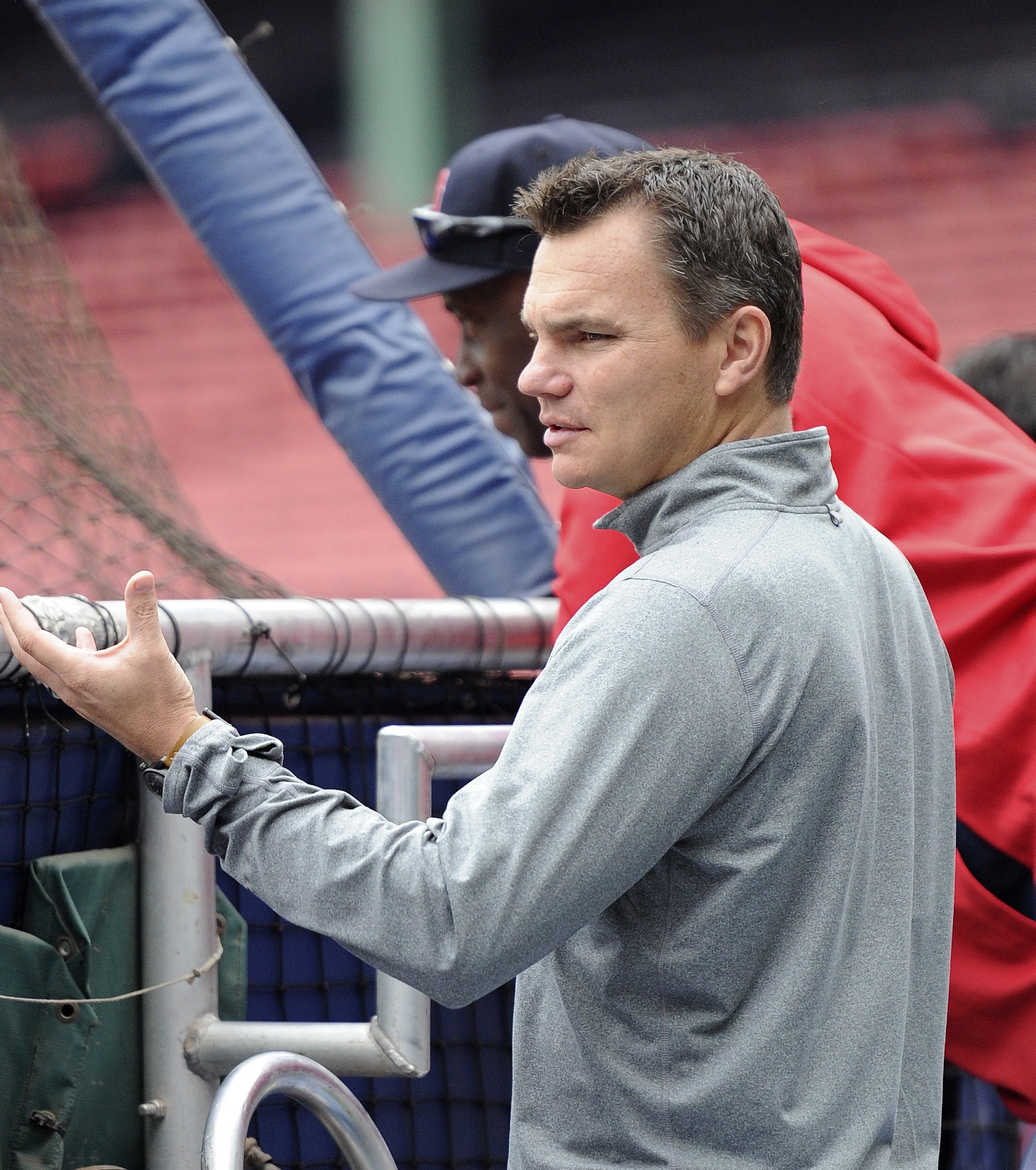
It’s been more than four years since Cherington resigned as general manager in Boston. Cherington was under contract for at least one more season when the Red Sox brought Dave Dombrowski aboard as the new president of baseball operations, and although he was offered the opportunity to retain his GM role, he instead opted to leave the organization. A year later he signed on with the Blue Jays to work in the role he held until accepting this new challenge.
Cherington is best remembered for serving as the key architect of the Red Sox’ 2013 World Series-winning roster. That season was preceded by whirlwind of free-agent additionsS that nearly all panned out; in the 2012-13 offseason, Boston signed Shane Victorino, Mike Napoli, Stephen Drew, Koji Uehara, Jonny Gomes, David Ross and Ryan Dempster. That flurry of moves was made possible when Cherington put together one of the most memorable blockbusters in recent history, trading Carl Crawford, Adrian Gonzalez, Josh Beckett and Nick Punto to the Dodgers in perhaps the most prolific salary dump of all time. In making that swap, Cherington freed up a stunning $258MM of long-term payroll commitments (none of which had been issued during his time as GM).
Of course, one can’t discuss Cherington’s run in Boston without acknowledging the ill-fated moves that ultimately led the organization to bring in Dombrowski and install him at a higher rank. The Red Sox have only recently been liberated from the last vestiges of the five-year, $95MM Pablo Sandoval contract and the four-year, $88MM commitment to Hanley Ramirez that were issued in the 2014-15 offseason. Rick Porcello won a Cy Young Award in the middle of the first year of the four-year, $82.5MM extension he signed under Cherington’s watch (which didn’t take effect until the season after Cherington left the team), but in the three subsequent years he worked to a collective 4.79 ERA in 569 innings.
Suffice it to say, as is the case for any GM/president of baseball operations whose ownership provides him substantial resources, Cherington’s track record in terms of free-agent pickups and pricey contract extensions is rather hit or miss.
Where Cherington arguably excelled most, however, was in cultivating an enviable stockpile of prospect depth that helped fuel Boston’s eventual 2018 World Series title. Rafael Devers, Andrew Benintendi and Eduardo Rodriguez were acquired during Cherington’s time as GM, as were then-prospects Yoan Moncada and Michael Kopech, who headlined the return sent to the White Sox in the Chris Sale trade. Several key graduations to the Majors and trades by the Dombrowski regime have thinned out the Red Sox’ minor league depth, but Boston was considered to have an elite farm system at the time of Cherington’s departure.
More recently, with the Jays, Cherington has worked with a particular focus on the club’s player development efforts. And while a farm system is always a product of a group effort, it’s nonetheless notable that the Jays have churned out notable prospects like Bo Bichette, Vladimir Guerrero Jr., Cavan Biggio and Danny Jansen while continuing to cultivate an increasingly impressive amount of depth. That may have been one of the most appealing aspects of Cherington’s track record to the Pirates, who currently possess what is considered at best a middle-of-the road farm system (No. 15 at MLB.com and No. 20 at Baseball America).
Continued success in that area will be crucial to Cherington’s success or failure in Pittsburgh, as he’ll have only a fraction of the player personnel budget to which he was accustomed during his time as GM in Boston. The Pirates are perennially among the league’s lowest-spending clubs under owner Bob Nutting, meaning Cherington will need a deep reserve of cost-controlled talent from which to draw as he navigates the financial obstacles that accompany any low-payroll GM’s job.
The biggest offseason questions on Cherington’s roster, once the field staff is set, will be how to proceed with center fielder Starling Marte and right-hander Chris Archer. Both are controlled for another two seasons, and Archer is coming off perhaps the worst season of his career. Marte figures to be an in-demand trade asset given his consistent production and the dearth of quality center-field options on the free-agent market, while Archer could yet have considerable trade value given his raw stuff, affordable contract and a similar lack of high-end pitching targets on the trade market. Determining the right time to pull the trigger on that type of deal will become the norm for Cherington in the years to come, barring an unexpected hike in payroll from ownership.
Twins Prospect Ryan Costello Passes Away
Twins prospect Ryan Costello passed away over the weekend at just 23 years of age, the team announced Monday morning. Costello had been in Auckland, New Zealand and was slated to play third base for the Auckland Tuatara in the Australian Baseball League beginning this week.
“The Minnesota Twins are deeply saddened to learn of the untimely passing of Ryan Costello yesterday in New Zealand,” the team said in a press release this morning. “On behalf of the entire organization, the Twins send their most sincere condolences to Ryan’s family, friends, coaches and teammates.”
Preliminary indications suggest that Costello died of natural causes, writes Daren Smith of MiLB.com, citing a statement from the Tuatara. Costello was a 31st-round pick of the Mariners in 2017 and came to the Twins in the 2018 trade that sent lefty Zach Duke to Seattle. MLBTR extends its sympathies to the family, friends and teammates of Costello as well as the entire Twins organization.
Yomiuri Giants Post Shun Yamaguchi
Nov. 18: The Giants announced today that Yamaguchi has indeed been posted (link via the Japan Times). Major League teams will now have 30 days to negotiate with the right-hander.
“I will take a shot at my dream of playing in the majors,” Yamaguchi said at a press conference. “I’d like to express my appreciation to Yomiuri Giants officials, manager Mr. (Tatsunori) Hara, my coaches, teammates and fans for the past three years. I will work even harder as I pursue a new challenge.”
Nov. 17: Right-hander Shun Yamaguchi has asked his team, the Yomiuri Giants, that he be posted and allowed to negotiate with MLB teams, according to reports from Sankei Sports (hat tip to reporter Jim Allen). Notably, the Giants have never posted a player in franchise history, meaning that it would be a considerable step for Yamaguchi to make it stateside.
The 32-year-old Yamaguchi has 14 years of experience in Nippon Professional Baseball, as he broke in with the Yokohama BayStars when he was just 18 years old. After making 11 starts in his first two pro seasons, Yamaguchi was moved to the bullpen, and he posted impressive numbers as Yokohama’s closer from 2009-2012. He began to transition back to starting pitching in 2014, and has worked almost exclusively out of the rotation ever since, culminating in a 2019 season that saw him lead NPB in both strikeouts (188) and wins (15) while pitching 170 innings.
As noted by Allen in a scouting report of Yamaguchi, the righty averages roughly 90.1mph on his fastball, though his top pitch is a splitter. Yamaguchi also has an off-the-field black mark on his resume, as he reportedly shoved a security guard and injured his pitching hand during a drunken incident in July 2017, though Allen notes that this seems to have been an isolated case of bad behavior.
“MLB scouts I’ve spoken to see him as either a back-of-the-rotation starter or a bullpen guy, largely because he has not established his current level of success,” Allen writes. It remains to be seen what type of interest Yamaguchi would draw in this offseason’s free agent market, though it could end up being a moot point if Yomiuri refuses to post him or release him from his contract.
Report: Paddack, Gore Are “Virtually Untouchable” In Padres’ Trade Talks
The Padres are more likely to upgrade their roster through trades moreso than free agency this winter, though that hardly means the Friars are open to moving just anyone. As per Kevin Acee of the San Diego Union-Tribune, sources both from within the Padres and on rival teams feel that Chris Paddack and top prospect MacKenzie Gore are “virtually untouchable” within the the Padres’ ranks of young arms. Right-handed pitching prospect Luis Patino “is just slightly more available than” Paddack or Gore, meaning that San Diego seems unlikely to move any of the three best impact arms in the organization.
It’s no surprise that Paddack is off limits following his impressive rookie season, or that Gore (a consensus top-five prospect in baseball in the eyes of Baseball America, MLB.com, and Fangraphs) isn’t a trade chip. Patino’s name isn’t as well-known as the others, though he also possesses an impressive pedigree.
An international signing out of Colombia, the 20-year-old Patino has a 2.35 ERA, 10.7 K/9, and 3.49 K/BB rate over 234 innings in pro ball. He cracked the Double-A level last season, so it wouldn’t be out of the question to see Patino reach the majors by late in the 2020 campaign. A converted shortstop, Patino has a fastball that usually sits in the mid-90s and has touched the 98mph threshold, while also possessing a plus slider and some very promising breaking pitches. Fangraphs ranks Patino 26th among all minor leaguers, with BA (29th) and MLB.com (30th) not far behind on their own top-100 lists.
Interest in Patino has grown as other teams are “realizing the Padres won’t part with Gore,” Acee writes, though if Patino is almost surely staying put, trade suitors will likely turn their attention elsewhere in the organization. To this end, there are still plenty of options available, since “any starting pitcher among [the Padres’] deep trove of highly-rated prospects and young major leaguers can be had as part of a trade package.”
Since Acee wrote over the summer that Manny Machado, Fernando Tatis Jr. and Eric Hosmer are the only position players San Diego is unwilling to trade, that leaves basically anyone else on the organizational depth chart available as a possible trade chip. Acee’s report came prior to the Padres’ acquisition of Taylor Trammell in the Trevor Bauer/Franmil Reyes deal, so one would imagine that the highly-touted Trammell also won’t be moved. (And, I would suspect that after two middling seasons from Hosmer, the Padres might be at least willing to listen if another team offered to take the first baseman and his $99MM in remaining salary off San Diego’s hands.)
It leaves the Padres with no shortage of possibilities in figuring out how to upgrade their team, as the franchise enters what could be a pivotal year. Executive chairman Ron Fowler described the club’s 70-92 season as “embarrassing,” and promised changes if the Padres didn’t improve in 2020. This puts extra pressure on general manager A.J. Preller to finally end the Friars’ streak of nine consecutive losing seasons.
MLBTR Chat Transcript: Hamels, Cubs, Yankees, Odorizzi
Click here to read the transcript of tonight’s live baseball chat, moderated by MLBTR’s Mark Polishuk