
Yankees Sign Adam Ottavino
Jan. 24: The Yankees have formally announced the signing. Ottavino will be paid $8MM annually, tweets Heyman, and he’ll receive a deferred $3MM signing bonus.
Jan. 17, 12:47pm: Fancred’s Jon Heyman tweets that Ottavino will be guaranteed $27MM over the three-year term.
12:42pm :The Yankees have agreed to terms on a contract with free-agent reliever Adam Ottavino, ESPN’s Jeff Passan tweets. Robert Murray and Ken Rosenthal of The Athletic had reported seconds prior that the two sides were closing in on an arrangement believed to be worth roughly $25MM over three years (Twitter link). Ottavino is represented by All Bases Covered Sports Management.
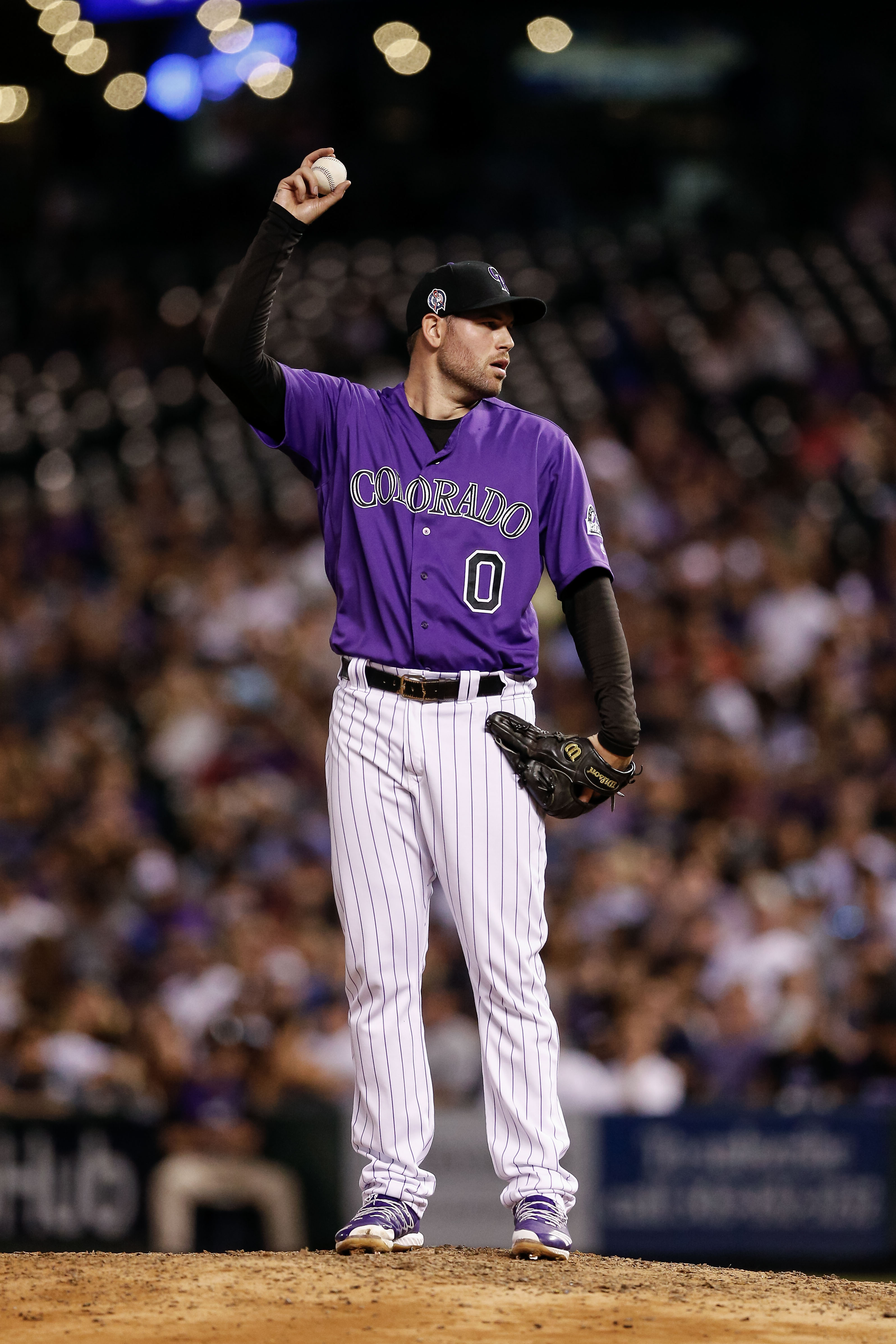
Ottavino, a New York native who went to high school in Brooklyn, has been connected to the Yankees since before the offseason even began. His addition comes on the heels of a breakout 2018 season with the Rockies in which the 33-year-old righty pitched to a 2.43 ERA with 13.0 K/9, 4.2 BB/9, 0.58 HR/9 and a 43 percent ground-ball rate in 77 2/3 innings of relief.
Ottavino joins an already loaded New York relief corps that features Aroldis Chapman, Dellin Betances, Chad Green and fellow offseason signee Zach Britton. That group is impressive on its own, before even considering 25-year-old righty Jonathan Holder, who may not yet be a household name but has nevertheless emerged as a quality reliever in his own right. Certainly, no bullpen is ever a sure thing to produce, given the year-over-year volatility of relief pitchers, but in terms of sheer talent and upside, there’s arguably no better collection of bullpen arms in baseball right now.
It should be noted that while Ottavino had a career year in 2018, the two prior seasons garnered more mixed results. Ottavino underwent Tommy John surgery in May 2015 and missed the majority of that season as well as a notable chunk of the 2016 campaign. When he returned in July 2016, he was nothing short of excellent, pitching to a 2.67 ERA with a 35-to-7 K/BB ratio and a preposterous 61.9 percent grounder rate in 27 innings.
The 2017 season, however, was brutal for Ottavino, as he averaged 6.6 walks and 1.35 homers per nine innings pitched en route to a 5.06 ERA. Coming off that campaign, few would’ve believed that the righty would put himself in position to score this type of three-year deal on the open market, but his remarkable bounceback effort was an eye-opener. Ottavino’s 12.1 percent swinging-strike rate isn’t commensurate with the whiff rate you’d expect for someone averaging 13 punchouts per nine innings, and his 26.1 percent opponents’ chase rate on out-of-zone pitches is well below the league average for a reliever. Nonetheless, today’s agreement serves as evidence that the Yankees are convinced of his ability to at least approach his 2018 output as he enters his mid-30s.
In effect, Ottavino will be replacing right-hander David Robertson, who signed with the Phillies on a two-year deal worth a guaranteed $23MM a couple of weeks back. Britton, the team’s other marquee addition, had already finished out the season in manager Aaron Boone‘s bullpen following a deadline trade with the Orioles. In that sense, then, one could argue that the bullpen hasn’t definitively improved. Of course, improving on a relief corps that posted the game’s fourth-best ERA (3.38) and the game’s highest strikeout percentage (30.2 percent) is no small feat. At the very least, swapping out Robertson for Ottavino will ensure that the Yankees’ bullpen should maintain its already elite status, even if one or two of the team’s top relievers take a step back in ’19.
The recent additions of Ottavino and DJ LeMahieu, former Rockies teammates now reunited in the Bronx, have added $21MM worth of luxury tax hits to the Yankees’ ledger. That should put them firmly above the $206MM cutoff even if they’re successfully able to find a taker for Sonny Gray and his $7.5MM salary. As Jason Martinez outlines at Roster Resource, the Yankees’ luxury tax payroll currently projects to just north of $224MM, while their actual in-season 2019 payroll — assuming an even $9MM per year breakdown of Ottavino’s deal — currently rests around $209.5MM.
However, the Yankees dipped south of the luxury tax line last season, which reset them back into the lowest penalty bracket. As such, they’ll be faced with a relatively tame penalty — a 12 percent overage tax on every dollar north of the $206MM cutoff point.
The three-year, $27MM value of Ottavino’s contract is likely a bitter pill for the Rockies to swallow, as Patrick Saunders of the Denver Post observes (Twitter link). The Rox handed out a pair of three-year deals worth that exact amount when signing Bryan Shaw and Jake McGee an offseason ago, both of whom struggled through awful seasons in year one of those contracts. That pair of signings, however, combined with the $52MM pact given to Wade Davis, surely restricted the Rockies’ ability to make an earnest effort to re-sign Ottavino this winter.
Generally, though, Ottavino’s contract falls well within range of what was reasonably expected heading into the offseason. We at MLBTR ranked him 21st on our annual ranking of the game’s Top 50 free agents, predicting that he’d secure a three-year, $30MM pact with the Yankees.
MLBTR Chat Transcript
Click here to read a transcript of Thursday’s chat with MLBTR’s Steve Adams.
Tigers Claim Kaleb Cowart
The Tigers announced this afternoon that they’ve claimed infielder Kaleb Cowart off waivers from the Mariners, which now gives them a full 40-man roster. Cowart was designated for assignment earlier in the week.
The Mariners had planned to utilize Cowart in a hybrid infield/reliever role, and while the Detroit organization didn’t immediately reveal plans to do so, Anthony Fenech of the Detroit Free Press tweets that Cowart will report to Spring Training as a two-way player.
Cowart, 26, was a first-round pick of the Angels back in 2010 but has not yet developed into a reliable big leaguer (hence the experimentation in using him as an infielder/pitcher). In parts of four big league seasons — all with the Halos — Cowart has appeared in exactly 162 games but managed a paltry .177/.241/.293 slash in 380 plate appearances. The right-handed-hitting Cowart has played all over the diamond but has seen the majority of his action at third base (6341 professional innings) and second base (915 innings). He’s a career .289/.361/.469 hitter in just over 1400 Triple-A plate appearances.
Minor MLB Transactions: 1/24/19
The latest minor moves from around baseball….
Latest Moves
- The Rays announced that left-hander Oliver Drake has accepted an outright assignment to Triple-A, as Drake cleared waivers after being designated for assignment last week. This represents some rare stability for Drake, who has switched organizations seven times within the last nine months and became the first player to ever pitch for five different MLB teams in a single season. Drake posted a 5.29 ERA over 47 2/3 combined innings for his five clubs, with a 9.6 K/9 and 3.00 K/BB rate.
Earlier Today
- The White Sox reportedly signed corner infielder Chris Johnson to a minors contract, though he won’t receive an invitation to MLB Spring Training, per Fancred’s Jon Heyman (Twitter link). Johnson hit .275/.313/.404 over 2995 plate appearances for five different Major League teams from 2009-16, including an impressive 2013 campaign that earned him a three-year, $23.5MM extension from the Braves (which ultimately didn’t pan out for the team). Johnson spent 2017 in the Orioles’ farm system and didn’t play at all in 2018, so the 34-year-old will be attempting something of a comeback as he tries to catch on with Chicago.
- The Diamondbacks signed catcher Alberto Rosario to a minor league deal, Baseball America’s Matt Eddy reports. The 32-year-old backstop will return for his second season in Arizona’s organization. Rosario hit .253/.288/.313 over 179 combined plate appearances for the Snakes’ Double-A and Triple-A affiliates in 2018, missing over two months of the season to a pair of DL stints. A veteran of 13 professional seasons, Rosario appeared in 23 big league games with the Cardinals in 2016-17.
Cubs To Sign Brad Brach
1:24PM: Brach will earn at least $4.35MM in guaranteed money in 2019, Rosenthal tweets. The mutual option is also more of a dual option for the 2020 season, similar to what we’ve seen in recent contracts for Zach Britton and Yusei Kikuchi. If the Cubs exercise their option for 2020, Brach will receive $9.5MM over the course of the two seasons. If Brach exercises his side of the option but the Cubs do not, Brach is still under team control for 2020 but at a lesser salary.
11:59AM: The Cubs have agreed to sign free agent reliever Brad Brach, according to The Athletic’s Ken Rosenthal (Twitter link). The deal is a one-year contract worth $3MM, as per Jon Heyman of Fancred Sports (Twitter links), and the two sides hold a mutual option for the 2020 season. Brach, a client of Big League Management Company, will have to pass a physical before the deal is official.
After four years of excellent numbers out of the Orioles’ bullpen from 2014-17, Brach’s production stumbled in the first half of the 2018 season, as he posted a 4.85 ERA over 39 innings with Baltimore. Brach had an untidy 4.4 BB/9 rate over that stretch, though an inflated BABIP may have somewhat unfairly contributed to Brach’s struggles. After a deadline trade to the Braves, however, Brach looked more like his old self, delivering a 1.52 ERA, 8.4 K/9, and a 2.44 K/BB rate over 23 2/3 frames for Atlanta.
On the whole, Brach posted a career-best 46% grounder rate in 2018, though he also had a career-worst 35% hard-hit ball rate, far surpassing his previous high of 29.6%. His fastball also averaged 94.4mph after three years of topping the 95mph threshold, though Brach also threw his fastball less often than usual last season, instead using his changeup with greater frequency in 2018 than in any season save 2015.
These warning signs and Brach’s age (33 in April) may have been enough to lower Brach’s price tag to just one guaranteed season. (MLBTR ranked Brach 41st on our Top 50 Free Agents list, with Tim Dierkes, Steve Adams, and Jeff Todd projecting Brach for a two-year, $12MM deal.) The mutual option does provide the right-hander with the ability to test free agency again next winter if he returns to his old form, making the deal essentially a pillow contract.
Brach served as Baltimore’s closer in 2017 when Britton was on the disabled list, and he could very well pick up some save opportunities early next season as Brandon Morrow recovers from November elbow surgery. At the very least, Brach will provide some backing behind Pedro Strop, Carl Edwards Jr., or whomever ends up handling the ninth inning while Morrow is out, assuming Joe Maddon doesn’t deploy a committee approach.
Getting the 2013-17 version of Brach for, at most, $9.5MM over two years would be a nice coup for a Cubs team that has been facing a payroll crunch all winter. Even the modest expenditure for Brach, however, puts Chicago into a higher Competitive Balance Tax bracket. As per Roster Resource’s projections, the Cubs now have a luxury tax payroll over just under $229MM for next season, putting them in line for an additional tax beyond the usual 20% “first-time” rate for not only exceeding the $206MM luxury tax threshold, but exceeding it by more than $20MM. There had been speculation that the Cubs could explore trading a big contract or two off its current roster to afford bullpen help or other acquisitions, and it remains to be seen if Theo Epstein’s front office has more moves in store to cut payroll and/or land new players.
Rangers Designate Jack Reinheimer For Assignment
The Rangers have designated infielder Jack Reinheimer for assignment, as per a team press release. The move creates roster space for Asdrubal Cabrera, whose one-year deal with Texas is now official.
It has already been a busy offseason for Reinheimer, who began November with the Mets but since went to both the Cubs and Rangers on waiver claims. Originally a fifth-round pick for the Mariners in the 2013 draft, Reinheimer has appeared in 23 Major League games, racking up 40 total plate appearances for the Mets and Diamondbacks in the last two seasons. The 26-year-old owns a .275/.343/.361 slash line over 2805 career PA in the minors, and has mostly lined up as a shortstop while also seeing quite a bit of time at second base and third base. This versatility could make him a claim target once more, though if he remains in the Texas organization, Reinheimer provides the Rangers with some infield depth in the minors.
Rangers Sign Asdrubal Cabrera
TODAY: The Rangers have officially announced the signing.
TUESDAY: The Rangers have agreed to a one-year deal with veteran infielder Asdrubal Cabrera, pending a physical, according to Ken Rosenthal of The Athletic (Twitter link). The deal promises the Octagon client $3.5MM, per ESPN.com’s Jeff Passan (via Twitter).
Initial indications are that Cabrera will primarily line up at third base in Texas. With the team’s middle-infield duo already settled, that certainly makes sense. No doubt, the chance for regular duty was a large part of the draw for the long-time big leaguer.
Cabrera, 33, has spent most of his career in the middle infield, with the lion’s share of that time coming at shortstop. He has lined up at third in recent seasons, but still only has accumulated 471 2/3 frames at the hot corner — representing less than four percent of his total action in the field at the game’s highest level.
While Cabrera has at times actually drawn improved grades on his glove at short in recent years, particularly in the eyes of UZR, his range has long represented a major demerit. Since he’s otherwise a surehanded fielder, and clearly has the arm to work on the left side of the infield, suggests that third base represents a sensible position.
Of course, the calling card for Cabrera remains his bat. He has actually turned things up over the past three years, posting a cumulative .274/.334/.456 slash in that span that’s reflective of his best earlier-career campaigns. The switch-hitter hits for a high average, delivers a fair bit of pop (23 home runs in 2018), and has long succeeded against both right- and left-handed pitching (career .752 OPS vs. .759 OPS, respectively).
In many regards, this seems to be a bit of a bargain rate for a solid veteran who has delivered so much offense in recent seasons. Though he fell just off of MLBTR’s list of the top fifty free agents, receiving honorable mention consideration, Cabrera is younger than Jed Lowrie (who signed for two years and $20MM) and easily outperformed Brian Dozier (one year, $9MM) at the plate last year.
Trouble was, this year’s market (including free agents and trade candidates) was loaded with players who could handle second and/or third base. Among them, Marwin Gonzalez, Mike Moustakas, Josh Harrison, Derek Dietrich, Neil Walker, Logan Forsythe, and others remain available on the open market (in addition, of course, to superstar Manny Machado). As it turns out, Cabrera will land just shy of Ian Kinsler in total guarantee, though he’ll avoid handing over control of another season via club option.
With the move, the Rangers will fill the void created when they traded Jurickson Profar earlier in the offseason. Elvis Andrus and Rougned Odor will remain entrenched at shortstop and second base, respectively, though it surely doesn’t hurt that Cabrera could step in at either position if a need arises. Slugger Joey Gallo will presumably range the outfield, though he’s also an option at third base if there’s a need.
In conjunction with some other veteran additions — veteran backstop Jeff Mathis, three starters (Lance Lynn, Drew Smyly, Shelby Miller), and reliever Jesse Chavez — the Rangers have certainly shored up their roster. Among those acquisitions, only Mathis and Lynn required multiple years, and none of the salaries represents a major outlay for an organization that has a history of significant payrolls and is readying for a new stadium boost.
All in all, there’s greater upside on hand than you might have expected, particularly if a few key young players can make strides. Still, it’s tough to see this group making a strong run in a top-heavy American League. Maintaining a reasonably competitive product won’t allow the Rangers to pocket cost-savings and draft picks to the extent they might have otherwise, but it should help boost revenue and fan interest in the near-term. It’ll be interesting to see how the roster reloading effort shakes out in Texas.
Photo courtesy of USA Today Sports Images.
Astros Still Interested In Dallas Keuchel
It’s too early to count out a reunion between Dallas Keuchel and the Astros, as Fancred Sports’ Jon Heyman reports (Twitter link) that Houston continues to have interest in the free agent left-hander. We haven’t heard much connecting Keuchel and the Astros this winter, though back in late December, MLB.com’s Brian McTaggart speculated that the Astros could reconsider signing Keuchel if he was still on the market by late January, and if the team hadn’t made any other notable pitching signings.
This is exactly the situation both sides find themselves in, four weeks later, and it’s fair to wonder if there could be more than a “slim” chance (as McTaggart described things) of Keuchel again donning a Houston uniform in 2019. There hasn’t been much recent news on Keuchel, as it could be that his market is being held up until Bryce Harper and/or Manny Machado both sign contracts. Of the teams who have been linked to Keuchel this offseason, at least three (the Phillies, Nationals, and Padres) have also had interest in one or both of Harper and Machado. Of course, Washington could be out of the running for Keuchel regardless of what happens with Harper, as the Nats have already augmented their rotation by signing Patrick Corbin and Anibal Sanchez.
Beyond those three teams, the Reds, Rangers, Brewers, Angels, Braves, and Blue Jays have all reportedly had some level of interest in Keuchel at certain points this offseason. This group could all still be fits on paper, though Texas, Cincinnati, and Los Angeles have all preferred to add shorter-term arms to their rotations. Keuchel, meanwhile, was still looking for at least a five-year contract as of last month.
With all this in mind, there seems to be some room for the Astros to re-emerge as a potential landing spot. Keuchel is represented by Scott Boras, who has negotiated some creative contracts for his pitching clients in recent months, and thus could find some common ground if Houston is wary of making a big multi-year commitment to a 31-year-old southpaw. Since Keuchel rejected a qualifying offer, the Astros are currently in line for a compensatory draft pick if signs elsewhere, but the club could decide that foregoing that extra pick is worth it if Keuchel could be re-signed at an acceptable price.
The Astros’ pitching staff was already expected to take a hit this winter with Keuchel and Charlie Morton (now with the Rays) hitting free agency, but they lost another arm in early November when Lance McCullers underwent Tommy John surgery. While the one-two combo of Justin Verlander and Gerrit Cole gives Houston plenty of quality at the front of the rotation, the back end is less certain. Collin McHugh is returning to starting after a year in the bullpen, youngsters Josh James and Framber Valdez have less than a year of MLB experience between them, and some highly-touted arms in the farm system (namely top prospect Forrest Whitley and righty J.B. Bukauskas) are entirely unproven at the big league level. Adding a seasoned, playoff-tested veteran like Keuchel would go a long way towards reinforcing the staff in a year that the Astros hope to again contend for a World Series title.
Mets Notes: McNeil, Free Agents, D’Arnaud, Davis
The latest from the Amazins….
- Teams have shown trade interest in utilityman Jeff McNeil, The Athletic’s Ken Rosenthal reports (subscription required), though Rosenthal is doubtful the Mets would move the 26-year-old. McNeil’s first MLB season saw him hit an eye-popping .329/.381/.471 over 248 plate appearances for New York, numbers that seemingly had him penciled in as the Mets’ second baseman in 2019. After the acquisitions of Robinson Cano and Jed Lowrie, however, McNeil may spend more time in the outfield than the infield next season as the team intends to deploy him as a depth piece all over the diamond. Given his six years of team control and the lengthy injury history of several Mets veterans, it makes sense that New York isn’t looking to deal McNeil, though he would certainly be one of the club’s better trade chips if GM Brodie Van Wagenen wanted to make another bold move.
- The larger focus of Rosenthal’s piece is on Bryce Harper and Manny Machado, as Rosenthal opines that the Mets should be pursuing either player as a way to make a final push as a true contender. The Mets haven’t been considered as prime candidates for either superstar free agent since both players seem out of New York’s price range, though Rosenthal notes that the Mets will recoup a lot of money from insurance on David Wright and Yoenis Cespedes. Earlier today on MLBTR, Steve Adams listed the Mets as a reasonable candidate as one of the “mystery teams” who are reportedly in the hunt for Machado.
- Travis d’Arnaud is another player who could be taking on a multi-position role for the Mets next season, which the catcher is eager to assume. “Wherever the team needs me or wants me to play, I’ll play,” d’Arnaud tells Kevin Kernan of the New York Post. More than anything, d’Arnaud just wants to get back on the field in general, after missing almost all of 2018 due to a partial UCL tear in his throwing elbow. This was the latest in a long list of injuries for d’Arnaud, which is why the Mets signed Wilson Ramos and relegated d’Arnaud to backup catcher, or perhaps hybrid bench duty as a catcher or corner infielder. There’s also still a chance d’Arnaud could be traded, though he seems to have a clear path to the backup job after Kevin Plawecki was dealt to Cleveland.
- Speaking of roster versatility, J.D. Davis is open to helping the Mets as a pitcher, MLB.com’s Anthony DiComo writes. “It’s a set skill that I have — a good arm and a good fastball — I can go out there and compete and throw some strikes and get some outs, that’s for sure,” Davis said. The Mets don’t yet have any plans to work Davis out as a pitcher during Spring Training, DiComo reports, though he notes that Van Wagenen has twice referenced Davis’ ability on the mound since acquiring Davis from the Astros earlier this month. Davis pitched in college and owns a 92-mph fastball, which he showed off in three mop-up duty relief outings for Houston over the last two seasons. For now, however, his primary role with the Mets will be as depth at both corner infield and corner outfield spots.
Trying To Identify “Mystery Teams” For Manny Machado
The apparent staring contest between Manny Machado, the White Sox and the Phillies doesn’t seem to have an end in sight, and the saga will surely drag on even longer if reports of unidentified suitors prove true. With the identities of said teams (assuming for a moment that they do indeed exist) yet unknown — it’s perhaps worthwhile to at least take a high-level pass throughout the league to see just who could plausibly emerge as a surprise dark-horse in the Machado auction.
It seems safe to eliminate the league’s perennial lowest spenders. While the Rays have an atypical amount of flexibility even after signing Charlie Morton, it’s impossible to imagine a team with this payroll history sustaining even a $25MM annual salary — let alone a salary of $30MM or more. Similarly, the Athletics figure to be priced out of the Machado market, as do the Pirates and the Marlins (the latter of which, once again, is rebuilding anyway). The Reds are already projected to set a new franchise-record payroll in 2019, and adding Machado when they already have strong infield options isn’t all that plausible.
Great as Machado is, there are also some clubs who simply don’t have space in their infield for him. The Astros could afford to add Machado to their ranks, for instance, but Houston wouldn’t displace any of Alex Bregman, Carlos Correa or Jose Altuve to accommodate Machado. The Nationals have Anthony Rendon, Trea Turner and newly signed Brian Dozier comprising their non-first-base infield slots. I wouldn’t characterize the group of Josh Donaldson, Dansby Swanson, Ozzie Albies and Johan Camargo as quite as strong an infield mix, but it’s fair to say that the Braves probably don’t have space for yet another left-side infielder, barring a trade. Machado would also take Atlanta’s payroll to record heights.
Looking further, it’s unlikely that a team in the early stages of a pure rebuild is going to sign Machado the type of contract he’s seeking. The Royals are trying to pare back payroll, and the Tigers have yet to signal that they’re ready to emerge from their own restructuring. The Orioles aren’t going to bring him back into the mix on the heels of selling off the vast majority of their appealing veteran assets last summer. If it turns out that the Mariners wanted to clear money for Machado and/or Bryce Harper all along this winter, well then kudos to Jerry Dipoto on the most entertaining offseason in MLB history. But, since we’re trying to be rational, it seems like a lock that Machado doesn’t align with Seattle’s “re-imagining” movement.
Several mid-market teams are said to be facing payroll constraints that’ll probably keep them out of the Machado market. The Indians have been trying to shed payroll for much of the winter, and the Diamondbacks are currently being weighed down by huge commitments to Zack Greinke and Yasmany Tomas, the latter of whom is no longer even on the roster. The Rockies‘ projected payroll already checks in north of $150MM, making a deal tough to envision. And if they’re going to give this type of annual salary to anyone, they’d probably prefer to offer it to Nolan Arenado, anyhow.
There are also several teams who typically spend heavily but are again refraining from doing so. The Dodgers don’t really have a need on the left side of the infield, but they could conceivably move Justin Turner or perhaps even Corey Seager to second base if it meant opening the hot corner for a player of Machado’s caliber, but there have at least been some reports that L.A. is vying to stay below the luxury tax line, and they’ve not spent like a big-market club to date. The Cubs could bid farewell to Addison Russell in some capacity and install Machado at shortstop, but persistent reports out of Chicago suggest their budget isn’t even flexible enough to bolster the relief corps. The Giants seem likelier to rebuild than to add a free agent of this magnitude, and the Rangers have been zeroed in on smaller-scale additions as they embark on their own soft reset. The Blue Jays are no strangers to large payrolls ($160MM+ in each of the past two seasons) but have made only marginal additions as they face the reality of a top-heavy division and the disbanding of the core that recently carried them to the ALCS.
The Red Sox arguably don’t have a dire need for Machado, though they could likely find a way to fit him into the mix. However, they’re just a few million shy of the top luxury bracket, and some reports have implied that an unwillingness to top that threshold is preventing them from even adding a reliever to the ‘pen. They’re picking an odd time to draw a line in the sand, but Machado never seemed all that likely a target anyhow. Their chief rival, the Yankees, made (and very arguably still makes) sense on paper, but it doesn’t seem like they’ll outbid the field to further muddle an already crowded infield picture.
Beyond this grouping, of course, we know that both the White Sox and Phillies are legitimate Machado suitors who needn’t be explored as we try to pin down any potential mystery clubs. All of that said, there are still six clubs that strike me as reasonable guesses when trying to pin down potential Machado mystery clubs. Here’s a look at the remaining teams, and how/why they could conceivably add Machado to the mix (listed alphabetically):
- Angels: The Halos have larger priorities — namely, trying to extend Mike Trout — but it wouldn’t be that hard to fit Machado into the mix. Zack Cozart could be slotted in at second base to make room for Machado at third base. Recent comments from GM Billy Eppler have suggested that the Angels’ spending is likely near its max following the addition of Cody Allen, but they only have Trout under control for another two seasons. There’s every reason to try to maximize the chance of winning immediately, and the Albert Pujols albatross will be off the books after the 2021 season. If the Halos somehow find a way to extend Trout, they’d only be on the hook for all three mega-salaries for one season (2021).
- Brewers: Milwaukee is already in record payroll territory, but Ryan Braun is a free agent after the 2020 season and they’ve watched the division-rival Cubs largely sit this offseason out. With a clear infield need, the Brewers could theoretically add Machado, slide Travis Shaw over to second base and boast an exceptionally deep lineup. Milwaukee has just $48MM in guaranteed money on the 2020 payroll and $35.5MM in 2021. There’s likely some bad blood after October’s Jesus Aguilar incident — Christian Yelich made his feelings toward Machado known after that game — but presumably the hatchet could be buried if Machado were suddenly helping the Brewers win an extra five-plus games per year for the foreseeable future.
- Cardinals: President of baseball ops John Mozeliak certainly didn’t sound like someone who was planning on a big free-agent splash over the weekend, but the Cards were prioritizing corner-infield bats earlier this winter prior to acquiring Paul Goldschmidt and could still fit Machado into the fold. Doing so would likely mean sliding either Paul DeJong or Matt Carpenter to second base for a season — the latter of which is probably a particularly unpalatable defensive alignment. But the St. Louis lineup would be exceptionally deep. As mentioned above with regard to the Rockies and Arenado, perhaps the Cardinals would simply prefer to give Goldschmidt a $30MM+ annual salary on an extension if they have the resources available, but Machado is a half decade younger.
- Mets: The Mets’ infield is overcrowded as is — so much so that Jeff McNeil is likely to play in the outfield next season — so they’d have to make a move in order to fit Machado into the mix. But new GM Brodie Van Wagenen has been vocal about his win-now attitude, and shipping Todd Frazier off in order to open regular time for Machado at the hot corner isn’t outlandish. What could be outlandish would be the Wilpon family green-lighting a payroll north of $160MM, but even with all the moves they’ve made, it’s not that hard to see an on-paper scenario where Machado fits into the mix.
- Padres: San Diego’s hopeful core is quite young, which presents them with the potential to carry a few notable veteran long-term contracts. Last offseason’s Eric Hosmer deal already looks regrettable, but the Padres did front-load the deal, so their annual commitment to Hosmer drops to $13MM beginning in 2023. The Padres project at a payroll just south of $84MM right now and have about $64MM on the books next season. The Padres haven’t historically been big spenders in the past, but the current ownership group did authorize a $108MM Opening Day payroll back in 2015. The Padres are known to be looking for a third baseman, and Machado would give them a long-term answer.
- Twins: The Twins are the only team in baseball that doesn’t have a single dollar committed to any player in 2020. With a completely blank payroll slate, they’d have little problem fitting a major salary onto the long-term books. Looking at the 2019 roster, the infield appears full at first glance, but Machado is the type of player for whom a team should be willing to shuffle the deck. Miguel Sano could slide over to first base, pushing C.J. Cron to the bench role that Tyler Austin currently occupies. A $4.8MM bench bat would be an overpay for a team like the Twins, and owner Jim Pohlad would need to approve a record payroll by as much as $10MM for the upcoming season. That, however, would be a one-year expenditure before payroll naturally regressed. Meanwhile, the Indians aren’t improving, the Tigers and Royals aren’t threats to contend, and if any club should have an interest in keeping Machado away from the ChiSox, one would imagine it’d be a division rival.