
Braves Re-Sign Chris Martin
The Braves announced Tuesday that they’ve re-signed right-hander Chris Martin to a two-year contract. The deal is worth a guaranteed $14MM and will be evenly distributed at $7MM per season, according to the team. Martin is represented by ISE Baseball.
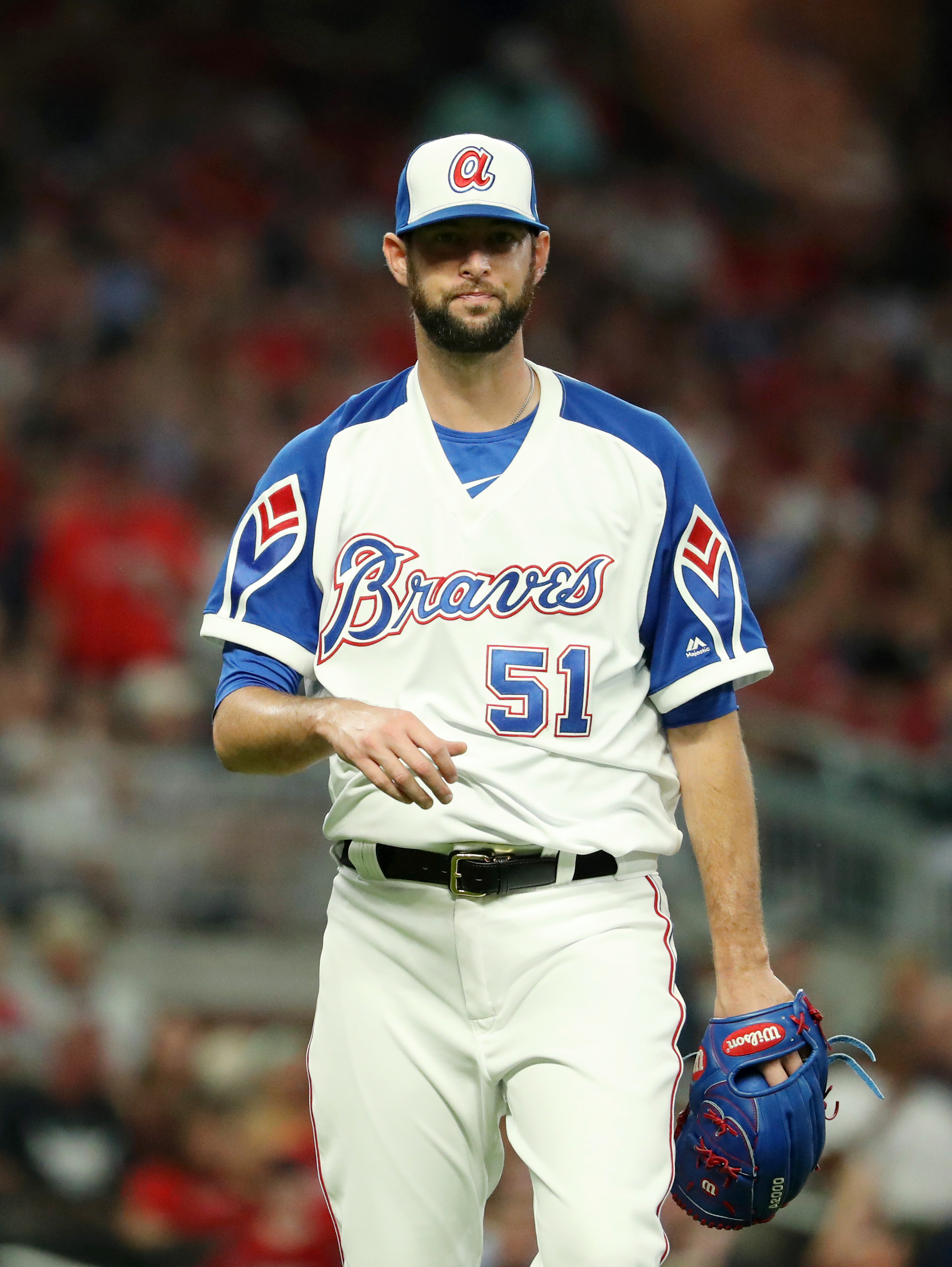
It’s the third notable relief pickup of the past week for the Braves, who already snagged arguably the top reliever on the market last Thursday when signing Will Smith to a three-year, $40MM contract. Atlanta also re-signed veteran righty Darren O’Day to a one-year, $2.25MM deal in the early stages of the offseason. Between Smith, Martin, O’Day, Mark Melancon and Shane Greene, the Atlanta bullpen will head into the 2020 season as both a much more established and much more expensive collective unit than it did in 2019.
Martin, 33, enjoyed the finest season of his professional career in 2019, pitching to a combined 3.40 ERA with a masterful 65-to-5 K/BB ratio in 55 2/3 innings of relief between the Rangers and Braves. The towering righty, listed at 6’8″, opened the season in Texas but found himself pitching for the Braves down the stretch after Atlanta traded former first-rounder and top prospect Kolby Allard to the Rangers to acquire him on July 30. He was set to make his postseason debut against the Cardinals in the NLDS when an oblique injury cropped up and forced him out of the game before throwing a pitch in what proved to be a pivotal moment in the Braves’ postseason loss.
This past season, Martin posted a career-high 95.7 mph average fastball and logged career-high marks in swinging-strike rate (12.4 percent) and opponents’ chase rate (38.3 percent). The only pitcher in baseball (min. 50 innings pitched) who boasted a lower walk percentage than Martin’s 2.3 percent mark was Atlanta teammate Josh Tomlin (2.2 percent), but Martin’s 30.1 percent strikeout rate was nearly double that of Tomlin. The extent to which he can replicate his enormous gains in swinging-strike, chase and walk rates will determine Martin’s success in his second stint with the Braves, but there’s little denying that he was among the most appealing arms available on the market this winter.
Prior to landing far and away the largest contract of his professional career, Martin, has had one of the most fascinating odysseys in all of baseball (as most recently chronicled by the Atlanta Journal-Constitution’s Tim Tucker). Drafted out of high school in ’04 and junior college in ’05, Martin opted not to sign in either instance and ultimately went undrafted in 2006 after undergoing shoulder surgery that he believed would end his baseball aspirations. Years later, after working as a UPS driver and working at Lowe’s, a game of catch with a friend brought about the realization that his surgically repaired shoulder no longer caused him pain.
A second indie ball stint was parlayed into a minor league deal with the Red Sox, who traded Martin to the Rockies in 2013. Just four years removed from delivering packages and driving a forklift, Martin made his MLB debut with the Rockies in 2014. Brief stints with the Rox and Yankees didn’t yield favorable results, and Martin ultimately found his first seven-figure contract pitching overseas for the Nippon Ham Fighters in Japan. His dominance in NPB led to a two-year, $4MM deal with the Rangers. Prior to today’s announcement, Martin’s career earnings between MLB and NPB checked in south of $7MM. The two-year, $14MM agreement matches the prediction included in MLBTR’s Top 50 free agent list, where Martin ranked 27th.
Early in the season the Braves will continue to deploy Melancon as the club’s closer, general manager Alex Anthopoulos suggested following the signing of Smith (link via Matthew Leach of MLB.com). That should lead to a primary setup corps of Smith, Martin, Greene and O’Day, with a number of the Braves’ young arms combining to round out the bullpen mixture. Luke Jackson, Grant Dayton, A.J. Minter, Chad Sobotka and Jacob Webb will be among the names considered by the Atlanta brass, barring additional bullpen acquisitions and or roster moves that send some of those incumbent options elsewhere.
Braves Add Five Players To 40-Man Roster
The Braves announced Tuesday that they’ve selected the contracts of outfielder Cristian Pache, catcher William Contreras, right-hander Jasseel De La Cruz and lefties Tucker Davidson and Phil Pfeifer.
Each of Pache, Contreras, De La Cruz and Davidson rank inside the Braves’ top 15 prospects over at MLB.com, with Pache considered to be among the elite prospects in all of baseball. Pache, who turns 21 today, is an elite center field defender who is fresh off a .277/.340/.462 batting line put together against vastly older competition between Double-A and Triple-A this season. Contreras, also 21, is the younger brother of Cubs backstop Willson Contreras. He hit .255/.314/.354 in 416 plate appearances between Class-A Advanced and Double-A in 2019.
Both Davidson, 24, and Pfeifer, 27, reached Triple-A for the first time this season, though both pitchers’ time with Atlanta’s Gwinnett affiliate was brief late in the season. De La Cruz, meanwhile, topped out at Double-A. All three worked more as starters than relievers, giving the Braves another wave of near-MLB arms from which they could draw during the upcoming 2020 season.
The addition of all five prospects protects them from being selected in this year’s Rule 5 Draft. The deadline for all 30 MLB teams to protect players from the Rule 5 Draft is tomorrow evening. Atlanta’s 40-man roster is now up to a count of 38 players.
Yokohama BayStars Post Yoshitomo Tsutsugo
November 18: The posting formally occurred today, meaning the deadline to reach a deal is December 19th, per Joel Sherman of the New York Post (via Twitter).
November 15: The Yokohama DeNA BayStars of Japan’s Nippon Professional Baseball announced Friday that they have posted slugging left fielder/first baseman Yoshitomo Tsutsugo for Major League teams (link via the Japan Times). He now has 30 days to negotiate with MLB teams willing to pay the BayStars a release fee that is dependent on the size of the contract he signs.
Tsutsugo, who turns 28 on Nov. 26, has been one of Japan’s most prominent sluggers for the past four seasons, hitting a combined .293/.402/.574 with 139 home runs, 116 doubles, five triples, a 15.1 percent walk rate and a 20.4 percent strikeout rate. His best season came back in 2016, when he launched a career-high 44 home runs and slashed .322/.430/.680. It’s worth noting that Tsutsugo’s 2019 season was his weakest of the past four (.272/.388/.511, 29 home runs) and saw his strikeout rate climb to 25.3 percent.
There’s little doubting Tsutsugo’s raw power, but his ability to handle increased velocity, make consistent contact and contribute on the defensive side of the ball in MLB are less certain. Listed at 6’0″ and 209 pounds, Tsutsugo doesn’t run particularly well, and although he’s spent some time at third base in his career, most scouting reports on him agree that he’s limited to an outfield corner or first base at this point. FanGraphs’ Eric Longenhagen recently wrote of Tsutsugo that he’s a potential everyday player but one with “no margin for error because of defensive limitations,” noting that has questionable hands could make him a liability at first base. Sports Info Solutions’ Will Hoefer wrote in September that Tsutsugo has a plus throwing arm and “could be hidden in right field with strong positioning.”
The extent to which MLB clubs are sold on Tsutsugo’s defense will determine the interest in him. It’s easy to envision some NL clubs shying away — particularly those who already have a set first baseman locked into place. But Toronto general manager Ross Atkins has already acknowledged some interest in Tsutsugo, and the White Sox stand out as an obvious potential fit with both corner outfield and DH openings. Speculating a bit further, any of the Mariners, Tigers, Royals or Rangers could find a way to work him into a first base/DH/corner outfield rotation. The Marlins, with uncertainty at first base and in the outfield corners, are an on-paper fit in the NL. There’s certainly a case to be made that any rebuilding club could give Tsutsugo a look and hope to land a relatively affordable piece who can help turn things around or emerge as a trade asset.
Under the current posting system, a Major League team interested in Tsutsugo would owe the BayStars 20 percent of the first $25MM guaranteed to him, plus 17.5 percent of the next $25MM, plus 15 percent of any dollars spent north of $50MM. That release fee is on top of the guarantee itself. Contract options and performance incentives, once unlocked or triggered, are subject to a supplemental 15 percent release fee. For minor league deals, MLB clubs pay out 25 percent of the player’s signing bonus, and the player’s salary upon being added to the 25-man roster is subject to a supplemental posting fee.
Tsutsugo, who is being represented by Wasserman, has a finite free-agent window due to the 30-day nature of the posting system, so within a few days of the conclusion of next month’s Winter Meetings (from Dec. 8-12), we’ll know if he’s coming to MLB and where he’ll be playing.
Hanwha Eagles Re-Sign Chad Bell
The Hanwha Eagles of the Korea Baseball Organization have re-signed left-hander Chad Bell, the club announced (h/t to Yonhap News Agency). It’s a one-year deal for the 30-year-old, who receives a $900,000 guarantee.
It’s a decent payday for the former Detroit Tigers southpaw, who finished twelfth among 27 qualified KBO starters in 2019 with a 3.50 ERA, per MyKBO Stats. That placed him one spot above Warwick Saupold, another former Detroit pitcher who reunited with Bell as an Eagle last season. The two will remain teammates, as Saupold himself signed a one-year extension with the Eagles two weeks ago. Per Yonhap’s report, the KBO team is also working to bring back former Rangers outfielder Jared Hoying. If that ultimately proves successful, the Eagles will return all three of their foreign-born players in 2020.
Bell is a former 14th-round MLB draft pick who got into 31 games (4 starts) for Detroit from 2017-18. He had a tough go in MLB, pitching to a cumulative 7.11 ERA in 69.2 innings, but he was generally fine in parts of five Triple-A seasons. He’ll now look to build off his solid KBO debut that featured 177.1 innings with the aforementioned 3.50 ERA and a 17.9% strikeout rate (10th among qualifiers) and an 8.4% walk rate (24th).
Brewers Claim Eric Yardley
The Brewers have claimed righty Eric Yardley off waivers from the Padres, per a club announcement. While the MLB.com transactions page indicates that Yardley was released, he evidently had not yet cleared release waivers.
With the move, the Milwaukee club will hand a 40-man spot over to an intriguing sidearmer who could compete for a bullpen job in camp. Yardley doesn’t have much MLB experience but was able to make it through 11 2/3 frames with just three earned runs in his 2019 debut.
Yardley’s low-velo offerings have proven effective over a longer run in the upper minors. He recorded 63 2/3 frames of 2.83 ERA pitching at Triple-A last year, racking up a 63.8% groundball rate while limiting the long ball (0.42 HR/9) and carrying 7.4 K/9 against 2.0 BB/9.
Tyler Austin Signs With Yokohama DeNA BayStars
The Yokohama DeNA BayStars of Nippon Professional Baseball have signed first baseman Tyler Austin, according to multiple reports out of Japan. ESPN.com’s Jeff Passan reports (Twitter link) that Austin’s deal is a one-year contract with a club option for 2021. Austin elected to become a free agent earlier this month rather than accepting an outright assignment to the Brewers’ Triple-A affiliate.
Austin had a bit of top-100 prospect attention early in his minor league career when coming up through the Yankees’ farm system. Over 209 MLB games and 583 plate appearances from 2016-19, Austin displayed some solid power (33 homers, .451 slugging percentage) but not a well-rounded offensive attack overall, with just a .219 career average and .292 on-base percentage. The right-handed hitting Austin posted some severe career splits (.884 OPS against lefties, .638 OPS against righties) and 215 of his 583 PA ended in a strikeout.
After the Yankees dealt Austin to the Twins as part of a July 2018 deadline deal for Lance Lynn, he bounced from Minnesota to San Francisco to Milwaukee in 2019, with a combined .188/.296/.409 slash line over 179 PA with the three teams. He’ll now head overseas to NPB in an attempt to find more regular playing time and revive his stock. Austin is only 28, so a return to the big leagues in the relatively near future isn’t out of the question depending on how he fares in Japan.
7 Players Reject Qualifying Offers
The 4pm CT deadline has passed for free agents to accept or reject qualifying offers, and seven of the 10 players issued offers have officially turned them down. An eighth free agent, Will Smith, rejected the Giants’ qualifying offer and left the free agent market even before the deadline passed, signing a three-year, $40MM deal with the Braves. Jake Odorizzi of the Twins and Jose Abreu of the White Sox each accepted their team’s qualifying offers, and will now earn $17.8MM for the 2020 season.
Here are the seven players who rejected their former team’s one-year, $17.8MM qualifying offer….
- Madison Bumgarner (Giants)
- Gerrit Cole (Astros)
- Josh Donaldson (Braves)
- Marcell Ozuna (Cardinals)
- Anthony Rendon (Nationals)
- Stephen Strasburg (Nationals)
- Zack Wheeler (Mets)
There aren’t any surprises in that list, as there wasn’t doubt that Bumgarner, Cole, Donaldson, Rendon, Strasburg, and Wheeler would forego the one-year offer in search of a much richer, multi-year commitment. There was perhaps a bit more uncertainty surrounding Ozuna and Smith, given that Ozuna was coming off a pair of good but unspectacular years in St. Louis and Smith could perhaps have been wary of how the QO would impact his market, given what happened to another closer in Craig Kimbrel last winter.
If anything, the only real surprise occurred on the acceptance side, as Odorizzi was seen as a candidate to receive a multi-year offer before he opted to remain in Minnesota in 2020. Abreu, on the other hand, was widely expected to remain with the White Sox in some fashion, either via the QO or perhaps a multi-year extension. It should be noted that Odorizzi and Abreu are still free to negotiate longer-term deals with their respective teams even after accepting the qualifying offer.
Teams that sign a QO-rejecting free agent will have to give up at least one draft pick and some amount of international bonus pool money as compensation. (Click here for the list of what each individual team would have to forfeit to sign a QO free agent). The Astros, Nationals, Giants, Mets, Cardinals, and Braves are each in the same tier of compensation pool, so if any of their QO free agents signs elsewhere, the six teams will receive a compensatory draft pick between Competitive Balance Round B and the third round of the 2020 draft, or roughly in the range of the 75th to 85th overall pick. Atlanta, for instance, probably didn’t mind giving up their third-highest selection in the 2020 draft to sign Smith since the Braves have another pick coming back to their if Donaldson leaves for another club.
A total of 90 players have been issued qualifying offers since the QO system was introduced during the 2012-13 offseason, and Odorizzi and Abreu become the seventh and eighth players to accept the one-year pact. Odorizzi and Abreu are now ineligible to receive a qualifying offer in any future trips into free agency, so both players won’t be tied to draft/international pool penalties if they hit the open market following the 2020 season.
MLB.com’s Mark Feinsand was the first to report that Donaldson turned down his QO, while ESPN.com’s Jeff Passan was the first to report on the other six names.
Jose Abreu Accepts Qualifying Offer From White Sox
Jose Abreu will stay with the White Sox rather than test the free agent market, as ESPN.com’s Jeff Passan reports (Twitter link) that the first baseman has accepted the team’s one-year, $17.8MM qualifying offer. The team has since announced that Abreu is indeed returning after accepting the QO.
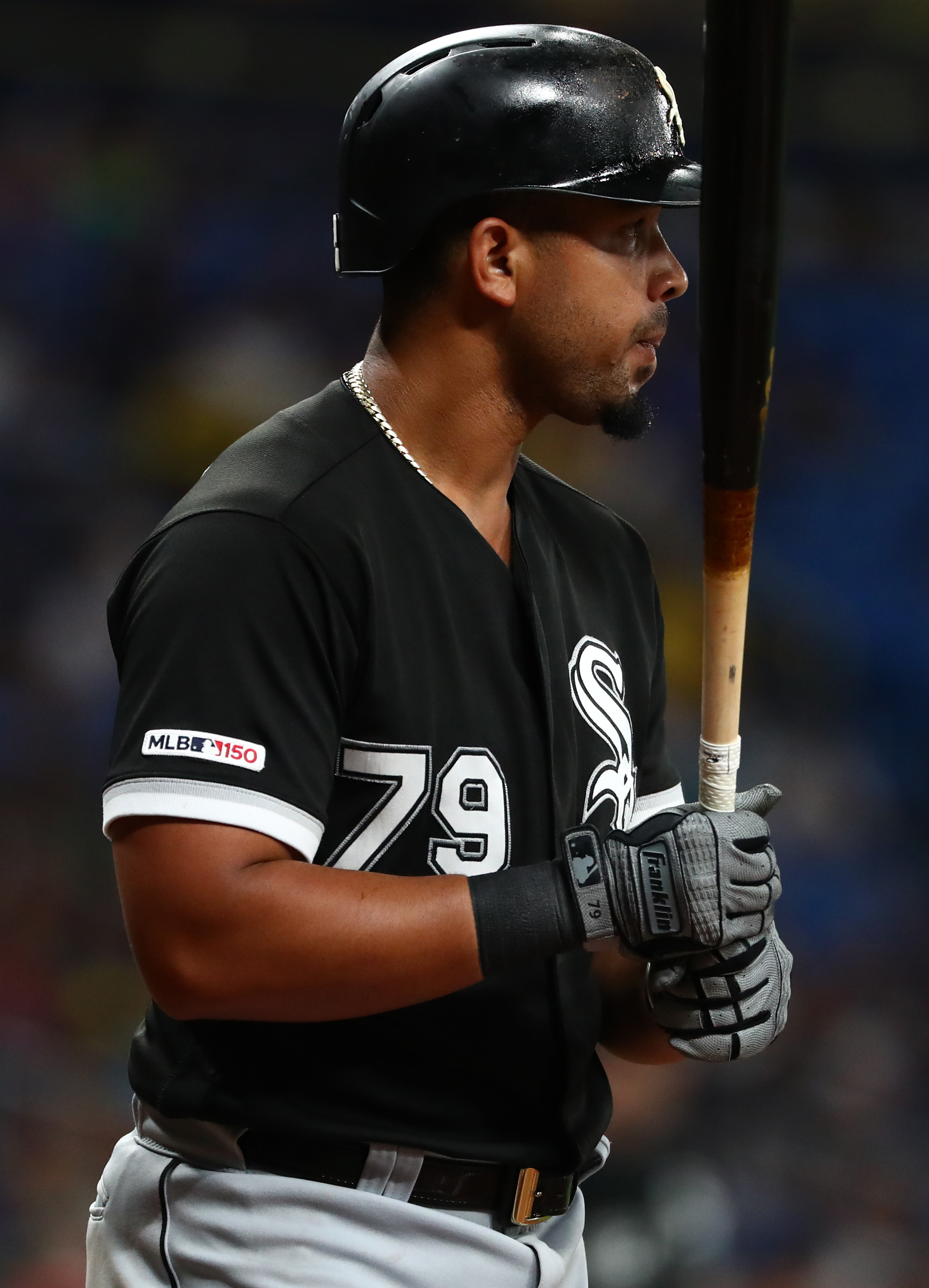
Abreu stood out as the likeliest player to accept a qualifying offer given his age (33 in January), lack of defensive value and longstanding vocal desire to remain with the White Sox. The market for strict first base/DH type sluggers has deteriorated in recent years, and while some elite hitters (e.g. J.D. Martinez) have managed to take home lucrative multi-year deals in spite of that reality, Abreu is on the old side for a free agent and isn’t quite in that Martinez echelon of offensive output. There’s also a fairly limited number of contending clubs that could be reasonably expected to make competitive bids on a first baseman or designated hitter, which wouldn’t have done the veteran slugger any favors in seeking out a new organization.
That’s not to say that Abreu isn’t a decidedly above-average hitter. He’s fresh off a strong .284/.330/.503 batting line and 33 home runs in 2019. The ChiSox likely feel they can pencil him in for another strong average and 25-plus home runs, as he’s only failed to reach that mark in an injury-shortened 2018 campaign (when he still launched 22 long balls in just 128 games). Abreu has spent six seasons in the big leagues and been an above-average hitter in each of them.
Of course, it should be noted that those 2019 numbers from Abreu came at a time when offensive numbers were at a record high throughout the league. His batting line is clearly stout — but perhaps not to the extent many would think of upon hearing “33 home runs.” By measures like OPS+ and wRC+ which are adjusted based on a hitter’s home park and leaguewide context, Abreu’s 2019 checked in at 17 to 19 percent better output than that of a league-average hitter (117 wRC+, 119 OPS+). That’s a stark contract to Abreu’s utterly dominant rookie season, when he hit .317/.383/.581 and tied Mike Trout for the second-highest wRC+ in all of Major League Baseball.
But for the South Siders, Abreu’s value transcends his pure statistical output on the field. White Sox brass, like Abreu himself, has been vocal about its desire to keep the slugger for the long run due to the fact that he’s emerged as a clear leader in the team’s clubhouse and a integral part of the community on the south side of Chicago. The ChiSox surely valued him more than an outside organization would, and the club surely hopes that Abreu will remain woven into the fabric of the organization for years to come.
The question now, for both Abreu and the organization, is whether they’ll simply head into the 2020 season with the current one-year, $17.8MM arrangement or whether they’ll work out a multi-year deal that’ll keep Abreu around for a longer period while likely lowering his 2020 salary. Abreu was reported to be mulling a three-year offer just hours before the final decision on his qualifying offer was due, but it seems that he and his representatives at ISE Baseball didn’t feel the annual salary on that proposed contract was to their liking. USA Today’s Bob Nightengale tweets that the two sides are expected to continue discussing two- and three-year scenarios, so it’s certainly possible that today’s one-year agreement is torn up in favor of a lengthier pact at some point between now and Opening Day.
Braves Sign Will Smith
The Braves have signed closer Will Smith to a three-year contract, the team announced. The three guaranteed years will pay Smith $39MM, and Atlanta has a $13MM club option for 2023. That option contains a $1MM buyout, as per The Athletic’s Ken Rosenthal (Twitter link), bringing the total value of the deal to $40MM. Smith will earn $13MM in each year of the contract, which doesn’t include any no-trade protection, MLB Network’s Jon Heyman reports (Twitter links). Smith is represented by CAA Sports.
The Braves’ early splash into the free agent pool gives them the top closer on the market this offseason, and the 13th-ranked player on MLBTR’s list of the winter’s top 50 free agents. Smith’s contract fell just a touch short of our prediction of a three-year, $42MM deal, though he stands to soundly beat that projected number if the Braves exercise their club option in three years’ time. Smith will also now get to suit up for his hometown team, as the Georgia native still lives in Atlanta.
 Though there hadn’t yet been any official word about Smith’s rejection of the Giants’ qualifying offer, he turned down the one-year, $17.8MM QO for the longer-term pact with the Braves. Rosenthal reports that Jeff Berry, Smith’s agent, told interested teams that Smith would accept the qualifying offer and remain in San Francisco unless an acceptable multi-year proposal came together.
2019 marked Smith’s first season as a full-time closer, and the left-hander responded with one of his finest seasons. Smith posted a 2.76 ERA, 4.57 K/BB rate, and 13.2 K/9 over 65 1/3 innings for San Francisco, recording 34 saves in the process. That 13.2 K/9 marks a new single-season best for Smith, who has a healthy 10.8 K/9 over 410 2/3 career innings. The 30-year-old had previously established himself as a quality setup man with the Brewers and Giants, and came back strong with a big 2018 season after missing all of 2017 due to Tommy John surgery.
While Smith was one of the sport’s better closers last season, he might not continue in that role, as David O’Brien of the Atlanta Journal-Constitution tweets that the Braves are temporarily still planning to use Mark Melancon as their primary closer. Ironically, Smith’s elevation to closer in 2018 came as a result of Melancon’s injury-related struggles when the two relievers were teammates in San Francisco. Melancon did look good during a healthy 2019, however, both with the Giants and after he was dealt to Atlanta at the trade deadline.
However the Braves choose to deploy their relievers, Smith represents a major addition to an Atlanta bullpen that generally posted middle-of-the-pack numbers amidst an inconsistent season. Braves GM Alex Anthopoulos added Melancon, Chris Martin, and Shane Greene at the trade deadline in an attempt to bolster his pen for both 2019 and the future (Melancon and Greene are still under team control), though more reinforcements were needed with Martin, Anthony Swarzak, and Jerry Blevins headed for free agency.
Smith fills a particular need for left-handed relief for the Braves, who have already checked off several boxes off their winter to-do list though the offseason only officially began less than two weeks ago. Nick Markakis, Tyler Flowers, and Darren O’Day have all been re-signed on one-year deals for a total of $10.25MM, allowing Anthopoulos the payroll space for a bigger strike to sign Smith.
There was widespread speculation that Smith was going to be changing teams last July, though the Giants’ surprising surge into wild card contention inspired president of baseball operations Farhan Zaidi to hold onto some of his most prized trade assets. While Melancon and Sam Dyson were dealt, such players as Smith, Madison Bumgarner, and Tony Watson were all retained, leaving Zaidi in line for some criticism when the Giants faded to a 77-85 record.
San Francisco will still receive some compensation for Smith, however, as his rejection of the qualifying offer will net the club a bonus draft pick that will fall between Competitive Balance Round B and the third round of the 2020 draft. The Giants will get a pick in that same area should Bumgarner (who also declined the QO) sign elsewhere. The extra draft capital could make Zaidi more open to surrendering a draft pick to sign a QO free agent himself, though it remains to be seen if the Giants will be big spenders this winter.
As a revenue-sharing recipient, the Braves will only have to give their third-highest pick in the 2020 draft as compensation for signing Smith. This is currently Atlanta’s third-round selection, though it could end up being the team’s own compensatory pick (between Comp Balance Round B and the third round) if the qualifying offer-declining Josh Donaldson signs with a team besides Atlanta.
Photo courtesy of USA Today Sports Images
Jake Odorizzi To Accept Qualifying Offer
Right-hander Jake Odorizzi will accept a qualifying offer from the Twins, reports Ken Rosenthal of The Athletic (via Twitter). He’ll now be signed for the 2020 season at a rate of $17.8MM.
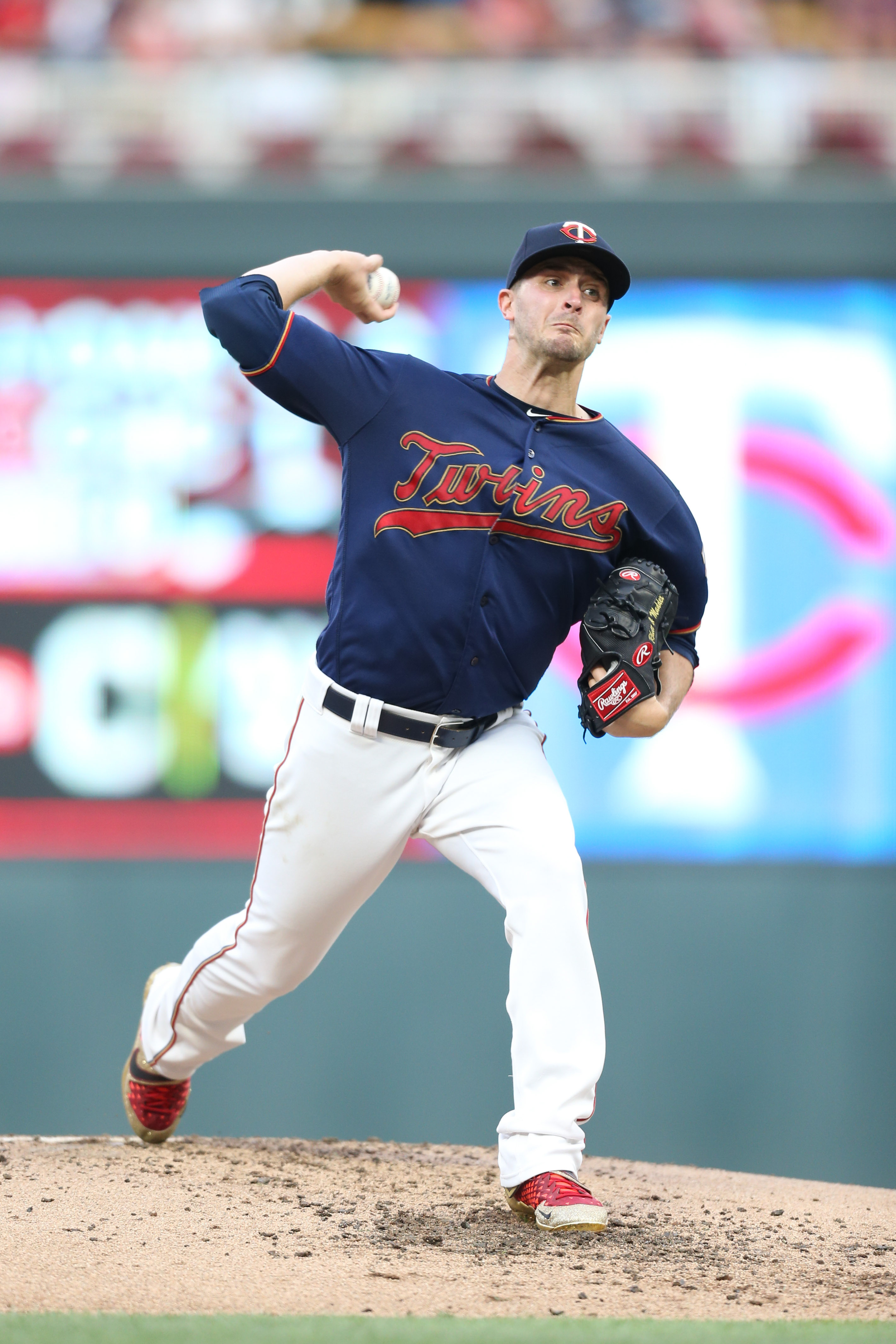
It’s a bit of a surprise move but likely a welcome development for a Twins club that previously stood to see 80 percent of its starting rotation hit free agency. Odorizzi, Kyle Gibson, Michael Pineda and Martin Perez (whose $7.5MM club option was bought out) were all slated to hit the open market.
Instead, the 29-year-old Odorizzi will return on a one-year deal at a strong annual rate with an eye toward testing the market in earnest next season when he wont’t have a qualifying offer attached to his name. The collective bargaining agreement stipulates that a player can only receive one qualifying offer in his career, so Odorizzi won’t cost any teams any draft or international forfeitures when he hits free agency again next winter.
The 2019 season proved to be either a rebound or a breakout for Odorizzi, depending on how one views it. He looked like a pitcher on the rise from 2014-16 with the Rays before posting a pair of solid but unremarkable seasons with Tampa Bay and Minnesota in 2017 and 2018, respectively.
Last winter, Odorizzi embarked on a new offseason training regimen with a focus on biomechaics and did similar work with newly hired Twins pitching coach during Spring Training, which led to an uptick in velocity and career-best marks in terms of K/9, overall strikeout percentage and swinging-strike rate. The results spoke for themselves, as Odorizzi turned in 159 innings of 3.51 ERA ball with 10.1 K/9 (a 27.1 percent overall strikeout rate), 3.0 BB/9, 0.91 HR/9 and a 35 percent ground-ball rate.
While most pegged Odorizzi as a candidate to secure a multi-year pact in free agency — he landed 10th on our ranking of the Top 50 free agents — he and his representatives at Excel Sports Management clearly weren’t enthused by their early talks with teams throughout the league. Once a player receives a qualifying offer, he has up to 10 days to accept or reject it, and he’s free to explore the open market during that time. Odorizzi’s decision largely came down to the wire, and he’ll now have another year to further build his case. If he can repeat his 2019 success next season and return to the open market in advance of his age-31 campaign, he’ll presumably fare quite well in free agency. Of course, as is always the case, he now runs the risk of damaging his stock with a poor performance or a notable injury.
For the Twins, Odorizzi’s return adds a notable salary to the books, but that’s of little concern given the enormous amount of payroll space the club has available. Even with Odorizzi back at $17.8MM, the Twins have a total of just $48.9MM in guaranteed contracts on the books, plus another $40.8MM worth of projected arbitration salaries. (That number could drop to $33.1MM if C.J. Cron is non-tendered.) That puts the Twins in the $82-89MM range, depending on Cron’s fate. Even after accounting for pre-arbitration players to round out the roster, Minnesota checks in under $100MM and vastly below the organization’s club-record payroll of $130MM from the 2018 season.
That’s good news for the Twins given the club’s need to address the rest of the rotation. While in-house candidates like Randy Dobnak, Devin Smeltzer, Brusdar Graterol and, eventually, prospect Jordan Balazovic all present intriguing 2020 options, the Twins still need to add at least one more proven arm — if not two proven arms to the mix. President of baseball operations Derek Falvey and GM Thad Levine have been candid about the team’s plan to pursue “impact” starting pitching, making that remaining payroll capacity all the more pivotal. For now, however, Minnesota surely feels better about its rotation outlook, knowing that one major piece of the puzzle was filled in less than two weeks into the offseason.