
Tigers Sign Louis Coleman, Bobby Wilson, 2 Others
The Tigers announced today that they have inked four players to minor-league deals with invitations to Spring Training. Righty Louis Coleman, catchers Bobby Wilson and Kade Scivicque are among them, along with and infielder Kody Eaves.
Coleman tossed 51 1/3 frames in the majors for the rebuilding Tigers last year, working to a 3.51 ERA. Despite the good results, Coleman was outrighted after the season, as the club recognized that his underlying mix of 7.2 K/9 and 4.2 BB/9 did not portend the kind of success that would warrant an arbitration deal. The seven-year MLB vet should compete for a bullpen job in camp.
As for Wilson, the 35-year-old has appeared in nine MLB seasons over his career, though he has only ever recorded more than two hundred plate appearances with a single club in one of those (2012 with the Angels). He has compiled exactly one thousand plate appearances, over which he owns a less-than-enticing .208/.263/.313 slash line. Of course, Wilson’s appeal lies not in his bat but in his sturdy reputation behind the dish. He could conceivably crack the Opening Day roster but seems most likely to take up residence at Triple-A.
Scivicque, 25, is still looking for his first shot at the bigs. He was a fifth-round pick of the Detroit org back in 2015. He returned to the organization in 2018 after a stint with the Braves that began when he was sent to Atlanta via trade. Scivicque has a .667 career OPS in both 305 Double-A plate appearances and 218 trips to the plate at the highest level of the minors.
That leaves Eaves, who’s likewise slated for a return to the Tigers organization. The 25-year-old had a nice offensive season in 2017 but scuffled last year, slashing just .198/.283/.298 in 377 plate appearances in the upper minors. He was originally an Angels draft pick who came to Detroit in a 2016 swap.
Rangers To Sign Rafael Montero
The Rangers have reportedly agreed to a minor-league pact with right-hander Rafael Montero. The Roster Roundup site indicated a deal was in place, with Evan Grant of the Dallas Morning News citing a source who indicated Montero had indeed signed.
Once a top prospect with the Mets, Montero is still working back from Tommy John surgery. He’ll also be looking to get his career on track after running into difficulties in transitioning to the majors.
Montero has already thrown 192 1/3 innings at the game’s highest level, most of which came in 2017, but carries only a 5.38 cumulative ERA. He has averaged nearly a strikeout per inning in the bigs, but also has surrendered 5.2 free passes per nine. There were some positives in 2017, as Montero worked in the 94 mph range with his average fastball and produced a healthy 48.1% groundball rate.
Now 28 years of age, and rehabbing a TJ procedure from last March, Montero will not be at full health in time for compete for a job in camp. But he ought to be ramping up for a return to action by the middle of the upcoming season and could certainly put himself on the radar of the pitching-needy Rangers if he’s able to rediscover some of his former promise.
Diamondbacks Sign Merrill Kelly To Two-Year Deal
8:13pm: The D-backs formally announced the signing via a press release.
5:43pm: The Diamondbacks are in agreement on a two-year, $5.5MM contract with right-hander Merrill Kelly, reports Jeff Passan of Yahoo Sports (Twitter links). The contract will pay Kelly $2MM in 2019 and $3MM in 2020. It also includes a pair of club options, per Passan, the first of which is valued at $4.25MM and comes with a $500K buyout. The second of the two options comes with a $5.25MM value, he adds.
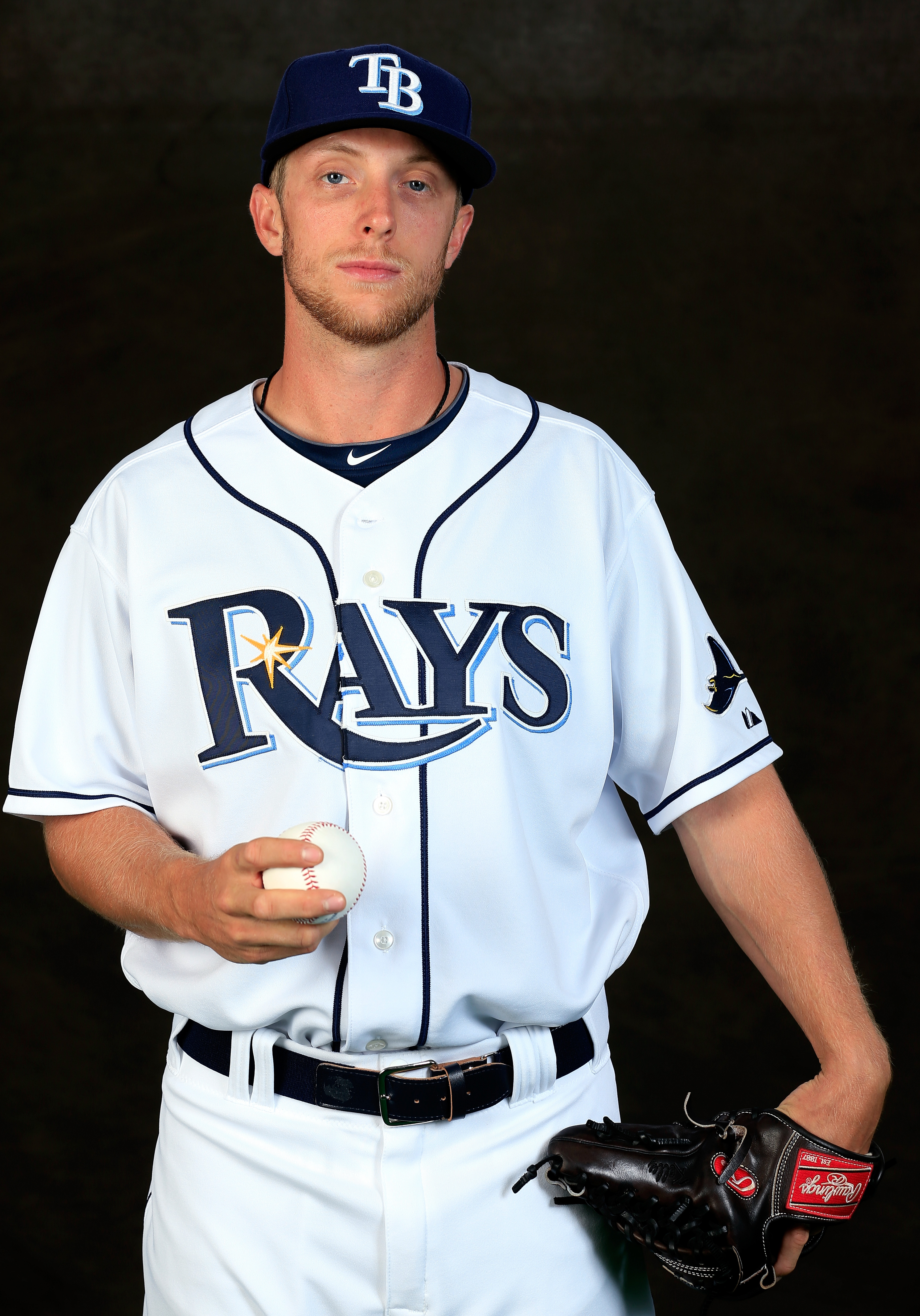
Kelly, a 30-year-old righty, has never pitched in the Majors but just wrapped up a strong four-year run in the hitter-friendly Korea Baseball Organization. The former Rays farmhand has been particularly impressive over the past two seasons, during which time he has made 61 starts and tossed 390 1/3 innings of 3.64 ERA ball with 341 strikeouts (7.9 K/9) and 105 walks (2.4 BB/9). He’s being viewed as a starter and is expected to join the Diamondbacks’ rotation next season.
The Arizona rotation has taken a hit this winter with the loss of Patrick Corbin, who reportedly agreed to a six-year contract with the Nationals earlier today. Arizona will also be without Taijuan Walker for much of the 2019 season after the righty underwent Tommy John surgery earlier this year, and the D-backs also non-tendered Shelby Miller last week. The top names remaining in the Diamondbacks’ rotation mix include Zack Greinke, Robbie Ray, Zack Godley and perhaps Matt Andriese, though there’s been ample trade chatter surrounding the veteran Greinke this offseason.
While Kelly lacks big league experience, the contract is a rather low-risk investment for the Diamondbacks, who will hope that Kelly can be the 2019 version of the Cardinals’ Miles Mikolas. It’s the second consecutive season in which GM Mike Hazen and his staff have given a multi-year contract to a pitcher who has no MLB experience. Last winter’s two-year pact for right-hander Yoshihisa Hirano paid off in spades — 66 1/3 innings of 2.44 ERA ball out of the bullpen — and Kelly will bring another intriguing overseas track record at a minimal price.
Tigers Sign Matt Moore
DECEMBER 4: The deal has now been announced.
NOVEMBER 27, 7:06pm: The guarantee is $2.5MM, Chris Cotillo of MassLive.com tweets. The contract also includes $1MM in potential incentives.
12:18pm: The Tigers and left-hander Matt Moore are in agreement on a one-year deal, reports Yahoo’s Jeff Passan (Twitter link). Mark Feinsand of MLB.com had indicated that the two sides were in talks just prior to that report (also via Twitter). Specific parameters aren’t clear, but Feinsand and Passan both suggest Moore would be looking at a guarantee in the range of $2-3MM. The deal is pending a physical. Moore is represented by Sosnick, Cobbe & Karon.
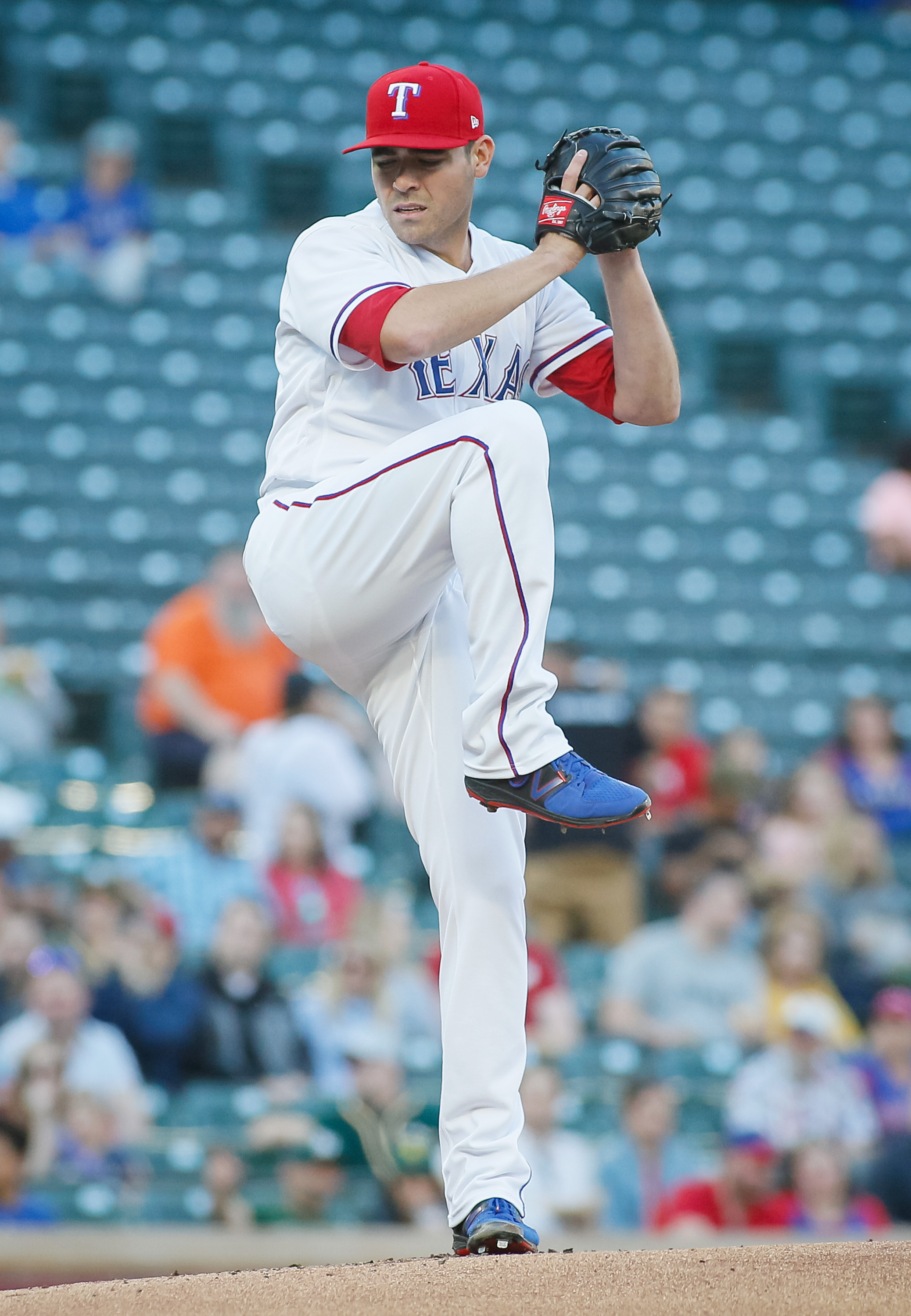
Moore, still just 29, has struggled through a pair of awful seasons and would be a buy-low option for the Detroit rotation. Once considered the best pitching prospect in the game — Baseball America rated Bryce Harper, Moore and Mike Trout the game’s top three overall prospects prior to the 2012 season — Moore’s career came to a screeching halt in 2014 when he underwent Tommy John surgery.
To that point, Moore had amassed 347 big league innings with a 3.53 ERA, 8.8 K/9, 4.3 BB/9 and 0.9 HR/9 all before celebrating his 25th birthday. Moore struggled in his return from the ligament replacement procedure late in the 2015 campaign but gave some reason for optimism when he tossed a career-high 198 1/3 innings of 4.08 ERA ball in 2016. His velocity hadn’t quite returned to its peak levels but was on the upswing, and Moore looked to be on the path to reestablishing himself.
Unfortunately for both Moore and the Giants — who acquired him from the Rays midway through that solid 2016 campaign — the left-hander completely unraveled in 2017. Since Opening Day that season, he’s been clobbered for a 5.99 ERA in 276 1/3 innings of work. Moore has averaged 10.7 hits and 1.5 home runs per nine innings pitched during that time, and his strikeout rate has fallen sharply (7.5 K/9). Over the past two seasons, he ranks 123rd of 125 pitchers in ERA (min. 200 innings), 107th in FIP and 117th in xFIP.
Those struggles won’t matter much to the Tigers, who are hoping to catch lightning in a bottle with the once-vaunted left-hander. Moore will slide into the back of a rotation that will be devoid of any expectations. Michael Fulmer, Jordan Zimmermann, Matthew Boyd and Daniel Norris are the top candidates to join Moore in manager Ron Gardenhire’s rotation next year, though the Detroit organization has an extremely promising wave of starting pitching prospects on the horizon. Matt Manning, Franklin Perez, Beau Burrows and 2018 No. 1 overall draft pick Casey Mize are all rising through the ranks and could soon arrive to give the rebuilding Tigers some hope for years to come.
In the meantime, Detroit will turn to low-risk stopgaps like Moore (and, a year prior, Mike Fiers and Francisco Liriano) in hopes of extracting some quality innings at a reasonable price point. Should they succeed in this instance, Moore will quickly become a trade chip next June or July.
Braves To Sign Pedro Florimon
The Braves have reportedly agreed to a minor-league pact with veteran infielder Pedro Florimon. Roster Roundup had the news recently on Twitter, with Jon Heyman of Fancred tweeting today that a deal is in place.
Florimon, who’ll soon turn 32, has found his way onto a MLB roster in each of the past eight seasons. He has only twice reached triple-digit plate appearances, though, and hasn’t done so since a 2013 campaign in which he received semi-regular time with the twins — but hit just .221/.281/.330.
In the intervening years, Florimon has carved out a role as a handy depth infielder. He cracked the Opening Day roster of the Phillies last year, but missed much of the season with a broken foot. He doesn’t seem to have much of a path onto the Braves roster awaiting him in camp, though he could certainly be the first man up if a need arises in the infield.
Phillies, Mariners Announce Trade Involving Jean Segura, Carlos Santana, J.P. Crawford
The Phillies and Mariners have struck a deal that sends shortstop Jean Segura to Philadelphia along with relievers Juan Nicasio and James Pazos. On the other end of the swap, the Seattle organization will receive veteran first baseman Carlos Santana and young infielder J.P. Crawford.
Money is a major aspect of this deal, but it seems the clubs were able to work things out by swapping contracts rather than paying down portions of any deals. Segura will receive a $1MM bonus for waiving his no-trade clause. It seems the M’s will pay, though that’s not fully clear. Segura will keep his NTC rights moving forward in Philly.
Seattle has pulled off a series of significant moves this winter, in service of what the club hopes will be a relatively quick reboot. Cost savings aren’t the only relevant pursuit, but it’s clearly important. In a way, then, this trade feels like a bit of a surprise at first glance.
After all, Segura is not only a high-quality player, his contract rights are generally appealing. He doesn’t turn 29 until March, and he is controlled through the 2022 season on a contract that will pay him $58MM over those four seasons (including a $1MM buyout of a $17MM club option for 2023). With Nicasio’s $9MM salary for 2019 added in, there’ll be $67MM in total heading to the Philly books.
On the other side, the M’s are taking back $35MM owed to Santana over the next two seasons (including the $500K buyout of his 2021 option, which is priced at $17.5MM). Since the other two players in the deal are not yet eligible for arbitration, the Seattle ledger will be left about $32MM lighter at the end of the day.
Beyond the financial savings, which are significant but nevertheless disappointing given Segura’s performance, the Mariners are adding an intriguing replacement at shortstop. Crawford has been a consensus top-16 prospect in the sport (as per Baseball America and Baseball America) in each of the last three seasons, though his messy, injury-plagued 2018 season has certainly dimmed his stock.
Crawford, the former 16th overall pick, first reached Triple-A in 2016. He scuffled at the plate in his first exposure, but came into his power in the following season and seemed primed for a breakthrough. Unfortunately, forearm and hand injuries intervened, limiting Crawford’s time. It’s notable, too, that he went down on strikes in 26.8% of his plate appearances while walking at a good-but-not-great 9.4% rate. Plate discipline, after all, is his calling card. On the other hand, his .214/.319/.393 slash still worked out to a 96 wRC+ and there’s still surely room to grow. Crawford, after all, will not turn 24 until January.
Even while recognizing the very real value that still lies in the rights to Crawford, it’s hard to escape the sense that this wasn’t a deal the Mariners really loved making. While there was some interest from other quarters in Segura — the Yankees reportedly took a look, while the Padres and Mariners discussed a potential blockbuster that would’ve sent Segura and Mike Leake to San Diego in exchange for Wil Myers — it seems it never reached a boiling point. It’s certainly true, as Jeff Sullivan of Fangraphs wrote tonight, that there was a thin market at shortstop. And some whispers of clubhouse issues (including a scrap with Dee Gordon) probably didn’t help. As Dipoto explained tonight: “If the market were higher, we would have made a higher level trade.”
There’s certainly some value in Santana, too, despite his tepid output in 2018. It was just last winter, after all, that the market made him something of an exception for its newfound dislike of lumbering sluggers. The switch-hitter’s plate discipline remains top-notch, and he not only handles first base well but showed he can give some innings at the hot corner.
If you look at it long enough, you can begin to wonder why it is the Phillies were interested in giving up Santana after adding him only one year back. Surely, the team can see that his .231 batting average on balls in play is likely to rise and that he’s more or less the same player they targeted. In this case, though, GM Matt Klentak and co. were faced with some incongruous roster occupants and a clear mandate to improve.
Last year’s experiments provided information, but perhaps not of the kind the Phils were hoping for. Rhys Hoskins failed to make the transition from first base to the corner outfield, creating a dilemma. Meanwhile, Crawford wasn’t quite ready to become a regular at short; neither was Scott Kingery.
This swap, then, suits a variety of needs in Philadelphia. Finding a reasonable way to move on from Santana was clearly necessary. Hoskins can step back in at first base while leaving a corner outfield spot open for some other impactful hitter who can handle the position defensively.
The addition of Segura, though, was surely the driving force. He has become a highly productive offensive player, with a .308/.353/.449 slash line to go with 41 homers and 75 steals over the last three seasons. While Segura is highly reliant on contact, he’s also quite good at avoiding strikeouts (personal-low 10.9% K rate in 2018) and getting aboard when he puts the ball in play (.320 lifetime BABIP). Perhaps he won’t revisit his high-water power point (twenty long balls and a .181 ISO in 2016), but Segura seems likely to deliver above-average work with the bat for much of the remainder of his deal.
It’s not as if Segura is a stretch to play at shortstop, either. He has mostly graded in range of average over the years, with DRS generally valuing him as a slight plus and UZR shading the other way. Regardless, he can handle the job. Segura hasn’t scored as well for his overall baserunning in recent years, but obviously can still run and should probably be viewed as a positive performer in that regard as well.
Some reports had indicated that just-acquired Mariners right-hander Anthony Swarzak was to be passed along in the swap. Instead, it’s Nicasio, who has a similar salary to that of Swarzak and functions in the same essential capacity in this trade. Actually, the 32-year-old Nicasio looks to be one of the most interesting buy-low relief candidates out there on the heels of a bizarre 2018 campaign. He was tagged for six earned per nine over 42 frames, but also posted a pristine combination of 11.4 K/9 and 1.1 BB/9. Clearly, a .402 BABIP and 58.1% strand rate played a big role in the struggles.
Meanwhile, Pazos could be a cost-effective boon to the Philadelphia relief corps, having pitched to a 3.39 ERA with 9.5 K/9 and 3.4 BB/9 across 103 2/3 innings for the Mariners from 2017-18. He’s not yet arbitration-eligible and can be controlled through the 2022 season. As Ryan Divish of the Seattle Times notes on Twitter, Pazos exhibited some worrisome trends late in the year, with some velocity loss and “mechanical issues.” Still, it’s an easy chance for the Phillies to take on a potentially quality reliever who’ll still earn the league minimum.
For both organizations, then, this was quite a notable swap — and one that could set the stage for further dealing.
On the Phillies’ side, the club has found an answer at short, but perhaps not in the way some anticipated entering the winter. Manny Machado now looks to be a potential target to line up at third base, which isn’t his preferred position, as Klentak has made clear that the club sees Segura as its shortstop. Having made a significant upgrade without adding much salary (and even while resolving the Santana issue), the Phils also now still seem to have ample flexibility to work with in exploring further major acquisitions.
Meanwhile, Mariners GM Jerry Dipoto has now moved three more established players after already shipping out James Paxton, Mike Zunino, Alex Colome, Robinson Cano, and Edwin Diaz in less than four weeks’ time. Mike Leake and Kyle Seager are also being shopped. And perhaps the team’s most recently added veterans shouldn’t be ruled out, either, with Santana joining Jay Bruce and Anthony Swarzak as pieces that could be moved if the M’s see a chance to add talent and/or save further coin. It’ll be most interesting to see whether any further controllable talent — most notably, Mitch Haniger and Marco Gonzales — could be on the move this winter.
The Athletic’s Ken Rosenthal reported that a deal was nearing (Twitter link). USA Today’s Bob Nightengale tweeted further detail, as did Rosenthal (Twitter links). Rosenthal (in a tweet) and colleague Jayson Stark (on Twitter) had details on Segura’s no-trade rights.
Photos courtesy of USA Today Sports Images.
Mets Announce Acquisition Of Robinson Cano, Edwin Diaz
After several days of anticipation, the Mariners and Mets have made what will surely be one of the offseason’s biggest moves official: Seattle has traded second baseman Robinson Cano and closer Edwin Diaz to the Mets in exchange for outfielder Jay Bruce, right-hander Anthony Swarzak, right-hander Gerson Bautista and prospects Jarred Kelenic and Justin Dunn.
Beyond the contractual values changing hands, the Mariners are sending a reported $20MM to the Mets to help offset the remaining $120MM owed to Cano through 2023. That said, the blockbuster swap will still save the Mariners a reported total of roughly $64MM. With the $20MM sum spread in approximately even amounts during the remainder of Cano’s time under contract, per Ken Rosenthal of The Athletic (via Twitter), the move will leave the Mets’ 2019 payroll in more or less the same position it was beforehand.
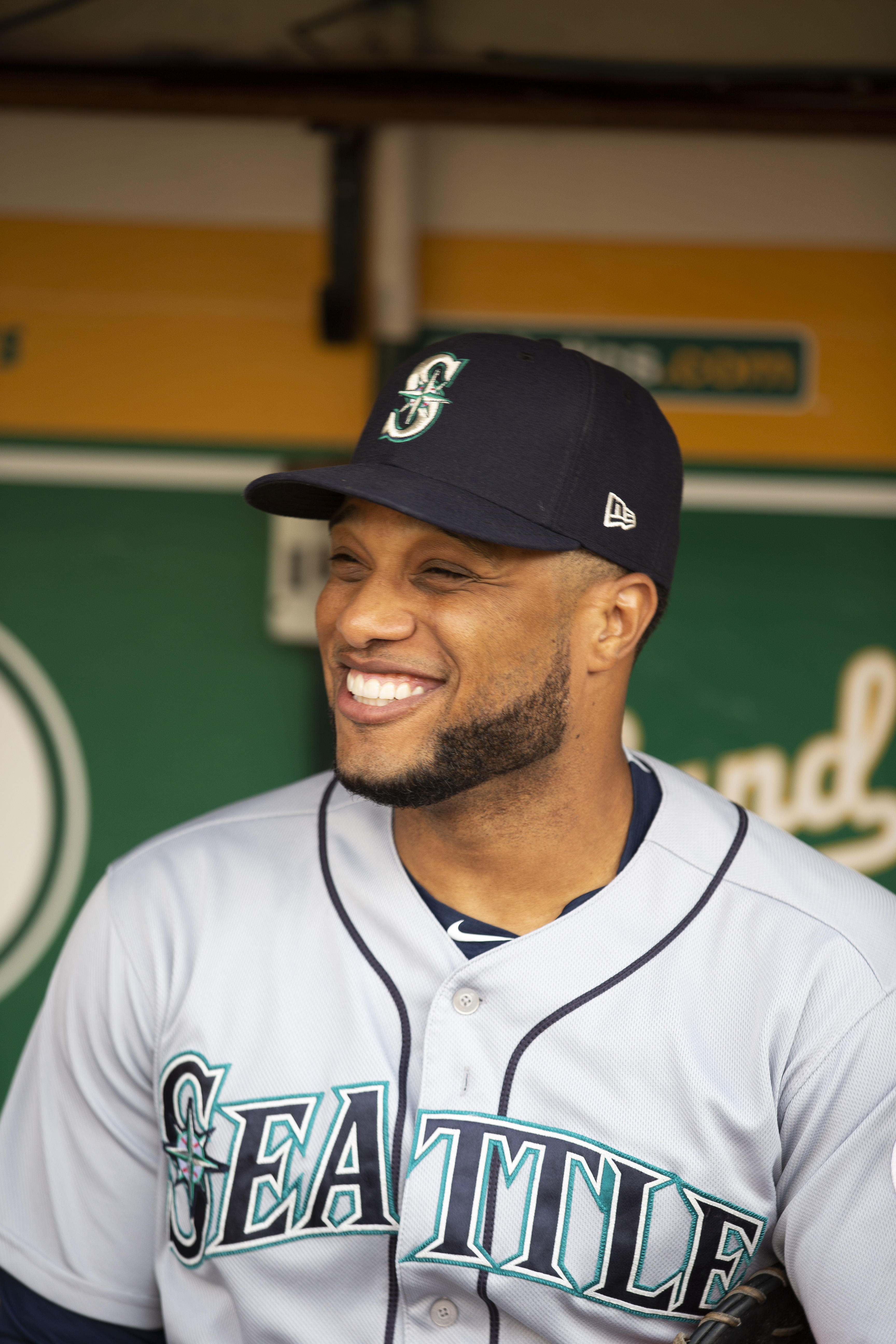
It’s a stunning move from multiple angles. Mariners general manager Jerry Dipoto denied reports early in the offseason that he was considering a tear-down of the Mariners’ roster but, in the month or so since making that comment, has now traded James Paxton, Mike Zunino, Alex Colome, Cano and Diaz — to say nothing of a Jean Segura trade to the Phillies that is reportedly nearing conclusion but has yet to be formally announced.
Meanwhile, the Mets, who’ve typically operated with a far tighter budget than one would anticipate for a club in that market, are taking on a huge amount of money in order acquire Cano and Diaz, and they still have ample work to do to address holes elsewhere on the roster. The deal is all the more fascinating when observing that newly hired Mets general manager Brodie Van Wagenen was formerly one of the game’s most prominent agents and that the largest contract he ever negotiated was none other than Cano’s 10-year, $240MM deal with Seattle.
Cano, who had to waive his no-trade clause to green-light this deal, will head back to the city where his big league career started and figures to supplant Jeff McNeil as the Mets’ primary second baseman. It’s a tough pill for McNeil to swallow after he hit .329/.381/.471 as a rookie, but he should still be in line for plenty of at-bats. The Mets could well give him a significant amount of work at third base, depending on the organizational plans for Todd Frazier, and McNeil has seen brief minor league work at shortstop, first base and in the outfield as well. At one point, the Mets were reportedly debating the possibility of sending McNeil to Seattle as what would’ve been a key part of this swap, and the fact that they were ultimately able to keep him is a critical factor when taking a step back and even attempting to evaluate the complex transaction.
It’s also important to emphasize that while Cano’s contract, like any 10-year free-agent deal or extension, was an obvious overpay at the time, he’s not an entirely sunk-cost acquisition. Though he served an 80-game suspension following a failed PED test last year, Cano hit .303/.374/.471 with 10 home runs through 348 plate appearances on the season as a whole. Some will point to the suspension in an effort to invalidate his output, but Cano was actually better at the plate upon returning from that ban; in 179 PAs down the stretch, he hit .317/.363/.497.
There’s also been plenty of talk about his defense, but the notion that he needs to move to first base because he’s no longer a quality defender at second base carries little weight. Since the 2012 season, Cano has received negative marks from Defensive Runs Saved and Ultimate Zone Rating just once (2015), and he tallied +4 DRS and a +2.8 UZR in 561 innings at the position this past season.
Of course, while Cano was still an extremely productive player when on the field in 2018, it’d be foolish to simply expect that he can continue playing at that pace in 2019 and beyond. The eight-time All-Star turned 36 in October, and he’s already outperforming the typical aging curve that one might expect for someone who is well into his mid-30s. While he may prove to be an anomalous exception in that regard, history suggests that Cano’s production will begin to deteriorate sooner rather than later. If the Mets were even able to receive two strong seasons out of Cano, they’d likely consider that a victory. There’s little doubt, though, that the final two to three seasons of Cano’s contract won’t be worth what they pay him — even with Seattle picking up a portion of the tab.
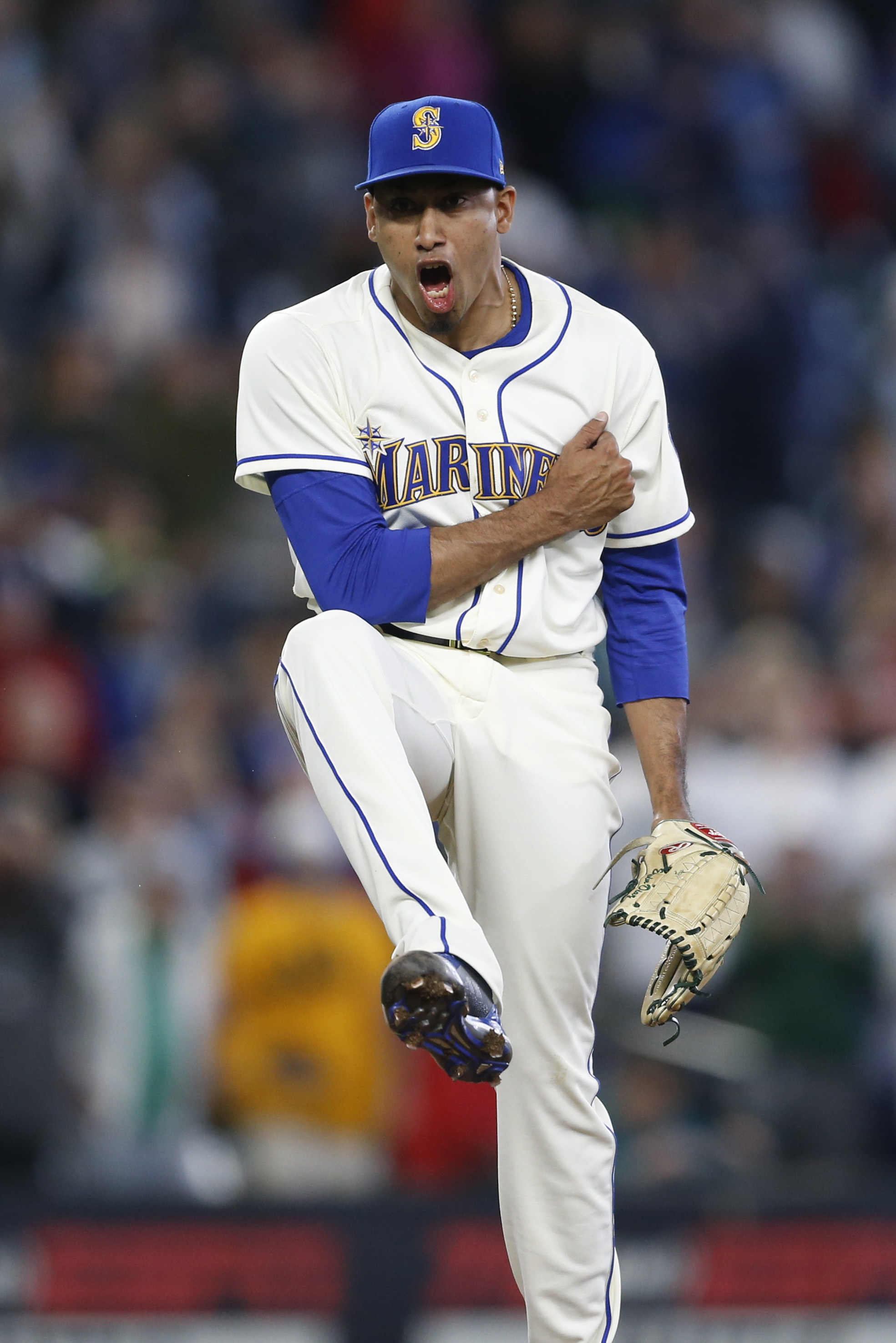
Really, though, the trade was less about the Mets hoping to catch lightning in a bottle with the final couple of productive seasons of Cano. For Van Wagenen and the New York front office, this trade was a means of effectively purchasing four below-market seasons of one of the game’s premier young relievers. The 24-year-old Diaz just put the finishing touches on a historically dominant season — 1.96 ERA, 15.2 K/9, 2.1 BB/9, 0.61 HR/9, 44.4 percent ground-ball rate, 57 saves — and missed arbitration eligibility by a matter of weeks. He’ll make less than $1MM in 2019 and can be controlled for a fraction of his open-market price through his three arbitration years.
However, Diaz won’t be the typical bargain that many associate with arbitration-eligible players. His enormous save and strikeout totals should push him into record-breaking territory among relievers, and it’s conceivable that he’ll be paid in the $8-9MM range for his first arbitration season in 2020 — assuming another productive campaign in 2019. Like most arbitration-eligible stars, he’ll still be highly valuable asset, but the real question of this trade is just how much surplus value comes with Diaz and how confidently one can project him to maintain his dominance. One could argue that the four years of Diaz being acquired by the Mets is worth anywhere from $60-80MM (if not a bit more), and considering he’ll be paid somewhere around half that sum, he’s an extremely appealing commodity.
The debatable question is whether that surplus value is great enough for the Mets to both part with prospects and take on some negative value at the back of Cano’s deal. Obviously, both Kelenic and Dunn are exponentially more affordable than they’d be in an open-market setting themselves, and the Mariners feel that long-term value, paired with the subtraction of a huge financial burden in the form of Cano, are worth surrendering one of the game’s better young arms. There’s no clearly correct answer in that subjective debate. In the end, the Mets feel the up-front value of Diaz’s electric repertoire and the remaining productivity Cano has to offer are the more valuable asset.
That, in fact, is perhaps the most important takeaway from the entire scenario. While much of the summer was spent wondering whether the disappointing and dysfunctional Mets would trade Jacob deGrom, Noah Syndergaard and others — thus embarking on a rebuild like the ones the Mariners have begun — the addition of Cano and Diaz at a premium price firmly suggests that Van Wagenen and the Mets’ staff are unabashedly in “win-now” mode. Trade rumblings surrounding Syndergaard persist, though it’s clear that if he’s to be moved in a trade, it would need to be a deal that netted immediate MLB help at another position of need. The Mets are in for a highly active winter, and the organization seems fully committed to keeping up with the emerging threats in Atlanta and Philadelphia, as well as the near-perennial postseason contenders in D.C.
The Mariners entered the offseason with a bloated payroll and an aging roster, but they did so on the heels of an 89-win campaign that saw them firmly in contention for a postseason spot for much of the season. Dipoto and his staff, though, were undoubtedly cognizant of the team’s glaring run differential (-34 at season’s end). Mariners decision-makers were surely aware that there was a fair bit of good fortune that contributed to their sterling record for much of the season. While that reality and a bloated payroll initially led to comments about “re-imagining” the roster in Seattle, the M’s have instead taken a more drastic approach.
It’s a credit to Dipoto and his staff, in some regards, that the team has managed to shed upwards of $100MM in salary obligations (including the projected arbitration payouts for Colome, Paxton and Zunino while also accounting for the contracts they’re reportedly taking back in today’s trades). And, while they’ve stripped away a number of fan favorites and productive veterans from the roster, they’ve also added a significant amount of MLB-ready talent that could soften the blow immediately.
Mallex Smith and Omar Narvaez will be regulars on the 2019 roster, while pitching prospects Justus Sheffield and Erik Swanson should both factor into the 2019 rotation at some point (possibly from Opening Day, in Sheffield’s case). Bautista, acquired in return for Cano and Diaz, will be given an opportunity to claim a bullpen spot. Bautista, 23, averaged 96.9 mph on his fastball in an exceptionally brief MLB debut this past season (4 1/3 innings) and has averaged better than 12 strikeouts per nine innings since the Mets acquired him from the Red Sox in 2017’s Addison Reed trade.
And that doesn’t yet factor in the addition of Bruce and Swarzak — two veterans who, while acquired more to offset Cano’s salary than anything, are only a year removed from productive big league seasons that resulted in multi-year guarantees in free agency. While it’s eminently possible, if not probable, that the Mariners will look to trade both, it’s also at least possible that either could simply suit up in Seattle this coming season and perhaps enjoy a rebound. Bruce could unseat Ben Gamel in left field, and the Mariners’ relief corps is rife with uncertainty at present, creating an easy path for Swarzak to work toward reestablishing himself.
Of course, for the Mariners, this trade is primarily about the opportunity to not only add a pair of recent first-round picks in Kelenic (2018) and Dunn (2016) but also simultaneously jettison half the remaining money owed to Cano (for his age-36 through age-40 seasons). That contract was signed under the Mariners’ previous front-office regime and was likely never something Dipoto’s group was excited about inheriting. And Kelenic and Dunn will add a pair of interesting young talents to a farm system that had previously been regarded as one of the weakest in the game — if not the absolute worst.
Just 19 years of age, Kelenic was selected with the sixth overall pick just under six months ago. At one point, the Wisconsin native was tabbed as a potential No. 1 overall pick, and he’s done nothing to dispel the notion that he was a worthy top 10 overall selection since signing. In his brief time with the Mets, Kelenic hit .286/.371/.468 with six homers, 10 doubles, six triples and 15 stolen bases (in 16 tries) across two minor league affiliates. Scouting reports agree that Kelenic has the potential to be average or better in center field, and he’s already ranked comfortably within the game’s Top 100 prospects by MLB.com and Fangraphs.
Dunn, who turned 23 in late September, tore through Class-A Advanced opposition in 45 2/3 innings this season, posting a 2.36 ERA with 10.1 K/9, 3.0 BB/9, 0.39 HR/9 and a 39.3 percent ground-ball rate. His ERA jumped to 4.22 in 89 2/3 innings of Double-A ball, but he averaged 10.5 strikeouts and 0.7 home runs per nine innings pitched at that more advanced level — all while seeing his ground-ball rate improve to 45.1 percent. Dunn did average 3.7 walks per nine innings in Double-A, so there’s some work to do on his control, but he’ll instantly become one of the Mariners’ more intriguing pitching prospects.
In the end, the Cano/Diaz blockbuster, while fascinating, is impossible to accurately judge at present. While everyone will surely formulate his or own opinion of the deal as presently constructed, there are too many trickle-down effects that will prove critical when looking back at the deal down the line. Can the Mariners further unload some of the money owed to Bruce and/or Swarzak? Will either rebound? Is Kelenic a star in the making or one of the countless drops in the bucket of “what could have been”? Will Mets ownership finally give its baseball ops staff the resources commensurate with the team’s market size, or will the addition of Cano’s contract prove prohibitive when pursuing additional win-now maneuvers? All of these will factor into the calculus of this trade when looking back on it six months, a year and five years from now. What’s immediately clear is that this is a legitimately franchise-altering transaction for both organizations — and it’s unlikely that either is anywhere near finished with its offseason roster shuffling.
SNY’s Andy Martino reported last week that the Mets were being “aggressive” on Cano. Yahoo’s Jeff Passan tweeted that there was “significant momentum” toward a trade that would send Cano and Diaz to the Mets (Twitter links). Ken Rosenthal of The Athletic reported that Kelenic and Dunn were being discussed and that an agreement between the two teams was close (Twitter links). Martino tweeted details on the package, reporting that Bruce, Swarzak, Kelenic and Dunn would be in the deal, and Bautista could be the fifth player. Joel Sherman of the New York Post confirmed Bautista’s inclusion. Passan added further clarity on the financial component of the trade (via Twitter), while MLB.com’s Jon Morosi tweeted that Cano had officially waived his no-trade clause. Fancred’s Jon Heyman tweeted the exact package, including the money changing hands.
Marlins Sign Pedro Alvarez, Dixon Machado, Deven Marrero To Minor League Contracts
The Marlins announced Monday that they’ve signed a slew of players to minor league contracts with invitations to Major League Spring Training. First baseman Pedro Alvarez and middle infielders Dixon Machado and Deven Marrero have the most recent MLB experience of the bunch. Left-hander Mike Kickham, right-hander R.J. Alvarez, infielder Jon Berti and outfielder Gabriel Guerrero all have big league experience as well. Miami also made its previously reported re-signing of catcher Bryan Holaday to a minor league contract official and revealed that prized outfield addition Victor Victor Mesa will participate in Major League Spring Training.
Alvarez, 32 in February, is the most recognizable name of the bunch. The former No. 2 overall draft pick and Pirates slugger has spent the past three seasons in the Orioles organization. “El Toro” swatted 22 homers and had a solid year at the plate — primarily as a platoon designated hitter. He returned to the O’s on minor league pacts in each of the past two seasons but spent more time in Triple-A than in the Majors. Last year, Alvarez batted just .180/.283/.414 with eight homers in 127 Major League plate appearances and hit .243/.311/.446 with 16 homers in 305 Triple-A plate appearances. He’ll give the Marlins another option to compete for playing time alongside Peter O’Brien and Garrett Cooper.
Machado, 26 (and of no relation to the free-agent market’s more prominent Machado), appeared in 140 games with the Tigers from 2017-18. He’s generally regarded as a quality up-the-middle defender but didn’t provide enough hope with the bat to keep his roster spot in Detroit, even as the Tigers themselves are somewhat starved for middle-infield options. Machado batted just .229/.280/.303 in 414 PAs over the past two seasons, and he’ll give the Miami organization a glove-first depth option.
Marrero fits a similar profile. The former Red Sox first round-pick (2012) has long drawn praise for his defensive prowess but has yet to find success at the plate in parts of three seasons with Boston and another in Arizona. In 343 MLB trips to the plate, Marrero has posted a woeful .197/.250/.283 slash with five homers, 10 doubles and 10 steals. He does have experience at three infield positions, so he’ll join Machado in competing for a bench job in Miami this spring.
Kickham, soon to turn 30, will return to the Marlins organization after a solid minor league campaign in 2018. Through 42 innings (34 1/3 of which came in Triple-A), Kickham notched a 3.64 ERA with 8.1 K/9 against 1.5 BB/9. He hasn’t been in the Majors since 2014 and has surrendered 37 earned runs in 30 1/3 frames as a big leaguer, but he’s thrown well in the Miami minor league ranks since 2017.
R.J. Alvarez, 27, hasn’t appeared in the Majors since 2015 and has a career 7.39 ERA through 28 innings at the game’s top level. He’s punched out 101 hitters through 88 2/3 innings with the Rangers’ Triple-A club across the past two seasons, though he’s done so while exhibiting questionable control (48 walks).
Berti, 29 next month, received a four-game cup of coffee with the Blue Jays late in 2018, which marked his MLB debut. He’s struggled to a .593 OPS in 506 career PAs in Triple-A but posted much better numbers in Double-A. As with Machado and Marrero, he’ll provide some infield depth.
Guerrero, 24, was once considered to be one of the Mariners’ best prospects but has seen his production evaporate since reaching the Double-A level. The Reds gave him his first taste of the Majors in 2018, and he managed to connect on his first big league homer in a brief 14-game stint with Cincinnati. On the whole, though, he went 3-for-18 with eight strikeouts and no walks in his first MLB cup of coffee. There’s certainly reason to believe that a player with Guerrero’s bloodline can improve; he’s the nephew of Hall of Famer Vladimir Guerrero and the cousin of Blue Jays uber-prospect Vladimir Guerrero Jr.
Beyond the aforementioned players, the Marlins also added catchers B.J. Lopez, Sharif Othman and Rodrigo Vigil to minor league contracts, as well as left-hander Brian Moran. None of that quartet has MLB experience, though each will have the opportunity to win a job in Spring Training, it seems. Lopez, Othman and Vigil were minor league free agents of the Marlins and each re-signed to return to the organization.
Eddie Butler, Drew Rucinski Sign With KBO’s NC Dinos
Right-handers Eddie Butler and Drew Rucinski have signed with the NC Dinos of the Korea Baseball Organization. The Dinos announced Rucinski’s signing Friday, while Butler’s signing was made official this morning (both links via Jee-ho Yoo of South Korea’s Yonhap News Agency). They’ll each receive the maximum $1MM guarantee that first-year foreign players are permitted under the KBO’s new rule structure for inking international free agents.
Butler, 28 in March, was selected by the Rockies with the No. 46 overall pick in the 2012 draft and at one point was considered to be among the game’s premier overall prospects. The righty drew Top 50 billing from each of Baseball America, MLB.com, ESPN and Baseball Prospectus leading into the 2014 and 2015 seasons. Butler, though, never missed as many bats as one would expect from someone whose power sinker and slider drew as much praise as they did while rising through the minor league ranks. His numbers took a turn for the worse upon graduating from Double-A to Triple-A, and he simply has never found his footing in the big leagues.
The lack of MLB success isn’t for lack of opportunity; Butler has racked up 263 2/3 innings across parts of five Major League seasons but struggled to a 5.80 ERA with just 5.2 K/9 against 4.0 BB/9. He’s kept the ball on the ground at an above-average 48.6 percent clip but also been far too homer-prone, yielding 1.47 long balls per nine innings pitched. Butler has spent time with the Rockies, Cubs and Rangers prior to this new agreement to pitch in Korea.
As for Rucinski, the 29-year-old has had quite a different career path than his new teammate. The Ohio State product went undrafted before signing with the Indians organization in 2011, though he ultimately wound up pitching through multiple stints in independent ball before latching on with the Angels and making his MLB debut in 2014. Along the way he worked various odd jobs, including some time on a pecan farm and selling sporting goods at a retail store.
The right-hander only got a brief glimpse of action with the Angels and had an even smaller cup of coffee with the 2017 Twins, though he logged a career-high 35 1/3 innings with the Marlins this past season. Rucinski has a 5.33 ERA with 7.3 K/9 and 3.8 BB/9 in 54 Major League innings, but he’s posted a combined 2.54 ERA in his past two Triple-A seasons between the Minnesota and Miami organizations.
Minor MLB Transactions: 12/1/18
Keeping track of the latest minor moves from around baseball…
- Royals right-hander Burch Smith cleared waivers and has been outrighted to the minor leagues, per mlb.com’s transaction page. The 28-year-old Smith was a once-promising prospect in the Padres system but has been beset by a string of injuries since. From 2014′-17, the righty made just 13 appearances, all at the minor league level. In 78 IP last season, the low-slot Smith allowed 15 HR and walked over 4.5 men per nine, though his average fastball velocity had increased nearly a mile and a half per hour since his last MLB stint in 2013 with San Diego.
- Righty Mark Leiter of the Blue Jays has also been outrighted to Triple-A after clearing waivers, per Mike Wilner of SportsNet 590 The Fan. The 27-year-old Leiter is the son of the former 11-year big leaguer of the same name, and bested long odds as a 22nd round pick to reach the majors in 2017 with Philadelphia. In parts of two major league seasons with Philly and Toronto, Leiter has been a veritable gopher-ball machine, allowing nearly two homers per nine in 114 total IP, to go along with shaky command and an average strikeout rate.
- Pirates righty Alex McRae, too, was outrighted to the minors after clearing waivers. McRae, 25, had embarked on a steady ascent through the Pirate farm until last year’s six-inning cameo at the MLB level. The 6’2, 220 lb starter, despite a mediocre strikeout rate, does an excellent job limiting free passes and big fly, and should again find a major league opportunity at some point in the future.