
Marlins Sign Tim Anderson
TODAY: The Marlins have officially announced Anderson’s signing. Sandy Alcantara (who will miss all of 2024 recovering from Tommy John surgery) was placed on the 60-day injured list to create a 40-man roster spot for Anderson.
FEBRUARY 22: The Marlins and free agent shortstop Tim Anderson are in agreement on a one-year, $5MM contract, reports Jesse Rogers of ESPN. The deal is pending a physical. Anderson is repped by Excel Sports Management.
Anderson, 30, was arguably the best shortstop in a very weak middle infield class. A two-time All-Star and 2019 batting champ, he looked like one of the better shortstops in the majors as recently as a season ago. He’s coming off the worst year of his career, though, as he struggled to a .245/.286/.296 batting line in 524 plate appearances. Anderson connected on just one home run.
While his offensive profile has never been driven primarily by power, he reached double digits in homers each year between 2017-21. That dropped to six homers in a 2022 season cut short by a ligament tear in his left middle finger, although he still managed a .301/.339/.395 slash. His entire offensive profile plummeted last season.
Anderson struck out in 23.3% of his plate appearances, his highest rate since 2018. He put more than three-fifths of his batted balls on the ground, a personal-high clip. That led to his worst average and on-base marks since 2018 in addition to the lowest power production of his career.
That led the White Sox to buy Anderson out for $1MM in lieu of a $14MM club option, ending a strong eight-year run on Chicago’s South Side. General manager Chris Getz has kicked off at least an abbreviated rebuild, bringing in Paul DeJong on a modest $1.75MM free agent deal to solidify the defense.
Anderson has increasingly struggled on that side of the ball as well. By measure of Defensive Runs Saved, he has rated a combined 23 runs below average over the past two seasons. Only Bobby Witt Jr. has a lower total at the position. Statcast’s Outs Above Average metric hasn’t been nearly as bearish, grading Anderson slightly below par in both years. It’s possible that lower body injuries have played a role in that downturn. Over the past three seasons, he has missed time with a left hamstring strain, a right groin strain, and a sprained left knee (in addition to the aforementioned finger injury).

The veteran infielder expressed a willingness to move to the other side of the second base bag. That won’t be necessary in Miami, which has sought shortstop help throughout the winter. The Fish let Joey Wendle depart after a lackluster 2023 campaign. Jon Berti is best suited in a utility role, while none of Xavier Edwards, Jacob Amaya or Vidal Bruján is established at the MLB level.
Miami has a two-time batting champ, Luis Arraez, at the keystone. The up-the-middle pairing of Anderson and Arraez isn’t likely to be a great defensive group, but there’s significant offensive upside if Anderson rebounds. Between 2019-22, Anderson had an excellent .318/.347/.473 line in more than 1600 trips to the plate. Among hitters with at least 2000 plate appearances over the past five seasons, he’s still third in batting average. Arraez leads the way at .326, while only Freddie Freeman (.315) also stands above Anderson, who has hit .300 since 2019.
It’s a fairly inexpensive pickup for the Fish on what is remarkably their first major league free agent deal of the offseason. That means it’s also the first MLB contract for new president of baseball operations Peter Bendix, who has presided over a quiet winter in South Florida. Ever present payroll constraints contributed to Miami’s decision to let Jorge Soler walk after a 36-homer season. They haven’t replaced Soler at DH or addressed the rotation in response to Sandy Alcantara’s Tommy John surgery, but Anderson brings a higher ceiling than last year’s collection of shortstops.
Roster Resource calculates the team’s player payroll around $100MM. That’s above last season’s approximate $93MM season-opening mark but still places them firmly in the league’s bottom third in spending. Miami will need to make a corresponding 40-man roster move once the signing is finalized, but that’ll likely be accomplished by placing Alcantara on the 60-day injured list.
If Anderson returns to form, he’ll have a shot at a better multi-year deal a year from now. He’ll return to free agency next winter in advance of his age-32 season. Willy Adames headlines what otherwise looks like another weak group of free agent shortstops. Gleyber Torres will be the top second baseman, while Anderson and Amed Rosario (who signed a $1.5MM deal with Tampa Bay this week) are the most interesting rebound candidates.
Reds, Mike Ford Agree To Minor League Deal
TODAY: The Reds officially announced their deal with Ford, and MLB.com’s Mark Sheldon (via X) has the contractual details. Ford will earn $1.3MM if he makes the big league roster, and another $125K is available in bonus money. Ford can opt out of his contract on March 23 if he hasn’t been promised a spot on the Opening Day roster.
FEBRUARY 23: The Reds have agreed to a minor league deal with first baseman/designated hitter Mike Ford, reports Jon Heyman of the New York Post. The ZS Sports client would earn $1.3MM in the big leagues and can pick up another $125K worth of incentives on the deal, which contains opt-out dates both during spring training and during the regular season.
Ford, 31, posted huge power numbers with the Mariners in 2023, slashing .228/.323/.475 with 16 homers in just 251 trips to the plate. That power was accompanied by an above-average 9.6% walk rate but also a bloated 32.3% strikeout rate. The former Yankee farmhand has long had plus power and questionable contact rates, so the 2023 season wasn’t out of the norm in that regard. However, last season also represented Ford’s longest and most productive stretch in the big leagues. He’d never reached even 200 plate appearances in a major league season prior.
The left-handed-hitting Ford hasn’t been allowed to face lefties much in his career but torched them in 24 plate appearances last year and has actually fared better against fellow southpaws in his career at large. It’s only 108 plate appearances, but he’s a .268/.343/.577 hitter versus lefties compared to .200/.303/.389 against righties (in a much larger sample of 611 plate appearances).
Cincinnati already has more infielders than infield at-bats available — so much so that Spencer Steer is being moved to left field on a full-time basis in 2024. Even still, the Reds have Jeimer Candelario, Jonathan India, Noelvi Marte, Elly De La Cruz, Matt McLain and Christian Encarnacion-Strand in line to rotate around the infield and throughout the DH spot. Ford gives Cincinnati a left-handed depth option who can handle first or DH work in the event of injuries or some regression from any of its promising young infielders. As it stands, Candelario, Encarnacion-Strand and India are in line to see the most action at first base and DH, but a strong spring could thrust Ford into that mix — or, considering the spring opt-out date(s) in the deal, at least serve as an audition for another club seeking some lefty-hitting thump.
Reds Sign Tony Kemp To Minor League Deal
TODAY: The Reds officially announced their deal with Kemp. MLB.com’s Mark Sheldon (via X) reports that Kemp will earn $1.75MM if he makes Cincinnati’s active roster, with another $750K in bonuses available. Kemp can opt out of his deal on March 23 if he hasn’t been promised a spot on the Opening Day roster.
FEBRUARY 23: The Reds have signed infielder/outfielder Tony Kemp to a minor league deal, per Jon Heyman of The New York Post. The Ballengee Group client also receives an invite to big league camp.
Kemp, 32, is coming off a down year with the Athletics. He walked more than he struck out, 10.5% rate to 9.5%, but didn’t do much damage when he put the ball in play. He slashed just .209/.303/.304 for a wRC+ of 77. The baseball gods may have been frowning on him a little bit, as his .221 batting average on balls in play was well below the .297 league average last year. But on the other hand, Kemp’s never been a huge threat with the bat, with poor career metrics in terms of exit velocity, hard hit rate and barrel rate.
But there are some attractive attributes as well, including defensive versatility. He has over 2,000 innings of big league experience at second base and left field, in addition to brief time at the other two outfield spots and shortstop. He also racked up double-digit steal totals in each of the past two seasons.
The Reds are loaded with position-player talent all over the diamond, with Jeimer Candelario, Matt McLain, Elly De La Cruz, Spencer Steer, Christian Encarnacion-Strand, TJ Friedl, Noelvi Marté, Jonathan India, Will Benson, Tyler Stephenson, Jake Fraley all battling for playing time. But many of the guys in that group are still fairly young and inexperienced. If any of them have some sort of setback in terms of results, the club would probably prefer they get regular reps in the minors as opposed to sitting on the big league bench.
The club has also signed veteran infielders like Josh Harrison, Erik González, Hernán Pérez and Mark Mathias to minor league deals. Kemp will jump into that mix and try to play his way into a veteran bench role at some point.
Royals Sign Austin Nola To Major League Deal
February 23: Nola inked a split deal that pays him at a $975K rate in the majors and $175K for time spent in Triple-A, reports The Associated Press. He could tack on another $250K in incentives for games played in MLB: $50K apiece at 25, 50, 75, 100 and 125 contests.
February 22: The Royals announced the signing of catcher Austin Nola to a major league contract. Ken Rosenthal of the Athletic (X links) first reported the deal. Kansas City placed Kris Bubic on the 60-day injured list to clear an opening on the 40-man roster.
Nola, a client of Paragon Sports International, had been in camp with the Brewers on a non-roster pact. GM Matt Arnold told reporters this evening that Milwaukee was granting him a release to pursue other opportunities (relayed on X by Todd Rosiak of the Milwaukee Journal-Sentinel).
Milwaukee indeed has a fairly crowded catching depth chart. Nola was never going to supplant William Contreras as the starter. At the time he agreed to his deal on January 5, the backup role was going to be held by Eric Haase. Milwaukee added a clearer #2 catcher this week when they signed Gary Sánchez. Haase remains on the roster and is out of options. There was little chance of Nola securing an MLB job in camp unless one or two of the players above him suffered an injury.
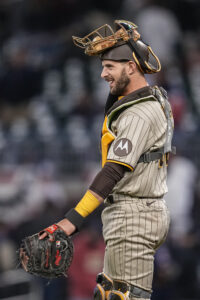
It’s the second straight year in which Sánchez has blocked Nola’s path to big league playing time. That’s largely on account of the latter’s recent struggles, particularly last season. He’d been the Opening Day catcher for the Padres in each of the last two years. He got off to a very poor start in 2023, hitting .146/.260/.192 over 52 games. San Diego optioned him to Triple-A in mid-July, relying on the tandem of Sánchez (whom they’d claimed off waivers a few weeks earlier) and Luis Campusano for the stretch run.
Nola only appeared in eight Triple-A contests. He spent some time on the minor league injured list. In September, he revealed that he’d been diagnosed with oculomotor dysfunction, a vision disorder. While that could’ve played a role in his dismal production, it was nevertheless an easy call for San Diego to non-tender him. MLBTR contributor Matt Swartz had projected him for a $2.35MM salary if he were offered an arbitration contract.
That ended an overall disappointing tenure in Southern California. The Padres acquired Nola at the 2020 trade deadline from the Mariners. While the LSU product had hit .280/.351/.476 in a limited sample with Seattle, he managed a .234/.314/.320 slash over 819 plate appearances as a Padre.
His formerly strong defensive marks also dropped precipitously. Nola had rated as an above-average framer and blocker early in his career. Over the past two seasons, he has received very poor grades in both departments. Nola has roughly average arm strength.
Despite the recent struggles, he gets a 40-man roster spot in Kansas City. The Royals have Salvador Pérez and Freddy Fermín as the two catchers on the 40-man. Fermín played well enough last year to hold the backup job. Nola still has one minor league option remaining, though, so K.C. could keep him at Triple-A Omaha as needed.
Nola has four years and 45 days of MLB service. Players with five years of service can no longer be optioned, so Nola would have the right to refuse additional minor league assignments once he crosses the five-year threshold. That won’t happen until the second half of next season at the earliest. The Royals could keep him around for 2025 via arbitration, so it could be a multi-year pickup if Nola finds his form.
Image courtesy of USA Today Sports.
Diamondbacks Sign Kyle Garlick, Albert Almora To Minor League Deals
The D-backs announced Friday that they’ve signed right-handed-hitting outfielders Kyle Garlick and Albert Almora to minor league contracts. Both have been invited to major league spring training.
Arizona has been on the lookout for right-handed-hitting bats to complement lefty-hitting designated hitter Joc Pederson as well as lefty outfielders Alek Thomas and Corbin Carroll. The Snakes recently signed Randal Grichuk to a one-year, $2MM big league contract, and he’ll get the first crack at that role as a result. However, both Garlick and Almora make some sense for a team seeking additional right-handed depth in the outfield — though the pair brings fairly different skill sets.
Garlick, 32, is a classic lefty masher who offers limited defensive value in the outfield corners. He’s hit just .240 with a .289 OBP against lefties in his career but has slugged a hefty .510 against them. Garlick has popped 14 homers and 10 doubles in just 208 plate appearances against southpaws at the MLB level. He’s a career .207/.264/.348 hitter against righties, however. Garlick has spent the past three seasons in the Twins organization and has been used far more often against lefties than righties, as one would expect.
As for the 29-year-old Almora, he’s more of a glove-first option in the outfield with less power but solid all-around production against southpaws. The former Cubs top prospect is a .259/.300/.383 hitter in 1605 big league plate appearances — including .267/.321/.389 against left-handed pitching. Almora has ample experience at all three outfield spots and offers a plus glove at each of the three. The bulk of his production at the MLB level came early in his career; he didn’t appear in the majors last season and posted a tepid .219/.265/.344 line in 686 plate appearances from 2019-22.
White Sox Claim Peyton Burdick
The White Sox announced Friday that they’ve claimed outfielder Peyton Burdick off waivers from the Orioles, who’d designated him for assignment earlier in the week. Chicago placed righty Matt Foster on the 60-day injured list to open a spot on the 40-man roster. Foster is recovering from Tommy John surgery performed late last April and was therefore already likely to miss at least the first 60 days of the 2024 season.
Burdick will turn 27 on Monday. The righty-swinging slugger has seen limited big league action over the past two seasons in Miami, though the Marlins traded him to the O’s for cash earlier this month after also designating the former third-round pick for assignment. Burdick is just a .200/.281/.368 hitter with a huge 38% strikeout rate in the majors, although that comes with a notable small-sample caveat, as he’s tallied just 139 plate appearances. He’s hit for a low average but shown power and plate discipline in the upper minors, slashing .214/.324/.424 in 952 Triple-A plate appearances. Burdick has gone down on strikes in 32.7% of his Triple-A plate appearances as well, but scouting reports have long been enamored of his plus-plus power and above-average speed.
Miami selected Burdick with the No. 82 overall pick back in 2019, and he posted huge numbers up through the Double-A level as he climbed the ranks in their system. His bat has stalled out in Triple-A and the big leagues, but Burdick’s blend of easy right-handed pop, speed and an ability to play all three outfield positions still make him an intriguing depth pickup for a White Sox club with ample uncertainty in the outfield. Burdick has a pair of minor league options remaining as well, so he can be sent to Triple-A Charlotte with his new club without needing to first clear waivers.
The White Sox are leaning toward trade acquisition Dominic Fletcher as their primary right fielder to begin the season, and they’ll have Andrew Benintendi in left field and Luis Robert Jr. in center. Burdick could make the club as a fourth outfielder, though he’ll face competition from veteran Kevin Pillar, who’s in camp on a non-roster deal and could give the South Siders a righty-hitting backup outfielder off the bench as well. Oscar Colas, Zach DeLoach and first baseman/outfielder Gavin Sheets are among the ChiSox’ other outfield options on the 40-man roster, though each hits left-handed.
Mariners To Sign Brian Anderson, Trevor Kelley To Minor League Deals
12:10pm: Anderson will make a salary of $2MM if he makes the team, per Jon Heyman of The New York Post.
10:30am: The Mariners have infielder/outfielder Brian Anderson and right-hander Trevor Kelley in camp and are signing them to minor league deals, per Ryan Divish of the Seattle Times. Anderson is repped by CAA Sports and Kelley by C.L. Rocks Corporation.
Anderson, 31 in May, was once a solid regular in the big leagues but is coming off three straight frustrating seasons, with injuries playing a role. He signed with the Brewers last year after being non-tendered by the Marlins. He got into 96 games for Milwaukee but hit just .226/.310/.368 for a wRC+ of 85. He also spent a few weeks on the injured list due to a lower back strain. The Brewers released him in October.
It was a fairly similar story when Anderson was with the Marlins in 2021 and 2022. He went on the IL due to oblique, shoulder and back issues and hit .233/.321/.359 for a 90 wRC+ over those two years, leading the Fish to cut him loose.
But he had a good three-year run prior to that. He got into 341 games for the Marlins over those three campaigns, one of which was shortened by the pandemic. He hit .266/.350/.436 in that time, drawing walks at a 9% clip while striking out at a reasonable rate of 21.8%. That production translated to a 115 wRC+, indicating he was 15% better than league average in that time. He also spent significant time at both third base and right field, in addition to brief looks at first and second base.
His defense has generally been graded well, as his work at the hot corner has produced two Defensive Runs Saved and three Outs Above Average. His right field work is more split as DRS has him at +8 and OAA at -10, but his arm strength is considered elite, with Statcast having him in 98th percentile of qualified players last year.
The M’s currently have some uncertainty at both third and the outfield corners. At the hot corner, they are set to have a platoon of Luis Urías and Josh Rojas, both of whom are coming off down years. In the outfield, they are set to have Julio Rodríguez and Mitch Haniger in two spots, with Luke Raley, Taylor Trammell, Cade Marlowe and Dominic Canzone in the mix for playing time as well.
Anderson will give them depth at both spots and perhaps a platoon role would be possible at first glance, though maybe not so much after digging deeper. He hits from the right side while each of Rojas, Raley, Trammell, Marlowe and Canzone are lefties. However, Anderson has reverse splits for his career, having hit .258/.344/.413 against righties for a 108 wRC+ but .231/.312/.375 against southpaws for a wRC+ of 89. Regardless of the eventual playing time fit, he bolsters the depth chart at two positions where Seattle has questions.
Kelley, 31, spent last year with the Rays but didn’t have much success. He posted a 5.87 earned run average in 15 1/3 innings at the big league level and a an ERA of 5.23 in Triple-A. He was outrighted off the roster in September. He’s now thrown 50 2/3 innings in the majors overall, also spending time with the Red Sox, Phillies and Brewers, but with a career ERA of 6.75.
Though he struggled in the minors last year, he has impressed on the farm before. Even with last year’s poor results, his Triple-A is 2.38 in 197 innings spanning five different seasons. He has struck out 24.4% of batters faced at that level while walking only 8.5%.
The Mariners have a pretty strong bullpen at the moment but injuries are inevitable in a long season. Kelley will be jockeying for a role alongside other experienced NRIs like Heath Hembree, Ty Buttrey, Kirby Snead and others. If he’s added to the roster at any point, he’s out of options.
Pirates Extend Mitch Keller
The Pirates announced that they have signed right-hander Mitch Keller to five-year contract extension. The deal was previously-reported by Jeff Passan and Kiley McDaniel of ESPN. It’s a $77MM guarantee for the 27-year-old righty, per Jason Mackey of the Pittsburgh Post-Gazette. Kevin Gorman of the Pittsburgh Tribune-Review reports that the new contract includes the 2024 campaign and runs through 2028. The Tidal Sports Group client had previously been slated to reach free agency following the 2025 campaign.
Keller had already agreed to a one-year, $5.4425MM deal for the upcoming season, avoiding an arbitration hearing in the process. As such, he’ll be guaranteed four years and $71.5575MM in new money. The Associated Press reports the financial breakdown. While Keller’s salary for 2024 is unchanged, he also collects a $2.0575MM signing bonus. He’ll make $15MM in 2025, $16.5MM in ’26, $18MM in ’27 and $20MM in 2028.
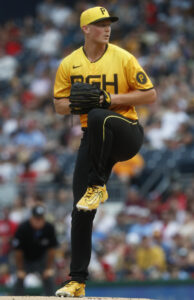
That aligns closely with the four-year, $73.5MM extension between the Twins and Pablo Lopez a year ago. Lopez, like Keller now, had between four and five years of big league service at the time of the agreement. A look at MLBTR’s Contract Tracker shows several other comps of note, including Kyle Freeland‘s five-year, $64.5MM deal with the Rockies.
A 2014 second-round pick and longtime top prospect, Keller has taken major steps forward over the past two seasons, pitching to a combined 4.08 ERA in 353 1/3 innings. That solid but unspectacular ERA masks some more promising underlying trends. Keller’s 2022 season took off when he added a sinker to his arsenal in mid-May, helping to take some pressure off what had been a rather hittable four-seam fastball. He was dominant for the first two-thirds of the 2023 season before stumbling with a handful of meltdown starts over the final couple months as he pitched to a new career-high workload (194 1/3 frames).
That ugly start in 2022 and similarly rocky finish in 2023 bookend a stretch of 41 starts that underscore the upside the Pirates are chasing with this signing. At his best from ’22-’23, Keller rattled off a stretch of 240 1/3 innings of 3.25 ERA ball, fanning 23.5% of his opponents against a sharp 7.9% walk rate and strong 48.4% ground-ball rate. And even with the tough finish to his 2023 campaign, Keller ended the year with career-best marks in strikeout rate (25.5%), walk rate (6.7%), average exit velocity (87.7 mph) and hard-hit rate (35.6%). There are plenty of arrows pointing up with regard to the 6’2″, 220-pound righty, and the Bucs surely view him as someone capable of that low-3.00s ERA who can team with 2023 No. 1 overall pick Paul Skenes to anchor the rotation moving forward.
Skenes figures to debut this summer, and the Keller extension gives the organization a chance at a dynamic one-two punch atop the staff for the foreseeable future. For the 2024 season, the Bucs’ rotation will also include veterans Martin Perez and Marco Gonzales, though neither lefty is guaranteed anything beyond the current campaign. (Gonzales has a $15MM club option with no buyout.)
The Pirates’ ability to either develop or acquire sufficient rotation help beyond the ’24 season will be critical to their chances of reversing a nearly decade-long run of losing baseball at PNC Park. Prospects like Quinn Priester, Kyle Nicolas, Jackson Wolf, Jared Jones, Anthony Solometo and Bubba Chandler give the Pirates a solid stock of promising young arms alongside Skenes. Each of Skenes, Jones and Chandler has garnered some top-100 fanfare this season (as Priester has in the past).
Of course, the Pirates’ history of developing starting pitching has been suspect, at best. Much of the struggles came under the now-former front office regime, but we’ve seen touted talents like Gerrit Cole, Tyler Glasnow, Jameson Taillon and Joe Musgrove all struggle to reach their ceilings with the Bucs before being traded. Cole, Glasnow and Musgrove, in particular, broke out with their new clubs. Even Keller took a long road to reach the form that led to today’s five-year agreement. It’ll be imperative for the Pirates that they improve their development of young pitchers and/or find help outside the organization. Notably, they’ve been in constant contact with the Marlins about Miami’s bevy of young pitchers and have explored other trade possibilities as well.
Keller joins outfielder Bryan Reynolds and third baseman Ke’Bryan Hayes as core pieces the Pirates have signed to long-term deals over the past few years. It’s a breath of fresh air for Bucs fans who’d grown accustomed to seeing their best players traded as their arbitration prices escalated. The long-term deals signed by each player don’t necessarily preclude eventual trades — as evidenced by Andrew McCutchen — but it’s nevertheless an encouraging trend for Pittsburgh fans to see a trio of extensions that each top $70MM in guaranteed money, considering their $60MM extension with Jason Kendall back in 2000 stood as the richest in franchise history for upwards of two decades.
Each of Keller, Reynolds and Hayes are now signed through at least the 2028 season — the same year that the team’s control windows over shortstop Oneil Cruz and outfielder Jack Suwinski extend. That quintet, paired with Skenes and catchers Henry Davis and Endy Rodriguez, could form the nucleus of the Pirates’ next contending club. Reynolds’ seven-year, $100MM extension and Hayes’ eight-year, $70MM pact are both generally affordable, even by the Pirates’ modest standards, which should give the Bucs flexibility to supplement that core in other ways.
It’s unlikely the Pirates ever dive into the deep end of the free agent market. But if owner Bob Nutting ever decides he’s finally comfortable spending in even the second tiers of the open market — Francisco Liriano‘s three-year, $39MM contract is the largest free agent signing in Pirates history — the Pirates would have the chance to complement their growing foundation with some meaningful talent and break away from their lengthy run near or at the bottom of the NL Central.
Tigers Sign Gio Urshela
The Tigers added to their infield on Thursday, announcing the signing of Gio Urshela to a one-year, $1.5MM guarantee. Detroit added that Urshela, a client of Rep 1 Baseball, would receive $100K bonuses at each of 500, 530, 560, 590 and 620 plate appearances. That pushes the deal’s maximum value to $2MM.
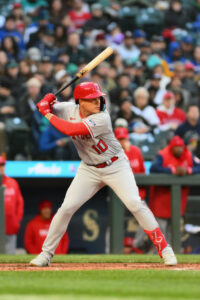
It’s the second instance this week of a veteran infielder agreeing to a $1.5MM free agent deal that falls well shy of what most pundits expected entering the offseason. Urshela’s deal matches the $1.5MM deal that Amed Rosario inked with the Rays on Tuesday. Detroit president of baseball operations Scott Harris recently suggested his club wasn’t likely to sign any “everyday-type” hitters to big league deals, citing a desire to commit to the wave of young prospects bubbling up to the majors. However, at this price point, Urshela was likely too enticing an opportunity for a team without a clear answer at third base.
Prior to this agreement, the Tigers looked to be preparing to begin the season with a platoon of Zach McKinstry and either Andy Ibanez or Matt Vierling at the hot corner. That pair would presumably hold things own until 2022 first-round pick Jace Jung worked his way to the big leagues.
The Tigers, perhaps not coincidentally, informed Jung today that he wouldn’t be making the Opening Day roster (X link via Evan Woodbery of MLive.com). They’ve also said fellow prospect Justyn-Henry Malloy will move off of third base and focus exclusively on outfield work. The addition of Urshela gives the Tigers a viable everyday option at third base while Jung finishes off his development — or at the very least provides a strong right-handed bat to complement with the lefty-swinging McKinstry.
Beyond the fit at third base, Urshela provides insurance in other ways. He’s played some shortstop in the big leagues, including 71 innings with the Angels in 2023, and could step in for Javier Baez at times. He also gives Detroit a veteran to be leaned upon in the event that top prospect Colt Keith, who signed a six-year extension before making his MLB debut and is expected to open the year as the Tigers’ second baseman, struggles early on. Urshela could handle second base himself or take up a more prominent role at the hot corner, with McKinstry sliding over to second base should Keith ultimately be determined to be in need of some more time in the minors.
Based on track record alone, Urshela was a candidate for a multi-year deal — and he’d likely have been a lock for one had he been fully healthy last season. Dating back to a 2019 breakout with the Yankees, he carries a .291/.335/.452 batting line in 1871 trips to the plate. He’s struck out at an 18.9% clip overall in that time but improved his bat-to-ball skills over the past two seasons between Anaheim and Minnesota; since Opening Day 2022 he’s fanned in just 16.9% of his plate appearances.
Solid as his career has been since becoming a big league regular, Urshela is a rebound candidate. His power output with the Angels was curiously low to begin the 2023 season, with just two home runs and a paltry .075 ISO (slugging minus batting average) through mid-June. He never got much of a chance to right the ship after suffering a pelvic fracture on June 15 of last season. Urshela didn’t require surgery but was on crutches in the aftermath of the injury and wound up missing the remainder of the season as it healed.
Urshela has fairly even platoon splits throughout his career, though he does skew slightly more productive against left-handed pitching (.290/.328/.445 against southpaws; .272/.320/.414 versus righties). That surely held extra appeal for a Tigers club that posted a tepid .241/.312/.398 slash against lefties in 2023, with the resulting 95 wRC+ ranking 22nd among MLB teams.
From a payroll vantage point, the Urshela deal barely makes a dent. He’s effectively replacing a league-minimum player on the roster, so he’s only adding about $750K of additional guarantees to the Tigers’ projected payroll. Roster Resource pegs Detroit at a $108.4MM projection for the 2024 season, which checks in more than $90MM shy of the team’s franchise-record mark set back in 2017 (under late owner Mike Ilitch, whose son, Chris, now runs the team). As such, there ought to be further resources available if similar bargain options to this Urshela addition present themselves. There’s no indication, however, that the Tigers have considered a higher-profile splash in free agency or on the trade market in the late stages of the offseason.
ESPN’s Jeff Passan first reported the Tigers and Urshela were in agreement on a one-year, $1.5MM deal. Jon Heyman of the New York Post reported the presence of incentives, which Evan Petzold of the Detroit Free-Press specified as being worth up to $500K.
Marlins, Vladimir Gutierrez Agree To Minor League Contract
The Marlins are in agreement with right-hander Vladimir Gutiérrez on a minor league deal, reports Francys Romero (X link). He’ll be in major league camp as a non-roster invitee.
Gutiérrez joins the second organization of his career. The Cuban hurler was a high-profile international signee by the Reds back in 2016. Cincinnati paid a hefty $4.75MM for his services. Gutiérrez was just 21 at the time and began his affiliated stint in High-A. His prospect stock dimmed over the next couple seasons as he struggled at the higher levels of the minors.
Cincinnati nevertheless called Gutiérrez to the big leagues in 2021. He held a spot in the rotation for the majority of that season, starting 22 games and logging 114 innings. Gutiérrez allowed 4.74 earned runs per nine innings while striking out a below-average 17.7% of opposing hitters. He started eight of 10 appearances the following year and was tagged for a 7.61 ERA with nearly as many walks as strikeouts.
In early June, the Reds placed Gutiérrez on the injured list with forearm soreness. That often ominous diagnosis predated a Tommy John procedure the following month. He spent the remainder of that year and almost all of 2023 on the injured list. Gutiérrez logged 6 1/3 minor league innings late last season but didn’t return to the big leagues. The Reds placed him on waivers at the start of the offseason, sending him to free agency.
Now that he has put the surgery behind him, Gutiérrez profiles as rotation or long relief depth for the Fish. Miami hasn’t done much to address a rotation that lost Sandy Alcántara to Tommy John surgery last October. They acquired Darren McCaughan in a small trade with Seattle and have brought in Matt Andriese, Yonny Chirinos and Kyle Tyler on non-roster deals.